Automated transcript · Written by software from the replay's audio. It can mishear names and figures; the replay is the record.
21:09 the most important thing that a mining company can do is keep the local communities informed of what they're doing, and seek their input on the decisions you're making. In other words, make them a partner in your project. You can't just bully your way through, like people, companies have done in the past, whether it's mining or other companies on a project, you need to get there. And then of course, we like most Canadian mining companies have 2 separate communities we're dealing with. The one community is the local town of Marathon in our case, and then the second one is the local First Nations communities.
21:54 And there's a number of them, but there's one that is is close to our town and is one of the larger ones in the area. And we have numerous discussions daily, almost, with them and their representatives. And they have technical representatives to watch what we're doing. If they don't like something, they let us know. We try to find a way to mitigate it. The whole community thing is the most important. And if you can win over the local community, usually you wind up winning over everyone else. But you have to start there. You have to make sure that you realize that this is actually their project too, and that you're going to be their partner. In our case, of course, the town of Marathon near our project is dependent on mining. So right now it's supplying the big Barrick Hemlow mine, which is nearby, but that mine is, you know, their costs of producing gold have gone up and it's not making a lot of money right now. So the town is nervous And the First Nations are nervous about that because they also get a lot of financial benefits from that mine. And so they're now trying to translate all of those types of financial benefits into our project. And of course, there's some competition between the 2 as well, between the town itself and the First Nations. So it's a product of managing that process as well.
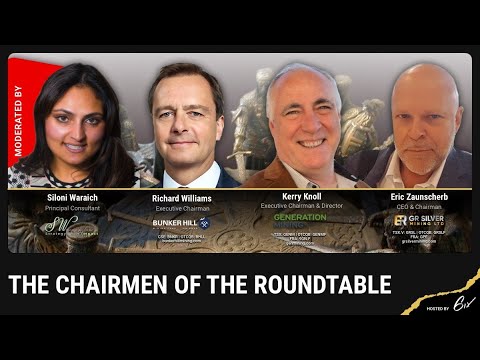
23:24 Thanks, Kerry. I'm glad that you raised the marathon project because obviously it is getting profile in the media, But as we all know, sometimes the focus is on the pressure and the not so positive, but it sounds like it's very exciting. And you have been on record as saying it's a project whose time has come. And it's very important to hear what you are doing with the local communities on the environmental assessment. Sounds very exciting, so thank you. And Richard, this is a great segue into your plans, and there's been a lot of coverage around the restart of your project and what that means for the local community. Yeah, no, thanks, Saloni. And again, just to remind everybody, you know, Bunker Hill was was an extraordinarily successful business from a financial perspective until 1980, but it was an extraordinarily damaging perspective from an environmental perspective, and that's what closed it. Essentially, its lead smelter and its emissions from its lead smelter were devastating to the environment.
24:35 And so it was cleaned up over 40 years, not all 40 years, but the consequences of the mine shutting, as we all know, were devastating on the local economy. The mean household income has been frozen in the 1980s with all of the social consequences that visits upon people. And with our plan to restart the mine at the end of next year, will generate some really significant benefits to that community, but we have to plan collectively with the local authorities because suddenly restarting a mine means is there enough, all these questions that we all know about. Is there enough housing? Is there enough facilities and so on and so forth? And they can't really plan unless they know our plan is certain and we're in mining and we know the way, you know, the next 2 years can go. We're very bullish about what we're doing.
25:32 But what I'd say in terms of managing our community is once again, are we giving them some fantastic hope that we have to deliver upon, but they have to understand where we are in the project timelines, what we're doing. And for that, to echo Kerry's point, communication, communication and communication is key. But our advantage is our mind literally is located in the town. So it's quite hard to even walk around without bumping into somebody that doesn't ask you a question. So communication is pretty natural down there. And we've found as a result of living there and working there, I don't, but the CEO and all the team do, that I think we have a very good understanding from a community spectrum. And the only other specific I'd say, because they asked us 2 questions. When's the mine going to be up and running and can I work for it? That's question 1.
26:30 And the second is, are you going to manage the environment better than your predecessors? And of course, working with our partners, the Environmental Protection Agency and the IDQ, which is the Idaho equivalent, is the answer is quite evidently Yes, because we have a partnership with them. But again, we have to put that front and center of everything we're doing. Safety first and environment first. And then it comes to construction of the mine. And that's an argument. We not an argument. That's a that's a position we have to make sure everyone understands is our plan, both our shareholders and our local stakeholders. Thank you, Richard. It has been, you know, interesting to see so far that under new leadership that you're making that public commitment, that it is going to be a sustainable restart.
27:25 And so we look forward to seeing your progress and of course the progress of the local community. Now, Eric, when we were talking about leading through the pandemic, your last point was about working with the local communities and the shareholders. In the jurisdictions that you operate in, You have been very proactive for long, your company has for very long periods of time, GR Silver, talking about having those partnerships with all levels of government and with the local communities. Can you tell us a little bit more about your approach and your successes around that? Absolutely. It really did start with the vision that our founder, president and chief operating officer, Marcio Fonseca had in building GR Silver. He had a familiarity with the Rosario district in Sinaloa, not just the geological opportunity but also how to work there.
28:25 Secondly, he built a board that included Laura Diaz. She is a highly regarded Mexico city lawyer who is also the former Director General of Mines of Mexico. So Laura brings fantastic team members. She brings intimate knowledge about how to work in Mexico at that level. Thirdly, we've got strong community relationships. Marcia has built a fantastic team working on her Palomosa project. There's a high component of local workers, local talent, everything from the geologists, drillers, field workers, camp support. And it's not just about employment. The camp has been vastly improved from that that was operated by previous parties. It's clean, it's bright, well organized.
29:13 Training is important, of course, that is health and safety. We're able to work, as I mentioned, through COVID because of those strict protocols and with all that testing and treating. That mindset extended to the local communities kept numbers low relative to the rest of the state. When I'm on site, I see people that are immensely proud of their work and their contributions to GR Silver in the community. And I truly believe that the people know that we care, that the company cares about them. And it's that positive symbiotic relationship is our first line of defense when we're talking about potential illegal actors in the region. The local people have no interest in seeing that relationship damaged in any way.
30:03 Thank you Eric. So we've covered a lot already around what challenges and opportunities you've seen in the last couple of years, especially, you know, boards around the world, but especially in our sector, are grappling with key issues like inflation, geopolitics, supply chain issues, and my favorite regulatory change. What would you say are your board's top issues and how are you preparing for them? And I'm gonna go back around and start with Eric this time. Yeah, I think we have to take the ESG journey very seriously.
30:56 Although the basis for risk identification and management is something that one has to do very, very seriously. At the beginning of the journey, to come up with a beginning of the journey, think about the junior mining industry as a scope exploration and goes from development into mining. There's a lot of work to be done. That's one of the big challenges. I'll take that as my second challenge. Is the recruiting and retaining of talent. When we have an increasing regulatory burden, when we have an increasing demand from institutional investors in particular to address ESG issues, and you need more people, more independent directors to staff these various committees to make sure things are happening and that are being done for real, not just greenwashing.
31:54 Eric, sorry, I feel, I apologize for cutting you off, but we're having issues actually with your sound and hearing you. So if you don't mind putting your, or you can log back out and then back in and maybe we can try that. If you don't mind putting. I will give that a shot. Thank you. Thank you. So didn't want to lose his train of thought. Our apologies, but of course, we want to make sure that everybody understands and that our discussion is smoothly flowing.
32:50 All right. Carrie, maybe I'll ask you to talk about what you believe your board's top issues currently are and will be, since of course, your primary role is to think about the long-term risk and how you plan on dealing with them. So on the ESG front, our biggest task right now, so to speak, is our, we had submitted an environmental assessment to the governments, provincial and federally, some time ago, And we've been getting through that process and we got to sufficiency. It was called sufficiency in December, meaning that the panel reviewing this project had no more questions.
33:45 And then it was time to move over to public hearings. So the reason we're getting a fair amount of media right now is we're going through a month long public hearing process and we're having different sessions on everything from water management to wildlife, to communities and socioeconomic issues. And it's an incredibly detailed process that we are going through. And it's being managed by the federal and the provincial governments. And it's anyone who wants to speak out in favor or opposed to the mine can get their chance to speak. And that has been picked up extensively by the media. And so getting through that process is our biggest challenge right now. And I think we're doing it well. We had some of the best consultants in the world evaluate the project.
34:34 And they submitted, I don't know the number, I think it's something like 50,000 pages of documents to the governments for review. And we're just getting through it all. And they will be coming back with their recommendations, we expect, this summer. The joint panel that was appointed to review our project. So that's our number 1 task right now. Another one that we're doing is not so much on the ESG side, but we're doing the detailed engineering that you need to do before you build a mine. And that detailed engineering, part of the process that we're going through is figuring out, has there been any inflation in the last couple of, well, our feasibility study came out a year ago. So has there been much inflation and where has that inflation been and is there a way to mitigate that? So those are the 2 things we're focusing on right now.
35:27 At the side, we're also raising the money to build the mine. We would love to get into construction early next year. If at all, all the things fall into place for us, we will be into construction next year, but in mining, there's no such thing as a guarantee on that. Thank you, Kerry. I've certainly learned something new around the sufficiency process and going into the hearings. And of course, you said the magic word inflation that everyone is dealing with. Eric, I understand that you have rejoined us, even though we can't see you and hopefully the sound is, the audio is better. Sorry to have cut you off in the middle of your musings.
36:14 No problem, I'm sure the panel will be much better if I'm audio only. So yes, if you can hear me clearly now, I was basically saying that we have a lot of challenges, not we as a company, but as an industry in recruiting and retaining directors, the independent directors that we need to properly address the issues of ESG. And that's an interesting opportunity though, as we open up our minds to diverse candidates, to bring more candidates on from diverse backgrounds. And it's absolutely been proven time and time again through many, many studies that diverse boards perform better than non-diverse boards. That there's an economic measurable difference between the 2. So that's a huge opportunity for us. The third challenge is simply financing. If we look at it, the last few months and the period at the beginning of COVID were the worst performers in the history, in the last 40 years, if I look at the data for the TSX venture and its predecessors.
37:24 And so COVID has had a massive impact on the ability of companies to attract capital even though we have situations like various metals that require investment upstream in order to meet downstream demand. So again, to reiterate, recruiting and retaining the board members, raising the capital, and then taking seriously the ESG journey that many of the companies are on. Thank you, Eric, and welcome back. And you kind of stole my thunder on another question I was going to raise, but now I don't need to, the big diversity words. And, you know, obviously there's a little bit of a bias And it wasn't lost on me that this is a chair men's roundtable.
38:20 And we know that our sector can do better is doing better, but can certainly do better. So thank you for acknowledging that. And for those that are listening and are looking for non-operational, non-executive opportunities, I think it's good to hear that companies are actively looking for diversity around their board tables. And by diversity, I also mean diversity of perspective. We can't forget that that's key when we're talking about decision-making in general. So thank you for acknowledging that. And Richard, What would you say, and once again, you are in a unique position, new leadership, exploration stage, what would you say are your board's top issues for the coming years and how are you preparing for them?
39:20 Yeah thanks, again just clarify where we are. We're a fully permitted development project now, we don't have to wait for permitting to get started which is very unusual. Our permit lasted through the closure period and exists today. So our challenges are technical, financial and social license to operate related, and we've sort of outlined those things. So if you elevate it up to a board level, what is it that we are most concerned right now is where we focusing our attention. One of which is that which will unlock the final capital required to get us moving. And that is completion of our engineering work, which is ongoing now. And that isn't just studies, we're actually conducting construction.
40:12 We've bought from tech, the processing facility that will move from Ponderay 140 miles to our location, but do that in ways that conform with tech standards under their closure plan. So getting all of that, I mean it doesn't sound like a lot, but that's quite a lot for a small team to do, getting all that done properly is vital because we want to partner with tech over the long term. Which brings me to the second point associated with partnerships at a board level, and I extend that to partnerships with the capital markets. We are seeking to elevate ourselves from the CSE, where we are now, to the TSXV, for sure. And, but you may ask yourself, why aren't you there now?
40:57 Well, our story, the specifics of our story, mean that we have inherited, now it's $17 million, but it was then $20 million of unpaid water treatment costs, which the EPA require us to pay them. And we renegotiated that so that the majority of it comes from cash flow. But to get on the TSXV, you have to cover your current liabilities and a lot of those are within the current liability bracket. So as we complete through the middle of this year, our technical work that gives us access to the stream finance and so on that we secured at the end of last year, we'll get to there.
41:43 Because the capital markets will view a company very differently on the TSXV than they view on the CSE. I think the CSE is a wonderful exchange. But the reason I mention it is because in this whole ESG and the G element of the discussion, what exchange you're listed on and the standards that they set and the expectations they set is exceedingly important for a company raising money. And then the other final thing I'd point on, it just touched to your diversity point. Yes, we had to change everything when we when when one came on board. And we hired to we hired Cassie Joseph, who is general counsel to Nevada Copper as as our director. She's the lead independent director and also chair of our governance committee.
42:32 We hired Pam Saxton to long-term mining audit finance to ensure that our governance from our financial perspective, we inherited some, shall we say gremlins that we needed to un-gremlin along the way. And those 2 board members have been vital. And the final thing I'd say is that makes us, it's classic of a turnaround situation, is our board meets every week and reviews where we are every week. Now that's very unusual and is unsustainable over the long term, but given we've got so much to do, I want to make sure not just from a governance perspective, but from a from an expertise perspective, that the team who are all in Idaho can can get the guidance from the whole board that they need on a regular basis because there's simply so much to do.
43:25 It sounds like it. Thank you, Richard. It's very interesting to hear the different phases and the perspectives. And yes, a weekly board meeting is certainly hands on and ensuring that you're nimble and moving forward. But it will be interesting to see if that is sustainable long term. Hopefully you won't need that once things are in a good flow. Right. Exactly. Thank you. I see there are a couple of questions that have come in. Before we get to those, I'm going to ask a higher level question about our sector. You know, mining consistently gets a bad rep. What should chairs like yourselves of individual mining companies consider as part of their practices to enhance confidence in the governance of the mining sector in general?
44:26 And Eric, I think we'll start with you. I think a key point is that we as an industry have to take ownership. That we have a long history of despoiling the earth, if you want to put a fancy name on it, of digging holes and not doing anything with those holes and worse, allowing for pollution to occur, allowing for social ills to to spring up around those those previous operations. Of course that's not what modern mining is all about. I know I've wept at seeing a nursing mother working with mercury by hand to create an amalgam in an artisanal operation in Burkina Faso. We can't have that anymore. We need modern mining operations that act as the priming of the pump to create a sustainable economy.
45:20 So I think we differentiate between what is a mine and how sustainable that is, and how that mine can contribute to a sustainable economy in that community, that we're an important part of that community. And so getting back to your question, what can we do? We can execute. We can have plans for new operations that incorporate sustainable development, that incorporate the top end of environmental protection and social responsibility and deliver those projects and show the world what this industry can do. What a beautiful thing it is when we see the, you know, education, health and welfare for the local community improve with our participation in their local economy.
46:10 Thank you, Eric. And Kerry. So Yeah, pretty much what Eric's been saying. Historically, the mining industry would put shareholders first and management second. And then the environment and community were kind of 0.333, often, not always, but often. And you have to reverse that and you have to put the environment in the community first. And, you know, shareholders hopefully will profit from that relationship. But of course you need the shareholders because you need people to put up the money to build the mine. And you also have to, not just the community itself, but specifically your own workers. You have to be fair to them. You have to provide a safe working environment.
46:58 You have to provide a reasonable salary, a living wage, more than a living wage. Mining, of course, in Ontario is, is, you know, it's far higher than the majority of other industries in terms of pay, compared to say tourism or even forestry. It tends to pay a lot more, but you have to do all of those things. You have to make it a good place. You've got to make sure that the people who work for you want to work there and that the communities want to have you there. And that the first nations are provided training and benefits and financial participation and all of those things. Thank you, Kerry. And Richard, last but not least, around what other chairs and boards of individual mining companies should consider as part of their practices so that there's more investor confidence in our sector and the governance of it?
47:58 Yes, and I think the answers for Kerry and Eric covered most of the detail here already, which is sort of own it, live responsibly and then sell to our investors and everybody that mining can be a highly profitable investment, but done in ways that doesn't damage the environment. But I think taking a step back, one of the other bits of the current dialogue between investors and miners and stakeholders and miners has been the need to provide useful metal. Now, our mine will do Zinc, Silver and Lead, all of which are useful energy transitions. And the other 2 panellists are even more white hot when it comes to the utility of that metal for this energy transition.
48:54 And so what we need to emphasize as an industry is that as much as people are exceedingly excited and enthused about the transformation happening. And they talk to electric cars and they talk to factories and they talk to solar and so on. None of that will be possible without the supply of metal done in a sustainable way. And so we have this interesting position in the industry at the moment where people are recognizing that more of certain types of metal is going to be needed to deliver a safe planet. And that a lot of money is being parked in the capital markets for high impact, positive projects with the environment. But virtually none of that impact investment is going into mining.
49:43 And so We're in a very interesting situation where the world needs more mining, but the money isn't necessarily going to it yet. And so what we wrestle with as a board, and I know as a sector across the sector, and there's a lot of it on this call already, is how do we make ourselves more investable? Because without that happening, the world isn't gonna get the metal it needs, or it's gonna get metal produced in ways that are unsustainable and thereby costly to the world. Thank you, Richard, I think that's a very important point on behalf of the sector and frankly, the world's energy transition.
50:29 Kerry, I'm going to put you on the spot a bit because I know you have, based on the very specific metal that Generation Mining is in the business of currently, how do you feel about what Richard said and how does that apply to your business's strategy? Well, we're not holding our breath for any help on our project from, even though the metals, we're not only gonna be producing palladium, we're gonna be producing copper and platinum and some silver and some gold. But we're not expecting really any help. All we're asking for is to not take too long to let us go ahead and build it because we need these metals.
51:20 If you've got a situation in palladium, for example, where 80 or 75% of the world's mined palladium comes from 2 countries that are both having issues. So therefore you need to, I think if you want to have a sustainable industry in the automobile industry, which consumes our metal, then you need to get a variety of different sources. And we've been trying to convince the government of that. Some people are listening and some aren't. But as far as getting any financial help on that, no, we're not expecting it. And we're not asking for it, to be honest. Honest. Thank you. So there are a couple of project specific questions.
52:11 And so I am going to start actually with Carrie. There's a question that came in about the marathon project asking what are the permitting timelines? What is the strategy for Jordi and Sally's project? And what is the timeline and the construction of the project? How are you directing the financing? So that's a number of questions altogether. So as far as the timeline for the permit, so the first thing we have to get is the approval of our environmental assessment. And that process is going on right now. It's a joint review panel. So it's joint being a provincial and federal panel that was appointed to review our project.
53:04 And that panel is right now, as I think I mentioned earlier, conducting community hearings, which are actually live. You can watch them. And that's a month long process. And then after that, the panel has 3 months to render a decision. And the decision will be in the form of a recommendation to the federal and provincial governments. And after that, the provincial and federal governments have 4 months to decide whether to accept or reject the recommendation. That said, parallel to all of that, we're applying for our permits. The permits are a separate issue. The permits cannot be issued until the environmental assessment is complete. Once that's complete, we're hoping that the permits follow shortly after.
53:50 So we're applying for the permits now in anticipation of getting them. And our timing is we're hoping early next year that we could actually start construction, But there's no, I don't want to sit here and say that that's when we're going to start because there are some hurdles to get over first, but we're confident we can do it. We've done most of the things with this project in the timeline. We only acquired it 2.5 years ago and getting through, you know, PEA feasibility study, environmental assessment permitting, all of that stuff in 3 years would be quite remarkable, but we're close to accomplishing that, I think. As far as the other questions go, the Geordie and Sally, those are 2 satellite deposits on our property.
54:38 They are not part of the environmental assessment. They are not part of our mine plan. They have measured, indicated and inferred segments of them. The inferred would have to have additional drilling to be able to even look at it economically, but we have no plans for that in the near term. They could possibly be add to the mine life at once. So we've got a 13 year mine life, so 2 years of construction. So sometime around 2040, we would probably be looking at those to continue. And the town would probably welcome a mine that continues on longer. And then the last question was on the financing side of things. So those of you who follow us would realize that we did a $240M stream with Wheaton Precious Metals.
55:29 We got the first $20M of that in last week. And the next step is to do the bank financing, which we're expecting to take us into the third or even the early fourth quarter this year. And then at some point we'll have to raise some equity as well. So there's 3 different phases to the financing, but we got the first one done. And that, of course, that amount of money coming from a company, the quality of wheat and precious metals will give people confidence that our project is the real deal. Thank you, Kerry. That was, you covered a lot of ground. That was a great response to all of those, each of those questions. And I'm sure true to your style and generation style that you will be out there very regularly updating the market on those timelines and progress.
56:17 So thank you for that. So Eric, there's a question for you and GR Silver around, do you expect a much bigger increase in the updated MRE that is upcoming by end of this year? You know, GR has announced multiple new discoveries veins since, did the previous MRE have anything to do with the management change? Yeah, all good questions, really good questions. We published in the year last year an initial mineral resource estimate for the Plomosis mine and that did indeed disappoint the market and 1 only needs to look at the share price to see that and that is the case.
57:06 As it worked out, the resource estimate that was provided was very conservatively done and correctly so. It draws a line in the sand with a lot of historical data that came with the acquisition of these properties, including the Plumosus Mine producer that was operating in the 1990s. A lot of the sampling of core that was done was done very selectively and so we know for a fact from the underground workings and the sampling that we've done there that there's a lot of precious metal mineralization that was not sampled or assayed. We know that only 82% of the drill holes that were included were included in the database because we didn't have core or documentation for the others and So a very surgical targeted infill drill program that's going on right now as we speak is working on addressing some of the blanks that were included at serial grade in that resource update. So we consider it to be highly likely that there will be a positive impact of new drilling, new sampling that's occurred.
58:22 And so that will have a positive impact, we hope, in the way that the company is viewed. Secondly, we've made, as has been alluded, some new discoveries demonstrating that our geological model, our exploration model targeted at higher grade mineralization is working. In particular, it's working at the San Marcial area of this large project and underground drilling results have indicated that mineralization indeed does extend to depth from the known resource at San Marcial and so consequently we believe there to be an upward vector there as well. So as was mentioned end of year 22 I think it more likely to be the first quarter of 23 is what we're working towards resource updates in both of those areas.
59:10 With regard to management, we see this project getting bigger and bigger and more complex. As I mentioned earlier about having boards that involve lots of different diversity and different skill sets, I think it's important that in our case, Marcio has done a fantastic job in building this project. We would like him to focus on continued work in Mexico. For some reason I can tell the story. So that's what I'm gonna do is I've stepped into the role as CEO effective March 1st, and I will be telling the story of what this company does. By no means is that a negative for Marcio. It's just that we have a lot more work to do and 2 people can do it better than 1. So that's what's happening in management.
59:56 Well, thank you very much, Eric. Once again, a very detailed response and thank you for the incoming questions. Now Richard, I don't want you to feel left out, but we are coming up on time and there were some specific questions about the restart plan and your recent raise from last week, but rest assured for those of you that have sent in specific questions, we will all get copies of those and you will get responses. Because we're coming up on time, and I like to always end on a feel good note. 1 do a little rapid rounds, 30 seconds from each of you on what you're most hopeful about, about the future of your company and as your role as chair.
1:00:46 And Kerry, we're gonna start with you. Well, I'm hopeful that we can get through the environmental assessment process on the timeline that we have hoped will happen. And I think that will happen and that we can begin construction next year early. Thank you. Richard. Be in production at the end of next year and to touch on those 2 questions, but I won't go into too much detail. We have to start moving that Ponderay plant into place from next month. So we raise money to make sure we can do that while we're concurrently doing underground development work. And we'll issue our PFS at the end of the next quarter, but at the same time deliver from Sprott Streaming and Royalties, our main financial partner, the decision associated with going to full construction by the end of next quarter. So we're already moving, if you see what I mean.
1:01:52 So as far as I'm concerned, as long as that continues and we hit our timelines, then it's gonna be great for all stakeholders. Thank you very much. And last but not least, Eric, what are you most hopeful about, about the future of your company and your role as chair? Well, first of all, I'm very grateful that the market was supportive in that we were able to close a $7.3M financing last week, especially in this rubbish market that we're in right now. So, yes, that's very, very appreciated. The money is going to allow us to continue to put holes in places that we think have significant high-grade silver and gold mineralization. I'm hopeful that, as discussed earlier in the first quarter of 2023, that we will be looking at a resource estimate update that pleases the market.
1:02:49 Thank you very much. And on that note, I just want to thank everyone for attending, for listening in, for sending in your questions, and most of all, thank you to our 3 esteemed chairmen for providing your insights. It has certainly made me more hopeful about the future of our sector, the future of governance in our sector, and lots to look forward to. I know I speak for many today that look forward to seeing the progress at each of your companies and your specific projects.