Matthew Mickleborough
Founder, Writer & Analyst at Junior Resource Investing
Replay available
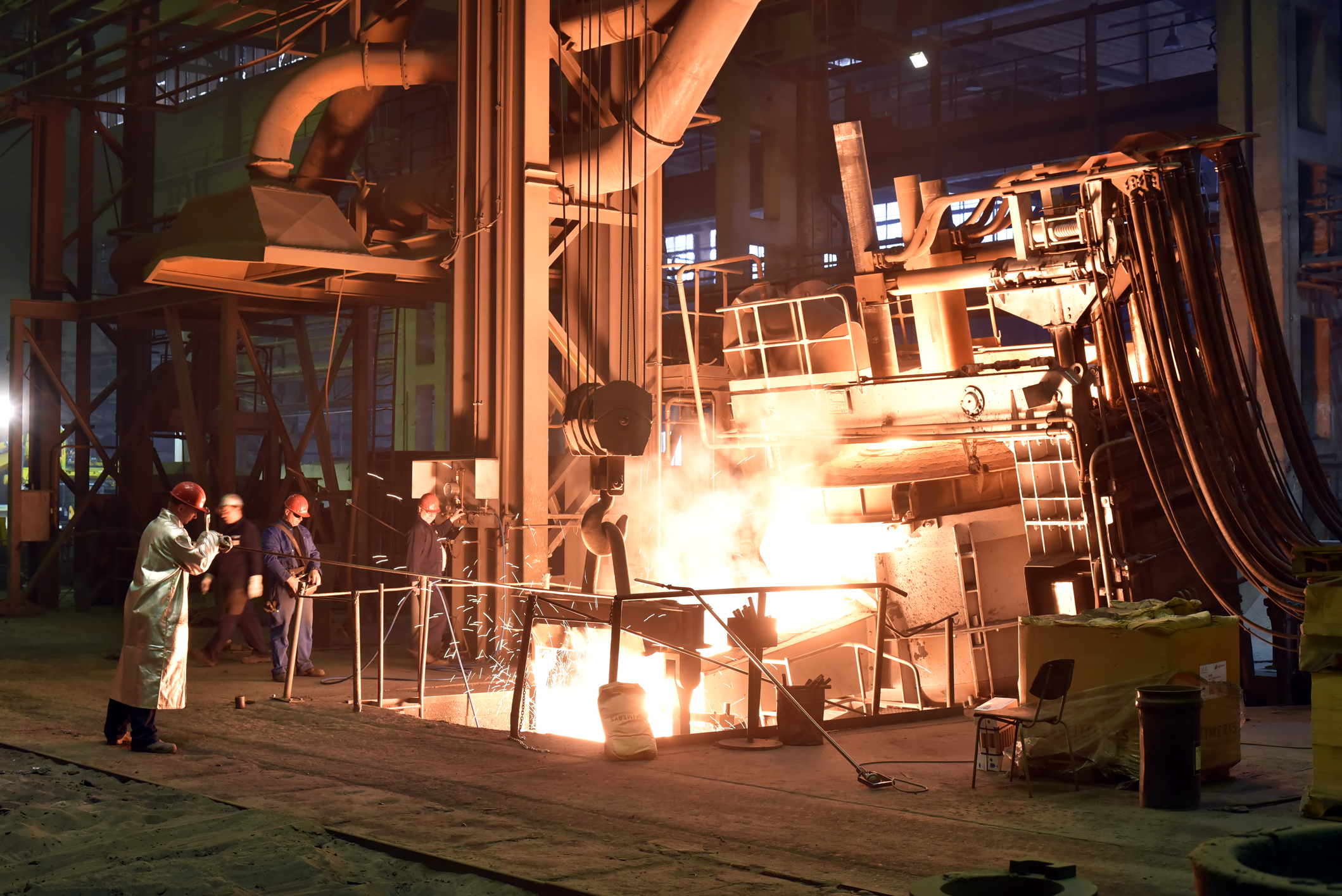
Explore the dynamic landscape of the steel industry, focusing on essential commodities such as zinc, molybdenum and iron. Engage in discussions on the strategic role of steel in meeting the demands of electrification and green initiatives and shaping the future of infrastructure development for electric vehicles and sustainable technologies.
On 6ix: 6ix.com/event/the-impacts-of-global-electrification-on-the-steel-market
Automated transcript · Written by software from the replay's audio. It can mishear names and figures; the replay is the record.
0:08 Thank you for joining here today. My name is Matthew Michelborough. I host a writing and interview service called Junior Resource investing. Our panel topic today is the impact of electrification on the global steel market, drilling deeply more so into the role of zinc, moly, and nickel as represented by this panel in modern steel industry and electrification efforts. Before I get into the content, just a couple disclaimers as always here, right, there will be blue sky discussions being had as well as forward-looking statements. As well, this is a live thing and it's the I'm really hoping that people will get questions in right that if you have questions for our executives here today, please do encourage you to get them into the conversation bar, the message bar. I'll do my best to get them in kind of organically. If not, there will be time at the end for viewer questions. And then the final note to that this will be recorded. So just be aware of that and the recording will be up on YouTube, and typically 6 gets this done in about 24 hours or so.
1:08 Anyway, global steel market and electrification. I'll paraphrase a famous saying here, but Steel was the backbone of the Industrial Revolution. Here we are now today in the modern world in the throes of another revolution, a technological revolution. And yet steel and the many different metals that go into it are going to be just as critical to this one as the last one. So here to discuss steel as well as the role their respective metals play, old and new in the industry, let's say from alloys and galvanizing to batteries and semiconductors and green energy and advancements, are Mark Jarvis, who's CEO of Gametals, which is advancing the Turnagain Nickel project in BC. And Richard Williams, who's the executive chair of Bunker Hill Mining, and they're pursuing a brownfield silver-lead-zinc exploration in Idaho. And he'll be kind of on team zinc for this conversation. And like I say, sort of in absentia for now, hopefully with anticipation that we can get this thing solved. Ian McDonald, who's chairman of Moon River MOLLE, which is pursuing the Davidson Molybdenum Project in BC. Hopefully, like I say, kind of knock on wood, will be joining us as well. Anyway, gentlemen, yeah, thank you for your time.
2:17 I'm glad you can join us here today. I think we'll just start nice and simple in general before we get into the kind of the more specific meat and potatoes, but maybe Mark, I'll pass this one off to you first. Do you just want to give us just a brief introduction to Giga Metals, what you're doing, who you are, and just have the audience know who you are.
2:37 Sure. Giga Metals, our core project is the Turnagain project in north central British Columbia. We've recently done a pre-feasibility study of that project with our partner Mitsubishi Corp. And we took 950 million tons into the feasibility or into the pre-feasibility study, which are now a reserve. And we modelled a 30-year mine life with the typical year's production being 35,000t of Nickel and 2,000t of Cobalt in a very nice concentrate, 18% Nickel, 1.1% Cobalt, very clean concentrate. So that 30-year mine life, that 950Mt of reserves is a subset of 1.5Bt of measured plus indicative resources.
3:34 And there's another 1.1Bt
3:37 of inferred resources in our resource base. We think of this intrusive that the parts of it that are prospective for Nickel and Cobalt, we think we've drilled volumetrically about 20% of them. So truly, a giant project.
3:55 And we think if we can get this off the ground, CapEx is 2 billion US dollars, 1.9 billion US dollars. So a major CapEx issue for a major mine. But if you get it off the ground, it's going to be gone for decades. And so it will supply a very clean concentrate, very clean high-grade concentrate of Nickel and Cobalt for many, many years. Thank you, Mark. Richard is here with Bunker Hill. Obviously, Paulie Met, but he's on Team Zinc, like I said. But Richard, you just wanted to introduce us to Bunker Hill. Sure. Again, apologies, Matthew, slight correction to what we're doing is we're not an exploration play per se.
4:42 We're restarting the Bunker Hill mine, which will be back in action by the early part of next year, ramping up to 1800 tons a day through Q1. We're midway through construction as we speak now. And what's the number of things that are interesting or notable about that is 1, we will be the first mine to conduct mining operations in a US government environmental cleanup site since those programs started in 1969. This is a historical mine that ran for a hundred years, which closed in 1981 because it's smelting operations primarily couldn't keep up with the environmental regulations, the good environmental regulations that were passed in the 1970s.
5:29 It then became part of a U.S. Government through the EPA Superfund cleanup program.
5:35 Its smelting operation was dismantled, its processing facilities were dismantled, and although the underground infrastructure remained largely intact, it was flooded up to a certain point. We got hold of this as a team 4 years ago, raised the money to confirm the metal and the engineering requirements, bought from Tech, it's processing facility that was located in Washington state at the Ponderay site, moved that to site, upgraded that, conducted all the normal engineering and other work required to get a restart plan in place, put the team together. And again,
6:21 rather unusually for mining stories in North America, we're fully permitted, have been throughout all of this process and will be back in action in the early part of next year. We're starting off at 1,800t a day. That's an underground operation producing 2 concentrates, Zinc concentrate and Lead Silver concentrate. They will move off to Tex Trail smelter in British Columbia and will thereby contribute to the metal supply chain, critical actually for the US that comes out of that remarkable facility in British Columbia. Now We're starting off at 1,800t a day and we've got conceptual plans at this stage to ramp that up to 2,400t, 2,500t a day over time, funded from cash flow.
7:12 Our first 5-years of mine is in reserves. We're financed off a 14-year mine life at the moment, and we see it being able to go off much longer than that, decades in fact, once our exploration thesis, which is the exploration point, is proven. And we're doing drilling underground to convert the inferred into measured and indicated now and indeed even expand our resource envelope. So we're starting small, aim to get bigger, but we're in the United States and contributing to the Western critical metal supply chain in the short term. Excellent, Richard. Thank you. And I apologize for the mischaracterization.
7:57 This is a funny conversation here. This is a steel panel, but there are no iron explorers here. There's no steel producers, no conversations about 65% and pellets, etc. But nevertheless, the metals that are present here are critical in the conversation around steel. I guess maybe, Richard, I'll pass this back to you to start, and Mark, feel free to chime in afterwards. When I say steel, I think people think about met coal and heavy industrialization, but maybe in more modern terms, it nevertheless does remain a green metal. Do you maybe want to explain Richard and start the conversation off? Just how is it that steel can be considered a green metal and why is it so important to electrification efforts? Well yes, you can't build anything of any consequence, that which needs to endure or take serious pressure without having steel involved. Now, it's not that you can't build something with timber or elsewhere, those things are fine, but there's a limit to what timber will maintain in terms of its endurance.
9:03 So when you look at the production of steel, which is the global
9:08 supply chain, China dominating it, and it has a number of inputs to it, not just as you mentioned iron ore, but limestone, a whole bunch of other things that go into the production of steel. Its end use is what's really interesting. I mentioned a minute ago that construction is vital. So construction is the primary use for that. Now, what is it that in the electrification of the world or the trans, you know, the the transformation from,
9:40 you know, fossil fuels to alternative energy sources, it what is it that that's going to input to the demand for steel is just about anything that requires you to carry anything, transport anything, live with anything requires steel. So it's hard to imagine a world where anything other than steel was the critical foundational element to the future of the planet. Now if you Add to that, which is keeping it at a very high level in terms of demand, we sit and say, the world approximately now has 9.4 billion people in it. And by 2040, it'll be around about 8 billion people. So that's an additional 1.5 billion people on the planet in a very short period of time.
10:34 Now, that's going to place huge demands on the construction of urban infrastructure, transport infrastructure, trade infrastructure and elsewhere, all of which is going to require steel. Now, the other elements that's on the demand side for power and for construction and for transportation.
10:53 Now when you look at other elements of steel, you know, when you're driving, be it an electric vehicle or a internal combustion engine vehicle, each car requires around about 900 kilograms of steel within it. And so whether you're going for electric vehicle for internal combustion engine steel, again, the transport green or otherwise is going to require that input. The other thing that's happened over time, and I'm not an expert on this, but it's quite interesting to note here in the United States, is that the method by which steel is being produced has become increasingly green or increasingly clean and the US has been leading on that. And the final thing I'd say also is a considerable amount of steel used in the United States, I mean, greater than 60% comes from recycled steel.
11:51 So for those who are observing and saying steel is dirty, just it may be dirty in certain parts of the world. But in the United States, the majority of steel consumed is recycled. And the majority of steel produced is done using electric furnaces, not the old traditional ones. So I hope that sort of answers it for those who are coming into the subject coal, is that we can't build a world without steel. Steel is produced mainly, certainly in the West, using green means, and it contributes greatly
12:26 to the energy transition infrastructure that we're all working to contribute to. No, well put, Richard. Mark, any deal there for you to contribute? Oh sure. I agree with everything Richard said about the necessity of steel. That doesn't necessarily make it green. It accounts for anywhere between 7% to 8% of global CO2 emissions. But what Richard was referring to in terms of green steel,
12:58 yes, using electricity for heat and using hydrogen as a reducing agent rather than coal. And there is progress being made. I mean, it's still more expensive, but maybe that changes over time, maybe it doesn't. When I think of green steel, what I think of is stainless steel.
13:18 And it is in particular stainless steel that is being used for, you know, the energy transition. You know, because, I mean, For example, in a typical wind turbine, there's 2,000 kilograms of nickel in the stainless steel, and it's largely in the gearbox and then the nacelle components, as well as in the blades. So every wind turbine is almost a metric ton. It's a traditional ton of nickel. So, and the growth rate for steel use is, historically, it's generally followed, you know, world GDP growth.
14:06 But currently it's higher than that because of the infrastructure build out in places like China. It's now picking up in India. And the figures I've seen for compound annual growth rate for steel is from the low end 3.9% to sort of 5.9% at the high end. For stainless steel, the figures I've seen on compound annual growth rate is 5.8% at the low end and 6.8% at the high end, just in terms of the figures I've seen from sources I consider credible. So, you know, it's stainless steel that really drives a significant portion of the growth in steel. And approximately 2,000 or 2,077,000 tons of nickel were used in stainless steel in 2023.
15:01 Plus, electric vehicles average 25.3 kilograms of Nickel per vehicle, which is up 8%. This was in 2023. Tesla averages about 50 kilograms of Nickel.
15:20 And stainless steel is extremely recyclable, and it is recycled because it, you know, it doesn't really rust out much over its lifetime. So, So stainless steel is perhaps the most recycled material on the planet. Mark, it's an interesting point. I just have a thought that I would touch on here briefly, that you talk about how massive the global demand is and how it matches kind of global GDP growth. And I would just encourage anybody just as a bit of an aside that if you if you want to look up just what this means in terms of the difficulty to get something like iron or steel to to expand beyond GDP, go look at the comparison between iron production and the rest of the metals combined on an annual basis on a dwarf set. Right.
16:05 So these are these is a huge, huge industry. Of course, I'm being a half step off here with iron versus steel. But yeah, that the massive amounts of demand on an annual basis continuing. Right. So the fact that we can't even see potential exceeding that CAGR shows you the demand that this kind of green revolution continues to place on the steel and iron industries here. I guess maybe, and Mark, I'll let you take this one off just to give you the chance to speak first here. Maybe, like I say, in terms of kind of putting your caps on representing nickel, representing zinc, maybe do you want to, Mark, leading us off, like I say, discuss uses of nickel that you already touched on these with stainless steel, but how is it that nickel, and you can expand to fuel cells or batteries or stainless steel, how is it that nickel is contributing to green energy electrification efforts?
16:59 Again, stainless steel is a big part. Anything that you don't want to rust, you want stainless steel. The kind of steel that contains nickel is referred to as austenitic stainless steel, and typically 8 to 12% by volume of austenitic is nickel. It ranges up to 35 percent
17:27 for some uses. I mean jet engines, nickel's got all these weird properties like for jet engines, if you have a really high nickel stainless steel, what it does is it makes the components not subject to much expansion and contraction with temperature variation. So these highly precise components in jet engines, you know, they can't be changing size on you every time you change the temperature. So very, very interesting little, little, you know, thing about nickel. You know, The thing about nickel that is of particular interest right now is the energy density. Nothing can compete with it for energy density in a cathode. And that's why if you want range in your electric vehicle, you need nickel in the cathode chemistry.
18:18 Now, some people are moving away from this. You can get kind of enough range
18:23 with a lithium iron phosphate battery. But the fact remains that you need nickel for range. And I think that the big development on the horizon there is going to be solid state lithium ion batteries, which will remove the risk of thermal runaway, which is significant.
18:44 But will also give you the ability to really pack the cathode with nickel. And that's when you can get the sort of 1,000-mile cars. And that's when you can also look at batteries to power airplanes and to power boats, things like that, which you really can't do much of right now. So there's that looming,
19:14 but yeah, again, just in general, stainless steel is what you want if you want to recycle, and it's what you want if you don't want your infrastructure to rust out.
19:26 Yeah, kind of a two-prong approach there with nickel, right? And Richard, what about you then, right? So like I say, I'm asking you to maybe represent zinc here a bit, right? When I think zinc, you know, I think galvanized nails. Obviously, that's a very kind of simplistic and reduced version of what zinc has to offer. Maybe you just want to introduce people to what zinc does in the steel industry and electrification. Yeah, the
19:49 first point, the zinc primarily reduces the corrosion. And there's a number of things you can do with it. But essentially galvanized steel is you're just putting a layer of zinc on the outside of your steel infrastructure, your steel rod, whatever it might be, and it reduces the corrosion effect of the atmosphere, water and oxygen and so on. So again, the demand for zinc is driven by that need to galvanize steel as put into infrastructure or transport facilities and so on. In fact, 60% of all zinc is consumed doing that.
20:33 So when anyone says what drives demand for zinc, it's everything that drives demand for steel. So, as we've just said before, construction, infrastructure, transportation and so on. But in addition to that, you know, you do have some other uses of steel. Zinc oxide, for instance, can be used within semiconductors,
21:03 particularly those that have an opto-electronic function, so LED cells, solar and so on. It again produces alloys, again all designed to reduce the
21:18 corrosion effect of the atmosphere on whatever metal components you're putting in there. And zinc has, as a result of that, been designated a strategic metal in the United States since 2022. And so that's really where zinc comes from. And as we said, in our mine, which is, as you said, polymetallic, we reduce ourselves as zinc concentrate, we do a lead silver concentrate, but just keeping the answer on zinc, its primary use is to reduce corrosion to metal components, and specifically in this case steel infrastructure.
21:56 Can I leap in and ask Richard a question? Please do. This is related to your answer. I've, I've got a boat 20 foot with a 150 horse outboard on it. And every year when I get my engine service, they put a new zinc on the leg of it and then every year that zinc corrodes away completely, but the rest of the engine doesn't.
22:21 Is that what it does? It sort of attracts the corrosion? I'm very non-technical, but I know that. I'm not gonna give you the technical answer, but it does wear down over time. In fact, one of the interesting theories that came out, not a theory, but one of the ideas that came out with respect to zinc demand, with respect to the electrification
22:45 was that to make the infrastructure more green, in other words, it needs to be replaced less frequently, 1 should increase the thickness of the zinc coating. And what that would do, of course, is increase zinc demand, which would do wonders for zinc suppliers in a position where supply is constrained. That hasn't come to pass. And there has been some discussions at these various climate change conferences that we've all been watching about whether there should be a regulation passed, a global regulation or a global order passed that increases the thickness of the zinc coating, which of course would benefit zinc producers such as oneself and ultimately would benefit the planet because you'd have to replace your wind turbines, your bridges less frequently, but that hasn't been done.
23:41 So in essence, what it generally does
23:46 is reduce the frequency at which you have to replace your metal uncoated with zinc or coated with zinc.
23:58 Keeping it on technical. Yeah, good, Mark. Thanks, you do my job for me, Makes my day easy here. I appreciate that. Let's move on. I think Richard actually touched on a topic that I think that it's maybe officially off topic for this, but I just see it's impossible to discuss these metals without discussing the critical metals impact or that aspect of these metals, right? And so, I mean, obviously if anybody's in this room, I'm gonna guess you've self-selected, you understand
24:28 the current sort of geopolitical tensions around securing friendly or on-shoring friendly access for countries like Canada, United States or Europe, right? And I guess I might just, again, asking these gentlemen to discuss the metals in hand, ask them to be representatives of those metals. Maybe, And Richard, I'll ask you first, Richard, and this is pencils down sort of research time here, but do you know how much of the, what percentage of your, where does zinc supply come from or nickel supply for your, whenever it's your turn, Mark? How much does it come from the West?
25:02 How much is it dominated by China? And I guess maybe as a follow-up to that, how much in your mind is zinc or your mineral at risk of geopolitical instability from a North American perspective or a European perspective. Okay. Well,
25:23 around in 2022, around about 33, 34% of the world's ink supply came from China. Zinc, rather like steel, actually, China is the greatest producer of steel and it's the greatest consumer of steel, same applies to zinc.
25:41 When you come back from that, you're then into countries like Peru and Australia, both at around about 10, 11% each, and then India and then the United States is down at 5.9%. This is 2022 figures. Canada is, I want to say around about 2, 2.5%.
26:02 And so what you can see is that if you're just looking at from a strategic perspective,
26:10 could the West supply its needs ex-China? The answer is yes, it could. But what is China for us also? Because China may be 32.3 percent producer of zinc, but it's also the largest consumer of zinc. So, you know, 60 percent goes in there. So consequently, if Chinese demand goes up or Chinese supply goes down and moves around, it affects very significantly the price of zinc, which then affects our business significantly. But keeping it on the geopolitical side and actually also bring it back to steel a bit. You'll remember perhaps that in 2018 Donald Trump put tariffs on the import of steel and aluminium from China into the United States, about 25% tariff on them, by remember it was. And there was a big question as to whether the current administration Biden would continue to do that.
27:14 Well, they've actually, you know, doubled down on the Trump tariff at this particular point. And what that's done for the consumer of domestic steel is it's increased the price of it. We know that because we're building something and we need steel. And so we've noticed that the price of steel has gone up over this period of time. So when we look at geopolitics, can we produce enough zinc to meet our domestic demands with our allies or our partners? The answer is probably yes, depending on how demand goes. But if the world splits in 2, de-globalizes, puts tariffs in place, will the cost of that consumption go up? The answer is almost certainly yes.
28:00 Which is what we're all dealing with in the trade-offs of the world right now, is globalization allowed us to consume a lot at low cost, but it cost us jobs and cost us security of supply and what people are speculating on whether this is the best thing to do or not still, is whether we focus on our own domestic supply, but have to pay more for it, and therefore potentially consume less. So I hope that sort of roundabout answer gives you a feel or people listening in on how much that we could produce for our own needs. And also the trade-offs that are being debated at the moment. One thing I would say is that when we're looking at geopolitics at the moment, and we're taking it to its extreme, i.e.
28:50 Wars, you know, as are happening in Ukraine and elsewhere, and we look at, say, strategic metals in a US dimension. One of the things that makes a metal particularly strategic is whether it contributes to the defence industrial base, the security of the nation. And in America, the Defence Logistics Agency has been managing metal supply chain since the 1950s. I mean, it was through the Second World War, but a particular Defence Production Act came in during the, during Korea. And so when you look at what the Department of Defence in particular is doing with critical metals, it's ensuring that it's got sufficient stockpiles to meet its projected defense needs.
29:39 Now those projected defense needs change over time. You know, the wish to provide, for instance, artillery shells to the Ukrainian military in their battles against Russia in Ukraine has increased the demand for antimony, for instance, and other critical metals. Have we seen that the demand for zinc has gone up directly related to wars in the Middle East or in Ukraine? The answer is marginally yes, but not significantly. So you're getting these niche medals are going up. But there is a US defense zinc stockpile that they have to manage. And if at some point that started to look like it was under strain, that would be the moment at which you'd have to have a look and say, is the supply chain for critical national defense needs under pressure or not? And I don't think it is right now, to be frank. I think the way in which zinc is playing into the supply chain competition is more down to the cost of steel, cost of infrastructure, cost of transportation, cost of shipping and so on.
30:50 And with respect to this particular discussion, the cost of electrification, i.e. Transforming our power systems from fossil to non-fossil fuel. You know, I have to say that I really enjoy that the conversation is branching out from green steel to metals for producing weapons. You know, and it's you know, it's interesting, I think a lot of weapons have been supplied to Ukraine. And I don't think that the US has really ramped up production of weapons yet, just in a minor way. And I think a part of it is that it's very hard to find people to work in these factories, is what I've been reading. But at some point, that production of weapons will have to ramp up, and that will obviously impact steel and stainless steel.
31:51 And then, of course, talking about war, there's drones, which generally they prefer to use batteries for drones, quieter. And so that's a whole interesting topic of discussion. But to get back to your original question, Matthew, in terms of nickel, Indonesia has come from out of almost nowhere to being currently the supplier of more than 50% of the nickel used worldwide. And most of the money behind that is coming from China. Now, most of that was used for what's called nickel pig iron. So they basically take a saprolate deposit, throw it in a furnace, burn off everything except the iron and the nickel. And now you've got this low-grade ferronickel product that is suitable to feed to the stainless business, and which can be further processed at great expense and energy costs into something suitable for a cathode.
33:00 But the main battery metal that's come out of Indonesia, in terms of producing Nickel, the main form of mining has been what's called high-pressure, high-temperature acid leach plants. And those have arisen not to supply the stainless business, but to supply specifically the battery business. They produce mixed hydroxide precipitates, but they can be easily turned into sulfates. And then, you know, that's on a direct line to PCAM and CAMS. Now, it's interesting because Indonesia is thought of as cheap Nickel. And I think with Nickel pig iron, that's true.
33:47 But HPEL ain't cheap. And they've been building a lot of HPEL. It's also very technically risky. There's some famous cases of HPEL projects destroying billions of dollars of capital. But even when it works, it's not particularly cheap. The interesting thing about Indonesia is that their competitive advantage as compared to, you know, could we supply enough nickel out of Canada or out of Australia or the US or out of Europe. The competitive edge that Indonesia has is not much in the way of environmental assessments. So you can move very quickly if you decide, well, I've got a deposit or I've got a place I can build some tanks and process some nickel.
34:39 You can get at it very quickly. In Canada, we've got to go through an environmental assessment. We've got to show that we're not going to destroy the environment. And that lag time is directly uncompetitive compared with Indonesia. So I don't know what you do about that. It's a double-edged sword. You know, people like the provenance of Canadian nickel because of it, because of the high environmental standards. But it is undoubtedly an impediment to getting these things built. In Indonesia, I mean, we're just learning more and more about how environmentally destructive the nickel business is in Indonesia.
35:25 Right from, you know, strip mining, they're strip mines for one thing. And So you take down mile after mile of tropical rainforest, in many cases. In most cases, you're dumping the tailings into the ocean. There's all sorts of leakage of nickel and other things into selenium and other things into the streams. There's villages being impacted. It's becoming more and more of a story. So it's not as simple as saying, well, you know, I just I just bought a Tesla, so I'm I'm making the planet better. You're really not. You're destroying multiple species in tropical rainforests in Indonesia. You're poisoning coral beds and waterways.
36:12 It's really unbelievable what's happening there. And the story is just starting to get out. So I don't know what you do about that. I've said it. Thank you both for your articulate responses there. I've said it glibly before that Indonesia seems to be doing their level best to recreate Mordor with their H-PAL and their nickel-oil extraction. That it is a, I mean, like you say, there's complexities to this conversation, but I take pride in the fact that, you know, that if we need these metals, you know, best practice environmental regulations come from Canada, North America, and are there hurls and hoops and efficiencies to be found? Absolutely. But I think fundamentally that people, you know, if you say yourself, Mark, the complexities of green energy and the green transition, that if you actually do believe in these things, then the world needs more North American critical metals, not less, right? That sort of off-shoring it to countries with lower standards seems a strange way to solve our environmental issues.
37:12 I agree. But here's another way to look at that though. Agree, everything you're saying is that, you know, dirty metal has consequences and the buyer of dirty metal needs to accept those consequences or substitute it with clean metal. It comes down to what the purpose of it is. People often look at China's electrification, and they've invested, I don't know what the number is, but relative to us, huge amounts in transforming their power systems. But as we know, a lot of those power systems are still coal fired. So as a cynic will say, they've got a lot of electric vehicles, but they're all coal fired electric vehicles, which, depending on how you weight the carbon consequences of coal and offset that against the carbon advantages of using electric vehicles, you'll end up with your own conclusion.
38:12 But one of the reasons China is doing this, as presented by people whose view I'm quite persuaded by, is it's to do with energy independence. They don't want to be in a position whereby sanctions can be brought to bear on the supply of oil to China or other critical metals or critical inputs to their economy and their society. So when you sit and say, what is China doing this for? Of course, there would be a benefit to a degree in terms of reducing carbon emissions within China by electrifying everything. But it's more to do with energy independence. And so probably, and this is me not being able to speak for the CCP or the Chinese, the fact that they need that nickel is more important to them than whether the nickel is clean or dirty.
39:08 And because they are the largest market, they are the consumer that will drive the supply chain decisions in that particular case. Now, this then comes down to the bifurcation of the market. Will we as consumers of nickel, wish to have clean nickel? And I think the preference would be absolutely yes. Would we as consumers of steel, wish to have clean United States steel that generates jobs and tax income and so on. The answer is yes, up to a limit. But what we are seeing is a distortion of the market as a result of it. And it's not new, of course, tariffs aren't new. But the green dimension to purchasing decisions for metal such as nickel and elsewhere, I say it's not new to this year, but it's something that has become significant over the last decade in particular and will endure.
40:01 And so it's going to be interesting to see how that plays out. It's like cobalt from the Congo and how much of that has got children's hands on it versus cobalt from elsewhere. And we're doing all this in an election year where deficits are higher than they've ever been, economic pressures are more significant than they've ever been, and geopolitical stresses expressed in terms of war or in other forms of equally worrying or dialogue are dominating, you know, people's voters' choices. So this time next year, or this time in 5 years' time, probably more realistically, how will we be looking at these things?
40:48 Well, those of us that are seeking to produce domestic, clean, as clean as possible, job creating businesses in North America, Will we find that the North American market is going to prefer our goods versus supply from somewhere else? I hope so, but there is no guarantee of that. Yeah, and it's not just how green these raw materials are in terms of Canadian and US and European markets, is whether you can access them at all. Let's say that China decides to invade Taiwan. Will the world react with the same kind of sanctions that they reacted to when Russia invaded Ukraine?
41:39 It's hard to imagine that because the world is simply too dependent on China for so many things. And, you know, I just think that we're kind of sleepwalking into a real crisis there, because I don't think China's made any secret about its desire to take over Taiwan and its willingness to use force if it deems necessary. You know, what do we do then? And, you know, if we don't have, you know, nickel mines built, zinc mines built, rare earth mines built. I mean, what do we do? I do get the sense that we are sleepwalking and I'm, you know, somewhat fearful of that scenario.
42:33 I think you both are articulating well. There's this tension between the monolithic term, the West. We owe what the West wants. There's the tension between that desire and the effort and sacrifices and costs required to actually achieve that. And what are we willing to actually do to make that happen? Are we willing to see a two-tier pricing market for Nickel Emerger or for Steel? These things that were still in the very early, nascent days of trying to figure all these things out. It's how do we actually make this happen? We have these desires, how do we make them happen? And so I think that's a decent transition here. And thank you guys for the conversational approach to this. Mainly I say kind of tongue in cheek makes my job easy. But maybe Mark, I'll just give it right back to you. I mean, changes that you would like, maybe again, maybe a two-part question here and focus on it kind of as you will.
43:25 In what are essentially, if we're actually trying to realize these goals and actually trying to make these things happen and affect this change. A two-part question. Part 1 is, what are some changes, if it's jurisdictional or if it's on a corporate or country level, national level, what are some changes you've seen that you would laud or support or say are good? Or part 2, what would you like to see? Right. Whatever you see that you think is a good step in the right direction or feeling that what would you what do you think we need to see? Mark, I'll let you go first and Richard, you can take off after that. Well, I think in Europe what we've seen and is continuing to evolve is an accounting of raw materials that go into many, many things, including batteries and including steel.
44:13 And so they account for the carbon footprint of the raw materials that are being imported into Europe. And they've got tariffs designed to be influenced by the carbon intensity, so that if it's more carbon intensive, it's going to be more expensive to the consumer. And I think that this sort of very targeted type of tariff could be useful. Now, I hesitate in saying that because, you know, as someone that listens to economists, you know, economists hate tariffs. It destroys wealth, you know, on both sides and there's always unintended consequences. But that said, how else do you approach this, this, this phenomenon of most of your nickel coming from a jurisdiction that is just wreaking havoc on the environment, and that is extremely high, highly carbon intensive.
45:25 How else do you deal with that? I think it's probably the best solution that I've heard. And to you, Richard? Hopefully, I'll answer the question, but listening to Mark's comments, it prompts me to sort of talk about Canada a bit and North America. And it's impossible for miners not to sound vaguely political when they say this. But if you were looking at the potential of Canada and its ability to supply to the North American market, and we could roll in Mexico there too, the North American Free Trade Agreement zones, a metal, Canada has got the most extraordinary resources.
46:13 In the North and part of Canada, if modular nuclear power, tested and rolled out was deployed, the costs of power, which is one of the critical things in mining, but also in particular, in in greenfield sites in the middle of nowhere, in the Arctic, would drop considerably. And a whole bunch of things, assets, resources, concepts, whatever you want to call it, would suddenly move from being conceptually interesting to being economically viable. Now, we all know there's a number of hurdles, you've got to jump to go from this sort of dreamy picture that I put there to something that works. But imagine if, you know, the relationships were built to do that, And the focus of national expenditure and energy were deployed to do that.
47:11 You could be in a position of taking the example of remarkable companies like Agnico Eagle and others who really know what they're doing. Extending it across North America in ways that really helps you as a consumer of metal, ensure in the first instance, it's green, done well, done as safely as possible. But in the second instance, is secure from any global interference, be it in the market, or be it in terms of physical interdiction. It would be remarkable, wouldn't it? And that in some respects is kind of what I sort of hope for in a strategic sense. Our little project, and it is little, but it'll get bigger, but it's never going to be a, you know, 400 million pounds a year producer. It'll get to 150,200 million pounds, which is not considerable if you roll that out over 30, 40 years, given that we've only put $60 million of capital into it. That's quite remarkable. That's what you get from a brownfield restart if you pull all the right levers.
48:23 But we need 10 of those to really work. When tech's red dog comes off, which at some point it will, mines don't last forever. And that's the greatest source of zinc into the North American market out of Alaska by a trail, it's going to need to be replaced by something. And are there opportunities for it to be replaced? Yes, there are. And there are people looking to develop those opportunities. But boy, wouldn't it be great if nuclear energy comes in in ways that some of those who advertise and propose it, you know, wish for, because suddenly our structural cost base drops. When your structural cost base drops, as long as it comes with labor and various other pieces, you can end up having mines move into an economic, highly profitable position, whereas previously it hadn't been.
49:21 So I waffle around a little bit to say that actually what one really wants is that type of strategic look at the metal supply chain in the West and do it and overlay into that, yes, and yes, the socially most beneficial options possible. Yes, the most green and safe options possible. But it does require provincial, federal, trans-state agreement on things such as power permitting, etc. And that's really what 1 wants. And that's what we need. It's a question of whether anyone's going to do it over the next 5 to 10 years. I find that really interesting, Richard, the whole idea of modular nuclear power opening up the north of Canada because there are so many interesting deposits that are absolutely remote and if you have to truck in diesel, it just destroys the economics.
50:23 Kills it. So, Mark, let me interrupt you slightly. I mean, our little project, I keep on calling it little projects. I should be more pitchy, shouldn't I? But no, just be serious. We're doing a restart to scale it up. One of our advantages, our power is 4.7 cents per kilowatt hour off the grid. Now, where the hell did that come from? That came as a result of American investment in hydropower primarily coming out of the Great Depression. So we are still benefiting from Franklin Delano Roosevelt's push for power and investment, Keynesian investment, out of the depression of that time. And we still benefit from that. And the fact that the majority of that power is green, not all of it, the majority in the Pacific Northwest is green, gives us these advantages.
51:16 So people have a look at our cost base and say, oh gee, that looks a little bit understated. We go, no, no, if you have a good look at what are the components of our cost base, you see one of the big levers in the industry is logistics and so on. But when it comes to one of the big pieces is power. So imagine if you are able to have that, what contribution a state could provide. I mean, government should be improving structurally or encouraging the improvement structurally the economic basis of their country by investing in education, investing in infrastructure and investing in power. And being that which enables those discussions to happen. That's what we hope will happen. Yeah, it's interesting what you say about hydro, Richard.
52:01 We, in British Columbia, were beholden to a gentleman named Wacky Bennett, who led this bizarre social credit party for many years in BC. It was a populist pro-business type party, but they built a lot of dams and we're still benefiting from that with our project. I think it's around $0.05c a kilowatt hour that we can get a long-term contract for. That just blows everything else away. Yeah. And it's also, you know, if you're looking at long-term supplies of anything, you know, if you're talking to people like like in the car business and the battery business, they're looking at investing upstream.
52:51 Well, one of the things you're looking for, if you're looking for that is steady pricing. And if your largest input, which is power for most mines. Power is the largest input for operating costs. If that's at a price and it's a steady price, you've got a long-term contract, you can predict how much it's going to cost you to produce these materials decades. Huge competitive edge there. Totally. Sorry, Matthew, we got off. No, I'm enjoying it. Please do guys. I enjoy this thoroughly. But it's the big question. We all, we have our role to play.
53:39 We, us management teams, us leaders get involved in projects, pull people together and look to sort of not create magic out of the ground, but build, in March cases, it'll be large CapEx, vital project in a great part of North America. And ours is a small CapEx restart that then scales up. But what allows us to get to the jump off points are the same everywhere, you know, cost of power, cost of labor, labor, time taken to do sensible, you know, permitting processing. I mean, there always has to be permitting. Otherwise, you have the failures of the 1960s and 70s, which led to Bunker Hill being shut down. I mean, we can't have all those things happening again. No one wants that. But this is where governments can really help.
54:29 And for me, I don't think it is sprinkling money and subsidizing is the best way to do it. It's actually building infrastructure that allows us to have a different structural cost base. That's what China does. Well, I think that trying to draw these threads back together into one, I think that Richard, you gave me a decent jumping off point, right? Is that China, you know, if you look back at it, and this is not a time for a geopolitical history lesson, but, you know, they've been very aware of what they've been doing in terms of onshoring and resource and energy independence from the 90s, right? For a better part of a generation. And now the question for the West is, how do we catch up and how do we create those conditions conducive to creating or rebuilding and re-onshoring what we've lost in terms of our industrial kind of base, right? And so, you know, when we talk about Mark with maybe a degree of protectionism there, right, and Richard, you know, when you're talking about the New Deal, right, in terms of that very committed, long-focused sort of sight and vision of government in terms of what it's trying to achieve.
55:34 That's just not been a priority. You know, I think that again, since the 90s, it's just been, as you both said, outsource, outsource, cheap, cheap, cheap. Let's get the cost basis down as much as we can and not worry about, you know, if if history and it's, you know, the tendency for globalization, for competing factions at a global level to start rearing its ugly head again. I think it's an interesting conversation here, gents. I don't want to cut it short because this has been a good one, but I think we typically try to limit these to an hour, guys, so I do apologize. So I think we will sort of turn the corner here to the end. I was just going to ask you, I mean, I'll leave it open because I think you guys have been doing a better job than I have in terms of creating content here. But I mean, If you want to, please chase a rabbit that you think is leftover from this conversation, but I just wanted to give you guys the opportunity just to discuss maybe upcoming catalysts. And maybe I'll start there. Mark, do you wanna go again there? Okay, well, this is going off of something that Richard said, which is, I mean, I think the proper job of government, one of the proper jobs of government is infrastructure.
56:38 And, you know, it truly is investment if, if it helps to promote an industry that then hires people and pays taxes and so forth. And the Canadian government has to date recognized this as starting to roll out slightly, but they've created a fund to invest in infrastructure for critical minerals development. And infrastructure means roads and power lines. That's basically what it comes down to for mines. So there's our next big event will be getting the next partner involved in our project. We've got Mitsubishi in for 15%. We're looking for that next partner. We've got quite a few discussions going on.
57:24 We've got some discussions that have fallen to one side. We've got new discussions starting almost every day, But that will be the next big event. We're looking for the next infusion of capital where we can take this giant project through an environmental assessment, which is a big job on a project this size, and through the full feasibility process. It's a considerable investment. We're modelling selling a piece of the project rather than a piece of our company. We did that with Mitsubishi. We hope to continue following that model. Yeah, good luck, Mark. How do you find the capital markets at the moment?
58:11 I'm having trouble finding the value in a public listing. Yeah. I almost wish we were a private company. In fact, I do wish we were a private company. But no, I am seeing green shoots. If you're a Copper or Gold play, I'm starting to see the odd little company respond well to good drill holes. And that's where it starts. The next thing that's needed for a bull market will be a major discovery that gets taken out for a billion or 2 billion dollars. I've got my eye on some things there that are early stage, but they could be major discoveries. And we'll see.
58:58 That's where you get a market is where people missed out on a big one and they don't want to miss out on the next big one. That's tough. Well, good luck, mate. It's a very, very hard market, but yeah. On mine, Catalysts is, you know, We're in construction. We're also doing some refinancing while we're in construction. I like to juggle at least 2 balls at the same time. But that's, I'm just asking Mark, that's the reality of the capital markets. You're just not getting a clean run at things. So You've got to be doing multiple things simultaneously. With respect to bunker, we put out lots of regular updates on how the construction is going, all on track on budget. Watch this space.
59:44 On the refinancing, that's designed primarily not to increase the amount of capital we've got, but actually lower the cost of capital in a very, very tough market. So the CFO is flat out on that side of it, while everybody on the ground is moving like hell on the construction. So that's what you watch. Come September time when we all come back from the summer period, we hope to give you very positive updates on both of those areas. But watch this space. Thank you. Sorry, Richard, I wish you luck as well. And it sounds like you're talking about what I refer to as just in time financing. Yeah. We're fully fine. Just for those listening on the call, a bunch of shareholders will panic. No, no, no, we're fully financed.
1:00:36 What we're doing is we're just trying to lower the cost a bit, Mark. I mean, you know, we've got great partners and the price is really high in some areas of that. And the team is just working to try and lower elements of it. But you're right. We, you know, that's, you know, upmarket. Good. Well, a pleasure. A pleasure to talk with you, Richard and Matthew. Thank you very much. Yeah, thanks, guys. Like I say, you made my job easy today. It was great. I appreciate the conversational approach to this one. I made it to hopefully people found it as engaging as I did. Thank you. I apologize. I think Dave Cutman has a question for Mark. Mark, maybe I'll just fire that off to you in an email and maybe I'll try to get it posted here somehow. But yeah, just a day coming, maybe just check that out and I'll try and get an answer for you from Mark here. Otherwise, gentlemen, thank you for your time.
1:01:24 And yeah, thank you
Follow Bunker Hill Mining Corp into a list and get an email when it puts out news.
Follow Giga Metals Corporation into a list and get an email when it puts out news.
Follow Junior Resource Investing into a list and get an email when it puts out news.
Founder, Writer & Analyst at Junior Resource Investing
Executive Chairman at Bunker Hill Mining
A former COO of Barrick Gold Corporation from 2015-2018, Mr. Williams is a global executive with an established track-record of value creation, pioneering and transformational leadership within the Mining Industry and other demanding assignments. Amongst other notable achievements, this helped Barrick deliver an 80% improvement in the company’s operating profit over his three years, and the total overhaul of the Company’s relationship with the Tanzanian Government following a breakdown of relations between a Barrick subsidiary and that government. Formerly, the CEO of an African and Central Asian focused exploration business, and Non-Executive Director of Gem Diamonds PLC, he was also the Commanding Officer of the British Special Forces Regiment – the SAS. He is currently a Non-Executive Director of Trevali Mining Corporation, Chair of Trevali’s HSEC Committee and an advisor to mining companies facing complex operational, political or ESG challenges. BSc Economics, University College London; MA Security Studies, Kings College London; MBA Cranfield University.
CEO & Chairman at Giga Metals
Mr. Jarvis has more than 30 years of experience in exploration and development of mineral resources, both in oil and gas and metals. After a career in financing exploration projects as a stockbroker, Mr. Jarvis moved to the corporate side of the business in 1996. He joined the Board of Ultra Petroleum, which at the time was a small oil and gas exploration and development company with a large, unconventional gas deposit. As Director responsible for Corporate Finance, he raised the equity capital necessary to prove the concept and to establish enough production to finance further growth with debt. Ultra Petroleum grew from an exploration play to 3 TCF of proven gas reserves. Mr. Jarvis became CEO of Giga Metals Corporation's predecessor company in January 2004. During his tenure, the company has drilled off a giant nickel/cobalt deposit, worked out a reliable metallurgical circuit, and published a Pre-Feasibility Study.