Transcript
Automated transcript · Written by software from the replay's audio. It can mishear names and figures; the replay is the record.
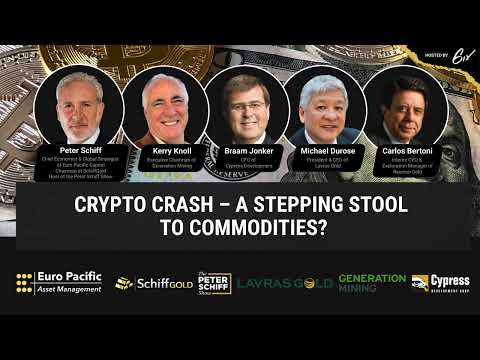
0:08 All right, well, welcome everybody to the panel. We're going to discuss today cryptocurrencies and mining stocks and where younger people should be looking to invest. I know there's been a lot of interest in recent years, particularly among younger people who don't have as much experience investing. And So they've kind of gotten distracted away from maybe more traditional investments, stores of value like gold, and believe they've discovered a new digital version of gold, Bitcoin. And even though Bitcoin doesn't share any of the physical properties that give gold value or that make it a ideal store of value, people still believe that Bitcoin is going to have value anyway because it has managed to replicate some of the other properties that gold has in addition to its physical properties that make it a store of value.
1:10 But like gold, Bitcoin is fungible and divisible and portable and storable. And so it has these other qualities that gold enjoys that made gold a better money than other commodities that have historically been used as money throughout history. But Bitcoin is not a commodity, even though maybe it may be defined by 1 by some regulators, because it doesn't have any actual use. But nonetheless, a lot of investors, as I said, younger investors, have been buying Bitcoin. Most of them now have lost money of course but the ones that got in very early made a lot of money and that's what made it so appealing to the people that came in later. They were hoping to experience the same type of gains that the earlier adopters got. But of course you know like any pyramid that's impossible it's the people that get in first that make all the money provided they get out.
2:13 And it's everybody that gets in later- that makes all those earlier profits possible. And so I think that's where we are in in in the pyramid I think that you know we're at the end of it not at the beginning of it- but maybe- as people start losing some money in fools gold. They'll start to rediscover the real thing, actual gold, and then to the extent that they want to speculate in actual gold, I think a great way to do that is in the mining sector. Because I think a lot of the people who are in cryptocurrencies are not in cryptocurrencies for the reason that most people are in physical gold. People that are in physical gold are looking for safety, they want to store their wealth, they don't want to get rich, they want to stay rich. But most of the people who are buying Bitcoin think they're going to get rich by buying Bitcoin. So they don't want to store value. They want to buy something that can go way up in value. And to the extent that they want to speculate and they want to speculate on something that is also kind of a bet against
3:16 central banking and fiat money, then I think gold mining stocks probably offer the best risk reward that I think any speculative investor is going to get. Are if they want to speculate on something like that if they think there's inflation or hyperinflation or dollar crisis or any kind of- sovereign currency crisis or debt crisis. I think gold has a lot of upside and therefore these mining stocks- have tremendous upside So anyway with that let me just throw out some questions for everybody to answer. First of all you know I think that young people are enamored with Bitcoin simply because they're young and they don't know any better but does anybody else have Any explanations as to why you think Bitcoin or other cryptocurrencies have stolen the spotlight from gold?
4:11 Maybe I can start to answer that question. I'm Mike DeRosa. I'm the CEO of a company called Navarisk Gold. We're an exploration company focusing on our exploration projects in Southern Brazil. I think it's somewhat related to the fact that a lot of the people that are coming of age in terms of being in their mid-20s, early 30s, have kind of been weaned on computers and computer technology. If you go back to when the internet craze was going on back in 97, 98, 99, I mean, that's really when the internet really started to take a real force. And I think you've got just a whole generation of these kids that grew up with computers and the internet. And so it's just a logical extension to what their universe of understanding is. And they just don't have an understanding of what we call the old economy, the sort of the bricks and mortar economy. So I think that's a big part of it.
5:04 I think cryptocurrency is a marvelous invention. We don't quite know what to do with it and how to use it. Like other technologies, the internet itself, which we're using right now. In the beginning, we didn't really understand it. We could not understand the reach, the scope, the change to our lives it would bring. So I think there will be room for technologies, if you want to call it like that, like cryptocurrency. I think I like to talk to young people or to communities,
5:35 I like to remind them that even, for example, even cryptocurrencies, the entire infrastructure, in terms of communication, storage, it all depends on mining. All the circuit boards are made of Gold. All the satellites that share this call, all the circuitry is made of Gold. So Gold not only stores value over time, but it's a fundamental commodity that we need to survive and continue existing in our day-to-day lives.
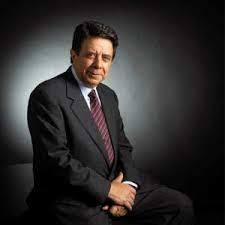
6:11 So mining has this reputation of being clean, being dirty, being environmentally unfriendly, and being destroying, dirty. So it's our job, mining companies, and I'm the CEO of Reunion Gold, it's our job to explain what we do and remind people the importance of the mining activity itself for everybody's life. So I think we need to live with new technologies. We need to share ideas. We need to use them as much as possible. And going forward, and creating value mutually in our respective fields. Yeah it is kind of you know funny that so many of these Bitcoin maximalists who believe gold has no value whatsoever don't even understand that without gold there is no Bitcoin. That you need that you need gold to to produce it. You need gold to validate all of the transactions.
7:08 But also, too, you make a point on the environmental impact of mining. I mean, but the thing about gold and you guys can give me your thoughts on it. But when you produce an ounce of gold, you produce it and then that's it. You know, it doesn't really take a lot of energy to store it or for, you know, once people have it, but you use a
7:28 lot of energy to produce Bitcoin and then you continuously have to use energy to maintain the network. And so it's not like you just expend the industry one time energy. You have to constantly expend it over and over and over again. So to the extent that Bitcoin could ever replace gold as a store of value or as a monetary instrument, the amount of energy that would be consumed in the process would dwarf the amount of energy needed to mine gold.
8:04 So Peter, I fully agree with you and I agree with Carlos as well and everything that's been said today up to this point. You know, I think it's a myth that cryptocurrency does not come with a footprint. I think that's the first thing we need to emphasize.
8:22 And secondly, everybody of us on this panel comes from a pre-computer era. So We've seen the beginning of it and we've seen the evolution of it and we understand that what we have today is completely different from where we actually started, you know, 30, 40 years ago. So there may be a place for cryptocurrency. Exactly what that's going to be and which ones are going to survive, we simply don't know. We don't know the answer to that. What we do know is, like Carlos has said, our civilization as we have it today cannot survive without resources, whether it's from primary mining, whether it's from the more circular economy,
9:13 which I think is going to play a very substantial role in supply of resources going forward, recycling. We simply need it in order to survive on a day-to-day basis. We don't need cryptocurrency to survive. Yes, there may be a place for it, exactly what that's going to be, we simply don't know, But we don't be fooled by thinking that it does not come with a carbon footprint. It does. And I think what we do need to maybe not to survive, but to survive and thrive is a sound monetary system. And I don't think that anything we've seen in crypto, including Bitcoin, would supply that. But I know that gold does supply that.
10:00 And a lot of people say, hey, why waste all this resources mining gold when it just sits in a vault? Well, that's a lot better than having a government issue fiat currency,
10:13 because that does tremendous damage to the economy, as we're experiencing now and as we will be experiencing the ravages. Of inflation and excess money creation I think the cost of mining gold is a small price to pay in order to rein in governments and to spare the people from having to suffer the consequences of a fiat based monetary system. But I think a point I'd throw out to you guys to talk about when you're contemplating cryptocurrency
10:41 is the place that gold could actually play in a digital economy where gold could actually have a much bigger role in the monetary system than it had 100 or 200 years ago when gold was actually used as money because the internet, blockchain, all of this gives us the technology to take a bar of gold, have it stored with a reliable custodian, and then tokenized
11:08 into tiny pieces that can move around the world instantaneously at almost no cost, and that can be used as not only a store of value, but as a unit of account and a medium of exchange. People all around the world could transact with one another in real money using blockchain and gold in a vault. So I think that's where the future is, not unbacked crypto tokens like Bitcoin, but legitimate crypto tokens backed by actual money. Have any of you given any thought to that?
11:42 Yeah, I mean, I think that's I think you're right on the mark there, Peter. I you know, one of the unique attributes about gold is that it's nobody else's liability. So I think that sets it apart from all these fiat currencies. And I'm not sure people completely understand what that means. And so you can use gold to back some kind of a digital currency as you call it. And maybe that's what creates some sort of discipline in terms of retaining the value of that currency. I mean, what is money? Money is a store of value and it's a medium of exchange. We get into these sort of inflationary or even hyperinflationary
12:19 environments, and there's lots of examples throughout history of hyperinflation where your purchasing power goes down and you can't buy anything. And so I'm not sure a lot of people fundamentally understand the concept that, you know, sticking your money in a bank account is going to, what is that? When you put money in your bank account, that's your labor. That's your labor value that's been translated into some sort of store of value. That's being robbed, quite frankly, by the policies of these central bankers. Maybe there will be this convergence of gold as a monetary instrument converging the digital technology of today. And maybe that's what creates something with integrity. And that's another point that when you are working and laboring, you're exchanging your labor for something else. And when you're exchanging it for fiat, you're exchanging it for nothing. At least if I work and I take my labor and I get gold for it, then I've received the labor that it took to produce that real metal. I'm getting something of value for my valuable labor.
13:22 And so that's a more honest transaction. But I really would like to see the gold mining industry in particular really embrace this whole concept and get behind it as a way to compete with the Bitcoin narrative that gold is cumbersome and clunky and you can't carry it around and you can't use it in commerce. If you are a gold mining company you are literally mining money. That's what you're pulling out of the ground is money. And what you
13:48 want to do after you put it out of the ground is make it as liquid as possible. It doesn't have to just be a physical bar that is buried in a vault. It could be a physical bar that is then tokenized and that can circulate around the world indefinitely and be used by the public as a medium of exchange and a unit of account where merchants can price their products in grams of gold.
14:13 That is where the world should be headed because that's the only way to get back on a sound monetary system. And we can't really have real economic growth unless we have sound money. I completely agree, Peter. We have to go beyond where we are. Of course, cryptocurrency is very accessible. We just need a computer to access it and trade on it. I can understand also the difficulty for young people to understand our business. Of course, if you look at the Toronto Stock Exchange, there are constellational companies, from penny stocks to major producers. How do you choose a company
14:49 to follow? A company that will reward you with appreciation of its stock. A company that's properly managed. A company that has good assets. It's not easy. So It's not as simple as we like to think. And how do you go about investing your money in stock or companies like ours? And how can you be certain
15:12 of the product that's going to come out of that? So I think what you're saying, Peter, something as explorers and producers of gold, we have to mature and accept technology and see how can we best use it to share the wealth that we're producing.
15:30 Going back to the theme of the presentation here today, and why younger people would have preferred cryptocurrency, in my opinion anyways, it was, first of all, it was easy, but what it was to me was they saw people getting rich beside them. It didn't move much the first few years that it was out there. When it started to move, people started buying it. It was the same as the people who were buying GameStop or the same as the Japanese real estate market in the 90s or whether even going back to the tulip mania back in the 1600s. It's just people see other people getting rich and they want in. And they want in now. And it's a great or fool theory. They think someone else is going to pay them more than they paid for something. And of course, it always ends badly. Those things always end badly.
16:17 And with Bitcoin especially, it's something that of course also that can be hacked from your computer and it's something that
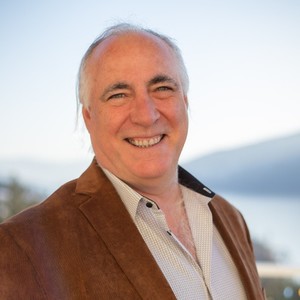
16:26 they're inventing other cryptocurrencies. So there's thousands of them now. It's just... There's over 20, there's 21,000. They keep creating them every day. Yeah, exactly. So there is no shortage of them. Anyways, I'm not in the gold business. I'm in the palladium business. I'm the chairman of a company called Generation Mining.
16:49 And what has come up in this is why, for example, would palladium or gold be better than crypto? And the way I see it is palladium is used almost exclusively to scrub exhaust on automobiles, to clean out the carbon monoxide and the nitrous oxide. And so it's got the opposite effect of a cryptocurrency because the cryptocurrencies are using more power than powers the entire country of Ireland to mine this stuff, whereas the palladium, which can be recycled endlessly for years and years and years,
17:25 and also similar to gold. Gold, once it's mined, it's just going to sit in a bar and you've got some value there. But Palladium takes it 1 step further because it actually helps the environment as opposed to Bitcoin which hurts the environment.
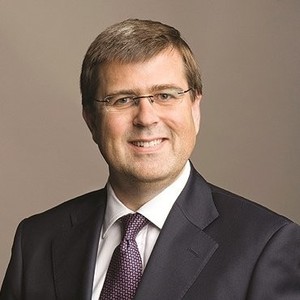
17:43 Look, for me, it all comes back to fundamental principles of investment. And I'm a finance guy, I'm finance background, I'm the CFO of Cypress Development. But it all comes down to first principles. If you cannot reasonably assess what you are investing in, why would you do that? You know, if I look at mining stocks, you know, I can, I can with a reasonable degree of accuracy determine future
18:14 demand? I can forecast future supply.
18:17 Therefore, I can get a sense of what the pricing is going to do. History of mining has taught me how much it costs to develop certain projects, how much it costs to operate them. And yes, of course,
18:32 there's extreme volatility in between, but I can also price that in, right? So I can make an informed investment decision when I look at assessing whether I should invest in a certain stock or not. And Carlos, coming back to your point, how do we pick the stock for me it's always you know I want to look at the quality of management, I want to look at the quality of the assets and I want to look at the jurisdiction that we are operating in. So those are the fundamental principles. When I look at cryptocurrency I can't do any of that.
19:04 So then I come back to saying, well, I'm not discounting cryptocurrency at all. You know, maybe there is a place for it in the future of where we're going to. Maybe there's sort of a combination between, you know, a gold-backed cryptocurrency like Peter, you it sounds to me as you're suggesting, you know, maybe there's a role for that but then take 5% of your portfolio, invest that into cryptocurrency And take the rest of it and invest it where you can actually apply your proper investment principles. And everybody that's gone through 1999 to 2000 will remember
19:41 that first in 1999 we were all accused of being dinosaurs. And in 2000, you know, you know, every everything came to came to a halt, you know, so so it's not forget was an apply them in portfolios. Yeah, the way I look at it, though, I would say that Bitcoin deserves a 0 weighting in an investment portfolio. Now, if you have money that you like to use to wager on sports,
20:06 buy lottery tickets, go to a casino, you can certainly take some of that money and gamble on Bitcoin. I've got no problem with people taking some of their gambling money and taking a shot at Bitcoin. But if you're talking about making an investment, Bitcoin is not and does not belong in an investment portfolio. It is pure speculation. And it's not even a speculation where you can make reasonable assumptions as to the future. It's just just a pure gamble. And and it's actually worse than a gamble because we know everybody eventually is going to lose. And so it's just a question of can you get in and out before the bottom drops out? Because it's all based on a greater fool theory. But what I think it'd be good for the gold community to do is kind of push back against the false narrative of Bitcoin being digital gold. I mean, Bitcoin is depicted to look like gold.
20:58 It's gold colored. It looks like a coin. It's counterfeit gold. And it's trying to claim that it's the new gold, that it's gold 2.0. And I think the industry needs to really push back against that so that it can't, you know, claim to be something that it's not. Because the whole the whole
21:17 case for Bitcoin is bashing gold. Actually, if you look at everything they do, it's all about why gold is worthless, why it has no value, and we have Bitcoin now.
21:30 Yeah, you made a lot of really good points there. And gold does have value. It's a store of value. That's a fact and you can trace that back for millennia. I like your concept of tokenizing gold or gold sales because the paradox of gold mining companies, the ones that actually produce gold bars, well, what do they do? They sell it for what? Dollars, US dollars. So the paradox as far as I'm concerned is like, if you've got this asset that everybody wants, people who believe in gold as a store of value, but then the company goes and sells it for US dollars. And to
22:01 me, that's like, why are you doing that? I'm investing in a gold equity because I want the gold exposure. I don't want the US dollars. And so I find that that's something we as an industry need to address and maybe your concept of- Yeah, what I would love to see the gold industry do is as soon as you mine the gold, tokenize it, put it on your balance sheet and then use it as money. Pay your employees in gold, pay your dividends in gold. You know, why even go back into fiat when you have something better than fiat that you
22:33 are producing yourself. You don't need a cheap substitute created by a central bank when you're literally mining a much better money than that. So just hold it. And to the extent that a company has free cash, just hold it in a tokenized gold. And to the extent that you get all the counterparties to accept payment in gold, then all your costs will then be in gold. All your income is in gold. All your costs are in gold. You can understand the reluctance of central banks to let this thing go. It's virtually uncontrolled.
23:10 And of course, everything can happen. You can see it happening as we speak with cryptocurrency. I like, Peter, your concept. And I think that's why I am always reluctant to bash on technology that we don't fully understand and of course like anything new there's good and bad and there's unfortunately that's been probably more bad than good in this case. But let's learn from it and see what we can do moving forward. We need to evolve. We're very good at finding, identifying the right rocks, knowing how to determine the gold content of these rocks, extracting it, and
23:51 refining it, and eventually selling. And that's the end of our business. Why should we stop at that point? Not that money is going to become banks. Plus, when you tokenize the gold, and if you make a little bit of money every time those tokens move from 1 person to another, whether it's just through a transfer or a sale where a merchant is being paid for goods or services in gold, you can do that transaction and process it a lot cheaper than MasterCard or Visa. But still, you don't have to do it for nothing. You can still get paid. And so instead of mining the gold and getting paid once for making it into a bar and shoving it into a vault, you can get paid indefinitely and create an income stream
24:39 every time that gold is used as money or as, you know, for a payment or for a transfer.
24:49 But Peter, don't you think that if gold was to become a world currency that it would have to go far, far up in value from where it is today? Well, I think to the extent that
25:02 gold was remonetized, whether it was by governments going back on a gold standard or just by the world adopting gold voluntarily, which I think it would do with the convenience of the Internet or blockchain. Yes, of course, the price of gold would have to go much higher or the price of everything else would have to go much lower, but you have to bring gold into an equilibrium.
25:27 And I think it's funny when a lot of these Bitcoin people say, well, if it wasn't for gold's investment demand, it would be practically free. They said that maybe it would be, I don't know, $20 an ounce or $30, whatever they think. And from my perspective, I think hardly any of gold's price right now is representative of gold as a store value or as a monetary. Instrument I think the demand is more. Jewelry based or industrial I mean some central banks hold it but if you look at. How much gold central banks have now relative to what they've had historically it's very small. If you look at how much gold investors have, especially the major investors, the hedge pension funds, endowments, hedge funds, they own practically no, if not, they don't own any gold at all. So I think gold is very under-owned as a, you know, investment or as a monetary instrument today compared to the past. And so to the extent that we rediscover gold, the price can only go much higher.
26:30 Yeah, look, Peter, I have to agree with that. You know, I think if we accept the concept of gold being a store of value, which it is, I mean, there is no doubt about that.
26:45 And you look at what's happening in the financial world around us, you know, the big question that I have is why is the gold price where it is?
26:54 You know, because I can pay whatever return I like on the US dollar because it's just paper money. All I have to do is print more. But every time I print more, I reduce the value of the currency. So the big question mark for me is why on earth is gold price sitting on this morning at below $1,700? It should be much higher when I look holistically as to where the world is from a financial standpoint. It's probably very, very frustrating because I know as we're doing this interview, gold is at a new 52-week low. It was down about $30 this morning, right? It's, you know, about, what, 16, 17-something an ounce. And we just got, you know, worse than expected inflation news again from the U.S. Yesterday.
27:41 And it's a crazy world where gold goes down when inflation goes up, when gold should be more attractive, when you have more inflation. But right now, every time there is more higher inflation data, investors just think the Fed is going to fight harder to get rid of the inflation and raise rates more. And so all this news on high inflation ends up being bearish for gold simply because investors still have confidence that the Fed could return inflation to 2% when it's far more likely to go to 20% than 2%. We're probably never going to see 2% again in the next decade or maybe more.
28:23 And so when investors lose confidence in the Fed and they realize that high inflation is here to stay, then I think gold is going to take off. But, you know, for now, you have people buying dollars the way I think the kids are buying Bitcoin. You know, it's just irrational.
28:42 Well, allow me to digress, Peter, on other commodities. We have palladium, of course, Kerry just mentioned. We have copper. We have manganese. Our company developed a manganese project in Guyana. It's been sold now. We're focused back into gold. Copper, all these metals are absolutely essential because they're not seen as a storage of value, but it's all part of the industrial footprint that we need to have. Great countries like the United States, if they want to continue to be a world power, They cannot rely on dependency from importing commodities, copper, etc. So, talking more generally about the mining industry, the entire activity we work on is absolutely essential for everything we do.
29:35 From circuit boards to cars, to tools and everything. Everything is related back to the digging that from the ground, what we do. So I think I welcome this opportunity Peter to participate on this call
29:53 and remember the importance of our business. Yeah that is especially true you know so many people are saying oh we've got to move away from fossil fuels. We've got to go more electric. Well, what do they think goes into these batteries? I mean, you need copper. You need nickel. You need certain metals if you're going to have electric vehicles. Yet people somehow overlook how expensive it is and what kind of resources are required to make those vehicles go.
30:25 Look, I think to the positive on that and Cyprus development in the lithium space, we're developing a project in Nevada. You know, at the very least, I think the real positive momentum that we're seeing in the lithium space especially is that you have bipartisan political support for the need to become more independent, Carlos, like you've pointed out. There's a lot of government incentives. It's been declared a critical mineral a while ago.
31:05 So there's a lot of positive momentum, certainly behind the lithium space. You know, it would be good to see that expanding a little bit further as well into some of the other minerals. But I think the bottom line is that at least we now have recognition of the urgency of that and of the need in order to do that, which I think is extremely positive. And it also comes back to what one of my earlier comments that, you know, you need to pick your jurisdiction right. And right now, if you look at things like battery minerals and sort of a greener future, the United States, I think, is really stepping up to the plate in order to try and support development and independence on critical minerals.
31:56 Yeah, and the interesting thing too, all of these metals could be tokenized. I mean, obviously, the storage costs would be higher with metals that have less of a value but all of that could be priced into the tokens so that industries that are more invested or dependent on a particular commodity could choose to store their balance sheet in a currency that was backed by a commodity that they needed. So it would have more of a hedge against a lot of their costs. Because right now, if they're saving dollars, they've hedged nothing. You know, because if they keep printing dollars and the inflation rate accelerates, replacing your inventory is gonna become very problematic. And it's gonna be very difficult for a lot of businesses to operate in an environment where you have no idea what anything is going to cost, because you have no idea what the money is going to be worth.
32:58 Any thoughts? Well, I mean, I think you just can look at the long-term trends in commodity prices. I mean, you go back to 1997, 1998, copper was what, 60 cents a pound. Now it's over around $4 a pound. So that's an inflation hedge in itself. You look at the gold price, the gold price was at 250, at $260 an ounce. Now it's $1,700 an ounce. So that's a hedge. You can go right down the commodity spectrum and just basically show the empirical evidence that that is the case, that these hard asset classes actually do retain their value because the way I like to think of it is like, think of a piece of pie, you've got 1 whole piece of pie and then you split it in 0.5 and then I get 2 pieces of pie And then you split it in 0.5 again, then you get 4 pieces of the pie and so on and so on. I mean, the size of the pie hasn't really changed, it's just the number of pieces have. And that's effectively what your dollar bill is. It's just losing, you're getting a smaller and smaller piece of the pie every time these central bankers print money. And so I think you're right. This whole concept of having some sort of a hard asset or hard commodity will backstop these tokens is a great idea. Yeah. I mean, for a while, this fiat system appeared to work.
34:14 But beneath the surface, of course, it wasn't. There were tremendous global imbalances being built up beneath the veneer of a solvency. And of course you had all these asset bubbles that distracted people. They thought they were getting richer on paper as they were actually getting poorer in reality.
34:31 But I think the chickens have come home to roost. And I think this whole system is falling apart. Now, the politicians are not going to just give up. They're going to try to hold on to it. But that just means inflation is going to rapidly accelerate. And it's just a question of time before the world wakes up to this reality and then reacts to it- by moving into into metals and other legitimate inflation hedges instead of just relying on the central bank to do the impossible there is no way for example the Federal Reserve can return inflation to 2%
35:06 without completely destroying the bubble economy that was built on a foundation of 0%. And since there's so much debt in the system, the debt would have to be defaulted on if interest rates were allowed to normalize, including the debt of the US federal government. And I don't think the Federal Reserve is going to force the US government into default. So the alternative is inflate. And it's just a matter of time before people figure that out. And even if it's frustrating, you guys see the price of gold not going up, and it's just frustrating because you think it should, it will. It will go up. It'll probably go up much higher than you think. It's just to try to get positioned for now and have your companies make sure that they survive however much is left of this bear market because there is a big payoff at the end of this.
36:02 Yeah, I agree with that. I think you're right on. And really what's happening, as far as I'm concerned anyway, what's happening is this has become a risk-off trade. Interest rates around the world, instead of going down, there was a whole cycle of competitive currency devaluation as I like to call it, that went on for really, you could pinpoint it right back to about 1980. And so you've had these interest rates that have gone down since 1980 from double digits to below 0 in real terms. And that's what's created all of these asset bubbles all over the world, be it in real estate, be in the stock market, bond markets, and so on. And now we're going in the reverse way. So it's become kind of a risk on trade now. And I think this is secular. It's a reverse off trade. And so these rates are gonna go up, but because there's so much accumulated debt around the world, there's a limit to what these central bankers can do around in various countries.
36:57 And when that realization really hits home, I think that's when the whole bubble collapses. And that's when I think the hard asset classes, the commodities, the real estate, and so on, will do very well. And it's interesting, too, that interest rates are rising. In fact, the one-year Treasury is now 4%. Hasn't been for a long time. But people think, oh, this is great. This is bad for gold because I could get 4% on a one-year Treasury, whereas a couple years ago it was 25 basis points. But I would say that interest rates are lower now at 4% than they were at 25 basis points, because now inflation is 8%, whereas it was 2%. So even though nominal yields have gone up, people are getting a lower real yield when adjusted for inflation at 4% than they were getting at a quarter of 1%.
37:50 So this is not bad for gold. The fact that inflation has driven interest rates up, but that real rates are more negative than they were before, that's actually a positive for gold, not a negative. It's just that markets haven't realized that yet. Yeah, that's exactly right. Nothing better to that Peter and Michael is, we've had several examples of hyperinflation around the world. I mean the latest one is probably Zimbabwe, which I've, you know, I was very close to Zimbabwe at the time. We had an operation there, a company that I was involved in. And the only true survivors in these very high inflationary and hyperinflationary environments are hard assets.
38:41 So you want to own either property or you want to own assets like you have in the mining industry, things that really produce tangible things that are huge and is truly needed in the broader society. You know, your gold, your silver, your copper, your lithium. These are the things that truly hold their value when that hyperinflation kicks in. And I would argue... Yeah, in a country like Zimbabwe, though, you probably had a lot of political risk. I mean, if you just held property there, the government could seize it. So you have to have a hedge like gold that they can't find. You have to, you know, they can't take your gold if they don't know you have it and they don't know where to keep it. And you gotta have physical gold. I lived through the hyperinflation in Brazil in the late eighties and we had between 70 and 100 percent inflation per month.
39:31 And so people were buying gold, but people were getting robbed all the time. So they were buying these gold certificates from the banks. Well, 1 day the government just decided to tax all the gold certificates at 50% and then just took people's gold away. So you really have to have the physical gold. But those kind of inflation rates just show you how much higher we have to go. You know, when we're, you know, we're 8, 9 percent. And of course, that's the official inflation rate. If you want to know what the actual rate is, you have to kind of double the official rate. So if the government says inflation is 8%, well it's 16%. You know, and that's, you know, really what Americans are experiencing. But 16% a year is nothing. Wait till it's 16% a month or 16% a week. You know, that's what happens when you have real hyperinflation.
40:18 And, you know, there's nothing that says that that can't happen to the US dollar. Nothing like fostering economic, fundamental economic activity that allow me to bring agriculture. Everybody will need to continue to eat something. That's where mining comes in. I mean, you can't grow, you have to mine it. And that's no way around it. And governments tend to interfere in activity. Yes, some bad things have happened with mining. But when a copper project is stopped in the US, for no good reason, just because people don't think it's they need it. It just reflects a lack of understanding what we do. Same thing about agriculture. We cannot stop that business. So governments need to understand and the public in general the fundamental need to help this industry grow and continue producing the fundamental goods for society as we go forward. You know, one of the unfortunate consequences of the US dollar being the reserve currency is Americans have grown accustomed to getting stuff for nothing.
41:26 And so they don't think we need a mining industry because everything is produced in China and we just get it for nothing. And so we don't need to deal with the pollution over here. Let the Chinese deal with it because we could just create dollars out of thin air. That costs us nothing and we could buy whatever we want because the world is dumb enough to exchange what they produce for the money that we create out of thin air. So I think that once we do get a dollar crisis and Americans can no longer import stuff, and we're going to see that we need to produce it, because otherwise we're just not going to have it. And the American standard of living is gonna collapse and Americans will then realize that we actually do need to make stuff. We can't just run a service economy and assume that everything that we consume is gonna be produced by somebody else.
42:17 Well, you can do that if you're Switzerland. You can afford it. But countries with populations of 200 million people don't have a choice. They have to- Right, but Switzerland also has tremendous overseas assets that it's citizens own. Switzerland has a current account surplus, and so it could use those surpluses to buy goods from abroad. But America has a current account deficit. We've borrowed money from everybody who's selling us products. So, I mean, we're completely vulnerable to a dollar collapse, whereas the Swiss economy is in much better shape. Look, I think it has to be said, though, you know, I do appreciate all the risks that comes with the debt level of the US and what I think is the extreme economic challenges that we are facing, not just in the United States, we're facing it around the Western world and even in other parts as well.
43:21 But it has to be said that I think there is recognition in the United States that they need to become far more independent And we have seen very positive steps taken in that direction. And you know, the United States is a very positive jurisdiction for mining at this point in time. And I don't think we should, you know, I hear the concerns around, you know, the copper project that was stopped. And of course, these things, you know, when we see them happening, we do get concerned about it. But there's also a lot to be said for taking you know for doing things the right way and in a lot of other jurisdictions And this is one of the main criticisms that we've had in mind over the years is that we weren't doing things the right way.
44:21 We weren't complying to all the requirements and all the standards. So I do think that having operated in the United States now for a number of years, you know, it is a very positive environment for mining. They've got strict regulations that we need to adhere to, but, you know, there is a lot to be said for doing things the right way. And I don't think it should be done any other way than the right way. So the United States, as a mining jurisdiction, I think is extremely positive at this point in time. I really do. I think it's probably one of the top jurisdictions to be, especially when you look at the critical minerals going forward. Yeah, especially because where a lot of the other minerals are located, the governments potentially are even more corrupt than ours.
45:15 So it's yeah, they don't have a lot of gold and other metals to mine in Switzerland or Singapore. It'd be nice if it was there, because they would probably be very, very friendly to mining if they had it. But if you go to parts of Africa or South America, where are you going to find the gold? You're going to also find some bigger governments that are going to encumber the businesses with a lot more regulations than are really necessary. And also, you have a well-functioning legal system in the United States where you have proper legal recourse, you know, which is completely absent in a lot of other jurisdictions. So even though I do recognize the challenges that the United States might be facing from a fiscal point of view, from a mining perspective and resources in general, I do think it's probably one of the top sort of 3 jurisdictions that you want to be in, for my- Yeah, that may be true, but I know from personal experience that that is really changing.
46:22 The political winds are shifting in such a way that property rights are being abrogated, and it's almost only a question of time before there may be no rule of law left. And so the United States may end up being a jurisdiction that has a lot more political risk than people are currently pricing in, based on the way the pendulum is shifting in the United States right now. Unfortunately, it's moving in the wrong direction. But I'm not keeping track of the time here, but I know they wanted us to keep some time for questions. So, I mean, how long have we been discussing this and should we open it up and take some questions from the people who are listening? Well, Peter, I think that's a great recommendation. We do have some questions. I'd like to remind the audience that you can ask anything you like in the Q&A tab found on the right-hand side of your screen.
47:11 First question, I think this is in relation to gold storage, but does the cost of storage and the difficulty of transportation present an issue? Well, from my perspective, I don't think so. I mean, first of all, you know, gold, gold was used as money for thousands of years. And The storage that we have today and the transportation we have today is far more efficient than in the past. So if gold could work, you know, in the 17 hundreds and 18 hundreds, you know, it could work in the 20 2100. So I don't think it's a problem at all. And again, especially if we get into the tokenization and and blockchain and things like that. Now, the transportation costs are basically 0. I mean, a bar of gold can sit in a vault and the ownership of tiny pieces of that Gold can turn over hundreds, thousands, millions of times.
48:03 It can move around the world from the US to Australia and back instantly. So I think that gold with modern technology, it has never been better suited to serve as money than it is right now. And it's never been more efficient to use it as money. But I would add that if you want to invest in gold in that way, make sure that the platform that you're investing in is audited by one of them. Oh yeah, but you don't have to invest in gold that way. You can still own a lot of physical gold. How much money do you spend? It's like, how much of your money do you keep in a checking account? I keep a very small amount of my money in a checking account. People can keep their gold in their checking account. It's not an investment. Gold is not an investment, it's money. It's a store of value.
48:52 And so my idea is that we just use gold to replace the cash in our checking accounts, not our stock portfolios or our real estate holdings, or even all of our gold. You can hold the majority of your gold, you know, in your physical possession, but you can also have some of it that you could use as a payment method. And then at least while you have it in your checking account it won't be, you know, losing value due to inflation. Yeah, and just to give people a sense as to like how much gold is there out there, I think there's something like 1 billion ounces of gold has been produced since the beginning of time. And if you were to take all of that gold that's been produced and to melt it into a great big bar, big cube, it would measure something like 30 meters by 30 meters by 30 meters.
49:39 So physically, gold is actually one of those very high valuable inert metals and it's physically not that large. And I don't think people have a concept that when you're talking about gold, just physically, what is, what are we talking about here? Yeah. And the other, the unique thing about all that gold is all the gold that was mined is still here. I mean, some of it might be on the bottom of the ocean, so nobody knows where it is, but it hasn't gone anywhere. All the gold that's been produced is still here and we can reuse it over and over again. That's why it's such a great store value because I could wear a gold bracelet, you know, for 100 years or, you know, my parents, my father could wear it and he can hand it down. But then I can melt it down and I can use it for whatever I want. It's as good as new.
50:24 Yeah. Fair enough. Another question. What are your thoughts on the BRICS nations saying they want a new reserve currency as well as their impact on the U. S. Economy. What do you think that currency is going to consist of. Yeah well- I think we desperately need a reserve but I don't think we need a reserve currency I think we need money as a reserve for all currencies. Which is gold. Because before the dollar became the reserve currency, all the currency's reserves were in gold. And then when the dollar became the reserve currency, it was redeemable in gold. It was backed by gold. And so that's why the dollar was adopted as the reserve currency, because the United States had all the gold. And and so we issued dollars backed by gold. So I don't want to see the world kind of move from 1 fiat currency to another. It doesn't work. It didn't work with the dollar and it wouldn't work with anything that replaces it. So I wanna see the world go back to a gold standard.
51:20 And if governments don't do it, private citizens can do it on their own. We don't need governments. All right, another question. With governments in the West and their green agendas, do you foresee the closures of precious metals mines like they have with coal and oil? Anyone want to take that one? No, I don't think so. I mean, I think, you know, truthfully, if you look at a lot of modern mining complexes, there's a lot of environmental stewardship and a lot of environmental compliance. I think the mining industry has done a very, very core job of articulating that to the general investing public. You know, a lot of new mines that are being slated to be built are trying to implement lower carbon footprints, which I think is a good thing, using electric vehicles for underground trams and things of that nature.
52:16 So I think, you know, as an industry, there is a lot of technology actually in the mining industry that that is modernizing and so I don't think that I think we're going to embrace it and move forward to try and you know make the industry more energy or more environmentally friendly but I don't think it's going to be the end of the gold mining business in any stretch of the imagination. If I could maybe just add to your point there Michael, you know I've been in mining for 25 years now and there's been tremendous progress on all aspects of ESG, you know, health and safety, on the environmental impact, on community involvement and consultation. And all of this ESG reporting that we're currently seeing, for me, is literally just formalizing what we have started doing a very long time ago.
53:08 And then with regards to technology, you know, there's been a lot of incremental technology in the mining space, you know, over the last 50 years. But what I also foresee happening in the mining industry over the next few years is that we're going to start seeing disruptive technology, which is also going to allow us to significantly step up our game, so to speak. So I think what we might see in the mining industry is that the environmental impact studies and the environmental rules might even be tightened a little bit more but I also believe that with the emergence of disruptive technology the industry will be able to meet those challenges. So I don't see mining going anywhere in the developed world.
53:57 But I should rephrase that, I don't see mining going away in the developed world at all. I fully agree. When you look at countries in South America, example, Guyana, where we operate, we are responsible. We are stewards of that environment. We work in the Amazon jungle. And why should 1 dig gold out of the Amazon jungle? Of course, whether you do it or not, it's beyond the point. But when we create, for example, in our case, a relationship with communities in terms of health care, in terms of infrastructure, in terms of proper energy. We're looking at an in-stream technology in which we don't have to build to burn diesel for our plant.
54:46 Looking at all this new technology available, we're creating communication available for far-flung communities. All this needs to be said, of course we don't do a good job ourselves, we need to understand we don't communicate properly, We do things away from the big urban centers. People don't really see too much what we do. So it becomes a bit mysterious and we are in the hands of groups that want to downplay what we do and not being quite open about it. So it's our job to be good stewards, to be serious about it and do it properly. There's no other way we can operate going forward. John, We only have time for 1 or 2 more questions.
55:32 Peter, if you were forced to invest, what specific cryptocurrency would you put your money in? Well, if I was forced to invest in a cryptocurrency, well, you know, there are some tokens right now that are backed by gold. So I guess I would choose one of those. But I would not buy any of these cryptos that are backed by nothing. I think the bubble has peaked. I think the air has still a long way to go in coming out. I think that anybody who buys like Bitcoin now is just helping somebody else get out. And that's not what I want to do. I don't want to be a patsy. I don't want to be a bag holder. I don't want to help help people that got into Bitcoin get out at my expense. So I would advise anybody who's listening to sell, it's just unfortunate that I'm also going to help somebody else lose because the extent that anybody list taking my advice and they sell their crypto, some other fool is gonna get stuck buying it. And so you're going to make money because somebody else loses it.
56:36 All right, and last question, Peter. If you ran the Fed, what would you do today? Oh, well, I mean, I'd like to just dismantle the institution and resign. But I'd like to make sure that nothing replaced it. The worst thing would be a lot of people that want to end the Fed, and I would like to end the Fed and central banking everywhere it's reared its head. I think central banks have been a force for bad every country that they have one. And that's pretty much every country now, not all, but most countries have central banks. But America didn't always have a central bank and we did a lot better without 1 than we have with 1. But even when we were able to survive the central bank, it was because the central bank didn't do nearly as much damage as it does now.
57:23 But the worst thing would be to just turn over the printing presses directly to the US government. I mean, the Fed was supposed to be independent. It's really not independent, but at least it's somewhat independent compared to what it would be doing if, let's say, Nancy Pelosi had her hand on the printing press or Bernie Sanders or even, you know, President Biden. So as bad as Powell is, he's not as bad as those guys probably. And so we want to make sure that we get rid of the Fed and replace it with nothing. And we don't let the US government or any government issue fiat currency. We want to go back to a gold standard where money is created in the private sector. Everything that the private sector does, it does better. Everything that we get that is of high value and low cost, we get from the private sector. Whatever has high cost and no value, we get from the government.
58:16 And so we don't want government creating our money because they're going to allow the job of it. We want the free market creating money. And to the extent that the government needs that money it can tax the citizens and get that money but it can't create that money out of thin air because it does tremendous damage. Well all right gentlemen we're just closing out on time now. Peter I want to thank you as well as the rest of you for coming on today. Peter I want to pass things back to you for just any closing remarks before we close off officially though. No I want to just thank everybody for participating and everybody for listening and you know don't as I said- you know don't give up. Up everybody in the mining industry whether it's precious metals or industrial metals- your time is coming. It's been a long time, you know, it's been a pretty big bear market, you know, in relation to other stocks. I mean, you see all these profitless, money losing companies, you know, sporting these huge multiples and getting all the investor interest and nobody cares about the mining sector. Well, you know, this is just a phase and it's going to end. And so you guys just keep on doing what you're doing. And as I said, you know, try to push back more publicly against competition from crypto. I mean, I know in the end you could do nothing and you'll win, but I do think that, you know, a lot of people are being led astray by the crypto pumpers and somebody other than me has got to push back and try
59:46 to tell the truth and save people from losing a lot of money that in many cases they can't afford to lose. I mean, the young people, it's OK if the 20-somethings lose their money. They have a lifetime to earn it back, and it's a valuable lesson. But unfortunately, a lot of older people have been buying crypto in retirement accounts and this is going to be a disaster for them. All right Peter, gentlemen, thank you again for joining us today. I hope you have a good rest of your day and a good rest of your week. Thank you. Cheers to you all. Bye. Take care. Bye. Bye.