Transcript
Automated transcript · Written by software from the replay's audio. It can mishear names and figures; the replay is the record.
0:07 I'll say good morning, good afternoon, good evening, depending on where in the world you're signing in from today. I'm joined by Dr. Bill Willoughby, Century Lithium's President, CEO and director and Bram Yonker, the company's CFO. Good morning, gentlemen. Thanks for joining me today. Good morning, Romeo. Pleasure to be here with you. I appreciate it. Good morning from our side as well. Thanks, Bram. And today we're gonna be discussing Century Lithium's recently released press release considering their positive feasibility study. So obviously represents a major milestone for the company and also for critical mineral development in the United States. Going to do a bit of housekeeping before I throw it to Dr. Billen-Braum. Just want to say today's event is being recorded and the replay will be available this afternoon. This is also an interactive event, so please do feel free to pose questions to management in the chat box in the bottom right-hand side of your screen. We're going to try to get to as many questions as we can following the presentation today, but if we don't get to your questions or you think of the perfect question right after the event ends, as I often do. Please still reach out. We'll make sure the Sentry team gets the chat transcript and gets back to you as soon as possible.
1:09 But that's enough out of me. I'm going to throw it to Dr. Bill for a brief presentation. OK, great. Thank you, Romeo. Thank you for everyone who's online here listening to the presentation and our question session. As I mentioned, today's our big milestone day. We published our results, press release them of our feasibility study.
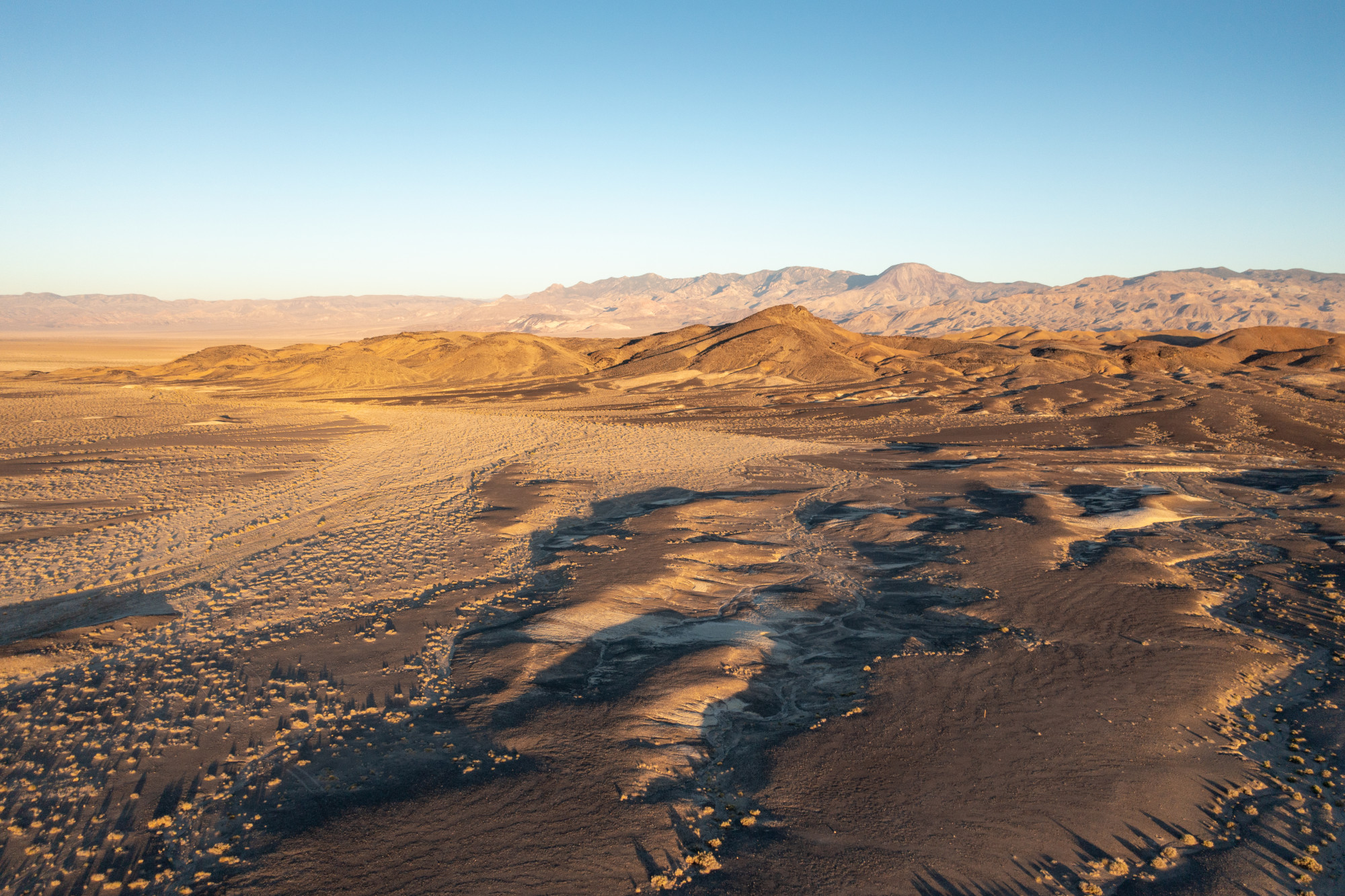
1:31 Let's flip forward. We're opening slide here is our project site in Nevada. Many may be familiar with our location in Clayton Valley. The project site has a large lithium clay deposit, which is underfoot in the foreground of this slide. Our proposed plant site is here on this low-lying ridge, which is called Angel Island. Let's flip forward, get to the meat of our talk, which is our feasibility study. We'll go through these highlights and then talk about how we got here to this point today and then the results of the feasibility itself and dig into some of the capital and operating costs before we get to some questions. So the highlights were shallow service mine, got low strip ratio, the deposit is quite extensive, it goes better than a billion tons of material in the ground.
2:22 Of that, we only need about 200 to 300 million tons to make a flesh out of mine plant. What we strive for here is more than 34,000 tons a year of battery quality lithium. Our phased approach in this development is to get us better than 40,000 tons a year. We do that in 3 chunks. We do an initial project, which takes us to about 13,000 tons a year of lithium carbonate. Then at 2 stages of expansion, which are funded out of cashflow of the project. So our real CapEx is really this $1.54 billion number. It's kind of an eye popper to us because our pre-feasibility study was more like a half billion dollars. So this is a taken us by a little bit of a shocker, but things are more expensive now coming out of COVID. And that's just the reality. You look at other projects in our space, Thacker Pass, Lithium Americas, for example, and the large CAPEX and the billions is something that we just have to work through.
3:25 But in this, our project does generate an awfully low operating cost. We do this by the nature of our process. We are a chlorophyll process, meaning that we generate our own reagents on site. We generate hydrochloric acid. We generate sodium hydroxide. And our project will generate a surplus of sodium hydroxide in Nevada, which is a premium commodity for reagents. We can sell it in a variety of places in the western U.S. We'll talk about that later. But it does give us a means to get our operating costs down under $3,000 a ton. That is one of the benefits of going the route we went. So we have a little bit higher on the CAPEX side, but potential to get very low on the OPEX.
4:11 And the bottom line of all this is that our after-tax rate of return comes in at 17%, and our NPV at 8%, with a base price of $24,000 a ton for lithium carbonate and $600 a ton for sodium hydroxide generates a $3 billion NPV at 8%. And before getting off the slide, I do want to thank all of our consultants and people that have been involved in this. It's taken us quite a while to get here. Pop into the slide. We've done about 2 years plus worth of work in our pilot plant in Amargosa Valley, which is the main source of the data supporting our feasibility study. We've gone through lots of process innovations, lots of work there in testing to get us to the point we're at today.
5:01 We've taken the leaching of clay through all the way through a direct lithium extraction DLE process to concentrate the lithium, make a concentrated leach solution, and then wind up with a battery grade, battery quality, lithium carbonate product. And we've done that quite successfully in a number of runs. And most recently, we've been looking at the market potential of our sodium hydroxide sales, which are, as I just mentioned, a good way to get our operating costs down. So of our consultants, Wood USA Group is our primary consultant on the feasibility. Thank them. Thank Global Resource Estimation, GRE, for all their work on the resources and reserves and mine planning.
5:48 Decent Crump Nacera was responsible in the design and costing of our acid plant or chlorophyll implant and we've got a variety of other consultants and our whole team down in Amargosa and board of Century Lithium to thank for getting us to this point in time.
6:10 So basic review of where we are in the world. We're in Nevada. We're halfway between Las Vegas and Reno. 100% owned property. All the Bureau of Land Management claims. You can see the property outline here in black. Our mill site is right where the cursor is, right by the corner of Century Lithium's project. We're adjoining Albemarle Silver Peak lithium brine operation. There's some synergies that we hope to explore with Albemarle someday and working on discussions with them and a variety of other potential partners at this time. This red line coming through the slide is the proposed corridor, power corridor for Greenlink West. And the energy is 525 kVA power line.
6:57 That's key to opening up a lot of the renewable resources in central Nevada. That power line is nearing the end of its permitting and start of construction. That'll be an exciting development in our area. We do own our own water right. That's quite sufficient for our initial 2 phases of the project. Our third phase relies on getting about 50% more water. We'll be looking at various sources of that over time, but we do have a plan for how we gain access to extra water to bring our third phase of expansion into place. On the mining side, it's a very simple deposit to mine. It's almost like a long strip mine, running lines of excavation down the trace of the lithium clay deposit.
7:50 We're using a excavator, coal planter, to dig the clay up, windrow it, and then convey it over to the mill. What you see in this slide is from the pilot plant bulk sampling. We took about a 600 ton sample out of the ground, crushed it, and at Tonopah Airport is where we bagged that material to take it down to our pilot plant in Amargosa. And as you can see, the clay crushes quite nicely. It's pretty easy to handle as long as it's not wet. If it's wet, which it would be coming out of the ground, you have to pay special attention to how you mine it. Can't run big excavators and haulage equipment on it. That's why we've gone to this conveyor haulage system and kind of the longer, elongated excavation site approach.
8:46 This is our pilot plant facility in Amagosa Valley. It's on an eight-acre site. We've been in there for almost 3 years now. About 8 months of that was in permitting and construction assembly of it, the pilot plant. And then we've come to over 2 years of safe, successful operation with our crew there. It's gone quite well. It's quite a nice, clean process that we've developed. You can see on the right-hand side, this is a leach tank. We've taken the clay material, run it into a hydrochloric acid solution, and extracted the lithium into solution. A big part of our process is infiltration, being able to separate the clay out of the slurry after it's leached. We've done that quite successfully with a couple steps.
9:38 This process that we've developed around the direct lithium extraction area, the DLE part, is innovative and we've got a few tricks in there which all have led to application for a patent. So our process around the DLE is patent pending. And in that we take this clay material, we run it through an agitator, agitated leach, and then run the slurry into a couple steps to get to where we can filter the tailings You can see the tailings material the solids after it's been leached quite easy to handle We'll be able to dry stack that material and this is the pls after filtration the leach solution You can see we've dropped out all the iron, the silica, and now this leach solution is ready to take over into our DLE area.
10:28 And this is our direct lithium extraction DLE section. We've run this for over 2 years. It's done quite well. We're pulling easily above 90% of the lithium out of solution once it gets to this portion of the process. Our leach grades are running between 200 and 300 parts per million. We do have concern back in that previous step of leaving moisture in the tailings. That's where we get some of our lithium losses. But our overall expected recovery now after 2 years of operation in the pilot is about 78% of the lithium incoming in the clay. The final step in our process is done off site. We used salt works in Vancouver to get to the final stage of making lithium carbonate. We did this on several occasions, achieving battery quality.
11:15 You can see some of the material here on the right. Clean lithium carbonate, which meets specifications that we found in the public domain for battery quality lithium carbonate.
11:32 Now we can get to some of the results out of the feasibility study. We'll start with resources and reserves. Our measured and indicated resource, as we've now calculated, this is an update of our 2022 pre-feasibility study. We're sitting at 1.2 billion tons of measured and indicated resources, a grade which is just a bit under 1,000 parts per million, contained lithium that goes better than 6 million tons of lithium carbonate equivalent contained LCE. You get the lithium carbonate from lithium in the ground by multiplying by a factor of 5.323. That gives us this number. But we don't need this 1.2 billion tons to make a mine plan. We'd like to someday.
12:24 What we really need is enough to put through a mill at a realistic rate. And our realistic rate, We started out with a base case of 5 and a half million tons a year of mill feed. We looked at a couple of different ways of slicing that up. We'll get to that when we talk about the phase capital approach. But our reserve now sits at 287 million tons. And that's enough to run a 40-year mine plan at the rates that we have for the 3 phases. What our previous number for the pre-feasibility study was sitting about 215 million tons. So we've added about 70 million tons in reserves. And that's a lot of that was due to our Intertopia property purchase, which we completed in 2022.
13:11 And the grade now being more selective, running down the center of The lithium clay deposit is about 1,150 parts per million, giving us about 1.7 million tons of recoverable lithium carbonate equivalent in the reserve.
13:30 On CAPEX side, this is how we get to our $1.5 billion of initial phase 1 cost. You can see here that about $500 million sits in process facilities. Another $500 million is in the chloralkylate plant itself. That gives us about $1 billion in actual physical layout of the facilities. And everything else comes in with indirect costs, contingency infrastructure, getting us to this $1.5 billion number.
14:03 We took this approach to be realistic both on the capital side, after we saw what our initial capex was going to look like for our target 15,000 ton a day first operation. We decided that to keep the CAPEX in a realistic realm where we can finance it, we had to do something in terms of scheduling. We still laid out the plan to hit 15,000 tons a day of mill feed. That's 28,000 tons a year of lithium carbonate equivalent.
14:34 And that's what we have here in phase 1 and phase 2. Phase 2 is an expansion within the physical footprint of phase 1, meaning that we've developed already the buildings, the layout, the infrastructure, everything's covered in that first phase. We just haven't expanded the acid plant and the DLE area, the leach area to its full 15,000 ton a day capacity.
15:03 So we've done that so that the second phase is paid comfortably out of operating earnings. So you take the initial capital and within 5 years you've made through earnings at the 7,500 ton a day rate, you've made enough to pay off the $650 million expansion. And by the same token, you go to phase 3, which is another $1.3 billion. And that's through an expansion paid for out of earnings.
15:32 So the thing that we have to focus on for financing areas is $1.5 billion number. These areas are paid for out of cashflow from the operation. And it's a kind of a way to Eat the elephant is a good expression. We're taking bites of the elephant one at a time to get to the bigger picture that we want to, this 41,000 ton a year of lithium carbonate expansion. And we do that out of earnings. And this phase is laid out so it comfortably earns that $1.3 billion over the next 5 years after we've completed the phase 2 expansion. Again, we see the chloralkali plant takes a lot of this CapEx. And we see both pros and cons to that. The con is the higher capital cost relative to a sulfuric acid plant.
16:24 But the pros are really in A, having this byproduct of sodium hydroxide, which we can take to market and sell. And B, it's the way to
16:34 separate us from needing sulfur as a supply element, a reagent in the process, and be able to produce our own reagents on site, not be tied to the oil and gas industry for reagents, sulfur to make our sulfuric acid in this case And be able to do this all independently and just need renewable power to drive the process
16:59 on the operating cost side And go through all these for the 3 different phases. Our phase 1 starts at 7,500 tons a day. And the mill feed rate, which is equivalent to 13,000 tons a year of lithium carbonate produced, we expand in 2 stages. First, there's a doubling within the footprint of phase 1, which is 15,000 tons a day, so we add another 7,500 ton a day of milk capacity. And finally, we take that to 22,500 by going to a phase 3, which is an entirely new addition of plant facilities. And within that additional plant facilities, there is scope for a phase 4. We didn't include it in the mine plan, but the building facilities under phase 3 would be laid out so that you could expand to 30,000 tons per day on the mill feed.
17:52 So on operating costs, these were more than we had in the pre-feasibility study. Life has changed. Times have changed in the last couple of years. Thank you, COVID. But our total OPEX now comes in around $50 a ton in the phase 1, dropping down to 38 in phase 2, down to 35 in phase 3. Of that, electricity is a big part of this cost. Probably about 75% of that operating cost is represented by power.
18:21 That gives us both dependence upon electric power for the operation, but also a way that it can be predictable. We know what our power bill will be, how we can build upon that using renewable energy. We've looked at some renewable energy projects on our own, both solar and geothermal. And hopefully those come to light in the next year or 2. So going to sodium hydroxide sales, the operation will kick out at the 15,000 ton a day rate, about 650 tons a day of sodium hydroxide available for sale. We've looked at this through a market study that we just recently completed. And with that, we expect a sales price of about $600 a ton for sodium hydroxide.
19:09 Current sodium hydroxide price on the West Coast is about $900 a ton. So we're a little bit conservative in that number. And being able to say, hey, here's a price that we can get into the market and be assured of it. And Central Nevada is a good location for this product in the Western US. Gold mines use sodium hydroxide, water treatment plants, a whole variety of customers are on our shopping list for being able to move our surplus sodium hydroxide. And with that, you see a substantial credit as you get down to phase 2 and phase 3. It's about $26 a ton of no feed, which gives us an operating cost over on the LCE side, lithium carbonate, of under $3,000 a ton. Hopefully dropping to as low as $2,000 a ton by the time we get out to phase 3 expansion.
20:06 Now we can look at the results of our feasibility study. Initial capital being that 1.5 billion dollar number. Expansion, it's phase 2,650 million, going to phase 3, new plant facilities, 1.3 billion. Our op ex, after our sodium hydroxide sales, drops to under $3,000 a ton. Average is about $2,800 a ton overall. And our MPV, after you plug this into a cash flow model, after tax cash flow, taking in our tax credits and corporate income tax, state income tax and state sales, we come out with a $3 billion net present value at a discount rate of 8% and an internal rate after tax of 17%.
20:55 Now, going to the phased approach does take us a little bit of a hit on what we could have got out of an IRR. We could have seen a little bit higher rate of return if we had just gone, say, to 15,000 tons a day out of the gate. But doing the phased approach brings us down a little bit, but it gives us a way of financing our project through the cash flow of the operation itself.
21:19 And quite likely, I bet you a lot of companies will be looking at that sort of model now these days to finance themselves and reach a higher production rate than saying they're going to come out with a large project right out of the gate.
21:36 Something on sensitivities. We'll talk later on about what the lithium price, how we got to this $24,000 a ton as our base price, how we selected that. But range right now that you could look at in the lithium market might be plus or minus 25%. That gives you a range on lithium prices of $18,000 to $30,000 a ton, lithium carbonate. And with that range, we can see a low, still positive economics, 12% IRR, 1 and a half billion dollars on the low end. So as much as 4 and a half billion dollars, 21% IRR, if you're closer to this. But some people consider a longer term price for lithium carbonate.
22:22 So summary, yep, we're an advanced stage project now. We're one of the 3 lithium clay deposits in Nevada that have a feasibility study in hand. We are working on our permitting. We have our water rights in hand. We've got opportunities in terms of solar and geothermal that we're looking at. And a big thing for us going forward is Working on our plan of operations and getting the permitting with the federal government in the state progressing We've been able to make battery quality lithium carbonate That's a big feature of all the clay deposits being able to go from mind a product on site without the need to ship concentrates to a conversion plant. We can do it all in one place and be able to make battery product within the state.
23:10 And our pilot plant has been a big key for us getting there. It's been a big asset generating the data to support the feasibility study. We've been quite successful and safe in our operations. And finally, where we're going forward, we definitely complete our plan of operations now that we've got the feasibility knocked out. We're looking at all the aspects in terms of our community and partnering and permitting. Finally, on the financial side, yeah, we are looking for a strategic partnership and we are looking for the federal government to see what we can do in terms of funding the way that 2 other lithium projects in Nevada have done. So with that, Romeo, if you're still online, we'll get on to some questions and answers.
23:59 Yeah, perfect. So I noticed there are quite a few questions in the chat. I got a couple of questions for Dr. Billenbaum first, and I think they'll cover a lot of the material, but we will get to those direct audience questions as soon as I wrap. So first one jumping in, Bill, you just mentioned the next step is a strategic partnership while you go into the permitting phase. How long is that permitting phase expected to last and do you foresee any potential issues?
24:22 Well, permitting on this, once we have our plan of operations in, should take us about 2 years. And that's an average. And average expectation with the paperwork that the federal government now requires. Physically, once we complete all the baseline steps and everything, there still is a mechanism in the state of Nevada that it should take us 12 months from the point that
24:48 EIS is completed or EA, Environmental Impact Study or Environmental Assessment, to the point where we have our federal permit and can proceed. We will also need a water protection, water pollution control permit for the project. That's about a 2 year process right now as well. So all of that will be in hand in terms of the applications going forward here now that we have our feasibility. Perfect. I do have one question for Bram. One of the next steps that we've talked about today's presentation is applying to the Department of Energy. Could you share what that process is like, what the next steps company will take and how long that process will take?
25:27 Yeah, thanks, Romeo. So we have been in discussions and have been reaching out to the Department of Energy for quite some time now. And the real key to opening up formal discussions is to have this feasibility study in hand, so we can kick off sort of a much more formal approach for them now. We have identified
25:53 2 potential loan programs where we could fit in due to our unique approach, but these processes are lengthy, they're complex because they need to fit in
26:09 with the rest of the strategy of the company. You know when we talk about strategic partnerships, you know all of that plays a role. So you're probably looking, I would say, around about an 18 month period from here onwards. But, you know, today's feasibility study, this is really sort of a kickoff, for lack of a better term,
26:36 to start this process now. Makes sense. Dr. Bell, I know you kind of went over, just to be as clear as possible for the audience in the room, why did you decide on the phased approach in production that the feasibility study outlines. What are the benefits to this approach for shareholders? Well, 1 benefit for moving forward is that we keep that capital cost initially under $2 billion. And we did that by looking at this initial phase, and then the subsequent phases being funded out of cash flow. The reason for doing that is then you don't come to market and say, gee, this is really a $3.5 billion project. Well, that's a wrong impression for it. You look at the expansion capital almost the same way in a cash flow statement as you would the sustaining capital.
27:24 It's something that's paid for out of operations, not out of the initial capex. But you have to pick that initial phase, that first phase, so it's economic. You can't go too small. We were looking at one point down around 2,500 ton a day to 5,000 ton a day on the mill feed. That puts you at a point where you can't actually recover that capital and get that second stage of expansion. For an investor, whether partnership or retail coming in, that initial capital is then funded. And Once you have that in hand, you're de-risking the project. You're taking that risk of process out of it. You're going for a smaller bite at the apple than trying to do the whole thing at once. So that was our thought process there, and the way the cash flow and the project felt out in the final economics of the feasibility study. That came out quite well. We were quite pleased with that.
28:24 Appreciate that. Dr. Bell, there's been a request to throw up the summary slide just while we're going through questions, if you wouldn't mind just shooting back to that. While you're doing that, I do have a question for Bram as well. Curious, how did Century arrive at the feasibility studies base price for lithium? Yeah, so Romeo, that was quite an interesting exercise because Everybody that I think is monitoring the Lithium industry will know that we're at this point in the industry where you ask 5 people and you get 7 different opinions as to what the price is going to do. So we have looked at 2 of the large research institutions, we looked at their price forecast, we've looked at the survey of between 15 and 20 other institutions to get to a street consensus and we also looked at what was used by 1 or 2 of our competitors in the industry and that's how we landed up with a $24,000 price.
29:32 It's similar to what Lithium Americas have used. And despite the fact that it is a premium as to where the market is current, where the market is today, you know, It's also at a discount to what the research institutions are thinking could be the long-term potential. We're talking about 2032, 2033 onwards. So we're quite comfortable with our price. We think it's conservative, even though it's at a premium to today's price, we think it's conservative if we look at the longer term forecasts that are out there. So there is also then, of course, the potential, you know, by the time we get to sort of stage 2 and stage 3, that that price could have moved up sort of aggressively. And that's why we've also included the scenario going up to $30,000 a tonne. But at this point in time, we think $24,000 is conservative.
30:36 And you know, having looked at the sort of forecasts that are out there, price consensus, research forecast, that's the price that we felt most comfortable with. Awesome, appreciate that. And there are a ton of audience questions. I'm going to try to get to as many as we can. I'm going to start with 1 from Jay Skelski and then jump to 1 from Steven Madden. So Jay Skelski asks, looking at the excess sodium hydroxide production, I assume this is for Bill, wants to know if you can touch on what you're seeing as far as the market goes. Mentioning plans to sell it to the Western US, he wonders if you think this is a product you can forward sell to interested parties. Well, Yeah, let's start with the first part of where the market is. And in the Western US, it's largely dependent. The market for sodium hydroxide is largely dependent on imports. All of the imports come in through 4 ports on the West Coast. That's why I was mentioning what the current West Coast price of lithium hydroxide, sodium hydroxide, excuse me, sodium hydroxide is, caustic soda. And the tank price on the West Coast right now is close to $900 a ton.
31:44 And where does that sodium hydroxide go? Well, it goes all into the Western US. And the market there right now is about, or imports are about 500,000 tons a year dry weight of sodium hydroxide. So there's a big potential to displace all those imports with a locally produced, regionally produced product. And that's where we see our niche and our opportunity. At our phase 1 production rate, we're sitting about 120,000 tons a year of product that we'd be looking to move into the market, moving up to 360,000 tons a year into phase 3. So there is easily the market there for it. And how do we penetrate that market?
32:29 Well, yeah, The last part of your question was, where do we go to sell it? And can we forward sell it? We are looking at, we've got some interested parties in terms of taking the material and wanting to be able to either market it or to use it. In Nevada, you've got a number of gold plants that use sodium hydroxide as a neutralizer, and that includes the people that make cyanide for all the gold mines. So there is a good market there. We haven't gotten to the point of signing any letters of intent with anyone, but we do have expressed interest in that. Great, thanks. As a follow-up actually to his question, he also wants to know on off-takes, the feasibility study out, can you give some color on where you're at the high level with these discussions.
33:18 Yeah, Bram, you want to field that puppy? Yes, so you know that's obviously not something that we want to discuss publicly just yet. We're at, You know, all of these discussions, you know, strategic partners, offtake agreements, all of these discussions really can only start in all earnest once you have a feasibility study in hand and you can actually talk openly with people about, you know, what can be expected, when it can be expected, what sort of costs are you looking at. So obviously there has been a lot of discussions to date. I'm not gonna deny that. But this feasibility study really is, like I said earlier, the kick-off to start formally talking to people on a far more informed basis. You've got information that you can share.
34:17 They've got information that they can review, that they can apply their minds to, to see how good a fit we would be for one another. So that's where we are with the process. But obviously, these discussions are always extremely sensitive and we will treat them accordingly. So I think for at least the next few months, the standard response is going to be that this is not something that we can discuss publicly other than for people to know and understand that we are engaged in these kind of discussions. Perfect, thanks. I got a number of questions about financing. I'm gonna combine into kind of 2, and I believe, Bram, this one's probably for you as well. But obviously, Dr. Bill, feel free to chime in. 2 questions really are, what's the short-term plan for financing? So bridge funds, given as people in the audience note, last time they checked, there's cash in the bank of about 15 million. And then follow up, what's the plan for that $1.5 billion initial financing?
35:21 Just people looking for different financing routes, if you could comment on, give perspective there. Yeah, so let's start with a short term. You know, We've got a fairly low burn rate, so our cash, we can stretch that quite a bit. Obviously, I don't want to end up in a situation where I'm only left with $100,000 in the bank. But we've got a small team. We work very diligently with our funding. So there's no immediate need to go out to the market. The longer term, that's the more interesting part. Obviously, the government funding is going to play a major role in that. The government is willing to fund between 50 and 70% of processing facilities.
36:12 So that's a very large chunk, but that will also still leave quite a gap and that's where the other discussions are coming in and there's a whole range of different types of solutions that could, financing solutions that could form part of that. So, you know, that is something that we're going to have to map out and formalize here over the next few months as our discussions with various interested parties take shape. So that's going to be the real interesting part. But people need to be patient.
36:59 Financing this size takes time. And I've said earlier, on one of your earlier questions, you know, if you look at the government funding you're probably looking around 18 months. So, and all of these all of these different elements essentially needs to dovetail with each other into one comprehensive financing solution. Great, appreciate that. If there are any more questions about financing, let me know in the chat. But I think that sums up most of the financing questions I've seen. I got one for, I believe probably Dr. Bill from Barracks of TV asks, is it possible if funding is provided to build phase 1 and 2 at the same time? Oh, certainly. Yeah. All of phase 1 is inside of the buildings and the footprint of phase 2.
37:46 That's why the capex cost for phase 2 is about a third of the cost of phase 1. And in the same token, when we get out to phase 3, there's room and space in that number for building a phase 4. So you could cut down the phase 3 costs some, but definitely you've got room in these phase 1 and phase 3 of building out to that larger rate. And yes, if you have a CapEx for phase 1 and phase 2 all in hand at once, you could do both. Awesome. Thank you. There's a couple of... Oh, sorry. Go for it. Yeah, please. Maybe if I can just add to that as well. When we apply for the government funding, The current intention is not that we will be looking at a phase 1, phase 2 and a phase 3.
38:38 You know, to the extent that it is practical and, you know, to the extent that the government wants to accommodate it, there is certainly scope to actually rolling at least a phase 1 and a phase 2 into one application. But that's still to be sort of fleshed out here in our discussions, in our upcoming discussions with the Department of Energy. Okay, appreciate that extra context. There's a number of questions about water rights. So I'll just combine them into one. People are looking to know if you can elaborate on the planning basis to obtain the additional water required for phase 3. Well, phase 3 is out 10 years from the start of production. So it's only looking for about 500 gallons a minute of water.
39:27 We do have a couple of places identified where we could buy that water right up, either inside the basin or outside of the basin or buy it for municipalities, that's not a big concern at this point to us. There's a variety of ways we think we can skin that water rights cat when the time comes. And that's kind of low on our list right now of priorities. But we do have the water to keep us supported all the way through phase 2. Great, appreciate it, thank you. I got time for a couple more questions. So I'm trying to run through, I think the big ones that we've got left. One thing, sleuths in the audience noticed that Koch Technologies was not part of today's presentation. People are just looking to make sure that relationship is still in place.
40:14 Yep, Still is, still working with them. And as we move through the next year, one of our exciting areas is looking at strategic partners and how things come together. And they're definitely on our conversation list for that. Awesome, And just as a quick follow up to that, I'm looking for a bit more context on the impact that Coke Technologies provided with the LI Pro DLE. Well, we provided the fundamental platform for that with our Chemionix LIONX process. And that's the license rights that Koch purchased for other projects elsewhere in the world. So we already had fundamental IonX change and filtration equipment there at the site.
41:03 What Coke came in and helped us with was automating some of that process, making it more streamlined, being able to run the cycle times that are involved in the ion exchange and filtration efficiently, way more efficiently, and be able to do a lot better job on the data collection. So that's been an upgrade there for us. And with Koch, I know that they've picked up a fair amount of our ideas and working experience in the pilot. So it's been a very mutually beneficial, favorable arrangement so far. Great, thank you. 1, this kind of combines 2 questions, but people know the lithium recovery for the FS, it's about 78%.
41:49 People are curious if there's a chance that recovery is going to improve with further R&D going into phase 1, and people are looking for interest in where that recovery might come from. Well, yes, there is a chance that we could improve that recovery. We need to get more of the solution out of the tailings. We've been looking at that all along. That's where main place of lithium loss. We know that before we get to that point in the lithium extraction, we're solubilizing maybe even at a 90% range on lithium that's in the clay that's going into solution. So we do have to pick some areas there where we can work harder on it. We also know that as we go deeper in the deposit, so far our pilot work has been in the very surficial first 50 feet of the lithium clay deposit.
42:35 As we go deeper, there's a change in the clay itself to where it's less oxidized and more of a vanillite. And we're able to get higher recovery on bench scale tests with that lower acid consumption. So there is a possible improvement at that end as well. Thank you. I got time for 2 more quick questions, and then we'll conclude for this morning. Question actually came up a couple times. People are curious if the feasibility study includes any summary of human resources, human capital needs for the operation. Really, how many people does it take to operate a plant like this? Right. You know, when the full report's out, you'll be able to pick those out. But Operating is pretty efficient. I think we're around 200 people for the 15,000 ton a day case and Not much more of that to go to 22,500 and not much less to get down to 7,500 Great.
43:31 I know we went over already kind of upcoming catalyst, but just for clarity for everybody, as we wrap up, what's the company's short term goals? What do investors have to look forward to in the near future following Century Lithium? Well, our short term goal is in line with our long-term goal. We have a desire to bring in a partner or partners into this and help with that financing as we go forward. So we're looking for that nice strategic partnership that'll help carry the project. And we've got a number of people that we've been talking to on that line, and that will be exciting when something comes together on that. We think with the feasibility now, we've got at least documentation in place to get those conversations going more in earnest.
44:19 Awesome. And just to wrap up today, this is a question for both of you on the call today. What are you most excited about in the upcoming year? What keeps you up? What's got you most jazzed? Yeah. Rob, you want to go first? Well, yeah. I've spent the last 20 years in the junior and mid-tier sector. I've always been very excited by pulling things together and this is going to be for me personally I think very exciting over the next 18 months. There's a lot of different components that need to go into providing sufficient capital for the development of this project.
45:12 And all of those are going to be very interesting. Also I have to say it's very satisfying to be part of a solution for the future. Lithium is a critical mineral going forward. We're moving in the right direction, trying to leave behind a positive legacy for generations that come after us and to be part of a project that will make a contribution towards that. On a more professional note, I find it very satisfying and looking forward to the challenge to contribute to getting this off the ground, knowing that we'll all be, the whole team will be sort of leaving a positive legacy. I certainly Won't be around in 30 or 40 years to be able to see what the exact impact was of what we're doing here today But you know, I believe it's going to be it's going to be very positive so from both a professional perspective and a personal perspective, you know, I'm really looking forward to this and delivering something for the future.
46:36 Yeah. I'll just end that by saying, emphasizing the team part of it. We've had lots of challenges, Challenges since the first time we started working on this project years ago. We've been faced with problems, problem solving, and the team has always come together to solve them and work together. So as far as my excitement goes, It's going to that next level, going to the next stage, doing the legwork of making this a project. And it's all a team effort from our board and management and our consultants and our team of employees. So building that team out is going to be exciting and working through the project will be exciting.
47:25 Awesome. Well, Dr. Bill Braum, thank you so much for running through. I think this is a great update. Anybody who is in the audience, thank you so much as well for joining us. If we didn't get to your question, I think there were only a couple we didn't get to, we'll make sure that those questions get passed along to the Sentry team, and you can get an answer in a pretty speedy timeframe. But otherwise, thanks so much for joining us. I'll leave it to Bill and Bram for last word before we jump out. Yep. Got a last word there, Bram? No, just very excited that we finally got to this point. Everybody's been working very hard. I mean, the technical team down south has done a phenomenal job, you know, with the improvements that were delivered through the pilot plant and, you know, everybody contributing to get us to this point. So it's excellent. You know, there's been a lot of effort, a lot of commitment, a lot of positive contribution.
48:26 But in a sense, you know, the real work starts today, right? So really looking forward to that. And hopefully I'll share all this. We'll also be happy with what we deliver here over the short term, the medium term and the long term. Yep. And on that note, let's thank all the shareholders that have been with Cypress Holdings, Cypress Development and now Century Lithium Corp through the years and helped us get to this point in time. We thank them and thank everybody for listening to this talk today. And we hope to reward you going forward. So thank you