Transcript
Automated transcript · Written by software from the replay's audio. It can mishear names and figures; the replay is the record.
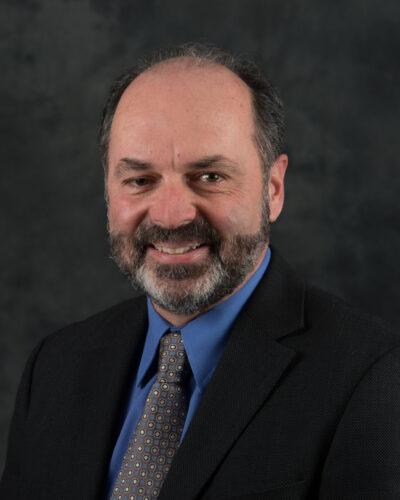
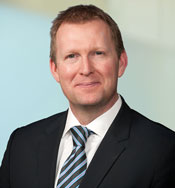
0:03 Good morning, good afternoon, or good evening, depending on where in the world you're signing in from today. I'd love to see an international audience. I think we've got at least Alaska to Taipei today, which is always fun to see. So thank you, everybody, for making the time to join us at odd hours of day and night. Joining me today are Brian Skanderbeg, CEO of GFG Resources, Jeff Ackert, President and CEO and Director of Cascade Copper, and Mike Garbutt, CEO of Clean Air Minerals. Gentlemen, how are you today? Very good, thank you. Awesome. So here's how today's gonna work just for the folks in the room. I'm gonna shoot some questions at these guys just to get the conversation started, but this is an interactive chat. So please do share any questions you might have using the chat button in the bottom right of the screen. We're going to try to keep today's conversation on topic. So questions about individual securities represented here today probably aren't going to get addressed. That being said, I still really encourage you to ask them because I'm going to send those questions through to the respective speaker. And if they're really easy clarification questions, I might let you sneak 1 in. But any question that's directly on topic, I'll be sure to work into the conversation as much as possible.
1:11 The only other thing I'll say for housekeeping is this event is being recorded and will be available for replay. I'm going to say 2pm Eastern. It'll come into your inbox and also on Six's YouTube channel. But I really want to get into the conversation. I think it's an exciting one, what we've got planned today on Ontario's mining landscape and how to most effectively unlock its value. And Brian, I'll start with you on kind of one of the big questions. So feel free to take it where you'd like to. But how do you think Ontario should position itself as a truly global leader in supplying critical minerals for the green energy transition? Yeah,
1:47 it's got a lot of assets to use. For me as a geologist, Ontario has all of what you look for and it's why we as companies work there. So the geology is there. So for me, it's focusing on this, how do we get the timeframe from a discovery or a concept through to the end point. So 17 years, 15 years, it's a, you know, many of us be retired at that point and I'm not that old. So how do we get that piece, you know, truncated and shortened? And it has a lot to do with, you know, the permitting path, certainly consultations, a piece of that and the relationships on the First Nation side. So if I had one area to focus on is how do we how do we shorten this piece and bring about actual production and actual decisions to bring critical minerals, whether they're related to rare earths or copper or nickel or magnesium into
2:43 a timeframe that's more relevant and closer to now. So Ontario is doing a good job on this front. I think they are trying to be a province, but I really think trying to push on that time frame, trying to work with the impact communities in the First Nations and trying to think about how do we shorten this time frame is a core focal point to
3:03 me. It's one of the areas I would focus on most and I'll leave a long list for some of my peers here to talk about. Yeah, for sure. I want to start with a broad question because I think all of you can take it wherever you'd like. Michael, I'll shoot it to you. Same question. Yeah, so the term global leader, I mean, we're a world leader at talking about big things. So globally, global leader for province is quite lofty. And if you look at even, forget about Ontario, but look at Canada as a whole, where we sit in terms of critical minerals production or production for the green energy transition. So probably Nickel, Aluminum, Platinum, we're somewhere around 4 or 5, Cobalt 5, Lithium seventh and Copper, we don't even show up in the top 10, we're in the other category. So for me, do I think the government's doing well at, you know, I agree, we have a lot of potential, the government's done a lot in terms of policy, and in fact, if you look today, the Fraser Institute came out with a survey, you know, Ontario ranks number 2 jurisdiction for policy. We've done a great job.
4:05 We got room to work
4:07 on Indigenous First Nation participation, but it's getting there. But the really thing, you want to meet that global leader status, we've got to build something. Our assets are actually quite old in terms of processing some of these minerals. We're getting somewhere perhaps with Lithium. I think that Northwestern Ontario is prying for
4:32 a hydromet facility so we can finish the product. It's a bit about the chicken and the egg. We could develop a whole bunch of assets, but we have to actually build something to actually…it's a bit of build it and they will come. And to do that, you need to attract billions of dollars of capital to do that. It's a lofty goal. So the government needs to get away from, you know, we're spending money, putting money on R&D, which is all important, small little pieces on R&D, little piecemeal here. But if it's truly, we're trying to be a global leader, we need to be bold, we need to actually build something.
5:10 Great, Jeff, I'll throw it to you for the last word on the most broad of the things I'll ask. Yeah, yeah, yeah. So, you know, the industry that we're in, it's like a food chain, right? So, you've got to start somewhere. I agree with Mike, you've got to build some processing, you've got to build some big plants, you've got to build some big deposits, but you've got to start somewhere. So, with Cascade, we're a small company, we're sort of getting into the grassroots to the overlooked and missed opportunities. So how do we build from there and to feed that chain of development in Ontario and to help us as an explorer
5:55 and to be a global leader, we gotta start with access. We've gotta have good access to our projects and to our properties to allow us to have efficient exploration. We need incentives from the government, both levels, and then flow-through obviously helps. I have to say that the OJEP system is a good thing at the lower end because it has, it sort of injects a bit of money into the system early on. So that part is good, but I'd like to see maybe a little bit more incentive across the board rather than just the prospectors of the early stage but maybe getting through into the development stage, getting some OJEP or Ontario government money coming into that side of things too. So that's my take on it.
6:47 How do you make it global? Well, you got to start grassroots and build from there. Okay. No, that makes sense.
6:54 Changing gears almost completely into more of the geo. So I know obviously there's a lot of exciting untapped frontiers in Ontario's mineral belts. Talking Abitibi, Superior Province, whatever. So I've got kind of 2 questions for all of you. 1, what do you think is the most exciting untapped frontier? And how could a new discovery, like a real dinger,
7:18 reshape Canada's mining landscape? Mike, I'll start with you if you don't mind. Yeah, that's fine. So, you know, I'll say my background is a mining engineer, so I'm not a geologist, but, you know, if you look at the sheer size of the Superior Province, right, and in northwestern Ontario, a lot of potential there to be explored. In terms of a game-changing discovery, you've got to think that's got to be there. Although, the mining engineer side of me and the things that get me excited is the best place to find a mine is where there's already 1. And so in northwestern Ontario, I'm kind of partial to the mid-continent rift system, which primarily is in the States and there's a lot of good assets in the States, but sure, north of the border, there are some really good ones. And then the Wabagoon sub-province, there's a lot of historical mines there, a lot of good gold, copper
8:14 potential in the region. And I think the mass of that coming together, it started to get more attention. Certainly, to me, that's exciting. Now, the second part of your question, what's going to be a game changer? Well, If we find another ring of fire, is that going to really change anything? We're struggling to get the current region off the ground. We have the one asset that's got 1 study.
8:41 But the reality is I'm a bit of a pessimist in that respect. What is it going to take? What is it going to take? Right? What is it going to take? Do we have to find a second one? And does it really make Ontario or is it a game changer for Canada? So I'll leave it at that. Sure. I appreciate that, Mike. Brian, I'll throw the same 2 questions to you. Yeah, look, I look for an areas that and think the opportunities sit where you have well-established
9:08 large systems. And whether we want to look at nickel or copper, VMS systems or gold, you know, find a province and the Abitibi is one of those provinces. Now, the opportunity to me sits in portions of
9:25 those that benefit from well infrastructure, have the people there, but there's something that's hampered exploration. And if you look at this province, a bunch of it sits under 20, 30, 40, 50m of till. And we're focused on those areas with GFT and the company I run. And we're doing that because we think the probability of finding a new big deposit in a relatively shallow setting is still quite reasonable. We'll look for outbound areas and prospective areas. We're focused in the Timmins Belt, but I would take the infrastructure-rich region of the Abitibi and you can take Ruin, you can go over to Val d'Or, you can talk about Kidd Metallurgical Complex, which is now going into its final days.
10:12 But those are the areas I think that will offer the best prospectivity of finding a big economic deposit. When you think about game-changing discoveries, often they come in in non-traditional settings. I would use 30Moz at Cote, and that's just my conceptual estimate of the old system to say it wasn't supposed to be there. But it is in an area where you have all the infrastructure there, you've got the systems floating around, the rocks were a little different. And finding a spin on those,
10:47 I think, resets methodology and mindsets around exploration. You can use stuff that they're finding in Minnesota, you can use stuff that maybe Clean Air is doing on the Nickel and PG side, and I think finding new settings in an area that shows well endowment will change where exploration is focused. So I think those are some of the areas that I think new explorations will, new discoveries will drive in the next cycle here in the next 10 years. Great, I'll take it. Jeff, throw it to you, same 2 questions back to back. Yeah, well, I think, you know, the under-explored areas are probably the ones that are ripe for the picking. Ones that have been overlooked, maybe because of infrastructure access or maybe lack of big discoveries in the
11:38 past. So my feeling is that maybe as Mike had said that Northwestern Ontario, the Wabagoon Belt and also maybe the Bertucci belt, which is that northern one sitting north of Sioux Lookout and Dryden area. And I think that those areas have some great potential. I know what is it, first mining is looked at and is developing the Springpole deposit. Next Gold has got a multi-million ounce deposit, Gold in this case, obviously, but those kinds of things will, those kinds of deposits will start bringing more and more people into them. And I think that's the sort of the catalyst for making more discoveries in those areas. So I'd still like to think that, you know, there could be development of big deposits in those Greenspun belts and why not?
12:33 Great. And Jeff, I'm gonna stay with you, jumping into a bit more of a tech question. Cause I know obviously the landscape for mining has changed and continues to change at the same dramatic rates that all tech has been changing lately. I'm curious how emerging tech like AI driven geophysical modeling, drone based surveying, et cetera, is changing the discovery of hidden mineral deposits in Ontario's kind of vast terrain. So curious your take on both the tech. Are you using any and where you think that that's gonna take the industry? Yeah, absolutely. I think you've got to adapt to this and adopt it into your system or else you're gonna be left behind.
13:14 And we've done something in the AI space. We've got a collaboration with a company called Blockware Technologies. And what we're doing is helping them develop a system where they can take real-time information that you're collecting in the field. They can take historic stuff even before you get out there. They can build it into sort of an in-house database. And then every day or every couple of days when you collect your data in the field, you can shoot it up to the cloud. They take it, they assimilate it into their database. Then they look at it, sort of AI predictive modeling, but really what it is is pattern recognition of all the data that you've got.
14:00 And they can put it through there, give you a new map with the prediction of where you might expect to find similar,
14:08 you know, assay results, similar surface samples, and you can go back there the next day and you can follow up on that. So that is really important for efficiency, timeline and discovery, saving money. You don't have to go back next month or in a couple of months after you get your results back, you can actually react pretty quickly. So I think in the olden days, not that long ago, I can see the geologists, you know, flipping maps and mylar of all the different data layers. Now you don't have to deal with that you can You can put it into your AI database or in your database have AI look at all the pattern recognition and then come up with some areas to look at next the next day. So we really, really have adopted that and really, really like it and look forward to using it going forward. Awesome.
15:04 Brian, I'll throw it to you for
15:07 what tech changes in mining you've seen and how can that change how Ontario does things? Yeah, I mean, we came out here in the last year or so and really did push into this envelope as well. And interestingly, as you walk around that, like something like Roundup, there's just more and more companies offering you these consulting services and the, you know, ultimately the path to use it. So you've got to pick which one and which group you want to liaise with. There's a couple leading whether you want to look at...
15:35 I'm certainly using and working with Verify on it. You can look at Geological AI. In the end, they're integrating a much more efficient way to analyze what geologists have done for the last 2 or 3 generations. And I think the opportunity is really to take vast troves of geophysical data and the great thing for us is, we control 800 square kilometers And within that, there's lots of people who have collected data before, whether it's EM or IP or MAG or geologic sound or structural models. And we can try to integrate that and analyze it, but it's a massive amount of data.
16:14 And I would surmise we use 10, 15%, 20% of it. Like we don't use a lot of the data, particularly if you're looking cross commodity. Mike or Jeff or my peers here might be focused on copper and nickel and I'm focused on gold, but do we actually have the right mindset and the right, you know, program and skill set to properly explore cross commodity, not always. But you certainly can embed it in an AI system pretty easily. So that's another thing. I mean, I just think the geophysical window and the geophysical applications are very obvious one, but I take geology, I take geochemistry and geophysics, I put them in the same basket because they're all extremely data intensive. Sure. Our brains are only so big.
16:59 Smaller than others, But yeah, that's where I see it's coming. And I think it's coming very, very quickly. I would say versus last year, huge, huge step forward in the application, the numbers of groups that are doing it, how we're embedding it. So where is the space gonna be 123 years from now, another massive leap forward. And I think Jeff's comments, right, is that if you're not doing it, if you're not looking for ways to embed it in what you're doing, you're not doing yourself or the industry any favors, and you're probably not going to exist in a couple of years. Your booth at PDAC might slowly disappear. I totally understand what you're saying. Mike, I'll throw it to you for your view on how tech's used right now, don't you? Well, the one interesting thing, so I don't, you know, not to duplicate
17:46 what's being said, but is its application in almost data vacuums, where you have very limited data and it's early stage exploration where there are companies using global analogs, right? And then using that to create proxy variables on an area of land where they know there's some structure in that and then interpret as best as you can some targets and then use some airborne VTEMs, deep conductors and find potential that way where again, you're saving money as opposed, early on using data from, again,
18:30 the interesting one, I was reading a paper probably about 4 months ago on global analogs to use in various areas. Now, again, I'll preface it by I'm not a geologist, but I'm a data guy and I found that extremely exciting. Albeit though, there's certainly a value in a geologist actually looking at it and said this makes no sense whatsoever but it sounds very interesting to me. The good point too is that you can do all this shuffling of paper and AI stuff, but it's really, you know, getting the boots on the ground and verifying and making sure that it makes sense at the end of the day is important. So don't put all your eggs into the AI basket is what I'm saying.
19:16 Yeah, there you go. I got one question and look, this is going to be an ESG question. And I know a lot of people in the chat roll their eyes. I'm going to make 2 comments about that before I give it first. I think a lot of time we talk about
19:27 ESG and low impact mining. It really is actually better for shareholders because it decreases permitting time, et cetera. But I also have found the people in the mining industry do actually genuinely care a lot about the environment. So bear with me for this question. Jeff, I'm going to start with you. What role do you think advancements in low impact mining technique can play in balancing Ontario's huge mineral wealth extraction with environmental preservation and the provincial government's goal in supporting both. Yeah, I don't think we want to relive the 70s when mining companies were running roughshod over the environment and that kind of thing and stakeholders. So, we've come a long way since then and I think we've got to continue that way. I think it's built into everybody's business model now that the environment, local stakeholders are an important part of the system and you've got to do a lot of that homework even before you put a hammer on the ground.
20:30 As far as innovation in mining, I'd like to think that if we ever found a big, massive deposit, underground deposit, that we could mine it efficiently because of the strides that are made in underground block caving. We can do massive megatons. Instead of doing an open pit, we can do it underground. So that's important. The traditional, in the Gold systems anyway, of using cyanide leaching, I think we can move away from that. I think it's sustainable at this point. I think a lot of people misunderstand
21:12 how cyanide can be developed and looked after post-mining. But I think those are the things that we can push forward is innovation, underground and surface mining, using different recovery techniques. I'm not a mining engineer, but I know that there's some out there that we can use. Oh, great. Mike, I'll throw that next question, or same question to you.
21:42 Yeah. So, you know, it's funny, I was going to say Some of the people watching might roll their eyes, but the reality is there's a business case for this. And I know I was making fun of the government putting money into innovation and funding, but I think this is clearly where the money is needed and some good ideas are. So, some of the things that are happening, I'll say water, globally, water's a major issue. So any way a company can have 0 discharge, closed circuit, and there are minds that do it, there's no question, but
22:21 there are better ways to do it and more efficient ways to do it. It's almost going to be an absolute must. Land use, we talked about a few things, small footprint as much as possible, up at the Wailu's messing around with underground tailings, Anything you could do to minimize the impact at the start. And then if you can't, it's progressive rehabilitation. And there are some innovative things going on with progressive rehabilitation. But the actual most interesting thing as a mining engineer, there are people working on low-waste mining. If you could actually just mine the mineralization and keep the waste away, that'd be great.
23:05 It's tough right now. It's not done at scale, but there's underground bio-leaching. There's a whole bunch of suite of innovations that could be a significant game changer with respect to mining with less impact. And then at the last end, I'll throw on the use of renewables. Mining is a huge energy producer or user. Anything we could do with renewables is going to be an economic benefit in the long term. Great. And Brian, I'll give you the last word on this question. Yeah, maybe 2 things I'll focus on is the in-situ mining angle. And we have a partner looking at in-situ mining relevant to Gold And adopting a Uranium methodology that is very much second nature when you look at in-situ Uranium mining in the last several decades and even pushing now into the Gold space and into the multi-commodity space, I think you'll see it. Hard rock Uranium in terms of Saskatchewan now, not just roll front Uranium like you have in the US.
24:11 So those technologies are advancing.
24:14 And I think that's a really critical opportunity that could revolutionize this space. If we can find a way to more selectively mine without drill blast muck haul, create tailings, massive shift in cut-off grades, environmental impacts, cost structure of the industry, all those ones. In the end, you flagged it earlier, the cyanide piece, I think cyanide does get a bit of a bad rap. There's alternatives that are
24:45 under advancement. Nobody's replaced cyanide as a key leach technology yet, but I think that's coming. And that's a key step is finding an appropriate ligand. A ligand is just what dissolves the gold and cyanide is what it is.
25:00 So finding alternative technology around cyanide is probably a key piece to assist in a better footprint and lower impact mine. Okay, great. For the next one, Brian, I'm going to start with you here. I'm going to read a question from the chat and then I'm going to reframe it. So hopefully it'll be answered throughout everybody's discussion. But Mr. Tilden says, and it's something I heard a lot of times, he says that his perception is that in Canada, First Nations and Indigenous groups are the biggest roadblock to getting mines off the ground. I'm going to reframe that question a little bit and ask in what ways are Ontario's mining projects integrating with Indigenous groups and making partnerships that drive sustainable development and shared economic benefits? What's changed in this landscape since, let's say, the early 2000s?
25:49 Just fill us in on what the process looks like now, and hopefully, in doing so, we'll answer his question.
25:56 Yeah, I mean, we have a very positive relationship with our local communities and with the First Nations that we work in their traditional territories of. So it starts with that. It starts with a good open relationship. In terms of how it's evolved over the last several decades, very much more sophisticated, very much more corporate entities, participation driven, financial model driven. And and I think there's a framework that's relatively well established now in terms of what the expectation is under an MOU or an IBA. It's different wherever you go. We work in well-established territory. And I would argue that, you know, because there's 6 mining companies that have signed up and IPAs in our local area, the road's been walked and the expectations are set and we kind of know where to go. Where you can work to a new area, you're gonna have to walk some of those roads yourselves and create the foundations and the path and the relationships to have them supportive because in the end,
26:58 it's a critical piece to the advancement of these projects. Happy with the progress. I think it's moving in the right direction. TFT is thankful and works in an area where I think there's a good path and a relationship and we can achieve our permitting timeframe in a reasonable time. And we have participation. We have our First Nation partners as shareholders, as revenue sharing partners, as supporters for drill contractors, core boxes, people to support our exploration programs. And there is bona fide participation at the First Nation level in our project. That's how we chose to do it. And I think if you look back 10, 15, 20 years,
27:42 it wouldn't be the case. Yeah, no, Appreciate that, Brian. Mike, I'll throw it to you next for your perspective on that. Yeah, again, I'll agree with what Brian's saying, but I had a few more things. So for mining companies, you can't see your First Nation
28:02 concerns or First Nation relationships as a barrier, they're absolutely an opportunity to advance your project, to make things better. There's an untapped source of innovation, untapped source of knowledge that you really could, you know, communities do want to participate. And for us, you know, we have great relationships with the 5 communities, First Nation communities in the region. What we're really trying to do
28:34 is get out in front on a permitting front. And so if you ask, how are things now versus they were in the 90s or 2000s, obviously significantly different. There are actually laws and guidelines to follow, but that's not even enough. And where are we going to be in 20 years is going to be totally different. From a participation standpoint, we're actually
28:59 working with communities in advance of a permit. So either it's through input on design, is it through, if we're talking about a road, we're talking about a power line, get the communities involved at the start, then we final design, go through the permit. Yeah, and then the formal process takes over for consultation, but the work's done ahead of time. And you could do that because there's a bit of trust, you have the relationship you've been working on for a while,
29:29 and the communities have actually, you know, participated in the work. And then, yeah, beyond an IBA, sure that's a vehicle for First Nations to participate. And as Brian said, there are more sophisticated ways of doing that. There's equity pieces, there's joint ventures, where the first nation communities
29:54 are really and truly going to be an economic driver of the country in the next 20 years easily. Awesome, appreciate it. Jeff, I'll give you a last perspective on this one. Yeah, I think, you know, the guys have covered most of the essentials that are sort of needed and in place and have evolved over the years. And certainly, I guess, my take is that the First Nations groups in a whole are much, much more sophisticated and more tuned in to what their roles can be in the whole process.
30:28 And just as an example, out in British Columbia, where we do have some projects, we've talked to them about participation in the project level and that seems to be very welcome. As an example, in the forestry industry, Ontario and British Columbia, First Nations groups are active participants in part ownership of those endeavors as a business opportunity. So if you take that model and then you pull it into the mining space, I think it can be translated into a similar kind of situation where First Nations are participating
31:12 in not only the economic part of things, but also how things are done, how to monitor the environmental impacts and all of that kind of thing down as we participate. I guess if you think about it too, let's say that you were building your mine or doing your exploration on the outskirts of the city of Ottawa. Sure, sure, sure.
31:38 How would you deal with that? Well, it's no different really. You've got to engage the stakeholders, you've got to do communications at every level just to make sure that everybody knows what's going on. So that's really, really important for anybody at this point. It's just that level of communication has to be there and very strong. I appreciate it. And I will say as an Ottowan, there will be no more difficult group than the Gleebites. If you can beat the Gleebites, you can get any group on board. I
32:08 want to jump into 2 more big topics I want to get into before I have individual questions for each of you. One is on volatile metal prices. So obviously, 5% change in Gold now is a lot more significant than it used to be. Copper prices are on the move. Nickel's making what we hope is a recovery after the kind of Indonesian rush. I'm asking you guys kind of 1 at a time and speak to
32:33 your commodity if you can. What bold strategies can exploration companies adopt to make the most out of market fluctuations? So to turn these kind of, call them wacky metals prices, into opportunities for growth. And Mike, I'll start with you if that's all right. Sure, I'll do it in a quick but roundabout way. So the reality is the price of platinum palladium are for sure a concern, but for a junior, they're number 3 for us. I would say I would like someone to fix the trading environment, you know, so naked shorts, algorithms, those sort of things, you know, put the tech tax back in. Those are all important. And then, you know, for gold friends, the inflationary pressure, the cost of doing business because the gold boom, it, you know, almost every other commodity has got to come along for the ride to help make things make sense. But from our perspective, we've seen a rise in platinum and palladium prices.
33:31 Platinum's up probably 150 percent. Somewhat driven by it being a precious metal, but also it's got utility, but gold does pull it along for a bit of a ride. For me, it's important that in the good cycles, so if you have good science behind what you're doing, and you've identified some assets you'd like to take advantage of, In the low cycles, go get them. Make sure you have cash and whatever you need to do. Do earnings, do it on the low end of the cycle. There's a huge opportunity for juniors to do that. And then when it comes back, then it's the time to drill, not for the sake of drilling, because we all get caught in the grind of trying to put out ready steady news in good times and in bad, and that's not helping.
34:31 So in the good times, get the exploration done, get the drilling done. And then maybe if you have non-core assets, get rid of those in the high times where people are willing to pay more. Yeah. So that's if you do those 2 things at the ups and the downs, you'll probably survive a lot longer. I appreciate that. Jeff, I'll throw it to you for speaking of bold strategies for dealing with volatile markets. Yeah, I guess it depends on What length of the cycle you're talking about, I mean, Mike mentioned sort of the ups and downs and the sort of the general trends of the cycle, which are, you know, it's good advice is what he said. On the high frequency, the changes in prices, it really doesn't affect us on the ground so much.
35:25 What it does do is it creates a lot of conversation, a lot of interest in the markets, which is a good thing. You know, prices going down, oh my goodness, it's down 5%, but you know, when you think about it in reality, you're still up 150% from the same time. So, you know, People's knee-jerk reaction is kind of funny, actually. But what it does do, as I said, it creates a lot more conversation. There's more awareness in the commodity market now because of that volatility. It's down yesterday, it was down, oh, but not today, 5%. So that is a good thing for us. It keeps people engaged. You know, if you went back a year ago and you talked about copper or nickel or anything with anybody, they would go, what's I don't even know what the price is. But now we're talking about it. So that's a good thing.
36:20 That's interesting. It's funny. I noticed it, especially with silver, where people on Twitter will talk about the complete collapse of silver to the price it was 3 weeks prior. It's just people have become very funny about some of these things. Brian, I'll throw it to you to speak to gold, but any bold strategies? Yeah, I think my peers have touched on most of them. All I would add is, we all are very aware we work in a cyclical sector and as executives and corporate leaders, we have to understand and respond and prepare our company for each of our sector that we work in is going to be in 2, 5, 10. And so for me, it is setting up our portfolio of assets to unlock the value. Thankfully, we did this 6 or 7 years ago in the case where we went to and set ourselves up and that's proved to be a good strategy.
37:08 You know, so where is each of our metals going to be in the next, you know, 5 years out? Where is our camp going to be in terms of like the area we work in, whereas what's the evolution of that camp going to look like 5 and 10 years from an infrastructure and people point of view. So that's where I'm really thinking, and I think the focus as an executive just has to be far enough forward looking, not just caught up in the next season. It's a longer time of the cycle and setting your company up to be aligned and successful with that. Great. And Brian, I'm going to stay with you for the next one. I want to talk about the current environment for cooperation between companies. And I'm gonna add a new kind of element to the end of this question, because what I wanna ask is really, how can juniors collaborate with majors to overcome regulatory hurdles, accelerate from exploration, and really get to the next stage. So my question is, is the M&A wave genuinely on route right now, or do you think there's gonna be a sea of JVs and what does it mean for GFG?
38:12 Well, we have a number of corporates in our structure. Our largest shareholder is the material producer and extremely supportive. And Why are they with us and why do they support us? They believe in us technically. They believe in the area that we've flagged and we can be an efficient explorer and wing of them in that sense. We've cultivated a very close relationship with some of the corporates in our structure over years. And that comes down to the technical group and the executive sitting and being aligned in how we do things and understanding how our success benefits them as well and how they can contribute to our success. It's a two-way street. You know, in the end, I'm happy to have them as a shareholder and a critical piece in our success. Their cost of capital is one of the better ones out there. And they're certainly a good long-term sticky shareholder.
39:08 In terms of M&A, it's really always about the people. The interesting thing about right now is you are hearing people retire left and right. And that creates the path for more M&A because most times M&A might make sense and people can't get on the same page. So if you find somebody that's, and there's more and more of them, I did talk to somebody that came back from a recent conference and they spoke to 20 CEOs looking to retire. And I was like, wow, that is the first time you will ever have heard that. Yep. That will propagate more M&As. So is it gonna be a landslide? No. Will there be more than historically? Yep. And will there be lots of JVs to go along with it? For sure. Appreciate that. Jeff, I'll throw the same question to you.
39:56 Yeah, I think relationships with major companies is something that the junior company would always dream of and always look forward to. And an example of that would be, let's say Amarc out in British Columbia, they took on Freeport as a partner, a funding partner on one of their projects, huge investment from Freeport, I think it was like $75 million over a number of years, and they made a big discovery. So that's 1 pathway to go. And I think As Brian said, you've got to have something that the jurisdiction they like, the commodity they like, and then you can kind of develop that together. Although I think at this stage, because the markets are relatively strong for the junior companies to promote their assets and to raise money.
40:54 That maybe the role of the major joint venture, major company joint venture is maybe a little bit farther away now than it was about a year ago, which is good for the shareholder because then you can add some value to your asset. Get it to a stage now where you've de-risked it or maybe there is more major companies that would come in and say, geez, we really like that asset. Let's have a maybe a little bit of a bidding war on your project. So I think it's inevitable and I think it's part of the business plan of any junior is to get that partnership going, perhaps get a takeover at some time to take the asset or take the company as a whole. And we built Cascade, in this case, we built in a number of projects, a number of assets that we can actually spin off a couple to major companies or to other joint ventures or even as a selling an asset outright to another company while the markets are good. So that's how we position Cascade.
42:00 And I think just one last thing is that, you know, we see all the statistics about certain commodities, especially Copper, how the demand is going to outstrip the supply over the next decade. So the big companies have to align themselves somewhere down the road in order to, you know, replace the tons and the pounds that they've, you know, that they're selling off and producing now. So I think, you know, it's a good, it's a good time for the junior company to make those relationships with the majors now, keep them on board, and then get them in at some point in the future. I appreciate that, Jeff. Mike, before I throw it to you, somebody in the chat has correctly pointed out that I've become an awful acronym person, who I don't wanna be. M&A, Stancer, Mergers and Acquisitions, JVs or joint ventures, all 3 different ways of working with larger companies.
42:53 I hate that I've become an acronym person, so I apologize. Mike, same question to you. Just to check, is my audio still good? Sounds great. Okay, My headset died on me. For our perspective, in the Platinum and PG space, there are not a lot of major mid-tier producers. It's a very small group. All of those groups in the last, since the peak of Palladium 2021-2022, and dropped precipitously up until a few months ago. Over that period of time, what we tried to do, because Again, it's very tough for a junior to develop our own asset. We truly believe the Thunder Bay North project is more of a development asset, although we do have exploration upside.
43:40 We always have an eye on what development will look like and we envision a joint venture. It just seemed to make more sense. We're kind of too small for a major to do the old M&A thing, only because you lose that knowledge with respect to the site. So we do envision that. But over that period of time, We outreach on a regular basis to all of the above. Any of the interested parties keep, we try and stay on their radar. And they'll say, yeah, we know what's going on, we're paying attention, great. Now that thing has come around, we are still in the process of outreach, of looking for JVs. And some of the discussion has been from, you leave us alone to, hey, you know what, we like what we're hearing.
44:26 And that's driven by everyone's getting excited about the long-term prospects of platinum and palladium and for copper for that matter, which is 1 third of our the value of our assets. So yeah, it's really to summarize when even when times are bad, you have to stay in contact, make some good connections, keep them on your radar, because at some point they, you know, it might come around to help when times are good. I appreciate that perspective. I've now got one question just for each of you, and then I'm gonna throw out some of the great questions that have come in on chat. Hopefully we'll be able to get to almost all of them today. I'll run through each of your individual ones pretty quick. Cascades Copper, so I'll start with you, Jeff. With recent high-grade samples and magnetic inversion modelling highlighting prime targets at Centerfire's Copper Gold Project, How will your planned drilling in the first quarter of 2026 and that eastward VTEM survey expansion uncover something? What are we looking for here?
45:24 Okay. Well, you know, the area, the Centrefire project area hasn't been drilled. I think the last, well, it was drilled back in 1963 by Phelps Dodge or something like that. So very shallow holes, prospect Copper prices were, I don't know, US$0.72 a pound or something like that. So Any kind of drilling here, I think is really going to break open not only the project, but the company. We've got a wide zone. We've got some excellent numbers on surface. So any kind of third dimension confirmation that that system is strong, I think is going to break the whole area open and the belt as well. As I mentioned before, there's some Gold-centric exploration and development going on in the same area, but we're really in a different part of the belt that has this VMS, and to explain the acronym, that's a Volcanogenic Massive Sulphide Deposit, which typically has very high-grade numbers of Gold and Copper and Silver as say compared to a porphyry system or a vein system. So we'll expect to see some really nice high-grade Copper numbers out of that. So if we do get that third dimension at the main zone, the main Gossan zone, then it really opens up that whole belt.
46:53 And that VTEM survey or that EM survey that we will plan to take along that same trend, because these VMS systems are pretty well formational. They can continue for several kilometres in pods along the way. So it really opens up the whole belt, opens up our entire package to lots more discovery. And that's our business, is discovery. And that's what drives us every day. Great. No, thank you. Mike, I got one for you on clean air metals. So given the surge, as we've already discussed today in platinum, palladium and copper prices, You boosted your Thunder Bay North projects NPV, net present value, I'm not an acronym person. It's over 700 million. What aggressive steps are you taking to prioritize the 2026 Fast Track development?
47:45 Oh, you're on mute, sorry, Mike. I had some background noise, apologies. All good, all good. Yeah, so for us, the big things in 2026 from a project advancement standpoint, we have applied for advanced exploration permitting. And so We need to put a closure plan, those sort of things in. But what that will do will allow us to drive a ramp and potentially take a bulk sample. The ramp is more important because in the project development timeline, the ramp is on critical path. We're actually near surface for an underground deposit, but within 4-5 months we're at the deposit.
48:30 That's a critical piece. If we can get that as part of advanced exploration, the rest of the deposit, we could do studies and get the rest of the permitting done. That's a big one for us. We are doing additional studies. We're going to look at a standalone mill. Our PEA was on toll milling, which envisioned processing material off the road 65km away at Lac du Zille, an asset owned by Impala Canada. But we do want to do, we need that other bookend to show what is the economics of a standalone mill. We got a decent idea on that. And then the third one isn't really project development. We do have opportunity for some significant scale on our escape down plunge, and people can look on the website. We have some decent targets. The first hole we drilled, step out 400m, we hit 50m of mineralization, like first hole.
49:23 So very excited about that. That's a big opportunity for scale for our asset. So you get line up those 3 things for 2026. We're well on our way in trying to take advantage of the good price environment. Awesome. And Brian, for you, following the Eastern expansion of the Aljo Gold system with intercepts like 7.23g per tonne Gold over 2m, crazy by the way, How will your 6,000m drill program in the first half of 2026 and regional exploration efforts this year unlock even larger scale Gold potential? Really, what are we able to look forward to in 2026 exploration wise? Yes, Romeo, for us there's 3 real goals this year. And one of them is Algao, and that's where you referenced the drilling that we're focusing there on both step outs and depth. So if we can take Algao, continue to grow it at depth, continue to grow it on strike, get it to a critical mass first priority for us, and that's the 6,000 meter allocation, which is a reasonable drill program from our side and gives us good base news flow, good high probability to hit and grow Aljo into a system.
50:33 The other side is, you know, we own 800 square kilometres in the belt and some of those targets are drill ready and we're actually active right now drilling with the diamond rig on Greenfield targets, 20 kilometres West of Aljo, under 20, 30, 40 metres of till cover looking at brand new targets right next to highways with infrastructure around us. So really excited about the greenfield side of finding the next ALJO, the next system in a block of ground and an active program to do that. And then there's the front end of the pipeline, which is how are we defining new targets? And GFD is really focused on this. When you work in an area like us where it's immature because of this cover, you have to find a way to see through that and generate the target. So we're drilling 90 sonic holes on a kilometre scale spacing covering 200 square kilometres.
51:24 And that's the push to generate the next phase of targeting for us, is that Greenfield Gold Arm Sonic Drill program. Each of these 3 programs can drive material value for GFG in growing Algo, finding the next Algo or building a pipeline. I can certainly tell you that the corporates and our shareholders are quite excited about this. I'm excited about this. But I'm also constantly reminded that we're at the front end of the risk spectrum, you know, the high end of the risk. We're still very, very optimistic and excited about what we're doing. And we're certainly out there taking big swings to find the next Tim Inskell deposit. So that's where we're focused at GFT in the next 3, 6, 9, 12 months. Awesome. Appreciate it. I'm now going to give you, I usually at this point, before we jump to some of the biggest questions in the chat, give you an opportunity to promote your company. But there was a very funny version of this question asked by somebody over email. So I'll ask it the way they did, because I think it's funnier. If you could keep your answer to 30 seconds, I'd appreciate it very much. Michael, start with you.
52:23 He goes, sorry, but with so many junior miners running so fast, why invest with you? How fast can I double my investments? Well, I mean, you know, you could start by complaining about the valuation. But I will say that, look, I implore you to look around at primary Platinum assets in North America, and there's very few, very few with the grade we have, very few in a tier 1 jurisdiction, near the infrastructure. So, how quickly can it happen? Well, I think with the work we're doing this year, it's a real possibility. Awesome, Brian, I'll throw to you. Flying companies that are doing things now. I mean, if you don't have a balance sheet and the people and the projects and the permitting and you're not active now, you're not going to double your share price in the short term. So with us, 3 rigs active, new targeting, lots of marketing ongoing, record gold price, timing set up well for us.
53:23 And I think we have a lot of really, really high perspective programs that are active right now. And we expect those to come to market in the next few months and few quarters for us. Love it. Jeff, I'll throw it to you. Yeah, I think I'll go and buy some GFG and clean air metals after this talk. I like what I hear. But for for somebody to invest in in Cascade, we're a young company. We've got a very small market cap considering the assets we have. We'll have catalysts this year and drilling at Centerfire, but also drilling at one of our copper porphyry systems in British Columbia. So, you know, the market is hot. Like Brian says, go after somebody that's got something happening.
54:12 So with the catalyst that we have coming forward, I think it's a great opportunity for anybody to get involved now. Awesome. So I got some questions from the chat. Here's how I'm going to do it, just because we only have a couple of minutes left. I'm just going to throw it out and whoever's got the first answer, just start yapping and hopefully we'll get through a couple of them. 1 easy one from Austin asks, is there an alternative to gold extraction by cyanide that's being used to any real extent right now? Anybody knows, just go for it. There's not. You know, perfect. Testing methodologies around iodide ligands, there's various things like that, but cyanide is the base. Obviously, gravity recovers gold without cyanide. So there is gold recovered with cyanide, a lot of it, but there's no replacement technology for cyanide right now. Perfect, Thank you. Another question says, in Ontario and BC, there are many rings of fire, economic deposits, but far from infrastructure such as roads.
55:07 And they want to know, is there a bigger push to get infrastructure to there? And how supportive are the Indigenous groups in those more remote areas to getting that added infrastructure? Anybody who's got any take on it, please feel free to go for it. Yeah, maybe I'll take a stab at it first is, yeah, infrastructure is important. And I think First Nations are individual groups and some of them love access and some of them abhor it. So I think it's a regional thing, but my push would be for, yes, infrastructure is important. Just this is my opinion at all, but I think there's been a lot of hype put on the Ring of Fire. A lot of people have got on board, it's become politicized, but I think there are other areas that may have even better potential than the Ring of Fire if they were to put some some roads into and develop them.
56:05 Perfect. I got one more from the chat from Cole. Mike, I'll throw it to you just because you haven't answered one of these yet, but if anybody else has another one, go nuts. But they're asking right now, where are the financing dollars actually coming from? Is it retail at this point? Is it still high net worth individuals? Is it broker led? Is it major mining companies? Where are the actual dollars coming from right now in the market? Yeah. So there's actually it Seems like family offices have picked up quite a bit. Broker deals, if you're just paying attention, lots of big broker deals recently. But I think unless lots of money for Gold, lots of money in Uranium and even Copper for that perspective, you know, some of the other, you know, like I'll say platinum, palladium in some respects still rely heavily on retail and or if you can actually get a mid tier on board that that seems to. So it really depends on the commodity and obviously depends on the quality of the asset too.
57:16 Sure. I'll go through one last minute left. This just made me think of a question that I know I hear a lot. Obviously metals are into some degree of bull run. I don't think that's controversial anymore. Are we at the stage. I'll ask each of you for a quick answer on it. Are we at the stage now where we think retail is really on board with the Metals Bull Run, or we think we still have that to look forward to? I'll just kind of go Brian, Jeff, Mike, quick answers and then we'll jump off to that. Retail's there and it's there more than ever before. I don't think I've ever known so many dates in my life. And that whether that's positive or how you want to interpret that, that's intriguing nonetheless. But I think there's lots of participants on the retail side that are playing names like the 3 of us here today, to a degree that maybe that hasn't been there historically.
58:04 Sure, go for it Jeff. Yeah, so I agree. Retail has come back and it's paying attention. And again, from some of the things I said earlier about the markets are just creating that buzz. So yes, retail is there. Just as an example, we had an offering late in December. We just announced it through a press release. I had people calling me up out of the blue saying I'd like to invest. So I mean, that's a great bellwether that you know, people are paying attention in the retail space. And I'm happy for it. And I hope it does last. Awesome. And Michael, give you the last word for today. Yeah, I agree. I was worried it wouldn't, you know, with with crypto AI, you know, all the other exciting areas that junior mining used to used to be. Yeah, but it seems to be back. And I said, yeah, I get people, you know, more emails that I have in the last 2 years saying, hey, when's your next raise? Keep me on the list. So, good times for sure.
59:07 Awesome. Brian, Jeff, Mike, thank you so much for this great conversation. Everybody in the chat, I know there were a lot of you, thank you for behaving. I always say when there's a big group, You guys did great. I appreciate all the good questions. But Brian, Jeff, Mike, I had a lot of fun. I hope you enjoyed the conversation. I hope you have a great end of your week and I will see most, if not all of you