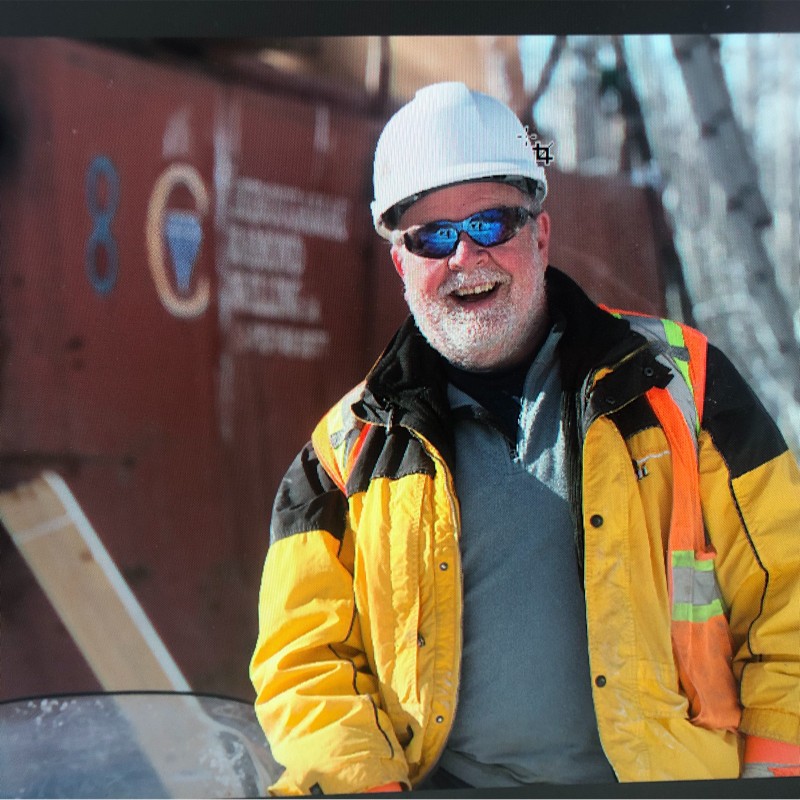
Wes Hanson
CEO at Thunder Gold
Replay available
Join us for a great event!

On 6ix: 6ix.com/event/thunder-gold-a-tier-one-discovery-opportunity-without-the-drama
Automated transcript · Written by software from the replay's audio. It can mishear names and figures; the replay is the record.
0:07 Hello everyone and welcome to Thundergold's live investment summit today. I'm pleased to introduce their president and CEO, Wesley Hansen. Wesley is going to review the latest from Thundergold and afterwards take some of your questions live. So remember that you can submit your questions using the Q&A panel found on the right hand side of your screen at any time during today's presentation. And as always this event is being recorded so look out for it on six.com as an on-demand recording in the coming days. But without further ado, Wes, I want to pass things over to you so that we can get started in full. All right, thanks Cameron. And thank you everyone for joining us today
0:39 for learning about one of the most exciting exploration opportunities I've ever had the privilege of working on. And that is Thundergold's Tower Mountain asset located in northwestern Ontario. I have always viewed the keys to success in the mining business of acquiring as acquiring the right project at the right time and building the right team to move that project forward. And Thundergold and Tower Mountain offer both of those, or all 3 of those opportunities moving forward. Before we proceed much further, just our forward looking statements, which are standard. I'm sure many of you are familiar with these and we'll get into the meat of the matter. So why Thundergold? Why invest in Thundergold? And in specific terms, why invest in our Thundergold Tower Mountain property?
1:30 So there are 8 key factors that we have to consider when we're looking at the opportunity afforded by the Tower Mountain property. And first and foremost, and the one that caught my attention when I was introduced to this particular story is there's tier 1 discovery potential at the Tower Mountain Project. And what that means basically is there's an opportunity to explore and establish a resource in excess of 10 million ounces. And that resource would be capable of supporting a mining operation of greater than 500,000 ounces a year of annual gold production for a period of greater than 10 years. And those are the factors that establish a tier 1 opportunity. And tier 1 opportunities are the most sought out, sought after opportunities by major gold producers in the world today. And I'll touch on that a little further later in the presentation.
2:20 We see minimal or I see minimal technical, environmental and social risks associated with the Tower Mountain property. It's got a premium location that's located in Ontario, which is one of the top mining jurisdictions in the world. Very minimal permitting risk, very minimal licensing risk. The property is, Sorry, I'm just having trouble here. I'm going to have to put my glasses on. My apologies. So there's geophysical surveys. This is another thing that caught my eye as I was going through the data set for Tower Mountain. And the geophysical surveys seem to ideally outline areas of prospective mineralization within the existing historical drill dataset.
3:08 We did original metallurgical test work this year after I joined the company and we established that recoveries of better than 90% are highly likely using standard direct cyanidation technology. It's a non-acid generating ore and probably a non-acid generating waste rock, largely because of the carbonate content in the surrounding house rocks. It's a low-cost, high-return investment opportunity because like many of the junior mining space today, we've taken our lumps in the market of late, but this actually provides investors such as yourselves with an ideal entry point to acquire an initial position in a property and a company that has tremendous growth potential. And I believe that's what Thunder Gold offers, which is why I've been accumulating shares on the open market.
3:58 It's been a wonderful opportunity for me to establish my shareholding position in Thunder Gold. I see going forward very low-cost exploration on a cost per ounce basis, probably amongst the lowest certainly in the industry in Canada. We're very fortunate to have management on board with extensive experience in both the mining industry, the mineral exploration aspect of the mining industry, and over 120 years of geological expertise on our board. Our objective is really simple. We want to demonstrate that Tower Mountain offers the potential for a Tier 1 Gold discovery. And we plan to do that by doing good science and making sure that the work we do is conducted to the highest standards possible.
4:45 So in terms of the company itself, we've currently got 167 million shares issued and outstanding. There's about 10 million options ranging in price from 5 cents to 15 cents and approximately 36 million warrants. About 25 million of those warrants will be expiring in February, likely on exercise, but perhaps we can generate some forward momentum in the stock price and get those, hit that 20 cent strike price for the warrants. Fully diluted, we're looking at about 212 million shares issued and outstanding as of the current situation. About 15% of our shares are held by insiders, about 26% by institutions, and the remainder is retail shareholder base.
5:31 In the Treasury, we have CAD$3M, and that consists of about CAD$1.5M to CAD$2M in hard dollars and another CAD$1M in change and flow-through that we just raised at the end of the year to allow us to do some preliminary exploration tests and concepts that have been developed in the last 6 months. A little bit about myself, I'm President and CEO, I'm a professional geologist, I've worked in the mining industry for more than 40 years. There's very few positions and jobs that I haven't held. I started out my early career basically doing exploration work in northern Canada, throughout northern Manitoba, Ontario, Saskatchewan, and into Quebec and the Northwest Territories, and into BC, working at a number of small high vein greenstone hosted gold deposits that were operated by a number of junior mining companies.
6:30 I then transitioned and got some work experience in the large open pit mines in Nevada in the United States and eventually that led me to a position as a consulting geologist with Kilbourn S&C Lavellin where I got exposure to even larger mining projects around the world. Worked for a number of years with Kinross and their technical services team, basically doing project evaluations and part of the Kinross technical team that was responsible for the acquisitions of Perica II and the merger, the three-way merger of TVX, Echo Bay and Kinross. The reconstruction or the restart of operations at La Coypa in Chile. So a number of large tonnage, low grade, open pit gold mining opportunities associated with Kinross.
7:22 Then I did a small stint as President and CEO of Norad Resources in the Ring of Fire and transitioned from there to Chief Operating Officer of Unigold in the Dominican Republic, another large tonnage low-grade opportunity in the gold space. And here I am today, I was moving happily towards retirement but when this opportunity came across my desk, it was too good of an opportunity to pass. So I got involved with the ThunderGold team and I'm happy to be on board and I'm looking forward to what the future holds. Also joining, Also part of the team is David Speck, our Chief Financial Officer. David has over 35 years of capital markets experience, focused mostly on retail sales and junior mining company financing and promotion.
8:13 He completed his CFA degree in 1994. Our chairman is Dr. Elliot Strachan, owner and president of Strachan Developments, who are leaders in terms of sustainable building and property development in the Greater Toronto Area. Recently, we've been joined by Bonnie Lynn de Bartok, who joined our team as a director. Bonnie Lynn is a globally recognized expert in the field of environmental, or particularly social governance, which of course is a vital factor moving any mining company or mining project forward. So she's bringing a lot of expertise on our social, on our social license to operate in Northern Ontario. Warren Bates, a professional geologist.
9:01 He has over 40 years of experience like myself, again, with a number of different large tonnage low-grade deposits throughout Canada and Africa and Latin America. Dr. Scott Jobin-Bevins, who is a long-time director of Thundergold, He also brings over 30 years of experience in the mining sector and mineral exploration. He was, of course, many of you might recognize Scott as the former president of the Prospectors and Developers Association of Canada. And finally, Charles Lees, who's our last director, and he has over 30 years of experience as well, largely as an officer and director of several publicly traded junior mining companies. He was a founder and director of TVX Gold and has sat on a number of public company boards.
9:52 So tier 1 targets, basically the left-hand portion of this slide shows you the major gold deposit models that are favored by the industry today. On the far left lower corner are the orogenic gold deposits. Those are followed by the reduced intrusion related deposits. The carlin deposits sort of sit in the middle. I'm not sure if you can see my cursor, but the Carlin type deposits sit there. Then you had your porphyry and epithermal, high sulfidation, low sulfidation and epithermal deposits associated off of porphyry copper gold opportunities. And then of course, VMS deposits and paleoplacers are one of the largest, but they're fairly rare. There is a table that summarises the number of tier-one assets, which are those greater than 10Moz, shown on the right-hand side. There are in total a little over 100 known deposits of greater than 10Moz in all those categories, but by far the more dominant deposits are hosted in the oxidized intrusion related category, where you have 39 different deposits. On average, those deposits are quite large, offering a resource or reserve in the range of 28 million ounces. This information comes largely from the Barrick Gold database.
11:20 It was published in a paper called Models and Exploration Methods for Major Gold Deposits, which was published in 2007. We've probably added a couple of deposits to that tally right now, but the important thing here is that intrusion-hosted mesozonal-type deposits, which sit here, you can see a series of sheeted veins in an intrusion and equigranular pluton, without going into too much detail. This is one of the targets that may explain the deposits at Tower Mountain. The other one is a low-sulfidation epithermal type target, which is closer to the surface. The simple answer here is we don't know what we have, but what we do have is a broad, low-grade disseminated Gold deposit that's not entirely drilled off by any stretch of the imagination.
12:12 The Gold mineralization surrounds what we call the Tower Mountain Intrusive Complex, or the TMIC. That's an alkalic intrusion that is interpreted to be co-evolved or happens at the same time as the surrounding volcanic host rocks. There's not age-dating information. The limited age-dating information that's available suggests similar age between the host volcanics and the intrusion that we believe introduced Gold into both the intrusion itself and as well as into the surrounding host rocks. There's been no structural fabric observed to date at Tower Mountain. This is something that's typically common of most greenstone type deposits, which sit here in the orogenic category.
13:00 These are largely veins associated with shear zones and faults that are originating off of the intrusion at depth. We don't see any of that as yet, but it could be just simply a situation that the expiration to date just hasn't come across that or targeted that. So particularly important is the fact that gold is the only metal of economic significance that's been logged at Tower Mountain so far, which sort of takes it out. And the alteration that you see is not a classic of porphyry, copper, gold type system, which would be the logical place where we'd kind of see Tower Mountain as expressing itself in the geological models. So All of these observations that we've seen at Tower Mountain sort of suggest similarities to either low-sulfidation epithermal or mesosonal intrusion-related deposits.
13:55 The nice part about that is those are large, those have the opportunity to be quite large. They're not always large, but at least the opportunity is there. So that's one of the reasons why I was very excited to focus in on Tower Mountain. In a nutshell, it looks like a donut. There's a central intrusion, which is the Tower Mountain Intrusive complex. You can see to the right shown in purple. The exploration to date is represented by the bite that's taken out of the donut. And the opportunity is the surrounding perimeter around that alkalic host, that Tower Mountain intrusive complex. We see mineralization based on the exploration that's been done to date. There are indications of mineralization from surface sampling surrounding the entire perimeter of the intrusion outward for a distance of over 500 meters.
14:43 So lots of opportunity for increasing the total resource of the project. In terms of, you couldn't ask for a better location or access or infrastructure to this project, it's a 2.5 hour commute from the Toronto Pearson, or not Toronto Pearson, the Toronto Island Airport, sorry. That's the preferred departure point for accessing the property from the city of Toronto. It's about a 2 hour flight, and it's a 30 minute ride on paved highways to get to the property. The property itself is about close to 2000 hectares in size. It's located immediately adjacent to the Trans-Canada Highway, which is Highway 17, which you see here running up on the right hand side. The Canadian National Railroad transits the northern boundary of the property and there's Ontario hydropower that crosses the western portion of the property. The property itself is comprised of both patented and unpatented ground.
15:47 Patented ground is a significant advantage and all of our option agreements are in good standing and we have good relationships with the owners. 1 nice important part to note about Tower Mountain is there's no significant water within the property boundary itself. There's a few small lakes, but in general there's no major waterways or large lakes that are impacting our ability to conduct our exploration or future development of the project. As I noted, we're 50 kilometers from the city of Thunder Bay. Thunder Bay has a population of 115,000 people, perfect access, year-round access. And all of this basically equates to the fact that, unlike a lot of projects today, we don't have to be reliant on helicopter or fixed-wing airport support. We don't have to have a winter road or an all-season road built to the property to allow development of the property. So, it's one of those rare opportunities in the mining space where the project's location actually works in favor of continued exploration and development, eventual development of the project.
16:57 Large tonnage low-grade metrics, I mean this is a large tonnage low-grade opportunity. There's no other way to put this. To date, at any rate, there's been no discoveries of significance in terms of high-grade vein hosted shear zone hosted mineralization. That's typical throughout most Archean greenstone belts, but what we do see are several hundred meter intervals in drill hole. The drill holes have been completed to date that average in somewhere between 0.3 and 1 gram per ton. If you look at most operating mines around the world today, especially the large tonnage, low-grade open pit mines. You're seeing average cut-off grades used for the resource estimation parameters of around 0.4 grams per ton or slightly less, depending on the opportunity. Paracatu, where I was fortunate enough to work with Kinross, is the lowest grade gold mine in the world. It has an operating cutoff grade of 0.2 grams per tonne.
17:56 The black dots basically represent
18:00 the resource cutoff grade, so you have a reserve cut-off grade, which is what they target with their mining, but the resources are generally a little more optimistic and they have a slightly lower cut-off grade, probably in the range of between 0.2 and 0.3g per tonne. All the mines shown, Detour, Mall Arctic, both in Canada, both producing over 700,000oz a year and currently Canada's largest producers, both of those are very successful mines and something that should be emulated elsewhere in Canada and that's kind of our mindset. Rainy River is close by the property as well. Paracatu in Brazil, Round Mountain, Fort Knox in Alaska, those are 2 American-based mines. Those are all very successful large tonnage open pit gold mines all operating at similar cut-off grades.
18:53 And in terms of Ontario-based projects or Canadian-based projects, what we see is Detour Lake is they have an established resource and reserve of 14.5Moz. That's sort of the kingpin in the Canadian mining industry today. They produce 700,000oz of Gold annually. The average grade in their resource and reserve statements is around 0.9g per ton on average. I'm also shown other Canadian Ontario based operations, including Porcupine, which is in Timmins. The Springpole project, which is currently being developed a couple of hundreds, couple of hundred kilometers north of Tower Mountain. It averages around a gram per tonne in terms of the average resource grade with about 4Moz defined to date. Greenstone, which is a couple of hundred kilometres to the north of Thunder Bay as well near Geraldton, that's currently being developed as well.
19:46 It's a 6 million ounce resource, averaging slightly higher around just better than 1.25 grams per ton on average. But basically the opportunity here is to demonstrate that these large tonnage low-grade deposits are becoming increasingly common in Canada. They're transitioning from the United States and they offer significant value generation potential for companies that are involved in the exploration and development of those assets. The reason I went through all that is basically to demonstrate that Tower Gold offers a similar opportunity. At a 0.2g cut-off, which you can see here on the chart, the average grade of the Tower Mountain dataset is currently 0.79g per tonne of Gold and represents about 30% of the drilled population of about 25,000 samples.
20:35 What that suggests is a strip ratio in the range of 2.4 to 1, which is fairly similar to the operations that I demonstrated on slide 9. As your cutoff grade goes up, what you see is your average grade increases of your resource, or potential resource I should say, and as your cut-off grade increases, the amount of material that's available above that cut-off grade decreases. So your strip ratio theoretically would increase as well. So at a 0.3 gram per ton cut-off for example we have a better than a 1 gram per ton average grade which is equal to the operating gold mines in the previous slide and it represents 20% of the total population of drill results to date, which suggests a 4 to 1 strip ratio.
21:24 So these theoretical grades and strip ratios from the Tower Mountain dataset are very consistent with operating mines and mines that are going into production currently in Canada and Ontario today. I mentioned at the onset we have excellent exploration vectors and we're very fortunate in this particular project to have 2 exploration vectors, geophysical tools that work to our benefit. The first is Airborne Mag which perfectly maps the Tower Mountain intrusive complex and helps us focus in on this perimeter area. And the second is Induced Polarity and in particular chargeability responses within the Induced Polarity dataset which it's the best match I've come across in terms of IP data to date and I I like the results so much basically we we spent money at the end of the year, basically to expand our IP coverage to these areas that are shown in crosshatch that don't have a colored background.
22:24 So the Southern Block, this Eastern Block and this Northeastern Block. We've completed the northeastern and eastern blocks, and we're currently in the process of completing our high peak survey coverage on the southern block as we speak. And we're very excited to get those results back. What we know so far is that the Tower Mountain intrusion is a multi-phased alkalic intrusion, which suggests a direct connection to the mantle. At least 2 phases of the tower mountain intrusion are gold bearing, possibly more. The mineralization discovered to date surrounds the intrusion itself, extending outward for up to 500 meters. You can see the 436 zone here is kind of the limit of our current mineralization through described through drilling.
23:11 Gold occurs both in the volcanics as well as in the alkaline intrusions themselves. There's a very close correlation between pyrite content with the best pyrite, visually observed pyrite grades or visually observed pyrite observations correlating with the highest gold grades, which also coincidentally correlate with the IP chargeability response that we're targeting with most of our drilling going forward. Alteration is very poorly developed, which suggests either we're distal to a potential higher grade mineralization type or higher gold grades. Largely the alteration that's been observed is chloride epidode carbonate, which has been overprinted by hematite, which makes the identification of the alteration very difficult with the core logging, but we've been making headway on that particular front and there's different tools that we plan to deploy in the future to sort of clarify that.
24:13 Thin section analysis has indicated there's no or very, very minimal penetrative fabric in any of the samples that have been submitted to date. But most importantly, the highest chargeability responses that we see in the IP survey are largely undrilled. And if we go to the next slide, You can see an example of that at the bench deposit. The IP survey from 2022 basically highlighted a very high chargeability response, which I've highlighted here in red. All of our drilling largely does not penetrate that chargeability response. The drilling at the Ellen target on the north overshot the chargeability, the higher response chargeability anomaly and pulled some very good values near surface in the outer rim or the next layer out from the highest response.
25:08 Same thing happened at the A target, which is located here from the South, which sort of opens up the potential for this entire 500m strike length between the 2 as being prospective for additional mineralization. And the bench drilling itself largely rests in a lower chargeability response, again on the fringe of the deposit, and where we did drill that high-grade chargeability or that high chargeability response in 2022, it's where we have the polar highest grade results within the bench zone mineralization itself. So the next slide is going to be, you're going to see a view of that chargeability response in section and it'll show you the drilling and the results from that drilling in looking to the north. So you can see again the same red outline represents the the same chargeability response that you were looking at in the previous slide on surface. Now you're looking at it on a vertical plane to the north and you can see that there's half a dozen or 4 holes basically that penetrate at that higher grade response and the results of those 4 holes are shown over here, highlighted in the darker colors on the table.
26:22 So hole 83,818, which was drilled by Inco in the 1990s, basically intersected 150 grams of 0.4. That's coming into the section, If you can imagine the drill hole is coming towards you. Then the hole is 21.106, it intersect at the 230, sorry, 58.5 meters at 1 gram per ton. And we show that here in this area. Hole 21-120 intersected 150m at 0.8g per tonne, 22-134 intersected 240m averaging 0.5g per tonne and 135 pulled 240m at 0.75g per tonne. So you have these long consistent intervals of low grade mineralisation with the assay values on an individual sample basis ranging from 0.1 to 1.5 grams per tonne.
27:19 There's very few intercepts in the database of greater than 30 grams per tonne, which is a nice problem to have in some respects because it takes concerns about variability or the nugget effect out of the equation when you're moving forward. I know what equation this is, the section 577500. That section is sort of the southern end of that IP chargeability response, And these actions are moving in 100 meter increments as you move from right to, or from left to right, and then move down, you see these increasing in 100 meter steps and actually very few drill holes penetrate that high chargeability response. So we have a we have a drill ready target ready to go today and as we complete our IP survey coverage around the remainder of the perimeter we hope to identify further similar type responses that would also be targeted with future drohols.
28:21 I talked earlier about the metallurgical sampling. We collected representative samples from the existing historical data set. We submitted those for analysis and the analysis came back very favourable, very fast leach times, recoveries between 70 and 95 percent on average, 87 percent on average between the 12 samples that were submitted. So it basically indicates that The mineralization is certainly amenable to direct cyanidation, which is a huge benefit to know going forward. What we've completed in the last several months, basically we took the opportunity to collect our initial samples and get those analyzed. We completed a review of the geophysical data, which has been very telling. It's identified a number of opportunities.
29:08 We've reviewed all of the multi-element ICP data to see if the geochemistry supports the concept or can clarify whether or not this is a low sulfidation epithermal type deposit or mesosonal. Sorry, I'm drawing a blank. Intrusion related deposit. My apologies. We've completed some verification sampling of the historical data just to make sure that the historical assaying was correct and it's correctly transcribed into the database. We went back and corrected 6 QAQC failures from the 2021-2022 drill program just to make sure that when we get to a resource estimation stage that that concern was eliminated.
29:58 We submitted samples for petrographic work with a group out of the University in the Ottawa region associated with the University of Ottawa. We're very anxious to get those results back. We submitted samples for whole rock geochemistry, again trying to quantify between low sulfidation epithermal and mesosonal intrusion related gold deposits, And we're doing, we're currently in the middle of completing an additional 4 square kilometers of induced polarity survey coverage, which is being completed by Abitibi Geophysics. It's using their new DAS Vision 3D survey system and we're very anxious to get those results. We've already got drill targets, as I noted earlier, that very high chargeable responses and a very close correlation between high chargeability and content and gold that provides us with targets that are ready for immediate drilling.
30:54 And we've recently completed a $1M Canadian flow-through financing, the funds of which will be directed solely towards completing that exploration drilling going forward. Our 6 month plan basically is to complete the IP survey and interpret that data and select targets with a view to sort of starting a drill program towards the end of February or early in March. That program is probably going to be in the range of 3,500m, possibly more. But right now we're planning on about a 3,000m to 3,500m drill program, specifically targeting high IP chargeability responses to demonstrate proof of concept in terms of the viability of IP as an exploration tool going forward. If that all works out, then the plan would be to expand that IP coverage to the remainder of the property, mostly to the west and to the south.
31:50 We're sort of bounded by a township to the east and to the north, but it's possible to move towns in Canada to build mines. I think that the Malarctic showed us that opportunity. And hopefully have results towards the end of May or early in June and that will allow us to develop additional exploration programs going forward to demonstrate value to our shareholders. So that's our focus point. And I'm certainly just to reiterate, these are the main points of the presentation. There's tier 1 discovery potential. There's minimal economic, technical and social risks associated with this project. It's got a great location in a world-class mining jurisdiction, easily accessed year-round road access, highway access.
32:42 Geophysical tools are available to us that highlight opportunities for enhanced gold mineralization. Metallurgical results don't seem to indicate any potential issues in terms of recovery. We're currently undervalued. We're trading in the 5 to 6 cent range, so it's an excellent opportunity to buy low and sell high, which of course is the reason you're all joining us today. We see low expiration costs going forward, probably in the lowest, amongst the lowest expiration costs, certainly in Canada going forward from this point. And we have a very experienced board and management team focused on a common objective, which is basically to demonstrate tier 1 discovery potential at Tower Mountain. This is just our contact details and I encourage you at all, anybody who wishes can reach out to me. I'm more than happy to set up one-on-one meetings if that's something that you're interested in to go into greater detail. This is a high-level introduction to the Thunderbolt and Tower Mountain story.
33:44 And then The rest of it is basically background information that you can review at your leisure. So with that I think we'll conclude the presentation and look to take some questions. Absolutely Wes, really appreciate that great presentation And I'd like to remind everyone in the audience that if you do have questions, please submit them in the Q&A chat on the right hand side of your screen. Let's get started with questions that we've received so far, Wes. Brittany wants to know how much drilling is planned for this year? Well, right now we're currently looking at a 3,500 meter drill program and that 3,500 meter drill program will be focused exclusively on testing high chargeable IP responses that are identified currently in our existing IP coverage and in the new IP coverage that we're currently completing.
34:31 All right great. Augustine wants to know what would be your best guess estimate that Thundergold is going to have an economical Tier 1 find? Well that's always, I mean that's always difficult to say. All I can say is that what I've seen so far basically would make this probably the most exciting exploration opportunity I've ever witnessed. I've worked at Round Mountain which is a 10 million ounce discovery, I've worked at Fort Knox which is another 10 million ounce discovery, Paracatu which is the third 10 million ounce discovery And the thing in common with all of those was basically they did systematic exploration to establish their resource and grow it in a systematic manner. They relied on good science and they did good work.
35:18 So it's always an exercise in patience. Again, I can't say, you don't come across these broad, long, low grade intervals that lack variability very often in the industry. So that was an immediate point of interest when I started to review the Tower of Mountain dataset and agreed to get involved in the story. All right, Barry wants to know, so you opened up the presentation with saying that you've purchased shares on the open market and he just wants to know how many shares do you currently own? I currently own 1.3 million shares, 1.2 something and change. It's a variable number, it changes as I find additional funds to be able to buy more. Fair enough.
36:04 Bernie has another question. What are you financed through to? Well, currently we're financing, like we've got over $3M in the Treasury. We're very fortunate. We have a significant hard dollar balance and we have a low hard dollar burn rate. So we can, we can, we're certainly, we certainly could deploy that money towards exploration, but it's far more efficient for us to, to basically look at doing additional raises in the future as we demonstrate proof of concept to our exploration projects and take that to the market, demonstrate to our shareholders and investors that hey we're on to something big here, we're doing good science, we're pulling, you know, we're delivering on our promises and our objectives and we want you to become part of our story.
36:50 All right, Mary wants to know what similarities or differences would you expect to the consultation work with First Nations compared to your previous experience? The, well this particular project, Tower Mountain, is on the traditional territories of Fort William First Nations. My limited experience with Fort William has been extremely positive.
37:16 They're a forward-thinking First Nations group and we've had very positive meetings with them thus far, and we plan to certainly engage them going forward to make sure, first of all, that they're consultant, they're consulted about our exploration activities and are aware of what we propose to do and are in agreement with what we propose to do, and hopefully bring them into the fold in a greater capacity moving forward. In terms of my previous experience, I think that question may be referring to the NORAD experience in the Treaty 9 First Nations surrounding the Ring of Fire. And it's just different. I think Fort William has a different mindset and see the benefit of resource development for their community members.
38:08 And I'm looking forward to working with them. All right, great. Paul wants to know what needs to happen to transform the market's perception as yet another low grade wannabe PMG. Well, I think again, it's doing good science and telling the street what we plan to do and then delivering on that promise and demonstrating the potential of the asset. There's a lot of low-grade wannabes out there, that's true, but all you can do is drill holes and speak through the drill bit and demonstrate the quality of your asset and deliver on your promises. And I think in this particular instance, unlike a lot of lower-grade opportunities that are out there, we're right beside a highway. We're 50 kilometers away from the population center. Takes me 2.5 hours to get to the project site from Toronto.
38:57 Those are opportunities that a lot of other people don't have and that basically means that for every dollar you raise you get to put more more a higher percentage of that dollar into the ground because your cost base is lower. You don't have to fly goods or materials or people or food or any of that stuff into a remote site. You don't have to build the expensive all season road. You don't have to build a winter road. So there's tremendous benefits packed to this project that should lead you down the path towards discovering the future. All right. Len wants to know, are there any anticipated obstacles or concerns in 2023 for Tower Mountain? And if so, what are they? And how are you going to navigate them? Well, right now, I haven't identified any obstacles.
39:44 I mean, We're delivering on our objectives in terms of we wanted to demonstrate that the mineralization was amenable to direct cyanidation. So now we know kind of in a ballpark or we have the goalposts to sort of put a recovery number on the gold mineralization. We now know that IP is a very viable and perhaps predictive exploration tool. Our next step after expanding our IP coverage is to pick the best targets, drill the holes, send them in for analysis and see what the results tell us. And that'll dictate our next step in the process. And it could be we stumble across something big. It could be we identify something that changes the whole story and either improves the opportunity or just lets us know that we're on the right path.
40:35 All right then. Do you want to build, joint venture or sell the property? And if so, what determines those decisions? Well I think all of those decisions are basically dictated by your current knowledge and the current state of the markets and the opportunities that are out there for you. So I think at this stage all options are on the table. I'm not, one of the reasons why I got involved with Thundergold is I've built a few mines in my life and that's something I don't want to do as I sort of near retirement age. It's a tough job. It's a demanding job. Building mines is an extremely difficult undertaking in today's world.
41:21 Finding them is a lot more fun, a lot more enjoyable, and that's my focus going forward. Let's define a resource that would capture not just the attention of the investing public, such as yourselves, but also potentially the interest of major gold producers. And that opens up a whole new avenue of opportunity for our shareholders. Right. It's kind of in today's Summit's title, but what do you mean by low drama mining? Well, the nice thing about, like a lot of people, a lot of investors in particular, they tend to measure their investment opportunities based on the grades that are coming out of the drill bits. And, you know, like, let's be real, there's something about 15 or 20 or 25 grams per ton over 4, 5 or 6 meters that's just captivating, especially if you've got some visible Gold thrown in there that people just don't get to see. Like people, If you can't see it, it's not real.
42:18 So the low-grade opportunities, they're far more valuable. That table that I presented of Tier 1 Gold projects by various class of model, various exploration model, all of those are open pits. Very few of those are underground mines, if any. I didn't get into the specifics on a project by project basis, but you've got to remember that that portal, you can't conceivably make an underground portal big enough to get your production up over 500,000oz, 600,000oz a year. You just don't see that. Whereas you do have that ability in an open pit mine to get up in the 500,600,700,000oz a year of production.
43:05 And all you got to do is look at Canada's 2 largest Gold producers, which are Detour and Malarctic, and you see that right away. No, fair enough. Everyone wants to know, how are advances in robotics and technology going to be applied in the work on this project? What's new in mining that might be applied to impact results here? That's a very interesting question. The short answer is there's all kinds of advancements in mining and we're currently deploying 1. The IP survey that's being conducted by Abitibi is their DAS Vision True 3D IP survey. IP traditionally was done in a series of regularly spaced sections using cut lines. This particular survey system did not require cut lines, which is one of the reasons we chose it. It's a true three-dimensional rendering of the IP chargeability and resistivity responses under the subsurface, and we feel that gives us a superior product.
44:00 There's significant advancements in terms of scanning technology and X-Ref analysis machines which would clarify a lot of the geochemical signatures and allow us to identify the breakpoints and perhaps different phases of alteration that we cannot see by eye. I will be totally honest here and say this is one of the first projects in my entire career that I haven't been able to walk on site and within a couple of days be able to point at a particular rock and say that's ore or that's waste. And that irritates me. But the reason why is there's such a significant overprint of hematite alteration that impacts the volcanics in particular that obscures everything that you would see visually.
44:47 Even the sulfide content is in places difficult to distinguish. It's very fine. You know, and all of those things are detriments, but they're also benefits as well, because It allows you to deploy new technology that perhaps isn't widely in use and answer some of those questions. So that's something we're certainly going to be looking at going forward, particularly the use of X-Ref analysis to basically clarify our alteration and lithological breakdown. Very cool. Nikita wants to know what did you mean when you said that you can move a town to build a mine? Oh that was a reference to Malarctic of course because Malarctic was a gigantic open pit that there was an existing town site that had to be moved in order to allow that pit to be developed.
45:34 So there's precedence. It's in Quebec, but there is precedence. I don't think that moving a town is in the cards, certainly not at this stage in the game, but I just threw it out there as it's not a significant hurdle that has to be overcome. Fair enough. You've talked just a couple of minutes ago about the benefits of the location, 2.5 hours outside of Toronto, but Mary wants to know Why gold mining Canada compared to any other country? Personally, having worked all over the world, there is absolutely no country I would prefer to work in more than Canada. It's, you've got surety of title, you have a legal system that understands, you know, mineral title and mineral exploration.
46:22 Every province is consistently ranked in the top mining jurisdictions in the world in terms of investment attractiveness. You know, like if you're working in other countries of the world, you're often at the mercy of governments that perhaps might be at odds with your particular goals and objectives to drive shareholder value for your shareholders. I don't think that exists in Canada. I think Canada is an established resource culture and there's a lot of positive things to be said about that. Absolutely. Mark wants to know how many drills do you plan on having on site this year? Well our current program with the 3,500 meters would probably be a single drill and I'm probably going to be the guy that's going to get to log the core and take take care of that single drill program simply because I want to see what's going on firsthand, get my hands dirty and try to understand the opportunity better myself.
47:23 Okay, fair enough. Jared says this, he notices that all the drilling is in the alteration halo in the volcanics and tufts. Are those trachytes or rhyolites? The intrusive appears to be relatively barren. Well, that's largely because the intrusive itself is not well drilled off. What we see is a series of what we call the dykes and sills, which are expressions originating or emanating from the main intrusion itself. Typically, our highest grade mineralization is located in or immediately adjacent to those sills and dikes. And that's all in the volcanic sequence itself. The volcanics itself are, we've taken the term, we've just differentiated them at this stage as volcanic trachytes or andesites or andesitic breccias for lack of a better term. And the breccia is very coarse.
48:23 The mineralization sort of tends to fill fractures and fracture filling within the breccia itself and as disseminations within the intrusive rocks and the volcanics. Everything is more or less the same age. So it was a rather dynamic geological setting that we're still trying to piece together. But The short answer to that is more drilling and more testing. Absolutely. Barry wants to know if you have any updates on the African properties. Certainly I can provide an update on the African properties. The Okahonga project, we have vended to a company Iron Bull Resources, and they're currently acquiring a public listing and driving that particular project forward.
49:09 We've transferred title of the exclusive prospecting license for Okahonga to them, and their plan, Their short-term plan is basically, they're currently in the process of drilling and from our reports are having some success with their drill program. Their short-term plan is basically to look at completing a pre-feasibility study using their African-based consultants to drive that project forward and get to commercial production on a short timeframe to position themselves to be able to sell copper within the next few years. And that's very exciting for us because we maintain a 1% NSR on that and would generate revenue from the potential cash flow offered by the sale of copper from the Oklahoma project in addition to the fact that once they receive their public listing we're due another payment in shares of approximately 1 million US. So we wish them nothing but the greatest success.
50:14 They seem to have assembled a great team in the country. They've got a very good and viable plan to move that project forward and we're looking forward to being a long-term happy shareholder. Absolutely, okay. Brian wants to know if you could speak to any other exploration and or mining activity for that matter in the vicinity of Tower Mountain. Oh sure and I neglected to highlight that during my presentation so I'll apologize to that. Look we're located, Tower Mountain is located at the eastern end of the Shibandawin Greenstone Belt, which extends for over 100 kilometers. The Shibandawin Greenstone Belt hosts a number of other companies that are actively exploring and looking for gold. And those include, and I'm not gonna attempt to get them all right. So if I miss anybody, my apologies, but Kesselman Resources is 1.
51:08 Goldshore Resources, of course, is another. They've got a 4 million ounce resource and are generating some extremely positive results from their property, which is about 60 kilometers further to the west. We've actually vended some claims into Goldshore's exploration assets, so they're a partner, we're a partner in their opportunities as well. So I think the Chevanduwin district itself offers great potential. It's long been ignored simply because you never saw the type of Red Lake high-grade gold discovery potential in the Chabandawan Belt that you're seeing around the Red Lake District. So as a result, it just simply didn't seem to see the same level of expiration. And that's why the opportunity, an opportunity such as Thundergold exists today, is because of that lower grade tenor.
52:00 All right, well, fair enough. Listen, Wes, we've had a lot of questions come in. That looks like it's it for now. So I wanna thank you for coming on as well as everyone in the audience for joining us today, especially everyone who contributed to the Q&A with your questions. But before we wrap up, I wanna pass things back to you, Wes, just for some closing remarks, if you have any for the group. Sure. Again, I express the same sentiment. Thanks everybody for coming to join us today and learning a little bit about Thundergold and our exciting Tower Mountain project. We look forward to delivering on our promises in the first half of 2023, and we'll be providing you with continuous updates using the SICKS platform going forward, and we look forward to sharing our good news with you all. Anybody, I encourage you to reach out by email or we can set up a private meeting if you want to learn more and go into greater detail. This was a very high level summary and probably leaves many of you with more questions than answers. So I'm happy to address those questions on a one-on-one basis at your convenience.
53:01 And wish you all well and all the best in 2023. All right, well Wes, thank you again and everyone in the audience, thank you again. I hope you
Follow Thunder Gold Corp. into a list and get an email when it puts out news.
CEO at Thunder Gold