Automated transcript · Written by software from the replay's audio. It can mishear names and figures; the replay is the record.
27:16 This particular material, as I said, is a super high brightness. We've done the test work. It works beautifully for making plastics. Now what also makes this project interesting is not only is it talc, but it's also magnesite. Most of the talc mines in the world are just talc. This one is talc and magnesite, roughly 50-50. The magnesite, you can make magnesium metal or you can make what's called magnesium oxide. And I don't know if you guys have ever seen, you know, pictures of furnaces and glass making, steel making, and you see this molten metal. You ever wonder why the furnaces don't melt? They don't melt because they're lined with magnesium oxide brick, which takes incredibly high temperatures. So that's one of the big uses for magnesium oxide. But there's a new but now and it's for making w Most wallboard is made of your offices, your home a that gypsum absorbs water water, you have the mold growing on the wallboard. So it's not great in basements or in humid climate.
28:27 If you make the wallboard out of magnesium oxide, it's more fireproof, it is more rigid, and it does not absorb water. So this particular project in Timmins, Ontario, mining-friendly province, open pitable, cheap mining, 85% of the block is ore. It's amazing. Long life, 200 to 300 years probably. So we look at this thing, if we can get this thing into production, or if we can find somebody to take it into production, it's gonna generate more profit than a gold mine, it's gonna generate more profit than a copper mine. It's just a fantastic project. And the remaining 15% is carbonate and silica. So there's absolutely no environment problems.
29:18 We own the mineral rights, we own the surface rights. Great project. And this is just 1 of 232. And we keep acquiring these things that other people won't necessarily be interested in. For example, we picked up a 24 million ton dolomite deposit on the North Shore of the St. Lawrence River within walking distance of loading docks. It cost us, like, $650 for 24 million tons, because other people ignore it. They're focused. We're unfocused. That's it. GILLESPIE Thank you, Jack. Interesting. I never never considered that specific type of mineralization myself. And thank you, gentlemen. So maybe let's do a follow up here and that I want to focus on. This actually ticks off a question from one of our viewers as well.
30:05 Just talking about more of the above ground exploration, maybe, right? Geochem, geophys analysis. Maybe do you want to discuss what does or doesn't work for you? I mean, maybe we talk about drilling pathfinder minerals, maybe just, maybe overarching the question I'm asking you is, what are the telltale signs that you're into the good stuff? And so maybe let's start with George, George, Greg, Jack, and then Wesley, okay? Diamond bearing kimberlites will only erupt through areas of crust that have been stable since the early Proterozoic. So that's areas of crust that are more than 2 billion years old. And these Cretonic islands have floated around through various cycles of plate tectonics and coalesced and disaggregated, but the structural integrity of the critonic island has persisted through time.
31:01 And so you need the kimberlite is merely the volcanic eruptive that brings the diamond from deep in the mantle where it is the stable form of carbon at high temperature and pressure. It brings it to the surface and the kimberlite is not the crystallization method of the diamond. The diamond is crystallized in the mantle and subsequently erupted to surface. So we need to find something that is very much more common in diamond than diamond itself to look for as our indicator mineral and there are some dense mantle indicator minerals, ilmenite, garnet, chromite, chromed oxide and olivine that weather out of the kimberlite and persist frequently in the secondary environment or the weathered rocks on the surface.
32:00 The composition of garnets and chromites can be analyzed using an electron microprobe, and they can be shown to have crystallized at depths where diamond is the stable form of carbon. So that's basically below 43 kilobars of pressure in the mantle. We can also use the composition of populations of chrome dioxide crystals to determine the nature of the geotherm, So that's the rate of the increase in temperature and pressure at the time of kimberlite eruption. And kimberlites that carry diamonds generally erupt along what we refer to as a cool geotherm that has about 35 to 40 milliwatts per meter squared.
32:53 And diamonds, we must remember, crystallized very early in Earth's history, and then at various times through Earth's history, kimberlites have then erupted them to the surface. I think that gives you a good idea of where diamonds come from and how you can look for them. Obviously there are methods with geophysics. The kimberlites in the Fortalecón area were buried by mudstones and glacial till, and the only way they could be found was they have a magnetic expression, and that was detected with geophysics. So the indicator minerals were not used to discover the Forte Lacord kimberlites, purely geophysics, but many kimberlites are discovered, particularly in Botswana, where the big pipes that were discovered that are the backbone of the economy, those were discovered based on indicator minerals.
33:56 Thank you. Awesome. Thank you, George. Greg? Yeah, so I have touched on it a little bit and in terms of what we're looking at, these Greenstone hosted structural control deposits, we can actually use geophysics, geochemistry and geology on surface, the saprolite notwithstanding to hone in on these things. So in terms of the geophysics, it's really good for highlighting these regional structures, which again, go for hundreds of kilometers. And more often, what you're looking at there are 2 different types of rocks on each side of the fault. So you get different patterns or different structures on one side versus the other. The particular splays that run down our project that are the 2nd and 3rd order structures, which actually host the deposits, show up quite strongly on the magnetics, and in particular the electromagnetics.
34:53 So they've got greater conductivity because of the fluids that have flown through there, then the surrounding rocks. So they're literally big pink structures that go and sit in a background of blue rocks, and then to hone in on those further, you've got the geochemistry, as I've discussed, that you want to have those anomalies sitting on top of your structures, but even the structures themselves, where the deposits tend to occur, are these little jogs in the structures, the really straight flat parts, the fluids kind of went there and kept on going. So they need to have these traps that made them stop for some reason and pool, and that's where the veining occurs. And in our case, the Gold is very closely associated with the density of quartz veining. So in terms of the geology, while we don't have a lot of outcrop on surface, there is a real close association with the density of quartz veining and the gold grades within the deposit. So even when you're taking your soil samples, if you're mapping out the amount of quartz fragments that are associated with the samples you're seeing, or if you're lucky enough to actually see some of these veins outcropping within the sapper light, then again, that's a really good sign. And ultimately, like a lot of exploration, you want to use all of the tools that are in your toolbox, and you want to see good signs out of them all.
36:18 So you want to see the right response from the geophysics, you want to have the gold in the soils. We've done a little bit of Pathfinder elements, but we've got such a strong response from Gold and we're looking for Gold deposits that we don't venture away from that very often but if you know there is a Other metals that are associated with it a little bit of copper a little bit of lead Tellurium is 1 these are tend to be Gold tellurides associated with some of this a lot of its free Gold once it gets oxidized in the saprolite, but you could use some of those other elements if you're not getting the response you want from Gold. But in our case, we're getting grams per tonne Gold in our soil samples, so we really don't need to venture far afield from that. And as I mentioned, from the geological standpoint, for us, the most significant thing is the presence of quartz veining. Now, not all quartz veining has gold, but certainly almost all of the areas in our deposits that have significant gold grades have at least some quartz veining in them.
37:22 Greg, this is just an aside for me, but your discussion of fluids is interesting. It reminds me of oil and gas exploration, right? You need trap, you need seal, you need reservoir, you need source rock. I think there's an interesting kind of a whirl out there I hadn't really considered on my own. But yeah, I guess, Jack, we move on to you. I find it to be difficult answering this question because, as I said before, we're not focused. And because we're not focused, any method, any type of exploration, modelling, any type of equipment, we'll use it and we have an application for it. It's different depending if you're looking for precious metals, base metals and so on. But if I had to choose one thing, I would point out that we generally, I'd say for 95% of the time, we're working in established mining camps.
38:11 And our pathfinder is the knowledge base that is accumulated over time. And we have a lot of projects in Quebec and they have a good system called CGM, where you can go and you can get all the work that has been published by companies or by the government on the area, geological, diamond drilling, geochemistry and so on. So what has that allowed us to do over time is pick up properties where there is already a knowledge base. Somebody else has already, you know, done the work to outline, you know, 500,000 ounces of gold or, you know, 24 million tons of dolomite, whatever it is. So our pathfinder, if you will, is the work done by others before who have not succeeded for various reasons. Either metal prices weren't there or maybe there isn't a deposit there, but all the indications are that there is a good potential that there will be. So for example, drill holes with good values, which is one of the, I love the most, But we, so our methodology is anything that is applicable, utilizing all knowledge bases that has been accumulated over time. And I know that doesn't sound very scientific, but it actually, the application of that app for information in a rational method to guide you towards targets that create value
39:43 is scientific in the sense of geology. Thanks a lot, Jacques. I didn't give you a good question. You gave me a good answer. So that works for me as the interviewer. Thank you. What about you, Wes? These guys stole all my thunder. I mean, if I'm being totally honest, The best thing a geologist can have in the field when they're looking for any mineral is a lot of luck. That always comes in handy. But there's a set playbook of clues that we use. And I'm very much in the same boat as Greg. I mean, geophysics, We're heavily reliant, or very fortunate at Tower Mountain that geophysics is an awesome tool for us. It really helps isolate the intrusion. And then IP, induced polarization, which is another tool that we use extensively.
40:31 That's shown a great proclivity to matching up with higher gold grades. And those higher gold grades are associated with pyrite mineralization, which is just shot through the rock mass, which has been essentially shattered. So if you want a good analogy for Tower Mountain, if you go out to your driveway now with a hammer and smash your windshield, that circular shatter pattern is kind of what we're proposing for the trap, the openings that allow the fluids to flow into the rock mass that surrounds the intrusion and deposit all this gold. So, you know, good and good people, you got to have good people. And I can't state that enough as having geologists that have the desire to ask questions and then go out and find answers to those questions.
41:18 That's invaluable for exploration companies. Thank you. So I'm going to just maybe, it might be a slight repetition here, but I think there's value here in trying to drill down to help understanding of these topics. And so these are going to be more kind of company-specific questions. Maybe I'll start with Greg here. We'll move from Greg to Jack to Wes to George. But Greg, you have touched on this, and thank you for that. But you're exploring the Bibiani Mesothermal Shear Zone. Can you just, again, let's assume that we have laymen or laypeople in the audience that aren't super familiar with this, maybe spend less time defining mesothermal and shear zone, but then maybe more practically, what is the significance of, how do you go about exploring a shear zone? Once you know that's what you've got, what is the unique approach to a shear zone that makes the shear zone or makes that defines your attitude, your approach to it?
42:18 Yeah, so I think, again, we've touched on the whole source and pathways and traps, and it really does get down to that because these structures are so large, right? Again, they go for tens or hundreds of kilometers. So you're not going to have a deposit every meter along that structure. And why is that? It's because they were also formed at tens of kilometers of depth, approaching the upper mantle at the lower part of the crust. So again, these are giant systems that are being run down there with an almost inexhaustible amount of fluid to feed them. And they're long-lived. We're looking at 2 billion-year-old rocks here and systems that have had a real rough life. You know, they call them greenstone rocks because they've just been heated up so much and buried so much that a lot of the original minerals that were in that rocks have been converted into other things that tend to be green. So that's why they're called green stones. But it also means they've had a really long history of of of you know, plate tectonics and things crashing into each other. So they've they've gone through series of cycles of where they've had, you know, ductile deformation, which means that they've kind of smashed into each other like Putting your fist in a bunch of putty and they've deformed that way or or brittle deformation which is like snapping a bunch of spaghetti and you really need to understand this history of the not only the host rocks because the host rocks always tend to be older
43:50 than the actual mineralization. So you need to know the history that the rocks have gone through. You need to know when the gold mineralization occurred within that history and whether it happened in the spaghetti mode or in the plasticine mode. And then you need to know the history that happened afterwards, because maybe these things did start as a bunch of straight lines, but deformation since then has twisted them into a bowl of spaghetti instead of a big long straight pieces of spaghetti. So it's really important to know the history of the rocks that you're looking at, know the style of deposit that you're looking at, because that means that things are going to look a certain way, but also the history of the rocks and the mineralization after it actually formed, because that can really change the distribution of what you're looking at. And again, it might not end up being these really big straight lines. It might be associated with one of those structures, but it might be hosted within a package of rocks. And if the mineralization is early enough in the history, it, like I say, could end up looking like a bowl of spaghetti and you're following lines that are wiggling like that, as opposed to just following them straight along the structure. So you, as we've talked about, use all of those tools, all of your knowledge. I really agree with Wes in terms of having good people on the ground as well. We're really fortunate in Ghana that they've got, you know, engineering and mining and geology schools there. And we all know we're losing those types of institutions across the world and
45:21 they've got a real strong presence there and it helps that they've got a strong industry and big companies working there, you know, your Goldfields, your Anglos, your Newmonts of the world that teach geologists well. There's employment for them right out of school. So that's a real big resource as well, that we have the ability to hire experienced geos. Some of the guys working on a project have been there for 10 years. And, you know, you definitely gain knowledge the longer you've been there. And some of them have worked on some of these other mining operations that are continuing to be active in Ghana. And, you know, as I say, from my personal experience, having had the ability to actually work on underground mines and open pit mines and know what's economic and what's not, it's really a big part of what you do on a day-to-day basis to make sure you're making the right decisions.
46:17 Yeah, excellent. I don't mean to editorialize here too much, but I think that both of you guys are articulating well. You don't necessarily have to be a GEO, but you find GEOs you trust or find people with bodies of work that you yourself as an investor trust and can point to and understand that maybe I don't know, but you do. Right. And I think that's a huge part of this business as well. So, Jack, here's a question, maybe a bit more tailored to you, not just the generic non-fitter for you, but I just want to discuss maybe the philosophy a little bit behind Globex, right? I mean, like you say, you've got 232, I think, if my memory serves, different mining claims that you have. I was joking before we were airing that, I mean, there was a lake 10 kilometers south of me that I've gone swimming in that you've got the mining claims too, right? So The map is kind of peppered all over Canada. Maybe I just wanted to ask you then, I mean, is there a governing philosophy? I mean, you've kind of already said your specialties, that you're a generalist. But I mean, are you mineral agnostic? Do you have like a portfolio ratio you try to fill gaps into, right, where you know you've got you just signed 10 precious metals so now let's go find a base metal, or is this just for you simply finding as you kind of pour over the papers and pour over the different pour over everything just find the best land best product available?
47:31 It is precisely that over time ground becomes available and so you're keeping an eye and you're trying to pick up really things that you sense has potential. We're focused on acquiring assets at the best price possible, focused on working in established mining camps, focused on making money, which in the junior sector is not normal. We have in cash and shares, we have over $25 million in the bank. And not diluting your shareholders by through the cheap acquisitions and then having other companies come in, pay you to take the risk, take the dilution because they have to issue shares to do the work and then if they're successful, hopefully, we end up with a royalty stream off the property.
48:27 So, and we've succeeded in keeping, For example, we only have 55.4 million shares out after the company's been around 40 years and we've never done a rollback. Those are all original shares. Reason for that is that we want to make money. And We view the end product in our system as not as the gold or the copper or the zinc, but as the money, because you're going to sell those products at the end of the story. So if I can acquire projects, end up with being a royalty company, being a property generator and being a property bank, that's what I want to be. At the same time, creating value for the shareholders, not diluting them and making money.
49:18 Excellent. Wes, now on to you. I wanted to talk, so if we go to your website, I mean, you have tables of assays up and some very impressive returns, Very impressive assays. Your overarching theory is that you are exploring on the top of a yet-to-be-discovered intrusion-related gold deposit, is the language that you use on your website. Obviously, that can be quite prolific in terms of the actual gold deposit, but maybe the question I have for you Wes, what is your evidence that makes you, what is the evidence in support of that, right? And what is the significance, I guess? Well, I guess, I mean, we're still assembling the evidence. This is kind of a new, this is not a typical model that has been chased throughout the Arkea and Greenstone belts in Canada throughout history.
50:06 Mostly it's shear zones and massive quartz veins and spectacular grades. All of that stuff is fun, but at the end of the day, what's more valuable? A metre of 100g a tonne or 100m of a gram? From my experience in the industry, I know that these large tonnage low-grade deposits are quite desirable. The 2 largest producers in Canada today are both large tonnage low-grade Gold projects. They're all in sustaining costs, which is the ultimate measure of what Jack goes to, which is making money. The all in sustaining costs between a large tonnage, low grade deposit like Detour Lake is exactly the same as Macasa, which is Canada's highest grade gold mine. So we're looking at the evidence of this alcoholic intrusive, which basically suggests a direct connection to the mantle.
50:56 These fluids coming up from great depths through the mantle, carrying all kinds of, in this particular instance, just gold. And that's also unusual for Canadian greenstone belts. It's just gold at Tower Mountain so far. And as it gets closer to the surface where we're currently at today, and bearing in mind Greg's wonderful analogy about a bowl of spaghetti, you know, as it gets closer to the surface where we're at present day surface, it becomes diffuse and it becomes disseminated and becomes a larger, a lower grade system spread out over a broader area. And the concept is that as we chase this thing down, where we see it elsewhere in the world, these intrusion related gold deposits, they all coalesce into a sheet of vein system where you have a great opportunity to generate absolutely world class type grades and widths and continuity of depth that that's everybody's seeking in terms of long-term value. So you know that's kind of the concept we're looking we're working on the geochemistry trying to establish the geochemical fingerprint of an intrusion related Gold system but you know the short answer is there's not really much else it could be.
52:11 I've got Gold over a widespread area in very, very consistent grades. So if you look at Cripple Creek in the US, one of the largest Copper-Gold deposits in the world, that was an intrusion related Gold system. There's some similarities there, but the problem is I don't have Copper. So that sort of takes away this whole Copper-Gold porphyry type setting. I mean, if I was a gambling man, I'd call it a stock-work-hosted Gold system because we do see quartz veins, although our quartz veins are millimetre scale, not metre scale. And the density of those quartz veins, the link between the gold mineralization and the frequency and density of quartz veins is something that we're looking at closely. So longer term, in terms of looking at this deposit, one of the things I think offers great potential is basically the use of artificial intelligence. I know a lot of people are going to get their back up about that, but AI and different scanning photography methods that can consistently deliver measured results of the amount of quartz veining in a particular on a per meter basis throughout the system and try to draw the relationship between gold grades and quartz veins. So that's 1 avenue we're very excited to pursue. And at the end of the day, I think it's important for all investors to remember one thing and one thing only. Invest in companies that are drilling, because drilling is where the money's at, man. On average, statistically
53:42 across the industry, these large tonnage, low-grade deposits need about 30,000 litres of drilling to put 1 million ounces of mineral resource in the bank. And higher-grade systems like the Red Lakes and the Macassas, they require even more. So, for example, Detour Lake had 1 million metres of drilling when they did their feasibility study resource estimate. If you ain't drilling, you're not generating value. And this kind of goes back to Jack's point, like diluting shareholders. At some point in time, you have to dilute the shareholders simply because you've got to keep exploring in order to survive. Because really, there's nothing less useful in the world than an exploration geologist that's not exploring.
54:30 Yeah, well said. Well said. Yeah. So George, we'll end with you for this round of questioning, and I kind of apologize to George that diamonds are not a specialty of mine. It's been actually a good opportunity for me, pardon me, just to try to get my head wrapped around it a bit more than I otherwise have. And so, but George, I guess you have touched on this, And so let me know if you feel like you've answered this question I can I can ask you something else? It was a conversation we had yesterday in the lead-up to this but Kimberlitic rocks right 10% of all Kimberlites contain diamonds almost all you know predominant like overwhelmingly that's where all diamonds are found, but only a few percentage points of that 10% contain diamonds. So I guess it's kind of the same question, right? I mean, we talk about pathfinders or other geological tells. I mean, again, this is kind of tiptoeing into the next question about just advice for investors with your specific resource or with your specific type of mineral.
55:24 But if you have a layperson reading a news release and they see Kimberlite, they see Kimberlite and Kimberlite and Crocs, is there more? Could you maybe give us, you know, what else might an investor look for in those news releases that would be a bit of a tell that this is good or bad for them or good or bad for the company? I'll start by applying the first question about the small percentage of diamond-bearing kimberlites and apply it to the Fort Olicon kimberlites in Saskatchewan. So we must remember when the Fort Olicon kimberlites were first drilled, that was in 1989, August of 1989, It was not that long after that they were shown to contain diamonds, which was then a surprise, particularly to De Beers, because at that time they thought those rocks were occurring in the trans-Hudson origin, and so they were in a mobile zone and they weren't on a craton, which broke the rules that De Beers was following.
56:24 But lo and behold, Whitmay and Carlstrom published a very good paper in 2007, but they could show that there is a cratonic island through which these kimberlites have erupted, namely the Sask Craton. And so, but the indicator minerals were also telling us that it was consistent with diamonds, There were some unusual nature in the indicator minerals, but you had kimberlites, you had abundant macrocrystic olivines. These are the olivines that made up the mantle where the peridotitic diamonds were formed, and they came up with the kimberlite to the surface. And so these were all signs that were telling us these kimberlites were diamond bearing and the diamonds were real and it was a very good opportunity. The further we have looked at that, and then very quickly, when I joined STAR in 2003, we got a population of planopyroxenes, and lo and behold, we could show that the geotherm on the sas-craton was the same as on the slave, 35 to 36 milliwatts per meter squared. So it was very consistent with the kimberlites being diamond bearing. Then let's jump forward a little bit to the sort of tip about what to consider.
57:49 When you look at a diamond project, you have to consider 3 things. You have to consider that the grade, which is usually in carats per hundred tons. So that's 0.2 of a gram is a carat per hundred tons. So there's very little diamond in an awful lot of kimberlite. So grade, you have to consider dollar per carat, which is The dollar per carat price of a diamond parcel is unique to the kimberlite that erupts to surface. So in a body like the star kimberlite, we might have 4 or 5 kimberlites that compose that body, and they will have different dollar per carat prices. The predominant economic unit in star is what we refer to as the EJF or early Jolly Food Kimberlite.
58:42 It has a diamond price approaching $200 per carat, which is essentially double the world average, which is fantastic. And that's driven by the course size frequency distribution and the type 2a diamonds. Also, you have to worry about grade, price and tons, Obviously, how much is there to make the system? And because we have 479 million tons of all feed from Starr and around south, for our PEA number, We have a 34-year mine life. It's like one of these low-grade, large gold or copper deposits. It has a very long life. There are more mines in the future, and we are very optimistic about the future development of this project. I hope that gives you a good bit of information to hang your hat on. Thank you.
59:38 That's excellent. I'll have to come back. I mean, there's just great amounts of knowledge here. I'll have to come back and take some notes here from the recording. We are going to officially go over time here, a little bit, gentlemen. I hope that's okay. But I just think that this last round of questions, just tips for investors is just kind of what I phrased it as, is maybe what I would hope is to be one of the more important ones for people listening in. So I'll try to be brief, not too long-winded here. I might sneak in. There's some questions popping up for all of you in the Q&A here. I might try to sneak in a quick one here, but I guess I'll just ask that we try to be efficient here too. But I'll start with Jack, then Wes, then George and Greg. Jack, So first of all, a question from, I'm going to ask you, so advice to shareholders or advice to investors in your sector or in the junior resource sector in general, but, oh, now they're all popping up here. Maybe the question is, how much work is Globex doing on the TTM deposit right now, Jack?
1:00:35 That's the talc magnesite project. We've spent close to $5M on it. We've come up with the economics of it. We've done the metallurgical test work. We know what the capital costs are. They have to be adjusted, I guess, for the last year, but we have a very good idea of what's involved. And we're at the stage now where we're looking for a major to come in. We have one major that has informed us that they're coming in this summer to do a sampling of the deposit as well as actually another project, which we have as a brew site. So we're hopeful that we're at the point now that we can interest someone in carrying this forward.
1:01:21 The other opportunity we have is possibly just to spin it out as a separate standalone company. But the difficulty in that is going to be is trying to get people to understand something that is not gold or silver or copper. You talk about something like talc which in the lowest grade material is used as a filler in rubber tires, where at the highest end it's extremely valuable and used in the plastics. It has so much to explain. And then also about the magnesium oxide application. So kind of cutting it short, cause you want, you know, not much time, but yeah, we spent a good amount of money on the project and we're at the point now we're looking for the big dollars of capital to carry it forward.
1:02:07 And then just try to transition to, I mean this can be very specific if you want or just generalist, but just advice you would give to people trying to make a go of it in this sector. Investment advice, tips from a geologist, right? Oh, God. Look at track record. That's really, really important. And one thing that most people don't do, go look at the financials and MD&A and see, you know, you can go look at the thing, you find out that a company has debentures that are worth, you know, that call for another $10 million and the company's only got 1 million in cash. And they've got this project that requires $50 million. Well, you can do the math, but if you don't look at the financials, a large percentage of the time you're going to get screwed.
1:03:01 And just one other thing, you have to understand financials. A lot of people don't understand financials. In the case of Globex, for example, all of our 232 projects show us on our books as 0 value because it was costing so much to deal with the auditors every year because they wanted to value each property to put into the annual statement. So you have to be aware of what kind of animal you're looking at and how their financials are structured. That's it. Awesome. Thank you for that, Jack. Wes, over to you. Any parting pieces of wisdom for would-be investors? I think a lot of the comments today have given investors the basis or the hints.
1:03:47 If you're looking for Gold, look where there's Gold. If you're looking for Diamonds, look where there's Diamonds. That's self-explanatory. Invest in the team. If you haven't got greybeards like us sitting around at the table, it's going to be a challenge. The location, the team, the demonstrated mineralization, that's one of the best pieces of advice I think anybody's ever given. Thanks for that, Jack. But look at the history of the project. Has there been gold found or copper found or nickel or talc or whatever it happens to be or diamonds? You know, those are valuable clues. If you've got a company saying we found this great deposit of X in this area of the world where it's never been found before, then you end up in a situation like we saw in the 1980s which wasn't very happy for all of us. And I'm talking about the Bre-X situation, right? It just didn't make sense at those times. So, you know, like invest in the team, invest in the company, look at the financial statements, you can do online courses to teach you how to read a financial statement. But the thing I always look at, how much money is management taking out of it? Like I mean you hear a lot of investment advisors saying, well, management has to have skin in the game in terms of shares. But if your pay and your bonuses and your stock options and all of those other things are contingent on your company doing well, That's an investment by your management team and a
1:05:17 belief in the project. So, you know, it's, it's not always about how many shares these guys are buying if they're, if they're pulling off $300,000 and $500,000 a year salaries. So that's make sure the dollars that are being raised are going into the ground to do what they're supposed to do, which is generate shareholder value. That's where dollars have to go, in the ground, period. Excellent. I find it really interesting the 2 answers so far from Geos and they're both about the team and the finances versus the actual geology. I think that's quite interesting. George, we'll transition here to you. I have a question from Mark here. Just I'm not sure if it's something you're going to be able to answer clearly, but I thought I would just give him a chance to hear his question be asked. Understanding is that you have a deal with Rio Tinto that's kind of under wraps right now. I'm just wondering if you can provide an update of any sort on that.
1:06:10 All I can say is there is corporate activity in which I'm not intimately involved. It is underway. And when the deal is done, obviously, there'll be an announcement. But I don't know if and when that will happen. Yeah, perfect. Thank you, George. And then parting thoughts from you, then, general advice that you would give to people in the sector? I just emphasise, I've already stated how important the diamond price is, as opposed to the grade and the tonnes. Certainly with the Star Kimberlite, we have a very well constrained price. We have some 10,000 carats of plus 1 millimeter diamonds out of the ground. We've done a lot of sampling of all of the units that make up Star. We have an adjacent kimberlite in Iran South that has a smaller sample because it was constrained by the restrictions of the world financial crisis in 2008.
1:07:08 And so we are presently doing some very detailed work on the diamond populations of both of those bodies to try and remove the risk from the price on Orion South. And in so doing, we will get ourselves into a very much better position to update our feasibility study, hopefully when we get the project back for ourselves and then drive it forward, remembering that we have in our PEA, we have 66 million carats that can be recovered over a 34-year mine life with a substantial dollar per carat diamond price approaching $200 a carat. So very strong economics.
1:07:55 Thank you. Awesome. Thank you, George. And Greg, we're getting some kind words from you from some Ghanaians in the group. So I guess kudos to you for that. I have one question here from, and I'll apologize for the mispronunciation, Tia Moua. He's asking my question, how has the field of exploration geology evolved over the years, and what technological advancements or methodologies have had the most significant impact on your work? I might just ask you to ask that, Greg, or answer that, and then we'll move on to your advice. Sure. Wow. It's all changed, I guess. Except the rocks, because they're 2 billion years old. But, I mean, off the very top of my head, the first thing I thought about was communication. You know, we used to go in the field and be away for weeks or months on end.
1:08:41 And you know, you went in there with a plan and it, you know, it didn't really give you the ability to divert from the plan all that much because you know, you were taking all those samples and then didn't even send them away for months and then didn't get the results for months after that. And you know, you had the one field season and then, you know, you spent the off season waiting. So, but right now, you know, even, especially where we are in Ghana, where we're able to take samples and and even when when we're drilling and send them off to a number of commercial labs that are there get results back in in you know anywhere from 1 to 4 weeks for us. Thankfully, we never had, you know, 6 month turnarounds that were killing people there for a while. So we continue to have turnarounds in weeks. And, You know, we've drilled over 90,000 meters in the last couple of years. And to be able to do that, and that's part of the communication, is getting all of those samples there, the paved roads, getting them there to the lab in 4 hours, getting the turnaround in weeks, have them emailing you all of the results, the guys on site being able to put that into the software packages that we have, see where that sits in relation to everything in terms of 3D models and all of that. So just all of that has just completely changed. You know, even when we all started that, you know, you were doing hand-drawn sections and you know, again, waiting months or again a whole field season before you could follow up
1:10:12 on a discovery that you were making and now you can do it weeks later. So communication, technology turnaround. I think it was Wes maybe who mentioned the dirty word AI, but use it for what it's worth. Don't rely on it completely, but if it's there, use it. Use all of the tools that are available to you. It's such a risky business, mineral exploration, that you're doing a disservice to yourself and to your shareholders and to the team you're working with if you don't use all of the technology that's available to you. Excellent. Well said. And then so advice, almost sound like you're giving advice there anyway, but advice there for investors? Yeah, well, be fully aware that this is a risky business, even with us greybeards here and our experience and you know trying to again use all of the tools and and and look after other people's money which is essentially what we're doing most of the time and and our own the company I work for management owns 21% of it and has put that money in at prices you know higher or at the same as all of the other investors so that is important and yeah just be aware that it's a risky business look at how your company is de-risking that you know from the finding the gold to once you find it, making sure that metallurgically it makes sense, that they're doing things right on the ground in terms of the community and the environment, because if they're not,
1:11:44 that's going to bite you in the butt. And within reason, be working in jurisdictions where, you know, obviously there's there's challenging jurisdictions that can work, but that risk has to be balanced out by what you're looking for. I guess what I'm saying is You can't go look for a small deposit in a tough jurisdiction because you're not going to end up owning it or you're not going to end up doing anything with it. So the risks all have to balance each other, whether they're technical or jurisdictional or environmental or social. They all have to be taken into account. Well said. Well, that's it, gentlemen. Thank you. This has been very informative. 75 minutes here. And I will say just as a personal editorial again, that all 4 of these companies I find personally pretty compelling.
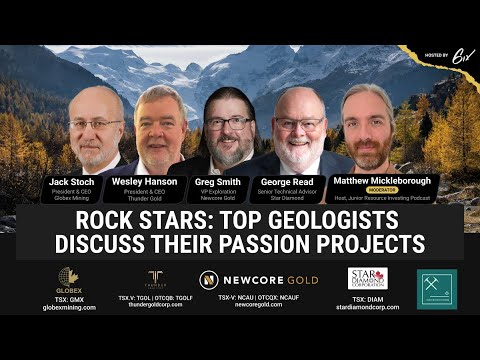
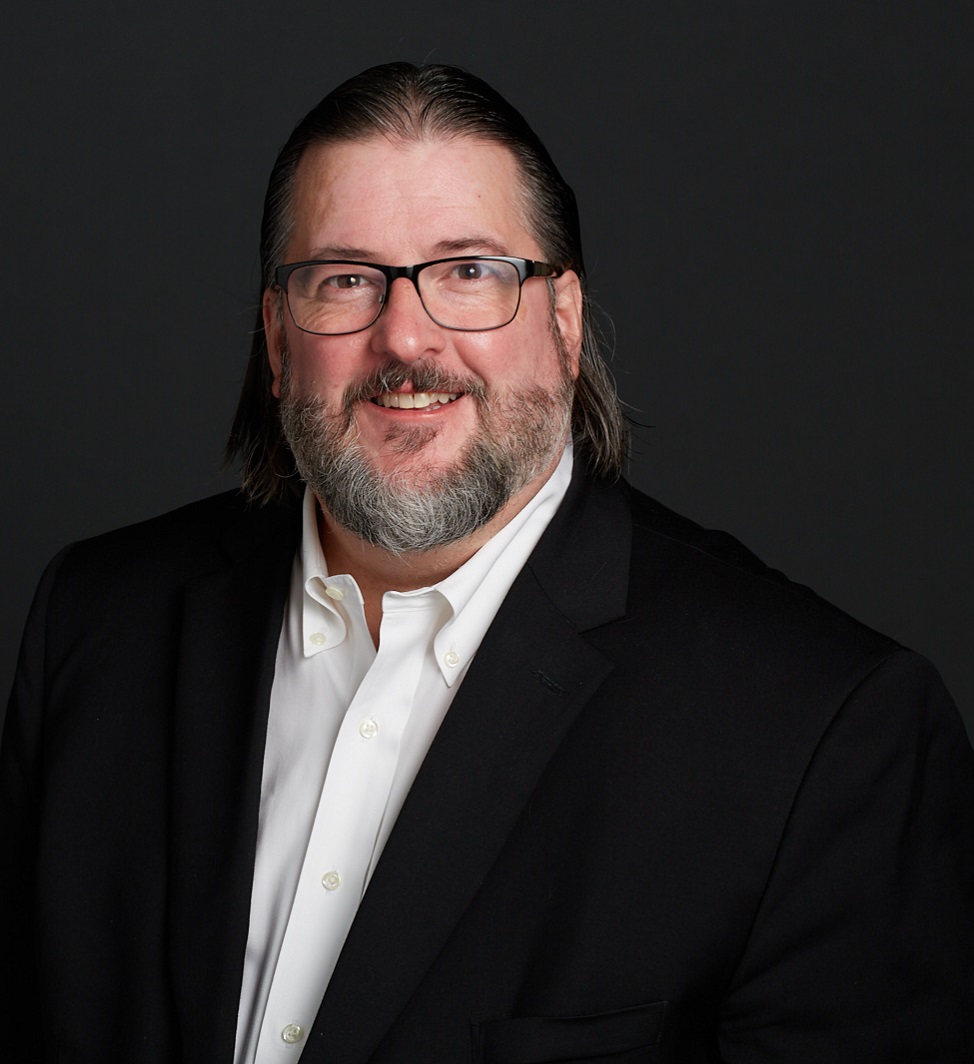
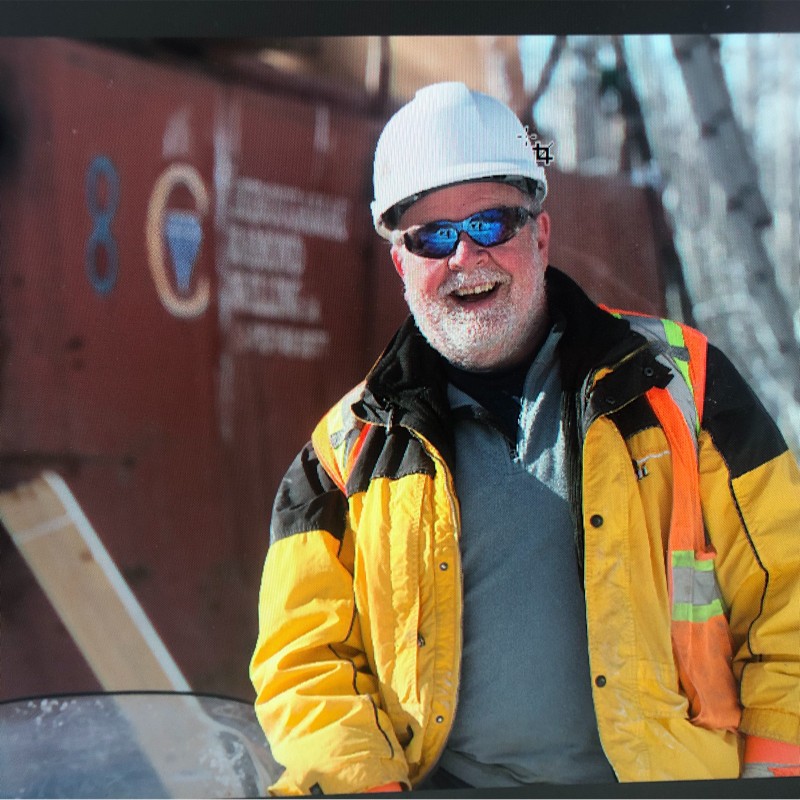
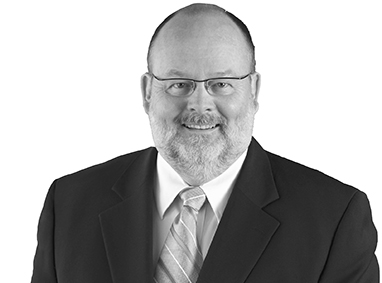
1:12:31 And yeah, I'm going to be spending more time on my own here getting to know these companies. But thank you to George Reed and Star Diamond Corp. Thank you to Greg Smith from New Corp Gold, Wes Hanson from Thundergold and Jack Stock from Globex. Thank you, gentlemen. Thank you to 6. And if you like my work, please come check it out. Junior Resource Investing, YouTube and Substack. Thanks guys. Have a good day.