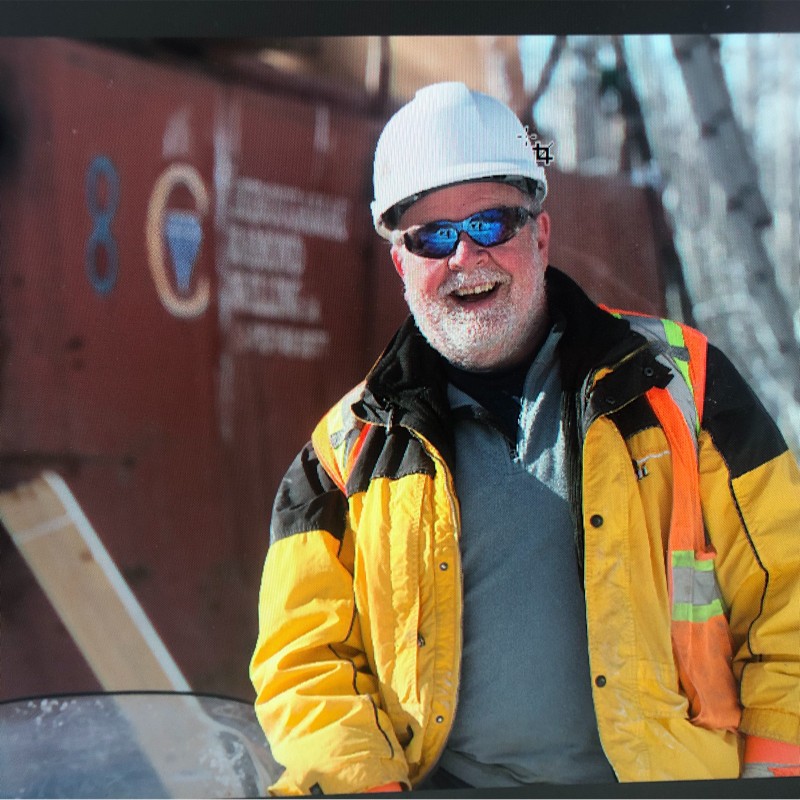
Wes Hanson
CEO at Thunder Gold
Replay available
Join us for a great event!

On 6ix: 6ix.com/event/tower-mountain-worth-delaying-retirement-for
Automated transcript · Written by software from the replay's audio. It can mishear names and figures; the replay is the record.
0:07 Hello everyone and welcome to the Thunder Gold's event, Tower Mountain worth delaying retirement for, hosted by 6. Today I'll be having a conversation with their CEO, Wes Hansen. This will be a conversation all about Thunder Gold and the Tower Mountain project. I have prepared questions for the conversation, but I do highly encourage you to submit any questions you have in the Q&A tab, and I'll try and incorporate them into the conversation or ask them at the end. So that was Tower Mountain, worth delaying retirement for. Retire from what exactly? Why don't you just tell us your first job in the industry, then include some highlights you're proud of along your career until your last role and actually taking on the role as CEO of Thunder Gold. Awesome. Well, first of all, it's great to be here, Kyle.
0:51 Always a pleasure participating in these 6 events. And, you know, I have over 40 years of exploration experience in the industry and there's really not anything that I can think of that I haven't done that's either exploration or mining related. I started out as an exploration geologist looking at a Gold project in the Northwest Territories in the early 1980s and was fortunate enough that the drill campaign on that project indicated a sufficiently large enough resource that the project was developed. And they tapped me to transition from mineral exploration to be the underground geologist. So I did that for a couple of years. That project eventually faltered because of a declining gold price, but I was fortunate enough to go and duplicate the exact same process 3-years later at a mine outside the Flin Flon, Nova Scotia, the Tartan Lake mine, or Flin Flon, Nova Scotia, Flin Flon, Manitoba, the Tartan Lake mine.
1:51 And I worked there for about 3 years, same kind of deal, take it from surface exploration all the way through to underground development and eventual commercial production. And that mine operated, That was operating when I left, but it too fell victim to the inconsistencies of gold prices over the years and was forced to shut down. Interestingly, I'm involved in that project again. I sit as the director of Canada Gold Corporation, which is a McEwen, Rob McEwen company, which recently acquired a 37% interest in the Tartan Lake mine. And that seems to be back on track and drilling additional holes that are adding significant shareholder value in the gold space. That's a very interesting project. So, you keep coming back to the projects you like and I like to tell people that my early career, there was a lot of mistakes made, none by me of course, but by others. And this presents opportunities for me in my years as I'm approaching retirement.
2:51 Look, I mean, sometimes you just got to, it'd be nice to sit around and go golfing every day and look after the bees that I have down in the backyard and dabble in the garden and take dogs for a walk, but mentally I need the challenge, I think, of complex geological systems. And Thundergold was exactly that. I wasn't exactly looking for work. I can make, to be honest, And this is not a dig at Thundergold in any way, shape or form, but I could make far more money personally working as an independent consultant and picking and choosing the projects I wish to work on. But instead, I was convinced through a significant effort to join Thundergold and the reason why I accepted that opportunity to join them as CEO, which is kind of a thankless job when you think about it, but it's the project and it's always about the project. And If the project is fundamentally solid, then it's a good opportunity not just to make money, but to have some fun when you go to work. Who doesn't like having fun when they go to work?
3:58 Tower Mountain, when I looked at the data, I immediately saw the opportunity. It's interesting to note that recent exploration results elsewhere in the Eastern Shibandwan District are demonstrating exactly the potential I saw when I joined Thunder Gold, and that's for a huge mineralized system, lots of opportunities for discovery, lots of potential value creation for shareholders, especially the ones that get in early. And this is exciting times. I mean, couldn't be better. Couldn't be couldn't be happier to put off retirement. Perfect. Let's further elaborate on the origin story of Thunder Gold here then. Did a team approach you or how did it get on your radar, the Tower Mountain project? Well, again, I was sort of sliding towards retirement and just sort of looking at being a consulting geologist and hunting and pecking for different jobs of interest to me personally.
4:53 And in the midst of all that, I got a phone call from a casual acquaintance that I had met several years earlier when I was the CEO of Norant. And I had met him at different conferences and areas where you go and present your investment opportunities to investors. He called me up out of the blue, not exactly sure how he tracked me down, but he did. And he says, I'm associated with this company called Thunder Gold. They're looking for a new CEO.
5:24 Sorry, I got to back up. I'm working for a company called White Metal Resources. And the current CEO of White Metal had decided to step away from the property and the project and the company. And they asked if I'd be interested. And I said no several times because I was busy at the time with other things. And they kept calling me and asking me if I'd reconsider and suggesting I take a look at the data. And finally, I relented. And I spent a weekend looking at the data. And I kind of went like, holy cow, This is a huge mineralized system. This is the kind of Gold system that is a company maker and you can't turn those opportunities down. And besides which, it was poorly understood.
6:13 It wasn't thoroughly understood geologically and the relationships between geological evidence and geophysics and geochemistry wasn't established. And all of those opportunities exist. Now, it's a lot of work, but it's a lot of interesting work. And that's what we're working on right now with Thundergold because we have a massive data set that we inherited with white metal resources. We rebranded the company to Thundergold to represent our location, our strategically beneficial location, which is 50 kilometers west of Thunder Bay, Ontario. Thunder Bay is a port city, offers existing infrastructure and a large workforce right there. It's a population of over 100,000 people. Our property is 50 kilometers away, right beside the highway. It's bounded by the TransCanada Highway and both national railways to the north and on Ontario Hydro line to the west.
7:08 It's easy to get to. It's got a lot of gold hosted there. And we rebranded the company Thundergold to reflect the fact that we're close to Thunder Bay and that it's a Gold project and that's our focus. It's our primary focus and that's what we're going to continue to focus on in the future. And when you were looking at this project, you had a keen eye and you saw there's potential here, but I'm just wondering how much historical work has been done at Tower Mountain before you took rings? What level of understanding or what studies were done on this project? Well, I think the market in general is blissfully unaware of the fact that We have over 189 drill holes, almost 41,000m of diamond drilling, about 28,000 samples have been taken from this deposit over the years. It was originally drilled by Naranda in the late 80s and Inco in the early 90s.
8:02 The biggest programs prior to White Metal Thunder Gold acquiring the project was by Valgold from 2002 to 2011. They've drilled the majority of the drill holes that have been completed. They've defined an ore body or a mineralized strike length of over 1800 meters to a depth of over 500 meters. The thing measures approximately 250 meters in width, about 30% of the volume of that area or that
8:32 volume of rock is mineralized at grades above 0.3 grams per ton, which is the economic cutoff grade for most major large tonnage open pit gold mines in the world. So we're not reinventing the wheel here. This is a large tonnage, low-grade opportunity, and it slots exactly into the performance metrics that have been dictated by mines like Mal Arctic and Detour Lake, which are currently Canada's largest Gold producers. And it's a huge opportunity. We've got over 26 known surface Gold showings, only about half of which have been drill tested to date. We have about 4.5 to 5km of ground-based IP coverage. We have demonstrated evidence, statistical evidence that demonstrates a correlation between IP chargeable response, signal strength and gold grades.
9:27 We've got complete airborne coverage, both mag and EM of the entire property. It's about a 2,000 hectare property in total. And it sits right on the regional trend. If you extend our strike length or our regional geological mapping from Tower Mountain, It trends directly up to the northwest towards Delta resources. And Delta has been the star of the show here in the last couple of weeks, releasing spectacular results about 10 kilometers away. But the reality is, statistically speaking, when you look at the data, the results of Delta are
10:03 not, they're identical to the results that were produced at Tower Mountain in 2002, 2005, 2007, 2011, 2021, 2022, 2023. So we're on the same system and this absolutely blows my mind because that's the opportunity I saw. I saw a regional play here, lots of upside potential. This camp is ripe for consolidation and multiple discoveries going forward with multiple companies, assuming that we all survive, because let's face it, the news that Delta is producing and the failure to ignite on our behalf because we haven't communicated the fact that we're so much more advanced than the Delta story provides an opportunity for potential merger and acquisition activity in the district by intermediate producers who are seeking to grow their company.
11:00 There's just no opportunities to grow companies these days. So properties like ours and properties like Delta are going to be under close supervision here in the not too distant future, I think. And you obviously like your property, but do you own it completely or is this an option agreement on top of that? Are there any royalties on this project? No, it's right now we're earning our interest through various option agreements. There was a total of 4 option agreements. We own one piece of patented land, I mean, 40 or 50 hectares in size. The bulk of the 2000 hectare property, probably 85% was tied to 1 deal with an old prospector who made the original discovery, Mel Stewart. He's a very interesting character. He's got all kinds of background on the property and well worth to listen to when you visit the site.
11:52 Our agreement with Mel will close next month. More than adequate cash in the Treasury to complete that transaction and earn our interest. And Mel would be reduced to an NSR ownership stake. All of the deals that we have there are basically typical mining option agreements where we pay a certain amount of money and issue a certain amount of shares over A34 year period, and then earn our 100% interest and leave the vendor of the property with a 2% NSR of which 50% could be purchased back at any time going forward in the future. So it's more or less vanilla. There's no real issues there. Sorry, I might've missed it. What was the price you could buy it back for?
12:41 Usually it's in the range of 1 million dollars. So you can buy 1% of the NSR back for 1 million dollars. Okay. And your team has actually finished your first drill program at Tower Mountain. How would you evaluate it? Can you touch on any highlights and perhaps share any answers you found to questions you may have had before the drill started turning? Well, sure. And I think I'm gonna just flip on some slides here to demonstrate the potential so the readers can keep up. So I'm assuming this is working for everybody. This is the Chibandawin, the Eastern Chibandawin District, the Delta Discovery, Delta 1 is up here. They've traced that for a couple of hundred meters, about 600 meters in strike length through a series of 100 meters space drill holes. Our 40,000 meters of drilling sits right here in the star. You can see the fabric of the Ontario Geological Survey mapping runs more or less between our property and Delta. I think there's probably a major fault zone in here that's influencing both of our deposits.
13:41 Our working model is that the mineralization at Tower Mountains surrounds an alcoholic intrusion. The alcoholic, this is our claim map, you can see the smaller blocks are the patented properties and the larger block is the Stewart option that we'll be completing in a month or so. There's over 26 known surface Gold showings that are on the property. Most of those have been drill tested, about 50% of them have been drill tested to date. There's still a number that are basically just nothing more than surface samples, very similar to what was released, I think a day ago or 2 days ago by another company active in the Eastern Shivanduin Belt, Metals Creek Resources. They issued a handful of surface samples, all with spectacular bonanza grades. And it's just indicative of the opportunity in this district. So we're off to a great start. We've got multiple targets that are untested.
14:41 We basically got lucky out of the gate and identified 1,800 meters of strike length. This map basically shows the distribution of the drilling. The blue dots are representative drill holes that I've used in the past, but it extends from the UV zone in the North, which interestingly carried a lot of spectacular. That's where the bulk of our visible Gold in the historic record was identified by companies such as Val Gold and Inco, grades of up to 500g per tonne over a metre, a metre and a half intervals. But that's rare, even in the UV zone. There's really only 10 to 15 samples out of a population of 27,000 samples that have grades of over 15g per tonne. And until our most recent drill program, they were all up here in the UV zone.
15:38 Actually, I'm mistaken when I say that. There was some VG noted down here in the A zone, which is a near surface high-grade showing that was drilled off in 2021-22, a couple of hundred metres, averaging 2.5 to 3.5g per tonne, potential there for a higher grade zone right at surface, which is always a nice thing when you're looking at a large tonnage low-grade opportunity with the open pit mining in the future. Every drill hole, all the red lines and histograms that you see represent grades of greater than 0.3g per ton. As I said, it extends from the 110 target down here in the South all the way up to UV, that's about 1800 meters. Average width of the zone of mineralization which follows the Western contact of the Tower Mountain Intrusive Complex over here is between 200 and 250 meters. There's a big swell right here.
16:33 Our recent drill program basically marched a series of holes along the north-south axis, testing an IP chargeable response because we saw a very direct correlation between IP chargeability and higher grade, elevated Gold grades in the historical dataset that continued to hold true in the Southern block. 3 of the holes here basically were the 3 highest grade holes of the drill program. The remainder were kind of lower grade mineralization, 0.1 to 0.3 grams per ton over widths and downhole intervals of over 100 meters with some 10 to 20
17:14 meter intervals of greater than 0.3 grams per ton, which certainly pays the bills, but it's nothing to write home about. Our winter program, basically the second hole that we drilled included the highest grade sample ever taken on the property, 941g per tonne over 1.5m, and that was associated with some spectacular visible Gold, but visible Gold is not the story here. This is not a high grade opportunity. We're looking for, we're looking basically for a large tonnage, low grade deposit similar to what Mall Arctic and Detour Lake are. We see that as the way forward. If you look at the geological evidence, what you see is 2 different types of intrusive, feldspar porphyry, which basically ranges from 0.1 to 15g per tonne.
18:03 And you can't visually, like you can't tell the difference when you look at this with your eye, what's going to run, unless you happen to see the VG, if there happens to be VG. We also have a fragmental volcanic, probably very similar to the volcanics that are being drilled off at Delta 10km to the east. We see a significant fine fracture, fine hair-like stockwork fracture system of both pyrite and quartz carbonate tourmaline that floods this system. And we're still trying to piece together, you know, continuity of that, I call it a stock work, a pyrite stock work or a quartz carbonate stock work. That seems to be key in assembling the picture before we move to a mineral resource estimate.
18:51 We could do that currently. We certainly have sufficient data, but I don't think that the end product would be of sufficient quality to make any determination on future economic viability. And that's, you know, until you're at that stage, it's kind of a waste of money doing a mineral resource estimate. You want to do the best mineral resource estimate that you can possibly do. You want to do it within very tight technical confines and you want to present your shareholders with the best job possible. And then the other intrusive unit is a cyanide to a monzonite. It's an alkalic intrusion. We believe that's what dictates and introduce most of the Gold into the system for a distance of up to 500m surrounding the Tower Mountain intrusion. And that's the real opportunity here.
19:40 Statistically, Gold is everywhere. And I literally mean that. I don't know of over 180 drill holes, if there's more than 3 that didn't carry grade. Unfortunately, 2 of them happened in this latest drill program when we were testing some East West, potential East West striking. Unfortunately. Why unfortunately? Well, I mean, I was hopeful that those East-West structures would turn up some premium grade and they were both duster. So that kind of makes me realize that our primary drilling direction, which is parallel to the contact of the intrusion, is still the right way to go. And when we look at the statistical evidence of the historical data, what you see is tremendously consistent grade that's irrespective of rock type. Doesn't matter what rock type it is, the average grade of the entire population.
20:37 This is important. The average grade of the entire population, both above a cutoff grade, there's no cutoff grade applied to this. Both, This is every sample that's been collected within every rock type that's been encountered in the 27,000
20:52 samples that have been collected to date. The average grades range between 0.28 and 0.32 grams for every major lithological unit. So it suggests that grade is agnostic of rock type or alteration. The only evidence we've seen of concentration is when you start looking and parsing the data based on the IP chargeable response. When we do that we see a significantly smaller sample population, about 20% of the total in this particular analysis, but your grades quadruple. You're going from 0.28 to 0.32 grams up to almost a gram, 1.1 grams per tonne, within that high chargeable response feature, which is why we targeted with our drill program.
21:40 Recently, I went back and did an analysis of the district scale potential, because I was curious just to see how Delta's latest results, they finally got to a stage where they had enough results to sort of allow a comparison between
21:55 Delta's drill results and the drill results at Tower Mountain. And what you see here, you see the Delta drilling in the average grade of the Delta drilling shown in the blue line and the average grade of our 2021-2023 diamond drilling program shown in Gold. Maybe that's deliberate. And then the average grade of the 2002-2011 drilling that was completed by Valgold in the same area of Tower Mountain shown in Silver. And what you see is everything sort of is levelling towards this 1.0g per tonne line, exactly where you want to be. We saw a lot of profitability in the Delta numbers. They had some absolutely spectacular results, typically associated with Visible Gold, which I think has jump-started their story. But at the end of the day, there's a very close correlation.
22:49 We have some significant values of our own in both our drill programs.
22:54 I think that this is exactly the same system. I think that it's absolutely fantastic news that we have indications of potentially continuous type of mineralization over a 10-kilometer strike length demonstrated by 2 companies independently over a 25-year period. I think that's a very promising story to tell investors. This is just a summary and I'm going to leave this up here as I talk in the background. Am I talking too much, Kyle? Did you want to question? No. I think they appreciate it. Feel free to comment in the chat if you want them to quiet down a bit. I think they appreciate it, Wes. I definitely do. My question for you is, you're an exploration company, people want to know your strategy going forward.
23:40 You hit some dusters, but you also hit some really nice successful drill holes as well. What is the strategy going forward for 2023's drill program? Well, if you're invested in a junior explorer that isn't exploring, I would advise you to get out. I mean, we have to drill. Our entire reason to exist as a company is to drill meters. That's our job. And you are not going to succeed in this business.
24:08 You can try all kinds of things that may or may not add value. But the one thing that's consistently been demonstrated to me over 40 years of my career is the people that do the most drilling are the most successful. So let's look at Detour Lake. Detour Lake is currently the largest gold producer in Canada. It produces over 700,000 ounces of Gold on an annual basis. I'm just going to skip ahead here. We can come back to some of these. This is a chart that basically compares the average grade feed grade. This is actual grade delivered to a mill of Fort Knox, Paracatu, which is the lowest Gold grade producer in the world. I happened to work at both of those properties when I was with Kinross.
24:56 Detour Lake, right? Detour Lake is in blue and Mall Arctic in Quebec, Canada's other 700,000oz a year producer. The commonality between all of these is that with the exception of Malarctic, they all deliver a grade, a mill feed grade of less than a gram per ton to the mill. That's their sweet spot. That's what we're looking at in terms of the opportunity. If we look at our entire data set of 27,000 samples at Tower Mountain and we apply a 0.3 cutoff grade, What we see is an average grade of 1.085g per tonne, and it represents 20% of the total drilling population, which suggests
25:41 a strip ratio of 4 to 1. Care to guess what the strip ratio with Detour and Mall Arctic sits at?
25:51 More or less the same range. And there's a number of projects such very close to us in Ontario, such as Springpole and, oh, the name escapes me, The project to the north of us by Equinox being developed by Equinox. Both of those are- Oh yeah, Hard Rock Project or? Hard Rock, there you go. Both of those projects are, you know, a little around the ground per ton average head grade with strip ratios of 3 to 4 to 1. So we're not reinventing the wheel here. We're not blowing smoke over anybody's eyes. You know, if you look about, you hear a lot of people talk about grade being king and look, there's no doubt. I'd sooner drill holes of 941g per tonne in every program. That's it's awesome.
26:36 It's awesome when you turn over the core and you see the visible Gold there. But what my early career taught me and my early career, as I talked about it in the Northwest Territories and in northern Manitoba, those were both narrow vein high-grade gold deposits with a lot of visible gold. And one of the challenges, one of the shocking things I learned early in my career was you cannot project those gold grades any significant difference. It introduces a level of variability that is almost impossible to predict, right? You can't predict what's 2 meters away. And I know for a fact that if I was to take the other half of the core from our 941-gram sample and submit it for analysis, I would bet every single dollar I have that the only grade that won't come back would be 941 grams a ton. It could be 1200 grams a ton, it could be 2 grams a ton. You just don't know. That's how variable these zones of VG are. I mean, Red Lake was one of the circumstances where this thing held together, but the Red Lake veining system was significantly larger than anything we've seen to date in the East Rinch of Abduin. So if you're really looking to succeed, I think people should focus on large tonnage, low-grade opportunities. Think of it like a chocolate chip cookie, right?
28:07 Like you could take all the individual chocolate chips out of the chocolate chip cookie and eat them and then eat the cookie, but that's kind of stupid, don't you think? Just eat the whole cookie, you get the same amount of calories. And I've eaten a few cookies in my life. So I'm an expert on this topic. But the concept of grade and king, grade is king. I mean, I would rephrase it and say that good grades hide a lot of sins and a lot of inefficiencies. In reality, what mining companies, particularly majors, are interested in is predictability. And what low-grade deposits offer is exceptional predictability. And this graph basically looks at the top 10 gold mines in Canada today. On the left hand side are Malarctic and Detour Lake, the 2 lowest grade gold mines, both producing 700,000 ounces a year. And on the right hand side are basically the Bruce Jack project in BC and Macasa in Ontario, the highest grade gold mines. And the columns basically represent the average all in sustaining cost of those operations.
29:12 And what you see is there is no appreciable difference offered by grades that are, you know, in the case of Bruce Jack, 10 times higher than what's currently being produced at Detour Lake. And at Macasa, grades that are like 20 or 25 times higher than what's being produced at Detour Lake. They both have the same all-in sustaining cost. I mean, how can you conclude grade is king? I mean, there's too many variables
29:41 there. Now, sustaining costs for producers, The cost for an exploration company is the cost per meter too, right? So I'm wondering what is the average cost per meter at the Shibata on Greenstone Belt? Well, for us in our last program, it was 250 bucks a meter, which represented an improvement of about 100 bucks a meter from the programs that were run during COVID. Hello?
30:15 Hello? You know, the reduction in the costs, you know, I think having, Not having to deal with the COVID shutdowns and issues probably saved us some dollars. That's one of our benefits, in terms of deploying capital, we can maximize capital deployed towards exploration, which allows us to go out and discover these 20, 30, 40,150m intervals of economic grade mineralization. So That's the game plan. Keep drilling. Drill, baby, drill. Okay, I'm just gonna take a sharp pivot here just because I wanna encourage people to continue to submit questions in the audience. Thomas has a question, so I'm just gonna address it. With all the testing done on the property over the years, where on the Lausanne curve would you say Thunder Gold is right now?
31:07 Well I would say we're at the very earliest stage of the Lausanne curve because we haven't really pulled together. The market is generally unaware of us. We're trading at the 4 or 5 cent level. This represents an outstanding buying opportunity for retail investors that are looking to get in early and benefit from the significant upside going forward. We've got a tremendous strike length that's 3 to 4 times larger than the current strike length being demonstrated by Delta 10 kilometers away, and Delta's trading at 50 cents. They ran a perfect program and their existing shareholders were very supportive to allow them to generate that kind of value. And they were able to go out and raise additional capital and they're set man, they're cruising.
31:54 I think they're gonna have a continued good news flow in the future going forward. And I wish them nothing but the greatest success. And okay, back to Tower Mountain here and I'm gonna try to say this. So you touched on the infrastructure at Tower Mountain. What about the other stakeholders there?
32:14 Tower Mountain is on, Is it on First Nations land? Can you talk about any dialogue that's worth sharing? Well, I mean, I kind of have the viewpoint that we're all on First Nations land throughout the entire country, but this is a traditional territory of the Fort William First Nation. We have not had any direct negotiations with the Fort William First Nation as yet, but we have had some contact and we have established a dialogue. I find them very professional and easy to work with.
32:48 We ensure that whenever we're planning to do anything that could potentially disrupt any traditional activities on the property that we advise them as much in advance as possible and give them an opportunity to comment. And if they feel necessary to come out to the site and visit. Our site's always open. Happy to have—happy to show everybody what it is we're doing. I think we conduct our business in a thorough and professional manner, and we do so in a way that ensures that we're not doing significant damage to the environment. Another strategic benefit of Tower Mountain, as I said, is we're bounded by both the Trans-Canada Highway and the 2 national railways to the north. We have a hydro that crosses the property boundary to the west. Most of this area around the highway and the river is township blocks and not available for staking.
33:38 So, and the same as you wrap around and come around the highway, a lot of this is private land with people that are living on it. You know, we make sure that we keep them advised of our activities. We're not doing any blasting, we're doing mineral exploration. There's no significant water, as you can see from the air photo, there's a couple of small pothole lakes that we have to be aware of when we're doing our mineral exploration. But we basically want to establish a good rapport with both, not just the Fort William First Nation, but with the entire community of Conmee Township, which surrounds us and the greater community of Thunder Bay and keep them appraised of what it is we're planning on doing. Okay, so for amusement's sake, let's say Tower Mountain does become the next detour lake with the right exploration discoveries, sufficient money, time, everything that is required to become a huge successful operation but is this project maybe located a little too close to people you say it's township locks is there is that ever a threat because I'm pretty familiar with the area too you know I'm from Thunder Bay and I know the Chabano on Lake actually has the famous hockey players, the, like the Stahl brothers living on it. I'm just wondering, is it too close to people? The Stahl brothers? They live out there. Maybe are they mining investors? I should hit them up for some dollars. They got some extra dollars kicking around. Look, I mean, yes, there are existing families and long established families that are living close
35:08 to the site.
35:10 So far, all we've heard are messages of support. I think ultimately, if this is successful and does progress in the manner that I think it's going to progress, which is towards a large tonnage, low grade mine, something in the range of 250 to 500 million tons. And that is a huge economic opportunity, not just for the city of Thunder Bay and the surrounding area, but the entire region. And it would provide good paying jobs for a long period of time and would allow a lot of people significant social benefit. So I think that has to be weighed in the context of, we're not talking about disturbing pristine wilderness here. We're not in the boreal forest, there's no significant water courses that are going to be impacted.
35:59 Our testing, and we're the only company, I think in the Eastern Shibandwan that has done some metallurgical work, indicates 90% recovery is possible and that the mineralization is net neutralizing. For people that don't understand what that refers to, it means our rock will not generate acid mine rock drainage. So it will not be a significant concern in terms of its environmental impact going forward. That's a huge, that's such a huge strategic benefit. I know so many mines I've worked with in the past, in my history, particularly when I was a consultant in the mineral industry of Kilbourn, a lot of them couldn't, you know, they were shut down right out of the gate because of significant asset drainage problems associated with the mining, particularly of the waste, because the waste rock would generate asset, which would flow into the waterways, which would cause significant problems in the future. So they couldn't get past that economic or that environmental hurdle. So, you know, lots of, I think there's lots of opportunity here. And I think that thus far, at least that the community and local population has been very supportive.
37:12 Thank you. Well, that's all the questions I have for Thunder Gold specifically, but I think it'd be a shame, Wes, if I didn't actually try and extract some knowledge from your mind. You've been in the industry for quite some time. I'm going to start off heavy, actually. Do you think your generation killed the junior mining industry? The overall Junior gold market is still underperforming relative to gold, and probably for good reason, but just because a project is successful and management teams make money, there are many cases where shareholder value has been dismal, even among success stories. So should a younger person even consider speculating and seeking help in this space? Man, my generation gets blamed for everything. What the heck? Look, that's actually one of the best questions I think I've ever been asked in my career. I think kudos to you for coming up with that question.
38:02 And I totally understand where your mindset is when you ask a question like that, because we do have a reputation as an industry for destroying shareholder value. And it's actually very well-deserved. I think historically that the junior space in particular has featured a lot of over-promoted stories that people have bought into, particularly the retail investor who has gotten in later than perhaps institutional investors who are able to participate in the large financings that are necessary for junior companies to actually go back to the the entire concept of a junior company, which you know, drill more meters. That's the story, drill more meters. Like Detour Lake required 1 million meters of drilling before they did their feasibility study. It's mind boggling.
38:56 It's just a mind boggling number. And every successful large scale open pit deposit in the world has literally hundreds of thousands of meters of drilling. I've got 40. Right. So this goes back to the Lassonde curve question. Where are we? We're back at the start. We're right at that stage where shareholder value can be generated for shareholders that are smart enough to get into the story early. Sure, there's risk. There's always risk. But you've got to put you've got to place your bets on properties that have an opportunity to succeed. And I think, you know, again, looking at our story with Delta having success 10 kilometers away, same kind of results of what we produced over the last 25 years, it's kind of, the fuse is lit. So now you have to decide when you're going to get on that rocket ship and how long you're going to ride it.
39:53 I think what we've done is rather than destroy the industry, I think we've positioned it perfectly for the next generation to make a killing in the metal space. If you look at the arbitrage spread between metal prices, whether it's copper or nickel or gold or silver, versus the valuation of the people that actually do the boots on the ground work to make the discoveries, what you see is a huge spread in value with the prices being significantly, seeing a significant surge in value and the valuation of the juniors, how do we do this? The valuation of the juniors are going down, so they're moving in the opposite direction. And the juniors are the guys that find stuff. So across the board, regardless of what metal or even any commodity, you can throw everything in this pot, phosphate, uranium, copper, nickel, tin, everything.
40:49 Everything is in demand. There's 2.5 grams or 2 grams of or 0.3 grams of gold in this thing. I think it's 0.3. You know that The number of cell phones that are recycled on an annual basis represents 2 million ounces of gold. That's a staggering number. And you know, these have to be replaced. I mean, 90% of cell phones are not recycled. There's 2 million ounces of gold in the 11 million cell phones that are thrown away every year. And it's not being replaced. So supply-demand fundamentals are there. You have increasing demand, reducing supply. Major mines, like some of the largest mines in the world are scheduled to shut down in the coming decade.
41:38 They will not be producing copper, they will not be producing nickel, they will not be producing gold. You have increased demand with technology. I mean, everything from cell phones to satellites to communication systems to internet to electric vehicles, that demand is there. It's increasing. Population of the world is increasing. The middle class of the BRIC countries is increasing. That translates directly to increased demand for gold in terms of jewelry and as a safe haven investment for inflation. Governments around the world have printed money at an incredible rate and they can't pay it back. Something has to underpin that currency. So that's another positive for the gold price. You have you have almost a perfect storm of everything you need to generate. It's a once in a generation wealth creation opportunity as far as I'm concerned.
42:28 And if I was younger, You know, I would probably be putting a lot of money into a diversified portfolio made up of a lot of miners because that's where the home runs are. Like you're not, you know, they're sure there's Bitcoin, but has that ever really worked? Did the marijuana stocks pan out for people? Some people made money, some people didn't. But if you have an opportunity to get in an exciting gold district with tremendous discovery potential at an early stage, And you can buy and hold that stock if you have the patience to buy and hold that stock for a 5 and 10 year period, which I don't think a lot of investors now have that long-term mindset, that buy and forget mindset.
43:18 You know, if, If we rolled back the clock 40 years and put the same financial economic market conditions over top of the industry 40 years ago, we wouldn't have a Hemlo. We wouldn't have an Escondida. We wouldn't have some of these major, we wouldn't have some of the Freeport-McMorrin mines because you wouldn't be able to finance it. I mean, you know, investors have to be patient in this sector. They have to be because, you know, if you look at the discovery timeline from the time a discovery is made until a mine can actually be brought into commercial production, especially if you've got to drill a couple of hundred thousand or 500,000m of diamond drilling.
44:08 You're looking at a 3 to 5-year exploration window, followed by a 3 to 5-year development window, followed by a 3 to 5-year permitting delay window, because one thing government hasn't done is become efficient. Right. That timeline to production is just being extended, extended, extended and everything. It's a perfect storm, man. Let me challenge you with this then because yes, I agree with what you're saying. You have to have that long term buy forget mindset, but it seems like the market right I think a lot of the focus in the market these days is predicting what's going to happen in the next 6 to 12 months.
45:02 And I think that's driven a lot by the fact that there's a lot of people in the market today who are providing advice and investment advice, etc, etc, to investors. That is perhaps slanted towards the benefit of the people giving the investment advice. You know, I've never been a fan of a lot of... There are some good newsletter writers out there that a lot of retail investors turn to and there's some very good ones. I'm not gonna mention the good ones, I'm not gonna mention the bad ones, but I will encourage investors to do their research and really understand who's paying the bills on those newsletters, who's paying the bills for things like Stockwatch?
45:48 Who's paying the bills for large houses, large institutional investment houses that are coming into a story and buying a couple of million dollars, taking a position of a couple of million dollars in a junior explorer at a very good price. And that drives investor excitement and retail investors get to join the story late. And by the time the retail investors are into the story, The original investors have already made their money. So do your own due diligence. There's a number of tools out there for retail investors to get their story straight and make wise decisions. And CDAR is your friend. And my generation actually initiated 43-101 which is you know it has its warts like everything but in general 43-101 is an invaluable source of information for the entire industry because it's brought everything into more or less the same playing field in terms of reporting requirements.
46:55 Those 43-101 reports are specifically structured. You can go exactly to where you want to go. I'm going to give the people some hints here. Go to the history, look at the history, look at the diamond drilling summary and the sampling summary, look at the quality control, quality assurance. Everything else is kind of noise. Okay. Those are the 3 key parts of the 43. I've done merger and acquisition analysis for majors and others over the course of my career. So those 3 areas are critical. The regional geology and local geology is somewhat less critical, but that's a tougher read for a lot of professionals. But what you're looking for is, you know, are they doing QA, QC? Are they taking blanks and standards? And do they understand their deposit? Are they doing statistical analysis to see if they really understand what their assays are telling you. You see a lot of people, you know, a couple of hundred grams per ton here. And I look, I'm guilty of it too. I look at went against every grain of my being to have a headline that said we intersect at 941 grams over a meter and a half. But I'm like the third monkey on the ramp to Noah's Ark and it's starting to rain. So we've got to finance this company and give our shareholders the opportunity to benefit from that financing.
48:17 So 43-101s are great. CDAR is great. Look at your MDNAs and financial statements. Learn, you know, there's online stuff that will teach you how to read a financial statement. But what I always look to is the DNA overheads. You know, what's the monthly burn rate? Is it generous or is it reasonable? You know, are insiders buying the stock? That's always a good sign. You know, there's lots of little clues out there. And most of all, invest in juniors that have some technical expertise. That's critical. You wouldn't take your mechanic, you wouldn't take your car to the dentist to get it fixed, would you? Yeah, probably not. Same thing.
49:02 Like why would you invest in a mining company with no mining people involved? Makes no sense. Definitely. Now, Wes, we're running low on time here and I just have one question I wanted to ask you before we wrap things up. And as the audience here might be potential investors or speculators in your company, people appreciate knowing where the CEO's head lies, right? So, and you're, this is delaying retiring, but you will retire eventually. So I'm just wondering what is your exact exit strategy for Thunder Gold? Death? You know, that's really, that's a difficult question. Look, I'm having a blast and, and you know, I'm having fun. This is a tremendously interesting geological puzzle.
49:54 It's like the world's greatest murder mystery. It's gonna take several years to solve it. I think at a certain point in time, Look, my goal, my commitment, I think, when I joined Thunder Gold is I said, okay, I'm 60 years old, I'll do it until I'm 65 and then we'll reevaluate things. So it's kind of like the Maple Leaf five-year plan. It's never ending, right? You know, you just keep renewing every 5 years, you have a new five-year plan, and eventually you're gonna strike lightning and get out of the bottle. But this is a lot of fun, I think this is a tremendous opportunity. I think if we do our job well in the next 2 to 3 years and demonstrate a path to what I think exists at Tower Mountain, which is probably an opportunity, like all I'm trying to do right now is clear the trees and show people, investors, potential investors, there's a pretty good chance we've got a shot at a, you know, 10 million ounce plus deposit. It's going to be low grade. It's not going to be sexy. It's not going to be spectacular headlines, But who cares? I mean, large tonnage, low grade deposits are exactly the type of deposits that both intermediate and senior producers favor.
51:12 Right? It pays the bills. It's gravy, Right? Wes, thank you for your time. I really appreciate it. And anyone that tuned in late, this will be a recording. So it will be on YouTube. We'll be on Six's website. If you tuned in late, don't worry. You can watch it after the event. Wes, if someone wanted to get ahold of Thunder Gold, or you, what's the best way to do so? Well, I encourage everybody to go to our website. It's got a great deal of information. Download our corporate presentation, learn more about the company and the opportunity. I'm happy to take calls and answer emails, but sometimes when I'm deep in thought on a geological interpretation or looking at a certain data set in a certain way, if I drop my train of thought to answer a phone call, sometimes I lose track and have to start all over again.
52:09 But I'm happy to sort of leave a message. I'm happy to call you back when it's more convenient. And look, this is a great opportunity and I encourage people and ask questions, right? That's how you learn about the process and the opportunity and the people involved. Phone us up, ask us questions, happy to answer them. Perfect. Thank you so much, Wes. Thank you. Everybody have a great day.
Follow Thunder Gold Corp. into a list and get an email when it puts out news.
CEO at Thunder Gold