Transcript
Automated transcript · Written by software from the replay's audio. It can mishear names and figures; the replay is the record.
0:03 I'll say good morning or good afternoon, depending on where in the world you're signing in from today. Did see quite a few time zones represented, so thanks for joining us today. Today I've got executives with projects on the Canadian Shield that discuss the region's opportunities. More specifically, I'm joined today by Wes Hanson, CEO of ThunderGold, Brian Skanderbeg, CEO and President of GFG Resources, and Mark Hall, President of Dryden Gold. Folks, how are you doing today? Great. Good morning. Great. Couldn't be better. Awesome. So here's how today is going to work. First, I've got some questions that we'll ask to kind of get towards the protein of today's topic. But this is also an interactive event. So if you do have questions that are on topic for today's event, there's a chat button on the bottom right of your screen. Please do use it any time during today's event. If your questions are directed really specific to some of the stocks represented here today, we'll collect them and give them to the associated teams, but it's unlikely we'll get to them today unless it somehow works perfectly with the topic that we're speaking to today. Please don't worry. I will send them to the appropriate teams and they'll get back to you as soon as possible. A couple of quick housekeeping things. Today's event is being recorded and will be available for replay in the early afternoon Eastern time. You'll be able to find it on this same link but it'll also be represented on Six's YouTube page.
1:13 But enough out of me, I'm going to get straight into our speakers today by talking first about the geological advantages that make the Canadian Shield, particularly in Northern Ontario, such a compelling region for gold exploration. So I'll start with you, Wes. What do you think the region has such geological advantages and what do you think about current market conditions to support investment in the area?
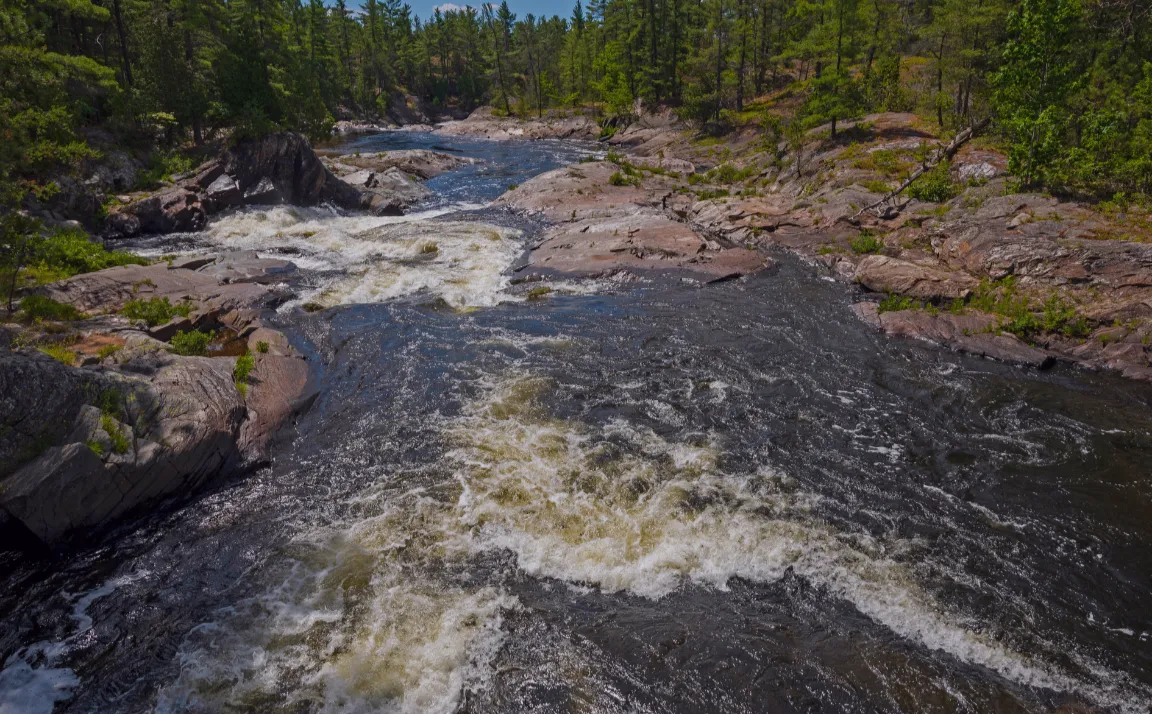
1:33 Well, I think like a lot of Canada, there's a lot of prospectivity in Northwestern Ontario, particularly in some of these Greenstone belts that perhaps haven't seen as much exploration activity historically as some of the more famous districts, but a lot of the focal efforts in Northwestern Ontario sort of centred around the Red Lake District and that particular area. And I think it's Mora and Dryden Gold are making some great headway in the Dryden area. We're certainly seeing a lot of exploration upside in the Chevanduwin Greenstone belt. You know, there's these things, these systems are dynamic. I think they offer both size potential and grade potential. And, you know, I think it's just a preferred place to work. It's a nice, safe, stable jurisdiction, lots of exploration upside, ease of access,
2:28 not too much drama. There's always drama in this business, but it's minimized a little bit by working in Northwestern Ontario. So it's, I think it's a perfect place to be. I appreciate that. And yeah, it's certainly less dramatic than other regions that I speak to executives about. Maura, I'll throw it to you next for what, What do you think, honestly, are the biggest advantages to working in the region? And what do you think about the current market conditions for investing there?
2:52 Well, I think some of the biggest advantages, I mean, we have a lot of natural resource work here and forestry has done great things, especially in Dryden, we have a paper mill. So we have road access to almost the entire project. And it's unusual to go to an area that's had limited exploration, but be able to drive out to your new discoveries and make them on the side of the road. So I think that's a huge upside and it really gives us a low exploration cost. One of the other things is because people are in the natural resource business here, they understand mining better. You don't really have that resistance that you do in some next to the wood. And so that's nice. In Dryden, for example, we have workers that drive up to Red Lake to work, down to Rainy River to work at that mine. So it's nice to be in a place where people sort of know mining and aren't fearful of it, I guess I'd say.
3:43 That's certainly helpful. And Brian, I'll throw it to you to just give your kind of top hits and highlights before we get into more significant questions about the region. Yeah, no, I think we really enjoy working where we do and feel blessed to have
3:56 the support we do. And for us in particular, that relates to the government in Ontario and there's a few ways they play roles in supporting us. Recently we put out a press release which is OJEP. So OJEP is the Ontario Junior Exploration Program and that grants dollars to exploration companies. So GFG would have recently received $200,000 to go conduct greenfield work. And that's essentially free money from the government promoting junior exploration, promoting generative work. And it's a reasonable amount of dollars where you can actually go out there and do generative work. So that's super positive where you have a supportive jurisdiction that's, you know, putting money into the ground in parallel with the company. And the other way the government supports us is through the geological survey. So we work closely with the Ontario Geological Survey in understanding our belt, understanding the geology, understanding the ore controls. We do mutual tours with the geologists there, tap each other's brains.
4:51 And so I feel like the province of Ontario through the flow through, through their OJEP, through the geological survey is a huge benefit to all of us that work there. And flipping back to the geological end of it, there's the old geology, which is the rocks and the golds in, and then there's young geology, which is all the dirt and the scruff and everything that sits on top of the rocks. And to me, that's as much as the opportunity as anything in the sense that whether it's Wes or more ourselves, we can go out there and still find relatively shallow, well-preserved Gold systems at an environment that's accessible from the exploration point of view. We're not having to look deep. We can still find things in the first search space and by that I mean within a couple hundred meters of surface and it's because you have a lot of till, you have a lot of swamp, you have a lot of overburden.
5:40 So that piece, which is very much a characteristic of Ontario and much of the Northern Shield, preserves endowment, preserves gold deposits that are yet to be found. So those are some of the reasons I think, yeah, Wes is right on. These are just big systems, the
5:54 right types of systems that big gold companies want and the right characteristics. So I just maybe flagged a few other things that I think are really relevant for us working in Ontario. No, no, appreciate it. Now, I do want to zoom into your individual projects. So what I'd love to talk about next is the exploration strategies that are represented here today, because I know it spans from targeting high-grade narrow structures to large tonnage lower-grade systems. So if you could just, and Brian, I'll start with you actually, if you don't mind, narrow in on what GFG's major exploration strategies are in the region. You know, so we looked hard at a lot of belts in Ontario before we came to arrive in Timmins when we did. And a lot of things we liked brought us to Ontario as a whole and then a few things brought us into Timmins and we looked at this Timmins opportunity and ultimately you found so much of the work in the belt was focused in the core of the camp.
6:47 And Timmins was found in the 20s and 30s. But you don't have to go that far out of the belt to find really highly prospective share zones that are also well endowed, that are pretty immature. So, from a strategy perspective, GHE goes out, we put together large tracks of ground, we're doing generative work across big belts of ground. We're looking under those cover rocks, under those till rocks and using the till to vector, building our own structural models, building our own geological models. From a strategy perspective, it was very much to say, here's a 200km strike length of belt that is really fertile. Where are the areas that are underexplored and accessible for a company of GFG size and stature?
7:30 Let's really focus on those. And that's something we did 5 or 6 years ago in the consolidation efforts we did around Timmins. And today we would own 800 square kilometers and be second only to Discovery Silver and Landholdings in this belt. So that's our strategy. Go out, focus on a belt like Timmins where we know there's big deposits, understand that the fertility still exists outbound of the main camp, and really focus on those structural corridors and the work we're doing at Penn, the work we're doing at Gold Arm, the work we're doing at Dory, like we are directly proximal to 5, 10, 20 million out systems, but we're in rocks that are still pretty immature from an exploration potential. I appreciate that. Wes, I'll throw it to you next. Just generally, clue the investors in the room into Thundergold's exploration strategy.
8:16 Well, I mean, look, I'm kind of a simple guy in terms of my exploration strategy and it's shut up and drill, stupid. I mean, the more drill holes and the more exploration points you can develop on a project, the greater success you're going to have. I mean, that's been demonstrated time and time again. Obviously, you have to be looking in the right rocks and the right rock units. I think in our particular instance, in the Shibanduan belt, I think there's fantastic potential there. There seems to be a direct relationship between where the Gold is located, at least at our property at Tower Mountain. And there's a close affinity with intrusive rocks, which are really easy to spot in the field. And that relationship extends outside of the Tower Mountain project to some of the surrounding district. You see repeatedly in a lot of the assessment reports.
9:07 And there's another positive for working in Northwestern Ontario is the assessment report database is a fantastic source of information. Sometimes you got to wade through a lot of stuff to develop the clues. But reviewing the assessment reports for a 20km
9:21 radius around a Tower Mountain intrusion, which is the core, the centre of our particular exploration project, it's like the bullseye, for lack of a better way of putting it. Looking at those assessment reports for a 20km radius, there's a consistent relationship between where Gold mineralization has been identified by historical prospectors dating back almost 100 years and intrusive rocks that are variably logged as alkalic intrusions, So cyanites, for lack of a better way of putting it. So we had this big bullseye target. We've drilled maybe a quarter of the perimeter surrounding that target and that's where all the Gold is located. It's like a concentric band, 500m around the circle. So we've just got to throw enough darts to develop a resource that's large enough to make our investors extremely happy. And I think that's certainly an achievable goal. In today's marketplace, we've got the benefit of being immediately beside the Trans-Canada Highway and both national railroads.
10:20 We're 50 kilometers from a population center of over 100,000 people with direct access to one of the largest sea lanes in the world. There's a lot of things to love about Tower Mountain, which is why I accepted the job in the first place. Well, there you go. And Maura, I'll throw it to you, just to clue us into Dryden's exploration strategy. Yeah, I'll kind of take it back to the beginning and it was really land consolidation, similar to what Brian said. I mean, Dryden has some very high grade hits from drilling and from surface sampling, but it had always been very piecemeal ownership, small prospectors, no real consolidation had ever happened. So we have 70,000 hectares now over that. And so we really put together the whole district, looking first at geology basics. So looking for that main structural corridor, that would be the host for the highest grade gold mineralization in the camp. And we control the Manitou-Dinorvic deformation zone. Or if you look at our land package, it basically follows that structure. And then the older D1 structures, we picked the one with the best access so making it easiest for us to explore it so it's very much everything we do is is very strategic.
11:25 The way we explore is very systematic as well so I always compare geologists to detectives because essentially we are And it's a nice way for non-geos to sort of get what we do. So we have a great data set. And we've talked a bit about working in Ontario. Well, in Dryden, we have a government survey, a geophysical survey of this region. It's at 50-metre line spacing. So that's really close. It gives us the ability to create geologic models early, early before we even stake the ground really, and start to see where the best rocks would be, where the structures are. So we capitalise on all of this great data that we have in Ontario to put that together and kind of early stage make our model. And then our strategy is high grade. I mean, grade's king. You can't say you don't love seeing some visible gold in the rocks. And with my background, working 8 years in the Red Lake camp.
12:17 I love high grade. I love the complexity of it, the structural controls and so I know what to look for. So, you know, developing the team to help support that, doing the early stage work to vector in on where the best targets would be and just using everything at our disposal. So we have kind of a two-prong strategy. We've got an area that had a lot of historic work from early state, early mining in the early 1900s. So we knew there was gold there. We've been exploring that. That's the Gold Rock Camp, trying to grow that, show that there's a significant
12:48 potential at that specific location. But with the large land package that we have, we're looking at the regional controls of high grade and looking at other targets where we're doing early stage work, where we're doing a property wide soil and till sampling program so that we have one more layer of clues to say where we would vector into, you know, potential other high grade or other types of deposits. And what's cool and kind of similar to Timmins is that we have different deposit models. So, we have this high-grade system at Gold Rock, which is vein and narrow, except for the shear zones, they're wider and that's what we're really focused on, which is good. We also know in this camp that there are granitoid intrusion-related deposits, there's VMS-related deposits. So, we're looking for all of those, like eyes wide open. We see an association with arsenic and that certainly reminds me of Red Lake and the high grade zones there. So we're kind of looking at all of the clues and piecing in on where the next, hopefully discovery comes from.
13:49 Awesome, appreciate that. One thing I know infrastructure isn't as sexy to talk about as visible gold and all the fun stuff that we do talk about, but it does play a, I think, quite large role in both project economics, but also in your strategies for developing projects. Amora, I'll start with you there, if you don't mind. I'm curious to hear what impact the infrastructure in the region has on Dryden's project economics, exploration strategies, etc.
14:14 Oh, absolutely. I mean, that was really one of the benefits and exciting things about Dryden. And for me, I thought, well, I've worked on a lot of exploration projects where you have to go really far away, take a float plane in or a helicopter, but I literally could drive my car to one of the discoveries we made in our reconnaissance program because it's just off the highway. So having that ability to get everywhere really lowers your exploration costs. So Our all-in-drill cost is just under $250, and we are doing oriented core, geochem. We're not selectively sampling, we're sampling the full core. So to be able to do all of the best practices and still have a low discovery cost, or all-in-drill cost is excellent. So I really like having that ease of logistics because it just makes your job easier. You can very easily decide what you want to target and cost isn't going to be what kills a target.
15:18 Oh, I think that's great. Brian, I'll turn it to you for just the infrastructure. If you could speak to some of the infrastructure around GFG, that'd be helpful too. Yeah, I think Moira's point on the drivers towards discovery cost is very relevant. So all that point's exceptionally valid in Timmins as well. You know maybe I'll take a little bit different tact is that that's the cost to find it. What's the threshold of something that's economic? And I think that's a really valid point in Timmins in particular where, you know, literally we have 7 mills around
15:50 us within, you know, 100 kilometers of any direction. And so when you put that threshold to it, and some of those are underutilized, and some of those are 3000 tons a day, some of those are 36,000 ton a day mills. So that has the effect to literally lower the threshold of an economic discovery. So if we were to go work in northern Manitoba or Nunavut, you may need 3, 4 or 5 million ounces to be relevant. And by relevant, I mean start to reach an economic threshold. Whereas where we function in Timmins, if we can find half a million ounces at good grade in a modest fit, because of the highway infrastructure, because of the proximity of mills, because of the opportunity and the competition for feed in a camp like Timmins, you just really improve your probability of success.
16:40 So, you know, I think we're as technical individuals, we're all very aware that, you know, there's a lot more half million to million ounce deposits than there are 10 to 20 million ounce deposits. But in Timmins, we don't need to find 5, 10, 20 to be successful. We need to find 1, 2 to start to be successful.
17:00 That's where I really think that some of the camps we work in, the infrastructure piece is so valid. If we can find a deposit and it actually unlocks value for GFG and somebody else, big success. So I think that's a good benefit to Timmins and the likes of an IM Gold or a Discovery Silver, Pan American, Alamos Gold, our largest shareholder, all have infrastructure in this camp. And they're all keenly aware of Discovery stage companies like ourselves. That's great. And Wes, I'll throw it to you to wrap this one up. Just talk about the infrastructure near your spot. Having run junior mining companies that require a significant amount of infrastructure to be built for them in order to make their project even remotely economically viable, I'm a firm believer that if you can find a gold project beside a highway, find it.
17:52 Like Brian, all of us, we benefit from the fact that we have a skilled workforce that can drive to work. We don't have to build them a camp. We don't have to fly them in, we don't have to deal with all of the problems and all of the permitting issues related to housing a 500-man construction camp or a 200-man permanent operating camp and all those other issues with airplanes and helicopters and bringing in your materials and don't forget I'm in a typical mine you know a typical mine that's using you know producing 10,000 out of 10,000 tons a day or treating 10,000 tons a day you're probably shipping 50 to 100 tons of consumables a day by highway or by some way. Hopefully you're not flying it in because that's really impossible. But you know, 15 cents a ton kilometer, every kilometer costs you money and it costs you profit off your bottom line and it impacts your financials and your feasibility study and everything else that goes with it. So you can't beat infrastructure. I mean, let's be real here.
18:58 And that also eliminates the problem that you have where NGOs perhaps would stand in opposition, a significant opposition to your project simply because you are in a pristine wilderness area that, you know, like It's far more difficult to permit a project in an area or a remote area than it is to permit a project that's beside a highway in between the highway and 2 national railroads. Sure. Just common sense. Yeah, like I said, it's less sexy than invisible gold, but a highway, it's got its moments. I will say, Maura's roads must be a hell of a lot better than my logging roads, because if you can drive her car to them, I need a four-wheel drive or a buggy. But hats off to you, Maura. There you go.
19:43 Your loggers were better. It was an anomaly, that one. But you can drive a Toyota
19:47 Corolla to that Hidman project. It's crazy. Now, I want to talk about timing, because I do think it's interesting. It's an interesting question in mining generally. But multiple companies reporting significant drill results in recent months. What role Do we think timing plays in advancing projects from discovery through to potential development? And I'm curious how each of you are positioning for the next phase of growth and Brian. I'll throw it to you first Yeah, you know, I think we're benefiting and from the macro theme So so timing in the junior space and bringing news to markets is exceptionally relevant. I think the capital markets have been stuck, or at least difficult for juniors for, I would say, the last 10 years at least, and maybe even longer. So when we think of gold sitting here at $3,300 in the US, $3,000 plus, and $4,500 Canadian, that timing piece to unlock the capital market's valid.
20:39 Still not simple, but there's certainly a better market in terms of being able to access capital. So that timing piece of turning discovery and news to something that becomes relevant to the market. Part of the challenge we all have is we do a ton of work, as Maura said, detective work prior to getting to a stage where something might be relevant like a drill hole and a discovery hole. And so captivating and keeping the market engaged while you're doing that generative work is a challenge for all of us. So we need to be creative and we need to be storytellers and we need to engage with our shareholders and stakeholders and get them to be part of the experience of discovery. But this timing piece is really key, maintaining visibility in the market, maintaining that momentum.
21:26 And it is so key, all of us have to be present. We have to be marketing And we have to be searching for those new shareholders and somebody that actually cares about the news flow, the relevant news flow when we come up with discovery. So priming is exceptionally relevant. And when you have some good news, you got to run with it. And you really got to be aggressive on getting it out to the market and new shareholders and finding new and innovative ways like 6 to to sell our product, sell our story. I appreciate that a lot. Maura, I'll throw it to you for the same question on how does Dryden think about timing?
22:01 Well, luck is definitely a key part of exploration. I think it's important that we do the base of all the science because that gives you the best chance for success. But you're always thinking about not just scientific variables, but political variables. You know, when your drill holes are going to get back from the lab, there are so many pieces of timing that we're constantly thinking about. So I think you have to be very flexible and dynamic, change your plan as you see other variables, you know, whether they be political coming in or just logistical, like we talked earlier before we got online about fires. So fire season, you have to be thinking about that and how that's going to impact your news flow. It's best if you can kind of constantly have some way to engage the audience as Brian said, because you don't want your story to dry up, you want to be front and center in everybody's mind and keep thinking about the excitement of the story you're putting together. And especially when trying to make a discovery and you don't sort of already have a defined deposit that you can easily pull good results from, it's important to keep everybody engaged with even the boring science that I try to turn into interesting stories for people.
23:16 But you know, that's really key, I think, in this stage of, at least the Dryden's in for early exploration. Brian, Wes, I'll let you get in there on this one. I'm going to go, I'm going to take the controversial route with this one. Look, I don't think there's anybody in the Mining Hall of Fame that hasn't benefited from a brilliant sense of timing. I mean, and today is probably a brilliant sense of timing. As Brian indicated, the junior space in particular has been challenged in raising funds to do the exploration that's necessary, but there's not a major producer out there who hasn't seen their production profile decline.
23:52 At the same time, there's not a major producer or even a small Gold producer out there that isn't currently far more profitable today than they were 3 years ago. I mean, a lot of these projects that are operating were based on feasibility studies and construction. You know, they were constructed based on a $1,500 gold price or less and we're currently at $3,300 gold. They have to be making more money than they've ever made in their life. And the logical conclusion is they have to invest that in order to maintain their production profile in the future. So companies like ours that are in promising locations with promising drill results, whether they be high-grade, I mean, even some of the high grade mines are making money at this price, but sorry, little dig there for you too. But, you know, like you're making money, man, and you got to spend money in order to sort of continue to survive as a producing gold issuer. You have to replenish the reserves that you're depleting from your deposit and that pressure is constant. And I lived it. I lived it for a number of years. It was a horrible situation.
24:56 Just horrible. And that was when gold was 280 bucks an ounce. And I remember thinking when I went up to 450, I was like, wow, think of all the money we're going to have to spend and now what is it today? $3,300. It's mind-blowing. It's absolutely mind-blowing. So, look, I think people that have good exploration discoveries, particularly close to infrastructure, because the majors don't want to pay to build
25:21 500km of highway out to a new district or open up an entirely new area for gold production, where they have to invest heavily in process plants, etc. Where perhaps they don't have the skilled workforce necessary in order to make their project more economically viable. Those are all things that majors look for when they're trying to acquire new projects. So I think timing couldn't be any better for our industry. And I think for the 3 people in the, well, 3 people in this room, Romeo, you can join us by association. There you go. I'll take it. I'll always take it. I would just go a little further with that one, Wes, too. And I think that's a really key point to emphasize is this free cash flow piece of the producers and if you take an example
26:09 like take a Val d'Or, take a Kirkland Lake, take a Timmins, you know many of those camps are producing a million ounces a year and you know in the case of some of them might be more or less million ounces with a 2000 dollar AISC margin it's 2 billion dollars a year of cash coming out of a singular camp like that. You got to take out executive bonuses. That's an AIST cost, right? So, you
26:38 know, it's really just an immense amount of free cash flow that comes into it. And this is coming purely from those pieces of infrastructure and those businesses that are there and of course they're going to want to reinvest in those around us. So I think for all of us it's a really key piece at the timing of what the gold price is doing to our producer peers and that's changing the scale and changing the the markets that we work in. All of us have a number of corporate shareholders
27:07 and benefit from that. And I think that's a really key benefit of the timing of where we are now. Absolutely. One thing I wanted to get into is how you guys are managing exploration budgets, because as we talked about, gold prices are remaining elevated. And even though it has been a tough 10 years, like Brian said, for getting capital, we are seeing increased investor interest in precious metals, I think, over the recent short period. So I'm curious, how are you guys managing your exploration budgets and financing strategies so you can kind of maximize your drilling success, but keep a keep a strong balance sheet? Maura, I'll throw it to you first, if you don't mind. Sure. Well, I think it ties back into a lot of things we've been talking about. I mean, all of us have chosen jurisdictions where we have lower expiration costs because of the great infrastructure that's around us. So I think that certainly helps to make us all stand out in the crowd in terms of explorers you want to invest in because you'll get more bang for your buck. So certainly reminding that to the shareholders often.
28:06 For us, you want to capitalize on success. So as you're finding new gold, and we had a pretty crazy result, 300 grams over almost 4 meters, you get a lot of interest. You want to keep that momentum going, so not spending it all before you have more results and always being dynamic about those new discoveries you make and new scientific breakthroughs you make and tweaking the plan. I think all of those things have to be constant in your mind to make the best decisions with the budgets you have. And strike while the iron's hot in terms
28:38 of raises. I mean, it's summer. Usually, everybody is off at camp and enjoying that. But I think we're a little bit different this year because of the political climate we're in, that precious metals are still hot. So, you know, we all need to capitalize on that. That's the hizzle that we have right now. That's certainly a busier July than I'm used to. Brian, I'll throw it to you for how you're managing expiration budgets. Yeah, we firmly believe that there's a base level of intensity of work we need to complete to keep relevant news flow and keep momentum. And for us, that's like $3 million a year in the ground. And that to us puts us in a good position to say we can go to our shareholders and come up with the relevant programs that keep moving the ball forward, keeping the projects forward and if we can be a little more aggressive and push upwards of maybe 4 or 5 million dollars a year as the balance sheet supports us and as results dictate.
29:35 That's how we would kind of ebb and
29:36 flow our budgetary spend. So at a base case, we need to keep active project pushing forward as we find in this case, we've done some good financing. We have runway now for the next 18 months plus or minus, well into 2026 towards the end of it. And that puts us in a good position to be aggressive and to push the budgets now. And then we talk about the allocation where I think it's really important to balance what I talk about, which is Greenfield Discovery versus an advanced project moving towards resource. This is a high-risk business and if we're just going to go out here and throw darts at Greenfield targets, that's a hard game to win. We really try to blend our expenditure profile into something that's higher confidence drilling, taking Aljo for us. This is a really good deposit. We're advancing towards a resource. Our hit rate is about 80%. We know if we go and drill 20 holes, we're going to hit 15 of them. And we'll pair that with something
30:37 that we might be testing things for the first time in 5 or 6 Greenfield targets and making up 20% to 30% of our budget. So that's how we think about budget allocation from a corporate level to a target level. Wes, I'll let you get in there to wrap this one up. I'll be totally honest and up front here. I think I manage my expiration budget far better than I manage my personal budget. I Just went to golf town the other day and that sort of blew the budget for the month. But anyway,
31:06 look, I mean, you do good science. Yeah, I think it's really important. And I think all the people in this room practice good science. They have indicators that they're looking at, geophysical, geochemical. Recently we initiated a soil geochem survey and that wouldn't typically be my first choice at Tower Mountain for a number of different reasons, but it seems to have developed a number of interesting targets and we're probably going to go in and infill those soil geochem lines in the not-too-distant future. We use that soil geochemistry to sort of prioritize this phase of drilling that we're just wrapping up here in the next, probably in the next several days. We've refinanced, we've recently closed another US$1.6M of financing, which allows us to extend our program or take a little break, do some decent groundwork, soil geochem, followed by probably outcrop stripping, followed by target prioritisation, followed by drilling, and hopefully you keep the momentum going. I think when I got involved with this project, you saw a lot of juniors have problems raising money and getting investor interest. So they tend to drill very close spaced holes on their projects, like less than 20m.
32:23 I don't think that helps us. I don't think drilling a hole 600m deep when you're looking at a Gold target, that's probably going to range between 0.9 and 1.2g a tonne. Drilling 500m down or 550m down at this stage of the game doesn't help you from an exploration viewpoint. So kind of a hard cap
32:44 on that 350m vertical bottom for your drilling because that's the logical bottom of most open pit mines. You can go deeper, but most open pit mines lose efficiency below 350m depth from surface. That's where we're looking. Trying some new things. Going to have some exciting announcements, technological innovation. I love that kind of shit. Am I allowed to say that word on 6? Is that okay? Yeah, you're clear. Anyway, we're probably going to be deploying some downhole scanning with orientated core instead of the old way of doing orientated core, which is kind of neighbor intensive. We're going to try one
33:32 of these groups and do some scans of our holes and see if it provides any clues and sort of gives us an indication of our high-grade system, which is different from the high-grade systems Brian and Maura have. I mean, my high-grade, I get excited at 2 grams, okay? Just to be upfront and honest here. 2 grams is fine, make money at 2 grams all day long. Nice. Well, there you go. I have some questions from the audience I'm gonna get to before I ask you a couple of questions about your individual stocks. There's 1 and I'll throw this to whoever's got an answer instinctively and then please do chime in if you've got additional thoughts. Jay from the chat asks, how supportive is Ontario compared to Quebec? And he's curious specifically if the exploration rebates are as good. I know, Brian, you spoke about how supportive the province is at the beginning of the hour. So I might throw it to you first if you got an instinct, but I'll let anybody chime in. Yeah, I mean, the Quebec provincial flow through and super flow through used to be a major advantage for the province. And that's reflected in the magnitude of the Delta between a hard dollar pricing and a flow-through pricing.
34:35 And Quebec used to be like 60, 80, 90%.
34:39 So a huge tax advantage provided to the company to explore in Quebec in the last round of budgets. They actually eroded that or largely removed it. And it's now defaulted back to national, what I call national flow-through premium. And so the advantage of Quebec versus Ontario from a tax incentive is pretty much flattened. So I think Quebec historically had a very strong advantage in this piece. And right now you put it on par with Ontario. And if you just went provincially, you could take a Manitoba. And I believe Manitoba and Saskatchewan actually have higher tax incentives to explore in province than Ontario or Quebec do right now.
35:29 So different provinces have different views of this. But right now, you would put Ontario and Quebec pretty much on par from an incentive program point of view, purely related to their tax incentives. I appreciate that. And Wes Moore, if either of you have any thoughts on how supportive Ontario is, I'll ask you to throw it in now before I jump to the next question. I think they're as supportive as they can be with taxpayer money. I mean, you know, like everybody else, they have budgets that they have to comply with. I mean, they've certainly taken the ball and run with it with critical minerals investment. And from my perspective, if critical minerals is the trigger that opens up more remote regions of the province for mineral exploration, whether that be for critical minerals or gold, I'm a happy camper.
36:20 I like a simple world, so my focus is Ontario. I think that's where I want to be. That's where I think this company should be. And that's our focus, not just now, but in the future going forward. Great. Now, I do have one question from the chat. And this is a broad-minding question, but eager to have anybody's perspective on it. Mike asks, why do Canadian juniors choose to raise money by issuing shares and diluting current shareholders instead of going to a bank and just borrowing the necessary money. So if anybody's got a thought on that, on just general financing strategy, I'll throw it to you guys. 20 years of interest payments kind of answers that question. And look, borrowing money is something that's a game for a producing issuer to play. I think juniors are, like it or not, juniors are in a position, I can only speak to my particular focus at this game or at this particular junction in time, which is large tonnage, low-grade deposits.
37:16 So typically, if you look at the top 20 large-grade, low-grade, low-grade large tonnage deposits in Canada today, and you see how much drilling had been completed in their Feasibility Study to support their initial feasibility resource reserve estimate. Basically, on an average basis, you have to do 40,000m of drilling in order to find a million ounces. So a 5 million ounce deposit, you're looking upwards of 250,000m of drilling, probably in that range to get to that stage. That's a lot of money. I dare say that for my experience in the 80s with the high-grade narrow vein type, shear zone, hostic Gold veins up in other parts of Canada.
38:06 It was even more expensive in terms of the need to drill off because you have less, you have less projectability of higher-grade gold samples in a resource model environment. You know, the variability is different. Yeah. Yeah. So, you know, it's an expensive undertaking. So you have to issue shares. That's the only capital we have. And I've got a somewhat simple view on it is until you make it an economically, a demonstrably economically viable discovery, what is dilution? How do you dilute nothing? You know what I mean? Like, I mean, that's a harsh way to put it, but that's how I feel. So how do you pay it back to? So we're very good at spending money to to explore. And the real win, I think, for all of us is the take out.
38:55 So we're all courting major and mid tier companies. We have strategic investments and that's that's the end game for for junior explorers. I mean, some do go and produce, but it's a harder transition because I know what I'm good at and it's finding gold. I've worked at mines too, so I have a sense of what we need as an end game, but turning into an operator is a lot different and there's companies that are very good at it, so that's why it makes more sense. I would just add one thing really, it's like if you think of the cost of capital piece, and let me just take an advanced developer for you, like I've ran a producer before, go and try to borrow money. You're probably in the 12, 14, 16% range as a developer.
39:44 And we are higher risk than a developer is in the sense that we're committing exploration. So let's put a premium on those interest rates and and I don't think anybody wants to go and borrow money at 20% But if you actually found an institution that was willing to loan you money to go and conduct exploration, the interest or the return they're likely looking for is that 15%, 20%, 25%. And that's just not a palpable return for us. So, A, it's probably not available. B, if it was, it's super high cost of capital. So shareholders don't like it because it always dilutes their interest. But in reality, it's still the lowest cost of capital available.
40:30 I appreciate that context, everybody. Now, one person in the chat wants you to talk about politics to stress out your IR team. So I'm going to throw a question out there, answer it as you're able. Wesley asks, Trump this week announced 50% tariffs on copper, copper imports to the United States. Curious generally what Trump's, we'll call it, unique economic strategy, how it impacts Canadian miners. Throw it out to anybody who's got a thought. I'd have to say, as he was getting into power, there was definitely some nervousness. I mean, at PDAC, there was a lot of discussion and concern about what was going to happen. But I think you see the precious metal prices where they are. And there's still a lot of uncertainty, but that makes gold appealing. So I won't go into too many details about my opinion, but it's not hurting us right now as an explorer.
41:28 Heartfully done. Well done. Your team's gonna be impressed. Look, I mean, I'm glad I'm not a copper producer in Canada, but I think that the United States has the right to govern as per their elected government officials, just like we do. Decisions are made. Decisions are made on the world trade stage. Somebody's obviously decided that tariffs are beneficial to the people of the United States and I don't have an opinion. I can't express an opinion on that. I'm not an economist. I can't express an opinion on that. I'm not an economist. I can't express an opinion on that one way or the other, but I will say I think it's been great for the price of gold. And as long as he keeps doing that, I'm a happy camper. There you go.
42:15 Yeah, I would say we can take the same approach here and it's the same philosophy which is invest in Canada. And so when we look at some of the policy that's developed and you can look at our commitment on the world stage to commit to national defense and budgets around that piece. And our commitment and the ability to commit to investment in critical infrastructure in support of critical minerals is one of the pieces that the Canada is advantaged of because we're a massive country, we have huge resources. Our weakness is actually remote infrastructure. It's not that we don't have huge deposits in central Nunavut or northern Quebec or northern Saskatchewan. Often it's about the infrastructure to access those. There are some policy changes going on that's meant to drive investment into the US and change their dependency on the world stage as it relates to copper, critical minerals and various things like that.
43:14 In Canada, it needs to adopt and is adopting some similar policy to that in response. So I would take a more inward looking strategy to it. And I think many of our governments are taking that approach, which is what can we do to make the best of what we have? And I think there's some really good initiatives within Canada that are doing exactly that. I just add further I think there's 7 and a half billion people in the world that still need Canadian copper so why don't we focus on them. I'll award you all points for diplomacy. Well done. In many ways, you know, the US permitting regime and GFG used to own an asset in Wyoming. And Wyoming is one of the best extractive industries in the US in terms of jurisdiction.
44:02 And even there we still struggle to get permits through to advance a gold project or a copper project. And it's struggled because of environmental legislation, timeframe to turn the permits around, the relationship between the provincial, the state body and the federal body. And if they can simplify that, which they're trying to, and they can change their dependency on copper imports, why wouldn't they? Why wouldn't they try to extract copper in a better way in the U.S., given it's so critical to where the future metals or future industries are going. So I just think that there's some changes going on with the US that are that are probably really good from a permitting advancement from the US point of view. Yeah. There's one question in the chat on just strategy of mid-size. Davis asks, why does a company like Alamos take positions in GFG and Dryden instead of doing the exploring themselves?
44:54 They do lots of exploration themselves. And, you know, I would, I don't know the particular budget, but I would hazard to guess that Alamos is spending between 80 and 100 million a year. And they spend that on 3 or 4 different mines. And so their challenge is, yeah, they're making a lot of money. They want to return money. They want to support their mines and they want to grow in their footprint of directly adjacent to their minds. What they're not necessarily doing, which they would maybe tag some of the juniors to do in the areas they wanna focus in is that generative work to say, yeah, we own, we have exposure to, you know, anything that can be trucked to our mills, but we don't own all that land. So we want to pick a few of the really competent juniors that have the right lands that if they're successful, they would benefit from.
45:46 So For Alamos to take, let's just say it's between $4-$8M a year and spread it between 3-6 different juniors, I think it's a reasonable return and a good strategy. For them, more eggs in the basket for a relatively low cost. Apple seed theory, right? A couple of small investments today could turn into very profitable development projects and mining projects in the future. And I think they just got to pick and choose their opportunities that are strategic to those particular companies. You used to do it all the time with Gynros, right? You make investments in juniors and support their exploration plays and hopefully those lead to major discoveries that you know, and you're sitting there with a particular, you know, some percentage of ownership in that junior company makes it really easy going forward for everybody involved. So I think that's a perfect way to put it. There you go. Now, I usually have a question where I just give you guys an opportunity to pitch your stock, but there was a question in the chat that I think sums it up in a more interesting way. So I'll pose it to each of you. Mike from the chat asks, how will shareholders in your company benefit by owning shares? And he gives an example of, you plan to build a mine on your own or you're gonna sell proven gold while still on the ground. He wants to know what your ultimate strategy to enrich shareholders is.
47:14 I think it's an interesting formulation of the question. So I'll throw it to each one of you, and I do encourage you to be as shameless as you can be while promoting your stock here. And Wes, I'll throw it to you first. Well, I mean, I've done, I've played both sides of the coin. I've worked in mining operations for about half of my career, so 20 years, and I've worked as an exploration geologist for 20 years. Exploration is way more fun. Operations is way more headaches. I've worked on feasibility studies with SNC Lavalin on different projects around the world. I know what's involved in building a mine. It's extremely difficult. To do it well, it's a challenging undertaking and you need a very specialized, not just 1 or 2 individuals, you need a very specialized and very well educated and competent team in order to build, particularly a large mining project.
48:14 That's the mining path. The other path, and I think all 3 companies on this call today are favouring that path, is basically just to fundamentally solid exploration, define a fundamentally 43-101 compliant mineral resource or mineral reserve that it would be of interest to a producing issuer and vend that project to the producing issuer. The more recent examples are Kinross' acquisition of Great Bear Resources for $2Bn, more or less. That's kind of the number.
49:03 That sort of takes care of a lot of dilution. So if you're in early at $0.03, you might be getting diluted or your position might be diluted, but you always have the option to participate in the financing that companies do going forward to fund their exploration. So if you want to maintain your interest, buy more stock. And if you're aggressive, if you believe in the management team and you believe in the opportunity and you believe in the project, then ultimately, everybody's going to have a good payday. So that's why I've been buying as much Thunder Gold stock as I possibly can buy. Sadly, this opportunity for me came at a time after I invested in my retirement home, which is sort of sitting behind me here.
49:51 You know, I didn't, I always laugh and say, the only person that wants to be the CEO of a junior mining company is somebody that's never done it before. So when I was originally approached for this job with Thundergold, I wasn't really particularly interested but then I looked at the data and the nice thing about data is it never lies. Data tells a story. Sometimes it's a good story, sometimes it's a bad story. I looked at the data from Thundergold and said, this is something I got to delay my retirement and life on a golf course and raising bees and doing all the things that I was planning on doing when I built my retirement home. I put all that on the back burner, but I still got to pay for the retirement home. So I'm not taking out a second mortgage because that would be insane. But I'm just dropping as much money into the company stock as I can. I participated in every financing this company has done since I joined it in 2022, and I will continue to do so going forward.
50:45 There you go. I appreciate that, Wes. Mara, I'll throw it to you next. What's the Dryden strategy for enriching shareholders? Well, we want to make a new discovery. That's really what our entire goal is. And you've, I'm sure, heard Trey say it, if not myself as well, but we'd like to be the next great bear. I mean, who doesn't? We wanna make a discovery and get a big company like Kinross or Alamos or whoever, you know, to take us out for a crazy amount of money. That's the real goal. That's what we all wanna do here. I think all of us are true explorers. I mean, you don't go into this industry if you're not an optimist. So you have to keep trying to find that big one and get the excitement. So for us, I mean, we're not focused right now on a resource. We know that this district of Dryden really has not seen enough to have a resource anytime soon. We are looking to show that there is enough significant mineralization that there could be a resource, that there could be something very big.
51:42 But that's our focus, is finding that next discovery. And I think we've seen a lot of people poking heads over our shoulders looking at the data and saying, OK, yeah, they're they're onto something and we like their process. So we'll just we'll just keep doing that. And, you know, enough shots on goal really does work. So. There you go, Brad, I'll let you close it off with that one. Yeah, sure. I mean, I think like Wes, I'm a large shareholder and founder of the company and continue to support it in all our financings. I believe in what we're doing. For us working, and this really went back to our strategy, where are our chances best to make an economic discovery? And, you know, in looking all around, we felt that an area like Timmins offered us the best bang for our buck return on investment to putting dollars in the ground. If we find 500,000 ounces, it's probably economic to somebody in a modest pit. If we find 5 million ounces, you can bet your dollars. It's worth somebody's investment at a corporate level.
52:43 So working in an area like this where we have natural wires, we have natural infrastructure, we definitely set ourselves up to be acquired in time and we set ourselves up to be acquired in a competitive process where if you have 75,000 tons a day milling capacity and 6 mills within 100 kilometers of you, you know there's gonna be a few interested parties when you make a discovery. So our goal is head down, look at the rocks hard, find an economic deposit and sell it. And we think the area we work in offers us a direct path to go do that. And really that's the return from a shareholder perspective is bet on a team that has the right strategy that offers you a reasonable exit and a good return. Nope, there you go. I always love when there's questions better than mine in the chat.
53:31 So I appreciate everybody for throwing their questions in today. I do want to close off with just 1 that I'll throw to each of you. And Brian, I can start with you. What should investors expect from GFG over the next 12 months, let's say, in terms of resource advancement, drilling programs, key catalysts? What should folks in the room keep their eye out for? Absolutely. We have a drill program starting up here on the area east of Timmins, a property called Walker Wilkie Carr in one of the deposits there called Aljo. This is a really fascinating area where you've seen some new discoveries, the likes of Onyx directly adjacent to us. You're working at a camp that's rejuvenated with the entry point to discovery Silver. So the company has a good strategy to go and drill about 4,000m in the second half of this year. Primary focus on that will be advancing Aljo with 3,000m of drilling in late July, early August and September. We also have a program planned in mid-Q4, which is a little more generative in Greenfield work.
54:29 This is an example of pairing what we think is growing ounces that will end up in a resource to taking an initial stab at a few targets on a rocker-built E-car. And this is a great area where there's lots of cover. Discovery is ongoing right now, directly adjacent to us. Lots of eyes on this camp. So, you know, at GFT, expect us to be newsy in terms of drill flow coming out Q3 and Q4. There's a well-funded exploration program. There's good generative new targets. And you're also working in a camp where you can expect to see your peers also generating momentum. And I think that's really key for any of our companies is working in an area where you might be pushing the ball up the hill, but if you have 3 or 4 different companies trying to do the work in parallel with you, you're all creating momentum. And that's where I really think Timmins has turned the corner. And I'm very optimistic about both our plans for the second half of this year from a drilling perspective, but also what our peers are doing in this camp.
55:27 Great. Maura, I'll throw it to you for what can investors in the room expect coming up next to Trident? Yeah, absolutely. Well, we're about halfway through our $5.8 million exploration budget for 2025. It's a very exciting and aggressive year. Half of that budget has been focused on Gold Rock and really growing that. And we have 4 catalysts based on this complex exploration program that we put together. So we want to show that there's something significant at the Gold Rock target area that we've been drilling. We want to show that there's a periodicity to these deposits and to these mines. We compare ourselves to Red Lake often just because I've seen so many similarities with my many years in that camp. We'll be testing Mud Lake probably next month. We'll be moving the drill rig up there. And if we see similarities to Gold Rock at that site, that's about 2 kilometers away, that really starts to show that these systems do repeat along the Manitou-Dinor deformation zone. So that's another big catalyst for us. We're also doing regional exploration programmes right now. We're focused on Sheridan, which is down to the south end of our property, which has a 617 gram per tonne surface sample. It's barely been followed up. We're going to start our initial drill program there. I think the drill rig is moving there today. So we'll be testing that shortly. We're doing channel sampling work and mapping work at Hinman, which is one of our targets on the very east side of our property. Both of those have totally different deposit model styles.
56:52 So we're not just looking at 1 area, we're looking at a district. And so for us, it's growing Gold Rock, showing there's a periodicity to these projects and making a new discovery through the regional exploration work. And, you know, we talk about 12 to 18 months, but we should have all this information back in the fall because we've been running a very aggressive program. I'm surprised that I'm still functioning some days because we're just so busy. But it's exciting times on the ground and our team is running at full tilt right now during the summer. So you're going to see a lot of exciting information coming out through the fall and our goal with Dryden is to kind of keep the momentum going, keep the movement going, raise more money based on it and just make this discovery and sell the company. Awesome. And Wes, I'll let you close it off. What can investors look forward to at Thundergold?
57:40 Well, as I indicated in an earlier comment, we're just wrapping up our phase 2 drill program right now. We're doing smaller drill programs and basically collecting all the results and analyzing the results before we plan our next phase or finalize our next phase of drilling. There's lots of places to drill at Tower Mountain. It's a smaller project area perhaps than some of the others in the room, but that allows us to focus, have a laser beam focus on the area where we think drives the most potential value for our shareholders. So, we should have results from this drill program back by the end of July and release those to the public and basically demonstrate to the public that here's what we promised to do in January when we issued our plans for our exploration in the first half of the year. Here's the results.
58:29 We're fully financed to do a follow-up drill program. We're fully financed to do field work, basically infill soil geochemistry and some innovative technologies down the hole to sort of see if that generates any further clues. But again, I think If you're in doubt as to what I am looking for or what Thunder Gold represents, after the call, go down, get yourself a Tim Hortons, medium coffee, get yourself a donut, look at the hole in the donut and say, you know, the delicious part of this donut is everything that surrounds that goddamn hole, because that's where I'm drilling and that's where I'll continue to drill. And it's probably one of the more easier exploration programs I've ever been involved with, because that's really how simple it is for us. So we plan basically the frog step, keep adding value, Keep demonstrating good results, keep the news flow going and probably do some future financings to get us into 2026.
59:23 But you know, our hard dollars, our hard dollar balance currently is enough to allow us to continue well into 2027. Awesome. Well, Wes, Brian, Mora, thank you so much for this conversation. I think it was a lot of fun. Thanks for everybody who's in the room who asked questions. I think we got to most of them today, which is great. Usually I'm stuck with a couple left over, but I think we tackled everybody's interest today. So thank you so much for this conversation and I hope everybody has a great end to their day.