Transcript
Automated transcript · Written by software from the replay's audio. It can mishear names and figures; the replay is the record.
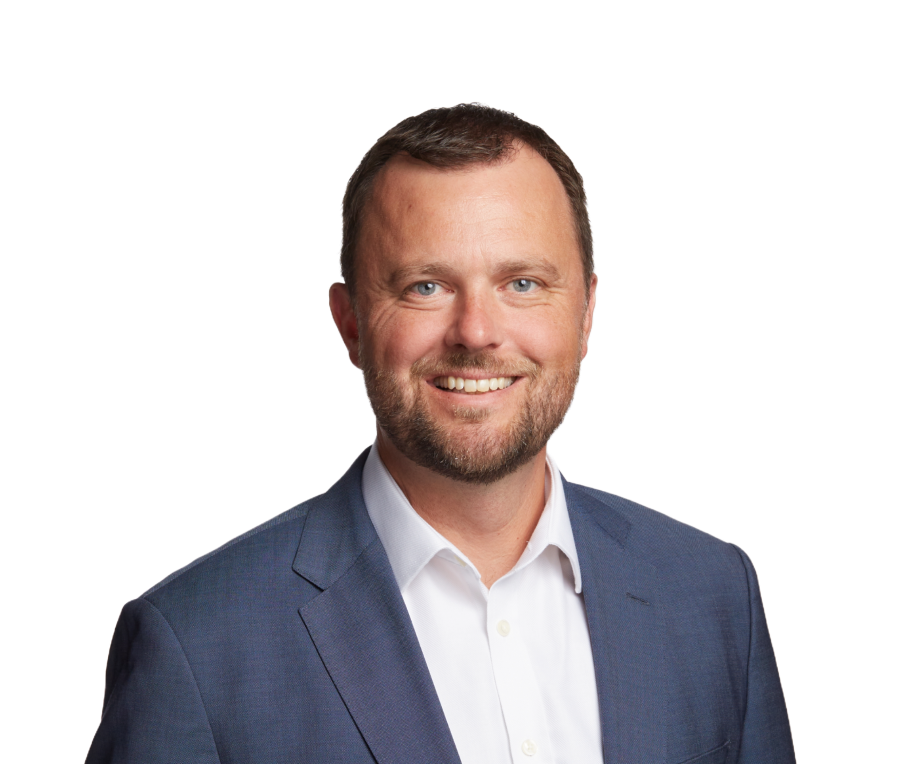
0:04 Hi everyone and welcome to Nucor Gold's live investment summit today hosted by 6. We're joined today by Luc Alexander, President, CEO and Director. Luc brings extensive resource sector experience, knowledge and contacts to Nucor, particularly in West Africa. He has raised billions of dollars and structured deals for major mining companies while advising some of the world's top institutional investment funds. Today, Luke is gonna walk you through a company presentation, and then we're gonna be accepting questions. As a reminder, you can submit your questions in the Q&A panel on the right-hand side of your screen. Without further ado, I'm gonna hand it over to Luke for the corporate presentation.
0:51 Thank you very much, Jane, and thanks everyone for joining today's presentation. As Jane highlighted, I've spent most of my career on the capital market side of the business, working for various investment banks. A big chunk of that time was in London, advising a number of large institutional investors in London and across Europe on different mining investments around the world. And as we get into the presentation, you'll see that a number of those investors are now invested in Nucor today. I will be making a forward-looking statement, so I'd encourage you to go to our website and in the presentation, you can read this disclaimer in more detail. While you're on the website, I'd also suggest you sign up to our distribution list so that you can receive updates from the company going forward.
1:38 Maybe where I'll start is on slide 4. This was a big part of the motivation for me joining Nucor and hopefully a big part of the reason why you'll become investors in NuCorp or are currently investors in NuCorp. When we get into it, you'll see that we've got one of the top teams in the small cap space, which I think is a real benefit for a company of our size. So we've got one of the best teams in the small cap space, well backed by institutional investors. I mean, we've gone from 0% institutional ownership to about 20% backing today. And a number of those are groups that I've worked with over the past 10 or 15 years.
2:24 We're well aligned with investors through our 39% ownership in the business. That's management and insiders who own 39% of the business. One of the things I always like to highlight here is this isn't a deal where we issued ourselves a whole bunch of stock at a penny a share and then turned around and raised money from the market at 40, 50 or 60 cents. We put hard dollars into the company alongside investors. A number of our directors have been supporting the company and investing alongside investors over a number of years. True shareholder alignment and we think it's shareholders first, which I think is incredibly important for any company and any management team. Ghana, it's a great place to be operating. It's Africa's largest Gold producer producing about 4.8Moz. We currently sit on a resource of 1.2Moz.
3:15 We just put an update out last Monday and it's a great resource for us to grow and we think we'll be able to significantly grow it over the coming years. We kicked off an 8,000-metre drill campaign beginning mid-August. We're about halfway through that and looking forward to getting some results out to the market in the next week or 2. Really good capital structure, 79, 80 million shares outstanding. And one of the things I always like to highlight is that we don't have any warrants. And I think that's a real testament to the asset and the team that we've never had to issue warrants to attract investment into Nucor. Looking here at slide 5, These are a few of the recent wins for shareholders that management and the board has been involved in. While I was working on the capital market side of the business, I worked closely with all of these companies, primarily while I was in London and working with a number of the institutions over there. So if we look at Calibre Mining, Greg Smith, who's our VP Exploration, he was running Calibre up until last year when they did a transformative deal with B2 Gold to vend in some producing assets in Nicaragua.
4:31 That company's created about $500 million of shareholder value and counting. Our chairman, Doug Forrester, who I've worked with closely over a number of years and I've always held as one of the best in the business, he was the CEO at Newmarket Gold. That was a $10 million company. They vended the Fosterville asset in Australia and 14-months later sold that company for $1.2Bn. So one of the bigger, if not biggest success stories in the Gold space in the last 5-odd years. And then Integra Gold and Integra Resources, George Salamis, he's one of our board members and he was executive chairman at Integra Gold and he's now CEO at Integra Resources. And then Doug Hurst, many of you may know as well, he was executive chairman at Northern Empire, founder of New Market and on the board of Caliber. So for a company of our size, call it $50 million. You know, a board like this is pretty rare and I think it's a real advantage for our shareholders in terms of, you know, being aligned with a group like this.
5:34 From a management perspective, I gave you a bit of my background. Greg Smith, he's our VP Exploration. Greg's got over 30 years of exploration experience around the world. He's worked on the Enchi project on and off for the past 10 years. He's been involved in all of the drill campaigns. He's been involved in the resource updates that we've put out as well as the PEA. And it's great to have him back full time focused on Enchi and creating value for our shareholders. Mal Karwaska, many of you may know she's got a lot of experience in the mining space. She joined us about 2 weeks ago. She comes from an investment banking background, and then that's complemented with working on the private equity side of the business and most recently she was VP Corp Dev and Investor Relations for another TSX listed company. So it's great to have her as part of the executive team. And then we always like to talk about Dan Wilson. He's our country manager and having good social license and someone on the ground who can drive our project forward is hugely important.
6:39 Dan's worked on the Enchi project on and off for the past 20 years. In the early 2000s, he worked with Redback. He then left and worked all over Africa and then came back to the Enchi project in 2010, and he's worked with it ever since. And where we've really seen the value of having someone like Dan on our team is when we kicked off our 8,000 meter program. Within a week, Dan had roads being built, bridges being upgraded, deals done with the local farmers and chiefs, and it was an absolute seamless process to get the drill rigs back on the ground. And he's an important part of the team as a result of that. We touched on it briefly, but good capital structure, 80 million shares, outstanding management and insider zone, 39% of the company, institutional investors.
7:28 When I joined in May, and mid-May, and Doug Forrester stepped up from director to chairman of the company and Greg Smith came back as full-time VP Exploration. A number of the institutional investors, some of them listed in the bottom left-hand corner, groups that I've worked with over the past 10 or 15 years, were very keen to get involved. They were able to participate in a small way on the private placement. We had significant demand, so we weren't able to get anyone a large position, but got them some toehold positions in the company. And then we worked closely with them to go and bid Kinross for their block of stock. Kinross owned 17% of Pinecrest and they were involved in the project in 2010.
8:16 And We worked closely with the institutions and went and bid them for that stock and crossed it in the market at $0.36 a share. That took us from 0% institutional ownership to over 20%. Needless to say, to have deep-pocketed, long-term, precious metals and mining-focused institutional investors supporting us at this stage is very important. I think equally important is having support from the street and support from investment banks. If you look at on the bottom right-hand corner here, you'll see that since we relaunched as Nucor Gold at the beginning of August, we've added 4 investment banks from a research perspective. So we've got Cormark, Haywood, Raymond James and Stiefel all covering us from a research perspective and having that support is very helpful from our perspective and it's great to have them on board.
9:10 August 12th, we announced our drill campaign had commenced, 8,000 meters, about halfway through that today. And then September 14th, we announced our updated resource. So we've been very busy in the last few months here and plan to continue to be busy going forward. For those of you who aren't that familiar with Ghana, it's a great country to be operating in. It's Africa's largest gold producer, producing 4.8 million ounces. It surpassed South Africa in 2018 as the largest producer. It's the eighth largest gold producer in the world. And with that, you end up with a very well-aligned government in terms of supportive of the mining industry and the importance for the economy and the tax base in Ghana.
10:01 It also means that there's a lot of skilled labor in country, which we're able to draw on for the benefit of our shareholders. So Ghana is a great place to be operating and we couldn't be happier to be in Ghana. Where are our projects situated? You can see here down in the bottom southwest corner of the country. If we now zoom in and have a closer look at that, our project is situated along the Sefui-Bibiani belt. It's a prolific belt that runs through Ghana. Directly to the north of our project, about 50km, we've got the Trano mine. That's one of Kinross' producing mines. It produces about 200,000oz a year and has 5.5Moz of resource.
10:46 Historically there, Bibiani to the north of that at 6.5 million ounces. And then to the north of that, you've got one of Newmont's 2 producing mines in country, the Ayiafa mine. The Ayiafa mine is about 15 and 500,000 ounces. So Needless to say, we're very happy with the belt that we're on and the prospectivity that there is from an exploration perspective. You can see on this slide that Our asset actually butts up on the Cote d'Ivoire border. Directly on the other side, you've got a FEMA, the FEMA asset, which is Teranga's asset. If you follow Teranga and if you don't, you may want to look at some recent press releases that they put out. You'll see that they specifically put one out last week talking about how excited they are about the exploration that they've done at AFIMA and gave the market an update on that exploration and highlighted that it's going to become a much bigger focus for them within their overall portfolio. So needless to say, to have our $2.5 billion market cap neighbor excited about the exploration is a nice to have. If we now take a little closer look at the project, you'll see here it's 216 square kilometers, so a very very large land package.
12:12 Where the mineralization and from north to south or south to north it's 40 kilometers in length and Where you typically find the mineralization
12:24 in these areas is actually the splays that come off of the main Bibiani shear zone. We've got 3 of these main splays coming through our property and if you add up the total strike length of those splays, you've got about 100 kilometers of perspective areas for us to target from a mineralization perspective. We've just scratched the surface at this stage. You can see here that there's 3 areas we highlight, Boeing, Su-Am and Ni-Am. Those are the 3 areas where our current 1.2 million ounce resource sits. But outside of that, there's 25 plus different areas that we can target in the future and at this point we've only drilled on 6 of those areas. So true district scale exploration opportunity here and something that we're extremely excited about.
13:17 In terms of the resource update that we put out last Monday, it's 52 million tons, 0.72 grams per ton, giving us a 1.2 million ounce resource. One of the things that we sometimes joke about is that if and when we grow this to a 3, 4, 5Moz resource, it'll be a 20-year overnight success story. And those of you who follow the mining industry probably recognize that that's often the case that the successful mines out there have had people working on them for a number of years. And that's one of the real advantages that we have at Enchi. If you look here at the table in the bottom right-hand corner, you'll see that there's 88km of historical work that's been done on the project, of which 52 kilometers has been diamond and RC drilling. So we've got all of that data and information, and we like to think of it as less risky exploration, given the amount of information that we've got on this project and work that we've historically done on it. So great place to be from that perspective as well.
14:24 If we now look at our historical PEA, this PEA became stale dated when we put out our updated 1.22Moz resource. And one of the things that I'd highlight is this PEA was done using 721,000oz of in-pit resource, which has now obviously grown to 1.22Moz of in-pit resource. So we're now contemplating actually updating the PEA and where that really
14:56 is a benefit for our shareholders and for analysts and investment bankers and other investors is ultimately, it's an underpinning of value for the company. If we look at the historical 2015 PEA, based off of that 721,000 ounces, and we use a 1560 gold price, which is the column on the right and probably the most appropriate price to use today. We've got a pre-tax or had a pre-tax NPV of 206 million after tax, 130 million and 43% IRR. Our goal isn't to go and build a 62,000oz a year mine. Our goal is to significantly explore and increase the size of the resource to 3, 4, 5Moz.
15:44 But all along, what we'll continue to do is we'll upgrade these economic studies because it creates that underpinning of value for the company and ultimately for our shareholders.
15:54 So when you think of us, think of us as exploration with true underpinning of value through the economic studies that we've had done. Looking at the asset again, Boing, Suam and Niamh are the 3 areas where we've got current deposits and make up our resource. Other areas where we've done some historical drilling include Cogina Hill and Quack Ram, which are just to the east or the right there, or just below Niam. Good historical drill results from those areas, 1.14g over 68m, 0.9g over 29m at Quack Ram, 1.5g over 22m.
16:41 This is a 1.4 grams over 68 meters, 0.9 grams over 29 at Quack-Rom, 1.5 grams over 22 meters. So this is a couple of areas that we're going back to as part of this 8,000 meter program. We're also drilling a new area called Naquanta, which I can show you on the on the next on the next slide. But then we've also drilled up at Arati previously and had some good initial results from up there. And then across the rest of the property, there's a number of opportunities for us to drill other areas. So we're really excited from an exploration perspective. A couple of the tools in the toolbox that we use to ultimately identify where the most perspective areas are for exploration and for drilling.
17:21 One is airborne geophysics and you can see here on the map on the left that there's a number of anomalies that have been identified across the overall property. Those line up very well with where our current resource areas are and the most drilling's been done. So, Boeing, Sue M, Niam. And then soil sampling is another key tool that we use to ultimately identify the best and most prospective areas to explore. So when you look at the soil sampling that's been done on the right and match that up with the airborne that's been done on the left, you can see they line up very well and that there's multiple different areas for us to target across the entire property. One area that we're excited about getting to in the midterm is Suam South. We won't be able to get to it as part of this 8,000 meter program, but we are building a road down there and going to do some trenching work in the coming months. But if you look at that anomaly in the South there, it's 3.5km by 2km and it's one of the biggest anomalies on our entire project and doesn't have a drill hole in it yet. And then again, 40km to the north of that, you've got Arati. We've had some good historical drilling there and keen to get back there in the midterm to ultimately continue drilling up there.
18:36 But really the focus of this program, given the limited size is on our central area, two thirds of it going to Boeing, Su-Am, NIAM,
18:45 and then following up at Naquanta, Cojina Hill, and then also targeting Naquanta for the first time. One thing I might highlight on this slide is infrastructure. If you look on the right there, you can see In the green, there's a little town called Enchi. We're very well positioned from an infrastructure perspective. We've actually got a road that goes directly through our property. It actually goes just above where it says Niam and you can probably see a gray line there. That's actually a paved highway that the Chinese built 5 or 6 years ago. So we have really good access to our property. And then throughout the rest of the property, we've either got dirt or gravel roads that give us access to the various drill locations and deposits. So great from an infrastructure perspective.
19:37 And the town of Enchi, it's about 15,000 people, electricity and all the services that we could want to draw on for our exploration campaign. So very well positioned from that perspective. Looking at our 3 resource areas in a little bit more detail, Boeing, SUEM and NIAM. This is where about two thirds of the drill campaign is going to go. If you look
20:02 at these different deposits, you'll see that they are all open along Stripe. So we will be stepping out and continuing to hopefully expand the overall size of the pits and the resource. But then there's also highlighted here by these blue arrows at both at Boeing and SUAM. There's these what we call gap zones and these are just areas that haven't had any real drilling done on them yet and they're focus areas for us when we line up the soil sampling as well as the geophysics, they run right through these areas. And again, we like to think of this as lower risk exploration in areas like this. And then the big opportunity for our investors and something that our institutional investors are very keen on in time is for us to drill deeper.
20:53 At this 0.1 of the key things is that we've only drilled down to an average of about 50m and the bulk of that drilling has stopped in the oxides, call it 75% of the
21:05 drilling has stopped in the oxides, about 20% has ended in the transitional zone, and then about 5% into the sulfides. If we look at Toronto to the north of us, and I'll move to the next slide to highlight this. If you look to Toronto to the north of us, and I'll move to the next slide to highlight this. If you look to Toronto to the north of us, you'll see that where they really started to significantly grow the overall size of their resources is when they started drilling deeper. And You can see that they're now producing down to about 750m and they've drilled down as far as about 1.3km. Looking at this slide, you can see we've tried to superimpose a little dotted line across both of these cross sections. And that represents the depth of the oxide mineralization, which we will look to continue to expand.
21:58 So we're at 1.2 million ounces today.
22:02 We're filling in the gap areas. We're stepping out on areas at Suam, Boing and Niam. We're going back to Kwakrom and Kojina Hill to hopefully move those up towards the resource category and show that there's additional resource there, drilling Naquanta for the first time, and eventually we'll like to drill the oxides at Arati and Suam South as well. But ultimately, what we're really keen to do is drill deeper. And When I talk about drilling deeper, it's diamond drilling down to about 250m to 400m to ultimately prove up a similar geological setting to what we see at Toronto to the north of us. That's one of the things that I'm very excited about and the rest of the team's excited about and something that a number of our institutional investors have indicated that they're keen for us to do.
22:55 So this kind of summarizes the blue sky opportunity and one of the reasons you may want to look at investing
23:03 in Nucor. So just to recap, talk to your management team, a number of shareholder wins over the past 5 years, very well aligned with shareholders through our 39% interest. Ghana is a great place to operate. Newmont's in country, Anglo Gold, Goldfields, these are all major mining companies and with that comes a very good alignment with the government. We've got a very solid resource to start with, 1.2Moz, an opportunity to significantly expand that with the drill bit and then a good capital structure, 79Moz, 80Moz shares outstanding. We think we've de-risked the company significantly from a capital markets perspective by attracting 20% of our investor base as institutional long-term investors, as well as getting a number of top-tier investment banks to cover us from a research perspective and want to be part of the story.
24:02 So with that, I think I'll
24:05 leave it there. And I would definitely encourage you to visit our website. Please sign up to the distribution list. And then We also are very active on LinkedIn and Facebook and Twitter, so you can find us there. And with that, I'll turn it over to questions. Thank you very much, Luke, and thank you for taking us through the whole presentation. Let's start with the first question. Luke, what led you to leave a successful business in capital markets to run a public mining company?
24:43 I mean, the opportunity at Enchi just stood out. The team involved, the geology, the country, all of those things, having covered and looked at mining companies for the past 15 years, the opportunity was just too good for me not to leave and ultimately join as CEO. And I think that's been demonstrated by, you know, the support that we've had since May from the investment banking community, as well as institutional investors and others, is I think a lot of the market is recognizing that, you know, Enchi has been overlooked for years and there's a real opportunity here for it to be a significant resource. Yeah, it's interesting that you mentioned team. Our next question is from Daz and he mentions that he also really likes the team. But his question is, what is your timeframe to reward shareholders who support you?
25:40 Good question, Daz, and thanks for asking it. I mean, we're gonna continually be trying to reward shareholders. In the next week or 2, we're going to get our first set of drill results out and we hope that those will be positive for the market. On the back of that first set of drill results, we'll be putting results out in batches, So expect there to be news flow over the next 2-months. We're also reviewing our PEA and looking at updating that given the significant increase from 721,000oz of in-pit resource to 1.22M. We think that that could potentially have a positive impact on the overall underpinning of value for the company. And then we're going to continue to work with investors and the rest of the investment banking community to get out there and tell the new core story.
26:32 Last week, we were at the Beaver Creek Conference, which is a big mining Gold conference.
26:37 This week, we're at the Denver Gold Conference, speaking with dozens of different investors around the world. And ultimately, those were the first 2 conferences that we have done. So we're really just starting to scratch the surface in terms of getting out there and telling the new core story. And we'd like to think that that will reward existing shareholders in terms of having additional shareholders come in and buy the stock. So those would be a few of the things. Sven asks as a follow-up question, is there a specific timeframe for the new PEA?
27:13 And then what are the key catalysts for the remainder of the year? So the PEA, we're just evaluating that at the moment. We just obviously put out the updated resource last Monday, and we've been busy with these various conferences. But In terms of getting that completed, we are evaluating that at the moment. And if we were to decide to put that out, it would be by the end of this year. And then your second question in terms of catalysts, I think the main catalyst will hopefully be the drill results that come out in the next couple of weeks and then follow on drill results thereafter in batches of probably 8 or 10. We've drilled a total of 6 or we're drilling a total of 60 holes across that 8,000 meters. So needless to say, lots of results for us to put out to the market.
28:08 Great. Our next question was submitted ahead of time. It reads, There has been a lot of noise in West Africa. How stable has Ghana been? And what sets Ghana apart from other West African countries? Ghana is known as the Gold Coast. It's got 2000 years of gold production history. So it's very well established from a mining perspective. The government is extremely well aligned with the mining industry. I mean, 4.8 million ounces of gold production. To put that in perspective on a per square kilometer basis, Ghana actually produces more than Nevada does. So the importance of the industry
28:53 for the government is significant and as a result, they're very well aligned. In terms of politically, there haven't been any issues in Ghana and touch wood, that'll continue to be the case. It's been a very stable country and over our time there, we haven't seen any major issues. The other thing from a mining perspective, I mean, if you look at the major companies that there are in-country, you've got Newmont, Anglo Gold, Goldfields, as well as Kinross. So with that, obviously, comes a lot of potential political sway and importance with those companies. And if you look at, you know, recent, you know, deal where Cardinal is being bought or potentially being bought, and that's a competitive bidding situation between Shandong, who's a $16 billion company, and Nord Gold. So I think that's another indication that there's a lot of companies that are quite keen to get into Ghana and are willing to get into competitive bidding situations to get themselves there.
30:01 Great. Thank you very much. We've got another question from Thijs. He asks, how undervalued is this company compared to peers and why should this be revalued? I guess there's a few different ways of looking at it from a valuation perspective. There's the underpinning of value from an NPV perspective and we ran through some of those numbers. And if you look at where we're trading relative to the NPV, or if you look at some of the research that's out there on us, a number of those analysts have come up with their own valuation from an NPV perspective. And then there's the other way that a lot of people look at exploration companies is from an EV to ounce perspective.
30:51 And if you look at us from that perspective, we're trading somewhere around $35 an ounce. And I'd encourage you to go and look at what the industry is trading at. And Cardinal may be a good example of, you know, from an M&A perspective, what companies are willing to pay on a per ounce basis to get into a country like Ghana. And some of the numbers that
31:13 I've seen for that transaction are around $80 an ounce. So those would be kind of a few ways that I would encourage you to look at it. Great, thank you. Our next question is from Rob. Rob wanted to know if you would be doing any bulk sampling And can you please comment in more detail about the technical work being completed in the ongoing exploration program? Anything in addition to RC drilling? At the moment, given the budget we have for the 8,000 meters and the fact that we're focusing on the oxides with that 8,000m, we're only doing RC drilling. But at some stage, when we look to drill deeper and push through the transitional zone and into the Sulfides, we will obviously at that stage look at using diamond rigs. We do have a lot of historical diamond drilling that was done.
32:12 In terms of MET work, we have done some initial met work on the project and all of that fed into our previous PEA. And as part of this program here, we're actually taking additional samples, which we will use to send to the lab and get additional met work done. And then trenching is another thing that as part of this program or current budget that we have, we're doing a bunch of trenching work. One of the areas that we're building a road to at the moment, which I highlighted was Sueham South, which is one of our biggest anomalies. And we're gonna get down there and dig some trenches in the next few weeks here and kind of get ourselves in a position that we can have a better understanding of where the targets are, the most prospectivity, and ultimately look to drill down there in the near future.
33:06 Great. Our next question is from Sven about financing. Luke, would you please say a few words to the cash in the bank and when the market can expect a financing? So I think the best way to look at it and the way I looked at it and the rest of the team and board was when we raised our $3 million in May, we said we want to, as shareholders, get as much of that money into the ground as possible. That led us to planning an 8,000 meter program as well as network and other trenching and other work that we wanted to get done. So the way I'd look at it is when we complete our 8,000, so 8,000 meters and then we said let's make sure we've got at least 12 months of cash to run the business. And so when we're complete our 8,000 metres, we'll have 12 months of cash to run the business. But ultimately, you know, we're in the exploration business and our institutional investors have invested in us to to significantly grow the resource. So at some stage, we will reassess the merits of that and what kind of size program we'd like to do.
34:17 But ultimately, you know, we've got the cash to finish this 8000 meters plus 12 months of runway. So that's the way I kind of kind of look at our current cash position. Let's talk a little bit about the asset now, Luke, Can you comment on the history of the asset? Why was Ken Ross willing to sell out their 17% equity position? So the history of the asset, Redback owned it in the early 2000s or kind of 2000 to 2010. We did a deal with Redback on the Enchi asset to do a direct asset level deal, put $5 million into the ground in return for a 51% direct interest in the Enchi asset.
35:06 6 months after we did that deal, Kinross took out Redback and ultimately, took out Redback and Ultimately, they took over that 49% stake in the asset. Subsequent to that, they converted that into a direct equity interest in Pinecrest. They diluted down over a number of years and then ultimately we bought that or the institutional investors bought that block of stock from them at $0.36. I think if you look at Kinross, they've been divesting of a number of their non-core investments. You saw that they did that deal with Mavericks on their entire royalty portfolio. So I think it's just something that that was non-core to them and and was an opportunity to for them to ultimately sell and consistent with the way they've been cleaning up their overall portfolio of non-core positions.
36:06 Mm-hmm. So speaking of royalties, what's your view on streams and royalties and would you consider selling a royalty on the property? So we've already got a royalty on the property. Again, I think the institutional backing that we have as well as interest from the market, we would most likely only contemplate equity investments at this stage and wouldn't contemplate adding another royalty on our ENSHI project. Understood. And what's your burn rate and your view on dilution? I mean, we're 39% holders of the business, so we're very sensitive to dilution and it's something that we take seriously.
36:56 But along with dilution, you got to look at what the upside of raising additional capital is. And from that perspective, given the district scale nature of our project, we think any money that we would raise down the road would ultimately be accretive for our shareholders as a result of the drilling that we would use that money for. So, it's exploration and you need money to drill. And I think it's really a matter of just making sure you spend those dollars appropriately. In terms of cash burn, we're about 100 grand a month. In terms of cash burn, we run things really lean and ultimately, you know, we run it as shareholders given our ownership of the business.
37:48 Now, going back a little bit to royalties, could you provide a bit more detail on the royalty structure in Ghana? So the Ghanaian government across the country has a 5% royalty on any project. So that's the royalty. And then they also have a 10% free carried interest on any project in country if they decide to execute on that option. And all of that is taken into account in our PEA and the model that we run to come up with that NPV. Great. Here's another question from Sven.
38:35 Sven asks, what's your expectation in terms of gold prices in general? What does it mean for gold stocks? Do you think that we're in the early innings of a bull market or at its end? No, I think if you look at what's going on globally in terms of printing of money, I think we're in an environment that's gonna be very low interest rates to negative interest rates for years to come. And as a result, that that kind of environment is is very positive for gold. I think we've seen that reflected a little bit in the gold price, but I think ultimately, we're going to continue to see a pretty robust gold market going forward.
39:22 Great. Now, switching gears a little bit, here's a question that asks about you specifically, Luke. When you were deciding to join the team, what was the most important factor that you looked for and ultimately convinced you to join? And what risks did you assess? I mean, I did extensive due diligence before joining Nucor, And I looked at a number of different factors. One is obviously the team. That was a big check mark for me. Most of the team I had worked with for, very closely for 5 plus years. And in my 15 years of working with management teams from around the world and different mining companies I always held this team as one of the best I'd ever come across.
40:09 And ultimately good teams find good assets and typically attract good investors and are able to drive projects forward. So so that was very important for me. Ghana, again, when you look at all the major companies that are operating in in Ghana, it's a great jurisdiction to be operating and the infrastructure is fantastic paved roads going through our property. Our drilling contractor has a maintenance shed within 4 hours of us. So that's great from that perspective. The geology, I mean, it's true district scale exploration. So, you know, the upside potential here is significant. So that was very important as well. Very good capital structure, which is also, I think, very important for shareholders and ultimately per share value creation.
41:03 When I spoke about this opportunity with a number of groups that I've worked with for 10, 15 plus years, most people had completely forgotten about Enchi or never heard about it. And I think that's always important when you have an asset or that's been overlooked by the market, then that's a really good starting place. And 1.2 million ounce resource is a great place for us to grow from. So those were a lot of the things that I did from a due diligence perspective as I kind of worked my way through the list of motivations to join, let's say. Thanks, Luke. It's really great to hear the strength of the team behind you, as well as the potential in your asset and also the projects and region that you're operating in.
41:51 Now, the final question that we have for you is what are the 3 key takeaways you want people to leave with today? I guess 3 key takeaways. Shareholder alignment, I think that's evident in our 39% ownership of the business and we think as shareholders first and we're here to create significant value for our shareholders. 2 would be district scale. You look at the size of the package that we've got 216 square kilometers, 3 different shears going through our property, totaling 100 kilometers in strike length. I mean, the district scale opportunity here is huge. And then Ghana, it's a great place to operate. I know a lot of people aren't as familiar with Africa, but I've spent a lot of time in Africa. And I think The fact that you've got so many major companies in Ghana, as well as companies competing to get into Ghana from an acquisition M&A perspective, I think speaks to the quality of the assets in country and the regime that there is from a tax perspective as well as stability perspective. So those would be 3 of the things that I would highlight.
43:11 Yeah, thanks for that, Luke. And I think that's all the questions that we have today. I would like to first of all thank you Luke for giving us a presentation and answering all of our questions and to thank also everyone in the audience who submitted questions. If you didn't get a chance to get your question answered or if you think of 1 after the summit. There's definitely more information on NewCoreGold's website. Please visit them at newcoregold.com. Also feel free to reach out to them at info at newcoregold.com and to follow any of their social media channels on Twitter, Facebook and LinkedIn, and they'll be happy to respond to you. Remember, they trade on the TSXV under the ticker NCAU.
43:57 Now I'm going to throw it back to Luke for the final word. Thanks a lot, Jane. And thank you everyone for listening in and thanks for all the questions. And yeah, please get in touch anytime and we'd be keen to answer any of your questions and follow up with any information that you need. So thanks again, everyone. And hopefully we'll welcome you as a shareholder 1 day and to those who are already existing shareholders, thank you very much for your support and we really appreciate it. All right, thanks. Bye now. Take care.