Transcript
Automated transcript · Written by software from the replay's audio. It can mishear names and figures; the replay is the record.
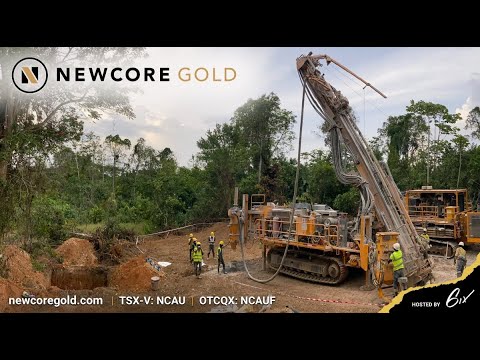
0:08 Hi, everyone. Thank you for joining us today to learn more about Nucor Gold and our ongoing drill program at Enchi. My name is Malika Dvorska and I'm the VP of Corporate Development and IR for the company. I am joined today by Nucor Gold's President and CEO, Luke Alexander, along with Nucor's VP of Exploration, Greg Smith. Both will be presenting today, with Luke providing a high-level refresher on Nucor Gold, and then Greg Smith diving into the details on the drill results we've released to date from our 58,000 meter drill program that is underway at our Enchi Gold Project in Ghana. Before we get started, I just wanna highlight that we will be making some forward looking statements today, I encourage you all to visit our website where you can find the full cautionary language. Please also note that there are some handouts available under the handouts tab.
0:56 As well, questions are encouraged. After the presentation, Luke and Greg will be answering your questions. Note that there are 2 functions, chat and questions. So please be sure to input your questions under the Q&A. As well, so with that, I'm gonna pass it over to Luke. Thanks. Thanks a lot, Mal, And thank you everyone for joining us today. I think many of you who are listening will have heard the Nucor story before. If you haven't, I'd encourage you to go to our website. Also, we've got a YouTube channel that's got lots of information or reach out. We're always keen to engage with our shareholders. So with that being said, I think the focus of today's webinar is really to dig a little deeper into the drill results that we've Released thus far. So I'll give you a quick high-level overview and recap of Nucor for
1:42 those who haven't heard this story But then the real focus is going to be on Greg getting into the drill results. So first and foremost, I think I'll start with the management team. I think that's one of the things that for a company of our size really sets us apart. I mean, we've got a team who's got a proven track record of making a lot of money for shareholders and a number of shareholder wins. So I think that's important. We're extremely well institutionally backed. I spent 15 years on the capital markets investment banking side of the business, 12 years in London covering big global natural resource funds and advising institutional investors as well as ASX, TSX and London listed companies. And we've grown our institutional ownership to about 35% today. So we're very pleased with that and those investors ultimately share our vision that We've got a district scale exploration project and there's a lot of growth potential ahead of us. Very well aligned management tune through our 32% ownership in the business. I think that's important because we ultimately think as investors first.
2:44 Gone as a tier 1 jurisdiction. It's Africa's largest gold producer, has a very stable government and a huge amount of skilled labor in country for us to draw on. And that's been a real benefit for us in terms of pushing our Enchi project forward. We've got a very solid resource to be building off of 1.2 million ounces. One of the keys with our current resource is that 95% of it sits within the oxide and transitional zones, which as many of you, I'm sure are experienced mining investors will appreciate, means it's a much lower CapEx way of producing, CapEx way of building a mine and ultimately producing ounces. So we're very pleased with that and looking to grow. We'll talk about the drill program in a lot of detail in this presentation.
3:29 We've currently released about 40% of the total results and excited to be continuing to get lots of results out over the next number of months. And then a very good capital structure. So just under 100 million shares outstanding and no warrants, which I ultimately think speaks to the quality of the team and the asset that we haven't had to issue warrants to ultimately attract capital. Looking at where we're physically located in Ghana, we're in the Southwest corner. There's 2 prolific gold belts in Ghana. There's the Ashanti belt, as well as the Sefwi Bibiani belt where we're located. We've got very good neighbors in country. So just to the north of us, about 50 kilometers, you've got Kinross's Tyrannomine that produces about 150,000 ounces per year, has an endowment of 5.5 million ounces and continuing to grow as they put out more exploration results there. The Bibiani mine, which is just to the north of that, sits at 6.5 million ounces. And then one of Newmont's 2 producing mines in country, the Ahafo mine, that sits at an endowment of 15.5 million ounces.
4:34 Interestingly, in Ghana, you've actually got 3 of the largest gold companies on the planet operating there with significant amounts of their total global production coming from Ghana. For example, Newmont has 18% of their total global production. So I think again, that speaks to the quality of the country in terms of being able to attract those kinds of players. Another company I'll mention while we're on this slide is Shandong, they're the most recent major company to enter Ghana. They won out a bidding war for Cardinal Resources, which was ASX TSX listed and great to have them so keen to get into Ghana. And as you can see, it's a great asset sitting at 7.4 million ounces. The other one I'll highlight is our asset actually butts up against the Cote d'Ivoire border directly on the other side. You've got the FEMA project that was owned by Teranga, now owned by Endeavor. And if you followed Teranga at all, you'll see they put some very positive updates out on that. So great neighbors in country, and we're very excited to be in Ghana.
5:40 Looking at our ENCHI project at a high level before Greg dives into it in a little bit more detail. We've got a very large land package, so 216 square kilometers in size. You'd be very hard-pressed to put together a land package like this, so that's one of the benefits of us having been in Ghana for so long. We've been able to amass this very large package. To date, we've identified 25 targets across our property, of which we've only drilled on 6 of them, and 3 of them make up our 1.22 million ounce resource, which I've talked about. From the northern end of our property to the southern end, you're looking at about 40 kilometers in length. So again, very large land package from that perspective. In terms of our 58,000 meter program,
6:26 to date, we've released about 25,000 meters, that's about 150 holes. And that's been in about 9 press releases over the last 6 months. All of the holes that we've released to date have been RC holes focused on resource expansion. About 70% of those holes have been focused on existing resource areas. So Boeing, Sium and NIAM, looking at expanding at all of those areas and ultimately building on that 1.2 million ounce resource. The other focus has been on previously drilled areas. So about 30% of what we've released to date has been focused on those areas. In terms of the additional 60%, we will continue to focus on both of these. But the other thing that Greg will talk about in a little bit of detail is our diamond drill program. We now have 3 diamond rigs on site and we're starting to drill some of the first deep holes ever on the project and we'll get into why that's important. But ultimately what we've typically seen with these Greenstone hosted deposits along the Bibiani shear is that once we start getting below that oxide in transitional zones, these deposits really start to increase in grade and grow in size. We've been very pleased with some of the results that we've put out over the last few months with some of the higher grades that we've started to see with some of the deeper drilling that we've done. So I think with that, I'll hand it over to Greg and let him get into a lot of detail on the drilling that we've done and
7:58 at our different deposits as well as target areas. And again, please jump in with questions. We're keen to engage with everyone who's on the line today. All right, thanks Luke. And yeah, as Luke mentioned, I'll be going through all of the deposits, the 3 deposits that make up our 1.2 million ounce Gold resource. So we'll look at Boin, Sioum and Niam. Additionally, we'll look at the adjacent zone, Cogina Hill, which is next to Niam and as well, one of our more advanced targets, Kwachi Krum, where we've released now a couple of sets of very positive results. So first area we'll look at is Boine. So we've released 51 holes, a little over 8,000 meters of drilling.
8:49 The table here kind of summarizes some of the highlights, probably the most significant aspect of Boin. We've tested it now for about 4km of strike length. We see really good widths of mineralization here, 47 meters, 32 meters, 18 meters, all the way up to 62 meters at 0.8 grams gold. So real good sort of linchpin asset. We'll zoom in now to the three-dimensional models. So we'll be looking at a number of these. What we're looking at here is the gray areas are the pit shells from the 2020 resource estimate. The blue zones are the models, the solids that make up the resource, and then we've got the black traces with the yellow highlighted gold intersects. So we'll look at all of these for the various different zones.
9:49 Terms of the exploration potential and the ongoing program here at Boeing. So the current resource here sits at a little over 530,000 ounces. Again, we've tested this now for about 4 kilometers in strike length. And we've got 3 main target areas. We've got some internal gap zones where there just wasn't some previous drilling, and we've actually filled in some of those and released some results now, very positive results here at Boyne. They are open along strike, so we've got geochemical, geophysical anomalies that continue along strike. And then significantly as well, and Luke's mentioned it, we're now just starting to put some deep holes in and test these zones at depth.
10:35 So focusing on the 2020-2021 drilling, as I mentioned, we've done quite a bit of work in the gap zones. We've extended this to the south. We're now extending it to the north as well and started to put in some deeper holes. But look at this gap zone first. So again, this was just an area where previous drilling hadn't gotten around to filling it in. We've now put a number of sections of drilling still relatively shallow and we are in the process now of doing some deeper drilling there and filling in some of these other areas. There is still definitely some low-hanging fruit and that's why, Again, to this point, about 70% of the drilling has been focused on the resource areas because there really are some pretty obvious targets for advancement and expansion of the resource.
11:29 I'll mention here as well, you can see the linear nature of these. Again, these are structurally controlled deposits. We'll see that in all of these different models that they form relatively straight lines. That said, we've got some secondary controls where we've got some cross structures coming in, and that's where we end up getting some of the better results. So that'll be a common feature for all of the deposits that we look at today. So, and then this angle highlights well as well again, the extensions that we have to the south, the gap drilling, and as well, we'll look at a couple of these deeper holes in here. So these, and again, for us, deeper is only about 200 meters vertically below surface. So because all of the historic drilling has been so shallow, our deeper holes are still not really that long. So first cross-section we'll look at here is from the gap zone.
12:24 A couple of highlights here. Again, real good intersect. This is within the oxidised zone. So we've got this sapper like this oxidized zone that goes for about 50 meters vertical. So that's how we've been able to build a significant resource within the oxides here. We've got 1.27 grams per ton over 27 meters. And Interestingly, again, we've got some additional zones, both in above and below the zone in the hanging wall and the foot wall. And obviously, these come in important for stripping ratios and potential mining in the future. This next cross section here at Boyne highlights one of the deeper holes that we've put in on the zone to date. This was a reverse circulation hole, but one of our deeper RC holes. We've got a nice wide intersection here, 62 meters of 0.73, and again within that we're starting to see now some higher grades, so 7 meters at 3.2 grams. Good consistency again in the zones, hitting it in all of the different structures.
13:28 We see that along strike and down dip as well, And that's how we've been able to build the resource. Next area we'll look at is Sioum. So it's about 5 kilometers away from Boyne that we were just looking at. Again, a significant amount of drilling. We've released here 31 holes, almost 5,500 meters. Again, some really good widths here, consistent widths between 10 and 50, but as well some highlight holes here and we'll look at a cross-section of this 1,103 meters 0.82.
14:05 Going into the 3 dimensional model now again, as with, Boyne this there's our structurally controlled. In this case, it's not quite as straight as it is at Boeing. We've got some complexities here. We've got some additional structures that are coming in that are giving us some mineralization. We've got some jogs in the structure. And where we see those jogs, we get some higher grades. And in terms of the northern part of Sium here, we're looking at some intrusive rocks as well, which are a preferential host rock. And that gives us some nice wide widths to the mineralization there. So again, similar to Boyne, we've got some gap areas that we've actually now released some results. And again, these were just areas that the previous drilling hadn't gotten around to testing, but certainly formed part of the geochemical and geophysical anomaly that went through there. Similar to Boyne, in terms of the expansion potential, there continues to be some low hanging fruit expanding these zones along strike and we're testing there. I've mentioned these gap zones that we've started filling in. And again, especially here at Siyum, where it's probably the one where we still are the most shallow, We've got now some just starting to put in some deeper holes, both to the limits of the RC drilling, which are boat holes that are 280 meters long, so about 200 meters vertically below surface. And now we've started diamond drilling a little bit deeper as well and putting in those first deeper holes where we see
15:36 some of these high-grade structures developing. So quite excited to advance that part of the program. Terms of this gap zone here at Siem, again you can see the decent continuity, all of the holes have hit mineralization there. Again, this is basically one continuous mineralized zone connecting the dots, if you will. And in particular, we've had 1 nice highlight hole, and we'll look at that in the cross-section here. I've mentioned the intercept previously, 103 meters of 0.82 grams per tonne gold. This is the area that I mentioned where we've actually got the main structure coming in this way. It takes a bit of a jog and then we've got a second structure coming in here and that's why we think we're seeing these really wide zones in here. It's actually the intersection of a couple of structures.
16:28 So we're quite excited now. We saw that we tested the main trend, if you will, but now as well, we've got the rig working now to test this second trend and building on this significant intercept, which is actually sort of at the edge of our model now, so really, really open for expansion. Similar to Boyne as well, we see some secondary zones in this case in the hanging wall above the zone. And again, that could be significant for stripping ratios and other mining alternatives. So Looking at the seam extension, we call it. Here, we've got a, again, what we seem to be dealing with here is we've got a cross structure which intersects the main trend, and where that happens now we've got about 0.5 kilometer zone where we're seeing some really good grades and decent widths here. So good consistency as well across these zones. 2 grams over 24 meters, 1.97 over 22.
17:27 Again, good consistency on the zone. We've got these sorts of grades and widths on 4 or 5 sections now. And again, this is one area where we continue to test the zone to depth. The third deposit that makes up the 1.2 million ounce resource is the Niam deposit. It is the smallest of the 3 zones. I think that's largely reflective of the fact that it's just had less drilling completed on it here. We've tested about 1.8 kilometres of the structure, but as we'll see in the three-dimensional model, it certainly continues for much greater distance than that. Again, we're seeing some really nice widths of mineralization. And again, although it's currently the smallest, we see some really good grades here at NIAMB, consistently getting some of the more better highlighted grades in terms of our recent drilling. So again, this is the three-dimensional model. We're dealing with the pit shell from the resource estimate, the solids that form the resource in blue, and then the drill traces, which are in black with the highlighted gold intersections in yellow.
18:40 So a couple of things to take away here, again, similar to the other zones, because our exploration methodology is quite similar in all these cases. We're extending these zones along strike. We're putting in some of these deeper holes. And although they're not complete gaps here, we've been filling in some drilling where, Again, because of the lack of density of previous drilling, the resource estimate wasn't able to continue its way through there. So currently 1.55 thousand ounces, 155,000. Again, this is all of the drilling, both the 2020, 2021 drilling and the historic drilling. I'll note here, this is actually the adjacent Cogina Hill showing. We've put some drill holes in there, released some results.
19:28 And in one of the slides coming up here, we'll see that that actually sits on a sub-parallel structure. So we'll focus in now on the 2020-2021 drilling. Again, you can see we've got a nice step out here to the north, so that's about 300m-400m that we've added to the extent. We've got some really nice holes here in the south and now we've drilled some additional sections even farther south than that and we'll see that that's one of our highlight holes is right on the southern edge. So we've extended the zone there. And then again, we'll look at a cross section here from some of these deeper holes where we see some of those higher grade results starting to to occur. So again, you see that the linear nature of this NIAMM deposit similar to the other ones where we see some of these loci of better grades. They're associated with some cross structures that go in there, especially here in the south where we've got an oblique structure that's coming in there, where we get the intersection of these structures, that's where we're getting some of these much better grades.
20:32 That is highlighted here by hole 17, it was one of the first holes we put in the 2020 program. 45m of 1.4g
20:42 per tonne, and that included 6m at 6.25m. So some really nice grades coming out of there. And again, the zone is open to the south. We're doing some additional drilling, expanding on that now. Again, the drilling in the main portion of the deposit, what we see here now, we put the deepest hole in, again this is an RC hole, about 200 meters vertically below surface, still seeing some really nice widths, 1.6 grams over 40 meters, but also seeing some really nice grades. So we've got 9 meters here of 5.4 grams per ton, and then the adjacent section, which is 100 meters away, we're seeing some really nice continuity. So still some wide widths, 2 zones, in this case, 23 meters and 25 meters. So adding up to 48 meters And within the lower zone here, 7 meters at 5.8.
21:38 So, although it's the smallest, again, lots of room
21:41 to grow it at NIAAM, and we've had some real success and real advancement with the drilling that we've done in 2020 and 2021. Next area we'll look at is Kwachikwim. We don't currently have a resource here, but this is the most advanced of the drilled targets. I really like that we've seen some real nice consistency, 10 to 20, up to 50 meters width within these zones. Again, this is another area where we've got multiple subparallel zones and again good grades coming out of the the drilling that we've completed in 2020 and 2021. So we did look at NIAM, and I've mentioned that these are structurally controlled. For us, the interpretation at this point is that kwachi krum is actually an extension of the NIAM deposit. So we've got the 1.8 kilometers that we've tested at NIAM.
22:31 Currently at kwachi krum, we've tested about 0.7 kilometers. We've got about 3 kilometers between the 2, and we do have surface anomalies within this area. So it really starts to build quite a compelling target when you look at these in the larger picture. And I mentioned Cogina Hill. Again, it's a subparallel structure that actually takes a jog right in that area. And that's where we see the gold zone forming there is where we see a jog in this subparallel structure. So again, those are common themes in terms of the controls to the mineralization that we have here on the Enchi project. So zooming in now a little bit to Kwachi Kurum, I'll note that you see the bulk of the drilling there. And again, most of that is 2020, 2021.
23:19 You do see some historic holes there, but if you actually rotate the model around, we've talked about the structural control to the mineralization here. You can actually see that the majority of those holes were off trend. So
23:37 we're, as you would hope, getting smarter as we drill some additional holes. And as I've mentioned, we've actually had quite consistent results coming out of Kwachi Krum here. So here's one of the sections again good Interpretation here hitting the mineralization and in all of these holes 24 meters here 17 meters here highlighted by 1.43 grams over 26 meters, including 3.3 over 9. So again, similar to NIAAM, we see really nice widths of mineralization, but we also see some really nice higher grade structures in there. And I'm quite excited as we continue
24:16 to drill here at Quatchie Croom. This is the southernmost hole that we've released to date, and it is our widest intercept. So again, significant that it's within the oxide zone here. We've got 53 meters at 0.79, again, completely open to the south. And that's currently where we've got the drill working at the moment. So zooming out to the entire project again. Luke mentioned it's 40 km in length, but it's not just 40 kilometers of structure. We've got the Boin structure here. We've got the Sioum structure, and then we've got the largest of them, the Niam structure, which goes all the way up to the northernmost part of our property here where we've got another zone called Errati. You add all of those up and we've actually got 120 or so kilometres
25:11 of potential strike length for these structures. And that's very important from an exploration standpoint is it just gives us lots of potential. And we've talked about these other zones in there. So along these structures, we've got other targets between the zones. Again, we've talked about the fact that we've got the Niamh deposit in Kwecikwm, but we've also got anomalies in between the 2. So we will continue with our multi-pronged
25:37 approach to the exploration. In terms of our toolbox, we've got 2 main tools in our toolbox. They're the airborne geophysics, which defines
25:50 these structures. So in this case, we're looking at chargeability. You can see this is the main structure here, the Bibbiani structure that separates the 2 main rock packages we're looking at. And then you see the conductive zones that are coming off that again, the Boyne structure, the Siem structure and the Niam structure which are controlling the distribution of Gold mineralisation on the project. And that is the most significant.
26:22 The structure is great, but obviously what we're looking at here is gold. So really what we wanna see is where along these structures we've got gold anomalies. And in the case of all of our 3 deposits, we've got kilometer scale gold anomalies associated with these structures. But we've got, again, kilometer scale anomalies associated with Kwachikwim, Kojima Hill. We've got others that we've continued to advance.
26:49 And then significantly, we've got what we call Sium South, which is actually the largest single anomaly we have on the project. We've got an aggressive trenching program going now, and that's one of the target areas that has seen no previous drilling that will actually be drilling. And what we're looking at is basically an exploration strategy that we've kind of present here in the form of a pyramid. So We've got these 2 dozen targets
27:20 that exist on the property. We've got the advanced areas, obviously, where we've got the resources now, the deposits, 1.2 million ounces. That's been our focus. Because, as I mentioned, a lot of low-hanging fruit there. We're advancing these drill-tested zones, in particular, Kwachi Kroom, where we've seen some really good results, but also at Kojinah Hill and all the way up the north to Arati, where we'll be doing a significant drilling program as part of this 58,000-meter campaign. And as well, advancing these other targets, these advanced targets, again, a significant trenching program currently occurring at Seyoum. So I'll mention here on the image on the right. So again, this is the entire project and I think it's significant to note that we've got really good infrastructure here.
28:10 So this is a paved road and a power line that goes right through the center of our property. This is the town of Enshi, which is the major regional center.
28:20 We get all of our supplies there. Obviously, that's where our workers are housed. And then from this paved road, we've got our core warehouse that sits adjacent to the paved road just outside of town. And from there we can drive in 10 to 20 minutes to all of our different areas. So roads up to a Rady as well, and then all the way down to see himself. So we have road access to the entire project and that really makes the exploration that we're doing in the drilling programs very efficient and cost-effective. Here's just an image of the town of Enchi. So again, good modern infrastructure, hospitals. Again you can get all your local supplies there. It's a real advantage to having that near the project, but it's also near but not. Tuneer as I mentioned where we're a little bit out of town, so that's good.
29:12 This is just outside of town where our core warehouse is. This is the road that goes off the main paved highway. This is the main road that goes off the main paved highway. This is the road that goes off the main paved highway. So this is the paved highway. There's power lines. That's the road to see you. The road to Boeing goes off on that direction again. This is, you know, good, good infrastructure and obviously that helps from a an exploration standpoint. The last slide the technical side that will look at so we've talked a lot about all of this work that we've been doing near surface the 1.2 million ounce primarily oxide resource that we've been able to build. And really that's just the tip of the iceberg. These are really near surface zones but as we've mentioned both with the deeper RC holes And now with the diamond rig, we're starting to get a little bit deeper. And again, deeper for us is still only 200,300m vertical.
30:09 And why are we doing that? Well, we're looking at our neighbour. We've got our neighbour there, Toronto, they've been mining for a decade. They started out with a series of 13 shallow open pits, but where have they really done the bulk of their mining over the last 10 years? It's following these higher grade chutes to depth. And in that case, they've mined now down to about 800m, 900m. They've got resources down to 1.2km. And we really see that as the significant blue sky as we continue to define these higher-grade chutes within all of our deposits. We think again within Kwachi Krum we're seeing some nice high grades there as well. We like Arati, we like Seyum South, although it hasn't been drilled yet, but certainly from the surface anomaly, believe it to be very significant. So that's where we see the real blue sky potential.
30:59 We'll continue to advance the oxide resources because again, it's a real benefit to have that material potentially available to us for inexpensive free digging, mining and heat bleach processing. But ultimately the true potential here lies at depth. And with that, I'll pass it back to Luke.
31:26 Yeah, thanks a lot, Greg. So, I mean, just as a quick recap, I mean, it's a multi-pronged exploration approach. I mean, you've probably heard me and Greg and Mal talk about how our view that it's a district scale opportunity and hopefully this presentation allowed you to get a bit more insight as to why we're so excited about the opportunity and why we think we'll be able to create significant shareholder value over the coming months and years. So, I mean, I think with that, we'll open it up to questions And thanks a lot everyone for joining and please put your questions forward.
32:05 Thanks Luke and Greg, great presentation, very comprehensive. And as Luke noted, please don't hesitate to ask questions using the Q&A tab on the right. So we'll kick things off with a question for Greg. Why were the gap areas at Boyne and Sium not drilled previously? Yeah, as I've mentioned, they were just a matter of sort of the sequence of events. So, you know, in terms of, for example, the Boyne area, there, again, we're consistent geophysical and geochemical anomalies all along this area. But certainly, there were some higher samples on surface here, and it was logical to start there. You have to start somewhere. You can't drill everywhere at the same time.
32:52 So basically it was just a progression. And in terms of the historic drilling, they were able to complete drilling and then ourselves as well in terms of the drilling that we did in 2020. We didn't get there until 2021 either. So really it's just a prioritization of the targets, but certainly there were some nice strong anomalies on surface there. It formed part of the soil anomaly. This is the soil, the surface map that's associated with the zone there. So you can see clearly there's some nice high grade results that were in that gap zone. So really it was just that it was the sequence of events. You've got to start somewhere and and you know we were able to get to that area in 2021.
33:41 Great, so we have a couple questions around grade. So I'll start with, do you have an indication of what would be an economic grade for these targets? And Greg, maybe you can start by answering. Sure. Yeah, obviously the resource that we quote, so I'll just sort of bring up the one for Boeing here. Again, almost 20 million tons at 0.84 for 533,000 ounces. Now that's a pit constrained resource. We've talked about the fact that these gray zones here, Those are the pits that are controlling the economic extraction of the resource. So in terms of this resource, this is only material that's been determined by our independent engineers to be economically extractable. So there were economic parameters put on those, gold price obviously, cost of production, cost of processing, and all of the costs that go along with the mine.
34:41 So this has been determined to be the average grade. The cutoff in this case was 0.3 grams per tonne, so that's basically the minimum that you need to make money, and our grade is again almost 3 times that much. So putting that into global context, if you look at other oxide heap leach operations, they're probably averaging less than 0.5 grams per ton. So certainly this is a grade that's been proven to be economic and again in terms of the resources and now the work that we're doing in the PEA, all of these economic parameters are being applied to this resource. And as we drill to depth, do we expect that grade to change at all?
35:29 Yes, as we've seen, And I think as I noted on a number of these cross-sections, probably the drilling that we've done most recently at Niamh is the best example there. So yeah, well, there's 2 aspects to it. Obviously, as you're closer to surface, you're going to mine lower grades because A, it's in the oxides and it's just it's economic to extract that sort of material. But we are seeing as we go deeper, some really nice, again, high-grade cores to these zones, in this case, 9 metres of 5.4. So absolutely, as we continue to drill deeper, we'll focus on the areas that have higher grades, we'll interpret it using these core structures, and we do, in the longer term, expect to see significantly higher average grades than what we currently have in the, again, what's predominantly oxide resource?
36:26 Yeah, I think maybe I'll just add to that. I mean, Greg's touched on it, but if you look at heap leach projects globally, you're probably looking somewhere between 0.4 to 0.5g per tonne. Our overall resource of 1.2Moz at 0.72 with 95% of that resource sitting within the oxide and transitional zones. 75% of it's in the oxides and 20% is in the transitional zones. We've found that the recoveries in the transitional zone are equivalent or right around what the recovery is in the oxide. So kind of look at it as 95% of the total 1.22Moz. So at 0.72 relative to 0.4 to 0.5 as a global average, We think it's a very robust grade. But yes, as we get into the Sulphides, we're very happy to see the higher grades that we've started to encounter.
37:24 And Greg's touched on it. You're looking at 5g plus material down at 175m to 200m at Niam. That's underground mineable material. That's what we've been expecting to see and very happy with some of the results that we've been starting to get from the deeper drilling. Great. How do these grades compare to successful mines on the Bibiani zone? Yes, similarly, I've mentioned that cross-section, that longitudinal section comparing us to our neighbours. So again, in the early years at Chirano, they had a series of relatively shallow and their oxides there are actually a little less developed than ourselves. So yeah, they had a series of 13 shallow open pits and that's kind of the logical progression. It's obviously you wanna mine, well, you almost have to mine what's on top first and then go down from there.
38:30 And then again, they transitioned relatively quickly to mining these deposits underground. So certainly that's a relatively constant theme is that you're looking at deposits that are around a gram per tonne or a little less that are getting mined in the oxides. And then you transition into higher grade areas as you go. Keep in mind now that this, the Toronto mine in particular, which is our neighbor, that was developed 12 years ago, I guess. Gold was at $380 an ounce or something. So they certainly weren't looking at half-gram material there. That just didn't make economic sense. But still, relatively speaking, they did these shallow, lower-grade open pits, which were very economic, and then transitioned to higher-grade underground development.
39:21 Great. Question from Ron. When will you be coming out with a new resource update? In terms of resource update, you know, our plan, we put out an updated resource in Q3 of last year. Once we've completed our 58,000 meters, we will look to get an updated resource done, which will most likely be Q4 or Q1 of next year. But we are working on a PEA at the moment. We're expecting that to be out at the end of Q2, so the end of this quarter. Within that, we were able to include about 18,000 meters of drilling. So we may get a small resource update within the PEA that we release, but really the main resource update will be on the back of the 58,000 meters being completed.
40:15 What mining techniques are used for the deep areas of the Kinross mine you mentioned? Yeah, so those are, that's an underground mine. I believe it depends on the width of the structure, the specific type of underground development, but in general, these are relatively wide zones. So I would assume, and it is an assumption on my part, that the majority of what they're looking at would be long-haul stoping. So again, in terms of underground operations on the cost effective side of these zones, you know, they're looking at zones that are continued to be 5 to 10 to 15 metres wide. So still a good width to the mineralization as they continue to depth there.
41:08 Yes, and if you look at Pabuasi, which is one of the key underground mines there, they're producing down to 750m, 800m at the moment. Aquaba is another one they're producing down to about 500 meters and have explored down to and found mineralization down to a kilometer. So they've started to reinvest in exploration at Toronto over the last couple of years. And they've had a couple of very good exploration updates which we've kind of highlighted here and in some previous presentations, but great to see that they continue to make discoveries there. And actually, Interestingly, one of those exploration updates, if you look at this long section here over on the right-hand side, they're actually talking about an area called Mamnano West, which may be another open pit area for them. So great to see with them, you know, putting money into the ground again, that they're continuing to expand the overall size of that resource and making new discoveries at the same time.
42:10 Perfect. And then we have a question around the open pits. So the open pits looked fairly large in the 3D. Do we expect any permitting issues? No, I would say they're not very large. They're long in some cases, but as I've mentioned, they're not overly deep or wide. So no, as I mentioned, we're close to infrastructure, we're close to the town of Enchi, we're close to a couple of other villages, but we're not drilling and exploring really in anybody's backyard. So lots of room out there. No, we don't expect any permit as a jurisdiction.
42:58 Ghana is one of the better jurisdictions. There are projects that are getting permitted there every quarter, the larger companies expanding their operations, new operations going into production. From that perspective, again, good infrastructure. Again, the paved road runs through here. The main town of Enchi is way out there. You can see here from this satellite image that essentially around the areas that we're working, we're again, close to infrastructure, but not really in anybody's backyard. Boyne's probably the best example here where, again, all of the work we're doing there is not next to, we're not gonna have to move anybody to get the work done there.
43:46 And there's a long- Can you provide a- I'll just add to that as well. I mean, There's a long history of artisanal mining in this area. There's 1 mine, the CU mine, which has been producing since World War I and there's still a small operation there working on a high-grade vein down to 200m. And there's alluvial mining throughout the project as well. So it's something that the locals are definitely familiar with in terms of artisanal mining. And when you drive through the small villages, there's actually businesses set up to buy gold. And so there's a rich history of mining in the area. So we don't see any issues from that perspective. And then the other main thing would be subsistence cacao farming would be the other kind of industry that's, if you want to call it that, industry across our project.
44:45 Perfect. When can we expect to see results from the deeper diamond drilling? Yeah, that work is ongoing. So we've got quite a few samples in the lab now. I would say, again, in the order of weeks or say a month, a month and a half, that we'll have a set of holes together. And as we've been doing with the RC holes, basically putting anywhere from 10 to 25 to 30 holes together in a presentation, You need that to get context sometimes for these holes. Obviously, when we're drilling 58,000 meters, we're not going to be releasing them on a hole by hole by hole basis. That'd be 1000 news releases. So yeah, probably I would say about a month, a month and a half at this point.
45:34 Maybe I'll just add to that. I think in terms of the results that we'll see over the next 6 months, we'll see a pivoting towards more diamond results. If you look at the 25,000m that we've released to date, all of that's been RC drilling. We've got a total of 40,000m of RC plan and then 18,000m of diamond. So you'll see a pivot from RC results to diamond as we get to the back end of our 58,000m program. Great. A question from Terry. Are you sufficiently funded to complete this current phase of drilling and taking results to an updated resource? Yeah, thanks Terry and also Terry helped us put together this whole deck and a lot of the images and everything else so give him some definite credit for that as well as the picture behind me. So good to see you've logged on, Terry.
46:37 Yeah, so the way we laid out our kind of budget was ultimately, we wanted to be able to, as shareholders of the business, get as many meters into the ground as possible. And that led to us laying out a 58,000 meter drill program. We also wanted to make sure we were able to update our PEA, which we're in the process of doing and we'll have completed by the end of Q2, as well as be able to put out an updated resource once we've completed the 58,000 meters and then leave ourselves with enough cash to run the business for a year. So from that perspective, the short answer is yes, but I also thought it was important to lay out kind of how we think about it and how we approach it and how as shareholders of the business we're keen and where we think we'll create the most value is by getting meters into the ground. So yes, we are fully funded.
47:33 And that's kind of the approach we've taken. And this is another question for Luke. Can you remind us what the company's current market valuation is and how that compares to its peers? So we currently sit at about $60M Canadian. If you want to look at it in terms of some metrics, we're currently trading at about $28 EV per ounce in the ground. Exploration, you could look at, I mean, you guys can go and pull your own comp sheets or if you look at the research coverage we've got in the bottom there, we've got 5 tier 1 investment banks covering us from a research perspective. So if you've got access to that, I'd go look at their comp sheet. But for exploration companies, you can see anywhere around $50, $60 EV per ounce. Maybe another metric I could use is if you look at Shandong's acquisition of Cardinal Resources, That ended up being a bidding war between Shandong and Nord Gold, so 2 major gold producers wanting to get into country. And that company ended up getting taken out for $90 EV per measure indicated and inferred. So they were further along, they had a feasibility study, but I would suggest that, you know, that at $90 an ounce is a tier 1 metric to be getting taken out at. And ultimately, again, I think it speaks to the quality of Ghana as a jurisdiction for companies to
49:04 be operating in and ultimately the desire to get into the country. So we're very well positioned from that perspective and think there's a lot of opportunity for investors to get in and re-rate the stock as we put out more exploration results, as we update our PEA and as we get an updated resource out at the end of the year. A lot of catalysts on the horizon and we're really happy to be fully funded for all of that work. So I have one final question for you both and I'm going to start with Luke. What excites you the most about the Entry Gold project? I mean, I think the district scale exploration, I mean, that was what attracted me to it when I joined in May of last year. And you know, hopefully through this presentation, it's really kind of stood out that we truly do have a district-scale opportunity here.
49:55 A lot of junior companies say that and arm-wave about it, but when I look at the number of assets we've got across our project relative to the limited amount of drilling we've done. Obviously the 58,000 meters is the biggest program ever. So we're hugely excited about the results that we're gonna get from that. But yeah, in 3 words, I guess, district scale opportunity. And Greg? Yeah, well, for me, you know, I've been involved in this project over a decade now. So I'm, I'm really excited to, to be involved in this drilling program. It's by far and away the most significant exploration effort that this project's ever seen.
50:42 Again, this is a project that's sitting right on top of these splays coming off 120 kilometers of of of splays and and you know again just there's there's been a lot of historic work we're building off of that it's great to have all of this geochemistry this geophysics trenching all that sort of stuff but really where do you where do you build value? You build it through the drill bit. So to be able to be part of this 58,000-meter drilling program is exciting. Great. So with that, I'm going to wrap things up. I want to thank everyone for joining us today and for submitting your questions. And I also want to thank 6 for hosting us.
51:27 If you do have any follow up questions, please don't hesitate to reach out. The contact details are on your screen right now, and you can contact me directly as well at mall.newcorregold.com. We encourage you to visit our website for further information, newcorregold.com, and join us on social media. We're very active. Give us a follow on Twitter, LinkedIn and Facebook. So with that, I hope everyone has a great day.