Transcript
Automated transcript · Written by software from the replay's audio. It can mishear names and figures; the replay is the record.
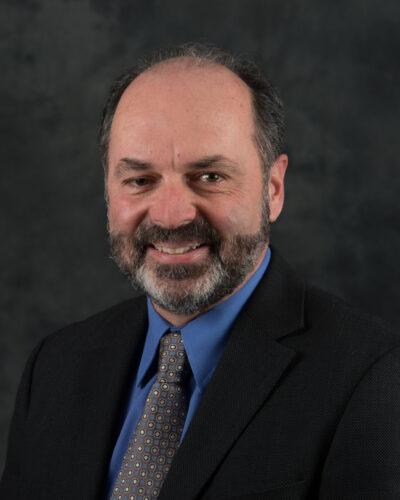
0:07 Hello everyone and welcome to Cascade Copper's inaugural event with CYX. We are joined by their President and CEO, Mr. Jeff Eckert. Today he'll be going over the Cascade story and we'll go into a Q&A. Feel free to submit the questions at any point during the conversation in the bottom right corner. There's a little text box. That's where you can submit your questions. Don't need to wait to the Q&A. Feel free to ask them throughout the presentation. Just to let you know, this event is being recorded and will be available to watch afterwards. So with all that out of the way I'll hand things over to you Jeff to to get it started. Thank you Kyle it's a pleasure to be here and working with 6 and a great opportunity to tell people about our company. Just a quick history, Cascade Co-oper was started about a year ago.
0:55 We listed on the CSE at under the ticker symbol C-A-S-C and became public about April, end of April last year. So that was 2023. So brand new company, brand new story, but with a great commodity. And I'll just start going through the presentation now so that we can familiarize your people with all the details.
1:24 So our company is focused in British Columbia and the focus is certainly on copper. One of the things that we are benefiting from is some accessory minerals and metals that are associated with some of our projects. And we'll get into that as we go through this. Picture there in the background is one of our projects. It's called Fire Mountain. It's just a stunning, stunning area. So to keep going here, let's go to the next slide. And obviously, we're going to have a few forward looking statements. And please keep that in mind as we go through the presentation. And some of the numbers that we have are historical numbers and we do have a disclaimer, but we are very confident that those numbers are valid.
2:13 Our vision and mission is really to be a top-notch explorer. Our business model is a bit of a property or project generator model, which is a good way to go these days, especially 1 that's been difficult to raise capital. But we have a good portfolio and we believe that any one of them could be a company maker. So we were happy to option sell or work on them all ourselves. So we'll go through them now and I'll show you what we've got. I think the number 1 thing about Cascade is in one of our benefits is because we are new, we're a young company, we have a very small share capital issued and outstanding capital structure.
3:04 As you can see here, 33 and a half million shares, very, very small. So any kind of news these days can certainly make the stock go in the upward direction. Market cap is tiny, we're trading at about 4, 4 and a half, 5 cents these days. Now, one of the things, you know, when we look at exploring as a company and as a team, we basically have to look at a couple of key points that really drive us forward in what we're looking for, where we're looking and what commodities we're looking at. So I think these 3 key points are key for us when we're exploring, but also should be for an investor to look at and say, okay, where is this company working? Our jurisdiction is in Canada, we're in British Columbia and Ontario, Both very good, stable governments with, I think, probably what's really important is capital raising. You know, in Ontario and BC, we have the benefit of, you know, taking advantage of flow-through shares but also government incentive programs as well.
4:18 Now, as far as commodity is concerned, as I mentioned, copper is our number 1, but we do benefit from accessory metals that are associated with these types of deposits. So we have gold, silver, and Molybdenum, all numbers that are increasing in value, the prices of these commodities are increasing. So we see that as a real bonus for most of our deposits. And obviously the fundamentals of copper and moly are there. And I don't think I have to tell people about that, but we know that copper is going to have some good legs in the arena for at least a couple of decades. And obviously, gold and silver setting new highs. And the reasons for that, obviously, are geopolitical instability and economic uncertainty. So we're taking advantage of all of these rises in the commodity prices and, you know, searching and exploring for these. And obviously the geology.
5:23 The geology is important for the types of deposits we're looking for. And that's really why we've come to, you know, British Columbia for copper porphyry systems. They're king, it's king in British Columbia. Also vein, gold vein systems, the Brain Horn area, and I'll get into the details of the projects as we go further. And then in our Ontario project, it's a VMS polymetallic system and it's well known in that area. Obviously, part of the key point for investors is the team that's running the company and We'll have a look at that next. Our management, myself, I'm a geologist. I've been in the business for many, many years.
6:09 Worked for a number of companies, including Barrick, Lack Minerals. Started a couple of small junior companies on the TSX-V, worked in West Africa for gold systems, East Africa and South Africa for copper projects, worked in many different areas, including Jamaica of all places, a great place to work. Shannon, I've known Shannon for years. He's our VP of exploration. And again, he's had extreme amount of experience in the Sudbury area, in British Columbia as well, and worked with me in the Caribbean on some copper projects. Yana, our Chief Financial Officer, CFO.
6:55 She's basically on-call CFO, so we don't have her as overhead, but we take advantage of her experience and she does an extremely good job in getting all of our financial statements, MDNAs and so on put together. Darcy is one of our directors, well known in the Calgary area and BC. He runs a company called Ashley Gold and is very instrumental in helping us with fundraising and investor relations. And Alison Redford, a director, She was brought on early in the life of the company because of her expertise with First Nations and negotiations there. So we're taking advantage of that.
7:41 Now let's move on to the projects. I mean, this is the key point that I really want to bring forward to potential investors and our current investors is that BC is really our focus right now for Copper porphyry systems. We've got 2 in this particular belt. This belt is called the Cascade Magmatic Arc. It's in the Southern BC, maybe not traditionally known for its porphyry systems as say, compared to the Golden Triangle, which it seems to get a lot of attention these days, and for good reason, there's some great deposits there. But I don't think we can forget about some of the deposits that are found in this area and down into Washington State, for instance, we've got a couple of very large, 3 very large porphyry systems, Glacier Peak, Middle Fork and Margaret. You can see on this slide here that the numbers are quite substantial, well over a billion tonnes.
8:46 And then in BC as well, we've got some great deposits nearby, new prosperity deposit over a billion tonnes. Highland Valley, which is just out of the magmatic arc, but still a significant size and you can see, you know, 1.2 billion tonnes. And then further bit to the east towards Kelowna, Copper Mountain. So we're in the right area here. And Rogers Creek, I'll start with that because it was really our flagship property. It was the one that we became public with and a fair amount of work has been done in the past and we really like it because it's a drill ready target. Fire Mountain just nearby, similar kind of geology but has not ever been drilled. It's sort of a new discovery.
9:36 And I'll talk about that a little bit further on. And our Bendor project is not a porphyry system, but it is a gold vein system that's in the right area. So let's move on and we'll talk more about Rogers Creek. It's a copper gold porphyry system. It's located about 2 hours from Vancouver, about 40 minutes from Pemberton. If anybody's been in that area, they know that the infrastructure there is really quite good. It's a place that has seen a little bit of work in the past. And we've got some historic work that was done. And we've collected all the data. And that's key for all of our projects, even though they may have had previous expiration by other operators, we have the ability and have the benefit of keeping and using the old data.
10:34 So at Rogers Creek, you can see from the pictures here that we've got great infrastructure. You know, we've got roads that drive right, we can drive the drill right up to the site, great rock exposure, we've got hydroelectricity nearby if we need it, free-flowing water, so it's an ideal situation for infrastructure. And I'll draw your attention to some of the historic drilling that was done there. And this is early on, this was back in 2010 and 2011. So they didn't have as much data as we have now. So we've got the benefit of knowing where some of the earlier work was done. We've done IP, we've done rock samples, we've done a whole bunch of different things in the area. And we've come up with 3 target areas at Rogers Creek.
11:26 And I think what we're just gonna talk about today is target 1, And it's a porphyry system and intrusive related. And we've got lots of data in this area. As I mentioned, IP, we've got the magnetics, we've got some previous drilling, soil sampling, and maybe even more importantly, we've got some hyperspectral alteration mapping, which has really helped us sort of 0 in on the alteration areas associated with porphyry systems. So We'll go on to here, and this is more or less a cartoon, but it shows a cross section of the Rogers Creek porphyry system. And you can see on surface, they've had some fantastic grades that have come up from surface sampling.
12:17 And our interpretation of this is that there are fault systems that are tapping into a deeper porphyry system. And those fault systems are bringing all these numbers, all the copper, gold and silver numbers to the surface. And that's what probably created a bit of a, I don't know, a distraction with the early drilling is that they were drilling these faults rather than the porphyry system at depth. So this is where our, our benefit is. We've done a lot more work since then and I'll show you what we've done. We've done IP across this area. So it's given us the ability to look for the sulfide content that's usually and more than likely associated with copper mineralization at Rogers Creek.
13:06 So the lines were done here and what we've come up with, and this is quite interesting, is a 3D rendition of the copper, or sorry, of the IP chargeability anomalies at depth. So this is a cut through the mountain, a vertical cut and a horizontal cut. And it shows this floating chargeability anomaly that has not been drilled. And this is our target going forward. Another rendition of the same idea is that the higher chargeability areas represent the best targets for our porphyry system. So these are the targets that we're planning to drill this year in 2024. So keep an eye out for, for notices of us getting in there to start the drilling, but also to get the results back. And obviously one of the hurdles for drilling in British Columbia is permitting.
14:04 And we have initiated the permitting. We believe that the permits are weeks away from being approved. So we'll be on our way to drilling this year as soon as the weather is amenable for that. So that's basically our Rogers Creek project. And now what I'd like to do is just quickly go through Fire Mountain. Fire Mountain, as I mentioned, is a new area. It has never been really looked at in depth, it has never been drilled, but there has been some sampling done on surface. And we consider it a similar kind of situation to Rogers Creek where you've got an intrusive coming in, altering and mineralizing the surrounding volcanic and sedimentary rock. So we'll kind of go through here. The geology, as I mentioned, is very similar.
14:57 Structural control on the porphyry systems, lots of cross structures, and lots of indications of mineralization in the area. So where do you find new mineralization? Well, usually where you've found it in the past. So I'd like to just give you some of the highlights at Fire Mountain. And you can see the numbers that we've got here, some excellent gold, copper, and silver numbers. Some of these are historic. And as I mentioned, they are valid. We believe they're valid because of the way that they've been sampled and who has sampled them. Some of the early work that was done probably mid 19th century, mid 20th century, there were some high-grade gold systems there and you can see the numbers are very high, 26 grams, 13 grams.
15:45 That's not necessarily a focus for us, but as we explore further, we'll look at these more than likely epithermal systems sitting just on the side of the porphyries. So, maps are always good to look at. Now, there's a lot on this map, but it shows you what we think is a fantastic potential for discovery at Fire Mountain. So we've got what we call the Inferno Zone, which is down the center of the area. It's just on the flank of a porphyry system. We've got fantastic looking numbers here in copper, silver and gold. And the numbers are grab samples, but consistently getting similar numbers on several different campaigns.
16:31 We've just finished a campaign there in late 2023, so we're very confident that the numbers are solid. And we see a structure and an alteration package that is several kilometers long that has yet to be basically prospected and looked at. Money Spinner, as I mentioned, is off to the side here. It's on the flank of the mountain. And we also have other areas that need some work to be done that we call the Maglo zone and the Molykop zone. So there's lots and lots of targets at Fire Mountain for us to look at, and we can't wait to get out and start working on those. Here's sort of a three-dimensional look, looking southwest at the Inferno zone, and it shows the myriad of samples that have been taken and the hotter the the color the higher the grades.
17:26 So lots of lots of good-looking target areas here. This is a basically a shear zone along the contact of the intrusive to the left of the picture and the volcanics and sediments to the right. So very strong structural control here as well with mineralization. So very keen on that. Here's some copper values that we picked up recently. A picture of some of the alteration or surrounding the main systems that are associated with porphyry mineralization. And Gold values, again, very high numbers, well over 5g per tonne. And some of these, a picture of one of the grab samples that were taken this past year.
18:14 And you can see Some of the numbers 1.8 copper, 4.7 grams gold, and over 75 grams per ton silver. So extraordinary numbers. And as I said, we're just chomping at the bit to get out and start working on this. So highlights, long mineralized systems shown by the magnetics. Again, hyper spectra alteration shows a strong porphyry style of alteration and mineralization. So again, very keen to get onto the ground. Moving on, now we'll go up to Bendor. Bendor is a gold system. We like it because it's right next to Talisker's mines or projects. And I assume it will be a mine at some point.
19:07 The Braylorn project, which includes the Braylorn mine and the Pioneer mine, sitting right next door. Talisker has put together a resource of 1.6Moz just recently. So we're in the right area for Gold systems. Our plan here is to get on the ground this year. We haven't been on the ground too much in the past, just a few days of due diligence, but you can see that there's several target areas at Bendorf that we want to follow up on. Structurally controlled vein systems, intrusive related as well. So I'll show you some of the historic work that was done here. There was underground work, underground drifting and development, and you can see that the numbers are pretty substantial, up to 27.5 grams per ton over 5.3 meters. So really a good strong system, high-grade system that we're looking to follow up in the coming year.
20:09 So the project summary, Gold and Arsenic, broad halos of solicitation. We're in the same area as Talisker and lots of potential at Bendor. Now we're moving back a bit to the east now as we'll work our way to the east and eventually end up in Ontario. But this project here, we call it Copper Plateau, it was a new acquisition for the company.
20:36 Picked it up late last year, I think it was October. We purchased 90% of it outright from a company based in Calgary. And we liked it because of its potential for pore-free mineralization. There has been a fair amount of drilling here. We see about 90 holes were drilled. The last drill hole was done in 2008. So it's been a while. It's sort of been sitting on a shelf and collecting a bit of dust, but only because it was in a shell that nobody really knew what was going on with. So we kind of grabbed the opportunity when we saw it. We like it because mineralization is evident from the drilling, surface exposures of very high-grade copper and molybdenum, and it's in the right area.
21:30 If you look at this map, you can
21:31 see Tex Highland Valley Copper, the Craigmont Mine, which is up near Merritt, the Brenda Copper Mine, which was an old Miranda project and it's now out of commission, but produced quite a bit of Copper over the years. And Copper Mountain, Hudson Bay, just picked that up from Copper Mountain Company and big numbers there, like 1.1 billion tonnes of Copper resource. And maybe even more significant these days is we're right next door or in the same neighborhood basically as Kodiak Copper at their MPD project. And I kind of think Copper Plateau is a similar situation. Kodiak went in and basically picked up an old project. They went through the data, they liked what they saw and they started drilling and they drilled deep numbers or deep holes and got some great numbers. You can see here 535 meters at almost half a percent Copper.
22:32 And I think we may find a similar thing at Copper Plateau. The deepest hole there, I think it was about 280m deep in mineralisation. So we believe that we can model this And I'll show you some of the evidence in a second here. But we believe that it's got lots of potential here, maybe similar to what Kodiak has at MPD. So this is some of the historic data. It was IP was done on a small area, but around where the drawing had been focused. And you can see this is a chargeability anomaly and it's it's a 3D rendition so you have to kind of think 3D on this but it's really showing that there's strong chargeability anomalies that are associated with the grades, the higher grades. So any of the colours that you see in these drill hole traces are showing anything over 500ppm Copper.
23:27 So this is only a small area. A lot of, as I mentioned, a lot of the drilling has continued through that and is still in mineralization. So there is some depth and on-strike potential here. And this is what we really are keen to follow up with. So some soil geochemistry, some airborne geophysics, all of it pointing to a very strong mineralized system. There is some structural
23:53 complications here, but nothing too serious. You can see some of these breaks in the magnetics and the radiometrics that show some structure. And we're keen to get on the ground, I'll just go back to that once, yeah, we're keen to get back onto the ground, basically looking at the areas to the north, and also to the areas to the South and West. We see lots of potential here. So permitting is underway. First Nations consultation is underway. In fact, I'll be heading out to talk with First Nations before the end of this month. Now let's move on to Ontario. And this will be the last of the projects. We have 5 in total, so this is the last one. Again, we picked this one up late last year. We liked the project area because it's in great jurisdiction.
24:45 It's in an area where we know that there's mineralization,
24:48 not just Gold, but also Copper and Silver. There is a VMS style mineralization known in the area. We picked it up on that premise that there would be VMS mineralization. The historic work has shown that there are some very good numbers here. We did our own due diligence last year and picked up some samples up to 2.5% copper, well over a gram per ton gold. So we really like this system and the system is long and it seems to be very wide 10 to 20 meters wide and a potential for you know several kilometers and I'll show you that image here. So this is our claim block this is a magnetic signature And you can see that we've got up to 7 and a half kilometers of extension of the same geology, the same magnetic, and we believe potential for Copper, Gold and Silver
25:50 at Centrefire. So that's our story with regards to our projects. Copper, Gold, Silver and in some cases Molybdenum. A great portfolio, 5 projects that we're progressing on, looking eventually for maybe a joint venture or a strategic alliance to help us move these forward. But our plan is to bring each one of them up to a certain level and then try to market them off. So with that, we'd like to keep our share structure very tight, but progress with the projects as best we can. So that's it, Kyle. And if there are any questions, I'd be happy to entertain them.
26:38 Perfect. Thank you so much Jeff for that thorough presentation. For anyone that came in a little late we are taking questions so please feel free to submit them in the chat. We do have a few already lined up which is great. I did have a couple on my own, I was taking some notes, just ask a few of mine personally as well. You know you're saying a project generator model, in terms of projects I only caught that Copper Plateau you optioned or own 90% of it. Do you own 100% of the other projects currently? Yes, good question. Rogers Creek, yes, we own that 100%. Bendor and Fire Mountain are options for us to earn 100%.
27:25 We've got a very good deal with Tor Metals, Tor Resources on both of those and very good partners to work with. So we're earning in on those very easy terms of earn in and payments. So if anybody's interested to know what those terms are, we can direct them to their website, which has that information.
27:46 And those people that you're optioning the property off, would they be the first ones to help finance the exploration or would you look at other people or would you? Yeah, it would be other people. And we've already attracted some very good attention by attending Roundup and at PDAC, for instance. We did sign a couple of CAs on 2 of our projects in BC. So there is interest. And as you can imagine, anybody that is in the Copper business, whether it's a producer or developer, they're looking for assets, right? They're looking for a mine to put into production maybe in 5 or 8 years from now, because the ones they have are gonna be running out or they see the demand is gonna be so high they really need to up their inventory, their resources and so on. So what we're finding is that a lot of these bigger companies are coming further down what I call the food chain in looking for potential minds for the future.
28:55 So that's why they're coming to companies like Cascade and looking at our projects with the great potential that they have. I have one more question and then we'll go to the audience. Again, I only noted that you were talking about drilling for Roger Creek permits within weeks. Is there any permitting requirements for any of the other projects? And on top of that, are you planning on drilling any other projects besides Rogers Creek this year?
29:24 Yeah, thanks for that question. It's a good point. I guess I mentioned Rogers Creek because it's the one that's furthest along in its permitting process. And BC is, it's been taking some time, but we have started a permitting process in Ontario on our Center for our project. So we plan to do not only drilling, but some airborne geophysics and so on. The permitting process is really more for any kind of what you would call invasive type of exploration. So drilling, for instance, is probably at the top of the list. In some cases we can get in and do prospecting and sampling and that kind of thing without permitting, but any kind of geophysics where there's line cutting and so on and so forth needs some geophysics or needs some permitting.
30:20 So yes, for instance at Fire Mountain, we won't be doing any drilling there this year, but we'll start the permitting process. It is above treeline in most of the cases, so we can get away with doing a lot of work without disturbing much. Copper Plateau over near Kelowna, Princeton, Penticton area, we would like to drill that this year, hence the start of our permitting process there and the First Nations
30:49 engagement. So that's ongoing. So yeah, 3 projects we'd like to drill this year, Rogers Creek, Copper Plateau, and Centerfire. Perfect. Thank you for that. Jump into the Q&A. This question seems to be fit and follow on that. What are your plans for financing the drill programs? Yeah, financing, as I mentioned in one of the first slides that because of the jurisdictions we're in, we can take advantage of flow through. And it seems to be available these days so I'd like to do that. We're talking to a couple of companies about flow-through so that's probably going to be the majority of our exploration financing will be through that facility for 2024.
31:38 And is there any intention to uplist this year, Tony is asking?
31:45 Uplist as far as going to TSX-V?
31:51 Is that what the inference is? I would assume. No, not at the moment. We've been very happy with the CSE. Volume-wise, we're getting volume. I think the costs these days probably are similar to TSXV. We don't see a huge advantage at this point. Maybe as we grow our market and our market cap increases, then we might consider that. Thank you. Rock, now you did mention flow through for the majority of the finance for the drill program. He's just wondering about the cash in the bank currently. Yeah, we just completed a hard dollar raise. We raised US$225,000.
32:38 So that's basically we're sitting with that a little bit more. But that'll keep us with G&A and so on for most of the year. So I think the exploration will benefit from flow through the GNA and so on will benefit from the money we've just raised. P Fandel is wondering if there are any social hurdles to development in brackets, communities, towns, roads, et cetera, can you speak on the logistics of, I suppose all the projects?
33:14 Yeah, I mean, We're certainly not at the development stage right now, but you do have to think about that. And that's one of the reasons why I've said, the jurisdiction is extraordinarily important for us. It doesn't matter where you go in the world. Like I said, I've worked in Africa and the social engagement is key, key, key, right from the start. Maybe even before you get a hammer on the ground, you've got to make the introductions. You've got to talk to the people, the local stakeholders, whether it's village people in Africa or the communities that you're working in and around. And we've done that at all of our projects, First Nations, local people, local businesses, for instance, infrastructure, that kind of thing. So that is all part of the equation.
34:04 Now, as far as development is concerned, I mean, I think all the jurisdictions that we're in are pro-development. In fact, I know they are, British Columbia for sure. We can see that there are developments happening, there's mines being put in place, there's negotiations with First Nations and everybody understands that it takes time and money and I think everybody can benefit in any place that they're working with. Ontario, the similar kind of thing, and maybe just 1 mention about permitting in Ontario. We see that as a bit of a quicker process than perhaps in British Columbia. So we're keen to see a turnaround in our permitting there, 45 to 60 days.
34:51 So it's all important, and we think we've addressed all of those issues right from day 1. A fitting follow-up question, Rock has here, is wondering if there's any existing mills near enough for you to take advantage of in terms of partners building new infrastructure? Yeah, that's a good point And I would say the one that comes to mind certainly is the Bendor project. Gold, high-grade Gold system, just down the road from a company that is keen on putting something together. I know that Talisker has got some offtake agreements for milling offsite, but I think that's a key point for maybe getting a partner up at Bendor.
35:45 For the other copper projects, Copper Plateau I think benefits from being in the vicinity of a company like Hudbay, sitting next to or in the same region as the Copper Mountain mine. So I think there are some benefits there. There could be, you know, even, you know, merger or, you know, some acquisition or benefits of combinations with a Kodiak, you know, a similar company that's doing work in the area. If they have success, then we have success. If they go to development, then our project there has the benefit of taking advantage of that infrastructure. Ontario, similar kind of thing. There's lots of things happening in the Dryden area.
36:34 We probably won't be the first ones to put a mine in place, but there are hints that there are other companies doing that. So I think because of the jurisdiction, because of the locations we're at, I think there is the opportunity for us to take advantage of other people's projects and development. Thank you for that. Hefendo is wondering, do you have any magnetic inversions to correlate with the IP models? I found this useful to screen out pirate shells, filix zones. Yes, you've got a good technical question there. Yeah, so if you recall the 3D image, the horizontal and vertical cuts that we had at Rogers Creek, you can see that the chargeability anomaly is sitting within a magnetic low. So yes, to answer your question, we have inverted both the IP and the mag, And we see that as a key point at Rogers Creek. That's why we're quite excited to get in there and start drilling that.
37:38 Thank you for that, Jeff. That's all for the questions in the chat. I'll give it a minute or 2 here. I had one more written down. So Rogers Creek, the most advanced, most likely to get permitted first. There's also historical drilling on it, 0.172% copper. What's the average cutoff grade in that region? And what do you, it sounds like you're porphyry hunting, right, so what do you expect once you start drilling? If you find that porphyry, what would you be happy finding in those drill holes? Yeah, yeah, you always wanna have sort of a threshold of what you might wanna get excited about when you're doing the drilling. So I can use an example, I guess, of some of the similar porphyry systems in that belt.
38:27 And if you recall that image, And again, I can send people to the website to have a look at that. But you can see that when you have big tonnage like the billion ton deposits, they're mining stuff that's in the 0.2 to 0.3% copper range. So I would say that anything above 0.2 or 0.3 in a drill hole for us would be quite exciting. Then the challenge is to build the tons. But I think that number that you quoted there, the 0.17, you have to take that into context. That was actually drilled away from our target area now. And as I said before, these people were drilling without the benefit of having the IP and having the mag and the inversions and so on. They were drilling based on the surface exposure of the mineralization, which was, I think, was coming up through these fault systems.
39:30 So we're still encouraged by those numbers because they're basically skirting the areas that are number 1 targets and they're getting copper and they're getting gold in them. Now, if they had just turned the drill around the other way and drilled into those higher chargeability anomalies in the mag low areas, I think they would have, we probably wouldn't be talking because that would be somebody else's project by now. So it's a good point. And I think what you do is just look at your neighbors and see what they've got and then try to go from there. And I think, you know, as I said, the accessory metals and the ones that are sort of associated with the porphyry systems like the gold and the moly and the silver, because their prices are going up, the copper equivalency numbers could be quite significant as well.
40:20 Now, speaking of neighbors, I know the Golden Triangle is a rather expensive place to drill. Do you know what the cost per meter would be? And on top of that, how many meters are you hoping to drill at Rogers Creek this year? Yeah, we haven't got a contract in place yet, but we have talked to a number of drilling contractors, quite keen to come and work for us, not only at Rogers Creek, but also in Ontario and at Copper Plateau. So we do have potential drilling companies coming in. The price still to be determined, but we've sort of set aside about 250 to 300 all inclusive. So that's contractor cost, asset costs, mobilization and so on and so forth. So I think we can get away with that because one of the big things is we can drive right to the sites.
41:15 All the projects we can drive, set up the drill right on the side of the road, so we don't have to use helicopters for getting in on any of these 3 that we want to do. So that's sort of the idea of the cost. And then the number of meters, well, I think we'll start off at each project probably with about 1,500 to 2,000 meters each. You know, it's a preliminary drill program. And I think if we do get the joy that we expect to, it's going to create a bit of a buzz and we'll be able to say yes, let's go and continue drilling on these items on these projects. Excellent. Perfect. And I think I gave more than enough time for the audience. It looks like we have no more questions. So thank you for your presentation today Jeff and answering all the questions.
42:05 I'll pass it back to you for any closing remarks before we head out. Yeah thanks very much Kyle and I appreciate people coming in and listening to the story today. I just recommend that you keep in touch, you sign up for our emails to know what we're doing. We've already started working on one of our projects in Ontario, and I think we'll have a press release out on that coming up this week. So The news will flow and the projects will continue to be worked and I think we'll come up with some excellent news this year. So thanks again, Kyle. Perfect. Thank you. And just a reminder, if you came in late, this is being recorded and it should be on YouTube within the day. So look out for that as well. Jeff, thank you so much for your time.
42:50 All right, thanks Kyle. Take care.