Transcript
Automated transcript · Written by software from the replay's audio. It can mishear names and figures; the replay is the record.
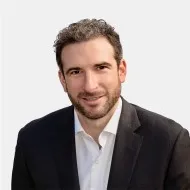
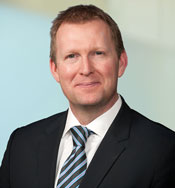
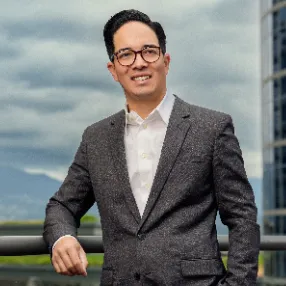
0:03 I'll say good morning, good afternoon, or good evening, depending on where in the world you're watching from today. Very excited for today's session, Gold Gems, Junior Explorers Poised for Success. I've got with me today, Sean Kingsley, CEO, President Director at Gold Hunter, Brian Skanderbeg, President and CEO at GFG Resources, and John Skladnik, CEO and Director of Nevada King. Real luminaries, good to see you guys. Hope you're all well. Good morning. Thanks for having us. Awesome. Now here's how today's gonna work for the folks in the room. First, I've got some conversation starters just to get folks coming. I know you're not coming here for me, so it's mostly just to get people started. This is an interactive event, so please do use the chat button at any point during today's event to ask questions. I'm probably not going to ask questions about individual securities, but still feel free to put them in the chat. I'll make sure that the companies get them and can get back to you afterwards. But if you've got a question that's on topic, I'm going to try to weave it into the conversation as much as possible or sneak it in towards the end. But if I don't get your question, certainly we'll make sure that the correct teams get it. So still feel free to engage.
1:01 The other thing I'll say is today is being recorded and will be available for replay likely at about 1230 p.m. Eastern. So soon after the event ends, it'll pop right in your inbox. Feel free to share it, but also be on Six's YouTube channel if you want to share it that way. So that is the boring stuff out of the way. I'm going to get right into making you guys give price predictions. So I hope you're ready for the fun stuff getting right started off. So I will say, and Brian, I'll start with you here. Gold forecast for 2026, varying from people saying a clawback to consolidation around 4000, The best case is going to 5,000, 6,000. I say best case is some people are a lot more bullish. That's mostly from central bank demand, geopolitical uncertainties. How does Structural Tailwinds influence opportunities and risk reward profiles for junior explorers like you guys? Brian, I'll start with you. Well, thanks for that, Romeo. Look, for GFT,
1:49 we've been in teaming here for the last 7 or 8 years. And so we're a company that's established our base, have a lot of strong assets, a really aggressive program. But I think when you think about the big picture, it's ultimately GFT and many of the explorers have participated to a degree in terms of the Gold price moves. And I am involved in some producers and developers as well. And those have generally outperformed some of the juniors. So I would say from a risk reward potential, the juniors offer an exaggerated return right now. Increased and more positive risk reward, I would say. And this is really driven by discoveries are rare, metal prices are record, balance sheets of the producers and the buyers are at extreme levels or at levels that haven't been seen in a long time.
2:38 And those are all drivers to say relevant discoveries, relevant assets are worth more these days. So taking GFT, taking my peers here, I would say we're in a great position from a risk-reward position. And if we looked at that on a five-year timeframe, it looks great for us and it looks great for investors too. Awesome. And Brian, Can I coax you into giving a price target for the year? Yeah, I mean, when you think about what's taken Gold to this level, those fundamental drivers are largely all there in varying degrees. Do you see geopolitical things evolving in the next year? Are they going to evolve? Is it going to evolve in a way that's going to reduce the appetite for Gold? I don't think so.
3:26 And those that are buying Gold are largely long-term holders.
3:31 How much can producers adjust? Limited. How long does it take to build a mine? Somewhat between 10 and 20 years. I just think all those fundamentals are there. So if we sit at 4,000 USD, 4,600 USD, if we sit at 6,000, 6,500 CAD, it's not unrealistic to see 5,000 or 6,000 and you can see it in a hurry these days. That's the upside. Downside, maybe we see back to CAD$3,500, but I think the days of CAD$2,500 are long behind us. I'm inclined to agree. And with ASIC sitting at 1,600, 1,800, it's a good business to be in. But Sean, I'll throw it to you, just for your perspective on what the gold price means for junior explorers. Yeah, in The last 12 months, let's say, it's been a different market we've been in for sure.
4:21 I've been in the business for going on 20 years and 18 to 19 of those years were tough. There's little blips and stuff, But we're in a very unprecedented market right now. Last year really saw a lot of capital coming in, a lot of generalists coming in. That hasn't stopped. It's actually trickling down to more of the advanced projects. Soon enough, it'll go down to more of the junior side of things. But definitely, we are in a very buoyant market in terms of capital access.
4:55 And it's rightfully so. There's been no real capital deployments into our industry, my career, essentially. You know, the majors have taken care of what they've taken care of, but it hasn't trickled down to, you know, making new discoveries. And, you know, our business in exploration is really forefront right now because the lack of supply, you know, the geopolitical issues happening right now. And essentially, we're just finally in the right place at the right time. Awesome. And keep in mind, people will clip this for x.com. But I'd love to get you to a price target if you're willing to give 1. 0, for sure. You know, prior, probably 2020, I did another interview and I had some very bullish predictions, which I wish I had that clip because they all have come true.
5:50 I would say, you know, probably within the next 3 years, we're looking at Trump's tenure. You know, we're definitely north of 5,000 within the year. I would imagine this year we're clipping past $5,000. But I hate to say it, but we're looking at, let's say within 3 years, north of $7,500 for gold. Copper, copper's going over $10 for sure. Silver, you know, $100 seemed out of grasp and seemed very ludicrous only a couple of years ago, but, you know, $150 for silver within that time frame too. Now, I appreciate it. All my office fidget toys have gotten a lot more expensive over the last year, which is fun. John, I'll throw it to you for what you think current metals prices mean for juniors.
6:42 Yeah, I guess just first on the risk reward profile, like totally asymmetrical, I think right now for the junior explorers where you have the producers making their first move, they trade around 1x NAV. You have these developers trading at an average of about 0.3, so a huge gap to close. Not that it's going to close entirely, obviously there's always that discount between producers and explorers and developers, but typically those exploration companies are the last one to make the move. So I think the timing is right for that capital to flow out of these producers where you've got 200%, 300%
7:15 gains. Probably some investors are looking to take a little bit of profit and then look for the next ones to make a move. And I think us companies on this panel are ripe for that to see some of those inflows. In terms of how it affects our business, just in June we put out a resource update. I feel kind of silly saying it, but we ran our resource at US$2,200 Gold and US$25 Silver. That was a three-year trailing average at the time. And that's kind of what had been done. Now it looks completely ludicrous to have done that and don't expect to get down to those levels.
7:48 But the opportunity is obviously, you can lower the cut-off grade with higher metal prices and you've got a lot more resources that can come into a potential mine plant. So I think that's the opportunity for the junior exploration and development companies. That's a scenario for us. In terms of where the price is going for Gold, I'd echo the views of Sean and Brian and see a lot more upsides. I don't see the trend of central bank buying receding at all. In fact, there's other key players coming in. Tether has been buying Gold, the crypto or the stablecoin group, and so that's a huge amount of capital that could potentially continue to flow and support Gold. Also, I mean, if, you know, there's still going to be a little bit of hitting on the integrity of the Fed, I mean, that's kind of massive.
8:41 And so if you want to destabilize the US dollar, you know, if that's going to happen, Gold is going to absolutely continue to skyrocket.
8:50 Hopefully it doesn't, because obviously that's a massively destabilizing event for the world. So in the case where it doesn't and you see kind of tether coming in with massive inflows in the central banks continuing to buy. You know, I wouldn't be surprised to see $6,000 by the end of the year. I was surprised to see us approaching $5,000 by the end of 2025. So yeah, I'd be comfortable with that. No, fair enough. And yeah, it was quite censorious to see chairman Powell on TV saying I'm being targeted by the president. You don't see that every day. It's certainly news. It's hard to keep up with you sometimes. But I'm writing panel questions like I might wait until the last day to see if anything else happens. One thing I'm going to turn everybody in. Sean, I'll start with you here. It's Given everything we've talked about so far, how can junior gold companies position themselves to really be as attractive as possible for people looking to diversify their portfolio?
9:40 What's the work you consider for you as a CEO of making that as appealing as possible for folks looking to make bets in gold exploration? Yeah, it's a funny thing. 2 years ago, you'd go to your family Christmas parties
9:52 and you'd be the only one talking about gold. But the last Christmas parties last month, everybody's asking, OK, what's your thoughts now? Is it too high? Should I buy? In the exploration world, we're explorations at heart, you know, our discoveries are what drives our passions. And essentially, you know, just like literally, I'm just trying to think like, in the last 2 years, things have changed so much, but yet it still remains the same. You know, we're still out there doing the same things. But I think the markets or the general public is starting to realize. So my only leaving thoughts here is essentially mining and minerals are essential.
10:39 You know, we're surrounded by it. It's how our world works. So it's not grown as mine. And it's so important, you know,
10:48 I can't emphasize as much as I need to, but our world is driven by metals and the spot prices are starting to notice. So that comes down to exploration. It's harder to find
11:03 mines right now. You gotta look elsewhere, you gotta look deeper, you gotta utilize technology. We have advanced so much and so fast in the last 5 to 10 years, that's, as Brian said earlier, mines usually take 10 to 20 years to put online. I think that's gonna be a fast track, not just with the technology, but with our capabilities, but also access to capital and also governments getting behind it. Especially you look at Canada, the Canadian government has changed, pivoted their position to now, how do we move these projects forward? North America is like, let's go. So exploration is going to be a very
11:45 hot sector for the next 5-10 years and I'm just looking forward to it. I appreciate it. And you mentioned going home for Christmas. This is the first year my mother asked. You work near Gold, right? That was the first time I worried about a top. My mom mentioned it. It stressed me out a little bit. But John, I'll throw it to you for what you think Gold Explorers can do to be as attractive as possible in this market right now. Yeah, I think the way we're thinking of it is we've got 2 levers to pull on. And the first is, I think, de-risking the current 1.1Moz that we have. I think getting a re-rating on those ounces. And we're looking to do that through continuing to, I guess, do the biological studies, archaeological studies, make it as seamless a transition for a potential suitor for those resources, potentially show economics later in the year as well, which obviously,
12:34 you know, we've seen some studies out with a base case of $3,000 Gold and upside towards spot. So I think that's 1 lever, but you know, we're similar to Sean, you know, we're an exploration story. I think that's a real way to do it. We're fully funded for our phase 4 program and to really supercharge our story, it's gonna be through discovery. We wanna have a bit of a conveyor belt where as these targets advance, They move into an infill program and we're there with one of our targets. And then we want to backfill it and just continue to find where the next ounce is. And with the Caldera hosted setting, we're going to continue to look around the margins of that land package for more of these deposits. Awesome. Thanks, John. And Brian, I'll throw it to you for what can juniors do to be as hot as possible in a Frothy Metals market?
13:23 Look, it's really about making that discovery. And I like John's analogy to say, look, there's 2 levers we can pull here and GFT is no different. Where if you can take an advanced deposit, an advanced system, migrate it towards a resource and start demonstrating economics on it, that's a great way to take you know $2 an ounce to $10 to $20 to $50 an ounce in terms of value and lock for your shareholders.
13:49 And behind that, take the punts, take the risk, go out and test 5678 really good strong targets. And if you compare these 2 business strategies within a single budget, That's how we're really trying to target it. I think our shareholders in the market is investing in us to drive discovery and to demonstrate sizable resource that have some economics. So if we can advance both of those, maintain some really aggressive messaging and marketing and presence and engagement with new shareholders. I think that's how we're going to capture and build value. But it's really about driving discovery. So if we can be aggressive,
14:28 that's really where we're focusing our capital. Take our best targets, give them a kick with the diamond drill. And if they're not there, move on, take the next one. And if you can put 5 or 6, 8 targets through, that's what we're trying to do. Really focus on, laser focused on discovery. Awesome. Appreciate it, Brian. Now, I do want to get into some individual questions about each of your stocks. But first, somebody from the chat wants me to scare your IR teams and talk about politics for a second. So Barry asked right near the beginning, What can Canada do to support the industry like Trump is supporting it? So I'll kind of change that question a little bit. Talk about how you feel your jurisdictions have changed over the last period to be more supportive to the mining industry or where you think they can do better. John, I'll start with you as the American project on the board here.
15:20 Yeah, I mean, I think Nevada has done a great job historically of supporting mining and gold development. And you've got all the infrastructure in place, got the talented skills, got all the service providers there. So from that standpoint, it's done a great job. The one thing I think where the team at site and us as a management team would like to see is maybe a bit more resources put towards the permitting groups. Obviously, I think the government in the US has been looking to scale back federal level spending. So that has had a bit of an impact on the Bureau of Land Management, which is the permitting organization that we deal with specifically.
16:01 But overall, you know, love the way things are going. The Fast 41 has been great and we've seen other projects advance and move forward through that. Just that clarity of permitting timelines, if you get into that program, is huge. So we've been thrilled, obviously. We're in Nevada for a reason. Continue to be a very stable, safe jurisdiction and not expecting that to change going forward. So like what's been happening and think that will continue. Awesome. Appreciate it. Sean, I know you already mentioned Canada's increasing its support for the industry, so I'll just let you expand on that here. Yeah. I'll focus a little bit more about Newfoundland. Newfoundland's a bit of an anomaly. We're far east on the east-east-east-east coast of Canada, and essentially I've been going to Newfoundland for like the last 14 plus years.
16:52 Newfoundland is such an amazing province. Just looking at the last 14 years, I've kept in touch with all the geologists, prospectors, companies
17:01 active in the province, and I have to say Newfoundland is the last frontier. Pretty much the prospectors have done such a great job on the surface, but not enough companies have gone and actually drilled to make new discoveries. That's starting to change. That has started to change already. If you look at the last 2, 3 years, over $5 billion worth of M&A has happened. I worked in the Golden Triangle in 2020 for about 4 or 5 years, and that had about $5 billion worth of M&A and $5 billion worth of infrastructure. I see the government of Newfoundland really beefing up the infrastructure, you know, with companies that are now in production such as Equinox and the Valentine Deposit. Firefly is making a strong case to put the Rambler and Ming mine back into production. And that's just going to increase the infrastructure with the deep sea pore access.
17:55 So Newfoundland government is an amazing government to work with. They understand that the mining and mineral exploration industry is a huge influx of capital and support resources for the province and the communities. So I just think that's only going to increase with the Canadian government really making that shift, that paradigm shift to where, how can we as Canadians be more independent? And I think it's just going to be a fast track. So yeah, I'm really excited. Awesome. Brian, I'll throw it to you for just talking about jurisdiction. Yeah, I'll focus first on the capital side of the equation. And we do have a great advantage up here in Canada and it's flow through.
18:48 And so each year this gets renewed and this is a great advantage we have over almost every jurisdiction in the world is that the cost of capital is reduced because the tax incentives provided both nationally through the government, but also provincially through
19:03 an individual jurisdiction like Ontario. So when we think about what the government can do, they're already doing a lot on the capital raise side and they've shown a commitment to do that and that's greatly appreciated because it does lower the cost and risk within our industry by having that on the capital market side. When you think about the permitting side, we work in Timmins and Ontario and the Abitibi in general. Immense amount of infrastructure historically developed there and new mines being built all the time. I see good alignment between the Fed and the provincial jurisdictions on how they're advancing permitting timeframes and they're doing their best to expedite projects
19:41 that are maybe not of national interest, but only provincial interest and simplify the permitting path. And if they are larger projects, then they're combining their permitting process, which I think is all positive. I think in Ontario and in Timmins in particular we work in one of the best jurisdictions in the world. We get a permit in 45 days, 42 days was our last permit we got, submissions through consultation and have dialogue with our First Nation partners. We have consultations, we have agreements in place and we get things done. So I think
20:14 the Board and the provincial government are doing exceptionally well and I think the federal government is even doing their best to prioritize in advance and really take advantage of where we are in the cycle of opportunity and in the best interest of Canada. I appreciate it. Now, I know there's lots of good questions in the chat, but I got a couple of just individual questions for the stocks that are represented here today. And then I'll get to some of those great questions in the chat. First, I got one for you, John. With the significant resource growth achieved in 2025 at Atlanta and that fully funded 20,000 meter phase 4 program looking at those regional discoveries, Silver Park East, Atlanta, South North, Western Rim. How do all these steps position the project for further expansion and better economics in the current environment?
21:02 Yes, it's part of our general plan where we're looking to advance these targets towards potential resources. And Silver Park East is the most advanced right now. With that phase 4, we're doing an infill drill program right now, looking to get that to a resource step. In terms of how that affects the project, it could be huge to have that satellite deposit. First of all, Silver Park East, as the name indicates, has got a higher Silver component to it near surface as well. So, depending on how this plays out, this could be
21:35 moved to production at the front of the mine life, get those ounces out front, just given the near surface nature of that oxide deposit. It just adds a ton of flexibility, really. But most importantly, just being able to grow that resource base, you're spreading that initial capital over more ounces. So that's obviously going to have a huge impact on your NPV and your IRR when we get to that stage of things to show what the economics look like. So that's where we're at with Silver Park. The other targets, we're looking to move towards that and get to an infill program by the end of this phase 4. These ones are a little bit earlier stage, but at Atlantis South, the team at site is really thrilled to start attacking that with the phase 4 program. This is a Carlin type of deposit, so it's hosted in this Polkadip limestone, which is a similar host rock for other major Gold deposits in Nevada. So the team was excited to attack that one.
22:30 I think I'm most excited in terms of elephant potential at our Western Rim target, where we've seen kilometre-long quartz veins with Gold and Silver. We've got grab samples up to 21g per tonne. In terms of some of the geophysical work we've done, it really stands out as a huge anomaly. So, Atlanta South and Western Rim, these footprints dwarf the size of the Atlanta Resource Zone. So, this is where if these things hit, the stocks can get some rocket fuel behind it. I'm not a geologist, but I really like Atlanta North. It's a long trend along that mineralising fault to the north. We've had some good hits there, 0.3g per tonne near surface. That's exactly the type of thing that we're looking for in this Gold price environment, another satellite deposit to tack on.
23:21 So really, we've got 5,000m allocated to Silver Park East to delineate that resource and potentially expand it beyond the current footprint.
23:30 Hopefully, we'll have that update out. We'll have some drilling update from Silver Park East shortly, followed by Atlantis South, and then towards mid-year, we'll be getting into Western Rim. So these are the areas, but in terms of how it affects our project, just being able to move targets towards a resource stage and then to be able to add satellite deposits on just has a massive impact on flexibility and economics for the project.
23:58 Awesome. Appreciate it. Brian, I'm going to shoot it to you. I know you've got the phase 2 drill results at Aljo, the launch of that pretty aggressive regional exploration program across Goldarm. Really, how are these building on your district scale potential out there in Timmins? Right now we have 3 rigs active And 2 of those are a sonic rig and one of those is a diamond rig. And so this is the pairing of the programs that GFG has designed. 1 to go out there and test, you know, those targets that are at a drill ready stage, whether it's Alta or whether it's Nahanni or the Forne D'A, these targets that we've done work on. We like the concept. It's drill ready. We're going to go do it. And we're doing that with a diamond rig right now.
24:38 And then we're looking at, we have 15km of really perspective structural corridor here in the right rocks under anywhere from 20 to 40m of till. These areas have not been looked at. What do I mean by that? You can go 3, 4, 5km and find 1 hole drilled on them. These are right on structural corridors out onto Timmins. The Sonic approach is really meant to go out there and find the next gold system underneath there, where generally you're lacking that good geochemical data that you'd find in a shallower environment. So we're really excited. I'm personally really excited at both the Sonic and the Diamond programs testing this area of Goldarm. Winter is a great time for us to go and do some work. We have some targets that are a little wetter. Those have frozen up and there's been a ton of snow there, but minus 20 right now. And what that means is it's just really easy to get the sonic rig around out there and get ourselves some sample of till and bedrock.
25:38 So that's what we're really pushing on. We've got a few results from Aljo yet to come. Expect those in the next week in terms of communications and drill results. And Aljo is our most advanced target. You're going to see us do more drilling there. We're building the models, building towards a resource and there's great
25:54 data to talk about on all those 3 fronts. So for GFT, you know, advancing Aljo, testing the regional targets and building the pipeline all ongoing right now in Q1. It's a great time, we're busy. Awesome, busy's good. Busy's a good place to be as a junior explorer. I'll throw 1 to you, Sean. So at Goldhunter, I know you've recently deployed AI machine learning with Windfall Geotech to generate those high probability targets ahead of the Q1 drilling. I'm just curious to let people in the room know, may not be familiar, how does this technological approach change exploration efficiency and help you de-risk? Yeah, you know, dealing with a very large district scale project, you know, that we consolidated last year, it is a large project that has a lot of data. We're talking about nearly 500 drill holes historically, 35,000 soil samples over fractions of the property, along with 7,500 outcrops, a lot of data points.
26:52 So if you look at it as layers, we just finished our VTEM a few months ago, flying the entire project. That really helps us. Not only, we do have a resource base where we have 3
27:05 historic areas, resource areas to the north and then a resource or just a resource to the south, along with a past producing mine from the 1900s. So we got a base points in regards to where we know gold is. Plus, we're looking at 35 kilometers of strike length along a major fault structure with splays coming off of it. We know these splays are gold bearing on surface because we got over 50 kilometers of identified
27:32 corridors on surface that 95% of them have not even been drilled yet. So coupling in AI made a lot of sense for us. The snow in Newfoundland has come down. And so It really helps us narrow down where we need to focus, not just in the resource-based areas to expand those, which the VTEM really helped identify that they are expandable at strike and at depth, but also there's other correlated corridors that haven't even been identified before that we're seeing in the VTEM. So next week we get to be presented with these AI targets. So I'm really looking forward to that. I talked to Windfall Geotech this morning and they're super excited. They're like this is a really exciting thing for us. We want to put our name on it as well too, because we really believe that this is going to help you focus in, not just the resource areas, but doing the regional discovery
28:30 targets coupling in the V10 AI. So, you know, systematic, you know, with such a large package, just really, I'm echoing now, but just really focusing in where we can focus on the resource areas to expand those, but also make new discoveries. Like we have 15 kilometer fault structures or splays coming off the main faults that have been identified but haven't been drilled so having some AI targets on those as well too you know The market is really appreciating new discoveries as we know with GFG last year, but really drill results are actually moving the needle for all of us in the exploration discovery game. So I'm really looking forward to seeing those targets and really getting out there this month to start drill testing and ground truthing them. I appreciate that. Yeah,
29:23 it's not 2022 anymore where good results are. We'll see what happens. There's usually an actually predictable market move from good news now, which is different. Now, I got a couple of follow-up questions for you, but there's 1 that I wanted to get to, just straight from the chat. It's a question I always like to get, because I think it gives you all an opportunity to talk about what's next. He says, look, it's great to be optimistic, it's great to be bullish about metals prices, but we're here to make money. Fair enough, Mike, from the chat. So I want to ask each of you what you think is going to actually move your share price this year, just so investors can have a sense of what they can expect for what's coming up and what will actually move the needle. Brian, I'll start with you, if you don't mind. Yeah, If we go drill 10,000 or 11,000m this year, which is what we're trying to do, our budget is around $5M in the ground. With that money, I think it gives us a really good chance to take Algo to this next step of saying, what's its size?
30:14 What's its scale? Continue to grow it. It allows us to take some of the regional targets that we like right now and go and test those. I do think that one of the things you're seeing right now, and my peers talked about it, is just that relevant drill results get noticed and they build value. And if GEFD can come out and show we found another Gold system in the Aljo area, even if it's not a screamer grade, I do think that given the eyes on this space, given the progress of our peers, given the free cash flow, the belt, that that will really build values. So for us,
30:50 it's the regional diamond drill testing program of 5 or 6 targets. Any one of those hits, it builds immediate value and it probably unlocks somewhere at US$50M, US$80M, US$100M for GFG. Second of all is showing the regional fertility from the Sonic. So even if we go out there and show, look, we've got a broad geochemical anomaly and shareholders hate us talking about geochemical anomalies, but that's how we find new gold systems. You know, so if I can get excited and get behind a new area and target that's showing the right fertility,
31:20 we will build value off that. And also on the Alzo side, if we continue to show continuity and depth and growth at strike and depth, that will move the needle for us. I think GFG is traded flat. I think we've underperformed some of the sector over the last 6 months for a few reasons. But I do think we're primed to really build value here with the programs we have in front of us. Awesome. Appreciate it, Brian. John, I know your stock got a bit of love mid-December last year, but What moves up to the next step, do you think? Yeah. Yeah, I did take a peek at the chat and see there's a bit of frustration. And you know, I just want to echo, you know, us as a management team, you know, management and Insider is on almost 40 percent of the stock. So 2025 was it was a very frustrating year for us as a management team, for shareholders as well.
32:07 I think it was necessary. We had to rip the band-aid off. We had to put a resource update. It's a high-quality resource. Obviously, there were elevated expectations
32:15 with the drilling that happened. But at this point, looking forward, we ripped that bandaid off, we've got a high quality, high grade resource out there in Nevada. I mean, fortunately, we haven't had to tap the market and suffer through some dilution at those lows. We're back to a level that is somewhat reasonable. I think there's just a lot more to go though. So in terms of 2026 and looking forward, there's a huge catch-up trade which is just in the early innings to close the gap both to our developer peers, but also just the sector overall. Our ounces are trading at head-scratching levels, a little bit absurd in my view. We've got our work cut out as a management team to help close that gap. As I mentioned earlier, part of that is de-risking the ounces that we have.
33:06 But really, it's going to come through discovery.
33:09 I know that retail investors weren't loving the grades at Silver Park, but this is exactly what we're looking for. Oxide, near surface, satellite deposits. So we've got a couple of catalysts coming up, including the fully funded drill program. We're going to be putting out assays. Hopefully we get some hits there at Western Rim, at Atlanta South, Atlanta North. The infill program, obviously we've got a greater degree of comfort with that given we've done a certain amount of drilling there already. So we've got some big catalysts, big cash upgrade to come, big valuation gap to close. And as tough as back half of 2025 was, there was no dilution. So if investors are holding through it, you know, the best times are still to come. And I expect 2026 to be a fairly transformative year for the Vatican. Oh, good update.
33:58 Thanks, John. And I will say just before I get to you, Sean, for the dozen or so people who just got into the room
34:04 at the halfway mark for the hour, you can use the chat button on the bottom right of your screen to ask questions during today's event. I'll make sure that the executives get them afterwards. Sean, I'll throw it to you for what you think is gonna move your stock this year and make some investors some money. I made the mistake of checking out the chats. But yeah, so for anyone online that doesn't know, we came out of last year, about a year and a half ago, a big exit for all of our shareholders at that time. We sold our previous consolidation to Firefly, which at today's value is about $60 million that we gave 85% to our shareholders as a direct dividend. So it was a big win a couple of year and a half ago, but this new pivot, so I'm really excited about this project we had. Yes, we don't have the valuation baked into our current $10 million valuation for sure.
34:55 We are about to close our second tranche financing next week. I would imagine Wednesday, Thursday or Friday, the latest. That is currently at about $2 million. And so we raised $1.2 million during Christmas, if you can believe it. It wasn't an easy feat, but for sure everyone's out with their families and whatnot, but we closed $1.2, so we'll have about $3 plus million. So I imagine starting almost immediately, we're going to be putting the plans together once we close the second tranche. I'm hoping for up to 10,000 meters of drilling. This will be our first phase 1 drill program since we consolidated this land package. It is a large land package, a lot of data, a lot of efforts, you know, starting with 300,000 ounces.
35:42 And this is like high grade. Like we're talking about on the northern side, you know, drill intercepts of over 100 meters of 1 to 2 grams starting from surface down to shallow 200 meters. And now into the south side at Thor, we're looking at 27 meters of 8 grams starting from near surface. The AI is really going to help us. You know, if you know Newfoundland, there is an overburden anywhere between 5 and 10 meters. So AI and VTEM is really going to help us focus in on those areas that we can make those new discoveries and expand those resource areas. So I'm really excited to get launched. Actually, it's a better time to start drilling in these early months. As the snow is down, we can move the drill rigs with snowmobiles and sleds.
36:35 So, we're at the early stage of the Lausanne curve, unlike my peers, Brian and John's company, where we are starting our very first phase 1 drill program. But we have a lot of foundation to work with and I don't think the market really justifies what we've acquired or what we've achieved so far. So I'm really excited to get those drills turning. I expect to have 1 drill focused on the resource expansion, especially at Thor. Thor has a tremendous amount of immediate ounces adding to that resource area, but also going after these V10 slash AI discovery targets, 10, 15 kilometers away from the main fault structure.
37:21 So yeah, pretty much looking back at the chats, we have made shareholders money last year. My average costs, I've invested nearly $300,000 as of next week into the company and my average cost is over, pretty much almost double the share price today. So I understand, trust me. And as CEOs, we pound the pavement, we work hard. Like I have a nonstop schedule from starting next week out in Quebec and Ottawa, just pounding the pavement, getting in front of investors, telling the story. And I think 2026 is going to be a big year, not just for Goldhunter, but for GFG, for Nevada. It's just going to be, it's go time. And so I'm sure all of us as CEOs, we're capable, able, and we work for you as shareholders and let's, yeah, it's go time. Awesome. Yeah. This is the fun time to be in the business. Paul from the chat echoes, Newfoundland is hot, hot, hot. Give you 3 hots with an exclamation mark, so I thought I'd throw that out there. So 3 things I still want to pose to all of you. I want to talk about funding. I want to talk about M&A, and I want to talk about tech. And hopefully if there are any other questions from the chat, I'll try to get through them. I do want to talk about funding for Bix. I know we've all talked about different placements you guys have run recently or trying to avoid dilution. I'm curious your perspective on with the current market, what challenges are there or opportunities that are different from previous years in securing funding, partnerships, et cetera? And how can you basically leverage recent advancements to be as
38:53 desirable as possible for that funding? John, I'll throw it to you first. Yeah, I think in terms of funding, We are in a bit of a gold bull market here and there's better access to capital than we've seen before. Nevada King is in a fortunate position to be very well backed. As I mentioned earlier, about 40% of the stock is owned by management and insiders who have been kind of driving a lot of the funding previously. But recently, you know, we've been going outside and bringing in new institutions and we've increased our institutional ownership from effectively 2% to now around 15% over the past year, and these institutions can really only come in through financings. It's too difficult for them to get a meaningful position by buying on the board.
39:44 So I think there's certainly access and interest and demand from institutional groups. But also, I mean, it can be a bit of a burden, I would imagine, for a producer. I mean, great, you're generating a ton of cash, but your shareholders, you're not owning these companies to get exposure to cash in a bank account. I think as that cash and that the Treasury builds for these producing companies, as does the pressure. As their cash is building, their reserves are depleting. So, we've got a number of CAs in place. We've got conversations going with producers and they're more, I think, interested in having those conversations than they've ever been. And I think that there's an interest for them to deploy that capital, whether it's funding exploration for juniors or making acquisitions if they like the project.
40:36 But I think that's something that's been an issue through that Gold downturn where these companies weren't investing in their own exploration. And now I think that they're looking at different projects. And I'm sure the other people on the panel can echo that sentiment, that there's a lot of interest, I think, with the cash balances rising from these producers. So I think that's a kind of relatively newer dynamic at play in terms of fundraising. Great. Sean, I'll throw it to you next as you're currently in a placement. What's the funding environment like now? And how is it different from previous periods? Well, if we look at Christmas, we can't really count that. But since Christmas, It's been really good. It takes a lot of effort still as a company trading prior, a sub $10 million market cap.
41:26 But I have noticed just in the last 2 weeks that the institutions and funds that were focused more on the developers and producers and the $50-$100 million market caps are starting to go down the food chain. And so I'm having some amazing calls with the desks at certain firms that really like the story and want to get behind on it on the early stages. So it's a great time to be kind of where we're at before we're starting our phase 1 drill program. So yeah, and just touching on the M&A again in Newfoundland, Like you look at Eldorado Gold investing in True Gold last year, some mergers happening with Newfound Gold acquiring Maritime. Firefly has raised in the last 2 years for a project nobody cared about 5 years ago, Firefly has raised over $500 million in the last 2 years on that project that nobody cared about last year. So in Australia, which they're an Australian company, Australia, they have a lot of risk capital out there. And I'm starting to see that come in. We have Australian investors now too, because they're starting to associate ourselves with a lot of upside in Newfoundland and Canada in general.
42:38 So more capital is available. I'm seeing names and individuals and teams that really in the last 20 years, these seep lips of them. So, you know, 5, 8 years ago, if you go to a brokerage firm, there might be 1 or 2 brokers that focused on mining, the rest of them didn't really care about it. That's changed a lot, and it's only gonna change even more, and there's gonna be more capital. I'm really interested in the retail side of things. I've focused a lot of my efforts into Europe and I see a lot of appetite out there increasing. So yeah, I think it's just going to get compound over the next several years. And so we're all in a great place. Awesome. Yeah. The funny thing about Australian investors, they think North American share counts are impossibly low. They're so interested to see how low our share counts are. Brian, I'll turn it to you to talk about the funding environment.
43:33 Yeah, I think my peers have hit on the big points. You know, with TFT, we really cultivate 2 big pools of capital. One of those is the corporate side and the other one is the high net worth side. Institutional plays a role and it's certainly building for us. So those 3 are our big ones. We probably disproportionately focus on the corporate side. We have some really good shareholders, 3 of them in our corporate structure and long-term supporters aligned with us in terms of a business plan and generating immense free cashflow. And you can just look at the landscape of Timmins and say, look, there's $4 billion being made in the greater Timmins region this year. And that capital needs to find a home. And yes, some will be back to shareholders, some will be into your own assets and some will be into your other assets.
44:24 So yeah, look, remain really positive. I would agree with Sean, the European market, retail market really receptive to smaller scale stories, potentially more than the average North American retail market. Getting institutions into the smaller cap names like us, 10, 50,100 million dollars is never simple, but I do find that those PMs, those managers of those funds are more receptive to smaller scale names than they were 6, 12, 18, 24 months ago. And they're more receptive because they've owned the KNTs and the Discovery Silvers and the West Domes of the world have been 4, 5, 8, 10 baggers this year. So their assets under management have blown up and in a good way, and they're looking to deploy that. So, you know, I do think, you know, as a CEO and as a junior explorer, we need to cultivate all those and definitely feel like they're all very receptive and it's definitely an open market to go and be aggressive and engage with the capital raises to be aggressive on the exploration front. Awesome. Now I know Sean already touched on M&A, but I want to talk about it more fulsomely just in the context of each of your companies because I get, you know, audience will ask in almost every event, when do you think the M&A wave is coming? I think a lot of ways we're already seeing it.
45:38 And Brian, my question to you is, in this environment, how is GFG attractive for things like JVs, mergers or even acquisitions? And we do put them in those 3 baskets. You know, when we think about some of our properties and we only have 800 square kilometres in Timmins and we have to spend about 1000001 half bucks a year to maintain those tenements. Not all of them fit into our pipeline. So a JVR optionality or even a sale of assets is certainly something we consider and have advanced dialogue on and are active with and the logical peers and even producers would be potential partners for those. So very active on that front. When you think about the landscape of an MOE or a corporate transaction, I do think there remains to be too many juniors out there.
46:24 And A, it's just proportionally getting the most dollars in the ground, but B, it's just give the best teams the most money. I do think that this consolidation framework and more M&A within junior space is happening and will continue. They're not always easy to execute, but it is something we look at and we're always looking at how can we be most efficient at making the next discovery and that is A, being good technically and B, finding the lowest cost of capital. So if we can do both of those, M&A is a good way to do that. So look, really active, there's lots of eyes on Timmons, there's a couple peers that are really strong people and explorers as well. And maybe there's a corporate transaction that makes sense.
47:09 And in the interim, there's certainly appetite to look at option style deals and join ventures within our landscape. And we have both inbound and outbound dialogue on a number of those fronts. Very active on the corporate development front. Great, appreciate it. John, I'll jump to you next and we'll talk about in all those 3 buckets. So mergers, acquisitions and JVs, How does Nevada King think about them and how are you attractive in each one of those buckets? Yeah, I think when you've got a high-grade oxide resource in Nevada, I mean, it's fairly attractive in any market cycle, particularly this one. And in terms of M&A, you know, there's plenty of interest, but you know, we're just not in a valuation position to really be, you know, getting too deep into these conversations right now. You look at kind of the average price per ounce that have been acquired for oxide Gold in Nevada.
48:03 It's well over 200 bucks an ounce, and that's, you know, taking the numbers going back to 2022. So obviously, we're in a different Gold price environment. We're trading at a little over US$60 an ounce. So we've got our work to do before closing that valuation gap. But yes, I think that if we continue to have success with exploration, the feedback that we're getting from mid-tiers is they'd like to see 1.5Moz. We're at 1.1Moz right now. The 1.5Moz kind of gets to that critical mass of annual production over a 10-year mine life. And we think that there's plenty more Gold endowment on the property. We've got the Caldera hosted setting. The Atlanta resource exists along that caldera on the margin of it. Silver Park is on the margin of it. Those are 2 past producing mines.
48:51 So we're going to continue to look and hopefully we've got time to continue to build up the ounces before the valuation gets to an appropriate level and those M&A conversations get advanced. Thank you, John. Sean, same question. Yeah, echoing John, you know, it's way too early for Goldhunter to really even consider. You know, our previous consolidation, Yes, we sold it to Firefly a year and a half ago, which was a great move, but with this project we have now, it checks all the boxes. You know, we're surrounded by infrastructure. We have a hydroelectric facility with power lines going down the middle of the property. We have a road in the middle of the property, deep sea port access 3 kilometers away, highway access right below our project. We're surrounded by infrastructure.
49:40 Not only that, we're looking at this as an analog to Valentine. Valentine gold deposit 10 years ago was kind of where we were at today. And so in those 10 years, they've turned it up to over 5.3 million ounces in production today. Largest Atlantic, Eastern Atlantic gold mine. So We are very, very early stage for what we think this could be. You know, it checks all the boxes in regards to same same rocks as Valentine, same geological structure as, you know, major fault structure that we control 35 kilometers of. They have about 30 kilometers on their property. So super early. We're essentially tasked. How can we do what they did at Valentine within 10 years? How can we do that here at 5 years?
50:25 So, just looking at systematic exploration, doing the VTEM, doing the AI to really fast track. We don't want to be able, we don't want to spend as much money as it took to get to where they are today, but how can we show the market, how can we show potential M&A partners that this could be the next Valentine. And so really it's just focusing on that, focusing on expanding the resource areas, but also making new discoveries. And eventually those valuations could make sense. But in the last 3 years, all the M&A happening in Newfoundland, it could happen sooner. There's a lot of money out there, a lot of money with the majors. So there's going to be a lot of M&A in general across the whole landscape of our industry.
51:13 But yeah, I'm just focused on making sure we replicate the historic results we got, expand the known areas and make new discoveries. Great. Now, I know we're getting towards the end of the hour here and I got 3 exciting stories we've talked about from a bunch of different angles. But there's a ton of people in the room. I just want to give you as clear an opportunity as possible to let folks know why they should take a look at your stock this year. So I'll give you each gen opportunity to just basically, and I always said it will be as un-Canadian as you can here. Feel free not to be modest. Talk about why investors should take a look. John, I'll start with you. Yeah, I mean, this is a company I covered when I was in equity research and just love the story, both the jurisdiction, the grade, but really it's the exploration upside. And the team put this land package together, not to find 1.1Moz, but really to find something of critical scale, we see potential for far more oz.
52:08 We'd love to be able to have the opportunity to get to 5Moz or so. You look at a round mound, which is the best analogue for us, They've now got 25Moz delineated and that's the other caldera-hosted oxide system. That's about 250km away from us. So don't expect we'll be able to get there with our team, probably get acquired if we're having that level of success. But really, in terms of 2026 to invest in Nevada King, you're getting hopefully a re-rating on the ounces that we've currently delineated, as I mentioned, but also a fully funded 20,000m drill program, both infilling the Silver Park to potentially get to a resource stage, but also looking for those elephants.
52:54 And you need 1 drill bit, 1 assay back from one of these major targets, and the stock's going to get some rocket fuel behind it. So really excited here for Nevada King for 2026 for both the catch-up trade and some meaningful catalyst to help close that gap. Stellar, Sean, I'll throw it to you. Yeah, so we've taken a time since we consolidated and then further consolidated this land package. We de-risked it in the sense that doing the VTEM, doing the AI to a point where we're now ready to launch our phase 1 drill program of up to 10,000 meters, which will all be fully funded next week. But it's an exciting time. The market kind of beholden to us that we needed funding, we needed to raise money to drill with the question mark. So it kind of kept us capped at the current valuation.
53:45 Just based off of our land package, I think we should be already multi-valuation compared to today. But we'll let the drill rig do the talking. And I think we will see a very, very exciting 2026. And that's all I'll say. Love it. Brian, I'll let you have the last word. Tell folks in the room why they should look at GFG this year. Yeah, I think it's ultimately the time we're going to go and test some of our best targets we've ever defined. We've got the balance sheet to go do it. We finished the year with around US$7.5M to US$8M cash in the bank. So we're well financed to go out and put an 11,000m program together, both on advancing a resource scale target and taking a first test of 5 or 6 other regional targets and generating the next wave of targets behind it.
54:38 I think GFT is set up pretty well. We've underperformed over the last 12-months and I'm a participant like all our shareholders and I see an immense amount of upside and a catch-up piece in trade that we have in front of us. Ultimately we're set up to make a great discovery and we're set up to make that in the next 2 quarters and that's what's going to move the needles and that's really what investors want us to go do. So really excited, pay attention, look at the press releases for us and hopefully catch up to everybody at either Roundup or PDAC or reach out if there's any questions. Awesome, Brian, Sean, John, thank you so much for today's conversation. Thanks to everybody in this room. I know there was a lot of you. If you have any, if you think of the perfect question to ask right after the event ends, as I know some people do, myself included, or if you want to meet with any of the executives here, please do let me know. But otherwise, thank you all so much for a great conversation. I hope you have a great, great weekend.