Transcript
Automated transcript · Written by software from the replay's audio. It can mishear names and figures; the replay is the record.
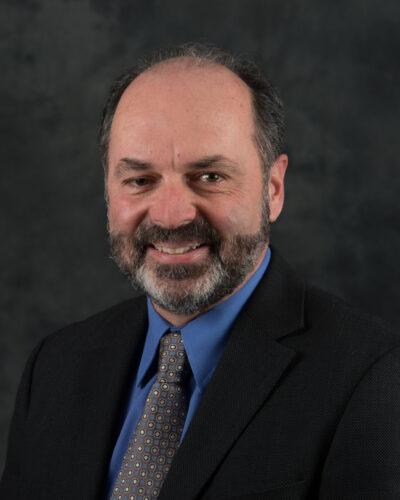
0:04 Hello everyone and thank you for joining us today for this live event with Jeff Ackert, President and CEO of Cascade Copper for our summary, cap and preview of what to expect this fall. As always, This event is being recorded and will be available shortly after we conclude today. Now, this is a live event and we do encourage you to participate by asking your questions in the chat, which can be found on the bottom right corner of your screen. Jeff, thank you for taking the time out of your day. Why don't we start with you walking us through the most significant developments this summer across Cascades portfolio and what has you most excited heading into fall? Kyle, thanks for the invite and a pleasure to be here once again. And what I'll do is I'll just, I'll start with some of the successes we've had on the ground with the company.
0:50 First and foremost was
0:54 our CentreFire project in Ontario. We've got so many projects, it's hard to keep track of them all. CentreFire in Ontario, this spring we were able to get out and do a high definition airborne geophysics of magnetic survey on the property. And this was significant because we had expanded our, our claim base from the initial core project area, and we need to get some more information on it. So we were able to fly this area and came up with some extremely good looking geophysics that basically tells us that we're in the same trend as where we've got mineralization on the core claims. So number 1, that was good. We were able to get out on the ground on Copper Plateau and do some sampling there, but even more importantly, we were able to get out and look at some of the historic core that was being stored in a core area in Cranbrook.
1:54 And it was good to look at the core so we could actually physically see what the mineralization looked like, especially the high-grade veins that we were seeing in the data. So we were able to look at that, but we were also able to take some of those samples, some of the better looking samples and submit them to one of our partners at Blockware to do some hyperspectral studies on that core. So that'll give us an idea of the alteration style in the, within the pork-free system. So any data is good, but that data will really help us out in building a better model for mineralization at Copper Plateau. And also Shannon Baird, our VP of exploration was at the same time was out West.
2:39 He went to Bendor and had a look at some of the showings at Bendor and did some ground truthing there. So that was all on the ground work that was quite good. We also did some permit to applications, started applications on a couple of the projects, including Copper Plateau. And then on the corporate side of things, we were able to do a couple of strategic financings this year. We were also able to renegotiate a couple of our earn in option agreements to allow us to, instead of handing out cash, which is cash is king these days, and obviously we'd rather put it into the ground. We were able to renegotiate the terms and issue some shares and warrants.
3:26 So kudos to our partners there for accepting that renegotiation. So that was sort of tidies up what happened in 2025 so far. But the year is just over half done, more or less. We still have a fall season that we'd like to get out and do some work. And where we'd like to work is basically at Bendor. We'd like to get up and do a little bit more work there, but also do what we have done on all of our other projects, which is a 3D modeling and inversion of magnetics and any three-dimensional drilling and so on that's been done there. So we'd like to put that compilation together. So that's in the works. Property visit to Fire Mountain.
4:12 We've got some interesting, really nice high-grade showings that are peripheral to the porphyry system that we've identified, but it looks like there's a surrounding area with some really nice high-grade, not only high-grade gold, but some copper in there as well. So that's kind of the plan for later this year in 2026,
4:39 permitting potential drilling if the permits come through. And perhaps we may take advantage of a late in the year flow through financing. So that's kind of that in a nutshell. Thank you for that. Good overview. Now, the collaboration with Blockware Technologies for AI driven predictive modeling, that's interesting. How has this technology already changed in your exploration approach? And what competitive advantage does this give Cascade over traditional exploration methods? Yeah, well, you know, we see a lot of companies trying to integrate AI and predictive modelling into their exploration procedures. And a lot of them, what we're seeing is that they're taking a lot of data and then they're handing it over to someone and saying, OK, find us the hidden ore body that maybe we've missed.
5:34 And when you have a lot of data, that can really, really help. So we've basically taken that on, but not only have we taken our historic data, which we have quite a bit, especially at Copper Plateau, there was a hundred drill holes and lots of surface work and IP and geophysics and all that kind of stuff. So we were able to take that. But what we're doing that I think is different from a lot of other companies is we're taking this AI integration right to the field level. So
6:05 in other words, any new data that's gathered on a daily basis or a weekly basis, we can assimilate it back into our AI model and produce a predictive map for the guys in the field as they work. So the advantage of this is, and I see a huge benefit for us using it, is not only does it save time, because you don't have to wait for information and assimilate it back in the office and hum and haw over it. You're getting that feedback right away. So it saves time, and eventually it saves you money, because you don't have to re-mobilize to the field to follow up. And it really enhances the chance of discovery because you're reacting to things in real time. So I see that as a real advantage. And that's, I think, what sets us apart and our partner Blockware in developing the system to take advantage of not only AI and predictive mapping, but looking at it in real time in the field. So it's a real keen advantage.
7:10 Now, in your overview, you mentioned the high resolution drone magnetic survey completed at center fire, showing multiple priority targets over 13 kilometres of strike length. What's the timeline for following up on these discoveries?
7:23 Yeah, well, we want to get out there as soon as we can. So we're keen to get up and get out and follow up on these. And why we want to do that is because, as I think I mentioned before, it's really telling us that that whole trend that we've staked, you know, subsequent to the original property deal is on the same trend as where we're seeing mineralization in the older claims. So the targets that we're after there are VMS, which is Volcanogenic Mass of Sulfide and Banded Iron Formation. And these things are formational, basically formational conductors that can travel for kilometres. And that's why we're quite excited to see that that trend is very continuous and continues along through that trend. So number 1, we see the continuity.
8:13 And number 2, we see geophysical signatures in this new trend that are similar to where the mineralization is in the previous claims or the earlier claims. So the patterns are there. So what we want to do, and we'll do that this fall, is get out and do some prospecting, basically ground-truthing those anomalies, sampling and mapping, and basically creating some new targets for drilling. And the other thing is that we've actually applied for, yet to be determined whether we get it, but I'm pretty sure we will, is an OJEP funding grant. We were able to take advantage of that last year that helped us pay for the Airborne Geophysics Survey, but this year we hope to be able to use that for our ground Truthing program for drill targeting creation.
9:06 Thank you. I'm going to remind the audience here that you can submit questions and actually bring 1 to your attention here right now, Jeff, that Peter Epstein asked. In a bull market in Gold and Silver, Can you bring in a strategic partner to advance 1 or more of these projects?
9:22 Absolutely, yeah. I think it's, you know, that was sort of our business model at the go-get was that, you know, we weren't gonna be a 1 project company. We were going to have a pipeline of projects that, you know, from early stage up to, you know, advanced stage and work on each one of them incrementally to bring them up through the pipeline. So having that many projects and several of them are wholly owned, we've got the advantage of taking them to a partner. Now, whether it's a joint venture partner where they eventually earn in to a majority interest, but in that way, they can fund it. And the advantage for us in that respect is to, create value in another project while we're working on another one. So you get multi-project development at the same time, which creates news, creates value in the company and reduces dilution to the shareholders. So we would consider that as an option down the road for sure.
10:28 Thank you. Now back to Centerfire project. It has shown impressive results with up to 0.82% Copper and 1.17g per tonne Gold. How do you see this project scaling up and what would successful expansion mean for a Cascades valuation? Yes, so I mentioned before that these things, the targets we're looking at here are VMS style targets and banded-eye information targets. Now, in this belt that we're working in with Centrifier, there's other companies that are actually developing multi-million ounce deposits, NexGold is 1, But
11:09 these things seem to follow along these trends. So, basically what we have to do at Centrefire is define length, define width and define basically grade on this formational conductor. And in order to do that, we have to do, as I mentioned,
11:31 some ground-truthing and to define the extent of the width and the grade by some drilling down the road. Now, the thing with VMS deposits is they can be narrow, like they could be 5m to 10m wide as compared to a porphyry system, which can be hundreds of meters wide. But the VMS systems are always more than often than not are higher grade than a porphyry system. So any kind of success we have with the finding of EMS or even a BIF stipend realization is going to, you know, basically increase the valuation of the company. So it's going to be a real value getter if we can do something here. Okay, So if I'm not mistaken, you have 5 projects across 2 key mining jurisdictions.
12:21 Which property do you see as having the highest near-term discovery potential? What catalysts should investors watch?
12:29 Yeah, well, I like to say that all of them have discovery potential, but as I mentioned before, we're, we sort of have a pipeline. So some of the early ones like Fire Mountain don't have any drilling done on them. A little bit of surface sampling, some airborne geophysics. So at the other end of the spectrum is our Copper Plateau, which has lots of drilling done. There's been a historic block model made, but we see a huge amount of upside potential for expanding that and discovering new mineralization that seems to be, you know, again, it's like pattern recognition. So by looking at all the work that's been done in the past, we can see that there's areas that could be as good or maybe even better than what's been found already. So I would say, you know, the priority would be to get in at Copper Plateau,
13:25 do some more, or at least start some drilling there, probably about 2,500m of drilling. And looking at maybe expanding some of those other areas on Copper Plateau with some more advanced ground geophysics, like a resistivity or a chargeability IP survey and that kind of thing to look at the stuff along strike. So the catalyst that you would want to look for from us are, as I mentioned, the permitting. Once the permitting is done, it kind of clears the pathway for us to get in and quickly get in and do some drilling there. So drilling contractor announcement, once we've got the permitting cleared and 1 point about Copper Plateau and is basically the location that we're at.
14:14 It's in South Central BC between Penticton and Princeton. Lots of activity going on there. Neighbours, Koyak Copper are doing a drill program there. Hud Bay's Copper Mountain is nearby. So there's lots of infrastructure, lots of mining, contractors, service providers, drilling contractors in the area. So we can easily and quickly mobilize a drill there and at a reasonable cost too. Our drilling cost per metre is extremely low compared to some of our compatriots that are working in North, you see like Tudogon
14:49 or the Golden Triangle. So we can make our dollar go a lot further in that part of British Columbia. So that's kind of, you know, 2 of the catalysts will be the permitting and the contract for drilling. But another, I'd say catalyst would, if you see us doing a strategic in financing, it kind of shows that the market is interested in what we have. So I think that could be another good catalyst to show that, yes, we're on the right track and we're going forward with not just 1 project, but several. So that's what to look for. Well, it's an attractive market right now. This year, the Bendor and Fire Mountain properties have been secured through recent warrant and share issuances.
15:39 What makes these BC porphyry and mesothermal targets particularly attractive in today's Copper market?
15:47 Yeah, well, we like both of those projects. And again, it's the commodity and the jurisdiction that was really important to us. Maybe I'll start with Bendor first. We like that area because it's basically some high-grade Gold systems that are in that area. As an example, Talisker's Pioneer Brayhorn mine complex is within 20km of the Bendor project area. They're actually mining right now. I think the resource is 1.6Moz, running at about 6.5g per tonne. And they are actually mining now and they're tool milling, sending their material down to tool mill at Nicholas Mine in BC. So it tells you how good the grade is, if they can ship it that far and still make money. So we like that area because of this high-grade conveying system. And one of the examples of some of the historic drilling that was done at Bendor, at our project at Bendor, was about 25.5g per tonne over 5.3m in one of the drill holes, historic drill holes.
16:52 So yes, when you see those numbers, especially at today's Gold prices, you can't really walk away from that. So it was important for us to renegotiate our earn-in agreement with our partner and get on the ground and do some work on that as soon as we can. So, as I mentioned, we're doing a 3D assimilation of all the data. Now, with respect to Fire Mountain, it was important for us to keep that because not only is it near our Rogers Creek project, so there's some benefits of being close and sharing infrastructure and exploration programs, but also because of the numbers that we've seen on surface from copper, silver, copper, gold, and there's even some moly in the area.
17:40 And it's also always enticing to see something with those kinds of numbers and that kind of size that yet has to be, yet has been, sorry, which has not been drilled yet. So that undrilled kind of target really is enticing for us. So we wanted to make sure we secured that. And as I mentioned, we've got some really nice high-grade Gold systems that seem to be peripheral to the porphyry, scarn kind of system that we see at the top of the Fire Mountain. So an excellent looking project. And we think, you know, it's probably got, well, our target that we're basing on is probably something like 500Mt at an average grade of, who knows, at this point, but we would like to see probably 0.3 to 0.4 Copper equivalency in that kind of thing. So,
18:32 it's not a proven target, but that's a target that we see from the footprint of the geophysics and the geochemistry and so on. So we think there's some pretty good likes to that area as well. Now with drilling plan on several Copper projects this year, which project will see the drill bit first? And what are you hoping to prove up? Yes, I think basically, I've said this sort of in the previous things, is that we really want to get in at Copper Plateau. It's the one that's really ready. It's got a defined entity that was done with historic drilling. We see in our modelling that there's lots of room for expansion along strike and at surface and even at depth. So who knows how big it could be, but we have to get in there and start drilling. So That's really where we see the first drill bit to turn would be at Copper Plateau.
19:40 So the Copper prices have been strong and there's grown talk of a supply deficit. How is Cascade positioned to capitalize on this market dynamic? Yes, well, you know, I've always said that we're part of the food chain, right? We're the ones that are de-risking the early stage projects. Having 5 of them in our portfolio is important because we can, like I said to Peter's question, that we can afford to take one of those and ship it off to a hungry major or mid-tier company. You've got to imagine that these companies are, you know, the timeframe of putting a Copper project into production, you know, is 10 to 15 years. So they have to start looking for these things now.
20:29 They have to look at jurisdiction, you know, the copper grades, the location, infrastructure, whether there's environmental or cultural or social issues in any of these areas. So we think we've got the right recipe for a mid-tier or a large company to come in and say, yeah, you've got a really good project here. We'd like to help you and help us develop this thing into the future. So I think we're in a really good position here. Now, the other thing that's maybe important too is with, I hate to start the conversation and we can limit it, but having the tariff issues coming out of the US is really, I think, got us thinking about how do we supply our own domestic supply chain? How do we develop that? How do we keep Canadian critical metals within Canada and developing a corporate or a countrywide supply chain.
21:35 So I think that has really got more and more people thinking about that and thinking about investing in Canadian critical metals. And I think, again, that's a really good spot to be in. I think we've got all the right ingredients for Canadian company, Canadian assets, critical metals. So it's a great thing to be in. And a question from the chat is, why haven't you already planned out a project at 2? I know you did in given soaring gold and silver prices, but is there any active interest right now? Sorry, I kind of missed a little bit of that question, but I think I understand what they're saying is that, Yes, there is interest. Obviously, you know, a lot of people are looking at the Gold price.
22:24 It's a sexy, it's a sexy thing. Silver just made an all-time high since 2011 or something. So those are the, Those are the sort of the sexy minerals, the sexy metals, and they command a big amount of the media and so on. But I think the smart money is realizing, that there is Copper. Copper is going to be in demand. It's more of a supply demand kind of equation there. And yes, we've had some good interest from other companies, signed a few CAs and had some property visits. So there is definitely interest in what we're doing. So last question for you here, what are your next steps for your key projects as we finish off the year here?
23:10 Yeah, maybe I'll just do a quick summary of sort of the key points that we talked about during the last 15 minutes or so, but really is copper plateau drilling, permitting drilling and core review. We've got the core out with blockware. So we'll do that. Centrefire, we're looking at, you know, ground truthing some of the targets we've identified through the airborne geophysics. Fire Mountain, looking at some ground prospecting there to look at some of the high grade, excuse me, high grade showings in the peripheral area of the mountain. Bendor doing a 3D investigation and assimilation of all the data. And of course, using our blockware technology.
23:59 So All of that together is going to keep us busy. It's going to advance each one of the projects to the next level and create new targets that we can get in and drill. So all kind of together, It's going to be a good 2025 and early 2026. And of course, we'll be more than likely back to the market late in the year to do another round of financing to get ready for 2026. Gotcha. Jeff, always appreciate the updates. Looking forward to doing it again once we have some more news developing here in the fall. For anyone that came in a little late, just a reminder this is being recorded and the replay will be available probably within the next hour or so here, so keep an eye out for that if you came in a little late. But Jeff, thank you so much for your time. Thank you very much, Kyle.