Transcript
Automated transcript · Written by software from the replay's audio. It can mishear names and figures; the replay is the record.
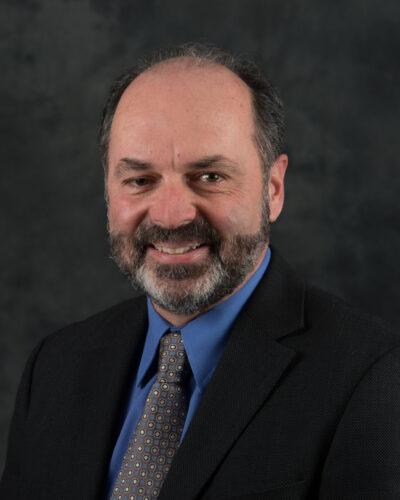
0:04 So, hello everyone and thank you for joining us for a live year in review with Cascade Copper. We're joined by Jeff Ackert, President and CEO, who'll be available for questions after the interview. So if you have any, please feel free to submit them in the chat box which can be found in the bottom right corner of your screen. Also please note that this event is being recorded. Jeff, always a pleasure. As we close off or close out rather 2025, what would you say were the most significant achievements for Cascade Copper this year and how do they position the company moving forward?
0:34 Kyle, thank you for the invite today. A pleasure to be here. With regards to 2025 and what our highlights were, I guess the first one would be our financing that we did part way through the year. And the second financing that we're actually in the middle of right now. And maybe just a quick comment that the difference in the response to the financing, even though prices were the same right across the board has been extraordinarily higher at this time of the year. And I think there's a couple of things that are from that. And 1, I think we can thank our government, both provincial and federal, for their, I would say their incentives in helping the junior resource industry and the awareness in critical metals and a Canadian-based supply chain.
1:37 All of that has really been in the news quite a bit and that's translated into general public knowledge and awareness of our role as a junior explorer in the minerals industry. So I think that was a big thing for us is to see that support at the government level. So thank you very much for that. And I guess the other one is obviously any of the work that's been done on our projects this year. It hasn't been as frothy as we had hoped as far as incoming funds and so on, but with the funds that we did get, We did get on the ground on all of our projects and we're thankful for that. And what I guess
2:22 really the fact that we were able to advance all of our projects at a certain level, whether it was on the ground or with interpretation, compilation of project data. So we were very lucky to be able to do that. And because we were able to do that, we were able to advance each of our projects. So that's really what we're thankful for and what we're happy to see over the last year. I'd love to get into the projects. Let's start with Copper Plateau. It returned some exceptional grades including 10.6% copper in 1 sample. How do these results compare to your expectations And what do they tell you about the resource expansion potential? Yeah, Copper Plateaus continues to surprise us as we do more sampling and do more depth, in-depth sort of interpretation of the results that we've had in the past.
3:17 So those high-grade samples are just amazing to the fact that we are in a porphyry Copper situation there and porphyry Coppers are typically 0.3% to 0.5% Copper. And then in our case, because we've got Gold and Silver and Moly associated with the Copper Plateau project, we're able to
3:44 advance our knowledge of that because of the additional minerals that are associated with it. But hitting these high-grade numbers, it basically tells us that not only do we have a low-grade system but we have a low-grade high-tonnage system, which is typical porphyry, but we have these high-grade vein sets that are coming through it. And the trick that we need to spend a bit more time on with interpretation, but also some drilling which we expect down the road, is to interpret where these vein sets are, what their orientation is and how common are they? If they're quite common then they end up becoming a nice factor that increases the value of the whole deposit.
4:32 To reiterate, yes, we're quite happy to see those high numbers. And with regards to resource, well, I mean, until we get drilling on the project and some serious drilling, we can only hope really to see that those high-grade numbers are gonna really elevate the value of that project. Shifts in focus to Centerfire. You completed both a high-resolution drone magnetic survey and October field work that expanded the main Gosselin zone. What have these programs revealed about that project's potential and how are you prioritizing targets there?
5:09 Yeah, well, let's start with the airborne geophysics first. You know, that's always the first, one of the first steps you'd like to look at. And what it did for us was not only give us really high resolution response from the magnetics in the in that belt and along the whole length of our our claim block, which is almost 810, about 10 kilometers long from one end to the other. So what the airborne geophysics did not only give us high resolution imaging, but it connected that main Gossan zone and the response that we're seeing there, and it connected it through that whole belt right up to the Northeast. So it gives us more prospectivity, it gives us a lot more targets to look at in that Northeast section.
6:01 And that area basically hadn't been really touched for many, many years. There were some old showings that were found, a little bit of history that was found in the assessment files, but now that we're able to sort of string all that together and understand a little bit better on where the formational conductors are, the banded iron formations and the conductors that are going through that area, it's going to give us a lot more targets. So We do need to get on the ground there and follow up on that. And we did a little bit of that in October in our program and Shannon, our VP exploration, and he was able to get on the ground and pick up some very good looking samples and banded iron formation, some sulfide-rich zones, and these are along that trend. So it gives us a good encouragement that we've got more of the same and more things to look at at Centrefire.
7:01 In November, you had a press release introducing the Bendor project, highlighting some impressive results, historical results, including grades up to 48g per tonne Gold. Can you walk us through why this project is significant and what are the next steps following the 3D magnetic inversion work? Sure, yeah. So as I mentioned before, we're on all of our projects, we're doing sort of a real, I would call it high tech. It's using new technology, modeling, inversion, looking at things in 3 dimensions that our predecessors really didn't have the ability to do that. So it really gives us a good idea of what might be in the third dimension, or at least underground. So at Bendor, the numbers that are coming out of that are quite impressive.
7:53 And the historic numbers, some of the sampling that we did on the surface nearby, but also the attention that that area is getting with 2 of our neighbours. One is Talisker, which has got a gold mine in production. It's multi-million ounce, grade is about, I think, 6 to 8 grams, which is excellent for underground work. And then another neighbour Endeavor has got one of their projects there is in the development stage, but it looks similar, a very narrow but high-grade vein system. So we're looking at those 2 to kind of say, well, maybe what do we have at our Bendor project? And it looks very similar geologically. There's some structure that's
8:36 associated with that, that is always important in these high-grade vein systems. And then from our previous talk, we had the realisation that we had some tungsten involved in the vein system. So another critical metal that is important for many different industries. So having analyzed that and seeing that on board at Bendora is important as well. So next steps, continue with the 3D inversion modeling of the magnetics. These are magnetics that we flew, high resolution magnetics. We did a LIDAR survey that really gives us what we call a bare earth model. So it gives us a high resolution elevation model. But also, it allows us to look at the structures that are associated with these systems too. So all of that will go into a three-dimensional model and that sort of will be the next release coming out for the Bendor project as some of the results and then the modeling and next steps as well, maybe even some drill targets. So that's the story at Bendor.
9:49 You mentioned a couple of different technologies there, but I don't know if you highlighted blockware technologies, which was announced in June, developed for predictive modeling for field work. How has this technology been integrated in your exploration programs and what kind of efficiency gains have you seen or expect to see in 2026? Yeah, well, right now we're sort of, you would call it the beta stage. So we're taking a lot of our data from most of our projects and we're putting it into this model system that we're dealing with or working with at Blockware. So we're basically filling the database, putting it all together, looking at the associations,
10:31 using machine learning or AI if you want to call it that, but it's basically pattern recognition. So the idea is that you look at your geophysics, you look at your geochemistry, you look at your drilling results, structure, geology, all of that kind of goes into the big database. And then the algorithms that are developed for each particular type of deposit, so porphyry disk systems will be different from epithermal systems, which will be different from mesothermal systems and VMS systems. So each one will have its own associations that we can work with. So have we been able to realize any gains from that? I would say it's a work in progress right to this point.
11:19 But we are looking at the data and looking at what the predictions are coming up with and we're going, oh, okay, well, this is looking very good. But I think the real benefits we will see will be in 2026.
11:34 Not only will we have the predictive mapping, but we'll have it in real time as we're in the field. And that's going to be a real game changer for us. And ideally, when other companies see what we're doing and seeing what results we're getting back in real time, I think they're gonna be quite excited about seeing what we're doing and get on the bandwagon there. So, 2026 will be the real test and the litmus test for us in in the field with our block or technology. Yeah with all these projects people want to see drilling and I think you have submitted and are preparing to submit drill permits in some of these projects Can you update us on the status of these permits and your timeline for getting drills turning?
12:21 Yes, absolutely. So we've applied for 2 drilling application work permits basically. 1 in British Columbia for our Copper Plateau project and that was submitted mid-2025, so about 3 or 4 months ago. And the Centrefire in Ontario has been submitted and that went in within the last month. So as far as timelines are concerned, it's hard to say in British Columbia. And I think I've spoken to this before, but I think BC has had so much attention given to it, it has so much success in its drilling.
13:07 There's so much attention being put into
13:11 exploration, drilling, and so on in British Columbia that the government is almost overwhelmed with the amount of applications that are there. So the timeline for that is kind of hard to say. I would expect that we would see it in the first quarter of 2026, as far as getting the approval on that. So fingers crossed on that one. And that would be, the timing would be good for that because if we get it in the first quarter, then we can get our drill contractor ready to go and we can hit the ground basically as soon as we can get access to the property. Access is really dependent on snow load. It's sort of unknown at this point, but as I mentioned before in previous interviews, most of the time we can drive right to the drill site at Copper Plateau, there's drill logging roads are sort of all the way through that area so we can drive right up to our drill sites.
14:12 Now in Ontario, the process is a bit different there. They say to you once you've submitted that you can expect to see your return on your application within 45 to 60 days. So again, probably first quarter of 2026, we will have an active drilling permit in hand for CentreFire. So those 2 projects are our top priorities for drilling. And as I mentioned, we're in the process of raising some capital in the markets and it's looking very good. We'll probably be closing our full amount, maybe even over allocation within days from now. So that is looking good then for us to get on the ground and do some drilling in first quarter or early second quarter of 2026.
14:58 Let's talk about that. You closed a private placement in October for just over 400 grand and there's 1 announced this month. How are you going to allocate capital across the 5 project portfolio and what does your funding strategy look like? Yeah, It's always a balancing act. You have to not only progress, significant progress on each of the projects, but you also have to maintain their good standing with proper assessment work to keep them a valid claim. So I think, you know, obviously our priority is to do some drilling. So Centrefire and Copper Plateau will get basically the most of the allocation of any financing that is happening now.
15:49 But having said that, we do have plans for some of the other projects, including, which we haven't talked about, but Fire Mountain. It's really a green fields, grassroots kind of thing. We've done geophysics on it. That's Meg and so on. But we'd like to do some IP or possibly even some airborne EM surveys that would really give us an idea of what's going on. So we may allocate a bit of our money from this raise to go to an airborne geophysics EM survey at Fire Mountain. And then compilation on some of the other ones. But I'd like to get work done on everything and then get ready for some field programs in 2026.
16:38 Pretty much the same question, but I'm just going to beat it out of you here. With the 5 active projects in British Columbia and Ontario, Are there 1 or 2 projects that will be the primary focus heading into 2026? As I said, the 2 drilling projects, Centrefire in Ontario and Copper Plateau in BC. The reason for that is that we want to use the funds that our investors are giving us in the best way that we can to reward them with, you know, the best bang for their buck. So we see that, you know, and it's common knowledge that, you know, you can do geochemistry, you can do some airborne geophysics, but the real turning point in the market, the real catalyst in a valuation in the market is getting some drilling done, anticipation of drilling, but then also the results of drilling.
17:36 And so that's what we wanna do. We wanna reward our shareholders with their commitment and their investment now with some decent results that will get our market cap, our share price at a level that we think is worthwhile. Every junior company will say, oh, we're undervalued, but certainly I think we are. With 5 projects, 3 port-free systems, a VMS, and basically a high-grade gold system and a market cap of less than 2 million. Yeah, so there's lots of room to move and we'd like to make that movement with some drilling. So that's our priority. Jeff, thank you so much for this update. As we look forward to 2026, I will leave you with the closing remarks here. But yeah, you touched on catalysts and milestones. But please, if you have any other things we're missing that you want to comment on, thank you for your time. I look forward to chatting with you in the new year, but I'll hand it over to you for closing remarks.
18:38 Kyle, thank you very much. And maybe what I'd like to say is just to follow up on that last comment I made about the undervalue, the market cap that we have. I'd say that an investor now would probably do quite well in this market that we're seeing. And back to my first comments about more general awareness in the junior exploration business in Canada, our role in discovery and development of significant critical metals deposits. We're all part of the food chain, so keep the investment coming and we'd appreciate any comments back on that.
19:26 But I guess closing remarks, I'd just like to give everybody happy holidays and a fruitful, prosperous and healthy 2026. Thank you very much. Happy holidays to you, Jeff. Thank you for doing this. Take care, everyone. I know.