Transcript
Automated transcript · Written by software from the replay's audio. It can mishear names and figures; the replay is the record.
0:08 Hello everyone and welcome to Autobrown's Resources Live event hosted by 6. I'm pleased to introduce their speakers for today, John Black, CEO and Dr. Kevin B. Heather, CGO. They will provide a corporate and exploration update for Autogram Resources and afterwards we'll be answering questions. You can submit the questions in the chat at any point during the conversation in the bottom right corner of your screen right there. As always, the summit is being recorded and will be available to watch afterwards. So without further ado, I'd like to hand things over to John to kick things off.
0:40 Okay, well, great. Thanks. And thanks, everyone for tuning in either live or you can catch us on a replay as well. We're very pleased to be getting back into the flow of drill results and looking forward to walking you through this first batch and what we'll begin to see is fairly regular releases coming for the next 6 months or so. I'd also like to thank 6, Romeo, Kyle, and the team there for providing this platform. It's a great way for us to quickly get some additional information out about a press release. We'll try to do this on most releases as they come forward, just to give a better background for what we're doing and provide a forum for questions and answers. What I'll start with is just a brief overview of where we're at with the project to remind people what stage we're at, what's coming up on this. And then most of today, I'll be passing it over to Kevin who will walk us through the drill results that we put out this morning.
1:34 So just a quick summary of the highlights from the last 12 months. Last year, as many of you are well aware, we completed a 14,600-meter drill program, which was really focused on defining the exciting new Altar United zone. The zone that connects our previously well-defined Altar East and Altar Central zones. Quite good success on that long runs of moderate grade mineralization defining a very large resource. We're well underway on our on our 2023-2024 drill program. We've completed over 11,000 meters to date with today's being the first batch of results that will be coming out on that. So we'll be anxious to begin to walk through. This year's program will be a combination of continuing to define that core zone of better grade as well as drilling out to the periphery of the deposit and defining the whole deposit. Because what we're really setting ourselves up for is the full resource update later this year.
2:34 We've also completed our earn into the 60% interest in the project and we're well on our way to going to the 80% interest. With this field campaign by the end of this calendar year, we anticipate we'll cross the threshold to have an 80% interest in the project which is a major milestone for us. To fund all this we were successful in raising over $26 million in capital this year which has been great news in a rather tough market and we owe a lot to South 32 and some of our other partners Route Ones for stepping up and helping us with that financing to keep the project going. And then most importantly recently we've signed a collaborative agreement with Newton which is a division of Rio Tinto which allows us to test their exciting primary sulfide leach technology on the project. We think this is technology that could have a significant impact on the project. Next slide.
3:30 So just a quick couple words on Newton. We won't go through all the detail on this in the next slide. There's a lot of information on Newton's website and we'd be more than happy to talk with anyone would like to learn more about it from us. But what Newton technology or suite of technologies really is is Rio Tinto believes they've developed a suite of technologies that allow for heap leaching of primary copper sulfides. This offers some tremendous benefits to be able to have more flexibility on a project, develop it more rapidly and more profitably, and keep metal inside the country. So it's quite exciting technology. They're entering into a number of agreements with parties like ourselves. We're very familiar with them. Our sister company Regulus has a an agreement that we're moving along pretty well with Newton on there.
4:20 So the details of this agreement are fairly simple. We've essentially entered into an agreement that doesn't involve an equity placement in this at all. It's simply an agreement to allow Newton to test the samples from our project and determine the viability of Newton technology and the impact it will have on this project. We provide the samples to Rio Tinto to do the test work. They cover all the costs for the test work and provide us with the results and we anticipate this will take about a year's time. So this will be complete approximately the time we're updating our resource and moving to a PEA, which is pretty important. Also like to highlight that one of the major projects that Newton is being tested at is the Los Azulis
5:04 project, which is just 50 kilometers north to us with McEwen Copper. So they're already established in the area. They've already determined that Newton has definite benefits for working on the Los Azulis project with rocks very similar to what we have and we anticipate we'll see similar results for our project. Next slide please. So just a high level I've already touched on some of this but if Newton works well on this project what it offers is the opportunity to have a smaller production footprint and reduced impacts. This is primarily because you wouldn't need to have tailings. Tailings are always a concern for major mining companies on a big operation like this. You wouldn't need to figure out how to transport your concentrates out to a smelter.
5:50 So it allows you to have a much more compact project and keep that in country as well. It also has significant impacts on reduced water use, reduced power consumption for the project. It makes a more ESG friendly project. So this potentially could be very significant and not only improving the profitability of the project, but also making it much easier and more socially responsible to develop moving forward. One of the key highlights on this, which is very important for Argentina is it allows you to produce copper in country. And that minimizes the necessity to have cross border agreements and go out. There's a lot more information on their website. The link is down below here on this slide.
6:37 And I'd welcome people to please investigate that. It could be very important for both of our companies, the Altar Project in particular. And I think it's something that's going to change the copper industry going forward. So please take a look at that. Next slide. Just a quick refresher on the timeline and we're out on the project. As I mentioned, today's release is the first few holes of an extensive program we're planning on 20,000 meters of drilling this year. So it would be a larger program than last year. And with this we anticipate we will have drilled out the majority of the deposit. Which will position ourselves to do a resource update. I've highlighted the more key events coming up. So that resource update I think will be 1 that's going to be one of the next major milestones for the project. With all the drilling we've done last year and the success we've had on that, we anticipate that this will be a very significant resource increase when that comes out and that's scheduled for the second half of this year Q3 Q4 this year we'll begin working on it in Q3 anticipate it will be out in Q4 and that will set us up for the PEA that we anticipate will come out in the first half of 2025.
7:52 We'll be working to accelerate these, these timelines, but that's our best guidance at this point in time. And of course, the Newton results will be arriving right at that same time, which will have a major impact on how we approach the PEA going forward. So with all the work that we've got scheduled for this year and funded for this year, it puts us in position for some major milestones on the project going forward. And then of course we'll have drill results coming out regularly over the next 6 months or so for this campaign. So with that, I'll turn it over to Kevin and Kevin will walk us through the first drill results for this campaign and kind of put those into context on what we'll see coming up with the rest of the campaign going forward. Okay, thank you, John.
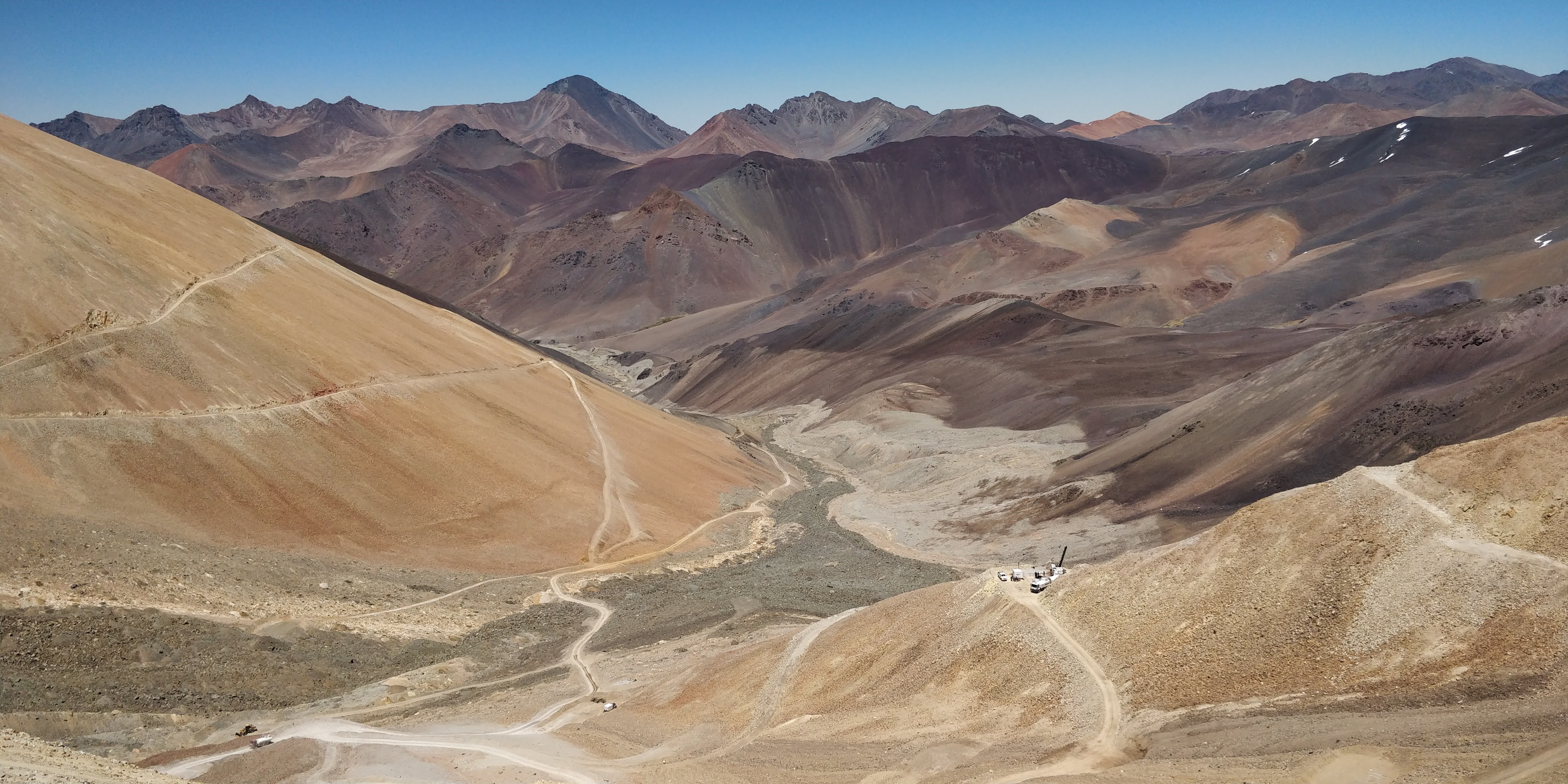
8:38 And I just had to turn my mic on there. And we'll jump right back in. I think probably most of you on the call today know where the project is but in case there are some new people to the story just a quick location map here we're located in northwestern Argentina within San Juan province It was rated the number 1 mining and exploration jurisdiction in all of South America and the Fraser Institute rankings the last time it came out and within San Juan province you can see the location of Altar sitting down here in the far southwest corner right up against the border with Chile and we're located about 25 kilometers north of both Las Palombres of Antofagasta minerals and the El Pachon copper project of Glencore and about 45 kilometres south of the Los Azules deposit.
9:46 So just a current status and everything I'm going to show you today is as of yesterday, February 5th, where we're at with the current drill program. Using the standard map that we typically show, you can see what I'm showing here in the white line is the conceptual 2021 resource pit outline and then in the black is the large geophysical anomaly the resistivity anomaly from the magnetotellurics at the 3000 meter level. And those are on there just for reference. And you can see all of the historic drill holes in the yellow dots. And I think it's important to emphasize you can see that those are drilled on a very regular 100 meter grid pattern and that's going to become important towards the end of the talk today when we start to talk about some of the things that John touched on with the timeline moving to PEA and then eventually to a PFS.
10:52 So today we released 4 drill holes and again for reference we have the main Altar Central ore body, the Altar East ore body and then the new altar United area that we discovered last year in the campaign of drilling and this year's drilling was focused mostly on the southern side and there's a reason for that. Normally we wouldn't have clustered all the holes together like this, but when we first went up in the end of September, early October, it was the earliest we've ever been into the project area. And although we were able to get up there, the north facing slopes, so here the north facing slopes were pretty accessible.
11:42 There was snow but minimal snow so we were able to get the rigs and build up the pads, etc. However, on the north side, so the south facing slopes, there was still pretty heavy snowpack on the roads and on the existing drill pads. And so we weren't able to get drill rigs in there immediately at the beginning of the field season. So that's why we've kind of started with these holes down on the southern side here. And you can see that 3 of the holes that we're going to talk about today are actually extensions of historicals and you can see that we extended holes here from 500 down to 1200 400 down to almost 1200 and again 530 down to almost 1200 meters plus drill the hole down here on the south from surface of roughly about 1000 meters.
12:38 These holes and I'll go into the rationale a little bit later of why those holes were drilled where they are, but they're part of a much larger 200 meter grid pattern that we were drilling to try to test what the full extents of the mineralization is and knowing full well that as we start to move out that we will start to probably get towards the edge of the system or towards lower grades which would be expected in any kind of large porphyry system. So we released 4 holes today. We've actually completed 5 additional holes, but we're still pending final assays on many of those holes, especially towards the bottoms of those holes.
13:32 But we hope to have those out here as quickly as possible. And then there's 4 holes here shown in magenta, and those are active holes that are currently being drilled and you can see the depths of those holes as of yesterday in total this year as of yesterday we've drilled 11,640 meters So we're well on our way to completing our anticipated 20,000 meter program. And to put this into a little bit of context, last year and the year before, we had a lot of issues with the drill contractor.
14:19 We did some measures bringing in a drill specialist working for us, working with the drill contractor. It's worked out very well and we've gotten the production rates now up to where they more or less should be. So to put it into context, last year we only completed a little over 14,000 meters for the whole campaign. And the year before was even a little bit less than that. So you can see we're already approaching last year's totals and I think that we should have no problem completing the program as we've laid it out. So I always like to show the significance of the results and I always say the quotes say it all but to make it a little bit more simple for people I've kind of put them into bullet form as I've kind of already touched on most of the drill pads are to the south And
15:18 that was because we were restricted by getting into areas because of heavy snow pack on the roads and some of the drill pads. But now we have entire project is accessible and we're now drilling from the more opportune locations on the project. The current drill holes help us to define the southern extents of the Altar United trend, but they also added substantial mineralization to the Altar project as a whole. And hole 234 intersected a long run of low to moderate grade mineralization in an area previously thought to be waste.
16:05 So that's quite important. And the Altar mineralized footprint is much larger now. And we've been able to extend mineralization into areas that were previously not drilled and frankly thought not to have mineralization.
16:26 And the importance of the holes that we released today is that although they are low to moderate grade holes they are invaluable in supporting and creating mineralized blocks to help us better capture some of the better mineralized drill holes that we drilled last year in any upcoming mineral resource update as John mentioned that we're slating for the second half of 2024.
16:57 So now just to walk you through the the drill holes we're looking at a cross-section here looking towards the east. You can see the location of the cross section here and you can see there's hole ALD 162 and 166 that we released today. You can see the copper equivalent grades on the whole and you can see the intercepts here, very long intercepts of sort of low to moderate grade. You can see it's dominantly just copper so the copper equivalency and the copper grades are almost identical and then within that there's a slightly elevated zone where the grades are slightly higher immediately below the current resource pitch shell which is shown there in the black dashed line.
17:53 Moving over to hole 166, again very long intervals of similar grade material dominated by copper and also you can see those same 2 holes relative to that large MT resistivity or conductivity feature that we've shown in numerous other webinars that we've done and you can see that again there's a very good correlation between where we see that anomaly and where the rocks are mineralized. And this shows I think this is an important slide. This is the 2021 mineral resource block model and you can see the 2 holes there and you can see how we've not only extended mineralization below the current pit shell, but we've also added potentially mineralization out in this area here where the previous drilling didn't encounter material.
19:02 One of the important things I want to touch on, and I've had a couple questions about this when we were recently at the Vancouver Resource Investment Conference in Vancouver, is explaining to maybe investors that are not technical people what the break-even cut-off grade is and what does that mean? Basically it's the lowest grade of material within a pit or underground depending on which one in this case we're talking about open pit. It's the lowest grade of material that can be mined and processed considering all applicable costs without incurring either a loss or a profit.
19:44 And so in a lot of the big open pit copper mines currently in production in South America, this break even cut off is typically around 0.1 to 0.15% copper. And so if you can find material that's greater than that grade, typically it'll go to the crusher or to a leach pad and not to the waste dumps. And so it's even though sometimes the intercepts that we're showing today look at first glance as being low grade, they still potentially may meet the threshold of a break-even cutoff, certainly for a resource pit. And we'll have to see once we move further along towards the PEA where potentially economic pits may fall.
20:35 Just a few quick photos. Those that follow us know I like to put a few rock pictures in these presentations just to help people visualize what we're seeing and why some of this is very important. You can see here that we're looking at rhyolite
20:55 volcanic rocks and these are typically not very good host rocks, although here they are mineralized, but more importantly they're showing very strong secondary potassium alteration in terms of here showing as black biotite and this is indicative that we're getting down closer to where the center of the main system is.
21:23 And we're also starting to see at depth the presence of minerals that we like to start to see, things like chalcopyrite, which is copper-bearing sulfide, with pyrite, which is an iron-bearing sulfide, but also the presence of boronite. And so those are also indicative that we're close to something.
21:48 Moving on to a next section located 200 meters further to the west. Again, we're looking towards the east and you can see the conceptual 2021 resource pit. And you can see drill hole 194 which again was an extension hole and you can see that that hit again a long run of sort of 0.32 copper equivalent and you can see it's almost dominated by copper and within that we hit a super gene zone up near the top here and then a slightly higher grade zone just immediately below the current pitch shell.
22:32 Again relative to the large conductivity feature in the geophysics. And then relative to the current block model. And you can see that when we start to look at holes that were drilled over the last 2 years, this year's hole, the holes from last year's campaign, you can start to see that there's the potential here to add a lot of resource down deeper. And it's a bit unfair because we're only looking at 1 section here but really we need to look at this in context of every hundred meter slices which we don't really have time today to go through but when you start to see that you start to see that there is some coherence to the mineralization and that's why John mentioned that the upcoming resource update that were scheduled towards Q3, Q4 of this year will be important because I think that will be a significant milestone for the project.
23:35 Just again some quick rock photos. We did hit some porphyry intrusions in this hole. Unfortunately these look like they're late mineral porphyries. They are mineralized but they're not extremely well mineralized. They occur as dykes so they're suggesting we're close to something and again we did see some copper bearing minerals in the here chalcopyrite but also the presence of molybdenite. Moving on to the final section located here on the more western end of the deposit running through Altar Central area, drill hole 234 was a hole that was drilled to basically test an area that was thought to be waste rock
24:27 and going back to that break-even cut off anything that we can find that's above 0.1% copper out here is a win. And you can see the hole there and the hole interestingly hit 2 long runs. And really, I think you could almost join these together, you know, of in excess here of 700 to almost 900 meters of sort of 0.2 copper equivalent of which most of it is copper, almost all of it's copper. And that's in an area that was thought to be waste rock and so that does meet the threshold of being above a break even cut off and that hole will help to create blocks down below here which will help to bring some of these higher grade intercepts in potentially to a resource category.
25:20 Again, just showing relative to that geophysical anomaly, again, a pretty good correlation where we drill that anomaly, we find mineralization. And this shows the 2021 block model and you can see that the blocks that are inside the pit boundary here those are currently in the resource and then you can see we've got blocks down below here that are currently not reported because there's not enough supporting
25:52 drill holes and you'll see you can see that we will start to be able to have more supporting holes here and you can see this is the one hole that was recently completed. We don't have assays for this hole yet, but you can see that the idea of this hole was to drill in this area here to see if we can potentially extend mineralization and give some help to some of the of the holes down deeper just below the resource pit. Again just some quick photos in hole 234 we're seeing favorable alteration up high where we see tourmaline pyrite very common a slightly peripheral type of alteration and then we also start to see quartz veins coming in with chalcopyrite and pyrite. So these holes are not waste as we previously would have thought. And so this hole is actually going to be quite an important hole.
27:02 Also in 234, and I put this in just more for geological curiosity because it's trying to tell us something but we only have 1 hole. We intersected some narrow breccia zones and these breccia zones have a milled matrix
27:20 to them, milled up rock. These are explosive breccias and you can see they're bringing up fragments of porphyry intrusion and not only just porphyry intrusion, they're bringing up fragments of quartz and quartz vein material that's mineralized. And so that's indicating that somewhere below or beside us, there's a porphyry phase that's potentially mineralized. And this is again, is out in an area that's never been drilled before and that was thought to be waste rock. So again just to summarize these are the holes that are reported today in the red hole the red dots we've got pending assays on completed holes that are in the blue and then the active holes that are currently drilling as we speak are in the magenta.
28:11 But I'd like to show you these holes and kind of explain what the rationale was for why the holes were drilled where they were. So using the same map again, we can see that the 3 holes down to the south I've already mentioned were drilled because that was a limitation of where we could get the rigs in early on in the season because of heavy snow pack. But these holes were designed to be part of our 200-metre step-out program to test the southern extent of the Altar United mineralization and also testing that large geophysical anomaly. The green holes along the bottom here of which one we reported today, 234, are 200-metre spaced holes testing the area along the south pit rim to hopefully try to convert waste to mineralization.
29:11 And I think I've hopefully demonstrated to you that hole 234
29:16 has indeed done that. And you can see that 237,239 and 242 we probably wouldn't be drilling those if we weren't seeing indications that those holes may be actually doing the same thing. And then the holes up to the north here were designed to really do 2 things, to test mineralization
29:40 to the extension of the main Altar central mineralization to the north, but also test the extension westward of the Altar United trend. So those are kind of almost targeting an area where we see the potential intersection of 2 trends. And then finally, the magenta holes here now, those are holes that we're using to better define the main Altar United target area where last year we hit some very nice grades and these are areas where based on our analysis during the off-season we noticed that there were still some significant gaps in our understanding and our geological, our assay data in the Altar United zone. And so these holes are actually filling in to a 200 meter spacing areas within the main Altar United area. And we're currently working on the definition of the next phase of holes that will take us to the end of this year's campaign. So just wrapping up here with a reminder, we already have a significant resource. And I think a thing that's really important for people to understand is that that
31:11 resource does not include any of the new drilling we did last year, which you can see many of the holes here just immediately below the pit, nor does it include the radio area off here to the west. We're already sitting at roughly 11.4, if you allow me to kind of just add everything together but 11.4 billion pounds of copper in the measured and indicated categories and almost 2 billion pounds in the inferred and then a significant amount of gold and silver as well. But what I think is really critical and this now comes back into the transition going from a resource update at the end of this year, moving to a PEA early next year, and then quickly transitioning to a PFS is that if we look at these categories, as Remember for some of you may not know for a PEA we can use inferred resources and obviously measured and indicated but for a PFS we can only use measured and indicated and the beauty of this project and now I've just changed it here, as you can see in the red and the orange colors, based on our 2021
32:41 conceptual resource pit, the red and the oranges are in the indicated and measured category. So those could be very quickly moved to PFS. And what I would add is, is that a lot of this area in between is where we've done a lot of drilling. So a lot of this material in here will also probably convert to measured categories as well. And I suspect that much of this material down below here will either be in the inferred category or in some cases the indicated category. So our plan for the rest of the campaign is clearly we still have 4 drill rigs operating.
33:33 We're budgeted for approximately 20,000 meters, which I mentioned we're already more than halfway through that target. The idea is to complete the 200 meter space drill out of the main Altar Central United and East zones to define the overall deposit size. We're very close to completing that phase of the program. We're also working on where it's possible to convert that in-pit waste to mineralization. And then as I mentioned, we're trying to better get better definition of the higher grade Altar United mineralization and potentially bring some of that up in terms of bringing that into the resource as well.
34:19 So as John mentioned, and I've highlighted in red here again, a real milestone I think that people should be watching for is when we complete a mineral resource update for the full project towards the latter part of this year. That will include the drilling from the combined Altar area and also include the QDM radio area as well. And then hopefully that will be the springboard to completing a maiden PEA for the Altar project in the first half of 2025. And then from there, moving on to a PFS as John outlined. But in order to get us to the PEA and more importantly the PFS, there's a lot of other supportive studies that are ongoing.
35:11 We're doing hyperspectral core scanning, which I'll touch on in a second. We're also doing a lot of geotechnical studies looking at trying to look at potential pit slopes and etc. And other geotechnical work. We're obviously doing metallurgical work with Newton. We're continuing our water and glacial monitoring studies, continuing with our environmental baseline work, etc. So there's lots of other things that are going on that are critical to advancing the project to the PEA and then eventually the PFS level. As John already went through, we've signed the agreement with Newton and my team and I are currently working on sample selection in order to get those samples off to Australia to get that test work started as soon as possible.
36:12 And as I mentioned, we're already 15,000 meters into the core scanning, hyperspectral core scanning of a planned program of 80,000 meters. This is very valuable data for both metallurgical, mineralogical characterization, and also helping with engineering studies, moving us towards that PEA and PFS. And then finally, but I think also very, very important is we've really increased our community relations activities in the process of establishing a project information office in the nearest community of Beryl. So I just want to thank all the Eldoran exploration team in Argentina.
37:00 None of this is possible without their dedication and hard work. And I think hopefully you can see that we've got multiple upcoming catalysts in terms of news flow coming. We've already got a very large resource that I think is going to be significantly increasing here in the not too distant future. We're in a high profile location in a top mining and exploration jurisdiction and I think there's a compelling valuation and we're fully funded to complete the program as highlighted today. If you have any further, want to contact to get any further more detailed information, Please contact Ben Charrington, our investor relations manager, and there's his information.
37:55 And then thanks for your attention and we'll open it up to questions and answers. Excellent. Thank you so much gentlemen and thank you Kevin. You did an excellent job at explaining exactly where you drilled, the rationale behind the drilling and what you saw in your thoughts on the results. So very clear for listeners today. Really appreciated that discussion. If anyone did come in late and missed the introduction, we are accepting questions in the bottom right corner you can find the chat box. There were a couple questions submitted via email so we'll get into those first. Is there a specific area of the deposit where you think Newton can add value? Oh, John, you're on mute. John, you're muted.
38:44 Thanks. Got it. Okay. Yeah, I can I can pick that up? Overall, we think it has potential to add value to the entire project, but specifically to the upper portion of the project. In the upper portions of the project, we do have some super gene enrichment, which opens the possibility for conventional SXEW but we also have a little bit of high sulfidation alteration mineralization over printing the porphyry style mineralization in the upper portions and that brings a small amount of arsenic into the top of the deposit. It's manageable if we go with a conventional concentrate, but one of the nice things about Newton and the heat leach technology approach to this is that it stabilizes that arsenic into a mineral called scorodite, which is non-soluble. So it gets us around the arsenic issue in the upper portion of the deposit. So we think it's most applicable to the upper portion of the deposit with higher pyrite contents, a little bit elevated arsenic in those areas.
39:47 And it allows us to get a more complete recovery from the immature super gene blanket we have across the top. And of course, that's the starter point for your project. It's the early years of the project, so the impact is probably is anticipated to be greatest in the early portion of the deposit, which is very convenient. Thank you for that. There was a question in the chat similar to 1 via email. So I'm going to combine the 2. What would the drill program in 2024-2025 focus on and do you think you might drill a hole or 2 into Altar North or the gap? Want to catch that Kevin or? It's up to you if you want to. You're on a roll so.
40:33 I can go through that. A lot depends on how far we get this year but what we what we do anticipate for next year is is that we'll be probably focusing more on activities that help us for the PE or for the pre feasibility. So we'll be looking at determining pit slopes, probably additional work on converting as much undefined waste into either true waste or preferably into above cutoff material, because that improves it economics. It'll be really focused in the upper portion of the deposit the early stage of the mine life. I would anticipate next year provided we have good access to funds and everything that we would begin to test some of those peripheral targets. Keep in mind we have a lot of mineralization already and that will increase significantly in this new, we're not short of mineralization on this. What we really need to be focusing on is how the early years of the mine life look and how we get that started going forward.
41:36 Those additional areas will be nice, but they're not required to make the project economical. If we believe some of those areas have potential to define higher grade mineralization or better mineralization will hit those but it's it's in many ways that's blue sky out there for for many decades down the road. Most definitely. Kevin did you want to add anything to that? No I think John pretty much I think he covered it. And you know that really the meterage that we have left on this year's program is more or less kind of spoken for in order to accomplish the goals of the main altar area. And so diverting meters away from that would mean that we're kind of short-circuiting ourselves on the objectives of trying to get the main Altar or body to the to well first obviously to a resource update, but also to a good PEA and then on the back of that a good PFS.
42:44 Thank you. Now, this is more of a jurisdiction question. We're familiar there's a new president of Argentina. How are there any changes under President Mealy impacting you or the Altar Project? There certainly are changes. As he promised, he's come in with a chainsaw and is radically attempting to save the country economically really. And so he's come in fast and hard. I think he's receiving very good public support for it. We monitor closely. Of course when someone comes in with such strong changes there will be opposition to those and there have been a couple attempts to rally large public demonstrations against his proposed changes. Those have not been well attended and have fizzled which to me is an indication that the public is supporting him. They know changes need to be made to improve the economy and get inflation under control and they're allowing him the time to do that. So that's very encouraging from what we're seeing. We're seeing them in more detail, more specifically to what we're doing, what we want to do as a mining industry on this.
43:54 He's rapidly proposing changes that have direct impacts on us. Most of these are related to establishing conditions that are conducive to foreign investment at the scale necessary to build large copper mines. So he's talking about more open market situations, minimizing taxes that are either for importations or exportations on this providing 30 year stability agreements for investment all the things that we'd really like to see and then one thing I was pleasantly surprised is that he came in with a huge package of changes that he wanted to see happen. Keep in mind that the Argentina Congress typically doesn't work in January, it's summer recess for them. He insisted that they come to work immediately and attack this. And so he's had hundreds of proposals on the table that are being worked through right now and some of those are very detailed proposals that specifically relate to us. One example is we've had a glacier law on the books for a long time and it's really been a conceptual law that just says that glaciers and glacier related features should be protected but with no details and that's always concerned us in the mining industry because that could be used to perhaps block projects going forward without that definition. So what he's coming in is proposing things that don't eliminate the law by any means at all, but they make
45:26 it much more specific on where it can be applied and what the details are. And aligning it much more with the vision from provinces like San Juan where we're working where they want a practical, they're not saying scrap environmental protections, what they're saying is just make them practical and something that works for us going forward. So we're very pleased to be seeing that level of detail come into what his proposals are and very quickly. He's certainly not going slow on this. He's coming in hard and fast on it, but it's already producing results for our industry specifically. It of course brings a little bit of volatility in this process.
46:11 So exchange rates are moving around a lot. Inflation is as anticipated going up before it's anticipated that it'll come back down. It didn't go up as much as it was thought to and it looks like it's already turning the corner to go back down, which is a great sign moving forward. So it does put a few complications on us for budgeting going forward we're watching closely to make sure but there's there's tremendous cooperation between ourselves our peers and the service providers that are working everybody's working together to to make sure we get as much work done for the budgets that we have right now. So it's a remarkably collaborative environment, very positive right now, moving forward. Excellent. So there's a lot of positive changes, but it's not reflected in Argentinian stock prices.
47:01 Do you have any thoughts on that is it just at that uncertain moment in time? Well it's it yeah probably I would put it into context of the resource market overall and we focus on copper that's that's the main commodity that we look for and despite very broad consensus that there will be a shortage of copper and an inability for our industry to produce enough copper for the increase demand that's coming up And I'm getting a little bit of feedback in here. And so there's a broad consensus that that's a situation, but we're not seeing a lot of retail participation in the market yet. I think we're really where we're at right now is everybody agrees that copper will have its day and everybody kind of wants to see it take off right now. So it's we're seeing that not just in Argentina, we're seeing that in copper projects elsewhere as well, that there's everybody's watching, everybody's waiting for it to take off and and see and there's probably an additional element of that in Argentina they know the proposed changes are positive they really want to see that they're they're taking hold so I would give it a few more months and then I think we'll see a coincidence with both more interest in the copper space and more confidence that Argentina is not only on the right track but that it's beginning to take hold and go forward.
48:30 Excellent, thank you. Got another question here. So let's see here. Do you have any final message for investors about the value proposition that AutoGround offers for 2024 and 2025? Sure, we can take a look at that in a number of different ways. So we as Kevin's shown on here, we're already on a very, very large deposit with a significant amount of contained metal, certainly enough metal to be of interest to major miners and put this project into consideration for one of the copper projects can be developed to address this anticipated shortfall coming forward. We're not the only project that's like that. There are a number of our peers that have similar projects, oftentimes a little more advanced than ours.
49:20 But you can take a look at valuations when you when you look at Jose Maria or Philo or McEwen mining or McEwen copper McEwen mining project, you can see the valuations are considerably greater in terms of market cap for those projects. And that's logical, those projects are more advanced and more visible than ours. Great projects, and many of those will become mines as well. But when you take a look at that some of those I would argue might be pretty well valued whereas you take a look at our market cap of approximately $100 million right now that's very low compared to the resource we already have in hand with several major milestones to come up. So there's a lot more room for our valuation to increase than there is for some other projects that are more advanced. So a lot of times you want to look for an opportunity like what we present where you already have the confidence of having the project in hand, but you're entering in at a lower valuation on this. And we could talk about valuation per pound in the ground or a number of different ways that you can measure that.
50:25 And it all shows that we're great. You can come in even earlier on a project, but you don't have that confidence you have the resource set. So the amount of upside potential you have it correlates with how early you come in on a project. I think we're in a sweet spot right now where you have that resource in hand, you're in a great province, a great area to be working in, you're in a country that looks like it's moving in the right direction to open up a mining industry on it. And the story is not that well seen yet. So it's a great opportunity to come in on us at this point in time. Thank you, John. I did miss a question here in the audience from Paul, and he mentions Arizona.
51:12 Sonora made a deal with Rio Newton, and I missed this news, and maybe some people in the audience missed it. So maybe it's worth reminding individuals in the audience. But do you see something like this as a way forward for Autogram or is the structure a little problematic? I can make some comments on that. That's one of their projects that's more visible moving forward. In general, when you take a look and this is reflected in some of the information you can see on Rio Newton's page. Rio Tinto is looking at Newton as an avenue that they can gain access to more copper production. Rio Tinto is the second largest mining company in the world, but they're at about number 9 or 10 in terms of copper production. And so they very much want to increase their copper production.
51:59 And one of the reasons they commercialize their Newton technology suite is because they view that they can use this as an avenue to gain access to projects and more copper. But by doing this, some of the projects that they've entered into agreements probably are not Rio Tinto sized deposits going forward. They're probably not a project that they would like to acquire and operate themselves, but they can agree with something like Arizona Sonora where they have an option to come in and take an off take portion of the project. And I think it's an excellent agreement and it's very consistent. We find Rio Tindal to be an excellent group to work with. They're very transparent. They're very collaborative in their interaction with us.
52:45 And keep in mind, we've been interacting with them, with Regulus and our project in Peru for quite some time. But we find them an outstanding group to work with. And it wasn't surprising to me that they announced an agreement like that. I think it's an excellent agreement for Arizona Sonora. And I think it's an excellent agreement for Rio Tinto Newton. From our standpoint, we wouldn't necessarily say the exact agreement applies to us, but we're pleased to see that they're willing to sit down and tailor an agreement that works well for a partner there. The project that we're on is a much larger project. It's arguably much more of a project that would be of interest to Rio Tindal Newton to acquire for themselves completely. So we can see everything from being a target for complete acquisition by major mining companies to that type of an agreement which is really allowing the technology to be used in exchange for off takes. So yeah, we appreciated that agreement when we saw it.
53:43 We thought that was a clever agreement that was win-win for both parties. Thank you for your commentary. The audience is a little shy today. It looks like we have all the questions addressed. So thank you again, gentlemen, for providing an update. I know the audience appreciates that if you did come in late, this is being recorded. So will we available on YouTube probably within the day, if not, most certainly tomorrow. Any closing remarks from you 2 before we close things off here? Well, just just like to close with. We're if people do have additional questions, please don't hesitate to reach out. We'd like to use this avenue to address things pretty quickly, but we're available for questions at any time.
54:28 You can you can reach us easily through Ben and he can channel the questions to us or we're available to a number of conferences that are coming up. So, we enjoy that interaction and we like getting good ideas from our investing public as well. So, Kevin, do you want to follow up just in terms of more of the. Just just some final thanks anyway to start with just thank everybody for taking the time to listen and just to reinforce to people that you need to keep your eye on the bigger picture here and not necessarily get dragged down the rabbit hole on hole by hole results because you need to see those holes in the context of what they're contributing towards the larger picture down the road.
55:15 And I think today's results, although they're not sort of splashy, you know, results that are going to, you know, bang the market overnight. They're actually critical results that are quite positive to the overall goal of a helping us with the do resource update but also that then parlaying into the PEA and the eventual PFS. So I think we're on the right path here and just again people please just make sure that you're looking at the bigger picture and don't get spooked by a few speed bumps along the way.