Transcript
Automated transcript · Written by software from the replay's audio. It can mishear names and figures; the replay is the record.
0:07 Good morning, good afternoon, good evening, depending on where in the world you're signing in from. Did look like a bit of an international audience today, so really appreciate everybody's time. Today we'll be presenting an exploration update presented by Aldebaran Resources. I've got with me today CEO and Director John Black and CGO and Director Dr. Kevin B. Heather. How are you guys today? Doing great. Thanks, Romeo. Awesome. Before I throw it to these 2 gentlemen for a presentation, I have some very brief housekeeping to get through, so bear with me. Today's event will be recorded and be available for replay probably by this afternoon for sharing. It should show up right in your inbox. For those watching the recording, that's when it's available. Today's event is also interactive. There's a chat box in the bottom right corner of your screen. We encourage you to pose questions throughout the event. We'll tackle them shortly after the presentation concludes, as soon as we get through a couple of questions that came in via email. Now, if we don't get to your question today, don't despair. The Aldebaran team will respond via email to your query, but we'll get through as many as we can today.
1:03 But I'll say enough out of me. I'm gonna shoot it first to John to start the presentation off for recent results at Altar. Great. Well, thanks, Romeo. And once again, thanks to you and your team, CYX, to set up this format. We really like this. It gives us a chance to just provide a little more color on drill hole results or other important news releases that we put out and a chance for some interactive questions and
1:27 answers. And as Romeo said, if we can't get to your questions today, please don't hesitate to contact us. There are multiple ways to get through to us. So today what we'd like to do is present the last 4 drill holes of our 2023-24 200 or 20,000 meter drill program. With this drilling, we've largely completed the rough out of the new Altar United discovery, which is a pretty important milestone for us. And this sets us up well to put out an updated mineral resource estimate later this year, approximately October, November of this year, which will be another important milestone for the project moving forward. It also sets us up well for the first PEA, the first look at the potential economic parameters of a project like this to be coming out in early or in mid next year, approximately Q2 of next year. So a very data rich, news rich year coming up for us. These final results, the announcement of what next year's drill program will look like, which will kick off in about October.
2:32 And then those 2 really important milestone events coming up with the updated mineral resource estimate and the PEA. So with that, I think we should just turn it over and have Kevin walk us through these last 4 holes, some pretty exciting results on these
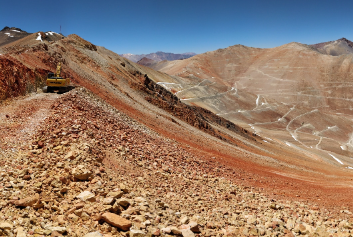
2:48 And we'll set the stage for what's coming up here in the next few months. Kevin, why don't you- Thanks, John, and thanks to the team at 6, and thanks to everybody out there who's watching live or who will watch later on on the replay. Again, I know that we may have a lot of old-time followers of the project and they know all the details where it's at, but just in case there's some of you out there that this is your first time tuning in and want to know a little bit more about Altar. Altar is located in northwestern Argentina within San Juan Province. We're located down here in the southwestern corner of San Juan, roughly about 25 kilometers north of Antofagasta's Las Palambres mine in Chile that's in production, and about 25 kilometers north of Glencore's El Pachon project that's in development right now.
3:49 And about 50 kilometers south of McEwen Copper's Los Azules deposit. All of these are large porphyry copper plus or minus gold Molybdenum deposits with world-class type deposits. And you can see up in the northern part is where there's lots of news that's been coming out over the last couple of years from the Filo del Sol, Jose Maria and also the Cunha District with NGX Resources. So just to recap, this is, as John mentioned, the final drill update for the 2023-2024 drill campaign.
4:36 Previously to today, we had put out 16 drill holes and you can see the distribution of those. All of the holes this year were focused on the main Altar ore body in and around Altar Central, Altar United, and Altar East. And these final 4 holes that we're reporting, you can see have a pretty wide spread. We've got hole 245, 62 extension over here on the far western side, 150 extension here in Altar East and then 244 off on the far Eastern side of the deposit. As John mentioned, we've completed just over 20,000 meters of what was planned to be a 20,000 meter program. So we're quite happy that we're able to actually for the first time in about 3 seasons actually make our quota of meters drilled. So that's really good because that sets us up really well, as John mentioned, for the updated resource and PEA moving forward.
5:47 So I like, I always like to do on these and those that have been following our webinars know that really I think the quotes that John and I put into the press releases really say it all. And I'd like to break these out in more bullet form from John's quote. I mean, we've continued to expand the mineralized footprint, but laterally, but also at depth. And hole 150 extension really is the highlight hole, and I'll talk a little bit more about it in detail in a few minutes, but it demonstrates that there is higher grade potential at Altar. We've now completed a little over 63,000 meters of drilling since the 2021 mineral resource was done. That mineral resource was based on roughly about 109,000m of drilling.
6:45 We're a few thousand metres over 170,000m now drilled on the project. As John mentioned, we made a major discovery of the Altar United Zone and we were able to this year do a lot of infill drilling to show both continuity of mineralization but also grade and expand the size of that zone. We're on track to complete the updated mineral resource by the second half of this year and a PEA by the first half of next year 2025, and then moving very quickly on to a PFS by 2026. You'll see why I think that that transition between the PEA and the PFS should go relatively smoothly, but I'll talk about that in a little bit more detail.
7:42 In my quote, I think the thing that's impressive is that the 2023-2024 drill campaign continued to deliver exceptional results, both in terms of really long runs of higher-grade mineralization, but also continuing to expand the known mineralized footprint. I think we're positioned to not only deliver a significant increase in the size of the resource, but also an increase in the confidence level, inferred resources versus the more confident level of measured and indicated. And that's important. The majority of the 2021 mineral resource, if those of you go back and have a look at it, the majority of it was already characterized in the measured and indicated categories.
8:35 We expect that a large portion of the new resources from the Altar United and other recently drilled areas will also fall into the measured and indicated categories. However, that remains to be determined. We have to see what comes out of the third party resource update, but that's our feeling at this point in time. This is really important, this confidence level. So it's not just about how big it is, it's about what the confidence level is. And that's really important because at a PEA stage, you can use inferred, measured and indicated resource. However, when you move to the PFS stage, you can only use measured and indicated.
9:22 Therefore, having a large percentage of the resource already in the measured and indicated categories now means that we probably avoid a lot of large and costly infill drill programs. And that analysis is underway right now as to how much infill we might have to do, but we'll obviously need to also see what the classification comes out of the new resource to help us better hone in on that. But we can make some pretty broad ideas at this stage. And that's what the work that we're working on now over the next month and a half or 2 months before the next season starts.
10:10 Let's talk about the drill hole results. Let's start with hole 150 extension, since that's really the hole that generated probably the best results out of the 4 holes. And you can see its location here in Altar East. It was drilling a gap that we had in the mineralization, and I'll show you that in a second in section. And we'll look at the section here, a north-south section looking towards the east. So here we are, we can see the 2021 conceptual resource pit here and we can see drill hole 150 here had mineralization virtually right from surface and that hit 1229, almost 1230m of 0.55 Copper equivalent.
10:59 A significant portion of it as being Copper, but also a fairly significant contribution here with Gold, which is what kind of sets Altar East apart from the main Altar Central target
11:17 is that there is elevated Gold locally within the Altar East system. Within that, there was a higher grade run of 743 meters of almost 0.7 copper equivalent. And that again, you can see in relationship to previous drill holes is showing that there's a fairly good continuity of mineralization of this higher grade style. And you can also see that most of that higher grade intercept falls within the current 2021 conceptual resource pit, but I'll make a case in a few minutes that that pit may actually increase in size. And then Within that, we see a significant run of almost 345m of 0.85 Copper equivalent or 0.7 Copper and almost 0.4 Gold right in this core area. You can see all of that falls within the current conceptual resource pit.
12:20 Again, just a quick geology, all of the mineralization in 150 is hosted within porphyry intrusion. That's the magenta colored unit here. We can see when we put it on our large geophysical anomaly, we can see that the anomaly is starting to break up a little bit, but it's still showing very nicely where mineralization is and 150 shows that what I've been saying for almost 2 years now regarding this anomaly is the anomaly shows us where there's sulfide mineralization, but it doesn't necessarily show us where the higher grade mineralization. And this is a good example where the magnetotellurics or the resistivity anomaly is starting to break up a little bit, but the grades are still very strong here.
13:13 And this is the current 2021 resource model with blocks. And you can see there's the in-pit blocks. Those are the blocks that are currently reporting to the resource. And then we've got an area down here where these are currently outside the resource that should report. And the part that's interesting about hole 150 is it's drilling very high-grade mineralization where the previous block model was not bad grade but not as high a grade. So this will definitely push higher grade mineralization into this area right here. And the interesting part is that there's still room for additional in-pit mineralization here as we can see 178 here. A was probably drilled too shallow, but also leaves mineralization, albeit lower grade, it's still above whatever a break-even cut-off would be for a big pit.
14:17 So that's an area that may require a couple drill holes next field season. Just some quick photos. Those of you that know me as the rock doctor, I like to show rocks to investors and those who are watching because really the story is the rocks and we need to understand and extract as much information out of the rocks as we can. And we can see here that hole 150 hit the intrusion with beautiful quartz stockwork, very intense quartz stock working with Pyrite and Chalcopyrite near the surface. And we also see that superimposed on this were some later Tourmaline, that's the black mineral here, breccias that are breaking up fragments of chalcopyrite and boronite mineralized porphyry intrusion, suggesting that there is better mineralization at depth.
15:10 And lo and behold, when we drilled at depth below some of these zones, we start to see even more intense quartz stock working and the mineralization and grade picking up significantly. Like I mentioned, there is a lot of tourmaline altered porphyry intrusion. This tends to be slightly lower grade. However, that does seem to transition into more potassically altered porphyry intrusion where we see copper grades increase and we see stock working within the porphyry that's carrying a lot of sulfides. And the hole ended in very strongly potassically altered porphyry that was mineralized. And people always ask, well why didn't you keep the hole going?
16:01 Well we could we could drill the hole to 2km, but the reality is that in the early stage of any mine, the first 30 to 50-years is probably going to be focused on the top kilometre of material and we elected to the drilling beyond 1200m is very expensive. So we elected to spend more money on trying to get as many holes in that upper 1200m this year. These holes can always be re-entered and made deeper in the future if that warrants extension at depth. Moving on the hole 62 extension, that's on the far Western side of the deposit. It was clearly open in that direction at depth. And so that's what this hole was planned to test.
17:00 Here we can see that most of the drilling in this area historically was very shallow. And you can see hole 62 here drilled well beyond the depth of all the previous drilling done by previous operators, but also well beyond the bottom of the conceptual resource pit. And that hole hit over a kilometer of 0.37 copper equivalent of which almost all of it was copper. And we can see that significantly that there's a higher grade set over 700 meters of 0.4 that's both within the pit and just below the 2021 conceptual resource pit.
17:45 But more importantly, up in the upper part, we can see that there's some higher grade material and this is super gene material. So this is material that's amenable to heap leach technology. And you can see that that will be obviously closer to surface and would probably be subject to the early part of any mine development. So finding those higher grades close to surface is also beneficial here. We can see that the hole was drilled almost entirely within wall rock, and if I just go backwards 1 here, you can see that some of the better mineralization sitting in the upper part up in here, For those that have been following the story, that's all hosted within this blue unit, which is the rhyolites. And the rhyolites are notoriously bad host rocks because they're not very reactive and they don't have a lot of iron in them to cause precipitation of the sulfides.
18:48 And you can see that even though that's a poor host rock, we're seeing good mineralization in that rock type, suggesting that we're still close to the very strong mineralizing system. And the mineralization is still open further behind us on this section and may require additional drilling next season. Again, very good correlation with our large magnetotelluric resistivity anomaly. And I think you can see that a lot of these other holes really start to beg to be deepened as well. On here, you can see, this is the 2021 block model. And you can see that the in-pit blocks here that are currently reporting and you can see that this is an area that could be open to future resource expansion and additional resource expansion drilling in the future.
19:47 Also interestingly, it's clear that many of the old historic holes here were drilled too short. You can see that there is lower-grade mineralization. It's within the bad host rock, the rhyolite, but it still begs that we could still like extend mineralization here. And like we've talked about in previous webinars, both of these areas could be areas where we could convert waste material into mineralization that's above the break-even cutoff of roughly 0.1, 0.15. So those are also areas that could require some short drill holes next season. Again, just to review what we found, again, strong stock working of quartz pyrite, chalcopyrite veining.
20:37 The andesites are still strongly potastically altered. We see those cross cut by veins carrying pyrite, chalcopyrite, and molybdenite, And we can see they're associated with green sericite. And we also see a strong influx of anhydrite. That's the lavender-colored purple mineral here. And you can see the chalcopyrite. And we can also see the black tourmaline in this part of the vein and almost a crackle breccia. Again, very strong alteration still in the andesites. We're starting to see chalcopyrite and our friend boronite. Remember that boronite has a higher copper content than chalcopyrite does, so we always like to see boronite.
21:28 Again, the alteration is increasing at depth and we see a really good progression of alteration going from potassic through veins with green sericite until the rock is completely obliterated by green sericite. This is a repeating theme that we've been talking about for almost 2 years now. It's a pattern that's almost deposit wide. We can see that progression and we can see how by the time we get to the green Sarasite with chalcopyrite, the host rocks are completely destroyed and it's very difficult sometimes to know what the original protolists are. So moving quickly on to hole 245, drilled almost right in the middle here. Again, we'll look at a north-south section.
22:18 Here again, we can see that there was a large gap here. Again, remember the scale here. This was about a 600-700 meter gap in here, and we drilled a hole in here to infill that gap.
22:32 That hole hit 735 meters of 0.5 Copper equivalent, almost all of it being Copper. Within that, just below the pit, there was a 200m of 0.66 Copper equivalent or 0.6 Copper with some interesting Gold associated with it as well. And then another small intercept deeper down the hole.
23:01 Within this hole was mostly again within our rhyolite host rock, which we know is not necessarily good. So the fact that it still has decent mineralization in it is positive. And we did start to get in some porphyry dikes here towards the bottom of the hole. Again, good correlation here with the large anomaly, the MT anomaly with resistivity. And if we look at the resource model from 2021, we can see that those are the resource blocks that are currently reporting to our 2021 resource, but we can clearly see that all of these holes with better mineralization are currently not in the resource and will probably fall into a resource where at least be open to expansion of a resource here towards the end of this year.
24:00 Also, you can see, like we just discussed, we can see that there are holes that are within the pit that are currently classified here as undefined waste. And we can see that there is opportunity here to potentially convert some of that undefined waste into low to moderate grade mineralization and make it a pay rock versus something that's going to go to a waste dump.
24:25 Just some quick photos again to show the rhyolite host rock. Again, we do have the development of secondary calcicite. That's a super gene mineral. That's the stuff that's amenable to heap leach technology. We can see traditional heap leach technology. Chalcopyrite veining picking up. We also see strong potassically altered porphyry in some of dykes. We're starting to see this tourmaline matrix breccia appearing again in this part of the deposit.
25:01 We have some late intrusions, but they are still mineralized, although at least where we've intercepted them so far, they tend to be a little bit lower grade. So we would call them intramineral porphyries
25:16 or late mineral porphyries. But we do see that they do locally start to develop strong potassium alteration. We see them interacting and brecciating the wall rocks and starting to assimilate the wall rocks. And we do locally start to see chalcopyrite and our friend boronite developed within these porphyries. And we also start to see zones where we're starting to see again, this green sericite with associated Chalcopyrite and Pyrite. So moving on to the final hole here, hole 244 drilled out on the far Eastern end of the deposit. We'll look at a north-south section. You can see that it was infilling an area here where we had no drill information.
26:06 And that hole hit 592 meters of sort of lowish to medium grade, 0.27 Copper equivalent, almost all of it being Copper. Within that depth, the grade was starting to pick up. Unfortunately, we had to stop this hole at just a little over 1,000m because this rig was only supposed to be able to drill the 900, but the guys, the drillers did a good job of getting the hole down to 1000. But then we had to stop the hole because of the rig capacity. But you can see the grades are starting to pick up towards the bottom. This was again, all within wall rock here.
26:52 These are dacitic, volcanoclastic rocks with a few little narrow dikes, but nothing significant. And you can see that a lot of this mineralization is starting to be in areas where we don't have a very positive geophysical response. So it looks like this is indicating that we're getting towards the eastern end of the ore body, although the mineralization at depth is still open. You can see Murphy's Law here, the capacity of the drill rig stock just short of where the best geophysical anomaly is. This is the current block model 2021, and you can see the in-pit resource blocks that are currently reporting and then the ones that aren't. And you can see that to be transparent about all this, We don't want to always just present things that are always positive.
27:50 This hole actually may downgrade some of these blocks. You can see that these blocks were being extended from other holes that are behind us And you can see that the hole is actually probably going to downgrade this area slightly, but it's not a huge downgrade in terms of the overall volume of the deposit. And really this adds to better understanding the confidence of where the resource really is. Because what we don't want to do is start putting high grades out where they don't belong. And that's part of when you're doing an infill program, you're infilling
28:30 to see what the continuity is, but you're also trying to see where mineralization may start to decrease or terminate. So this is an area where these blocks will come into a future resource expansion. And so that's important. Just another quick look, but now using a different section location, you can see here looking along this diagonal section and we'll look at it in relation to drill hole 150 extension and we'll be looking towards the Northeast. So this is just a more detailed map here. And you can see this will be the section we're going to look at. You can see drill hole 150 extension, which was vertical. Here's 244, which was drilled this direction.
29:17 And just for reference, other holes that we drilled this year, that's 165 extension, 74 extension. And then further over this way were holes such as 241 and 243 that returned very, very nice results. Mineralization, as I mentioned, is still open at depth. And you can see that when we look at this cross section now, again, the 2021 resource pit, and you can see the location of hole 150 that was in filling a 200 meter gap here that we had and then you can see hole 244 that was testing for extension towards the east and you can see that it has extended mineralization towards the east at depth here.
30:08 That again, the same results that we just talked about. So the mineralization is still open at depth. Again, it does look like we've come to the edge of the porphyry, because hole 244 only had some small dikes, and the hole was almost entirely within the wall rocks here, the daysight pyroclastic rocks.
30:33 Again, relative to the geophysical anomaly, again it's not a one-to-one correlation and you can see that we are still getting mineralization out here even though we're not in the most intense part of the anomaly here. But what this does show is that there are significant blocks down here that are currently not in the resource and those will be an area that will be open to future resource expansion. And also on this particular section line, it opens up the possibility of more additional infill or extension drilling in this particular area of the deposit.
31:17 Just some quick photos quickly here, just to show some of the features. Again, very, very repetitive pattern in terms of the alteration and what we're seeing in terms of chalcopyrite, et cetera. So to kind of start to sum up things here, we've now completed a little over 20,000 meters of drilling. You can see the distribution of the 20 drill holes. These are the 4 holes that were reported
31:48 yesterday and that we've just talked about. We can look at this again, slightly differently. We could look at the early holes from the campaign. We're looking at testing the extension to the south of the Altar United area. We also did drilling along the Southern flank here of Altar Central to try to convert waste to mineralization. And you'll remember that most of those holes were successful in doing so.
32:18 We also tested along for the Northern extension. Those holes hit mineralization, but it appears that the mineralization was starting to become lower grade as we moved to the North. And then the main bulk of the drilling was focused on the Altar United infill and also looking at extending mineralization and filling in gaps in the Altar East area. And then finally, looking at some extensions of the Altar Central mineralization here. And you can see that of the holes we just discussed today, it's a mix of extension drilling in the Altar United area, and then looking at the Altar East area, and then extension to the west, east of Altar East.
33:11 So just to sum up, there's some interesting numbers from the campaign. As we've discussed many times today, just a little over 20,000 meters in 20 drill holes gives an average depth per hole of roughly a little over 1 kilometer, a thousand meters.
33:30 All 20 holes hit significantly long intercepts of copper, plus or minus gold, silver, and moly mineralization. And all 20 holes finished in mineralization. Mineralization is still open in multiple directions, albeit trending towards the lower grade margins. We're poised for a significant mineral resource increase, I think, in the second half of this year, and that's what we're busily working towards right now. And just some other interesting stats that I just worked up here a day or so ago. If we look at the reportable intervals that we've reported over the last year of putting out drill results for the 20,000m program, we typically use a 0.1 Copper equivalent cut-off.
34:30 If we do that for reportable intervals, we can see that 92% of the meters drilled, so a little over 18,000 were reportable intervals, and they had an average grade of 0.36. If we up that cutoff to 0.2, then almost 70% of the whole, of all the meters drilled were reportable. And you can see just over 13, oh, close to 14,000 meters and with an average grade of 0.42. And then if we up it to 0.5, we see that it's roughly 20% at 0.66, but the caveat here, and that's why I've put asterisks here, those are just the reportable intervals that we reported.
35:23 The percentage is much higher when we consider the individual assay intervals, and I haven't calculated that, but I'm going to do that for my own interest. But the takeaway message is, this has been a highly successful drill program. You're not on very many projects where you can drill 20,000m and 92% of those metres are reportable intervals of Copper, Gold and Moly. That's really a testament to the size and the strength of the Altar mineralising system. Just to conclude here, we already have a very sizable resource in hand.
36:10 I think that all of this drilling that we've done is going to allow us to for a significant increase. As I mentioned earlier, a lot of the mineralization is already in the M and I, the measured and indicated categories. And we think with the drilling that we've done over the last, well, since basically this 2021 resource, that a significant portion of this deeper mineralization will also hopefully make it into the indicated and maybe some of it into the measured category. So this is where we were when we first started 2 seasons ago with the 2021 resource. That's what it looks like as of today, a little over 63,000m of additional drilling. This number does include some drilling that was done over in the radio QDM area.
37:10 There's the geophysical anomaly. There's the current block model. So the resource sitting up here in the 2021 conceptual pit, and then you can see we've got these tails that are stranded resource blocks that do not report to the resource. So those are stranded. And there's our new drilling superimposed on there. So what I've highlighted in the magenta here is basically an area that now will be open to potential increase as part of a new 2024 resource model that like I said, should hopefully be coming out in the second half of this year.
37:57 So conclusions, the campaign's complete, all the final assays have been received and reported, we're on track to complete that updated mineral resource estimate for the full project area, second half of this year. We're on track to complete the maiden PEA for the Altar project in the first half of 2025. There is a typo in the press release, in the press release in John's quote, it says H2 for the PEA. That's a typo. It is actually still H1 for 2025. Samples for the Rio Tinto Newton sulfide leach work have arrived in the USA and mineralogical characterization studies have commenced.
38:45 Column test program will be based on that mineralogical work, so stay tuned for further updates. We're currently a little over 31,000 meters into our planned 80,000 meter hyperspectral core scanning, which is giving us valuable mineralogical information to help with zoning and exploration, but also helping us with geometallurgical and geotechnical studies to move forward towards the PFS. Planning is underway for the drill campaign as we speak. It's going to be a mixture of potential infill drilling, extension drilling, metallurgical drilling for the Newton sulphide leach work, water well drilling for water balance studies and some satellite target drilling. The mix of this and how many metres, we don't know yet because we're still working through that over the next month or 2 here.
39:49 Some studies related to the PEA and PFS have been kicked off and have been initiated, even though in the case of the PFS, we're still 2 years out from when we would report the PFS. There are long lead time items that need to be started now. And so we've started those and those could be potentially a subject of another webinar sometime in the future. And we've experienced very heavy snowfall here in this part of the world this winter. That likely means a delayed start to the 2024-25 field campaign, but let's see. But Right now, there are several meters of snow up in the project site, and there's a snowstorm coming again here in the next few days. So I suspect that we're not gonna get as early as started as we've been fortunate enough to have for the last 2 seasons.
40:50 So again, I list conclusions here. I'd like to thank all of the El Doran exploration team in Argentina for all their hard work to make all of this possible and for the continued success of the project. I think that Eldorado remains, we've got still a lot of news coming in terms of the resource update, moving into the PEA. We've already got a significant resource that I think is gonna grow significantly. And we're in a high profile top mining jurisdiction now in San Juan and Argentina. Things are looking very positive there. And I think there's a compelling valuation moving forward.
41:35 So I think we're now open to take some questions. Awesome. Thanks so much for the presentation. See There's some great questions in the chat. Gonna get to them, there's just a couple of questions that came in over email that I'm gonna go through first, but we'll get right to the chat questions as possible. Should have time for all of them today, but if we don't, remember, I'll shoot them to the team and they'll get back to you as soon as possible. This one, feel free, both of you to answer, but I imagine it's largely for Dr. Kevin. Can you sketch out what next year's drill campaign would look like? How much expansion versus infill versus greenfield are you planning, assuming adequate funding? Yeah, I mean, I really just mentioned that, that it's gonna be a mix, but we haven't, the percentages and how many meters, we don't have that information right now. So we're working on that. Sounds good.
42:22 Next is while waiting for the Newton results in Q1 2025, they ask if you expect the initial drill results from the 2024, 2025 campaign in the PEA, or will the PEA be exclusively based on what has been drilled to date? So it's gonna be in the upcoming resource update. Yeah, I can take that one as well. Yeah, no, the PEA will be based on the resource that gets put out in H2 of this year. There will be no, because if we start adding new holes in there, it means we have to go back and redo the resource model. It delays the whole domino effect. So no, the PEA will be based on the resource that we put out later this year.
43:09 Great, thank you. Somebody asked, can you generally comment where you've seen the best near surface mineralization so far and how that informs what areas be mined first. And then they offer as a suggestion with hole 150 showing good near copper surface mineralization and hole 241 showing good near surface gold mineralization is Altar East and Northwest potentially a good place to start? Yeah those are questions that will really come out of the PEA, because just because there's mineralization near surface doesn't necessarily mean that that's going to be the place you start. Because there's other factors that come into it. It's what's the grade of that mineralization, how much of a strip ratio is to get at that mineralization.
43:58 Because even though it might be very close to surface, if you have a, as an example, you have a big hill right beside it, you're going to take the big hill out to get to that mineralization. So there's a whole bunch of factors that go into this. Historically, when previous operators have looked at this, typically the starter area tends to be around the Altar central area. The principal reason for that is that the Supergene enrichment blanket of Calcicide is slightly higher grade there and closer to surface. And so it wants to start there, but we have so much more drilling now. And I think we have to wait and see what comes out of first the resource and what the distribution of the mineralization looks like.
44:47 And then the PEA is where we're gonna, it's gonna tell us where it wants to start. Well, there you go. Speaking of Altar Central, one question mentions, they note their perspective is relatively little drilling at or below Altar Central this season. I want to know if you can comment on whether you're planning more drilling at depth below the center of Altar Central or do you see better growth in other portions of the deposit? Well, I'll answer that in a way that is we don't need more growth. I think that we've already, I think people will see when we get to later this year, more mineralization we don't need. Now, the fact that it's still open, that's really good news because that means that there is longevity for this, but we've already got enough mineralization probably for a mine to be 30 to 50 year mine life. And so drilling a bunch more, you're adding mineralization out, it's almost impossible to put a value on it. But it is potential that in 30 years, the situation with metal prices will be different.
45:58 The whole scene will have changed. And that's what I think attracts potential buyers is they want to see the resource, but they also want to see that it's still got some potential to grow. That makes sense. So to answer the question, no, I don't think we're going to be doing a lot of drilling below Altar Central. I appreciate that. I think we can get John in here for this one, but of course, you're both welcome to answer. Someone asks over email if you can provide an update on the El Camino lithium claim you optioned. Have you received the full 1.2 million already? Is there anything you can share about progress that's been made by the other party? We're advancing on that. They're nearing the completion of that agreement and we're in discussions kind of how to complete that right now. So they continue to do their test work on it. We don't have anything that will reflect directly to, you know, say a plans for production or anything like that right now. So I think it's best to refer those that are interested to the public information that's been presented by that group. But the payments we received, it's been a nice healthy contribution to us.
47:08 It helps out as we go. And there's continued interest in our other claims that we have in the Northern part of the country. As those that follow us might recall, we have a number of projects up there. The majority or all of those were staked for precious metal or copper potential, but some of those do have potential to capture the ledges of the lithium plays as well. So we're interacting with quite a few groups to determine how we go forward with those projects. Great. Thank you. And I'm jumping into the questions from the chat. I think we'll be able to get through most of them today. Starting with 1 from Tony, who asks, does Aldebaran, Obviously this is one of those answer the best your ability. Does AllAround have a relationship, strategic or merely friendly with the filo mining? No, no, no concrete relationship but we certainly know those guys well. I think I first started working with Diego when the, in the nineties back there. So we know top to bottom, we know those guys well and work well with them. The San Juan community is pretty tight knit.
48:08 There are 5 or 6 of companies that are working on big projects like this. And it's remarkably coordinated copper exploration in the area with a lot of interaction between ourselves and our neighbors, just to work on how we interact with the government, how we work socially in the communities we're in. It's quite an exciting and refreshing environment that we're working in there. Great. David asks, how many more years of drilling will be required until the company moves on to the next phase? I guess it depends what you mean by next phase. I mean, We are moving to the next phase, right? I mean, we've been strictly for the last, we picked the project up in 2018. So for the last 6 years, we've been in, we started building this project originally as a re-exploration story.
49:01 So We were basically pulling the project back from what was thought to be a development story to an exploration story. In the last 6-years, we've been slowly pounding away on re-exploring the project. I think we've shown the fruits of that labour by making a major discovery that I think is going to change the complexion of this deposit. In terms of adding more mineralization, we're getting lower on the cost-benefit curve. It's going to cost a lot of money and we don't get a much more incremental value out of doing it. Now we're moving this towards a development story, which means there will be additional drilling. There's going to clearly be places where we need to fill in some gaps, potentially expand a little bit of expansion drilling to help with converting some waste to mineralization within the pit, and then really metallurgical drilling and some geotechnical work that needs to be done moving towards a PFS.
50:09 And then finally, there are some satellite targets that we'd like to drill a few holes into some of those, But we still need to look at budget and how many meters we need to do that and how it all fits. And that's all, like I mentioned, that's work that's ongoing here right now and will be for the next month or so. Great. Thomas asked for an elaboration on seasons. How long and when is the season? Is it the same for all project stages or only related to current stage? I can answer that one again, Joan, if you want. Yeah, go ahead. But When we took on this project, the season, because you got to remember, we're working at high altitude here. So the camp is at 3000 meters above sea level.
50:56 And the project is anywhere between there and the top peaks are around 4,500, but the main working area is around 3,900 to 4,000 meters. So really the issue becomes is the access to get into the project. And historically that access was over a couple of very high mountain passes, which limited the field season to 4, maybe 5 months. We now have a low elevation access from San Juan to the camp. That's allowed us to extend the field season to 8 or 9 months, so we've doubled the field season. And the reason why we shut down during the winter is just mostly for 2 reasons.
51:47 1, it becomes very difficult to safely manage the transport of people, equipment, and stuff on those very high, narrow, mountainous roads, and also trying to keep water from freezing. And so those are 2 of the big issues. And again, it comes down to cost benefit. You could take steps to try to drill through the winter, but it would be very costly and the production and the quality of the work would diminish a lot. Moving forward, however, you can mine 12-months a year. Palombres is a mine just 25km from us. They mine 12-months of the year, 365-days a year, 24-hours a day, and they're at exactly the same elevation, the same kind of terrain, get the same kind of weather. So when you move to that stage, then you can put the capital in to keep snow removal and do things in a very safe manner.
52:58 At this stage of the expiration, Cost benefit, it's just not there to justify doing it. I appreciate that. Trying to squeeze in as many questions as I can because now we're getting close to the end of the hour. JMac asks, are you forecast to satisfy your expenditure obligation to earn your 80% interest by year end? Yes, what we've publicly released, we've earned it as 60%. That's been announced and we now own 60% of the project and we've publicly released that we're, at the end of March, we were at $19 million of expenditure. In mid-May, we were at $19 million of expenditure towards the 25 that's required for us to get to that 80% interest. And with the drilling that we've completed, we're very close to that right now. So at the end of Q2, which just finished a month ago, we'll take a look at the audits of that, see how close we are, and anticipate that within the next, say, 3 months, we'll announce that we've crossed that threshold, certainly by the end of the year. So we will be 80% owners of the project by the time we put out the mineral resource estimate. That's great.
54:05 John, I'm going to ask you a question that's probably impossible to answer in 2 minutes, but give you 2 minutes to answer it. That's Gary says, China seems to be very interested in South American mining. They talk about the port in Peru as an example. Curious if they've expressed any kind of interest in Argentina that's similar. We have to be cautious, obviously, about speaking to specific companies, but broadly speaking, yes, this project is drawing interest. It's evident from some of our strategic partners with South32 coming on and 2 strategic placements over the last year, our relationship with Rio Tinto to test their work. Groups like that wouldn't be helping us move the project forward if they weren't interested in the project and monitoring it. And with A lot of M&A activity in the mining space focused on purchase of producing assets in the last year or 2. On that, we're just starting to see rumors and interest of acquisition of development stage projects like what we have.
55:02 To have us in the best position for a project to draw serious interest on that, we need to continue to de-risk the project, get that mineral resource estimate out so we have a rough idea of the full size of the main part of the system, And then more importantly, get to that PEA. We don't consider that our project is really into the zone where you have a balance of knowing what it is and having it sufficiently de-risked that it draws interest until we get to that PEA. So that zone between a PEA and a pre-feasibility is where a project like ours will typically draw quite a bit of interest. That's why we're pushing to get there as quickly as possible. I'm quite pleased that as Kevin laid out, the amount of drilling we have on the project and the ability for us to work rapidly and well in San Juan provinces, allowing us to move quickly to that stage within the next year. So there are quite a number of groups that have taken bets on early exploration stage projects, not just ourselves, but some of our neighbors.
56:03 And there's certainly more specific to the question about Chinese. There are Chinese interests in a number of different commodities within Argentina, not even just in the metal space, we can point out lithium. They're certainly keen on looking at copper projects are not major impediments for Chinese companies to work and acquire assets in Argentina. We see them very present in the agricultural space as well. So it's very interesting, There's almost a resource war starting up right now between major economies in the world. Realize it's going to be critical to put your hands on resources like copper, lithium, and other commodities in general. So we're in a great spot right now to be delivering projects that will be highly sought after. I appreciate a geopolitical question in 3 minutes. I always appreciate that. I will end with 1 for Dr. Kevin, who came in over email during the event. He said, could the higher grade mineralization found in the supergene blanket closer to surface be leachable via Rio Tinto's Newton technology?
57:04 If so, is this maybe a more economic way to begin the operation with a starter pit? A couple of things. Traditional heap leaching will get the calcite. The issue at Altar is that calcite is on minerals such as chalcopyrite and energite, which is an arsenic bearing mineral. That Copper can't be extracted through traditional heap leach technology but the Rio Tinto Newton system, because it's a sulphide leach technology, has the ability to obviously get the calcite, but also potentially get calcite and energite as well. It has the potential to extract copper that historically would have been stranded there through heap leaching.
58:02 That's why we're very interested in the technology and obviously Rio Tinto is interested in testing it out here as well. So, and they are working with our neighbors to the north at Los Azules as well. So yeah, I mean, I think that we're excited and we'll see. I mean, the test work is just about to start shortly in the next month or so. So we'll see. We'll see what the answers that come out of the test work. That's why we're doing it, see whether it potentially works or not. Awesome. Well, as we're getting to the end of the hour, thank you both so much for an informative presentation for going through the Q&A with me. Obviously, thanks everyone for joining, especially those who ask questions or are tuning in from odd parts of the world. If you see some people are, it's always good to have you. The replay will be available later this afternoon. I'll throw it back to Dr. Kevin John for a last word before we jump today.
58:57 Just final word for me. Thanks everybody for tuning in. It really projects exciting. Now we've set the groundwork to work on delivering what I think is gonna be a significant resource update and move towards that PEA. So stay tuned. Yeah, and I'll also like to echo, thanks to everybody for tuning in on this. This is a pretty exciting point in this project. We've made that new discovery. We'll soon be able to reveal the full size of that and then quickly move into a PEA. And in particular for those that are interested in monitoring the copper space, we're really kind of moving into a part of the copper cycle that I think is very important to watch. I think projects like what we have will be of interest to major companies to acquire, to put into production. I think Argentina is showing itself to be an increasingly receptive and friendly area for foreign investment, which is exactly what we want to see. And more importantly, it's important to take a look at a group like ourselves.
1:00:01 We're at a stage right now where we have a burden hand. We have a clear project that's quite interesting. We're about to reveal the full size of what we have on this, but I don't think that's fully reflected in our value right now. So please take a look at where we're at in terms of our valuation compared to other very good projects that perhaps are more known or more advanced and have significantly higher valuations than we have right now. It's a great time to take a look at us. We're also experiencing a bit of a pullback in Copper prices right now, which I think is going to give everybody a great entry point into the Copper space, ourselves and many of our other peers as well.