Transcript
Automated transcript · Written by software from the replay's audio. It can mishear names and figures; the replay is the record.
0:01 Hello, everyone. Thank you so much for joining us today. Wherever it is that you're joining us from around the world. Today we're joined by Aldebaran Resources CEO John Black and Dr Kevin B. Heather, Chief Julia Geological Officer at Aldebaran. Great to have you both on today. Before we get into today's presentation, just a few quick housekeeping items. Today's event is being recorded and should be available in just a few short hours. This is also an interactive event. There's a chat button on the bottom right-hand corner of your screen where you can submit questions. Feel free to submit questions at any time during the event. And once we get through today's presentation, we'll tackle as many questions as we can. If for whatever reason, we don't get to your question, or if it's outside the scope of today's conversation, someone from the Aldebaran team will get back to you as soon as possible via email.
0:54 Without further ado, I'll pass it on to John for opening remarks. Great, thanks Bianca. And a special thanks to Kyle and Romeo and the entire SICKS team. As we've expressed before, this is a great format for us to be able to get out a little bit of additional information after a technical press release like we just put out a couple of days ago. There's a lot of very good information flow coming from the project right now. And from the headline we can see on the screen, it's highlighted by our latest drill hole with 920m
1:27 of 0.66% Copper equivalent within 1500m of 0.55% copper equivalent. That's a pretty special drill hole. Kevin's gonna walk us through where that hole is and the importance of it. But it's one of many that we've been putting out recently and we'll continue to have additional results coming out very shortly as well. Kevin, can we advance to the next slide? We are a publicly traded company, so the appropriate disclaimers do apply to what we'll be talking about today. And in the next slide, we'll just quickly summarize the data that we'll be seeing and the information we'll be seeing over the coming weeks and months on this project. We're at a point now on this project where we'll have a very serious information flow or news flow on the project.
2:12 That's very critical when you're taking a look at a junior company like ourselves, that there's information flowing on the project, new information coming in. And what I'd particularly like to highlight is a couple of the critical things that are coming out over the next year. As we've Noted in this release, we've just finished up a 20,000 meter drill program. The 3 holes that were put out this week were part of the remaining holes that needed to be reported on the project. There are 4 additional holes that will come out in 1 or 2 press releases over the next few weeks as well. So stay tuned. Kevin will give a little bit of a preview on where those holes are and what we're likely to expect from the holes coming up. But what we're really setting ourselves up for here is what's highlighted the 2 boxes in red on this diagram.
2:59 A resource update, a mineral resource update that we anticipate will be late Q3, early Q4, so approximately November of this year. That will be incorporating over 63,000m of additional drilling that we completed over the last few field seasons, and most notably with the discovery of the new Altar United Zone. So we anticipate there will be a very large increase to the resource coming up at that point. Those are the type studies that are inflection points in the value of a company like ourselves. So keep an eye on that information coming out later this year. And then that will set us up for a PEA to be completed in the first half of next year. And between those 2 red boxes, we've indicated the Newton results. As I think many of you are aware, we're undergoing test work with Rio Tinto Newton to determine the viability of primary sulfide leaching on this project.
3:51 We will have the results from that test work in Q1 of 2025 next year, and that will allow us to most likely complete a PEA that will evaluate both conventional processing on the project and also processing with the Newton results which we anticipate will add very significant value to the project moving forward. So that's a bit of a preview of what we have coming up. I really want to turn it over now to Kevin as he'll walk us through the details of the drill release that we put out this week and then of course we'll be available for questions at the end of the presentation. So I'll turn it over to Kevin.
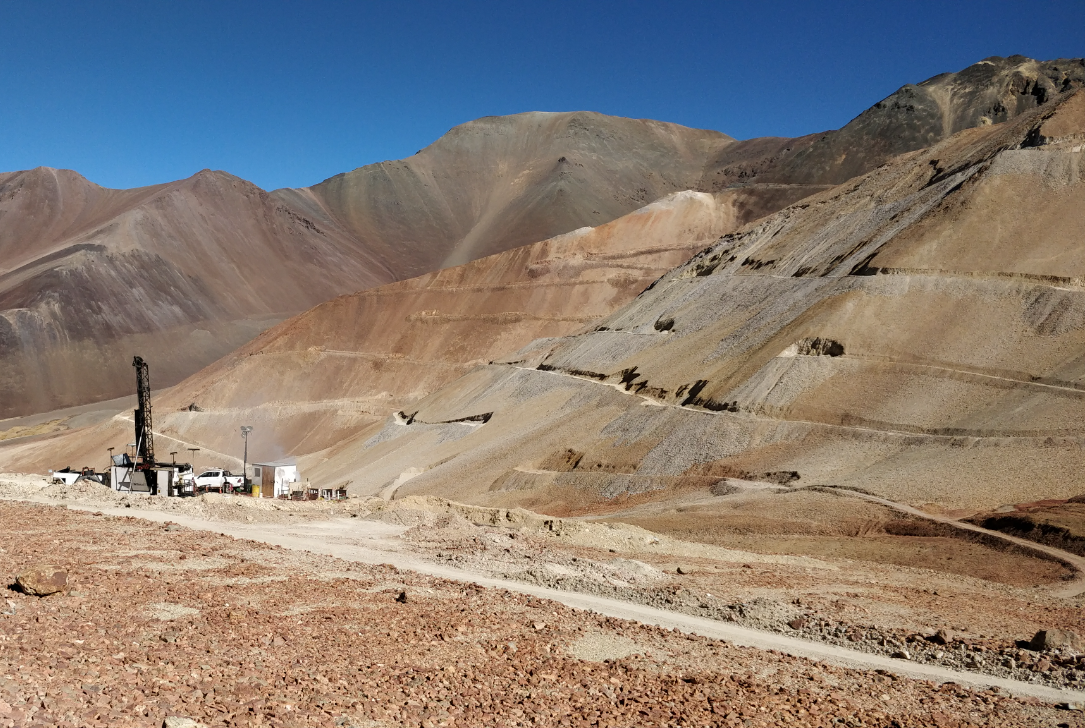
4:28 Okay thanks John and Thanks also to the 6 team and for all of you that have tuned in live this morning, wherever you are in the world, or who will be watching this later on a replay. As everybody is probably accustomed to my style of how we do this. I'll just do a quick overview of where we are, just in case we do have some new eyes on the project. We're located in Argentina and we're located in northwestern Argentina within one of the very mining friendly provinces called San Juan. And the project is located here in the southwestern corner of San Juan province. You can see it's nestled up against the border with Chile and part of a larger cluster of world-class porphyry systems, Los Palombres, an operating mine by Antofagasta just across the border, 25km away in Chile.
5:27 And then right next door to that, the project of Glencore El Pachon, which is currently in feasibility. And then about 50 kilometers due North of us is the McEwen Copper Los Azules project. Also, there's a large number of large copper projects up in the north in the Vicuna district, Filo del Sol, Jose Maria in the Lunewase deposit of NGX. San Juan has done a lot of positive things over the last little while And I strongly urge people that want to know more about the political and situation in Argentina and in San Juan to go back and watch our Investor Day presentation by Javier Roberto, our Vice President and Country Manager in Argentina. He gave a very, very good short overview of the current situation in Argentina.
6:25 So moving on for what we're going to talk about today. Today, we're going to talk on the drilling that we've done in the main altar ore body area. As John mentioned, we are now finished drilling, everything shut down for the winter. And we just completed a little over 20,000 meters of a plan, 20,000 meter plan. That's significant because it's the first time in probably the last 3 campaigns that we've actually been able to achieve our goal of meterage. We've had some issues in previous campaigns. So our work has paid off working with the drill contractor and making them perform better.
7:12 And so I think both parties are happy with how the campaign went. So just a quick recap, we've already previously reported 9 holes. They're shown in green here. And you can see that most of these holes are holes that are sort of peripheral to the main centers of Altar Central, Altar East and Altar United. The 3 holes that we're going to report today are 129 extension located here, 243, which is really the blockbuster hole. And we'll also talk about 165 extension here. As John mentioned, there are still 4 holes left to be reported. These are hole 62 extension, which is a westward extension of the Altar ore body, Altar Central ore body here.
8:07 Also, drill hole 245, which is drilling in a gap area between Altar Central and Altar United. And then we have drill hole 150 extension also filling in a gap area in the Altar East drilling, and then hole 244, which was drilling to see if there was an extension eastward of the known mineralization, because it remained open. I'll come back and discuss a little bit about that towards the end. So like I normally do, I really think that the quotes say it all, and I'll paraphrase these for you. It's very, very rare to have drill holes of over 1 kilometer, let alone 1.5 kilometers of contiguous attractive grade.
8:58 Hole 243 delivered that. So it's a special hole for any project. The 3 holes also continue to expand the mineralized footprint of the deposit. As John mentioned, we now have completed over 60,000 meters of drilling since the last resource update was done in 2021. I'll touch on that again towards the end of the presentation. We're on track to complete the updated mineral resource estimate by the second half of this year. In my quote, basically it's reiterating the same kind of things, but I think what's really important for people to understand is that the 2023 and 2024 drill campaign, every single hole that we drilled this year hit long runs of mineralization and a number of the holes hit long runs of higher-grade mineralization.
10:00 So not only making the higher-grade core areas better defined, but also significantly extending the known mineralised footprint. And I'll go into this in a bit more detail in a few minutes, but Drill hole 243 actually deviated from one of its intended targets. But despite that deviation, it still accomplished an exceptionally long run of mineralization by any standards. And more importantly, it actually allowed us to extend our knowledge and the presence of a higher grade porphyry body further to the North than we had previously appreciated. And again, finally, all of this polls that we've reported today and the ones that we've already reported in previous webinars, all will be additive and will help support the upcoming mineral resource estimate.
10:59 Just a quick, to remind people, we will be using copper equivalency and these are the assumptions.
11:09 All of these assumptions are on the press release if you want to go and have a quicker look. So we'll start with drill hole 243. This is the famous tombstone hole. And for those of you that maybe didn't watch our Investor Day presentation, I urge you to go back and have a look at that. But in that, I was asked a question as to why we drilled hole 243 to over 1800 meters depth. And obviously I couldn't say what we saw. I just told people that, well, We're not drilling it because it's tombstone. And so that's why now famously, this is the tombstone hole. And you can see that I'll show you the results here that it is quite a spectacular hole.
11:58 So you can see that We'll look at a cross section that's angled there by the purple magenta line, and we'll be looking towards the east. Before we do, I just wanted to point out the deviation. You can see here's the collar of 243, and you can see that the intended target area was to infill a large gap between 2 existing drill holes. These holes were drilled from north to south and so here we were drilling a hole from south to north to do 2 things. Infill this gap, which obviously the drill hole didn't accomplish, but also to test at depth to where the northern contact of the known higher-grade porphyry body would be.
12:47 So based on visuals, we allowed this hole to keep going, even though we knew that it had deviated and you can see that it's hit spectacular mineralization and actually ended in mineralization. So although the hole did deviate, it is actually opened up an area of a potentially new infill target area here where we need to go back in and infill this area in probably next field season. So just a cross section again, looking towards the Southeast, you can see drill hole 243. You can see it looks like it crosses and replicates hole 228, but as I showed in the plan view, it's only over a small distance that it's a replication.
13:35 Most of it is additional new information away from that hole. So that's why sometimes cross-sections can be a little bit misleading. That intercept was over 1500 meters of 0.55 Copper equivalent, of which almost 0.5% of that was Copper. Within that, we see a higher grade, still almost close to a kilometer of 0.6 Copper or 0.66 Copper equivalent. Again, spectacular intercept. And then within that, another additional 227m of 0.79 copper equivalent, of which 0.73 of it is copper. So I think the takeaway here is, although we're using copper equivalent, the majority of the metal contribution is coming from copper.
14:32 And again, the hole did deviate from its original target, but still achieved objectives that were part of the plan. Just a quick to show the geology here, where We've extended the porphyry further to the north now than what we previously thought, again showing the MT geophysical anomaly, the resistivity. And we can see that, again, the very, very good correlation of that resistivity anomaly. But we can actually see that there's mineralization beyond the higher intensity color here, suggesting that some of this orange area is probably mineralized as well. And This is the 2021 mineral resource block model.
15:21 You can see the in-pit resource blocks. Those are currently reporting to the resource that we have. I'll touch on that towards the end of the presentation. And you can see that all of these 4 holes, 228, now 243,189, which we previously reported this year, and 194, another hole that we previously reported this year, all 4 of those holes hit long runs of mineralization and none of those holes are currently considered in the resource model. So clearly there's going to be a large addition of resource blocks sitting down below the current pit shell.
16:10 Just some quick photographs. Those that follow our presentations know that I'm the rock doctor and I think rocks are important. And I think it's important for investors to look at them and see the importance of what we're extracting from the rocks, because that's really what adds value at the end of the day to the project. And you can see that whole 243 intercepted very, very strong quartz stock working. Clearly, there was a lot of sulphide mineralization here previously. Now it's been leached out. That's where we can see these orange iron oxides where the sulphides have been leached out. We also do see up high some pyrite energite veinlets. And then as we get down into the main mineralization, we see a transition going from dominantly chalcopyrite with pyrite.
17:04 Here it's associated with green sericite as halos on the sulfide mineralization. But we also see copper associated with earlier potassic mineralization in the porphyry intrusion. So we've got at least 2 events of copper addition here. We've got copper coming in with the potassic alteration, and then that potassic alteration being overprinted by this green sericite, which is also bringing in very interesting levels of copper mineralization. Continuing along on the same theme, again we can see this association where we can see green sericite associated with this chalcopyrite, pyrite, and then we can just see some remnants of that earlier potassic alteration, which is also carrying copper.
17:58 Here we can see that we're also seeing the presence of molybdenite with the chalcopyrite and we're also starting to pick up in this hole which is extremely encouraging is the presence of boronite and the reason why this is important is typically when you start to see boronite with chalcopyrite you're getting closer to the center or the hotter part of the system, the higher grade part of the system. And for those that might not remember from some of my previous webinars, Chalcopyrite has roughly about 33% copper in its crystal structure, whereas boronite has close to 42% and so boronite is carrying much more copper than chalcopyrite, so that's why we like to see boronite.
18:46 And again, just showing that as we go deeper, we're starting to see intensification of stockwork veining and this green sericite alteration. And again, not to belabor it, but basically the sequence we see, and if you go back and look at some of our previous webinars, we've documented exactly the same chronology. We see an early potassic alteration with a lot of chalcopyrite, and that's clearly overprinted by this green sarasite event that also has chalcopyrite and boronite associated with it, and then finally a later quartz moly event that is very, very suggestive that there could be yet another porphyry intrusion parked somewhere below our current drilling.
19:37 And just to show that even though we stopped hole 243 at a little over 1,840 meters depth, the rock here you can see, these are andesite wall rocks, and you can see they're very strongly vein still, and they're on average still running 0.3, 0.4. So they're still in mineralization, although lower grade.
20:07 Okay, moving on to one of the other holes that we released on Monday, hole 129 extension. 129 extension is located here. The idea was we were testing to fill in a gap and extension of the main Altar Central mineralization. We'll now look at a North South cross section looking towards the East. And here you can see the section, you can see the conceptual 2021 resource pit and you can see hole 129 here. This was a hole that produced over 1000m of 0.38 Copper equivalent of which 0.35 of it was copper.
20:53 And then within that a slightly higher grade, shorter interval. And this was an extension of an historic hole that was originally terminated at 513 and we extended it another close to 700 meters deeper. The important thing takeaway here is that this hole is although lower grade is entirely within wall rock. And so the reason why I think this hole is important is A, it fills in a gap in our understanding for the resource model, but it also demonstrates that Although the porphyries are important and tend to contain some of the higher grades, the wall rocks around them are also mineralized.
21:39 This is a very good example where we can get long runs of mineralization completely in wall rocks. And quite frankly, these rhyolitic wall rocks shown here in blue tend not to be great host rocks, as I've discussed on numerous occasions in previous webinars. But still, here, they're still very strongly mineralized, which is encouraging sign that we're obviously close to the main source of the mineralizing fluids. Again, really good correlation to the large geophysical anomaly. And I think you can already see that there's obvious areas that probably still are requiring additional follow-up drilling.
22:27 This shows the resource model from 2021. You can see the in the blocks that are sitting inside the pit and then we can see holes that have been drilled and that are currently not in the resource model and these will probably convert into resource in the next update later this year. Just some quick photos again almost all the mineralization is hosted in wall rocks here we can see strongly altered and vein andesite volcanics up high in the system They're dominated mostly by pyrite with some chalcopyrite associated with white mica or white, white sericite. But as we go down deeper, we're starting to see more chalcopyrite.
23:15 And then once again, starting to see the presence of boronite with chalcopyrite, suggesting that we're getting closer to something. And again, overall, we see potastically altered andesites that are overprinted by strong green sericite, so that same pattern that we demonstrated in hole 243, and quite frankly, almost all the holes that we've reported this year. And we start to see some late mineral porphyry dikes with some wall rock andesite in them as well. And again, the hole ended in strongly veined lower grade material, but still with the presence of chalcopyrite and pyrite at close to a little over 1200 meters depth here.
24:04 Moving on to the final hole, 165 extension, that's located over here in Altar East. Once again, we'll look at a north-south section and we will look towards the east. And you can see 165 extension here. Again, a very long mineralization of lower grade material, to almost a kilometer of 0.3 Copper equivalent of most of it being Copper, 0.27. Within that, there's a little over 335-metre intercept of close to 0.41 Copper equivalent or 0.4 Copper. And then there's a small higher grade segment here of a little over a hundred meters of close to 0.6.
24:54 This is again, infilling a gap in our current resource model and is an extension of an historical that originally terminated at 484 meters. So you can see again, we've extended the extension here. It's all within porphyry. Again, very good correlation to the MT resistivity anomaly. And you can see that it will definitely help to extend mineralized blocks further to the north here. And hopefully in the new update, we'll be able to start to capture some of these currently mineral blocks that are not in the 2021 resource.
25:43 Again quickly just some photos, we see some up high we see pyrite energite again associated with white sericite.
25:52 We also see association of some quartz pyrite with white sericite and black colored tourmaline. This is very typical of the peripheral part of a mineralising system. As we go deeper, we're starting again to pick up that green sericite alteration that I've mentioned previously.
26:16 And then as we get deeper, the holes clearly starting to see much stronger green sericite alteration and again, much stronger development of chalcopyrite. And that's that higher grade interval deeper down in the hole.
26:35 So this is a summary again of the drill holes that we've reported today. But the other way to look at this is to look at it in terms of objectives. And again, we drilled early on in the campaign, these 3 holes down to the south, all hit mineralization, long runs of mineralization, testing this area to the south of the Altar United Discovery. These 3, 4 holes down to the south of Altar Central were designed to convert waste material to potential mineralized material. All of those holes successfully achieved that goal. And more importantly, almost all of those holes hit mineralization deeper in those holes that will help us to extend the mineralized footprint for the upcoming resource.
27:30 We drilled 3 holes along the north side, again, testing to see if there was mineralization extending to the north. These holes hit longer runs of lower grade material, but again, demonstrating that the mineralized footprint is larger than what we currently understood. And then really the meat of the story has been the holes that we show here that have the yellow stars that have been drilled in the Altar United and Altar East areas. These are infill holes to fill in gaps of 200 meters in some of the drip previous drilling that we've done. And you can see that 1 243 that we reported today is one of those holes, but we can also see that 3 of the next holes to report are also coming from this area.
28:27 Hole 150 extension, and I'll go through those in a second at the end here. And then finally, we've got 2 holes that are extensions of the mineralization at Altar Central. Today we reported the 129 extension and then still to come is the 62 extension, which is checking for the westward extension of mineralization.
28:51 So I always show this slide again, just to reiterate, we already have a very sizeable resource in hand. We've got close to a little over close to 11.4Bnlbs
29:08 of Copper in the measured and indicated categories, and then another 1.7Bnlbs of Copper in the inferred category. And you can see that all of this new drilling down to the south there, you can see drill hole 24,
29:27 243, the long hole that we reported today. And you can see that it's right in this central area and you can see that it's right in this central area, and you can see that it's extended mineralized even deeper than any of the previous drill holes. So this is really quite an enormous mineralized system. And you can see that all of this area right here is going to be open to the new resource expansion. And so I'm really looking forward to being able to put out that resource towards the latter half of this year. And again, to reiterate, a lot of the mineralization in hand is already in the measured and indicated categories. That's really important because for a preliminary economic assessment or PEA, we can use inferred, indicated and measured resources, which we will have plenty of. But when we move to the PFS or the pre-feasibility stage, you can only use indicated and measured.
30:30 And because a lot of our resource is already in the indicated and measured categories, it means that there'll be a lot less infill drilling in order to get the project to the PFS level.
30:46 Just to close out here with a few slides, this was what the drilling looked like that went towards the 2021 mineral resource estimate. It shows 109,000 meters of drilling. That includes drilling that was done at the satellite radio QDM system just off this section.
31:09 And this is what it looks like now and I'm just going to toggle back and forth so that everybody can see what we've been able to accomplish since we've taken over the project. And you can see it's pretty significant addition there. And so that's why we're really looking forward. And as John mentioned earlier, we've done a close to 64,000 meters of drilling. Some of that's also drilling that was done at Radio QDM, but I think we're setting ourselves up for a really significant resource update in later this year. And you can see the really good correlation with that large geophysical anomaly. And as I mentioned already, you can see that hole 243 went deeper than most holes in this area. And you can see it's still pretty decently mineralized
32:03 down deep as well. And so this is what the current mineral resource block model looks like. So all of these blocks up above are within the pit shell, are the ones that we currently report. So that sort of close to 1.4Bn tonnes. And you can see that there's a lot of resource blocks that were stranded below previously. And you can see how this area where we've infilled is clearly going to fill all this in and this pit will no longer probably have this odd bump in the bottom, which was due to just not a lot of drilling and very shallow drilling in this central area. So this discovery of Altar United is really a game changer for the project.
32:50 So to summarize, as of today, the drill campaign is complete. Everything's off the hill and we're shuttered up for the winter. There's been a lot of snowfall. We got out just in time.
33:04 Assay lab turnaround times have improved substantially. We have 4 remaining holes and we think we should be able to report those very soon. As John mentioned, we're going to still on track to complete that mineral resource estimate for the full project area by the second half of this year. And we will embark immediately thereafter to complete a maiden PEA for the project, which we hope to deliver in the first half of 2025. And then as John mentioned, moving quickly from that into the PFS, and that's where having a lot of the known resource already in the indicated and measured categories makes that transition from PEA to PFS a lot smoother because we've already completed most of the drilling that's necessary.
34:01 And that's on schedule. As John mentioned, we are doing work with Rio Tinto Newton on their sulfide leach. The samples have been prepared and they should be shipped to the USA very soon, probably next week. We are doing a fairly ambitious plan of hyperspectral core scanning on all the core. The first phase is planned to be 80,000 meters, of which we're a little over 27,000 meters completed. And as I've mentioned before, this adds valuable data for both metallurgical and engineering geotechnical studies, as well as our exploration efforts as well.
34:49 So like I always like to do, really all of this work is thanks to our excellent team in Argentina. And so I want to have a shout out to the entire exploration team in Argentina for their hard work over the past few months up in the field and their continued hard work as we analyze all this data and start to prepare for the 2024-2025
35:15 season. So as John mentioned, I think we've got multiple news flow sources upcoming, lots of big catalysts. We've already got a significant resource that I think is going to significantly grow. We're in a great location. Argentina has become one of the hotbeds of copper exploration. The government, both at the federal and provincial levels, recognizes that mining is one of the 4 pillars for getting the Argentine economy back up and running. And I think that right now we're not valued anywhere near where we should be. So it's a compelling
35:57 value valuation to get in and be part of this exciting story. And now if there's any further questions, you can reach out to Ben Cherrington, our Investor Relations Manager. And now I think we'll open it up to questions.
36:16 Awesome. Let's get right into it. So the last 2 headline holes from Altar have been 2 of Aldebaran's best. Do you expect similar runs of mineralization in the upcoming holes? Yeah, I don't talk about visuals and I don't want to tip my hand, but I will just say I feel like I'm in the tombstone business. So people can read into that what they want. But I would say, yes, clearly, I think what I tried to show was that the remaining 3, at least 3 of the remaining 4 holes are coming from infilling areas where we think that we've got the core of the higher-grade part of the system.
37:07 And 2 of the holes are showing extensions to potential mineralization of where they're drilled. So one of the things I think that I didn't mention that's really important is every single hole that we've drilled over the last 2 or 3 years has hit mineralization and long runs of mineralization. We have not drilled a dead hole. I can't remember if we even did drill a dead hole. So that just shows the scope and the scale of the system, that we can drill so many holes and they're all mineralized. Martin's asking here, is there a potential starter pit? It's a little bit early for us to tell. We'll really see that come out in the PEA when it comes forward, but we do, I think we've pointed out in previous webinars that the upper portion of the mineralized system has some secondary mineralization associated with that. So we get slightly higher supergene enrichment grades there. One of the keys to unlocking those will be whether we can use Newton on that as well. So if Newton works as well as we anticipate, I think we'll see that we can get to mineralization early, up high in a portion of the deposit to get cash flow moving earlier. But we really won't see the full scope of that until we get into the PEA and explore different models of how we move forward.
38:37 Next question here. How could the mineralization found to the other results of this campaign impact the mineral resource update later this year? Everyone tackle that story. Can you repeat the question again? Sorry. You bet. The question is how could the mineralization found to the north of Altar, United and the other results of this campaign impact the mineral resource update later this year? Well, I mean, everything's gonna add tons potentially, right? To the north of Altar United, we've already demonstrated that a lot of that, almost all of the Altar United mineralization is currently not in resource.
39:27 It's all going to be additive. Moving towards the north of Altar United, it's still open. Really, if you look at the deposit, it's pretty much still open in all directions. But as these large porphyry systems work, as you start to go towards the fringes of the system, you start to see lower grades. So it really becomes a, you know, right now we don't need more mineralization. There's a lot of mineralization here to get to sink our teeth into. And that's why I think that the big catalyst here is gonna be that resource update to see where we're at and how that sits relative to other large projects that are currently not in the hands of majors.
40:16 Switching gears here a bit, there's a question asking, could you please offer an update on the cash position and how you're thinking about timing and size of future financings? Okay, I can tackle that. Our cash position at the end of last quarter was 10 million Canadian. We've completed some additional drilling since that time. So it'll be slightly lower than that now. That is enough cash for us to be able to complete the resource estimate late this year and complete the PEA for the first half of next year. However, it is not enough cash for us to embark on another aggressive field campaign season starting in September. Recall that our field seasons are September, October through to about May each year.
41:04 So we will be looking for an opportunity between now and the autumn to acquire additional funds to go forward. There are a variety of ways that we can do that moving forward and we'll just evaluate what the market's like, what's happening. The good news is there's a lot more interest in copper projects right now. There's a lot more appetite for financing projects. Keep in mind, we also have some very important strategic partners that participate in our funding as we move forward and have ideas on how we can most efficiently move it forward. But whatever decisions we take are always taken in the context of what's best for our existing shareholders moving forward, still providing opportunities for new shareholders to come in. So we'll read the markets, we'll see what's there, but sometime before the end of this year, we would like to raise some additional funds to move forward. Another important thing to point out on this is that we haven't touched on it very much this, But another big catalyst that's really coming in this year is we now own 60% interest in the project. We have an option to earn into 80%. To go from 60 to 80%, we have to complete an additional $25 million of work expenditures on the project.
42:17 To date, to the end of May, we've completed 19 million of those. So there are only $6 million left. So with funds in hand, by the end of this year, we will have completed the commitments to earn into a full 80% interest in the project, another key catalyst that will be coming up this year. Insofar as the recently approved RIGI legislation in Argentina, Could you comment on the legislation and also how it could benefit mining in the country? Just a few brief comments on 1 important thing is it was approved by the lower house. It was recently approved by the upper house. It still needs to go back to the lower house for the final. So technically, it's not completely approved, but it got through the critical hurdle of the upper house last week. So that's very good news for not just the mining industry, for any large foreign investment opportunities in Argentina.
43:17 So what it does is it provides a package of incentives to encourage major investment, major foreign investments into the country to stimulate the economy going forward. So projects that require more than $200 million investment, which any big porphyry like we're at clearly meet that hurdle. It lowers tax rate, it provides tax stability, it provides stability with regards to exports and how you can do those. And so it's exactly the type package that we would like to see as a mining company. Or better put is the company that's likely to acquire the project from us who would like to see. As Kevin's mentioned, We're good at identifying these opportunities. We're good at showing the full potential of them. But our strategy as a company is really to get everything set and provide this project to be an opportunity for a major company to acquire with the capital and the skill set necessary to turn it into a mine. So it's pretty exciting times in Argentina right now. We're one of several large copper projects that are moving forward. I think Argentina has a heck of an opportunity to develop a major copper mining industry in the country now.
44:31 Absolutely. Can you speak to the indication of a deeper porphyry system down deeper than current drilling? And would that be exploited by underground mining in the future? I can tackle that one. It's still pretty early days. I mean, we're talking about something here that is conceptual and blue sky, but there are indications through the geological analysis that there is something going on deeper, but it would most definitely have to, if there is anything down there, and that's a big if at this stage, it would definitely have to be via underground mining if there is something there. But again, that's still very speculative at this time. But that's one of the things that myself and the team will be looking at during the next few months is when we're assembling all of the geological, geophysical data is looking at what evidence we have and where potentially we might think about drilling a deeper hole.
45:39 But like I said earlier, we don't need more mineralization here. Why that would be of interest would be to show prospective companies that might be interested in acquiring the Altar project is that this could, well I think it already is a multi-generational mining opportunity, But they also like to see a lot of future possibilities in terms of upside. So that's where it could come in. But again, still very speculative at this stage. And perhaps later this summer, North American summer, we might do a webinar that can kind of walk through what some of the evidence is and why we're thinking that. But that's something to be determined.
46:31 Alright, I think this is the last question here. Considering the recent failed bids for Anglo by BHP and for tech by Glencore, do you think majors might start looking for large copper projects soon? That's a good observation. A lot of what we do is to try to identify projects that would be of interest to majors, but it's really critical as well as where we're at in the market. Because In the Copper market, we're famous for being very cyclical and we go through long periods of time with low prices when major companies aren't acquiring new assets to go forward. They probably should be thinking about doing it then, but they don't have the cash flow, they don't have the profits, so they're not motivated to acquire new projects or develop projects they have in hand. For the last 2 years, I think we've already been into an M&A cycle, anticipating a strong run-up in Copper, as Copper is increasingly in short supply to meet the demands that we have just for decarbonization of the world as well as simple population growth of the world. But that M&A cycle we've seen for the last year or 2 has been majors buying producing assets or buying other companies, largely viewing that those assets or companies are undervalued as Copper prices have been lower.
47:51 And I think what we're seeing, particularly the Anglo bid, is everyone in the Copper space has moved up pretty strongly since the first of this year. And I think we're starting to see some of these target companies increase in value to the point where it's no longer desirable to be for the majors to be chasing those. And so when producing assets become costly to acquire, it's very logical that the majors will be moving downstream and taking a look at production or opportunities to develop new projects like what we present to them as well. Another thing that's important is when we see the M&A cycle simply being purchase of existing producing assets, that does not put new Copper into the market. That changes ownership and it's important for majors to acquire good assets when they're cheap.
48:42 But what we really need to see as an industry is to see new assets coming online. Or if we don't, we will see a tremendous spike in copper coming up if we don't start announcing the development of new projects. The majors sense that. They're positioning themselves to be able to either develop assets they have in hand, or in many cases they simply don't have the projects in hand to develop. And so I think we present a great opportunity for someone to take a look at acquiring a project like we're developing. All right folks I think that's our time. A big thank you to everyone who joined us here live. If you've just thought of a question and you didn't have time to ask it, feel free to send it in via email to the Aldebaran team and they can get back to you. As always, a big, big thank you to you, John Black, Dr. Kevin B. Heather, for joining us today and for sharing these insights.
49:34 Thanks Bianca. Please don't hesitate to contact us with any questions that people might have. ♪