Automated transcript · Written by software from the replay's audio. It can mishear names and figures; the replay is the record.
10:30 And that's exactly where we want to be. For these big copper projects in the Andes, anything north of 1 to 1 NPV to CapEx ratio is a big win. So if we look at the spot metal prices, and I do want to highlight that this is simply a sensitivity. We didn't rerun the mine plan using higher metal prices. So the mine life stays the exact same. However, the after-tax NPV jumps up to $3.3B, while the IRR jumps up to 28%. Payback period is now just over 2 years, which is very quick payback. Life of mine gross revenue at just over $53Bn and life of mine free cash flow at just under $16Bn. The initial CapEx stays the same because it's the same mine plan and thus the NPV to CapEx ratio jumps to over 2 to 1.
11:20 So good outcome at base case metal prices with a lot of leverage to commodity prices as John touched on earlier. Kevin, next slide. Okay, so on this slide you can see the life of mine copper equivalent production and C1 cash costs. Okay, and the way we're showing this is the bars represent copper equivalent shown in tons, and we've broken that out by copper, gold and silver. And then the C1 cash costs are shown in the blue line. Okay. Now, because this is a 48 year mine plan, we like to think of the project in segments, first 20 years, first 30 years, and then the life of mine. And for the record, from an NPV and IRR perspective, really the only first 20 years matter. We could cut out everything after year 20 in this mine plan and it would have almost 0 effect on the NPV or IRR. And as you can see here, we have a very robust first 20 years. Okay. So on average, we'll produce over 121,000 tons of copper equivalent per annum at C1 cash costs of $1.71 per pound and all in sustaining costs of 225 per pound.
12:33 Over the first 30 years, we'll produce over 116,000 tons of copper equivalent per annum at C1 cash costs of $1.87 per pound and all in sustaining costs of 242 per pound. And then over the life of mine, we'll produce over 101,000 tons of copper equivalent per annum at C1 cash costs of 202 per pound and all in sustaining costs of 259 per pound. And I do want to highlight that you can see the last 10 to 15 years of the mine plan, the production drops off slightly here and the cash costs increase. And that's a largely a function of getting later in the mine plan and getting into lower grade material. But we do see opportunities to potentially improve the grade particularly in that portion of the mine plan. And Kevin will touch on this a little bit later in more detail. But if we have success improving the grade, particularly in that portion of the mine plan. And Kevin will touch on this a little bit later in more detail. But if we have success improving the grade, particularly in that portion of the mine plan, we could see the production increase and those cash costs come down.
13:29 Kevin, next slide. OK, so on this, we see EBITDA and free cash flow shown on an annualized basis. The orange bars show EBITDA and the blue bars show free cashflow. And again, we like to think of this in those 3 segments, 20 years, 30 years and life of mine. So over the first 20 years of the mine plan, we'll average 571 million in EBITDA and 368 million in free cash flow. Over the first 30 years, we'll average 522 million in EBITDA and 327 million in free cash flow. And then over the life of mine will average 436 million in EBITDA and 263 million in free cash flow. And again, You can see the last 10 to 15 years of the mine plan, EBITDA and free cash flow drops down a little bit. Again, that's a function of getting into lower grade material.
14:25 But if we have the success that we hope we will and are able to improve the grade in that portion of the mine plan, you'll see those numbers tick up. Okay, on to the next slide. Okay, so this is the last slide I'll talk on before I pass it over to Kevin. As many of our listeners know, at the tail end of last year, we entered an agreement with a division of Rio Tinto called Newton. And as part of that agreement, in the PEA, we were to include a base case, which was a concentrator scenario and a Newton case, a Newton sulfide leaching scenario. Okay. So for, for the PEA, we effectively did 2 full PEAs. We did a base case concentrator PEA and a Newton sulfide leaching PEA. Okay.
15:12 Unfortunately, due to 43-101 regulations, we're only able to report the details of 1 case for a PEA. And any additional cases, we have to show as either a sensitivity or upside. Okay. But I want to highlight the concentrator scenario and the Newton sulfide leaching scenario were both completed with the same rigor. Okay, and so the way we have to report is what you can see on your screen here. We can report a number of key metrics and then we're showing the results from the base case in the middle column and then on the right hand side you can see the percentage increase or decrease relative to the base case that was generated by the Newton case. So simple way of thinking about this if it's red that means that the concentrator scenario performed better. If it's green, that means that the Newton scenario performed better. Okay. And so why don't we go through these one by one? So on an after-tax NPV, the Newton case was approximately 4% lower.
16:15 The gross revenue, the Newton case was approximately 17% lower. However, on a free cash flow basis, the Newton case was over 7% higher. Recovered copper, Newton case was just over 9% lower. And that's largely driven by the fact that Newton sulfide leaching technology has slightly lower recoveries for copper than a traditional concentrator. Recovered gold and recovered silver are minus 100% because as it stands today, unfortunately, Newton's sulfide leaching technology is unable to recover precious metals. They are working on technology that could unlock that in the future. However, it's not commercially available today, so we have to report it as a complete loss.
17:02 The initial capital was approximately 21% higher in the Newton case. However, that's largely a function of timing. What it means is there is more investment that needs to be made pre-production in the Newton case than the concentrator case. But you can see over the life of mine, total capital was just over 7% lower for the Newton case. Total operating costs were over 5.5% lower for the Newton case. And both C1 cash costs and all in sustaining costs were approximately 10% lower for the Newton case. So in summary, the Newton sulfide leaching technology was able to produce significant copper at lower capex, lower opex, which resulted in significantly higher free cash flow.
17:52 When you combine that with the ESG benefits that come from Newton sulfide leaching technology, whether it be, you know, lack of a tailings dam, less water usage, you know, more smaller environmental footprint potential for lower electricity usage. I think it paints a very compelling case and it paints itself as a viable alternative for processing at Altar and certainly warrants additional work as we continue to de-risk the project. So with that, I'll pass it over to Kevin who's gonna walk you through some more details on the technical side of things. Kevin, over to you. Great, thanks, Adam. Just before we launch into the more technical aspects, some of you might have noticed that I'm wearing a spider on my head and it's not because I wanna be the court jester here, but today is a national holiday in Chile and tonight is the trick or treat and my eight-year-old granddaughter was disappointed when I told her that I was going to be occupied all today with work related including this webinar and so as a compromise I promised her that I would wear the spider. So we are human and so family does matter.
19:09 Okay, so moving on, for those of you that don't know where Altar is located, we're located in Northwestern Argentina in San Juan Province. You can see that there's 2 major clusters of large porphyry Copper Gold districts. 1 in the North, known as the Vicuna District with Filo del Sol, Lunawasi, Jose Maria. And then down in the major cluster down here in the southwestern portion of the province where we have Los Palambres, the producing mine of Anifagasta sitting just on the border with Chile. And the El Pachon project is literally across the border from Los Palombres of Glencore, the development project, feasibility level, and then about 45 kilometers to the north of us is the Los Azules, McEwen port of free.
20:04 We can also see that San Juan is favorably rated in the most recent Fraser Institute rankings. Guyana shows is number 1, but it's based on a very limited number of responses. So really, San Juan has been identified as the top jurisdiction for mining investment attractiveness in all of South America. And with the recent political gains in the recent midterm elections by Millet,
28:48 So another part of the story is the tailing storage facility, or what we like to call the TSF. And you can see that during years minus 2 to 3, The tailings that will be produced from processing this ore from the open pit will go to this containment facility over here. This is the phase 1 containment facility that will allow us to store 3 years of, the first 3 years of production. It'll be taken there by a tailings pipeline. From years 3 to 6, we can see the expansion of the tailings storage facility and the tailings containment facility. And then for the end of life of the open pit, you can see the phase 3 tailing storage facility and the phase 3 containment structure built.
29:46 That's when we start to transition to getting ore from underground. You can see the approximate location of the portal to go to the underground. We'll now go underground and you can see that during, as the pit is operating here, we will be actually driving an underground decline. You can see it's a twin decline and that'll happen in years 1 to 2. And then from there, we will start from years 1, during years 1 to 5, we will start the pre-development underground work in order to access the first block cave here at Altar East, the upper lift, we call it. And you can see the workings and the ventilation shafts here coming up to surface, et cetera.
30:37 So that'll be happening during, and that will allow material for the mine production from years 5 to 23 from that block cave. Following that, we will then translate over into the Altar United upper block cave. And that development will happen between years 2 and 7, and that will provide ore to the mill from year 7 to 29. So effectively with overlap, we will have production coming out of both the Altar East upper lift and the Altar United upper lift up until year 27 for this guy or year 23, sorry, and then up to year 29 for this guy.
31:29 The Next lift to get exploited here will be the upper Altar Central lift. And that again, the development there will be off and on between years 5 and 21. And that will provide ore from years 19 to 31 in the mine plan. From there, we will transition back and start going after the mineralization under the original Altar East block cave, and we call this block cave lower. And that will development work, you can see in blue here, will be done between years 20 and 24. And that will provide ore feed from years 25 to 44. From there, we will move to the lower Altar United block cave. That development work will happen between years 21 to 26, and that will provide ore from years 27 to 40.
32:30 And then finally, we will transition around and go after the last blockade, which is the Altar Central Lower. That work will be, the development work will be in between years 33 and 35, and provide ore feed to the mill complex from years 1936 to end of mine life 1945. Just to show you a more clean, some people may have noticed, I'll just flip back here, you might have noticed that there's some mineralization here that's been floating around as we've been doing this. And that again is the Altar North porphyry system. It is not drilled out, but there is some decent mineralization there. And this offers opportunity upside in the future to be integrated into the overall mine plan.
33:23 So just a clean image so you can see we're going to be sourcing ore from the open pit and then sequencing these upper block caves and then moving to the lower block caves to give us an overall 48 year mine life when you include the pre-strip and stuff that's required at the open pit. But just zooming back out to complete the story about the tailings storage facility, you can see that phase 4 will accommodate all of the rest of the tailings, close to a billion tons of tailings here between years 9 to the end of mine life 45. So again, just to show you what that looks like, there's the tailings containment structure, there's the tailings in that, and just to give you an idea where that's at, I'll just rotate around and you can see it's just over the hill and we can see the North waste facility, the open pit, the stockpile, the South waste facility and then the camp and administration buildings down here.
34:38 So some of you might be wondering, as I mentioned earlier, you know, we've elected to go with an open pit and then transition to underground block cave in order to try to bring some of that better grade material forward in the mine plan. And I'll show you the profile here in a second. But I just wanted to point out that there are examples of this that are in operation today. And a good example is the Acadia Copper Gold Block Cave, Newmont's tier 1 mine in Australia. That started life in 1998 as an open pit and then transitioned to underground mining in 2009. It currently is a 90,000t per day underground operation. It will produce this year close to 280,000oz of Gold and 67t of Copper. And I think the key thing here is that its net asset value this year has been estimated at $7.3Bn.
35:41 And I think the other important thing to realise here is they're mining a copper equivalent grade of roughly between 0.6, maybe 0.5 to 0.8. And I think what I'm going to show you is that's very similar to our projected mine grade profile as well. And so there's that profile, you can see there's the pre-development, the strip, and then you can see an orange or the ore waste that has to be mined in the open pit. You can see in the purple line is the estimated grade coming out of that pit. And then there's a transitional period here where we finished the open pit and we transitioned to the underground.
36:26 And you can see that we are going to be mining, if you look at the Copper equivalent grades over here. For the first 30-years, we're going to be between 0.5 and 0.8 Copper equivalent. So very, very similar to what's being mined at Newmont's Acadia operation. And then as Adam has already mentioned, the last few years here, we see a decrease in the overall grade, but we know that that's due to mostly coming from the lower block caves. And the thing that's very interesting, and I'll show you a diagram here in a second, but we know that in those lower block caves, we see much higher elevated moly values and those values were not considered in the cash flow model and the economics for this PEA. So we see that as a potential opportunity to increase the overall Copper equivalent grade of depth, as well as in the process of doing more infill drilling to possibly increase the overall grade of some of those areas.
37:32 And as Adam kind of mentioned, beyond year 20 really doesn't impact significantly the NPV or the IRR, but what it does do, those years post 20 are, it shows a long life, multi-generational asset with optionality. And so that's what we're kind of focused on. And so if we look at the capital profile, you can see that What we've elected to do here is to get back to some of the points that John set out as some of our goals when we first started the PEA journey, was to really try to lower the initial capex. And in order to do that, we took a staged approach where the capital injections for both the tailing storage facility and the underground development were done staged over the life of mine.
38:25 I've already shown you the surface and the underground development and shown you how we're staging it. And really this deferred approach ensures that the capital is largely paid out of the cash flow of the mine during its production. And that is why you see the initial capital is smaller, which was again, one of our objectives, so that this would be much more widely appealing to not just some of the mega big Copper producing companies, but also some mid-tier producers as well. So Opportunities to potentially unlock additional value here. What we see is that potentially installation of, as I mentioned, a Molybdenum circuit in the later years of the mine when the higher grade Molybdenum is encountered. And here you can see, I just put a little cartoon together here where you can see the 6 underground block caves, and you can see we're talking Moly values here in excess of 100ppm.
39:31 And that's significant and some places even greater than that. And so we think that that could help us in terms of the overall grade profile and cash value moving forward. Other opportunities we think to unlock additional value. We've gone back and we've looked at a lot of the historic metallurgy that's been done and we've had third parties helping us to look at that data. We collectively think that there is potential to improve on the Copper recoveries on that earlier work. The work was done well. Recoveries are decent to good.
40:19 I would say that there is opportunity to enhance and to get better recoveries on the metallurgy. We're also, as we move to the PFS, we'll be probably evaluating a combined concentrator Newton technology scenario. One could imagine that some of the ore that's got more precious metals might be better going to a concentrator, whereas some ore that maybe has higher Arsenic values might be better suited for the Newton technology because we knew the Newton technology can actually leach the Arsenic bearing minerals and stabilize the arsenic in the heap leach pads as a mineral called Sporadype, which is inert and not water soluble and therefore environmentally stable.
41:10 So that's something we'll be evaluating. We also think that we'll need to look at potentially processing concentrate on site rather than shipping to a smelter to see what that trade off kind of looks like. We'll also evaluate filtered tailing storage because that's a way to generate additional water for the project. We'll also look at areas where we have very high pyrite concentrate in the rocks, in some of the pyrite-rich waste rocks, and that could be concentrated because the Newton case actually needs a certain amount of pyrite because when you leach pyrite, that's an exothermic or heat releasing process and that helps keep the heap leach pads at higher temperature, which the Newton technology requires.
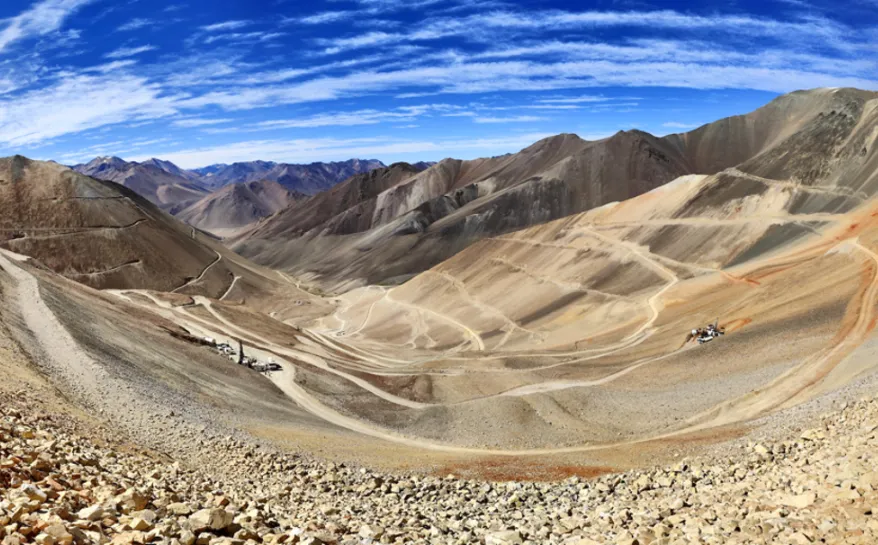
42:02 We'll also be looking at trying to evaluate upsizing the daily production and copper output with better metals and also looking at potentially integrating some of our additional satellite targets like Radio Porphyry and Altar North. So just quickly here to finish up my segment, the field season for the 2025-26 campaign is underway. We actually have 4 rigs currently being mobilized. I can tell you that we have 3 of them that are on site as of a day or so ago. These photos are within the last day or 2. Our teams are diligently working to remove the remnants of the snowfall from last year. They're busy building drill pads to get our campaign going.
42:51 We should be initiating drilling here, I'm guessing within the next week or so. Additional steps, We're going to be focused on some additional infill drilling to convert inferred resources to measured and indicated. As most people may know, or maybe some don't, in the PFS, you can only use measured and indicated resources. We want to try to bring as much of the infertile on so that we can use that in the PFS. We're also preparing to apply for inclusion under Argentina's RIGI benefits. We also plan to produce an updated mineral resource after we've completed the infill from this year's drilling campaign and that updated mineral resource, what will be used for the PFS.
43:39 And then we're going to be doing a lot of other things that are PFS related, geotechnical drilling, additional geotechnical work in some of the TSF facilities and a bunch of lab stuff, water well drilling, additional pump tests, continued environmental monitoring studies, and key also continued community engagement through our Berryell Community Outreach Office. So with that, I'll pass it off to John to conclude. Okay, great. Thanks, Kevin. Thanks, Adam. I'll make this quick so we save some room for questions here, but just revisiting the goals for the PEA, I think you can see what Adam and Kevin have presented is we've ticked off each one of these with a long life operation, a good average annual production over that period of time, and minimize that initial capex by staging it over time. Our total capex is in line with other similar operations. We've just staged it differently to make the project more attractive.
44:40 Keeping that footprint small, and then at the same time maximizing our NPV and IRR. All of this is designed for us to be able to have a project that can be easily permitted, rapidly permitted, and put into production quickly to capture this cycle that we're in right now and the very favorable investment conditions to begin to construct projects in Argentina. If we take a quick look at the timeline, Kevin's touched on most of this. The key things are we've just delivered the PEA and we've targeted the delivery of the pre-feasibility study as late 2026. That's a fairly aggressive timeline, but one of the reasons that we're allowed to envision a shorter period of time to get to pre-feasibility is that a high percentage of the mineralization that fits into the mine plan is already at measured and indicated.
45:33 Oftentimes, one of the biggest costs and biggest time factors that we have to move between a PEA and a pre-feas is that if you have predominantly inferred mineralization, you almost have to double your drill density to get to those higher resource categories. In this case, we do not have that. An important reminder to people that we've announced that we will be doing a spin-out of assets that we have, earlier stage exploration assets we have in northern Argentina. The new spin co will be called Centauri, led by Sam Leung. And that spin out and go public event will be during next year, probably around the mid part of next year coming out. We'll provide more information as we get the details on that going forward.
46:21 So I think just finalizing, as I mentioned earlier, there are a large number of people behind this effort. We're the faces that get to present the results that are here and get the credit that way. But really, this is based on fundamental hard work over years and years from our team. A shout out to the team. This is a portion of our team up on site. With that, I think we can open it up to questions and answers. We'll get as many as we can right now, but please lodge your questions and we'll find a way to get back to you. There are many avenues you can reach out to us directly if you'd like to. Awesome. I appreciate it. I looked at all the questions that came in over email. Many of them were actually covered already by the presentation, but if you do feel in the chat that they weren't covered, please do pipe up.
47:09 1, I know Kevin really just touched on it, but I think it might be worth a longer response. And that's, can Aldebaran apply for the RIGI, so the RIGI Argentina benefits with this PA and do you intend to? Great, thanks, Romeo. I'll take that one. Yes, it's very, we view RIGI as really one of the fundamental drivers of why we're seeing this explosion of Copper exploration and development activity in Argentina. The deadline for RIGGY applications is July of next year. It may be extended by 1-year, but we can't count on that. Based on these PEA results, we'll prepare a RIGGY application. We're working with a consulting group that has been instrumental in the preparation of successful RGGI applications for some of our peers and they are really on top of this. We have a strategy laid out to be able to submit from this PEA to be RGGI eligible by July of next year, get all of our work in on that. If it's extended, it would naturally be better for us to wait to a pre-feasibility study to have more details on it, but it's very important that we capture that quickly.
48:19 Great, I appreciate that extra context. 1 that came in over email, how long does Newton have to decide on the next payment of the option agreement? I'll cover that one as well. So the way this works is that when we deliver the 43-101 technical study, we've this press release and today's webinar presents the results of that. But when the report is ready to be delivered, that starts a time frame in which Realtor Newton has 20 business days after that to elect if they make their next option payment of $30 million. We are well underway on getting that 43-101 report. As most people know, We have 45 days to do that after announcing the results yesterday, but we anticipate that that will be filed within the next 2 weeks, hopefully even sooner than that, and that will start the clock ticking. I'd just like to point out that we don't know what Rio Tinto's decision on that will be right now, but we have a great working relationship. And I think we've laid out a pretty compelling case here that the Newton technology is a very viable alternative to go forward, both economically and particularly with some of the ESG type benefits that that presents moving forward.
49:32 So we're happy working with Rio Tinto and we very much hope that we'll be working with them in the future. And I think it's probably also important to point out that we're kicking off an aggressive program already now in anticipation of being able to work strongly throughout this year. Great, appreciate that. 1, it's just a well-liked comment in the chat that says election results are solid for mining companies in Argentina. I'll throw out to you as a question though, John, just for folks in the room who might not know, what happened in the Argentine midterms and what does it mean for mining companies working in your state? Okay, just really quickly on this. As most people know, President Malay was elected 2 years ago, and on a platform, more of a libertarian platform to dramatically change the investment and one of the aspects of what he's trying to change is to make it attractive for large foreign investments into a number of different industries into Argentina, not just mining. It's oil and gas and agriculture and other areas.
50:28 So we very much appreciate his efforts on that and that's allowed the conditions for this boom to be active. The rocks have always been right in Argentina. It just hasn't been attractive for the type of capital investment necessary to build the mines that are from the provinces that are there. So one of the critical things on this is we just hit the midterm elections and some of the steps that President Mele has taken to provide a better investment environment for us obviously produced results that we're very excited about as international companies looking in, but they've presented quite a bit of hard economic hardship for the average Argentinian citizen. Citizens have been backing Malay on this going forward, but this midterm was a real test to see how long their patience is. There's a lag between when he attracts our investment to come in when it actually produces jobs.
51:22 And so this was a critical test. And the fundamental results of this election were that he dramatically increased his party's presence in both of the diputadas, the House of Diputadas, as well as the Senate. And so he has a critical mass between his party representatives and Allied parties now to be able to continue to forward the changes that he wants to make for it. And that was not a guarantee. It was the opposition put up a pretty good case that maybe Argentinians wanted to return to the way things were. I think most Argentinians remembered what that was and decided they still wanna bet on these positive changes going forward. So very critical step for us and the results turned out much better than we anticipated.
52:07 So it's a green light. But now collectively, we all have a couple of years to get these mines in production and produce good jobs and demonstrate that this translates to tangible benefits for everyone, not just those that are making the investments. I appreciate that extra context, John. One person asked about a half hour ago, what's the impact of the lower yield? Adam, you want to? I'm not really sure I understand the question. What are they? Yeah, fair enough. If you want to clarify a bit in the comments, we might have time to get to it. But if not, I'll have them follow up with you afterwards, HM. There's one question. How many meters are you planning to drill in the upcoming season? Kevin, you want to do that? Yeah, right now, currently, we've got a plan that we'll probably do initial 10,000 meters and with an option to probably go to 20 or do a little over 20,000 meters.
53:04 So, fair bit of drilling, but that's not all just infill drilling. There's a fair bit of, like I mentioned in the presentation, a fair bit of geotechnical drilling that needs to be done where you need to drill water wells. There's a lot of stuff that goes on in getting the project ready to get to the PFS. I appreciate that. Mikael from the chat asks, are you committed to completing the PFS before a potential sale or would you consider a sale prior to that? Our strategy is to maximize the benefit for our shareholders. We've noted over the last few decades that kind of a sweet spot of balancing risk versus value on a project tends to be a pre-feasibility stage. You'd wonder why would interested parties allow us to go there if we're adding value to get there? It's because we're decreasing risk and they're trying to strike that balance between that.
53:59 We do see projects sometimes go earlier. Our first company with Antares Minerals, we were moving towards that Pre-Feasibility Study and at a PEA, it triggered a robust offer and we went forward with it. So, it's rather than picking a certain time, it's really advancing the project with good quality work, de-risking the project, interacting with interested parties, and if someone would like to have a discussion at a valuation that we find acceptable, then we'll make the decision at that time. Great, I appreciate that. There was a follow-up to the yield question. So what he's really asking is, what yield is the NPV and IRR break even between the 2 scenarios, between base and Newton? I'm still not sure I really understand the question. I would suggest the person reach out to us directly and we can probably have a follow up.
54:50 Sounds great. I'll connect you guys afterwards. One last question before I get to wrapping up. Karl asked, would the project be economically viable without Rigi? Yeah, I can answer that. The short answer is yes. The Rigi benefits obviously provide some additional value to the project, but it is financially stable under either the Rigi tax regime or under the previous tax regime. Awesome. Appreciate it. One question I'll throw to each of you just to wrap up today, we got about 2 minutes left. I'll start with John, what are you most excited for in the upcoming months at Aldebaran? What I'm most excited for is beyond the project itself, I'm excited for Argentina, because this is a fantastic opportunity for San Juan and all of Argentina to really, truly develop a mining industry. And we want to position this project to be one of the first ones in there. A couple projects nearby to us are a little bit ahead of us. And part of the reason that we're moving quickly and trying to provide a quick way to get a project in is to catch up and make sure we're catching this cycle. So this, a project like this has an opportunity to change so many people's lives and provide so many benefits. We focus on our shareholders and our employees, but it's really much beyond that. It's all stakeholders are in the project. So I'd love to see this one developed as soon as possible.
56:09 Great, Adam, I'll throw it to you and then I'll let Dr. Kevin close us off for today. But Adam, what are you most excited about? Just the continued de-risking of the project. I think there's a lot of value that we can still unlock on this asset. And, you know, we're our team is busy beavering away doing that. And I think, you know, the future is very bright when you factor in copper prices, the environmental or sorry, the political environment in Argentina. And, you know, we have a pretty good asset on our hands. So, yeah, the future is bright. Awesome. And Dr. Kevin, I'll throw it to you to close off for today's event. I'd just like to thank everybody for their attention today and for tuning in. And I think I've had a bit of a past track record of using some train analogies to describe the project. So, you know, I think back when we took the project over in 2018, you know, we were trading, I can't remember, but it was, you know, a lot lower than we are today.
57:01 And at each instance on these kind of webinars, I've encouraged people. I said, hey, like the trains leaving the station, you need to get on board. And there's still time to get on the train. I think A lot of the cheap economy tickets are gone, but there's still lots of room in premium economy. So I think that people should do your due diligence, have a look, but I think that we're certainly haven't done the full run here. And so I encourage people to, I'm quite excited as, and I share the sentiments of both John and Adam. Awesome. John, Adam, Dr. Kevin, thank you so much for a thorough presentation, but also running through audience questions. And there was quite a large crowd in the room today. I really appreciate you guys sticking through to the end.
57:49 The replay will be available in probably about an hour. Please do feel free to share it with anybody you think might find it interesting. But gentlemen, thank you