Automated transcript · Written by software from the replay's audio. It can mishear names and figures; the replay is the record.
25:11 from 1.75 billion pounds of Copper to 9.8 billion pounds of Copper. In terms of Gold, we've increased in the measured and indicated Gold ounces, we've increased by 48% from 3.4Moz to roughly 5.1Moz. In the inferred Gold ounces, we've increased 338%. And Silver, obviously, we've also significantly increased almost 143% in the measured and indicated categories, and almost over 900% in the inferred categories. The mineralization is still open in several directions, although it does tend to start to decrease in grade as we move out towards the outer edges of the mineralization and it is amenable to open pit mining.
26:14 This is the cut-off and some people are probably wondering, well, we said that we use the similar cut-off, which we did, $13.99 NSR per tonne cut-off, but the actual Copper equivalent cut-off has dropped now to 0.24, whereas in the 2021 resource, it was 0.3 Copper equivalent. And the main reason for that is because of the change of using slightly higher Copper, Gold and Silver metal prices to calculate this new resource. Therefore, the cutoff in terms of copper equivalent actually has dropped. But it's the reason why we picked this number was so that there would be an apples to apples comparison.
27:04 If we actually look at the resource using the break-even cut-off, which is roughly about a $5 NSR per ton or roughly 0.1 Copper equivalent, you can see that we dramatically increase the available tons in the measured, indicated and inferred categories, but we also decreased the grade by doing so because we're starting to include some of the more lower grade material out towards the edges of the deposit. This is a diagram that was put together by Desjardins Capital Markets, And basically it shows the current position now of Altar in terms of total contained copper in billions of pounds, copper equivalent pounds.
27:59 And we're not, this is a bit of a tricky diagram because we're not allowed to actually put this together, but this comes from a third party source. But you can see it's really one of the few ways that we can demonstrate where we sit relative to the other deposits that currently sit in the hands of juniors. And we've effectively moved up to the fifth largest copper project in the world held by a junior. And you can see a statement that was put out just a day or so ago, yesterday, I believe, from one of the analysts from Red Cloud Securities. Altar is one of the largest undeveloped copper gold deposits in the world, and we believe it should be sought after by major mining companies.
28:47 So Where are we at in terms of our field campaign? The field campaign is well underway. These are some of the high-level objectives. We're budgeted and approved for roughly 25,000m of drilling. That'll be diverse types of drilling, which I'll show in a minute. These 4 photographs actually show the 4 rigs that are really drilling as we speak right now. John mentioned that in the next day or so, we have a fifth rig showing up, and then we have an option to increase to add more rigs in the new year should we deem that necessary. The priority right now is to complete large diameter PQ drilling for our phase 2 Newton metallurgical test work. This is high priority because there's a long lead time.
29:38 Basically, what we're doing here is that we're in phase 1 test work right now where we're evaluating 1m high columns. We don't have any data or information back from that yet, but phase 2 would involve constructing 10m high columns that would simulate what a lift would look like in a real heap leach pad when it was constructed. And so we need a large volume of material to fill those 10 meter columns and therefore that's why we're drilling this PQ and that's why we're trying to get this as quickly to the folks at Rio Tinto Newton, because this test work will take time, and we hope to have these phase 2, or at least the in-flight phase 2 results to contribute to the PFS that will come out at the end of 2026.
30:37 We also will focus on converting some of the in-pit inferred resource blocks to indicated for the PFS. We just got this block model literally last week. And so this is work that's ongoing. And right now we're working on where we need to drill those infill holes. And most of that infill drilling will be starting probably in January after we finish these these PQ holes for Newton. We'll also be looking at whether there's some gaps or holes in the resource block model and again that planning is in progress. We'll also be looking at drilling waste conversion holes in any of the potential PEA, PFS, pit shell simulations that we've done in order to make sure that when we're heading to the PFS, that we're bringing along as much measured and indicated mineralization as we possibly can in order to have that fall into any kind of economic analysis and cash flow.
31:45 We do have to drill a select number of dedicated oriented geotechnical holes. This will be a requisite for the PFS and therefore it's important. And that's a bit of specialized drilling. So we will be doing some of those holes as well. And then we'll also be completing a fairly extensive program of downhole televiewer and sonic imaging, again for geotechnical program. These are to really understand what potential the pit walls will look like and what the structural framework is of any pit design, et cetera. And so this is again, very critical path information that we need to collect for the PFS.
32:32 We also will be completing a water pump test for pit dewatering and water balance studies. Again, an item that we definitely need for the PFS. And so we'll be completing that work as well. We think we can use, we've got existing water wells that we drilled over the last few years and we can use those to do this test work. And then obviously we're advancing on other PEA and PFS studies. So We're on schedule. I know that there are some that think that we never deliver on time. We've delivered the new updated resource when we said we would.
33:19 Now the next milestone is we've started the drilling as we forecast. The engineering, environmental and all those studies have also commenced. The next really important milestone will be the delivery of the PEA by the end of Q2, next year in 2025. And I'm pretty confident that we will hit that milestone. We've got much of the information, really the critical piece of the information that we're waiting on is the in-flight phase 1 Newton results. So That will be incorporated into the PEA. As part of the PEA, what we're looking to do is to look at 2 trade-off case studies. 1, a conventional concentrator with flotation, assuming arsenic penalties and marketing of a Copper con. The other one would be a Newton option where we're doing sulphide leaching and we're producing cathode in-country and marketing that cathode probably in-country as well.
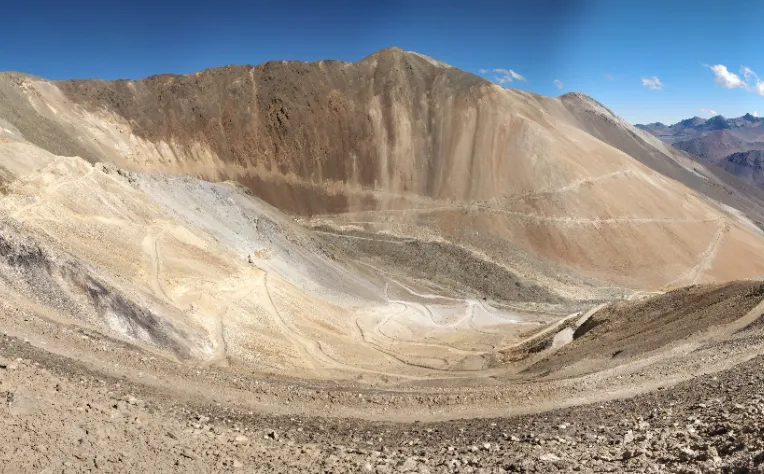
34:33 That would be the next real major milestone that people should be watching for. So Altar, I think everybody can see, is one of the largest undeveloped copper deposits in the world. It's gotten substantially bigger. It's still got room to grow, but at this stage, more mineralization we really don't need. We need to be focused on moving the mineralization we have towards more economic analysis to demonstrate that the deposit is economic. And we're clearly located in an emerging hotbed in Argentina for exploration and mining. And I think We're the right management team and we have the partners to execute on this plan.
35:22 So just in the final few slides here, what I wanted to try to show for, because I know a lot of you out there are investors, this is the Aldebaran stock chart over the last 4 years and up until yesterday. And you can see that we've had a pretty good chart compared to a lot of our peers in that we've been constantly kind of ticking up. And You can see just in the last little while here, we've had this pretty decent run-up in terms of us announcing that we signed this option agreement with Newton for them to earn into 20% of the project. And then obviously, the thing we're talking about today was the new updated mineral resource estimate.
36:14 One of the things that we constantly see or hear is, well, it looks like Old Moran's had its run-up, there isn't any more upside, therefore I've missed the train. What I want to try to put into context for you here, This is the stock chart from our previous company, Antares Minerals, over a 5-year term. You can see starting here in November of 2004 and went to the final sale of the company in 2010. And what you can see is that there is a lot of up and downs. At one point, we were up to almost $5 here. The global financial crisis came, we plummeted down to here to 37 cents, and then we slowly started to recover.
37:09 We put out an updated resource, not unlike what we've just been going through here today. And then quickly on the heels of that, put out a PEA, which wrapped the first mineral economics around this large resource that we had at the Hikera project. And that's when we started seeing the uptick to the point where First Quantum announced that they were going to acquire Antares minerals for $650 million. So what I want to show you is what I've done, what our guys have done here is overlay that same Aldebaran price chart that I just showed you over the same time period onto the Antares 1. And you can see this jump up in the share price that Aldebaran's had here in the last little while.
38:07 I think what I want to try to put into context here, as you can see, there's when we did the updated resource for the Hikera project back in 2009. Here's where we're delivering the resource for the Altar project in 2024. And the PEA is on the horizon here within the next 6 to 7 months. And so I think what the takeaway message here for me and for you is, cause I'm a shareholder like you are, is Aldebaran still has plenty of room to run up. And any idea that you might've say that you missed the train? No, the train's starting to leave the station, so you better get on board because I think that we may see a very similar chart here over the next months.
39:05 So in conclusion, I'd just like to once again, thank my exploration team in Argentina and all the hard work and effort that the teams put in to getting us to this major milestone over the last 7 years, without their hard work and dedication, we wouldn't be here talking about what I think is truly a significant deposit and that it's got bright future ahead. So with that, I'll turn it back to Romeo and we can open up for some questions. Awesome, thank you so much for the thorough presentation. Now, there's a couple of questions that came in over email. See, there's a lot of great questions in chat, so really appreciate it. We're just going to go through a couple of ones that came in on email first.
39:53 First one is who owns the NSRs on the property? I can pick that one up. There's a 1% NSR over the project that is held by Orion. That was an NSR that was originally generated in favor of Rio Tinto when they optioned the project to Peregrine Metals. Then it went through a series of different groups. And so it went to Orion and I just misspoke, it's that was subsequently acquired by a Cisco. So it's now held by a Cisco gold royalties of 1% NSR on the project. Also keep in mind the way things work in Argentina is the provincial government has an option for a Royalty on the project. That applies to all projects. But in terms of additional Royalties, 1% to Asisco Gold Royalties.
40:42 Great. Thank you. This one I think is for Kevin. Do you see a starter pit in the deposit? That's why it was, yes, we do. And that's why in most of these types of deposits, porphyry coppers, the first mineralization that you encounter is the supergene enrichment blanket. And That's why I pointed out that the grade is actually slightly higher in that zone than it is in the main hypogene zone. That's really important because that's the first material that will get mined. That's where a lot of our test work we're doing with Newton is focused on, because that's really where the early economics are critical for the deposit development. That's where any kind of pits are going to want to try to go after that material first, obviously, because it's closest to the surface.
41:37 That makes sense. There's one question about cutoff grade, but Kevin, I think you already tackled that. But if you do have additional questions, let me know in the chat. One question, can Rio increase their investment via Newton? Yes, that's the news that we just announced a few weeks ago, and I'd refer back to the webinar we did on that for more complete review of that. But Rio Tinto Newton has an option to acquire a 20% direct interest in the project by making a series of option payments. They've made the initial payment. The total sum of those option payments will be $250 million US to acquire a 20% interest with a final larger payment of that due upon completion of the pre-feasibility study. So the important aspect for us on this is that we receive a series of payments as we complete milestones in the project that are direct payments to us. They're not an equity placement, so it's non-dilutive in an equity sense to us. And that provides the funding we have to go forward. So on the charts that Kevin showed on the anticipated additional value added to the company as we clear critical stages on this, That has to be counterbalanced with issuing equity to fund a project typically.
42:51 The beauty of the announcement that we've just made with Rio Tinto Newton is we have access to that funding without having to issue additional shares. So that maximizes the value for our current shareholders, which is a pretty creative agreement that we put together. And it gives RealTundra Newton a pathway to acquire a 20% toll hold in the project moving forward and maintains our flexibility to attract other suitors for the remaining portion of the project. So it's a pretty creative deal that was put together and I'd make reference to the webinar we had where Adam Greening, our senior VP for CorpDev, walked everyone through the details on that a few weeks ago. Great, thank you. This is a combination of a couple of questions. A few people are finding it hard to find sellers. So I'll just pose it to you generally. How do new investors that want large positions buy shares?
43:39 Well, the principle thing is you have to go open market on it right now because we're not in a situation where we'd be doing a major financing certainly for the Altar project moving forward. And so having said that, we are well aware that a number of our new shareholders over the last year or 2 have created fairly substantial positions by just being patient and persistent in buying in the open market. And when we see a large run up like we've just seen now, we have a lot of shareholders that came in only a few years ago at 40 cents and that type of range. And so some of them will probably lighten up their positions and make some shares available. So our volume has increased over the past few months and it's a great time to be establishing a position now.
44:24 You'll have to be patient, but you have to get in the market to get it. Great. This one, somebody wants to wade into the grade versus scale debate. I'd be curious if you could elaborate, either one of you, on the importance of scale over grade for copper mining. Want to do that, Kevin? You can tackle that one if you want. I'll jump in if I have something intelligent to add. Okay. Well, what we're seeing overall in the porphyry copper space is that the average grade of large porphyries has been decreasing, notably, in existing mines and in the new mines that are being put into production. It's just the reality of where we are in copper exploration in the world. And so that's been countered by price increase, which also facilitates being able to exploit lower grade copper deposits.
45:14 But we can point to several analog deposits that are recently expanded or recently put into operation. If you take a look at something like Cobre Panama and exclude the issues, political issues associated with it, that's a large deposit that mines an average grade in the 0.3x range and was recently built at a fairly large capital cost and highly profitable due to the large volume that's run through it. Also, if you take a look at Cerro Verde or Quebrada Blanca, large deposits in Peru and Chile, those are multi-billion ton deposits, similar to what we're talking about, that are operating in quite low grades moving forward. And you counter that just by having very large volumes to be able to produce the copper.
46:01 So that's kind of the reality of projects. We would all love to have a higher grade project, but you compensate that by having a much larger volume. That makes sense. DB from the chat, we've already covered this, but I guess good to reiterate. How's the timeline for the PFS? The PFS is what we're stating is that the PFS we're aiming to deliver by the end of Q4 or during Q4 of 2026. Great, thank you. JMac wants to know if you're using the same drilling contractors in the past drill season. Right now we have 4 rigs and a fifth one coming. We do have 3 machines from Bort Longyear who drilled for us the last few campaigns.
46:52 We have 2 machines from Faraco, which is a new contractor for us. I can report that both are drilling quite well. The production rate is quite good. So far, so good. We are drilling the PQ and we're drilling down to, in some cases, 400m of PQ and in some other cases, we'll be going to 800 metres with PQ. So everything so far looks very good. And that's really, I think, the fruits of working with the contractor over the last few years to help them help us. Jared, that makes sense. Bill from the chat asks, is most of the current ongoing drilling primarily infill drilling?
47:42 As I stated in the presentation, up until Christmas, it will be focused on this large diameter core collection for the Newton test work. So metallurgical drilling in simple terms. And then after that, we will be focusing on infill drilling to fill in potential gaps that we have in the resource model where there are no blocks. There aren't a lot of those. Or trying to make sure that we convert as much of inferred material to indicated in those early pit shells in order that when we go to the PFS, we're bringing along as much of the mineralization as possible. So that's really what the primary focus is, but like I mentioned, there will also be some geotechnical drilling, a few probably holes for waste conversion drilling.
48:36 So it's a real mix of things here. Great. SJ from the chat has got 2 part questions. I'll tackle them kind of 1 at a time. I think they're both for Kevin. The first is, can you expand upon the smelter terms indicated in the most recent news release? He'd like to see a rough dissection of the arsenic penalties versus basic TCs. Yeah, that'll be coming out in the 43-101 report, which will come out in January. So have to wait till January to see the third party consultants IMCs report on the details of, but that'll all be outlined in the 43-101 report. Great. I might just add it's all benchmarked to industry standards.
49:22 So there won't be any surprises when that comes out. It's just, it's probably more detailed than we want to get into right here. Sure. As a Second part to that question, I want to know if the number is reflective of longer-term smelter terms or more near-term costs And if there's a large difference Probably probably in between on that it's we're certainly not taking advantage of it At times right now with the volatility in the Copper space, there are some extremely attractive terms that are available, but generally when we work with a contractor like IMC on this, they try to take a medium to long-term outlook on those. So We're not cutting the corners on those by any means at all. Great. And they actually are working with a lot of other clients that have arsenic concentrate.
50:13 So they're pretty switched on to what the real market conditions are, etc. One of the reasons Kevin highlighted the $3.75 that we used for a Copper price on that is we would be allowed, both by market regulation and also by our IMC, the group that's doing this, to use a higher Copper price. The current prices in the market would allow that, but we intentionally step that back down a little bit. And that's based on our experiences. As you might recall, our entire strategy as a company is to find a project like this, drill it out, de-risk it and sell it to a major. So if we use optimistic prices to inflate a resource or inflate an MPV and a PEA, that's not the way the majors would be evaluating us going forward. So we try to be conservative in that. I think you'll see that reflected in the treatment costs and arsenic panels that we use. The arsenic panels we use are directly from information from CRU on an industry-wide study. So we're using benchmarked information to industry standards.
51:17 Great, thanks. TBS, I know these kind of comparative questions are always tough, but he wants to know, how does Altar compare in size to Philadelphia? First, you'd have to tell me how big Philadelphia is. That information's not out there right now. The nature of that project is the drilling is way ahead of what's a reported resource is. So we can't really make a comment on that. I think they're both wonderfully large deposits and each have their pluses and minuses. It's a little not appropriate for us to make direct comparisons there on that. Phelo is very large, quite a bit higher than we are, quite a bit of arsenic associated with it. It has some other challenges, but it is certainly a spectacular deposit as evidenced by BHP's interest in that. Sure.
52:07 A contact from the chat asks, are you currently carrying out metallurgical tests on leaching using the Newton method? Yeah, again, as I actually mentioned in the talk, we currently have called small 1 meter columns running. Those were set up not that long ago, so we don't have any results and we wouldn't be allowed to report those results due to our confidentiality agreement with Newton. But the idea is that when we get the in-flight results, so that's somewhere not to the full end of the test work, but somewhere in the middle, that we will be trying to use that information as a guide towards using that in the PEA.
52:54 And so stay tuned. But right now, we don't even know what the results look like. But the work is ongoing right now. And the idea is to have those in-flight results in time to be incorporated in the PEA, which again I mentioned will come out at the end of Q2 2025. Great, thanks. Jacques from the chat asks, How much molybdenum do you have? Well, the overall resource, it's about 40 ppm. So that's not economically recoverable or not worth recovering. But having said that, the deeper portions of the ore body have significantly higher moly contents in the range of anywhere from 100 to 500 P, well, some places over a thousand PPM moly.
53:45 And so there is a scenario where potentially depending, and this is a lot of forward looking statement and what ifs and caveat it to the nth degree here, but there is a scenario where one could imagine that maybe early on you're leaching sulfides. And then as you get deeper, you might want to transition to a concentrator because there's a lot less Arsenic deeper in the ore body. So you potentially producing a better Copper con and there is substantial Moly down there. So you might want to put a MOLLE circuit in as well, but those are all pie in the sky, forward looking stuff. And frankly, I hope that's not our decision to be making.
54:31 Yeah, no, fair enough. J Mac asked in the chat, he notes that several of the larger projects held by juniors seem unlikely to be developed. So what makes all their difference? I guess the question. That's a good point. We do see some of the big deposits held by juniors and also held by majors that are fantastic deposits, but are held up for social or political or other reasons. Some of those situations may be resolved in the future and allowing those deposits to move forward, some are not. So when we look at a top 10 or 15 of most attractive copper projects to be developed, several of them are in the penalty box right now and off the market on this. One of the exciting things about Altar right now is I would argue Altar and other undeveloped projects in Argentina 4 or 5 years ago were probably in that situation as well, where they were great deposits, they were in some cases well known, but in a country that didn't have policies in place that made it attractive to develop that type of a project. And that's radically changed with the new Malay government. So we've now entered into a window where a new package of investment incentives have been put in place that have suddenly made Argentina, I wouldn't say much more attractive than other, but it's brought it up to the same level of investable attractiveness as other major mining companies or countries like Peru and Chile. And that's been a radical change. It's backed with international arbitration
56:03 protection and a number of other things that are making. It's clearly attractive to major companies. We've seen a number of major announcements since mid-year when that package of investment incentives were put in place. So that's what suddenly made Argentina not just a place that you can develop a mine, but probably one of the better places to think about developing a mine right now. So we were very fortunate. We didn't, I'd like to say we foresaw that when we decided to acquire this project in 2018. We did see changes moving in a more positive direction, but I don't think we envisioned it moving this quickly and this convincingly to the situation we're in right now. So this is a this kind of one of the elements of a perfect storm where we got a great discovery and a great deposit emerging in the right place where there's suddenly a change that allows companies to build mines quickly and in a way that guarantees they can get a return on their investment. So it's a it's a perfect setup for it right now. Awesome.
57:04 I got time for one more question before we throw it to the last words. But Stephen from the chat asks, what does the anticipated spend look like through all the way to PFS completion in 2026? We're still working on on the second year or 2 of that timeframe just mentioned, but this year we anticipate we'll spend about $25 million US on the project entirely. Keep in mind that we own 80% of the project, or we're just in the process of documenting the move to 80%. 20% of the project is held directly by Sabanye Stillwater, who we earned into the project from. And so they have the option to pay their 20% of that moving forward. So it's a 25 million US budget for this field season, of which if Sabanye elects to maintain their interest, would be 20 million US to us. With the Rio Tinto Newton agreement that we've announced that provides us with that funding. So we're in good shape for that.
57:59 And We would anticipate the spend would probably go up for the subsequent years we move towards the pre-feasibility. But I would, best guidance I can give right now would be say between 25 and 40 million US total for that second year of the project setting us up to be able to put out the pre-fees at the end of 2026. That funding from our perspective would also be available through our agreement with Rio Tinto Newton. Great, well, obviously this was a big news gentlemen, but I'll leave it to both of you for a last word before we jump to that. Kevin, I'll start with you if you don't mind. Yeah, just again, thank everyone for tuning in and asking some pretty insightful questions. And really, we're quite excited.
58:45 We kind of, I wouldn't say we want to just blow our own horn here, but really the story at Altar hasn't changed since 2018 when we first picked up the project. I think this is just the fruition and the tangible result of what we've been saying all along for the last 6 years. And so for us, it's kind of a little bit of, you know, pat ourselves on the back a little bit because there's a lot of hard work from the team that a lot of investors never see the sacrifice that goes in terms of people's family lives and the time they spend at the project and the miserable weather conditions sometimes. So a big shout out to all our team, because like I said earlier, without them, we wouldn't be where we are today.
59:36 Great. John, I'll throw it to you for a last word before we jump to that. Okay. Well, I think Kevin covered quite a lot of it there. It's really, this is on the, this is from the results of hard work from a team that's been very dedicated to this project. And it's not just 2017. Our team in Argentina has been with us since 2005 when we formed our initial company Antares. And they've put up with us patiently as at times we've been off in other countries with other ventures and they've stuck with us this whole time. So we've got a great team with a long history with us that have really put in a lot of extraordinary efforts to allow us to get to this point. And also, I think it's very important for us to acknowledge our strategic partners on the project going forward. Subbahna Stillwater has been very good from us from the start as we've earned into this project.
1:00:23 And they continue to monitor and have a toehold in the project. South 32 has come in over the last 2 years with some very well-received strategic placements that have helped us advance the project and they work closely with us in a technical sense of monitoring the project and moving forward. And then of course Rio Tinto Newton is helping out now evaluating their Newton leach technology to see if we can go forward the project but but very much providing us with guidance and do it so when we mention a budget we actually are well beyond that because we get quite a few benefits from all those strategic partners participating And then Route 1 is our principal shareholder, and they put the funding up for us and encouraged us to put our hands on this project when we saw it. So they've been very helpful as well.
1:01:13 And then Finally, a shout out to the people that have been supporting us, both our long-term shareholders, and we're seeing rotation into new shareholders coming in right now. And we welcome your input on the project moving forward and appreciate your patience. This sometimes takes us a little longer to get to where we want, but everything's coming together at the right time on this project right now. When we deliver a discovery like this, we need to be delivering it into a market that's receptive for it. That's what we're seeing. The obvious pinch point coming up for copper production is sometimes overlooked when we see a slight drop in the copper price or something like this, but we interact with a lot of the major companies and they're laser focused on making sure they have access to projects that they can develop in the not too distant future to fill that gap. So it's a pretty exciting time.
1:02:07 So thanks, everybody, for watching the story and sticking with it. And as Kevin pointed out in part of his presentation there, You haven't missed the boat. This is really just getting started right now. And there's a lot more fun to come up in the not too distant future on the project, too. So thanks, everybody. Awesome. John, Dr. Kevin, thank you so much. And thanks, everybody, for joining us. I hope you have a great rest of your day.