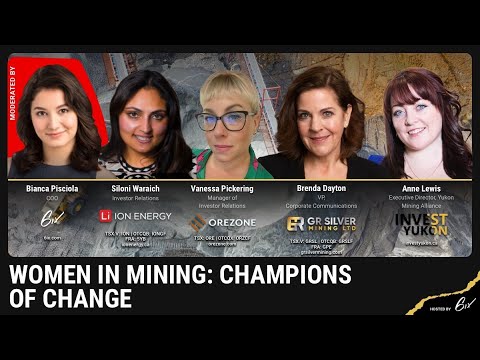
Automated transcript · Written by software from the replay's audio. It can mishear names and figures; the replay is the record.
24:10 adjustment as I've advanced in my career is that, you know, I do know what I'm talking about when I say I know what I'm talking about and I'm very quick to say I don't know anything about that or I don't know enough about that and I think women are pretty good at doing that and not taking too much liberty or too much credit where it shouldn't be and, you know, owning the opportunity to share your voice without the rationalization of the defending. And yeah, that's what I learned early on. I think one of the other things was, you know, know who your allies are. You know, it's really important, whether you call them mentors or allies or friends and in this industry I think a lot of us are more like family.
24:57 You can navigate a lot of challenging situations if you surround yourself with people that have got your back and that you can trust. And I would say that, you know, I didn't do it quite fast enough. I rolled it alone, you know, for the first few years. And then, like I said, I had people like Vanessa and Chris Donaldson and Liz and a few others really take me under the wing. But I also had just a really engaged board at UConn Mining Alliance, CEOs of companies who took a 23 year old on the road and entrusted me to get a lot done. So I just, I'm so grateful for those allies and family. I'll pass it over to Brenda. Well I think probably the mistake I made was that I didn't give myself enough credit.
25:49 I would sit quietly at the table because I was the only female and didn't believe that my voice had equal value. So it took some time And I'm sure that even today I still struggle with that on certain occasions. But just I didn't believe that I had enough experience or enough value to speak up. And I think probably the second mistake, and I work really hard not to make this now, is that I would not be as supportive to other women because I felt like I needed to keep my space. And that's a mistake. And so now I spend a lot of my energies helping other females in the industry learn and develop and come along.
26:36 I would hope that my peers would say this, but I tend to be very supportive of women in mining now. So as far as mistakes go, if we learn from them, then they're learning opportunities, they're opportunities for us to develop and grow. So hopefully I've taken those mistakes and done something positive with them. Yeah, it's so true. There is a sort of implicit understanding, especially in the early days, that there can only be one of us or so many of us and by raising other folks up, you might lose your spot. I think that's a really relatable feeling. I'll pass it over to you, Solani. Thanks Bianca. I think as a carryover from a theme that I had mentioned earlier, which is normalizing, embracing, owning, and that is really around diversity and femininity, and not just my own, but on behalf of women.
27:33 You know, one example on the diversity piece, you know, I was an elected official at a very young age and one of the first things that happened was we had to select, it's like any other board, subcommittee preferences. You know what was not on my list of preferences? Affirmative action committee. And that's what they used to call it. And guess what my first assignment was? Because I brought the youth card, I'm clearly not white, and I was female in a smaller community. Did I speak up and say I don't want that? No, I just smiled and took it, right? And, and yeah, I am. And but it was a token committee, and it was a token position, right? And on the femininity piece, I think that's really important and I know times are changing and I hope my mother is not on this webinar but I'm just gonna say it.
28:31 I have boobs. I have really big boobs and why is that relevant? For 2 reasons. When I was a senior executive networking, there were men that still showed no shame at events and had no problem checking it out while speaking to me and not looking at my eyes, A, and me not calling anybody out on that kind of landscape or environment. But the second piece is very practical, and I know others had brought this up in our pre-conversation. I can't wear a suit. It does not fit me properly. It doesn't look good. So when I was told when I was in a senior high profile role that for my headshots, I needed to put a suit on Or I needed to wear, you know, less flowery things and certain subdued colors Or something that wouldn't bring attraction to my femininity I don't think that's okay. And obviously the world has changed but I wish that I had you know basically said no that's not all right and I'm gonna continue to wear my bright pink dresses and my bright red lipstick and you know this is what I am I am a woman and proudly and this is how I want to dress. And each of us needs to embrace our identity and not try to be like what was the historical establishment.
29:59 Absolutely. Over to you, Vanessa. Oh, that was honestly, that was great, Sony. Just the whole idea of finding, when I started also you have to wear a suit. I didn't fit suits well, they didn't make them in my size. It was a whole part of image. And if you want to seat at the boardroom table, you have to look like you belong there. And it took me a long time, probably too long to find my style and to find my voice. Everyone knows that I'm, well a lot of people know that I'm sarcastic and humorous and using those as defense mechanisms even when, you know, another point I wrote down was staying places where I wasn't wanted or respected in terms of being at you know the old boys club, being out at receptions or anything and listening to you know kind of really off-color off-base comments and staying there and laughing it off because I didn't have my own personality because I was told that I had to conform.
31:09 And I think one of the things that I know is different about females joining the industry now and anyone joining in the industry now is that I think there's a just a lot more individuality to go around. So my biggest thing is staying where I wasn't wanted or respected and not speaking up soon enough because I didn't do myself any favors and I certainly didn't do any of the females around me or the females that came after me any favors. No lessons were taught. No, fair enough. I think it's really interesting because I think that coming into this industry we also take cues looking at who's surrounding us, the women and the men, about what's acceptable and what's tolerable and what is the correct behavior to succeed in this industry.
32:03 And the explicit and implicit understandings there I think take a lot of time to unlearn, certainly. I have another question for you folks But if it's okay with you guys, I'm thinking, why don't we jump to some of the submitted questions for now, and then we can save that one for the end. So we have a whole host of questions. I'll start with 1 submitted by Eric from GR Silver. He says, At a time when the industry and the demands on it are rapidly expanding, it's crazy not to tap into the deep pool of talent represented by this panel today. How do we help the industry recognize that opportunity and tap into that more? Example overcoming the imposter syndrome. You can see it's from Eric. I will throw it to Brenda to start.
32:51 How did I know that you're gonna do that? It's an interesting question and in fact Eric and I have actually spoken about this before. I'm a mother first obviously and raising 2 young strong independent women is a good start because my girls don't go into a boardroom with the same fears and concerns that I was raised with. So I think as the next generation starts developing, those women will present themselves differently than perhaps the women on this panel. And I think it is giving the opportunity to females, not just because they're female, but because they haven't been given the opportunity previously. And we've talked about this on our pre-call, just about the fact that being appointed to a board or being appointed in the management team because you're a female doesn't hit right. You want to be appointed because you're the best candidate and I think as we continue this growth pattern involving more females around the boardroom table it will just become a natural progression and it will not be you know oh we have to have 40% female otherwise we don't meet the criteria for this investor package or something. So I think it's a moment in time where we have the opportunity to both create leadership in the younger generation, but also to open our eyes and ensure that we're taking all the opportunities that
34:24 are presented. Absolutely. Any thoughts on your end, Anne? Yeah, I mean, I think imposter syndrome is something that all women feel, when, you know, I mean, a lot of the time, but also it really comes out in a male-dominated industry. I think one of the really biggest pieces for me was, and I would say this, it can be hard if that's always in a mentor-mentee dynamic. And so, I know that there's a lot of effort at the senior leadership table to look around and to build systems. But where I found a lot of my strength and got over a lot of that imposter syndrome was creating the network around me that would make a big deal. And I had a huge shift. So a few years in, I think I was a year or 2 in Yukon Mining Alliance and all of my time was being spent with the CEOs of the organization and you know they were amazing and the information I was able to grab from them was great but there was you know I was always pretty nervous and very respectful of the positions they had so you know it didn't leave me as much comfortability to ask questions.
35:43 But what did start to happen was the investor relations and corporate development people for those companies, I started looking to them. And we built this really just intangibly amazing crew that when we walked into a room at shows, people kind of knew who we were and that was the opportunity to go, you know, hey Vanessa, someone's asking me this question, you know, how do I approach that? Or, you know, Chris Donaldson or Liz Munger and that was really critical to jumping over the imposter syndrome pieces for me is having that safe place to ask tough questions, to ask awkward questions. You know, even like, you know, questions in the morning, back to Sloanie's comment about what we're wearing, you know, like how dressy are we? Like, you know, how high are your heels on this one?
36:37 You know, because we want that feminine power, but we also, you know, want to be really respectful of our positions. And we know that what we wear is going to be judged. And we can all say it doesn't matter, but we're intimately aware of it every single time. And so that power in numbers of knowing who the people are around you. And so I would say, if you're in a leadership position, Eric, or companies that are in leadership positions, make sure that the network is being supported at all levels throughout, and that people have an opportunity to build a culture where they can learn from someone that's just a step ahead of them and just a step below in coming up from them so that you've got that continuous feedback of support and upgrade. So that would kind of be where I would address imposter syndrome.
37:30 Yeah, go for it, Selani. Oh, no, Vanessa, you too, yeah, go for it. I was, yeah, find your allies, like Anne said, and we all said. Find your people and grow your group and be open and also don't you don't have to be I don't want to be a president or a CEO of a company that's just me and that's fine for me Find the people that have those skills, find the people that have the answers. Anne is very politically minded. Me, not so much. I can ask Anne about this. You don't have to, you don't have to be the master of everything.
38:17 Use your support systems, use your groups to gain knowledge so that you are coming from informed positions. People like to be leaned on and They love to help, I find, as soon as you ask the question. So don't silo yourself away. Use, like Eric who asked the question, he's one of my mentors in the industry. When I first started, he was a mining analyst at that time and he taught me how to speak to mining analysts, he and Michael Gray. And they took the time to teach this kid who had no idea, who came from the film and music industry to ask certain questions or to present certain information.
39:04 So use your, you know, use your groups, your crews, your allies for all sorts of things and lean on each other and I guess that's how you get over imposter syndrome and start to, you know, you're also, it goes back to Anne's point about publicizing yourself to to promote yourself you do that by getting people to know you and to provide information That's kind of what I think. My response is going to be obviously a continuation of the same theme. We know it. It's human nature. One of my good friends, who's also one of my best business development sources, had posted recently, surround yourself with women who had mentioned your name in a room full of opportunities.
39:55 But it's not just women, it's men. And in fact, it's ironic that Eric is the one that sent in that question because I had his name in my notes. I had the privilege of hosting, moderating a roundtable that he was a member of and I remember his words And we need more male leaders that are progressive, that have been out there publicly saying, we lack diversity, we need more, we're having a hard time recruiting and retaining, let's all work together to get there. But on a personal level, we need the male leadership, we need allies at every level. And it's not just about mentorship. It's not about background advice only. It's about sponsorship.
40:44 You need to surround yourself with people that are going to give you those opportunities which validate and will help you get over whatever fears we have which are natural. It's instinctual, very much so. Agreed. You know, It is funny that Eric was the one to ask this question because I don't think he even knows this, but a while ago, maybe almost a year and A02 years ago, when the summits at 6 were still kind of new, I actually hosted every single summit. You may remember that back in the day. Now I'm very grateful that we have Dasha and Kim hosting the majority of them. A special shout out to Dasha who's kind of seen something with this. But Eric was a panelist on a summit and I was still feeling very much the imposter syndrome of hosting these events with these experts and he was so tremendously kind and helpful and knowledgeable and I think meeting someone for the first time whether it's digital or in person and treating them as if they have the knowledge, the authority, that they're capable, I think is just the baseline and it helps create, I think, that feeling of confidence to overcome those feelings, that imposter syndrome. I think Eric played a role in that for me, certainly as did many others. So thank you for your question, Eric.
42:09 I'll pass it over to a question submitted by Jessica. And She's asking, what are some of the challenges you may have faced early in your mining career versus today, assuming these challenges have changed quite a bit? I'll start with Vanessa this time around. Challenges I faced, I feel like I've addressed some of them, but it's definitely being one of the only females in the room and kind of being treated as more of a secretary and less as a player on the team. And now I would like to say that the bosses that I've worked for, I mean the presidents and the CEOs that I've worked for, the male ones, they have never made me feel that way. It's people in other areas like in finance or wherever.
42:58 So That would be one of mine, I guess. Yeah. I have kind of a funny practical one. I got this question earlier this week. And Sometimes the challenges are just really practical things. And just owning them. And so, I remember it was one of my very first investor tours for Yukon Mining Alliance, 20 mining media analysts, investors come to the territory and tour around. So there's 20 guys, we're standing on an airfield, and we've been there a little while waiting for our charter plane, and you know, pretty easy for these guys to go and find their favorite tree and sort their business. And there's me, I'm 24, 25 year old, the only woman were above tree line. And so I had to just very honestly say like, you guys should check out that mountain range over there for a moment.
43:54 And, you know, turn the other way. And, you know, I just had to own the moment that being a woman in the industry at that second was different. And that it was fine. And it's, you know, it actually turned into a bit of a hilarious thing, because, you know, I ducked behind some jet fuel barrels that went off and they all turned around and wave and then I waved at them. But these are the things as a woman in mining, there are things that are different and it's fine. And owning some of those moments and just, you gotta laugh at yourself a little bit as well and recognize that you know not every there are there are differences and you can own some power in those pieces too and have a laugh at it. So it doesn't all have to be serious not all of these challenges are things that we're gonna address because it's just part of being a woman and that's kind of awesome and badass too. So yeah, Jessica, that would be one of mine.
44:59 I'll pass it over to you, Brenda. Well, I would say that the fact that there's more of us now and that we talk to 1 another, we share our experiences and our stories, I think that makes us better. When I first started, there wasn't the same number of women in mining. And so you felt solitary. And now I feel like I'm part of a community and I value that. And I think that makes me a better employee for my company. Over to you, Saloni. I think with any challenge or opportunity and professional growth, maturity plays a big role in that.
45:44 And so you know, some of the examples I already gave around experiences when I was younger and making it around why is this happening to me and why are people saying that and not doing anything about it, The big difference now is I feel that with all the opportunities I've had, that I have a sense of ownership in being part of the solution now. I look forward to a day where we don't need these panels, where it's not a big deal to have women in leadership and that the numbers, data speaks volumes. And so I look forward to that day, but we have a lot to talk about and a lot to do to get there.
46:30 And I just feel like a personal investment in making sure that I'm now part of the solution instead of just complaining about it. Absolutely. Speaking of that, that transformation, we have a question here from Daniela. She says, as this event is called, Women in Mining, Champions of Change, what transformative changes do you each hope to make within your companies? We'll start with, why don't we start with Brenda this time. What change would I like to see? Well, our company currently we have about 40% of our geologists are female in Mexico and our staff compliment overall is about 30% female.
47:17 I am currently the only female on the management team. So I think if I was to be able to grow that number, I would feel success and not for any other reason, but it would be nice to have some other like-minded females around the boardroom table. Do you mind if I jump in? Yeah, no I was gonna call Sina. I work for 3 sister companies based out of Mongolia. And I am proud to say the one that is operational and a producer, 60% of their management team, Step Gold, are women.
48:04 And I think that's fantastic. That being said, and with my purely governance and regulatory background, more women at the board level, very much so, right? And we need women at all decision-making levels in order for this to improve the state, and especially in a world, once again, where sustainability investor focus is on ESG, The G part of ESG is governance. Where are the diversity of perspectives around those boardroom tables? And so I will keep fighting that fight on a very company specific level. And they are receptive. That's why I'm still here. I'd like to think we all choose to be working with the same people that share the same values.
48:58 It's just going to take time getting there, and I hope it happens sooner than later. I was going to say that my company, I feel at home at any seat that I take at the table, I'm included. But in the industry at large, I would like to see at conferences especially, I would like to see more female speakers and representation. And I think that's a really big part that we can fill. And so that's what I would like to help change going forward because it's starting to make me mad to see very just old white guys speaking again.
49:49 And I have to say that. So that's what I hope to help affect change and to help mentor people that are females that would want to or have a place to speak at conferences as leaders that we look up to. Thanks Daniela for this question. I think there are so many different ways to do this. Inclusion is something that I have felt is at my core for a long time. It was the way I was raised. My parents were in the community all the time. So I was raised in very small towns, surrounded by the values and culture of Yukon First Nations and indigenous people.
50:44 I'm from the North and small towns. So inclusion and collaboration is a big piece of that and so for me, you know, Yukon Mining Alliance, it's a non-profit organization and it is supported by my company and like one of the biggest things that I've just really had the honor of doing is building an incredible team and you know the team of women that I have working with me, Lyneth Jansen, who's you know UComb Mining Alliances projects and membership manager. She's been in the industry only 2 years and she is just so passionate and so engaged and I absolutely love answering her questions and really challenging her to step up as well and creating space.
51:34 And you know, Bonnie Dixon, and then there's been some other new players. And I, you know, I make a pretty concentrated effort to look around the room and to see who's there and to see who could use a shout out, who could you throw a question to and create space for them to answer something. And you know you do have to be pretty intentional about it at this stage. We were talking about diversity quotients and people get really uncomfortable with diversity quotients and you know you can get into trouble with them for sure in terms of tokenism and putting people on on boards just for the sake of a fill in a checkbox But where there's opportunity in them is that what they do is they create and they almost force people to take that extra second, that sober second thought, and not just to grab the first 9 people around them, which are probably men.
52:36 And you know, when you do that, you notice someone else in the room. And in this case, you know, it could be a woman or it could be an Indigenous person or another minority, depending on where in the world you're looking. And so that I think is important from that perspective, but really making sure that you're recognizing those people's skills and creating that space, I think is a pretty exciting thing. And I think, Daniela, the most important thing is I think we are seeing transformative change. These panels are popping up all the time, and I think globally the world is talking about women and talking about inclusion and all of the people and the respect we need to have for diverse opinions. So I don't think it could be a more exciting time to take a step forward for the sector. And the sector, I think, is actually embracing it. So I think it's an exciting time.
53:34 I absolutely agree. Folks, we have so many questions. I'm so grateful for it. It was funny, we said in a tech check, this might not take the full hour and now I'm trying to figure out ways in which I can ask as many questions in the 6 or so minutes we have left. But I do see a few questions around education, so I'm going to try my best to combine the thoughts here. Mary Ann says, I've been following trends in education and I'm seeing low enrollment in geology in general in Canada, but this trend is really going to impact the proportion of women coming into the field. What would you say to young women students to encourage them to join the field of mining or geology and what makes it attractive for you? And simultaneously, we also have a similar question from Randy who says, what would you highlight to a classroom of grade 10 to 12 students who don't know about the careers and opportunities that exist?
54:22 This is a great question. There are so many opportunities. I didn't know that the growing up in Winnipeg I didn't excuse me I didn't know that mining wasn't an option. I didn't even know about the industry. I know that I learned about geology in school but that's all I knew. Sorry, I didn't know that there was everything from being in the field, being technical, being at a mine, being an operator, being in communications, being a lawyer. There are so many, there are so many different ways to be in mining and I think that there there are so many opportunities and it's not just what you think going out into the field. That's one part of it, a very huge part of it, but there's finance and there's so many suppliers that work with mining.
55:19 I think that we feed a lot of mouths from our industry and we get to see a lot of the world and if you have that traveling spirit or you want to grow your group nationally, globally, looking at mining is a great career. I wish I had known about it when I was younger. I'm crazy passionate about this particular topic. This is the whole reason UConn Women in Mining started. For us, it was this huge education gap in terms of talking about mining and in terms of talking about industry in the private sector. For a very long time, we have promoted some very specific careers, doctors, lawyers, teachers, nurses, and, you know, promoting business, promoting industries, sharing that information with youth, and just being really passionate about why you do the work that you do. We have this big shift, a generational shift, and you don't go to work from 9 to 5 to go to work from 9 to 5 for 20 years.
56:33 People are chasing dreams and they are just wildly passionate and so you know tapping into that and sharing that passion I think is a really key part of this. I do think that there is some ownership that governments need to take in addressing curriculum gaps. We need to be training youth for the future right now and probably yesterday. You know, people need to know about budget and finance and credit and, you know, that entrepreneurship and those spaces. And when you create space for people to understand that there's more choice there, we will naturally drive more people into mining. And talking about how diverse it is, Mining quite often is still the underground miner and the geologist who are exceptionally important.
57:22 But there are over, I think we counted, you know, 1 day 162 jobs or something that we could come up with in an hour and a half lunch. And so there's a lot of careers, there's a lot of choices. And there is a responsibility on industry to reach out into communities and their partners to share that. There's a huge responsibility, government needs to pick up that mantle in a much bigger way. And I think the media needs to be a little bit more honest and balanced in its presentation of the industry. We've got some legacy issues, but we've had some big, big strides. Canada is a global leader in regulation, in collaboration, in inclusion. We are near the top in this game. We got a long way to go, but I think the media needs to get a lot more honest about where we are today and and that will attract more women as well. So, yeah, those would be the education pieces, but you could do a whole thing on this one, Bianca.
58:23 I'm going to jump in. I mean, 1 on Anne's comment about change in education and coming from the home building industry, there's a serious shortage of trades. And you know, the home builders and government associations are trying to get into high schools to say you can have amazing careers. So it is incumbent on the sector to raise that profile and to show that opportunity. From a personal perspective, I think, not I think, the reason why I have continued and I enjoy it is the global. There is such international scope, I never thought that I would be learning and talking about Mongolia as an investment jurisdiction.
59:10 For youth coming into this, no matter what their specific subject matter expertise, the fact that you get to work on world-class assets with business leaders around the world, and then there's the sustainability piece to motivate you and your own value proposition. What you get to do is helping local economies and help local talent not just be sustainable but thrive. I think what I would say is that There's so many opportunities in our world, in our mining space, for growth, development, and it behooves all of us to make people aware of what we do so that they have the opportunity to choose mining as a career option.
1:00:05 Folks, there's so much more we could go into and we still have some unanswered questions in the chat. Kimberly, who wanted to know about how this impacts women internationally, Juan looking at other industries, and Paloma asking how we can do more panels like this. I think they're all excellent questions and I do look forward to addressing them at a future date. But I would like to leave us with one thought. What final words of advice would you give to the future women leaders in the mining sector? What would you tell them? I would love to start with Anne, if possible. Dawn, I was hoping to hear the other words to be inspired. Thanks, Bianca. What would I tell the next generation of women leaders?
1:00:54 That the space is there for you to step into, and that people are primed for you to be there and try. And then make mistakes, mess it up, surround yourself with people to pick you up that you can trust, and do it again. I just think the opportunity for growth and change and transformation is here. And so if you are in any way contemplating a move or a change, whether that's, you know, just asking for a raise or a shift in your organization, a shift in sectors, or jump to the leadership spot, take the shot. You know, people are dying for you to take the shot.
1:01:42 And there are people that will catch it. If you miss this one, you can jump on the next one. So yeah, that would, I guess that would be my advice. So I think there are a couple of things here. And we have talked about some of the solutions for sure. But I think that there's one piece that's really important. First of all, I would say to the new entrants, don't be intimidated by a very male dominated sector. There is room for you, there is room for lots. That's my observation. But the second part is once you have made it, once you are a leader yourself, it's not enough to show that and be that role model passively.
1:02:32 It's great to mentor and sponsor, but I think we all need to take it to the furthest level, which is around decision making. Have we improved the policies to make the framework better? Have we improved the transparency around pay and the pay gap? Have we improved the policy around making it easier to retain women and attract new talent? Have we improved the policy around transparently posting new opportunities in a variety of places and not just passively on our own website just to say that we did. I think there's so much more we can do on the policy level to influence real change. I think I would say be fearless.
1:03:20 You know we've talked all throughout the panel today about all the different opportunities that have been presented to us and that will be presented to future recipients of being employed in this industry but walk in with confidence and be fearless. I like what Saloni said about don't be intimidated and Brenda, be fearless. And I trust that you belong. You belong in this industry. You belong in any part of this industry. I would say that one thing that I've learned, especially because it's been COVID for the past few years, don't stop mentoring, don't stop growing your group, your allies, mentor and be mentored.
1:04:08 That's what I would say. I want to thank each and every one of you, Vanessa and Brenda, Saloni. I feel so grateful to be able to moderate this discussion in the same way that I felt so tremendously grateful when I entered into this industry to meet and be able to make such tremendous friends and the warm welcoming energy and aura that you folks put off is just so evident. I'm looking forward to the next one in May, but in the meantime, thank you all, thank you