Automated transcript · Written by software from the replay's audio. It can mishear names and figures; the replay is the record.
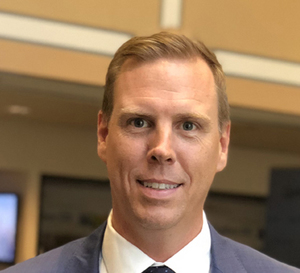
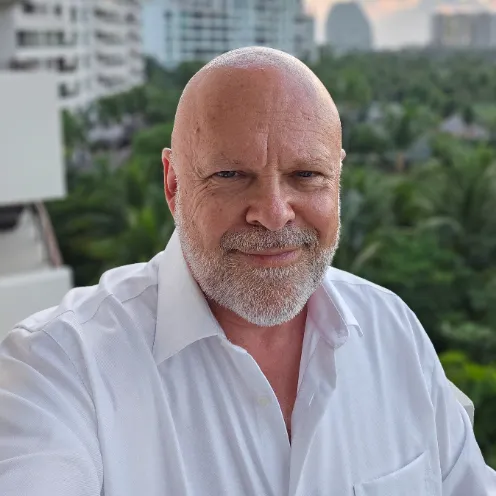
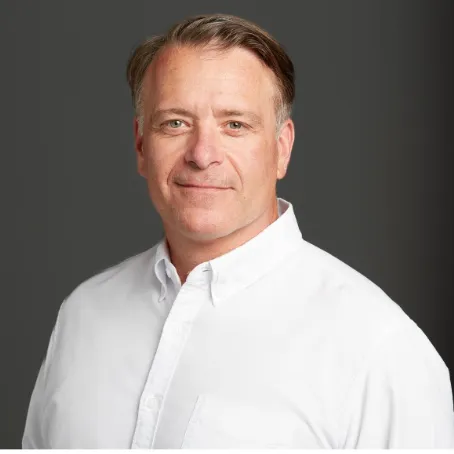
0:07 Hello everyone and thank you for joining us. Today we have Graham Downs, President and CEO of Cascadia Minerals, Eric Zonschwerb, President and CEO at GRSilver, and Anthony Marguerite, president and CEO at K2 Gold. All of these companies are currently running drove programs in the thousands of meters, which is exciting, but can pose some unique challenges compared to a smaller, say, 2,000 meter program. Before we begin, just a quick note that this event is being recorded and will be available for replay shortly after we conclude. And as we wrap up today, a meeting request pop up will appear. If you join for 1 company but found yourself interested in another, feel free to select on 1 or multiple companies you'd like to connect with. And I'll be sure to pass along that information to the respective teams.
0:52 With that said, let's get started. Gentlemen, welcome. I think what makes the most sense is for people tuning in for a specific company and may not be aware of the other 2 on the call. Why don't we just take a quick moment to hear an elevator pitch from each of you to build a good foundation for this call. Graham, we'll start with you. Thanks so much, Kyle. Cascadia, we worked up in the Yukon and we acquired a Copper Gold deposit almost exactly a year ago. It's in central Yukon. It's on a road and it's got 36Mt, which gives us 650Mt of Copper and over 300,000oz of Gold at over 1% Copper equivalent. Thank you. And Anthony, tell us about K2 Gold.
1:39 K2 Gold, our flagship project is a Mojave project based in Inyo County, California. A highlight hole from earlier drilling was 86.9m at 4g and we just put out some news last week with our highlight intercept of 39.6m at 5.35g per ton. It's a 6.5km long oxide Gold trend, but that's just one piece of the puzzle. It's a large property, over 6,000 hectares and hosts 3 very interesting targets. It's a true polymetallic system. Great to be back drilling on the property and look forward to pumping out a lot more results over the next couple of weeks. Over to you, Eric. Thanks Kyle. GR Silver is active on its Flomosis high-grade Silver project in Sinaloa, Mexico.
2:29 We currently have a resource of 67Moz Silver, about 134Moz Silver. And our drill program is targeting a significant expansion on that number. We have infrastructure road into the project and a foremine, the Palmosas Mine that was in operation from 1986 to 2000 and has 7.4 kilometers of underground development. So I have this call laid out where I'm going to ask you a bunch of company specific questions, but there are a couple of group questions I want to address. And one of them is this one right now that I'll have Eric answer first. But each of you is running one of the largest drill programs in your company's history, all fully funded. In this market, what convinced you that now is the time to go big rather than drill a little more conservatively?
3:24 Yes. So from April 2025 until January 26, Silver ran from below US$30 per ounce to over US$115 per ounce. It's a gain of almost 300%. And over that same time period, GR Silver ran from a low of $0.11 to hit $0.75, a gain of almost 600%. So investors appear to like that kind of leverage to Silver and the company was able to raise $33M in the latter half of 2025, largely for the purpose of resource expansion drilling. We continue to be firm believers in the significant resource potential of that Pumos project and the markets allowed us to crystallize that potential. Now is the time. Anthony, same question for you. Why was it now the right time to go big with the drill program?
4:11 We've been working towards this point for a number of years. We had great results from 2020-2021 drill program. We're on 100% federal land here. We moved up to an environmental impact statement level of permitting, so 1 level below a permit to mine. That took a number of years to get through. We got through that. And our strategy along the way was as we were financing the company, we were issuing 10 to 15 cent financings. We were issuing warrants at 30 cents. Our belief was as we got closer to acquiring the permit to go back to work at Mojave, our share price would reflect that. Thankfully it did. We brought in just shy of $14M in warrants late 2025 and in early 2026 this year, set out to raise $15M for this drill program that we've been working on and developing the targets while we were permitting.
5:05 We were able to upsize that to over $25M. The market's been waiting for this follow-up drill program. We believe Mojave's potential to be a world-class deposit here. We need to get drilling, get the data points and build this resource out. Great. Thank you. And over to you, Graham. I think it just stems from the, we identified this Carmax Copper Gold deposit last year, and then we merged with Granite Creek Copper in our due diligence. We were firm believers that we could make this bigger. The Carmax Copper deposit kind of languished for years because previous operators went at it in the wrong direction. And then just the markets were awful for a really long time. So there was really no, it never had big programs to really make it bigger. And that's why we're here.
5:57 And we purchased it last year, got in last fall, did a small program, 10 of the 11 holes hit last fall and we were like, this is good. And we were proving up our thesis and we couldn't get in there any faster. We wanted to just get after it. And that's why, Because it took 44,000m historical drilling to get that resource of 36Mt. We're going to be doing almost half of that again between last year and this year, and we want to do it again next year. It just shows you that the more drilling you do, you can make this bigger. And we're continuing to prove that just with our results so far this year. So now is the time. Obviously, I know all your listeners know that the price of Copper has gone up, Silver and Gold. I mean, It's just the right time.
6:47 And to be honest with all the work I've done up in the Yukon, when you have bigger programs, you usually get pleasantly surprised and you have the ability to do more drilling and test more things and find more deposits. And that's important for us because we own almost half the Minto Copper belt and then there's Seltzer Copper mines up to the north of us that's going to be making a construction decision soon. So now is the time. It's great. Sticking with you, Graham, you and I have talked about this at length on previous events, but for people new to the Cascadia story, much of the historic drilling at Carmack has chased Oxide and you've been focused on the Sulfides for the better recovery profile. Why is that Sulfide story the one you want shareholders paying attention to this season?
7:34 Well, I think that's the opportunity for anybody that's new to stories. Previous operators, like I said, were just going over after this thin veneer of oxide for years, and then we were in down markets. But to the credit of the previous Granite Creek operators, they were turning this thing around and looking at a more conventional, the metallurgy on the sulphide is very good. It runs 92% to 95%. And It's just spectacular. Back in the day, they would drill through the oxide and then once they hit the sulphide, they're like, we'll stop. And it just blows your mind now. But at the time, they were thinking about just going after the oxide. So each one of the 3 zones that make up the deposit, you see all these historical holes have stopped in Sulphide. And all we're doing is going back in there and just going underneath them and along strike and just building that Sulphide.
8:26 It looks like we'll be able to build that Sulphide resource. And we're looking to double that resource. And most of that is going to be Sulphide that we're targeting. Thank you. Over to you, Anthony. Your first athletes from Dragonfly came back strong with hole 20 returning nearly 40m of 5.35g per tonne Gold and a dozen holes still pending. With mineralization now confirmed over roughly 400 meters of strike and open in several directions, how are these early results shaping where you point the rigs next? Well, we had a pretty firm plan from the beginning on where our paths were set and what we were targeting from previous drilling. But I guess one part of the answer to that question is, you know, the way we have our system set up right now, the core that's drilled today, we have XRF data on by morning.
9:17 There's a strong Pathfinder Association we've identified and confirmed with our drilling, and it's allowing us to basically call audibles as we're drilling and seeing the results come in on, you know, do we change the azimuth on a falling hole? We're drilling multiple holes off of each pad, so 3 to 4 holes off of each drill pad. So kind of like a fan style of targeting, but it's allowing us to change the azimuth, target the structures better. I think that's a big piece of it. The other part is we really just need more data and more information on this Eastside Gold trend that we're targeting right now and building it out. Early results are good. We're liking what we're seeing in all of the drill holes so far, and it's just a matter of getting through this first phase.
10:07 Out of the 14,000 meters we're drilling, our strategy was we'll drill 5,000 meters from the north end to the south end at selected targets, make sure that we understand the geometry of the structures we're targeting. And, you know, we didn't want to go drill 14,000 meters, get the assays back and say, geez, I wish we would have switched the azimuth or dip on some of these holes. So, yeah, we've got flexibility built into the system and so far it's looking great. Eric, Hole SMS26-4 came back at 45.1m at 1,623g per tonne silver, including a section over 8,500g per tonne. Described as your best ever at San Marcial, how does a result like that reshape your thinking on where the highest grade parts of the system sit?
10:58 Yeah, that whole SMS 2604 confirmed our geological model that the northeasterly faults cross-cutting the northwesterly hydrothermal breccia in this area of San Marcial are creating these wide dilation zones into which there are multiple pulses of fluids that have deposited high grades of Silver. So naturally our program is pivoting to further to define these high-grade dilation zones. Now it's important to note that we have only touched about 20% of the periphery of the central intrusive zone that appears to be driving the system. So our future drill programs will certainly test other portions of that periphery. And your team has started pointing toward a possible porphyry at depth with Gold enrichment and Copper moly signatures.
11:46 How do you weigh chasing that bigger geological story against the near-term job of growing the Silver resources? As I mentioned earlier, there's this central intrusive that appears to be the main driver of the mineralized system at San Marcial. We've noted other metals in zonation related to that intrusive, including elevated gold, copper and moly at surface. So our current program will include some holes to test these anomalies at depth. That said, testing a potential porphyry target demands a larger scale drill program as 1 maps the alteration to vector in towards economic or potentially economic mineralization. So from our perspective, the low-hanging fruit at Saint-Marciel is the high-grade Silver-rich dilation zones.
12:32 Apart from several reconnaissance holes into the potential porphyry, as part of the current program, it's more cost-effective to focus on those Silver targets. Historically, we've discovered Silver for US$0.12 per ounce, which is a pretty good value proposition. No, definitely. Anthony, you're running a 14,000 meter program along the Eastside Gold trend at Mojave. Lots of drill meters, but it also stretches more than 6.5 kilometers and carries several targets beyond Dragonfly. As the rigs have turned the season, what else across that trend has caught your attention and where do you see the most upside? Well, I'll step back a bit from that because Eastside Gold Trend is just one of the targets on the property. And within that with the drill program running, it's giving us the opportunity to operate in tandem of the largest field surface program we've ever undertaken on the property.
13:33 So from Dragonfly up north, so it's a kilometer and a half up to another target we identified about a year ago called Gold Valley, where we've got outcrop samples up to 375 grams per ton gold in outcrop. So doing a lot of surface work right now to connect the Gold Valley target back down to Dragonfly. We're confident that this is all structurally related. The conglomerate Mesa fault system is the main fault system that controlled the mineralization on that Eastside Gold trend. We're mapping that out, sampling along the way and generating targets for future drilling as well to the southeast of that trend. The southern extent of it is the Newmont zone that's been drilled. That's where we've moved the drill down to just recently.
14:21 East of that is the Flores target. When Chris Taylor held the Mojave Project in Great Bear in the early days, he dug a 43m trench that ran 3.78g per tonne gold. We spent a lot of time in that area generating targets and it's looking very, very interesting. It's higher grade than what we see at surface at Newmont, very similar to what we see at Dragonfly. But Also yesterday we put out news on surface sampling up at the Morningstar target area, which is a very interesting area. We kind of get into the polymetallic side of the system there. It's more SCAR and CRD style mineralization. And fantastic results up there over 2700 grams per tonne silver with more than 3 grams per tonne gold and close to 3% copper all in the same rock sample.
15:08 So super high grade and the story there is up in the northwest corner of the property just outside of our property boundaries but directly adjacent to it was a historic Cerro Gordo silver mine. It was one of the largest silver producers in the history of California. It just really proves the intensity of this system. It is a large system with a number of different target areas on that. To answer your question, a lot of surface work generating future drill targets, both at Morningstar and the Staggit target area, as well as on the Eastside Gold trend. Graham, this month you released to the market step-out holes pushed zone 2000S Sulfide mineralization roughly 250m north towards zone 147. As you fill in that gap between the zones, how much room do you see to materially grow the CarMax resource?
16:02 Thanks. I think that's one of the biggest accomplishments we've made. And, you know, I invite your viewers to take a look at the, at our PowerPoint presentation, and you'll notice that it's the deposit is made up of 3 zones. There's the 2000 S, which is the center zone. That's the newest zone that's been found. That zone is in the resource, but it's actually not in the PEA. So it's really important for us to be able to make that bigger. And if we can connect the 2000S and 147 zones, We've almost already doubled the strike length of the 2000S zone and that's pretty much just on 1 kind of piercement level. There is a ton of real estate up dip and down dip. I personally, there's a lot, we need to do a lot more drilling in that area alone.
16:52 We've tested the 147, you know, we've expanded that as well, but just with the success we're having now, we're going to stick around the 2000 S zone. We'll go up to the 1213 as well. They just haven't done any deep drilling there. And same with 2000S. So there's a lot of room in there that we think we can make this bigger. One of our last holes in the step-out holes was 52m of over 1% Copper. That's not even equivalent. And we're seeing a bit of a pickup in Gold grades there as well. And we've also publicly said that we've extended it further out on some of the holes that are pending here. So We have a lot of real estate out there, a lot of room to make this bigger. Unfortunately, I don't think we'll be able to get to it all this year, but we'll be getting ready to advance this further next year.
17:44 Really exciting stuff. Stay tuned for results from there. We've been talking about the potential and the logic behind your drill programs, but I want to pose a couple of questions to the group. With rigs turning at a steady stream of assays on the way, how do you keep shareholders engaged through the quiet stretches between results without overselling any single hole? And I'll call on you, Graham, for answering. Well, you know, we're drilling a lot. I mean, thankfully the cadence of our news is actually coming out now every 2-3 weeks. There's actually quite a bit of news coming out, so that's important. We are working on other things. You can look at our news releases.
18:31 We're also, one of the good things about our project, and we don't have the news flow yet, but it's 180 square kilometres. It's a very large project. There's a lot of other areas that we're working on other than just the drill results that we have there. We have a lot of other targets that have never been followed up in recent years. We can fill in the news gap there. Unrelated to the Carmex Copper deposit, we have a strategic alliance with Agnico, who just took a large position in our company a couple of months ago on a separate thing. We should be able to have some news out on that as well. So we actually have a lot going on and we just wanna keep getting the news flow out on all of these different pieces. Anthony, you wanna talk about any quiet periods? How do you not oversell any holes and keep engagement through those slower periods?
19:23 Yeah, I think we're really happy with the performance of our lab, contrary to a lot of other groups out there. Right now, our lab's over-performing. So I guess similar to what Graham said, we're expecting assay results and being able to turn them around in a news release roughly every 2 weeks. But I guess I feel like I keep saying the same thing, but we've got a tremendous number of targets that need work to generate the data to get us to drill ready stage on those. As we're drilling, we're continuing our surface field work and geophysics sampling, mapping, prospecting, and just continue to generate new targets. In the release we dropped yesterday, we identified a new target area where we've got surface samples grading up to 23% copper.
20:15 The more work we do, the more we explore, the more we find it seems. A lot of work to be done in front of us, but a lot of great results coming out on the back end of it. I'll try and extract a different answer out of you then and I'll be a little more direct. What are the biggest challenges in executing a large drill program? To me? Yeah. Yeah, well, logistics, obviously. You know, we're operating on the west side of Death Valley, about 12 miles west of Death Valley, so it's hot. Our average temperature down there has been 39 degrees. Crews are persevering through it, but that's always a challenge from the health and safety perspective. Thankfully, everything's been going smooth to this point. And I think resources are challenging for everyone right now, whether they're human resources or acquiring more drills. You know, we're actively going through the motions of bringing a second drill into the mix here.
21:14 And there's, you know, The downtimes in our industry really crush a lot of companies out there and the service providers that go along with it, as well as the human resources that you really need. There's a lot of drills out there, but having competent, qualified crews operating them is a key. There are only so many different styles of drills, but there's many different drillers. Finding the right people is probably all of our biggest challenge right now. Even from the geologist perspective, there's not a lot of geos out there with a lot of experience. The ups and downs in our industry really seem to clean things out and the younger people, you look at geology, you look at geology departments and universities right now and the graduate numbers coming out of them, they're not huge. So, and It takes a while to get the experience under your belt to really know what you're doing.
22:06 I think that's been our biggest challenge for sure. Eric, would you share the sentiment for those biggest challenges or is there something even more challenging to overcome for you? Absolutely. I mean, there's always challenges in executing any drill program. At GR Silver, we've had several challenges to overcome since starting, including a loss at the end of March of the company's founder and guiding light, Marcio Fonseca. Since then, we've had security challenges, not enough water, too much water, equipment, parts and crew availability, all resulting in a pace that's slower than we anticipated. So despite those challenges, our fantastic field team has been able to complete over 6,000m of our planned 20,000m of drilling. They've delivered some excellent world-class results and we anticipate solid news flow through to the end of the year.
23:08 I think Anthony and Eric absolutely nailed it. It's really the people. Anthony said it right, finding the drillers, good drillers is the tough part. We're very fortunate having worked, my whole career has been up in Yukon, so we know and we've worked with a lot of drill companies, so we get a little bit of favour. But even then, all of our drillers are from South America, believe it. And the drilling companies are just hustling, trying to get visas and get these people from South America to come up and run their drills. Kewanee Drilling, who is Whitehorse based, believe it or not, they do most of their drilling in South America and around the world. So, and they're just having a really hard time. So we have to make small sacrifices here and there, but we're fortunate with all of our connections at Yukon that we've been able to make it work. And we started really early as well. So, but yeah, it's people. It really is people.
24:07 One more question for each of you, company specific. And I do see some in the chat, so we can look at those in a minute here. But sticking with you, Graham, this year's 15,000 metre program is your largest yet, and you're running baseline environmental engineering and metallurgical studies alongside it. How are you balancing resource growth with getting Carmax ready for a development decision? It's pretty straightforward, to be honest with you. This is actually the largest real program in the last 20 years, believe it or not. It's just wild. We want to do about the same or more next year. Balancing all the other work is very important. We're fortunate to have a really good team here that can kind of get those things started. We're actually looking to bring somebody else on to drive some of those studies, but you need to get those started early.
24:55 Also, fortunately, a lot of this work had been done because they were moving this project to permitting before, So it's really just about restarting them. It's just being organized. We know all of the service providers in Yukon from previous deposits that we were advancing through to PEA and resources. So It's not too bad. You just kind of have to be on top of it and having our experience of going through it, it's not that big of a deal. And Eric, you flagged a mineral resource estimate update for the second half of this year and historically at a down, it's very low cost per ounce. It would be said 12 cents. What do you most want the market to take away from that update? As we've said previously, we've had challenges with our pace of drilling. Everything's been done with the safety and security of our employees and contractors in mind. So consequently, we've shifted our expectations for a conclusion to our drill program into 2027.
25:55 So upon conclusion of that drill program, we can complete the work being done on our mineral resource estimate update. We believe that the Plymosis project has the potential to host a very significant district-scale mineralized system centered at St. Marcelle. And that drill program is expected to expand our mineral inventory substantially. And that inventory will have been built at a very attractive cost benefiting from high average grades and thicknesses. Then after the mineral resource update, we're looking to then bring in an integrated PEA that brings the whole thing together and puts a valuation on the project. Anthony, last question for you and then we can get into some Q&A here. This is the largest drill program K2 has ever undertaken at Mojave.
26:47 Beyond the individual high-grade intercepts, what are the key geological questions you're trying to answer this season and what would a successful program mean for the project? I guess the main thing that we're, The first thing we're really trying to nail down is the geometry of the structure. In the south end, they're more flat-lying, dipping at about 30 degrees, but as we move north from Newmont up to Dragonfly, the structures tilt up vertically. As we step out into new ground and into areas that haven't been drilled before, we're learning more about the geometry of the structure. That's the first thing. The second would be continuity. We know from the earlier work that these structures continue.
27:34 They're through-growing structures and they're well mineralized, but it's a matter of getting the pierce points into them and proving the continuity. The other thing is just overall, more data points, more information. This isn't 1 structure we're chasing. They're parallel stack structures. You can see even just in those first 3 drill holes, when you look deeper down the holes, we hit high up in the holes, we've got mineralization starting at surface. Those 3 holes we put out in the news release, we had a surprise there. We didn't expect to see surface mineralization because we stepped back from the known area of the structure, but in hole 18 we had 3 meters that ran up to 0.6 grams and in hole 20, 6.1 meters that was well mineralized, grading up to 0.96 grams. So, you know, happy surprises along the way are always welcome.
28:24 Love to have those keep going, but you know, it's, I don't want to say they're surprises, but it's more information into the system, more data points and just growing our knowledge across the seaside gold trend and as well as the rest of the property with the surface work that we're doing. Final answer on what would be a successful program? Continued high-grade intercepts over broad intervals and just proving the breadth and strength of this system to the market. I think I want to ask the other 2 the same similar question because it's a good way to wrap this up. But so Graham, what's the single result or milestone that would make you call this season a success? Quite frankly, it's already a success. Just the fact that we are seeing 2000 Nets grow and that we can keep marching along and building the resource, we're having great success now and we just want to keep doing it.
29:31 We've also moved a drill out 11km to the north to a place called Zulup property. It had over 25m of 2% Copper and over 2g Gold. If we can hit there, that'd be great. If that area is a little bit more challenging, a little bit more variable, but regardless, we can figure that one out, continue to make this bigger. And we're already doing that. So it's already gone well over my expectations. So pretty excited about it. Same to you, Eric. A Single result or milestone that would make you call this season a success? Sure. I like Graham's point. It's already been a success given the kind of result that we have put out in the news release back in May, the 45 meter intersection.
30:19 But aside from that, executing the drill program safely and effectively is our definition of success. And by effectively, I mean that we have resulted in a substantial increase in our resource estimate for the project. That's the bottom line. As long as it's done safely, that's key for us. Thank you. Good answer, Eric. I think social license is really important to all of us. It doesn't matter where you're operating. We're ambassadors for the industry. And I really think our industry as a whole needs to advocate better for itself on that respect and I'm really happy with the way things are going and I follow you both as well so you guys are doing a great job. Now there's a couple of questions in the chat. Let me see if they're different from anything I've asked here and we can wrap things up after this. There is 1 for all 3 companies from Duane.
31:10 Status of MREs or updated MREs, PFSs, FSs and permitting. So for all companies, just where are you in that stage of the life cycle? We'll start with Graham. Yeah, I think we've kind of made it public that we wanna do this year and another year before we do a resource. So we'll do an internal one this year just to see, okay, what is this giving us? And then that'll really help guide us for next year. So target right now is probably fall next year to for a new resource. But if we keep hitting or find new zones, then that's a good problem to have. While we're pre-resource, the drill program on the east side gold trend that we're focused on right now. It was designed to be 43-1-1 compliant so the spacing on the pads and the holes all works to generate a resource.
32:09 I think at this point in the stage of our company and where the evolution of this project is at, We're not going to go down the resource road, certainly not this year. At this point, it's more important for us to demonstrate the scale of mineralization on the Mojave project and the true potential here. We're posting all of our assay results once they're released live, or not live, but posting them on our website interval by interval. So the information's out there for people to see, full transparency on that side of things. And sometime in 27, we might be at the point where we start going down the resource road, but at this point, we've got too many targets to test. We're much earlier stage in the evolution of the project than both Graham and Eric. So I think that's our focus right now is just demonstrating the scale and potential of mineralization we see at Mojave.
33:03 And for you, Eric, I was just going to add on to yours because there is a question specifically for you in the chat. How does the late 2026 resource update change the path to PEA and what specific milestones would force you to raise more capital before first production? Sure, so job 1 is to complete the drill program. And as I mentioned, the pace has been slower than we expected due to security and weather and associated aspects of that. We see that moving into the 2027 1st quarter, call it complete the drill program. In the meantime, we've been working on our resource estimate update, and that work will conclude upon the end of the drill program. So again, 2027. And then thirdly is the PEA that is integrated, the combined sublimosis and San Marziel aspects of the project. And again, that will have a 2027 handle on it. Now, the question was concerning milestones that would force us to raise more capital. We currently have $26-27 million in the bank.
34:07 Our programs are fully funded and that would include a bulk sample test mining program that we're studying that would involve either putting a small pilot plant on site at the former Plumosus mine site, or doing some form of coal milling on bulk sampling material. That is something that we've been studying and again, the pace has been driven by security and weather. So we will continue our studies in that regard and that would be potential production of material coming out of that. Now, in terms of financing to fund that, it's not going to happen. We have no intent to raise more capital, especially not at these levels. Now, if we see a run to US$200 for Silver and the market is absolutely wild, then of course, we will be opportunistic to capture some of that enthusiasm, if you will. But at this point, we have no intention to raise further capital.
35:09 Thank you for that. It looks like one more question for Cascadia and then we can wrap things up here. From Christian, When can we expect the release of the next step-out holes in the gap zone? Will the company still do some regional drilling in the A-zone this year? Absolutely. The A-zone, I think I mentioned a couple of minutes ago, the drill is out there right now. We plan to do 3 holes. There had never been orientated core done there. So that's really important for us to understand the structure. So that's getting done. And then what was the other question, Story? The info, was it? Oh, the next set of holes. Yeah, we're working on a news release for hopefully next week on the next batch of holes.
35:56 For the gap, so. Yeah, well, the area between 2000 S and 147. Perfect. Thank you. If you still have questions for them, when I close off here, there will be a meet and request button, or pop-up rather. Just select which companies you'd like to talk to, and I'll be happy to pass along that information to each of the respective companies. Hopefully you enjoyed the call, I certainly did and congratulations on these programs and looking forward to seeing more results from all of you. But thank you for your time. Thanks a lot Kyle. It's a pleasure sharing the panel with a couple of classy guys doing great work like these 2. Thank you.