Transcript
Automated transcript · Written by software from the replay's audio. It can mishear names and figures; the replay is the record.
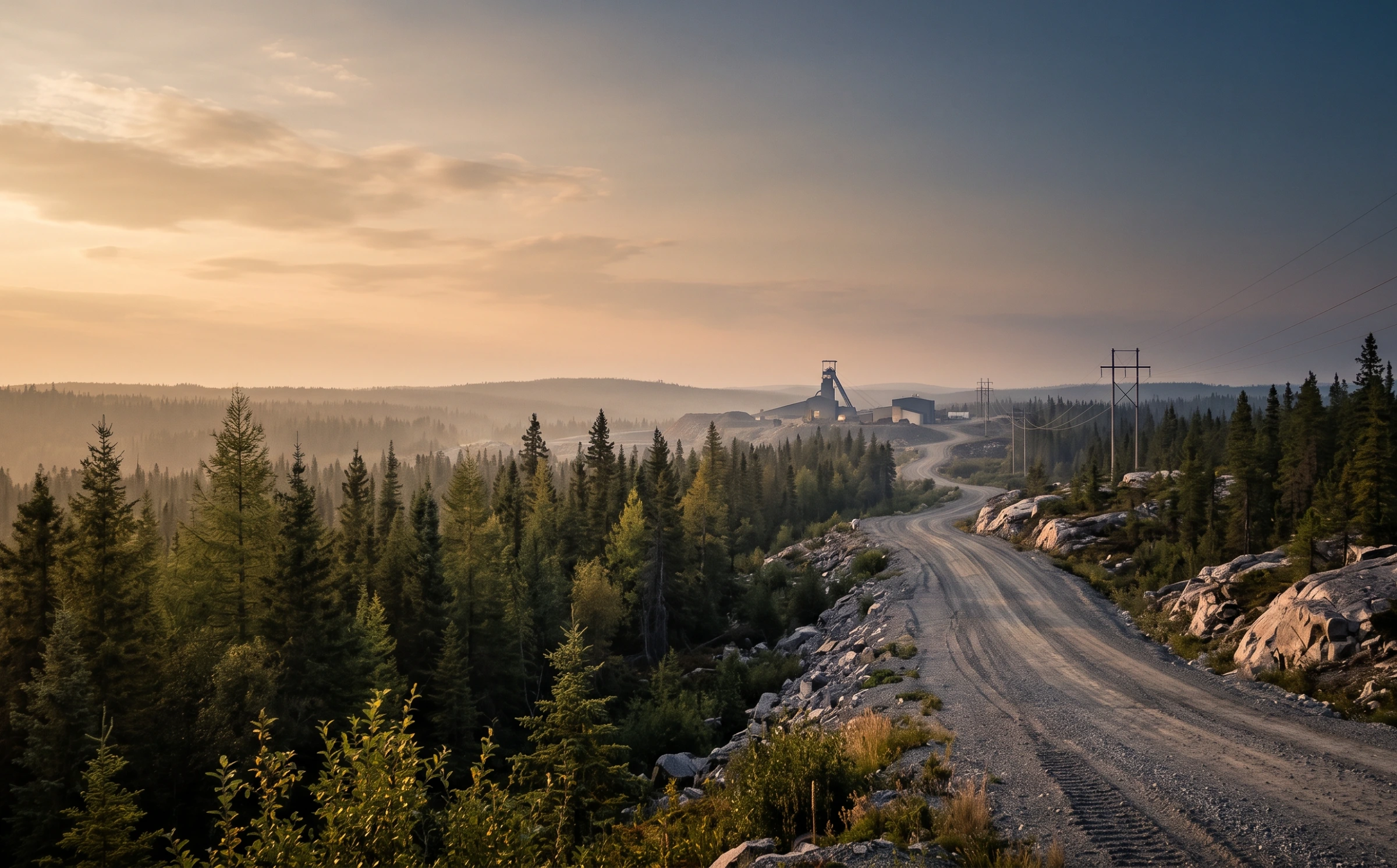
0:00 Welcome everyone, thank you so much for joining us. Today, we're looking at something that shows up as 1 bullet point on every junior mining slide deck and almost never gets explained, infrastructure. Roads, power, water, a workforce, a town that already knows what a mine is, Those things don't make headlines, but they decide how much a project costs to build, how long it takes, and whether it gets built at all. To dig into that, I've got 2 developers who sit at opposite ends of the country and have more in common than you think. David Russell is the CEO of Gallion Gold, which is advancing the West Cache project on Highway 101, just outside Timmins, Ontario, a camp that has been producing gold since 1909. Tara Christie is CEO of Banyan Gold, whose Ormac project in the Yukon has a territorial highway, a hydropower line, a cell service running right through it, and a district that's known for mining for over a century.
0:53 Both companies are heading into updated economic studies, and both are betting that what's already in the ground around them is as valuable as what's in the ground beneath them. We'll go for about 45 minutes. And as always, drop your questions in the chat box at the bottom of your screen. We will get to as many as we can. We might not get to as many as usual, but either way, we will pass it along to the team. And you can always hit the meeting request button at any time during today's event and we'll get you connected with the relevant teams. David, Tara, welcome.
1:23 Thank you very much. Awesome. For this first question for both of you, let's start with a blunt one. When a junior says great infrastructure, investors hear a slide bullet. Pick 1 of 3 things that actually save you. Dollars, years, or risk and tell us which matters most for you at your project. And why don't we go over to Tara first. Well I'm gonna say risk because execution risk goes right to money and time. When you've got a road, it reduces everything from your permitting risk to your buildability risk. I really think that it also, the risk on your costs, you know, you've got it more ring-fenced around that. So yeah, I'd say risk. David, what would you say?
2:11 Well she's probably right there because everything leads to dollars. 1 leads and feeds upon another. And, you know, we've got a project that it's almost a gentleman's mine or project. Never had one of these before. I've always had camp jobs where you fly in and out. That sort of thing. We're 13 kilometers from Timmons, and it's not really a layup that you're going to save money because you're not in the bush, but it depends on your people, who you've got, who your contractors are.
2:37 You know, the local contractors are only good as the people they have in them. The same thing for our team on that end of it. But having a full mining camp, like 42,000 people that you can draw on, whether you have services, you have power, you have everything
2:53 there. Doesn't mean it's actually cheap. We had a power line on highway 13 running, right? We're talking to 27, 6 line. Nope. They're not going to drop it off there. We had to go 4.5 kilometers down the line and bring in our own power there. So we weren't in the bush. It was a little bit more for that. But when you get down to the risk of all of this, you say how you can execute on your plan, whether it's permitting, geology, mining, contractors, everything has to do with the risk of being able to execute on it. So Tara was right on that. So we both agree on the first one. I love it. I love consensus. It's great. This next one's over to you, David. West Cache sits on Highway 101, as you mentioned, 13 kilometers from a city that's been mining for over a century. You're about to put 86,500 tons through bulk sample. What does that program look like in Timmins versus what would it look like at a fly-in project in terms of trucks, people, and calendar?
3:52 Okay. First of all, we're a project that's been, we've been drilling on it and doing PEA work since 2020. And it's a, well, I'll just call it 1.56 million ounces, grown to 3 million ounces and just finished another drill program. And we've targeted 86,500. And I went to the ministry and said, you know, usually you apply for 5,000 tons. And they said, well, what do you want? I said, a 6,000. They said, apply for it. So I did. And they said, OK. Now, would I do that in a camp where I had to take a C-130 and fly 86,500 tons out? Probably not.
4:29 We did that up in Alaska at Nixon Fork. I mean, it was a serious fly in, fly out job. But in this case, we can put it on haul trucks and we can actually take it to the Bell Creek Mill. And the Bell Creek Mill is only 35 kilometers away. That's why I say, we almost have a gentleman's project here to be able to do that. So what it looks like compared to a cam, a cam is it's its own animal. You've got to actually do it through the drill bit. Most likely you may be able to fly out so much sample or upgrade a sample and take it out, that sort of thing. There's a lot of things you can do, But de-risking the project, it's a little bit tougher to do that. Ours is pretty straightforward. Now that can be a plus or a minus. You get down there and you might need 6,500 and you thought the thing was X grade and it's X minus 2 or something. You know, you're actually opening Pandora's box. You're opening the Christmas package early by being able to do that as compared to the drill bit.
5:21 And you just have the assays and the modeling, you know, whatever you're doing to model your own body, that's what you're going to have to work with. But the beauty of West Cash is we are close to town, we can do this, we have the people. And being conservative, we can say, we're not 200 kilometers from nothing. We're 13 kilometers from Horton's Coffee Shop and the Pizza Shop, and that sort of thing. But it all comes down to, you can have the best people in the world, and you can be close to town and fail. You can be out in the bush and have the best people and make it work. It just depends on
5:54 who the people are and how you handle it. And like I said, handling the risk to actually execute on the plan. That is one of the biggest things you've got to deal with here. Very well said. And Tara, the Silver Trail Highway and South McQuiston Road run right through ORMAC and you've been getting rigs turning earlier each year. How much of the 60,000 meters you're drilling into the deposit this season is only possible because you never had to build a road or an airstrip before the first hole.
6:23 Well, the roads allowed us to be hugely efficient. It also lets us spend our dollars drilling and in the ground and not worrying about creating access, building roads. So our all-in costs for drilling still under $400 Canadian per meter, actually, you know, a lot of years it was 300,350, you know, very low cost. And it scales up now that we're drilling a very large program. Of course, we're getting the efficiencies of scale and we've already got our existing roads and trail network on the property established. So, our costs are actually getting driven lower the larger the programs that we have on a per meter basis. And that's allowing us to be really efficient. You know, we found almost 105 ounces for every meter we've drilled. And you know, that compared to projects that don't have infrastructure or roads, that's exceptional. You know, we don't have to spend money on helicopters to get out to our site.
7:21 And it also lets us change the plan because sometimes the geology, the weather, ground conditions mean you've got to pivot. And it's not just one part of our property we have road access to. It's almost the whole deposit. So it's a huge advantage for us and it can't be underestimated how much that's gonna help us through the next phases and through the de-risking phase. Cause it's not just the drilling, it's the lower cost of our baseline environmental. It's the lower cost of getting people to site to do that drilling. We get our fuel delivered in a tanker truck, a B-train, right to our site into our big tanks. We get a reefer truck that comes and delivers groceries so you don't have to re-handle things. So all of that really equates to focusing on what's really important, which is executing on your drilling.
8:10 That's great. No, it's great for investors to know. And David, back over to you. You've announced an updated PEA with Hard Rock Consulting. The 2022 study came in about 150 million in initial capital. A big reason that number was so low is that the mine plan never included building a mill. Explain to a retail investor why toll milling is an infrastructure story and what it does to the capital for a company like Galleon and what they have to raise?
8:40 That's a good question. First of all, the $150 million is direct. When you're going to build the mine, you're going to put it in the infrastructure and underground ramping development shaft or whatever you're going to put in. That's the first 150. But then you have to look under the covers. There's 200 million in life of mine. So that makes it 3 50. The life of mine lasts for about 11 years. So let's say 20 million extra of that. And also in your operating costs, there is some capital that has to do with stoke development. You call it capital because you're actually not producing out of it
9:11 at that time. So when you get into it, there's actually 3 components of capital that you really need to look at for that. But yes, it did help us immensely helped us to the tune of about 100 million dollars by having the Bell Creek. And we've just, you know, you probably saw recently that we signed with Pan American silver and we use the Bell Creek mill. We use that in February of 2022 on the PEA study. So, that was mirrored and we had intended fully to use that mill all along and Pan American Silvers work very well with us on that end of it. Now, how long does that go on? Okay, it goes on as long as you don't want to spend 100 million. But now, we've been drilling and we're doing remodeling, and we're going to do a new PEA study with hard rock. Okay, what are we expecting? We're expecting about 3 million ounces at this point in time, we've already finished 1 program and had great success and what we call the number 9 structure.
10:03 We're hitting stuff that is 40 meters wide of 4 grams, you know, and then you edit it down and maybe it's 20 meters right of 15 grams. It's it's it's it's a big game changer there. So, you know, when you get down to it, do you build a mill for like, say the PEA said 2400 tons a day, which costs 100 million dollars savings. Well, you're going to ratchet it up. You're probably going to say, well, if I'm going to build a mill, it's probably going to be more like $150 million. So Then you really got to ask yourself, how long can I ship to the Bell Creek mill and they can service us? Well, probably
10:36 till I build it. Oh, cash war chest that says I've got enough capital in the bank that I could do this and I can save money on the milling charges. But right now I don't see that happening for the first, let's say, 5 years. So for the investor, he needs to look at that and say, hey, you know, they can save the capital, they can do a put a war chest together and then be prepared. But in building mills, That's different than mines. Mines, we've gotten to say right now, the bulk sample, it's pretty much the same permitting that we'd go for the final permits. There's
11:08 not a whole lot of difference other than the bond may go up a little bit because of the waste dump. But in permitting a mill, building a mill is just a construction permit. It's the tailings ponds, it's the environmental studies. It is a big undertaking to be able to do that. So that's where the biggest capital comes in and the risk of can you get that through a permit within a reasonable time? So That's just generally as far as capital goes, but yes, we did save right up front $100 million. That's great news. I'm sure investors always love to hear that. Tara, here's 1 that I think the market misses. There's a three-phase hydro line and existing power station on the property. But you said in interviews that the PEA will assume self-generated power from LNG and diesel because grid supply can't be guaranteed yet. Why take the conservative route in the study and what happens to the operating cost picture if grid power gets locked in later?
12:06 Well that's a huge opportunity for us. There's not very many projects where you already have a power line with capacity. It's actually overbuilt and only energized to half its capacity and it goes right across our deposit in addition to having that substation already right there. So the power lines and opportunity, the supply will be our advantage once it's there. And the Yukon government has announced the Whitehorse Power Central Project, which will put
12:33 160 more megawatts into the grid. And that is enough power for us if that's filled. And they're saying 3 to 5 years. They're working with the federal government on that. They're also talking about connecting to the grid. So I think the opportunity for us is real and we can be part of that. And our PEA is a starting point for us on all of this, including the conversation on power, because we're gonna be able to say, this is a conservative estimate
13:00 because similarly to David's drill results, we're getting some exceptional drill results in the gap between our 2 deposits. So, 14 meters of 13 grams could be meaningfully additive in an area that's currently unmineralized. So, we've got some tremendous advantages that are coming ahead for us, and that power line is one of them. And it's 1 where, you know, this community in the Yukon needs more winter power very soon. Our project is really ideally positioned to be part of a power solution as well as one that gives us a huge economic advantage. Very cool. I love to see infrastructure and a supportive jurisdiction work together there. That's awesome. This one's for both of you guys. Infrastructure isn't just roads and power, it's people.
13:47 Timmins has a workforce that already knows how to run a mine and the Mayo and Kenote Hill District has a mining community going back 100 years. How much does an existing labor pool and contractor base change your cost and your timeline? And is that something a PA can even capture? For this one, why don't we start with David. First of all, I go by the 3 Ps. P to the third power, let's say, is people, people, people. If you don't have the right people, you're going to be left behind. And you may never build a mine, even if you got the highest grade and the best mind in the world. But if you got the it starts with the people in the company that are on top, that they can actually work with the people management And success comes with getting them to work and work together.
14:35 And that means the contractors too. And they've got to be able to manage those contractors and that sort of thing. And it's true, Timmons has been around, we'll go back to 1908. That's really when they got started on some of those mines in town that produced 18 million ounces or 22 million ounces of gold. And we're just out of town, 13 kilometers on the same structure. But the old timers didn't want to take that on because we were buried in sand and gravel about 20 meters deep and they couldn't see anything. They couldn't bang on the rock and say Eureka, here's the gold. But the big key is you have to be able to present yourself to the people and say, we are the place to work. If you're the place to work, show them, show them how it is. You treat them right. You pay them within whatever the range within the camp is. You don't mean you pay them the lowest or the highest. You get them to commit and say, I like working for that group. And that is very, very important. It doesn't matter if you're in the bush, you're in Alaska, you're in Timmins, Ontario, you've actually got to be able to get
15:35 the trust in those people. And that means that you got to hire the right contractor contractor come in and screw the whole thing up for you. But you better have a good template with that contractor, He has to have a good background. Right now we have Dumas out of Timmins. They are Timmins. We hired the hometown boys. And we require them to bring the best onto the property. And they did. To start with, it looks really, really good for us. So anyway, it comes down to that, yes, it helps having a community behind you that actually has proven that they can operate mines over centuries and centuries and that sort of thing. So I think we've got a leg up on this and we're trying our best to be the best mine in Timmins, even though you know Discovery is Silver, Pan American Silver, and we're working with Pan American. We're going to prove we're better than they are. So that's our, that's our goal.
16:25 Fantastic. What's it you Tara? Well, we have, you know, similarly 1900,
16:32 as much silver value came out of the Yukon from Keno Hill beside us as a whole gold rush. So yes, experienced people and the roads, power, cell phone all give us a huge advantage in that we operate very long seasons and there's not very many exploration projects where you get 11 months sometimes even 12 months. You know we drill into December, we start again in January, we probably have the highest percentage of UConners and local people from the community because of that. We are within driving distance of the community. People know we're here. Actually, I've been really pleased to see the number of resumes from local people and UConners that we've been receiving recently, and even people that are coming from companies that are maybe bigger than us that see the opportunity and the growth in Banyan and the trajectory that we have. So we've got some great people. I'm really proud of my site managers who on site work really closely with the local community, work very closely with many of the development corps of the First Nation Natchitochuk-Dunn, which is super important to build that social license. So, you know, that people infrastructure is important, as important as the roads and the power, but it's helped a lot by the roads and the power.
17:49 Absolutely. And David, permitting is the quiet killer of mine timelines. You've got your water permit, the box cut is in, and you're developing a project inside a camp where regulators have approved dozens of mines before, does a brownfield district actually permit faster, or is that a myth that juniors tell themselves?
18:11 That is a loaded question. What I've learned is, okay, I did the black box project at 70 kilometers to the northeast on the district porcupine between 2002 and 2010. We got a mine built and I learned that permitting is not easy. And what it comes down to is who's running your permitting. Have they got the database? Did they go to town right away? And I ended up having a general manager that was very, very good on Black Fox. His name's Ryan Lohe. He is now my general manager on this project for one reason. He and I work great together. He's an environmental engineer. But we retrained him. We brainwashed him into geology, mining, you know, everything you can think of, but he knows how to work within the system. And when we picked up the project in early 2020, The 1st thing Ryan says, we're going to town on the database right now. So during 2020, 21, we're drawing away, we're scoping on the back of a napkin, what the project is gonna look like, how are we gonna permit it? And by end of 2022, we're filing for permits.
19:16 So that you can actually cut time tables down. And it doesn't have to do with ministry being easier in Brownfield. It depends again on your people, their knowledge, and then how can they work with those ministry people? You know, what knowledge do they have? What consultants, third-party consultants, that's very important that they bring to the table that can relate to those
19:37 ministers or their departments. If they haven't worked with those people before, it's pretty difficult. So, you know, I'm not going to say it's a myth that you can go faster on brownfields projects, but it's partially a myth. I mean, it's what you know and how you execute on your plans and what you're doing. Now, in our case, we're not brownfields. We're within brownfields. We're greenfields. We got 6 kilometers. There's never been a shaft mine ramp, nothing till we did that box cut and we're going we're taking her down right now. And the contractors are averaging
20:08 I think about 6.5 to 7 meters a day, they're really going to town on a 15 by 15 ramp. But the key to the permitting is your database, how well it's organized, your third party consultants and how you file those permits and what you're asking for. If you trip it up and you miss on any of the parameters or you didn't put enough water monitoring wells in, you've got to stop, go back and put water monitoring wells and get at least a couple quarters. So a lot of that, they really have to pay attention to. So my advice to any of the brownfield guys that think it's easy,
20:42 hire the right people, good people that can actually walk through the ministry rules and regulations, because you're not going to sidestep them, you have to adhere to what what what their rules are. And once you've done that, you should be pretty successful in doing it if you've done your homework. So with that, what I can say it's the people again and the execution of it. Well, I would add to that for us, we have a long track record in my team of permitting projects in the Yukon. And the key for us is we've been working closely with the First Nation on all of our plans, reviewing our results since 2021. So we've got the database, you need 2 to 5 years of background data. We have that, but we also have it and we've been communicating it regularly and staying in communication.
21:27 And that's partly why I think we have a huge advantage is We know the timelines and we know we've seen enough projects, so we know where other companies trip up, and we've made sure that we've covered off those risks. Pushing our timeline to the shorter end of that is important for us as we move forward because we're still in that discovery phase. And so for at this phase of growing the resource, we haven't drilled it all out yet and we're already thinking well ahead should give us an advantage. And we again, we're in a brownfield area next to 2 existing mines. And that actually gave us 20 years of data from the mine beside us that we got as a you know when we optioned the property and that's a huge benefit to have that huge database and it's been worked on very collaboratively with both the First Nation and our team.
22:15 It can only help that I mean, sounds like a great advantage. Absolutely. Tara, actually this one broke just yesterday. The receiver for the Eagle Mine has an agreement to sell it to borrow. We're talking about putting 1 billion and a half dollars into the Yukon over the life of that mine and working very closely with the Nacho Nyack Dunn. You're the next big project in the same district heading into your own permitting process. What does a restart commitment of that size do for ORMAC? Well, I think it's a real testament to the quality of the geology and what they see for the long-term potential to have that scale of investment in the project by an international mining company. Yes, they may not be one of the big names, but they've got significant operating minds. They've got a really good track record of turning mines around.
23:03 And, you know, from understanding that they're coming into a new jurisdiction, are they coming in just for 1 project, I think they're probably have a pretty long term view. That's what they've had in Mongolia, as well as in Peru. So and for the jurisdiction, it's a signal here, the First Nation and the government are working together on a mining project and understand that there's important economic benefits coming out of us. And we're right next to them, and we're gonna benefit from being able to share on some of the logistics of things that will be going on for that mine and working pretty closely to, we work pretty closely as well with Hecla, our neighbor,
23:40 and that allows us to again be more efficient and execute more efficiently on our project, which ultimately reduces our risks. So, and I think having that endorsement by them and having that mine in the hands of miners ultimately is reducing our execution risk as well. Absolutely. And also you just closed a $54 million financing with the PA weeks away. And you've said the PA is just a conservative baseline to open permitting and government conversations, not the final word. When you walk into those conversations in Whitehorse or Ottawa, how much easier is it to sit down with a project that already has a highway, power line and cell service running through it? Well, I think it's gonna be quite a bit easier. We're gonna be able to talk to the tax revenue they're gonna get to a very long live mine that's going to generate that revenue and those benefits and support those businesses for a very long time. And again, it is a starting point because we haven't drilled off the deposit yet. You know, we still have significant upside opportunity both in grade between the deposits at depth and our 2 new discoveries out at Seattle Creek and Roaring Fork, which we think are 25 kilometers away, but road accessible to the project. I think it shows this is a district, and that's the kind of project where governments can get behind and say, this is gonna be a long live mining opportunity.
25:05 And you worry about the cycles. Well, that's where the road becomes super important and risk is it makes a project more resilient to the cycles. And in the mining business, we're always very optimistic and this gold price has been pretty exciting to see and some great margins and some of the larger mining company but you do also have to think ahead to the resiliency and that's where having roads and grid power is really going to be an advantage in how you're talking about this project, how many people we're going to employ. So I'm pretty excited about that starting point and to be able to concurrently start talking about the project, to get started on those conversations for permitting while advancing the project is a huge advantage for the timeline of our project, which is ultimately that execution risk that we're trying to continue to reduce.
25:54 Absolutely. Well, folks, I just have 1 closing question. Gold punched up through $5,000 this year. It got as high as 5500 and change and then gave back over 1000 dollars in 2 days. It's sitting at a bit over 4000 dollars today. And a market that volatile does existing infrastructure become a smaller edge because the metal is doing the heavy lifting or bigger one because the projects that survive a drawdown are the cheap ones to build. And also give us just 1 infrastructure related milestone at your project that we should watch in the next 12 months. And we'll start with Tara on this one. Well again that goes to the resiliency of the project. You know, I think the metal does some of the heavy lifting and it really gives the longevity. But, you know, the roads and infrastructure, what's going to be your operating costs and times when the margins are tight or tighter that's when that margin matters.
26:51 You know you may have paid it all off but if you're all of a sudden got a too small of a margin that's where some of these projects get in trouble. So that is a huge advantage for us in having not just a road, but a highway through our property, government maintained, which will help us with that. And in terms of infrastructure,
27:13 we're looking at already, We're putting in solar panels into our camp to reduce our reliance right now on diesel, as well as we're looking at options to get connected to the grid early, which you know, not very many projects can think about that in the exploration phase. So might not quite be in the next 12 months, but that's a huge infrastructure advantage for us. And if we can get the commitment for grid power and to be able to connect to the grid, that would also be a huge milestone for us to have those conversations underway with the government. Very cool. Over to you, David. Well, you know, the gold price is a moving target and it's kind of like taking a baseball swing and how far is that baseball going out of the park? Well, there's the 10 hat guys that believe it's going out of the park to 6 or $10,000. I don't look at that. I just look at how well can I execute on my plans? How can I keep my cost, the capital, everything down? And we did the 1st PEA And that was P&E consultants that helped us. Obviously, Hard Rock's going to do the next round of it. They were actually working with us on the previous one too.
28:23 But at $1,700 gold, we had 387 million NPV at 5% discount with a 33% return on your money. But now if I would put a mill and it would have been the same economics there, except instead of 33% IR, I would have been down around 25% IR. You got to pay for that mill somehow, but you know, it was good economics at that. What it says is we can take a heavily a big drop. Now, you know, I was pleasantly surprised here. We're trying to permit, we're trying to do things. Gold goes to 2000. Then it goes to 3000 then it g That's wonderful. Well, I 8 or 10,000, we have in the world. So somethin So be careful what you wi to hit it out of the park on that one. The milestones, let's say for us, really are we're putting the ramp down. What you should be looking for is somewhere around July or August when we get down there and we show the video where we're putting our hands right on the big vein, the big structure on number 9 and say we're here and then we'll spend the next 3 or 4 months actually doing the big blast all open stopes, developing them and sending or to the bell creek mill. So within 12 months we'll have that place rocking and rolling.
29:33 I will mention the contractors are very instrumental on this. So getting them to do exactly what we need, that's what we need to be doing. But they're also working with a group called First Nations. We have 5 First Nations, not 1. We have Metagami, Flying Post, TNT, Brunswick House, and Metis. And the 2 big primary ones are Metagami River and Flying Post. And they're actually working directly with these contractors. So, eventually, within 12 months, you'll see us working on an agreement. We have the MOUs with them. They do work with us directly on the exploration end of things, but there'll be much more involved as we go to the final permits on this project. Now, will we have final permits within the 12 months? It probably more like 15 or 18 months on the final permits, but it won't be a lot different than what you see, because we're going to continue shipping or to the Bell Creek mill on that. But one big milestone is to ship or to the Bell Creek mill, we've got to know exactly what we're shipping. You can do it through the drill rods, you can do it through sampling, you know, coming down blast holes and whatever.
30:37 We're actually putting in a crushing and tower sampling circuit. And that's not a cheap endeavor. It's about 6.5, 7 million to put that in. So once the ore comes out, you'll see it going through and we'll know exactly what we're shipping to a mill. So the big parameters are watch as the ramp gets near the ore, us developing the actual stopes and then the sampling circuits before we ship the ore and then the ore going to the mill and what's the outcome once it ships there and should be gold coming out the back end of it, roughly about 20,000 ounces of it. Wow. Well, folks, thank you so much. Tara, David, deeply appreciate your time and your insights on infrastructure. I think it was a very interesting conversation. And thank you to everyone who's watching either live or watching the replay.
31:23 If you have a question for either Banyan or Gallien, feel free to send it in. We will make sure their team gets it. And without further ado, would love just one final word from each of you. Anything that we didn't get into that you'd love to leave our audience with. I'll pass it to Tara to start. Well, thanks, Bianca.
31:42 You know, the one thing that I think investors should think about us is that we're in a really stable position with a strong treasury of over $100 million to execute through into 2028. We are going to deliver a PEA as a starting point, and then we're going to be able to put all of our drill results from our 60,000 meters this year and our 130,000 meters next year into context of how we've made this project better and how we're advancing it. So we've got a really clear trajectory of lots of catalysts. In addition to following up on those 2 new discoveries, We put 20 holes into 11 targets with the first 2 delivering 17g and 500g Silver, 17g Gold. We think that our exploration potential upside is very high and we've got a great team and people to execute on it. And with that treasury, we're able to really focus in and focus on not having to worry about the gold price day to day or the market, and just worry about long-term delivery of shareholder value.
32:46 Fabulous. Over to you, David. Well, you know, first of all, we didn't touch upon in our group last week or beginning of the week, I guess it was, it's the end of this week, we announced that we had a bought deal with the Coromark Securities Group and that's going to get us the financing we need to finish the project, but specifically for the next exploration program. We've got another almost 40,000 meter program planned starting in January with 2 rigs on the surface. We had great success during 2026 here, 2027 ought to be stellar. We're going to do infill drilling. We're going to actually go into wildcat areas, areas that don't have any drill holes that are heading toward Pan American Silver's boundary. One thing I will say is Pan American Silver has been a great group to work with. So out of the money we raise, they're at least 20% of every offering we've had. So we thank that group for doing that. Pay attention to Pan American Silver.
33:42 You know, they're great, you know, somewhat the finance partner to have and milling or that is a very key to keeping our cash costs down in our capital down that sort of thing. But in the end, what you're what it all it is says is we're looking at the shareholder. We're taking a 1.56 million ounce deposit. We're going to 3 million ounces plus. So are we going to be one of the big mines in the future in Timmins? Or we're going to be the next mine to come online in the block in Timmins. But hopefully the next one with the major ounces that say we're going to be in production for the next 30, 40, 50 years. So it's value, value for the shareholders. And it's also ggo.v or ggo.xf on the US side. Fantastic.
34:28 Well, thank you so much, both of you, David, Tara. I can't thank you enough again. And again, thank you everyone who's watching. Wishing you both and everyone watching at home a wonderful rest of the day. Take care. Thank you very much. Have a good weekend. Okay. Okay, bye.