Transcript
Automated transcript · Written by software from the replay's audio. It can mishear names and figures; the replay is the record.
0:03 Good morning, good afternoon, or good evening, depending on where in the world you're signing in from. I'm lucky enough to have with me today President and CEO of Banyan Gold, Tara Chrissy. Tara, how are you today? I'm excellent. Thanks for having me. Awesome. And even better, I get to see you on site with a beautiful core in the background.
0:18 Absolutely, we've got 6 drills turning, 27,000 meters drilled already this year of our 70,000 meter program. I love being here, we've got an excellent crew, the firing on all cylinders, the energy here is pretty great. Having come through some hard times and now with this gold price and this deposit,
0:42 it's great to have the team here so excited. Awesome. I love modern technology. I can talk to you right on site from my seat in Ottawa. It's great. So I'm going to, if you don't mind, just talk to the audience here for a second. I know this is a recording, but I still do want you to use the interactive features on today's webinar. So please do enter any questions you have into the comment section at the bottom in the little chat box. I'll make sure that Tara and the team at Banyan get those questions afterwards, and then I'll get back to you using either your email or phone number, depending on which you entered at registration. I will also say that there's a request meeting button at the bottom of the screen. I'll remind you again periodically throughout this recording. Please do press that and I will provide that list to the Banyan team after this recording concludes and we'll be able to connect you with their team. But enough of housekeeping.
1:27 I want to get into some protein with you Tara if you don't mind. I want to take you back. I know you grew up around plaster mining in the Yukon and have spent so much of your career exploring and building projects across the territory. What does it mean to you? Just before I get into the project stuff, what does it mean to be leading one of Yukon's largest emerging gold projects in a place that obviously you're so familiar with.
1:48 Well, you know, I grew up placer mining in the Klondike, as you said, and always wondering where did all this alluvial gold come from? With my father, who was a PhD geologist, and we spent time prospecting and soil sampling. And so for me being here, and I actually know about this project or I knew about it before I became the CEO of Banyan, because my family purchased the alluvial assets on top of it, as well as a bunch of others from an estate. And so, you know, coming here and then making this discovery really, you know, makes me,
2:24 I don't know, nostalgic, maybe might be the, I'm super proud. I would love for this to become a mine and help, you know, improve the economy of the Yukon, generate jobs, long-term benefits for this community. That to me is really exciting and having gotten to that point where it's big enough I think we're seeing the grade. Yeah it's quite a journey and it's certainly something that I never really expected that I'd be here
2:51 and be building this team and you know looking forward to really de-risking and advancing this project. That's quite an impressive history and career so I do want to get into that quickly before we get into the project. But speaking of, I know the updated resource increases indicated ounces by 60% while improving grade. So for someone watching from their desk at home, what does an update like that unlock for Banyan? Oh, it really shows that we know the model. It shows that we delivered and we actually outperformed on what we said we were going to do. The model shows that our geological model is solid, which gives you lots of credibility and it really bodes well for the value we're going to unlock with the 70,000m that we drilled this year. We're setting up for our maiden PEA, which will only be on the 2025 results. This mineral resource update, which we know we're going to make better with this year's drilling, and any study is a snapshot in time, when you're continuing to move the project forward. 2025 drilling is into that mineral resource update. That's going to be the basis of our PEA and all the drilling from this year, which I think is even better targeting than last year, is going to go into a future update and mineral resource update. So what does it mean? It means that we've unlocked a very rare deposit.
4:10 When you look across the spectrum of large deposits in the 8 to 10 million ounce range, there are not very, very many. So
4:16 we're in that rare class. And what the PA is gonna do is it's gonna unlock the, how much of that is mineable? What's the grade that's mineable? What's the strip ratio?
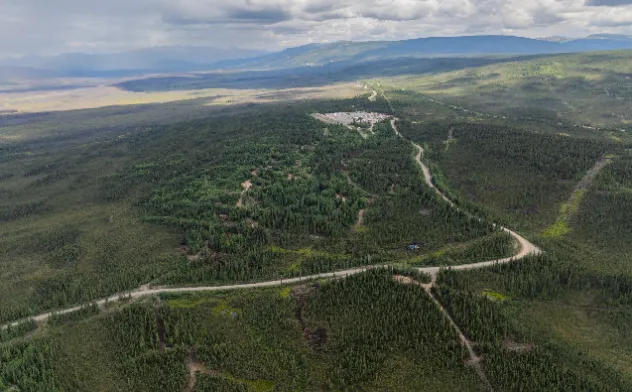
4:25 All those numbers we don't have to talk about right now. And I had one of my shareholders come and say, hey Tara, I think you're probably going to be in the 5 million plus mineable ounce range. And across the world, there are not very many projects that have plus 3 million mineable ounces that are either being built or to be built. So that will put us in a rare territory. And I think that the eyes are starting to look at the Yukon because there's us, there's Snowline that has a similar type deposit, we have exceptional infrastructure, roads, power, I'm talking to you on on cell phone, internet, and we have SparLink here, you know, We have exceptional infrastructure in an area that already has roads and power. I think people are starting to take another look. And I'm partly on site today to talk to my crew, but I'm also here on site tours. And coming to see our site when you can drive in on a main highway and you're 50 meters off the highway and you see you're on a deposit and you can look at the power line really tells the story.
5:24 I love that. I was on an event with Byron King I think a few months
5:27 ago he said the only thing that sacks your invisible gold is a highway And I tend to agree. That's really good. That's a good line. I know Airstrip has delivered some of the strongest results on the property so far. Just in plain terms, I know most people watching aren't geologists, myself included. Why does that style of mineralization get a geologist's attention?
5:47 Grade and more grade. We purposely drilled out some of those high grade to inferred and that's why we had the 68% increase in inferred, overall increase of 60% to indicated, but and higher grade, you know, over 10% higher grade at 0.84. So Airstrip was always higher grade, but we didn't focus on it when we were looking at heat bleach scenarios. Now that it's pretty clear the economics are driving this to be a mill, and that's probably the scale and production profile that people are gonna wanna see from this type of project. Airstrip is definitely a focus for us. So we're drilling on it today, actually in our camp area. We have 6 drills turning, So 2 fly drills on those 10 regional exploration targets and then 4 focused on continuing to develop airstrip and powerline.
6:41 Awesome. And I know you've now shown that the 400 meter gap between airstrip and powerline is mineralized. And there's talk of, as I understand it, the 2 pits eventually becoming 1 or potentially becoming 1. If you could walk the investors in the room through why closing that gap matters.
6:59 Well, if you look at the plan map of the resource, it'll stand out. All of those areas, when you look, there's a big orange boundary around that and between the 2 pits. And you can see where we've drilled, we've connected those pits. And in fact, some of them are high grade. So what that means is that in this new resource with the whole drill envelope in the pit, not drilling that out means there's a huge amount of dilution and areas that are classified as waste. So increased strip ratio and lower grade simply because we haven't drilled it. And that's
7:29 a problem across the deposit. That's a problem at depth. If you looked at the grade sensitivity, we use 3,500 but there's not much difference between 3,200. That's because when we drilled this out it was $1,500-$1,800 gold. You didn't drill deeper than 200 meters and often it was much shallower than that. So you see our pit doesn't get any deeper because there's simply no data at depth. You know, we have a few deep holes, those 2 that were very successful showing this mineralization goes down to 650 meters and even 15 grams at 350 meters.
8:01 So lots of area to add ounces and improve grade as we continue to drill this out. So that gap matters. The edges matter. You know, where we down in the southwest there, where we put out those nice high grade results, we're at 300 meter spacing. So we need 100 meter spacing to get inferred. So that gram and 0.5 material, which we know is likely contiguous, didn't make it in. It's classified as waste. So certainly lots of opportunity
8:27 from seeing the areas where we can improve it. And that's what we're doing this year. It won't be in this PEA, but you'll be able to say, wow, if that's what the PEA looks like with all those wasters and without that extra drilling, what's it gonna look like in our next study? Oh, no, appreciate that. And as you started this event by saying, you've got 6 drills training right now and a chunk of budget aimed at regional targets that as far as I understand, have never seen a drill bit. Which part of this program, in your opinion, is the swing for the fences, which is the big shout?
8:59 The swing for the fences are the deep holes looking for that potential intrusive target or higher grade and those 10 regional targets. And so what criteria did we need for these regional targets? Well, they need to have the potential to have a starter pit that's accretive to what we've got at ORMAC, where you got A0A million ounce plus at higher grade. And if it has that potential, then that's something that we think we should drill this year. So, and give our shareholders some of that real exploration upside. And you
9:31 notice we picked up another large land package, which also has some targets and is adjacent to some of those regional targets because we've been looking at this area for pretty intensely for quite a while now. And we think that with that strategic acquisition, we've added some more regional targets. Awesome. And getting back to the inherent appeal of a highway, as you said, the Yukon Highway runs right through the property and you've got a power line across it, 2 operating mines next door, obviously an infrastructure story here. How much would you say the ORMAC story is the rock itself and how much is the address?
10:06 How important is location in turning a large resource into something really economic? Well I think we've underplayed the location part and that's why we're doing quite a few site tours this year because having 2 mines beside us, both which might wanna grow, 1 which is maybe just about to be acquired by a company that might be looking for a district or to finding a long-term home where they are developing resources for a long time,
10:32 That's also part of the address, having miners right beside you with additional mills, additional infrastructure and expertise. So address is going to be a little bit of the focus this year because Ormac, I think we've started to get people have noticed we're on that that far end of the bar chart, which is pretty rare territory in North America with roads and power. That's a good checklist to have set up on your side for sure. And as you said, the maiden PEA is coming in the H2O this year. And that's the first time the market really is going to see the economics, I think, in kind of full. What are the key questions you believe the study is going to answer for investors who might be in the room today? Well, it will finally give us an NPV because that is people say, well, what are you trading at? 0.2 NPV, 0.1, 0.3.
11:22 You know, I think we're on the low end of that at $50, $40 probably with what gold price is doing right now. I try not to look because it's a really good $4,000 is a great goal price. Look at how far we've come in 2 years.
11:39 For this project, I think the economics are going to be really compelling. I think answering the questions around metallurgy, answering the questions about do we have the area for infrastructure, answering the questions on what is the production profile and in particular what are the starter pits deliver, being able to talk to that and finally have an internal rate of return. I'm excited about and finally have a strip ratio to talk to people about Which we know we're gonna be able to improve upon with for drilling this year great
12:09 I want to zoom out with you for a second, but also crystal ball gaze if you don't mind for a second I know you spent a while consolidating the district out to the 720 square kilometers, but also just picked up a new portfolio of Yukon targets. How do those opportunities fit alongside ORMAC and your long term vision for the district? Well, that's exactly why we acquired them. We're under no pressure for those that additional ground. And, you know, I really, you know, generic took shares in Banyan. So they're voting in our team and our geological expertise and our understanding of the area. So, you know, we're starting to geologically work on those areas and develop targets. I haven't quite figured out where they fit in the pipeline, but certainly when you're looking at a district play and somebody that wants to see a property that has a very large deposit, but also additional,
12:59 those come into play. So another 450 square kilometers, adding to our 720 square kilometers, where there's alluvial mining on most of them. One of them is right beside Talamor's, or formerly Forte's coffee project. All of them are areas that our team has unique and specialized geological knowledge and can add a lot of value. So it gives us a pipeline.
13:26 You always want to have optionality. We're building the team to advance and de-risk this property. Will Banyan build it or will somebody come and acquire us? Will there be some kind of a joint venture? I don't know, but we're making sure that we're preserving that optionality. We're preserving these properties that we know our team could go and and continue to do work on if you were to transact with Ormac, but we're not in a rush. We have so much value that we can add. And we've got lots of assessment work on these claims. So we've got time to think through what the best strategy is and really make sure we're spending money well. And that was one thing that I worry about with the price of gold and everybody financing, making sure that you're still really well using your shareholders' dollars, and it's something my team does, we're thinking everything through, we're being very efficient, we're looking ahead and planning.
14:16 And that's really how you add shareholder value is, you know, and then and then tell people what you're going to do and hopefully over deliver, which I'm hoping my team can do this year, both with the PA and our results.
14:30 Awesome. And speaking of dollars and cents for a second, I know you recently completed a financing that brought in a single high net worth investor. Beyond strengthening the balance sheet, obvious, what does that support say about how the market is beginning to view Ormac and Banyan's future? I think it shows that sophisticated investors that understand this business are starting to build positions in Banyan and have been. Having somebody of that caliber come along who I've known who's done a site visit for quite a while, So those kind of solid investors are who you want backing you. And you know, they'll be the ones that help us get to the next phase. And we've had quite a few investors like John Robbins bought shares in the market after doing a site visit last year.
15:15 People like Peter Brown have become shareholders. So, you know, I think that we're starting to get people that understand the mining business,
15:23 building positions and then the institutional wave, you know, there's different thresholds where different institutions could invest in companies. We've got over another one of those thresholds. So we're starting to see a different wave of investors. And with this recent pullback in gold and even our share price, I think it is a good opportunity for people to build positions.
15:43 OK, makes sense. And Zooming back into your history, I know, as we said at the beginning, you've worked in this territory your whole life, but including alongside the First Nation of Nacho N'Yak'tun, whose traditional territory that project sits in. How is working collaboratively with local communities and Yukoners, as you have your whole career, influenced the way Banyan advances this project? Well, I think you'll see it around our site. We have a tremendous percentage of Yukoners that work for us, both from the local community and Whitehorse and Dawson, people that, you know, want the long season jobs that we provide. We start in February, we go to December. So we're different than lots of the short-term communities. We're working really hard to make sure we communicate what we're doing. And then on all of our baseline programs, we're working hard to make sure that we've discussed them with the First Nation of Natchitochton Lands Department before we execute them, have them involved, and then report back, so that there's an understanding of what we're doing and how the careful approach that we're taking to understand the environment, protect the environment, and certainly do our best to end up with the best long-term project and get benefits to the community. We hire a tremendous number of local businesses, First Nation owned businesses, and that goes into the strategic thinking of what we're doing, we're procuring is like, how can we make sure that
17:05 the benefits are going to the community and the community know that they're coming from us? Smart approach. One thing I wanted to pick your brain on, with Baroo now acquiring Victoria Gold and becoming a significant Yukon operator.
17:18 What does that potentially mean for Banyan and the strategic value of a scale,
17:24 their project on the scale of ORMAC? Yeah, so when we were smaller, under 5 million ounces, I would say, yeah, that's kind of a natural acquirer. Now that we're at the scale we are, I remind people they probably need us as more growth. We don't really need them. This is a standalone project. There could be some synergies with their infrastructure and people, But honestly, it's not the only path. And there were a lot of other groups that looked at Victoria as well. So, you know, certainly we've had conversations with them. We'll continue to have conversations as neighbors and as they're getting to understand the Yukon. Certainly it's an option. We'll see, they've got to finish their deal to purchase that and what their own plans are to move that forward. And I'm sure that's their priority.
18:11 And that's good for us because we're still pretty unvalued to be having those conversations with them. And all of our conversations today really have been about the Yukon, about what we're doing as neighbours. We're not in a big rush here. I think this year is going to be a really transformative year, particularly in the fall with that PEA
18:32 and the drilling that we're going to have results really soon. We started in February. Yes, we are getting results back with 6 drills turning and mineral resource update. The team's been really, really busy, But they are coming. Exciting. And I appreciate your willingness to opine on the region. So I appreciate that. To wrap up today,
18:53 the resource has gone from under 1 million ounces to 8.6 in just a couple years. Sitting where you are in the core shack at the project this summer. What's the moment you're telling investors we're watching now to watch for next? I think the PEA will be very transformative. You know, there'll be moments as we continue to put out drill results and and you know, we we might have a few other things we're working on as well, which are good value for our shareholders. But that really is, will be a defining moment. I'll finally have some economics to talk about. And I think there are many institutions that are waiting for that. There's probably lots of corporates that are waiting for that, that really want to understand the Yukon. We've seen some really important moments already this year, which shouldn't be underestimated. You know, the change in government in the Yukon, the commitments to power that they've made, which you can, there's a slide in our deck on that if you want to talk about that. The work on permitting both, particularly this territorial government is really working hard to improve timelines and efficiency while also protecting the environment and working with the federal government. So those are quietly happening in the background, but they're really important for for our project. So we'll have lots of news flow for you. I'm pretty excited about about being able to deliver that this year.
20:12 It's been a it's been a journey. And I think we're coming to some some important catalysts. Awesome. Well, Tara, thanks so much for joining me and letting me grill you while you were there at the Corshag. I hope I didn't take too much time out of your day. No, I love to talk to my shareholders. And as you said, reach out. I love to talk to my shareholders and set up a meeting. And for those of you that are brave enough to come to the Yukon, it's pretty easy to visit our site. Awesome. So for the folks in the room, I'm going to leave the room open for about a minute after Tara and I drop off, just so you can still hit that request meeting button at the bottom. And keep in mind, all of those content that you put in chat, I'm going to share with the Banyan team, and they'll get back to you as soon as possible. But Tara, thanks so much. I appreciate you having me. Thank you.