Joaquin Marias
President, CEO & Director at Argenta Silver
Replay available
Join Joaquin Marias, CEO of Argenta Silver as he provides further commentary regarding the metallurgy results from El Quevar. Following the update he will be available for questions.
On 6ix: 6ix.com/event/metallurgy-overview-with-argenta-ceo-joaquin-marias
Automated transcript · Written by software from the replay's audio. It can mishear names and figures; the replay is the record.
0:01 Okay, as people start filtering into the room, I will say good morning, good afternoon or good evening, depending on where in the world you're signing in from. I'm very excited to have with me today Joaquin Maria, CEO of Argenta Silver, to talk about metallurgical test work done at the Alcabar Silver Project in Argentina. Joaquin, how are you today? I'm doing great, Romeo. It's been a very busy end of the month, I would say. You know, we've got this conference going around the world, but we are very happy we had great results, and we are very happy now to be explaining those to the people out there. Great, appreciate it. And here's how today's going to work for the folks in the room. I know there are quite a few of you today. Joaquin is going to walk us through a presentation, then I have a few quick questions based on that presentation. I know a lot of you have already submitted questions over email. We will get to those. But there's a chat button at the bottom of your screen. So please feel free to ask questions during today's event. We'll try to get to as many as we can.
0:54 If for whatever reason I don't get your question, I'm going to send them through to the Argenta IR team. They'll be sure to get back to you as soon as possible. So you will get answered whether or not it's on today's webinar live. The other 2 things I'll say is this event is being recorded and will be available for replay end of the day Eastern time, so probably before 5 p.m. It'll be right in your inbox, but also on Six's YouTube channel. The last thing I'll say is there is a meeting request button at the bottom for those who are attending this webinar. Feel free to click that, and I'll try to get you in touch with the Argenta team to have a meeting where you can ask more questions. That's the boring stuff out of the way. I'll throw it to Joaquin to walk us through a presentation about Alcavar's metallurgy.
1:31 Thank you, Romeo. It's always good to hear you. Nothing boring from your side. All right, let's start with this. As many of you probably know, we already put some news out in the market about the metallurgical test work. What we are going to do today is we are going to go through the different processes of the metallurgical test work or metallurgical concentration by flotation on large scale. So everybody is on the same page, and we understand very well how these work. Sometimes there is a lot of complexity around this topic and some people finally don't get the full idea of this. So I will try to be as clear as possible and to explain how this works in simple terms.
2:18 Let's jump on it. So first of all, some forward looking statements that I will be making along the presentation. And the very basic of the flotation process is what you have on the screen right now. So everything starts obviously with mining when we take the rock out of the ground and we need to bring it into the plant. So what you are looking here is the process when the rock comes from the mine into the plant. It could be an open pit, it could be an underground, it could be a stockpile, but we need to bring it to the grinder as the first step. There is where the ore comes into the grinding mill, into the mill, and it will get completely crushed into a very fine powder.
3:05 It can have several stages of grinding, but the most important thing is that we are reducing the size considerably of the rock that is coming from the mine into the plant. So the first step, it's the grinding, we get as an output ground slurry, and that goes then into tank. This tank, it's just a tank with a lot of water, which will have a paddle with a motor on top or an engine on top that will be shaking this content in the tank and the ground slurry will get into that tank. That tank will have insufflation of air so air will be pumped into the tank to create bubbles. There are some things that we put in there, some reagents. We will talk about them in a little bit. This is the first flotation process, and it's the primary flotation.
3:58 This is what we call the rougher. So with those bubbles, with the slurry and the reagents, there will be a froth created. This froth will be on top of the tank and it will be skimmed out to the other stages. So what we need to understand is that the froth is a very important thing because it will contain attached into the bubbles all the minerals or all the things that we want to recover. So because that froth will come with some things that we don't want, so some other minerals that are getting stick to the bubble that we don't want, then we need to clean that. And that's the second stage, which will be another tag, just the same as the rougher tag. But this tag, it's going to clean this first froth again with different reagents.
4:50 And the idea of this is to get purer and purer and purer froth or final product. So when we skim from the cleaner, we can test how much minerals we have there or how many elements are in there, and we can measure as well the grade of that concentrate. The same happens with the rougher, I can concentrate, sorry, I can check the grade of that rougher, and each time we are concentrating more and more and more as we are cleaning more and more and more. In a plant usually you will have several grinding stages, you will have different rougher stages and you will have different cleaner flotation stages.
5:36 When minerals, they float quickly, that's easier because then you need less tanks. Or when you need to clean several times less, you will need less tanks, not that many tanks for the cleaner. So it depends on how your ore is reacting, is going to depend as well, the design of your plant. And for every deposit, Things are different. This is something that I always say, there is not 1 recipe for all of them. You need to test and you need to find out how it works for each one. So then you can arrange your plant exactly for the process and the ore that you have. Grinding size and reagent dosage, as I said, grinding is very important. What we need to do is we need to grind the rock to a certain size of particle that it's going to be the one that will be enough to get stick to that bubble that will float.
6:33 So if the rock has been grounded too coarse, then it's not going to get attached to the bubble or it will be coming with things that we don't want, other minerals that we don't want. If it's too fine, then probably it's going to reduce the flotation performance and we don't want that. So we need to find the right grinding size for our ore and that's part of all the test work that we are doing at this moment. The same with the frothers and the collectors. So frothers, the name is telling you what it is. It's something that will create this foam and these bubbles that will help us to then catch the minerals and then to skim them out and recover that froth.
7:24 It can be used in different amounts, but it's also depending on your ore, on your mineralogy and many, many, many other factors. So as I said, every deposit will have its own recipe for its own flotation process. Collectors, the same thing as frothers, they're worried selling you what they do. So as I said, in the tank, we push air inside, we are shaking everything with a paddle, and what will happen is that the frother will create the bubbles, and the collector is going to make some of the minerals hydrophobic. That means that the minerals will repel the water and will try to find air. Because there are bubbles inside, the particles will stick to the bubbles and they will float up to the surface of the tank. And then it will create this foam that we will be skimming out. So that's why grinding and the frothers and the collectors are so important in this process and we need to find the right amount of each one so we can tune them perfectly and we can get a better performance in our plant in the future. So the basic process is what you see on the screen. There is not much more than this. Then there are other things that we can do. And this is what I was telling you a minute ago. We need to improve this and tweak the amounts of each one.
8:50 If we want to have a better or larger amount of foam or froth, then we need to add more frothers. If we see that the particles are not bonding pretty much to the bubble that we have, then we need to tweak the collectors and add more or less until we get the right amount of mineral that we want to get stick to the bubble. The process is very simple. I create a bubble, the bubble floats, and I tell or I put something into the liquid to tell the sulfides to be hydrophobic so they can stick to the bubble. Blending is another big one. So if I have high grade and lower grades in my deposit, what I can do is I can just blend.
9:37 Plenty of people know the blending process on the coffee industry where you blend different grains of coffee to get the exact flavor. This is exactly the same. We are going to blend high ore with lower ores, trying to get the right head grade so we can put that into the flotation feed at the right amount to get better performances. And the optimisation is what we have been talking about a little bit here. It's OK. How much flotation time are we going to have there? How much reagent dose or error are we going to add? How much is going to be my grinding size? So making all this optimization will make things better. It's going to be an optimized flotation process. There are 3 other basic steps at the end of the concentrate and the concentration process and this is very, very easy to see. It's the thickening, the filtration and then the final product that you will have after dewatering.
10:37 So the thickening is going to grab all this froth that we are getting from the cleaners and we are going to start getting some water away. The same with the filtration. With the filtration, we will obtain what is called a cake. And this is a cake that will come with much less water. And we will have something that is going to be easy to handle, to transport along the way. And the final product is what I will be loading into my transportation system to flip over the project and sale into the market.
11:11 So where are we today with the study that we have been doing? We are on stage,
11:18 I would say that, here we go. We are on stage 1, 2 and 3. That's what we put out on our news release where we were disclaiming this 96% recoveries on cleaner flotation with a grade on the concentrate of 14,857 grams per ton. That's what came out from the cleaner. There has been no optimization done, so nothing of this has been done. No blending, no optimisation, nothing at all. There has been no filtration or final product obtained so far. We need to wait until that happens. So what is going on with Elkevar and with this metallurgical test? We need to understand that this is a very high-grade resource. It has 482g per tonne of Silver. It's a pure Silver resource. It is very rare around the world.
12:12 Pretty much of it, it's indicated, which means that we could convert the indicated into reserves very quickly because the spacing of the drilling is very close 1 to the other. So it's giving us enough confidence to know that the mineral it's there. But something very important, this is just the starter resource. This is what we inherited with the deposit, with the project that we acquired 2 years ago. We are working towards the extension in both ends and we will do an updated mineral resource by March, 2027. We are working towards that and we hope that this is going to scale over a couple of times. So you need to stay tuned for the next news and the work that we will be doing. Coming back to our deposit, this is a very particular deposit, as you can see on the screen.
13:03 These are 2 historical drill holes and they are showing you there what is the grade of Silver, what is the grade of Gold, Lead, Zinc and Copper. And as you can see on the screen, There is no Gold, no Lead, no Zinc, no Copper in economical terms on the rock inside the deposit. There are some places where there will be a little bit more of Zinc, a little bit more of Copper, but in general, they don't achieve economical amounts. And this is very important because as we were looking before on the process, it makes things much easier. So when you think about the metallurgical test work, well, what we did is We took 15 samples all across the deposit to have these variability samples that will be very representative of the deposit.
13:53 So the metallurgical firm, they pick them up all along the deposit. And each one of them, It's a drill hole. Each one of them represents a zone within the deposit. And with the 15 we cover all the distance of the deposit. So they have been taken across the length of the deposit. And as the name is telling you, they show what is the variability across the deposit. And that is very important because historically, there had been different metallurgical test work done in the project, but it has been done by pieces on the deposit, not 1 globally as we are doing here all across the deposit.
14:33 So the floatation test work, the preliminary test that we have put out gave us these recoveries on cleaner test, cleaner floatation, 96% recoveries on silver and a concentrate of 14,857
14:50 grams per tonne. Is this good? Well, this is fantastic for us because there has been no optimisation, no blending, nothing done yet. And this is just 2 cleaners from the 15 that we should be obtaining. So what happens is that we run, actually the metallurgical firm run 15, the 15 variability samples through the rougher. They did the flotation test on the 15 samples. As you can see here on the screen, the head grade is pretty much variable. Some of them are below average grade on the deposit. Some of them are above average grade on the deposit. Then we obtain the concentrate grade on the roughers. The important thing here is what's the recovery percentage.
15:36 How much of that silver has got attached to the bubbles that are floating with the collectors and the frothers. And this is amazing. We achieve recoveries of up to 99% in some of these variability samples, meaning that most of the silver sulfides that were in the ground rock got attached to the bubble and they floated with it. As you can see, the average of the 15 samples is 95%. And here we can get some conclusions out from this spreadsheet. First of all, independently of the head grade, we will have an average of 95% recoveries. Second, it doesn't depend where you are on the deposit. It doesn't depend which one of these 15 samples we have.
16:23 They are always around 90% or 95%, which means that the recovery doesn't depend on the mineralogy of where we are on the deposit. It doesn't depend on the location on the deposit, and it doesn't depend on the head crate. So pretty much it's around 90% independently of those factors. And this is great because it's telling us that, moreover of that variation in the geochemistry in the mineralogy that we have in the deposit, our recoveries are in general, very, very, very good. And they are in some cases, these stunning values of 99%. This is rougher flotation with no optimisation, no ore blending, nothing has been done rather than just the first pass on the flotation test work. From this 15, the metallurgist chose 2 of these rougher concentrates and he decided to clean these 2.
17:23 We need to see what is the result on the other 13 samples, and we need to see what is the final product. That is going to be coming out in the next 30 to 60 days, and we will have an idea of what is the final product of all these metallurgical test work, what is what we can sell to the market. In the cleaner concentrate, you can see that the variability sample number 6 and number 15 were the ones that we obtained the first results. And those are the ones that we put out on the news on Monday, 21st of September. And 1 came with 14,857 grams per tonne of Silver, 96% recovery. The other one came with 3,364 grams per tonne of Silver, with 91% recovery. But if you see what is the concentration ratio in between the head grade and the cleaner concentrate, you will see that it's around 2.1 to 2.4 times on each one, which means that it's very good. We are concentrating 2.4 times.
18:29 But Again, nothing has been optimized here. There is a lot of work that needs to be done. And I think that we will see great results on the final product that we'll be obtaining in the next 30 to 60 days. So just to mention some important things, because, OK, we have this concentrate. And what are we doing with that? We are in the north of Argentina in the province of Salta where there is a lot of infrastructure. You can see on this map on the image on the left, we have a railway, we have a gas pipeline, we have a road, and on the north of the project we have a high voltage power line. All this infrastructure is super important for us because it means energy, it means different transportation routes, we can use the road or we can use the railway.
19:15 The railway goes to the Atlantic Ocean or to the Pacific Ocean. We can move materials from our project into the Pacific Ocean in 48 hours to 72 hours to the same harbors where most of the copper from northern Chile is coming out into the Pacific Ocean. That is the Antofagasta harbor or port in the Pacific Ocean in Chile, and we could move our ore out there, or if we want to send it to somewhere that it's a coastal in the Atlantic Ocean, we could put it in the Atlantic Ocean in a couple of days as well. So the infrastructure is phenomenal and it's very important to understand that this is CapEx that our investors are not going to put in there because it's already been built. It's fully operative and some companies are already using this infrastructure.
20:08 You can see some of this infrastructure there on the back of the camp. So this is our camp at 3 kilometers away. We have the railway, the national railway and the gas pipeline. The national railway, as I said, goes to the Pacific Ocean and to the Atlantic Ocean. This is a very, very flat area where we could work out our concentrates or our ore. The deposit is in one place, which means that operationally this is very beneficial. We don't have to do a satellite kind of thing, trying to bring ore from different deposits. It's all in one place. And as I said, we are expanding in both open ends of the deposit. The deposit is on the mountain and we bring the ore or the concentrate down the hill. So very efficient in terms of energy consumption as well.
21:04 And there is a portion of the deposit that it's close to surface, which could potentially be open pitable in the future. We have been discovering more and more mineral close to surface on shallow zones. This is the drilling that we have been doing between 2025 and 2026. So we are expanding the deposit drastically. So far we have expanded around 20 to 25% of the footprint. We keep expanding this. We will be including all this on the mineral resource update that will come out by March 2027. As I said, these are fantastic news for us because they are telling us that the rock has a lot of silver, first of all, and secondly, that silver floats a lot in this project. The kinetics, the timing that it takes for the rock to float is very short which also means that our operational cost will be very low if we want to float. Well, Romeo, that's pretty much it. I'm open to questions now. Please don't forget to subscribe to our channels, to our Instagram, X, LinkedIn, Facebook.
22:13 Follow us on YouTube and for any kind of questions, our contacts are on the screen. So we are always happy to talk to our shareholders and to potential shareholders. I hope that this was useful for everybody.
22:26 Awesome. Thanks so much, Joaquin. I have a couple of questions myself. And then we'll be switching over to the questions that were submitted over email and then to the ones that are in the chat. First one, it's kind of something you already went over, but I think it's worth reiterating. Alcavar, as you said, it's really pure silver, one of those rare animals. No gold, no base metals really to speak of. So most Silver mines, the Silver, like you said, rides along with lead or Zinc into a concentrate. When the Silver is sitting on its own, what does that mean for how you process it? How is that different?
22:57 Well, as I said, when you add the collectors into the system, to the frothers or the cleaners. What the collector is doing is making the sulfites to become hydrophobic. So they will repel water and they will start to look for air. Because you have air bubbles in there, the sulfites will get attached to the bubbles. The thing is that, in general, most of the sulfides will react similarly, 1 to the other. And when you have silver sulfides in lead sulfides or zinc sulfides inside. So when there is lead, when there is zinc, there will be other species of minerals that will also become hydrophobic, and they will get attached to the bubble.
23:44 So then you will have a froth that will be containing more of other things rather than silver. For us to have just silver
23:55 sulfides in the ore, it's very important because this is making, as we saw, the sulfides getting attached to the bubbles and that froth will come with these Sulphites, but the Sulphites, they are only Silver Sulphites. And that's how you get this 99% recovery on Silver. If we would have Zinc or lead, maybe those recoveries would be lower in terms of silver content. But that is our explanation to the 99% recoveries on silver, because it's just silver in there and no lead, no zinc, no other things. Great. Appreciate that very much. One other thing, I know there's a lot of test work done before Argenta was Argenta, roughly 2008 through 2012, across flotation, pressure oxidation and cyanidation.
24:43 When you and Blue Coast sat down to design this program,
24:48 What did you take from that earlier work and what did you decide to do differently from that period? Yeah, well, that's very interesting to mention. As I said very briefly, the previous Explorer, they did metallurgical work in stages, in portions of the deposit, but not in the globality of the deposit. And the important thing of this is that the recoveries were similar to what we are getting today. And more importantly, is that they obtained a concentrate of 13,500g
25:24 per tonne of Silver approximately. So the values that we are starting to see on this early stage results are pretty much the same as the historical results. They don't differ. And this is very compelling because it would be very strange for us to have something completely different. But the results are perfectly matching the historical results. And this is fantastic because it's just telling us that we are doing things right and that nothing has changed so far. The important thing of this is that we are doing a test in the whole amount of the deposit, across all the deposit, And that now we are going to do a lot of optimization. That means that we will start cleaning more and we will start tuning up and down the different parameters to obtain a better final product.
26:17 We don't actually know how much of this optimization process was done before. What I can tell you is that so far, we will be working on that. And this is going to be amazing for us because we believe that our product, it's going to be probably much better than what historically has been obtained in the product itself. And it's not because the rock has changed, it's because we are testing with different methods, with different things at the lab. Blue Coast Research, who is the metallurgical firm,
26:48 they are doing a fantastic job. We are very, very, very detailed study on mineralogy, geochemistry, everything across the Pacific. And this is very, very important for us. There is going to be a very compelling study we saw coming out from this. Great. Thanks. And one thing from the release, I know 15 variability samples, 13 of them remarkably averaging 95% recovery. I've already asked you about those. I do want to talk about the other 2 that came in lower. What's different about that material? And does it map to a particular zone or rock type in the deposits? Is there any clarity that those 2 gave you? Yes, that is a fantastic question. There is something that I didn't mention here, and We can get a little bit more technical if you want, Romeo. So in stage 2 and stage 3,
27:39 you can see that here it says the froth with valuable minerals, right? And then I will have the tailings. The same with the concentrate. I would have the cleaner concentrate, right, with the valuable minerals. And then I would have the tailings. So in each time, what you do is you put 100% of your powder, what it's been grinded. So you put 100% of that. And then you check, OK, how much of that 100 floated? How much of that 100% it's rejected, it's going to the tailings or it's going away. And that is what we call the mass pool. How much mass is your bubble pulling out from the original powder that you are getting into the tanks? So that is the mass pool.
28:28 What the metallurgist did, which is fantastic, is say, look,
28:34 you have these 15 samples here on the rougher and you have N members. You have some samples that came with a little bit of other materials, so the mass pool was very little.
28:49 And then you have some other samples that the bubble was bringing a lot of other things, right? So the mass pool was big. And those 2 members are the ones that he decided to clean for the purpose of our news release. And that's why he picked first these 2 before doing all the other ones, because this would give us a range of good and bad or less and more, if you want to call it, which both of them are fantastic, to be honest with you, but the important thing is that they are representing N members of the mass pool. So how much mass or how much of that powder is coming in the bubble that it's coming with the silver. The one that came obviously with 14,857 grams per ton that had a very little mass pool, meaning that the final concentrate is a very little amount
29:46 of powder rock or other things that are floating in there and a lot of silver. This doesn't mean that it's coming with more or less bad elements. It's just that it's pulling more powder, which could be clays, it could be other sulfides, it could be other things that are in there, not necessarily that they are bad. The other one, EQ15, it came with a larger mass pool, So a lot of things got attached to the bubble. And for this, they need to optimise
30:26 their collectors to see how they just pick the silver sulphides and not all the other things. But again, this is very raw. It's a rough initial test work. They haven't optimized anything at this stage so far. So on the optimization process, what they will do is like, OK, we had all this mass pool here. We need to clean that. So how we can tweak the collectors or the frothers? So we leave behind the things that are sticking to the bubbles that we don't want them to be sticking there. We can think somehow, or the logic is telling us, that if we have a good optimisation process, we will be closer to the 14,000 grams rather than the 3,000 grams per tonne.
31:16 So that is because the optimisation should get us to better terms rather to worse terms. So far, what we are looking, it's fantastic. And I think that that's pretty much what it's going to happen. We need to wait for the final results. And believe me, we are very anxious about that. I don't doubt it. One thing I learned when researching for this event is that grand size and reagent dosing are 2 big dials in any flotation circuit that really matter. How do those affect cost? Or how do you relate them currently to operational costs? Well, obviously, they will affect the cost the same as the blending or all these kind of things. And there are some important things to mention here. The more you need to do to the rock or The more you need to do to the rock, or the more you need to do in terms of working out with the fluids, it means cost. It means bigger plant and it means not only CAPEX, it means also OPEX.
32:18 What we saw so far is that the timing, so what you can see here on the very far right of this graphic, the flotation time was very, very, very short to achieve over 90% recoveries. And this means that we are perfectly okay
32:37 with the terms of timing. It doesn't require a lot of floating, it doesn't require a lot of work to make the Silver float on this. And that's why the rougher, it's very important. It means that just working out with the basic parameters, we have stunning results. And these stunning results, they need to be optimised. And again, how much we crush the rock, how much we blend, how much we do, all those are operational costs that we will see in the future. The important thing is are we building or are we not building a plant? And it has to be a little bit to do with if we are going to just take the material as it is in the ground and DSO, do a direct ship, or if we will really be doing a concentration process for that. It's that we need the engineering stages in the future that we are ambitioning them for maybe the end of 2028, beginning of 2029 to start doing a lot of engineering and understanding which way is the best. Should we just direct ship the Orb as it is today out of the ground and put it on a train? Or should we just concentrate and assume all these costs?
33:53 Right?
33:56 No, I do have a question on DSO relatively soon. But I do want to ask one question first, because the headline result, obviously that pretty incredible number, the 96% recovery to nearly 15,000 grams per tonne concentrate on 1 sample. For folks who don't compare concentrates every day in the industry, How would you say this result compares to your peers in the industry or other members that you've seen in other projects? Well, that's a great question. Look, there are some projects around the world that will concentrate around 2 to 5 kilograms per ton of silver. Let's say that that's kind of an average or good grades for silver concentrates. We are starting to see that in Mexico, there are some mines that are concentrating between 3 to 8 kilograms per silver in their concentrates.
34:48 Mexico is a big producer of silver around the world. When we see concentrates that are getting closer to the 15 kilograms of silver, I have to tell you that we are on the very, very, very, very up range of companies around the world. There are not that many, but we are getting into really, really, really good concentrate grades.
35:15 For example, I think that it's Kino Hill, they are concentrating around 15 kilograms on the life of mine that they have projected. So there are mines that today, they are concentrating on the same that we have seen on the cleaner stage.
35:31 But we are way above what you could normally see in the industry. So there are not that many projects that will concentrate above 15 kilograms. Great. Now, Precious, useful, I think, to understand as a comparative. One thing your release notes is that concentrate mineralogy and the minor elements haven't been characterized yet. What's still to come for investors in the next, say, 45, 60 days on that front? And what are you personally going to be looking for in those results? Well, look, this is where we are going. I don't know if you can see the screen there, but we are just going to stage 6. We want to understand what is our final product. To get a final product we need to go through all the metallurgical test work stages and then obtain this final product. The final product we will have a spreadsheet if you want to call it or the description of all the characteristics. What is the mineralogy?
36:31 How is mineralogy affecting? What is the geochemistry? How is the different geochemistry affecting things?
36:37 What are the different parameters that we have been using? And what is the concentrate geochemistry? So in the concentrate geochemistry, we will know actually what's the grade of Silver, what is the grade of Lead, what is the grade of Zinc, what is the grade of Copper. These last 3 are very important because there are furnaces, so smelters around the world, but they won't accept Lead, they won't accept Zinc or they won't accept
37:04 Copper. These 3 are more important than anything else on your silver concentrates today around the world. I was in November last year visiting a lot of smelters around the world. We have been talking to a lot of traders in the past month and I have to say that it's very important how much lead, zinc and copper you have because those 3 can make your product
37:30 acceptable or not acceptable for the different smelters. The other thing that we will be reporting is what is the concentration of bismuth, of arsenic and antimony. So these 3 are known in the industry as the deleterious elements. Those are the nasty ones that most people get like, oh, I don't want them. But actually the truth is that most smelters, they can deal with them. So what some smelters will do is that if you have huge amounts of them, they will charge you extra. That is what we call penalisation. But not necessarily when you have such great in your concentrate. So if you have 15 kilograms of silver per tonne and you have a little bit of bismuth, a little bit of arsenic, then there is a lot of playing on what's the price of your concentrate.
38:24 And the same with anti-money. Anti-money, for example, is not being penalised.
38:30 In some cases, if you reach certain concentrations, it will be paid by the smelter or the trader. It means that they will pay you credits for the anti-money that you are bringing with your concentrate, because now anti-money is a critical element.
38:46 Everybody's trying to find anti-money in huge amounts. So If we reach a certain amount of antimony, it means we are okay. If we can reduce as much as we can arsenic and bismuth, that's perfect. But we are not really worried about how much arsenic or bismuth we have, because at the end of the day, we know that it's going to be very little as historically has been. If you see the historical
39:15 results that this project has had, everything is below 1%. And that means that it's very, very low. So with this optimisation process, I think that we will achieve very low amounts of Arsenic and Bismuth. The important thing again is how much Lead, Copper and Zinc we got in there. Are they going to be in there in a percentage that will be payable or are they going to be in a percentage that it's not payable, but it's getting us in trouble? We want to have here a pure silver
39:50 concentrate and this is going to be, in my personal opinion, a top-notch niche product for the market. There are no pure silver concentrates around the world. And this is going to be very important because we can send this to anywhere else for bad concentrates to be blended with this good one or just to be used as it is in different smelters around the world. So we are very happy with what we can see, having a pure silver plate, ending up with a pure silver concentrate. It's just fantastic.
40:25 Great. Thank you. One thing about the process design, it flows straight through to what you sell and what it costs to make. So considering the grades of 480 grams per ton of Silver in the deposit, are you, and we talked about this earlier, are you considering the opportunity of DSO direct shipping ore instead of building concentration facilities? Is there enough
40:48 infrastructure to direct ship the ore or the concentrates? What are the factors that will lead to that decision? Yes, of course. So that's a great question. And we need to understand, first of all, if you see on the screen,
41:00 there is an upper portion of the deposit, all this upper portion that is shallow to outcropping. When I say shallow, it's 40m below surface to outcropping on surface. So this could potentially be a starter open pit. And this starter open pit, it's having huge grades. It's average grade. We are talking about 480g per tonne of Silver. So we could get that rock. We could potentially
41:27 grind that rock to the size that the trader or somebody else will need to, we could put that on a train and send it over without the need of building or constructing the concentration facility. So that would be fantastic. If you see this, the red rectangle on the screen is where
41:53 the deposit is located, where potentially we could build this open pit. That is uphill. So we could take the ore from there, we could grind the ore there, and we could just move it down the hill towards here, towards the railway. This is a railway that is already there and this goes, as I said, to Chile, to the Pacific Ocean, or to the Atlantic coast, to Buenos Aires, where you could flip it over to 1 ocean or the other and from there to anywhere else in the world. So There might be no need for us to build a concentration facility. We need to study the engineering, we need to study the cost, we need to study a lot of things. But having the railway right at the footsteps of our camp is just fantastic because we could move the ore very quickly. This is Camp.
42:51 To the viewer on the screen, at your back would be the mountain with the deposit in the back. And right in front of you, you will see the provincial road and the national railway. We have it just at 3 kilometres from camp. So we could control everything from camp as well when we are loading the concentrate or the ore as it is on the railway. And this is very important to understand. We could just decide
43:16 later on if we direct ship the ore or if we concentrate. We need to understand what is the cost of doing 1 and the other and what are the benefits. So it will be very simple mathematics. What is the cost of building a plant?
43:31 How much they are going to pay us for the concentrate, or how much is it cost just to grind the ore, and how much they are going to pay us for that. That is going to be the final decision on DSO or concentration. Great. I appreciate that. I think it's an interesting question, so I'm glad you added some context. Again, this is a technical webinar, so folks, tuck in. Once a concentrate is thickened and filtered, is a shipped concentrate the end product for Elkivar, or is there a version where you leach on-site and pour dore? And what decides between those 2 options? Well, that's a great question. We get that question a lot. Look, we don't have today gold in the deposit. And I think that there is no need for us to produce a dore. The other thing is that we have to think that the dore step means that we need to smelt, we need to melt literally the concentrate into a metal and We need to purify that melting
44:33 stuff, that melted stuff. We need to purify that there or create a dore with impurities. But what I want to say is that you need to think on the energy consumption. So when we do dore or when somebody is doing dore, you need a huge amount of energy to get to those temperatures to melt the concentrate into metal.
45:01 I believe that it's an unnecessarily step when We have the railway right in front of us. If we wouldn't have this amount of infrastructure, if the only thing that I have is a little road where I need to put things on a truck and the truck has to go for hundreds and hundreds of kilometres, I would say, OK, let's reduce as much as we can the size of our precious valuable load to an ingot or a bullion and let's load the bullion into the truck and we send the truck over so I don't need to flip over the concentrate. But because we have the railway, we can have a lot of wagons there loaded with this powder enriched in silver, Maybe there is no need for us to produce a duret and that is going to take away the need of all that energy that we would need to use for melting the concentrate. So I think that duret is not going to be something that we will be looking for. We need to wait for the engineering studies. Maybe we get a surprise in there, but so far I think that direct ship or concentrated transportation, it's going to be a good one.
46:13 Awesome, I appreciate that. Last question for me, and then I will get to all the questions that have been posted. We'll try to get to as many as we can. But this is stepping back. The remaining network is 45 to 60 days out. The resource update, as I understand it, is H1-27. And economic studies are penciled for late 2028.
46:32 What does this program need to deliver to feed into those studies? And what is a finished metallurgy picture look like to you for Elkivar? Oh, you get me excited with these kind of questions, Romeo. It's fantastic. Look, we just finished and we have final studies done on environmental baseline studies. It means that we perfectly know what is the environmental looking like. We have a community relation and other studies related to the community.
47:06 We have all our permits in place. We are expanding the deposit and we are thinking, we are planning ahead and we are going through the update of the mineral resource, which is going to be out by March 2027. On top of that, we are doing this metallurgical test work. So if you start thinking about this, we are starting to align ourselves to what is coming in the future. What I am envisioning here is a path to production. That's why we are doing all these kind of things, trying to understand, okay, what is going to be our final product here? How is the environment looking like? What is the community thinking about this? What are our permits? Are we okay with the government? Should we start doing some deal with the railway agency that moves the loads from here to there?
47:58 Can we make some deals with this or the other neighbors that we have in place so we can optimize things. So all that we are doing, it's actually starting to align because we are looking forward into the future, thinking ahead of time, because if the resource starts to get bigger and bigger and it gets critical mass, then we can put this into production. Great, thank you. Now, I know there's a lot of viewer questions, so I'm going to try to get to as many as possible. I know there's tons of you in the room. I'm going to do kind of a speed run from these. So, Akeem, first, somebody emailed in and asked, it's a broad question, but try to be as precise as you're able. How do you plan to transition from an exploration to a development company?
48:44 Well, look, Argentina, it's a fantastic place in terms of the human resource that you have there. There are universities pretty much in every province. What you can say is that you have great engineers all over the country. Some of them are being exported away to other places.
49:05 We have people in our team that has been working overseas for many years. So there is a great capacity in the country to look for that human resource to go on that transition, to walk that transition smoothly. I wouldn't say that it would be a clear transition in between an exploration company to a developer, Romeo, because remember, we have been working only in that little piece of what we have been showing now. It's on that little piece of land that represents around 1% to 2% of the project. On the other 98%, we have explored probably half of that. We have already identified 20 exploration targets.
49:54 Each one of those exploration targets have a lot of potential to become a new project in the future within our property. So we don't speak internally as El Kevar project. Internally we speak about El Kevar district because this is very big. So I don't think that there will be like, okay, Argenta Silver, it's producing and that's the end of the story. No, no, no, no. Nobody has drilled below 450 metres here.
50:22 Nobody knows if there is a cluster of porphyries below the silver. Nobody knows if there is a high-sulfidation, epithermal gold deposit on top of the mountain. And that's where we are going.
50:38 So what this could be for us, what this could mean for us, is that we could generate a lot of cash flow by mining this silver. And with that cash flow, we could finance all the other portion of the operation and try to find more things and making this bigger. This is one of the largest exploration areas in the country, and it has been completely neglected in the past. There has to be some exploration done. There is a huge amount of potential. A lot of academics have been in place and they state that there should be a couple of monsters, you know, slipping down below the Silver, but nobody has drilled deeper than that. And we are thinking to do that in the coming months or in the coming seasons.
51:24 And the idea is to not only put this to work in terms of a silver mine, but as well, okay, what else is out there that we can find out that we can start building up and that we can add more value to the company and to the project itself. It's always good to catch a monster, so that's a fun answer. One person wanted to know or get a better understanding of your perspective on why you think the stock has fallen from its high despite great assay results. Oh well,
51:56 I have to say that there is a huge line for tissue to clean our tears in between the silver miners. Every silver miner and gold miner around the world is suffering with this huge correction that we had at the very beginning of this year. So silver went to $120
52:24 per ounce and then it had a huge correction. What we can see in the market now, and this is what I'm talking to different analysts and some advisors, they are telling us that silver has now bottomed down and that things should be coming up sooner than later. So what is happening with us? Well, we put results out in the market. The market has no appetite for silver miners or for silver because the price of silver is very low. This is kind of funny because every time
52:55 that metals are low, nobody's buying, but when the price of things are up super high, Everybody's running to buy. You know, I don't know how it's that happening but what I can tell you is that when things are that low, what I see myself is that I see opportunity. Opportunity on getting into some deals or some metals or some commodities that are very low price, thinking that they will ramp up in the future.
53:25 Why our share price is going down, everybody else is going down, our share price is pretty much moving at the same pace as the silver price. We also have a lot of news coming out, a lot of drilling coming out. So we will see if that gets the market excited. Hopefully that makes some sense to some people and they start buying at low prices. Now, appreciate it. One question, we're into the specifics. How many drill holes have not been reported yet? Well, look, so far I think that we have over 30 drills that haven't been reported. This is very important because we had a huge lag on the laboratories. The laboratories were not releasing the results.
54:13 There was a huge bottleneck that it was not our fault. It was on the laboratory side of things and this bottleneck
54:22 was all across the industry in South America and everybody was starting to get delay with the results. We were having delays of up to 10 weeks for some samples. Imagine that that's been creating a very big pain for us because we are waiting for those results to get them out in the market and to understand better how things are going. Now we are starting to get all those certificates back, and we will be putting out those news
54:52 on the corresponding time, on the right time. But once we start having the batches completed, back from the lab, we will start preparing the news releases and we will start putting them out in the market. I have to say that around 30 drills are the ones that we haven't been able to disclose yet, but again it's not that we have them and we don't want to disclose them, it's that we not even knew what was coming out from the lab because we didn't have the certificates at all. Now that they are coming back, we will be putting all those news out in the market.
55:25 Great, thank you. One quick 1. Somebody wants to know When are you likely to have the next resource estimate? And I think Gaston from the chat, this will address your question as well. March 2027, put that in your calendar, make a little thing that you put on your office. Remember, you can use sticky notes if you want, but March 2027 is where we are aiming for a mineral resource update.
55:55 Please understand that every time that management on this company has been promising dates, We have been fulfilling them. We have been promising and we have been delivering. We have a stellar group of people, highly skilled professionals in camp and in Argentina managing things to put things out timely. We have been working through that perfectly every time. We foresee that the mineral resource update will be out by Q1,
56:26 2027. So again, get your sticky note and put that in the calendar. It's in my Google account. Perfect. Last question over email. And then I'll do a quick run of the ones we haven't covered in the chat. Someone wants to know how much of the stock Frank Giustra still owns? Around 10%. Around 10%. Great. Thank you. Another quick 1. Somebody wants to know, are you funding? I want to say something. Some people are actually asking me, Frank is still very involved. I talk periodically with Frank Joustrand and this is a company that was created in the Fiori Group. And between Frank and myself, We put this together and Frank is super involved. Frank
57:07 has gold companies, gold pearl companies. This is his only silver deal and he's super well involved with the progress of our project. He understands perfectly what we are doing here. And he also has the vision that myself and him, we share together. He has the vision that we need to scale this company into something much larger. That's why we are scaling this step by step on a very, very systematic methodological procedure where we understand that this might take a little bit of time, but the reward is going to be fantastic.
57:43 Great, thank you. Quick question from Wesley Wright at the top of the webinar. Are you funded through to the end of the year?
57:49 Oh, yes. We have $23 million now, Canadian money, in the bank. With that, we can go through the end of the year. We can go through the update of the resource. There is no need to rush for money at this moment.
58:05 The last financing that we did, Romeo, it was in January of this year. We haven't raised any money since then. We raised $23 million. Today it's what we have on the bank. Somehow, I could say that we haven't even used the money that we raised in January. We are just going to start using that money now. And this is fantastic, because we are fully cashed up for what we are going to be doing during the summer, the update of the resource. Perfect, it's always good to be 9 months ahead. Brian, your question has already been tackled, talking about the backlog drilling assays, let me know if you have any other questions. Zephyrus Herrer Cruz asks, is there enough water for the project? Yes, there is enough water. This is not the Atacama Desert, my friends.
58:52 This is Argentina's side of the story.
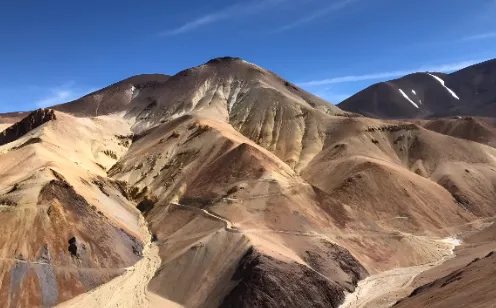
58:56 And it's very simple to understand. I should bring a picture of Salta city. Please, if you are on the other side, Google Salta city. You will see that the city of Salta is embedded on what is looking like a jungle. In the north of Salta, there are monkeys on the bush. So it's very green. What you see here, it's varient rain with no vegetation because of the altitude. This is not that high, but the altitude makes vegetation not to grow here. But during January, February, and March is the rainy season. We have washouts on our roads. There is a lot of rain coming in. During winter we get some snow, which with this blue sky will melt very quickly and all the water goes right into what you can see on the screen. This is a very big mountain with these 2 big valleys.
59:52 These are the capture areas. That's where all the water has been captured and the water goes into the mountain and it's stored into the mountain. So we have a lot of underground water that we can pump with different pumps. We have 2 water wells that get water to camp. We have 1 water well on the drilling zone that is keeping us water for drilling. And we have a historical tunnel that is flooded and that we are also pumping water from there. So there is plenty of water.
1:00:24 The rain that we get is the rain that falls there and doesn't cross to the other side of the Andes. And that's why on the other side it's so dry. That's where you have the Atacama Desert. But it's just because of that, because these mountains will catch all that clouds, and there will be a lot of rain on this side, and then the clouds will disappear. And on the other side of the Andes, in the Chilean side, things are very dry. Probably they are blaming us because we don't give them any water, but anyhow, that's nature. We have a lot of water here. Now, I appreciate it. Now, we are at the hour. There are 3 questions left. Do you have an extra 5 minutes just to run through them just so we can get them. Yes, let's do it. OK, awesome. Our Karaglanis asks, will this high 95%, 96% recovery grade lower mine build capex?
1:01:11 Yes. So that's what we were saying, that if we have this very huge grade with the fantastic flotation results, it means that the capital expenditure for building a plant is going to be smaller. If we would have very complex things, If we would have to do many cycles, if we would need hundreds of tanks and a lot of things here, then the capital expenditure gets bigger because you need a bigger plant. When you see that your rock is floating in the very first 2 minutes at 90% when you have these fantastic froth with this very high grade, when you see that you need a little bit of cleaning on your froth, then you start to think, okay, my plant is not going to be that complex. I won't need that amount of construction, something small, it's going to work well.
1:02:11 That means CAPEX is low. But Again, watch on the screen. We have a road and we have a railway. We have the camp already built in there. So our capex is going to be extremely low, even if we have to build a plant. And if we don't want to build a plant, If we want to direct ship the ore, the capex actually is going to be extremely low because we will just need to mill the rock, put it on a train and flip it over, meaning that there is not even need of building a plant. The railway, the road, the power lines, the gas pipeline, it's in there. The camp, it's in there. We have everything very, very, very at hand and that makes the capex to be, it's going to make the capex to be very, very low.
1:02:59 Great. Thank you. Somebody asked, when are you going to see drill results regarding the potential copper porphyry? We need to drill deeper. Believe me, we are biting our nails thinking about that. We are very anxious about that. First thing first, we want to put the mineral resource update out. We are working pretty much on the extension of the deposit, drilling with 2 rigs at this moment on both extensions of the deposit. We want to include as many houses as we can into the resource. First thing, first, this is the low hanging fruit. We are drilling there. We want to expand the resource as much as we can. After that, we hope to go deeper trying to find the co-payor for free deposit.
1:03:46 Great. Thank you. And last one that I think we haven't already covered, this is from Louis in the chat, will there be a 50 to 100 meter step out from hole QVD 469?
1:03:58 Go ahead, would there be? I didn't hear you, the numbers that you say. There be?
1:04:04 Sorry, yeah. Let's say 50 to 100 meter step out from hole 469. QVD 469. 469, OK, yes. So we are stepping away from many of these drills. Some of them have been 120-metre step-outs. We are stepping out in many of the directions, So the technical team is guiding this up. And obviously when we do this stepping out, what we are trying to do is we are trying to cover
1:04:42 what it would be a reasonable amount of metres. So you don't want to go that far that you are going to miss things in between. And you don't want to be that close that again, we are falling into the indicated category because it's 1 drill is too close to the other. So there are considerations to make there, but coming particularly to the question, we are stepping out in most of the directions across the deposit.
1:05:12 On the right side of the deposit and on the left side of the deposit, we have been stepping out on the left side, which is the southeastern area. We have found a lot of shallow zones with mineralization, which is very encouraging. And on the left side, which is the northwest portion of of the deposit, our step-outs are indicating that we have grade on the continuity of depth of the deposit. It continues, But it's telling us as well that crates are getting super interesting down there. In some cases, we drill a drill hole of 40 meters with 0.5 kilogram and the other 1, 40 meters with over a kilogram of silver per ton. So very rich. We are working there. Yeah. Awesome. Thank you. So that wraps up questions for today. I will say thank you so much. I know this is certainly a more technical webinar than I typically could do. So it's exciting to learn new stuff. And Joaquin, thanks so much for walking us through the results.
1:06:16 And so many people join us for technical events. I really appreciate everybody's attention and great questions. If you have additional questions or you'd like to request a meeting, there is that request meeting button at the bottom of the screen. But I'll say Joaquin, thank you so much. This was a really- Thank you, Romeo. Take care. Thanks for attending. Bye-bye. Have a great day, everyone.
Follow Argenta Silver Corp into a list and get an email when it puts out news.
President, CEO & Director at Argenta Silver