Transcript
Automated transcript · Written by software from the replay's audio. It can mishear names and figures; the replay is the record.
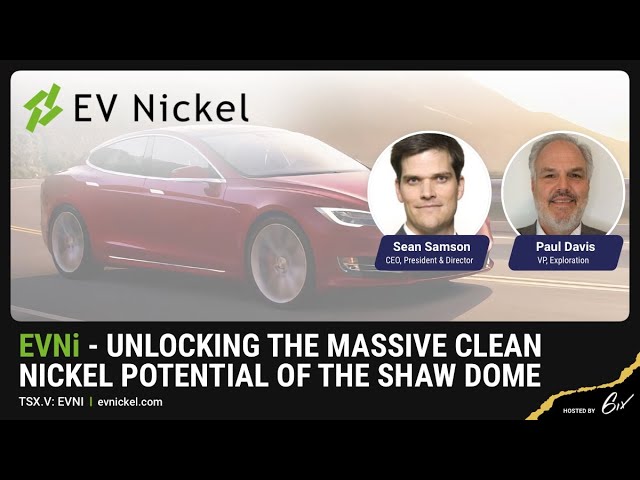
0:08 Well, hello, everyone, and welcome to EVNickel's live summit today, hosted by 6. I'm pleased to introduce our speakers today. We have President, CEO and Director, Sean Samson, And then we have Paul Davis, VP Exploration. Sean and Paul are going to walk us through a company presentation. And then afterwards, we will be accepting questions live. So as a reminder, you can submit your questions at any time on the Q&A panel on the right-hand side of the screen. And we'll get to them when the presentation is over. And as always, the summit is being recorded and available to watch afterwards on six.com. But without any
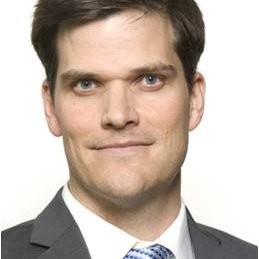
0:39 further ado, I'll hand it over to you, Sean, to get us started. Thanks, Dasha. Welcome, everyone. Thanks for joining today. We'll be running through some slides that you can either find on our website. You can obviously see them on the screen now. And they're backed up, of course, with news releases that are all available on our website and on CDAR. So we'll be making some forward-looking statements today. Dasha mentioned it's a Sean and Paul on today's call. That's us here on the slide. I'm on the left. A bit about my background. I run another junior mining company called Rogue Resources. That is the company that the primary asset for EV nickel came out of. And before Rogue, I've been ran another company called F&I Mining. Prior to that, I worked in majors. I helped run Kinross Gold for a number of years.
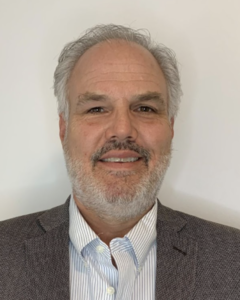
1:32 And before that, my background was in consulting and in the financial markets. So I come at things from the commercial side, commercial perspective, although for the last 15 years or so, I've been working pretty deep in mining specifically. Joined on the call today is going to be my colleague Paul, who is our VP of Exploration, who covers everything from the technical side. And he has deep deep expertise across all stages of project development, including early stage exploration and discovery. And very importantly, and we'll hear about this a little later in today's call, he spent a big part of his career up in Timmins as an exploration guide looking for nickel up in the Timmins camp. So he's an expert on the Kamatiates specifically and the Shaw Dome where we're doing our work. So that's who is on today's call.
2:21 I'll start us out just with an overview. This is our second event with 6. We're going to give the whole pitch of the company and then tell a bit more about what we've done since we last spoke with investors through this channel. Our thing is nickel. Our thing specifically is going through a major change now with the EV boom. So we feel that EVs are going to be driving this new demand category for nickel and the EV companies, the new demand is going to be searching for the cleanest possible nickel. And we think that our assets with Langmuir and the Shaw Dome more broadly, and where we're located, our ability to draw on hydropower, and the fact that our land package already hosts, we know, high-grade sulfides. And that's what this new demand category is going to be going after.
3:15 So a bit of background, EV Nickel acquired the Langmuir Nickel Project for Rogue Resources, another publicly traded company. That's also something that Paul and I run. Langmuir was a non-core asset of Rogue's and we spun it off into this new company last year in 2021. Langmuir has the W4 zone, which has a historical resource at 1% nickel, so good high-grade nickel, of 15 million pounds. And again, that's the class 1 high-grade sulfides that we think that the EV companies are going to be after. So there's a few things that really excite us about where we're working. Generally speaking, our location where we're easy access to Timmins. We can draw on hydropower as I mentioned.
4:01 Also the grade. So we know with this starter resource, we have a W4 that good grade near surface exists on our property. And this is the sort of grade that gets turned into mines. So we look for 1% and more broadly across the Shaw Dome. And we'll speak a bit about this. There's been historic production which has had even higher grade than that. And in addition to location and grade, we just think there's a hell of a lot of potential. So we have an enormous land package over 9,000 hectares. We've identified 30 kilometers of strike length to go after Explorer, and you'll hear a bit about our phase 1 work, where we confirmed that we knew W4 went deeper, but we also confirmed the mineralization extends east and west. So we're a very simple investment story. There's 3 things we're working on. One is to find more nickel at Landmere. 2 is to try to secure more land down in the Shaw Dome, our district.
4:56 And 3 is to begin putting the pieces together and creating a clean nickel business. So that's really what EV nickel is.
5:07 So a bit about the nickel market, we feel as though the new demand categories for the EVs is going to be stressing the global nickel market. We've of course seen that over the short term nickel price with the most recent run and all the discussion about the market being short because of this unprecedented demand. We see that in the in the metal markets. We also see it in terms of the demand growing with EVs, whether it's the overwhelming excitement around the new F-150, the Lightning, with Ford having sort of 5 times the demand for orders that they had expected. Big picture, we think this EV thing, pick your forecast hockey stick, we think the EV thing is going to be very large. And I've just thrown up here a couple market studies, where we can talk about what's going on in 2022 at the price. But if we look out, the forecasts have a gap between what the forecast demand is and the supply.
6:02 And one of the interesting things here is that unlike the other inputs for the batteries, for example, lithium or say cobalt, those are not already global large base metals. Nickel is. So the battery market is not going to be the dominant user of nickel, people think, until 10, 15, 20 years out. Right now nickel is still a stainless steel story. So there's a global demand supply balance that has worked itself out for that current demand. And that demand as we have here is growing at about 5%. But if you put on top of that a whole new demand category with this new growth in the battery requirement, it is very interesting because it puts huge pressure on the nickel supply chains.
6:53 So if you look at the EV revolution, it truly is a revolution. I mentioned Ford and the F-150 earlier. We spend a lot of time focused in on the battery electric vehicle companies, the standalone, the startups, you know, Tesla down to Rivian and the others. But if you really stack up what's going on with the other OEMs, the other car companies, their plans on EVs, and this is frankly created a month or 2 ago, it's actually shortened out and strengthened up over the near term. So the genuine car companies, the companies that create most of the cars on the road today and the commercial vehicles are taking this very seriously and they're increasing all of their EV plans over the short term. All of that of course adds up for needing more nickel and the battery inputs, the metals.
7:48 I mentioned Tesla. These new nickel buyers are, of course, pushing suppliers. So it's not just a function of finding and getting more nickel into the market. The EV companies, now they require, talk about the footprint of their supply chains. And they're making raw materials a priority to find the volume, but they're also pushing the metal producers to come forward with as close to carbon neutral a product as they can. So It's very interesting because if you look at the globally integrated
8:19 nickel supply chain, the nickel industry, we have currently where nickel is taken out of the ground in 1 part of the world, and then it is moved to another for 1 step and then to another for a final step. And it has been this way because it has developed that way. But now you have this whole new demand category who are asking questions about why is it this way? And of course, all nickel juniors talk about Musk and what he said a battery day a couple years back. The big focus, of course, was the quote I have on the left, which is, we need more nickel, which he has said repeatedly. But the thing that I'm very interested in is how he was able to hone right in on the dynamic of our global supply chain, which is, as we've quoted here, insanely complicated, where you have nickel atoms coming out of the ground in 1 part of the world, going around the world, going around the world before they can buy them to put into batteries. So these are the sorts of things we're hearing from this new demand, And we anticipate that there's going to be not just a split in the nickel world between class 1 and other, but we think within class 1, there's going to be a greater focus on where the carbon price is attached to that nickel. And we think we're in very good shape on that front. So we're being pushed by suppliers by this new demand category. It's not just a function of find more nickel and back up the truck and buy it.
9:40 But we're going to have to start telling a story about what the carbon cost is of the nickel we'll be selling. So talking a bit now about the Shaw Dome and where our asset is. So we're just south east of Timmins. So you see on this map, we are about 50 kilometers away. It's an easy drive. Most importantly, our staff comes from Timmins. So this is a mine where you live at home and we're able to draw on this wonderful regional mining camp. About 85,000 people. It's historically been a very large gold producer and as I mentioned before it's served by clean hydropower. So there's hydropower in this part of the world down to the site. What this means, or near to the site I should say, what this means is the steps of the of the production that we can electrify, drawing on the hydropower, has a minimal carbon cost attached to it. So it's a great place to be located. More specifically, our project I mentioned before it's over 9,000 hectares. We've got 30 kilometers long of commodities, So these cometitic units across our property.
10:48 It's open all season, there's a gravel road right to site, and we have power nearby. We have our starter resource, which is the W4, which at 1% is 15 million pounds. That's that red star on our Langmuir project. But what we're very excited about is the historic production. Down on the Shaw Dome, because we'll talk a bit more about the geology in a moment, but down on the Shaw Dome genuinely has produced nickel and nickel at grades that are the types of grades that people build mines around. So 1 and A01 and 0.75 percent. We have our starter resource at 1 percent and we're very excited to figure out what more there is at Langmuir and then more broadly across the Shaw gum. So now I'll just talk a bit about the project. So it was initially the W4 deposit was initially discovered in 2007.
11:41 The predecessor to Rogue Resources came out with a resource report in 2010. Report in 2010, and then the nickel market sold off and it sort of sat on the shelf and had resources. Last year, as I mentioned, we spun it out from Rogue into EV nickel. And in the spring of last year, while a private company, We came up with a new technical report and then very importantly we ran all the geophysics Paul's gonna run you through that and then Paul's gonna run you through the results of our phase 1 drilling So the drilling we did last summer He'll explain how we confirmed the mineralization extends up and down the front, and then we knew it was open at depth. And then this year we're doing phase 2 drilling, as we call it, and there'll be some net testing, and then likely we'll come out with a new resource later this year. So that's where the project is at. In terms of the structuring of the company.
12:34 Q1 of last year, EV Nickel acquired the Langmuir Nickel project out from Rogue Resources for a small cash payment, a big hunk of stock, and then a future payment based off the size of a potential resource on Langara. And then immediately, EV Nickel closed the financing of $2 million into the private company. That was done at 30 cents per share, and we'll talk about that a little later in the cap table. Then by December, so December 2021, we did our IPO and we brought in 5.4 million, a split of about three quarters of that was hard dollar, a quarter of that was flow through shares, and that was done at 75 cents. So that was when we went public in December of last year. And with that funding, we're going into this year's program, the phase 2 drilling.
13:25 Now I'll hand it off to Paul. He'll talk a bit more about the deposit, what we've done and what we plan to do. OK, thanks, Sean. Thank you for that great introduction on my past as well. I'll add a little context that during my over 30 years of experience, the majority of it has been spent working on Comandite-hosted nickel deposits in northeastern Ontario. Nickel deposits in
13:46 northeastern Ontario. During that time, I discovered 6 new zones of sulfide mineralization as well as advanced 3 projects from expiration through to production, which included all of the permitting side as well as writing the closure plans and getting them approved by the government. Now, on this slide, the figures on the right, that is the historic SRK open pit resource as completed in 2010. On the left are some pictures of the drill core that has been pulled out of the W4 deposit. But between 2007 W4 discovery and the 2010 resource where there's a total of 104 diamond drill holes completed on the W4 zone, where EV&I completed an additional 20 holes in the Phase 1 program here in the spring and summer of 2021.
14:38 The 2021 drilling was designed to allow F&I to see the style of mineralization associated with W4, as it's uncharacteristic with the other deposits that I've seen within the Shaw Dome. It's composed mostly of pentlandite, and it's hosted within a chromatic prototype flow that's non-magnetic, so that is also unique. The W4 is exciting deposit because it's shallow, it's near surface and sub crops just below the overburden. And with the sulfides being composed almost of 100% pentlandite, even a small amount of sulfide, if you take a look at picture B, there of the disseminated sulfides, It's about 3% sulfide in this chromatic prototype, and that actually represents about 1% nickel in the assay. So it's really, it's unique, it's high grade, and you really have to take a close look to make sure that you're testing everything that has a potential to host nickel.
15:35 Now the mineralogical composition of the sulfides also indicate that the nickel tenors associated with W4 are extremely high. The nickel tenors are a theoretical 100% sulfide what the actual different metals would be in it. So it's an estimate of how much nickel would be in 100% sulfide. So at W4, it ranges between 20 and 45%. Now the nickel tenors can be indicative of what you could be expected to see in any type of concentrate that you would develop where you're actually pulling out the sulfides and putting it into a sulfide concentrate. Other styles of mineralization observed at W4 include the massive sulfides, semi-massive sulfides, stringer, and blebby sulfides. There is a little bit of copper associated with the deposit where the nickel copper ratios range about 10 to 1 and there are platinum and palladium credits also associated with the W4.
16:27 Now I'm quite excited about this style of mineralization. First because it's shallow, it comes close to surface. It holds together nicely as a coherent body that tends to plunge down this interpreted paleotopographic lower channelization. It has really high nickel-tenor sulfides, and this also now expands our expiration potential along the Langmuir property, along these chimaedic horizons, and also the greater Shaw Dome as a whole, given that this is a sulfide with a high nickel tenor, and it's associated with a magnetic load. So now we'll move on to slide 10, which is the deposit itself. The initial historic resource completed in 2010 calculated approximately 15 million pounds of nickel at a grade of 1%.
17:21 This historic resource was done to 43-101 standards with the CIM standards being applied to it. It's just given the age that it's not considered current at this time. The distribution of sulfides on the air surface, along with the geometry of the deposit, was considered conducive by SRK to open pit extraction with 87% of the mineralization falling within that projected pit shell. We also feel that there's room to expand the boundaries of the deposit to the east and west, but significantly more down plunge along the interpretive channelization, where there is significant potential to expand the resource and increase both the size and the grade of the deposit.
18:08 Now, slide 11. When EV Nickel first acquired the Langmuir property, the very first thing we did was we contracted a private company out of Colorado called Condor Geophysics and it's under the direction of Ken Weatherly who's had a lot of experience in these types of deposits. Now Condor took the recent historical geophysical surveys completed on the Langmuir project including an airborne VTEM survey as well as the borehole geophysics, and using their proprietary modern software and algorithms, which with much stronger processing capabilities available today than it was in the past, that they completed identifying the different conductive zones within the property boundaries without being told where the actual mineralization occurred. I wanted to make sure that this was a blind type of reinterpretation so that they identified every single potential conductor on the property not being biased by kind of knowing where things were before. Now after Condor highlighted every potential target, the anomalies were refined with our understanding of the geology and morphology of the W4 and other deposits in the Shawdome to rank our geophysical tirates and prioritize our exploration programs moving forward.
19:26 During this interpretation, they identified 6 high potential targets. One of them was already where the project drilling had been concentrated on the W4. And I think this kind of reinforced our strategy of going in blind that they identified W4 as one of these high priority targets. But really, what I find interesting is that Condor targeted previously unidentified anomalies and lets us think differently about the project. One of these anomalies being the TZ3 anomaly located about 8.5 kilometers west of the W4 deposit. Now we're currently in the process of looking at TZ3 with our 2022 drill program and quite excited by what potentially could come out of that. So now with the condor work in hand, we chose to start last year around W4 zone. With our phase 1 campaign we confirmed that W4 mineralization extends east and west on trend and remains open at depth. We also identified nickel mineralization to the west of W4 which indicates that the flow sequence associated with the W4 deposit is still sulfide saturated to the west and that increases the potential of discovering additional nickel sulfide mineralization associated with that flow sequence.
20:42 It is also understood with these chomatic type deposits that once you discover 1 nickel deposit in a chomatic flow sequence, that the likelihood of finding other deposits associated with the flow sequence increases significantly. Now last summer's drilling had some nice hits, including 8.66% nickel over 1.1 meters and good consistent stretches of mineralization with grades around the historical resource grade. We also planned our drill program to intersect gaps in the resource model where resource cells were either given a 0 value or not generated at all and included the intersection EV 2109, which hit 15.7 meters of 1.14% nickel on the Eastern edge of the W4, adding to the known mineralized extent of the W4 zone.
21:31 As Sean had said earlier, our focus is on chasing the types of deposits that have with the grades that have turned in the mines historically, and definitely W4 falls within that range.
21:46 So here early in 2022, we are into our Phase 2 program. I was up in Timmins earlier in the month, and we have now started the 10,000-meter diamond drill program on our Langmuir project. We've contracted with a local diamond drill company that is fully First Nations owned. We were attracted by their focus on safety and the environment. They were at competitive commercial prices and they are very dedicated to making this Timmins project a success. The Langmuir project is a very good project for drillers because of its location. It's only about 30 minutes south of Timmins. These drillers can live at home, sleep in their own bed, have a shower every night, and see their families. And that makes it really an attractive project to work on versus, let's say, one of these isolated fly-in, fly-out type of situations.
22:36 I think this is we're getting the best people that we possibly could on this project and I think it's a good indication of what it will be like when we're running it as a business and advancing these projects. I know Sean will touch on this again later. Our first target is TZ3. It's located 8.5 kilometers to the west of W4 along the same Kamatitic trend, and I'm excited to see what we will discover and be able to review with you in the coming months from our drill program. After TZ3, we'll swing back to the east towards W4. We'll take a look at other associated zones around W4, including W2, as well as complete some holes for network that we plan on completing on W4, and take a couple of deep shots to confirm the down plunge potential of W4. It's always really exciting to drill but from my perspective this is an extra interesting project because some of these condor carts have not been touched at all And it's a chance for potential new discovery in just in Tim's backyard, one of the best service
23:39 mining towns that there is in Canada. So I'll pass it back to Sean now. Yeah, thanks, Paul. Yeah, so again, we're very excited about what we found out from phase 1 and what we're getting at now with phase 2. You heard Paul mention that these targets have not been explored before, so it's always exciting getting into a new area. We're going to try to figure out why we have those anomalies. But we do hope that we have good news on that front. But it is, for the most part, pure exploration in terms of We've identified the targets, but we're out there and they have not been drilled before. So again, it's worth going back and looking at the size of our project with the land we're land package so that 9100 hectares, and then what exists in the neighborhood. So the Shaw Gome really is a new but old nickel district in that it has had historic
24:39 production on the Shaw Gome. And there are, the Redstone mill is up and functioning. It operates as a tool mill for various producers, primarily gold from Timmins, and some comes up from Sudbury. But the very interesting question, especially for new investors, would be, why does such a thing exist in Timmins backyard, as Paul referred to it. And I think for a couple of reasons, we can explain this 1. One would be that Timmins has really been a gold camp focus And the nickel focus in this part of Ontario has been down around the sulfides on the Sudbury Basin to the south of Timmons.
25:25 You heard Paul mention he spent a huge part of his career up in Timmons, often as the nickel guy in the gold camp.
25:34 We do know across the Shaw Dome that the land and the assets are held across various private companies. We are the only publicly traded junior company that has the shoddow assets as our main focus. So there's real opportunity here in an area where there has been historic production. And again, mineralization with the grades that tend to get turned into mines. And I think that's a real thing that investors should be focused in on is the grade of the deposits. So on this slide, we have on the left, the overall geology of this new district, the Shaw Dome, which shows you and these commadiates, the commadiatic flows that Paul's been referring to, are indicated by those black squiggly lines on the left from this government geology map of the district. But what we try to do here is to show in the geographic footprint that we're talking about on the Shaw Dome, so outlined there on the left, is the same geographic footprint as we show on the right, which is the Cumbalda dome in Western Australia, which has been a hugely prolific producer with over 50 million tons produced since the 60s from the Combalda dome. But over a relatively small land mass, you have many, many, many, many producing mines along these flows. So
27:04 the flows on the right.
27:06 On the Combalda, they run primarily north south, but we're talking with the commodities on the Shadome are east west, and we're really excited to figure out what more we can find, Because you heard Paul mention that once you, in these commodities, once you're into one deposit, they tend to be sequenced. So we're on one of these sequential trends, and it's exciting to figure out what else could be there. So when I think of the potential of the Shaw Dome, it's as though we are now trying to figure out if it has the sort of mineralization
27:40 as they have in Western Australia with Kumbalda, which are very similar geologies, also in the Kematiates. And Paul didn't mention this, but he spent a part of his career down in Western Australia, again on the Comadegates. So we're trying to figure out if our new district, the Shaw Dome, could potentially become a type of producer like the Combalda in Western Australia. So our excitement around the Shaw Dome is its location. It's close to Timmins, as Paul mentioned, our workers and as we develop this project along, It's the kind of place where you can attract good labor because people eventually get tired of doing fly in fly out. So we love the location for being able to staff, but also because it's serviced by hydropower.
28:29 Secondly, of course, grade, grade of the deposits. So the mineralization we've seen so far and the mineralization we hope to find, this is in the area of the grade that gets turned into mines. So up at 1% or better. And then the potential. We're looking at the Langmuir project. It's an enormous land package. We have a huge amount of strike length to go and look at. And on our starter resource at W4, Paul ran you through those drill results. We know it's open at depth and we've confirmed the mineralization extends up and down the trend. So you've seen a couple of the team here. We have a small, tight group. Again, I come at things from the commercial side. Paul covers off the technical side. Also on our management team, We have a CFO who is a seasoned resource industry guy, Travis.
29:20 And then also very importantly, leading our team on the ground up in Timmins is Phil Vicker. And Phil has extensive experience,
29:29 worked with Paul and with me for many years, running teams, exploring and finding and developing along assets. And he has spent a lot of his time back in the Falconbridge days on Raglan, similar flow type deposits. And he has a lot of experience on those, plus extensive experience with the big ore bodies down on the very prolific Sudbury Basin. So we have a wonderful team in place right now for what we need to do, which is going out, finding more nickel on Langmuir, going and trying to get our hands on more land, and then beginning to add pieces to the story of the clean nickel, the clean nickel production. We'll add to this team. We have extensive network across the industry, but we're excited to build from what we have.
30:16 And we think the team is very well suited for exactly what we're up to in 2022.
30:22 If I go more broadly at the governance level, our board, very importantly, 2 of our board members are from Northern Ontario. Linda is an environmental expert based up in Timmins. Michael Fox, I've known him since I was elected to the PDAC board with Michael. He's based up in Fort William, near Thunder Bay. He has extensive contacts across both the Northern Ontario community and also reaches into government at various levels. Rounding out the board, we have Gadi, who chairs our audit committee. He's an accountant. And then we have a well-connected, Toronto-based investment banker, Stephen Delaney, who came from the Rogue board, representing the Rogue shares, but he has extensive experience, especially in nickel and in helps us with the transactional and capital market support.
31:17 Talking a bit about our capital structure. So we're traded on the venture EVNI. When I ran this slide, we were at 30 cents. We're ticking a bit higher than that now. Breaking down our share ownership, it's pretty straightforward. We have Rogue, who owns 6.6 million shares. That was from the original Langmuir transaction. With that original transaction, a founding group came in, got close to 10 million shares. I'll talk about lockups on the next slide. Then we brought in, I mentioned that March private round, March last year, that was close to 7 million shares. And then 7 million shares went out in the IPO. So we have a very tight share structure with only 30 million shares outstanding.
32:02 So seasoned investors in companies our size would know that with a tight structure like that, a little bit of news or a little bit of buying interest should be able to move the stock. When I ran these numbers, we were trading roughly 30 cents as mentioned. So 15 million market cap. I'll come back to that with a comparable slide and show you how that stacks up against some similar companies. And importantly, we have the majority of that cash from the IPO at the end of last year. So all of the work we've talked about for phase 2 drilling this year and running the company, we are cashed up for. So that's important to mention. Now, lockups. So this is an important part of the elephant in the room, which is what's going on with the shares.
32:49 So I'll run you through what our lockups are. So we have the majority of our shares in the hands of Rogue. So that's the other half I wear and the founders group. So that's more than 0.5. And those shares are slowly coming out over a 3 year lockups over 36 months. On top of this lockup, I can confirm that we have many of those shares voluntarily signed off. And in the case of Rogue, it's all in our public filings, that it's used as security against debt that Rogue Resources has. So those shares are not coming out on the public market. So that block, the more than half of the publicly available shares are for the most part locked up. Then we get into the holders from the 30 cent round last March, and those come out in waves, 20% per month, onto the market.
33:44 And we especially saw those in that first month of trading. So the end of last year, when we did the IPO at the beginning of December, after, as everyone knows, a wonderful year for investment returns, folks were, I'm told, chasing tax losses. So we saw a lot of dumping of the shares in December when the stock came out at 75 cents after the IPO and 20%, 1.3 million shares or so came out for trading in December. So we did see a lot of those shares come out of the market. And that's really what hit the stock price. Now we're into a new calendar year, a new tax year for most people, and we've seen much lighter volume. So that January 3rd tranche of stock coming out, we have not seen as much flood the offer from that 30 cent round.
34:36 And it's been a lot lighter in the market. So that was the 30 cent round, which people came in last March, and I suspect we're trying to lock in a gain on some. But that's what really chased that stock price down in December and the first part of January, from our perspective. Then that last piece, the IPO round. So the 7 million shares that went out at 75 cents, those were immediately free trading. And I would suspect that unless someone gave me money at the beginning of December with the IPO, and then was selling in December to immediately lock in a tax loss, that seems like an odd strategy. So I suspect that most of those shares and hopefully some of those investors are taking part in today's meeting. Most of those shares are watching to see if we're able to deliver on our plan of finding more nickel at Langmuir, getting our hands on more land and putting together the pieces of the story.
35:31 So that's where the 30 million shares sit and we do have pretty strong lockups, especially on the more than 0.5 that sit in that founders and rogue pool. So again, I mentioned comparables. So taking our, let's say 15 million equity value, comparing across a few metrics, these are who we see as our comparables for investors to line us up with. So I take this with a grain of salt that I'm showing you right now, a slide which compares my company valued at $15 million equity value, and then a company like Talon, which is over 500, or our friends up in the Timmins camp, Canada Nickel, which is up over 300. But bear with me, I will sort of walk you through how I think about this.
36:18 So first and foremost, you've heard us mention a number of times, grade and the type of grade that gets turned into mines, you know, historically gets turned into mines. It's very difficult in the nickel business to do a new mining company from a standing start with a grade less than 1.4. You know, it has been done. There's an example in Australia, but it really, if you dig into that a bit more, you realize that it wasn't from a standing start. They were using existing infrastructure. So for companies that are trying to start up new nickel business from a standing start, it's very important to focus in on what type of grade mineralization those companies are focused at. So that's the shading of these bars, which has the book ads that has EV nickel at one end and then Talon and Jaguar, the Jaguar asset down in Brazil.
37:09 So let me talk about the far left. So if we look at Alexo Dundonald, which is another nickel sulfide in Timmins, they're valued much higher than we are, same grade of our starter resources. And I am very excited about our land package to try to find more nickel. We've got 3 times the hectares and we've got double the strike claim. So I'm very excited about our growth potential of the resource and the mineralization potential of what we have at Langmuir as compared to directly in the Timmins Camp, valued at more than double what our valuation is with class 1. So I genuinely think that if you look at our land package, the starter grade we have at 1% and the amount of strike length we have to go after, we have the potential to be growing out a genuine nickel business that we can start putting together the pieces of a clean nickel story and begin to address the growing demand for the electric vehicles.
38:13 So it may seem like we're very low valued at this moment, but I'm very excited about, you hopefully heard the exploration potential from Paul, and then I am really focused on how we can create a nickel business. I think we're in the right place, We have the right type of grade and we've got an enormous land package with a huge amount of potential. So to sum up, you know, why would EV&I be seen as a great opportunity now? I think it's a it's a wonderful play on the electric vehicle boom, where it'd be a top quality, I refer to it as a pick and shovel style investment. Everybody thinks about who are the guys that made the money on the California gold boom. Well, it's Levi's Jeans and Prospector, guys who were selling the picks and shovels.
39:03 That's where this concept comes from. If we look at this EV boom of today, you know, how do you play that as an investor? Well, you can try to chase the EV companies. They've certainly seen wonderful returns on their valuations. Or you could take a step or 2 up the value chain and figure out what is that really important metal or input that's required for these EVs to get their job done. And that's really where we're positioning ourselves. So I am confident that the world needs more nickel and they're looking for the high-grade, clean nickel potential that we're trying to build our business around. Decarbonization is a huge issue and we are trying to be able to source the material to help the EV companies address the challenge of decarbonization.
39:49 So very simply, I'll come back. There's 3 things we're working on. 1, finding more nickel at Langmuir. That was the majority of today's discussion with our phase 1 results and our phase 2 plans. Secondly, we're trying to get more land and assets in the shawdown. And thirdly, beginning to put the pieces together of the clean nickel business. So Dasha, that's it from us. Do you want to jump into the questions? Yeah, absolutely. Thanks so much. So yeah, we're going to jump to the Q&A portion. So if you do have a question, feel free to submit it now. We do have a few here. Sean, do you see EB Nickel as a Nickel explorer or a developer? Right. Good question. So I know investors are always trying to bucket those groups. And frankly, it's seen as the evolution of an asset as well, right, between discovery and developing along.
40:44 From our perspective, we're trying to create a nickel business. So our intention is to identify more and more nickel mineralization in the ground and start putting together the parts of developing a nickel business. So we are currently an explorer with a starter resource on our books, historic resource on our books. We are intending to do parallel track. We're gonna find more nickel, we're gonna get our hands on more land, and we're gonna start putting together the parts of the clean nickel business. So in response to that question, we're at an exploration stage. But from my perspective, we're building a nickel business. Got it. Thank you. And what do you think of nickel as compared to the other battery minerals? What is your view on the winning battery chemistry?
41:33 Yeah, right. So here's a contrast, right? I have 1 slide where we talk about the nickel boom. And, you know, we are not with McKenzie. There are experts for that. We are experts on finding, developing and creating a nickel business. So I am confident based on what the experts are saying that this new demand category for nickel is going to be a big growth area. I do try to stay apprised of the alphabet soup of nickel chemistries. And it seems as though on the tenets of how long the range of the battery can be, the speed of the recharge and the number of cycles you get on the recharge, Nickel continues to be a winning component across battery chemistries.
42:20 So I don't spend as much time as it seems. Some of my colleagues do running, developing nickel companies on sort of a macro nickel focus. But I think there's experts in that. And I'm certainly not an expert on the battery chemistry. But from my perspective, there is a consensus that across those experts, there is a growth in future demand for nickel. And it seems as though across the various chemistries, the consistent thing, consistent metal that's not being thrifted out is nickel. So, you know, EV nickel doesn't necessarily have a view on those 2 fronts, but we're quite confident that the thing we're building is to address a demand that will be real. Thank you. Rock has a question here. He's asking, are your long term plans to take advantage of the existing Timmins mill or to build your own mill?
43:16 Yeah, that's a great question. So we are, it's a small camp. We're in touch with everybody. Our long term plans are to be producing nickel. And that also means, you know, is it a nickel con or nickel sulfate? We're working on everything. So right now we do not have firm long term plans, but we're looking at all of our options. And the exciting thing is we have those options. So we're in a camp with lots of different paths we can go down. We're focused on finding as much nickel to justify a nickel business. So we're talking to all those people, and we're gonna be exploring different paths, whether it's go brownfields for a processing plant, or whether it's to go with an existing processing plant or whether it's to build your own. On that spectrum, we're looking at different options. We're going to find as much nickel as we can to justify us getting into that part of the chain. We're having those discussions already. We could go one of various paths.
44:19 And can you drill all year round in the area and south of Timmins? Paul was most recently up in the minus 40 weather. Paul, can you speak to that? Yes, exploration in the Timmins area is doable, you know, year-round. I've explored in the Shaw Dome for many years and we have no issues drilling in the summer, the winter, spring or the fall. The only times that you see some requirement to maybe take a break for a couple of weeks is on the shoulder seasons when you're getting the spring break up in the fall freeze up. That would be the 2 times that you don't really try and do too much and the fall usually corresponds well with the hunting season. So it's also good not to be in the bush at that time. Makes sense. Thank you. Or have guys who don't want to be in the bush?
45:07 Right. Well, actually, that fits well into my next question. How is access to people and the drill rigs and labs? Is that impacting your plans at all? Paul, you want to touch that? Yeah, I'll take that. Timmins has been a mining center since the early 1900s and it really acts as a regional hub servicing all the mines and different exploration activities within that area of northeastern Ontario, including places like Detour Mine, Kidd Creek, the Dome Mine. And so they have developed all of the required service industries, including diamond drill centers, part centers. Also, it's a great location to get experienced and skilled laborers that have all of these past opportunities for mining and exploration.
45:54 And we see it as a really quite an easy place to work out of. Great. Thank you. And what do you think is happening with the recent stock trading? Well, that's something I spent a huge chunk of my day on, both talking to the traders, talking to our existing investors, talking to new investors, trying to figure out, you know, when are we going to start marching the stock back up? I touched on a bit about the stock that I think flooded the market in December. It was primarily the part of the 30 cent round that came out and the share price was still above 30 cents. So people were trying to sort of lock something in before year end.
46:45 That said, volumes have dropped off significantly more recently. And I can tell you that the ratio of my calls between angry existing investors and interested new investors has shifted. So the key thing on the share price is to be telling our story and attract new investors to the bid. So we are setting out what we're doing. We've already begun delivering on what we said we were going to do. Our approach is that we'll continue to set out what we say we're going to do and then do it. And then we're telling that story as broadly as we can. So hopefully through that process, we're able to continue attracting new investors to the bid.
47:34 We are believers in the overall thesis here, which is EVs are going to boom, they're going to need more nickel, we're going to find more nickel, we're going to put together a clean nickel story. That's compelling with investors. And Again, the ratio of existing to new investor calls that I'm having, is really begin to tilt in January to where people are attracted into the story. That's not of great comfort to folks who are underwater at this point. But new investors, you saw that on my top slide, new investors are, you know, there's a lot of appeal here where we are deeply undervalued for what we have currently and what we're saying we're doing.
48:19 So I'm really excited about the stock at this stage, partially because I'm drawing on the enthusiasm of new investors coming into the story. But we're still working through, and it's this sort of teething process of coming out of the IPO and working from sort of short term investors to long term holders. But I can tell you there's a lot of interest in long term holders who are sort of circling the stock And back to that small share count, where once you get a few real investors on the bid, or some real news, or a combination, it should work to begin changing the story of what's happening with our shippers. Absolutely, Thank you. Sergio has a question here. Do you anticipate construction of open pit or underground mine workings?
49:10 He says that the site seems to have a lot of surface water. Is that a potential risk to permitting? Yeah, our focus is on trying to find what we have at W4 again and again and again. So that's high grade stuff as near surface as possible. So our ratio between the pit and the underground portion of our existing starter resource at W4 is a good one. It was a 9 to 1, or strip ratio is likely 8 to 10 for every one, but it's a good strip ratio to be able to chase that sort of grade with that shallow mineralization. You heard Paul mention the water in the area across the shall dome. It's a complication in the shoulder seasons for drilling.
49:58 But from a mine construction and an operations perspective, there are permitted, there have been permitted mines on the Shaw Dome with a very similar environmental situation. So in terms of managing the water, when you're talking about getting into mineralization as shallow as we would be with a potential W4 mine. It has been done on the shallow dome and we suspect it would be done again. From a permitting perspective, there's always the considerations around baseline testing, especially of water. That's something that we know well. Paul has extensive experience in that. And it's the sort of thing that has been done and has been permitted before in the Shawdone. Paul, would you add anything on that? No, no, I think that, like, you know, you can, You can find solutions to every problem. Water is something that every mine has to deal with.
50:51 So it's something that has been done most recently at the McWaters Open Pit, which is just to the north of our project. So I think it's something that can be tackled and overcome. Great, thank you. And again, the near surface high grade mineralization we think is very compelling to be able to build a business around. Perfect. Another question from Rock here. Do you have a projected timeline for news releases over the next 6 to 12 months? Yeah, so we sort of laid out the work we're doing, especially around phase 2. Paul mentioned that we'll have news on that first target in a couple of months. So in terms of predictable news flow, I think the 10,000 meters we're drilling in phase 2 is really going to be the focus for the next 6 months.
51:40 In addition to that, sort of in pathway number 2 of the 3 things we're doing, Primarily that's around transaction activity. That's always tough to predict, but we do hope that we have some news about getting our hands on or access to land and assets more broadly across the shodron. Broadly across the shodron. So in track 2, it's tough to predict that one. On track 3, the parts of the clean nickel story, we do have news flow anticipated on that over the coming 6 months as we begin running the studies and talking about areas like carbon sequestration and other sort of neat things that we think we can do with the mineralization to be able to have a low carbon, low carbon potential production from these deposits.
52:31 So it's tough to predict, especially on a rise of like 6 to 18 months. We can say, though, we're doing 10,000 meters of drilling. News will be coming out from that. And again, that, as Paul mentioned, is new explorations. These are targets that have not been drilled before. So seasoned investors know that can go one of a number of ways, but we're really excited to see what comes out. And that's predictable news flow over the next 6 months is related to the phase 2 drilling. Beyond that, transaction type stuff for getting our hands on or access to additional assets. That's tough to predict. But then that final piece, the clean nickel story, we are working on that. And that will be news flow from learning more and more about that over the next 6 to 12 months.
53:20 Great. Thank you. Quickly, I think we have time for one more question here. Do you currently have the funds for your phase 2 drill program? Yeah, we do. So we're cashed up from that IPO. So with our current cash balance, we can, we have budgeted, we've got the funds for phase 2 and to be able to run the company for more than a year. So we don't need to access the markets at these prices. Of course, we're a junior company and we will raise again, but I do hope that we'll be able to have the story catch up to the valuation before that happens. And we'll try to merge the stock price up. Absolutely. Well, thank you so much, Sean and Paul, for joining us today, for your presentation and the Q&A. And thank you for everyone who tuned in and asked questions. If you do think of another question following the summit, feel free to reach out to the eBinickel team directly. Their contact information is on the slide here. You can also find more information on their website, abnickel.com.
54:21 But before we close out, I'll pass it back to you, Sean, if you have any final remarks. Closing thoughts. Thanks everyone for participating today. Hopefully you