Transcript
Automated transcript · Written by software from the replay's audio. It can mishear names and figures; the replay is the record.
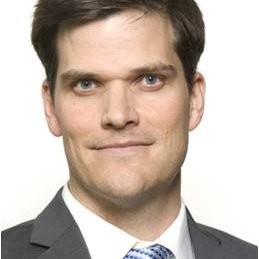
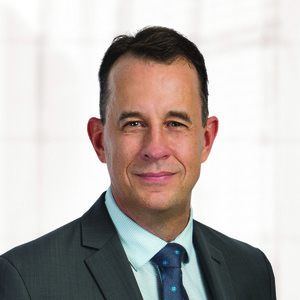
0:08 Ladies and gentlemen, depending on where you are in the world you're watching this from, it's fight night. So welcome to today's pitch battle. And we've got a bit of a bullfight on our hands, at least a nickel bullfight at least. Our contenders today have more than 50 years of combined experience and each has the accolades certainly to prove it. Representing EV Nickel, we have Sean Sampson, their president and CEO, who has more than 20 years of management and financial experience, was most recently the VP and head of corporate development at FNI Mining for 4 years, including a period of 6 months as interim COO, responsible for safety, mine development and operations at a 250-person underground mine near Sudbury, Ontario. And in our other corner, we have David Christie, representing Orford Mining. David's a professional geologist in Ontario, the Northwest Territories, and Nunavut, with more than 30 years of experience in the resource sector. He was a former vice president with Goodman & Company Investment Council, and Vice President of Dundee Resources.
1:03 He's the former President, CEO and Director of Eagle Hill Exploration, a mining equity research analyst at TD and Scotia Capital, and previously the Director of Osisko Mining, E-Cobalt Solutions and Condor precious metals. Gentlemen, welcome. For everyone in the audience, this is how it's going to shake out today. Each of our contestants is going to review a snappy pitch for their respective companies and you, the audience, are going to put it to them using the Q&A tab on the right-hand side of your screen. Hit them with the questions that you want asked. We're here for a good time, not a long time, so be sure to ask your questions promptly and when you come up with them. Let us know
1:40 in the public chat as well who you think's winning. Today's event is, as always, being recorded and you can watch the fight on demand in the coming days on Six.com. With that, let's begin. Since that point in time, we've raised over $28 million to fund exploration projects, mostly in Quebec. And I'm gonna go through those projects briefly here. There's some forward-looking statements, have you read those at your leisure. So quickly, 3 key pillars to our company. First of all, the West Raglan Nickel Project, 713 square kilometres of land, 100% owned by us. We have YLU Metals earning into that project that could spend up to $25M to earn up to 80% and complete a bankable feasibility study. We're carried until they do that. And we've got some good results for our 2022 drilling there. And we're 60km to the west of 2 world-class Nickel mines.
2:41 So we're in a Nickel belt. And the Kegabit Gold project, just sitting to the north of West Raglan is a brand new gold district, 402 square kilometers, wholly owned land. We just finished a drill program there as well, and we found some good gold numbers as well in that drill program. So we'll walk through that quickly. And then last but not least is our Châtelet Regional Gold Project. This is in the Abitibi, close to infrastructure, 260 square kilometers of land, either 100% owned or an option to earn 100%. We just finished a drill program this past year. We got some really good numbers there. We're sitting right next door to the Maple Gold JV with Agnico Eagle. So we'll walk through those 3 projects. Just quickly, I mentioned we've raised up to $28 million since we went public, about 6 in the private stays just before that.
3:33 Like many juniors, our market cap is not doing great these days, but we think in the months ahead as the commodities continue to move upwards, we'll see a bit of a bounce. Alamos Gold is the most noteworthy thing in our shareholder registry. They own 20, almost 25% of us. And we had about $3.2 million in the bank at the end of October. So we're well cashed up to do our programs over this next number of months. So quickly on Kiggevik, sitting in the Raglan Belt, just to the north of our West Raglan project about 60 kilometers to the west of the Raglan Nickel mine. We're in a belt of rocks that no one has explored before. There's a few sort of errant drill holes looking for nickel in this part of the belt. We're in calc silicates. These are the rocks you don't find Nickel in. So the Nickel guys exploring in this belt since the early 80s did not look at this belt at all.
4:24 We found high-grade Gold across this project from end to end in a number of different zones. We are the first people to ever explore this piece of property. It's very much a grassroots project. We don't have 40-years of exploration history to go by. It's basically what we've done is what's there. You can see on this map here, these are surface showings across the property, up to 648g per tonne, so really high-grade numbers at surface. We're working on tracing the source of these numbers back to where they came from. We did some drilling this past year. We found a very large quartz Carbonate area. This is a great sign for Gold mineralization. We've got some numbers up to 8g per tonne, and we've understood better understanding of the glacial terrain in the area. We had a guy named Stu Averill study the glaciology of the project. We've got some amazing targets for this coming year along the annex trend where you see those 648g.
5:20 We're going to be hitting those this coming summer with a RAB drill. Just to give you an idea of the number of showings, this is just glacial till numbers across the eastern portion of the project. You can see all the red dots. This is pointing to really, really high Gold grain counts. This means we're very close to source. And so these are other targets to drill in this same project. So there's like a series of 6 to 7 other projects within the larger 402km2 projects. This is like multiple projects in 1. Moving on to West Raglan, we sit just 60 kilometers to the west of the Raglan Nickel Mine. This is a nickel mine that has the same resources and reserves today as when they opened the mine in 1999. It's one of the highest-grade Nickel mines in the world. They produce at basically negative cash costs right now.
6:09 The Copper, sorry, the Platinum, Palladium and Copper pay for production. The Nickel comes out for free. The resources are, as you can see them there, well over 2.6% Nickel, 0.74% Copper, 0.79% Granite Platinum and Palladium, and a bit of Cobalt as well. We have executed in January of 2021 a deal with Wailu Metals, This is the same group that just had a takeover battle with BHP to buy Norant in northwestern Ontario in the Ring of Fire. So these guys are serious about their nickel. They've been great partners. We just finished our second year with them. And again, like I said, they can earn up to 80% by spending $25 million in the project and completing a bankable feasibility study. So that's going to end up being much more than $25 million if they get there.
6:56 Just quickly on the model here, this is the Combalda style mineralization. So on the right, you see the Raglan Nickel mine. They have 190 individual lenses in 12 distinct zones. So, it's not one big deposit. It's like pearls on a string. This is what we're looking for as well. And we've found a number of these already. Canadian Royalties, which is the southern mine that is operated by the Chinese at Nunavik Nickel mines, is more of a massive, semi-massive kind of deposit with disseminated mineralization, but a much lower Nickel-Copper ratio, 1 to 1 versus 3 to 1 at the Raglan mine. Quickly on what we found, there's 8 different zones here you can see we've already discovered across the property, most of them along the north trend which is the Raglan trend and those similar types of grades with a 3 to 1 nickel copper ratio. When you move to the southern trend that we've got the Big Potato which we've found new numbers there this past summer in our exploration.
7:51 So lots of available land to drill here. Very underexplored at this point in time. So lots of work yet to do. Main zone that we have delineated in a way is the frontier zone. This summer we drilled 3 holes in there. All 3 of those hit to nickel sulphides in them with pyrrhotite and pentlandite, which are the 2 key minerals. And we had some really good grades. We had 13.5m of 0.53% Nickel and 0.19% Copper. And within that, there was 1.56% Nickel and 0.27% Copper. So some really good grades, not as high as some of the grades we've had in the past. There we've had up to 3.2% Nickel and 1.2% Copper over 28m. So some really spectacular grades in the frontier zone.
8:39 So the frontier zone strikes over about a 2.5 kilometer distance, but you can see across this map, which is over 55 kilometers east to west, There's a lot of ground to cover here still. This is the work from this past summer. You can see the results there. I'm not going to go through them in detail, but we had a number of holes that hit Nickel sulfides. The one that's probably the most interesting, the one at Boomerang, We hit new nickel sulfides in a new zone.
9:04 It's the best drilling intercept outside of frontier on the project. So we're quite excited about that. These nickel sulfides tend to be occurring in clusters, so we want to get back in there and do some more drilling. Next year we will probably do a rab drilling on that project as well to cover more more ground. We're currently in the process of proposing our program to Wailu and we'll see where we go for the this year's program. Lastly is our Chattel area project. We have about 4 projects in 4 properties in this area. 3 of them are wholly owned. One of them is an option. We're gonna concentrate on the option property because that sits right next to the Ignico Eagle original gold mine, which is the Eagle Tail Bell. Coincidentally, I worked in this area back in the late 80s for Ignico Eagle, so I know the area quite well.
9:50 The same mine horizon that strikes through the Maple Gold properties, which is the old Eagle Tail Bell Gold mine, strikes through our properties to the northwest, so we're in the right district, we have the right geology, We're hitting good numbers in there. So this winter we're going to try to identify what we believe will be a near surface lower grade mineralized body, similar to the kind of things you see at Manita Gold or at the Cadillac mine that Technico Eagle runs. So lower grade, sort of in the 1 grand kind of range, but very thick.
10:22 That's the plan there. You can see the drill holes where we're drilling. We're going to drill, see what we can prove a continuity there. If we can, we'll get to a resource fairly quickly here. Just summarizing very quickly, we have strong strategic shareholder support with Alamos Gold sitting at 25% of our shareholder registry, massive land position in 2 under discovered gold districts between Châtel and the Québec project, potential for what we believe are multi-million ounce gold deposits. We have a very strong financial and technical partner at West Raglan with the Wailu Group, and of course, working in one of the best jurisdictions in the world in Quebec. Just quickly, just bounce on a few ideas here, 1,400 square kilometers of land, underexplored districts, nickel and gold, a high grade to gold and nickel in the Ragland Belt with Kigovic and West Ragland, and a close to a resource property in Chattel with the Chattel Eagle Project. And we're about to start drilling in the next few days at the Ashtotel Eagle project.
11:19 All right, David, great opening salvo. Sean, I'm going to pass things over to you now to return fire. All right, thanks everybody and thanks for joining. So my company EV Nickel, we're focused in on nickel and we're working on the clean energy transition. Our thing is we're all about nickel. So our view of the world is that there's not enough nickel for the electric vehicles. The electric vehicles, they require nickel with low carbon. And it also goes beyond carbon as well, where there's further complications. We've spent a huge amount of time downstream with the new buyers of this metal, and we are positioning our company to be directly in line with the new electric vehicle companies, what they demand. What we have is we have known mineralization, we have exploration potential. We're just out the Timmins, I'll show you our land package. It's over 30,000 hectares, we have more than 100 kilometers of strike, and we're working on a two-track development plan.
12:16 So those 2 tracks are, and I'll run through this in more detail, but we have the high-grade track, which is we intend to be up and producing in the next 3 to 4 years. We start with our W4 zone, which is we have an historic resource on that, and we're coming out with a new resource, which we think is going to be up to double the size. That's all within 500 meters of surface. So it's great mineralization near surface. We're in permitting on that now, applying for a mining lease. And we've also made a second high-grade discovery south of Timmins, 80 kilometres south of our Shaw Dome property on the groves. So that's our first track, our high-grade. Our second track is what we refer to as large-scale. It is an enormous mineralised zone, which we think goes for more than 10 kilometers.
13:03 And we've drilled a kilometer and a half of it. It's called the Karlang. We discovered this year the Karlang A zone, which we hope to come out on a with a resource in the first quarter of this year. Again, just 15% of it, it compares very favorably to other juniors up in the Timmins camp specifically. I'll show you that. There's minimal overburden on this zone. And we think we're going to have an enormous resource at 0.25, and that's us just getting started, having drilled just 15% of it. Then we wrap it all together in what we've trademarked a term clean nickel. That's really a sort of a true north for our company. We make decisions around the lowest carbon option as we're thinking about development. And more specifically, we've got a huge potential with that car laying deposit, that car laying zone for carbon capture. And it actually develops in a way, a parallel project around carbon capture and storage.
14:02 So that's our company in a nutshell. Our land package, again, we're just outside Timmins. So this would be a wonderful place to develop operations again, just south of the Dome line. We have the 30,000 hectares. Timmins is a great place to be, perfect place to permit, frankly. We have completely aligned federal and provincial governments who are supporting us every step of the way. We have, as I mentioned, these 2 areas. So there's the high grade, which we're starting on with the W4, that's in the bottom right on this slide. On the Northeast, we have the Karlang zone, and I'll talk a bit about our large scale. But also on that land package, there is a permitted operating mine, the Redstone Mills, owned by one of our shareholders.
14:47 They also own another high-grade deposit, which is just 3.5 kilometers away from the W4. So there's a huge amount of potential across the Shadome for us to get going with nickel production. So we started this company a couple of years ago. We spun an asset out from another junior. The W4 has an historic resource on it. It's just under 700,000 tons at 1% nickel. It's a wonderful deposit because it sub crops to surface. So it comes real close to surface. The intention would be starting with an open pit, then going underground. All of this known mineralization with the historical resource is above about 220,200 meters of surface. So it's wonderful mineralization. We got back in there. Here's a piece of drill core from our drilling a year, a bit ago, over 17% nickel in that hit. So there's wonderful high grade in this mineralization.
15:41 We made another discovery last year. So in our drilling in 2022, we discovered having drilled below the known mineralization, what we're calling the W4 extension. So that proves out that the mineralization comes down and we're looking basically down to the 500 meter level. That's where we're focused on for our new updated resource that we're going to do. So that track 1 with the high grade, we've got the W4 we know about. Our neighbors have the heart deposit, which is similar mineralization, again, above 500 meters. But then across our land package, there's a huge amount of potential with known mineralization. So starting to our east, the Langmuir No. 2, we know with level plans where there is mineralization from an old historic mine, that's something we can go after.
16:30 To the west there's the Redstone trend, which is just up from the mill, from the Redstone mill, and then the Matthew to the south, where we did some work last summer. So this Shaw Dome area that we have all the land pulled together on finally, here's a roll-up of all the exploration data. It's hugely, it's got huge potential in terms of the mineralisation and these patterns that our guys are going after. And frankly, our geologists, one of our biggest challenges is trying to prioritise the targets from here. So what our team thinks it could be is analogous to the Cambalda Dome. You heard this just mentioned, similar Cambalda type mineralization. Our team, specifically my VP of exploration, Paul Davis, spent some time down in Western Australia working at the Cambalda.
17:15 That mineralization looks very similar to the rocks that we have. And the interesting thing about the Shaw Dome is that it's never been consolidated like we have in 1 land package, and it's never been methodically explored. So, you know, the 50 million tons that has been produced out of the Cambalda, we feel like realistically, we have a similar type of potential on the Shaw Dome. Now, finally, it's being methodically explored. So I'd mentioned before, we have an area to the south. Here's our second big discovery of last year, high-grade mineralization, where we had drill detail, which the private company that owned it before had never released. And then we did work with surface work, surface channeling last year, proved that it went down into bedrock. And there's wonderful grades with these initial hits.
18:01 So almost 2% nickel, that's the sort of thing that could be of interest. It's 80 kilometers away from our majority package up at the Shaw Dome. Maybe there's some potential down there, but it's more high-grade mineralization.
18:14 If I shift over now to our second track, the large scale. Across our land package, there's a couple areas which are very interesting. So if we look here with the mag, the mag intensity here shows that there could be huge potential for near surface, low grade mineralization in these dunnites. So now's when I'm gonna start talking about another company up in Timmins, Canada Nickel. They've had wonderful success with mineralization around 0.25. On this slide, we've got the oval there, which is the size of the Crawford main zone. So their initial main resource that they really ran the company off of. What we seem to have is multiples of that. So we've got these 2 areas, the one in the Northeast called the Karlang, That's where we've been focused.
19:02 Here's a zoom in on the Karlang, again, showing you an oval there of what the Crawford mainzone is. This mineralization goes for about 10 kilometers. You see 6 and 4. And it's on our land package, again, all within 20 minutes drive of Timmins, and we've drilled the first kilometer and a half of it with the Karlang A zone. Looking at those drill results across the Karlang A zone, our hypothesis was that it would be good, boring, consistent results. We've come out with 3 rounds of assays now. It's all consistently around 0.25. This mineralization looks a lot like Crawford, so the one that Canada Nickel has been promoting. But if we compare side by side What we have forming up with the A zone and what they have, this other big deposit up in our region, neither of us have processing. So we've all got to build processing. Put that to the side. If you look at our mineralization, ours has all been logged, the area. So we have access roads and our drilling contractors,
20:04 they can drive to the drill rig. CNC and others up in the Abitibi, they are choppering in, much higher drill cost. Then if we look at the overburden, this is a big deal. Ours is all, it seems, within 5 meters of surface. We know this now from the drilling. We have more than 15% of ours comes with outcrop. So it's above surface. So we could get ready and in there mining right away. If you look at others within the Abitibi, 40 meters average overburden. That's a lot of dirt to move to get down to a low-grade deposit. Ours starts at surface. And then the depth of mineralization. So we've drilled with ours down to 250 meters. Most of them have collared and bottomed out in the Dunite. So we anticipate the mineralization does go deeper. But from the perspective of trying to put numbers on this and develop it potentially, we think it would be natural to go down the trend, staying within 250 meters of surface before you go much deeper. And you have others that, for example, Crawford, with their plan, going down
21:07 to a 690-meter deep pit. We think it makes more sense to go along, and we've got those 10 kilometers. So That's our track 2. When I think about the whole picture, we've got track 1 with the high-grade business. Again, we plan to be, we're permitting it now. There's a potential local processing option. We want to be up and running with low carbon nickel production. Track 2, it's actually a combination of a big time carbon capture and storage potential, plus a large scale clean nickel producer. So we think it has enormous potential. We're running ahead, talking to the car companies, so the nickel demand, plus we're going to be packaging that as a carbon capture project, which opens you up to a whole other world of investors.
21:53 If I look at comparing our value, I know Orford's in a similar boat, low valuation On a relative basis, we are valued a little under $6 million for our equity. I've got a couple of million dollars in the bank, and I compare very favorably to other nickel companies. I've got ones up here, 2 in our camp. So class 1 is also Timmins-based. They have a high-grade deposit. My geo discovered that one. I think we're just getting started with the high-grade mineralization on our land. It seems as though class 1, they're not doing much more exploration. They're still worth more than 3 times our value. Then out West, you've got FPX making a go of a very low grade. I think ours compares very favorably. I spent a lot of time comparing us to CNC, Canada Nickel. I think that what we have with the Carlang is bigger and going to be better than what they have with Crawford. But they have a tremendous public valuation.
22:49 Plus, they've now pivoted into 2 tracks as well. And then, and I realize the absurdity of me putting on a comp that's worth over $400 million with Talon, they have wonderful mineralization down on Tamarack. I think we may have something similar across our enormous land package. We're going to go and find it. And the neat thing is, if I find it, permitting where we are just sort the Timmins is a heck of a lot better than Minnesota. So I think we're hugely undervalued. We're just getting started with our different tracks. Last year was the year of discoveries. We had 3 major discoveries with the high grade extension down below W4, plus down on the groves. And then on our large scale, this A zone is really shaping up exactly what we thought. This year, we're going to come out with a resource, a new resource on the large scale with Carl Lang. We're going to start putting numbers out about our carbon capture and storage potential.
23:43 Then in second quarter, we're going to come out, I hope, with an updated W4 resource. We're doing even more drilling between now and then to get it into the resource. If we have great results on the drilling, it'll push into a little later in the year, but we're gonna come out in second quarter, I anticipate with a new W4 resource. And then we're doing neat work on bio leaching, which is really going to pull that story together where we can have a high grade, very interesting little business. And then the second half of the year, we'll just be pushing these tracks further. So that's my quick drive by, Cam.
24:14 Hopefully that gives a picture and launches us into questions. What's your game changer? What separates you from the rest, in your opinion? Yeah, I think our combination of getting up and running with nickel production from our high-grade business puts us into communication, puts us into a partnership with the downstream demand. So these are the car companies that need a lot of nickel. We'll get them a little bit of nickel upfront with our high grade. And then on the backend, we have this enormous large-scale potential. So I think the combination of those 2 gets us up and running as a nickel business, really doing what these customers need, getting them
24:53 some nickel. And then we're developing a relationship, and then boom, we'll be able to develop with them the large scale. And what we have at Carlang is the type of Nickel that's required to really feed this new boom. So I think that combination of the high-grade, near-term stuff and the large-scale, longer-term would be a differentiator. Great, perfect. Thanks, Sean. And David, yeah, same question. What separates you from the herd?
25:19 Well, I think when you look at other exploration companies out there that are trying to find ore deposits, Orford is different in that we have 3 big kicks at the can and all 3 of them are moving forward at a rapid pace. And let's go to the Nickel project to start with here, since we're talking Nickel. West Raglan sits next to, and it's in a proven Nickel district. It's not in a small Nickel district. It's in a Nickel district with 2 world-class Nickel mines sitting next door to it. So the potential for a very large high-grade deposit is there, which is the best kind of nickel to have. So that's what we're looking at there. We've already discovered a number of lenses. We need a few more. When the Raglan mine started, it had about 10 million tons of reserves. And they started the mine, they still have about 10Mt of reserves.
26:06 And that mine produces a lot of very low-cost Nickel. And high-grade, of course, has the lowest impact on the environment as far as,
26:15 you know, because of the grade. And then you look at our 2 gold projects, both are progressing very rapidly, both in underexplored areas. One of them is a brand new gold district. So the potential is huge at Kigovic. So we think we're on the cusp of a major discovery there. And as you tell, the winter is going to be very exciting. We've got a lot of work there to do this winter and we think we're going to get to a resource fairly quickly there. All right, great. First question from the audience is over to you, David. Orchard Mining has a massive land area. Are you spreading your resources across too many deposits?
26:48 Should you, in your opinion, be more focused on your best prospect to advance it quicker? Well, we are focusing on our best prospects on each. So, you know, we have the Jatel project because we can't work the West Raglan and Kigabic projects in the winter. So it's sort of to utilize our people the whole year long. So that's why we have our Chateau projects. And at Kigabic and West Raglan, West Raglan, Wailu spending their money there and they are very large projects. So it does take time and effort to explore them. At Kigabic, we only have a short 2 months to work there, 2.5, maybe 3 months tops, if we want to see the ground. Once we make a significant discovery there, we can work all year long. I worked at Metal Bank way back when, and we used to go in in early March and leave in November so you can do it and that's what we'll do when we get there. I don't think we're spreading ourselves too thin. I think the reward of having such a large project is that we have more potential on those pieces of land than you would having a small postage stamp.
27:49 Absolutely, fair enough. Sean, this next question's for you. It might result in just, there might've been an error on the slides, but David wants to know that you showed early in the presentation a grade of 0.25%, but in the comparison, a 1% grade, why the difference? Yeah, so we have the 2 tracks. Our high grade is 1%, our neighbours are at 1.4. That's the high grade business. On our northeast with the large scale, that's coming out with assays at 0.25. So one is bulk tonnage at 0.25. The other one is high grade underground mining feeding the local mill. Absolutely. Another question for you, Sean, how much sulfide do you see in the mineralized zones at Carlang? Yeah, so how much sulfide and how much recoverable? So that's a great question. We haven't run the full metallurgy on Carlang, but it's in the dunnites that look very similar to, For example, Canada Nickel. So we anticipate we're going to have good recoveries and it will be economic with the sorts of grades that are coming out. That said, we need to run our own metallurgy on it, but we anticipate it has very similar, will have very similar results as the Canada Nickel Crawford.
29:03 In addition, we anticipate the carbon capture and storage for which they're also 9-12 months ahead of us will have very similar results as theirs is had. All right, great. Question from Michael to you, David. Why is Orvid going with the RAB drilling instead of diamond drilling? What's being used to target the drilling and what depth is the drilling going to reach? So the reason you know diamond drilling moves fairly slow because the the Rigs are heavy and it takes a long time to move a rig with a helicopter from 1 spot to the next. Whereas a RAB drilling is on tracks for one thing. So if the drill holes are close, or the targets are close, we can move it fairly quickly between holes on tracks with pads in front of the tracks. Second reason, it's much lighter. It's probably about less than half of the number of loads.
29:48 So we can move it much quicker with a helicopter as well. So we believe we can drill twice as many holes in a month of drilling with a Rab drill than we could with a Diamond drill. And so We're at the stage at Kigabit where we want to test as many targets as possible over a shortest period of time as possible because we know there's high-grade gold to be discovered and we want to discover it. So Grab's great for discovering. We have a diamond drill there on site as well. So if we make a discovery we think is justifiable to be drilled by a diamond drill, we'll put the diamond drill on it. All right. And there's another question for you here, David, just about the GERFO showing. It was worked by Corvus Gold back in 2012, but was Les Resources Tectonic the original vendor? Yeah, Tectonic and Corvos did a bit of glacial sampling. That's basically all they did on those 2 pieces of land, and we picked it up from them. The original reason that they were there was because Falconbridge drilled a couple of holes looking for nickel, hit a bit of gold and walked away, of course.
30:49 And then Corvos and Tectonic came in, picked up the land and did some sampling and a little bit of mapping, but no drilling. Absolutely. All right, John, we talked about what you thought was the best highlight for your opportunities. Let's talk about what the next 6 months look like from each of you. David, I'm gonna pitch things right back to you there, but what are the next 6 months of catalysts looking like for you? And also there is another question just about if you're bullish on the gold market right now. Yeah, I think I'm very bullish on the gold market. I think the world, you know, it looks like we're going to stop raising interest rates in the next, you know, 4 or 5 months at worst. I don't think inflation is cured yet. So I think gold will remain a hedge against inflation. So that's one reason. I think the world has still got a bit of unrest in it. So gold will move on that basis as well. So I think the next few years are going to be a great gold market.
31:44 You know, putting my analyst hat on, That's what I would have been predicting or recommending to people. Buy cheap gold stocks and put them away for a couple of years. And sorry, what was the other question? Just your next 6 months of catalysts. 6 months, sorry. Yeah, so Of course, immediately on the 23rd of this month, we will start drilling on the Chateau South project zone on our Chateau Eagle project. So we're quite excited about that. We really think we're going to get a good resource there fairly quickly. So that's the hope. Of course, we're testing a few other things there as well. We're testing some things that the Maple Gold guys are hitting some very excellent grades on their property right next to us. So we have the same stratigraphy cutting right through our property. We have over 10 kilometers of that same stratigraphy. So we'll be testing some of that as well. So that's the first thing so by March we'll have some results on that and then of course in the same intervening period we'll hopefully announce our plans for West Raglan for the summer after our partner Wailu approves a program And as well as Kegabic, they sort of go hand in hand. So we see what one's doing and we plan the project for both.
32:55 All right, that's great. And Sean, same question to you. What are the catalysts upcoming for you in the next 6 months? But there's also a specific question about the timing on your next drill results at your high-grade target. Yeah, start with the high-grade. So we are getting back in on the W4 starting in February for drilling. So you can anticipate 6, 8 weeks after that we'll have some results. And again, the W4 drill results will go into the second quarter, updated W4 resource. The thing we're really excited about is we've been coming out with these assays about Karlang, our large scale near surface deposit, putting meat on the bones there with a resource we're going to come up that in the first quarter. And it's an exciting one because the market hasn't picked up. We're trading less than 6 million equity value. And we'll have some very interesting valuation slides if we're able to deliver on something like 500 million ton resource, which is 20 minutes south of Timmins in a good nickel market. So Our catalysts are an updated or a new resource for Carlang, our large scale first quarter.
34:06 Second quarter coming out with an updated resource on W4. And then we've got a bunch of the clean nickel results as well. So the carbon capture numbers will come out with alongside that Carlang resource. And then the bio leaching stuff, which is going to be very interesting alongside, I hope, the W4 resource. Absolutely. And Sean, Kevin's actually just in the audience wondering if the Carlang resource includes preliminary net results. We got to see we're pushing those along. It's you know We're behind waiting on the labs on a lot of fronts, including trying to do that network. We're doing some mineralogical work on that for the carbon capture, a separate lab. So we'll see what we can talk about when we come out with that resource. But again, there shouldn't be much surprise there because it's very similar mineralization to lots of deposits up around the Abitibi that have had work done on them before.
35:01 All right. Well, gentlemen, I think it's been a really great conversation today, a really great little battle. I appreciate you both coming on and to the audience I appreciate you joining us. Feel free to reach out to us and let us know who you