Transcript
Automated transcript · Written by software from the replay's audio. It can mishear names and figures; the replay is the record.
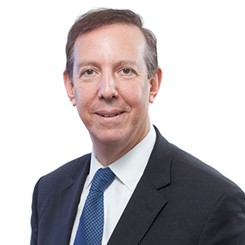
0:08 So good afternoon, good morning or good evening, depending on where in the world you're signing in for. It does look like a bit of an international audience today, so thank you very much for joining us. But I'm joined today by CEO of Kotech, Julian Traeger. Thanks, as always, for joining me today, Julian. Pleasure, Romain. Thanks for having me on. Anytime. Today we'll be discussing investing in future facing technologies and how a shrewd investor can take advantage of nascent trends.
0:31 There's a bit of housekeeping before we get started, so bear with me for just a couple seconds. Just want to let you know today's event is being recorded and a replay will be available probably in the early afternoon, so do feel free to share the video around when you get it. That's what it's for. Please do feel free to send it wherever you'd like. I also want to let you know this is an interactive chat today. So while Julian and I will be flipping questions back and forth and talking about future-facing technology, you're welcome to join the conversation yourself. There's a chat button in the bottom right of your screen. You can ask a question to Julian at any time during the event. We'll formally move to Q&A after we're done our initial conversation, but if it's right on topic, we might sneak it in actually during the conversation itself. But if you're like me
1:10 and you think of the perfect question to ask right after the event is over, it does happen, please do reach out and I'll make sure that the Kotech team can get in touch with you as soon as possible and share either Julian's feelings or give you more information about Kotech as a company. That's enough out of me, that's not what you're here for. I'd love to get right into questions if you don't mind, Julian. Sure, let's do it. Perfect. Here we go. Get to the protein. So I'd love if you could start, just for folks in the audience who might not be aware, the founding story of Kotech and what inspired you personally to focus on sustainable technologies. Well, I think the story of Kotech is, why isn't there 1 or more companies driven by disruptive technologies in the mineral extraction space?
1:57 The whole rest of the economy has really been disrupted. This sector hasn't and seems impervious to change. But there has been a huge amount of money spent and decades spent on research and development. And so the idea of Cotech is to find really transformative technologies and then use those technologies to unlock
2:21 undervalued assets. I mean, often I say that we are like the eBay of the mining sector, because before eBay, there were all these things, you know, gathering dust in cupboards. And then suddenly with this algorithm, there was something which could unlock the value of those things which were previously dismissed. And that's what we're trying to do. And we're in the beginnings of that journey. But it's something that I think is super exciting and has enormous potential, which is why I'm putting my time and money behind it. Oh, makes sense. And I'm curious just again, this is really to set the stage for folks who may not know. Can you just give us a quick review of some of the key sustainable technologies that Kotex is currently involved in and your view on why they contribute to a sustainable future as well as being good investments?
3:11 Well, a lot of the technologies we're looking at have the commonality that they use much less heat, they use much less water, they are much quicker to come to production, and we are really focusing
3:29 a lot on recycling and things which have already been mined or have already been produced. So we don't have to go through the huge and very heated process of creating these things. We're really using things that have already been produced with high carbon footprints to reproduce them, but with much lower carbon footprints. And I think that's super exciting. And as the carbon taxes come in, there'll be more and more benefits for these opportunities.
4:06 That makes sense. I'm curious, and this is just your personal opinion, I know it impacts your investment strategy. I'm curious what you think the most pressing environmental challenges are right now, that the technologies aim to address most specifically. And where do you think we ought to be focusing most of our energy right now? Well, I think it's exactly where Kotech is focusing. The issue is there are lots of downstream technologies,
4:37 like solar, like electric engines, et cetera, but the real constraint is at the production level and how we can produce the raw materials for those technologies fast enough. And if we can't produce them, then we will not be able to get to the cooling phase that we all want for the globe. And so we're already seeing
5:06 in the last week a lot of publicity about the shortage of copper and how, you know, if we don't get enough copper, we won't be able to produce the solar and the electric vehicles that is necessary to reach our targets. That's exactly where we are focusing, but we're focusing on producing those commodities in a super green way. So we're focusing on producing low carbon footprint commodities to reduce the global carbon footprint, if you see what I mean. No, no, that makes sense. One thing I'm curious about, you know, there's many, many companies that, you know, claim they're going to assist in some of these technologies and move against some of these environmental pressing concerns.
5:53 We're looking for a kind of look behind the curtain here for how Kotech approaches the process of identifying and investing in some of these promising sustainable technologies. What's your research arm look like? How do you decide which of these companies make sense?
6:06 So first of all, you know, we come to this from a huge experience collectively of a hundred years or more in the commodity extraction sector. So we understand a lot of the issues that have bedeviled the mining space for decades.
6:26 And we really are focusing on unique technologies which move the needle in a major way. So scalability is one of the things that we're looking at. And we have, you know, both on our board and then also on our advisory committee, super experienced people, particularly, you know, we have the CEO, ex CEO of Rio Tinto, we have the ex CEO of the guy who ran Rio Ventures, and we have a global network of experts as well that we can call on given our decades of experience in the sector. So we really look for things that are differentiated and which can solve a major problem and not things that are incremental. There's a lot of people producing good technologies using AI or sensors or, you know, facial recognition.
7:24 We're not in that space. We're really looking for something very, very different. And we've looked at hundreds of opportunities. So far, we've invested in 3 or 4, and we're working hard on another 2. We don't want to have 50 technologies. I think if we end up with 6 or 8, that's enough. And what we're finding is we are focusing on process technologies because that's something we understand much better than other people. And part of that requires a lot of experience and understanding of the complex geology on the earth's crust. And we're looking to unlock things that have been problems for the sector. So that at the moment we are solving 3 big problems for the world in a way. One is trying to capture the waste that is wasted when waste is recycling, which talks to our whole, you know, magnet recycling business because at the moment that that is wasted.
8:31 We're also looking to try and capture small particle elements, which at the moment can't be processed
8:43 very well. So that's a huge opportunity. And we're also looking at the moment at very hard materials, which again, requires huge amounts of energy intensive grinding. And if we come up with a solution to get around that, that's another big opportunity. So we are focusing in a way on, you know, unlocking things that have previously been
9:08 been discarded, but are very valuable, particularly in the context of what the world needs now to achieve its climate change targets. No, great. I got one question specific to investing strategy. I know there are quite a number of retail investors in the room. I'm curious your view on, and this might sound like a loaded question, But bear with me. For a shrewd investor looking at green tech, why should they consider Kotech as a security versus investing directly in the technologies that Kotech itself invests in? Well, first of all, you can't invest in the technologies that Kotech's invested in because they generally are private. And, you know, we're not talking about Microsoft here, which has, you know, a large market cap and is very liquid. So, I mean, we've, As I say, Romeo, we've looked at 300 technologies. We have a handful and we own large stakes where we can in those. But the opportunity
10:12 for investors in Cotech isn't the technology as much as what we're gonna do with the technologies. And I think we're getting to the phase, hopefully we'll get there in the next couple of months, where we're less focused on finding new technologies and more focused on developing the application of those technologies. And if you think that, you know, we believe with our technologies, we can take things that were previously discarded, as I said, wasted waste or
10:42 sub-scale fine particles or super hard materials, which are generally not considered to be that valuable today. And with those technologies, we can make them valuable. And that is where we're gonna make a lot of money. So ultimately, I see ourselves over a decade, developing 50 assets, which use the technologies to unlock value. And what we're going to be able to do, and we'll demonstrate that over the coming months, is get into these asset opportunities at very favorable prices, because without the technology, they don't have much value. So the technology is our key, but the material that we unleash with those technologies is where we're gonna create the value for our shareholders. And that's really our unique selling proposition.
11:34 I appreciate that. I have one question that's a bit of crystal ball gazing, but I'm curious your perspective. I'm looking for if you have just a view on technologies or groups of technologies that you don't currently have in your portfolio or Kotech currently isn't touching, but you think are promising for a greener future?
11:53 Well, there are lots of those and we think about them and we look for them. I mean, we are looking at, graphite and graphene opportunities, where we have looked at the past at technologies which can remove radiation from nuclear material very quickly. That hasn't been proven yet, but that would unlock a lot of opportunities. So we're thinking particularly in our area of process technologies to produce the commodities the world needs to cool down. There are whole categories, but we need to find technologies which are stable, scalable, and broadly applicable.
12:39 We have looked at a lot of hydromet technologies which replace heat with chemicals and water, but those generally have been quite sort of unstable and difficult to scale. So it's really, you know, looking
12:57 at opportunity by opportunity, but keeping our eye on large opportunities. That makes sense. On scalability actually, and this jumps back to another question I wanted to ask, because that's always a tricky element of assessing a technology or a business and how scalable it's likely to be. I'm curious, given your experience and everybody at Kotex experience and is a, you know, you have quite a Rolodex, quite a wealth of experience. What criteria do you use specifically to evaluate scalability for any of the technologies that you look
13:25 at? Well, first of all, we don't generally invest in laboratory stage technologies. You know, They've already got to have passed that stage. And generally, when we invest in the technologies, they are at a pilot plant scale, and then we're helping them scale up and introducing them to sources of finance, because we're not passive investors in those technologies, either, given our knowledge and our network. So, I mean, we do enormous amounts of testing. We rely on consultants. With the wealth of knowledge that we have. We understand what the problems have been in the past.
14:11 Some of the technologies we've invested in have already had tens of millions of dollars invested in them. So they have quite a long track record of testing the applicability broadly. And, you know, for instance, with a hyper mag, our magnet recycling business, There already is a plant operating in the UK, which is really helpful because when we build out the US plant, people can come to the UK and see the plant operating. So it's clearly a concern about scalability, but It's one that we're very
14:47 aware of and it's foremost in our mind, of course, as well. That makes sense. I got 2 questions I was just gonna jump to from the audience. Peter Epstein asks, thanks for joining us today, by the way, Peter. First, this is an interesting question. I'm really curious your response to this one. He'd love if you could give an example of technology that you got fairly far down the road on but then decided not to pursue. He's just looking for some insight into your criteria at that point. Yeah, absolutely. I mean we have
15:18 looked at a new technology which potentially could have altered the way in which fertilizers are applied globally, which was pretty interesting at first glance. But then when we got further into the details of it, there were complications in terms of copyright and other issues and we decided not to go further down the line. We've also been involved, you know, with a number of interesting technologies, like I talked about the de-radiation technology, where
15:56 we couldn't get comfortable with the due diligence information we were provided. And then often, unfortunately, you can have people who have a great product, but they're just very, very difficult to work with. I mean, we've been trying to do something with a team that does have some interesting graphite and graphene technologies
16:18 for 18 months, but they've been super slow to respond. So there are a number of reasons why there are also eventually interesting technologies we find, but they just don't make it to the next level. I mean, we do have so many different criteria.
16:40 Obviously value is another one. I mean, we find, you know, interesting technologies, but They're valued at $800 million, and that's too much for Kotech at this stage. So we're looking for undervalued opportunities with people we trust, which have huge scalability, where we can actually add a lot of value. So we'll make money on the technologies,
17:04 lots and lots of boxes to be ticked, which is why we've been so picky in the ones that we've ended up investing in. I think it's strong for investors. You guys are picky. I think that's a good, good part of your setup. Peter also has to go through. The other point is that we're investing our own money. I mean, Kotech, I've just invested another, the last couple of months, another, I think $5 million of my money in the business. So the board of Kotech has, I think, 60 to 70 percent of the business. And so every dollar we spend is 60 or 70 cents from our pocket. So we need to avoid making mistakes. Sure. Peter also asked a bit of a bit of a swerve, but I think an interesting question. How important is the copper price to Kotex future? And he's curious, should shareholders of Kotex be rooting for higher copper prices?
18:00 Oh, well, Absolutely. I mean, we have an investment in SABRE and the SABRE opportunity
18:07 is to unlock the value of low-grade copper deposits or low-grade copper waste tailings. And the higher the copper price, the better that technology will be. And when we unveil the opportunities, we're applying that technology to
18:28 clearly, you know, a $15,000 copper price will be a great thing for us. So in general, we're, you know, the higher the commodity price, the better for Kotech because we're not competing with the mainstream. You know, copper company valuations could go up, But what we're going to be applying Sabo to are deposits which aren't economic without the Sabo technology. And so they should be relatively immune to
19:01 the spot commodity price at the time. That makes sense. In the same sort of vein, someone in the chat asks if you can talk about the opportunity to deploy multiple disruptive technologies on the same mine site. So if there are concerns with that or if it's actually fairly easy to layer some of these disruptive technologies on top of each other?
19:23 That's something we're actively working on. So as you may know, we're focusing on iron ore, copper and Rare Earths at the moment. We are looking as our next disruptive technologies at add-ons both in iron ore processing and in copper processing. So they will be complementary to the existing technologies, and they'll make those technologies more effective. It's absolutely a theme we want to pursue, and there's no reason why you couldn't have multiple technologies working on the same site.
20:04 Perfect. So I got one more question for Mayan, and then we'll get to a couple more questions from the chat. I'm curious, just looking for you to go another direction. I'm curious if you think there are any trends in green technology or sustainable technology that you personally believe won't play out for investors as analysts have anticipated?
20:23 So there's any anywhere where the market's going right and you're swerving left? Well, the big one is obviously what's going to happen to elect the whole electric vehicle sector. I mean, people have poured billions of dollars into lithium and nickel. And now with the Chinese predatory pricing of those technologies, most of those projects are uneconomic and we see regular operating mines being put onto care and maintenance.
20:54 And you know that is something we have avoided. Fortunately We think our strategy is to stick to commodities which the Chinese are short of, not commodities that the Chinese have lots of. So obviously the exception to that is rare earth, But that is so strategic that we think the West needs to develop a supply chain regardless almost of the pricing of the commodity. But that is a huge, huge issue where I think
21:31 people have rushed in without thinking through the consequences. And there's going to be enormous losses. And we're thinking actively about how Cotech could participate not in the electric vehicle piece, but potentially in the next generation, which could be hydrogen or gas-powered vehicles. So that, I think, is the big place to be avoided. And you could feel that with these current nickel prices or lithium prices, it's at a low, and you should go there.
22:06 Our analysis suggests that these oversupplied situations might last for a long time. Sure. I got 2 back to back questions about HyperMag, if you don't mind. So Cooper from the chat asks if you can give us an update on HyperMag US and if the UK plant is close to commercial production. Well, HyperMag US is doing a study which should come out later in the year which will deliver a value for the business and viability of the business, which we can then share with our potential funders and partners. In the meantime, We are searching for appropriate sites.
22:49 We're starting to hire the beginnings of the team and we're working on arrangements with the suppliers of the raw material for
23:01 the US. So it's very active, but it's in that sort of planning and preparatory stage. In the meantime, the UK operation is operating, but it's just at a small scale and Both German and the larger UK operation are coming into production shortly. And as I mentioned previously, they're going to be super useful in terms of demonstrating to potential investors and partners in the US how the business can operate. Right. And actually in the same vein, a question from the chat is when HyperMag USA is a success, how quickly can it be scaled up across the country? Well, I think we plan to do it in modules. Initially, we're going to have 3 or 4 spokes in a hub.
23:49 And then that can be replicated. I think it's a business which can be scaled enormously, not only in the U.S., but we're also talking to people on behalf of Kotech in the Middle East and in Japan. And I think Kotech will already have an interest in that by our 21% stake in the whole technology globally, but we may end up having larger stakes in certain countries as well. So, in my view, over a couple of years, we'll have a business which is super valuable. If you have a look at how Mountain Pass has been valued in the US.
24:35 I think this has similar potential. Oh, great. And just as we wrap up, I wanted to go really big picture just for a quick second. I know, you know, folks in their 20s and 30s can be pretty depressive about the future, but I think Kotech as a company really premise on optimism for the future. So I'm curious, just your broad view on what are you most excited about in the coming years as far as technology that you think will have the most impact that you're most thrilled about?
25:03 Well, you know, people always ask me to choose things. I mean, the things we've chosen are the things we like and each one of these, Romeo, I mean, just the category, you know, copper or iron ore, or the hypermag, or the idea of, you know, recapturing the waste, the wasted magnets from waste or subscale particles that are wasted or hard rock. These are enormous opportunities, each of which can be
25:34 used to scale a business worth billions of dollars in each one of these verticals. So I'm super excited about what we've already got. And we will do a few more, but then it's all going to be about execution and scalability and building a business which can be, to go back to the beginning of the conversation, the true disruptive challenger for the incumbent mid and large mining companies in the world. That opportunity is available to us. We're small, but we're super ambitious. That's great. The one last question snuck in while I was speaking. Someone's curious if the US government is interested in HyperMAG.
26:21 Yeah, they're very interested in HyperMAG and we are engaging with them. But as I said, you know, we are still doing all the planning But as you know, HyperMAG was put on the shortlist of high priority projects under the MSP program already. So the people in Washington are very aware of it. The implications for Western security of pipeline are significant. What we will do with HyperMag is turn a disadvantage of the West vis-à-vis China into an advantage because we have much more embedded magnets on the basis of the longevity of our economic growth, both in the UK, Europe and in the US, and that we can use to increase our independence.
27:22 So it's a great product because of the short loop nature of it. We don't have to invent the wheel and process the individual elements which go into magnets. We're just reprocessing the magnetic mix, which I think is also a much easier solution for us. So yeah, we're super excited about that, as are people in DC. Great. And in the same vein, curious what benefit to HyperMAG is its inclusion in the MSP? Does that mean they could provide funding? Well, I think they, well, the MSP is something done by the State Department, but it means that they help us connect to other parties in Washington. The State Department itself is unlikely to be funding it, but there are a number of sources of funding which we've identified in Washington. And when we're ready with our white paper, we will be there in the coming months talking to the relevant parties.
28:35 Awesome. Julian, as always, thank you for a really interesting discussion. I really enjoyed our chat today. And for those in the audience, thank you for joining us. I know people are signing in from all over the world today, so I really appreciate your time. If you do have any additional questions, and I know I always think of some right after, please do reach out and I'll make sure that the Kotak team gets back to you as soon as possible. But this replay, especially for the people who came a bit late, the replay will be available in full in a couple hours. Please do watch it, share it, let us know what you think. But Julian, thank you so much for your time. And thank you, Romain, for your interest and for your time as well. Thank you.