Transcript
Automated transcript · Written by software from the replay's audio. It can mishear names and figures; the replay is the record.
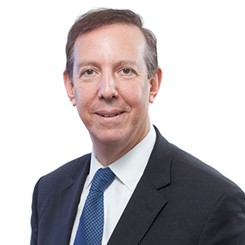
0:04 Hello everyone, today we're joined by Julian Traeger, CEO of Kotech Holdings. It has been some time since our last update with Kotech and there have been several significant developments across their portfolio, which Julian will provide a recap of today. Following that, I'll be asking Julian any questions you may have, so please do submit your questions in the chat box, which can be found in the bottom right corner of your screen. As always, 6 is recording this conversation and we'll make it available on six.com and our YouTube channel within a couple of hours after we conclude.
0:33 With that, Julian, the stage is yours. Thanks so much, Carl, and thanks for having me on your program at 6 again. It's true, there have been a lot of developments since we last talked, and I'll go into the details of some of the more exciting announcements in due course. But first I thought given the state of the world and the issues around the new administration and tariffs, we should just talk about how Cotech is positioned generally, because I think we are extremely well placed to benefit from changes that are occurring in the West and particularly in the US. In fact, we are redefining our mission statement. So we are now focusing on becoming a mineral extraction resource recovery business with breakthrough technologies that unlock value in mining, recycling and waste processing. And I think that represents the change we are seeing in the business away from the initial searching of technologies to identify the disruptive ones to actually now really applying that and creating the minerals which the West is sort of going to need. And I'm pleased that we've stuck to the commodities which particularly in the US are seemingly
2:03 very important, namely the inputs for green steel and domestic magnets and rare earth. And both of those are going to benefit from tariffs and also potentially bans on either imports or exports. And so the economics of our assets should be vastly improved.
2:32 And what's interesting about Kotech is that the vast majority of our assets are in the US. We are ultimately a domestic US producer of assets at the moment with another asset in Canada and an aim to develop assets in Australia, Brazil, etc. But for the moment, the main play is inside the US and being in the US is going to be a major part of our strategy going forward. And we are looking, as we speak, for copper assets in the US and iron ore tailings in the US as well. So I think we are well positioned. We have applied for some grants from the US government.
3:21 From our discussions last year, they were very interested in the things we're doing. Obviously with the changes that are occurring in Washington, things are happening more slowly, paradoxically, but I'm very positive that all will be good for us in the future. Now an exciting project that's US-based is HyperMeg USA. It's targeting about 10% of US domestic demand for magnets. Given the current trade tensions between the US and really the entire world, how has your outlook on market demand evolved since the feasibility study and with today's economic climate? How have your cost projections held up against the original estimates?
4:06 Well, I think since the change in government, we believe that there's going to be much more demand for our product internally in the US. As a result, we made this announcement recently about HyperMag, which really focused on the fact that we were going to have a third reactor at our Texas site, which would cost less than $10 million and at projected prices for
4:44 magnets would add roughly $100 million in NPV. But even more significant, and we didn't really emphasize that, is the fact that we are studying creating another 2 hubs for HyperMAG-US in Nevada and South Carolina. And if you think that the one hub now with 3 reactors would have an NPV of around $600 million at projected magnet prices, then the 3 should be around $1.8 billion. So the implications of value for Kotech, which as a company has a market cap of $30 or $40 million, is very significant.
5:31 And we see just in this one announcement and one part of COTECH the potential for a 10 to 20X in due course to be to be developed. Now, the U.S. Has been pushing for more tariffs on imported magnets and rare earths, also potentially a ban on exports of these materials, particularly to China. We think all of those are going to really add to the economic viability of this project because
6:09 the pricing in the US domestically is going to be higher than people were expecting before. So we're super excited about that. We're on the cusp of appointing the EPCM contractor for the next stage to do much more detailed work on the project. And we will also be creating a lot of jobs. So just 1 site is 100 jobs, 3 sites will be 300 jobs. So We're pretty excited about this development. And we think it's very significant. And 10% of the US domestic magnet demand is a big meaningful number, which is catching the attention of people in Washington.
7:01 We also, by the way, made an announcement about the carbon footprint of the magnets.
7:09 And it was quite a technical announcement. But what it does show, cutting through all of jargon, is that we have the lowest independently assessed carbon footprint in the industry so far. That's been checked by laboratories. So 2.35 kilograms of carbon dioxide. And that's roughly a 95% reduction in equivalent emissions. And that's been signed off by Minvaro. So we think that that will be helpful. You know, we have to see how people feel about carbon footprints, but being able to produce a product which is competitively priced with such a low carbon footprint must be a good thing. And we're not assuming we're getting any credit for that at this stage, but I'm sure in due course that will be seen as a benefit.
8:10 Are there any customers or potential customers rather reaching out after that announcement regarding the carbon footprint study?
8:19 Well, we're in discussions with lots of feed providers and potential customers. And one of the aims during the year is to tie up further contracts So that by the time we take the decision to proceed, which we haven't done yet at the moment, we're still in the You know studying and detailed work phase you know, we will have sufficient feed and offtake to make it a clearly a viable business Now there is also an update since we last spoke regarding an exclusivity agreement with Salter. Could you explain this technology and how extensively it has been tested for those specific applications And what restrictions does this agreement place on both parties?
9:06 So Salta, yes, is we've announced 2 new technologies which brings our portfolio to 6. And with that, we're probably gonna be really very opportunistic about new technologies because we've got so much already on our plate in terms of potential and scalability. And SALT is very interesting. It's a unique gravity separation technology which has been extensively applied to other commodities so far. So it's not in an early stage. It is well proven, but hasn't been applied yet to iron ore and to manganese. So we have the global rights
9:52 to those commodities, which we think are very interesting, in conjunction with Salter for a reasonable period of time to develop the business. And with the Salter technology, we now can provide, as we can in copper, 2 complementary technologies in the iron ore space. The one which concentrates, which is the Salter 1, so it will end up with much higher recoveries. And then We also have the binding solutions technology, which we could use in due course, which would be to pelletize.
10:37 So one of the strategies we're pursuing when we look at technologies is to find technologies which work together to produce a much better end result. And that's similar to what we have done in the copper space. Another development was with the collaboration of McGill University. Can you elaborate on this Copper Leaching Project and how it fits into your overall strategy?
11:05 Yes. This is another technology which has been developed for a long period of time. Lots of money has been spent on it. But it recently came somewhat off patent and there was an opportunity for somebody to pick it up and effectively we're very excited to be working with McGill. As you know, we already have a project in Quebec in the form of L'Actionine. And McGill's got a great reputation, particularly in this area of microwave technology. And it's a complementary technology to Sabre because Sabre leaches low-grade copper deposits to recover the copper from them. And what this technology, which is called Wave Cracker,
11:54 can do is it can soften the hard rocks to allow them to be more permeable for the leaching materials. So it will result in higher recoveries than if Sabre had been applied on its own. So it's part of the way in which we are looking for things which are pre-treatments and then the next stage. We've also got that, by the way, with HyperMAT. We have Inserma, which, you know, identifies the magnets and then our technology, which recycles them. So we're pretty excited about that. And we are gonna start testing it. And we are marketing the suite of products to appropriate
12:46 mines and deposits already in Australia and in the US and Chile. So we hope to announce the first couple of targets in the copper space for Kotec in the next 6 months or so. Now you mentioned Lack Janine. Are there any updates regarding Meg Iron or the Lack Janine project? Yeah I mean we've talked so far mainly about the announcements which have been regarding technologies, although the HyperMAC 1, as I said, is super significant in terms of value creation. And if you look through our 60% stake, even if we get somewhat diluted, you know, the potential value for Kotex is, you know, $500 million or more as we go along.
13:40 Most of the rest of the value of Kotex resides in these 2 other assets, although the technologies themselves have value and the value of those technologies is going up. So in MAGA we're busy working on various studies, feasibility studies, 43-101 studies. We expect those to be released in late April, May, which will then allow us to highlight the value that we see in that deposit. But what's super interesting is that it has one of the highest grade deposits in the US, one of the largest deposits in the US.
14:27 And the aim is to make domestic pellets and then ultimately potentially pig iron. And all those things are being positively affected by the tariffs. So the price domestically of steel in the US is going up, but then so is the price of the inputs like pig iron and we expect pellets. So we need to incorporate these positive developments into these studies so that they're up to date and we expect them to show very considerable value. The replacement value alone of the machinery that we have, the concentrator and hopefully in due course the pelletizer which we own the land underneath, Leaving aside the value of the 2.4 billion ton deposit
15:21 is over a billion dollars. And Kotech has 16% of that. So, you know, again, that's another 160 million dollars if it just translated without dilution into value for us. So we're very excited to see that. Those will be major catalysts in terms of value creation. And you should have another chat when those studies come out. So that's what's happening at Magine. And then as far as L'Actionine is concerned, we've been having very good discussions with the stakeholders. The government in Quebec seems very supportive. You know, this whole strategy of, you know, recycling waste dumps, shrinking them, re-beautifying them, and at the same time creating product which can come to the market quite quickly, seems to
16:18 be resonating with the politicians. And in due course, during the summer, we plan to drill out the other half of the deposit, which should add considerable value to the NPV of that project, where again, the NPV, we expect will be around $100 million. So if you add all those things up, we're looking at a portfolio which already hopefully will realize a value of $500 million or so. And that's before we add now all the other future projects which we want to, to our pipeline as part of this 10-year project to end up with, you know, multiple assets in multiple jurisdictions, recycling,
17:08 lots of waste. I'm going to transition from the projects to the capital markets here. You recently expanded your convertible loan with King Chapel, King's Chapel for 2.5 million. Can you talk about your broader financing strategy and why now is the right time investors should consider Kotech? Well, As I said, I think we are very well positioned from a macro perspective. We're well positioned in Washington. I think this area of disruptive technologies, where we see very little competition to recycle
17:44 waste materials largely, which are considered to be liabilities and which we can pick up for very low value. That's a strategy whose time has come. And we've already demonstrated, as I said, in our 3 projects, we've created hundreds of millions of dollars of value. And we expect much more as we scale the business. So the share price doesn't reflect that. We as a board have acquired, you know, around 70% of the, or own 70% of the equity. We see catalysts coming forward. We have the benefit of seeing the value that's created and we're putting our money where our mouth is. So we're not shying away from this.
18:34 I personally own close to 50% through my financial interests, but I can't go above 50% because we have also these valuable tax losses around $100 million, which we would lose if there's a change of control. So I've been financing the business through convertibles. What's interesting for investors is that the stock today is 62 cents.
18:58 My convertibles are convertible at 75 cents, but they're only convertible when the stock goes over 100 cents. So, you know, I'm so keen to keep funding the business and not being diluted, that I'm prepared to take a hit of a 20% premium to the current share price, just in order to have the opportunity to carry on increasing my exposure to the company.
19:35 So, you know, we are pretty excited. And sooner or later, you know, we believe the market or other strategic investors will wake up to this undervaluation. In the meantime, we don't want to be diluted unduly at the Kotex holding company level. So the financing strategy of the business is to really raise capital from partners at the subsidiary level. So we are starting to talk to people at the hyper-MAG level about coming in and, you know, at a much, much higher valuation than the whole valuation of Kotex.
20:20 And similarly, we'll have those discussions starting in the summer. Once we have these studies from Magine, again, we expect the pre-money valuation to be several hundred million dollars. So that's a way in which we can at once highlight the value of the subsidiaries for people who are private equity investors and minimize dilution for ourselves at the at the Cotech level. Excellent. We'll transition to the Q&A now. We have a lot in the chat. Thank you, everyone, for submitting questions here. There was a few upon registration, So I'll get those 3 out of the way first. A concentrated feed is available for HDD using Infirmatech.
21:07 Would Kotech consider setting up spokes in different countries and importing feedstock? I think obviously we would. At the moment, Kotech owns 50% directly of the US business and 20% of the global business. So on the global business, we would be working with our partner, Mekango, but there may be certain countries where, you know, we end up with more than 20% as well. Certainly, we have to see what happens here, but it would make sense for Canada or Mexico to be supplying the US business
21:45 in due course that we plan to establish. So we are able to think globally regarding the business. Mekong and and HyperMag have already started discussions with a potential Japanese partner. And, you know, the world is our oyster. But for the moment, we are focusing on the US, which is obviously the biggest market. Just reading the second question here, it looks identical. So I'm just going to omit it here. It's about feed supply internationally again. There is another question, though. What is the future of iron ore production in the Minnesota region? Well, we think that The idea of increasing domestic U.S. Steel production, stopping the imports, on-shoring businesses into the U.S.
22:42 Means that there will be more demand for iron ore from that region. And our
22:51 deposits are showing around a 30% grade at the moment, which is, we believe, amongst the highest in the Minnesota range. So we think we are well positioned. And once we've announced the results of these studies, which also, by the way, include another new technology for concentrating not magnetite, but other forms of iron ore called hematite and gathite. We're very excited about the recoveries we're seeing for that. That's yet another technology which Kotech could then take and apply to other deposits. Once we see that, we'll be talking to the domestic steel makers. And we've seen recently, actually, there could be more because even in the last week, we've seen some of the Korean steel makers talking about on-shoring
23:46 steel production into the US. So we think the US will become a much bigger market domestically. The imports will find it difficult to come in. And having a huge, high-grade deposit of iron ore in Minnesota is going to be a wonderful thing, as the president would say. Julian, we're going to transition to the Q&A here now. There's quite a few. I'm just going to start from the top. Okay. In the HyperMAG DFS, we assume magnet sales. Do we have the capability to currently produce the assumed sales mix?
24:24 Well, we don't currently have the capability because we need to build the plant, but the assumptions in the feasibility study have been checked by very high quality, you know, external experts and everything fits together. And as I said, we're so confident about that, that we recently announced that we would increase the Texas side to a third reactor. And then we're starting to study increasing the number of hubs in the US to 3 from 1. So, you know, we see a capacity to produce a number of different types of magnets in the US. Now, I'm not sure what this individual is referring to for new studies, will the new studies delay the project timeline?
25:16 Which which project specifically? And I mean, I don't know. But if it's hypermag, no. You know, we are moving along with the existing business plan. Adding a third reactor is not a very
25:34 big thing. And the plan always was to have the capacity to add that in Texas. Obviously, what we will want to do is to get that one up and running before we expand into the other hubs. It's no use, you know, running before you can walk. So we will be acting in a very methodical way, but we don't expect the extra studies to delay the implementation of the first type. We covered this question already. I know there's no guarantees that you will get any US grants at all, but Can you say how many grants have been or will be applied for? Could grants total tens of millions or just millions here and there? Thank you.
26:26 Well, we have applied for 1 grant, and I think we're now starting to apply for a second grant. And the aim would be much more than tens of millions, but let's see where we get to.
26:42 As Kotech can capture the tariff margin, Can the import feedstock of HDD from spokes in different countries? Another international question. I think we will skip that one because you already addressed that. What is driving you to look at 3000T? Is it driven by feedstock from government suppliers or customers? Well, we think that that is a reasonable target for us to have in the medium term. As I said, that's the one that we get to when we have the 3 hubs, not just the first one. So we'll start smaller and then we'll scale to that. And we think that that's achievable, as we said in the medium term.
27:31 So that's what we can get to. And we think that that's not a large proportion of the market. We think the domestic recycling market in the US will grow over the next couple of years as we see more waste being recycled, particularly from electric motors or wind turbine engines, etc. So we see the market size growing as well. Can you explain looking at a long loop line, was this due to having weaknesses in our magnet offering? Some color would be helpful. No, I think there always was a need for different types of materials.
28:21 And we're looking at options for additional US plants to process the co-products from magnet recycling and manufacturing, and that works better with a long loop process. So it's complimentary to our existing business. It could be a way in which we, you know, expand horizontally. Thank you. Peter's asking another question here, if you can confirm this fact. Obtaining sufficient feed for HyperMEG USA is a main risk factor. Did your decision to add a third HPMS unit come from the realization that feedstock ability will be readily available? Well, we're having lots of very positive discussions with feedstock providers. As I said, you know, those are very strategic and we expect to make further announcements during the course of the year. But the other point to make is I think the output of the third vessel is slightly different to the first 2. So there'll be a broader range of resulting materials for the US market.
29:35 It's not exactly the same as the first 2, but those discussions, as I said, are evolving and we will not make a decision to proceed until we have a sufficiently high proportion of the feedstock tied down before we go. Can you provide some commentary on Freeport McMorrin's copper leach and recovery efforts? They talked it up a lot in their latest earnings call. Yeah, I think that they are linked to JETI. I mean, we think JETI can work, but in very, very particular circumstances, we believe the SABRE technology is applicable in far more jurisdictions.
30:26 It's more predictable and it has much higher and quicker recovery. So we think in the market, it will be a superior product, but that's not to say that other technologies can't work at all. So it's more about the size of the opportunity set. Thank you. Any thoughts about acquiring technology involved in battery recycling? Probably not. I mean, that's a very competitive space. You know, the technologies that we are focused on are more like, you know, category killers where we are clearly backing the leader in the sector. And with our 6 technologies, we have already a lot to work with. If you think about the size of the iron ore market, the size of the copper market, we also, as I mentioned earlier, via Salta, have the rights to manganese, which we think is going to be a more interesting material.
31:30 And we're starting to talk to potential partners in the manganese front. So we have huge markets before us and the battery one is highly competitive. The other problem with the battery one is that the technologies associated with the batteries are evolving and continue to evolve quite quickly. Whereas the things we are working with are long term, pretty stable and quite strategic. Why are you so excited about the Manganese market? Well, the definition of what is a critical mineral has really changed over the past 3 or 4 years And the market hasn't really caught up with that yet.
32:19 So 3 years ago, 4 years ago, what was critical was nickel, lithium, cobalt, you know, inputs to batteries for electric vehicles. That market has been flooded with Chinese materials and, you know, there's lots of money gone into it in the West. And so, in my view, those things are no longer critical at all. What's critical now, and we see that every day, more are the inputs for the defense sector. So we're talking, you know, titanium, tungsten, manganese, obviously magnets. Those are the new critical materials and those are the areas where Kotech is looking to expand its offering.
33:09 So, you know, we're trying to look forward to see how the world's evolving. You have to think with the incredible focus that we've seen over the past 2 months on metals and mining at a macro level from the Ukraine to Europe, Africa, obviously in the West, some things going on. And in my view, you know, the definition of what's critical has moved. And we want to be well positioned to take advantage of that. Thank you. Jimmy's looking for some clarity on the business structure regarding Magneto projects coming online in the UK and Germany.
33:56 Does Kotec realize 20% of the revenues directly? If so, how will the cash flow be utilized for the business? Well, Kotech in the UK and Germany has a 20 percent interest in Magneto, and when there is cash to be realized there, we will get our share of that. In the US, we are funding 100% of the value at the moment of the project. And so we'll get 100% of the cash flow until we've been repaid our share of the other 50% partner, which is Mekanga. So we are expecting to see cash flows significantly being produced in due course, but obviously we need to build the plan first.
34:53 And the last question in the chat is like the double-edged sword of liquidity. The board owns about 70% of Kotec. Individuals wondering if they want to buy $40,000 worth of stock, do they have to do this on the open market? I mean, there are some shareholders who have those amounts of stock and we've seen them selling some of their shares. You have to realize that although we believe that the value of Kotex is, you know, 300,400, whatever the number you want to choose, the stock has come from a level below 20. So there are some shareholders who have already made 3x, 4x their money, who are interested in realizing some profit. So, you know, I think if you go in the market, there is some liquidity more than would appear at around, you know, or higher than current levels.
35:54 But once that liquidity has been removed, we think the stock will skip to a much higher level. We got another question submitted here. As a company that owns minority interest in other companies but does not implement on its own, what risk reduction mechanisms do you have to ensure the operating companies actually sell and function properly? Well, we have minority stakes in technologies, but because we are seasoned mining investors and we understand the sector much better, if I may say so modestly, than most venture capital investors who aren't specialists. We do have actually outside influence in advising these companies and we help them with introductions to other industry players and financing structures. So we're much closer, you know, having as I come from an activist background, we're much closer than you would expect for a passive venture capital investor. So with all the technologies, we are pretty hands-on and we monitor them and we help them because we're not passive investors.
37:15 Quite a few of those technologies we own, you know, we're in 50% joint ventures. So we actually are co-controllers like for Salter or Micrahammer, or sorry, or wavecracker, I meant. And so we are not so minority. As far as our investments are concerned, I mean, effectively on a look through basis, we have a majority of HyperMAC US because we have 50% directly and another 10% indirectly. And we work very well with our partner, Mekanga, to play to 1 another's strengths. On Lakshmin, we currently own 100% of that once we exercise our option.
38:07 The one where we have a minority stake is Magine, where Kotec has 16% of it, but I personally have 50 percent of it. So together we have 66 percent of it. And so again, we're effectively able to determine the strategy. And going forward on the asset basis, we want to be at least 50% shareholders, if not 100% shareholders, who are then diluted. So With the technologies, we will be minorities, but very hands-on and influential minorities. But with the assets, we'll earn much more because that's where we believe we're going to create a lot of value.
38:57 Thank you. The individual that asked that question has a follow-up one here. Do the operators have exclusive clauses for the tech? Do the operators have exclusive clauses for the tech? I mean, each license is different. They cover different jurisdictions. They cover different periods of time. But, you know, where possible, we seek to get exclusivity, particularly with regards to applying the technologies to assets. Julian, thank you so much for this update. There's a lot that we covered here. Oh, we're still getting more questions actually. Here's another one.
39:44 Are you concerned by the delay in commissioning for the HyperMEG plant in the UK? What was the reason for pushing back the start date? Well, as I said, we are a minority investor in the UK business via Magneto. But I understand the project is moving forward and it's very important to us in terms of demonstrating the viability of the business model, that that is successful. And it will be something which we can demonstrate to potential off takers and potential funders of the US business.
40:30 So The sooner they bring it on line, the better. Thank you. There's one individual, again, how much time is left on the IP that you have? I just asked if they could clarify which IP. Then another question here, what is the issue with Cleveland, Sioux and Misabi? Well, I'm not gonna comment on other people. It's got nothing to do with us what Cleveland and Mussabi have disputes about. You know, we're in the Mussabi range, but we are nothing to do with that particular dispute. And as far as the IP is concerned, I mean, we have, you know, reasonably long periods of time to prove the application of the technologies.
41:29 And I'm sure if that goes well, we will see extensions to the licensing model. But at the end of the day, probably a 5 to 8 year advance on the rest of the world is all you can hope for before other people start to innovate. Certainly. Is it currently difficult to expand the asset portfolio pre-revenue or does the company expect that to happen rapidly post-revenue? No, it's not difficult for us to expand the company pre-revenue because we are funding it and I'm happy to support the financing. I will buy shares in Kotec every day at 75 cents. So I'm adding to my convertible funding. And what's interesting about the model is that the cost of acquiring assets which are considered to be waste or which are mines which haven't been viable because the technology wasn't previously there for them to work is very, very low.
42:38 That's the beauty of the model. In L'Actionine, the cost of acquiring the deposit is very, very small, a few percent relative to the NPV that we can create with these technologies. And with the suite of technologies that we now have, we can solve problems which have bedeviled the mining sector for decades, not in every single deposit because, you know, the world is a complicated place and it's cross changes, but we have solutions now for low-grade deposits, for ultra-fine materials and for hard rocks. And those 3 problems haven't been able to be solved by the sector for a long time. So what we're finding in the waste is the waste is full of those sorts of characteristics.
43:31 And then the mines which couldn't succeed and shut down, you know, often did so because the rocks were too hard and the cost of grinding was too high for them to be viable, or because the grade was too low for them to be able to succeed. So what we have now, which is super interesting after decades, is we have technologies which have advanced, which allow you to go back to these historic problems and solve them. And you have the key to unlocking that value. And that's why, you know, Kotech is so valuable. I mean, we've spent a lot of time and money over the last 3 years to get to this place and why we're so excited about it, you know, going forward. That's a great way to wrap up, Julian.
44:17 Just any final closing remarks regarding Catalyst for 2025 that people should be excited for specifically this year? And I just want to remind everyone that if you came in late, we are recording this, it will be available within the next couple of hours. Thank you for submitting your questions, but I'll leave that for you for the final commentary. Well, I think, you know, as you see from this call, we're making a number of announcements, you know, all the time. I think we see catalysts on most of our investments. We see, you know, with with HyperMeg, the studies now and later in the year, hopefully the decision to proceed, the results of the funding applications that we've submitted now, announcements around feed being secured, off-take partners. I mean, just in that little part of the business, there's a lot of news to come.
45:15 In Magan, we have all these announcements coming up in April, May, and then leading to further financing announcements. And then on Lakshmin, we will be doing the drilling in the summer. And what does that result in? And then there's filling out the pipeline of other iron ore projects, of other copper projects, of other manganese projects, which we hope to announce. So Lots to look forward to and lots of value to be highlighted and daylighted. It's always great catching up, Julian. Thank you