Transcript
Automated transcript · Written by software from the replay's audio. It can mishear names and figures; the replay is the record.
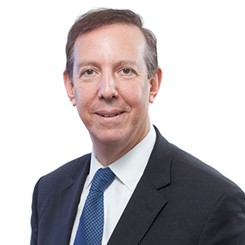
0:05 Hello everyone and thank you for joining us today for another live Kotech Market Update. We're joined by President and CEO Julian Traeger. It's been some time since we had an update, so a lot to cover, But if you have any questions, please feel free to submit them in the chat, which can be found in the bottom right corner of your screen. Also, as a reminder, this event is being recorded and will be made available for viewing shortly after we conclude here today. Julian, thank you for taking the time and your day for us. Why don't we just start with a high level overview of the current landscape because there has been a lot of developments lately on the macro level.
0:36 Great, well, first of all, thanks Kyle for having me on again. And yeah, it's been some time, we've done our capital raise, we haven't been able to tell the story publicly in the way that we did previously. So we're very grateful for this opportunity. And yes, a lot has changed over the past couple of months. I think there are a number of macro takeaways, which I want to then apply to Kotech. The first takeaway is that the Chinese strategy with dominating rare earth and particularly rare earth magnets has been a great success. The US has had to step back once, maybe they're doing it again now, from putting on high tariffs in order to keep obtaining the magnets that are needed for the economy.
1:27 And before this happened, there were some signs of stress from Ford, which had to idle some plants, and then also from Elon Musk, whose robotics operation was struggling to get the magnets for the joint. So that's been a great success, and I think the US is understanding that, the US is scrambling to address that. We could be a very important part of the solution to that, but it's going to take some time and that vulnerability continues. But if I was the Chinese looking at that, I would then think about other commodities which could be successfully dominated in this way, because, you know, the US processing capability has been severely damaged over the past couple of decades, and it continues to be heavily reliant on multiple external sources for commodities. And I think we're seeing now with this new Chinese so-called involution strategy, that the government is trying to get a greater grip on supply and control of supply, in particular strategic industries.
2:43 So I think the West can expect more of the same, they're rapid learners, and they've been positively reinforced by this experience. And so the vulnerability continues to be there and is growing. And what's helpful, therefore, is the US and its allies are now treating not only rare earths, but also copper, also metallic elements like tungsten, and as we'll talk later, pig iron, as national security priorities, not just as industrial commodities. And fortunately, COTECH is very well positioned with technological solutions for all of those particular commodities.
3:33 Generally, we've tried to focus on things that the West needs strategically. So that's the first thing I wanted to talk about. The second is that we're seeing now over the past 3 months a real increase in the profile and acceptance and understanding of the value of recycling in this context. And I'm hearing from Washington that as soon as the end of this week, there could be a ban announced by the U.S. On the export of metallic waste, which historically has been sent offshore. And because a big focus of COTEX development over the past couple of years has been the thesis that the easiest and cheapest and fastest way for the West to develop these supply chains of these critical materials is by better utilizing what's been mined and is circulating in the economies and particular, you know, the waste piles. And I think we already seeing some announcements in the last week from the Department of Interior in the US that this is something they want to accelerate. And we've actually seen under Mark Carney's government in Canada, some real moves.
5:07 We've seen some in Ontario and other provinces to look at the amount of waste, the legacy material that's available and how it can be recycled, how it can be shrunk, how it can be beneficiated. So I think both from the perspective of, you know, what commodities are becoming strategic and also how those commodities are gonna be extracted, you know, Cotech is very well positioned. And we obviously want to scale the way in which we can help these different industries. We've had already initial meetings with the US EPA to see if we can help them with their Superfund legacy sites and we're very excited, you know, luckily that we are very well positioned for this enormous opportunity that sits before us.
6:10 So that I think is the backdrop to this update. And then obviously we can talk about the multi-asset strategy, particularly, you know, HyperMag US, which is very, very topical now, the breakthrough copper extraction technology we have in SABO, which is non-testing, and then the Einor division and the way in which we can help to supply the US with what people are increasingly calling military quality steel, which is necessary for the economy. But I think the recycling strategy works well because it allows us to bring material into production in a two-year period, 2 to 3 years, which is the case for the rare earth magnet recycling technology.
7:08 And obviously with additional resources from the US government that could be further accelerated. You know, it's a much easier way of getting commodities out of the earth. It requires less permitting and ultimately it's cheaper. You know, we're all about creating value for shareholders. So if that's the background, Carl, would you like me to start then talking through the individual updates, perhaps starting with HyperMAG? Yeah, why not? Yeah, I can let you just go on if you'd like for sure. Okay. So in HyperMag, as you know, we've done a number of different things. So first of all, we are pretty advanced in selecting a site in Dallas, Fort Worth, and detailed engineering is well underway. I think we're 30 to 40% of the engineering has already been developed. We are looking at partnerships with different types of players, particularly on the offtake with larger corporations.
8:17 We are spending money in a very judicious fashion, so we don't have huge amounts of capital, but there's a strong owners team already in place in Tampa with Pegasus and you'll see in the coming weeks and months generally for Kotech we're going to be strengthening our bench with appointing new talents and you know we are thinking about how in due course we can monetize this opportunity. We have finished financing data rooms, so they're complete and we're starting the discussions with different particular sources of finance.
9:02 Obviously, on that front, we've received the $92 million letter of interest from the Export Import Bank, which is a strong sign of support. We're still waiting to see what happens with the Department of Defense.
9:21 We've seen the beginnings of the DoD starting to allocate capital. They allocated some capital, I think, last week to a new tungsten project. So we're hopeful that they're starting to process the opportunity set we're seeing. And obviously, most importantly, we've signed, which was big news last week, our first feed arrangement with intelligent life cycle solutions or ILS. That secures an HDD sourced magnet material which we can start to recycle.
10:00 It gives us access to pre-processing infrastructure, both in South Carolina and Nevada, and it adds traceability, supply chain resilience, and obviously improves our project finance readiness. And you should expect other announcements over the coming months. And obviously to the extent that the US government bans the export of materials containing magnets, that will allow us much greater access to feed supply. So I think we're moving rapidly there and what I'm trying to get the team to do is to start to look at how we can expand that further and more quickly because we could easily turn the other spokes
10:53 in Nevada and South Carolina into hubs, that would be 3. But ultimately I think given the amount of magnets circulating both in the US and in the world, because we are looking also at an initiative to bring magnets from offshore back into the US, which had previously been exported. We are hopeful that we can ultimately scale this to 6 or 10 hubs, which would provide a meaningful part of the US's requirements. And because of the unique batch system that we use, which I always say is like unlocking, in a process which unlocks the muffin mix. You know, I'm increasingly realizing that we can make muffins of many different flavors depending on the quality of the magnets we put in. So it can range from more normal magnets to the
11:49 high specification magnets for military applications. And then obviously that's our US operation, but we own 20% of magneto globally. So in the UK, the pilot plant has produced over 5,000 magnets and that's been validated by GKN and ZF. So that proves the scalability and the technical performance and de-risks the issues that people might think are around this process. And, you know, we are in discussions with off-takers and OEMs that are being affected by the Chinese
12:35 magnet restrictions. And of course, we are engaging with the administration, particularly following the MP materials and Apple announcements, to explain to them that every country needs an insurance policy, and you should not have all your eggs in 1 basket. And our technology can bring magnet production online quicker than MP, but also with low risk because it requires many less steps than their process and
13:13 on an economic basis. And I think they are realizing that that's an important necessity. So, you know, we have 20 years of R&D. There's proven technology at the 2 pilot plants in the UK and Germany. Our shortly process is lower cost and super low carbon. And more importantly, with the upgraded Insoma units that we use to initially cut out the magnets, we can do a magnet in under 3 seconds. So the scalability is there, and
14:04 we're very excited about this and scaling it. So do you want to ask questions on this? Yeah, there's actually a question in the chat that is a good one follow up regarding the muffin mix and the ingredients. Ian has a question here with HyperMag. Presume all recycled batches are different. Does disoprosium and terbium need to be added to make different magnet grades? If so, where does the diso, prosim and terbium come from? Does it have to be bought in? Yeah, well I mean that is a good question. Most of the material that we need for recycling the magnets, we can do from the initial magnet mix. But there is a small element of rare earths which will have to be added to the mix. And we are in discussions with suppliers of those and we will be needing to buy those in. But it's not a large proportion, particularly compared to other processes which need, you know, almost all individual elements to be separately processed.
15:20 And this is a good opportunity to remind people to continue to submit questions. There's already quite a few. I'm just going to try and do them in the most logical order here. So there's another question regarding HyperMeg. Are any of the HyperMeg supply or offtake partners well-known names? Can you highlight any names you're in discussions with?
15:39 We are in discussions with very well-known names, but those discussions, as you would expect, are super confidential. So you'll have to keep watching the space. But you wouldn't, I mean, in terms of the suppliers of the e-waste, generally, you wouldn't recognize those names, because, you know, it's an industry that's not that well known. But where we are talking to OEMs or competitors to Apple, for instance, obviously those will be names with much wider recognition. And then the off-takers are clearly the US primes, the automotive companies, etc. So we're engaging with a wide variety of partners and we're very open to partnerships.
16:36 And I think the MP Apple transaction shows that these partnerships is going to be the way in which these opportunities evolve. So yes, we're engaged on a number of fronts on that theme. You kind of already addressed that just now, but there is a question regarding that. Does the ILS deal, is it a one-off or a template for new deals with will other feedstock suppliers also be stockpiling from you Well, I think it's a template for a transaction but obviously all transactions are different but it is a basis which we will use to compare. And there'll be some people who already have stockpiles, which we are working with. There'll be other people who will be stockpiling.
17:31 So there'll be different methods. But our expectation is that we will have, you know, well over half of the feedstock for the first hub secured before we take the decision to proceed with it. So we are going to be ramping up these discussions over the next couple of months ahead of the decision to proceed.
17:55 And another question here, do the placement of Inserma units at recycling plants reduce the need for spokes to feed the hubs? Well, it depends how you're going to transport the magnets. I think it's better to have the Inserma plants, which are not very large, at the spokes. And then you can just transport the cut-off magnets to the hubs. It's much more efficient to do it that way. So
18:29 what it effectively, I think, allows instead is more spokes. And you know, the idea that we could eventually have 100 spokes and 10 hubs in the US with 100 Inserma machines, 200 Inserma machines, which are not super expensive, by the way, That I think is the way we're going to be going. Another individual has a question regarding Inserma. Can you explain how significant the PCB is in HDD versus the magnet? Will you get a share of the PCB revenue?
19:01 How much has the unit been tested? Yes, that's a good question. In the PCB board, there is obviously the magnet and then there's a lot of other materials, including tin or gold or silver. To the extent we are going to be acquiring PCB boards, there'll be credits which we obtain, which can be used against the acquisition price of the magnets. And so that should reduce our in cost to something very attractive. And obviously, we are also working with parties who are interested in taking the other bits of the PCB boards and using them. And by the way, and I think this is worth emphasizing, of course, we're starting with PCB boards, but this is not our sole focus. So there are many other sources of feed. So, you know, MRI machines have enormous amounts of magnets in them.
20:07 You know, the turbines for wind farms equally, and obviously electric motors and loudspeakers. So there's a number of different sources, but clearly the PCB boards are a place of great volumes. We have another one here regarding clarification. So will you pay for feedstock?
20:32 If so, how do you prevent getting into a bidding war against other recyclers? Yeah, of course we will pay for feedstock because if we don't pay for feedstock There's the risk that we don't get any feedstock. So, you know, there's a price for magnetic material feedstock and, you know, we will be sure to be competitive with respect to that. I mean, what we think are great advantages is our process. Because our process is super quick, super cheap, and less risky. And therefore, it should allow us to pay more than people involved in the long loop process. Because the other general route that people are taking for recycling magnets is a long loop process. They don't have the advantage of our technology, which has had 20 years of R&D. It's had a hundred million dollars spent on it and it's well patented.
21:34 And I think that that's our key initial advantage. And then obviously, over time, as we tie down more and more of the feed, That will be a second layer of barrier to competition. But we're confident that the cost of our process gives us the ability to pay very competitive market prices for the feed and still create great margins.
22:06 Thank you for that, Julian. Peter Epstein has a question here regarding the pricing of NDPR. Can you comment on the DOD's floor pricing of $110 per kilogram US? He thinks that sounds very high. Well, it was our assumption for DOD materials in our original feasibility study. So it's in line with our expectations. And clearly in the US, there will be the need to guarantee a floor for magnets, because although there has been a tremendous shortage of magnets over the past couple of months. We've also seen the price of magnets come down.
22:52 So there is an element of predatory pricing by China, which we've seen applied to other commodities like nickel and lithium over the past year or 2, which the US
23:06 government needs to counter. So it's very much in line with our expectations. And we've also seen anecdotal evidence in the markets of people paying higher prices for magnets that are not sourced from China. So I think, you know, with magnets and with all the other commodities. I keep telling my team, you can't think of a global price anymore. The era where there was globalization, you know, just-in-time deliveries and efficient supply is over. What we are going to have now is separate national supply chains, in the US, in Europe, maybe in Japan, certainly in China, and they will have different pricing.
24:00 And that is a situation which has come about. Most people haven't mentally adapted to that yet, this new reality. But it is a new reality. We are not going back to a world in which there are tariffs and everything is hunky dory, unfortunately.
24:23 So, there will be different pricing for copper, there'll be different pricing for high quality steel inputs in the US, There'll be different pricing for magnets and also for vanadium, manganese, tungsten. All of those, by the way, benefit Kotech because we have the unique technologies to unlock those commodities in the US. And we're very excited also about the implications for a magine. And maybe, Carl, that's a segue for me to just talk about things that are happening in the iron ore division. I'm obviously happy to come back at the end to... Yeah, definitely.
25:08 Take the reins here because questions just keep coming in. So when you see a tangent, you just take it. Okay. Well, I mean, We are also involved with iron and copper. So on the iron ore front, the drilling at Lac Chenin, which is our project in Quebec, begins in August. And we expect that step-out program to add an additional 70 million tons to our historical resource base. And that should increase the NPV from 60 to a hundred million dollars roughly. But then if you add on top of that, the Salter technology, which we've acquired the rights to over the past couple of months and applying that to that deposit, we think that that should increase the NPV to $130 to $150 million.
25:58 And we as Kotech own 100% of that deposit or the rights to earn 100% of that deposit. So we're very excited about daylighting that value accretion.
26:11 We're continuing to work very closely with the governments of Quebec, with the First Nations and local stakeholders. And I think everybody's aligned that this is going to be a good thing. It will rehabilitate a site and produce something. And then at Magine, you know, the Trump tariffs have really changed the economics there in a very positive way. We're waiting for the results of the 43-101 and the feasibility study, which should come out hopefully by the end of August, but certainly the next 46 weeks it's been much slower because we've had to really perfect our program.
26:57 In the meantime, though, that delay has allowed us to incorporate these higher pricings into the model.
27:04 And so we're confident that the value that's gonna be shown just for the first pelletizing phases, well north of $500 million, could be a billion dollars, could be much higher. But also the fact that tariffs are going to be applied to pig iron, and we are, by the way, actively raising the issue of domestic pig iron supply in Washington with the decision makers, because it's important that the US has control of its own domestic pig iron production, which they don't have at the moment.
27:46 And 70% of it is, I believe, imported from Brazil, which is obviously going to be subject to very high tariffs. But the economic implications for the pig iron strategy, which we're starting to explore, is really super positive. And there you're looking at a multi-billion dollar NPV. But let's wait for the studies to come out and we'll be able to have another call like this to talk about what the implications are. And then on the copper front, we are actively testing all samples using Sabo's technology across different deposits. And once we finish doing that testing, then we can do deals with the owners of those sites.
28:36 And so we continue to be hopeful that we'll announce our first copper deal or deals in this half of the year, which will allow us to start to establish the COTEC Copper division, which we're very well prepared for. So there's progress behind the scenes and lots to look forward to
29:00 on both of those fronts. As I said, we're also engaging with the DFC, with the Export-Import Bank, the State Department, the DoD, the Department of Interior, the EPA, talking to them about, you know, hypermag, obviously, most importantly, but also the way in which our technologies can unlock the stockpiles which exist in the waste in the US that should help with the policy of federal on-shoring and creating stockpiles strategically in the US. And we think we are well-positioned.
29:47 So that's
29:50 an overview, but I'm happy to take questions. Yeah, there's a lot of threads to pull on here. There's one question about stable, so I'm going to go in that route. You already talked about when to expect to announce a deal. But the individual is also wondering how many mines have been tested and for how long. So how long do they have to test them for and if you're allowed to disclose how many people are currently testing the technology? Well I mean as far as I know at the moment it's you know maybe 5 to 10 different mines are testing the materials. And I've seen some results from, you know, 4 months, which are quite positive. And you know, we ourselves are involved in 1 or 2 of those, but we're also engaged in exploring 4 or 5 new opportunities and getting the samples over to them.
30:45 Thank you. We'll go to Salter now because there's one question regarding that one. The improvement from applying Salter seems to improve the economics greatly, 30 to 50 percent. Can you explain why such a high increase? Well because Salter is very good for ultra-fine materials. They're very difficult to deal with otherwise. So when we concentrate those and then include them in the recoveries, you get a much higher recovery and therefore you get a higher NPV. And so as I said, in Lactianine, we think that that should take our NPV from roughly 100 million to 130 to 150. So it's a neat way to capture that material, which would otherwise have been wasted.
31:36 Thank you. Okay, we'll get back to HyperMeg because there's a lot of questions still. Where should I start? Is the outcome of the scale up commercial recycling at HyperMEG UK, something that is holding up agreements with offtakes, government grants, finances, like are people waiting for more proof of concept? I mean, I think there has been a lot of production and the HyperMag UK is moving ahead with their further scalar, but I'm sure people are waiting to see the results of that, both in the UK and Germany. From our perspective, from the HyperMag US perspective, we find those 2 operations very helpful because we can show that they already are operating and they are producing thousands of magnets.
32:30 But potentially in the European context, you know, there are other discussions going on. Okay, I got one question here and then a lot regarding finances and stuff. So, How much competition is there for HDD supply? Do others have equivalent in CERMA pre-processing technologies? So if you can talk about the competitive landscape a bit. I mean there are quite a few competitors obviously who are peering because it's a clear need. As far as we're aware, almost all of them use the long loop process. So, you know, it's much, much more complicated for them. And they also don't have the right to the Inserma machinery. So, removing magnets like manually from waste is super time consuming and expensive and puts the competitors at a disadvantage. So as I said, I think we have 2 advantages. One is the Inserma technology and second is our own technology, which I think serves us well.
33:42 For HyperMAG, will Kotek consider an acceleration in IPO planning? And acceleration in IPO planning? I think we will start to look at that. But you know, if Kotech, for Kotech itself, you mean or reHyperMag? For HyperMAG? For HyperMAG. I think, you know, if COTECH had like rare earth or magnets in its name, it would be hyped much more and at a much higher valuation, I'm sure. But our philosophy is to under-promise and over-deliver. And what I would like to do is really look at how we can scale what we have already.
34:31 Ideally, we could do a second half of this year, at least announce that we're starting it and then do another one early next year. We also need to see the results of the discussions with the US government. And I'd really like to look at potentially doing something like that when we are at or very close to production because historically there've been lots of things. I was just talking to somebody 2 days ago about a recycling business which had huge potential, was despair, was worth billions of dollars and then went bankrupt. And we don't want that fate. We don't want that fate for our investors. So we are going to be very conservative about this. And at the right time, when we've created sufficient value, because I think there's a huge value to be created here. If you think that each hub has an NPV of around $600 million, and, you know, we're talking here about 6 to 10 hubs, we're talking about billions of dollars of value. And so when we're ready for that, yes, it's something clearly we need to consider, but we really need to not over promote, We need to deliver and show that we are serious and we have the capability and more importantly, we have the track record of success before we take a step like that.
36:01 I think quite a few of the questions are really asking the same as what Peter's asking here. Might HyperMEG be funded without the need for Cotech to raise additional equity capital? Well, I think that's certainly the idea that we are pursuing in the first instance. Based on the initial economics, the first hub was $135, $150 million, and you know we've got this invitation from Export-Import Bank for $92 million. So that already suggests not a very high equity need. And I think an easier way for us to fund the business is to do off-tech deals, which are pre, with pre-funding, or to sell a small shareholding in a particular hub to people for whom that hub is going to be very meaningful. So those are the routes that we are going to consider in the first instance, absent, of course, another possibility, which is a very large grant directly from the US government.
37:14 So We don't see the rollout of the various hubs being a big drain on Kotech. And clearly, as a significant shareholder together with the other members of the board, We will want to make sure that our current shares are worth as much as possible. Is there any further color you could provide on the grants developments on that front at all? No, because we can't really discuss them. They're in process. So we just got to wait and see and be diligent, but we are becoming aware of additional pots of capital available in Washington. So we will be exploring those as well.
38:06 An individual wants to understand the valuation of HyperMEG and how much exposure Kotech actually has. I'll read it verbatim here. HyperMEG, Can you explain the 500 million value for HyperMeg for the whole project as we only own 16%? Well, as I said, each HyperMeg Hub has an NPV of around $600 million. And we have the first one, we're going to be looking at a second one and so on as we scale the business. And partly it will depend upon the messaging we get from the US government as to how quickly they want us to accelerate. Kotech owns 50% directly of that.
38:55 So of a $600 million first hub, our share of the value would be 300 million, although clearly with the passing of time and the discounting, that value goes up. So we need to probably, you know, towards the end of the year, update the market as to what the NPV has risen to in the meantime, because you're going to be unlocking 1 year's worth of discount. And then through the other 50% shareholder, which is a company called Magine, We own just over 20% of Magine. So if you add the 50% we own directly and the 20% of the other 50% we own indirectly, you add those together, you're at 60%.
39:43 So if you think Today, maybe the NPV is $650 million, then 60% of that would be around $390 million, so just under $400 million, and that would be our share for the first hub. The second hub, which will come later, might have a lower NPV because it's further out and therefore, we'll have to update the market as to what the implications are at the time. Thank you for that. We have a couple of questions for Lakjanine here. Can you comment on the technical risk on Lakjanin? Is the process an industry standard? Is it very low risk? I'm going to read it verbatim again, but do you understand that question? Yeah, I mean we're not going to be doing anything really dramatic at the moment in terms of our initial feasibility study and evaluation.
40:40 The NPV of 100 million is pretty standard stuff. The SALTA technology, which we would apply on top of that is well proven in other commodities like tin and has also been used in other iron situations in Europe. And then if we add on top of that something like our brining solutions technology to create pellets, that's something which is a more early stage in terms of its development. But you may have seen Binding Solutions making some interesting announcements recently about the amount of materials they've been producing with British Steel. But that really is, again, on top of the $130 million to $150 million we would get from just creating concentrate using the SALT technology.
41:37 And then Thomas has a question following that. Is Kotec eligible for flow-through private placements regarding its Canadian exploration activities? That I don't know, Carl. We're not doing much Canadian exploration, though. I mean, I think what we are trying to do in Canada is speak to the provinces in Quebec and Ontario to understand what waste sites they have, which are potentially containing significant materials and have large rehabilitation issues. And so we're putting together a shortlist of those sorts of opportunities in Canada, but we're not, to be clear, doing greenfield exploration.
42:29 That's not our focus. Of course, there are situations where our technologies could be incorporated into a new mine development to help improve the productivity and efficiency of that mine. And we would be open to looking at those as discussions. But generally, we're not involved in exploration. Thank you, Julian. That was about 30 minutes of pure Q&A there. Lots of questions came in hot and fast. Please let me know if we missed anything. If you want to comment further on the oversubscribed placement, who participated, if there's any other threads you want to pull on before we close it out there. Yeah, I mean, we were very pleased with our placement.
43:16 We were pleased to bring in a lot of new shareholders, so we expect more liquidity in the stock, particularly after the summer lull. And we have brought in a couple of more institutional type funds. So I think we're on our way in that direction and we're pleased the stock is trading up well and we are hopeful that as we see more of these announcements coming through, you'll see continued progress in the stock appreciation and one of the things as I said we should do at the end of the year is to update for our shareholders what we think the sum of the parts now is and what the discount is. Because although the shares are going up, we think we're creating equally lots of value month by month.
44:12 A couple more questions came in here. Can you ask Julian about value in PCBs, i.e. The gold, in HDDs for HyperMeg? Well, I think I discussed this already, Carl, which is that there's gonna be credits, which are not magnets, but gold, silver, tin, in the hard disk drives. And we will monetize those and use them effectively to reduce the entry cost of the magnets. And we will have partnerships with parties who are interested in taking that and processing it separately. Final question here, what NDPR pricing are you using in the 600 million NPV?
45:02 I don't know off the top of my head the answer to that question, but as I said, we are assuming something like $55 sales price for the basic magnets and $110 for the more strategic military magnets. And most of our cost base doesn't come from sourcing rare earths and paying for those. There's a small element of that. But most of it comes from basically recycling the rare earths which are already contained within the magnets that we're going to be recycling. Mag-Iron is the 500 million USD PV for the whole project as we own 17% yes yeah but I mean I don't know what the number is I said it could be 500 it could be a billion could be a billion and a half let's see Thomas has an interesting question here How exactly does Mekango pay back Kotech for its funding of HyperMEG?
46:10 The agreement with Mekango is that they will pay us out of the earnings of the operation in the US. So effectively that means that we will get 100% of the cash flow until they have paid back the money that we are advancing for their share and then they will take their share. So probably they will start to get cash, you know, much later or a year or 2 or 3 later than we will. Julian, thank you so much for this update. Clearly a lot of people interested and have plenty of questions. I'll pass it over to you for any last words, any upcoming catalysts that we may have missed. But for anyone that came in late, this is being recorded and our team will have it up and ready for viewing within the next hour or so. But I'll pass it back to you, Julian, for any final words. Well, thank you, Kyle. I think just going back to the beginning of our discussion, you know, I think we are fortunately in the right place at the right time with the right commodities, with the right processes, with our emphasis on recycling, And we're very excited about it. And we think we're going to create a tremendous amount of value. And I hope that came across during the course of our discussion. So thank you for tuning in. Thank you for your questions everybody. And thanks Kyle. And we'll come back when we have more to say.