
Romeo Maione
VP Business Solutions at 6ix
Replay available
Join executives from leading companies exposed to the critical minerals essential for America's energy independence and national security. This interactive event encourages live audience participation, so bring your questions about securing America's mineral sovereignty and reducing foreign dependencies.

Automated transcript · Written by software from the replay's audio. It can mishear names and figures; the replay is the record.
0:04 Good morning, good afternoon or good evening, depending on where in the world you're signing in from today. A very expansive audience. I really appreciate you guys joining from all around the world. I'm lucky enough to have with me today executives who work in critical minerals in the great country of the United States of America. I've got just introduce everybody real quick. Rick Van Nuynizes, CEO of Contango Ore, Oliver Friesen, CEO of Guardian Metal Resources, Rita Adhiani, President of Titan Mining, Steve Rentschler, CEO of Nevada Lithium, and Julian Traeger, CEO of Cotech. Hope everyone's doing well today. So here's how today's gonna work just for the folks in the room. I've got some questions for the execs. There may be time for a few short questions from the live audience today. We're gonna try to be conversational and I'll weave them in as best as I can. So there's a chat button in the bottom right of your screen. Please do feel free to shoot anything you'd like into that chat box at any time during the event today. I will say questions about individual securities, really, really specific to that individual company. Still feel free to ask them, but I probably won't pose them today. I'll just make sure that those companies get them afterwards and they'll get back to you as quickly as possible.
1:00 If for whatever reason we don't get your question, you feel like it was off topic. I do apologize. We could have run out of time. I didn't feel it was right on, et cetera. But I'll make sure that we get back to you as soon as possible. The only other piece of housekeeping I want to get to before we get into the meat of today's event. I will say the webinar is being recorded and will be available for replay likely late this afternoon, Eastern time. It'll pop right in your inbox. We'll be available on both 6 dot com but also on our YouTube channel. OK. Enough out of me. I'm here to jump right into the conversation today. So I will say a handful of countries control critical mineral processing and we'll see recent export restrictions on tungsten and graphite, which we have representatives here today,
1:35 show really, I think, how quickly supply chains can be weaponized against the United States. So really, my question is, what can the US do to break these dependencies? And what is it going to take to rebuild domestic production and processing capabilities that have at this point been dormant for quite some time. Rick, I'll throw it to you first, if you don't mind. Yeah, I mean, if you look at history, back in the seventies, we passed the Clean Air and Clean Water Act in NEPA to clean up our environment. And those were positive things, positive pieces of legislation to do, but I don't know if the unintended consequence was we offshored all of our processing capacity, smelting and refining. There's 2 copper refineries and 1 large zinc refinery in the country. And those are for the base metals, but there's a host of other metals that you get out of those things, smelters when you run or operate as smelters. Sometimes you get paid for them, sometimes you don't.
2:29 But All of that's been offshored and China's Keeps building more India is now getting into the act and building more smelters So there's no financial Incentive for anybody who has a smelter to expand it because if they've got extra material, China will pay you for it. So we've kind of put ourselves in a big pickle here.
2:55 And the only way you're going to get control of the supply chain is to build metal refineries. And we see that starting to happen now. We've got a there's not a day goes by where somebody doesn't talk about rare earths to the point where I get kind of tired of hearing about them, frankly, because they're not that rare. But But it's a refining end of it that's rare. And there's only a few facilities in the world. So we are definitely waking up. It's gonna take capital. And there's probably a combination of tariffs and subsidies that are going to have to happen to bring to onshore that supply chain, that part of the supply chain back to the United States. And obviously, there's lots of security-related issues that are being talked about now openly.
3:47 And so it's a big deal. It's finally been recognized. I appreciate that. Rita, I'll throw it to you. Same question. If you would speak to graphite, it would be great. Yeah, no, thanks for that, Romeo. I think, I mean, 100% of really US graphite is imported. That's in the natural flake domain. So I mean from our perspective, we do have a problem because all our
4:11 domestic users are really relying on China and the United States imports about 42% of natural flake graphite from China. And we know how quickly this can get weaponized. We had export controls come in towards the end of December. And then obviously we've seen various changes on the rare earth side. So, I mean, From my perspective, to be able to onshore graphite processing, graphite refining, I think, as Rick said, I'd agree we need long-term investment in both mining and in processing, not just in processing, as has been done recently. We do need early offtake partnerships. We need domestic customers signing on to domestic suppliers. Obviously, there are price differentials on that, but we do need to create a Western cost structure comparative, which doesn't exist at the moment. And then finally, we do need, you know, as Rick said, consistent policy support.
5:09 So it shouldn't always be just relying on government subsidies, but you do need a wider policy. And I mean, with Titan, we're sort of We're very lucky because we have an existing zinc mine. We're looking to add on graphite as a co-product, which really is looking to solve this gap of being the first integrated producer since 1956.
5:29 So we'll start bench scale production this year, But really what we're looking to do is take advantage of policy. Together we're trying to prove that we're producing a competitive product to be able to onshore graphite production for the United States. Well, thanks Rita, appreciate that. Oliver, I mentioned Tungsten right at the top of the hour. I'll get your take on this one. Yeah, so on the Tungsten side, I mean, what I would say is just do more of what the new administration is doing. You know, we're seeing executive orders, we're seeing action now. My company, Guardian Metal, we actually received an award from the Department of Defense just last week. So getting federal funding into domestic projects, defense critical metals projects, the permitting side, we're seeing executive orders targeting permitting reform, making sure that some of those cobwebs and roadblocks are taken away. So I would say just more of the same. You know, we're seeing probably the best environment for domestic critical defense
6:23 precious base metal production in the US probably ever. And just more of that, continue that, right?
6:28 Because we've, as Rick mentioned, you know, we've made it so hard to mine in America or in the Western world for many, many decades. So as long as we change kind of how we view mining and really can stay with that, right, because if we go back to the norm, then China and unfriendly adversaries can sort of regain control of those supply chains. So I think it's a great start so far, new administration in power, doing some fantastic things, a lot more of that. And we will find ourselves in a much better position 5, 10, 15 years from now than where we are right now. And just a quick note on the refining capacity on tungsten specifically, that's the metal we're focused on. What's actually really interesting is the actual refining capacity for tungsten exists on U.S. Soil. In fact, the largest tungsten refiner, it's called an APT facility, actually exists in Tijuana, Pennsylvania. So you can actually take a concentrate in America and turn it into usable, intermediate finish tungsten products. The thing that doesn't exist in the US right now is the mine supply for tungsten specifically. And that's what we're looking to do at Guardian, is plug in a mine supply so you can have a fully circular supply chain for tungsten specifically, which is a key defence metal and used across a wide array of different industries. So the refining capacity exists for tungsten, but I agree with Reid and Rick that we need to expand that across the entire supply chain, the mining and the refining.
7:45 I appreciate that. Julian, I'm going to get you in here. What do you think the US needs to do to break some of these dependencies? Well, first of all, I think the Chinese control of rare earth magnets has been super successful and they should learn from that and they'll move on to other commodities. So I think whilst the US is playing catch up on magnets, they should be anticipating other problems which could emerge. And one of the things that we can do at Kotech is produce pig iron in the US, which again is all imported and is a real necessity for military grade steel. But I think the US, because we're focused on recycling, particularly at Kotech, the US should ban the export of all metallic containing
8:28 materials. And we think that that's going to be coming pretty soon. As I said, they need to open up the EPA sites, the DOI sites to people to be able to recycle those and take out the materials which are already mined and existing in the US but haven't been looked at for some time. And also anticipate
8:55 that problems are coming because a lot of the critical mineral discussions are about backward looking, not about forward looking. And so you've got to game out, how technology is going to change, how, I don't know, defense capabilities, drones, AI, robots, all of that is what we should be thinking about rather than potentially electric vehicle engines.
9:26 Appreciate that, Julian. Steve, I'm gonna throw it to you. I love if you could speak to lithium. Sure, it's interesting. I'm willing to bet that a lot of the people listening to this aren't as old as some of those some of us on the panel. And the reason I say that is that we've seen this all before. If you go back to sort of 2009 area with with the rare earth critical metal metals you know China was basically trying to dominate the industry, trying to build out their own industry with so many of these minerals. Of course, the difference was back then, China just coming into the WTO a decade before all this thing was seen as a future partner. You know U.S. In particular manufacturers were looking to offshore to try to reduce their costs. All of this kind of stuff. Well of
10:13 course things are now 180 degrees turned around. And I think that's what we're finally starting to see play out. And so this is the way I sort of think about this whole situation. And I'll lump in rare earths, lithium, copper, strategic metals altogether, maybe not the precious metals, but just to sort of make the discussion a little easier. You know, going forward, what we're going to need to see is basically state and private partnership, in my opinion, to try to develop all of these supplies domestically. And I know it's sort of an anathema to capitalists, but the reason you need it is because you need the concerted effort, I think, coming from the government to say, hey, look, you know what? This is not necessarily about profitability. This is about security of supply.
11:02 Once you remove the profitability
11:06 angle, so to speak, from this whole thing, it becomes much, much easier to build a pipeline. I would think one of the big differences between the previous administration in the U.S. And the current is that then a lot of the loans that were being made were for near-term commercialization of things that would get the taxpayer money back, et cetera. You have to understand this is really, this is a social thing that's going on. The US is saying that for our society, we want to have the security of the supply. I think that we're closer to the end of the beginning, certainly not near the beginning of the end in this whole process. And a couple of the things that I look to specifically are sort of the recent, you saw an investment
11:46 by both Apple and the Department of Defense in Mountain Pass. I call it the old Mollicourt mine that's been around forever. It was previously shut down, starting again with rare earths. You know, now Apple wants to basically create, you know, get their magnets and they're still into the recycling, and that's important. But the US Department of Defense invested in there to basically increase the mine production part, the separation facilities. We really haven't seen a lot of that. And I think the acknowledgement by the US that that is necessary is a very, very big step forward. And I think it's just the beginning of what we're gonna see. The entire playbook's not complete. In my opinion, I think what we're going to see is the establishment
12:27 of basically a domestic U.S. Investment fund, right? A sovereign wealth fund. Wouldn't surprise me if it's being funded by the tariffs that are coming in. Because to basically build the pipeline for all these types of project my not my colleagues on the panel these kinds of things. It doesn't take necessarily hundreds of billions of dollars of loans at this stage. And that's what I think is gonna come, that's the realization that's gonna really catapult everything forward. Because with just a few million dollars here and there, you can get technical studies, you can get your drilling done, all this kind of thing. And then you sort it out. And then you say, okay, who are the
13:01 survivors? Who are the best? But that's a decision that could be made in the near future. Right now, it's critical to get capital. Then I would argue the second thing after that is gonna be to get the permitting basically as streamlined as possible. And then I think we're off to the races, but I think we're off to a good start. No, I appreciate it. And I do want to get right into permitting, actually, because the average U.S. Mine, I think this is actually a little on the low side, takes 10 to 15 years from discovery to production. Well, competing countries can build facilities in 2, 3 years, you know. And
13:32 to me, that's not just about streamlined permitting. There's some fundamental structural disadvantages that America currently has. So I'm going to throw to you guys is what are the tough choices that America needs to make to really compete against some of these competitors for critical minerals? And where are you seeing the bottlenecks that can kill projects? And Steve, I'll actually start right back with you on this one. Yeah, I think when we talk about permitting and overall mine development, it's not always clearly a fair playing field. When you think about some areas, let's just talk about Africa, China, things like that, where I feel safe in saying that a lot of these areas, environmental communities, things like that, will be sacrificed in the effort to get the production going. But I'm not sure that, let's just say in major producing countries, that it's so lopsided in terms of the time that's taken to basically bring at least a mine into production. You know if you're going to put a factory up I do think that there's a distinction you know probably even a refining
14:31 facility something that's taking a raw input not necessarily generating the raw input as it would be through a mine. But for mines, I think you've got all sorts of issues around the world that are similar. Water is an absolutely huge issue, obviously, not only in the U.S., but everywhere else. So we have to come to, you know, obviously all good miners are gonna be recycling in their water, et cetera, but how do you get the water rights? That's a big, you know, that's a very big issue in my state of Nevada, you know, and frankly in the Western US. It's those kinds of things that are, it's like a labyrinth, right? Very, very hard to even get your projects off the ground because you need a level of expertise, I would argue, from the very beginning in areas that you may not have to address for years. It's that kind of forward-looking thing, thinking, that I think that basically the regulators have got to try to streamline, because we're never going to get away from, you know, environmental baseline permitting, I don't think. We're always going to be looking for endangered species.
15:27 But it's those other areas where it's just, it's sort of, What do I do now?
15:30 How do I figure out who I need to talk to? I think that can make a real difference. And that's what I would suggest, how we start to streamline it. Great, Rita, I'm gonna get you in on this one, actually, if you don't mind. Just curious what you think America needs to do to be able to compete and where you're seeing bottlenecks. So, I mean, for us, it's slightly different. We're an operational site and we're looking to add an additional product. I think I'd agree with Steve that you do need to streamline things. But, you know, we've been having conversations with the White House and
16:00 what is very clear is there is a shift here in thinking. People get the fact that, you know, you have to complete an EIS within 6 months. You cannot leave companies hanging out there for 4 or 5 years, effectively, you know, to be able to even revert to them on baseline data. So when I think about streamlined permitting, it really is, you know, first and foremost, state and federal need to be synchronized. You know, there needs to be a little bit more sort of overlay between the 2 and reliance between the 2 so that, you know, you can get better traction.
16:34 But I think also there needs to be a sort of distinction as to what effectively you're trying to do and where the priority effectively sits. So if you are looking at greenfield versus Brownfield, there need to be distinctions, which at the moment don't really exist. So I think that we've seen again, some huge changes with NEPA, we've seen FAST-41 come through, you know, we've seen big changes
16:59 on the general federal permitting side. We're based out of New York, and we have good conversations with the DEC. But I think that the main point here is we need to develop a sort of time-constrained system, which hasn't really existed.
17:14 Sure. Rick, I'll get you in here for where you think bottlenecks are popping up right now. Any tough decisions you think the U.S. Should get up to? Yeah, I think, you know, there's obviously there's been a lot of talk about permitting reform and that's certainly, I think there's, certainly with this administration there's a directive to achieve that. But what I'll point out is, I think it's funny because we call it the permitting process, but you actually don't get a permit until after the, there's another process that takes place to actually get individual permits. So this is kind of, doing an EIS is sort of a lead up to getting permits. And the problem that I see that is the permitting reforms not going to address is litigation. And there's a number of, that's what, that's what hangs projects up forever, because if you're in litigation for 5 years, well now your feasibility is out of date.
18:07 Sometimes your permit that you did get is out of date and you have to reapply it. The Donlan Project has been going through this for years.
18:16 So I think we need litigation reform. So you need legislative reform. We need the legislature to do their job and we need the courts to do their job. But right now we're seeing a big challenge of court jurisdiction over executive jurisdiction. So, you know, frankly, right now it's a bit of a mess and that needs to play out and the courts have to do their jobs
18:42 and that means they have to decide. We have 1 federal judge in Alaska. And I'm not sure if that's a good thing or a bad thing, frankly, because she has like 550 cases. But Congress can't appoint, or hasn't done their job in appointing new judges, because Trump keeps putting names in, and they just never get to them. So there's a real bottleneck. That's a real bottom. The whole litigation thing, court system, what jurisdiction does a federal judge in Alaska have on the rest of the country?
19:15 Those are, there's some big questions going on that I think are appropriate to be discussing now. But yeah, we're gonna talk about permitting reform. We got to talk about litigation reform. You have 6 years after you get your, go through an EIS, an NGO has 6 years to challenge your permit.
19:34 Really? 6 years. Yeah. And that's all those timeline things you don't think about. And I do appreciate that perspective. There are some gray areas in separation of powers that are kind of new. Julian, I'll throw it to you for where you see bottlenecks in the process right now. Yeah, well, I mean, I'm again coming at this from the recycling perspective. I think recycling is an interim solution to some of these very longer
20:00 time items. So with recycling, you can bring a site into production in 2 to 3 years which allows you effectively to compete with say the speed at which the Chinese can do things. But as ever even in that space there are some needs for change. So speaking to Rita's point, the governments need to distinguish between restarts of brownfield sites and greenfield sites and there needs to be a much more accelerated permitting procedure for that. And then speaking to Rick's point, we need to clarify and simplify the way in which historic liabilities, in particular reclamation liabilities, are dealt with when people wanna go into a site and rework it, because although those sites can have their footprints shrunk enormously and the amount of reclamation liability shrunk as well, there's a lot of legal disputes as to who's going to be responsible for what. So I think
21:06 recycling is a solution, part of the solution. But again, thought needs to be given as to how even that area, which has got a much shorter timeline to production, can be streamlined further. I appreciate that perspective, Julian. And Oliver, I'll just throw it to you if you've gotten a bottleneck that you see in Tungsten or elsewhere in the market.
21:29 I mean, I definitely agree with all the various viewpoints of everyone else on the panel. I think we really need to see collaboration across the agencies. That's the key thing. You know, the director from the White House is very clear. We need to move these projects forward and start to mine these metals in America again. But what I can say is, you know, first-hand, speaking from first-hand as someone who's in the middle of the meat and the potatoes of the permitting process for one of our co-flagship projects in Nevada for Tungsten. We're seeing change. We're seeing movement now. We're seeing some very positive signs from the various agencies that we're working with. So The director from the top and the executive orders, I mean, we're only 6 months into the new administration.
22:05 It's working. So more of that, keep pushing it forward. It's not about cutting corners with the permitting. You know, it's important that US is a poster child for responsible mining. I think that will remain as such. But just cleaning away the cobwebs, making sure you can get things done. And it's happening. So more of that. And I think we're going to have a lot different conversation a couple of years time, hopefully. Great. And Oliver, I'll stick with you for the next one, because I think it's particularly relevant to you. I know it's not always the case that critical minerals projects make economic sense at current prices, but I know yours is a bit of a different story. But when they're competing against subsidized foreign production. So I'm curious for Guardian Metal, are you banking on government subsidies, higher commodity prices or have you found cost advantages right now? No, we're not. You know, we were very thoughtful about the projects that we took on and they had to make sense in the context of unsubsidized prices or in the lack of a floor place situation. So, you know, in Tungsten, for example, it trades on a metric called an MTU, a metric ton unit, which historically sort of averages around $300 in MTU.
23:09 Now our back of the napkin models very much confirm that our projects are economic at $300 in MTU. And we wouldn't have acquired them if we weren't confident in that case. The price now is closer to $500. China announced a full-out export ban on tungsten back in February of this year. So we're seeing the price start to move. So no, these projects make sense. But what's really interesting is hearing some sort of evidence out of China right now. Now, China has mined, at a very high throughput,
23:38 tens and thousands of tons of tungsten every year for at least the last 50 years. So what that means is that the low-hanging fruit, open-pit, high-grade mines, they're effectively depleted. And a lot of these mines are going underground now for lower, lower grades. So even the cost of production right now in China, we're told is heading up and to the right. So what's interesting is their ability to be anti-competitive which they've done historically is diminishing because their actual cost of production is going up a lot higher. So our projects are very competitive at the historic $300 at MTU. What is interesting though, and I'm sure it will come up with the other panel members, is the MP Materials news
24:17 and the historic announcement there covering a very interesting price floor that they were kind of guaranteed with their rare earth magnets. So there is discussions that they're looking to maybe do that across the defensible supply chain. We'll see if that's the case. That would obviously be supportive of us and make our projects even more competitive.
24:37 But our projects work at the historic norm, but obviously a price floor goes a really long way to make sure that despite any anti-competitive tendencies that have unfriendly adversaries, Pritchard can continue and roll on throughout the US for the decades to come. Great, thank you. Steve, I'm going to get you in here, because I know lithium is obviously a key one for this question. So if you're a project, are you banking on government subsidies, higher commodity prices, or do you have cost advantages somewhere?
25:04 No, I'm banking on actually just the attainment of a real economic incentive pricing, certainly not what the current spot prices are for lithium. I have a just a sort of a slightly different opinion of what my colleague just mentioned about where different projects work. And let me tell you, if your project works at a long-term historical cost, or I should say price, that's great. But I would argue with some of these where basically where you're in nascent industries, and I would consider lithium to be one of them, where you're asking for tremendous outsized demand growth, that the historical prices don't mean a whole lot. People often ask me, hey, how come lithium got to $80,000? And I say, hey, it should never have been there in the first place. By the same token, it shouldn't be 8 or $10,000. These are clearly distorted markets.
25:50 If you look at various sort of groups or projects, as an example look at a lot of my industry colleagues in Nevada, you will see similar IRRs coming out, PEAs, PFSs, even feasibility studies using basically say 20, 22, $24,000 lithium and you're getting relatively similar IRRs. That indicates to me that those are the types of prices that you need to see going forward. Again, they have no relationship to either the near-term historical pricing or current spot pricing, et cetera. So I think you do have to be careful of that. What we're banking on with our project is, you know, look, we're not, as an example, a South American brine operation. World's never needed basically Nevada-based sediment-hosted lithium-bearing clay stones before, because the demand was never there. The way you've seen it start with lithium is going from the brines, going over to the pegmatites coming out of Australia.
26:48 And now you're finally starting to see the need be met, I would argue, in the near term future in Nevada, not only just because of supply and demand in its outright form, but because of security of supply. So, you know, we're banking on basically things like, you know, mining jurisdiction. We're going to be completing the PEA, I'm thinking, relatively soon. That's going to, I think, is going to stand up very well to others. There's no tricks to this. There's no, you know, I don't think really groundbreaking technology. A lot of the technology is just never been needed before because the demand was never there. At least that's the way I see it shaping up for lithium. Yeah, fair enough. Rita, I'll throw it to you to speak to both graphite and zinc, if you don't mind. Yeah. So I think, I mean, you know, on the zinc side, we have the benefit of an LME traded price So that gives us some form of transparency and zinc is 1 that's been through its cycle So, you know effectively I don't think there's much to say about price support for that. We have an operating mine. We've been in operation now for close to 7 years and you know we make positive free cash flow from it. We're always looking at ways to improve our cost structure be it through process efficiencies, optimizations.
28:00 We run an underground mine and that just comes at a certain cost. But yeah, I mean, you know, it works. It works at 125 effectively. It's obviously way, way better at 155. But there's no real control we can have about, you know, an LME traded metal. It's just demand and supply. On the graphite side, though, I think, you know, for us, it's slightly different because graphite doesn't actually have a traded price. You know, going to my colleagues, such as Oliver and Steve, we basically depend on contracts. And you know, those contracts are essentially 6 or 10 year contracts entered into with long term customers. So, you know, effectively, what we're competing with is we are competing with a subsidized industry at Blasie out of China because China produces 77% of the world's natural flake graphite, which does have subsidized power, does have subsidized labor infrastructure.
28:54 And so I think, you know, with us, we are focused, as I said before, on being cost competitive, because that's the only way we will ever solve for a real production case. But it cannot compete with China's cost structure, because just the power and the labor is significantly different. So our cost structure is actually driven by efficiencies, which we realize from having a co-product. So for example, we're looking to produce graphite alongside zinc, so obviously we leverage off the existing infrastructure. And the other thing which we're really seeing because we're out there in the market and we're looking, we're basically starting production in 2025, We are looking at certain industries which really are looking for the security of supply.
29:39 So things, you know, customers in defense and aerospace and advanced manufacturing are looking for a US source of material for which they are happy to pay a modest premium. So we're not really relying on government subsidies. We're not relying on, you know, being able to, you know, incentivize just our project largely through relying on price spikes. What we are relying on is, you know, being able to use our cost structure where we already have certain sunk capital costs, being able to leverage that. But also what we're seeing out in the market is, you know, the reliance, the ability to command a natural US premium for product. So I think so long as you're not effectively just relying on subsidies or you're not relying on higher price spikes, I think in this environment as a domestic producer, you do have some leverage.
30:31 Well, appreciate that. Rick, I'm going to get you in here first. Actually, I'd love if you could just give the audience a rundown of the critical minerals present at your Johnson Track project. So I'll throw it to you for that first, then we'll get into the question. Yes, it's a mixed metal. It's polymetallic. Gold is the most valuable, but then copper, zinc and silver produce a little bit of lead. So it's a classic polymetallic type of a deposit. Our business model is to go after high grades and our direct shipping ore model is really established to go after high grades that are close to infrastructure and to then process the ore at an existing already permitted facility. So that's how we sort of managed to get around the main topic we were talking about earlier, about the long permitting timeline. So it's working and we think it's a good viable model.
31:27 And because they're high grades, we don't need subsidies, We don't need help from the government other than, you know, give us our permits and get out of our way and let us do our job. And I think that's happening. And as Oliver mentioned, you know, we've seen a dramatic change in 1 administration to another in recognizing, the Biden administration recognized that we need metals. And there was a lot of talk about it. And lots of nice graphics were done, but they had the, they seem to have the friend showing model of, we'll get them from our friends in the Congo. Really? Okay, good luck with that strategy. China's about 30 years ahead of you. So we just, yeah, like I said, I think we just need the government to get out of the way we need.
32:19 And we need, as I mentioned earlier, the litigation thing is probably the biggest challenge that I see ahead of us right now. Awesome. That's like get out of the way is some of my favorite advice to governments. Certainly appreciate that. Julian, I'll throw it to you for any of Kotex investments or technologies that you're involved in. Do they bank on government subsidies, different commodity prices, or are you looking at real cost advantages there? No, I mean, I think you have to have real cost advantages. And as Oliver said, your projects have to stand on their own feet, particularly with regards to what was previously expectations for long-term pricing. But I really believe that we're seeing, and we're at the beginning of this, the breakdown of the global just-in-time supply chain for all commodities.
33:07 And going forward, there is not going to be a price. When we are having this discussion, we're talking about the price of graphite or the price of tungsten or the price of lithium as if it's like a global price. That's finished. Now you're going to have the US price. You're going to have the Chinese price. You're going to have the European price. They're all going to be distorted by tariffs and what's available domestically. And we are going to have to transition to a new reality where there's different pricing. And you've already seen it to some degree in copper where you have you know the LME price and the comex price and you've seen how those have diverged and moved back together. So this idea of synchronized global pricing, I think it's history.
33:57 But that said, you've still got to be a low-cost producer at what it used to be before this new order started to emerge. And we'll see as the tariffs roll through and then Europe responds how all these prices ultimately play out. And clearly there are going to be some components like we've seen in copper, which get exempted, and there's great profits made certain part of the supply chain. So it's a very dynamic picture, but it's completely changed and it's different to historic. No, appreciate that perspective. Certainly things are changing quite rapidly, so that's definitely a fair 0.1 thing, and Rick, I'll start with you here, but I'm gonna get everybody to talk about the infrastructure for their projects in short order. I know a lot of critical minerals deposits in the US are in remote locations with little or no processing infrastructure sometimes. I know Alaska, you guys do a great job, but it's big and it's cold and it's rugged and it's tough. I'm curious how Alaska is tackled and how you think places should tackle the kind of chicken and egg problem of needing infrastructure before you can justify the investment?
35:05 I mean, it's the age old problem in Alaska. We just don't have a lot of infrastructure, which is, you know, we, at least that's why we've adopted or developed this business model of direct shipping ore and working and or acquiring a production processing facility to process the ore and produce either metals or concentrates. We found the Donlan deposit over 25-years ago. It's still not through permitting slash litigation. The big companies exited. A couple of billionaires are all in basically on making this thing work, which is great. And hats off and a lot of respect for them jumping in when Barrick would rather invest in Pakistan.
35:58 But the big challenge with that project is infrastructure. If you're going to operate it at a million, producing a million ounces of Gold a year, which I don't think any other mine on the planet except maybe Grasper started off producing a million ounces of Gold a year. But that that's the objective. You need all that infrastructure, 300 megawatts of power, 300 mile gas line to provide the gas for the power. Oh, and we need gas because unless we build the Alaska gas line, we have to import LNG. So, I mean, big, complicated. And that's, again, why we've adopted this more targeted, smaller, higher-grade deposits, because as a junior company raising billions of dollars of capital, I'm not a billionaire. So, I don't have that ability, good luck with the 2 billionaires doing it.
36:56 Like I say, hats off and I hope they're successful. But that's specifically why we adopted the model we did, is to focus on trying to, 1, permit as little infrastructure as possible, new infrastructure, and trying to build as much new infrastructure as possible. So a 20-mile road, we can probably build that for $30 million or so. Whereas a 300-mile road is going to cost us a billion dollars. Runs into more issues. Steve, I'll get you in to speak to the infrastructure chicken and egg problem. Yeah, similar thoughts to Rick's. I guess what I would say is it sort of goes back to my comments about I think that there's going to be need to be public-private partnerships.
37:42 I mean in today's world the reality is everybody's strapped for cash, right? That includes the government. They don't want to put the money out. Certainly the state level doesn't want to do it. Our projects in Nevada, there's excellent infrastructure, right? I mean, you know, we've got highways, there's power lines, there's this alternative energy, you know, etc. Mining history, all these things that are great. However, as a nation, we're looking at some things that are coming down the road that we never faced before. And I'm thinking of all these AI data centers that you're talking about where the power needs are going to be way more than what they've originally estimated. And of course you can't just add you know at the grid level these you know a couple of percent a year in a continuous fashion. You just didn't want to do it. You know we haven't built nuclear reactors all these sorts of things. So you know the point is the way I think it's going to play out anyway again is all the money that's sort of being forced to be invested in the US, you wanna say it's because of tariffs and Trump? I mean, I think that's the reality of what it is. I think some of that is gonna have to be used to help get through the whole infrastructure chicken and egg thing. And maybe there'll be tolling agreements, But you know, there are infrastructure funds.
38:50 Maybe it's not just the government. But the reality is in a capital starved world, in particular, the younger project developers, are we going to hope of doing that? Everybody acknowledges, you know, that we're going to need partners going forward. But the question is really going to be, I think, first of all, how close are the estimates going to end up being to what the original estimates are in cost as well as time? But are there specific funds, resources, areas, you know, that can handle all of this increasing need. I'm not sure they exist right now, which is again why I look back to the government, but which is again also why I say I'm a little bit heartened by what I've recently seen, at least specifically with regards to the Department of Defense and that big basically investment in Mountain Pass, Because I think there's more to come.
39:36 Awesome, Stephen. Speaking of the Department of Defense, Oliver, I'll throw it to you next, actually, just to speak about infrastructure, both where you operate, but also your relationship with the Department of Defense, because I know that's pretty recent news. Yeah, so just on the infrastructure piece, I mean, as Stephen mentioned there, being a Nevada-based company as well, the infrastructure in Nevada is pretty fantastic. I mean, it is a mining state. Once you leave Reno and Vegas, it's all mining. So Our projects benefit from that. And really, when we built this portfolio starting 5 years ago, and even our most recent acquisition, we were really focused on assets that wouldn't have huge infrastructure hurdles to get through. So, for instance, we have road access to Pilot Mountain. There's a power line not too far away. We have water rights in the basin as well.
40:21 A lot of those key infrastructure bits, and I know some projects, other tungsten projects in North America, you'll need a 300km long road to make that happen. And we're going to need those projects. It's just going to take a lot more time. So we're focused on projects that have a lot of the infrastructure in place so we can move fast. Tempayut, our other asset, co-flagship tungsten asset, it was the largest tungsten mine in the US in the 1980s. So that's got all the power infrastructure and water infrastructure in place. That's more of a restart. So I agree with everyone, with what everyone said, which we need to invest a lot more. Our projects don't have the benefit of being close to some of the key infrastructure bits and pieces. The one that I think probably stands out to me is the power, as Stephen mentioned. The grid is not capable of supporting AI data centers plus mining going forward. And I know Nevada Energy is an example. We need to invest in the power grid and also power generation, right? So get that piece moving.
41:18 And even transformers, I'm told, there's a long lead time item to get transformers made. And unless we can get those key bits of pieces in the US, the power will lag. Now, there are options with portable LNG. And there's a lot of great innovations happening there to get power in a short period of time. But grid power is the best, it's the cheapest. So trying to make sure that the Nevada energies of the world and across the US have the resources they need to build out the infrastructure and quick, because there's a lot of power consumption coming from AI mining, you name it. So that's what I would say about that. It's not about to slow down for sure. No, exactly. Reid, I'll throw it to you to speak to American infrastructure for both zinc and graphite. So I think in one way, we're again very lucky. We're an operating site. Infrastructure for us is, you know, sort of we're very, very close to a major city.
42:10 We're, you know, less than sort of, it's about a 2 hour drive from Syracuse, which is a major hub in upstate New York. And we're right off the I-85. So I mean, infrastructure for us hasn't been that big of an issue because this was a historic mining district. There's been a mine there or a district scale presence there really for over close to 100 years. So again, my experience with infrastructure has been more positive. The key issue I think we will face is, as we move into the production of graphite, Graphite is very energy intensive. But then we're in New York where you don't see a lot of mining. You do see a lot more data centers in the DMV area, which is Maryland, Virginia.
42:57 We're far north of that. So I think we're pretty lucky in that respect because we are in a jurisdiction that is well endowed with power, well endowed with roads, and we are an existing site. So for us, we have very little investments to actually make into hard pieces of infrastructure. Our investments are largely for production and for startup as opposed to power or roads. What we will need to invest in, and again, maybe others on the call have a better perspective on this, is we are dealing with a refining element, which will require investment in water effectively and in water treatment. And I think that does require an investment, but it's not to such a scale that, you know, it is going to sort of impede the project.
43:46 But I guess just, we're lucky when we have different different imperatives each. Great, no, appreciate that. Julian, I've got a kind of specific question for you about Kotec, if you don't mind, I'm going to throw it to you and you can loop in any infrastructure answer to that as well. Because I know what Kotec is doing is kind of betting on new technologies to unlock those waste materials. But I know that there already are mining waste streams and they exist because they weren't economic to process in the first place. So I'm just curious, you know, for the several hundred investors watching right now, What confidence do you have in these technologies that can work at scale, that they're going to be competing with primary production? Well, we never invested in, you know, large scale science experiments. The technologies that we've chosen already operating at pilot plant scale and are moving to, you know, a much larger volume. So they have been proven. I mean, they are magnet recycling business has already produced thousands of magnets in the UK and they have 2 pilot plants which are being expanded and coming into production this year.
44:57 The pelletizing technology has already produced hundreds of thousands of tons for British Steel historically, and so on. So we're not generally betting on technological change. What we are betting on is that there have been technologies developed over the last decade or 2 which haven't been commercialized by the majors, which are there, which can solve the historic problems of mining, like how to deal with super fine materials, how to deal with very hard materials, how to deal unlike Rick's blessing of high grade. We're looking at how to deal with super low grade and how do you can unlock that. So we're not betting on unproven technologies.
45:45 In the Copper space, our technology, Sabre, I think is the only one that's going to work in leaching very low-grade Copper deposits. The others, Jetty and Newton from Rio Tinto, don't seem to have the broader applicability that ours do. So, we've been at this for 3 or 4 years and thank goodness our technologies are holding up and we're very pleased with their progress. But just talking about infrastructure, Romeo. So, you know, We have those 2 models. One is using those technologies to unlock the metallic content of waste. So that's iron ore waste, it's metallic waste like manganese, tungsten, vanadium, and it's also copper waste. Those generally are at sites where there have been mines.
46:35 So there is infrastructure. I think the other business we have which is the magnet recycling model using e-waste that has more logistical requirements because we need to have more coordinated feedstock supplies. And one of the things we need the U.S. Government to do, as I said, is ban the export of magnets, many of which actually have been going back to China, which is ridiculous, but also to make sure that, you know, there's a national system of waste, which we can funnel. So it's an alternative infrastructure requirement for an e-waste recycling business. That's something that is a challenge which we are trying to address?
47:21 That's great. I appreciate that extra context. If I could just add one more thing on, which I've been thinking about remote, in Alaska, remote energy is a big deal. There's a lot of new, very solid movement on small modular reactors, SMRs. And I think that will be a game changer for remote operations. And that also supplying energy for data centers And maybe the data centers don't all need to be in Virginia and New York and that, maybe they can be elsewhere. So I say to watch that space and it's definitely a space we're watching very closely. There's a military base just outside of Fairbanks where I live, and they're installing their first SMR. It's a test case.
48:09 I was talking with those folks and I think in the early 2030s, I think you'll start to see these things being built. Great. And Rick, I actually want to stand you with your direct ore model, because I love it for gold. I actually admire it. I think it's a really cool model. I know Johnson Tracks copper and zinc probably need different processing. So I'm curious, what's Contango's plan to scale that approach when it obviously is challenging to be trucking concentrate to existing mills for every different type of metal? Yeah, no, you're going to the directorship or model, you know, basically says this one, you know, this one rock is going to go into a into a bin, and that's going to get taken to 1 mill that has to be able to do everything, extract the Copper, the Zinc and the precious metals. And so, you need more than just say like a cyanide plant if you want to extract the, you'll get your Gold that way, but you're not going to get all the rest of it. So, but you know, flotation plants are not expensive to build. So if you have a permitted site that has, has 1 process, but not the other, it's not a lot of capital to add on circuits to be able to extract and produce a copper concentrate or a zinc concentrate, a lead concentrate that has your precious metals, or even a pyrite concentrate.
49:23 That you may then you still you still have to ship it all off to that that smelter to get all those, you know, to produce copper metal and to produce zinc metal and to produce, you know, well, gold and silver. So and all the other metals, the germanium, the gallium, the indium, all those other things, those things come out in smelters. We don't go mine for indium or germanium. And so again, back to the original point we started with, if we don't build more metal refining capacity in the country, we're not going to get all those metals. Yeah, definitely. Oliver, I'm going to get you in here for a second. I know tungsten is arguably, or maybe not even arguably, the most critical mineral for defense applications, but the US hasn't had domestic production in decades.
50:09 So my question is, even if you successfully develop Pilot Mountain, how do you rebuild the downstream supply chain for tungsten carbide tools and those defense applications? And are your projects viable at historic tungsten prices? Yes. So just quickly before we get to that, Romain, I realized I forgot to mention the DoD element that you brought up last round. So we were the most recent recipient of Department of Defense DPA 3 funding. We are now officially the only US focused tungsten company to get an award from Department of Defense. So that just came out last week. Obviously very grateful to the Trump administration and the DOD for making that happen. To answer your question there, like I said, we kind of went through this at the very beginning, but the refining and processing capacity exists in the US, it all exists. And the reason it actually exists, funny enough, is because of light bulbs.
50:58 So back in the 50s, when tungsten was mostly used in tungsten filaments, massive capacity for processing was built. And for instance, we have an LOI offtake signed with a company called Global Tungsten and Powders, who are based in Tawanda, Pennsylvania. And they have a massively overbuilt facility because it was built in the 40s and 50s for tungsten filaments, for light bulbs. And so what's happened is the use cases for tungsten has shifted dramatically since then. We use it for defense now. Huge defense applications in munitions and tank armors, radiation shielding and nuclear fusion. So you use cutting tools for a wide array of different industries. It needs for aerospace, you name it. So the processing capacity exists, and that's very unique. There's not many metals that have the same sort of situation where the processing exists in the US. The key thing that's missing right now in the tungsten space, specifically in the US, is the mine supply. There is no active tungsten mines, as you mentioned, hasn't been mined for over a decade. And on top of that, China, Russia, and North Korea combined account for 90% of total global supply.
52:01 That's a scary number. So as the leader in US focused tungsten exploration development and now with a DOD award to support that, we're looking to fix that problem. And if we can plug in a mine supply, which we believe we can from our 2 Nevada-based projects, you can complete a fully circular tungsten supply chain in the US. You mine it in the US, you refine it in the US. There's actually, believe it or not, there's an APT facility in Fallon, Nevada, which is about an hour and a half away from our pilot mountain project. We don't have an LOI offtake there. I'm just saying you could actually in theory to have a fully circular tons of supply chain within the state of Nevada. So the process doesn't exist. We need the mine supply and Guardian is looking to fix that. Cool. Appreciate it. Rita, I know you guys, Titan, are one of the few actually producing critical minerals in the US right now with zinc concentrate. And I know your graphite ambitions would make you, I think, the first US producer in 70 years, unless I'm mistaken.
52:54 So here's my question to you. What operational realities have you learned that other development companies might be underestimating? So I think for us, you know, there are 3 things really that we're very quickly learning. And, you know, as we're going through it, we continue to learn more. But first is workforce. You know, finding and training skilled labor is really, it's not something that we start up tomorrow. So for us, graphite is a co-product, really, but it does have specific handling requirements. It has specific process instrumentation requirements. So really, what we've had to do is basically take our engineers and take our people and retrain them and retool them to a certain extent. And with graphite it's slightly different because you do have a certain downstream element that you do need to integrate effectively within your process flow And I think that's what we're finding out that it is a skill set. It's great because, you know, we're creating manufacturing jobs.
53:53 They're high paying jobs. And, you know, we've seen more and more interest in it from the local community. So all in all, I think It is a challenge, but it's all heading in the right direction. And I think having 145 people outside already helps make that transition easier. The second thing is obviously, you know, from everything that I'm hearing today, I kind of feel very lucky that we have all this infrastructure already in place. And, you know, we have the big advantage on it. And I think the third thing really that we learned very quickly was our market really in the graphite sector is really dependent on qualification sales, which is why I think we thought very early on, if we are to make this project a reality, we can't just be putting out PEAs and putting out numbers. We've got to start producing product. We've got to begin qualifying that product and getting customer contracts in, which is why being an existing permitted site helps because we are actually starting up a large scale demonstration facility this September, which is why we're the first producer, end-to-end producer in the United States. But it is a time-consuming process. So those are just the operational realities, Some of which we've been able to short circuit because we're an existing site.
55:04 We have that infrastructure and labor force, but some of it is still a learning curve. So I wouldn't discount that in order to be this esoteric minerals, obviously. Sure, I appreciate that. Steve, I got one for you. So Nevada-based sediment-hosted lithium deposits do require, as I understand it, quite different extraction methods than those South American brine operations that everybody's familiar with. I know lots of people have promising new technologies, but as I understand, have yet to be proven commercially. So I'm curious, do you think that's a function of technologies or something else? And what makes you confident in the clay-based extraction that's going on in Nevada? I think the way to think about it is the fact that really, at least in the case of the sediment host deposits, we never needed the production from them to basically meet supply.
55:50 Right, again, so if we go back and just think about the timeline very quickly, you know, you had the brines, you could bring them up, pump them up, evaporate, you know, take the concentrate, do a little bit of refining, you've got your lithium. The spodumene comes along, Australia, Quebec, that kind of stuff. Again, it's a different kind of processing that needs to be developed. And now we're finally getting to the point with the clays. What I would say is that when I look at what is unfolding in the clays, is that the processing is fairly similar. Now, all of these are what they call bespoke, right? These are chemistry projects. There's no doubt about it. How do you unlock the lithium? There's gonna be different mineralizations, require different types of temperatures, acids, reagents, all of these kinds of things. But when I look at the landscape in Nevada, fairly similar. You know, the question is just how can you tweak things to get the best economics? We've got a very large boron resource along with our lithium. How can we take advantage of that to get a substantial credit on our costs, those kinds of things.
56:52 In and of themselves, they really aren't unproven. The technologies, frankly, aren't terribly complex when you break them down. It's just amassing them all into one and having to basically put the jigsaw puzzle together for let's just say maybe the first to the fourth time because that's how early we are in at least the Nevada landscape and of course if you believe in a lithium story like I do and you believe that the U.S. Is going to produce lithium as far as I'm concerned Nevada is going to be the epicenter of it all. So all of this stuff is going to be coming basically on stream. And I think the technologies are really not going to be the issue in the grand scheme of things. It's just simply going to be again, the permitting, the capital starvation, all those sorts of things because the need for the lithium is going to be there and we'll be able to unlock it.
57:39 Thanks, Steve. I know I got one comment over email that said, I'm not familiar with these companies. I would love to hear why I should invest in them today. So I'd love to close off today with throwing this to you guys. If you could, just in 30 seconds, tell the investors in the room and watching the replay why they should consider throwing some money at your stock. Steve, I'll actually start with you. Be as American and unashamed as possible in your promotion. Okay, here you go. Well, Nevada Lithium Resources, right, to those bloody beaten down lithium investors who stayed with me over the course of the past 4 years, I do believe that there's a light at the end of the tunnel and I don't think it's a freight train coming our way. You know, global EV sales still stayed very strong first half, you know, up 30%. The US, even though they're flat after the EV tax credits been taken away, I think we're going to see, just based on quality, the Chinese cars are gonna make it here. And when they do, we're gonna have the penetration rates that everybody's been talking about. For 4 years, we've been talking about having to get from like 500,000 tons of lithium a year up to 2 and a half to 3 and a half million. Tremendous, I'm not even sure it's possible to be done quite honestly.
58:43 We are sitting on a monster deposit in Nevada. Her name is Bonnie Clare. We have only the second largest resource in terms of lithium and boron in the state. We are open in 3 directions. We are updating the PEA right now. I'd hoped to have it out about a month ago, but frankly, the state of the world, We wanted to take a little bit of extra time and make sure that we were looking at everything correctly, trying to optimize what we could. We think we're going to have a lot of good things to say. If you are a believer in the lithium story going forward, which I still think means EV, and now to a greater extent all these uninterruptible battery sources that are going to be needed for these AI centers, then I think you would really want to take a look at Nevada Lithium. We all have a value proposition, I think, that's second to none, just because we're so beat up.
59:31 Appreciate it, Steve. Rick, I'll throw it to you. Why should people think about Contango? We're a gold producing company in Alaska. We have a little different model. We refer to it as our direct shipping or model. We go after high grades. We're in Alaska, so we stay close to the existing infrastructure and we process our ores at existing facilities. So we get things done quickly. We brought our Moncho mine from start to finish into production in 3-years. We have a growth profile. We're producing 60,000oz of Gold a year. Our long-term Gold cost, all in sustaining cost is 1,400, so very, very good margins. And we have a strategy with our 2 other development stage assets of growing that production to 200,000oz of annual Gold production. We can finance that internally and we're fully permitted on one of our projects and we're working quickly and we're getting very strong support from the Trump administration to get our second project permitted. I think it'll be permitted by, at least the mine side of it, will be permitted by next year. So if you're looking for a growth story, particularly in Gold, I think we provide some of the best leverage to the Gold price that's out there.
1:00:50 Awesome. Rita, I'll throw it to you. Why should people take a look at Titan? Titan is an existing Zinc producer. It's the fourth largest Zinc producer in the United States. People are looking for cash flow, you know, a good platform. We have established a platform in New York, in upstate New York, and we have about 120,000 acres of mineral rights unexplored, a large part of it, which is part of a historic district for zinc exploration. So we were the first recipients of the US Ex-Im mining franchise participation. So the US Ex-Im have partnered with us for $16 million on a long-term facility to help us expand our zinc operations.
1:01:38 So there is in-built growth within our zinc business, and I think that provides a good platform for investors. But really where our upcoming catalysts are on the graphite side as I mentioned a number of times we are going to be the first end to end producer of natural free graphite in the United States in the last 10 years. So people looking for exposure to domestic supply chain for people looking for exposure to something which is high growth, I think Titan's the right fit. Awesome, thank you. Julian, I'll throw it to you for why should people take a look at Kotec right now? Great, well, I think Kotec is in the right place at the right time. We have these technologies which can recycle and unlock the metallic content of strategic minerals in the US.
1:02:24 In particular, with rare earth magnet recycling, we're starting our first plant in early 27. We're looking to scale that. We'll be able to supply an alternative to Mountain Pass and a reasonable large percentage of the US's needs. But we have 2 other major projects in Inor, in Canada and in Minnesota, which also have considerable value. And we think we can create multiple and multi-billion dollar businesses. I put $50 million of my money into it, and I think it's trading at a fraction of what it's going to be worth. Great. Thank you, Julian. And Oliver, I'll close off with you. Guardian Metal Resources, for folks who haven't heard of it, why should they take a look? Yeah, last but not least. Yeah, so Guardian Metal Resources, owner of 2 key co-flagship tungsten assets in the US, the most recent recipient of Department of Defense DPA-3 award money.
1:03:19 We're focused on a metal with incredibly important national security implications in the US, needed in military, as I mentioned, munitions and tank armors. A metal the US does not produce any of, and also the world is reliant on Chinese, North Korean, and Russian tungsten. So we are looking to solve that problem. Our ultimate goal is to replace 100% of the annual Chinese tungsten concentrate imports with mines in America tungsten in the US, which is about 40% of what the US needs every year. So very important mission we're on, and we're looking to do that before the current administration leaves office. Awesome. Oliver, Rita, Rick, Julia, and Steve, thank you so much. I think this was a great discussion today. Thanks everybody who joined us, and I hope everybody has a great end of their week. ♪
Follow 6ix into a list and get an email when it puts out news.
Follow Contango Silver & Gold Inc. into a list and get an email when it puts out news.
Follow Cotec Holdings Corp into a list and get an email when it puts out news.
Follow Nevada Lithium Resources, Inc. into a list and get an email when it puts out news.
Follow Guardian Metal Resources into a list and get an email when it puts out news.
Follow Titan Mining Corp. into a list and get an email when it puts out news.
VP Business Solutions at 6ix

President, CEO, & Director at Contango ORE
Mr. Van Nieuwenhuyse was appointed to serve as President, Chief Executive Officer, and director of the Company effective January 6, 2020. He previously served as President and Chief Executive Officer of Trilogy Metals Inc. from January 2012 until December 2019. Between May 1999 and January of 2012, he served as the President and Chief Executive Officer of NOVAGOLD, Inc, a company that he founded. He served as the Vice President of Exploration for Placer Dome from 1990 to 1997. Mr. Van Nieuwenhuyse holds a Candidature degree in Science from Université de Louvain, Belgium and a Master of Science degree in Geology from the University of Arizona. Mr. Van Nieuwenhuyse currently serves on the board of directors of Alexco Resource Corp. He served on the board of directors of Sandfire Resources America, Inc. (formerly, Tintina Resources Inc.) from 2008 until 2016. Mr. Van Nieuwenhuyse has over forty years of experience in the minerals mining industry and brings significant industry and technical knowledge to the Company.

President, CEO, & Director at CoTec
Mr. Julian Treger was previously the Chief Executive Officer of Anglo Pacific Group Plc. During his tenure at Anglo Pacific Group, he executed $450 million of acquisitions, transforming the business from a coal-based royalty business to a battery focused streamer, at the same time increasing income from £3 million in 2013 to close to £62 million in 2021. Mr. Treger also serves as non-executive chairman of Audley Capital Advisors llp, an investment advisory firm focused on natural resources with a long track record of transforming and unlocking considerable value in the commodities extraction space, including the restructuring and sale of Western Coal Corp, and development of Mantos Copper which recently merged with Capstone Copper Corp. In addition, Mr. Treger holds external non-executive directorships with MagIron llc, and BSL plc. He has a BA from Harvard College and an MBA from Harvard Business School.

CEO & Executive Director at Guardian Metal Resources
Oliver Friesen has spent over ten years in the mining and oil & gas sectors working in various technical and corporate roles. Most recently, Oliver was Chief Executive Officer of Gold Lion Resources, a Vancouver-based exploration company focused on gold exploration in Idaho, USA. He holds a BSc (Hons.) degree in geology from University of British Columbia and a M.Sc. degree focusing in sedimentology from Simon Fraser University. He has been actively involved in mineral exploration since 2010 primarily working within Canada, United States, Australia and Africa.
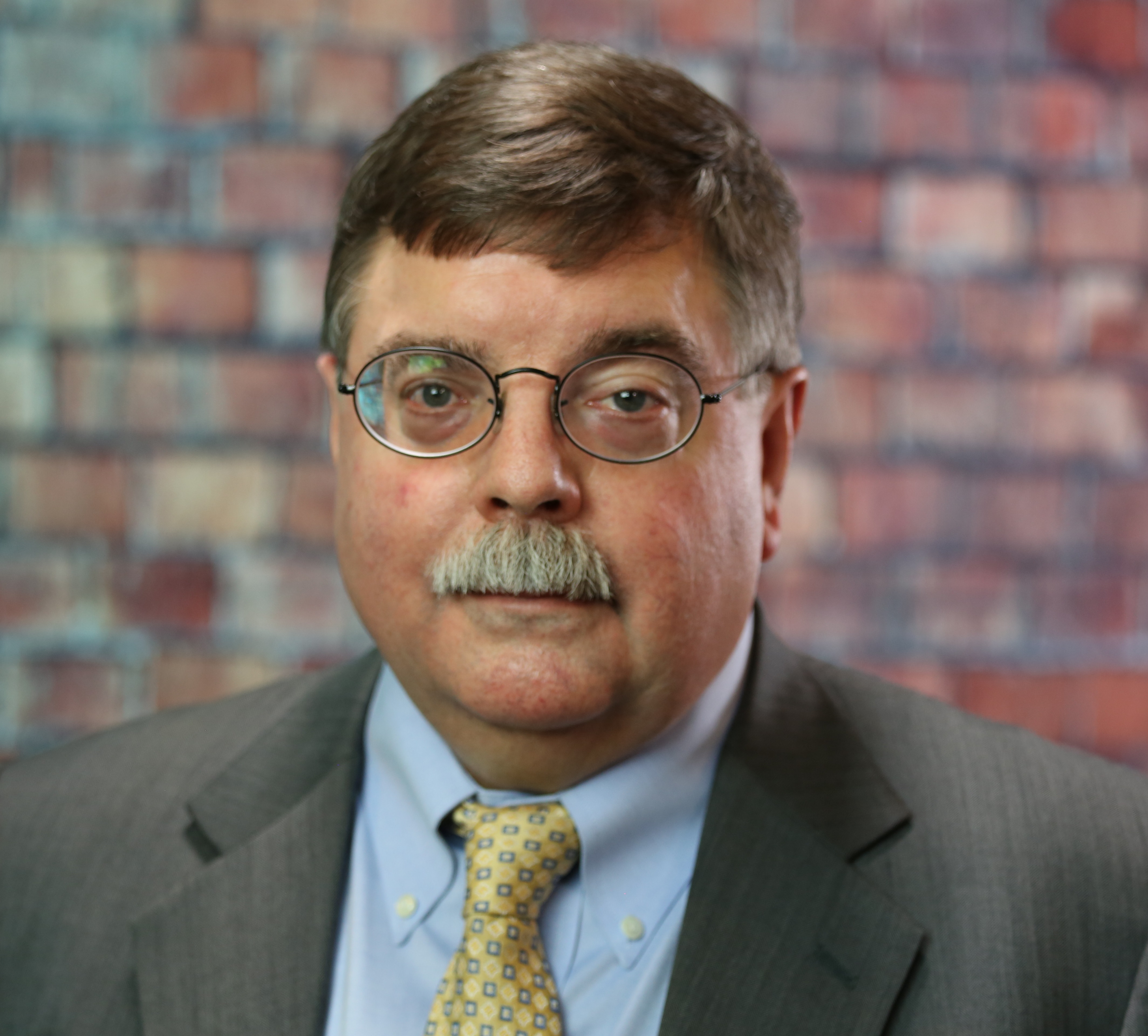
CEO & Director at Nevada Lithium
Steve has over 25 years of institutional investing & shareholder communications experience. He was formerly the senior investment analyst and a founding member of the Chilton Global Natural Resources Fund in New York City, with peak assets of over US$4 billion.

President at Titan Mining
Rita Adiani has over 18 years of experience in the mining industry and has been involved in operating companies and development projects in North and South America, Australia, Europe and Africa. She has held senior executive positions in listed companies, private investment vehicles and has been an investment banker, private equity professional and lawyer. She has experience in global capital markets, public and private M&A transactions and has been involved in raising over US$10 billion in public equities. Ms. Adiani is a law graduate from the University of Oxford and the University of Sheffield. She has a Chartered Financial Analyst qualification (Level 4) in ESG Investing from the CFA Institute and also has a Certificate in Mining Studies — Mining & Minerals Engineering from the University of British Columbia (Norman B. Keevil Institute of Mining Engineering).