Automated transcript · Written by software from the replay's audio. It can mishear names and figures; the replay is the record.
37:03 basic elements of civilization that should exist freely and in abundance across the borders. What we start to notice is that It is only through collaboration, cooperation and solid partnerships that a profound transition can be made to open Africa's markets to the world and end famine, suffering and human rights violations on the continent. And so Africa needs partners who are committed to a prosperous African community of nations, collaborators who advocate for the African Union and who contribute to the formation of the African Continental Free Trade Agreement.
37:53 1 such trusted partner in the quest for economic liberty and humanity in Africa is Canada. But one may ask the question to Canada, why Africa? The Business Council of Canada states that, and I quote, Canada has made trade diversification a key priority in its policy and in its 2018 Fall Economic Statement, the federal government committed to making Canada a more globally connected economy by increasing overseas exports by 50% by the year 2025.
38:43 The Business Council of Canada reiterates that this is an ambitious goal that will require a comprehensive export strategy focused on high-growth markets where Canada underperforms. Canadian trade diversification discussions have often focused on the Asia-Pacific region with the rise of Asia's middle class as a highlight. Although it is agreed that this region must continue to be a focus, we must also see Africa's large, untapped growth potential as a region that deserves much attention. And I concur with the Business Council of Canada that meeting Canada's trade diversification target will simply not be possible without a solid Africa strategy.
39:40 Economic analysis commissioned by the Business Council of Canada suggests that If Canada sees the opportunities in Africa, Canada's exports to the region could reach 6.6 billion US dollars by 2030, representing a growth potential of about 4.1 billion US dollars over the coming decade. The Council's research clearly highlights the economic potential of Africa and also identifies promising opportunities for Canadian businesses. A major opportunity that will help enable and fully realize the promise of the African Continental Free trade agreement is closing Africa's infrastructure gap.
40:35 We know that the appetite for international investors for African infrastructure projects remains encouraging, but for the continent to ease movement across its borders, achieve its trade goals, and truly commit to ending poverty, infrastructure investment must be, sorry, infrastructure investment must more than double and continue to grow into the next decade. As free trade takes strain elsewhere in the world and global protectionism rises, Canada and the African Continental Free Trade Agreement have the potential to fill a widening gap by making use of the dynamic energy of a new generation of traders.
41:29 Indeed, This is a new generation as Africa is home to the largest youth population in the world, and thus we possess the privilege of engaging with an electric energy that only Africa can infuse into the evolution of its future. Listening to the voices of young people, harnessing their innovations and inventions, empowering young people with education and offering them experiences and opportunities is key to reimagining an African era of prosperity. A forward-looking partner such as Canada and their investment into Africa's youth has the capacity to place young people in the centre of development.
42:19 And so, when considering Africa's economic restart after COVID-19 and the vital role of Canada as Africa's trusted partner, we must take cognisance of the impact of the decisions of leaders in governments and corporate companies today on the future of youth tomorrow. We should consider the implications of a future that we as leaders may not be a part of. A future where climate change is lived reality, where natural resources are but gone, where human encroachment on wildlife habitat strike a deeper imbalance in the ecosystem and where the lack of equilibrium manifests in the transmission of more pandemics.
43:14 As leaders, we should be the trusted partners of the youth who inherit this Earth and who will succeed the trade agreements we put in place today. How we better manage the world's resources for the good of all humanity in the years to come is the next step in building trusted partners. In order to achieve a global ideal that highlights the continent's economic strength and optimism amidst the COVID-19 pandemic, we must acknowledge with urgency that sustainability is key to survival and that Africa's youth and most vulnerable are our greatest resource to invest in and nurture.
44:08 Connecting the continent, securing sustainability, and enabling the African restart for a new global growth engine is only possible if we make Africa once again a center of learning. Not only for us here, the great of Timbuktu, but for all Africans to heal and rise. And I thank you for your kind attention. Thank you so much to former President Boklante and our director at Ivanhoe Mines, and of course, the key sponsor of this conference, making it a reality today as our lead sponsor and premier partner. Thank you so much for your remarks, sir. And thank you very much to the chair of the board for the introduction. The chair will be joining us on the main stage in a moment. We've got various breakout rooms and main stages for those who are present in Toronto. And of course, a warm welcome to those who joined us just in time for the prime minister's address as well as that of former President McClendon.
45:07 I'm Gareth Blore, president of the Canada Africa Chamber of Business. The honor is all mine on behalf of our board and our members to welcome each of you today. And of course, President McClendon. We note that was your second address to the chamber just under a decade ago. You were of course with us for the annual Mine Africa, annual African mining breakfast, one of the highlights on the calendar, now the single biggest event in North America when it comes to mining on the African continent, and no doubt curating that kind of success based on the content and the dynamism, the leadership of people like yourself. So a very, very big thank you from all of us. It is my great pleasure now as we come toward the conclusion of our opening session, and we prepare to move into day one's programming of Connecting the Continent. To call upon a final speaker for a few remarks, Dr. V. I. Lakshmanan, the CEO of Process Research Ortec, formerly the Ontario Research Corporation.
46:01 A successful privatization effort took place, and he has led that firm with distinction, like many of us, an immigrant to Canada who has achieved enormous success and has committed the remainder of his career, his passion, to the African continent, where he has a distinct focus, joining us on the ground, sponsoring events, including this one, and passionate about the future of Canada as it is tied so deeply with the African continent in the partnerships that we've seen outlined today. Dr. Lakshmanan is currently, In addition to his role as CEO of Process Research Ortec, a world renowned international speaker, he's a scientist, he's an innovator, and he's also an entrepreneur who's played an important role both in Ontario, but also across Canada through Process Research Ortec. A significant expansions are now into Botswana in particular following the Canada Africa Business Summit that took place in Botswana in 2019.
46:51 We look forward to being back on the ground in the African continent again. Without further ado, Dr. V.I. Lakshmanan from Process Research Autech, over to you, sir, for a few remarks to lead us off to the end of the opening session. Thank you. Want to thank Gareth Bloor, President of Canada-Africa Chamber of Commerce, for inviting me to address this conference. Want to thank the Chamber for their hard work helping Canada and Africa building the relationship for the benefit of communities, the countries together.
47:38 We have been working with the chamber for the last 4 or 5 years with Gareth and Jacques Dukumbe, the Vice President. We are very pleased. We are very pleased that we have been part of Canada-Africa relationship building. Friend, this conference is taking place at the right time. It's happening As we are coming out of the COVID pandemic, we all together have seen the challenges that we have had on the health care. It also clearly demonstrated how important the human capital is for economic activity and economic growth. It is very important. Healthcare is a major, major component of the economic growth and we all have to address it together.
48:30 In this, Canada is a world leader with a universal healthcare policy. And Canada, of course, is a leader in education, healthcare, and quality of life. It is not alone the economic growth that we need to address. As the King of Bhutan said, it also the happiness index. And in that, we can probably say Canada is a leader in the world in giving quality of life to its citizens. It's a great country, Canada, coast to coast, 4,000 miles, blessed with rich resources, be it water, be it minerals, be it energy. Not only that she has all these resources, but she also has the human capital, looking at these resources and creating economic value, benefiting the citizens of Canada.
49:22 It all happens because people coming together, good governance, policies of the government, and also people with diverse backgrounds, be it technological, be it mineral processing, exciting metallurgy, lawyers or financial experts from Bay Street, the lawyers from Bay Street. And also, Canada has a unique experience. For many years, She's liberally sharing her capabilities, arranging conferences like PDAX, prospectors and developers, bringing people around the world to sit and exchange their views so that for the benefit of the global village, people can share their experience, create wealth, create economic opportunities. And Canada has been doing it for many years, be it Inco, be it Miranda, be it Sherid, be it Tech, Barrick. These companies clearly demonstrated creating the experience, the domain knowledge, coming together to create economic growth and activities, not alone in Canada, but taking their experience around the world, be it Africa, be it South America, be it Australia.
50:27 She has done it for many, many years for economic growth of various people, liberally sharing their experience. What is very important is in 2 weeks time, we have the climate change global warming conference taking place in Glasgow. Here we are talking about low carbon economy. For low carbon economy, we are going to be looking at renewable energy, battery materials. How can we be doing? Reduce our dependence on fossil and go more and more clean energy, whether it is solar or wind, energy storage with battery materials and mind to mobility with electric vehicles, electric cars, how we can be helping each other with all these new technologies that are coming in the digital world.
51:14 For this, you need to address the need on critical metals, whether it is nickel, whether it is cobalt, whether it is rare earth, graphite, or whether it is lithium. And we in Canada have developed it and the rich continent of Africa, be it Gabon with rare earth, be it Burundi with rare earth, Namibia with rare earth, manganese in Ghana, South Africa with manganese and Botswana with nickel and Mozambique with nickel. All these countries have rich deposits and Congo has got Cobalt. So these are all great countries with rich wealth, but it is not only having the wealth, rich deposits, but human beings coming together, technological experts coming together. Here is a unique opportunity.
52:06 PRO, a technology development company, innovation company for many years, have been working with the continent, Africa, with Botswana, with Bitri. Together, we've been developing technologies on battery materials, not alone PRO, PRO together with Electrovia, a major producer of batteries, energy storage. PRO and Electrovia is a great supply chain management companies together. And these type of companies, small and medium-sized companies create jobs and build nearly 60 to 70% of jobs are created by SMEs. And these models can be translated into African content, coming together, sharing the experience, more batteries, more Mintex, with companies like PRO, SGS, Sherrit, TEC, working together for the global village, for the low carbon economy, clean technologies, clean energy and renewable energy, not thrown that including recycling.
53:02 So that you don't dig the hole all the time, but also efficiently recycle the battery materials. We have a great company called Lithium Cycle coming in Canada. These are the companies for the new economy. These companies will be contributing more and more, addressing the issues on low carbon economy. Technology companies like PRO, technology companies like Electrovia, with government assistance and help, these companies can be working with Bitree and Mintech for the betterment of global village and clean economy, low carbon. Friends, let us continue with our journey, work together for peace and prosperity in the whole of global village. Thank you very much for inviting me. Gareth, all the best with that conference. Thank you.
53:48 Dr. Lakshmanan, thank you so much for your kind remarks and for your support. And again, congratulations on the success of PRO following the privatization of what is now Process Research, ORTEC, and that key diversification into African markets. Well, dignitaries, ladies and gentlemen, all guests with us today, we're coming on to just 2 minutes to go before we kick off our first session for the theme of day 1, connecting the continent, as we discuss delivering the global electric vehicles revolution. We've got some fantastic speakers coming up on that panel. Our main stage here in Toronto, as you'll see in a moment, we're joined by 2 illustrious VIPs leading in the field, and we'll then go over to the African continent as well, where we've got the leadership from Ivanhoe in the Democratic Republic of the Congo. We'll then shift over and look at more specifically issues of infrastructure on the continent as we enter into our second panel for today. And then under the theme of connecting the continent, we'll look at the big question of success achieved to date. And to lead us in that will be Mr. Samson Orega, CEO in Canada for Ethiopian Airlines, of course, an airline that has achieved enormous success in aviation on this very theme. He'll discuss a little bit about how they did that and the lessons that we'll see going forward. Tomorrow we look at issues of renewable energy and sustainability broadly, delivering socioeconomic empowerment and true economic freedom across the African continent.
55:11 Day 3, joined by His Excellency Mbamkele Mene, Secretary General at the African Union's Free Trade Secretariat. He'll be leading us as we look at key opportunities and projects from a pan-African single market view, welcoming their Canadian pension funds and a series of private equity funds too, for some very important discussion on the tangible mechanics of investing. The opportunities are enormous, the market is significant, and we are here at no better time. Canada has committed to the African continent, and the continent likewise has shown an enthusiasm to continue on the enormous opportunities that lie ahead for 2 incredible parts of the world. In exactly 1 minute, we'll be switching live to our main stage. Hang in there. We're going to get a short video and we'll be back in just 1 minute. Thanks again. The Canada Africa Chamber of Business, we exist to connect opportunities in investment and trade between Canada and key African markets through world-class information sharing and networking events.
56:09 These breakfasts are really important because it brings all the players together. African decision makers like ministers and others to the table. It brings businesses together, it brings the community together. And gives it an opportunity to reflect on where it's come from, where would it like to go, and how should we all work together to achieve that. My message for Canadian companies would be to invite them to come to Africa, invest and seize the opportunities in Africa. There is no doubt that Canada, in my mind, is Africa's partner of choice. So the role of the chamber becomes speaking to government leaders and businesses across Africa and saying, let's realize through partnership the enormous opportunity that is the incredibly wealthy African continent. Well, it has gone exactly 10 o'clock. Good morning to all here in Canada. A warm welcome to those across the African continent. It's my great pleasure to begin theme 1 for Africa accelerating, connecting the continent, and joining me here in the main stage room, live at the top of the Dominion Center in downtown Toronto. I've got 2 leaders on this item.
57:17 Ken Hoffman, he is the head of EV, Electric Vehicle Battery Research Materials at McKinsey and Company, joining us from New York City. He's coming especially for this today. Cassandra Lee, Global Director at Hatch. Thank you for your leadership on this particular subject. And then, Louis Wathum, joining us from the continent on African soil, the Managing Director for Ivanhoe Mines in the Democratic Republic of the Congo. It is wonderful to see you again. So I know you're a regular here in Toronto, and we look forward to hosting you in person again soon. Well, this is a topic that has global importance. Of course, we know the African continent's responsibility on global emissions. It plays a disproportionately small role, and yet the ability to deliver a low-carbon future disproportionately rests on the opportunities and the success that we see on the African continent.
58:07 In the electric vehicle's green revolution, copper is the key enabler for a green and sustainable future for all of us. So this morning and this afternoon on the continent, we're exploring the trends, the opportunities, but also the challenges that come about as we pursue a net 0 emissions future. And so it's my great pleasure to call upon as our first speaker, Mr. Louis Wathum, as Managing Director for Ivanhoe Mines and the DRC, to kick us off with some opening remarks and we'll then come back to Toronto Live where we'll be joined by Cassandra Lee followed by Ken Hoffman. Mr. Wathum, over to you. Thank you very much and hello to everyone. I had a presentation, a few slides. If possible, can that be loaded so I can talk from them? Thank you.
58:55 Once again, thanks to the organizers, to Gareth, to the entire team there for allowing me to join online. I'm actually joining you from beautiful and sunny DRC. And trust me, the weather is very good this end. The global electric revolution is indeed a very exciting topic. Going far beyond, actually, what we see in electric vehicle. It is more on how do we produce clean energy in a sustainable way with 0 net emission of carbon dioxide. But on the other end as well, when you look at this chain side of things, it's actually how do we mine responsibly enough metals to sustain the electrification of the world economy.
59:44 So I'm very honored to be part of this panel. But I know we've been talking about the Avano mine since we started, but please allow me for just a minute or so to preach the good news of Avano, a world class explorer and developer in Africa. We've successfully launched earlier in May this year, a flagship project, which you may recall when I was in Toronto 2 years ago, I said it will go into production this year. Well, it just happened. Even ahead of scale. And will become the second largest copper mine in the world when it reaches its full expansion. We have 2 other world class mines. It's Plot Reefs, which has the potential to become among the world's largest primary PGM producers at an industry leading cash cost. Very low cash cost producer, actually.
1:00:39 And also Kipushi, which is the world's highest grade in zinc that we have in DRC. Both Kipushi and Plant Race are still under development. Now let's go back to copper. Next one. Yeah. You know, I'm a copper fundamentalist for a number of reasons. We may discuss that later on during the panel. But what is important to notice is the fact that when we look at the trend of copper demand versus supply, on one end there is an increase in copper demand. And this is not just because of electric vehicles, but also because of refractionist policies adopted by a number of countries around the world.
1:01:30 We need to modernize the aging infrastructure. We need to build new ones. Emerging economies also need to do the same. And all this will consume a lot of copper and other metals. So this is on the demand side. But on the supply side, the picture is different somehow. The supply is declining, mainly due to lower grades, aging mines, which are getting deeper. We may see some slight surplus towards the end of next year on copper supply, mainly due to a number of projects coming into production, such as the second phase of the Camo Acacula in DRC, Puebla Veco in Peru, Spencer Cubrada Blanca in Chile, or Udokan in Russia.
1:02:22 And you add on top of that, increased production from scrap metal. All of This will give a bit of surplus, but I can only assure you this will be very short-lived. Next slide. Because if you look at the demographics, just look at explosive urban growth. I mean, look at Kinshasa. I was born in Kinshasa. And by the way, for those of you who haven't been in Kinshasa, let me tell you one thing. DRC, besides producing good copper, good cobalt, and all this. Kinshasa produces good beer, good music. We play good football. And girls are beautiful. So please come join me in Kinshasa.
1:03:12 Kinshasa was home to less than 1 million people when it started. And look at what is going for 2030. It's going to reach 22 million people. Just look at the magnitude of infrastructure that will be needed. Electrification that will be needed. So, the amount is we'll keep rising and It's going to be very difficult to catch up with it. Next slide. Thank you. Copper is the king of the metals. The equivalent of oil in the oil economy. Why? Because look at the amount of copper used by electric vehicles. 3 times more than a conventional internal combustion engine. And also, it's very difficult when it comes to transmission lines, for instance, to replace copper.
1:04:00 Yes, aluminum is cheaper, but less efficient. Take an aluminum cable. It needs to have a cross sectional area that is double the size of any copper equivalent to conduct the same amount of electricity. So efficiency is in copper. And finally, when you charge your batteries faster, where else to turn to if not copper? Next one. Now where is the role of Africa in all this revolution? If you look at the annual sales of near 45 million EVs at the end of this decade, you see all the jurisdictions of the world except Africa. There's a very simple reason to that.
1:04:46 This slide is showing you the demand, the consumer side of the business. You'll find Africa more on the supply side of the equation where Africa has a real role to play because of mineral endowment second to none in the world. Next slide. And as you've seen over the past couple of years, there are jagged factories that are being built in China, in Europe, in U.S. How do we feed all these monsters with raw material, with the metals which are needed to make batteries? This is where Africa has an unprecedented opportunity to lift its game as a major supplier of economic and social benefits for its population.
1:05:36 What is very encouraging also, I must say, is a trend in Africa. We've seen a number of countries such as South Africa, Mauritius, Seychelles, Rwanda, and some of the North African countries, they start showing leadership, putting good policies and standards to sort of steer up electric vehicle uptake. This is very good for the world economy. Why? Because since, if Africa becomes more electrified, it will burn less charcoal, it will cut less trees, and ultimately achieve more forest conservation, which is good for humanity. Next slide. Now, there are challenges, of course.
1:06:22 We will never say it enough. The cost of lost opportunities is huge for African countries with world class mineral endowment such as DRC. Due to poor infrastructure, poor institutional capacity, energy deficit, poor governance and all this. These are the real challenges that one needs to address. Be that as it may, We must also recognize that many African countries are taking more and more seriously ESG. Taking DRC for instance, you see more and more collaboration with international organizations such as Global Battery Alliance and others. And they are putting an end to child labor in artisanal mining. We start more and more seeing major mining houses also coming to the table as well to suggest solutions, give away areas of the mine concessions which they believe is not conducive to industrial mining, et cetera. So a lot of effort is happening currently, and we can see the results, although a lot more needs to be done.
1:07:26 The other challenge is the recycling of EV batteries. This is the other side of the coin. I will actually call it even the darker side of the coin of this revolution. Just imagine 145 million batteries, which are going to be manufactured in these Jaguar factories. They come to the end of their lives. What do we do with them? We recycle them. And there is the risk of releasing all kinds of toxic waste, heavy metals, et cetera. It opens a whole new area of research and development and also an opportunity where academia and industry need to join forces and find innovative solutions.
1:08:13 And perhaps to As concluding remarks, this is my last slide, as I said in opening remarks, it's not just about electric vehicles here. It has become a matter of national security for nations and humanity. How do we produce clean energy with 0 net emission of carbon dioxide to electrify the world economy. And there are huge business opportunities here. We're talking of well over $20 billion in size of the business here. And this is where Africa needs African countries need to wake up to attract these investments. And there's no there's no there's no it's not going to happen overnight. We need to ensure certainty and transparency of regulatory framework.
1:09:02 We need political stability. We need incentives to attract the FDI to favor our tax regimes. We need to invest in developing human capital. This is very critical to attract much needed capital and technology. And perhaps a word of caution here to end my introductory talk here is it takes time to build a tier 1 mine business. To build Kamuakakula took 24 years. It didn't happen overnight. So, Africa needs to wake up. It needs to get this act together very quickly because the demand will keep increasing. The opportunities will be there. Since it takes a long time to build mines to produce these metals, we need to start it as soon as we can so that we can create wealth which will contribute significantly to the upliftment of our communities.
1:09:59 And, yeah, Very exciting times ahead. I'll stop here for now and thank you very much. Mr. Wathum, thank you very much. And always such leadership and grace, but also humility for someone who is at the center of managing one of the most important sites when it comes to production that leads to that eventual lower carbon emissions targets, carbon emissions targets to which world leaders and many others have committed. A lot of wonderful comments coming in, sir. And perhaps one thing to think about as we prepare for the questions, a big question is around policy. You mentioned, of course, issues of national security. It's much more beyond just the mining. So as we come down to the Q&A, I think that's 1 theme that will be quite strong. For those sending in questions, remember that address is ask.canadaafrica.ca. That's A-S-K at CanadaAfrica.ca.
1:10:45 Details also in your confirmation registration documents. Our next individual speaking is a major leader at a firm that decided on Africa for its global expansion and I know has never looked back. Hatch is one of the great companies, not only of North America, but indeed globally. And leading a team of over 80 experts is Cassandra Lee, a global director at the firm at its headquarters here in the Toronto area. She has been focused as a Hatch Associate, where she began on extensive processes around process engineering and studying the management and passing on that knowledge in the various projects in which she has operated. And of course, she's been a team member for a number of major initiatives too. Hatch's experience in delivering on the African continent, I think, is regarded by many as second to none. And so it's a great privilege to have you here with us, and thank you for not only your support from a technological perspective, Cassandra, but over many, many years as a company in backing the stream of a Canada-Africa Chamber of Business, which is going into its 28th year of existence in the context of some major commitments to the African continent.
1:11:50 Without further ado, Cassandra Lee. Thank you, Gareth, and thank you to Gareth and the organizing committee for inviting me to be a part of this panel today. I was asked to speak about Hatch's copper capabilities. And so first I wanted to share Hatch's broad view. I mean, we are in unprecedented times. Things are changing at rates that we never believed could happen. This is indisputable. Metals is no different. We're seeing that there's increased requirements for high performance, high efficiency, and at the same time equal demand for low costs, low risk, and low environmental impact. At the same time, we're seeing that existing mines and producers are facing issues where their high-grade and easy to mine ores have been exploited.
1:12:35 And now they're left with the more challenging ores to process and that comes at a cost. Hatch is a global multidisciplinary engineering firm. We've got 9,000 professionals worldwide and our mission is to work with our clients in partnership combining our engineering and technical knowledge as well as their technical operations and business knowledge in order to tackle those tough challenges and create solutions that are sustainable, that are innovative, that are cost effective, and that are safe, most importantly. One thing I did like to note, as Gareth mentioned, Hatch has been working with Africa for many decades. It was the first continent that we expanded into several decades ago, and we've just celebrated our 65th birthday as of last year.
1:13:28 Over the years, we've worked on several copper projects, and just to name a few, particularly with focus in South Africa, we've worked anywhere from mining all the way to copper cathode production. We were part of the Chukchi underground mine expansion, which is the one of the largest underground mines in the world. We worked on the Tenki mine expansion in the Democratic Republic of Congo. We were part of the Kubota project, replacing their copper-cobalt roasters, 2 lines of roasters that are operating there now. We also have done work in Zambia, working on the Mopane mine shaft and concentrator. So we've got decades of experience working in Africa, copper and amongst other metals in particular.
1:14:16 Some of the trends that we've been seeing through this experience with copper, echoed very much by what Lewis has presented and shared some great information and slides on that. The copper demand has been changing. You know, it's been shifting. EVs are the obvious, most talked about reason for that shift, but I agree with Louis. It's also the increase in infrastructure. You know, copper is the greed metal, they call it. It is the metal that we're looking upon to carry electrification of vehicles, of infrastructure. There are a few alternatives. You know, aluminum, it's a cheaper alternative, but it also doesn't have the tensile strength or the efficiency that copper can offer. So there has yet to emerge a real player to take the place of copper.
1:15:04 That global demand that Lewis showed, we're seeing that deficit coming up. And part of that deficit, you know, if we want to talk about EVs, electric vehicles require about 4 times more copper than the gas-powered vehicle. And that's because of the copper wiring that we require to deliver the electricity from the motor to the different wheels. That's not even taking into account the EV charging stations that have to come into play. I mean, electric vehicle charging stations require lots of copper wire as well. And the number of public and private charging stations that are expected to come into play by 2030, that alone is going to increase the requirement for copper by about 250 percent. So demand for copper is real.
1:15:50 On the flip side, mines are definitely facing a decrease in their mine utilization and that's because we're dealing with lower grade ores, older infrastructure, older mines. Another concern is as we dig deeper into those mines, we're also pulling up more of the impurities, the arsenics, the bismuths, the antimony. And these impurities are nasties that smelters can't deal with. So it's costing our producers more and more now to handle that. One of the other things that I think we also have to keep in mind is the recycling of copper. It's been on the downturn for several years and has only recently started to come back up with copper recycling capacity coming up. So there's definitely this deficit moving forward.
1:16:39 In terms of global production, Chile, who has traditionally been the largest copper producer in the world, they spent the last 20 years or so really focusing on producing and selling their concentrates. And as I've noted, as the concentrates come deeper and deeper, we're getting more and more impurities. Smelters have traditionally relied on blending their complex or their dirty concentrates with their clean concentrates. This practice is not going to be sustainable as the clean concentrates become depleted. This leads a great opportunity for other players to emerge with Zambia, Democratic Republic of Congo, and others in the Central African Copper Belt are now going to be emerging as major sources of copper.
1:17:26 It's happening now, and it's going to keep going because these are largely underexploited areas. I would say that in the future, we see that there's an opportunity for miners, for producers, for recyclers, for new players, anyone who has had marginal business cases in the past to have new projects now come on board. Because the forecast for copper prices is strong. With high supply sorry, high demand, low supply, projected deficits, the price of copper is going to hold. In fact, summer forecasting is going to be continually beating its all time high price over the next few years to come. So, I think it's time for producers to revisit those projects that have always been marginal.
1:18:16 And as Lewis mentioned, it takes years. So, we've got to start now in order to fill in those deficits that are coming up very quickly, you know, within the next 10 years. Thank you. Thank you very much, Cassandra. And coming over to Ken Hoffman, You've been leading at McKinsey on this particular issue. You're a senior expert at McKinsey's Basic Materials Institute, where you also co-lead the firm's EV Battery Research Materials Group. I know over 50 projects just committed to this alone are within your portfolio. And just a quick recognition to the role your firm has played as well within this chamber, leading our strategy for full-time operationalization under Mukani Moyo. So of course, you've been a longtime ally of this organization. And of course, this key topic that's before us today. I'd like to invite you to offer some of your opening insights, recognizing you in no more measure as one of the leading experts along with Cassandra and others. What's your initial take?
1:19:09 We look at battery raw materials and really my role at McKinsey is trying to connect the dots between the miners, refiners, recyclers, OEMs, all together to try to understand how we go forward. The good news, I think, is battery technologies have won. There's no question about that. The age of the internal combustion engine is ending, and the age of new storage technologies has begun very rapidly. One of the things we found though, is as we move towards this battery technology, the materials needed will change very, very rapidly. And I think that's really important for people to understand. And so one of the things we always urge the miners and refiners is become integrated into that value chain. It's no longer going to be a commoditized product that you put into a chain and someone will take it.
1:20:00 Actually, the OEMs want to be with you on your development stage. And how things change rapidly, I can give a few examples. 1 for example is every year we tear down EVs. We're probably the biggest destroyers of EVs out there, and we tear down every single year to see what has changed. One of the most interesting things is when we tear down our Teslas, which we love to drive, but we also have to tear down, there's actually only about 50% more copper in the latest Tesla than there was in prior. So the 4 times was good 3, 4 years ago. If we take something down today, the companies have gotten very good at thrifting out a lot of the copper, mainly actually in the battery pack where you make thinner and thinner versions of the copper cathode. And so the copper collectors inside. And so that's one thing that's changed. However, the one thing we go back to on these battery technologies is what does the consumer want? Be it the consumer of a mine trying to go ESG neutral, or the consumer of electric vehicle.
1:21:00 Often what we find the consumer of the electric vehicle, they want to have the same operating dynamics of the vehicle they have today. So if the car today has 600 to 900 kilometers range, they want 600 to 900 kilometers range. If that can pull into a petrol station and recharge in 4 or 5 minutes, they want to recharge in 4 to 5 minutes. And so if you look at, for example, our copper outlook, even though we've taken copper in the EV substantially down, we haven't moved our copper forecast at all. We're actually very, very bullish on copper, going from around 26 million metric tons of finished copper this year to around 34 million metric tons of copper in 2030. The difference is the infrastructure. If you want to charge a car in 4 or 5 minutes, the infrastructure you need to do that is very, very significant.
1:21:46 I'm going to have to, relative to early Tesla superchargers, it's 75 kilowatts. Today a Tesla supercharger is 250 kilowatts. Well, we're talking about 1,500 kilowatt chargers in order to charge not only vehicles, but also trucks, et cetera. So massive, massive charging stations with a lot of infrastructure to give that consumer the same experience they have today. And that will lead to just massive increases in infrastructure moves. We also talk about, in terms of raw materials, The 1 thing the OEMs are telling us is they're very open to many different types of materials. So if a material gets too expensive, the old adage, the cure for high prices is high prices, will hold true here. So you will see many, many different metals and materials coming into the fore as OEMs try to provide the right product at the right price.
1:22:38 So what does that mean for Africa? Manganese is going to be a really important metal going forward. As nickel becomes more and more constrained, nickel's great for a battery in terms of giving up and taking electrons. But if it's in such short supply, OEMs will look elsewhere. And so while nickel will be incredibly tight over the foreseeable future, manganese will be one of the metals to sort of help us out. As I said, copper will always be there, but more in the infrastructure rather than in the vehicle itself. And other materials are really fascinating. It's not just the lithium ion battery. Think about flow batteries. Think about vanadium flow batteries. Very interesting technologies. And what do these technologies not only do for metals demand, what do they do for economies?
1:23:23 And one of the things we're really seeing, and it's a lot of interest in bringing batteries into places of the world that are very short electricity. The beauty about electricity and beauty about these batteries is modularly you can start to put down these batteries in place of diesel generators. And so you can use renewable resources such as solar or wind to fill up these batteries and then have parts of the world that didn't have electricity just very simply put up more and more renewable energy to the battery energy and create power where it's very difficult to get power today. That will be a supercharger on world GDP and it's going to be a really compelling, interesting area. And look at cost. 8 years ago, it was about $1,000 a kilowatt hour for a battery. Today, you're talking well below $100 a kilowatt hour. And that number only continues to drop. New technologies out there, such as new Anode technologies, which continue to drop the cost of the battery, will only become more and more prevalent, again, supercharging the growth going forward. And so this year, even though we've seen 100% growth in EV demand to almost 6 million units, That growth will only continue to accelerate as these costs decline, and as we continue to improve battery technology, no greater a point than with something that floored me yesterday, Hertz announced that they will buy 100,000 EVs from Tesla.
1:24:45 It's a real transformative event around the world. It's going to make everything a lot different. It's going to really challenge our raw material lines. OEMs are not only cared about the materials they buy, but the ESG footprints that those materials bring. So again, work together with the suppliers, with the buyers, so that we can actually build these very robust raw material chains, which will from time to time break, unfortunately. But if they are thought about the entire way through, if the materials actually are brought forward to these new battery technologies, and we know when the new battery technologies are going to be hitting the marketplace, then I think we can actually work through this and see a pretty seamless transition from the old internal combustion engine to stationary storage and EV storage, et cetera. Thank you.
1:25:34 Absolutely brilliant. Thank you so, so much for those insights. Thank you to all sending in their questions. Remember that question line is askask.canadaafrica.ca. Louis, first question goes to you, and I think I'll take a round of questions in the order with which each one of you have addressed us. You spoke again about the bigger picture, and again, alluding to policies as just came up several times. What are some of the most successful public policies you've seen that have enabled the kind of success that you seek to achieve, whether it's micro policies that are specific to your operations at the mines or macro policies within the broader operating environment. The next question is to Cassandra. Cassandra, it's around some of the trends that you're seeing, specifically around lost opportunities. Hatch is obviously celebrating decades on the African continent.
1:26:23 Where do you see success stories to date where addressing those lost opportunities have been done optimally? Where do you think areas of focus need to be so that we don't see lost opportunities as have been alluded to. And that can either be in terms of public policy again or specifically operations, areas where you come in on a project and you assist with some changes. And then finally, Ken, You spoke about quite a few trends. Where do you see areas, though, where copper is currently underutilized? And how big a variable in light of that would be consumer preferences? Do you see consumer preferences likely to drive the current level of increase or to play a disproportionately lesser role based on materials generally. I know I'm trying to get in as much content as possible. Thanks to those. We're doing another round of questions taking us through to the top of the hour, 11 o'clock here, 4 p.m. In Kinshasa.
1:27:16 So Louis, I'll afford you the floor to take on that first question. And Cassandra and Ken right after. Thanks. Yeah, thank you very much. You know, before I answer the question, we need to understand one thing in our industry. We're talking of all these metals, nickel, cobalt, copper, lithium and others. For these metals to make their way to these jagged factories, to start producing batteries and electric vehicles, et cetera, 1 needs to start at the starting point, which is exploration. That's the beginning of the cycle. One has to go to unknown jurisdictions and put dollars to the ground, put goods on the ground, get the best geologists possible, and look for this deposit, which later on will be turned into successful mining operations. So the starting point in terms of policies is how do we attract exploration dollars?
1:28:15 You look at today's exploration worldwide, we're talking of between 8 and 10 billion dollar basket. And Africa attract less than 5 percent of these exploration dollars. This in itself is a problem. That means we're not having policies good enough to attract these investments. We have to start looking at how do we make geological information available, accessible, in a very open way and transparent way. How do we award permits for exploration? How do we encourage exploration companies to come and feel safe into our jurisdiction. So it's again what I alluded to during my presentation, transparency and certainty of a regulatory framework when it comes to attracting exploration dollars to the ground.
1:29:18 That is a very key policy that needs to be in place. And of course you need political stability. This is a no-brainer. I mean, If you talk to many, many investors, prospective investors coming to jurisdictions like DRC, they always tend to sort of be hesitant when it comes to investing in Congo because of perceived political uncertainty, perceived uncertainty of regulatory framework, corruption and others. I say to most of them, you have to look at things both ways. Because I do believe that when you decide to go, If you want to kill an elephant, you go to elephant country.
1:30:08 The decision to get into elephant country is a binary decision. You are either in or you're not. And if you're in, well, you buckle up because you're in for the long haul. You do your own work, you understand how the business works, and most importantly, you build a very robust business model. The real, the real, For those who want to come invest in places like DRC and other African countries, it is not actually political. I built a multi-billion dollar mine operations in gold and copper and et cetera, successfully in DRC. And I've learned one thing. Irrespective of the certainty in the regulatory framework and all the negatives people can see, the biggest risk for an investor is not to be able to put together a strong local team, which on one end understand the complexity of the business environment, and on the other hand, is capable of delivering, regardless of the turbulence found along the way.
1:31:12 So that's the most important thing. So 1 who has done his own work, who has built a very solid business model, got the right team on the ground, I tell you, returns are phenomenal, far beyond any expectation. That would be my answer, thank you. Brilliant, thank you very, very much, Louis. I'm looking at some of the comments coming in, one of them, some good insights with the Fraser Institute annual mining index. We know we've got the African Development Bank addressing us on day 3, but one of the comments there was also that there were some significant improvements that were happening just before COVID hit on some of those regulatory issues. Of course, it's market dependent. But thank you very much for those insights, eliciting a number of responses across the board. Coming to Hatch, in your perspective, Cassandra, where you've been able to address issues of what would have been lost opportunities, Any sort of success stories you'd like to highlight and maybe what those lessons meant for what we're discussing today on copper?
1:32:07 So I mean lost opportunities are unfortunately hindsight is 20-20. So oftentimes we'll look back and say, geez, that was a lost opportunity. But in the moment, stakeholders, investors were looking at it and brushing it off, saying there was no business case. And from our view, often that happens because, to quote from Louis, but also from Hatch's founder, we didn't do enough homework. We didn't do our homework. So exploration absolutely is critical. Exploration and also having enough sample material to characterize, to do the test work in order to justify continued process development. At Hatch, we want to be involved as early on as possible in the process to help you understand your characteristics, what are the proper flow sheet paths, what are the economics that are going to support those. But we can only do that if we have good information coming in. So I feel some of the biggest lost opportunities have come by wanting to start very quickly.
1:33:07 And so doing, let's call it the bare minimal in terms of characterization and understanding the ore bodies and then wanting to move very fast. So I would say that it's really important to look at doing your homework and, you know, slow is smooth and smooth is quick, to think of it this way, that let's front end load, let's work together and be very open right at the beginning to look at these ore bodies. And some of the best projects that Hatch has been a part of are ones where upfront at the beginning, we partnered very closely with the client and we worked with them from the point of the mind, understanding what is their ore, what is the mine plan, and then moving with them to methodically look at what are the different processing options, what is the test required to support that to lower risk, and also to get involved early with permitting and local government authorities to clear that pathway so that we're not tied up with political issues.
1:34:08 And other things is, you know, we address political unrest. That has been issues in the past where that's disrupted supply chains, you know, unexpected political issues that have forced producers to shut down. So these are things that I think governments and producers need to work together, really focusing in on the local companies and the local people around these operations and make sure that there's good relationships. So I would say for sure that our best projects are the ones where we take care of all of those issues very early on and we're very transparent and open together with how to deal with that. Thank you so much, Cassandra. I know a number of questions to you, Ken, but I think the key one there was, how much of a variable is consumer trends gonna be playing a bigger role or a lesser role? And where do you think copper is most underutilized at the moment?
1:35:03 I think when you think about the EV and trying to provide the product that the consumer wants, I think in terms of copper, it will have some really great opportunities. One of those is, again, don't be sitting back and waiting for the demand to come to you. Go out and explore those demand options. So for example, when new battery technologies are developed, be in the room with the cell developer. One of the big advancements in battery technologies has been the thinning of the copper sheets that are used inside the batteries. It used to be you were talking about 30 or 40 microns thick. Today's copper sheets using a vapor deposition about 7 microns thick. So as the copper gets thinner and thinner, you want to be part of that development team to see how can you actually thrift out copper from the car, which is maybe considered not very good, but on the other hand, you're part of that battery and you'll be part of that battery going forward.
1:35:59 And so, you know, how can I be part of the solution of delivering more electrons more quickly into the car to charge it faster? What are the opportunities there? You would not want that going to a different material other than copper. So again, It's obvious that copper will be highly demanded, but be part of the change, be proactive. Talk to the cell makers. Often what we do is connect miners and refiners to these cell developers because they need to know the capabilities of the materials. They're all looking at this as a very, very new product. Think about it, a decade ago, less than 40,000 EVs were sold in the world, and today it's 6 million. It's been quite a rapid improvement, but it's still a very young industry. And so how can you work together with this developing value chain and work with governments as well because what they're going to imply is they're going to be putting carbon taxes on these EVs.
1:36:57 How can you deliver the lowest carbon footprint? Recycling is really great and in some point it will be an important area, but since the EV battery lasts about 10 years, and 10 years ago we only sold about 40,000 EVs, there isn't much recycled material coming into the market today. There will be into the future and we have to work on that. But in the meantime, it's going to be really incumbent upon the mining industry to provide that material. But again, I think this has been sort of the theme of the entire day, collaboration. How can we all work together to make sure this value chain works? Because if we don't collaborate, it will fall apart. I think the chip industry has been very endemic into this where there wasn't a lot of talking back and forth between different parts of the value chain and things sort of got ugly pretty quickly. How can we make sure that as we see this explosion in battery technology that copper is part of that conversation and that they're a very big part of that conversation.
1:37:51 Brilliant. Ken, I'm going to start with you again and work backwards. A same question has come up, and this specifically is not just to Africa, but this is from your experience globally, which is your focus. What is the most successful public policy intervention that you've seen, not necessarily Africa specific, but which you think has global relevance in this whole quest, touching on some of the key points that Louis raised earlier. Cassandra, coming, moving in that order backward, a question to you is, what if you were to go out on a limb, and I know sometimes this can be perceived as an unfair question, but what do you think may be the most exciting trend or opportunity not yet realized? What is technology going to enable potentially in future? That is not something that we have on the table yet. Or perhaps what has been one of the most important technological advancements, giving us perspective. You talk about 2020 hindsight.
1:38:43 What has really helped leapfrog us forward? And this is for those of us who are non-technical in the room, just seeking to understand, you know, where the biggest leaps have been. That insight would be fantastic. And then finally, Louis, if we, the question is on the business side of things, you know, obviously technology is key, but you're leading a major company, a Canadian firm, it's a global success, And those operations in the DRC are massive. Is a question to you on leadership. What have been some of the most important components leading a project like this? And what are some of the underlying values that you draw on in really reaching the net 0 emissions targets, because obviously it's a major value of sustainability. Any insights into how you do your day job essentially is the question, sir. So we'll come back to you as the final speaker in this round, and back over to you, Ken.
1:39:31 If I were to look at 1 part of the world that has done a really good job at this, it's the world's largest EV market and that's China. I think China has led the EV revolution and the things they have done to support that from a regulatory standpoint has been many. It can be as simple as granting a license plate. It's very difficult to get a license plate in China. However, if you buy an EV, there is no taxes on it, and it's pretty easy to get. So it really encourages people to explore the EV option. They've done things such as charging stations, the Chabot 500 kilowatt chargers that they are instituting as being regulatory that you have to produce a very, very high powered charging stations to be developed in China. They've actually signed a joint effort with Japan. 2, obviously China has very much backed their efforts in the mining industry. They're very aggressive in looking for assets for making investments in assets and the government is really encouraging that building of the raw materials chains. So, you know, China has led the way in terms of new battery technology.
1:40:33 They continue to come out with new, really innovative type of developments in this area. And I think the government has been fully supportive of all those steps. So I think China has been really a place to look at to see how they've worked up and down the value chain using regulatory pressure to make pretty large changes. And that obviously shows in their market. I think this year they'll be close to 20% of the vehicles sold will be EVs. It's quite impressive. Thank you very much, Ken. Cassandra, your insights, either retrospective 2020 or possibly for the future. So I'll take I'll share my thoughts for the future. And this is not specific to copper. This is for metals in general. And I think fuel switching alternatives to burning coal natural gas. That's where the future lies in order to get our greenhouse gas emissions as low as possible.
1:41:25 Many people are now looking at hydrogen. Hydrogen itself is not without its challenges. So I would love to see the future where we crack that issue with hydrogen having such a low molecular weight and requiring such high amounts of hydrogen in order to equate what you can get out of coal and natural gas today. Same for other fuels such as biomass. I see that as the future and where we need to make some real technological advances in order to switch our fuels so that we can still continue to refine and process the ores in a way that we know works and gets the purities that we want, but without the large carbon footprint. Brilliant. Thank you so much, Cassandra. Louis, I guess the million or the billion dollar question in the case of a company like Ivanhoe, leadership and making this all happen, bringing it together from a commercial and business perspective, you know, integrating all the technicalities we're addressing.
1:42:22 Any insights for our delegates today? Yeah, I think the first thing when it comes to leadership in cases of big operations like we do, you got to tell yourself every night when you go to sleep that it's a thankless job. It's a thankless job because The biggest challenge actually is to manage expectations from all stakeholders. And some of these expectations are quite frankly unrealistic. But you've got to manage them. That goes from everything they want, from a better education, to better health, primary health care, to better environment, to all kinds of expectations 1 needs to manage.
1:43:08 Now, how do we go about this? You've got to steer a real and frank and open dialogue and debate in the tripartite between government, you as a mining operator, and the local community or the civil society. In the tripartite, Each party needs to understand that they don't only have rights, they also have obligations. The state or the government needs to be reminded that they have the obligation to create this environment to attract capital and technology and ensure peace and stability. Mining operators have to understand that they have to bring capital and technology. They have to transfer the knowledge. They have to build capacity, train people, and et cetera, and of course produce the goods.
1:43:57 Because mining is essentially about bringing capital and technology, taking what is on the ground and turning it into dividends for shareholders, taxes to the states, and of course what goes to creating jobs and benefiting communities. And this is the obligation of mining operators. And of course, they have to sort of comply strictly with the regulatory framework. But civil society, local community, they also have their obligations. They have to accompany the project. They have to remain positive and show that they're part of what we are doing. So when you get the right mix of all this, you're already in the right spot to develop a good mind. When it comes to nearing net 0 emission on carbon dioxide, I must say we are very fortunate in DRC.
1:44:54 If you look at the map of DRC, you can be blindfolded and put your finger on any part of DRC. Within a 30 kilometers radius, you can build a hydropower station. It's a country blessed with hydropower. Well over 1 or 200,000 megawatts, enough to power the entire Africa, Middle East and part of Europe. So we have clean power. And that's already a very good thing. Our deposit, when you look at the Kamoa, Kakula deposit, is very different from the porphyra deposit we see in Latin South America and other sedimentary. So it's less footprint and concentrated. And as you mine it, more than half of that returns as a backfill on the ground. So the footprint of our mine operations are much smaller.
1:45:47 It's a very clean and green copper, actually, we're producing. But this is thing to nature, not so much to ourselves. That's my answer, thank you. Thank you very much, Louis. And in fact, in that same vein, you mentioned various stakeholders. And here at the Chamber, you know, we have over 10,500 people who've got notice of the event, many attending, many who will be attending in the days to come, watching those recordings. And this question of engagements and understanding expectations is a regular theme. And so I'm going to draw on that point and refer both to Ken and Cassandra with the same question. And that goes to any kind of any insights into stakeholder management. And that's in the broadest definition. Be it working with communities. Be it with a firm working as a client with the main company.
1:46:36 What are some of the expectations that you think are important up front, and can you refer to examples, for example in China, anything in terms of government and the private sector, those expectations? So if you have any particular thoughts on that, Ken, I'd love to kick off with you. And anything you wish to add, Cassandra, do feel free to chime in. ESG is sort of the term that has exploded onto consciousness over the last few years. And it is something very real. You do need the license to operate the mine. You do need to engage with local communities. You do need to understand what your carbon footprint is, what your water footprint is. And I think the mining industry often gets short shrift because there's been plenty of examples where industry has worked together with the local community to ensure that the mines are properly being managed.
1:47:26 However, if they are not, trust me, there's going to be a YouTube or an Instagram video of something going wrong. And so ESG is not only something just to be talked about. It is something very real and something that can, those who don't take it wisely, it will come back to haunt you. And so you have to be very meticulous the way you plan these mines. You need to have the stakeholders together. You've seen many examples recently in the US where a new mine was planned. They forgot to tell the local authorities what was going on and this caused some very major embarrassment and some problems. And so, you know, having those local stakeholders involved from the very beginning, having them understand exactly what the mine is and what a mine is not, what are you doing to mitigate? Can there be some win-wins?
1:48:14 I've seen a number of examples of, so for example, if you want an ESG neutral mine, you want to put in, say, solar panels because sun is abundant or hydro, and you want to build this. Could we share some of the power with the local community? It's often something that you've seen the ability to sort of engage that local community and tell them that this mine is just, we're not taking something away, but we're giving something back. We're giving employment, maybe we're giving power, we're giving understanding and technical training. There's many, many win-wins that can occur. I think, again, partnering with those local communities, partnering with the government, partnering with your buyers who also have their regulatory aspects to deal with. All these things need to work together. It's not an easy task, but it has been done successfully in many places and I think will continue to be something that mining companies will have to strive for.
1:49:05 To add to Ken's point, for decades now, Hatch has been a strong advocate of having boots on the ground to work with local stakeholders very early on, and we've done that on projects in Africa and even more recently in indigenous communities in Ontario and across Canada where we send local representatives to work very closely with the local communities, understand what are their misconceptions, what are their fears, and really try to look at it from their point of view and make sure that we work together to frame it in a way that, as Ken says, that we're taking something from the community, but we're also giving something back and making sure that what we're giving back is something that they need, they want, and they desire. So it's really critical to put that time and effort early on for success of a project.
1:49:54 Fantastic, thanks again, Cassandra. Thank you, Ken. Louis, last word to you as we round off this panel. Speaking to Canadian investors in the room, and these are Canadian investors who may be looking at natural resources, but indeed, many are looking at a broad range of projects. Is there any particular guidelines that you'd like to offer in terms of things people need to look at, insights they need to keep in mind when assessing opportunities in the continent? Because clearly we've spoken about what needs to be done. You're doing it. Is there anything that you could share by way of closing words just to help in terms of investor insight into understanding the African markets? Well, you've been doing a fantastic job, by the way. Congratulations. Yeah, thank you. What I want to say to Canadian investors, to the risk of repeating myself, is do the homework to start with.
1:50:49 You know, Canada has been instrumental in funding junior exploration projects in many, many jurisdictions, including DRC. So I would ask them not to let this go to rest. They must keep excited about jurisdictions such as DRC, because there's still a lot of untapped resources there. But do your homework. Do your homework, what does that mean? It means understand the regulatory framework, understand how people do business, understand what it costs, what it takes to do business. Yes, doing business in DRC is expensive, relatively to other jurisdictions.
1:51:39 It will change over the years when we get a more efficient administration, less bureaucracy and others. But it is what it is for now. So pick a very robust business model. The business model that can return good benefits to yourself financially, regardless of the high cost of doing business. It's exact, and remember one thing, mine cycles are very long. They go in 5, 10, 15, 20 years, and man lives can extend up to 50 years even plus. Kamuakakuna, we're talking about nearly 100 years. So we'll mine there until the kingdom comes. Now just imagine the number of political will you have to survive, because every 5 years or so, there are elections.
1:52:34 So be mindful of all that, that should not turn you off. It must just push you to focus more on doing your homework. And the image I like to leave with them is when you get on a plane, on an aircraft, and on takeoff, the captain says, well, keep your seat belt fastened because we will need turbulence. It's going to get bumpy, for sure. But it's not going to crash for 2 reasons. Because there are robust engines and also the pilot in the cockpit knows what it's doing. The pilot in the cockpit is the local team I mentioned earlier on. Every solid local team with the capability to deliver on a business plan regardless of the turbulence? And the robust engines, basically your business plan, make it robust enough to survive the storms, the high and lows of the tax regime, the community prices that get the times bearish.
1:53:35 If you do all this homework, I can only tell you one thing, that it turns out far beyond your wildest expectations when you come invest in DRC. That would be my advice to our Canadian investors. We want to thank you so much, Cassandra Lee, Ken Hoffman, an absolute pleasure having each one of you with us today. And congratulations on the successes and best wishes going forward. Ladies and gentlemen, dignitaries and delegates, it is my great honor to close this particular panel. And in just a couple of minutes here on day 1 of Africa Accelerating, we're going into panel 2 of connecting the continent as we explore the key infrastructure requirements and the massive opportunities as we work toward a single African market. We'll be back at the top of the hour, see you at 11 o'clock across Toronto and Ottawa, and top of the hour as well, wherever you may be on the continent or you're in North America. See you in a moment.
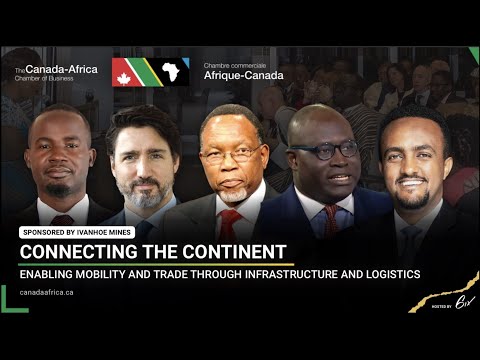
1:56:31 Welcome back, delegates, Africa Accelerating 2021. I'm so pleased to be sitting here as we enter into panel 2. And joining us virtually, we have Mr. Yossan Kiza from Rwanda, playing an important leadership role there, director of operations at the Private Sector Federation, of course, a star country on the global stage, economic performance has been brilliant. Seated next to me, Mr. Thabo Kholane, advisor to the Honorable former president of South Africa, Mr. Gilema Motlante, and then Katja Blouin joining us, too. She's a leader at APO, Pan African Press Association. She's got many accolades under her belt, and certainly somebody who is an enormous operator across the continent, making sure that that narrative and that story is correctly told. And this is a panel where we're going to really take an in-depth dive this morning and this afternoon on the infrastructure opportunities and the requirements to unleash the African free trade agenda, to which we've seen a number of speakers, including heads of government, refer earlier this morning.
1:57:32 A particular focus is going to take place on what mining operations and mining companies can do in contributing to these infrastructure requirements. And that's going to be very specifically on how we ensure a sustainable infrastructure context for the development of the continent. I remember actually speaking to the Honorable President. I was privileged to have a one-on-one with him ahead of this conference. And Mr. Motlante spoke about this crucial aspect, you know, Thabo, as central to ensuring we achieve an African continent that meets the potential. We know it can. And so I'm going to ask each one of you to offer by way of introduction some brief comments on yourself, on your role, and throughout the program I'll be making reference to some of your incredible achievements. Thabo, if I can begin with you, obviously relatively young, but such is the entire continent, you know, advising a highly respected former head of state. Tell us a bit about that role and about your particular infrastructure interests in driving this African growth agenda.
1:58:30 MR. KANUKWONGABA Gareth, and hi to everyone else. I think it's one of the most important aspects in terms of the growth of Africa. The role is to try and advise the presidents in terms of the logistics infrastructure that can enable us to make sure that we perform well and we make sure that whatever we have in South Africa in terms of the economy of South Africa, we grow to make sure that we can compete with the global world. So that's my role for the president. I think it comes from the Ivanhoe side of it. As Louis has said, Ivanhoe is producing lots of copper. So we have to make sure that that copper is being transported from the mine, from the pit to the port, to make sure that it reached the destination that it has to go to. So in terms of the infrastructure, I need to have a proper infrastructure so that we can incur lots of freight costs.
1:59:22 Pabu, thank you so much, an absolutely brilliant work. Your son, you're at a country that's at the heart of the continent, on the ground now, joining us from Kigali. And as Director of Operations at the Private Sector Federation, when you look at the question of infrastructure and the role of Rwanda in that broader context of the African continent, would you kindly offer us just a few opening insights into what your role is on a day-to-day basis and how you see this, of course, in the context of the infrastructure development agenda in Africa. Thank you, Mr. Gowrie, for the opportunity. I would like to take this opportunity to thank the Canada-Africa Chamber of Business for the invitation, kind invitation. I would also like to thank all the sponsors, especially Vanho Minds for taking lead in making sure that this event is successful.
2:00:19 Private sector federation is an umbrella organization in Rwanda that covers and promotes the interests of the private sector in the whole of Rwanda. What we do in day to day is that we do a lot of things, capacity building for our members. We do events for our members, like the Golden Business Forum, and we also organize international exhibitions to help our members access markets. Key to this is the African CFTA that they benefit from. We also do advocacy for our members. We lobby the government on key issues of taxes and other areas of interest for our members.
2:01:08 In brief, that is me. Thank you. Gary. Brilliant. And congratulations on your leadership role in Rwanda, Mr. Kiza. It's absolutely well recognized. I'm going to bring the question over to you, Thabo. What are some of the most pressing infrastructure considerations that you see? And when we speak of considerations, it's in terms of rail, road, ports. Where do you think most of the hard infrastructure attention, you know, needs to be focused? Essentially, what do you tell the Honorable Muklante when you advise him on these items? Okay, first in answering your question, I'm going to start by saying Before COVID, Africa was one of the most growing in terms of urbanization. What that means is we need to start at home. Each and every country needs to start from its own country to make sure it can connect within the country itself before we can connect with the continent. You look at a country like DRC, the president of DRC said he wanted to make sure one of his priority to connect the country itself to be able to move goods from 1 region of the country to the other.
2:02:18 And in a country like Zambia, you find that there are some policies say 30% of the freight need to be on rail. But because of the poor infrastructure, you find that almost all of the percentage is on road because of the infrastructure. To answer your question, it is difficult to say which one are pressing because they are interconnected in terms of 1 another. But one will be more focused on the rail. Because if you look at even in South Africa, one of the priority for transit is to make sure that they move the freight from road to rail because of the damages that road does in our infrastructure. So it is important that we move the freight from road to rail. So rail will be one of the priority that we'll be more concentrating on. Secondly, we'll be concentrating on the ports. You look at what the DPO is doing in Africa. It's trying to take all the ports within Africa. It started with Angola, it's in DLC, and now they're talking to Transnet to make sure that they take the port to make sure that they operate that port. So all in all, they are interconnected. So but It is important that they talk to each other. But if you ask me, I'll say moving the freight from road to rail would be the priority of each and every country to make sure that it is interconnected.
2:03:39 More especially, you have corridors like the North-South Corridor that is not fully utilized. I mean, during the COVID, we had a shortage of containers. What other companies were trying to do, we are trying to make sure they can use the north south corridor to bring stuff from the north south and use road into the port. That shows the importance of rail, it's very important in Africa. So we'll concentrate on rail to make sure that we rehabilitate those corridors, the north-south corridor, the western rail corridors, to make sure that the infrastructure is geared for some of the product, some of the mining companies that are going to be producing, if you look at the Avon, all India is going to produce lots of copper. So in order to make sure that you have infrastructure to support that. So I'll say rail will be my priority. Fantastic. Thank you very much.
2:04:27 Katya, coming in, we've heard that while rail is a priority, of course, there are a broad range of considerations. You take that slightly broader, and you look at some things like ICT and other key aspects beyond the hard infrastructure. Just a few words on your current work on that, because I think it's obviously a key part of the conversation, as you've been arguing so eloquently for a long time. I hope you can hear me now. And I think this little delay is an excellent representation of what we're talking about here. ICT industry, accessibility of internet on the continent today is still lagging very much behind. APR Group is a Pan-African communications consultancy and the press release distribution service. We operate in every one of the 54 markets on the continent. One of our missions is to help shape African narrative from within.
2:05:15 And this is impossible to do without proper access to internet, be it for the corporates that we're working with, or for the journalists that need access to solid information in order to form an opinion, in order to help shape adequate civil society. And as our previous panelists mentioned, it's also a way to help corporates do their homework. Those juniors, those investors that are looking to come to markets that perhaps are less explored today. The need for solid ICT infrastructure and access to Internet, affordable Internet, I should stress, and high quality is absolutely pivotal today. So at APR Group, we are working on both sides. We're working with with our clients and with the journalists and trying to make sure that the story gets out there.
2:06:03 Going beyond, we also work with our international partners providing content from Africa. We know that there is a lot of stigma that exists in international media about the continent. There's a massive gap in knowledge. And what we are trying to do is we're trying to bridge that by signing partnerships such as the one we signed with Getty, where we offer them content from the continent, from the projects that happen on the continent, to raise visibility of the great things that are happening. Fantastic, Katia. And of course, those narratives are important because underscoring many of them and bringing in Yossam Kizaa on Rwanda is the fact that there have been major success stories across the continent on enabling the ability to do business, to implement infrastructure, and to achieve at a rapid growth, and that includes leapfrogging.
2:06:49 Your sum in your experience in Rwanda, which, of course, has been ranking very well on the ease of doing business on economic freedom scores, many to relative peers, relative to many peers. What are some of the most important considerations from a Rwandan perspective on enabling infrastructure? What are the sort of conditions, the regulatory aspects to it that have allowed the country to move with ease? And perhaps if you so feel, what are some things that other markets may be able to learn from it as they look to Rwanda and they see this key piece of the pan-African infrastructure agenda coming out of your country. Thank you, Gareth. I think the perspective is that at the beginning or at the onset, leadership has to set the tone.
2:07:39 And this means that all leaders across the board, they have to walk the talk. If it is creating a conducive enabling business environment, it has to be seen that they're doing something about it. When our leader says that all businesses are welcome to Rwanda, they should find that everything is as we are talking about it. So businesses are looking for return on investment, stability, scale of business, predictability, fair treatment. So when you bring your money from outside in Rwanda, for that sake, you're assured that your money will be safe.
2:08:30 That means security is guaranteed for your money, for your property, as well as individuals. So that is all in terms of doing business on the environmental part of it. But there's also corruption, fighting corruption. The country is widespread, Everyone is aware about it. There's a lot of sensitization about it. And not only that, we also use technology in trying to de-risk or de-limit access for clients going to government offices so that they can access services. So everything is digitalized in terms of service delivery to the citizens as well as the businesses.
2:09:18 So that also helps in combating room for corruption. We also look at supportive areas for the SMEs. In Rwanda we do support, we do have a lot of, especially many organizations that support SMEs currently due to the pandemic. You've seen that most businesses, especially SMEs, were hit. We have a government fund that helps the SMEs put up their feet and get back on the road to recovery. If you're looking at also in terms of taxes, we need to fast track the customs union on the African continent. Looking at what we've done in the East African community.
2:10:07 I think most of the trade is really going on well. And I think it would be a very good example for the African continent to also look at it critically. You also look at integrated pool, power pools. We need to integrate the infrastructure in terms of electricity. We have North, Central, East Africa, Southern Africa and West Africa. So we need to pull all those resources together so that we have an integrated power pool that will bring the cost of power in Africa down. That will encourage, of course, manufacturing, mining for this sake, and also promote low businesses. If you look at some countries, for example, like Liberia, per kilowatt hour could go as far as $4 per kilowatt hour, whereas in Botswana or South Africa, it is as low as 7 cents. So if you look at all that, it also helps in a way.
2:11:13 We also have to look at win-win situations. We shouldn't look at the big businesses or the big countries taking all the big kicks. Also, the small countries like Rwanda should also benefit in this CFTA. So we need to look at it critically and see how everyone wins. If you're selling, if you're importing rice from Tanzania or from anywhere else in Africa, Rwanda should also be able to export to those markets. So that kind of freedom, because for example, right now, everyone in Africa can travel to Rwanda and get the visa on arrival. Some countries actually don't even need visa to come to Rwanda. That's a big plus in terms of connectivity of the country and also to the African continent.
2:12:07 In terms of ICT development, we have of course a lot of progress has been made in terms of ICT. So we're looking at 96% of the country is all already under fiber optic network. We're also looking at So many developments in terms of cashless economy, where 11 million out of 12 million, that's a big number as well, are using mobile money for transacting in terms of payments and all that financial transactions. We're also looking at having access to government services.
2:12:54 98 of all government services in terms of payments to like taxes, bills, electricity, water bills, and any documentation that you may require from government, you will sit at your home or in the office and access all those facilities at the tip of your computer or your phone, and you get all those payments done electronically. At the continental level, in terms of business, we need to create big business club at a continental level that will engage the AU leadership on matters of interest for the private sector. If you look at what we're doing at PSF Rwanda, we have what we call the Golden Business Forum.
2:13:40 This is a club of big businesses in Rwanda that sits and engages the government on policies and whatever goes to parliament, any policy that goes to parliament has to go through the private sector federation, of course with the club involved, that is the members. And we sit and engage the government in terms of policies that affect business. And I think on a continental level, if we want to attract big money in terms of investment in this infrastructure development, we'll need such a club that will give confidence both to outside capital as well as within mobilizing within the continent.
2:14:28 In a nutshell, that is what I had to say on that point. Thank you. Yossam, thank you so much and thank you to everyone sending in their questions and comments. I'm getting them in front of me right now. It's the perfect opportunity to go into a round of questions and thank you again for those fantastic introductions. Thabo, starting with you, The first question actually has just gone to your some recent point around the AU level, how 1 engages, particularly from a private sector perspective. Question to you, Katja, also arises out of your some comments on ICT. You know, we've seen innovations like hard infrastructure, power cables, actually becoming good conduits for delivering high-speed Internet. And many argue Internet should be considered as vital as a basic commodity like water. There's no participating in the global economy without reliable Internet. So the question is, any insights into projects on infrastructure that have brought about accessibility with things like Internet as part of that social component to hard infrastructure?
2:15:26 And then finally, Yosem, in terms of how best you think the private sector needs to engage. You sit in a unique position at that intersection between the private sector companies at the Federation in Rwanda and of course liaising with the government that's made a strong commitment to enabling investment. From the private sector side, What do you think some of the key considerations are that they should consider when it comes to seeking to understand how government is approaching infrastructure? And so I'll start back at our Toronto main stage with Thabo. AU leadership, the role of the private sector, what do you see happening at the moment? I'm curious as well on Ivanhoe mines in particular. Yeah, I think that's one of the interesting questions that one has to have a look at it in terms of to make sure that this thing, I believe before they go into the AU level, they start from the country level in terms of the countries itself.
2:16:21 How is the government engaging with the private sector within the country itself? And in terms of those big infrastructure investment, you have like what you call Triple P, which is private-public partnership whereby the government partners with the private sector in terms of getting the funding in terms of like African development banks, in terms of funding those infrastructure. And each and every country's president, they represent their country into the AU. So in terms of them being involved with the private sector coming from the country itself, that should go to a level whereby when they get to the AU level, they will push that there should be some engagement between the AU and the private sector.
2:17:07 But also I know that within the AU itself there's a private sector part of the AU, I think Dr. Makesha is part of that. So There are some vehicles that the private sector that are involved within the EU that they can put some contribution into how they see this bigger infrastructure project. Because this infrastructure project, they need to make sure that those countries that come and invest in South Africa, they don't just invest in the minerals and those minerals that they are being transported into the overseas. Then we won't get any beneficiary in terms of the free trade, because if you look at the percentage of the countries in Africa, it's about 15% of the manufacturing that African countries are trading by itself. Most of the time it's being superseded by the minerals that are going out of Africa into European wealth. So we need to make sure that when they come into Africa, there is what we call the local beneficiaries, so that they don't just invest on the minerals, but also invest in terms of the manufacturing and also in terms of the ICT, like we talk about ICT, in terms of some of the freight, they are very high available freights, we need high ICT to make sure that you track those freight, you don't lose them in terms of being lost or being hijacked. So I think it is within the private sector itself, they need to make sure that they engage with the government from where they come from. That will enable that from the continental part of it, so that it becomes a synergy that comes from the country.
2:18:37 So it's not something that we force from a high level, comes from ground, then it goes up. Brilliant. Thanks very much, Thabo. And I think I'm reminded as well of comments earlier that you can't design if you're not working with the SMEs, if you're not dealing with the communities. It's much more than just laying a road or laying rail. And no doubt, Dr. Makesha, there's an exclusive one-on-one, as you will all see, day 3. That's this Thursday with Dr. Patricia Makesha. So no doubt that question will come up again. Katja, ICT, it's come up many times, you've been on the ground reporting and assessing this, such a vital part of complementing any infrastructure initiatives. Any thoughts or burning points from your side that you think are vital for policy makers and for businesses when it comes to this pan-African infrastructure agenda? Well, first of all, we need to accept the fact that today only 20% of the people in Africa are online.
2:19:29 And we also need to accept that internet or ability to connect to internet is what drives economic growth in our day and age. And this has been by what we have lived through over the past 18 months. In fact, AFDB has recognized ACT as one of the key sectors for investment in order to recover from COVID. In my opinion, connectivity, internet is what binds all hard infrastructure together, is what binds soft infrastructure together. It is our ability to actually benefit from all these wonderful initiatives that exist across the continent. With that being said, the project that I would like to probably highlight is that of Liquid Intelligent Technologies and their milestone of achieving 100,000th kilometer of fiber network on the continent.
2:20:22 This is a fantastic project, not only because it impacts directly 100 million people in over 600 villages across the continent, but it's also the fact that it actually connects some areas of Africa for the very first time. In fact, the area where this milestone was celebrated in Bunjimai has not been connected before. Today, the direct impact of this is that people can have access to reliable, accessible and internet that allows them to have access to other services, financial services, education, e-commerce, but also set up their businesses because I will repeat myself, COVID-19 has taught us that those that were able to get online quickly were able to, I don't want to say serve the way, but were able to withstand the terrible effects of COVID-19.
2:21:16 I think that part of the reason why this project has been so successful, connecting the entire continent with fiber is a massive challenge. Of course, it has been the series of local international partnerships that allow to overcome geographical challenges, such as crossing the Congo River, for example. But it has also been the very mission of LIT, which is that connectivity should be a fundamental right of every person in Africa. So This is the project that I wanted to highlight and also the fact that there are numerous other initiatives that exist on the continent today. This is not the end. The 100,000 kilometers is just the beginning. There are still numerous areas, there are numerous countries that are very much underserved.
2:22:01 You also talked about the fact that in Rwanda, almost 96% of people have access to internet. There are other countries where this number is actually the opposite, 96% of the people do not have access to internet. Therefore, providing access to internet, whether on a large scale through fiber, whether through hotspots in specific areas, should be on top of our agenda, be it for an international company coming to Africa, or be it for local stakeholders, or be it for governments. Thank you. Thank you so much Katja. And thanks very much for alluding to those success stories. We hear about leapfrogging often, but to put the theory in practice, I think it's always very, very useful. So a lot of good comments coming to you.
2:22:46 You're from Oberschule. I know that one of the questions that came through post earlier was, what should those in the private sector, particularly who are keen on building infrastructure through things like PPPs, what do they often get wrong or perhaps miss when it comes to understanding or being able to understand the plans and objectives of government, because, you know, that communication and understanding is key. So typically in Rwanda, what's the first point of entry for someone who's coming in and looking at opportunities? How do they get a sense of the country's plan, the intentions and the next steps? And I think again, that's a question that goes to best practice. Yeah, thank you so much. I think What we do have here in Rwanda, we have a one-stop center for investors that is under the Rwanda Development Board.
2:23:41 All investor relations are handled in that institution. So if you need any advice, if you need to start a business, if you're an investor, you'll have 1 access portal. And you don't even need to come to Rwanda. You can do it at the comfort of your, in Canada or anywhere else in the world. Upload whatever they ask you. In 6 hours, your business will be registered. And you'll be good to go to the bank and open up shop and start business. But for big projects, I think sometimes you need to engage the private sector as well. So after registering your business, then you need to come to the private sector so that you meet the real foot soldiers on the ground that are doing the business.
2:24:28 So the language you talk between business to business is different from government to business. So sometimes it's easier when you bring them together in a room and then they engage, they talk to each other, they understand the same language. So I think That's where we need that partnership between business and government so that you can work closely together. Yeah. Thank you so much. Fantastic. Thanks very much, Osam. The key question around the private sector, Of course, Canada has played some major roles. We think of Bombardier in South Africa with high-speed rail. We think of companies like Hatch on the infrastructure side doing massive projects. What do you think is the key message when it comes to infrastructure opportunities in Africa that you would want to share or the key perspective with companies who haven't yet done what the hatches and the Ivan knows of this world are doing, who are not yet present on the continent. So kind of stepping back in that manner, any kind of insights or thoughts there that you think need to be put on the table?
2:25:33 I think one of the things that probably we have to look at, like I said, before COVID, Africa was one of the continents that's growing in terms of urbanization. So in terms of that, so 1, the guys who were going to come to Africa, it's one of these both developing country in terms of the infrastructure. So if you want to invest your money, we say Africa, it's one of the best countries can come and invest in terms of more special infrastructure. Not just on the rail infrastructure, you're talking about the power infrastructure, we're talking about the ICT, which is one of the most needed things that will be, because everything will be, it's not mobility, We have to be mobile. So one of the considerations that we have to have a look at is we need to speak to our country counterpart in terms of stabilizing the economy of our country, in terms of stabilization, the security within Africa itself.
2:26:32 I think it's one of the concerns that guys want to come to invest in Africa in terms of the stabilization, in terms of the riots, or in terms of the coups that are happening in Africa. So we need to make sure that we minimize that. But looking at some of the growing countries like DRC, where there's a lot of big mines that are growing there in terms of the copper, in terms of South Africa, in terms of some of the iron placed mines that are growing. So it's one of those considerations in terms of the mineral resources. It is one of the countries that will be needing more of infrastructure to make sure that those can transport them to even to European market, not just the European market. But I think what's more important is in terms of making sure that we put more money in terms of the manufacturing.
2:27:23 One of the things is to make sure that the economy of the country to grow, we need to make sure that we produce more. We have indirect service. We produce more in terms of this. So those countries must come there and invest in more manufacturing than the rail infrastructure or than the logistics infrastructure, which I think manufacturing is one of the things that we need to make sure that we pay more concentration on. Brilliant. Thanks very much. And Etabo, a few comments coming in. You know, we'll be tackling some of these themes in detail on the actual mechanics of the investing later this week. But to your point, you know, in terms of opportunities, you've got political risk insurance now, the African Insurance Agency, Trade Insurance Agency, DPAC Dave, in fact, has been very active in the chambers pioneering that. So de-risking even perceived risk or political risk when it comes to unlocking investment into the continent. The African Development Bank just got another comment, you know, we'll be tackling some of their views and approaches too. But certainly, like you say, pre-COVID, the opportunities were enormous.
2:28:24 Katya, how have you seen success stories on the COVID recovery, to which Thabo is alluding? And again, your son Rwanda was one of the first to open up post a lot of shutdowns. So the same question to you. But Katja, to kick off on your end, where post-COVID are we starting to see clawback? Where are the greatest opportunities for the recovery and the restart, you know, as we've titled this 3 day summit? I think we have to be cautiously optimistic about the recovery. We are still very much in COVID-19, especially in Africa, with the lack of vaccines, things are opening up. However, we just have to make sure that we are taking it 1 step at a time. We've seen how it backfired in Europe. We don't want the same to happen on the continent.
2:29:13 What has been phenomenal throughout the past 18 months and APO Group works with a variety of industries, we are quite sector agnostic, is the ability to adapt to the reality that we are living in of all industries, all the companies that we work with And it was also the ability of the companies to come up with initiatives to give back to the market, from providing meals, to providing internet access, by the way, to providing those hotspots in areas where people normally don't have access, where it's very expensive, so that people could work online, study online. Universities in many African countries have done a phenomenal job in moving to online education. This has not been done 100%, but the incentive is there.
2:30:00 Offering information online, obviously a lot of journalists have moved online, a lot of searches have been, you know, a lot of information has been focused on online. As APR Group, one of the things that we've done at the very beginning of COVID-19 is we offer to distribute press releases for ministries of health or full African governments in order to create information, in order to make sure that there is only verified information available to journalists, in order to avoid people trying to use home remedies from COVID-19. We've organized a series of press briefings for World Health Organization as well in order to keep companies, keep organizations up to date with what is going on on the continent. I think that what is important moving forward on the continent, and we've used this word several times today, is collaboration between governments, between private sector, between local communities.
2:30:55 Local communities are the communities that are impacted the most by what we're living through today. And very often, they're not the ones coming up with solutions, they're the ones identifying the problems, but very often solutions don't actually match the problem. So it's very important that there is a dialogue and as we're talking today with Canada, we're talking with juniors, we're talking with mining producers. They are in a unique situation where they have direct access to those local communities. They're right there to understand what those local communities actually need. We're talking about access to Internet. Fantastic. Great. Hotspots, connection to fiber, excellent. But these are first time users. They're not always aware of the dangers that internet presents. Cybersecurity is a massive issue in Africa at the moment. The number of cyber attacks has been spiking throughout COVID and it will only increase as more people get online.
2:31:51 So digital inclusivity, digital training are some of the things that should be on top of the agenda for all organizations working in Africa. And this is also an investment in the future because once again, as we train, as we provide digital training, as we support various initiatives that already do that, there's a fantastic organization in Nigeria called Paradigm Initiative that is actually promoting digital rights and digital safety. We can create, once again, that civil society, we can create opportunities for entrepreneurs. We can expand e-commerce that is already developing with online payments and with mobile money. The elements of it are there. We just need to work together in order to bind it all.
2:32:39 In order to to support economic growth. Thank you so much, Katja. And in the same vein, you're some, you know, looking at the fact that COVID in many cases, it's ongoing, the recovery is a process. How are you taking up this issue? Because of course, the infrastructure development now happens in a very specific context that we find ourselves in since March of last year. Yeah, thank you, Gareth. Currently, most of the the citizens in Rwanda have been vaccinated, especially in the city of Kigali and also countrywide. So this has helped a bit in trying to relieve the measures of combating free movement of people around the country.
2:33:31 So this has helped business to start up again and pick up. We've been doing also negotiation with banks so that they can help extend the loans instead of immediate payment and also the interest rates have been renegotiated so that they can meet the current situation as well. In terms of also tax payments, some of the businesses have also been given some room so that they can reorganize themselves, mobilize capital and also pay later. So this has also helped mitigate some of these situations that are really hard due to COVID.
2:34:18 We've also launched the online training. We've been doing, for example, at PSF, we've been training members on how to navigate through this COVID situation. It's not easy, but at least Life has to go on and teach them on the digital trends that are trending currently, the platforms on how to do transact businesses. Also training on how to access bank facilities in terms of business plans. So this has really helped a lot. The government has also injected in money through commercial banks to help kickstart business as well. Recently, we've also gotten some funding from the EU, which is really a major boost as well. Rwanda is one of the first countries to receive such a boost.
2:35:09 So a lot has been done in trying to help the businesses get on their feet. Thank you so much. Thank you very much, Yossam. And thank you as well to each of our panelists today, Mr. Thabo Kholoane, Mr. Yossam Kiza, Ms. Kachiblo, and for your commitment and for your insights into various aspects of this very important subject. And of course, we know as much as there's opportunity, there have been great successes as well that have been reached. And so thank you for your contribution to the second panel for day 1 of Connecting the Continent, and all the best for your ongoing work. And we certainly hope to have both yourself, Yossam and Katya with us in Toronto next year this time. Thank you once again. And Thabo, very pleased that you'll be with us for the remainder of this week. And thank you for what you're doing, and of course for the ongoing advisory work to the former president, among others. You have a private sector background, So certainly it's grounded in the school of hard knocks, as some would say, in delivering what you speak about.
2:36:07 At this particular juncture, we're going to take a short break. The key aspect of connecting the continent is not just the opportunities and the successes that are there as a potential for the future, but the successes that have been achieved to date. And so just in a couple of minutes, we're going to hear from one of the world's youngest executives, Mr. Samson Urega, managing director of Ethiopian Airlines for Canada. He is an African company that's growing to be one of the fifth or one of the 5 biggest airlines globally during COVID did not lay off a single employee. In fact, continue to grow, is doing cargo operations across the continent in addition to passenger traffic, and has been involved in a number of other fronts as well on Canada-Africa affairs. So please stay right where you are. In terms of connecting the continent, it's not something we've just been doing, certainly in aviation, it's something that's already being done and being done at an accelerated pace. So we'll see you in a few minutes for Mr. Samson Orega to close our keynote address for day 1 of Africa accelerating. Thank you so much.
2:39:10 Welcome back. As we switch from the main stage back to the podium, it is time to welcome our keynote speaker for connecting the continent at day 1 of this summit. Very often the African narrative is defined by the potential, but we don't see that narrative always encompassing the success, where African companies have gone on the global stage and driven commercial growth and leadership in a manner that has set a benchmark worldwide. And so it is my great pleasure to welcome, as mentioned just before the break, one of the youngest executives, not only in the airline industry, but of major companies worldwide, Mr. Samson Orega of Ethiopian Airlines. This is a company that is one of the major supporters of the Canada-Africa Chamber of Business, our sole airline partner and sponsor, a company that has brought Canada and African markets within a day's reach of each other, vital to doing business, but also for important cargo operations that keep supply chains open and certainly did as COVID hit. Mr. Orega has been well recognized for his leadership since coming to Canada just a couple of years ago. He's been with the Prime Minister in Addis Ababa during engagements.
2:40:19 He's been planning various trips of VIPs across the continent, and he was also integral to the delivery of a number of PPP items that Canada urgently needed, ensuring that an African airline would serve as the partner of choice for Canada's measures amidst the pandemic when it first hit. Mr. Orega is well known within the airline industry and is certainly well known here at the Chamber of Business and by our members. Mr. Samson Orega, your support has been phenomenal. Your commitment to the continent and to this country is without question. And we thank you for your leadership role, ensuring that Africa has set the standards for aviation excellence, and that indeed we have connected a continent surpassing what many thought was possible just a few years ago, and certainly several decades ago, at independence for many countries. Without further ado, to close Africa Accelerating 2021, the honor is mine, Mr. Samson Nurega of Ethiopian Airlines.
2:41:13 Thank you so much, Gares. The Prime Minister, Your Excellencies, dignitaries, business leaders, and all assembled today from across Canada and the African continent, I'd like to say welcome. The European Airlines is proud to be the sole airline partner and sponsor of the Canada-Africa Chamber of Business. Connecting the continent, our theme today is no mere ambition. It is a reality. Indeed, when it comes air access, Africa is connected. And those connections are deepening every day. Ethiopian Airlines is the sole airline connecting Canada directly to the African continent and onward to over 120 destinations from Africa's capital of Addis Ababa. Africa's development in trade is driven by Ethiopian's cargo capacity.
2:42:01 So significant is the success that during the COVID-19 pandemic, cargo revenues ensured the airline remained profitable. The airlines did not lay off or furloughed a single full-time employee and never sold a bailout. We are very proud to abide by conditions of a free and open market economy, always ready to compete fairly on a global stage. Ethiopians' accomplishments reflect Africa's potential. The region can be the world's biggest free trade zone by area with a potential market of 1.2 billion people and a combined gross domestic product of 2.5 trillion by 2030. The year-on-year growth of Ethiopian Airlines reflects its ability to not just keep up with Africa's growth potential, but to serve as a key driving force of Africa's development.
2:42:52 This is vital, for it is my argument today that Africa's world-lead future grows. Africa's world-lead future grows in general. As Jack Ma, founder of Alibaba, reportedly stated, I quote, consider where some parts of Asia were in the 90s. Africa's growth and potential are far beyond it. 5.6 trillion in African business opportunities by 2025, rapidly rising to overtake the Chinese growth story with 30 trillion GDP in Africa by 2050. Is it any wonder the National Post last month ran the following headline? By the way, we are on the same building. I quote, forget Asia, businesses that dare to venture into Africa are poised to reap the rewards, unquote.
2:43:43 Before COVID, Africa saw a rise in tourism, 7%, making it the second fastest-growing market. With more routes from destinations in Canada and elsewhere, in addition to more regular flights, Ethiopian Airlines can also unlock a resurgence in tourism that secures Africa the position of fastest growing market as the world restarts after COVID. Ethiopian Airlines has always been at the forefront in Africa. The 1st African airline to order Boeing 767 with delivery in 1984, and many more firsts in the African aviation's history. After subsequently being named the most profitable airline on the continent, we launched a 15-year strategic gross roadmap titled Vision 2025.
2:44:35 Beyond just being best and the biggest in Africa, it aimed to increase passenger volume to 18 million and more than WT's fleet to 120 aircrafts and more parameters. Brothers and sisters, things didn't go according to plan in a manner of speaking. For we needed to revise the targets upward to be even more ambitious, reaching 150 aircrafts as we succeeded in most parameters, even before 2025. The European Airlines is now the world's fourth largest airline by the number of countries served, Ensuring every market in Africa is within easy reach, with onward connections to every part of the world.
2:45:24 We seek first place globally, but we know that will be achieved when we both drive and enable the next chapter in global economics, enabled in the context of a new era of Canada-Africa trade and investment collaboration on both economics and public policy. Canada and its people played a key role in the drafting of the African Continental Free Trade Agreement, and can continue in its implementation. Like Canada, Ethiopian Airlines commits to being a partner in Africa's development, succeeding and operating in markets with incredible growth rates, including 6 of the world's 10 fastest growing economies before COVID. All of them were in Africa. We were honoured to arrange part of Prime Minister Trudeau's visit to the continent last year, to the African Heads of State Summit, and ensures, as an African carrier that we deliver much needed COVID-19 resources to Canada. When this country, when this great country calls on us in Africa in the two-way relationship of equals, that is our Canada-Africa bond.
2:46:32 Prime Minister Trudeau, as I noted at the Chambers event in Ethiopia where we first met, we are here to further the trade and investment objectives between the people of Canada and African markets. As Africa stands to reach unprecedented development as the world's next growth engine, I commit myself today on behalf of Ethiopian Airlines to guarantee that trade and investment logistics are secured through equally unprecedented Air Connectivity and Aviation Excellence. From world leaders in governance and multilateralism to the business leaders from Canada who are our trusted partners driving economic development in Africa, we stand with you. The Turpan Alliance is a world-class leader and a member of the Star Alliance network that many Canadian business leaders know well.
2:47:25 Finally, let us never forget, numbers and profits margin don't lie. We know time is money for businesses. I can stand here today and attest that the African content and Canada have been brought together in an unprecedented way through Ethiopian Airlines. Ethiopian Airlines has brought people, deals, and businesses all within same day reach. At the farthest point, Cape Town, you can enjoy lunch at the southernmost tip of Africa, fly out in the mid-afternoon and arrive in Toronto the next morning in time for breakfast. No longer is the perception of long haul travel an issue for even the farthest destinations. A new era that some thought impossible is now a reality and one of that is even more dynamic manzonments.
2:48:16 We have been the best airline in Africa 2021, and for the fourth consecutive year, with the top African performance for business class, economy class, and best cabin crew. Ethiopian sets global benchmarks from within Africa to which it's peers worldwide aspires. The Skytrax 2021 World Airline Awards named Ethiopian Airlines as the number 1 airline in Africa based on over 13 million surveys collected over 23 months, combining normal travel and pandemic travel. Based on the track record of success, the European Alliance is not only the best in Africa, as has been said, we are globally connecting the world to Africa, a continent that is the global growth engine of tomorrow, being built with visionary business leaders on the ground today.
2:49:10 So when we speak of Africa as a leader and growth engine, It's no mere ambition, ladies and gentlemen. It's in full swing. Together, the Canada-Africa agenda, convened by this esteemed chamber of business, will unlock unprecedented prosperity for the nations of Africa and the great people of Canada. May God bless Canada, Africa, and all their children. Forward we go. Thank you so much. Mr. Samson-Urrega, inspiring as always. Thank you so much for your commitment and for your remarks. And indeed, we have a template. I see so many nodding in the audience here live for what success looks like. And thank you for the leadership that you've provided. Clearly it's not just for the continent, it's worldwide. And Canada has been an enormous beneficiary of that and of that deeper and faster connection time that brings us together within a day's reach. Dr. Patricia Makeshia, Honorable VIPs, to everyone who has gathered with us today, both live, but also across the world virtually, thank you for joining us. Thank you to those at viewing parties, at their offices in various parts of the continent, as well as in cities here in Canada.
2:50:19 It is a great pleasure to have been with you. I am very, very proud to hand over to speakers and moderators tomorrow who will be leading us through the program, but I still have the great privilege of being with you for the next 3 days. And for that, I am truly grateful. To each one who's here, to the team at 6, to Samantha Madingora, who is head of operations, to our chair of the board, our directors, our members, your support in making this happen is absolutely phenomenal. And to those who've gone before us at the chamber, we say a massive thank you as well. Past presidents such as Bruce Shapiro, but also others who've been leading both at a board level and companies who've backed this organization from 1994, where at South Africa's first democratic election, this institution was formed and has certainly grown ever since.
2:51:04 It's my pleasure now to officially conclude day 1. We're just minutes away from 12 o'clock. And to do that, I believe we have a special video that will take us out. Again, if you have any questions you wish to submit, questions you may not have got to at this session. It's ask at canadaafrica.ca, and we'll be sure to follow up with our speakers and with various institutions to guarantee that you get that answer as quickly as possible. This is a dialogue that we're continuing for the next year as we do at each Africa Accelerating, ensuring we're not just a once-off event. As you know, we've had over 50 events just in the past year and a bit in between major milestones such as this summit. So let's keep the dialogue going. Let's continue this agenda and let's thank all of those. And I wish to do so in leadership at a prime ministerial level, at a business executive level, right down to the members of this organization and to tomorrow's entrepreneurs.
2:51:54 Thank you for your role in driving an incredible Canada-Africa growth agenda. See you tomorrow morning, and see you