Transcript
Automated transcript · Written by software from the replay's audio. It can mishear names and figures; the replay is the record.
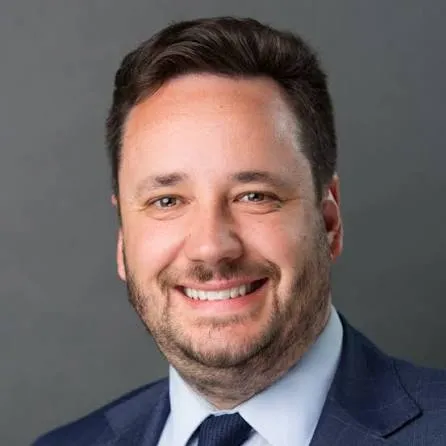
0:01 Good morning to everyone across North America and good afternoon to everyone joining us from the African continent. I'm Gareth Flaw, President of the Canada-Africa Chamber of Business, joining you from Toronto this morning following our program in Kenya last week, to which we were delighted to welcome, among other chamber members, StoresPay, who are currently tackling one of the biggest challenges we are facing North American businesses, including members, and that's the issue of cross-border payments as we accelerate trade and investment across the
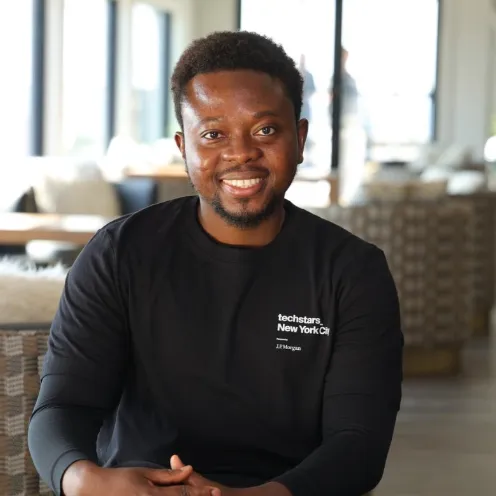
0:31 African continent. Dr. Sam Elonge, who's with me this morning, is at the forefront, a recognized entrepreneur, helping solve that problem and unleash prosperity through ensuring effective payment mechanisms across various corridors. Sam, I know you come with many, many accolades, recognized for your role as a serial entrepreneur, and we're very privileged to have you both as part of our chamber, but also as a key speaker at the upcoming Africa Accelerating Program taking place in Toronto. It was a pleasure to speak with colleagues of yours in Nairobi last week. And thank you for taking time to share with us today in the broader community, the work you're doing, the solutions, and how members and the wider business community can connect with you in terms of tackling these payment challenges. Without further ado, the pleasure is mine on behalf of the Canada-Africa Chamber of Business, Dr. Sam Olonge, welcome.
1:22 Thanks a lot, Gareth, and nice to meet everybody who is on the call today. And at StorzPay, we're primarily focused on helping businesses on both sides of the Atlantic pay and get paid across borders, the same day at 2% instead of 5% to 7% and waiting for a week with traditional banks. Call the differentiation as well versus other FinTechs is that we're focused primarily on businesses rather than personal remittances. So as you would see in the presentation I'm about to make, We have deep workflows that have been customized, focused on businesses that if you were using traditional FinTech remittances, would not be particularly useful for you as a business when you're trying to either pay or get paid instantly across the world.
2:19 So on the agenda today, I'm gonna cover who we have built our product for and how we have built trust into the system in terms of our licensing and where we are based. I will focus on the problem that we're looking to solve for who. I'll also go through 5 live demos so you can see how the product actually works in practice. I'll walk you through our pricing. I'll walk you through our partnerships program. And I'll walk you through how to start using the product. So I would kick off right away by moving on to my next slide here. Yeah, so primarily, as I said, we are actually focused on 6 types of businesses.
3:09 And where we are differentiated from most of the fintech platforms that enable cross-border payments is that we are built specifically for businesses. And what that means is that that's one way in which we're differentiated. But the second way as well is that unlike many other sort of cross-border payment platforms, we also allow for both directional payments. So what that means is that where most other platforms just enable you to do a payout from the US or Canada into Africa, we actually also allow, we allow that as well, but we also allow for your business partners across Africa to pay you using their local currency. That's what we refer to as the reverse leg payout.
3:58 And we've really built a solution for 6 types of businesses. So you can identify yourself on this slide if you if what type of business you are. I believe that most chamber members would be in tile 1 here which is Canadian and U.S. Businesses that are paying teams, contractors, and suppliers in Africa, Latin America, and Asia. And most chamber members would also be in TAL4, which is the delegations and embassies, and event organizers. So essentially, if you organize trade missions and conferences, and you want to be able to enable your delegates who are coming in to fund their travel expenses from home and spend here in North America without needing to do an FX exchange at the airport or carry cash while traveling.
4:53 This is for you. So that's where I think most of the chamber members would be. But the other 4 tiles, that's including businesses that may be having an operational base in Africa, across Latin America and Asia, and want to pay their business partners across the world using their own currency, such as suppliers, schools, partners and software providers, you can also use StoreSpay. Also, if you're a freelancer or referred to you as a sole trader on a platform, you can also use StoreSpay as well so that you can get paid in US dollars, euros, the British pounds and Canadian dollars in your own name and keep it in that currency without needing to transfer it or pay it out in a weaker currency.
5:42 And we also cover solutions for platforms and marketplaces. So if you are like an AI annotation platform or you are a BPO platform that enables businesses in North America get work done using freelancers or employees in Africa or in the global south and you need to automate payouts to thousands of people every day or every week, rather than doing that manually through a bank or through a fintech application, you can actually automate it using our API product. And then lastly, store agents. So if you're a business owner, you're on an African restaurant or cafe, you're on a hair shop, you're on any business essentially that brings people in who do some sort of business or transfers back into Africa or anywhere in the global south, then you could actually serve as a store agent where you use your account in your shop with the people who already trust you to enable them make transfers without them having to lift a finger in exchange for a fee that you earn.
6:48 So this is really the 6 kinds of businesses and you can sign up on our platform. You know, once you're verified, usually KYB, it's about 10 minutes. You can get yourself assigned, choose your user type and then begin to transact on the platform. So the next thing is really who we are and how have we built trust in our organization. So we started out in Canada and in Toronto. We've now moved operating office to New York. So we also have moved our Toronto office now to Calgary. So we have 2 operating offices across North America, in New York, in the Manhattan District, and in Calgary, where most of the fintech companies of Canada actually aggregate today, or federally incorporated in Canada. You can check us up on Corporations Canada with that number.
7:53 We are money services business registration with FinTrack, US dollar accounts with an FDIC member US bank, all our payouts across the 26 corridors, as well as the US, Canada, Europe, and the UK. It's all through licensed in-country partners who are registered with the
8:17 local government officials responsible for payments. Primarily we're registered for businesses, so that's why we insist that the use case for our solution is actually for businesses who are doing payouts or trying to receive payments from their business partners globally. And the funds move through registered and regulated infrastructure partners and licensed banks. And you'd all see the mid-market rates. So we're competitive when it comes to the rate as a big volume player. And you would see the fee as well that we charge on your transactions before you confirm. And you always get a receipt for your tax deductions and accounting for every payment you make. We're backed by Texas, New York, 500 Global in Alberta, JP Morgan Chase in New York, backed by Invest Ottawa, backed by UNDP, all FinLab in Turkey.
9:16 And we're obviously a proud member, corporate member of the Canada Africa Chamber of Business, as well as other business chambers in the United States separately as well. So that's it. So you can trust us with your money. And currently we're moving large volumes on behalf of many businesses across North America today. In terms of our pricing differentiation, Today, if you were doing a bank wire as a business, even before you've accounted for the FX markup, which is usually in the spread they charge you, you're looking at a combined cost of about 6%.
10:05 And it usually takes using the suite system 3 to 5 days, business days before you receive it. So assuming you did a transaction on Friday or Thursday, it could even take longer, up to 7 or 8 days accounting for the weekend. So on every $100,000 that you make a payment transfer for, or you ask to be paid on, you're losing about $6,000 roughly in fees by the time you look at your FX markup and all the hidden fees behind you know and if you were actually a business as well and you had a business for example in Lagos or Nairobi that owes you money and they needed to pay you from there. They would have to spend several days because of the dollar scarcity in Africa to try to source that dollars and have it wired through a local bank to you.
10:57 So you could actually wait up to a week before you find a business, you get paid by a business partner in the global South. If you were traveling, for example, as I said earlier, if you were an embassy and you had delegations that were coming, for example, now in New York, we're having this United Nations summit, there's many delegates coming in from Africa, some of them have met with cash, they have wads of cash in the envelope, you know, besides the risk of moving around that in travel, you know, they lose money 2 ways. 1, they change the local currency in Africa at the BDC shop in Africa or at the airport, but you would exchange for US dollars. If you were coming to Canada, they would need to change that again from US dollars into Canadian dollars. So they're losing effects both ways.
11:52 So for me personally, my first company, I built it operating across 13 countries in Africa, and it was always a hassle to pay my team from the US into those African countries. If we did not have a local subsidiary, then we would have needed to use a bank to make those payments. And imagine someone who wants their salary paid and they have to wait several days. It damages the trust between us and our employees. So that's why internally we built this solution. It became our internal plumbing for payouts for our employees. And now we've productized it and made it its own company and solution for other companies like us who do international business and want to be instantly paid or want to pay instantly across borders.
12:50 So this product actually came from my own personal experience running my first company across 16 African countries. And I'm proud of what we have done so far because you can make a transaction on weekends, on Fridays, on Saturdays, on Sundays. There's no need to wait several days to have it. It's instant. Most of our corridors, current average time of settlement is about 4 minutes for across the 26 corridors. Some countries are under 60 seconds. So this is something that I'm very proud of. And we have notifications that are sent out by email, by WhatsApp, so you as a sender and as or as a receiver, you always know what is going on with a transaction in real time.
13:37 So that's how we're differentiating on the pricing side. On the other hand, this here is 4 key numbers that I wanted to point out in terms of about our business. So we charge 2% all in at the mid-market rate. So when we refer to the mid-market rate, it's like rates that you will see when you go on Google to try to see what the FX spread is between 2 currencies. For example, if you went on and were trying to look at USD to Kenyan shillings, For example, usually we'll quote you at that mid-market rate, which is very competitive. For larger volumes, we can get you even better rates than that. If you're doing larger volumes, we can get you much better rates than that. But the point I'm trying to make is that we are very competitive versus many of the other fintech remittances, remittance companies that many business owners in North America currently use today. And the reason why many business owners do use those fintech remittance companies, even though they're not built for businesses, they're more built for personal remittances, is that there has not really been all the types of business focus alternatives till today, till StorSpay came into the market.
14:58 So right now we're trying to get more business owners to be aware that you're not stuck with using a personal remittance app for a business payment. You can actually use a dedicated business cross-border payment platform like StoresPay. Because of the deep workflows that I will show you subsequently, but more importantly also because you're getting better rates based on your volumes that you will not get on a personal remittance platform. You can negotiate that and have that customized for you. And More importantly, you're getting all the transaction receipts that you can use for your tax filing for your tax deductions. One key thing is that we charge our fees upfront and they're transparent. It's 2% all in, whether you're paying out or getting paid from the 26 countries.
15:48 It applies across all our corridors in both directions. There's no hidden effects. You see the effects up front. You get the same day payment. As I said, our average time is about 4 minutes. Most countries are under 60 seconds. So it lands in your bank or mobile money. And we're across 26 countries, which is Africa, Latin America, and Asia. We're in 19 African countries and 6, sorry, We're in 5 Latin American countries and 2 Asian countries. And we're continuing to expand our corridors. And we remove the need for any of the recipients or payers to sign up to an app. You just go on the website, you log in with your account, and you make your transaction. So that way there's no friction for your recipients to need to first of all sign up to an app before they get their money. That's one of the big issues as well with some other personally focused fintech remittance applications.
16:49 On our platform today, you can fund in US dollars, in Canadian dollars, in British pounds and in euros, and you can also get paid in US dollars, euros, British pounds and Canadian dollars. Your business partners in the global south can also pay you in their local currencies, and you would receive in these strong currencies as well. And we have a single dashboard for you to run your payroll, to run your supplier payments, and to invoice and get paid. You can also run batch payments. What that means is that if you had, for example, 1000 people that you wanted to pay at once, you can automate that with batch payments. And if you had very large sums of money to transfer like 1 million to 5 million dollars at a single time we can automate that as well to keep in compliance with the maximum amounts that either a mobile money account or a bank account can receive per time. It's all completely automated with our AI systems. You get a receipt for every transaction.
17:56 And once you've completed your verification, which KYB, you can then begin to use this across all these multiple corridors. So these are the 26 corridors that we currently serve today. We're in West and Central Africa, obviously Nigeria, Ghana, Ivory Cote d'Ivoire, Senegal, Cameroon, Togo, Benin, Burkina Faso, Gabon, Congo, Brazzaville in Eastern Southern Africa, we're in Kenya, Uganda, Tanzania, Rwanda, Zambia,
18:27 Malawi, Ethiopia, Botswana, South Africa. In Latin America, we're in Mexico, Brazil, Colombia, Argentina, Ecuador, and in Asia we're in Cambodia and Sri Lanka. We're opening up over the next quarter the DRC, Namibia, Mali, and India, and China soon. And we'll always add corridors every quarter and we can prioritize if you're a partner you can get in touch with us. If you have a corridor that is important to you that is not on this list, and you want it to start over and you have some significant volume, we can accelerate that corridor on our roadmap on time. So this is our 8 product updates. We've been making this update as we've received new business partners.
19:13 As I said, one of that is the get paid reverse leg. We started out with a payout where you could, from Canada and the US paying to these 26 countries. But as we started onboarding more businesses, we found that they were actually requesting for more and more of these solutions, which they're all right now live. Many of them, many businesses today, if you go on the platform, you invoice in US dollars, Canadian dollars, euros, or GPP, the customer would pay that invoice in Naira, in shillings, in rands, or CFA, like a local bill, and you would get dollars in your account on StoresPay same day and you can choose to withdraw those funds into a separate
19:57 off StoresPay bank account if you wanted to. Let's say your personal RBC account, you can do that. We draw automated, you can set an automation for that, or you can do that manually. You hold what arrives, so when you're paid in dollars and euros, that stays in the currency that you've received
20:18 at the mid-market rate. In terms of named accounts, we give you accounts in your name so you can invoice your business partners in your business name and they'll pay you that way. For freelancers, many freelancers on the continent, or if you're running a BPO, where you're an agency that sort of hires local staff in Africa on behalf of companies, currently just on boarded 1 German company that does this, is it an agency that hires people across Africa on behalf of large European businesses to do work for them. Your freelancers just need to do a complete verification, KYC, with their government ID and self ID, and we automate the entire process of having them set up a euro account or a Canadian dollar account or USD
21:10 account. And those accounts now you can provide it in their names to your business partners who can then make those direct payments either to you and then you automate the payout to your freelancers or they can make payments directly to the freelancers as well.
21:30 Are peer-to-peer, you can also have a transfer from 1 store spare account to another store spare account. This is instant and free. You just find, like for example, if Gareth was on store spare, I'll just look for at Gareth on the platform and transfer $100,000 directly to him, you know, that way. And it's instant and fee free. And so there's that peer to peer transfer within the platform itself. We have the platform APIs, as I mentioned earlier. So for marketplaces, if you're a marketplace that's sort of aggregating products, freelancers, services, and you wanted to automate those payouts, we can do the payment automation instantly, or we can have it established as an escrow where you as a platform owner, you hold the funds onto both parties have confirmed that the services or products have been delivered and then automated once that has been confirmed the system automatically releases the funds to the seller.
22:32 If you, a platform, for example, you providing AI, there's many AI annotation services on our platform today that are providing, using African labor for annotation and labeling of AI systems on behalf of many US companies, and they have to pay out for that work $20, $30, $40 per hour on a daily basis. We have a couple of them on the platform that are using that API system right now to automate those payouts. Increasingly, we're seeing many e-commerce sites now begin to enable agents for purchasing. We have that API in place as well. So if you have a platform where an agent is making procurement or is having to do some payment on your behalf, and you need to make that payment out to any of these 26 countries, we have an agent callable API that can enable that to happen.
23:25 So that's where we are right now. We also, for the UN conference, UNGA, have early access that has been opened for a few embassies that have used this for this conference this year. So they fund, I'll show you the demo of one of it, They fund the account for the embassy that's coming into a conference. It could be beyond the embassies. There are also many delegations that come together to Canada or the US, and you would use a local currency like Naira or shillings. You fund the account, it's held in US dollars. And then from that, you set a budget for each of your various delegates and issue a debit card. It could be a virtual debit card or a physical debit card was shipped to you. And then they will use that debit card to make payments for their hotel bills, for their meals, as they come around North America for their travel. So that's an early access, but we already have users today. So if it's something, if you're in the embassy or you do large events where you bring in people, this is a solution for you. All right, so I'll go into the demo here so you can actually see how these systems work. So essentially what is happening here is I'm focusing on the reverse leg here because that's where many businesses have found interest.
24:46 In this case here on the platform, you do an invoice. You invoice in Canadian dollars and US dollars or euros or GPP. You can request for any of these accounts in the platform and you will send that invoice out automatically by email from the system or by WhatsApp, however you want to send it. The recipient who's going to pay you receives that invoice. So you send that payment request and then your customer, they could be anywhere, They could be in Europe, in the US, they could be anywhere in Africa, or any of those 26 countries in Latin America and Asia, and they would use their local currency to actually pay you like an actual local bill. And then depending on the invoice, on the currency you've invoiced in, it could be US dollars, Canadian dollars, ETC lands the same day in your store's pay balance. And as I said earlier, you can pay it out to your Canadian, US, UK or EU bank, or spend it against a debit card directly from your store's pay balance. So in this case, I'm going to do like this sort of transaction. You'll see my screen now is you've sent a request to a customer to pay you $980 worth of product.
26:04 That's the invoice. Mid-market, they get that, they use in Pesa or they use a bank in Nairobi, equivalent of 128,640 shillings. As converted, once at mid-market rate, we charge that 2% on top of it, and then they get, you get it now in your wallet, store-spent wallet as 980. So I'll do a transaction here just for you to see a live demo. In this case, I'm going to toggle the calculator. As a get paid Nigeria, I'm asking this person in Nigeria to pay me $50,000. And then you would see what that looks like here. Okay, so here I click on the get paid button.
26:51 And I want them, I'm in Canada, for purposes of this presentation, and since most of the members here are in Canada, I wanted them to pay me, let's make it easy, $100.
27:07 I charged that invoice as $100, and they would receive the invoice as $100, and they would see the equivalent Naira, which is 96,063 Naira that they need to pay. And they can make that payment using a bank transfer, a POS agent on the ground in Nigeria. And we charge on top of that a 2% fee, which is the all-in fee they would pay. And you would then get that in your bank account, 100 Canadian dollars in stores pay bank account. And you can either pay, spend off of your stores pay balance or you can withdraw it into your RBC bank or any other bank, Canadian bank, for a flat $5 fee.
28:03 So very easy and straightforward for the user to use. The other second demo that I want to move to now is how a freelancer or a sole trader would use this. They would use this like an actual company. So what that means is they would generate a US dollar, euro, GPP, or British pound, or Canadian dollar account on Storyspay, and they would invoice or send those details to the company. The company gets that and then pays them from the UK, from Canada, from the US and from Europe as well And they would hold that in the heavy currency. If it's dollar invoice, they receive, they will hold that as dollars.
28:56 If it's euros, they receive that as euros. If it's Canadian dollars or GPP, British pounds, they'll hold that in that currency. And then they can transfer as they wish, either into their local bank account in Africa, or they can spend, they'll get a virtual debit card or a physical debit card on our platform and you can use that to shop online or to do any transactions in person anywhere even in the local current local market. So that is that's that's how it works. This is an example balance for example of how a user would see their heavy currency. So usually in this case I'm showing you someone who is in Benin. They have an XOF home currency account which will give the blended rate of the heavy currencies but they will see once they toggle between US dollars and euros, they will actually see the US dollar balance directly as it should be or the euro balance directly as held. You know, so in this case, I'm going to do a live demo where I'm showing you a person who is a freelancer who is based in Kenya, and they're asking to be paid 500 euros from someone in in Europe.
30:11 And I will show you how they can move the money once they've been paid into a business on stores, pay P2P, which is free, or they can move it back into their M-Pesa. So that's the next demo that I'm showing you here. So here I'm just going to toggle from Bene. And I'll look for Kenya. This is a live product. This is how it looks like. And then in this case, they want to get paid. So they're asking to be paid from Europe. As I said, I want to put it 500 euros. That's the request they're making for. So to generate that request, and then they receive that. And here it is on their balance as 500 euros they can make it they can make a transfer to someone on store speed already they just look for the at name and transfer or they can move it to the M-Pesa account.
31:05 Let's assume they wanted to move the entire 500 euros on the balance. They received 73,265 shillings as a 2% all-in fee for 10 euros and this is the mid-market rate. So we run that payroll and now the balance goes to 0 and they have received that amount into the M-Pesa wallet. So that's how it looks like from how a freelancer would use the solution today. So the next demo I will show you here is for the delegations and embassies and trade missions, which is the big one now being used in New York this week. How this works is that you're an embassy in Canada, and you're bringing in delegates from South Africa or from anywhere in Africa.
31:56 You can issue for those ones directly a balance, a budget against which they will spend here in North America. It's also very good for reconciling every dollar of spend for that delegate if it's coming out of your budget. There's no need for them to switch to cash or FXDEX at the airports. They just have a debit card that's spent against that balance anywhere. So what happens is that US organization, sorry, let me move that back, US organization, you'll fund using the local currency, Naira, shillings, RAND, CFA, into your store organization account, that budget is held in US dollars. So that's how that looks like.
32:41 And it's held in US dollars. And you then would issue against each person. You can have 100 people come in for the event. Right now we're doing up to 25 name delegate accounts, but we would expand that as the need is required. And you set the budget. So maybe it's like 100 K and each person you want, some people you want to give $100 budget, some people $200 budget. You will set it in the organization for each person. You set the dates for when they can spend it and the limit for each day spent. So and then we'll issue a store-spent virtual hand-debit card for each delegate. They will get physically before they travel and you can use that to spend for the hotel bills, their transport, their meals in Canada or the US or in Europe and UK, depends on where they're going. And you can see as the organization, as the admin, you can see everybody's per person spend, their receipts.
33:39 In 1 view, they own spend balance, and then the own spend funds after the limit has been sent is returned back to the organization. So there's no need for envelopes of cash, no bank branch FX or airport FX as required. OK, so, for example, if you had 20 people who were coming and going to spend
33:54 $100,000 on an event, for example, have the Canada Africa event next month. You have people who are coming from Africa for the accelerating events in Toronto. Each of those people would have that limit set for them and they can come in and actually make that expense. I'm gonna show you a demo of how this actually looks like. And in the demo here, you will see 20 delegate cards with each person's budgets, they spend view and they have spent balance. So you'll see that here. So this is an active view here.
34:33 In this case here, you can toggle off or on whether you want them to make just online purchases or they can do ATM withdrawals for cash. For example, they may be needing to get cash sometimes and they go to an ATM, they can do that. We issue a virtual card as well. It depends if you want it. There's enough time. We can ship a physical version of the card as well. They can add it to the Apple Pay. You can freeze it. If you don't want a user to use it anymore, You can set up the daily limits and you can set the countries where they can actually spend. You can order a physical card for $10 and to be shipped to the person. Here you have the same thing as you would see with a normal card. They can actually use the same card in Africa directly. They can use it if they were traveling and we can also freeze it if it was lost or stolen.
35:24 In this case here, you can, as you can see here, you can actually issue the card against each delegate's name and the par amount for each person. And you can see how much they've spent for each day. Or if they've hit their limits, you can freeze or you can stop access to the card for someone who you don't want. You can see what has happened in terms of if you were doing the shipping for the card. So you can control the entire spend on behalf of the users within. So this is very, very good when an embassy or an event organizer is bringing people in and you won't be able to manage their budget that way. So that's the demo 3. I moved to the demo 4 here.
36:12 This is for platforms, marketplaces and AI agent systems. So in this case,
36:19 if you were running a marketplace or platform where you have thousands and thousands of transactions going on, buyers and sellers that are exchanging goods, there's many of such platforms in North America today. There's a couple of them we work with, some of the biggest product marketplaces in the US that help Africans sell apparel, sell African products or export into North America. Many of them that you know already use the solution. So if you're not on it, this is something to really consider. What we saw before we came into the market was that many of the platforms were manually doing the transfers using the
37:02 retail focused remittance platforms I talked about earlier, and local platforms in Africa as well, which was a lot of time on the founders and the finance team. And so this helps them to automate the entire process. You know, as I said, as a platform owner, if you were a platform that was an agency providing AI, labeling, annotation services to companies in North America, or you were a marketplace platform doing product exchanges, if you're a music platform doing exchange of, you need to pay an artist for streams, this is the perfect product for you. And you can set up instant or S-crowd payouts. By instant payouts, it means that once the bill, the transaction is completed on your platform and the exchange has happened, the funds move immediately into the account of the seller.
37:55 In some instances, because of trust, you don't want that to happen. So you want to escrow the payment you've received from the buyer onto the buyer has confirmed they have received the goods or the service. So that's what we refer to as the S-Crown. It's all completely automated using the REST APIs that we have. We currently have the web hooks, we issue the receipts, the starting endpoints, the sandbox that are available. And you as a platform, you get a share of the fees. We also charge on the exchange as a platform there. If your platform uses agents to make payments, We have an MCP that you can use to manage the rules, the limits and the approvals on behalf of your agents. So that's really, it's who uses this, diaspora marketplaces, paying African vendors or people anywhere in the world, BPO, business process outsourcers who are hiring employees for services, AI data firms that are paying 500 pros annotators, platforms. So here, the demo I will show you here is essentially of a buyer who pays on a platform, a vendor in Lagos who is getting paid, and how the platform also shares in the revenue. And you see how the webhook would fire there. So here, this is how the tab looks like.
39:16 So if we chose, for example, an escrow, and you wanted to allow for a payment where you can create a recipient who is actually going to receive money under your system. In this escrow payment, we have someone who has checked out, for example, for $1,200. That payment is secured by you as a platform. The buyer sees this, that payment is secured, the funds are held onto the, you have confirmed the delivery. The vendor sees this, the payment is pending,
39:57 and it will be released once the buyer has confirmed. So this is what is firing in the webhook at the backend. But this here is what the customers see. Okay, and then now the buyer has confirmed delivery. So the vendor now is being paid now. Buyer sees this, the vendor now sees this, your funds have been received and is received as a 1 million plus Naira in your bank account. Your vendors can also choose to hold it in US dollars or in Canadian dollars if they don't want a direct payout into the local currency. So that's how that works there. In my last demo here, this is obviously our standout
40:47 payout that is used. So if example you fund your account in US dollars or Canadian dollars, you can fund with ACH, Interac, Wire, or link an account and fund directly that way. You can also fund with GPP or euros. We convert that at mid-market rates and then your recipient anywhere in these 26 countries will get it in their bank or mobile money account. So for example, Here if we're showing this, you'll see this under the payout demo. So you're here in Canada, you wanted to pay someone, say in South Africa, you wanted to pay someone in South Africa here, you wanted to pay them $1,000 Canadian dollars.
41:34 This is what they would receive. And this is your all in fee of $20 for that. And that's it. They get that directly into their EFT in the bank there in South Africa. So that's really the payout method there, for example. And that's in terms of the payouts. In terms of the store agents, So as I said, if you have a shop where people already send, come and do, you're an African, you run a shop where all Africans come, you can actually use that store as a way to process transfers on behalf of your people, people who already trust you, right? So you would see that sort of live demo here.
42:21 Here, this is for our partners, and we offer way more than you would get if you were using some other platform for these, because there's some other platforms that enable this sort of store agency, you know, we give you more, most platforms do between 20-30% of the fees, we give you 50% of the fees, and depending on your tier with us, you can get up to 60%
42:44 of the fees. There's no need for you to hold any terminal license. We give you a window sticker, counter stand, and flyers. And then as you can see here, this is typically how it would look like if you were making a transfer. Let's say you were doing 100 and you were doing what 10 transfers in a week. You can easily see here what your commissions will look like on a monthly basis or on an annual basis there. So if you have a shop or a cafe or a place where people come in and this could be an extra source of income for your business,
43:19 do reach out. Okay, so here, instead of wrapping up here, this is primarily what we do. We give you upfront a way to pay out and receive money at 2% versus 5 to 7% and waiting 3 to 5 or several days for a week. We have help you avoid the dollar scarcity. If someone in an African or Latin American Asian country need to pay you, they don't need to go source US dollars, they just pay in the local currency. You receive into your US, UK, Europe or Canadian bank account for free, that's on stores pay, but when you're withdrawing then there's a fixed fee, which is versus the charges you will get on other platforms today. You can pay anyone else on StoresPay instantly free.
44:06 You can pay out into a US, UK or EU bank account for minimal fees, very low fees. This is what you will see with the banks. You can pay out into any other Canadian bank account for a flat $5 fee. And so this is a, we're very transparent in terms of what we offer. And the big savings you can make beyond the workflows on the pricing point purely again, they're big savings You can make 2% versus what you would do for other platforms. As I said, we're built for businesses, both directions. And we built most of our business right now in Africa, but we're expanding volumes in other markets today. We also finding in summary, we have a partnerships program where if you refer a business to us, you will earn 20% of the fees that we earn on them for 12 months. So if for example, you run a chamber, you run an association, you run a cooperative, you're an accountant, you can refer people and make 20% off of the fees we make. So for example, for someone you sent to us who is doing a $10,000 a month, that's about 200 in fees that we earn and you earn $40 on that over 1 year that's about $480 for 10 members of such that's about $4,800.
45:25 So if you did a single referral as a cooperative platform and the volumes from those referral was like 100,000 a month you get and the partnership fees of $4,800. So you can always sign up on our platform to be a part of this partnerships program. I am behind the platform. I'm a serial entrepreneur myself. I built my first company as a series A business in the US across and currently operating across my in countries with operating offices in Nigeria, Kenya, Uganda, and Ghana. And I've scaled this out now, stores pay, something that was an issue we faced in that first business into an actual company. So if you want to start, you can get started today.
46:14 You can go on our platform at storespay.com, run the calculator, see what you save, and the workflows on our platform. You sign up once you've signed up. There's a big waitlist now, but if you mention to us that you're coming from the Canada Africa chamber, we can skip you off the waitlist. Currently over 2,000 people on the waitlist. We can skip you over and you can get verified and then you can start using the platform. If you have specific integration needs or customized needs, you can always write out to me at samstoresapp.com and I'm happy to speak to you. Thank you very much. So I'll take any questions that may be available. Thank you, Gary, for the opportunity, and thank you, everyone. Thank you very much, Sam, and congratulations. A number of great questions coming through. I'm going to try a bundle then. The first one, Sam, is around SWIFT and regulation. You know, for many of us not in the financial sector, Swift, I think, has been an assumption as a mechanism. Could you speak through how it is that you work and from a regulatory perspective, anything that's important for people to understand? I think that's quite a big innovation, if one can put it that way, to quote one of our members. So sort of any just things people should understand around that and how exactly that works. Because I think that's been a surprise for many and of great interest.
47:33 Yes. Yeah. So there's 2 areas that I would speak to in terms of SWIFT. So SWIFT essentially is a chain of banks that are passing a message along to each other and each one takes a cut and a day around those messages. For us, we are FinTech platforms. What that means is that we are primary software that is built on top of regulated banks. And The regulation for us comes with FinTrack in Canada and with FinCEN. All the banks that we're working with are FDIC insured, so obviously they're licensed banks as well, but we've built the software on top of the accounts we hold with those banks. And so that's how we're able to make those transactions in real time.
48:23 But in terms of our compliance requirements, because we are supervised by FinTrack in Canada and FinCEN in the United States, we have to make sure that the various businesses that are coming on the platform meet with the compliance requirements. So it's not a checkbox here. What that means is that every business that is gonna use our platform has to do, because we have to comply with AML, so anti-money, laundering requirements, sanctions screening requirements,
48:56 fraud screening requirements, it's a requirement because even all the banks we work with require that and the regulators that we report to as well, require that as well. So what that means is that as a business, we need to do business verification, that's the incorporation, the beneficial owners, the ID, and the proof of lifeness, so we're not dealing with bots. And we screen those intake forms against sanctions lists, fraud lists, and all the AML lists, and we monitor every transaction. There are limits for new accounts until there's some trust that has been built
49:36 with them. We have a compliance officer in place in both Canada and the U.S. As well. Our partner banks are FDIC members. And the local payout partners on the ground across the African countries are also all licensed to do this work by their own local countries as well and they hold those local licenses as well. So I would say that is where we have been able to build our trust, you know, and to have the compliance and regulatory requirements met on our end. And in terms of the innovation itself, maybe the question underneath that question is that why have the banks not done this? You know, it's innovation, you know, for many banks, the current system works, you know, There's really no need to change it and they make a lot of money on it.
50:34 For us as a technology platform, we see ways in which we can use software to automate things and to make things grow and move faster at much more lower cost, but it's still built on top of regulated infrastructure. Fantastic. Thanks so much, Sam. Just a reminder to everyone, you're at the session. You can send questions through to askask.canadaafrica.ca. Alternatively, if you want, contact me via the WhatsApp members line if you're so inclined. I've got a few more questions. Sam, one of the big ones I think goes to your insights and the trend, sort of macroeconomic trends. And I know this will come up at Africa Accelerating next week, I'm sorry, next month. But when it comes to sort of the future trends, I know you're backed by 500 Global Circle, got JP Morgan Chase, you've gone through Techstars. So as you've built this business, is your prediction going forward that stablecoin payments will ultimately come to replace Swift over time for cross-border businesses? And are we seeing a case where you're the one who's here ahead of that curve? Just sort of your thinking as we go into the long run? I think for a lot of people, this is quite a massive point that you've raised and around which you've built the company.
51:54 Yes.
51:56 I'll be modest and say that Stablecoin would take a large chunk of the market eventually, for SWIFT, you know, but SWIFT will still remain, and it will remain for very large transactions that need, or whose counterparties need to see one another have some third party to be in the place of that transaction. So SWIFT will still remain, but I think for the vast majority of cross-border flows where there's already some sort of trust existing between the recipients and the payers.
52:39 Most of it already can be moved on the stablecoin infrastructure. But the thing is that for us, we don't... The infrastructure is stablecoin at the back end, you know, but for you as a user, you don't never interact with a stable coin. You interact with a US dollar, you interact with euros, you interact with Canadian dollars, with British pounds. You know, that's what you actually hold. But at the bank, the plumbing that enables those transfers happening instantly across borders is a stable coin. But you as a user, you don't even need to touch that or even be aware of that plumbing or even need to know anything about that. So in terms of the broad, that's where I see in terms of my own prediction of the market, we're seeing a new generation that's coming up that is native first, they're mobile first, even on the continent in Africa, many of them don't wanna go sit in the banks for anything.
53:39 You, if you look at Nigeria as an example, I've been dealing with many of the traditional banks And many of the CEOs are completely aghast at how they've been taken over by the new fintechs. Even me, my first company 10 years ago, All our businesses, the small businesses that were using us in my first businesses, we're all using traditional banks. And barely 3 years now, most of them, in fact, almost 90% of them now own the modern FinTechs, you know, the MoneyPoints, the OPs, and all those people in Nigeria. So we've seen even in Africa itself, a new generation come up into business. They're not interested in your long forms, you coming into the air and making it look like opening a bank account is a privilege.
54:31 They want to be able to use their phone to make a transaction. And this fintechs on the ground, they are completely beaten to traditional banks. I will say it's the same thing on the macro side that we'll see when it comes to cross-border payments. Because not just in Africa, but globally, the Gen Z, the millennials who are digital first, they really want systems like stores pay that are easy to use, that are regulated and safe, that fits in their current lifestyle for making those sort of transactions. And many of them also are getting into government, they're beginning to get into the embassies, you know, and when you see fintechs like us that really innovate and solve the specific problem on behalf of the users, then it's a no-brainer that the stablecoin industry would eventually lead, have maybe 60, 70% share of cross-border trade, but SWIFT will still remain for those sort of large transactions where there's not as much trust between the counterparties.
55:38 Brilliant, Sam. Thanks a lot. 5 minutes to go, and I'm gonna do 3 rapid fire questions if I may. 1, are you taking on board new investors?
55:46 2, are you working with any governments as yet or government departments? And would you be interested in meeting high commissions and government departments at Africa Accelerating? And then a third question would be, sort of what your insights have been on the continent based to the previous businesses that you've had, Sam, and any insights there that have led you ultimately to create this company. So I'll allow you to take those in any order that you wish. So back over to you. Yes, we're fundraising. So if you would like to join our round of funding, you can reach out to me and we can discuss that. In terms of meeting embassies and government officials, yes, As I said, we have 1 delegation from a West African country that is using this solution this week in the UN, and it's gone really, really well.
56:41 So I believe that really having access to more high commissions,
56:46 embassies really show this and have them use it even initially as a pilot would be a very great advantage. And I would like to meet with them at the conference next month in any other events that are available. In terms of my experience, last question, in terms of my experience and what I'm seeing the continent, you know, I'm just so excited about Africa. You know, when I finished schooling about 10 years ago in the US and I started my first company and I was going to San Francisco and all these places pitching. I always had these people looking like this. You have a great technology, why are you doing it in Africa? They don't have any money. Come and do it here in the US. But today with this new company I'm running now, everyone is so excited about Africa.
57:33 You know, it's not even, I go into meetings and they're like, hey, how can we be part of Africa? The conversation in 10 years has completely shifted. And I think part of those reasons is we have a big demographic advantage. This is the biggest in the world, the world has ever seen in terms of the youth population in Africa. And for many businesses, as they begin to come up against the demographic decline in other parts of the world. The next place for growth is Africa. And it's still, even 10 years in, it's still an open field. There's still not yet any, at least in the new spaces, there's still no dominant winner. There's still no dominant winner in any of the industries today.
58:20 You know, the traditional companies that are out there, they've been there for a long time. I gave you the example of the banks in Nigeria. They've been shocked by how people have so quickly moved from them into the new innovators. And these things are things that people like us in the diaspora are looking at. There are people traditionally who have grown up in this part who are not even of the diaspora are also looking at, and they have the capital to come in to Africa and move the markets to take that dominant position. We're also seeing as more and more exposure to talent, especially when it comes to the AI space, the annotation, the labeling, many North American businesses actually begin to realize that African talent is really good and it's affordable. So where before BPO services used to be mostly Latin America based or India based, we're beginning to see an influx now into Africa.
59:15 And that's why I started, one of the reasons why I started Storespace is that many rails for paying out this label,
59:22 these annotators, is stopped at the big markets, Nigeria, Kenya, Ghana. But what happened to all the, what about the talent that's sitting in the French West African countries and the smaller Southern African countries. Botswana, I was in Botswana last year. They have a highly educated populace. Many people I met, they have master's degrees and they don't have many of the traditional rails for payouts are not reaching some of these small countries. And this is talent that AI companies and many platforms here are looking for. So I'm really bullish, and I'm very excited about the future of Africa and the relationships that Chambers like the one you're leading are enabling for more African businesses and entrepreneurs and talent to really have access into these international markets.
1:00:11 Dr. Sam Olonge, thank you so much. The pleasure is ours. We can't wait to receive you in Toronto imminently. And to everyone who's joined us, thanks so much. If you haven't yet reached out regarding a meeting or connecting in person, ideally, but virtually too, please reach out wherever you are in the world. And Sam, best of luck as we continue to move forward. Very excited to see you not only in Toronto next month, but at future events. And again, a privilege to have been with colleagues of yours in Nairobi just last week. As you continue to grow, we're all incredibly proud to count you as a member of our organization. Thank you once again, and wonderful wishes to you and to all the rest of today. Thank you so much. Thank you, Gary. Thank you everyone. Bye. Bye.