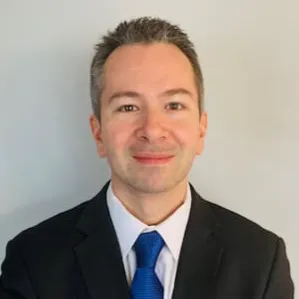
Marc-Antoine Laporte, P.Geo
Director of Geological Services at SGS Geological Services
Replay available
Join Marc-Antoine Laporte, P.Geo., Director of Geological Services at SGS, for a live walkthrough of the independent NI 43-101 technical report. Mr. Laporte is one of the report's three Qualified Persons and visited the property in person in 2025. In this session he'll take you through what the SGS team found, how they found it, and what the data does — and does not — yet tell us. What the session covers: • Where the property sits within the Central African Copperbelt, and why the Roan Group host stratigraphy matters • How the 2024 soil geochemistry campaign defined the copper and cobalt anomalies • The property's first-ever drilling programme — 22 reverse circulation holes, 2,219 metres, 1,791 assay intervals — and how the results were interpreted • What a “Property of Merit” report is, and how it differs from a resource estimate • The exploration work SGS has recommended as the next phase • Live Q&A with the presenter Who should attend: investors, analysts, geologists, and anyone following copper-cobalt exploration in the D.R. Congo. Submit any questions to ask@canadaafrica.ca.
On 6ix: 6ix.com/event/inside-the-copperbelt-a-walkthrough-of-the-4t-mining-technical-report
Automated transcript · Written by software from the replay's audio. It can mishear names and figures; the replay is the record.
0:00 A very good morning to all gathered here in Canada, across North America, and good afternoon to those elsewhere, both in African markets and around the world. Such a pleasure to have you with us on this platform with 6. I'm Gareth Blore, President of the Canada-Africa Chamber of Business. And as part of our longstanding relationship with 6, on behalf of our members, we're delighted to be able to have this particular event on the platform, welcoming not 1, but 2 of our members, including SGS, who you'll be hearing from today, profiling one of the key projects in the DRC, which has come to the chamber from among the various discussions and opportunities available through the organization, among members and indeed to the broader community as well. As we wait for the presentation to begin momentarily, I just wanted to indicate to all who are on this call and in Toronto from October the 6th to the 7th, we've got our annual Africa Accelerating Conference. It would be a pleasure to welcome you. Please feel free to send your details if you're not already on the list to askask.canadaafrica.ca.
1:09 We'll also include information on the event after this webinar along with a number of other opportunities to join us. Canada Africa Chamber of Business, by way of background for first time attendees, was established in 1994. And for over 3 decades, we've been privileged to focus on accelerating increased Canada Africa trade and investment through world-class networking and information sharing events. Most recently, we were in Kenya just last week. We're in Toronto early next month. And of course, across various African markets of late, including Zimbabwe, Nigeria, the DRC, Lesotho, Namibia, Ghana upcoming, among several other key locations where we've been really fortunate to welcome dozens of Canadian companies, including investors, as we explore projects across the African continent.
1:59 One of the Key aspects of today's presentation would be an opportunity to see one of those such opportunities. And so momentarily, as we're joined by Marc-Antoine, who will run through the project, do feel free to take a moment and reach out to me if projects like these and others are of interest. We'd be very pleased to plug you into the work of the Canada Africa Chamber of Business for reference canadaafrica.ca
2:22 for more information on all of the upcoming activities as well as the recordings of past events being held live both across Canada and across various African markets. Kyle at 6, thank you for all your work. Mark Antoine, an absolute pleasure to have you with us today for this presentation. And without further ado, Mark, I think I'll hand over to you, but not before I begin with a slight introduction to the fantastic work you're leading at SGS. You've served as Director of Geological Studies at the firm and you'll be walking us through the report on the mining copper property in the Lekasi region today. You visited the property and you've also been taking many people through what's involved, what the opportunity is, and how you foresee the way forward. Marc-Antoine, I don't know where we find you in the world today, but I know you're regularly on the go. I'll hand over to you and thank you once again for joining us.
3:13 Yeah, perfect. So can you confirm me, Gavret, that you can hear me well? Loud and clear, Perfect. Okay, perfect. So I'm truly apologize for everybody that make you wait a couple of minutes. We got some last minute troubleshooting to do and now everything is working. So it's my pleasure to actually be here with you and do that presentation. Okay, so thanks everyone for joining. So we'll try to go to actually a review of the property, the surrounding, actually the good locations, the work that was done regarding actually the soil stamping campaign and the drilling campaign, some kind of an evaluation of the property, the data, a couple of ideas of how we evaluate the quality of this property. Our idea for recommendations will be open for questions at the end.
4:02 So, as you all know, so we are actually in the Okotango region. So we are in the Zambia DRC Copper Belt, where there's actually multiple major mining operation around that cemetery, Copper Belt, that is known for a long time. So the property is in this area, so actually so close to the city of Likessie and Colwysie. And actually a very interesting environment. So is you know what we try to looking in this zone actually is usually the truss sheet along the sedimentary contacts. So that's why actually the explorer back in the day strive really to focus on. As you see, it's a pressure extension with small conglomerate. So exactly what we try to looking at as a favorable environments in that zone.
4:48 One of the first things that was done was to do some soil geochem sampling to try to see if we have any copper anomalies. If you see what was done regarding the property here, We get some very interesting targets that were put together after that survey and that definitely helped us to delineate what is the best possible zone. As you see from the extension, this is really what we are looking at. We are in that sedimentary layer, So we are exactly in that extension zone, in that shear zone. Actually, it's more proper for this type of mineralization. So that's really what we're looking at. And this is where we focus our effort because the second phase after the survey, of course, we get some surface sampling, but of course, as you know, for those know the region, so it's not, there's not a lot of rock on surface.
5:38 Actually, there's really limited of what we can do right after the Geochem survey. So we usually switch right from drilling. And on the first drilling that we do is just a couple of drill holes. It was RC drilling done in 2025. As you see, we intercept a significant amount of copper anomalies on surface. It was actually very shallow drilling for first pass. We just really want to understand a little bit more what is the potential of the region. And as you see, we were able to draw some kind of a shape of the mineralized zone that we've got with the drilling done in 2025. If I put that more in context here, actually, from the surface, We have the surface expressions of our Copper-Cobalt anomalies, the targets and the drilling region.
6:28 We have Copper and Cobalt anomalies, but we drill both at the same time because it's usually both mineralization are related. If you want to see a sense of the continuity of the mineralized zone with the small amount of drilling done, you can see here we have a trench on surface where we have some surface expression. We just follow from one of the drills and we can see that it's plunging down to the east on this side. So, again, the drilling was very limited at the beginning, so it was just to give us a sense of actually what we're looking for, what type of mineralization zones we have, and if we can have some sense of continuity. If you look at what it is inside the region, and I'm gonna give you a little bit more of regional context at the second phase of this presentation.
7:14 So you'll see that actually, usually it's quite deeper, because most of those mines are on the ground line but they have some surface expression so that's really what we're trying to have a sense during that first campaign. If you just to summarize a little bit that reprogram So the drains show a certain continuity actually. So we have, it was confirmed, it will be actually interesting to be confirmed by a little bit more trenches on surface, which was one of the next steps we want to do. And you see the average thickness that we saw from the deposit at this point is around 6m, so it's very realistic for what we're looking at in the region. But the property is quite large, so we only actually did small sections, so we haven't seen all the extensions in between the different targets that will be something that we'll be looking at. And if we do some comparisons, so actually we put the Kamikalo Copper deposit is pretty much the same thing.
8:10 So it's all sediment-oasted stratiform copper deposits. So it's really classic of the region when we look at the results of the drillings that we see. The same thing we have for the Ivano mine region for Kamurka, Kalukula and Assol. Same thing for Tenke as well. There are different layers in that Copper Bell. The upper layer, which is the Likesikol-Wazilu-Bumbeshi zone, which is where you have all the big mining operations. But what we try to put a little bit more detail actually, it's the northern part of that belt. So we know that they go up to Zambia of course and there's a different level and there's not much exploration done. So that's why it's actually this idea to do the exploration a little bit more outside of the main zone where, of course, it's well explored for decades, and try to see if we can replicate pretty much the same geological context, and try to actually discover some extension of those large deposits that we already know.
9:09 Very, very basic numbers and this is just on the paper calculations, So don't take anything for actually real numbers at this stage. But I say we're just like we get some kind of a 1.7, 1000 ppm of 0.17 on just the lower surface for about 200,000 tons. We really actually saw that the mineralizations looked to be a little bit deeper, but as I said, we only actually test that very basic upper layers as we speak. And if we go more on the regional side of it, this is your very classic geology in the region. You see the 2 cities of Likasi and Kolkhozhi.
9:56 It's probably not extremely clear on the map, and I know if you can see my mouse, I hope you can see them. But we have actually in the blue zone here. So this is where we have all most of the mining operations. And you know this blue zone, which is what we is the the bread shares and the the deep pentas super group. This is really where everybody always target exploration and get multiple success. And in the region that we are exploring, which is the southern part of the belt here, you'll see that we have multiple of those super group map. And this is where we are actually focusing our effort. And this is where the property is located. So it's really, they are of course smaller in size, so probably it's not going to be hundreds of millions of tons like actually the main zones, but actually they are definitely under explored. As you see on the map, some of them are actually explored, yes, and there's some small actually either artisanal mining or either some deposit identified, but some of them are pretty much leave it for free. And one of the reason it's of course that infrastructure, definitely it's a key. So actually, so some of the zone are just better to serve by infrastructure.
11:01 So they were probably the first one. And on an exploration pattern, we always try to look at the unexplored zone because that was the interesting one. So that's why the property actually was focused in this region more than actually on the upper part of the belt, where pretty much everything is already claimed by mining companies.
11:21 If we look a little bit more against that geogene cross-section, because I think it's important to understand the potential in regard of actually what we already know from that Copper Belt. It's all controlled by fault and faults actually from very specific Oroginy zones. We always look for the mine in those fold hinges. So this is where actually everybody got success over the past 50, 60 or 70 years in the region. And the ore bodies are always actually strata-bound lenses. So those strata-bound lenses, depending on the level of deformation, can be actually very large in size or can be a little bit smaller in size or actually a little bit more cross-cut in different packages. And as you see in the previous images, and all of you will have actually this PowerPoint after the presentation, but you'll see that actually the large packages are well known on the top and they are the largest lenses, but the lenses are at the same potential on the southern part, it's just they are a little bit smaller.
12:17 So that's what actually triggered that exploration on those smaller zones that could be as rich and as get as the same potential as the upper zone that we already know, but just a little bit more broken up because of the level of deformation. So that's really what we're looking for and it's a very classic way to look at that possible new deposit in that region. So we're not reinventing the wheels, we're really actually focused on what is working and what was proven right in the past and actually looking at the exact same thing that they look in the upper and the Okatanga, Belbetwinos or even in a little bit in the Zambia part as well. As I said, it's a very classic ore. So I believe actually the common local recovery method will be the same thing that we see in the actual operating mine.
13:08 Flotation acid leaching and solvent extraction circuits for wining. It's a very classic sedimentary copper ore. We don't expect to have anything different, even if no test was done at this stage on the ore, but just by what we know, so that's what we believe will be the same methods. And so we can expect the same recovery that we have actually in any other mining operation in the region. Around 90-95% for the copper and 75-85% from the cobalt.
13:41 The region is blessed by very nice infrastructure, mostly if we look at the Legacy area, which is the closest city to the project. We have a cattle processing plant, we have a hydromet plant, a processing facility. On a smaller scale mining, which is very interesting, we don't need to invest a significant amount of Capex, since if you extract quality ore, you have all of those local industries and local process plants and hydromet plants that can just buy the ore and just process it. So you don't necessarily have to look at actually an expensive Capex for putting it in production. So the important elements is the ore at this stage. So that's ready to be able to feed all of the industries they have a legacy and that definitely need a little bit more ore than they have at the moment.
14:32 The quality of the human resources is amazing as well, of course, so they are mining for more than a century in that region. So of course they develop a very nice expertise, even on a technical side for geology and engineering, but also on the labor side. So people actually understand mining, know how to do mining and actually for having quality people to work on the mining side as well. It's quite easy compared to other regions in the country or the region in Africa in general. And you have also of course hotels, banks, hospitals, you have all the services you need to be sure you offer quality services to all your workers in the region. And the quality of data is very important as well. And I want to put a little bit of emphasis on this because we have the chance to work on a very developed cup belt, what we call a mature cup belt actually in geological census. So that means all the information we use to do the targeting, to select the best possible properties are based on very robust geoscientific information like the one put by the DRC Geological Survey, but also some previous work done by the USGS, also work done by the companies.
15:44 The companies do a lot of work in their exploration phase, but also in the production phase. Most of this is publicly available, so we can definitely use that to improve our fieldwork and drilling without necessarily redoing everything from scratch in the zones. And like I said, it's always not easy since we unfortunately work with a region that actually don't have a lot of rock exposure. So we have a lot of overburden, a lot of saprolite, a lot of actually vegetal and vegetation cover. So that's at this stage is very important.
16:19 As I said, is a very early stage. Of course, there's no resource estimation done on the project. There's no, there's a property of merit report done. And actually when this, the important part is understand the difference between boats or property of merits. Basically, we put everything together that was done to actually state where the project is at a certain point in time. And we recommend what will be the next steps to put the project to this next logical phase to in order to create actually a full resource estimation for
16:50 201 and that's really the big difference. So it's the technical report as it is for those who will be interested to follow up actually with the owner of the property. So is really describing as an NI for 201 property of merit type. So that describe what was done and the information available and give you actually a roadmap to what we believe will be the next logical steps to put this project to a resource estimation stage. And the drilling in 2025 was the first campaign that was drilled as a first step. And after that, the next step will be of course, to extend the property and to add a little bit more detail and a little bit more volume in what was done. So I say what we require when we're trying to move to the next stage, of course, we require a little bit more density of data to be able to have more confidence on the zone we identify and probably the link in between the targets.
17:43 Of course, doing the 3D modeling and block models and ultimately and actually be able to get that full spectrum of the project completion. At this stage, it's already a good amount of information. A lot of property of MERT are done on very basic information, sometimes just data from government or a little bit of data from surface. So that's really what we get a little bit further in this one. So we're not there yet to have enough information to put some resource and real numbers in, but we definitely have actually enough elements to move to the next step. Let me just switch to our recommended work. So basically what we believe it will be interesting to do, it's We need to expose a bit of outcrop. Understand all the mineralized actually is working on surface.
18:35 So, channel sampling, a little bit more mapping. It's doing small excavated pit on the mineralized exposure. It will be very interesting to really understand a little bit more the way that we want to have a little bit more detail and this actually those trenches will actually give us a very good indicator where we can put a little bit more drill hole on the RC on diamond drill holes depending on what we want to acquire as information and to extend the mineralized solid we already have.
19:03 MMI will be interesting as well. I know for those who are familiar with MMI is a different type of soil geochemistry. It's a soil geochemistry that use mobile ion movement. So it's a little bit more helpful when you try to follow deep mineralization. So when you have actually a thick cover, even if you have saprolite or even other type of overburden cover, you know, sometimes the soil geochemistry will be a little bit limited in the sense of what they can see as depth. So sometime after 5-10 meters depth, so probably there's not going to be any information that will be sticking to the soil, but the ions actually move freely to water, to different type of rock, to also different type of solid overburden covered. So when we try to look at something deeper that's in the hundreds of meters and might could be an interesting one.
19:54 Some of the zone we know that could be way deeper so that's what we one of the suggestions we can do as well. So it's the same way of doing soil geochemistry. So you collect the samples in the same way is the analytical that is a little bit different and helps you to, to, to have another, another type of information for, for probably deeper mineralized structure.
20:15 Of course, when you have actually a good quality ore in that belt, it's a connected ore. So there's actually some kind of an IP measurement that you can do out of it. So a little bit of a magnetics and geophysical survey will be something that will be interesting to go on the ground and at what. And of course, based on this, we will build a bigger model and ultimately go to resource estimation. I think that the investment will be probably around 500,000 to 1 million dollars, depending on the work we do, the amount of drilling. But the cost of exploration program is always extremely variable. It's really depending on how targeted you are and what you're looking for, for the next step and how many tons you want to increase your results. So that's very variable. It's just like very basic numbers, but it's something that actually is probably around the usual type of expenses in the industries.
21:07 And as you see on the region, so we propose like some very continuous trenching as it is to really go over what we have as a zone and be sure actually we can follow up the extension area. I was a little bit in advance on this one, so I give you the definition of the MMI, but it's I've got a little bit more details the way this is work. So for you to understand that actually could be a very good tool in that specific
21:35 type of environment. And on technical lead side, I think that we did most of the work actually. So we supervised all the work that was done as SGS. All the analytical was done in our labs. So preparatory in our Lubumbashi lab and actually in the final ICP MS testing was done in our South African rainfontaine lab. So we work with the local people of the clients. Actually we have very good collaboration with the local teams, with the local villages around here that they provide us very good helps and then a lot of workers for actually making things easy when we prepared the when we did the work on the ground. We talked about investment base, I think that this is and I just give you a very quick table, you know, and it's, again, don't take that for exact numbers, just like something of an industry type of expenses when you try to move from property or merit to MRE, to scoping study, and to later on, to actually pre-feasibility, feasibility study. So I get timelines from 1 to 8 months and actually expenses from $20,000 US up to millions of dollars US.
22:41 It's always of course related to how much you want to do and how much trilling you prepare. So what is the type of accuracy that you want as well. In this sense of a property like this, actually where you're not necessarily looking at putting a process plan, so you save a lot of money in your exploration work because you don't have necessarily to work that much on the design of a process plan. You just need to be sure that you understand the methodology of your product and be sure that the methodology of your product is fitting what is process and the other process plan actually where you want to sell your material and as soon as you can prove that the flow sheet will work, they will probably test the ore and accept it as it is. That's a very common way of doing things. There's always a little bit of risk, of course. I think that's important. It's the basic risk, but the risk regarding the geology is very low. In the fact that it's a well-known zone, we know the origin of demilitarization, we know what we're looking for. There's always the regional risk, the political risk that is really in any environment, but I think that it's a low-risk project in the sense actually it's in a very well-defined zone that we know that actually we have the stabilization.
23:55 And like I said at the beginning, we're not reinventing the wheel. We really try
24:00 to follow up what works in the region and just look at where other people haven't looked yet. And if we conclude basically, so let's say the exploration is still very early stage, we have very positive results at this point. So we definitely be able to find copper and cobalt mineralization. We have some sense of continuity with actually the small amount of drilling that was done so far, and we are in the good area. So now we just need to basically go to the next steps. And it's pretty much what I've got as a presentation. So I know that actually we want to go to Q&A session as well. I know that Garrett probably have a way of doing things. I can always go back to any share, any screen, and any, sorry, any extra slide that I've got if you want to do it.
24:48 So basically, Garrett, I'm giving the floor back to you. So if you want to lead the Q&A sessions or if you have anything specific you want to discuss. Fantastic. Well, thank you so much, Marc-Antoine. A very, very exciting project. I'm just turning to my right to take a look at a few of the questions that have come through Ask at CanadaAfrica.ca
25:07 is the member line for questions. I believe 1 could also potentially use the chat as well of 6. So one of the questions, Mark Antoine, around the commercial rationale is whether you would agree with the following assessment that this opportunity commercially is early positioning in what is still a supply constrained copper market and that there's future optionality at a minimal upfront cost and that it's a fairly straightforward transaction. So these are 3 aspects or assumptions. What's your view on that as far as this project goes? First, I think it's a very good comment regarding the Copper market. We know that the Copper market is a growing and expanding market. We know that we are going to need a significant amount of more Copper than what we are actually mining.
26:00 Exploration-wise, I'm a geologist, so as a geologist, we always try to explore and to get success where we already know that they are actually operating mines. In that sense, we know that they're going to need more copper and we are located in the region that also needs more resources.
26:20 I don't have any very solid numbers, but we know that in the region, most of the process facility are not working at full capacity. So they definitely a significant amount of opportunities to actually just have more horde to actually be able to feed those process plan and to feed the hydromet plan. So the business case in that sense is very solid because we are in a zone actually that are a huge potential close actually to all the infrastructure and an award actually will need more copper in the future. So that 3 way questions actually I think it's very valid and it's exactly what the project is situating itself at the moment. Fantastic. And I know you like me have had the great fortune of being on the ground in the DRC and in this region in particular.
27:07 And some of the other big mining operations, you mentioned them too. There's obviously Ivanhoes, Kamowa, one of the world's highest grade copper discoveries. But there's also Tenke, there's the Mutanda mine associated with Glencore,
27:20 and then Kinshasi with 1st Quantum, that's just across the border down in Zambia. So I just wondered if you had any other comments around the existing mining operations and the development where you've been involved. And then I think I'll go into another question, which is a question around the overall opportunity for those on the call. But just in terms of that regional comment or assessment, any thoughts there, Marc-Antoine, or comments from your side? Yeah, no, About the actual mining operation, we see that those mines are expanding on a constant basis. I haven't actually worked personally on any of those big operations. I did a couple of reviews in my previous career. But basically, as they go deeper, as they expand their deposit, they always find more. So they always find that continuity that actually wasn't known when they started operating decades ago.
28:16 And then it's a reality, those operation like actually 10K and then Camoa, so they are enormous in size already. And they still actually, it's pending on an early basis. They do a lot of exploration on the ground. So they definitely, the model of that copper belt of the DRC Zambia copper belt is a very attractive way to be and probably a little bit simpler ore to process compared to a porphyry type ore in the Indies and then where you have to work with different restrictions when you work in altitude and you work with not just sedimentary or an oxide type of minerals, but you have a transition zone and sulphide, which you need to add up your processing, which in that copper belt, it's not actually a huge factor at this point. We never know what they find when they continue drilling, but it's definitely an attractive zone to be. Fantastic.
29:12 And just a reminder to those who've got questions, you can send it through to askask at CanadaAfrica.ca.
29:19 And I'm advised if you refresh, you may be able to also ask a question by the chat. But overall we are available for discussions after this to go into greater detail. There is an NDA available. And then there was a question which was around the outright opportunity in terms of what this deal looks like. So there is a transaction opportunity for an outright sale. The target transaction is around US$2.5 million, but Mark can speak to that and to the evaluation if you have any comment, both now or in future. And then if there is a desire for some meetings in person, the Africa Accelerating Conference, which includes a strong B2B component, happens in person in Toronto 6 to the 7th. There have been other programs on the continent, including last week in Nairobi. But again, askask.canadafrica.ca.
30:07 If you're not a member, we'll be able to connect you and welcome you as a guest to any of these events and including the opportunity of discussing this transaction in more detail. Mark, just a quick question that's come through around where you see the trends when it comes to not just copper, but overall opportunities specifically in the DRC. Obviously a great amount of interest in the country. We know that it's a country that's phenomenally wealthy for those members who've been there and experienced on the ground. It's incredible when it comes to the deposits. So just any thoughts on that, including people considering traveling to the market once the restrictions are lifted. By the way, of course, those are the Ebola-related restrictions, which we're monitoring very closely.
30:58 Yeah, no, sure, Gary. You know, I've got, like you, I get the great opportunities to spend a couple of a certain amount of time in DRC, not just in the Copper Belt, but in other region as well with other clients. And DRC was always actually a fascinating country for me, geologically speaking. There's so much opportunities in different type of metals. So there's the known copper belts, the Lubumbashi area is known for a long time and it will continue to actually attract a lot of actually attention investors and more work, but there's also a significant amount of part of that country that is under explored. So it's part of the very few countries in the world that we should actually get such a huge potential that it still needs to be discovered. As you said, now we have a little bit of a restriction, but it's a timely matter. So things will go back to normal and doors will be open again easier to actually continue to do more work there. But I'm definitely, for the last 10 years, actually, I saw a definite acceleration in activities in DRC from different investors from North America, from Europe, from Southeast Asia, from Asia. So everybody understands it's an area with good potential and then such a huge unexplored part of the country which gives us a chance that you don't necessarily have in other countries like and I don't want to actually don't say any countries but let's say like a South Africa which actually the mining was way more extended over actually hundreds of years or actually well yeah probably a little bit less potential of discovery compared
32:29 to a country like the OECD. So it's always a country that I I've got actually a solid place in my in my mind actually to to do major discoveries. Excellent. You know, I certainly can't wait to be to be back there again and interestingly enough, the relationship of the DRC with our chamber has been 1 where even the current Minister of Mines is a member of the chamber or at least former member during his time in the private sector as Ivanhoe. So, deep connections and linkages and also we've been very fortunate to welcome the Prime Minister as well as the Governor of the Lulabha Province a couple of times here to Canada. So, great to see the ever-deepening ties and the cooperation, and a wonderful opportunity for investors. As promised, we will follow up with each one of you on the call today with more information and opportunity to discuss this further. And certainly, thank you so much once again, Mark Antoine, for taking the time to be with us, to SGS, one of our valued members here at the Chamber, and to everyone else on the call, and not least to 6, who are a key partner and sponsor of this aspect of our outreach to the investor community. Thank you so, so much.
33:35 And I wish each of you a fantastic rest of the day. Take care.
Follow The Canada-Africa Chamber of Business into a list and get an email when it puts out news.
Follow SGS Geological Services into a list and get an email when it puts out news.
Director of Geological Services at SGS Geological Services
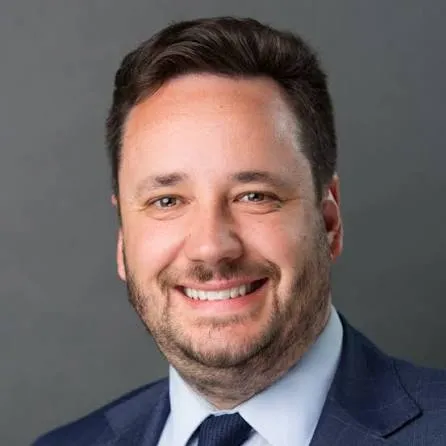
President at The Canada-Africa Chamber of Business
Garreth Bloor has served as President of the Canada-Africa Chamber of Business since 2019 and is a seasoned consultant. As President of The Canada-Africa Chamber of Business he has led trade and investment engagements across Canada and on the African continent. They have included Prime Ministers, leading CEOs, Cabinet Members and entrepreneurs on both sides of the Atlantic. Under his leadership the organization has grown, with new offices in Toronto, Ottawa and Accra, while on-the-ground with event programs throughout Canada and African markets, including Botswana, Côte d’Ivoire, the Democratic Republic of the Congo, Ethiopia, Kenya, Lesotho, Namibia, Nigeria, South Africa, Zambia, and Zimbabwe.