Transcript
Automated transcript · Written by software from the replay's audio. It can mishear names and figures; the replay is the record.
0:03 I'll say good morning, good afternoon, or good evening, depending on where in the world you're signing in from. This morning's webinar is to discuss Walbridge's news release announcing the kickoff of the 2026 exploration program. With us, Mark Peterson, Senior Geological Consultant for the company. How are you today, Mark? Oh, I'm great. I'm great, Romeo. Good to see you again, and belated Happy New Year. Yeah, belated Happy New Year. So here's how today is going to work for the folks in the room. We're going to start with a little discussion just based on the press release. But then we will take some Q&A from the audience. There's a chat button on the bottom right of your screen. Please feel free to click it and ask questions at any time. I will say though today, we really are focusing on the 2026 Exploration Program. So you can feel free to write any questions you'd like, but I'm only going to be addressing questions that are on topic today. Otherwise, I'll be
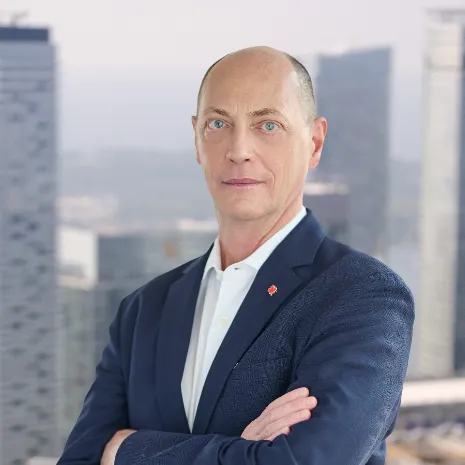
0:50 passing those through to the Walbridge team, and they'll be able to get back to you as soon as possible. But if you have questions that are on topic, I'm going to try to get to as many as we can during today's relatively short event. Now I will say the other piece of housekeeping before we get into the good stuff, this is being recorded and will be available for replay probably in about an hour and a half, so I think about 01:00 Eastern Time. It'll pop right in your inbox but it'll also be available on Six's YouTube channel. Let's get into the protein. So I know there's some viewers in the room who aren't familiar with you, Mark. So I'd love if you could just introduce yourself to the audience and tell us a bit about your background. Yeah, you bet. Yeah. Hi. Hi, everyone. Thank you for joining us this morning. So no surprise, I'm a geologist by training, but also I'm an explorationist and a project developer at heart.
1:42 And I've been in this business for more than 40 years, and I just love it. I'm still driven by the hunt for the next major discovery and Seeing it advance toward commercial production. That's really what's defined my career My experience over the year. It's focused on precious and base metals exploration development, helping take projects from early stage concepts through development into commercial production.
2:12 And for me, you know, there's really nothing like seeing a project evolve from an idea on a map and some cross-sections, maybe a few drill holes, and seeing that progress into a producing mine operation.
2:29 I've been in the right place at the right time over the years as well. I've been really fortunate to work on some remarkably successful profitable projects along the way. And some of these include the Bullfrog Gold Mine in Nevada, the Blackwater Gold Project and the New Afton Copper Gold Mine in British Columbia, the El Moro Copper Gold Porphyry Discovery that is owned by Newmont and Tech today, that's down in Chile, and as well as others. So I've just been very fortunate to be with projects that have gone the distance and taking them all the way through their paces, even through commercial startup and ongoing operations. And each one of these experiences, if there's a common thread to all of it, it's reinforced for me
3:23 over and over again that there's no replacement for discipline to geology in combination with conviction, critical thinking, because those are the elements that really can create huge long-term value.
3:39 So why I'm here today with Walbridge, what excites me is the opportunity that we see. I hadn't worked in the Abitibi much until this opportunity, but it's one of the world's premier gold belts, and I still believe it holds really excellent potential for new discovery and development of very profitable long-lived Gold projects. So after 4 decades in this business and counting, being part of that pursuit is what keeps me going, keeps me energized. Fun. Hey, I certainly appreciate all the extra context. Folks in the room, I know there's some that don't know you, so I think it's always helpful to get a good sense of who we're talking to today. But the purpose of today's chat, obviously, is to discuss this morning's pretty exciting news release. So in your own words, I'd love if you could give us Just a high-level summary before I dig into some of the details with you.
4:34 Sure. So in contrast to 2025,
4:38 our program for 2026 at a high level, it's really built around a very clear three-part strategy. First, we are continuing to advance Fenelon with the focus this year on a series of targeted low-cost, high-impact technical trade-off studies that will feed directly into a future pre-feasibility study.
5:02 The Fenelon component of our program this year, it's really about smart de-risking and disciplined progress in capital allocation toward development. Second, we're expanding Martinière. The drilling this year is designed to continue to define the overall scale of the gold system there and best position the project for more detailed resource delineation in the future. We believe there's meaningful growth potential to be unlocked at Martinier. And then third, we're pushing the pipeline. Over the past 2 years, we've really
5:37 done a lot of reconnaissance mapping, sampling, detailed data interpretation, And it's brought us to a point where we've got a nice portfolio of prospective targets. So we'll be advancing our regional program with 3 reconnaissance drill campaigns at our
6:00 Greenfields, Grissett and Casseau properties, as well as to test some satellite targets in the broader area around the main Fenelon deposit on Fenelon property itself. All of that work for the regional program, that's focused squarely on making the next discovery. Great. I love a high level summary. And I know you get asked this all the time. In fact, I personally have asked you before, but I'll ask you again. Are you more excited about Phenolon or Martinière right now? You know,
6:33 and you're right, I get asked this all the time, but, you know, genuinely, I find both projects equally exciting, but for very different reasons. Fenelon excites me because it's a real asset with real scale. We have a substantial gold resource and a clear disciplined path forward as we laid out in the PEA that we delivered last March. It's a project where we can focus on resource conversion,
7:01 project optimization and steady advancement toward development. That combination of scale and clarity is a very powerful one. Right now, our work is centered on smart de-risking, targeted technical trade-off studies, and selected infill where it delivers the most impact. We're being very deliberate with our available capital. Rather than rushing into a full-scale infill drilling campaign, we're advancing the components of the project that create the most value per dollar spent and positioning the project to move into a pre-feasibility study when financing and market conditions are better aligned.
7:43 That approach, it protects shareholders and while we continue to steadily build momentum for the project. Martin year, on the other hand, that's where you really get the exploration buzz. And that's, you know, that's that's what races my engine, you know, in the very near term. Since 2024, when we started stepping out beyond the limits of the known resource, each phase of drilling we've done, it's reinforced that we're dealing with a much larger gold system than the current resource statement alone would indicate.
8:16 Over just the past year, we've expanded the footprint materially, both laterally along strike and across strike, as well as at depth, and the system remains open in multiple directions. What's particularly exciting about Martinier is that we're now seeing encouraging results along a major regional fault zone that extends to the north, and that's in an area that's seen very little drilling until now. That may open up an entirely new dimension of potential worth exploring. So while Phenolon represents scale and disciplined path forward toward development, Martinière represents upside and discovery leverage. And together, it's really a nice combination to have because they give us both stability and meaningful growth potential looking forward.
9:07 That's a good combo to keep a geologist jazzed, which is always nice. There you go.
9:13 One question, how long is it going to take you to drill that first 2000m at Fenelon? And are you going to, I know this is a strategic question, but are you going to release those results or wait until the entire 3500m are complete and put them out as kind of 1 batch?
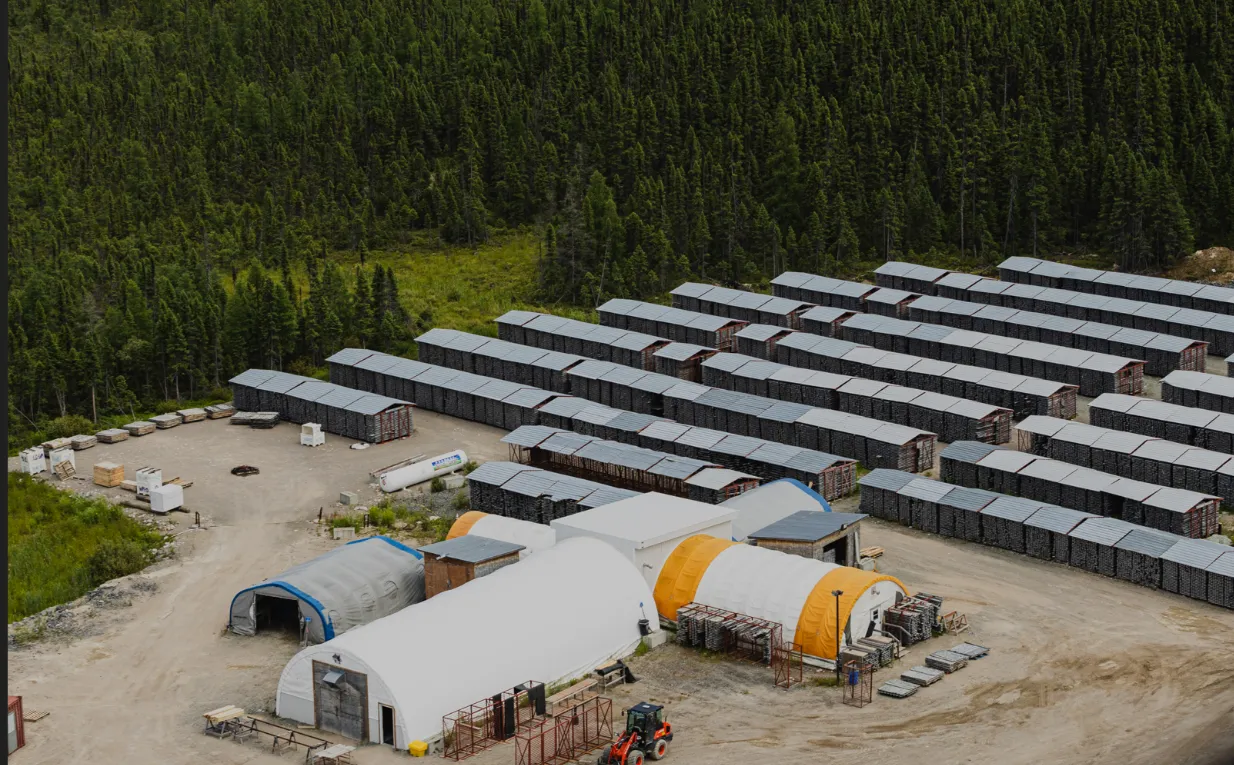
9:28 So the 3500 number you're referring to, that's just the total amount of drill meters that we have allocated to Fenelon, but it's really broken into 2 completely separate campaigns. So this first campaign that we just started late last week, that's the 2,000 meters you're referring to, Romeo. And we expect that'll take roughly 6 weeks to complete our drilling contractor is is really good we've got one of their best teams and when those guys get going it's it's it's it's it's just you know full-on to keep up But that would put us toward the end of March to complete the drilling component. Then when you layer in normal lab turnaround times, I'd anticipate we'd have all assays back, you know, within a late April, early May time frame, and once we have those we'll be putting them out.
10:23 If we get some really spectacular results
10:27 between now and then we may issue at least a portion of the program's results sooner than late April or early May, but for right now, that's what it looks like. The program's focused on collecting material for metallurgical testing, And we intend to release those results, you know, once we have them. In other words, there's no reason to hold them back while we, you know, wait to complete the other 1500 meter program. Great.
11:01 Now, I know switching over to Martin Yer for a second, I know you indicate that there's 17,000 meters, but it's in 2 phases. And I asked just because, you know, different companies will approach in different ways, depending on the body, but are you gonna split 50-50 in phase 1 and 2, or is it gonna be more front-weighted or more back-weighted, Joe, as part of this program? Well, like all the programs that we've done over the past 2 years, it's all results-driven. So that 17,000 meters we have earmarked for Martinier, Yeah, it will be completed in 2 phases, but it won't be a rigid 50-50 split.
11:37 Phase 1, it's really designed to focus on the highest priority targets. And particularly in those areas, we see strong continuity in the geology and where step outs can efficiently expand that broader footprint. This gives us, you know, information, you know, earlier, earlier rather than later. And, and it also allows us to assess how the overall system and geologically is coming together. The second phase, it's intentionally structured to be flexible.
12:13 We will allocate meters based on what we learn in phase 1, again, results oriented approach. And if we see strong expansion potential or opportunities emerging in certain areas, we'll certainly follow that momentum. And if new structures or perspective trends, also reveal themselves, for example, perhaps chasing this thing to the north of that big regional fault, which is called the Lac du Dois fault, by the way, you know, we'll be able to pivot accordingly. So rather than just splitting it up evenly and just saying, we're just gonna go do this number of meters until we're done,
12:58 we're being very thoughtful with every drill meter we put into it. I appreciate that. Now, I know your team sent over a map, so I'm going to throw it up in a second, but the question is, if you could speak to any similarities in the geology among the 4 zones illustrated on the map. Just give me a second here, I'll bring it up. Can you see it here? Yep, I know it well. So, maybe a little bit difficult to see, but over on the upper left is the Detour Lake mine, that's Agnico's mine, happens to be today the largest producing gold mine in Canada. And there's a light grey line that runs through detour down toward the lower right and then right on through our property block.
13:49 That is the common thread
13:51 that ties everything together along the belt. The belt's called the Sunday Lake Greenstone Belt. And that particular line is, it's a major, major, very, very deep fault system that goes all the way through the Earth's crust and essentially it's the primary driver to everything else. All of the gold mineralization along the bell, it's linked to that Sunday Lake break system. And all of the occurrences that are known, both the Detour Lake mine, Martinier, Fenelon, and pretty much all of the prospects we've identified so far, with maybe 1 or 2 exceptions.
14:38 They all lie within a 2 kilometer corridor that extends north of the main break and into the package of greenstone, volcanics, and sedimentary rocks. And so that's it. It's not just about that one break though, because, and this is really true in pretty much every ore deposit I've ever worked on. Faults are what really drive the plumbing systems, but it's the interaction of fault sets and fault intersections where things get really interesting. And Detour Lake sits right along the Sunday Lake break where a secondary fault system comes into it from the north, from the northwest and merges into it. And that's the case at Martinier, that's the case at Fenelon.
15:28 And it appears to be a theme we see over in Casso West where we'll be drilling and over at Grissett Gold. Although at Grissett Gold, we've identified a few prospects that poke their heads up along the lakeshore of Grissett Lake that are like sitting right on the main Sunday Lake break. So we're pretty keen about that area as well. So that's pretty much it. That's the main theme. There are variations on that theme with each local deposit site. But at the end of the day, it's about structure. And then what follows from that are the variations and rock types and mineralization styles. Great.
16:14 So appreciate you letting me grill you on the press release. There are some from the audience. There's one that it looks like I'll probably be sending to the Walbridge corporate team. I think there's 3 that are there that we'll cover, but there's still time. So if people want to get questions in, feel free. 1 from Wesley asked, how many total metres this year and at what cost? Yep. So our total program this year is 25,000 meters of drilling distributed among the various campaigns. The total budget, and this includes corporate overhead, amounts to about $25 million. I'll just point out that I think corporate overhead represents around maybe 10 to 15% of that, but don't hold me to that.
17:07 And also just note that because it's a fairly remote area, we can drive to the camp, et cetera, but to move around, we need to use a helicopter to move everything. That does add to cost and it's a camp-based project. So we have to support a camp for all of our people. Right. That makes sense. Dean from the chat asked, you noticed that Walbridge is scheduled drilling at Grissett this year. And he's trying to understand the strategic timing. Wondering if you could clarify what specifically prompted the decision to restart the work there now? Sure. Well, first off, the timing for drilling at Grissett would probably be back toward the, the, the latter part of the field season.
17:54 The reason, the real reason we're, we're, we're going back out to Grissett because Walbridge, I think he's maybe referring to drilling that Walbridge did on the property before I arrived, maybe in 2023, if I'm not wrong. Where we're focused right now, it's a newer area farther east along the Sunday Lake break trend, where really, Wabridge has not done any work previously. We have airborne geophysical surveys done over it. But it was the more recent field reconnaissance our team did over the past 2 field seasons that kind of piqued our interest. I mean, we're seeing the deformation styles, we're seeing outcropping veins, and in the legacy records, it's rather impressive.
18:51 I think there was a prospector who went out there in the sometime in the 1930s and got a grab sample that threw off several grams of Gold. There were a few legacy drill holes noted in assessment reports that's all public record information with, you know, indicating there is gold showing up out in that part of the world. It's just, of course, when that work would have been done, gold would have been trading at $35 an ounce or thereabouts. So that's what's bringing us back out there. And also, the work that we do will go a long way toward, you know, meeting our work assessment requirements to maintain title to the ground.
19:42 Great, no, appreciate that. One person asked right at the top of the hour, a question I usually end with. So I'll throw it to you. And if anybody's got any questions, this is your last opportunity. California Gold, I'll make sure your question gets to the Walbridge team. But Graham wanted to know right off the gate, what are you, Mark, most excited about for this campaign? Well, I don't think anybody would be surprised. You know, I am an explorationist and I live for that next discovery. So I'm having a lot of fun with Martin year. I've got a team of young whip smart geos who run circles around me frankly and I'm just very fortunate to be to be involved with this team. So in terms of really what races my engine you know right right just just sitting here I would have to say it's let's see what Martinier, where we can get with it. But in the meantime, you know, I really, you know, I can't emphasize strongly enough that the work we're doing at Fenelon, the desktop level studies, You know, they're not high cost, but they're going to take us a long way to be able to jumpstart a pre-feasibility study when we're able to.
20:56 Great. One last question that kind of snuck in there at the end. Answer, obviously, just to the best of your ability. Dean wants to know, what's the success case for this program? What would you consider a win for this exploration program we've got now? What I would consider a win is, with respect to Martinier, where we're trying to get is to a place where we can see a mineralized gold system of a scale big enough to really be able to look at it. And other people, peers could look at it and go, yeah, I can see a multi-million ounce system emerging out of that as well. So that would be a real success case for Martinière.
21:45 For Fenelon, I want to have, well, you know, these desktop studies, but also we're really going to, we've started taking a very close look at what makes that deposit tick geologically, so that by the time we get to the end of this year, we're going to have a ready to go plan and strategy to run an infill program, you know, when the starter gun goes off. Because I think the best way to advance Phenolon through its paces on pre-feasibility study would be a, you know, what I would envision would be a fast track drill program with multiple drills. Let's just get in there, get it done and get the information over to the engineering design team so they can do their thing.
22:38 Great answer, Mark. Always love hearing your excitement and thank you so much for letting us grill you about this PR. Everybody in the audience, Thank you so much for your questions and for joining us today for this quick event. The one question I couldn't get to, like I said, I'll be passing it directly to the Walbridge team so they can get back to you. But Mark, thank you so much. This is great. Appreciate your time. Thanks very much, Romeo. Look forward to the next time we meet. Meet you. Meet you. Thank you. Thank you. Thank you. Meet. Meet. Meet.