Replay available

Trilogy Metals: New CEO & Exciting Portfolio

Join us for a great event!

Tue, June 9, 2020 at 1:00 PMendedReplay
Trilogy Metals: New CEO & Exciting Portfolio
Company
Trilogy Metals Inc. (TSX:TMQ)
Date
Tue, Jun 9, 2020, 1:00 PM ET
Replay
Watch the replay on this page · 1 h 16 min

On 6ix: 6ix.com/event/trilogy-metals-new-ceo-andamp-exciting-portfolio

Replay

Transcript

Automated transcript · Written by software from the replay's audio. It can mishear names and figures; the replay is the record.

0:11 Hi, my name is Bianca Peschola. I'm the CEO of 6 and welcome to Trilogy Metals Live Investor Summit. I'd like to start today by introducing our presenters, Tony Giardini, new CEO, and Patrick Donnelly, Vice President, Corporate Communications and Development. To kick things off, Tony will be telling the company story, and then we'll be accepting questions. You can submit your questions in the Q&A panel on the right hand side of your screen. Now without further ado, take it away Tony.

0:40 Bianca, thank you very much and thanks for the opportunity to make this presentation. As Bianca said, I'm the President and CEO of Trilogy Metals. I've been in this role for all of 7 days, so I'm going to do my best to tell the story as best I can, recognizing that I have a long association with the company going back to 2012 as a director. So with that as an introduction, let's get started. The first thing that I wanted to highlight was just give you a bit of an overview.

1:23 And Trilogy is per and other metals that have copper and zinc. And we are listed on the Toronto and New York Stock Exchange. Our primary asset is called the Ambler Joint Venture, and I'll give a bit more color as to what that is focused on. And we have 2 projects that we're looking at in the upper cobalt

1:49 mineral district. One is Arctic which has a pre-feasibility study and we're in the process of completing the feasibility study. I'll give a bit more details on where we're at in that process. And the other one is a Boronite project, which is 6 billion pounds of copper with 7 million pounds of cobalt. So we're

2:13 high-grade copper zinc projects with precious metal credits located in a very safe jurisdiction with tremendous expertise. Hey, Patrick, I might have to throw to you. Yeah, I'll jump in. Yeah. Hi, everybody. Sorry about that. Technology is great when it works, when it doesn't, it doesn't. So I apologize for that. Anyway, I'll jump in for Tony. As Tony was saying, we're in Alaska,

3:00 one of the probably the best mining jurisdictions in the world. And we're listed on New York and Toronto. Most of our liquidity is in New York. Most of our shores are American. We're in the other mining district. And so focusing on 2 projects, Arctic, which is one of the highest grade Copper deposits in the world. And then our other project is Bornite, which also contains a significant amount of Copper and Cobalt. Just an overview of our share capitalization. We're well cashed up corporately, 50 million in the bank. Share price is actually performing pretty well.

3:47 Last month or so, Our market cap now is almost $300 million. Phenomenal shareholders, specifically Electrum, Paulson, Baupost, Newberger, Berman, Point State. Nearly all of them are in the US and we also have sell 32 as a shareholder. We'll talk more about that later. And then management also has a good chunk as well. Maybe I'll flip this back to Tony and we could talk more about our partnerships. Sure. So thank you very much. I apologize for the problems, as Pat indicated. That's the way things go these days. So, you know, the focus in Alaska is really with respect to our partner, South32, which entered into the joint venture earlier this year. And I think it's important to just spend a minute talking about South32. South32 is an Australian-based mining company. They were spun out of or demerged out of BHP of a $5 billion market cap. They conducted extensive due diligence on Trilogy before they made the investment and they constituted the JV with an investment of $145 million into the JV for 50% in January.

5:00 The other major partner in the project is our partnership with NANA, which is the Aboriginal corporation which has effectively 14,000 shareholders. They own the land. It's their land that is a portion of the JV. The rest is actually on state land. They have an economic interest in the project. NANA has a long mining history. They're effectively the owner with TEC being the operator of a red dog mine in Alaska, which is the largest

5:35 zinc mine in the world. So having a business relationship with them is easy. We have a Relationship with Ada, which is the development of the road. And what we'll be doing is entering into a total

6:06 agreement similar to what, Nana had done with respect to the Red Dog mind, and, and that will allow. I was to move forward in terms of the ultimate development of the district. And if we can advance to the next slide, please. Oh, got it. So let's just go back. So the district that we're talking about, this is the area that's covered by the JV district. As you can see, it's large and it includes the lands that NANA contributed to the JV and the lands that we had originally had. We've only started to begin the exploration on this district and we already have a significant development asset in Arctic, an opportunity with Borne where we've done some exploration but we haven't really looked at the full value of that project or opportunity. And then tremendous other opportunities within the district. So all told, we're talking about 1700 square kilometers of land that makes up the total JV.

7:22 As you can see in terms of where we're located in Alaska, we're obviously in a mining jurisdiction or in a state that has had a long history of mining. We're obviously focused on responsible resource

7:42 development and extraction. We're well advanced in the permitting process, which we'll discuss further. And as I said earlier, a number of years ago, we reached an agreement with NANA. So we have a strong Aboriginal corporation as our partner on the project, which is important in terms of moving forward on the development. In terms of the infrastructure that already exists in Alaska, we're blessed in that Alaska does have tremendous infrastructure. The slide that's up shows the Dalton Highway, which goes from the top to the bottom. That's that black line that goes all the way down. It's the Dalton Highway, which goes from the top to the bottom. That's that black line that. Goes all the way down. So that highway is already constructed. It's been in operation for a long time where our project is located in the Red Circle is essentially from where we'll be building a road to connect to the Dalton Highway. So the plan as it currently stands is that that road will be roughly 211 miles. It would hook up to the Dalton Highway. We would truck it to Fairbanks. The reason there's a photo of a train on there is that there's a train link from Fairbanks all the way to Anchorage.

8:50 The train would then transport the concentrate to the port, which is in Anchorage, which is a year-round port. Both the train and the port have sufficient capacity to take on the concentrate from our project. So from an infrastructure perspective, what we're really talking about is a road that will be built from the project to the Dalton Highway. And the funding of that road will be through ADA and there's expected to be a toll arrangement where over the expiration life in the district that capital will be recovered and an adequate return will be paid to ADA in terms of the establishment of that road.

9:40 In terms of where we are in the permitting process, this is an extremely important slide. This is with respect to the road. We're in the final phases of getting a record of decision, which we expect to have hopefully within the next month. It's been a long process, as you can see, and we've been through all of the different steps in terms of what we needed to do from EIS and all of the other permitting processes that need to happen. So once that record of decision is in place, we're in a position to move forward on the engineering and ultimately the construction of a road. So as I said, we expect to have that shortly. And the road is extremely important and obviously seen, not just the development of Arctic, but put us in a position to develop the district as a whole, which is what our ultimate goal is.

10:31 This is another slide that really emphasizes the number of opportunities within the district. There's 2 targets, Sun and Smucker, which are on opposite ends of our district, which are not part of what we will be focused on, but absent that, everything else is in there. And we have a number of targets, and the plan is to continue to conduct exploration and ultimately look for additional opportunities. So what we're talking about here is, you know, a VMS district that's no different than some of the prolific districts that have been discovered worldwide. And those districts have typically run for 75, 80,100 years. So we see lots of opportunity to extend mine life at Arctic and we see lots of opportunities for other developments in the area as a whole. And that's really what we're excited about. We're excited about Arctic.

11:29 It's a great 12-year deposit. You've seen the MPVs. We'll talk about the pre-feasibility study that we have. We're excited about Boronite, but we're really excited about the exploration potential that exists in the district. And to a large extent, that's what's a basis for South 32 making its $145 million investment into the JV. This is what we're looking at in terms of an original initial Arctic resource. So you can see the high quality of this deposit. Overall, it's at a copper equivalent grade of 5%, which is exceptionally high. It does have gold and silver credits, and we'll talk a little bit about how the gold and silver factors into our plans down the road. But this is a quality deposit, which has a very small footprint overall.

12:23 In terms of feasibility study, these are the pre-feasibility study details that were published in 2018. The study was completed by Osenco, Wood and SRK who are involved in completing the final feasibility study, which will be for trilogy purposes, and we expect to have out. Also in the next month or 2 just go through some of the specific numbers on this table. The mine life as it currently stands is expected to be 12 years, but as I noted, we see tremendous exploration potential in the district and we see an opportunity for that mine life to extend into multi-decade mine life. We're looking to have a milk capacity of about 10,000 tons per day. Production levels are as noted on the slide.

13:10 The base metal prices and gold prices that we've used for purposes of a pre-fees are noted. Copper obviously is lower than $3 level and sitting around $2.60. But gold on the other hand is significantly higher than $1,300. Initial capital is just a touch below $800. As we update the feasibility study, we'll have a better handle of where that's going to go. Our expectation is that it will be marginally higher. The total capital includes initial capital plus sustaining capital. We expect that number to be somewhat higher as well. Operating costs are the cost per ton to produce or concentrate on an operating basis, and we expect that cost to stay more or less in the same range as what was in the pre-feasibility study.

14:02 Right now, on a pre-feasibility basis, we had an after-tax MPV at an 8% discount of $1.4 billion. We've shown cash costs, which is net of by-product credits, which is about 15 cents, And that would put us at the lowest quartile of costs of projects out there. Our all in cost is 63 cents. So whether you look at 15 cents or 63 cents and compare it to $3 copper, 260 copper. You can see that this is an extremely robust mine and project once it's up and running. And it has tremendous free cash flow and an IRR in the low 30s. And we would expect that IRR to continue to be somewhere in the low 30s once the feasibility study is out.

14:51 Lastly, I'll point to the payback period. That's an undiscounted payback period, but you can see that this project gets its money back very quickly. So we think we have a quality project, and this is the first one. Bornite, it's an opportunity that it's significant and we just scratched the surface on how we move that forward. Plus, as I said

15:11 earlier, there's tremendous exploration upside in the district overall. In terms of where we stand on the cost curve, this gives you a good indication of what I had indicated earlier, 15 cents, we're in the lower quartile of cost. So we're in an exceptionally good position, particularly when you look at where other companies are on this cost curve. And it definitely puts us in a strong position to advance this project and make sure we have a profitable operation. This is an interesting slide that was prepared by RBC. And what it basically shows is profitability index where we have Arctic on the far right.

16:00 So it's MPV on the X axis and profitability index on the Y. And what you can see is that ARPIC is in the far right and

16:12 profitability is basically measured by the MPV over the capex, so the higher that number, the more profitable it is, and it really also measures what would be termed the capital intensity. In other words, you could have a project that has a huge NPV or IRR, but because of the onerous capital associated with it, it makes it much more difficult to develop. Whereas in our case, we've got a manageable capital with a payback of only a two-year time period, strong IRR. So this really highlights the quality of what we're focused on at ARCTIC. And this summarizes slide goes through and really highlights the quality of the concentrates that we'll be producing. There's 3 concentrates. One's a copper con, which is a 30% concentrate grade. The zinc con is a 59% zinc. And then lastly, there's a precious metal con, which is really a lead con, but bulk of the value comes in the precious metals.

17:15 You can see in terms of a payable metals that gold and silver account for roughly 12% of the payable metals. The reason that's important is even though Arctic is a copper zinc mine, the gold and silver will give us an advantage in terms of being able to get this mine built. One of the options that we'll be exploring is whether we look at royalty or streaming opportunities for the gold and silver byproducts, which will go a long way to funding the necessary capital to build this project. So when someone asks us, how are you going to get this thing built? Well, firstly, we've got a JV partner, Sof32, has a significant ability to fund their share of capital. We have a very robust project that can obviously take on debt, but we also have the gold and silver credits, which could be monetized on a prepaid basis to really give us a capital to move this project forward on a reasonable time frame. And particularly given the performance of gold recently, this is an asset that's perfectly suited to a royalty or streaming arrangement.

18:22 This is just an overview of the footprint in the mining district. And you can see that we're talking about 27 acre size property overall, which is a small footprint. So we are in a great position to advance the actual mine development without significant impact on the environment. And we'll be going through the permitting process on the mine and we've got a slide that highlights that that will be completed on EIS and we expect that given that the majority of the mine sits on state lands and we're not gonna have any issues in terms of a permitting process. And moving this forward in terms of the development of a mine itself.

19:11 And this slide really just highlights where the process sits from a mine permitting point of view, and we're very much in the early stages of that, but we'll be going through the formal EIS process, and we'll be dealing with the Army Corporate Engineers, which is expected to be the lead agency in terms of moving this project forward. And so it's apolitical in terms of how they're going to be looking at the technical merits of what we're trying to do, and we don't expect any roadblocks in terms of what needs to happen on the development side of this project. And then what I mentioned earlier about VMS opportunities, this shows you some of the VMS districts that are out there. You can see Ambler on the far right and the size of what we have on provable reserves, just really based on Arctic at this point and with the reserves with the resources at Bornet being inferred. But some of the other districts in the world, whether it's Flin Flan or Naranda and how those have performed over time gives you an indication of the tremendous potential that we have to discover not just 1 mine but many mines and extend the mine life of Arctic for years to come.

20:33 And so when we look at the key items for the current year, there's a number of them. One is the record of decision on the road, which we expect to receive imminently in the next month or so. There's a completion of the Trilogy Arctic feasibility study, which similarly should happen in the next month or 2. We're looking to have an expiration season, which commenced shortly. The challenge, of course, with coronavirus is that we'll have to see the ability to get into our site and whether we're limited as a result of not wanting to bring a virus into the nano community. So we're in the process of coordinating that and hope to have a truncated exploration season a little later this summer.

21:26 And we're commencing the permitting at Arctic as well, in terms of moving the permitting forward from an operations perspective and also looking at the engineering associated with the road once we get the record of decision and move forward. The last item that is really the other key focus for us is the South 32 JV, which was set up earlier this year. We're in the process of staffing that JV and we'll be hiring an independent team to manage the project. So there'll be a new

22:02 president, a COO and a CFO at the JB level that will be part of our team and we're in the process of hiring those individuals as we speak. And at this point I'd be very happy to take any questions you have with regards to Trilogy, what our plans are, where we're standing in the process. And Pat and I are both available to address any questions regarding the presentation or how we're moving forward on our projects. And once again, I want to thank Bianca and the team for organizing

22:37 our summit and for all of you for joining us during the presentation. And at this, we can now move to Q&A. Thank you. Excellent. Thank you, Tony. So jumping into Q&A, as a reminder to everyone, you can submit your questions in the Q&A column on the top right side of your screen, submit them there and we will add them to Q and ask the team. So let's start with a question here from Gregory T. Erkins. He says, do you buy patent place claims, 882 acres fee simple in Alaska? Go ahead, Pat. That one's probably for you.

23:21 We acquired these claims from Rio Tinto. For those of you who aren't aware, a patented claim is basically a private land and specifically private for the use in mining.

23:39 We acquired them from Rio Tinto in 2004, I believe it is. There is a fee every year we do pay on those claims. But I don't believe you have to do any assessment work or anything like that on there. So

23:59 most of the claims, nearly all the claims we have in the Abler block. If you go back, here come the questions, they're lining up now. Let me just flip back here, there's a chart just to show a land tenure. I might be going above and beyond what's being asked, but here we go. You can see here in the blue, those are state claims. And then there's a little, the Arctic itself

24:32 has patented claims, a small like postage stamp. It's too small to see in this scale. Then the pink are nano, that's nanoland. And that was contributed by Nana to our agreement with them. And that's basically private land as well. Second question from a gentleman named Rick Van Nuenhuyzen. I don't know this guy. What are the impacts of the C-19 pandemic on the project and timeline? Who wants to handle that, Tony? I'll handle that one. Rick, first of all, thanks for joining us. And for those of you who don't know, Rick, in fact, is the person that started Trilogy and was a former CEO. And a large part of where we're at is as a result of the hard work that Rick has put in over the years in putting this JV together with NANA and in fact facilitating the great relationship that Trilogy has with NANA and the other Aboriginal corporations and with ADA and the state. So Rick, thanks very much for joining us and thank you for all the hard work that you put in in terms of advancing us to where we're at.

25:42 With regards to COVID, you know, the biggest impact we have is really the short-term impact. We had hoped to be on the ground sooner in terms of our summer season, but unfortunately things got delayed because there were 4 cases of coronavirus that ended up being identified

26:02 in Nana's region. And as a result, we've scaled back our plans for the current season. We still hope to be there later this year for truncated season. Unfortunately it'll be shorter than what we hope and what will likely happen is that the people that will stay at camp will be there for the duration and will be limited in our opportunity to create employment opportunities for the local community simply because we want to keep

26:31 folks separate and not expose a local community to any people that are at site. So that's what we're contemplating right now. None of that has been finalized, but we don't expect it. We do expect to have a decision within the next couple of weeks. With respect to the greater development of a project, there's really no impact from coronavirus in terms of what we're doing with ADA or any of the other initiatives that we're moving forward. Alaska has actually held up exceptionally well with respect to coronavirus in the sense that I think the cases are around 500 in total and I understand there were about 10 deaths overall but Alaska is very much coming out of lockdown. So we don't expect that other than the truncated field season there'll be much of an impact on COVID. Obviously we'll have to see what happens in the fall and winter if there's any reoccurrence but I think it's really going to be a truncated season for the current year.

27:34 Great. And then the other question, okay, we've got a few questions. Congratulations on the new role, Tony and Patrick. How much attention does TMQ get from Australia given the South 32 JV in terms of investment? So really good question. And, you know, we can't speak for South 32, but what we can say is that, and as I said, I'm glad Rick's on the line. We had a lot of interest from South32 going back a number of years. In fact, South32 came to us a number of years ago with an interest in being involved in the project and the dynamics of what was offered at the time didn't make sense. And then what ended up happening was SOS32 went and did a deal in Arizona with Arizona Mining where they acquired Arizona Mining for $1.6 billion.

28:26 But they always kept their eye on this project and always had an interest in coming in. So when they initially entered into the potential to do a J-B, the deal was that they would fund $10 million of exploration for 3 years, so $30 million in total. And then at the end of that time period, they had to make a decision, which was in January of this year.

28:47 And so they've done a lot of due diligence with respect to the pre-feasibility study, with respect to the exploration results, they've been on the ground, they've been able to look at this project longer term and assess the potential. And when they did all of that, they were willing to come forward and put $145 million in the project, which is a great vote of confidence in the Ambler Mining District and the potential in the VMS belt in terms of where we're going. So that's a real positive that people need to appreciate. The other point that I would make is the history of South32 is very new. It was effectively a demerger out of

29:24 BHP and BHP kept the copper assets. So what South32 is looking to do is obviously build its own copper portfolio. And one of the first steps they took was looking at Arizona mining and Trilogy as part of that process. So what are they looking for? Well, they're looking for high quality assets in safe jurisdiction that have a potential to grow. And in all of those instances,

29:50 trilogy ticks the boxes and the Amber mining district ticks the boxes because we're fortunate to be in Alaska. We've got high grade, as you saw just on the Arctic deposit of 5% copper equivalent. And we've got an initial mine life of 12 years, but obviously an ability to extend that mine life considerable. Another question is, what is Rick's role with Trilogy right now? Yeah, so Rick continued in a consulting role into the early months of this year and that role ended in February. So Rick isn't formally involved with Trilogy in terms of being on the board or part of a management team. But obviously there's a strong positive relationship with Rick and the expectation is that we will be working collaboratively

30:48 as he continues to look at what he's gonna be doing in the future. Rick remains a significant shareholder of Trilogy. And the reason I can say that is because we see the shareholder list and we know that Rick is there. And he's a firm believer in moving this project forward. And as I said, we wouldn't be where we are without the hard work and commitment that we had from Rick in the past. And we expect to have a strong collaborative relationship in the future. And I had someone asking if this presentation will be on our website, it will. So I'll put that on the website later today. Next question, what do you think is your critical path item that investors should be most focused on? The AMLA road approval question?

31:38 Yeah, I think, you know, when I've been asked about critical path and the focus that we have for the current year. It certainly is one of the items. I saw them as 4 items that we were focused on. One was the JV and constitution of the JV with South 32, which happened, but we've got to put that team together. So I'd be keeping an eye on the type of people that we're going to be putting in those key roles. That's something to to look at. The record of decision on the road is is extremely important. The district needs a road for us to ultimately be able to develop Arctic but all ultimately recognize a value in the district as a whole. And it's not just gonna be for Trilogy and the Amber Mining District, it's gonna open up the whole area to exploration.

32:27 And we expect that there'll be other beneficiaries other than ourselves.

32:32 The feasibility study that is coming out later this year should reaffirm the quality of this deposit and what the economics look like and do it in a way where there's more detail that's obviously being put into the study. So I think that's going to be an important milestone. And then, you know, the ability to obviously even have a truncated field season and do additional drilling at Arctic will also be important for us in terms of continuing to prove that we're not talking about a 12 year mind, like there's something substantially beyond that longer term. And then looking a little further into the future is going to be continued exploration in the district, which I think will demonstrate value and the other opportunities that hopefully are in front of us.

33:33 What type of capital structure do you ultimately expect for Arctic?

33:40 Well, the Arctic is part of the JV. So the structure is already set in that it's a 50-50 JV with South32. So what we have is we have Arctic in the Ambler Holding Company, which is owned jointly by Trilogy and Ambler Metals, which is owned by Trilogy and South32.

34:03 Right now there's $145 million that sits within that company, which is going to be used for the next 4 or 5 years of funding the spending obligations of the JV. Beyond that, it will really depend on where things end up going. And we'll have to look at what the funding opportunities are and how we're going to fund the mine. I think there's a number of opportunities to look at. We can look obviously at project debt that is project specific. That's something that could be considered. I do believe that when we look at the percentage of payable metal and the fact that we've got 12% of payable metal in precious metals and we're really a copper zinc company, that this is a perfect scenario to look at either a royalty or streaming structure that would help fund a significant portion of the capital. So I think we feel blessed and excited that we've got a lot of cash, we don't need to go out and raise money in the near term. We've got the ability of leveraging off of precious metals to help fund capital.

35:08 And we've got no limit of opportunities on the exploration front

35:14 to look at. So that's how we're looking at it. But it's a little early in terms of where that capital structure ultimately will be, but Ambler Metals will be a 50-50 JV with the partners looking at the funding opportunities. And I would expect that streaming will play a part of it and possibly project that. If I recall, the road issue was expected to be resolved in January. Can you go through the issues still to be dealt with? Thanks. Looks like a phenomenal project. Yeah, it is a phenomenal project. Yeah, it's a good question. And I think the issues are it's a process. And, you know, unfortunately we don't control this process. It has to go through the regulatory authorities that are out there.

36:00 You know, As we showed on the slide earlier, which had the permitting process that we've been going through, this has been a long evolved process to get to where we're at. I wouldn't say there's any particular gating items, but there's a number of government agencies that are involved in this process. You have to go through the various approval processes within those agencies. You have to be consultative in terms of addressing the concerns or the questions that are raised by the various agencies that are impacted. And that's really what we're doing. And while we would have hoped that the record of decision would have come earlier this year, unfortunately it hasn't. Our expectation is it will come within the next month or so. It doesn't really fundamentally change our timeline at all. Once that record of decision is received, what we'd like to do is look at an opportunity to move into the engineering phase of the road and really look at how we develop that road going forward.

37:00 But, you know, as I said, the process isn't really managed by us. It's through these different agencies that are involved and they're doing what they need to do to get this record of decision signed off. And we want it done right. We want it done properly. We want the process to be followed to the letter of the law. And once that's in place, then we'll be in a good position.

37:25 How long will the road take and what is the timeline to when you actually start mining? Yeah, that's a great question. And so you know the road the key aspects of a road construction are going to be as follows. We're going to go into the engineering process and, and the quicker we can get engineering, the quicker the development will happen. Then what we'll look at is developing an initial road, which will be effectively an ice road or a temporary road that will allow us to get access into the site. So that will allow us to bring equipment and materials in as opposed to helicoptering them in. And that road will be used effectively for part of a mine construction. So the development of that road and the ultimate final road will continue while we're looking at the development options of the mine. And then the all weather road will will will go from there in terms of how it will be built, But we're looking, obviously, at a number of years for that final road to be constructed.

38:32 And how we look at mine development overall will really depend on once we get the initial road built and the ability to get materials to site. We're probably looking at 5 to 6 years in terms of having the road completed and being in a position where construction will at a minimum have commenced. Hopefully it will be well developed at that point, but that depends on what we do. There's also a significant pre-stripping that needs to occur to remove the overburden and access your body. So that will be happening during that time period. So, you know, we're probably looking 5 to 6 years out, but we'll have a better sense of that once feasibility comes out with respect to expected timelines.

39:25 Did the PFS consider transporting concentrates by pipeline rather than road rail, especially with future growth potential? Yeah, I don't know, Pat. I don't have the answer to that question. I can answer that. The pipeline has been looked at. The number 1 issue is the economics. We found that it would be much cheaper to go by road. You also remember, we also need the road to bring in supplies, so things like fuel, dry goods, reagents, equipment, that sort of thing. So in the end, the road makes, the road slash rail line, the rail line from Fairbanks is already in place.

40:13 So the road from Ambler to the Dalton Highway makes more sense. Yeah, I think the other thing that we should just highlight on the road is, you know, the other consideration that obviously had been looked at was, is there a different route that you could take and go effectively to where Red Dog is located where they've already got a port and shipping out. And that was certainly a shorter route, but you're going through wetlands, it's more environmentally sensitive area. But the other big consideration is that that port, unfortunately, is only available for a limited part of the year. And for about 9 months, you won't be able to ship concentrate. So when we looked at our options, we definitely felt that having the ability to ship concentrate on a year round basis and get it transported to the Dalton Highway and ultimately to the year round port in Anchorage made a lot more sense from a working capital return perspective even though the distance was somewhat longer in terms of transportation corridor.

41:12 Please explain where you are relative to the actual decision point to build the mine? Realize it may be years, but make an estimate. Thanks. Sure. I mean, we're very much in the early stages of moving things forward. You know, I would say that the record of decision will be a critical milestone for us because that starts us moving in terms of the key infrastructure is needed is the road connecting to the highway, which allows us to get, concentrate ultimately depart, but allows us to bring the materials and to construct the mind. So that's going to be the real determinant. I think from our perspective, we see an opportunity to get going quite quickly on the road and look for an opportunity to commence the engineering process, which is something we'd like to see. And once we can, have, significant process on the road that really opens the door to looking at the economics.

42:12 In the full light of day and the different options to get this mind built. So I think I had set out earlier what we're looking at timeline wise with the road and potential development, but it is really going to be important to get going on the engineering, which we expect to start this year at least on a limited basis. And once that starts to move forward, we hopefully start to look at the different construction options that are there to get at least an initial road in place so we can truck materials and supplies to site. We're all very excited about the potential of Arctic, but also the district. And we're looking at being there for a long time and creating value for our stakeholders, for NANA, for the community, for the state of Alaska.

43:02 So if it's going to take a little longer, it's going to take a little longer, but we expect to have many opportunities in front of us. So we'll take the time necessary to make sure that this mine is constructed properly and that we're thinking about the longer term potential of the district. Can you update guidance for delivery of the BLM EIS approval? I'm going to flip that one to you, Pat. I don't know if you have the details on that. We're expecting the final, but we already have the EIS. The EIS was released at the end of March and all we're waiting now for is a record decision which is issued by the Bureau of Land Management and that'll be co-released with the 404 wetlands permit which is issued by the Army Corps of Engineers and respecting those 2 documents hopefully by the end of this month.

44:02 And as Tony said before, there's some minor issues or that were brought up by the park service, but we're not too concerned about that. Next question. So let's see here, I'm just, oh, the drillers are asking questions. Kevin, all right, Kevin, we've got the drilling company asking questions. Will you be expanding or reducing your exploration drilling? And does that include overnight? It's a good question and you know ultimately the decisions for these Kevin are going to be based in the JV itself in terms of a budget that's there but as you know there's an initial desire to do some infill drilling at Arctic and increase the resource there and focus initially on that, you know, over the past several years, we've had.

44:58 Expanded drilling at 4 night and our expectation is that at the appropriate time we'll return to looking to more drilling and exploration in the area. And I would say that a big part of the story here is the exploration potential in the district. And when we start to look at a 12-year mind life at Arctic, we have to start to be looking well ahead at the other tremendous opportunities that we have there. Maybe, Pat, you can give a bit of sense of how we've been looking at the exploration as well. Well, it's tremendous. And some of you may be aware, my former life, I was an exploration geologist. And how can you not get excited when you look at the spell? I'm just going to find map. You can see here on slide 11, we have an entire volcanic mass of sulphide district.

45:51 These usually have dozens of deposits of high-grade mass of sulphide, much what you see in the Iberian Pyrite belt in Spain and Portugal, which is in mines in Roman times. That's why South 32 likes this story, because we could be here for a long time. The beauty is, we've always focused on Arctic and Boronite and not these other deposits because we didn't have the resources. One thing we are definitely on the same page is that we want to hit the rest of this belt and keep that Arctic Mill operating for 20-30-years as opposed to 12. I think the possibility of that is very, very good. So this is a very unique deposit, very unique mining district, and with great potential size and a great jurisdiction.

46:46 Next question. Besides transportation to the mine with the AMLA road access, how are the power generation needs for the project expected to be met? That's Charles Bell. Hey, Charles, how are you doing? Sure. I mean, the initial thought process for power was that we were going to be looking at LNG as an option. And in the updated, in the feasibility study that we're working on right now, it's likely that we'll be looking at diesel as the primary option from a power gen perspective. And it's just a function of cost and where obviously diesel prices are now, availability, et cetera. So the thought process is diesel will be the primary power generation source for Trilogy and this comes back to the road. That's why we need to make sure that we're in a position where we're able to transport materials, fuel, et cetera, up to site. So that's what we're looking at from a power generation perspective.

47:54 Here's a good question here for Ryan. What will Trilogy's involvement look like in the JEV with cell 32? Will driving the Arctic project through detailed engineering and construction be handled entirely by the forthcoming independent management team or will there continue to be involvement from Trilogy and or cell 32 folks? Great question. And so let's take a step back. The JV has just been constituted. We've vended in the Ambler Mining District. South 32 vended in $145 million. There's a separate management team that will be put in place. It will be independent of Trilogy, independent of South 32. There'll be an oversight, a board that will sit at the Ambler Metals level, which will have representation from South 32 and Trilogy.

48:45 So the independent management team will be looking at all aspects of the development of the Amboy Mining District, including Arctic, and they will make recommendations to the board. And the board consisting of South32 and Trilogy will be the ones that will be approving the development proposals that will be put forward by the management team. I would expect that as a result Trilogy and South 32 will continue to be actively involved in any of the decisions associated with the development, but that will be working with the management team that is expected to be put in place at the Amber level. Next question. If the Amber Road is not approved, what would be the plan?

49:31 Well, you know, I think we're a long ways towards approval. We're not, we don't believe that. He's talking about the road. He's talking about the road. If the road's not approved. Right. And I was going to say that we're a long way to the approval and we expect that approval to come in. So that's not an option that we're looking at at this point in time. If that doesn't happen, then we'll have to reassess where we're going here. How much will bad weather, snow, cold affect operations? You know, so just a bit of background for me, even though I've only been involved with Trilogy for a short period of time, I've been on the board a long time, but for 7 years I was the CFO of Kinross and we operated a large gold mine in Alaska called Fort Knox and quite successfully, in fact, Fort Knox is a great asset and it had a heap leach operation there as well as large as well as large mill and processing capacity. So there's a long history of mining in Alaska and in inclement weather and tough jurisdictions. So we don't see that as an obstacle in terms of being able to operate, whether it's Fort Knox, whether it's POGO, whether it's Red Dog, whether it's some of the other mines that have operated in the past in Alaska, there's lots of companies that have been able to persevere in inclement situations. So we don't see that

51:01 when we look at the operations, snow and cold will affect operations. It will affect how we construct a mine. It will affect how we house people. It will affect some of our strategies associated with that. It will affect how we move materials and supplies and personnel to site, certainly from that perspective, it will have an impact. But in terms of being able to operate there, there's lots of examples in Alaska of being able to operate successfully without it being an issue. The other, I was just gonna say, the only other consideration on operations is on the exploration side, that you end up having a shorter ability or window to be able to conduct exploration activities simply because of weather related issues. Go ahead, Pat.

51:50 Yeah, and there's dozens and dozens of mines in Canada that are remote regions with inclement weather, and usually you build enough stockpile material during the fair weather seasons so that when you do run the hiccups in the winter, you're not interrupted. As a matter of fact, from my experience, the winter is actually some of the best time of year to operate because the ground is nice and frozen. So it's much easier to move material around. You're not having to deal with water. So, and you look at the Red Dog Mine, which is slightly more North than we are and they operate all year. And Their only issue is the ocean is frozen up 9 months of the year, so they only have a three-month shipping window to move their concentrate, which is why we're moving the truck concentrate to the east, to the port of Anchorage, which is open all year round.

52:49 Next question. There's a lot of them. So does Trilogy have access to CEL32's technical teams expertise? Yes. I mean, a key reason of entering into our relationship with South32 was obviously the long operating history that they have as part of being part of BHP originally. Subsequent to that, they've maintained a strong technical exploration capability. So we'll have access to those skills, whether they come in through the JV, i.e. The JV contracting directly with SOS32 or whether SOS32 brings those skills to bear through their oversight of the JV. We'll have to see how that plays out. But our expectation is part of having them involved was their long history in terms of being able to develop and advance projects and strong technical focus.

53:54 Next question, does Cell32 have a seat on your board? No, Cell32 does not have a seat on the board. They have known 11% of the company, but they don't have a seat. And if you look at, we had a slide earlier that had the large shareholders in the company. I would be considered the only non-independent that is on the board. So every other director on the board is independent and no individual shareholders represented by any director that is on the board as it stands. On the access road, in case I missed it, has ADA showed interest in some degree of funding for it?

54:41 Yeah, the plan is that we're looking, I mean, ADA's mandate is to really focus on development of infrastructure to allow economic development to occur in Alaska. So, this is part of their mandate and the model that we're looking at is not dissimilar to what was put in place with respect to the road at Red Dog in terms of having a toll road. So the expectation is that the funding will ultimately come through ADA and other agencies and the recovery of that capital will occur by having a toll on the road and that the users of the road will, and by the way, I wanna stress it, it will be a private road. It's only going to be used for purposes of being able to access the JB and other mining districts that could ultimately develop in the area. And so the users will pay a toll and there'll be a recovery of the capital and ultimately some return on the capital invested that will accrue back to ADA. So that's how we're looking at the development costs associated with the road moving forward.

55:54 Next question. My understanding is that all activity is managed by the JV. Who is the CEO of the JV? So right now, the CEO of a JV is a fellow called Darrell Stein and Darrell has been seconded from South32. We're conducting a search for a CEO and that process is ongoing and we would hope to have someone in place shortly that will assume the reign as president CEO of the JV. Next question, here's a good one. If Joe Biden is elected president in the next election, will permitting for the road and also for the mine of operations be potentially postponed for years?

56:42 I can't really speculate. At the end of the day, the process will be under the US Army Corps of Engineers, which is a political, most of the land will be assessed by them. There's state involvement as well. We would expect that This is the type of project that really isn't a function of which administration is in charge in Washington. It's a project that makes a lot of sense. And it's really about who our partner also is, which is NANA and the Aboriginal Corporation and the beneficiaries in that community. So they have 14,000 shareholders effectively that will ultimately benefit from having this project completed and opening up that district. So we think if you look at what's happening just in the economy in the world right now, but if you look at Alaska and the impact that has happened to either fisheries, tourism, energy, having responsible mining development is something that makes sense. This project, as we said earlier, has a small footprint. It has a quick payback.

57:50 There's lots of upside to see further development. We're going to be in partnership with an Aboriginal corporation that has a long history in mining and has benefited from mining through its association involved with Red Dog. We think that there's a lot of really strong attributes to this project and the future development there. So we would think that regardless of which administration is in place in Washington that will have the support to move this forward. But on a permanent basis, it's really gonna be up to the Army Corps of Engineers. And we would expect that there'll be a political in that process. Was the road already in statute, like say RST 469, a 2477 right away, or did you have to start from scratch?

58:43 Yeah, I don't have that one as part of my history, unfortunately. So I don't have an answer for you. And I don't know if Pat, you have any? I do know, you know, in 1979, Jimmy Carter passed the Alaska National Indians Conservation Act. And what that did was it mandated that there shall be a road or transportation corridor going from the Ambler Mining district to the Dalton Highway. And that specifically addressed the portion of the road that goes through the gates of North Preserve. So that was put into law.

59:28 And so it's always been, you know, since that time, the thought has always been that there would be a road going east from the mining district to the Dalton Highway. If you want more details, I can certainly get back to you. Will the recording of the session be available? I believe it is. Yeah, so that's a question I can answer. Recording is happening right now. It will be available as early as tomorrow, and we'll make sure that the Trilogy team has that. We can distribute it on their website and via email, so we'll make sure you get it. Yeah, okay. Now here's a really good question. There is concern about the possible impact of the mine on the Western Arctic caribou herd.

1:00:17 Can you provide information that will allay these concerns? Well, I think, you know what I, and thank you, William. What I said earlier is, first of all, we're looking to build a private road. One of the things we want to ensure is that this isn't a recreation road, this is a road that's going to be used for people to access hunting and fishing in the area. From a development perspective, we'll be very mindful of our impact on the environment and clearly we don't want to see any impact to the Western Arctic herd. And as a result, that would be a key focus as we look at moving things forward. We have ways to go in terms of a permitting process and the EIS and our expectation is that as we look at the operations, all of those issues will be addressed. Pat, is there anything you want to add? Yeah, there's a couple of things. 1, our current practices, whenever a caribou herd, a caribou show up near camp, I think it's a mile, we shut everything down.

1:01:25 And I know at the Red Dog Mine, if there's any caribou on the Red Dog road, all vehicular traffic stops until the caribou have passed through. The other thing is we will also, we've been talking to some of the native groups, the Doyon and Nana about establishing a committee, an environmental committee while the road is in operation so that there's a venue for local peoples to express concerns, also to provide feedback to see if our precautions are working and to make changes to how we operate the road. So you know the number 1 concern about the road from the local population is how it impacts subsistence lifestyle, which is a core part of the culture for the people in the region.

1:02:27 And we have to be very, very careful and very, very respectful of that and not have any impact whatsoever on the caribou, the fish and in the other wildlife and also plant life in the area. I think I've covered everything there Tony but this is this is the number 1 concern and we take it very seriously. Great question, thanks so much. And oh, by the way, William is very well known in Alaska and he's got a fantastic book. If you wanna learn about the native peoples in Alaska land claim settlement act, I recommend William's book. I'm trying to remember the title now. It's 80 miles from home or I forget what it is now, but It's a great read. So there you are, William, a little endorsement of your book.

1:03:23 Here's another one of our shareholders. Quite a few of your shareholdings sits with hedge funds. What do you expect to be their exit strategy? Yeah, I think just a bit of history on where the shareholding comes from. So the trilogy was spun out of Nova Gold in 2012. And Rick and the management team were at Nova Gold and it got spun out and a new company was created. It was initially called Nova Copper. And the shareholdings in Trilogy effectively, or in Nova Copper, were transferred to the same shareholders of Nova Gold. So we've already seen a lot of change since 2012.

1:04:10 Some of those large institutions that are holding our shares, which someone might characterize as hedge funds, have actually been long-term holders from that time period. So for example, Electrum has effectively maintained their significant stakes since the spin-out occurred in 2012 And we've also seen Paulson being there for a long time, Bob Alpo's been there for a long time. And we've seen them be very supportive shareholders in terms of looking at the company as a whole. And when we last raised equity financing a couple years ago, they all participated in terms of those equity finances. So we've seen the strong shareholders. At the end of the day, the exit strategy is really their decision to focus on how they look at it. We don't see any imminent desire to, for that to occur in the near term, simply because we're only beginning to scratch the surface of the value opportunity here.

1:05:16 And we're at the early stages of this development. A lot of what we've talked about today has been about Arctic. We haven't really talked about Boronite. We haven't talked about the exploration potential in a lot of detail. That's where the real value here is. And it's a great story. And it's also a great, and we haven't talked about the metal. Copper is poised to do very, very well. We've had a nice little recovery back up to 260. But if you look longer term at the supply demand fundamentals for copper, And you look at the fact that we're in a safe jurisdiction and we've got a high grade project. There's a scarcity value associated with these type of projects in these jurisdictions. And I think our shareholders appreciate that scarcity value and the potential that exists in terms of further discoveries, but also being in a safe jurisdiction and having a high-grade copper deposit. So I think those are all of the factors that some of our investors are thinking about with respect to how they're managing their investment in Trilogy.

1:06:23 And we're getting close to the end of the questions. From an exploration viewpoint, do you have systematic geochemical and airborne geophysics coverage of the whole volcanic belt. And that's why I pulled this slide up here. And the question is absolutely. We did an airborne survey last year, VTEM survey. What that measures is conductivity. When you're looking for massive sulphides, you're getting rocks that conduct electricity. As you can see here, it lit up like a Christmas tree. We have very good geophysics and there's some good geochem. We were hoping to have some field teams to go in to follow up on some of these targets.

1:07:12 And if we don't do it this year, we'll do it next year. But like I said before, the nice thing with South 32 is now we have the resources to follow up in some of these areas. But it's a massive land package. It's 70 miles long. It's the size of a small country. But you can see, if I go to the next slide, here's the outline of the pit at Arctic and you can see all these other anomalies that we have yet to test yet. We will be following up on those. Here is Sunshine. We are drilling in this outline here, but to the northeast, the northwest, there's another anomaly that we haven't seen yet. We did some drilling at Sunshine last year and had some very, very exceptional holes, very comparable to what we see at Arctic.

1:08:03 So hopefully, as soon as we can get in this summer, we'll do some more drilling up in that area. 2 more questions we've got here. Let's see here. We're getting a couple more questions. What do you think the price of minerals will do as they develop ways to flatten items like gold to atoms, atom-sized microprocessors. I'm not sure what you mean by the last part, but I don't know, Tony, should we make a comment on what we think about metal prices going forward? Yeah, I think, you know, what we've done is we've used the metal prices that were in the feasibility study. We expect to use the metal prices that we used in the pre-feas so that there's no...

1:08:58 So it's easy to compare the pre-feas to the feasibility study. So the prices that we printed earlier are really the prices that we've used. And we've generally looked at consensus long-term prices in terms of the prices that we've used for the economic assessment. And that would be our expectation going forward. In terms of, as Pat said, with respect to the second part of the question, not sure what you're referring to, but the gold is actually going to be in a concentrate. And as I said, we call it a precious metals concentrate, but it's really a lead con. So there's 3 products that are gonna be produced, and it's gonna be a conventional mining, milling, processing method that we'll be using. So technology-wise, this is a proven technology that we'll be using.

1:09:48 This should be pretty straightforward in terms of how we're looking at things. So the goal will be in a LegCon, and then what will happen is those products will be shipped. Who knows where they're gonna go, but they can go to any number of refineries where they'll process the finished metals. And then the same gentleman is asking us if we hire locally. We do. I mean, I think the issue for us right now in terms of hiring is, we're going to have a truncated field season and we're obviously focused on the local communities where we're operating in terms of hiring as many people as we can. But with coronavirus, it's created a bit of a challenge in terms of how we do that safely. And that's one of the considerations in the near term. Hopefully when we return to a more normal situation, we'll be in a position where, and we will be in a position where we'll be looking to bring in as many local employees as possible from communities where we operate.

1:10:54 Let's see, I think I'm going to cut off the questions for now. We have 2 more. Do you use the tailings as called in plaster mining to build roads, sell to natives or use to build a road? No. Tailings will stay in the tailings pond. We won't be selling any Italians or waste rock or anything. And we won't be selling to anybody. So and then lastly, the question is, When will the feasibility study be completed? We're in the final stages of looking at some of the modeling points.

1:11:42 And once those are clear, there'll be a continued review process. We'll share a copy with SELF32, and then we'll be in a position to release the study and it will be a technical report under our reporting requirements in Canada 43 101 So we would hope that sometime within the next month or so, it could be a little longer than a month, but sometime in the next couple of months at the latest, we would have a study out. And it'll give a good snapshot view of how things have progressed with respect to ARCIC in terms of a more detailed focus on the engineering front. So yeah, it's very exciting.

1:12:28 And when we look at the catalysts being the road and the feasibility study and hopefully a summer season at Ambler. Those are the key points and they're all coming in the next couple of months. And then finally, I just saw 1 in the chat, about the, maybe we should make a comment about the cobalt. I'm gonna leave a cobalt to you. Why don't you go ahead? I know that's in the Boronite resource right now. Yeah. It's really just a question of, you know what, there's 77 million pounds of cobalt in that resource. Yeah, I mean, it's boronite that hosts the cobalt, not Arctic. I want to be clear about that.

1:13:16 We've done quite a bit of metallurgical work on that. About two thirds of the Cobalt is tied up in a mineral called Pyrite, or Fool's Gold. The Pyrite, when you recover, whereas the Copper is in Chalcopyrite and Boronite. We're recovering the Boronite and the Chalcopyrite and when we take it out of the ground, the Pyrite comes with it. We can separate the Pyrite, which carries the Cobalt. The good news is, one way or the other, when we mine the Copper, the Cobalt is coming out of the ground and we can separate the Cobalt into a pyrite concentrate. The next steps would be to figure out whether we process that pyrite concentrate or do we send it to third party.

1:14:08 Right now, the focus is on Arctic. We hopefully will do some work at Boronite this summer. We won't be doing any drilling. It's mostly just taking a step back, reviewing all the information, but we do expect to go back and drill Boronite next year and we'll continue on with the work with the Cobalt. We still love Boronite. It's still got a huge upside. It's still completely open. Great grades. It's just simply the results from Arctic were so outstanding, we couldn't ignore them and we had to move ahead with Arctic. So It's like picking between a portion of Lamborghini and the Lamborghini drives faster. So let's go to Lamborghini. Maybe that's a bit promotional, but I think it's a good analogy.

1:15:01 I think that's it for questions. Maybe wrap it up, Tony. Sure. So firstly, thank you very much for joining us today and apologize for a little technical glitches that we had at the beginning. I think that were definitely on my end, but got it all sorted out. And the points that I really wanna leave you with, it's been a great start to the year for Trilogy. We've been able to get the JV constituted with South 32. The next steps for putting that management team together. We hope to get the record of decision soon. Feasibility study is on its way. And then we'll look to a summer field season. Those are the key catalysts that we're looking at in the current environment. We're in a good financial position. There's $145 million sitting in the JV, $15 million at the Trilogy level. We've got a huge exploration upside and the Amber Mining District.

1:15:53 And that's gonna be the long-term focus of what we're trying to do in terms of adding value. And we think we're in a very strong position and being fortunate that we're able to operate in an extremely safe jurisdiction like Alaska. So once again, thanks for your time. I look forward to catching up soon. Thanks again. You

Follow Trilogy Metals Inc. into a list and get an email when it puts out news.

Latest news releases

Companies on this call

Speakers

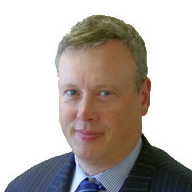
Speaker profile Tony Giardini

Tony Giardini

President & CEO at Trilogy Metals

Tony Giardini is the President and Chief Executive officer of Trilogy Metals. Mr. Giardini was President of Ivanhoe Mines Ltd. from May 2019 to March 2020 and was Executive Vice President and Chief Financial Officer of Kinross Gold Corporation from December 2012 to April 2019.He was Chief Financial Officer of Ivanhoe Mines Ltd. from May 2006 to April 2012. Prior to joining Ivanhoe Mines Ltd., Mr. Giardini spent more than 10 years with Placer Dome Inc. as Vice President and Treasurer. Mr. Giardini is a Chartered Professional Accountant and a Certified Public Accountant and spent 12 years with accounting firm KPMG prior to joining Placer Dome Inc.

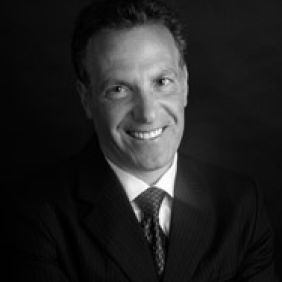
Speaker profile Patrick Donnelly

Patrick Donnelly

VICE PRESIDENT, CORPORATE COMMUNICATIONS & DEVELOPMENT at Trilogy Metals

Pat Donnelly is Vice President, Corporate Communications & Development for Trilogy Metals and has a broad range of experience in mineral exploration, capital markets, corporate development and investor relations. He began his career as a project geologist 25 years ago exploring for precious and base metals and diamonds in western and northern Canada. Subsequently, Pat worked for a Canadian securities firm as a base metals mining analyst. Between 2012 and 2014 Mr. Donnelly was the Vice-President of Corporate Communications for Trilogy Metals. Most recently he was the President of First Mining Gold Corp. where he played a key role. Pat holds a B.Sc. in Geology (Honors) from the University of British Columbia and has an MBA from the University of Toronto.

More from Trilogy Metals Inc.