Automated transcript · Written by software from the replay's audio. It can mishear names and figures; the replay is the record.
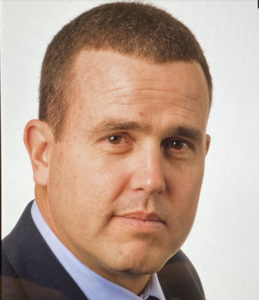
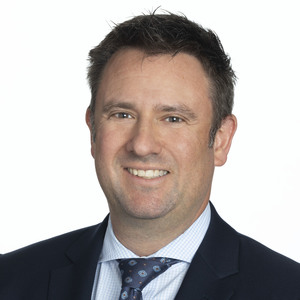
0:09 Hello, and thank you everyone for joining us today. My name is Oren Baranowski, and I'm the CFO of Treasury Metals. Today with us we have Jeremy Wyeth, our President and CEO, and Maura Kolb, our Director and Head of Exploration. Before we get into the presentation, we have our forward-looking statements, which are available on our website that I encourage you to read, as well as in the presentation. So Maura is going to take you through our exploration strategy, looking for new targets outside of our existing resources, which as a reminder stood at 2.1 million ounces of measured and indicated and 20 million ounces of gold in the inferred category. We'll discuss our land package and targets when she started with the company, the work the team has done to identify new targets, and where we currently are in terms of the stage of development on those targets on our Goliath and Golden properties.
1:00 Jeremy will wrap it up with some final thoughts before taking your questions. You can send us questions throughout the presentation through the Q&A function that is on the right side of your screen. So with that, I'll turn it over to Maura. Thanks, Oren. I just wanted to start off by saying I joined the company about a year ago and what really got me excited about Treasury Metals was this property. We have about 65 kilometers strike length and it's seen very little exploration, you know, really focused on Goliath and Goldland itself and Miller. But outside of that it's fairly untouched. I'd been in the region for the last 10 years working in Red Lake and kind of all over northwestern Ontario at small deposits And I thought that there was a huge opportunity here at Treasury to find.
1:53 You know our key in gold and really create another mining camp in northwestern Ontario. Hopefully someday to rival Red Lake- so we talk a little bit about that So we have 3 different styles of mineralization here at the Treasury Metals property. Goliath, which is a VMS style, which has been remobilized during the later stages of deformation. And then we have Gold London Miller. Those are related to competency contrast on intrusions. Now we usually see those kind of discoveries made early in a camp's history. So if you look at Timmins or Red Lake, Red Lake specifically in the 1920s, they found the Mackenzie Island deposits there on one of these intrusion related settings.
2:39 So that's exciting we found that first but it meant to me that we had the potential for more Archean load gold especially the sexy stuff in the greenstone belt that's high grade. That's what got me really excited about the opportunity here. Recent work, we drilled the fold nose and we went back and revisited the core and realized that we had a load gold setting style of mineralization here at Goliath. We also have other exploration targets of that load gold type of mineralization. So to me, we really have the ingredients here to create a multi-geologic setting gold host that could be a world camp, a world-class camp in the future. And that's, you know, why it's so exciting to be here at Treasury Metals as a geologist.
3:26 Now, having a whole bunch of exploration targets is great, but you need to be able to rank them. So our team looks at the geology, do we understand it, do we have a sense of the controls on mineralization, and do we have the right setting. Then we look at the size of the prize, you know, do we think we have potential for an open pit here, Do we have something that's high enough grade to support underground? Then we'll look at a very important thing, logistics. How easy is it going to be to explore this target? Do we have road access? Is this somewhere in the bush that's, you know, very hard to get to? And then later, how easy will this be to mine and how will it fit into our mine plan? So those logistics are really important, especially here where we're close to the highway, but we still have remote access, like everyone else in Northwestern Ontario.
4:17 And then we'll look at risk. Does this target have risks and what are they? And timeline of when they would fit into our pipeline. So let me back up a little bit and start, when I joined the team, It was about a year ago today. And prior to that, we had just amalgamated Goliath and Goldlund. So we had a few exploration targets at Goliath, Foldnose in Far East and Gossan. But we really were just starting to understand Goldlund and Miller and what the geology was at these 2 deposits. I find it really important to look at a resource pipeline, especially when you want to have organic growth. And here at Treasury, we want to grow this camp ourselves and add to the pipeline all these targets to then turn into resource and reserve.
5:04 So at the beginning of 2021, we were very focused on the resource area. We have lots of targets that we drilled 20,000 metres last year on, or sorry, 60,000 metres last year on, converting from resource, and in a few months' time, you'll see our PFS out, and we'll have first reserves on the property. But we had a big hole here where we didn't have anything ready to be an advanced target or a follow-up target to move into the resource conversion targets next. That's when we just said, we better start looking at this huge property we have and figure out what exploration targets we have. So we spent some time thinking about the belt scale controls on mineralization and looking at the framework of where we would have new deposits. Now we know we have Goliath style and Goldlund style, so we looked locally where would we have another Goliath, where would we have another Goldlund, and then we thought about you know in that Archean system where we would have an Archean load Gold and created quite a few exploration targets from that.
6:05 Speaking specifically about Lode Gold and some of the key geologic features that we were looking for, you know, in these systems, proximity to unconformity seems to come up every time. You see a big deposit like Timmins or Red Lake, you're always near those regional inconformities. So we looked for those on our property. Then we looked at regional scale fold hinges. So many high-grade deposits sit in these fold hinges and they just create great traps, So we were looking for those on our property. Next, we looked for fault intersections. So where do we have faults intersecting our stratigraphy or other faults? And lastly, we looked at the styles of mineralization we know we have and where we might find sulfides and quartz carbonate veining or the VMS style remobilization that we see at Goliath.
6:54 So that brings us to where we were at the end of 2021 and we were lucky enough to get to test some of these identified targets in 2021 which brings us to today. Right now, we have Foldnose, Far East, and Ocelot, and Caracal sitting in our follow-up targets. We've actually been able to test the Far East and Caracal early in 2022, and we should see results coming soon for both of those. Now I'd like to go into some details on each of the targets and we'll start with the Goliath targets. So probably my most favorite is FoldNo. So I'll talk about that first. I really see big potential here. If you look at these pictures of core you could say that is straight from Red Lake and I'll be honest that's where I worked last so it's it's close to my heart but you know seeing this quartz veining disruption lots of sulfides great this is what you see at a load gold deposit. This is exactly what we were looking for.
7:50 We did a review of all the core from 2021, all the intervals that were mineralized over a gram, and then we went back to the 2012 core that was available and reviewed that as well. We wanted to understand what kind of mineralization we were looking at and how we could identify this style going forward. From there, right now we're doing a re-log on select holes to try to understand the stratigraphy. When you're in a new exploration area, sometimes it's hard to say exactly what the different protolists or original rock types were. So we were spending some time focused on that to make sure we really get the geologic model right in this area. Because it is complexly folded, looks to be a refolded fold, it's gonna take some work. So we've gone back and looked at re-logging, and that's actually what the team is working on today.
8:36 We've also contracted Miro Geoscience to take our geophysical data and create a geological model using this. So it's an iterative process where you do 3D inversion, test that against the geological model that's created, and keep improving it, so kind of back and forth until you get kind of the best case geologic model for the area. Once that's complete, we'll sit down with them and do a target generating session, and we'll have our phase 2 drill program ready to test for high-grade shoots in the fold nose. Just a couple more images from the fold nose. In the corner there is the geologic map showing all of the different hits we have. So we definitely know we have gold mineralization in this area, but it's piecing it together and getting the right orientation understood on those folds so that we can successfully drill and hit.
9:28 We could be drilling now, but the success ratio would be lower, so we really want to do that upfront homework to get a higher success ratio on our drill holes and be able to follow this high-grade mineralization. We've looked at the different styles of mineralizations. You can see here we were pulling core and looking at the different mineralization styles and trying to map them out and understand them better. Still lots of work to go on on Foldnose, but look forward to seeing more throughout this year. Also on Goliath, we really wanted to look at the lithology that hosts the main Goliath deposit. So we were able to track this 8 kilometers across the property all the way over to Far East and we do see it also within Foldnose and the South Sincline targets, which gives us a lot of opportunity to find another Goliath on the property.
10:14 Now looking specifically at the geology in the far east and south sincline, we've been able to model that a lot better with the drill holes that we did in 2022 and 2021. Results are still pending on 2022 but it looks like we have about half a kilometer so far of the right alteration and the mineralization that we see at Goliath. So we're pretty excited about this and it's open in both directions, so it gives us a lot more work to do on this Far East target. Now moving on to a more grassroots target at Goliath, The Gossan showing was discovered in 2015 by a prospector in the area and it shows elevated base metal, which we know that Goliath itself is a VMS style deposit, so this may have a similar setting.
11:03 It's a newly forested area so it gives us great access to get in there and the team will be mapping and prospecting this area this summer. The next target, also more grassroots, is the South Ridge area. This area we just actually this week started out in the field on. It was discovered in 2014 or highlighted rather in 2014 by MMI soil anomalies and what I'd like to point out here is that those are very similar to what we see at the Goliath deposit and what we've seen in the Foldnose area. And it's been- we've used these soil anomalies in the past to help us find both the Foldnose and Far East. So it's been a great tool for us in the past at Goliath. We see a highly magnetic anomaly there in the bright pink color of the South Ridge, and so that could indicate contact between ultramafic rock and mafic rock, or ion formation or something. So we're getting the team out to do some field work now and better understand what rocks we're looking at in this area and what the target would be. Is this a low gold setting or is this something related to VMS?
12:11 We also see that there are D2 structures that cut through the geophysics and kind of break it up if you see that lozenge-like shape. So that's all kind of interesting for us for an exploration target here. Now we'll move on to Goldlund and look at some of the exploration targets at Goldlund. So when we started thinking about Goldlund, the first thing we wanted to look at was the geophysics and understand what the pattern was for Goldlund itself. And then as we zoomed out, we started to see this, the structural breaks at Goldlund repeated up and down the stratigraphy. And at Goldlund, you really see like a kind of train track straight up and down stratigraphy and it's being broken up and disrupted by these cross cutting faults. Right away we noticed that Miller, Goldlund, they had this pattern And we saw a few others that hadn't been tested. So the Caracal and Ocelot target were based off of geophysics, and they had not been tested in the past.
13:11 So last year in 2021, we did a drill program on each of those and came back with some interesting results. I'll just show you where they are as well logistically. Goldblatt and Miller here, Highway 72 and 1 of the major logging roads in the area, Kathleen Lake Road cuts right through the 2 targets and gives us excellent access for drilling or for future mining of those. So we look at Ocelot, you know, nothing stellar here, but definitely some smoke and evidence for gold mineralizing fluids in the area. So that's good, and it gives us something to go back and test further. But really exciting was hole 21-006 here at Caracal because to have 1 gram over almost 30 meters Very close to surface is really exciting for us. It could potentially become another open pit.
14:05 So we've done a follow-up program on this, just wrapped up in May before breakup happened here. And we're looking forward to seeing those results. But so far, the geology looks very similar to what we saw at the 006 hole and what we see at Goldlund. We have the same host rocks and that competency contrast there along with veining and sulfide mineralization. So very promising and we're looking forward to seeing those results coming. In this in the near future. Now another similar target that we like. Is just south of the gold on deposit so- all of the drilling here in the falls that's gold lines and then just below it to the southwest is what we call the Goldlund Southern Extension.
14:51 Now this was previously tested but on the mag high and less on the contact so we believe that there's a huge opportunity for another Goldlund to be lurking just below. Cross Echo Lake kind of ends the gold lunge deposit, and then this would be just south of that. This winter didn't exactly help us with the 6 feet of snow quite early, so the ground didn't freeze. We weren't able to get in there and test it in 2021 because of that but we're working on a plan to get in there 2022 later in 2022. And then interlakes this is one of my favorite targets at GoldLund. Again I guess I'm partial to the load gold setting, but as we saw earlier, we really saw straight kind of train track stratigraphy.
15:38 But as we get down further south on the Goldland property, we get into this area where there's 2 plutons and then the stratigraphy, The main stratigraphy gets very folded and complex. So in this area, we've hired Mira Geoscience, and they've been working on this now for the past month or so, to do that 3D inversion and geologic model iterative process. And we've just actually received the geologic model, I think, last week. And now we get to start looking at target generation in this area- you know I think many a geologist has circled this area on the map and said- I bet there's folding this could be a really exciting- trap for gold. But it really hasn't been tested So we're pretty excited to get out there and test this. This area has no access right now. So there's no roads through here. There is a portage trail and the geos were out here last summer, crawling through the forest, looking at the rocks.
16:33 And we did see the right host rocks. And we're excited to get out there this year and do some drilling following up from the work with Mira and the geologic model that we've created. So look forward to getting out there and drilling this later this year. 2 other targets that are located quite near interlakes would be Black Bear and Diamond Lake. These also stand out on the geophysics as areas where there's disrupted stratigraphy and folds and possibly faults as well. So this year, we're going to get out there and prospect and map these areas. There is a road, logging road to Black Bear and it actually does come around down to Diamond Lake as well. So the team will be scratching the surface of this and see if this is something we want to follow up on in the future.
17:22 Now looking at all the exploration targets we have, it's nice that we can now fill the pipeline and our job this year is to test these and start moving some up into the advanced exploration category and have some ready for resource in the near future. And with that, I'm going to hand it over to Jeremy to wrap up. Thanks, Moira. I'm not going to go through the slide point by point, but as you can hopefully see, a lot of work has been undertaken
20:06 Which targets would you say would be the highest priority on the list? Or I guess, which would you think have the best chance of success in turning them into a resource and potentially a reserve down the line. So to me, I see the best target at the moment looks to be Far East. With respect to how quickly we could turn it into a resource target, We're finding now as we're analyzing this like this hot off the press, it looks a lot like Goliath and we've just done an interpretation to see how it's dipping and how we can move forward to continue drilling it. And I feel that that's something we could quickly convert into you know an advanced target and from there infill it into a resource. We see already half a kilometre of this alteration halo- with economic grades popping up in it. So we really just need to define that better and that could be our next resource target.
21:05 Beyond that I think it's important for us to get additional high grade at the treasury. So you know I'm really keen on these low gold deposits And so full nose and interlakes are high priority to me because they have the potential to be higher grade. So we'll continue to work on those, but I really want to do it smart. I hate wasting money, so I want every drill hole to count and to find us gold. So we're going to do the upfront work first before we start drilling those so that we have a better chance of success in finding them. Okay and I guess on the topic of spending money, you know inflation is a big topic currently. I wonder if you can speak to more how inflation has been impacting the drilling program, the drill budget.
21:54 So your thoughts on that. We are very lucky here to be right off the highway and we're working with Downing Drilling. We've found that logistics here are easier than they are in a lot of other deposits. I find the price we're getting per meter to be the best I've ever seen in anywhere I've worked. And we've been able to keep the price per drill or per meter pretty low this year, even with doing exploration. So it's a bit of an increase, about $5 more than we saw doing just resource drilling. But it's excellent. We've been able to capitalize on our moves, trying to be smart about those. And one of the things we're doing here, it's just trying to be smart about the drill holes. I don't want to waste them.
22:42 So the more we get into the resource or into the targets that are successful, the better. Hopefully that answers enough. And then maybe if you can refresh people more on how many drill rigs we have operating currently or where we're going to be going later this year, how many meters we're gonna drill this year, and then potentially how many targets you're looking to be able to drill. Certainly. So our plan is to drill 25,000 meters this year. We're about 33% through that, something like that. We had a pretty wet break up. So right now we're actually on pause from drilling and we're doing a lot of the analysis on the results we have and deeper look on these targets and working in the field. We expect to start the rigs back up in about a week or 2.
23:37 Luckily the rain is slowing down and we're actually seeing some sunshine today which is a nice change. And then we'll get back to 1 rig right away and then adding a second one to kind of catch back up and go hard on some of these targets. It's important for us to go out and do this fieldwork now that the snow has finally melted. It didn't melt until late May. It's been a rough year for that, but we'll be able to go out and see some of these areas, the rocks we wanna see on surface before we go to drill them. Great, thank you. The next questions came in regarding the full nose target, Would that be a high grade underground target? And then there's a follow up question on what the average overburden is at Far East and then at Caracal.
24:26 Okay, start with Foldnose. So Foldnose, The results we have so far are actually all fairly shallow. I think the deepest, no deeper than 200 meters below surface for what we have so far. So it's all quite close to surface. But yes, it could be a high-grade underground target in the future. But I do see the opportunity for us to have open pit there first and then underground after. We do see you know lower grade mineralization around besides just the high grade that we're really chasing so we could have a pit with halo mineralization there and then go underground on just some of the high-grade shoots that we're we're trying to figure out the geometry now. The overburden at full nose is quite low limited some in some cases are right on bedrock to about 10 meters.
25:16 At Caracal it's about the same. We have some outcrop there as well as, you know, some overburden up to 10 meters. The Far East is in more of a swampy area and I think that's why it wasn't found yet, was just because there is overburden there and it's a bit wetter.