Transcript
Automated transcript · Written by software from the replay's audio. It can mishear names and figures; the replay is the record.
0:08 So good morning, everyone. Thank you so much for joining us wherever in the world you're signing in from today. Today I'm going to be chatting with Rick Van Nuynhuysek, Intango Ores CEO, President and Director. Great to have you today, Rick. Good to be back on. Awesome. Before we get into questions, I got some really brief housekeeping to run through, so bear with me, won't be long. The event is being recorded today and the replay will be made available in a few hours. Please feel free to share along once you have it. Should be in your inbox, honestly, by about midday. This is also an interactive event. There's a chat button on the bottom right of your
0:39 screen. Please feel free to ask a question at any time during the event. Once I get through my questions for Rick, we can get to some audience questions. Probably gonna be about a half hour today. So if for whatever reason we don't get to your question, or it's just something we, it's outside of the scope of today's conversation, we'll still make sure the Contango team gets back to you as soon as possible. So they'll get that transcript to the chat. So please do ask questions regardless, and somebody will get back to you either today live or quickly afterwards over email.
1:07 All right, that's enough out of me. Let's get into the protein. So I wanted to get right into it, Rick. For the audience in the room today, can you give a quick recap of where Contango Ore is today and how we got there. Sure, Romeo. So Contango Ore found, working in Alaska, we found a nice high-grade 1Moz Gold deposit, which is good grade. It was potentially open pittable. We got it to a pretty feasibility level of study. And then in 2020, we entered into an agreement with Kenross
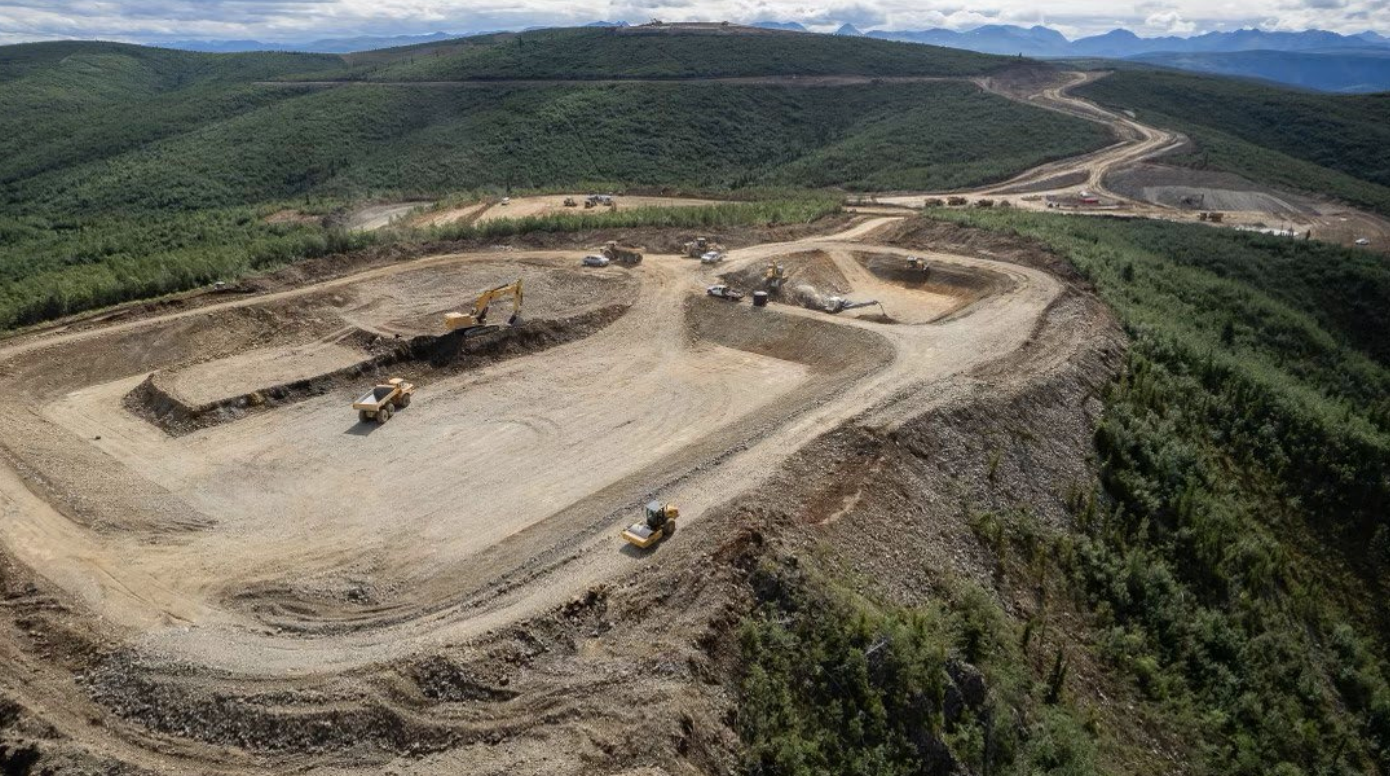
1:40 to process the ore at their Fort Knox mill. They had excess capacity at their mill. We knew that and that was one of the reasons that they had expressed interest. We entered into a 70-30 joint venture with Ken Ross, with Ken Ross owning 70%, ourselves owning 30%. Then completed a feasibility study, initiated the permitting process. And then in August of last year, we actually started mining. So we received the federal permits, the state permits. We put our, we at Contango put our financing packages together, which included both debt and equity. We have a US$70M line of credit from ING and Macquarie that allowed us, after we invested our equity component, to have money to access money to be able to continue to participate as we started mining in August and then started transporting ore to the Fort Knox mill in November.
2:47 The mine actually started up and ramped up very quickly. We started stockpiling ore at Moncho. The truck transport to Fort Knox ramped up slowly because we basically had to build the trailers themselves. They're built in Nebraska. And so we started hauling in November, but we didn't start with the entire fleet. So we have to build up the fleet. Currently we're at about 40 trucks and trailer combos. They haul about 50 tons a load. We've got about 40 trucks running right now, so that's about 14,000 a week, 14,000 tons a week. And last time I checked in, there was a little over 100,000 tons of ore stockpiled at the Fort Knox mill.
3:36 And by the end of May, I think we'll have the full complement of trucks hauling ore and be in a position after they commission all the various new circuits at Fort Knox. They'll be commissioning those throughout the month of May and into June, and then we'll be in a position to have our first batch process on Goldport in July of this year. So soup to nuts, a little less than 3 years from the inception of putting the joint venture together and having commercial production of gold. We're that close.
4:15 Oh, awesome. Now I appreciate that context. I think it's helpful as we get into the next set of questions. So you're here today obviously to talk about Contango's fairly unique business model. I love just before we get into all the details of it, if you could just explain it in as simple terms as possible for the audience. Yeah. So it's reflecting what have we learned in our time in the business. I've been in the business probably 40 years or more. I hate to sort of count the years, but it's quite a few.
4:45 And it's a tough business. Mining is not an easy business, and I'm sure it's a difficult thing from an investor perspective as well. It's cyclical. The metals, commodity prices are cyclical. So you've got to sort of maneuver through all that. And As a junior company, it's especially difficult because raising funding for all this is just adds another level of complexity. If you're a producing company, you've got that cash flow that you can depend on. So the trick is how do you become a producer? And it's very difficult for a junior company from grassroots exploration to get all the way through to production. And there's a long, a long line of failed attempts to do so. So we didn't want to go and do the same thing again. So we thought, OK, let's learning from this, what we've done with Moncho, is there something we can sort of brand and take on and do again? And so it basically is taking advantage of existing infrastructure.
5:46 So you need an existing mill that's hungry. And you need to have a good quality deposit that you can afford to transport there. So I think that's basically the model we're going to work forward with is identifying opportunities where we can take advantage of existing infrastructure. So that means it's got to be near a road, near the railroad, or on the water. It's got to be good enough grade to get there. And it has to be a relatively simple ore body in that, and then particularly from a permitting perspective, because if you're not building a mill and a tailings facility on site, you've already massively simplified your permitting process.
6:32 Permitting a tailings facility in the United States or Canada is probably at least a five-year adventure. And that's after you've done all your baseline work and all the feasibility and all that stuff to get to that point. So, I mean, it really literally takes between 10 and 20 years now to, once you found a deposit, to get it into production. And you consider the permitting timeline and then the construction timeline.
7:06 So, our approach is basically to avoid building tailings facilities and mills and power plants to run all that. Work with direct shippable or DSO as what they referred to that as.
7:20 Run of mine if possible, so that you're not doing anything special at site. Maybe you have to crush, that may be something you have to take a look at. But in terms, again, it's really avoiding building a tailing facility. So like we've done with Moncho, and like we're doing, and we're in the process of doing with Lucky Shot, where we've got a relatively modest size deposit, but very good grade. Now that we've refurbished the underground access, we've got basically our development tunnel in place. What's left to do is drill the heck out of this thing and define the high-grade ore chutes that you can then develop a mine plan around, say starting at something that would produce 50,000 ounces of Gold a year. It'll be modest, but it'll make money. And I think that's really the point. And we're not really kind of going for hitting the home run out of the park sort of a home run thing where, if you win and if you get the cycle right, yeah, you can make a lot of money, but You can also watch that evaporate as time flies on and
8:36 defining the ore body and doing the infill drilling and doing the metallurgy and the hydrology and all the environmental work takes away from that discovery excitement of a deposit. So
8:49 yeah, focusing on high grade, high quality deposits, simple high quality deposits that are near infrastructure. That's what we're gonna plan on doing here. Oh, nice. Yeah, you certainly see some people lose their shirts after a great discovery, which that's a bummer. It does happen. So I know we've already kind of gone over this, but I just wanted to ask it in kind of as clear a term as possible. And how is this model different than your bog standard North American gold outfits? Like what would you say is the biggest difference? Well, if you're doing grassroots reconnaissance and you're out in the middle of Alaska or you're out in the middle of the Northwest territories or something, and guaranteed there are exciting discoveries to be made out there, no question about it. But it's the 1 in 10,000.
9:40 And it's expensive because it's remote. Because nobody's been there, and you can stumble on a rock and say, oh my God, that's high grade nickel, that's high grade gold, that's great. Those are great discoveries, but they are long in the tooth in developing to get to cash flow. And they have to be really big to be of interest to the majors. And they have to be able to see a path forward to developing the thing because they have no interest in just accumulating, you know, pretty rocks. So, you know, they're all about cash flow. So,
10:19 it's not that those aren't exciting and they're fun to explore for, and I spend a good part of my career doing that. So, but I guess as I mature and think about,
10:33 what am I gonna leave behind for my kids and stuff, you think about cashflow. And that's fundamentally what it should really get down to. So it really is an outgrowth of that. And I guess, personal experience with, we discovered the Donlan ore body 25 years ago, close to rough numbers, what it is today, 40Moz. I remember this very specifically, for every $100 increase in the gold price, you bumped up the cutoff grade, you know, like 0.1 grams, and that added like 4 million ounces to resources, right? So, but that, you know, that discovery is still sitting there still being permitted.
11:22 And, you know, the whatever the capital cost used to be is a lot more now. My guess is it's approaching double digits, billions. So I don't want to do that again. It was fun. It was a great experience. I learned a lot. But I want to get I want to get to cash flow. We have a tight share structure that we've done purposely.
11:44 I own about 7 percent of the company And I would love to get in a position there where we can have a sustainable company and paying a dividend. That's that's my objective for for the company over the next 2, 3 years. Awesome. Actually leads really well into my next question, which is in following the strategies. So now that you have this model established, what should investors expect as the next move from the company? Yeah, so we're actively looking at new opportunities. We've had a great
12:14 recent run up in the gold price. And I think in the last 6 weeks, it's gone up 300 bucks. So not too shabby. And that's bringing investors back into the space. It's a bit perplexing, but I thought $2,000 gold was a pretty darn good gold price. But investors didn't. They weren't excited about 2000 until it wasn't even bumped up. It went over 2000 and it went over 2100. That was still kind of a big yawn. And 2200 is still a yawn. But when it went over 23, I don't know what's magical about 23 other than being a prime number.
12:53 That's what seemed to trigger lots of interest. And there's been lots of articles now written about why the heck is the gold price going up? And most fingers point to China. So there's some interesting dynamics on there, but we won't get sidetracked.
13:10 But that's a it's a good background to we've seen We've seen junior companies now increase in their valuations finally from absolute low, low, lows. So I think our timing is really good. So we're going to be looking at and we are actively looking at a number of opportunities where we can buy ounces in the ground for let's call it 30 bucks Canadian. The range is sort of 20 to 50. What the typical junior explorer with resources, established 43-101 resources in the ground. And we're trading at over 400 ounces in the ground. So we have that relative strength to draw from. We have a relatively low share count.
14:08 So if we can buy ounces for $30 an ounce, Canadian, we value them because we have cash flow from our Montreux mine. And this mine's going to generate a lot of cash flow for us. At today's gold price, it's well over $65 million of free cash flow a year. So that's pretty healthy. That's 6 bucks a share of free cash flow. So we can put that to work and add the value from the 30 or 50 Canadian that they're getting now and get it up hopefully to where we are trading. We're still trading at a discount to our cash flows and our current valuation. I think we're probably about 70, 75% of just if you did a straight cash flow and used a 5% discount, which is kind of typically what you'd use for gold. So,
15:05 that's what we'll be looking at. You've got to be very selective, right? We're not just, not every ounce is equal. So again, it's a fine filter. It's gotta be near infrastructure. So roads, rail, on the water.
15:24 It's gotta be good grade, and it has to be a simple ore body. So of the 4,000 junior companies out there between the Aussies and the Canadians. You know, it's going to be a really narrow group of companies that we'll focus on. Great. That's funny. Talking about generalists getting involved in gold. My mom asked me about gold for the first time last week. And this for 3 years, I got the first call like, what's going on with gold? But in the same vein, for an investor looking to get leverage to these rapidly rising gold prices, what does the Contango or model provide for that investor that let's say, you know, a new discovery with a junior doing a standard strategy in the middle of nowhere?
16:10 What would what that difference be in getting leverage to the actual gold price? I kind of just went over but curious your perspective. Yeah, I mean, in really simple terms, if we can buy things for $50 Canadian, which is, I don't know, 35 US, something like that, and we can put the work in to get that to a production decision over A23 year period of time. Because again, you're not building a mill and a tailing facility and all those things that take lots and lots of work and lots and lots of money and a horrific amount of permitting, which is a total pain, you know, total pain. It's not fun. Yeah, no, It's really not fun for someone like me.
16:51 And so we can re-rate those ounces up to something like what we've got with Moncho.
17:01 I mean, that's a 10x increase in value. So that's the investor pitch, if you will, in terms of why Contango. We're going to be selective. It's a rifle shot. It's not a shotgun. So we're not a project generator that's going to have 30 projects and hope 1 actually goes to fruition. I agree that model just kind of drives me nuts.
17:28 But yeah, rifle shots. So we're going to be very, very selective and work in jurisdictions that we know, which is what I call, refer to as my backyard. So that's Alaska, BC, Yukon. We know those jurisdictions really well, at least for starters, that's what we're going to start out. So it's exclusive to that region for now, or do you see it broadening out? Or is that really where you want to focus for the next little while? Yeah, certainly for the next while. I mean,
17:57 it's, and I've worked all over the world. I used to be VP of exploration for Placer Dome, responsible for Africa and Eurasia. So my job was traveling. Sure. Plain guy. And it's not just because of the travel, but just learning how to do business in a new jurisdiction is, it's a learning curve. It's just, it's different from what you're used to. And I've worked in, like I said, I've worked all over Africa. We've had projects, we've had exploration projects in Niger and in South Africa and in Tanzania, all over Europe, the Stans, Russia. So I know all that, but I also know how difficult it is. So, and I'm sure, I know enough to know that I don't wanna spend my own money doing that.
18:49 And I'm a shareholder. So that's certainly how I think. So I think for starters, yeah, the Yukon, DC and Alaska, we know how to work well in those jurisdictions. We know the regulators, we know the people who are working actively exploring there. And we also know who has what where in terms of milling facilities and the companies that are active and what they might be looking for. So yeah, maybe after we
19:27 establish ourselves, I think there's certainly potential to apply this elsewhere or just start in your backyard and then expand. Nope, makes sense. I got one question that will lead into a question I just got over email a few minutes ago. And this is really kind of getting into more of the details of the model. So Do you see Contango replicating your Manchow strategy, by which I mean, like doing a JV with an interested major as part of the production component?
19:53 Do you see doing that for additional projects?
19:56 I'm curious what you think the advantages and disadvantages that presents to investors by running with that strategy?
20:02 Yeah, I think there's kind of 3. I think the strategy of forming a joint venture is great. I mean, there's a lot of compliments between a junior explorer that's good at exploring and a major company that's good at processing and good at managing people. I mean, when you've got 600 people, which I think is what the compliment of people is at Fort Knox, 600,700 people, plus all the contractors, there's probably another 3, 4,500 contractors there.
20:33 You have to have systems in place to manage that. You don't just start as a junior company and say, oh, I've got 600 people, let's all gather around and figure out what the hell we're doing today. So that's what the big companies bring. They bring systems for safety, they bring systems for HR, all those things. And that's a huge advantage. And it's a huge advantage for us to take advantage of, frankly, because
21:00 we can run the company with less than a dozen people. And I can, this is, that's why I say it's more like a royalty company. It's one of the characteristics of a royalty company. You only, you have a small number of people and your production of ounces per employee is like, you know, ridiculously low compared to, you know, a company that's has a, you know, like I say, 7,800 employees plus all the contractors. So
21:31 Yeah, it's a huge, I think it's a huge advantage. And so that's one way. So the joint venture is a good way, brings a lot to the table. You're plus or minus on the same side. Obviously, you gotta have a good, healthy working relationship with the major company. I think in the case of Kinross, we have that.
21:54 I think there's a couple of other ways of working though. I think you can have an or sales agreement. We assay the tons and grade and we weigh the tons and we assay the grade and they do the same and you have an umpire that does the same. So you know, you have just how many ounces of gold are there and away she goes. A tolling arrangement is a little different. You're a bit more of a captive audience and you have to have oversight and proper things there. We effectively have a joint venture and a tolling arrangement with Kinross. So I think all 3 are viable.
22:35 It's not just mills that you might be sending the ore to. Smelters are another avenue to sell ore to. Smelters always need flux. Flux is what picks up all the metals that you don't want in the smelting process. So they need flux. And if it happens to have a bunch of gold in it, then
22:59 it can be very advantageous. And again, the whole trick here is to get to cash flow with the least amount of headaches, least amount of capital, least amount of permitting. Right, and just kind of in the same vein, there was a question that just came in an email from Howard, which is, and obviously only answer the best of your ability, but he's curious, who would a likely buyer be for, not buyer, but junior
23:23 like partnership on Lucky Shot? Who would be a major you would partner with for Lucky Shot? Well, I mean, look, Fairbanks has a, Fort Knox has a hungry mill. So we're about 20 miles from the rail line. We mine ore and we're fully permitted to do this right now. We've got outlined ore body, but We've got 100,000 ounces outlined now. We think we can outline, you know, 4 or 500,000 ounces, put it in a box, haul it down to the railroad, haul it up to Fairbanks.
23:55 Basically just need a big forklift to transfer the box. These boxes, they're ready-made. They're, they contain, they're, they'll handle about 30 tons of ore and then haul it up to Fort Knox. Now we've got to work out an arrangement with Fort Knox. We don't have to present a lucky shot. So that's certainly 1. There are other mills in Alaska that we could think about. But we have a business relationship with Kinross already. They're aware of what we're doing. We openly talk about what our progress and timeline is with them. So I think when the time's right, when we've outlined a resource that we can put a mine plan around and say, hey, we can deliver, you know, 1000 tons a day of ore averaging, you know, between 12 and 15 grams per ton.
24:48 Let's make a deal. I think the other thing I'd point out is, if you have an existing mill that's processing, you know, in the case of Fort Knox, it's a very, it's a big mill, it's a low grade deposit at Fort Knox. So their average grade is between 0.7 and 0.8 grams per ton. So if you can bring them 10 gram material, they'll figure out how to do that. Now they're going to charge you for it. I call that sort of the convenience fee of not building your own mill and permitting all that stuff. And obviously, they're taking on a lot of responsibility. So you're going to pay for that, and you're going to pay handsomely for it. They're going to make money on that, which is great.
25:34 Yeah, that's how sister works. That's the idea. Yeah. Yeah. Yeah. Yeah. Do you want to jump to a couple of questions from the audience while we've got a couple of minutes? There's 1 lengthy question from Kyle here. He is asking if you could provide investors and ideas to the potential size of investment that will potentially be for the opportunities that you described that you're looking at in your own backyard. So purchase price, incremental investment required to get into production, et cetera. I mean, that's a very specific, I'll answer this way. I mean, every target company will be different. And it may not be a company, maybe just the asset that you're purchasing. So there's certainly a lot of variety there. I'd say, you know, we're looking at things that again, fit our, fit our model. So again, near infrastructure, I'd say we're, you know, we're not looking at trying to develop a billion dollar project that this, so it's, you know, it's, it'd be in the, you know, hundred million dollar range. I'm just trying to be realistic here in terms of what we...
26:40 Manchurian, and I guess from a perspective, let's go back to Manchurian. That costs $200M to build the mine and that purchases the trucks and the transport and all that. And then there's about $50 million of modifications to Fort Knox mill that were actually paid for by the Fort Knox mill, but are included in our tolling arrangement. We pay for them, we pay for them over the time of the length of the mine line. And the we there is the Peak Gold Joint Venture. Kinross is sort of effectively paying itself for that convenience fee, if you will. But that's probably in the range of the kind of projects we're looking at.
27:26 We're not looking to try to take on a multi-billion dollar project. Okay, that makes sense. Mr. Holmes asks, would you expect to have similar contingent performance based deal like you do at Lucky Shot? Contingent, oh, I mean in terms of the milestone payments at Lucky Shot. Believe so. Yeah, that's, yeah, so we, yeah, when we, obviously, if when you purchase something, you want to try to put out as little cash as as possible. When when someone wants to exit the space, that's what they want. So in this case, it was it was a group that had loaned money to the previous owners and they went bankrupt and so they ended up with the property on the loan to own plan, which is never a good thing. So, but they all these guys recognize value, and they recognize the time it takes to get things into production. So basically, if they have a if you have a win, they want to, you know, they want a part of it. So it's a negotiation.
28:32 I'd say we're, we're financially much stronger now than we were then. So we would certainly look to not enter into those kind of agreements if we can avoid it. But sometimes you can, sometimes you can't. That makes sense. Tony asked actually relatively early in the presentation if Contango is fully funded through production. Yes, solid yes. Love a quick, easy answer. Hopefully that answers it. I have one last question of my own actually, In case there are any more audience questions, we've got a couple more seconds, we could probably get through one more. But I'm curious, I know we talked about the business model today, but how did you settle on it? What was the process for you and the board to come to the conclusion that this was how you wanted to run the company from your own house? Yeah, like I said, I think we started, we talked a little bit about this at the beginning, but it's kind of a collective of experiences that we've had in running other companies.
29:26 You know, so with me, it starts with, you know, I had a lot of great experience with Placer Dome and a few other big companies like Freeport and Anaconda. But that's different. That's working for a major company that has cash flow. So working with the junior companies and that was in starting out and saying, I'm going to go do this myself. And with NovaGold, we found literally one of the best gold assets on the planet. I mean, it's the dominant as a freak of nature. It's 40 million ounces of 2.2 grams and it's incredibly wonderful. It just happens to be in the middle of nowhere. And so it needs a lot of infrastructure. So, and I've watched, we work with that and we had a lot of success, but then we also watched the value erode. When I left Novagold in 2011, market cap was 2 billion.
30:20 And, and the gold price was $1,100, something like that. And here we are, you know, 12 years later, the current the current management has had the company longer than I ever had the company and I started the company and the market cap is a billion dollars and we're still not permitted and the gold price, oh what is it? Oh $2,400. So you look at that picture, you go, I don't want to do that again. So, you know, and we spun out a number of assets from NovaGold. Ambler Metals was, or what is now Ambler Metals Trilogy was one of them. Had a lot of success there, permitted a road and then had the permits pulled one administration to the next. So it's like, well, that wasn't fun.
31:09 We spun out of Lexco and made a couple of wonderful high-grade silver discoveries in the Yukon at Keno Hill and, you know, try to ramp up production during COVID. That wasn't a good idea. And, you know, you end up selling the assets, it's a great quality asset and you end up selling the asset to Hecla, which is now one of their corner, it's a great cornerstone asset for Hecla. But I don't think the Alexco shareholders did well because most of the money went to Wheaton Precious Metals because of the fact that you pretty much had to, you couldn't raise equity so then you have to raise debt with the streaming companies. So which are, you know, there's nothing wrong, nothing against the streaming companies.
32:02 They're, they're, they're, they're like bankers are in business to make money. So it's, that is just a business strategy. So it's kind of taking those that collective process of learning and going, how do we how do we maneuver through this and get the cash flow. And like I said, I think that's the key thing here. And to me, it's taking advantage of existing infrastructure, which includes roads, rail, and the water, but also the milling operations that the major companies have. They're not all major, but I mean, they tend to be mid-tier major companies that have the bigger mills. And the ones that have been around a long time. I mean, I think that's another thing to sort of keep in mind. Fort Knox has been operating for 30 years and they don't really have any major new discoveries.
32:52 They have a couple of little satellite things that they've added. But the Fort Knox ore body, it's a big ore body and it'll keep going as long as you can afford to pay for the strip of it. So, an increasing gold price helps that, but it's still 0.8 grams per ton through a mil. That's not high grade. I'll maintain that we'll always be able to display slow grade with high grade and it may cost you a gram or 2, but if you've got 12 or 15 to work from, you're starting from a good place. Okay. Do you have time for a couple more questions, Rick? Because there's just a couple that popped in. Okay, awesome. Rock in the chat asks, how long until you think that your debts will be covered, the company's debts? So we've got 2 and a half years basically to pay the debt back, 25 and 26.
33:44 Perfect. T. Decker is curious your perspective on where you think current sell volume is coming from. Sell volume. I guess I would have to just say people making, you know, who made money. So we, one of my objective is to still get our liquidity, trading liquidity up. It's vastly improved from what it was a few years ago, but I'd still want to see it. The objective is to get it to a solid 100,000 shares a day trading volume. And I think we're there on days, but we're not there consistently. So that's what I want to see sort of consistently. I mean, yeah, Look, people, there's no, there's all sorts of reasons why people sell stock.
34:37 You know, I want a new car, my kids gotta go to school, he needs braces or whatever. There's lots of reasons. And if you've made them money, that's a good thing. People remember that. And that's trading and that's part of that liquidity thing. So if they bought at 15 and sold at 20, I'm happy for them. And that's part of why we need to go clear. If I only have people who love the story and never sell the stock, we won't be very liquid. We've got to appeal to a broad spectrum of shareholders and traders, people who buy at 15 and sell at 20, you know, God bless them. Yeah, makes up the liquidity.
35:24 Mark asked in the chat, he notes that the Contango business model is essentially, in his words, levering local knowledge of resource and turning it into cashflow quickly. He asked if it would make sense to expand the geology team and chase multiple projects instead of focusing on just lucky shot at this stage. Yeah, no, and like I said, we are doing that right now. We're looking at a number of, I'll call it sort of corporate opportunities. In our backyard, Alaska, BC and the Yukon, jurisdictions that we know how to operate well. And if you know how to operate well, you have a better chance of advancing quickly to production. And you also have a better chance of understanding what a simple ore body looks like in your jurisdiction. So we're gonna stick close to home, but over time I'd see us definitely expanding into other jurisdictions and probably hiring local teams to operate there. Again, not operate the mill, we're going to look for the big guys to do that, but operate in the sense of advancing the project from the resource stage to production quickly. Again, with those caveats that goes to infrastructure, it's good grade and it's simple.
36:47 Simple or a body from a permitting perspective. I appreciate that. I'll also ask before we wrap, I mean, as a CEO, but also as a major shareholder, what are you most excited about at Contango for this year? Gold production in July, I wanna hold that bar Gold and that's going to be a really good feeling. And it's going to set the stage for doing the same thing again and again. So we want to repeat this, taking resource ounces, buying them for CAD$50 an ounce and doing the work over a 2 or 3 year period to get them up to a $500, $600 value. And obviously if the gold price keeps going up, obviously the wind's at our back. Awesome. Looking forward to that Gold Bar Glamour shot.
37:34 So, everybody in the room, thanks for joining us and obviously for asking questions. If you think of the perfect question right after the event, like I always do, please email in. I'll make sure Rick and the team get back to you as soon as possible. But Rick, thanks so much. I think this was a fun discussion. It was a pleasure. Take care, everybody. Thanks. Have a great day, everyone. Cheers.