Transcript
Automated transcript · Written by software from the replay's audio. It can mishear names and figures; the replay is the record.
0:00 Okay, folks are filtering into the room. I will say good morning, good afternoon or good evening, depending on where in the world you're logging in from today. Just between all of us on stage, we already covered several time zones, but I'm glad all of you could join us on short notice after this morning's news. I've got with me today Rick Van Nuenhuysen, CEO of Contango Silver and Gold, and Dave Larimer, the company's resident rock star and vice president of exploration. Gentlemen, how are you today? We're doing well. Morning, morning. Awesome. So, a couple of housekeeping notes, as usual. I'll be brief, I promise. I know a lot of you are regulars. There's a chat button at the bottom of your screen. I know that some of you did submit questions in advance over email. Please do use it. I'll try to get to as many questions I can during today's event. If I don't touch it for whatever reason, I'll make sure the team gets it and can get back to you afterwards. But I usually do a pretty good job of getting to most of them. This event is being recorded and will be available for replay mid-afternoon Eastern time, so certainly before the end of the day for most people watching. It'll come right in your inbox, but it'll also be on Six's YouTube channel. And finally, there's a meeting request button at the bottom of the screen.
0:57 Please do use that if you'd like to get in touch with the Icotango Silver and Gold team, and somebody will be sure to give you a call But I'm eager to get into the lucky shot results. I think is very exciting news release. So Rick, I'll start with you It's mornings release just for folks You don't know the second batch of assays from the Coleman surface program the first since the whole program wrapped at the end of August so to sum up 5800 meters 27 holes 5 pads and now excitingly 140 gram hit in 26 or 18 on top of the earlier results. So with the rigs off the hill, most of the lab work back, how does the summer grade out against what you sent the crews out to do?
1:33 I think they accomplished everything they set out to do. I think we were 2 holes short of the overall objective. We just had an early winter here. So, once you have more than 6 inches of snow on the ground. It gets a little dangerous, especially up there. It's really steep. I don't know if you've seen photos, but it's super steep. So that was a more of a safety call, but I think we accomplished all the objectives in terms of most of that drilling was infill and the expansion of the vein down dip and long stripe. I think that all worked out as planned. The 140g per ton is a great hit. Obviously, it's going to put that over to a mining width of 2-3m.
2:20 All of this information is going to get incorporated into our mineral resource update, probably in the April timeframe, somewhere in there. See when we get all the assays back and QAQC. I think we'll be drilling, people probably comment on this as well, but I think we'll be drilling probably into February. And so, you know, a couple of months to get all the assays back, QAQC, mineral resource update, and then we'll use that to incorporate into a feasibility study which we'll have done by before the end of the year, and the year being 2027. So that's kind of the plan and yeah I think it's not just a single assay, it's a whole suite of assays, basically demonstrating vein continuity.
3:05 There are a few more veins that we've identified. That just means more tons. And obviously, they've got to all fit into a mine plan. So we've got a lot more going to do underground now. We'll have one more batch of assays to release in probably 2, 3 weeks or a month or so. But that's kind of wraps it up for the surface drilling and then several more months of underground drilling. Exciting.
3:35 Dave, and I got a bunch of tech questions for you. Yes. We're going to nerd out. Nerd out. If that's OK. But Rick, feel free to jump in whenever you'd like. Coleman 4, the vein that seems to keep showing up. It carries that 140 gram interval in O18 on pad D, the 1 18 gram subinterval in 19 on pad E, and it's half of the 18 gram intercept in 21 on pad F. So that's 3 pads, 1 vein. Is Coleman IV, in your opinion, turning into the backbone of the system? And how much strike does that give you between those pads? Yep, I would definitely say Coleman IV is emerging as definitely an important part of the picture. It's definitely encouraging. You know, we can maintain that structural and continuity across multiple pads through there, it's demonstrating that the models really are behaving as they should.
4:22 I would be a little cautious and a little careful calling it the backbone quite yet. These are vein systems. I would interpret it more as maybe a major artery. We're dealing with vein systems, we're dealing with fluid pumping through openings through there. So I would almost consider Coleman IV as it occurs over and over again, a major artery that's passing these fluids, precipitating our quartz and our golds out through the system, giving us that lateral spread through the system on the Coleman side. It's interesting to note, you know, we put this back into context, you know, the Coleman side was last model in 2023 to that last mineral resource update. Strike length, it was about 500 meters by 500 meters. You know, it is a substantial part. We've known that, but it is a substantial part of the Coleman vein system. So to be able to come in here and do this drilling inside of it, just to demonstrate the increased grade that we're seeing in this upgrade, you know, centering on the Coleman Fork, I think it's a very compelling story where you have a central artery and the rest of your plumbing around it supporting the gold grays passing through there.
5:24 It's definitely interesting to look at. We're looking at these drill holes, especially pads D, E, and F. They were specifically designed to target the heart of the Coleman system What we saw in the last resource model was some historic drill holes and in a store 3 3 1960s there were I wouldn't say suspect but we couldn't confirm the assays, you know so what we did is we took them out of the model because we didn't have the confidence to say exactly, and we couldn't QP the results of it. So by taking those historic drill holes out
5:55 of the model, what it did is it left our resource into an inferred category, excuse me, an indicated category. So being able to target these drill holes in the middle was was an upgrade exercise for us. Can we increase the classification de-risk the system. And these are the results that are coming out of this drilling program. So to me is really exciting to see this picture coming together from basically the heart of the system of Coleman on the way out through the drilling. Oh, great. Appreciate that. One thing I wanted to ask about the 4.57 meter interval in 018 grading your 10 grams. It's assigned to Coleman 7. For a lot of us, me included, Coleman count stopped somewhere lower than 7. So I guess where does this vein come from and how many Coleman structures are actually in the model today versus a year ago? Yeah, absolutely. I know it's confusing. Most of what we've talked about in the past year has been the lucky shot side. This is the first time we've really been able to get into depth on the Coleman side. And again, taking it from that 2023 mineral resource update through that model and through all the historics up to that point, there's actually 8 named models. Coleman's 12345678.
7:00 We currently hold 6 of them. And I'll kind of explain this through there. Coleman's 12347, and 8. So Coleman's 7 isn't a new discovery. It's always been in our model. It's a little on the fringes, but it's always been there. And what you see when you start working in Storks, and I got a great analogy through this, is as you start to develop your understanding of the systems, you find the discovery, oh, you got to give it a name. Well, I've already found this one. I'll ask Coleman 1. And you got to remember this, this dates back all the way to the early 1900s, you know, there's Bain system. So the exploration and developing these systems has gone on for decades, 100 years. And so it's basically an addition of adding on, hey, I found a little more. And geologically, can you prove continuity? Can you prove structure? And how do you tie these things together in space through drilling? And that's how you end up with 8 named veins. I will say in the 2023 mineral resource update, when we did the remodeling through that and all the current drilling in there, the realization is, well, hey, 2 of these veins really are these other ones just laterally connected. So that's where Coleman's 5 and 6 dropped out.
7:59 I will say, I know it's confusing. We've had a lot of conversations, but at the same time, we need to maintain our kind of discipline approach right now and we can't just willy nilly start changing names. Because then it just starts looking like, oh my God, Contagio's got 15 new discoveries, and that's not what we're trying to do. So right now, the discipline approach is, hey, we're gonna maintain these as we go throughout there. When we do the appropriate time to do this will be next spring, when we do the next mineral resource update and leading into the feasibility study. This is the appropriate time to rename these on our best geologic picture of what we got. So I expect to do a name change and we'll put it out there so everyone understands it. Ideally, you, especially in underground mining scenario, you'd like to name these things sequentially, kind of top down, you know, Coleman 123, and 4. However, it doesn't always work like that. And the perfect example was Pogo. When we were working there, we had the L1 vane, the L2 vane. Well, then we found stuff in between it. It was like, oh God, what do we call this? Was this the L1.5?
8:57 I thought we found something a little higher. Well, it's the L0.5. So things do gotta remain a little dynamic, but we do intend to clean this up, especially for clarity, you know, going forward and really a clear understanding of the next mineral resource update. Great. No, I appreciate that. Yeah, I definitely don't do that. Yeah. That's probably for the best. 26021 is interesting to me and reading through the release because it tags the 3.65 meter 18 gram intercept as Coleman 1 and Coleman 4 together. So for a neophyte like me, when 2 veins show up in 1 run of core like that. What are you looking at? A junction, 2 veins pinching together, something structural. And what does a vein intersection do to grades and the kind of widths that you guys, an investor should care about?
9:43 Absolutely. Again, let's take this back to the context of plumbing, fluid pathways. We know these aren't aero vanes. We know we're dealing with fluid pathways through there. They do kind of converge together. When vanes and your plumbing systems do converge together, you'll generally get a larger dilated space. So potentially you get larger areas, potentially get blowouts, potentially get or shoots. So being able to see where veins converge together is a good thing. You want to target those intersections. It does give you greater thickness. The grades obviously based on the assays, but these are good things and understand these. Again, when we come back to the, to the vein models, you know, geometry changes. With these systems they pinch, they swell, they bifurcate, they split just like your veins in your body. They kind of go kind of all over. You're sitting in the general trend of your geology up there but they can go kind of wherever they want, wherever that broken rock is, that fluid pathway.
10:35 So by understanding that, drilling it, you're also targeting where these intersections are. If you do get blowouts though, those are great areas to model and pull up and be really restrictive on how far you extrapolate out that grade, knowing that this could be a local phenomenon through there. But all this does is helps us pull together that geologic understanding. These tighter drilling that we did helps us get better constraints on the geometry of these veins, where they're sitting, how they pinch, how they swell, where they merge together, and where they truncate. And this will lead into next year's plan of, hey, how do we overlay a mining plant on this? This is how we get that conversion from resource to reserve. And it all starts with this detailed drilling and understand this geology. In the drill core, when we're logging this, we're looking for very, very specific stuff. Again, some of these, these composites, compromised 2 veins, you know, just cause that's the way the composite works out. Hey, I have a small little piece of internal, but by our compositing rules, we're going to composite this together. We do go through there in our logging, You know, our geologists are very detailed looking at the quartz veins, the structures, what's breaking out, the alterations. So we can see on a finer result of is this really coming together? Is this an internal salvage where the whole vein came together? And this
11:43 is just the internal salvage through there. So our geologists do a great job logging this And this gets dumped into our models, which then will ultimately get put into the mining plane going forward in the future. Great. One thing, and I look at a lot of tables, as you can imagine. I think there's a lot of honesty in Table 1 featured in this release. There's vein assignments marked unknown, a few marked unassigned, and 2 intervals in 19 and 31 flagged as shallower than the model veins. So you're hitting gold the model didn't predict above where it said the veins should be. So just as a geologist, how do you decide when an unassigned interval has earned its own name? And what does mineralization of the model tell you about how much is still out there? Absolutely. For me, the unassigned, we went back to this. Do we want to designate unassigned?
12:29 Do we just want to give it to something? And really, to me, it was important that we didn't have enough geologic context on some of these intercepts to definitely quantify it into a vein. You know, once you do that, you call this the Coleman IV intercept, you're taking that last Coleman IV and you're drawing your line and you're saying, Yep, we have enough geologic confidence that these connect together. The way these intercepts were lined out and looking at the model, it just wasn't there. And I'm okay calling something unassigned. To me, that means we got mineralization that we can't confidently yet say which vein systems does this belong to. And again, back to our vein system, these things pinch and swell, splay off, and it very well could be, is this a splay of a Coleman? You know, 4, is this the Coleman 4.5, you know, if you will. And this is the stuff we want to be very, very diligent on as our discipline process of modeling out there is, we're not quite sure we got gold here. This means we have to follow up this area in the future to tie this together, to tie that plumbing back into it.
13:25 For the unknowns, those are interesting ones. We're drilling down through the systems and we are discovering that top of that plumbing system. We've got some main systems up there. We've got gold grade. It doesn't correlate to anything up there. Well, we don't know what it is. We only got 2 intercepts on this yet. Well, this is unknown. So this is another target area for us down the future. And you put a goose egg on it and be like, there's still more up here. But yet at the end of the day, we're dealing with a system. You know, I always look at these small vein systems as fluids passing through kind of a sieve and we're trying to target the best parts of it. And the more you drill, the more you find out. Additionally, kind of through experience, you end up finding what you look for. You know, if you're looking for flat line veins, when you drill, you kind of have that preferential understanding, oh, this is flat line and you connect everything up, or are you looking for high angle structures?
14:13 For us in this program, We drill through this and we look at each intercept with open eyes. How does this thing fit? You spin the model around. Does this truly fit with one of our model intercepts?
14:23 That's very definitely there. That's on plane. We see the core axis angles and the orientation of the core. It all lines up. That's definitively assigned to that one. If it doesn't, it's a target area for us in the future of this system that we're exploring. Oh, cool. What we keep in mind is that we are, you know, the drill density here is in the order of 25 meters, so it's pretty close. And our objective in doing that is to have measured and indicated resources so that we can just take this, develop a mine plan. And then with our DSO model, a feasibility study is basically a mine plan, a transportation plan, and an off-take or a tolling arrangement. It's pretty simple. Simple is good.
15:10 Simple is my favorite. There's 2 holes I want to talk about. 07 and 08. I like to be a contrarian. They came back with nothing significant to report. And I want to spend a minute on them because I think that's still useful. Yes. And Northeast and hit the lucky shot fault. So what, in your opinion, did those 2 holes teach you about where the Coleman veins stop against that fault and about the fault itself? Yep, absolutely. You know, pad C was on the lower, it's on the north, northeast corner of the Coleman, specifically designed to test the down dip extensions of the Coleman. Can we bring this thing deeper? At the same time, let's look at the larger context. You know, we've got the Coleman vane system, we know it's high, and then the Lucky Shot vane system that's been offset. And we know we have the Lucky Shot fault that offset them. We know it's in there somewhere. Basic geology.
15:57 In our underground program, if you remember, you know, half a year ago, a year ago when we're having these discussions, we were drilling on the Western end, and we found the lucky shot fault in the lucky shot system. So we could pin that fault lower down at depth, where the lucky shot system was really well. And we knew she goes up, and she knows she goes up and offsets the Coleman somewhere. So this drilling was specifically designed to offset and step off the Coleman vane system down dip. And you know, we wanted to target where this lucky shot fault was. And we got it these 2 drill holes intersect the lucky shot fault gave us extremely tight controls and where the lucky shot fault is up at surface. We know where it's at really well at depth and we can pull that up. So now we got that great plane of that offset between the Coleman and the lucky shot. I would say these drill holes to me were probably one of the most exciting ones we've had. I mean, the drill grade is good. Don't get me wrong. But for me, modeling this and pushing forward, we now know how far much further we can push the Coleman down into that fault. You know, she's offsetting, we're stepping off, we now can pull that line and we know where the Coleman terminates into that fault area.
16:59 Additionally, some interesting things we were seeing through that drilling and that drill pad is we can also find small little bits of quartz chunks in the faults. So you can see where this thing ripped apart from the lucky shot in Coleman, dragging down some quartz vein with it, which just supports the basic geology theory that we got going on in the system. So on a pure geologic economic geology deposit standpoint,
17:20 this was a huge success. No one wants to report, you know, no significant assays, but to me, this was a huge one. When you look at the model, you look at the cross sections, you can terminate where I was at. We had, we had enough confidence in these drill holes that we actually terminated and didn't drill 2 other drill holes. It would have been on the other side of drilling. We're not just going to wing something out there. So we're able to invest that footage back into the other programs going out there. So to me, these were extremely successful holes And we have tight geologic controls up on the Coleman in that area. And it was exactly what we designed to do up there. Oh, that's great. And the last question before Rick, I'll throw back to you. The pad D interpretation now includes a modeled West Coleman fault. So that's a new structure in the picture for people who are following the project. What is that fault doing to the veins? Is it moving them, cutting them, bounding them? And how do you design your next holes so a fault like that works for you and not against you? Yep. I totally agree. Again, this was another success story. What we're drilling in the heart of the Coleman, again, a lot of drilling up there through the decades. We were drilling down there, specifically targeting some infill.
18:25 And what our geologists were able to see is we were finding, you know, significant faults. And again, I'll caveat this, this is Alaska, this is interior Alaska, there are faults everywhere. But it's how important are the faults to displacement direction of movement. But what our geologists and our loggers and our project geos we're seeing down there is we're having a consistent plane through the orientation. And they, they looked at that, and they got the leeway of, hey, if you see something in there, follow it up. So our project geo followed it up and said, this is a fault. I got a great plane. And when you cast that fault out there and you pull it down from all the drilling, it goes and it just truncates the drilling to the, to the Southwest right there on Coleman. So we know where the mineralization was and that fault was able to come down and it just projected right down to where the known extensive of the Coleman was. So yep that's definitely a fault put it in there. What that tells us is that's the offsetting boundary for the majority of the Coleman in that area. So now we know and we have this approach going forward, hey when we follow this up, when we do the step-offs, we don't need to target drilling specifically in this area. We can expend resources
19:26 and refine our search target area a lot more based on this high-density geology confidence we have in our model going forward. So again, another great technical success story of what we can do through our infield drilling when we keep our eyes open and have that holistic approach to the model and let the geology dictate what's in front of us. That's fine. I love the detective work of exploration geology. I think it's fun. But Rick, I want to throw it to you for a number that I've already seen screenshotted on X.com and elsewhere. With gold north of $4,000 an ounce, 140 grams a ton. That's a slab of rock you just got in your hand worth $19,000, which is a hell of a bar tab where I'm from. So even the 18-gram run over 3.5 meters is a couple of hundred thousand, 100, a couple of thousand dollars a ton. So for a retail investor who I know hears high grades every week, I say it 10 times a week on a webinar.
20:18 Put those grades in context for what a project like Lucky Shot has to look like to make money. I'd say what we're targeting is 10 to 12 grams. That's not universal. It's over the whole ore body. Certainly, if you just take 10 grams or call it a third of an ounce, if you want to think an ounce of dollars, it's a little easier maybe. That's good rock that you can mine.
20:46 I kind of break it down. I think we can mine for probably $200-$300 a ton, process for $50 and we can transport for $50. Those are your total costs. You're under $400 a ton. And then maybe your admin is a bit more than that. But when you've got rock that's worth twice that, you're going to make a good margin. And again, it's simple. I think we said before, rocks in a box and send them up to Fort Knox. It is a beauty of the model. Now we're going to look at other options too. Fort Knox is there, it's got plenty of capacity. I think Ken Ross would love to have it. We'd have to work, we have a business relationship already. So I think there's something to be done there, discussion to be had, but there are other options.
21:41 And so we're going to evaluate,
21:44 there's a group that has a processing facility in Taiwan. That's something we can take a look at. That's the same thing, they took the rock stump, instead of going north, they go on the train that goes south, they're a steward, and then they can be loaded on a barge or a ship and headed to Taiwan. So that's another option. Maybe we end up buying our own facility and then processing in our own facility. So, you know, we've talked a lot about that and we've, I know we've had several questions in the past. People do love to ask. Where's the mill? We're still evaluating a couple of different options. It's nice to have choices. And when you have grade, that gives you a lot of flexibility. We like the big numbers. Everybody likes the 140g number. I love it. We're going to need to put that over a mineable width, but it's still way above 10g per ton.
22:40 And 10g per ton, 1.3oz rough numbers, you can make a lot of money on a good margin on that. So
22:49 I think the results are showing the continuity and the grade is good enough to make money. There you go. A high-grade and a simple plan. That's hard to beat really. I want underground. So moving there, you're at 450 of 830 meters. As I understand it running 2 shifts around the clock with 3 headings going at once. 27E, the Nsearch tunnel extension and 2300E. If you could walk us through what each of those 3 headings actually gets you. Where does each 1 point and what is it open for for drilling once it's done?
23:26 I'll start off on that note. Yeah. Yeah. So the first one was the West Drift extension. That is complete. We put that in there. The first one closest up. What that gives us are close in drill targets up into the KM vane. You know, we've talked to KM vane where it's close in there. It gives us short drill holes right up in there. Can we quickly expand this, put enough drill holes in there, can we pull this into a resource quickly that is nearby and show that continuity and show how that KM Bain is the importance of the KM Bain. So that's ongoing right now. Your 1st East drift, what that gives us are drill stations that we can come back and target that Eastern side of Lucky Shot from the foot wall. We'll drill those up and kind of pull those out. And again, the duplication with those other drifts coming back, we're coming out and drilling it from the hanging wall side of the Lucky Shot main system.
24:15 I kind of equate it to a quarter, you know, that first underground drill program on the West Roof was basically your first quarter. Then we got the other three quarters, and you look what we were able to do from our previous drill results, not forward looking too much, but look what we were able to do in a quarter. This is what drilling can do for you in a tight vein system. So we're going to duplicate that 3 more times. And then additionally, the KM, that's like overtime. You know, that's like, you know, some great stuff close in through there. So once we get these these completed, get the drilling going on with 2 drill rigs, We'll be able to push the drilling. We've got the geo crews lined up. You know, they've been working with us. They know the geology. We've seen the great work that they do. And these will
24:55 focus into the model. I previously talked about one of the pushes we're looking at is shortening that curve between drilling, modeling, obviously the assays are on their own timeline, but back into the model. I don't want to say, you know, in the old days, back in my day, back in Rick's day, you know, you'd have to wait for the assays to get faxed to you. Then you're going through the systems. But what we have now with our models in our database management system is, hey, we're logging right into the database. So that's getting our geology right in there. Again, I've talked about it, our project GeoSean and myself, while those loggers are logging, they hit F1 and it uploads. I can be here in Fairbanks and download it and I can see exactly what they've done. Sean can look at it near real time. Assays come in, we QAQC them, they get uploaded, they get populated right in there.
25:42 And where we're pushing now with our geologic programs are we're able to expand quickly the vein salts, our domains. So we can quickly kind of see and assign, yep, I see the continuity, I can sign which ones these fit to, and those will expand our domains in our geology model. Then you bring in your assays, and then through the systems that we have now, we are setting up at this time, the ability to kind of do this continuous geostatistical analysis, and I want to say almost in situ resource modeling. So we can see the effect of each of those drill holes almost on a one by one, hey, this increase here, okay, decrease here, oh, and expanded here. Nothing that we're gonna publish because you have to do your full QA, QC and make sure everything's straight. But we have this near term dumping in that will really let us focus.
26:28 What that also allows us to do is through myself, right, the project geo, we can say, Hey, this this drill spread really didn't get what we were looking for on the job. Let's modify the next one. So it gives us that tighter controls. Again, back into that discipline approach. Hey, this thing was coming in lower than we thought we need to extend some drill holes. Or hey, we hit this a lot earlier. Hey, we can pull back a couple thousand meters and reinvest it. So I'm extremely excited with the program that we got set up. Let's get this exploration development, you know, completed. Let's get the drills in there and keep pushing. Awesome. This East drip that Dave was referring to, that's not quite exactly
27:06 the West drip that we drilled on now. But that's right underneath where the historically mine most of the 200,000 ounces again 40 grams That's that was high graded high grade mind You know They selectively mind it and they hand cop the organ see that they hand cop the orcs It put the non work back in place. So they were there doing this. We'll take a look at ore sorting. That's definitely a new technology, a relatively new technology that can be very effective.
27:37 But that's probably something we'll look at down the road. What we want to do is get this thing into production, make money. We think the Tendon program makes good money. And if we can improve that over time, that's great. But keep it simple. I like it. Keep it simple. Rick, I got 2 for you on KM specifically, because I know drilling started as recently as September 16th and you've already got 10 or 17 holes done. Congratulations on the hustle to the team. But the whole program is 1140 meters across 17 holes from 5 stations. So they're short holes under 70 meters on average drilled tight from underground. So no asses yet. I'm not going to ask for grades. People reached out. I'm not. We can't tell you that. But what's the whole design? How are you fanning them for each station? And what's the core telling you, to the best of your ability, about the KM vane so far? I'm just eager to discuss.
28:28 Yes. So, the KM vane, of course, we ran into it on the other side of a splay of the Lucky Shot fault. And these faults are, what's important when we're drilling is the veins are important because that's where the ore is, but the faults are important because they offset the ore. And as Dave was saying, that's why we really need to understand where the Lucky Shot fault was. We knew where it was underground and we knew it offset the Coleman, but we didn't exactly know where it was. So that's part of, when we're drilling these things, when we extended the West drift another hundred meters and the Bains above us and we're fan drilling above us and there you know as you say they're relatively short holes now there's there's a lucky shot fault but then there's other faults that are going to be parallel to that fault and so you need sort of a stair step and eventually you go from from the lucky shot Bain level to the Coleman Bain level up here but it's not one single
29:28 zone there's a there's a series of faults that make up the lucky shot fault zone. So that detail is something we're going to, these fan shots are going to start to nail down. And we'll see where the offsets are. Because we know eventually that the Coleman's significantly above The lucky shot level and that's going to these faults are going to offset all the veins including the can be so
29:56 I see the other thing is Obviously the campaigns a different orientation than lucky shot. It's at right angles to lucky shot. It's much flatter. So when these faults offset it, they're offsetting it in a different orientation than when they're offsetting lucky shot. So there's a lot of, There's a lot of detailed geology to do, and you just need to do that. That's why we do this tight space drilling, so we can really understand the structural context. The overall structure here is you've got this huge Castle Mountain fault that is basically a continental scale system, literally. It's the edge of what used to be Alaska.
30:39 It's a transformed fault that's left lateral. The northern block moves that way and the other one moves the other way and that creates the openings that all the fluids get sucked into. Because we're in this massive granodiorite intrusion, so it's a nice rock because it's a nice big solid rock and it cracks and breaks and so and it breaks in a regular sort of pattern and that's what we're we're trying to diagnose that pattern basically you know but what David calls the the arteries and the veins and they're all related and they have a structural relationship between them. So what I like about the CAM vein is it's in, if you put all this together, it's in an expansion, the expansional direction. There's the shear direction and there's when you shear something, the
31:28 rocks in the middle expands, they have to accommodate the strain. And that's what's exciting to me about the CAM vane. Great. And in the diagnostics detective zone for CAM, I know the release says that the program, as you just talked about, is designed to test its relationship to Lucky Shot Vault and the Lucky Shot vane system. That is a specific hypothesis. So I'm curious again from a detective exploration geology angle what are the competing stories for how KM connects the rest of the deposit and is there a hole or station in this program that's gonna just settle it?
32:04 I'll start off by that by saying I wish it was, but mother nature is not that nice at the end of the day. So yeah, you write your hypothesis, right? Give you a caveat back, you find what you're looking for. So if you're looking at everything, you know, going through this, we do have a hypothesis based on the structure. We know what's going on there. We know the kinematics that Rick just talked about. We know what's kind of normal faulting. We've kind of programmed where we think the lucky shot on the hay or excuse me, the KM band on the lucky shot side is, you know, further down, that's an exploration target. And you kind of reverse that motion. So if it's going to continue to this, you know where it's going up as well. So then you start isolating out areas or little domain areas based on your faults. And like, that's the perfect area. It's 30 meters away, send a drill there and hit it. Oh, I hit it. Okay, let's see how big this is. Do a step off and you drill it. So again, this is a very, very disciplined approach and hands-on. Our project geo is down there every day. What do we find? What do we see? Back on the fund, we need to modify the next one so you maintain that continuity of the KM vein going forward.
33:02 The other thing I'll say is, so when you mentioned the KM bane on the east side of the Lucky Shelf, well, we know it's down there. Okay, so this is about timing. Do we spend dollars now to go and explore that? Or do we say, hey, we know that's there, but we know also it's gonna be offset, you know, plus 100 meters.
33:23 That's a whole different level. That's, you know, maybe down in the water. So what we like about what we're doing, focused on right now is everything we're building is above the water table. That simplifies life in an underground mine, hugely.
33:38 So we're going to stay focused on that for right now. We're not going to forget about some of this exploration potential. And the same when, if something's offset a little too far left or right, if you've got to spend a bunch of money to get from a development standpoint to get over there, it just makes sense not to do it now. Stay focused on a concentrated volume so that we're not spending a lot of dollars doing things that won't happen for 5 or 10 years. Sure. That makes sense. Dave, I got one for you. It's just, I think for just me and 1 geochemist in the audience named Alan. Alan, thanks for joining us today. Every sample at Lucky Shot goes through multi-element ICP-MS, not just the gold assays. So for Alan and me, what are the trace elements telling you? The Coleman, Lucky Shot, Banes, NKM, Do they share the same fingerprints, same fluids, same events? What are we looking at? Yeah, absolutely. I love the Geochem. I do consider myself a Geochem super wizard myself, but I do love the fingerprinting aspect and looking at trace elements.
34:44 For the non-geochem wizards out there, gold, your primary commodity, and then all the other associated elements come with it that are developing mineralogy with it. And those kind of tell you the story, how they're formed. If you really look at the interior Alaska, the intrusion-related gold belt, and all this other stuff in interior Alaska, you do get associated mineralizations. You know, with gold, you have little silver, you know, your tellurium, bismuth, arsenic, antimony. These are all the associated elements that are kind of like geochemistry. They kind of go in the fluids and form
35:15 with it. So on a big deposit scale, these trace elements are kind of quantifying the deposit. You know, that Lucky Shot deposit, the Willow Mining District as a whole, will kind of have this nice little fingerprint. When you take this down and some of the next studies, again, we're talking fluid pathways and fluids evolve. So one of the studies we want to look at are, can you use these trace elements as vectors? As fluids evolved, you get more, you know, tellurium versus bismuth versus your base metals, copper
35:45 and lead and a little zinc through the system. And does that give you a, not only a fingerprint, but a zonation that can help guide what you don't know? You know, we know where the structures are at. We kind of know, hey, if things should be trending this way, we know the fluid flow is really ought to be going this direction. Do we have more geochemical knowledge? It suggests that's where the ultimate source is. Do we want to follow that direction based on the geochem?
36:08 These are very wide. And again, we're talking multiple little pathways through all of our veins. So it's a big data set. So this is why we gather all this information and putting it together. And we're just now getting to the point where we got enough data and enough confidence in the fluid plumbing structure that you can start piece together the potential zonation story. So these are ongoing stuff. So this is why we collect these other data. I previously, we talked about, you know, are there other critical metals in this deposit? I would say yes. I mean, we're looking at tellurium and all this other stuff. But again, it's a concentration.
36:40 These things are very, very, very low, with respects to single-digit parts per million tellurium. Whether or not that can be economic in the future, we'll see, but we look at everything through that 40 elemental analysis through there as our vectoring process to kind of guide our understanding of the deposit. And ultimately at the end of the day, It's the mine, the gold, but we want to understand the system on an academic level. We want to understand what makes this
37:06 tick, how it goes together, because that just leads into we have like ones right next to it. How do we take the knowledge that we have here in the Coleman Mucky shot, apply that to War Baby going future, Apply that to the rest of the Willow district that we have out there. Exciting. One of the things we're doing is working with the University of Alaska Fairbanks.
37:25 And actually, we're meeting this week with a master's student who is going to do a master's on monkey shopping. There have been a few in the past in the district. There's been some structural thesis done on the district, but as Dave said, we have a lot of data now. So this is something a master's student can really dig into, understand the interaction of the structural regime with the mineralization and alteration. Age-dating is another important thing. The lab at UAF has great age-dating capabilities. You really understand the dynamic of this system, getting into this next level of study. It will apply to the whole district. There's a similarity
38:13 of mineralization in the broad district here, the Willow District. It's produced a lot of alluvial gold. There's been a lot of scratching around historically, back in the 20s and 30s.
38:26 During the Depression, people didn't have jobs, so They just went out and dug for gold. When you think about hiking up, because there weren't roads out there at that time, hiking up there, getting out there, bringing all your equipment in to dig a hole in the earth and add it, That was a lot of work. And so, 3-months a year to get there and get your food and all the rest of it. So when they did work like that, they did it for a reason. There's a board staying there that has Gold in it. Those prospectors did a hell of a good job, but we've got a whole district to play in. So I'm excited about this master's student coming on here. We'll meet him this week.
39:11 Fun. I think a mining project, unlike being a patient in a hospital, it's cool when a master's student does a project on you. If you're a patient, that's fine. You want to avoid that if you can. Vermonting project is exciting. Rick, I want to go back to your first question where we kind of zoomed out and talked about this project as a whole. Because the Surface program was mostly designed to infill and upgrade the Coleman resource, but also as Dave's talked a lot today, build a better understanding of how Coleman and Lucky Shot veins are structure related. So can you, from a zoomed out perspective, give us some colour on what we already knew versus things we learned this year? I think basically we're just keep expanding on the, you know, we have 100,000oz, 110,000oz resource for 10.5g. It's small, but it's a very good grade. And so all the drilling we've done from the surface and we're doing continuing from the underground, It's just demonstrating that continuity. And so our objective, we said very clearly, is to take 110,000oz,
40:10 do more drilling, expand it, infill it, upgrade it to measured indicated and get to 400,000oz to 500,000oz of contained Gold in that 10g to 12g range. The reason I'm going from 14g to 10g to 12g is when you mine, you're going to get some breakage over breakage. That's going to reduce the grade. So, you know, we take this 14, 14 and a half gram grade, dilute it from a mining standpoint, the minimum mining width, and all this will be in the feasibility study. So it's, you know, we're, we're kind of aimed towards something and then you, then you, you, you know, fix it when you get all the data and all the numbers and say, we're gonna mine on these centers and we're gonna have this breakage.
40:57 We've got lots of data because we've been mining, right? We've been mining for well over a year now.
41:05 So objective again, get the resource done, call it April, May, and then we don't have to just like, we can start thinking about feasibility and mining and all that now. We don't need a completed resource model to start that work. But get the resource out, say April, May timeframe, and then get the feasibility study done by the end of the year. And
41:32 We're well positioned now to do that. Again, we're generating cash flow from Moncho that's paying for this, and we're doing all this without diluting shareholders. I think that's the key thing I keep coming back to in terms of our business approach we're taking here is we want to continue to grow the company, but we want to minimize dilution in the process of doing that. So that's our overall objective.
41:59 And All this work takes time. We wish we could do things faster. But right now, we're 100% depending on getting the essays back. Nobody on the planet is happy about the time to get essays back. So we just have to join the party on that one. I have heard more complaining about assays on webinars in the last 6 days than ever probably before in the last 5 years. So you're definitely not alone. Last one for me and I think this will also speak to W. Beck's question in the chat. Lucky Shot has spent most of this year, in my opinion of the market's opinion. It's kind of a quiet third asset behind Moncho Cash Flow and then Kitsault, which obviously made a lot of noise this year. But now you've got a new core shack, a camp running 24 hours, a second drill program underground, surface results like the ones we talked about today, development wraps mid-quarter, KMS assays land before year-end, and all the stuff that you talked about leading into a setting next year. So 2 questions, I guess. Where does Lucky Shot sit in the pecking order of the company
43:01 coming out of 2026. And to speak to W. Beck's question in the chat, when do you think the market's going to actually give you credit for this kind of paid for exploration project in Alaska you've got a good plan for? Yeah, We've basically been building for success. We're never going to say that Lucky Shot is going to produce 300,000oz of Gold a year and we're going to have a 10Moz resource. The potential is still there. It's a big district and We've still got lots of work to do. But the whole objective here is to get this thing into production quickly. 1000 ounces of gold isn't maybe a sexy sort of number in terms of when people are talking about Tomlin producing 1 million ounces of gold a year. Okay, that's a big project, but it's huge. Yeah.
43:49 We found that 25 years ago and it's still not in production. It's still not even fully permitted and litigated yet. So this is a nice, maybe it's a cute little project, but it's a cute little project that's going to generate a significant amount of cash flow for a very minimal amount of continued additional investment.
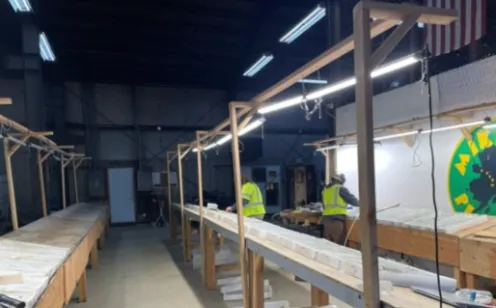
44:08 We think from here, so we've looked, we've done, we've consolidated the land. We own the land now. We own it 100 percent. It's ours. Patented mining claims. Surrounded by state cut mining claims. We have a facility we call the outpost. It's right across from Lucky Shot, looks right over at it. We've got our core shack there. We've got our bunks there, so we can help people.
44:33 And we're gonna have the resource update and the feasibility study done by the end of the year. This is a real project. And so we've been planning for success, kind of quietly just chewing away at it. If you have the opportunity to buy out more royalties in the district, you might do that. But that's because we have, I think, really good confidence that this is actually going to be a little mine producing 50,000oz, 40,000oz, 50,000oz of gold a year for an additional $40,000, $50,000,000 of investment But if you need to produce 50,000 ounces of gold for with a 2000 dollar margin That's 100 million dollars of additional free cash flow And when you say when you look at the fact that we only have 33 million shares outstanding, that's a lot of cash flow per share.
45:22 That's the metric I think shareholders should be thinking about when they want leverage to gold. How much exposure to free cash flow am I getting to gold, per ounce of gold?
45:36 And that's where Lucky Shot I think will surprise the market because it's just such a robust little project. But again, when you take that 50,000 ounces of annual production over the 33 million shares we have, it's going to be a lot of cashflow. And speaking of cashflow, I'm jumping into questions from email, a lot of which we've covered already today, but somebody wanted to know what is current or most recently announced guidance for Moncho production and ASIC in the year of 2027? 2027 we don't have yet. And we were actually just talking with Ken Ross yesterday actually, And we'll probably, we'll typically get next year's plan. That's usually the last joint venture meeting of the year, usually in early December.
46:26 So sometime after that, we'll be able to give guidance for next year. Perfect, Thank you. Barry from the chat asked, almost right at the beginning of the webinar, David Larimer, he started, so he used your full Christian name, so I'm going to take this question seriously. Sounds like my mom in Hawaii, and I'm in trouble.
46:42 David Larimer, he just wants to know how many ounces you think Lucky Shot contains at this time? A lot. I mean, I flirt the line. I definitely think the project's there. I'm not going to put a number on there. I think our target, we've talked our target, we've given guidance, you know, we're targeting 400,000 to 500,000 ounces, you know, into the resource in this drill campaign. I'd love to give a number out there as an economic geologist. I got a number in my back pocket, but I wouldn't be comfortable. And it just wouldn't be prudent for me to say that. However, you can quantify what we're looking at. You know, we talked about the guidance is 400,500,000 ounces. That's what we're targeting Coleman Lucky Shot. Then you look at the larger picture of what's there. Then you look at the larger district, things start to add up. And unfortunately, sorry, Barry, that's about as comfortable as I'm comfortable saying right now. I know, your name's at the bottom of the press releases. I get it. Wes
47:40 asks, and this is probably someone familiar with your business model for other projects, is Lucky Shot on native corporation land? I think it might be a good opportunity to talk about the type of land and the permitting set up at Lucky Shot. Sure. So again, Lucky Shot was in production from 1928 to 1942, produced 40 million ounces. They patented the land. That was something that was very common back in that day. So it's federal land that has been privatized through the 1872 mining law. So it's private, patented land. And so It's an irregular, because what they used to do is, they mine, they put the claims on the veins, and so it's a bit of an irregular
48:25 box around, that's patented land, and then that's surrounded by state land, state owned land. So that's the land status. We have mining claims on a very large block of state land. So there's no Alaska Native Corporation lands in the area.
48:45 And most importantly, there's no federal lands. Yeah, sure. Great, thank you. Ellis asked, have you used AI at this point to enhance the DSO model or impact it in any way at this juncture so far?
49:00 I'll kind of take a stab. We love flirting with AI. To me, AI from a technical aspect has several aspects. In previous projects, we used AI and that predictive analysis piece going forward, looking at random force, random learning algorithms of, hey, what are we not seeing through our data sets? Again, those are big data sets.
49:23 With respect to the rest of the AI, your chat GPTs and all that stuff, we haven't really totally incorporated in that in there. To me right now, this is a drill fight. You know, we want to drill. It's, I don't want to say it's simple because as a geologist, I don't ever say that, but it's simple enough where you can see the quartz vein, you know where to sample, get the assay, put it into the model. I do think as technology comes, there's some optimization potential out there with AI, especially when we start getting into engineering, resource reserve conversion. These are the things I'm looking at trying to do some resource in the future is how do we optimize that brainpower? Additionally, looking at your geostatistics, for me, the other great aspects of AI is going to be this large computational potential. When you start looking at a resource, I mean, most of your resources are a single measurement. You know, you hit F1, you got the best one to do it. There's a large component of looking at conditional simulations going forward, being able to bring in probability analysis. We're going to need AI for to get in there. When we do the resource, I can take it to Rick and not only say, hey, we calculated 400,000 ounces, but I can say, hey, we calculated 400,000 ounces. We did this simulation 100,000 times. I can give you an 80 percent probability of this is what's here.
50:33 To me, this is where AI needs to lead into the technology aspect of the geology in there. Not to sidestep the question, but I get kind of excited about this aspect as well, of what we can do with this. At the end of the day, this is risk management. We want what's there, we want to manage those risks and adjudicate those risks. And I think AI will have a large component on the technical side. And I think potentially, looking at the operation side going forward, optimizing production going forward. Great. The other part that, What I like about AI is it works when you have a lot of data. We're at the point where we're still gathering a lot of data. The other thing that's nice is, we talked about the offset on the campaign on the east side, so it's down there somewhere. It's just not a priority now to drill, but it will be.
51:21 Well, again, AI is going to remember that. And if Dave and I get hit by a bus tomorrow, AI is going to remember that that thing is down there. Yeah. Helpful. I know in researching for this webinar, I was talking to Claude and I started by saying I'm not a geologist and he just said, I know, period.
51:38 It's growing a personality, which I don't appreciate necessarily. One question from Bert, this is for you, Rick, and it's come up a couple of times over the years. I want to know if Contango is considering dividends in the future, if that's on your mind.
51:52 Short answer is not any time in the near future. We've got a lot of dollars to spend to invest and build our resource base and reserves and develop the mines. Our five-year plan is to grow from our current 50,000oz to 60,000oz of production out of Moncho, 60,000oz average, and then up to 200,000oz of Gold and 5Moz of Silver with Johnson Tracking Kitsal getting into production. And obviously Lucky Shot as well.
52:29 That's the focus right now. And if we can achieve that objective, that's a time when you're producing $1,000 oz of Gold, $5M oz of Silver, and you've got a $25-$50 margin on your Silver and the $2,000 margin on your Gold oz. That's the time to be thinking about a dividend or a share buy. Both of those are options. I appreciate it. Johnny's got an interesting question that I'll conclude with today or give everybody a chance to ask a last one while I ask it. Chyron in the chat asks, in the past Contango has mentioned wanting to consolidate districts, like around Dollyvard. So he wants to know in broad strokes, how do you think about this happening in the next couple of years? Geography, stage of asset, timing, et cetera. So How are you thinking about consolidation of districts, Rick?
53:18 I'd say we have the Daly-Barden District consolidated.
53:23 There's some internal blocks, I think, on the last webinar, someone asked about the priority and some of these internal blocks that are with the crowd grants and things like that inside of our Kitsault Valley holding. We have the ground there that we prioritize. There are other prospects that are on these crowd grants within our Dolly Varden planning block. We've looked at them, they're not a high priority right now. So, and I think they represent 10% of sort of different little blocks here and there. There's no big land positions within our land position. That's a priority for us to acquire at this point.
54:11 We own most of the land. We own 90% of the land at Lucky Shot. We own 10% outright. That's patented land that's owned by the tribe. Johnson Tract is patented land owned by Alaskanita corporation. It's in pieces. It gets all over time. We've still got 5 kilometers of exploration upside between the Dolly Varden and Silver Ridge part of the district and the home state part of the district that are way harder to get any more. So we've got plenty of places to drill to keep Dave out of trouble
54:59 in 4 districts. That's enough work to keep Dave off those mean streets for a couple of years. I think that's all that really matters. Just Dave. Yeah. But... It's good to get some sleep. Yeah. Yeah. Forget that. You can sleep better. Yeah. Dave Rick, thanks so much for getting real technical with me today. This was a really exciting release. I'm glad you're able to join for some extra context. I know there were tons of people in the room. Thanks for your questions. Thanks for sitting through some nerdy content. I hope it was interesting, but you can hit that meeting request button at the bottom of the screen if you would like to meet with the team. So please do let me know. I'm eager to get you connected with them after today's event. This was Rick and Dave Contango Silver and Gold. Thank you so much for joining us. Have a good morning guys.