Automated transcript · Written by software from the replay's audio. It can mishear names and figures; the replay is the record.
0:00 As folks are filtering into the room quite quickly, I will say good morning, good afternoon, or good evening, depending on where in the world you're signing in from today. I've got with me also in Beaver Creek, Colorado, Rick Van Noon, as a CEO of Contango Silver and Gold, Sean Kunken, the company's president, and on site, Dave Larimer, the company's rock star and VP Exploration, to run through the very exciting mineral resource estimate at the Kitsault Valley Project in British Columbia. Gentlemen, how's everything going? Yeah, it's great. You know, Beaver Creek this time of year is always beautiful, fall colors, nice, fresh air. Not a better place to be and everybody's excited. Awesome. No, glad to hear it. Here's how today's going to work, just for the folks in the room. We're going to do some really quick housekeeping, then we'll get into the protein fast, I promise. I'm going to ask the gentleman here some questions just based on the press release. But this is an open forum. Please do use the chat button at the bottom of the screen. I know several of you have already sent questions in over email, we'll get to those once I'm done prepared questions. But then I'll try to get to as many as I can in the chat.
0:56 Get them in early and I'll likely get to them, but if for whatever reason I can't get to your question, I'll make sure the Contango Silver and Gold team gets them and is able to get back to you quickly using either your phone number or email found at registration. The only other thing I'll say is this event is being recorded and will be available for replay in the late afternoon Eastern time. It'll pop right in your inbox. It'll also be available on Six's YouTube channel. Okay, let's get to the good stuff. I was very excited to read this press release. Rick, I'm going to start with you and then Sean, I want to kind of hear your perspective. The headline number, obviously a very exciting 93% increase in indicated resources to just shy of 90 million ounces Silver equivalent. So before we get into how you got there, which I do want to do, give us a big picture. What does this estimate tell investors about what Contango actually owns in the Golden Triangle right now?
1:42 A lot of Silver. When we combined companies, we actually got booted out of the Zilch and we were not happy about that. So this is kind of a statement piece that says, hey guys, this is the largest Silver resource in Canada. Don't forget about us. It's high-grade Silver. It's close to 10oz, it's over 10oz of Silver equivalent per ton. That equivalent is made up of Gold. It's only 10% of the equivalent number is made up of base metals. This is a precious metals, Silver biased, big high-grade Silver deposit. So it's like, hey, we're coming. We're coming back on the subject. Exciting. Sean, I'll throw it to you, obviously. You're very, very familiar with the project. From your perspective on this, Murray.
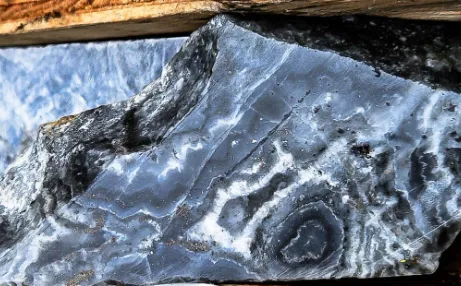
2:32 Yes. Look, The project is located in what they call the Golden Triangle. There's been a lot of Silver discovered up in the Golden Triangle. There's been a lot of Silver produced up in the Golden Triangle. And so, we've identified the largest silver resource in Canada, primary silver. Romeo, you highlighted the big increase in the indicated category and you expressed a silver equivalent. If we just look at the Silver resource, we're talking 83Moz of high-grade primary 300g per tonne Silver and 1Moz of Gold. What this gives Contango is it gives us a high degree of confidence in a very, very unique, globally unique project.
3:24 And again, and one thing I want to highlight here is we've got one of the largest land packages in that golden triangle. And this resource only represents maybe 3% of that entire land package. These deposits are open. They've really, except for 1 exception, have not been drilled to a greater depth than 300 vertical metres. So we're open at depth, we're open to long strike, and the company this year, in 2026, is in the midst of a 53,000m drill program that has not been incorporated into this estimate, but will be incorporated into the next one. And the last thing I'll say is when a company puts out a resource estimate, you've got to look at the data.
4:11 This resource estimate is built on almost 500,000 metres of drilling and almost 2000 drill holes. So the amount of confidence we have in this resource is very high. I appreciate that very much. And thanks both of you giving your perspectives. But Dave, with respect to Sean and Rick, you are the star of today's show to some degree. You're the guy who signed off on these numbers. So I'd love to start with the language in the MRE. Indicated versus inferred, obviously we talk about a lot on these kind of calls. In plain English, and keeping in mind, as far as I know, Rick is threatening to cut you off if you get too technical. What does it mean that 90 million ounces now sit in the indicated category? Yeah, yeah. Plain English, you know, The difference is basically indicated and inferred. It's just a level of confidence that you have in that estimate. If you start on the lower side, the inferred resource is supported by drilling, geologic evidence, but the drill space is generally a little wider. There's a little more uncertainty in that continuity, but that's how you build these things up. You believe the mineralization is there, but additional drilling is needed to tighten that geology and the continuity through that. You take that to the next higher category, that indicated resource category. It has closer spacing, stronger geologic support, and it gives you greater confidence that the amount, the grade, the shape and the continuity of that mineralization is there.
5:28 Additionally, it's that indicated category is considered reliable enough just to start your meaningful engineering and economic evaluations at this level, which we're moving forward to in the initial assessment. So when you look at that 90 million silver equivalent ounces in that indicated category, that's a large portion of the project that is now defined at that higher level, that technical competence that we have. It gives you a strong foundation of evaluating that future potential mining approaches, processing options, and those different deposits on how they start to fit together in the development plan. I will have to say at the end of the day, this is a mineral resource. I got to throw on my QP hat. This is not a reserve. It doesn't demonstrate economic viability, but it is significant improvements, you know, at this scale in confidence of the resource.
6:16 It can help us maneuver into the next phase of the project. Without getting too much more technical, I'll kind of leave it there, but I could dive all day if we want on geostatistics and math on this, but I'll leave it there for any follow up questions on it. I might have to do a separate section with just you, me and the nerds in the audience for one of those. But I do have one question because a couple of Sharpe investors did ask over email. Inferred ounces did come down about 25% from the 2023 numbers. Walk us through why a smaller inferred inventory coming out of this remodel is a sign the estimate got better, not that the ounces went somewhere? Absolutely fair question. That's an important question. I would caveat that by saying the first thing that I think is important is the objective of any mineral resource estimate is not to maximize your number of ounces, but it's to produce the most accurate, defensible representation of that mineralization supported by the available drilling.
7:09 A lot of available drilling that went into this. And the significant part of this reduction of the inferred ounces reflects a successful conversion from the inferred into the indicated category. Looking at that indicated Silver equivalents, we increased that by approximately 43Moz, while the inferred decreased by 22Moz. Again, it's not a one-for-one conversion, but the overall movement into that larger, higher confidence resource is an extreme success for us. We also looked at the remodel. And when we talk about the data, the amount of data that went into this, we were able to apply tighter geologic controls, better data, better understanding of the geology that's sitting in that mineralized bodies. And we've rebuilt these mineralized domains and all the data that supports it behind it. In some areas, this brought the mineralization into the better defined shapes. And in other areas, this material that was previously extrapolated from the less drilling was a little too broad and it was no longer supported in this estimate.
8:11 So the ounces didn't simply disappear. Some of them moved to that higher confidence indicated category while others were refined, removed from the reported inventory, because the new model is what we consider more disciplined. And this is what a good mineral resource model does in an update. It should reflect the data that supports it. And then rather than just preserving ounces and throwing everything in there, it maintains that disciplined approach of what's there. Awesome, appreciate it. One thing I wanted to ask, I'll address, I guess I'll call the elephant in the room, perhaps not an African elephant, but a modest size Thai elephant, which is the timing of this MRA being released. I know I'd rather we discuss it here than have it take off in the comment section. The update landed a few months later than originally guided. Just curious, Rick, throw it to you first, just from your perspective, what happened there?
9:02 I'll let Dave expand on this, but there are 2 components to completing a mineral resource assessment. Getting all the data corralled. And I think that was a bigger job than we anticipated because there are 9 individual deposits and they were in an older resource that was in older software. To transform that into a modern leapfrog system took longer than expected. That's 1 element. And then the other element is just, we're at the mercy of our QPs and our other outside experts, and they're busy. And there's a lot of money being thrown at the exploration business in general.
9:49 And that just, having to rely on third party, you have to work at their time schedule. So those are the 2 components that I think led to the longer time. And Dave can probably give some of the nitty-gritty. Yeah, you have to dive in on the technical side. It's not just an exercise. It's just adding new drill holes, hitting F1 that I call it, and letting the model cycle through there You know we look at most mineral resource updates that are out there As Rick kind of said they involve maybe 1 or 2 deposits. This one was an 8 deposit upload, each with its own kind of unique geology mineralization, you know, down in there and historical data and modeling requirements. We updated the detailed geology, the interpretations. We also migrated this into leapfrog, kind of the more modern technical aspects that we'll talk about. All the mineralization domains were put in there, inputs into the resource, estimate estimates, but the largest timing factor that contributed to this, what was our specialist contractor? We needed to be able to set up the deposits and set up everything just right so we could factor in the data into it. And it was just getting the base data set up was very time consuming. The guy was busy.
11:02 It's busy out there. However, at the end of the day, the benefit for this now for us is that we have this modern integrated geological resource model that really is designed for efficiency in the future. As I've talked about it in some of our other webinars, you know, we're looking at the technology and how we bring our data in and get to this near time solution. Now that we have our model set up in our databases set up, so we can run these models, we get this almost near time resolution. This drilling comes in, factors into the logging, gets populated into our database, and that gets pushed into our modeling stuff. So we can take a quicker look of what each drill hole is doing to that resource, almost in a near time basis going forward, which ultimately will help guide our drilling as we go.
11:51 At the end of the day, you know, with this next resource update, we'll still have to go through the formal resource and review, you know, the validation and the QP review of this. But this gives us a closer dedicated, near time resolution on what the models, how the models are behaving while we're drilling. So I'm extremely excited about that. And while the update took a little longer, the work has left us in such a strong position on a technical foundation, that will be more efficient in the future. And these resource updates will be able to flow a lot smoother in the future. No, appreciate that. Both of you, just some extra context is helpful. Sean, I wanna throw it to you for a bit, because I know you spent the better part of a decade building Dolly Varden around this district before combining with Contango. Now you've got a good view at the first full remodel of the combined asset. Does this estimate meet the expectations you had when you agreed to put these companies together?
12:45 It does and again you've heard Dave on the call and Rick, and this is exactly what the Kitsault Valley needed. It needed to be in the hands of a team that was looking to develop the project. And I think as we look ahead at 2027, in addition to another estimate, we're looking ahead at an economic study. We're looking at road improvements and we're looking to get the project back into production. This was a DSO mine. It was a very famous mine. Canada's third largest primary Silver mine. Not only are the metal prices at a point where I think it's going to be very economic to move the project back into production, but we now have enough size and scale.
13:34 And this has been a process that started initially with the consolidation of the district, bringing the homestake project into the Kitsil Valley and then consolidating the heckle land package that added 60,000 hectares of ground to giving us 100,000 hectares. And so we've successfully consolidated everything from just south of Red Mountain down to Alice Arm. And yeah, and then again, going back to your question around the merger, that's the cashflow. So in addition to the technical expertise and the leadership here, technically, having that cashflow to fund those road improvements and to move the project back into production.
14:23 Awesome. One thing I wanted to note, and note as much as I ask you a question, Sean, is the Asset was run at $53 Silver And the metal is obviously spent most, if not all, of the year trading well above that, including today. So high-grade primary Silver districts, for people in the audience, are genuinely very rare animals. This is a very unusual thing to take place. So from where you sit, what is this Silver market we're seeing now, and in my opinion, likely to see continue in the future due to the strategic value of an asset like Kitsil. Yeah, I think Rick said it earlier in his opening remarks about the company being pushed out of the CLJ. The last couple of news articles that have come out of Contango have been coming out of Kitsilk Valley. The big drill results, which we had a 10,000gm interval, 165g of Silver over 55m.
15:19 Those draw results in addition to this mineral resource estimate is highlighting the Silver in the business. And again, for investors, There are 10 primary Silver producers to choose from. And if you go through the list, some of those companies only derive, you know, 28% of their revenue from Silver. So as we look into the future, as we look out, you know, 3-4 years And as we look to be a 5 million ounce per annum Silver producer, if we take Romeo $50 and if we assume, maybe our costs are going to be somewhere around $20 an ounce, that's $30 million of free cash flow for every 1Moz we produce. If you want to take spot Silver or you take where Silver was trading in Q1, that's a very, very robust project. And then what's complemented here is our ambitions for 200,000oz of Gold production to complement the 5Moz of Silver. It's a very, very robust business.
16:21 And again, we're not dressing up a Zinc mine or a Lead mine with 30% Silver credits here. 90% of the economics in the Kitsil Valley are precious metals. And within those precious metals, it's about 60-40 Silver to Gold. Katanga really is kind of leveraged in every direction for a Silver and Gold bug, which I am 1, as a degenerate myself. One thing I want to talk to Dave, and Sean already referenced this, but the part that jumped out at me reading the release is none of the 2026 drilling, 50,000 metres of it, is in these numbers at all. So I guess my question is for people reading this MRA, what is this year's program been targeting and where could it move the needle when it rolls into the 27 update that we're expecting?
17:10 Yep, absolutely. It is an important point to look at. So we have to have a cutoff date when you do a mineral resource estimates. We had that cutoff date early in the year. That's the data you use. You process that and that's what gets our mineral resource estimate. The 2026 program, you know, that 50,000m in excess, obviously is not included in this, but the program focused on infill drilling to tighten up areas that we can kind of see through the MRE, but you can see before that, step out drilling around the known deposits and testing several early stage targets through there. We look at some of our press releases that we've had already this year at Torbert, Northstar, The drilling has confirmed mineralization and some gaps between the 2 deposits. At Wolf, we tested the extensions of known mineralization, some of the deeper parts, plucks and pulls in the middle of Wolf, but also it's that newly recognized Torbett style mineralization that we've highlighted in that 4070 zone in previous press releases.
18:07 At home stake, Maine, at home stake, Silver, the focus was really on that Gold-rich centres of some of those, getting pull out some of the Gold-rich centres on that area. When we combine all this together, the 2026 drilling broadly, we start to view the Daly-Barden Southern area as more of an integrated mineralized complex. Instead of individual deposits, we're now pushing that drilling to show a little more of the continuity that geology structures through there. And looking at this area as more of a complex than individual deposits that are sitting there. And this 2026 drilling should really help us better understand how these systems relate together and ultimately how we need to evaluate these in the future going forward. Additionally, we've overlaying a little additional geomedical work on here. We want to better understand the mineralization styles, potential processing characteristics through each of these.
18:59 But together, the drilling, the geologic model in this network is going to allow us to tighten up our resource models, which again, we have a great foundation for this. We'll be able to spin this around quickly in the next update and then tie into our future studies going forward of how we want to maneuver these as a complex and deposits going forward. Awesome. Thanks, Dave. Appreciate that. I want to talk to Sean and Rick, you guys for a second about community relations. Sean, I'll start with you. I know this project sits on Nisga'a treaty lands. The first modern treaty, as I understand it, in British Columbia. I know Dolly Varden worked alongside the nation for years, obviously, before the combination of the companies. How does that relationship shape the way Kitsault advances from here? Yeah, I was really blessed.
19:44 At Dolly, we had directors and consultants that had strong ties to the community over generations, multiple generations. I was welcomed with really warm and greeting hands from the Nishika. And that's not really unique because both Nishika and Talltan have about a 100-year history with mining companies. Rick can speak to his experience in the district that goes back 20-years as well. But how my relationship evolved and really, the relationship that the Kitsil Valley project has with Nishka is just a trusted partnership. We are part of an alliance called the BC Regional Mining Alliance, where I'm a director of the organization. So that's a partnership with government. It's a partnership with Nishka. It's a partnership with companies like Contango.
20:42 And we work together to inform each other as we're progressing. We really actually, the organization was started to promote that BC is open for business. Mining is such a big part of the province. So that relationship for me has evolved. And whether it's private businesses that I've helped Nishka residents to start, like Phil Clayton with Savage Pads or companies like Nations Royalty. So that's created Canada's largest Indigenous public company. So the relationship is strong. They are supportive from the community level, grassroots community level to the executive. So very, very strong. And look, the Nishikata are doing really big things in the province with LNG, with ports and mining has been a rich part of their history.
21:36 I appreciate that, Sean and Rick. As Sean intimated, you obviously have a lot of experience working in the region and with indigenous groups generally. So curious to hear your perspective as well. I mean, To me, it's all about what mining gives back to the communities is good paying jobs. Not just jobs, but jobs and training and opportunities to take those skill sets, frankly, anywhere in the world. I remember in Alaska, we had one of our projects, I started out as a driller's helper, became a driller, and then he gave me a call from Chile, and he was just having a ball working in Chile. And he's gonna come back home, but, so it's, the jobs are, they're good paying jobs, they're local jobs.
22:24 People who live in Vancouver, Toronto, and in the cities don't really understand that the rural communities need jobs. Not everybody's going to come to Vancouver and Toronto. So that's something that I think in the BC context that's important for people to understand. On the flip side, the First Nations, in the case of the Anishinaabe and the Tualatin, they have their businesses. And so it's not hard for us to engage those businesses. They work hard, they know the terrain, they know the climate, It's their home. So they're not somebody from the South who comes up and goes, oh shit, it's cold up here. Yeah, I'm kidding.
23:11 No, I appreciate that. It's good to know that the communities have obviously a very, very long history with mining. Rick, I wanted to talk about building. What comes next? I know the Valley has, obviously, as we've talked about today, various times, mining history, including direct shipping ore operations. There's also road and power in the region already. But generally, if you could sum it up, what's there today and what are you planning to upgrade as part of this project? Yes. It's going to start with incorporating the 50,000m of drilling that we did this year into the MRE. As Dave explained, we've got the model set up now, so it will go a lot faster. And I'm going to hold him to this by the way, we're all on camera here, I got witnesses. So we'll get the MRE out, and then that's going to form the basis to complete an initial assessment or Canadian parts, the preliminary economic assessment, PEA.
24:03 That's going to give us a guide to how we're thinking about developing this district. We know there's 2 centers of gravity of the district, the silver rich part of the district, which is Torbrett, Northstar, Dolly Varden, Wolfang, Starting to see that connectivity between Torbrett and Northstar. That's important from a mining standpoint because rather than having 2 tunnels, I can have one. And now this 470 zone, which is kind of starting to connect Wolf with the other centre of gravity here at Torbrett and Northstar, that really makes the whole thing come together. So that's what's going to be incorporated into the initial assessment. That'll be later in 2027. And then obviously fitting the homestead part of the district into that as well, which is, you know, it's 5 kilometers north, it's separate. By the way, we haven't really drilled a lot between the 2 systems.
24:56 So I'm pretty sure it's not dead there, but you know, more work to do there. But so it's an exciting step wise. So what we will do is it'll give analysts and investors a metric of saying, here's what we think the value of this thing. We're just going to have an NTP and an IRR. And with this DSO model, we think it's going to look really, really good. So that starts to form what the future looks like. And it's a de-risking exercise in getting us to demonstrate to the market that, okay, we're at 60,000oz of production on a Moncho, but we're going to get to 200,000oz of Gold and 5Moz of Silver. Here's the path. And this is the Kitsault portion of the path. No, I think that's great. Thank you. And certainly excited to see what is between the zones. So looking forward to more information there.
25:46 But this leads into a question every underground Silver story gets eventually. I've had 3 texts about it since this event started. Not lying. It's already in the comments. It's been emailed in. People want to talk about the mill. So Rick, to the best of your ability, where's the mill? Yeah. So, I mean, we've said this before, we're working on a number of opportunities. We're not ready to talk about them yet. We're under confidentiality agreements, so we can't really talk about them. But I'm confident we're going to find the right solution for processing both Kitsil and Johnson track. And one of those solutions might be permitting sort of building our own mill on an already permitted site. So those are all things that we're looking at. We're not afraid of building something. We just don't want to spend 10-years permitting it.
26:35 That's the criteria. We can custom build a facility that works for all the things that we need it to do, so long as we don't need to spend 10-years permitting it. That's the important part of the criteria in what we're looking at these different options of evaluating. Avoiding a decade is always nice in mining. So we've already gone over the schedule, but I think it's good to reiterate just once for folks in the room. It's always good to say this kind of thing twice. The release lays out the two-stage roadmap, the initial assessment targeted for the first half of 27, then that multi-year push that you talked about towards pre-fees. But for investors in the room trying to actually mark their calendars, and I'm sure some of them do, I know I do, what does the path from today's estimate to an actual mining study look like? As far as dates are in your head right now?
27:23 I'd say first half of the year, we'll have the resource, the updated, a new updated MRE. And then we'll initiate the study, initial assessment study, and that'll be completed before the end of the year. That's our objective. Great, appreciate it. If you'll both indulge me, this is Sean and Rick. Dave, I got some questions for you from the chat. I'd like to crystal ballgaze for a moment. So please, please do indulge with me. The release uses the phrase, one of the premier primary silver mines in the golden triangle. Obviously impressive claim for a neighborhood with some pretty big names. I would love if you could paint a picture for us. If this plan works exactly as all of us in this room intend. What is Kitsil Valley 5 years from now? So looking pretty far into the future. What is Kitsil Valley 5 years into the future?
28:12 It's a district that is producing the 5 million ounces of silver, 1 million, excuse me, 100,000 ounces of Gold. But I think the key here is the ongoing exploration. That gap between Homestake Silver and Wolf is about 5km. There is a periodicity within, you know, Rick, this is a comment, you know, we met around this time last year as we were thinking about putting the businesses together And you said something to me that really stuck. I was focused on the periodicity of our distinct district, right along our 15km trend. That periodicity is playing out on a much bigger scale, as you pointed out a year ago.
29:01 So the point here is there's been 150Moz of Gold and 1.2Boz of Silver discovered outside of our property. We're in the southern end of that belt that's underexplored. And so when I look out 5-years, we have restored the district to where it was in the 1940s, where for a decade long, this was Canada's third largest primary Silver mine. I think it'll be number 1 in the country for primary Silver mines. You'll have the Gold, but what really excites me is I'd love to see a lot of exploration drill rigs, simultaneously out there drilling out this district, continuing to feed it.
29:47 Awesome. And Rick, I'll throw it to you for the same crystal ball gazer of a question. 5 years is the goal? In 5 years, I think we'll be thinking about producing 10Moz of Silver. And I think we'll be successful in exploring this part of the property. And this is still a very small part of the whole property, but just that 5km between Wolf and Homestake Silver, That's where we're going to focus a lot of it. But we keep going out and finding new things with the exploration team that's out on the ground, just reconnaissance work on a very large property. I don't know what we're going to find over there, but that's gravy. We've got a lot of information in this structural corridor between Homestake and Dolly Varden, and we call it Dolly Varden area and the Homestake area. So just to distinguish the 2, But we'll have the road infrastructure completed by then.
30:51 We'll have selected the mill site and it'll be built and operating. And it's gonna be set up to handle all the different types of ore that we're seeing. There's a variety of them, but they're all going to require flotation and cyanidation. So that's what we envision building and having available, not just for the things we have at Kitsil, but Johnson Track as well. And then that's the point I was going to make, Romeo, that represents 25% of the company. That represents one of a total of 4 districts. Everything we just pointed out there should justify our current valuation. You should really multiply that by 4 to incorporate Johnson Trap, Lucky Shot, and all the other ground that we have, including Moncho and many other districts that some of which we don't focus on and talk about because we're focused and we've been disciplined on how we're moving our portfolio forward.
31:52 I appreciate it very much. And thank you for letting me run through my questions. I'm going to do a combination of the live chat and then the email, because a lot of questions came in, some of which we've covered. But if you feel I haven't gotten to it by the end of today's event, please do harass me in the comments. I'll try to get as many as I can. First one I'll throw to Dave. Actually, it's from Eric in the chat. He wants to know what areas were targeted for 2026 drilling and wants to know how many meters per area, if you've got napkin math. Yep, off the top of my head, I'd have to look. There'll be a press release that divides up the meters by area, but I can tell you, we basically targeted all of our prime areas in 2026. I mean, everywhere in the Dolly Varden region south, looking at all the little gaps, holes in there, where we could update the model seen through everywhere between Torbett North Star Wolf at 4070 area. All those were targeted again even in the northern region in the home state step offs and home state Maine trying to connect some of the geologic gaps in there, and also tested some areas in between there. They were all tested this year.
32:52 Awesome, making a wide spread and a wide net to hit it hard. And the team's doing awesome out there. I mean, I'm just so phenomenally impressed with the executing team out there, our geologists, the drillers out there, you know, execute this long safely with that production is just phenomenal. Yeah, I just point out we had planned to drill 40,000 metres ago, and these guys have done such an awesome job that we're getting probably close to over 53,000 metres ago. That's impressive. And we've done it safely and we've done it under budget. You don't often see a 25% better than expected for drilling numbers. So I can focus on the audience. That's rarer than you might think. One thing I wanted to throw to you, Rick, There are a couple of questions about this and understanding you personally don't have the ability to open the Strait of Hormuz yourself as much as I'm sure you'd like to. How is diesel price affecting silver and gold operations for Contango? And how long do you personally see diesel price up and rising for?
33:44 Yeah, it's a great question. And it's very on point. I mean, clearly if we're using a DSO model and so transportation is a significant part of that solution. I'll say for Moncho, we used 100 dollar barrel based oil diesel price for pricing. So today we haven't really seen anything different from what was incorporated into the feasibility in terms of costs. Now I'll say we are seeing a significant between this year and earlier this year, we're seeing diesel prices at the pump are $6.50 or so in Fairbanks. I think we're going to see a creep upwards in our transportation costs significantly. And On the flip side, as a DLSO mine, we don't have a lot of costs of diesel uses at the mine site because we're not running big power plants.
34:39 We're using red power at Fort Knox. So that's a bit of the offset. Each of these projects is going to be a little different. So if we look at Johnson track, sorry, if you look at Lexi shot, for example, goes to Fort Knox, it goes on the train. So that's a diesel based fuel. So it's going to be a little more expensive, but the train is, you know, a third of the cost of trucking. So I think we're still, we're going to see cost creep. There's no question about that. I don't see that situation straightening itself out anytime soon. So I think we'll just incorporate that into our guidance going forward. And, but I don't think it's going to be a dramatic increase in our overall and all in sustaining costs.
35:27 Great, appreciate it. 1 just comment that came in over email during the event from somebody who says they've been heavily invested for 2 years. Just says, you guys check all the boxes. Good luck, but I don't think you'll need it. I thought that was cute, so I'll throw that out there. One person wants to know, yeah. One person wants to know, we've touched on this, but just put it to you plainly. When do you think the road will be completed from Alice Arman closer to drill sites? So that's something we've actually permitted this year. I think there's still permitting aspects of it, but we expect to have the permitting done in time to start building that road. It goes all the way up to Wolf. There's some gnarly parts of it, but that's something we'll get built, was substantially built next year. And what does that mean? Just to be clear on that, to support exploration, we're not looking to build it to support mining operations yet, but that will be a future expansion.
36:21 Rich, I appreciate it. Richard from the chat wants to know, did you acquire all the underlying Crown grants on the Kitsault property? No, there's other bits and pieces throughout the Kitsault property. I think Sean consolidated the best parts. And I think there are other things that are down the road, might be interesting to come by, but it's about valuation. And for us, we've got a lot on our plate. We're plenty busy doing what we're doing. We've got great ground. We want to stay focused. I think Sean mentioned that earlier. Part of the reason we were able to get 3,000m of drilling out of a 40,000m program is because we stay focused and we're going to keep that strategy.
37:07 Great. I've got 2 questions that are a little off topic, but still on Contango's projects. One person wants to know what's up next at Lucky Shot? Should people mark in their calendars for that project? Dave can never get away from doing MREs. That's what's next up for Lucky Shot. We're still drilling, so there's still a lot of drilling to do. I think we'll be drilling probably through February-ish, something like that. And then it's up to the labs, a couple of months for the labs to get the assays back. So I'd say I would like to say first quarter, but it's probably more like the first half, but not late in the first half. I'm hoping we get all the assays back.
37:53 And as Dave explained, we have the models all set up, so it is just kind of dropping the new drill holes with assays and adjusting the geology with the new information. And then with that information, then we're going to do a feasibility study. And I'll say it's a DSO feasibility. I refer to it as feasibility light because it's a mine plan, a transportation plan, which is Sean says often, it's just putting rocks in a box and putting them, you know, hauling them to Fort Knox, I think that was the moniker. So that's not challenging. And then working out a deal with Fort Knox. And they're eager to receive this. They have a big mill, a big hungry mill. We have high-grade.
38:40 So high-grade always displaces low-grade. So that's a next year, the initial assessment will be completed by the end of the year. That's our objective. But again, that's a Feasibility Study. I misspoke there. That's a Feasibility Study. And then we just start putting the development work in place. So that'll be a 2028 timeline. And now we can start shipping ore. It will be a ramp up because the development work will take time to get all the underground development work in place. But certainly by the end of 2028, we should be in production and I'd say 2029 will be a full year of production. And we're targeting 40 to 50,000 ounces of annual production. We're targeting for the MRE, 400 to 500,000 ounces of resource.
39:26 And then with our feasibility study, we'll subset, and These are approximate numbers and they're definitely forward-looking statements. 250,000 ounces out of the 400,000oz or 500,000oz, that will be reserve. That will be well enough to find, measured, indicated to demonstrate reserve quality. And then every year we keep changing some of that resource into reserve, more drilling, more dense drilling, moving along. But then you've got a 5-year rolling mine plan that's producing 50,000oz of Gold a year. And I think over US$100M of free cash flow at today's Gold prices. Perfect. And speaking of of production and cashflow, somebody wanted to know projected cashflow for Moncho in 2027. So 2027 is the banner year.
40:16 We always said in the mine plan, 26 was going to be lean, fewer ounces and at higher cost. We're doing a lot of stripping as we transition from now to North Pit to this main pit or South Pit. So 27, We're guiding towards 75,000oz to 80,000oz of production. This is our share of production. And cash costs, the Kinross guidance is currently $1,300, but as we were talking about diesel prices and things like that, we're going to probably guide more to like a US$1,500-US$1,600 level. As we get more information, we'll provide more guidance clarity on that. But from where we're sitting right now, that's kind of where we're seeing the cash costs. And so today's Gold price and we're on hedge now. So, you know, the hedge demon's gone.
41:09 And so all that goes to our bottom line to advance all of our other products. So that should be in the neighbourhood of today's Gold price in the neighbourhood of $200M of free cashflow. Awesome. And I personally tend to believe that next year we'll see friendlier gold prices, but that's up to everybody viewing to decide. Dave, I got a question for you from the chat, back to Kitsalt. Bruce wants to know, what's the Tellurium, one of my favorite rare metals content of the deposit. Oh, yes. Tellurium is one of my favorite ones. It's pretty low when you look at it with respect to a deposit scale. I mean, we look at just about every element. You know, not only at Dolly Garden, Homestake, Johnson, Lucky Shot, we look at them all. We have 118 elements out there on the periodic table. And I might nerd out here slightly because I'm a geochemical super wizard and I really like this stuff. But out of those, you know, we generally do that 40 element, you know, package of it all. So we're really casting that net out there and really trying to find those elements that fit in the deposit that potentially could be economic.
42:06 And I'll say that while they look initially pretty low right now on a deposit scale, part of our next steps, those geomedical tests, geometallurgical tests that we're going to be doing is going to be about speciation. Are there some elements out there that could be concentrated and be economic? Those will be part of our studies going forward. So I would say, hey, let's ask this question again in a year, and I'll have a better understanding of what's it at right now. Appreciate it. And Dave, I'll go to you next. This is to sort of wrap up. So this is an opportunity for everybody to give their last questions in the comments. I think I've covered everything through both my questioners, but please let me know if I haven't. I do wanna close on Kitsville, cause I know the hundreds of people in the room here today, for many of them it's their favorite project in the Contango suite. What are you most excited about for the Valley for the rest of this year?
42:58 For me for this year, I wanna see the rest of those drill results. I wanna see the data come in, I wanna put them in this model, I wanna show that the work that we did, the team on the ground, being able to do that 50,000 meters drilling, getting put in there, all the support asset pulling together to get dumped into this model that we have put all this hard work into, which we had lost some sleep over, but that's good. I wanna be able to show what this is going forward, once we get all this data going forward. That's what I'm most excited about in the next couple of months. Awesome, appreciate it. And Rick and Sean, I know Dave is an impossible act to follow, but I'll give you guys the same question. What are you most excited about for the end of the year at the Valley? Whoever would like to start. Sorry, let me just say the last part of the question, this is the last sentence. Just what are you most excited about in Kitsap Valley for the rest of the year?
43:44 Well, for me, It goes beyond the Kitsap Valley. I'm sorry, I know the viewers may be tuning in for Kitsap Valley, but again, I look at this from an investor standpoint. We're here, we're calling in from Beaver Creek. We've got probably 60 meetings in the books here, another 40 down at Denver. We're meeting with 100 people on books and probably 100 more in all the other events. And when I think about these 200 people that we're sitting in front of and the 2000 choices they have when it comes to companies in Australia, all throughout the world in the mining space, look, from our share structure to our cash flow to our pipeline to our people, it's a must-own stock. Think about the valuation.
44:30 I think about the banner year in 2027. I think about the surface results we got from Lucky Shot, the ongoing underground drilling, the fact that for US$50M of investment, we can start generating US$100M a year. What other mining company can do that? So you think of all this and then you think about this is a business that every year has been going out and making a major M&A transaction to continue to grow. So that's what excites me. That's what gets me fired up. We've got lots of catalysts and really from what the company was a year ago to what it is today, it's totally dynamically different. No hedges, 2 tier 1 assets, big cash flow.
45:20 And I agree with you, Romeo, we've gone through a nine-month correction. I think the lows are in and now is the time to pay some serious attention. I tend to agree. Rick, I'll give you the last word. Go for it. What are you most excited about? I think I'm really excited about Lucky Shot because it's the most advanced of our projects. We're underground, we're drilling, we can put our hand on the vein. We can see visible Gold and we're getting assays back that are monster assays. 10oz of Silver is really nice, but 10oz of Gold is a lot nicer. It's a good little deposit. It's not big, it's not flashy, but it's going to make a lot of money. And I think we can get it there quickly.
46:09 It's about execution. This year was about execution. We've executed. We've done more than we said we were going to get done with less and we spent on budget. So I'm really pleased about that. That just demonstrate that this team can work, work together and get set its objectives and get them accomplished. And I think we'll demonstrate that at Lucky Shot, getting it to a production decision by the end of next year. Awesome. I'll conclude with one last comment from the chat. It says, Sean, you picked a great team to go forward. So I'll leave you on that note. I will say for folks who aren't at Beaver Creek, this is a very busy one. So I'll let the boys get back to their trillion and a half meetings over the next day and a half. Gentlemen, have a great end of your day. Dave, thanks so much for joining us from Sites. Thank you to everybody who joined in the chat. If you do have extra questions, I'll make sure the team get back to you. Really appreciate your time today. Take care.