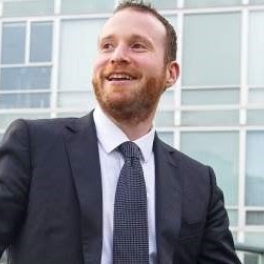
Andrew Pollard
President & CEO at Blackrock Silver Corp
Replay available
Join us for a great event!

Automated transcript · Written by software from the replay's audio. It can mishear names and figures; the replay is the record.
0:08 Hi, everyone. Jeff Clark here at GoldSilver.com and welcome to the Super Silver podcast that I am hosting with 3 great companies. I am invested in all these companies. I asked these gentlemen to join me here in this podcast. This should be very informative and hopefully very helpful if you're an investor or thinking of becoming an investor in these companies. So These are speculative picks. As many of you know, I like to invest a little bit further down the food chain into junior explorers, and that's what these guys are. We have these 3 because I think they hold very high promise. So Just real quick, an outline of what we're going to do. I'm going to talk about the silver market in general first, then the silver equities market.
0:53 Then these guys are going to weigh in on that. Then we're going to go to all 3 companies and have them present just a brief summation of their companies and what's happening right now and what we can expect. And then we'll do some Q&A as well if we have time. You'll see on the right, I believe it's on your right, you'll be able to submit some questions that you have and we'll try to get to as many of those as we can. I can't promise you we'll get to all of them, but we'll try to get to as many as we can. This should be fun and informative, so let's kick it off here. First, let's make some introductions.
1:29 We have the 3 super sober picks here. So first is BlackRockSober and that's Andrew Pollard, the CEO there. I think our names there but Andrew Waife so everybody knows who you are. Thank you very much Jeff, great to be here. I feel super today, best part of your super sober past. Very good.
1:50 Galen McNamara here. Wave your hand there. CEO of Summa Silver. Hi, everyone. Thanks for having me on again, Jeff. It's good to see you. Yeah, absolutely. And Morgan Lextrom of Silver Hammer. Welcome, Morgan. Thanks for joining us. Thanks for having me on with these other 2 fine young gentlemen here. And hopefully you can't hear all the hail in the background. No, very good. Just a couple quick disclosures. I do own stock in all these companies. I'm actually overweight all these companies. So full disclosure there. I'm not being paid to do this podcast. I was asked by some people to host this because they know I like all 3 of these companies.
2:34 I have been to all properties. I know these gentlemen. I've talked to them. I've interviewed them. I've been to the properties, their main properties anyway. We've written up the stories of each of these in the publication Silver Chartist. So those of you who are members, you've seen that. If you're not a member, you can go to silverchartistadvisor.com
2:57 and you can see the full comprehensive write ups on these companies covers maybe even more than we're going to go over today, complete with photos, analysis, recommendations and everything. So you can check out that link if you want to do that. So here we are, this is our super silver basket, black rock, silver, assume a silver and Silver Hammer. And if I can click to my next slide, let's go over the silver market just briefly. What's the backdrop of the silver market right now? Those of you who follow me at GoldSilver.com, you've seen me publish this table before. I updated this last week, and this shows you just how dramatically undervalued the silver price is relative to almost any other asset out there.
3:43 This would be the gain if it matched the gain of each of those assets since all of their peaks in 1980. You can see what the silver price would be there. In the majority of cases, it would be in triple digits. In some cases, it would be even higher than that. Only crude oil you see there and sugar would be lower. And then the bottom 3, that's what the price would be for silver if it matched the S&P 500, if it matched the Dow, and if it matched real estate values. In almost any scenario, the silver price would be much, much higher. What that means for us is, of course, we have quite an opportunity in the silver market right now. And then as far as the industrial demand, I think a lot of people know this, but industrial demand is only going 1 direction and that is up. A lot of this is with the green technology and that sort of thing that's happening right now.
4:43 And just as one example here, you can see that electric vehicles use about two thirds more silver than an ICE vehicle, an internal combustion engine vehicle. So if we're going to go green, you are by default going to go silver, right? Because more silver is required for green technologies than other technologies. You can see there the growth in hybrid and EV vehicles, the automotive demand only going up. And of course, solar uses a lot of silver. You can look at the comparison there on the chart on the right. In 2010, you only had a few countries using solar. And then in 2020, look at the explosion in the number of countries that are using solar. Solar is here to stay. It's only going to continue to grow. And of course, solar uses silver. It's that reflective ability that makes it what it is.
5:45 And then we have to talk about mine production. Here's an interesting chart that shows silver mine production overall, globally, is down since its peak in 2015. You can see how far it's fallen. So yes, in the COVID year 2020, it was lower, but so it'll probably be a little higher when the 2021 numbers come out. But you can see the downtrend is very clear. And this includes silver as a byproduct. 70% of silver comes as a byproduct. And you can see that mine production is clearly going down. So all of these things are impacting the silver market and that's a backdrop of what we have right now. And then when we start talking about the mining stocks, This is the barrens to gold ratio. I don't have one for silver because the silver market is so small, right? But the valuation would be even lower if it was compared to silver. So you can see that mining stocks as a whole are deeply undervalued relative to the
6:50 underlying metal. And again, that valuation would be even lower if we were looking at just silver. So there's a lot of opportunity in the silver market and the silver equities market right now. And that's one reason I think we can be excited about the potential for these 3 companies. So before we jump into them, guys, do you have some comments about this? I've talked to each of you about this. You had some very insightful things to say. So Andrew, what's your reaction to where we are with the silver market and equities market right now? Well, I mean silver is very unique in the in the sense that it's both a currency and inflation hedge But it also has practical applications and and speaking on the supply side I mean not only You know is everyone in a kid worried about inflation right now everyone feels it at the pump and feels it every time they go to the gas station.
7:40 And just keeping your money in a bank earning nothing and having it
7:47 devalued to kingdom come by the looks of it right now is drawing a lot of new investors into the silver space. And then, as you said, you've got the industrial application of it. And I mean, silver is behind the electrification of the world economy. I mean, you can't have handhelds without it. You can't have electric cars without it. Certainly if you're pushing towards the decarbonization
8:09 side of things, the solar panels, that that demand is only going to intensify too. And, you know, there's very few true companies out there that are truly silver primary companies. I mean, most of the silver produced globally is produced as a byproduct of base metals mines, meaning those companies can't really scale up to meet that demand. It's just, you know, they might be able to realize some benefits if the prices go up a little, but they're not gonna be able to come online or offline based off running silver prices. And I think that's what makes this panel that you've set up today very compelling is that the 3 stories here are actually silver primary stories
8:45 and in good jurisdictions at that. So I think the backdrop is as exciting as I've ever seen since I started investing in these companies probably in 05, 06, 07, and really getting my appetite wet for silver specifically. But yeah, we're staring down the barrel of massive inflation and just an increasing
9:04 user demand on that. That I think silver can only go really one way from here. You know, great matters and jurisdictions matter. And I think we all 3 stories have that in spades. Yes, very good. Galen, what do you think of the where we stand in the silver market right now, the silver equities market? Yeah, yeah. Well, you know, Andrew, those are really good comments. And Jeff, I really like how you painted the picture of, you know, increasing demand, you know, whether it's new ESG demand, it's inflationary demand, or it's a war in Europe
9:37 against really decreasing supply where we're seeing supply drop off. I mean, 12% in what, 5 years? That's pretty significant when you really think about it. And we all know, I know we all know, and I'm a geologist. I've been doing this for a long time, is that it's really hard to find silver deposits and it's getting harder and harder and harder the more that get found. You know, I think if you look at discovery rates, they've plummeted since the year 2000 And that's for silver and gold. So that's kind of 1 point I'll make. The other point I'll make is the silver gold ratio, where today it's something like the price ratio, where today it's something like 80 to 1. I think a couple of years ago it even touched 125 to 1, which is probably the most, Certainly in the last 30 or 40 years But I mean you look at how it occurs in the ground and how its mind.
10:25 It's something like between 7 to 8 to 1 So say it's 8 to 1. Well, if you just kind of just think about that and you balance, okay, 80 to 1 in price and 8 to 1 production are in the ground, like something's got to give there. Right? I mean, for me, that's like perfect storm for for precious metals, but especially for silver.
10:47 Yeah, perfect storm. That's a good way to put it. So Morgan, what do you think? You've made some good comments here about silver and the silver equities market. So what's your take here where we are? Yeah, I mean, everyone, Andrea And Galen have definitely had some very valid points there. I guess my side is more on the macro. When you look at the destabilization or the deglobalization of the world as we've tried to globalize it, you're put in a position where not only are you bound to look more in-country, but you're seeing things like what Mexico is doing by nationalizing lithium. You know, don't think that's far off from nationalizing other mines. I've worked in these mining jurisdictions all over the world, where some of them do have nationalized assets. And what that will do, not only compounding what's happening right now and what each one of these members have mentioned, what that will do is that will create a rush and that will create a rush to secure pure silver plays. And as they mentioned, there's not a lot of them out there. So, you know, all 3 of us on this are pure silver looking plays. So when you take that thought of nationalizing in other countries, less silver plays in the world and being byproducts, then you look at in-country demand and then you couple that all with how that gets controlled into a market.
12:08 It's a pure upside to me. Silver being, again, this is the first time in history where it is not just a hedge. It's not just used for silverware and jewelry and all the fun stuff. It's actually utilized. 50% of its use is in industrial application and that's increasing. By 2030, it's significantly higher and we're in a decreasing silver production market. So, supply-demand economics 101, the price will increase And as the world destabilizes in the macro sense, and you see these countries shift, I think you're going to see the price of silver gain on that price of gold into more similar to what Galen was saying, that's 7 to 8 to 1. But it's kind of who's best guess, but I mean that when you look at the economic side, that seems to make sense.
12:55 Yes. Good, good point, Morgan. Thank you. All right, let's get into these companies specifically. So why are these 3 companies
13:06 in the super silver basket? What makes them potentially super? Well, first of all, they meet the 3 legs of the stool, right? The people. So in every single case here, there are experienced, successful geologists and executives that are behind these companies and running them. Second of all, like a couple of them have pointed out, these are in pro-mining jurisdictions. They're all in Nevada and Idaho. So this is a very pro-mining jurisdiction. We think that's gonna get increasingly important as this bull market goes on. And of course, they're all highly prospective properties. In almost all cases here, these are brownfields projects, means they're looking at old workings or on old trends or where there's been old mines before where there is known silver here.
13:53 That's where all of these guys are looking. So, so they've made the 3 legs of the stool. And Plus, like they pointed out, they would all be primary silver deposits. Now they don't have resources yet. They're still exploring, but we do know that these are primary silver projects. And you can see in that chart on the right there that only 5 major silver producers currently get over 50% of their revenue from silver. So if these guys are successful, they would be on the left side of that table, and that's going to be very important going forward, we think.
14:33 The biggest catalyst of all, with all these guys is going to be discovery potential. Yes, they'll all rise if the silver price goes up and other catalysts that could push them higher. But the bottom line, the reason we're speculating in these companies, the reason I own them, is because I think they have a very good shot at making a true bonafide, mineable economic discovery. That's what we're really betting on here. That's the speculation. That's the investment. So the question, of course, is, will they?
15:04 So let's find out. So Andrew at BlackRockSilver. So give us a real quick rundown of the company. And if you don't mind, Andrew, I want to put you on the spot. I want you to tell me about your background first, and the geologist there, probably Bill, right? That's working on the project and the success that he's had, and then tell us about the projects themselves. So take it away, Andrew. For sure, no, I'm happy to go into detail on, I guess, my background coming into this. So, you know, when I was 20 years old, I was sort of thrown into the boardrooms of many mining companies. I ran a company called the Mining Recruitment Group, which was a specialist mining recruitment firm focused on building executive teams for mining companies.
15:50 And I guess at that time I had one thing going for me, and that was that I looked a lot older than I was. So I was able to get some really good mandates, a network with the who's who in mining. And over a period of about 15 years, I was sort of behind the scenes and in the boardrooms helping companies turn around if they were either pre IPO companies looking to hit the market with a solid board, whether they were going from exploration to development to needing mine engineering and into production. I'd help make sure the right people were behind the right projects. I was cooking along one of the top firms that specialized in mining up until a few years ago. A few years ago, I made an investment into a company called BlackRock Gold. It's the largest investment I'd made.
16:38 And the headhunter got burned because I was so myopic about the project that BlackRock had gotten their hands on at the time. I was called the Silver Cloud Project up in Northern Nevada, that I wasn't really looking too much at
16:50 the people and ended up having a lot of egg on my face there as it turned out to really be what a lot of these Vancouver junior mining companies can turn out to be. And they're lifestyle companies, management with no skin in the game, you know, and happy to spend shareholder money on everything except actually adding value at the project level. So in 2018, I made an investment into them. A lot of my clients made investments too. They said, Andrew, I've never seen you so excited about something, you know, I'll write a check too. So they did. They followed me in there. Some of my family members followed me in there too. And about a year later, the company was, you know, wasn't circling the gutter. It was halfway down the drain. The day I stepped in, it was 3 cents and $1.2 million market cap. And what I saw was people issues, not project issues.
17:39 And I just sort of said, okay, well, I'm not gonna go down without a fight here. So, I effectively read the right act to the board at the time. They said, if you can do a better job, then do it. It's your problem now. And I just started, the headhunter came in and opened up his little black book. And the week after that, I added Bill Howell as our executive chairman. That was a pretty good acquisition for us because Bill previously was head of exploration for a little company called Placer Dome, up until they were taken out by Barrick in 2005 for over $10Bn. Bill and I went about reconstituting the board. I joined in May of 2019 at $0.03. Bill joined at $0.10. We kept building the board. By the end of summer, we were $0.30 without drilling a single drill hole or spending much in the way of marketing at all.
18:31 Fast forward, our new team generated what's become our flagship asset about a year after. And that's our Tonopah West Silver project that has now taken the Silver world by storm. We picked that up 2-years ago. We've since drilled about 120,000m and we're going to be coming out with our maiden resource estimate.
18:56 It's imminent at this point. We're expecting it any day now from our independent consultants here. It's been truly a whirlwind story, from $1M to roughly $200M market cap. We think we've got our hands on what could be the next big economic discovery in the silver space. Yeah, that's great. So the resource estimate is coming out imminently, right? It's going to be real soon. It was our expectation that we were going to have it next week, and everything was going to fall into place and then it's our expectation that we'll get it any day. It's what we understand is it's in the final phases of review with our consulting company and we've you know we didn't hire you know just any Tom, Dick or Harry off the street to do this. We hired MDA who are one of the most renowned,
19:51 I guess, consulting firms in Nevada, very conservative firm, very rigorous firm. And we told them to look at this and whatever we get, we want it to be absolutely bulletproof in the eyes of the market. I'm not so concerned about timelines or arbitrary days. They've got all the data. They're left to do it. There's many layers of consultants that go into this. This is an underground vein system, so the layers of modeling from grade shells to stope optimization and all the layers of principles and all that sort of thing. It's like the layers of an onion almost. From what I'm seeing there, it should be any day now. In the interim,
20:37 we're not sitting around just waiting for that. We're fully financed. We've got 2 drills turning at the project right now. We're testing some very exciting blue sky targets. As the resource is going to backstop evaluation with ounces in the ground, the drill bit is really outsourcing new potential deposits and new potential discoveries in what is a very geologically exciting area. So yeah, it's a, yeah, sort of very interesting time to be a shareholder here and we're really looking forward to getting this out. Great. Okay. Andrew, last question. 10 seconds. Build or sell? Well I think what we've got is so unique within the silver exploration universe. I mean, if you follow what's happening in Mexico and Peru and Argentina, yada, yada, yada, there's just no other deposits like this. And those companies, silver primary companies need this. We're going to keep advancing the project methodically as if we're going to build it. But I think what we have is so unique that, you know, I'm not expecting 1 buyer, I'm expecting multiple bidders needing our ounces. So we'll see what happens.
21:43 But right now we're just keeping focused on adding value by the drill bit.
21:47 Gotcha, good. Okay, good, thank you, Andrew. And right next door to Black Rock's property is Summa Silver and I've been to both of those. Galen, similar geology. You're a geologist, you've looked at this, so tell us about the project and real quick, give us your background too and what success you've already had. Sure, sure. Thanks, Jeff. Yeah, so to start with myself, hi everyone. I'm Galen, if you haven't met me before. I'm a geologist going back about 15 or so years, a little bit more. We founded SUMA in right around May of 2020.
22:26 But before that, between 2014 and 2018, I was managing the drilling for NextGen Energy. And we of course made some very large uranium discoveries in Saskatchewan and some very large drill programs too. And that's more or less been, before starting Summa, that's been my specialty is drilling out these deposits and not to pat myself on the shoulder, but making discoveries. And typically my background has been in gold and silver. That's certainly where my passion is. I don't really know how I ended up in uranium, but I did for 4 years. It's nice to be back looking for precious metals, that's for sure. So that's myself, but you know a couple other people on the team are VPSX, Chris York. He joined us from a major a little over a year ago. You know, Nevada, underground operational geologist that concentrates and it really has experience both in the mine site, the grassroots, but also in the brownfields type settings of really executing exploration programs.
23:25 And of course, those guys are on to something. They are now, I think, at where they're drilling, the company that he left, but he has a very deep history of, again, discovery. And then there's someone here that works with me in Vancouver, like Chris Leslie, senior geo, one of the guys that discovered the Blackwater gold deposit here in BC, and that's something like 8 million ounces in the reserve categories right now. And then the last guy I'll mention is Garrett Ainsworth. We work together very closely at NextGen. And he's made some prolific uranium discoveries, you know, going back 10 plus years. So, you know, to sum that all up, and again, not to pat ourselves on the back, but to sum that all up, we're really a team of mid-career guys, people, who have had a lot of success in the discovery space and are now really hungry to do it again. You find that once this discovery thing, once you get a little bit of success for it, it never leaves you.
24:22 It stays with you forever.
24:24 So that's myself. The company is Summa Silver. Like you mentioned, Jeff, Andrew's working over there on the western half of the Tonopah district and we're working in the eastern half of the Tonopah district. The property boundary kind of goes right through the middle of town more or less you know between west and between. Yeah we were out there weeks ago and you actually saw it and you're saying there hey is the geology similar? Well it's identical you know like the veins are on the property boundary. There's different veins on, you know, on Blackrock and different veins on Summa. But there are veins that do cross the property boundary that both of us have drilled.
25:02 And I think it's one of these places where I spent 2 years looking for projects. Between 2018 and 2020, I didn't really need a day job. We were in the desert in Precious Metals at that time. So really, really took my time and looked for something. And the eastern half of the Tonopah district is the 1st Thing I really got really excited about And I remember you know, it's it's kind of funny. I remember going down there and and I always like these these old districts that really had a lot of past production. I always like the Southwestern US, Nevada specifically. Every year it's either 1, 2, or 3 in the rankings by the Fraser Institute. Every year. You go back into these places and you find that when you do the historic legwork and put everything together in 3D, you find that there's always targets left, especially in places that are as prolific as Tonopah.
25:56 And you find that in our case, between us and Blackrock, before us, no one had done that work before. And all of the data was available and in the Nevada Bureau of Mines and it all been scanned. So there was a treasure trove there for free that we could use and build out targets, which is really the first thing we did. And then from there for us since 2020, we've been drilling targets over a strike length of 3.5 kilometres, 4 targets. And all 4 targets we've hit high grades over 1000 grams per tonne, including in the heart of the district, where right around some of the old lines, you know, we're hitting, you know, I think our highlight hole is 4,400 grams per tonne over three-ish meters, and with a high-grade sub-interval in there of almost 12,000 grams per tonne silver equivalent over about a metre. Obviously still juice left to squeeze here, a significant amount, and now we've got to figure out what could be left. At the same time on this project, there's an exploration story here away from the district that's also very compelling in that when I first went down there to Tonopah, my first trip, I started doing some of their claim research and seeing, hey, like, where's open ground around here? And it became pretty obvious that, you know, right along strike from the district was fully open. You know, so, so, you know, I was out there staking as many claims as I could right away. And we're still continuing to add claims where we see opportunity.
27:17 And what we found with our exploration and some of the exploration drill holes is that 1.3 kilometres east of the district,
27:25 on a wildcat step out, we've hit grades that 500 grams per tonne over 2 metres, but a lot of sniffs and a lot of veining and a lot of really strong alteration. So it's like, we found the extension of the district, we found where those veins continue, we found the hydrothermal alteration, which is like the needle, or sorry, the haystack. And now we just need to look for the needle where these veins blow out and get to be, you know, 10 to 15 meters wide, because in the heart of the district where they, where they really mined, you
27:56 know, that's what happened, you know, and we're talking grades like 1000, 1500, 2000 grams per ton reported at wits like that. So, you know, that's the other part of the story, I think for both of us in Tonopah is that, you know, there is an exploration story or 1 drill hole could change anything. Yeah, you could say that for every, you know, every exploration program, but we're both drilling immediately along strike from one of the best silver districts in the continental US. So, I mean, for me, that's the type of thing that gets me excited.
28:26 That's what we've been concentrating on. So the Tonopah project, what we call Hughes, That's the eastern half of the Tonopah district. That's what we've been drilling here for the last 2 years. But we also recently started drilling a different project in New Mexico called Mugillon. And this one, again, it's very, very similar flavor. Historic district, the largest
28:47 historically producing silver district in New Mexico, shut down in 1942 because that's when the US went into World War II, so that's when it all shut down there. But you know, so we've drilled 6 holes there so far and have assay results out for 4 of them. In the first hole we drilled intersected a vein that was you know over 50 meters of drilled length. You know it's one of the biggest veins I've ever seen. You know the highlight hole there just to highlight 1 intersection they all hit 450
29:15 grams per tonne silver equivalent over 11 meters. And you know, the couple holes that are pending from a visual standpoint, one of them looks much better than anything we've drilled so far. And I can say that, you know, and just looking at the core, we've got all of the core floors on our website. Anyone can go and check them out and they can have their own opinion, but that's mine. So that's- Galen,
29:37 you're actually drilling more at Mogollon this year than up at Tonopah, is that right?
29:42 Yeah, that's the plan. We've drilled about 25,000 meters in Tonopah up to this year. We're going to plan 10,000 meters there, give or take this year, this calendar year. But now it's really time for Maguillon to play a little catch up. So there's about 25,000 meters planned there this year as we really aggressively try to drill out zones on both projects at a spacing that, you know, I think would support a resource.
30:10 Okay. So Galen, here's your challenge question. So you're a geologist, so hitting some high grades there, in some cases bonanza grades, but admittedly the veins are narrow and they're kind of spaced out. And that's kind of what we've seen at BlackRock as well. So if an investor is hesitated on BlackRock or SUMA, it's usually because thin veins spaced out. So what is your geologist
30:37 take on that point? Yeah, well, there's a couple of things that I would note there. I think the first is, you know, we've all got highlight holes that you'll see in a headline that have the width that you want to see. But when you start looking deeper into the press release, you'll see they start to get narrow. Okay, well, that's fine. Let's compare that to other minds or say let's compare it to companies that are much further advanced than we are. And so if you look at like, just to use a great example, because they've been so successful. Like if you look at a silver crest drill results, press release, you'll see there's those highlight holes there that we all look at and go, wow. But you'll also see that there's a lot of stuff that's a meter of 500, a meter of 1,000, which is very much like what we're drilling in Tonopah.
31:24 And the thing is, when you get grades that are in the thousands and thousands and thousands per ton, well, you can afford to, in an underground mining situation, you can afford to dilute those grades a little bit and still hopefully make some money. Now, we're a little bit
31:40 far away to start talking about mine economics for us, but there's peers out there that are doing it with similar drill results, similar widths that look really good. Yeah, I think, you know, to put in perspective, you know, Silvercrest is a great analog because like in Tonopah, they're about 80 to 1 silver to gold ratio, whereas in Tonopah, we're about 100 to 1, but it's just silver and gold. And I believe at Las Chispas, they average around a metre and a half to 2 metres thick. You know, that's one of the reasons why we're going through so aggressively to backstop revaluation with
32:15 this initial maiden resource is because these have to be reasonably economic ounces. That's what an underground maiden resource is. So you have to establish a continuity. They have to be modeled over reasonable widths, you know, mineable widths. And you have to show that these things connect up because if you have a high grade section over here and a high grade section over here, and you've got all of this sub economic core that doesn't tie together, you're not getting those ounces. So that's one of the reasons why we're going through this exercise to show to the market that we know historically this is a massive mining district. They made lots of money before silver prices absolutely tanked. There's no reason to think that with current mechanized mining methods and all of that sort of good stuff that there isn't more juice left to squeeze, as Galen says. And that's what we're going to be putting out to market is something that an independent party can say, okay, here you go. You've established a continuity, you've established that the veins are of mineable wits. Now, how much do we have
33:14 here and what's the upside? So we're very excited to have this all wrapped up with a little pretty bow. And I think that is the next sort of step, because that's what corporates want to see as well. We could go out and just drill flashy intercepts for years and years of this is a lifestyle company. This isn't a lifestyle company. This is something we want to show that we can develop the project methodically. We can grow it, that it's going to be real and that this could be the next big Mecca for silver producers, silver miners, because
33:45 the rest of the world where silver is produced is getting more unhospitable by the day. So private land in Nevada is looking pretty good, especially with highway US 95 crossing it. Yes, right. Galen, last question, build or sell? That's a good one, right? That's an early question for you, but 10 seconds, go over it now. Okay, well that's a classic CEO question there when you've got something good on your hands. And you know, I'm going to be a little less specific and I'll say, you know what, just like Andrew said, hey, you know, it's like we're on a freeway And we're always pushing towards the next corner. But sometimes off ramps might present themselves. And at that point, you think about taking it. Really, though, for us, it's a decision we make on an ongoing basis. And whatever's in the best interest of the shareholders is what we'll do.
34:34 Great. Good. Okay. On to Morgan. Silverhammer here. So Morgan, I was out of those properties last summer in Idaho and I love that it's a beautiful country. Got to get to know all of you a little bit and see the property. So, tell us about Silverstream. I think that's your flagship, right? And then tell us about the properties in Nevada. But first, tell us about you. Your successful background, Morgan. Yeah, thanks, Jeff. So, my background's quite a bit different than the other 2 gentlemen here. My background is actually mine building. I spent a lot of my time working in other parts of the world. I've worked for companies like Freeport, Macmoran at their massive project, Grasberg in Indonesia. I've worked with the Ola Togo complex in Mongolia, putting that, building that mine up for a number of years. Then I went over
35:25 to West Africa. I built a rehabilitated and built a gold mine there, an underground gold mine, very similar to what these gentlemen have, a 100-year-old mine. I've built a number of other projects, including metallurgical steel plants, port grain facilities, but my background really is that grab a bull by the horn and make it run, get going. And so when you ask me the builder sell question, it'll be pretty simple, but it's always in the best interest of the shareholders, but I'm a builder. Silver Hammer. We're a lot newer than the other 2 gentlemen here. We really only got going in late June when I joined the company last year. In 2021, we brought in our flagship Silver Strand asset.
36:11 Silver Strand was a past-producing Silver Goldmine high-grade in the Coeur d'Alene district in Idaho. It's in the same rivet formation as Lucky Friday, as Galena, as Sunshine, as these huge monster mines that are in that so-called Silver Valley,
36:26 or as it is actually named, the Silver Valley. We're on that same formation. We're on the same area. We're 40 minutes out of Corn Lane. This mine had only ever produced 90m vertically. So you walk into the underground at it, or the portal as we call it, and they mine up into the mountains. So it never mined down. We got the project, we consolidated a 5.5km land package, which had never been done before in that area, started doing exploration work on surface, started noticing high-grade Gold, up to 12g a tonne Gold, 255g a tonne Silver, all spread out along surface at 5.5km.
37:03 And then I got down to site about 2-weeks after starting and said, well, hold on, we have this beautiful existing underground. Why aren't we utilising this? Why are we going to wait to do all this permitting on surface when we have the ability to stick a drill in the underground, rehabilitate it and go. And we did that. So we, remember I joined in late June, we had a mining crew in there by late August. We rehabilitated the underground mine, drove a new underground drift. So drove a new area,
37:31 drilled and blasted and created a new drill bay to step out from what we were thinking was the existing ore body or potential ore body. We did that ahead of schedule on our budget and then we made a very good connection with a local drill company. They bought a drill for us. We stuck it underground. All before Christmas, we drilled 6 holes as quickly as we could before we got snowed in a bit. And then we had 6 holes of highly mineralised, great results. Remember, these are 15m or 14m below surface. We're hitting 8g a tonne Gold. We were hitting 392g
38:08 a tonne Silver. But what's key to remember about that is there was a mineralized zone of 15.5m with up to 1.32g a tonne Gold. When you look at that and you say, well, it's an existing underground, you're right. That gives us better access to do step-outs, to drill, to go down to depth. But the key here is that a lot of these mines or all of these mines in that district went down 1800 plus meters. This mine has only ever scratched the surface at 90 meters vertically. So we started testing below to test this theory that there's something down there and boy did we hit, We hit high grade right off the surface. But the really interesting thing is, in every one of these mines, in the Revet formation, that whole area, it gets richer as you go down. So not only do we have silver there, we have gold, which Lucky Friday back in the day actually had. They were the largest Gold producer in Idaho. A lot
39:02 of people didn't know that. So now we have the philosophy of building a mine, potentially exploring it and then potentially building it and mining through cold to get the high-grade Silver. That's pretty exciting, but not only do we have that one vein we're exploring, we have the potential for multiple Paraline veins on surface. We are going to prove that out this year. We have permits in place to drill. We have 7 pad locations permitted. We have our underground drilling program set up to start in May. So we're running full steam ahead.
39:33 But not only did we do that, in late September, we brought in 2 assets in Nevada, right near the East side. Mark, before you go to those, I want to interrupt you. So some of the silver companies, some of the NOC has been, they're not all profitable necessarily in Idaho. Can you speak to that? I mean, you're going to need to find high grade to go down and make this a profitable underground mine. Is that not a fair statement? Yeah, that is a fair statement. I think there's 2 things when you look at a mine. Obviously, resource is one of them. A lot of these companies really started with a small resource, right? Hecla, Coors, they got their start there. You look at how Barrick Gold started. They didn't start with 100Moz resource or 5Moz of Gold. They started with 1Moz or 2Oz of Gold and they expanded out from there or Silver, you know, 10 plus Silver.
40:21 Now, one of the key things to building a mine is you need a mill. You need a tailings dam. There is a mill fairly close by that did process the ore
40:29 from this mine before. Very, very good recoveries as well. They've made it very public. They're looking to sell this. So there's a lot of things that line up to put Silver Strand into production, but we would not want to put it into production on small scale. So yes, there's there's a lot of drilling to get down deeper. But there's also that on-surface potential, which gives us near-surface grade, which is a lot more economic than having to sink a shaft right away to get down. Gotcha. Okay. Sorry to interrupt you. Tell us about the Nevada properties now, because to me, those were just as exciting. Yeah, you know, so we had Silver Strand, I joined, really excited, we're pushing that ahead, and we had an opportunity to pick up 2 past producing silver mines as well in Nevada. And you know, if tone of pause any evidence of high-grade Silver, the Hamilton District was one of those as well. So this is called our Eliza Project.
41:25 Hamilton was the largest Silver rush from 1862 to 1868 to 1872, and it produced just about 40Moz of Silver in that time. That's 4-years. 10Moz average a year, hand to mouth. The grades coming out of that area were incredible. The California mine on our land claim package produced between 5,500 and 18,500g a tonne Silver equivalent. Now, we picked this pack, this Eliza up, started working on it, just do a little bit of work in late September. And not only did we notice we were getting high-grade Silver, you know, A lot of our samples were 500g-1,500g a tonne Silver, just chip samples on surface. But we also found we were getting multiple percentages of Copper, Lead, Zinc, but the Copper numbers were up to about 7%, 6.88% to be correct, not have a forward-looking statement.
42:20 Now we've got back down there. My geologist, Phil Mulholland, was just back on site last week. We're starting an extensive mapping sampling, grid sampling programme, geochemistry programme. We not only think that there's a lot of potential high-grade Silver left, like the gentleman here looking for Silver in Silver districts. This is another one of those untapped, hasn't been touched in 150-year Silver districts. We have the discovery potential there. We have some land there that we're able to use to drill as well. We're looking at that in short order. Then we picked up the Silverton projects, an hour 20 from Tonopah, and an hour 20 from northeast from Tonopah, past producing Silver mine, grades up to about 30oz or 933g a tonne Silver. But what we noticed about that area was they didn't follow the structure completely down, and Galen can correct my geological knowledge on this, but they didn't follow it down.
43:19 And Phil started walking the property. We found that it strikes all the way down underneath the young volcanics. So potentially it could be high-grade silver underneath there held in. But the other half of the property, we started walking and started sampling, and not only did we find Silver, we found Gold. We're like, well, that's really interesting. What does this look like? And I think the best analogue for it is Round Mountain, Ken Ross's 20Moz Round Mountain deposit, lower grade, 0.7g a tonne, Gold head grade, but we were getting anywhere from 0.02g to 0.6g a tonne on surface. Not only do we think there's Silver discovery potential there, the other half of the property is showing some interesting Gold potential. A little bit about our team, me being the mind builder, I'm looking at, okay, how do we accelerate things? How do we lock step? How do we schedule it?
44:09 How do we push forward? If you can see by anything we've done with this company over 8 months, we are on a trajectory that the Flash would have a hard time catching up with for all the nerds out there. And I really believe the people that we've added to this company are our big names. So we have we've added Ron Burke. Ron was the senior or the vice president of exploration for Centera. He was the vice president of exploration for Sinterra. He was the vice president of exploration for Silver Standard that is now SSR Mining, that massive silver company out there, and has been responsible for multiple high-grade and large discoveries in his life. And then we have Lawrence Ralston, another very experienced geologist in the neighborhood, as well as a very experienced CEO and chairman, as is the chairman of Metallic Royalties, and been CEO of multiple other successful companies.
45:00 When you start putting them together with people like myself, mine builders, you've got Phil Mulholland, who is our chief geologist, who's been in the Idaho, Nevada, Montana area for 35 plus years, not quite midlife like the rest of us, but he's still kind of midlife, if you met him. And he has that vast amount of knowledge about these geological structures. He's worked in the Revet formation. He's worked in Nevada. So now we couple that with capital markets experience with Jonas Lang on our board, who's executive VP of Maple Gold, which I believe you follow, Jeff. And Jonas has a capital markets background. We have advisors like Warwick Smith in the background from American Pacific. So not only do we have 3 potential, high potential projects, we have that 3-pronged approach of looking at the exploration, large exploration potential, the mine-building side, and the capital markets side.
45:51 That's great. That's great, Morgan. Okay, your challenge question. Some of your land is on forest land. So talk to us about permitting there, because that can be a little different than permitting on private land, right? Yeah, you know, absolutely. And that was one thing when I joined the company, I became very quickly aware of not having spent a lot of time on forest service land. So I acquainted myself very quickly with the Forest Service regs. One thing we noticed in there was they talk a lot about how you disturb the surface, what you do on the surface. What we do in Canada for drilling is we use these low-impact drilling methods. You want to drill in the Arctic, you want to drill in areas you have to be able to fly the drill in, stick it on a pad, keep everything off the ground and walk away and make it look like nothing's been there.
46:38 So I said, well, why don't, you know, there seems to be contractors that do something like this. Why don't we make it just like this, work with the Forest Service, fit it within their laws and approach them about it. And we did that. And we were very successful with the Forest Service. Normally it takes 1 and A01 to 2 years, let's say in the Forest Service department, you got to permit roads, you got to permit all this. We decided to use existing surface disturbance. We decided to use low-impact drilling method and we were permanent in 14 days. We now have 7 pads under that notice of intent process to utilise as we've done a test drill just to show them and check some structure, they were unable to find where we set the drill up. So, we're looking at that environmental side as well with our company. And that's how we're focusing on our Forest Service land in a unique way.
47:29 That's great. That's great. Okay. Let's get to some questions here. Morgan, since we're with you, here's 1. At the last report, you had about 1 million dollars in cash and working capital. How far will that take you? And what about a future financing coming up? That's always the question. Where's the money and what are you doing with it? So one of the unique things with having an existing underground is we don't have that overburden to drill through. So when we say we're going to drill, you know, a company says we're going to drill 10,000m, we can say we're going to drill 1,000m because we don't have to step out as far. We don't have to step out as far to get that angle. We don't have to drill through all that overburn. So 1 million dollars, yes, that we can do what we need to with our underground portion. Obviously, we're a junior mining company. At some point, we go to the market, but we do have that low-cost drilling method available to us to start in May and we're going to be looking to start that.
48:28 Okay, that's awesome. Great. And you're drilling all, you're not drilling all 3 projects this year, is that right? Well, you know, again, depends on what we find with our programs this spring. We are planning to look at what we're doing with all 3 of our projects this year. I mean, we want to make this the transformative year for Silverhammer. We want to drop the proverbial hammer. There you go, right. Okay, question for Andrew. Andrew, any further evidence of possible lithium in the Tonopah North expansion area there? Yeah, well, I mean, there's plenty of evidence of lithium up there because we're, the donut hole in the middle, I'm surrounded by a very, very large lithium clay project owned by a company called Lithium Americas.
49:17 And there's another company that also is just north of us called Cruise Battery Metals, I believe, which has gone on an explosive run this year. I think they're up like 9 or 10x because they've been drilling into the same formation that seems to run across our property, known as the Seabrook Formation. Not many, you know, everyone thinks of Tonopah because of the massive gold discoveries, sorry, silver and gold discoveries, and all of the activity around it with gold fields and the large open pit, bulk tonnage things. But 20 to 30 kilometers south of us is the Clayton Valley where you've got some absolutely massive lithium brine operations going. And It's amazing all the elements in that area.
50:08 We're drilling right there. I actually just updated our slide deck yesterday with some updated graphics to show where we're at in terms of our drilling up there. I think we're about halfway through that program and we'd be drilling that one target area right now. We've probably got a couple drill holes into it. Assay is pending but that should be pretty low-hanging fruit, I'm thinking, to encounter some lithium grade there. But ultimately that's the, you know, the drill bit's the ultimate truth machine. But we're in the right area and very, very similar, very similar geology to what we're seeing at this massive lithium project right next door. That's great. Galen, a couple of questions for you.
50:54 Well, can you speak to some general terms? Are assay lab turnaround times improving at all, or are they still lagging? How would you assess what assay lab results are, what the status is with those right now? You know, we all hear these horror stories, especially in Canada, about 6, 8 month turnaround times, but I can't speak for these guys, but for us in Nevada and New Mexico, we've been fine. We've been good even. Our last batch of assays that we released, I think I got some of those back in 2 weeks from the day they were delivered to the lab. For us, 4 to 6 weeks from the time the hole is drilled till they tell we get results. It's probably pretty normal Andrew and Morgan, can you guys just real quick comment on assay lab results and how quickly or not quickly they're coming back Yeah, we saw that, you know last year on this time. We were getting every 4 to 6 weeks.
51:49 You could generally expedite that too. Though things really started to slow down around end of summer, early fall, where the same 4 to 6 weeks turned into 8 to 12. I think right now, things that the logjams have been cleared out. But yeah, I think about 4 to 6 weeks is about average right now, based on recently. But when it slows down, it goes to a halt. It was pretty amazing for 3 or 4 months there. Yeah. What about you? Yeah, we have the same thing, Jeff, up in Idaho and in Nevada from our samples to our core results. Sometimes we can get them in 2 weeks. We've had that luck before. And often it's, you know, from whole or from sample, it's 4 to 6 weeks. And we haven't had too many delays there, but there have been some.
52:42 Yeah. It sounds like as an industry, we're starting to catch back up though. So that's good news. So Galen, back to you. Someone asking about the eagles in New Mexico. Is there an issue with eagles there? Or could there be... That's a good question. It's actually spotted owls. And what it is is, no one's ever really worked in this district for decades and decades. So there isn't that baseline data where, you know, species like an owl might be hanging out. So as part of our permit conditions, but more than that, because it's the right thing to do, we're conducting a survey now that's being conducted over about 60 days, after which we'll just get right back to work and keep going. Good, good to hear. Another question for Galen and Andrew, what about a merger? And boy, have I heard that question a lot of times. What about you 2 guys merging? So if I could characterize this accurately, you guys tell me if I'm right, but let's say, Suma's what, 6, 8, 10 months behind BlackRock, but in general, what about this idea of you guys merging?
53:49 Yeah, well, listen, you're seeing lots of activity in terms of M&A pickup, specifically in the Walker Lane District. I mean, Tonopah, its significance historically was that not only did it help revive Nevada at a time when two thirds of the population left, but it set off this big last frontier gold rush into Nevada in the lower half of the Walker Lane, like Goldfields and Bay Day, which we drove through. And both those 2 districts in just the past few months have been consolidated by major and mid-tier mining companies. And when you look at Tonopah, all roads literally lead to Tonopah. The highway that connects Vegas to Reno goes through the town of Tonopah. And the consolidation potential for the camp there is off the charts. If I'm a, you know, and it's not just silver companies. I mean, look at Kinross, as Morgan was saying, is just up the street from us too with Round Mountain. But, you know, You could turn a few screws there and all of a sudden have a tier 1 mining camp literally overnight.
54:52 The benefit of Galen and our projects is that they're contiguous. Our victor target, which will be included in our Maiden Reef is the extension or they have the extension with what they call their Murray target. And they're drilling it out too. So, you know, ultimately to develop something more is better, especially if it's the same veins that you're going to be looking to mine. So ultimately, you know, I think it's establishing value with the drill bit right now, which both of us are just putting our head down and earnestly doing, getting that drill spacing in there. Because it's hard to value any sort of transaction if you don't really have an idea of what's actually there, what's meaningful. And I think once we get there, maybe it's us that consolidate it, or maybe it's someone who buys either one of us and then gets the other half, and then maybe looks at buying one of the many other bulk tonnage projects that are like directly above our property, which are all shovel ready too.
55:47 Yeah, that's right. Galen, there's another company there nearby. There could be a giant silver camp here someday. Is that a- Yeah, well, there's actually, you know, 2 or 3 other companies nearby. If we look at Westfold, if we look at Allegiant, and maybe you want to even include Viva Gold. Plus whatever's not discovered because immediately surrounding the town is some very, very, very unexplored ground, you know? So there's probably more to find as well. And look, you know, Andrew put it in a great way. If you drive to Tonopah from Las Vegas, takes you about 3 hours, first town you pass through is Beatty, Nevada. That's the bullfrog district. That's where Corvus is getting taken out and the majors are all over it, right? Another historic district 100 years ago. The next town you drive through is Goldfield, you know, same type of thing. You know, something like 4 million ounces of past production 100 years ago, 100 plus years ago at grades of like an ounce per ton.
56:42 Well, Sentara just went in there and bought a very large gold deposit from Waterton. So they've got pretty much the whole district now. Well, I mean, the next one up the road is Tonopah and there isn't really any of that ilk of that size, you know, left. Right. So, you know, I think, you know, that's If I was a major, that would be pretty interesting. And really it's already true. Like you look at, you know, 1st Majestic are shareholders of both SUMA and BlackRock. Our other neighbor, Allegiant Gold, just got an investment from Kinross. So I mean, hey, behind the scenes, there's a lot going on and, you know, people are starting to really take notice. And just one more anecdote on that is that you know when I first started going to Tonopah I would go and sit in the old Nispa Hotel, the number 1 haunted hotel in America. If you're ever there I recommend it. And I went to anybody I know. I would sit there, I'd be a stranger to everyone.
57:33 Now when I go, guaranteed I'm going to see someone in that hotel having dinner or whatever that I know probably from Canada. Oh Yeah Yeah, the way I look at it is you know, you guys need it's still early stage You need to prove up some more resources first. And bottom line for me, 5X first, please, before there's any buyout or anything like that. Morgan, here's a question for you asking, what near surface level depths are we talking about? And do you also have to dig through some gold to reach the silver? I think he's referring to Silver Strand here. Yeah, yeah, of course. Well, actually kind of interesting on all 3 of our projects, but Silver Strand in itself, like I said, was mine 90m vertical.
58:20 Where you walk into the current underground is at what we consider the bottom of the shelf, the bottom of the valley there. We hit within 15m of surface. A lot of these outcrops that we're going to be drilling this year have grades on surface. We're hoping to hit right below surface. You never know until you test it with a drill bit, but the grades are there on surface. We hope they're there as they go down as well and that's the plan. The interesting thing about the other 2 projects as well is they've only gone down about 25m ever, maximum. It was more like 20m. Those were high-grade deposits at shallow depths. Yeah. Morgan, drilling at Silver Strand is coming up when?
59:06 We're looking at drilling in May. In May, that's what I thought. Okay, good. And then Galen, back to you. When might we see a resource? You know, for us, we're shooting for the next 12 months on both projects. And really, the drilling we're doing this year, you know, like you start by crawling when we did the targeting, then you walk when we've drilled these 2 projects now and have hit, you know, very significant mineralization on both. Now it's time to run. So really, we need to aggressively drill both of these projects this year to the tune of somewhere in the neighborhood of 35,000 meters between them, and something like 70 holes, all into zones of known high-grade mineralization, typically on a step-up basis. And, you know, we'll take it from there.
59:51 So timing is somewhere like 12 months. Gotcha. Great. That's great to hear. Hey, guys, it's already been almost an hour. So let's just wrap it up. So final 10-20 seconds of what you'd like to say about your company and what maybe the catalysts are for this year. So Andrew, kick us off there just real briefly. Yeah, well, listen, we're very catalyst rich, and it's looking like it's just the right time in terms of the backdrop for silver and gold. As I said, our main resource is expected imminently. It could be hours, could be a few days, but once we get it, we're not going to, they're so thorough that we'll just flip it right around. So shouldn't be much there in the way of delays. And we've got a whole bunch of step-out drilling assays, which we're waiting on. And these are big, big step-outs. And as we said, we're also testing these new claims to the North of ours, which could include silver, gold and lithium, the trifecta.
1:00:47 Yeah, awesome. Dylan? Yeah, well, first of all, thanks guys for having me on. Great to have a discussion with you. For us going forward, our motto this year is license to drill. In terms of catalytic, really drill as many holes as possible. And like I was saying, into veins of known significant high-grade mineralization. This isn't my first rodeo doing this type of thing. So it's really just a matter now of, to use another cliche, put up or shut up. But so far all we've done is put up and that's what we're really gonna continue to really attempt to try to do. So lots of news to come from us in terms of drill results this year. And we're very well financed with $12 million in working caps. So, I'm locked and loaded and ready to go.
1:01:34 Awesome. I'm going to steal that license that drew. I like that. Morgan, give us the catalyst for this year for Silver Hammer. Oh, so many, so many. I mean, obviously, at Silver Strand in Idaho, we're going to continue to test that underground depth down to about 200m, 250m and then do some more step-outs. We're going to test on surface, test for those parallel structures. Then on Eliza in Silverton, we're going to continue doing all of our geophysics, geochemistry, all that kind of work, and then get to the point where we're drill targeted and hopefully drilling those this year as well. You should see very strong results, or you will see from all 3 projects. But not only that, we do have that potential for a large discovery. I'd say, we're at where Summa and BlackRock were right after they started. So, you know, you look at their market caps compared to ours, there is that huge multiple difference.
1:02:29 Yeah, awesome. Well, guys, we've gone on for a full hour here. So I just want to say thanks to all 3 of you for participating in the Super Silver Basket here. And to all of you that tuned in, thanks for joining. I hope you got something out of this, learned something about either an investment or an investment you
Follow BlackRock Silver Corp into a list and get an email when it puts out news.
Follow Silver Hammer Mining Corp into a list and get an email when it puts out news.
President & CEO at Blackrock Silver Corp

Analyst at TheGoldAdvisor.com
Jeff Clark is the Senior Precious Metals Analyst at GoldSilver.com. He is the son of an award-winning gold panner, with family-owned mining claims in California, Arizona, and Nevada, and has deep roots in the industry. An active investor, with a love of writing, Jeff eventually became a mining industry analyst, including spending 10 years as senior editor for the world-renowned publication BIG GOLD. Jeff has been a regular conference speaker, including at Cambridge House and Sprott Resources events, the Silver Summit, and many others. He currently serves on the board at Strategic Wealth Preservation, a bullion storage facility in Grand Cayman.

President & CEO at Silver Hammer Mining
Mr. Lekstrom has 14 years mining experience in progressively senior roles in project, operations, and engineering management and has a strong leadership background with experience overseeing 100+ person teams onsite. In a recent role, Mr. Lekstrom served as Engineering Manager responsible for the budgeting, scheduling and the first phases of execution at Sabina Gold and Silver’s Back River Marine Laydown Project. Prior to that, Mr. Lekstrom spent two years in Ghana, West Africa where he played an integral role in the development and revival of Golden Star Resources’ Prestea underground mine. He led project, engineering, and maintenance teams and worked with members of the executive team on the implementation of various strategic initiatives. A graduate of Thompson Rivers University, Mr. Lekstrom has an established track record delivering successes across numerous projects worldwide.