Transcript
Automated transcript · Written by software from the replay's audio. It can mishear names and figures; the replay is the record.
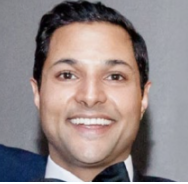
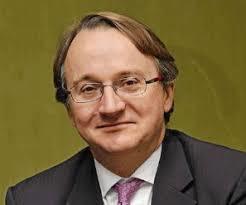
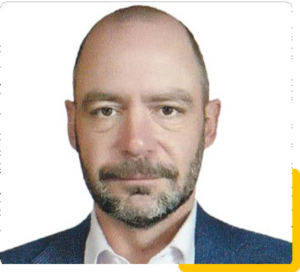
0:08 Hello, everyone, and welcome to Stepgold's live investment summit today. I'm joined by Anil Warach, Executive Vice President and Director, Jeremy South, Senior Vice President and CFO. And coming on the call later is Greg Wood, Vice President of Operations. He's on site today. But as a reminder, before I hand things over to Anil, I'd like to make sure that everyone in the audience is aware that you can submit questions using the Q&A tab found on the right-hand side of your screen for the Q&A that's going to follow today's presentation.
0:34 As always, this summit is being recorded and will be available to watch on six.com in the coming days without further ado, and Neil, I wanna hand things over to you, get us started. Great, thanks Cam. And thank you everyone for taking the time to get the mid-year update and we look forward to your questions as well.
0:55 Usual disclaimer but again I'll just really quickly highlight for anyone who may be new to the SEP story, obviously I think most of the people here are investors already or walked in the story, but we started the company at the end of 2016 as a private company with the goals and aspirations of building Mongolia's premier precious metals company. In 2017, we acquired the 2 assets that we own today. One being the ATO mine, which is now in production, in commercial production and expanding into our phase 2 over the next 18 to 24 months. And our second project is the Udham-Hundi project, which is a 14,400 hectare exploration license that we've just started drilling for the first time ever. So we're the first owners and the first team to drill on this project. So it's a highly prospective exploration license that has been drilled all around.
1:43 So very excited to finally be licensed while bringing further production and cash flow online and growing our asset base at ATO. In May 2018, we listed our company on the main board of the Toronto Stock Exchange. It was the only main board of mining IPO that year. So in a very tough market, we raised $25M. And in the subsequent 14 months, we actually built our phase 1 deep-leach line, which is now in production. March 2020, we started production. So again, in a very tough time at the beginning of COVID, where it was impossible to even get in the country, we brought production online with 100% local team and actually produced about 50,000 ounces that first quarter of startup ramp up in production in Q2 2020 and generated over 10 million US of EBITDA.
2:37 So a very successful start to production with a local team and that's very important to highlight that you know Step is considered a Mongolian company listed on the stock exchange. CEOs, Mongolian, half of board of Mongolian and most importantly, 90% of our staff in country, which is about 300 people today, are Mongolian. And that's how you should do business anywhere you do business, not just Mongolia. The more local you are, the more support you'll get locally, provincially, federally. And certainly we're seeing the results of being a local.
3:14 So 2020, as I mentioned, we brought production online. In 2021, again, we were in production. We ended up updating our resource update in February 2021. When we started this project, it was about 1.2Moz that we purchased from Sentara Gold for US$20M back in 2017. Today, we're closer to 2.5Moz or about 1.6Moz of reserves. So we went from 210,000oz of reserves when we bought the project to about 1.6Moz of reserves today on a Gold equivalent basis. So certainly I've added some value while building our first mine and now expanding our phase 2. In October of last year, we actually released a revised Feasibility Study on that phase 2 expansion. We've added another 10.5 years of mine life at about 100,000oz per annum approximately.
4:04 So it's a permitted phase 2 expansion with significant mine life today and even production profile, which will continue to grow. And we can get into that later. 2 weeks after we announced that feasibility study, Bank of Mongolia sponsored a landmark debt package for Step Gold. So again, going back to our support we have in-country, we received a US$60M debt package 2 weeks after announcing that feasibility study. That's almost half of our CapEx for Phase 2 lined up and supported by the government and locally. So certainly we're doing the right things to get that kind of support. In March of this year, we restarted production. So last year, As everyone knows, there are supply chain issues globally. I think Mongolia and Step were leaders in being impacted earlier on than the rest of the world.
4:57 Certainly, we had some issues with reagents last year. But While we deferred production last year, brought it back online in March, we continued to build up an inventory of ore and even now today reagents
5:10 and key chemicals to allow us to hit the ground running this year. So in March of this year, we restarted production. We had about 80,000 ounces on a recover basis, unprocessed on the leach pads, on the ROM pad and blasted in the pit. So we're able to hit the ground running March of this year. We started production about 1,500 ounces, about 3,300 ounces in April, 3,800 ounces in May, 3,400 in June. And in a week or 2, we'll release our July numbers. So we're certainly tracking well with Incke's production and we still have a very strong inventory ahead of us. So if we weren't able to mine or blast, whatever reason, we actually have about 18 to 24 months of production ahead of us. And that's a significant amount of cash, net cash that's that's rolled. In fact, on about 80,000 ounces, it's probably close to 60 million US, which is not much different than our market cap today. There's a lot of optionality on stock. And of course, as I mentioned earlier, in July of this year, so really just earlier this month, We started production exploration at the UK project.
6:18 So very exciting story today where we have production expansion and we have drill rigs on both our properties. So I'll get quickly into our cap structure today. So we have just under 70M shares outstanding on a fully fully delivered basis, which would bring in about 40M, 44M cash. We would be at about 92M shares. So fairly tight structure there. We have strong support locally within Mongolia. Board and management own 20% of the company today.
6:47 So we're highly aligned with our investors. We've never sold a share. We've been public for over 4 years now. So we certainly feel the pain in the markets with our investors. But we're here to ride the game. And more importantly, I think we're very, very mindful of dilution. We haven't raised any equity for about 2 years today. We're generating cash flow and 1 million dollar balance. So we're very mindful in aligning with our investors to mitigate and minimize dilution going forward. And that's the advantage of having that inventory and cash flow. We have family office support that have been involved. These were a private company. You can see here, brought on 11% of the company. Limb Advisor out of Hong Kong, 7%. Fidelity International has been buying on Markzware for the last 18 months and they are now at 6% and are strong partners and backers.
7:42 Elliott Management is on their 4%. So very strong support. I think we're going to keep growing our institutional and retail investor base as we now have production online for now about 6 months now and continue to grow that while we have a lot of milestones and catalysts going forward. Today, 3 banks cover us, Hanneman Partners out of the UK, Stifle GMP here in North America and Haywood Securities cover us. We had a site visit for the first time in about 2.5 years at the end of April. Additional banks joined that. And we do expect 1 to 2 banks to pick up coverage over the next 1 to 0.5. So we're hoping to have 4 to 5 banks cover our story by the end of this year. It's obviously quite an action-packed story for us going forward. So it's gonna really highlight Mongolia today. Jeremy, if you want to jump in there very quickly.
8:32 Yeah, thanks, Anil. And can you hear me okay?
8:38 Thanks, Anil. Yeah, Mongolia are in the news a lot more these days with the Rio Tinto, you know, doubling down on their investment, both for forgiving a loan with the Mongolian government
8:52 and now looking to acquire the Turquoise Hill, which would essentially make the Aitoglu project a joint venture between Rio Tinto and the Mongolian government. So that's really, I think that's created a little bit of a sea change of perception in Mongolia. And Mongolia has always had fantastic assets. I think now we've got a super major really, putting their stamp and making Mongolia a key part of their growth platform as a copper producer. So Mongolia today, it's obviously positioned between Russia and China as the second largest country in Asia, significant well-cast assets in country across a variety of metals.
9:41 So it really is a mining country. And I think that one of the other key elements as we look to to build a Mongolian company is just the the presence of talent. Rio Tinto has done a great job of growing talent in country, but technical, finance, admin, et cetera. So the
10:04 fantastic assets are now being matched with some really strong in-country talent. You've got engineering firms and obviously you've got the continued investment by China in particular as the largest foreign investor.
10:20 Access to China makes our phase 2 expansion very interesting and we'll be producing significant zinc and lead concentrates in phase 2, which starts soon. And that really is important to have that sort of excellent logistics from being able to essentially truck our own concentrates across the border to the Zinc and Lead snalvers in western China. So access to that is very important. And I think I've been working in Mongolia for over 12 years now. I've never
10:59 seen a situation where you've had alignment with the president, the prime minister, and just general government support across the country for the mining sector. I think the resolution of the Otogo issues has been very positive. We've also got significant rail infrastructure being built between China and the South Gobi.
11:22 And just I think generally there's a significant amount of reverse migration back to Mongolia as talent returns to the country. So overall Mongolia was really in the best place that I've seen in a long time and that really is important for us. Thanks Jeremy. So I'm just gonna flip through. Obviously this is our operation today. This is a leach pad. You can see that cell 5 is right here on the far right, almost complete there, and we're getting ready for the lift in the fall, which Greg can address later. But just a quick summary of kind of where we started and where we're going on this project.
12:08 When we bought this project, it was only an ATO 1, 2, and 4. In fact, half of ATO 4. So the old model that we reviewed when we bought this project kind of said that this was done and constrained. ATO1 looks like a carrot-like pressure pipe and the model said it's closed off and there's no room to grow. Same thing for ATO4. ATO4 actually looked like ATO1, more like that pressure pipe, Kerr Lake pressure pipe. And so when we took over the project, we reviewed the data set and saw that there's obviously an opportunity to grow here. And so all 4 deposits that you can see here are still open at depth. We proved the model wrong by growing ATO4, so essentially doubling the size of ATO4,
12:53 so there's continued mineralization and still growing at depth here as well. So that's been a big win for us where additional ounces have come. And then we also put a maiden resource on the Mung deposit. So this Mung deposit, Mung means silver and mongolian, is a higher grade precious metals deposit that wasn't in the resource when we purchased the project. And in fact, it's not really even included in the feasibility study for phase 2 expansion. So this is a kind of a low hanging fruit to convert Mung into the mine plan for phase 2, which is today about 440,000 ounces at Mung. And all this has only been drilled down to about 400 meters maximum depth at the moment. So a lot of room to grow. We've had some quick wins on growing this asset base, and we'll continue to grow, we think, at depth, and then start chasing the trend here, north of Moong, northeast here on ATO4, and Moong on a structure here. There's probably more satellite deposits to be discovered. The infrastructure's in place, both for heat bleach now, and for phase 2 coming online.
13:51 You know any oxides or sulfide refresher we encounter the infrastructure will already be in place so it's nice to have both. There is a good chance that more oxides will be encountered. But certainly a lot of room to grow. And I'll show you on another slide, at ATO 1 and 2, we just started drilling for the first time since being on the project late last year. And we've shown new discoveries and extensions on those 2 deposits that are quite meaningful to this project in the future, especially for phase 2.
14:22 Quickly highlighting the reserves. So as I mentioned, we started with 210,000 ounces of reserves when we bought this project, oxides only. Today we're just under 1.6 million ounces on a gold equivalent basis for the reserves. And I just want to highlight, you know, in our phase 2, you know, we're, we're, we're building a flotation circuit in plants, right. And the lead and zinc that are already
14:46 you know, factored into that phase 2 expansion, the grade here is, you know, on the, on the lead is 0.46% and on the zinc 0.78%. So that's about 30% of our revenue phase 2 to produce lead and zinc cons already factored into that CapEx. Late last year, we drilled ATL 1 and 2 here for the first time ever, and we've shown new discoveries and extensions at ATL 1 and 2. So again, these deposits do grow at depth, but the grade has been significantly higher than what we're modeled, that's been modeled in the feasibility study. So in fact, the grades we're seeing now are 10 to 20 times higher. So we've encountered 21 meters at 10.5% zinc and 3% lead. You know, 55 meters at 4.2% zinc and 1.8% lead. 23 meters at 6.7% zinc. So you can see these are significant intercepts at much higher grade that are going to add, we think, a significant amount of value for phase 2, both for mine life
15:47 and revenue. So that's been a I would say another big win for us to have these new discoveries at depth where it doesn't require additional cap ex to process because we've already factored that in. So that's a big win for us already. That's part of the drilling that we're doing now at ATO to continue to chase these at depth on all deposits. So certainly the phase 2 expansion has a lot of room to grow. The baseline today is about 10 and a half years of my life, 130 million US of CapEx, all in costs of about $850. As I mentioned, we put this out in October of last year. Our plan is to update this
16:30 over time. So while even building phase 2, which is already underway today with the crusher, you'll see shortly, we'll continue to optimize the phase 2 expansion. And so a few of those optimization opportunities exist that are immediate are the power. So the power used for phase 2 in the feasibility study was diesel power. We plan to connect to the grid. So we should have a grid power solution that could save us close to $100 an ounce on a yearly basis for OPEX. Certainly inflation is something that's real. And so we do believe our expanded CAPEX number with that power upgrade will be closer to 150. And of course the OPEX could increase a bit, but the power offset alone could keep the numbers close to this all in sustaining cost you see here. So a very robust phase 2 expansion that's already permitted in a way underway. So we have an operating phase 1 mine that's generating cash flow for the next couple of years while expanding into phase 2. So it's a nice position to be in to have a cash flowing asset while expanding. It allows for that cash flow
17:34 buffer should things take longer or cost more in this market. The other optimization, as I mentioned, we're actually looking to convert MUNC. So it's about another 400,000 ounces we can bring into the mine plan. That will add meaningful mine life there. And of course, you know, there's some other optimization on the pyrite concentrate and what this new base metal discoveries and deposits can add in terms of value here. So with that, I think I'll hand it over to Greg to go through the Ops side, please. Greg Morgan Can you hear me okay?
18:16 I apologise to everyone if it's a bit patchy on site at the moment and the connection out here is not great, but good evening, everyone. Welcome to our mid-year shareholder update. I'll take you through the updates for operations and the construction activities that we've progressed with so far this year, starting off with the mining department.
18:38 To date for 2022, we've mined approximately 654,000 tonnes, which is, I'm happy to say, is ahead of budget. We're continuing with all of our blasting operations at ATO1 and commence project to date. We've mined approximately 3 million tonnes and have a further 2 million tonnes to come from both ATO1 and ATO2. As at this morning, the ROM balance sat at approximately 700,000 tonnes, which comprises of 521,000 high-grade tonnes at 1.7 grammes a tonne and 181,000 low-grade tonnes
19:27 at 0.4 grammes per tonne which equates to approximately the ROMPAD asset this morning. Slide, please. The crushing and leach pad department has stacked 464,000 tonnes of ore this year. We completed the first lift of cell 4 earlier in the year and commenced stacking on cell 5.
20:05 Cell 5 now at 1.7 grams per tonne asset today. The total ore now on the leach pad is approximately 2.3 million tonnes at an average grade of 1.96 grammes per tonne. And this equates to approximately 147,000 ounces of gold off which we produced approximately 60,000 project to date. Off that 2.3 million tonnes of ore on the leach pad, we've approximately 344,000
20:40 tonnes of totally unleached ore at approximately 1.9 million tonnes of leach pad. The sections are under leach. The light sections on the right-hand side are those that have yet to be leached at all. We're also going to commence in September, we'll commence stacking the second lift on cell 1. Construction—sorry,
21:24 just going through construction. Sorry, just going through construction, the major works that we're currently focusing on, We've expanded the chemical storage facility and we're also in the process of expanding and relocating our new fuel storage facility. The chemical storage facility will be completed in the next day or 2. The crusher is—we're planning to finish that in September. We've also completed all the design work and had that all signed off for all of the new construction sites for phase 2, which include camp expansion,
22:07 office buildings, workshops, et cetera. Construction photos, just to hopefully give you an idea of the actual scope of the work that we've been progressing with for the new crusher for stage 2, which has a capacity to crush over 1000 tonnes per hour. Just like to flip through some of these photos to let them have a look at the actual size of the project and the progress that we've been able to make
22:40 this year. I just also wanted to—which we don't have a slide for, but just some more notable inclusions to update you on some of the outstanding work that's been performed by our Safety Department this year. We've been running multiple realistic simulations on safety and rescue and we've received by local authorities and we've actually been asked back into the local AMAG and the capital city here in Dornod to run further trade safety sessions
23:32 for local agencies and local companies. Also being very heavily working through total risk assessments across all departments and eliminating any issues that we have found along the way. Thank you, Greg. Jeremy, do you want to start on the finance side, please? Yes, thanks, Neil. Thanks, Greg. Q2 is under review right now, so we don't have Q2 available, but I can certainly give a bit of a highlight on just some of the operating data and what we plan to look at going forward.
24:15 We've already announced our second quarter production a bit over 10,000 ounces, and we provided guidance for Q3 2022 of around 15,000 ounces. And that will drop down a bit in Q4, but maybe closer to 10,000. So that gives us sort of around about 35,000 for the year, if we hit those numbers. Monthly production coming into Q3, approaching 5,000 ounces in peak months, should be achievable, great reconciliation, continues to support an opportunity to really outperform the initial oxide estimates.
24:56 As Greg mentioned, significant amount of ore on the, on the ROM pad, leach pad and the pits. And we certainly, you know, certainly our internal estimates are that we'll outperform the initial recovered ounces in the oxide
25:14 of around 150,000 to be certainly ahead of that. So that's really what's in front of us. As Anil mentioned, we've got significant inventory, which really underpins, we think, certainly a higher enterprise value for the business. And the other positive is Bank of Mongolia is currently buying a 5% premium on gold. So we're achieving above market gold prices. We don't have numbers for Q2, But certainly we expect our AISC to be higher
25:51 than before, but certainly well within market range. But more importantly, as we get to higher ounce production, our AISC will come down. One of the factors in AIC has been our cyanide costs have been a little bit higher as we've had to be a bit more creative around the import of that product coming through in regular shipments now. But certainly even after an elevated AIC, we have strong cash flow before debt service.
26:33 And that is enabling us to continue to mind stack and invest in exploration for the business. So, we expect no major real surprises in our results due out August 15. Evidence of building cashflow, operating cashflow and focus on reducing our debt levels through the balance of the year. We should be debt free by the end of the year all going well. In terms of phase 2 expansion, as Anil and Greg have both mentioned, our focus really is on phase 2 now.
27:12 You've seen the great progress with the crusher. This is a very significant part of phase 2 and certainly shows that we are very much focused on building phase 2 and building it as quickly as we can. The focus now is on getting engineering. We've already started design for camp fuel and camp expansion. So those investments are already happening. We are financed with the crusher has been fully financed and paid for and we're now focusing on the capital over and above the 60 million received from
28:00 the Bank of Mongolia to ensure that we have that seamless phase 2 expansion over the next 18-24 months. Ongoing discussions with international Mongolian lenders are proceeding well. We also are talking to traders as our concentrate product for phase 2 will be likely sold by traders into the Chinese market. And we've got lots of interest there. So yeah, lots happening in the Step Gold finance group and some exciting times ahead in 2022. Back to you, Anil. Thanks, Chairman. So, last but not least is the second project, which is our highly prospective and quite exciting exploration license that you know unfortunately over the last few years we haven't had a chance to really focus on while building and getting established as a producer and an employer and a taxpayer and we're a multi-parent country We really didn't have the resources to focus on the UK license, which is an exploration license, 14,400 hectares we also acquired in 2017. So the blue outline here with the gold inside the 4 discoveries there is the Udham Hundi Project. So 14,400 hectares.
29:21 What's quite exciting is our peers, Urdine Resources, who hold the licenses to the north and south, adjoining licenses, about 4,500 hectares each to North and South. They have well over 1 million ounces. I believe they have a couple million plus ounces there. So very exciting for us to have a package smack in the middle where we haven't had the opportunity to drill. So we had previously done the groundwork, IP, magnetic, soil sampling and trenching at surface. And you can see from trenching samples, quite exciting with 1.5 grams gold, 450 grams silver, 3% copper, 4% lead. So quite exciting. And we just started in July, so earlier this month, drilling this for the first time ever. So it's a 3,000 meter drilling program to start, about 15 to 20 holes, and we expect results to trickle in over the fall. And on the back of those results, we can then form our next program down here.
30:18 So very exciting to be able to offer I guess the market monthly updates on production and continued production and cash flow build-up towards end of the year and over the next 12 months. Expiration and continued drilling on ATO, drilling here at UK and obviously a lot of updates on the phase 2 expansion, both from a finance perspective, but already what's being done on optimization and construction on site. So, you know, Stepgold today obviously offers quite a lot of milestones, catalysts in short order. And in this tough market, we don't have to worry about having to raise equity at these highly dilutive levels. And that's the luxury of having that inventory build up and having production back online. So we're certainly in a strong position going forward.
31:12 And we look forward to continuing to update the market on a regular basis. So with that, Camp, I think we can open up to questions. To start with, this is a question for Neil. Could you please comment on the local staff retention rates? For example, how well are you doing entertaining? Yeah, so I mean, Greg and Jeremy can jump in too, but today we're employing about 70% of our staff are from our local, within the province, and many people have moved closer to site to work with us or work indirectly with us, with our local procurement and all the work there. So my understanding is retention has been quite high. We've always paid above market salaries for retention. We treat our employees very well. We kept them very safe during this crisis that we're still kind of in, but over the last couple of years, both on health and safety.
32:08 I'm not sure, Greg or Jeremy, have any other comments there? Yeah, I think it's particularly on site, mate. The staff retention has been very high. I could probably count on one hand how many people have actually left Step Gold, and at least 50% of those have gone without blessing because they've received scholarships to go and study overseas and so forth. So, staff retention has been very, very good. As Anil said, it's a great camp to work in. It's a nice mindset and everybody's treated very well. All right, sounds good. There's another question for you, Greg. So right back to you. But back in February, you spoke about the progress of completing the boiler house and the importance of bringing that online during the wear months.
32:59 Given that, Can you provide us with a rough guidance on the monthly production numbers that you're expecting during the winter months? Yeah, so we completed the boiler house, as we mentioned last time. We ran it last winter successfully. Solution never stopped and we were able to produce small amounts of Gold last winter. That was more due to reagent supply than the actual solution temperature. We've made some significant improvements to the boiler house in the last several months, we've added another furnace. So we're even better than it did last month. We're thinking that at a minimum across the 2 to 3 coldest months, we'll still be producing in excess of sort of, you know, sort of 2000 ounces for those, for those 2 or 3 really cold months.
33:54 All right. Follow-up question. Are the milestones for phase 2 on track and meeting your expectations? How have you experienced any unexpected challenges or done any engineering refinements associated with the original Phase 2 plan to enhance operations? Councillor CUMMING. As far as engineering requirements go for Phase 2, we haven't made any changes by our feasibility study. As far as any difficulties, the only real difficulties we've encountered recently are due to supply issues, due to still sort of COVID-related border closures and so forth. Absolutely. And final follow up for you, Greg, can you briefly discuss mine safety practices and headcount numbers increases at ATO? Increases at ATL?
34:46 Councillor CUMMING. Yes, headcount numbers have gone up significantly with the increase in construction. Previously we were about 150 to 180 heads on site. That's increased now to about 260 to 300 at any given time. I think I mentioned about Some safety tasks that we performed this year, the Safety Department have been extremely busy, as I mentioned, running through realistic simulations for fire issues, pond rescue, rescues from height, rescues from confined space.
35:37 It was very well by the local government agencies. And as I mentioned, we've actually been asked back to actually start training some of the local agencies and companies. Good to hear. Question from Howard. He just came in a little bit late, but maybe Neil, you can take this one. Will you please describe your running rate of production now and in the coming year? Probably a Greg answer anyways, but, cause obviously I went through the ramp up at the beginning, you know, where we were just under 3,500 ounces last month and we expect those numbers to ramp up for July, August, September. But Greg, you wanna comment a little bit?
36:23 Yes, last quarter we were a tick over 10,000 ounces where internal guidance is suggesting that we'll be around the 15,000 ounce mark for Q3. Awesome, thank you. To what extent are self-owned green power options viable on reducing AIC? Maybe I can take that guys. We have done a full scale power study for all renewable options that was done. That was done back in the, at the start of 2021. And we continue to look at that, you know, renewable power options, particularly solar are available in country, albeit not widely used.
37:10 The climate in Mongolia lends itself to both wind and solar options. But it is possible to do it on an independent power producer basis. But certainly the upfront CapEx is still very significant for a solar option. You can potentially do a hybrid option and we've looked at that. But I think we've concluded that the, certainly from a financial perspective, with the current mine life of 12 and a half years in total with that diesel power with grid power is the best option and the likely the one we'll move forward with. We have the benefit of, unlike our second asset, which is a bit more remote, The ATO asset is relatively close to grid power.
38:06 So that's the way we'll likely go here. Great, thank you for that. Howard wants to know if the comment about the gold on the leach pad means that you still hold 87,000 ounces of gold on the pad? Greg. Sorry, mate, you broke up there. What was that? Just a question from Howard. There was a comment about the gold that's sitting on the leach pad and he's wondering if that means that you're still holding 87,000 ounces of gold on the pad. I think so. There's 2.3 million tonnes approximate of ore on the leach pad at the moment, which equates to approximately 147,000, 80 odd at 100%.
38:58 We're estimating recovery rates on that to be approximately 70%. Okay, great. There's a question for Jeremy. Has there been any discussions surrounding a possible renegotiation around the TripleFlag streaming agreement, given the sizable increase in mine life at ATO? No, not yet. The TripleFlag investment obviously was made very early on in the process. There's an annual cap built into the triple flag. There's 2 caps. There's a 46,000oz cap, which we expect to hit right at the end of the oxide phase.
39:43 And then there'll be an annual cap of around, I think over 7,000oz a year. And that's the current transaction. So There's no expectation to renegotiate that. A question for Anil. Any consideration being given to the possible JV with Airdene resources on the UK project? If the drilling results prove promising at least, given steps lack of presence that far from ATO geographically and the primary focus on ATO phase 2 optimization? No, it's a good question. Obviously, we haven't done enough work on that project. We know it's highly prospective. They've done a great job down there. We do have a very strong technical and exploration team as well.
40:32 So I think we need to do more work before considering that, but I don't think anything is off the table. Certainly if there's synergies, why wouldn't you collaborate with our peers who have already been down there for quite a while? I think they've been in the country for 20 years now, so certainly there's some value for guys who know that region and have been doing work there on the exploration side. So nothing's off the table. I think we just need to get a better handle of what our program looks like first, then we'll see. But certainly we had a luxury of having funding, our own cash flow to fund our own exploration. So that's the beauty here. So, you know, the UK is like an exploration company all in itself, And yet we can fund it without having to go to the market. And so we're going to continue to invest down there, see what we have.
41:21 And then I think if it makes sense and it's the best use of our, you know, capital resources to do it ourselves, certainly If it makes more sense to partner up, I think it's something that we'll consider. But nothing's off the table, but nothing has progressed, I guess, as well. Great. A question from Nigel. If you're doing an SWOT analysis today, What might be the 1, 2 or 3 W's? Well, the W is that we can't control in the world, I guess, is the weakness of, I would start with supply chain. I mean, this is this is impacting everyone in the world, not just us. Right. So something we cannot control.
42:09 You have 0 covid policy in China that continues to persist. And That's obviously where a lot of our goods come from. And obviously COVID is, waves are happening again globally. So, you know, from my, from our, I guess, supply chain is the biggest W that I can think of at the moment, But guys, anything else? Yeah, I'd have to agree with that, absolutely. Yeah, I think, but I think cost of inflation. Sorry, Jerry, can you repeat that? I think Greg was just saying the weather, which is probably a W as well. I mean, we have, it's a reasonably seasonal project because of the winter, but I think for all the Ws, we've got mitigating, there are mitigating factors when it comes to the weaknesses.
43:07 We're still in a low decile in terms of costs. And I think in an environment where Gold price is volatile, we're getting 5% over LME spot and we're able to mitigate costs, mitigate supply chain with continued bottom decile costs. And I think those are important mitigating factors for those weaknesses. Absolutely. Yeah, I think we're more likely, I think we're more benefiting from our geographic location, to be honest. So, on a net basis. Great. Okay. Simon wants to know if there's going to be a share buyback in the future, maybe phase 2?
43:56 I think, yeah, we really want to reinvest all our available capital into phase 2. It doesn't really make sense to buy back our shares when we need that equity cushion for the phase 2 expansion. I think at a certain point, if we're fully funded and then some, then maybe if the market hasn't recovered or re-rated us or the country or whatnot. Certainly that's something to consider, but I think from a capital allocation decision, I think we need to keep our balance sheet very strong for now. You really get ahead and build that cushion, get phase 2 funded and online. And then once that cashflow, which is quite significant, phase 2 cashflow is essentially more than our market cap today, I think if the market hasn't reacted or recovered then, then certainly That would be a great way to create that value, close that value gap and buy back shares or maybe a special dividend policy or both at that time, but it would still be a couple of years away.
44:59 Right. And just regarding timeline and net profitability, Sam is wondering if the company is looking at being net profitable this year. Well, we're profitable on an operating basis every quarter, really. I mean, we've had low production, so there have been losses because we continue to buy and stack, but our numbers aren't out for Q2, but I can tell you that they're operating. Yeah, the operating profit is positive, and we will be operating profit positive in any 0.25 that we're producing, call it more than 5,000 ounces. So, yeah. Yeah, the, we, you know, the focus this year is really on, on, on, on debt service and debt restructuring. We use our cash flow to pay down our debt and that we used to get through last year.
45:48 And, but, you know, we're looking to be, you know, free cash flow positive for this year as well. Great. Question about inflation and sort of the geopolitical climate with everything going on in the world, how has step cushioning against potential risks from all of this? Yeah, well, I mean, yeah, go ahead, Jeremy. You go. Yeah, just so I'll start and then you jump in. Yeah, I mean, inflation is real. Inflation is real everywhere and Mongolia is no exception. Mongolia imports pretty much everything. So again, we are slightly cushioned by the fact that we are getting a lot of our supplies from China where we get heavily discounted relative to international prices.
46:44 We paid for all the crusher works early on in the year. We've managed to limit inflation on that latest part of our phase 2 expansion. There's definitely fuel prices. We're a diesel power generated site, So our fuel costs have probably doubled like everybody else. We've had higher rates for sourcing reagents. And again, we've flagged that in our filing. So We're seeing inflation, but we're still on a 40,000oz to 50,000oz per annum run rate basis. We're still very profitable on an all-in sustaining cost basis.
47:35 We have and continue to work on mitigating factors for inflation into phase 2. And Mongolia is still a very competitive environment for labor and supplies. So, I think we still feel relatively comfortable around the 150 numbers, as Anil mentioned. But we continue to work on that And we'll continue to optimize and mitigate. Anil, anything else to add? What was the other part of that question? I think inflation is very real. Jeremy hit it right on the head there. I think we've addressed it. But it's certainly something that everyone's dealing with so it's nothing new I think we get a luxury of like we said some money spent before a lot has hit us we have for now currently the 5% premium to spot pricing which helps offset some of the current inflation that we're seeing on energy costs, procurement of the chemicals.
48:39 I think what we'll see is we'll have the ability to optimize some of those things in the future, which means the cost will lower, but certainly we're mindful of it like everyone else is. Great. Thanks, guys. Sam wants to know if there's any news on Hong Kong listing. Yeah, so I mean, that was something we were exploring an Asian listing last year. Obviously it's quite hard to list somewhere else as a producer if you weren't in production. You know, as we deferred production last year, it didn't make much sense, 1, from a resource perspective. All our capital is there to make sure that we can get the ground running when we restarted production this year without having to raise any equity. We didn't raise any equity last year and when we're double the share price, we haven't raised equity in a couple of years.
49:27 So that's something we'll still look at in the future. There's certainly a lot of demand and interest in that region of the world. We are a producer. We have lots of expansion. So cash flow is key. Precious metals are certainly of interest culturally and from an investment standpoint in that region. So I think down the road we'll still consider it because certainly the valuations are much higher. If we can close the valuation gap that way, it's a win-win for everyone. We'll continue to look at that. Thanks, Anil. A question about the current atmosphere in Mongolia. There's been lots of talk about the government being more investment friendly and opening up new mining licenses. But the question is, how are you actually finding that? Is that a reality on the ground? Absolutely.
50:13 I think we've demonstrated specifically with the support we received from the government. The Bank of Mongolia sponsored a 60 million US debt package 2 weeks after we released a feasibility study. Not many people release a feasibility study and get any capital within 2 weeks, let alone half your CapEx lined up in debt. So the government is quite supportive, you know, by providing that capital, allowing us to expand into phase 2. The government's not asking for more. They're actually helping us grow. So I think that shows you that they're highly supportive. You know, even the premium that we're getting today on our current production, again, that's highly encouraging. The fact that Rio Tinto has kind of doubled down in country from the beginning of this year for giving the government's debt to consolidating with turquoise. You know, essentially a supermajor has now committed an additional 8 billion plus of capital in country. Zijin has publicly announced an investment.
51:12 So you're seeing certainly the country's open for business and the government is doing all the right things and focusing on pro-mining, pro-foreign investment. Great. Another question, could you dive a little bit more into your financing strategy for expansions? Yeah, I think that the plan is to use a combination of operating cash flow with the existing debt package, which is continuing to be used. And then, you know, through the balance of this year, you know, we expect to, you know, we're working actively on the optimisation of the reserve, the resource and indeed the engineering, including some potential options around concentrate processing.
52:09 So all those things are being done and rolled up with that is a very active outreach with international finance partners. This is a very attractive project from a project finance perspective. And we've certainly had lots of interest from international lenders, Mongolian lenders and traders. And so we'll have more to say about that, I think in the fall, but we continue to actively look at ensuring that we have enough capital to continue to work on that. We need to get the engineering right. We need to get this optimization work done. And that's happening right now. So I would think by the end of this year, it'll be sort of pretty clear what our strategy is in terms of the capital stack relative to the $150 million that we'll need to spend over the next 24 months. Obviously, a lot of that will be loaded into 2023.
53:17 We don't expect significant new CapEx for the balance of 2022. We have the ability to, a lot of the equipment we're acquiring is off the shelf from Chinese manufacturers. These are very simple, very simple flow sheet. It's a flotation plant. You know, there are many of these plants operating in China. So that equipment is readily available. You know, we are working actively on the power. So we'll be working with that over the next 6 months as well. Thanks, Jeremy. Gentlemen, that looks like all the questions we received for today's summit. So I think I wanna thank you at this point for the great presentation and of course the Q&A. I'd also, you know, I'd be remiss to not thank everyone who's asked such great questions and joining us today.
54:09 Today's presentation is available as a downloadable handout. You can find that in the handouts tab on the right hand side of your screen if you'd like to review the information we've gone over today. But as we wrap up, I'd like to hand things over to Anil, Jeremy or Greg, if any of you have any last-minute comments. Thanks, Cam. And thank you, everyone, again, for joining and asking those questions. We're always available, anytime, to our investors to clarify and update. And we have obviously this year been as communicative as possible on a monthly basis. And you'll see that going forward. So expect a lot of updates from now until the end of the year on a regular basis. Just in a couple of weeks, we'll have a production update. We'll continue to update on phase 2, optimization, expansion, and of course, any expiration results that continue to trickle in over the fall.
55:03 So quite an action-packed story for the rest of the year, continued updates to the market and coverage I think from the bank. And I guess the luxury of not having to raise equity at these levels is also something of significance given the market. So thank you all for your support and please do reach out anytime if you have any further questions.