Transcript
Automated transcript · Written by software from the replay's audio. It can mishear names and figures; the replay is the record.
0:07 Hello, everyone. Welcome to Stepgold's live investment summit today, hosted by 6. I'm pleased to introduce our speaker for today, Anil Warich, Executive Vice President and Director of StepGold. As a reminder, you can submit your questions at any time using the Q&A tab found on the right-hand side of your screen. And if you'd like to get in touch with the StepGold team, feel free to indicate as such using the survey that's linked at the top of the chat, again, on the right-hand side of your screen. As always, the summit's being recorded and it's going to be available on six.com in the coming days so look out for that if you want to refresh. Without further ado, Neil, I'm going to pass things over to you so you can get
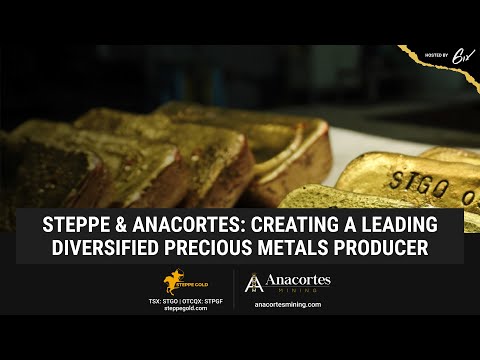
0:38 us started. Great, thanks Cam and thank you everyone for taking the time to get the step update. Just a few weeks ago actually, on Monday of the start of PDAC, we were able to announce a transformational acquisition that has grown our asset base and essentially doubled the size of our company while diversifying our production pipeline in the future. So quite exciting. And I'm happy to take questions as we sum up this presentation. So as a quick update, just for anyone who may be new to the story, maybe there's some shareholders on the XYZ side or those who are interested in our story today. Stepgold was founded as a private company at the end of 2016 and we listed in 2018. May 2018, as the only main board mining IPO in a very tough market, raising $25 million at $2 a share. That's correct. So today we trade at $1, $6, $7, but in 2018, you raised money at $2 a share when Gold was roughly $1,250.
1:43 So Gold has moved 50% up since we brought our mine online and we acquired it. So we have, I guess, a lot of opportunity to grow. As everyone knows, the market is a little fickle today and volatile, but Gold has certainly moved up and we're happy as a producer to have a rising Gold price. That doesn't require any more capital from our side. That's something we don't have to pay for. So today we have 72.5M shares outstanding and obviously that will grow with this acquisition, issuing approximately another 22 to 23M shares. So we'll still be under 100M shares outstanding after this acquisition closes later in Q2, with a resource base that is just under 5Moz and a production profile that can grow to circa 200,000 ounces over the next few years with geographical diversification. It is a very exciting story where we have a producer today acquiring another development project, very similar to what we've done in Mongolia already, an oxide deposit with a Sulphide, which I'll get into shortly. We still have a very strong shareholder base and are supportive of our growth strategy and acquisition strategy.
2:59 So, board of management continue to own close to 20% of the company. We've been public just under 5-years and have never sold a share. There is very strong alignment with us as entrepreneurs and business builders with our investors. Our last equity raise was completed in August 2020 at $2.15. And we haven't raised any equity since then, even with all the hiccups globally that everyone's encountered with the supply chain, inflation, COVID. So it's been fantastic to be able to avoid that dilution over the last, well, more than 2.5 years. We still have very strong, supportive investors, including Fidelity Investments, that owns 6% of our company.
3:44 Eric Sprott has continued to increase his position on market, I believe, until late last year. That owns 11% of our company, very supportive. And of course, our backers from Inception, including Elliott Management and Triple Flag. So Very strong backers, research coverage, as I mentioned, will continue to grow in the coming quarter. Today we have Hanuman Partners in the UK, Stiepel GMP in Haywood here out of North America that cover our stock. And as a reminder, Stephanie is a Gold and Silver producer today, producing from our oxide mine for the next 2-years. As we started production in April 2020, profitably commercial production right out of the gate in the first few months. It's an oxide mine that's got a smaller life of mine that allows us to grow our asset base. So Oxide's at surface. We started with 210,000oz of Oxide reserves and we're looking to transition into our Sulfides that today have a 12-year mine life at over 100,000oz of production on a gold equivalent basis at about $850 rolling costs and that will come online in about 2 years time. So our business is growing pretty rapidly in Mongolia.
4:58 We're going to have a very strong cash flow once that Phase 2 operation in Mongolia comes online, which will allow us to focus on our next project. Hence, the reason we were looking at Anacortes, which I'll get into again. So very quickly, again on a timeline of where Step has evolved from end of 2016 inception with no assets. In 2017, we acquired our first 2 assets, both in Mongolia, which is the ATO project we acquired for US$20M. That ATO project back in 2017 looked like about 1.2Moz in resources, inclusive of that 210,000oz of reserves, oxide only that we purchased for US$20M cash.
5:45 The UK project, the Udham Hundi project is a 14,400-hectare exploration license, also in Mongolia in the Southwest. It's a very exciting exploration license that we think could be another production center in the future as we continue to grow within Mongolia. It's an exploration project that has been drilled all around, where there's been lots of success on exploration and delineation of ounces. In fact, our peers, Urdine Resources, had the licenses adjoining that license, UK. In 2018, as I mentioned, we listed the company, built our Heat Leach operation in the subsequent 14 months. And in April 2020, we brought production online for the first time ever. And I think that's a testament to us being able to manage an operation, building and operating in a very tough environment. In fact, you couldn't get into Mongolia if you tried.
6:46 And it took about 2 years for any expats or investors to get in the country. Yet, because we're a local team, as we built the local team in Mongolia, we were able to operate when you couldn't get in the country if you tried. So that's very important. And it's very similar to what we'll do in Peru as we continue to advance that asset. In October 2021, November 2021, we actually put out a Feasibility Study on the expansion. At that point, it was 10.5-years of mine life at just around 100,000oz. And as I mentioned, we're now at 12-years of mine life on that expansion, at over 103,000 ounces. So it's been a big win for us to be able to solidify our expansion. Today, we're now at 14-year mine life in Mongolia between our oxides for the next 2-years and our transition to the sulfides for the 12-years beyond that.
7:36 In fact, we do believe when production comes online from the sulfide expansion in about 2-years time, so Q1 2025, that operation will probably look more like a 15 to 20-year mine life. A lot of growth and opportunity. We're still drilling below the deposits. They've only been drilled down to about 350m to 400m, depending on which deposit. A lot of room to continue to grow this mine while advancing other projects, both within Mongolia and globally. And of course, we announced in March of this year, the acquisition of Anacortes. So, I want to go into the transaction rationale and why Anacortes, why Peru, why outside Mongolia?
8:24 What we found over the last few years from talking to investors is that everyone was looking for scale in terms of production profile. What used to be 100,000oz for 10 years as being the checkbox, now people want to see 150,000oz to 200,000oz in 10 plus years of mine life. We're already at that, very close to that in Mongolia. But adding Peru actually increases our production profile significantly. With just the oxide only scenario in Peru with the upside in the sulphides, which are another 1.9Moz. So that's a very strong growth project to our pipeline. As we continue to grow in Mongolia, we can then take our cash flow and contribute to the development of our next project that diversifies.
9:15 We're not a Mongolia only company today. We're not just an emerging market, frontier market company. We provide tier 1 diversification by adding Peru, which is a global mining jurisdiction, very dependent again on mining as a country. And so there's a lot of similarities, but they are more advanced actually than Mongolia. So it's a fantastic offset to be able to create a diversified company that has exploration, development and production in 2 different countries. You have scale and diversification. And more importantly, you have a team that has already completed successfully a very similar approach in Mongolia, where we've taken an oxide and sulfide deposit, focused on the oxides, put those into commercial production and then using some of that cash flow to grow our larger base underneath and then solidifying that.
10:11 In this case in Peru, we're actually getting the sulfides, the phase 2, I'll call it in Peru, all as an option. So we're really paying about $6 an ounce for this project, as gold has moved up over $150 actually since we announced this project. Robust economics that will increase the value of our company. So scale, I think liquidity, we're going to have increased liquidity in our stock and coverage. Now, for a lot of investors who didn't want to look at just Mongolia, we're offering that diversification. So we're not just 1 country, 1 mine risk. And that's certainly what gets the interest in terms of valuation and investors. And as I mentioned, obviously, we already have a track record of doing so.
10:56 In terms of the structure, I already announced, I won't spend too much time on this, but happy to answer questions. It's going to be about 21% to 22% dilution of Step, but it's a highly accreted transaction. We're doubling the size of our company, building a production pipeline that won't take too many resources away from our current operations or team in country in Mongolia. In fact, we'll continue to bring production online and double our production profile in Mongolia while advancing this asset in the background in terms of feasibility study, in terms of permitting, putting it into a position to be build ready by the time our phase 2 is up and running. And it's a very natural, easy transition to create a local workforce in Peru and add on some of our team that already has building and operating experience for heap leach.
11:45 And so we're excited to be able to parlay that experience into Peru and building a local team and a workforce in Peru over the next couple of years. We do expect the transaction to close in Q2, towards the end of Q2. And So by the end of Q2, Stepgold will be a circa just under 5 million ounce company that has an actionable and real pipeline of production to take us to approximately 200,000 ounces over the next 2 to 3 years. So that's quite exciting. Now just a quick overview for Tradescrucis. For those who may not be familiar with this asset, located in northern Peru, it's actually located in a region where there have been other miners operating for quite a while, including Barrick Gold, just about 10km away from us.
12:36 We have an operating oxide mine that produces over 1 million ounces a year, I believe. There are currently about 3 other operating mines in our region. It's certainly in a very prolific belt and region where there are already operating mines. This oxide mine has a PEA on it. Currently at about US$1,700 Gold, it's US$170M NPV. At US$1,900 Gold, it's about US$270M NPV. We believe as we continue to advance this Feasibility Study, we will be able to optimize further the capex and maybe even the production profile. But currently you're looking at about 7-years at just under 70,000oz of production.
13:22 It's a nice addition to have an oxide mine that will be additive to our Sulfide production in Mongolia. And combined, you're looking at circa 200,000oz and about 2027 onwards with 2 different jurisdictions. So very exciting. As I mentioned, there's 1.9Moz of sulfides below these oxides. And that's something that we'll continue to chip away at once we get the oxides moving to construction. We'll then be able to focus on what the upside is on the sulfides. Exactly what we did in Mongolia, except we're starting from a much bigger resource base here in Peru. As I mentioned in Mongolia, we had about 210,000oz of oxides in reserves. We're already looking at over 600,000oz of leachable material here, between over just over 400,000oz of oxides and the leachable sulfide. So It's almost 3 times the size, I guess, as Mongolia's phase 1 operation, as a phase 1 operation in Peru. We're paying about CAD$21M in shares for $6 an ounce. Development projects around the world trade at US$50 to US$100 an ounce. There's definitely a deep value play here for us to be able to acquire and build a bigger resource base and diversify that.
14:43 There's still strong exploration potential on this project, very similar to Mongolia. As a reminder, the ATO project was about 1.2Moz with 210,000oz of reserves. After we reviewed the data set, did some more drilling in Mongolia, we actually increased, as of today, the reserves to 1.7Moz on a Gold equivalent basis. And we have over 2Moz of resources. So in a very short, very small amount of time and resources, we were able to redefine a new model in Mongolia by taking the historical data set and then coming up with our own view of how the asset can grow. And again, how we'll bring production online in a phased manner. So a very similar approach here on Tres Cruces.
15:31 In fact, we'll review the historical data from both the Anacortes team and the New Ora Peru team before that, and Beric, who had been on this project for almost 20-years in the joint venture with the previous company, Newor Peru. It allows us to get a better handle and update on the model with our view, as our company wants to put this in production. It may require a little bit more drilling and then we'll be able to come out with a new model for the oxides, which will lead into a feasibility study based on how we want to build it. We do believe the project economics will change by the time we start building this project in the next few years and I think favorably just as we showed that in Mongolia. So a very similar approach.
16:23 Let's focus on analyzing the data first, coming up with our view and update on the modeling, Maybe some additional drilling if required. And then we'll put that into a feasibility study and look to build that. Contributing our own equity again from our cash flow in Mongolia, we'll obviously take advantage of leverage to build this mine in the 2026 timeframe. So robust economics. I'll just show you quickly what we look like on a pro forma basis. Obviously, this is based on the current resources and reserves, but it just puts us under 5Moz between Anacortes and Step Gold.
17:09 You have a production profile, as I mentioned, actionable, real production profile in the future. It's not something that we hope to achieve. We already have a clear path on what our production will look like in Mongolia today, with opportunity to grow that and optimize that as well, as we have already done while chipping away at that phase 2 expansion in Mongolia. And I think that will be the same in Peru. If you look at comps that trade, junior producers that trade on our production profile are just a bit higher and some of those less, we look still quite cheap compared to all those. And as a multi-asset, multi-jurisdiction company, there's a lot of potential to recover and re-rate in our share price. You have market caps of our peers that trade anywhere from about $250M to $2B based on the resources we have or the production profile.
18:05 So we think it becomes a very strong portfolio of assets. And one thing I want to mention on the Oxide mine in Peru, This is one of the highest-grade undeveloped oxide mines in the world. 1.28g is a fantastic asset that we've just banked in what looks to be a rising Gold environment. As I mentioned, Gold has moved up about US$150 an ounce since we announced this definitive
18:36 binding LOI with Anacortes. The timing was good. We've always said we want to diversify and grow our asset production base. This is an asset that we've actually looked at a couple of years ago. We didn't get a chance to acquire it, but we kept a watch on it and the opportunity existed to jump in here and on all share transaction, build up our company in diversification. Again, you can see here the re-rating potential is pretty significant, we think. On a pro forma basis, we'll probably be just under 0.2x NAV between the both companies. As I indicated from the previous slides, you have a significant amount of value in Peru in the hundreds of millions of dollars. We already know what our value is in Mongolia today.
19:26 We are well over 250 million U.S. So on a combined basis, that's a significant value there. That's real. And you can add whatever discount you like to that. But peers trade at 0.6x on average. Some of these are single asset producers, some of them are multi-asset producers. So There's a lot of room for re-rate just on that basis. On an EV to resources basis, as I mentioned, we acquired this asset requiring it for about 6 dollars US an ounce. On a combined basis, we're still 0.2 to 0.333 below the average of our peers. So a lot of opportunity to close the valuation gap by having a larger resource base going into later this year, which should be a listing in Hong Kong, which again, we think will add a lot more opportunity to grow our company.
20:21 So that's really the summary of the transaction. We wanted to highlight to our shareholders, this wasn't a full presentation, there will be more updates in the coming weeks and months obviously from this transaction and Stepgold current operations in Mongolia. But we really wanted to have a chance for investors to ask questions for those who haven't spoken to our team already. We've obviously received support from all of our large shareholders and smaller ones as well. Everyone we've spoken to in the last few weeks have been very supportive. They get the rationale, they see the synergies and how we can bring and create value on this new asset over the next few years without detracting or distracting us from our focus in Mongolia and creating the value there and then using that cash flow to grow.
21:07 So with that, Cam, I'd be happy to jump into some questions. Yeah, absolutely. And just as a reminder, excuse me, to everyone in the audience, if you have any questions, feel free to submit them in the Q&A chat found on the right hand side of your screen. To start with, David's wondering how long is it gonna take to get all the necessary permits for construction in Peru? No, good question. We think it's probably on a conservative side between 2 to 3 years, to be honest. So kind of jives well with us doing the desktop work, maybe a little bit of drilling if required, in addition to what's already there. There's already been a lot of drilling and chipping away at our own feasibility study on what's there based on this new modelling. So we're going to be parallel path advancing all these things at the same time. So once permitting is complete, the feasibility study would have already been completed and ready to go.
21:58 So yeah, I would say 2 to 3 years to be safe. We're 2023 today. I think sometime 2025, we'll already have a construction decision on this phase 1 operation in Peru. Right. Another question. You said that Step has always been looking to be a multi-jurisdictional Gold company, But does this move mean that you're contemplating leaving Mongolia in the future? Yes, absolutely not. Our focus has always been Mongolia as a starter company. That's where we saw the opportunity. Mongolia still remains relatively underexplored. We have an advantage of infrastructure, first mover advantage really in the precious metal space of building a company and infrastructure and a mine, and now a second. We want to continue to grow on that in Mongolia. I think there's other opportunities for exploration and development.
22:46 I think within Mongolia, we still have a path in the next few years to get to circa 250,000 ounces of production profile. So that's not going to stop. The focus is certainly still there. But what we've noticed by speaking to investors and looking at the market is, there's a lot of people for a variety of reasons, it's easier for them to say no when they say, hey, it's just we're not comfortable with Mongolia or no Mongolia, a single country, single asset risk. So we've listened to investors that diversification is key to get more traction and scale. And that improved just adds that into our pipeline. You know, we may not be done. I think in a few years there'll be other opportunities, whether it's Mongolia or South America or within Asia, to add on another, you know, and have a diversification just like all these big companies. Everyone started in a similar fashion, whether it's Ibericos or Alamos or Nikko. One small project of 30,000 to 40,000oz and then they continue to grow within their jurisdiction and beyond. And that's exactly what we're looking to accomplish.
23:52 So I think long story short, by no means are we giving up on Mongolia. We're focusing on that phase 2 expansion now and over the next 2 years bring that online and then we'll just have a nice cash flow machine in Mongolia that allows us to continue to grow in country and globally. Now fair enough, a couple questions just about updates. So the first one is when do you anticipate regarding this acquisition the next update to investors to be? And then there's also a question about future updates on drill results. Sure. Starting with the first question, I think we'll continue to update the market on this acquisition towards the end of April, I'd say early May. So What's required is a shareholder vote on the Anacortes side.
24:39 They have to approve the transaction. Obviously, naturally, we've spoken to a majority of their shareholders and they're supportive, so we're not too concerned about the vote not being approved. So that's required on their end, so that will take still probably another 4 to 6 weeks. So that update will come out to the market and really be the finality to this, that we can announce to the market that definitive agreement is complete and shareholder approval on the XYZ side. So I would say within 4 to 6 weeks, we can update on this transaction closing, which is fantastic. And then on the drilling results, I'll have to get back to the investors here, but we have pending results, so I'll have to find out when those are available.
25:25 I would hope in the coming month or 2. We did continue to drill underneath ATO deposits as well. We're seeing that growth that we saw the year before. And as a reminder, those drilling results at the ATO project for the last 2 years have not been incorporated in our feasibility study, our life of mine update that came out a few weeks ago. So that 12 years of mine life had over 100,000 ounces at ATO. Phase 2 do not include the additional drilling that we're seeing meaningful growth and discoveries underneath the current deposits. Right. Jim has this question. Could you elaborate on possible synergies from ATO oxide run down to the ramp up in Peru. And can you provide an update on the ATO phase 2 financing? Sure. So, yeah. So one is, yeah, there's a natural fit in terms of, listen, our oxide mine in Mongolia today, if we don't encounter additional oxides or new discoveries to continue to grow that life of mine, it will come offline at some point in 2025 at this point. When I mean offline, meaning we're not going to be adding more to the pad, new ore. The oxide mine will continue just to run. The pads will still push out ounces for a few years to come after that. Not a lot, but that's how leach pads work. So it fits well where if We have no additional material in Mongolia. Now you have a team that knows how to build efficiently, cost-effectively, obviously, a heap leach operation.
26:57 We can then bring a few of our key team members from within STEP in Mongolia over to our local team that we have now probably established by that time in about 2-years time to get ready for building 1. So it fits naturally, sequentially with another oxide mine to focus on. And so I think there's a lot of synergies there. We've demonstrated in the last few years, we can build and we can operate a heap leach, a high-grade one, effectively and profitably. And it'll fit very well with taking some of that team down to Peru with a local team in Peru to build and operate the heap leach. So that's where it fits nicely in that plan. What was the other question after that? Let me just pull that up. There's actually a double-barrel question here. Just If you could provide an update on the ATO phase 2 financing and has ATO ramped up production as spring approaches?
27:54 Sure. The financing for our phase 2 expansion, we are hoping to be able to announce something by the end of this quarter. So that allows us to stay on schedule to bring up phase 2 online in Q1, 2025. So we have been advancing discussions with financial partners on the expansion. The life of mine update a few weeks ago helped improve some of our conversations on term sheets and what not. So we do expect to update the market, I would say by late Q2 on that expansion and we should be able to announce a definitive agreement we think around that time or this summer. And that means we can continue construction now, restart construction on our phase 2 expansion at that point and continue for the next 18 months to bring it online.
28:42 So that's where we're at there on the expansion side. And then, yes, we are going into spring. So we did forecast, winter leaching has gone well. I think we forecasted about 6,000oz of production for Q1, averaged about 2,000oz during this winter time. Obviously, that's lower recoveries as expected in such a cold weather. I think we'll certainly be on target for that forecast, maybe a bit better hopefully, And we can update the market on that Q1 production, I think in the coming weeks hopefully. So going to Q2, spring is starting there. The beauty is this is our first winter that we are leaching all the way through.
29:29 So There has not been any stop in production when we restarted production over 12-months ago. So now we're going into spring with already an operating leach pad, already material on there. We have 6-months today worth of reagents on site. So we don't see any supply chain issues hitting us and we're getting regular shipments over the next few months again. So I think the next 0.5 you're going to see a significant uptick in production, just as we did, we've seen in the past. The beauty is it should take up higher sooner because we're not starting and stopping the heat release as we have done in the previous years or we're forced to do so. So we've run all consistently for the last 12 months without any stoppage so there's no restart coming in the spring. So long story short again yes we expect production to increase over the next couple of quarters.
30:22 Fair enough. Peru has been in the news lately, including news of blockades of mines. How is STEF conducting due diligence to ensure that this doesn't impact the local projects and for that matter shareholder value. Absolutely. Listen, we're large shareholders ourselves and significant ones. So we look at this as our own business and shareholders capital the same way. We treat it as if it was our own. And so we're very mindful of the political situations anywhere in the world. Almost every country has had some kind of issue in the last few years for whatever reason. And Peru has had just so. And some of these blockades have impacted some of the miners in-country. But bottom line is we've spoken to a lot of the locals who are operating in-country.
31:11 We've kept a tab on this country and this asset for the last 2, almost 2.5 years now. So it's something that we're comfortable with. You know, we're not breaking any ground anytime soon. So we have the ability for the country to get better, I guess, from the noise perspective globally over the next 1 to 2 years while we're advancing some of this desktop work. So there's not a lot of risk in terms of a lot of commitment of capital. We're not building a mine today. We're chipping away at some of these other things that can be done without roughing a lot of feathers. As I mentioned, there are operating mines right in our area between 10 to 20km. You have a few of these operative mines and even a development one. They haven't been impacted by these issues. We do see these issues getting better. Again, this is a jurisdiction that Peru is a Tier 1 jurisdiction.
32:00 It's in the Americas. You know, Them and Chile are probably the top 2 in South America, dependent on mining. So we don't see any major issues. And of course, as we did in Mongolia, we'll continue to build out a local team. We will assume a few local employees as part of this transaction. And then it was run more like an exploration company. Now we're going to transition to a development. So we will grow our local content. We'll do a very similar approach on the social side, educating everyone in the region who we are, how to benefit, how we're creating local jobs, exactly what we did on our Greenfield asset in Mongolia, where we now have over 325 local Mongolian employees and no resistance, no issues. Always at the beginning of a mind build, some people will come and assume that you're doing the worst there, but we've already demonstrated it, so we think it'll be easier, and we have a lot of local groups we work with to help address the current situation and how we can make a meaningful impact on social license, which is probably the number 1 thing we'll be focusing on over the next few years.
33:09 Everything else will just chip away in the background, but social is going to be a big part of our growth strategy in Peru and required. Well, fair enough. Jacques wants to know when will the transaction be completed? Yeah, it'll be completed by the end of Q2. So, you know, you have a regulatory, a shareholder vote, all those things. So it's most likely closing I would say, you know, sometime in June. Maybe we beat it to end of May, but by end of Q2 we're on track to close this transaction. So it's a great timing because it rolls into our Hong Kong listing we've already announced later this year. And we needed to close this transaction by Q2 in order to have combined financials for that review process for that IPO in Hong Kong. Now we get to list as a circa 5Moz company in Hong Kong, instead of just over 2Moz, and a production profile that's quite strong and diversification.
34:06 So we've already gotten good endorsement and indications of support from that region from shareholders who were looking to come into the IPO later this year. So it plays very well into that as well. Right. Walter wants to know, do current cashflow projections indicate a share offering is needed in the next 12 months?
34:31 Listen, Peru doesn't cost a lot of money. I would say the holding costs and chipping away at some of the social work that's already existing, some of the permitting and some of this desktop work will cost us a couple of million dollars a year. So our current cash flow can actually help supplement that Peru on that basis. However, on our phase 2 expansion, these are the negotiations we're having with the lending groups of when we have to contribute the equity for that phase 2 expansion. It can't be all funded from debt and so our cash operating cash flow has funded a lot of the work we've done. We built a crusher last year for phase 2. We took out some debt and then paid that back with our operating cash flow. So it'll continue to contribute towards a phase 2 expansion, but it all depends on the lending group that we finalize terms with when they require us to contribute that equity. Will they allow us to continue to contribute to our operating cash flow in the next 18 to 24 months to contribute as part of the debt package that they provide us and we avoid or push out the equity raise? Or will they say we need to raise equity at next 3, 6 or 9 months? And that's something we're negotiating.
35:43 So the ultimate goal in an ideal world is we have sorted out full debt package and chip away at expansion and the IPO in Hong Kong could supplement and be the equity plug required over the next 12 months, I guess, at a higher price than today. That's really, I think, the ideal situation. Right. Stephen wants to know if you're still interested in the UK project. In the 1Money project? Absolutely. It's just been a focus of energy and time, right? Again, we had to focus on phase 1 and now phase 2 expansion. Once that's up and running, we have more funds to grow and focus on our Mongolia strategy. So by no means are we putting that on ice. It's something we want to focus on. It's just been where we had to focus our time and money on, even in the last couple of years, has been a tough go with supply chain issues in Mongolia. 2021 was a year we had to manage cash and not raise any equity, when we only had a quarter of production.
36:47 2022, a lot better because we had 9-months of production. Now 2023, it looks like we have a full year, no issues of production and same for 2024. So allow us to continue to chip away at a trenching and then a drilling program at UK again later this year. That's what's required to get some more drilling done down there. Again, as I mentioned, that's still an area we think could be an area of consolidation for us in the future and development. The locals down there want us to build a mine. We haven't done enough work to do so yet, but over the next few years, we think we'll be able to advance that to a resource, and then a mining license, and then develop that as well, as we'll call it a phase 3 in Mongolia. Right. David wants to know, is there a possibility to upsize the 65 million USD special purpose covenant light loan to, for example, 80 or 90 million?
37:43 Good question. I mean, that that covenant light loan was always meant to be refinanced. It was only almost like a temporary debt package that provided us the ability to continue to move phase 2 forward where we didn't have our full financing package, nor at that point did we have production online. That was when we were, we had supply chain issues in 2021. So that was showing the government's goal 2 program, showing support for operating companies like us and those who want to grow gold production in country, the government's way of providing that support through the Goal 2 program. So it was temporary with the full intent to refinance that as part of our new financing package.
38:30 So to be clear, we aren't looking to expand that package. We're actually looking to refinance that as part of our new package that we put together, I would say later Q2. Right. Well, listen, Anil, that looks like all the questions we received for today. So I wanna thank you and everyone who's joined us, especially those who've asked questions. As I mentioned, you can get in contact with the Step Gold team by filling out the survey linked at the top of the screen, and the recording of today's presentation is going to be available in the coming days, so look out for that. But, Anil, before we wrap up, I want to pass things back to you if you have any closing remarks. No, thank you. Thank you for those who could attend. It's a very exciting time to be able to grow the company, diversify the company. We now have scale. We have a production pipeline that will grow significantly over the next 2, 3 and 4 years in multi-jurisdiction.
39:19 So a lot of going on over the next few quarters in terms of updates on production, on the expansion capital and continuing construction on our expansion in Mongolia, closing this transaction and the new focus on this asset as well. And of course, a pending listing. So lots going on in a strong and bold environment. So I think it's quite exciting. We're one of the companies that have a lot going on in a good way.