Automated transcript · Written by software from the replay's audio. It can mishear names and figures; the replay is the record.
24:00 Not sure what happened to the OPEX slide there, but we're at $25.6 per tonne of ore. We think this is a very, very attractive cost and that's what really flows through to the cash cost. Certainly, other projects I've seen in this country are significantly higher cost per tonne and this compares favourably to the phase 1 as well. Just in terms of the revenue split over the next 12 and a half years, what you can see here is, I think we've talked a bit about we are producing, this is a flotation only plant right now.
24:49 We had decided not to go with a cyanide in leach or COP. We recover about 79% of the gold through the flotation only. Our 3 concentrates are zinc, a lead and a pyrite. Most of the gold comes out through the lead. As you can see here, 45% of our revenues comes from the lead concentrate. But 63% of our overall revenues come from gold. So you can certainly see that lead is the dominant recovery there. Zinc sort of follows shortly behind and pyrite is our highest tonnage, but it's our lowest gold recovery.
25:36 So, you know, the work we did on the study, we didn't get to the end point on the recovery of the rest of the goal. We think we can get another 10% conservatively through a sign-item leach operation or a COP. That can be added reasonably easily. This is a really modular project. And I think if we do find more, If we are able to convert more resources to reserves, and we have more gold as we go through, and we're confident we can find more in this area, then we would obviously come back and do another study and update that study and bring more of those resources into reserves, hopefully. And that will, that may alter the decision and the timing of the COP option.
26:27 Okay, and just on the revenue, there's, you know, the lead concentrate, sorry, the zinc concentrate is actually a reasonably valuable component of it as well. This is just the gross revenue chart, which is, again, reflects, you know, we think conservative transport costs. Transport costs for us, we think could come down just given where we're located. We'll probably sell through traders. There is an active market and trading concentrates in Mongolia into China. So again, we're not doing this for the first time. There's a well-established trade route from our location into China. And given the Ulan mine, it's about 40 kilometres away from us. That's all I had for my prepared remarks. Back to you, Anil.
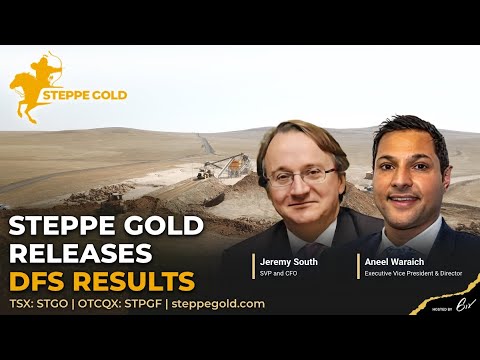
27:14 Thanks, Jeremy. Thanks, Greg. And thank you, everyone. So the overview here, obviously, the feasibility study is the focus of the call today to obviously give an update on phase 1 as well as what's going on now with phase 2. We have a robust project, strong economics that we can now build on and as Jeremy and Greg mentioned we've already started so this isn't a feasibility study that we release and then we'll spend a couple years trying to line up financing and permitting and and all that This is something that we release and has already started. And, you know, barring no unforeseen further delays and the global supply chain issues, anything that we can't control, this should be online in about 2 years' time. So very exciting to be able to produce from surface, generate a lot of cash flow from our operating mine with the heat bleach and being able to double our production profile in about 2 years with a lot of room for growth from a production profile basis and a life of mine extension.
28:20 So a very good position to be in. With that, we can open up for questions. Dasha. Yeah, great. Thank you so much. So now we'll head into the live Q&A. So if you do have a question, feel free to submit them now. But, Neal, we have a question for you. So investors see a lot of feasibility studies come out, and often no difference operationally for years, which usually means no shareholder value upside in the short term. Are you confident that the upside on this will directly correlate to the current phase 2 expansions and anticipated production? And more importantly, will this lead to more raising of cash that could lead to dilution? Yeah, no, it's a good question. Usually when people release a feasibility study, then you know that What's next is this capital raising and that needs to be done both on equity and debt side. So we have the luxury of, as I just mentioned, that we're already operating, we already have infrastructure.
29:11 This is a seamless expansion, not a new build, a greenfield. So there's a lot more optimization opportunities as we move to bring that production online because we're already in production or we'll be in back in production imminently when we deal with our reagents supply chain issues in short order. So that's a big difference from other feasibility studies that are new builds. They have to continue to raise capital to pay just normal bills corporately while advancing talks to finance the development and construction of their projects. We've already constructed a project and now we're expanding on it. So we are large shareholders and have always been large shareholders of a company. So we're very mindful of equity dilution.
29:58 We don't want to raise capital at levels that are low like today. And we believe we are much more valuable today than we were a year ago, even when we traded at multiples of what we're trading today. So certainly on the equity side, we have the luxury of waiting, and waiting for 2 things. 1, cash flow. Cash flow can contribute to our equity contribution for this project. Will it cover it all? It could. Will it? We don't – it's a little bit too early to say. So we have the luxury of using that cash flow to fill in the equity component As we build this project over the next 18 to 24 months, on the debt side, we've been very busy advancing debt conversations with both local banks and international lenders. So this is not something that we just start to process now. As Jeremy mentioned, within a few weeks We should have an update on where we're progressing on our first tranche of debt capital, which would fund essentially the first year of CapEx. So we're in a stronger position, I think, than most based on the release of today's news, where we'll do everything we can to minimize dilution from the equity side. If we don't need to raise equity, we're not gonna certainly just do it for the sake of raising and doing it ourselves and our partners who are investors.
31:12 So hopefully that answers the question. Yeah, great. Thank you so much. So we have a bunch of questions here. Rod is asking, do the FS numbers take into account the stream? Yes. Yeah, they do. So, yeah, we have a stream, just so people understand the stream, it's a 46,000oz, mostly gold. There is a stream on silver, but silver is a pretty small component of our project. 25% of our gold – this is all now financial – 25% of our gold goes triple flag up to 46,000 ounces. So we're up at about 11 or 12 right now. And then there's an annual cap of 71.25. And we sell the gold at 17% of spot. So essentially 83% of the stream sold.
32:08 So it has a material impact on our revenue, obviously, over 12 and a half years. But it does, I guess to Jeremy's note there, it includes a stream, But the stream drops off significantly as we we get to our milestone payment at 46 milestone delivery of 46,000 ounces old so instead of 25% of you know, it'll drop to a maximum 25 ounces great. Thank you Who is asking what is the after-tax MPB at 1800 gold? It's about $285 million at 1800 gold. Great, thank you. So it goes up from 232 to about 285.
32:55 Thank you. We've got some sensitivities in the study. All right, Our next question here is from Ron. He's asking, the resource is 2.4 million ounces, but the reserves are only approximately 1 million. Why is that the case that only 50% are mineable and is there any expectation? As I mentioned, you know, Mung is not included. So that's, you know, if you look at the do it by tonnage, I think on a gold equivalent basis, the reserve is about 1.4 million ounces. So it's not 50%, but as I say, about 7 million tonnes of moong is not included in the balance of about 8 million tonnes is resource at ATO.
33:50 And that's outside the pitch shell or all that is not considered to be economic at the cut-off grade supply. Thank you. We're hopeful of being able to bring more of that in. But, you know, I haven't, you know, we were obviously these studies are done by independent parties and, and we can we can only work with what we've got. Great, thanks. Our next question is from Ryan. He's asking, What is the expected strip ratio of the solified operation? 2.6. Great, thank you so much. Our next question is, is a strong US dollar a positive or a negative for your financial results? It's a good question. Obviously, we sell our product in US dollars.
34:36 Gold is quoted in US dollars. Most of our costs are in, I mean, they're calculated. A lot of them are calculated in US dollars, but we probably pay them in Mongolian. Yeah, so yeah, it's a hard question to answer. And the Mongolian currency has been relatively stable to the US currency of late. There's normally about a 5% inflation in that currency, but we haven't seen that of late. So I mean, I would say that, as a general comment, most of our services and our equipment, we pay them in Togrug, but they're quoted in US dollars. So we have a sort of a natural hedge, really.
35:31 Thank you. Harry is asking, are you able to sell concentrate into Mongolia or do they have to, do they need a smelter capacity or do you envision exporting it to Russia or China? There's no smelting capacity for concentrates in Mongolia. It all goes to China. China has some incredibly high percentage of the world's smelting capacity. The smelters aren't super close to the border. Most of the smelters in China are on the Eastern seaboard, but there are some that are reasonably close that we will use up in Western China. So, yeah, we will unlikely sell concentrates to Russia, but that is an option. We are close to the Russian border as well. As I mentioned, we will be selling, we'll be producing around 100,000 tonnes of concentrate a year.
36:27 So that's quite a lot of concentrate, but it's probably not enough for us to go direct to a smelter. So we'll probably go through one of the large traders and, you know, some of the large international traders are very active in Mongolia, such as Novol and Trafigira. So it's well established, these are well established supply chains. And we'll again, we'll be benefiting from that. We're not putting this on a ship and sending it 10,000 miles where we're moving this a relatively short distance. Thank you. There's some questions here about their re-agement, their delays. Maybe we can provide more detail on that and what the future looks like for the supply. You know, I think we're optimistic, but, you know, I think the problems have been in China and they continue to cause us issues.
37:22 I think we are building up our inventory, as Greg and Anil have mentioned. Even just looking at sell 3 500,000 tonnes at 2 grams, we're very confident we're banking this. It's been a very frustrating year, lots of sleepless nights over this, but we're optimistic. We have now 3, we've developed 3 options to source this. We are coming into the winter, so we might not leach in any event. We may not leach until the early new year, but We have our boiler house operational, so we do have the option of being able to leach through the winter. Should we get cyanide shortly? Do you want to add to that, Neil? Yeah, so I think...
38:12 Mute your microphone, Jeremy, just a little bit more back there. So I think what we've learned, obviously, in the last 6 to 12 months is you can't rely on a single source and sometimes a single country to supply your very important chemicals that provide obviously production and cash flow. So certainly I think we've learned from that mistake. Maybe during COVID in April 2020 when the borders were closed and we managed to get supply into the country, we were confident that we wouldn't be affected. Certainly we were and the whole world is. This isn't a step gold issue. It's a global supply chain issue. And in Mongolia, it's affecting Mongolians in many ways, even in hospitals for chemicals that are required or an agent's required there. So It's certainly not just to us, but I think what we've learned is to have multiple sources and suppliers. So I'd rather have oversupply than undersupply going forward. And so we have looked at the surrounding countries, including Russia, obviously, and Kazakhstan.
39:16 And so, you know, border can open up in days in China and we'll have it in a week. If not, we can have it in a few weeks, hopefully, we're hopeful, coming from the other options. And I think going forward, all those options will remain open so that we can continue to have no interruptions in the future. Great, thank you. Harry is asking, how much of the CapEx do you expect to fund from HLAC cash flow and how much from financing? Well, I think we will see, I think, a bit of both. I think, obviously, it makes sense to use debt capital where prudent. So we have options. I mean, if you look at the way the study's being built, obviously, it's on, the study's being built on an unlevered basis. So, you know, it assumes 100% equity as most studies do.
40:05 You know, we plan to use a prudent amount of debt. So we, I'd say it's a combination of debt, operating cash flow and probably some equity issuance at some point in the future. Great, thank you. We estimate in the study that we'll generate about $80 million of EBITDA in the next 2 years. That's what the study shows. So $128 million of CapEx, $80 million of cash flow, it shows that we have a, you know, we can put a meaningful dent in that. But, you know, as Anil's mentioned and I've mentioned as well, we are well advanced on some debt conversations. And, you know, so it'll be a combination of all 3 of those capital sources. Right, thank you. Another question from Harry here, how do you get concentrate to port? Are you close to railways or do you need to truck it all out?
40:59 It'll likely be trucked. As I mentioned, we're about 150 kilometres from the Chinese border, where we have—there's an existing trade route, as I say, 40 kilometres from our project, where there's another quite similar mine owned by—partly owned by the Chinese and the Mongolians. So yeah, it is already an existing, essentially an existing inland port and a well-established trade route for concentrates through China. Thank you. Our next question is, are there significant byproduct credits from the gold mining operation? There's only byproduct credits in the oxide. So the next 2 years, we have a reasonably meaningful, we estimate, I think, 300,000 ounces of silver next year. So, you know, it's not a game changer. half of our silver goes triple flag. So, you know, it's not a meaningful number, but there are some small byproduct credits in the offsides. Obviously, there are no by-product credits per se in the fresh rock phase until we maybe look at releasing the remainder of the gold that's unrecovered after the flotation.
42:20 So, good. Thank you. So, with the harsher winter climate coming up in Mongolia, what does this mean for production? And Even if the Chinese borders opened up today, what would that mean? Yeah, so I'll jump in first. So yeah, I think we confirmed, we do have the boiler house fully installed now, which allows us to have better recoveries during the winter in the harsh winters that we have in Mongolia. But given the current situation, we can't control when cyanide will arrive, it arrives in 1 week or 6 weeks. So assuming the latter, we're in winter, it's going to be minus 30 plus probably at that time. And we'll make a decision at that point if it makes any sense to restart production in that harsh of a climate. Or we have that inventory buildup. We have the cyanide, we've never had any operational issues in getting gold out from that stockpile, from the cells, once the ore is on the pad. So we can just defer that production restart till the winter thaw, which usually happens end of February or March. And I think that's when we would restart if we couldn't make a decision to get the product on online in country imminently.
43:38 I don't know if Greg or Jeremy have any other comments on that. Yeah, I agree with that. And you know, it's I think it's a depending on the timing of it. And then and then the decision we made, you know, based on the price on when it actually does arrive. All right. Thank you so much. So our next question is, what is happening with the Mongolian stock exchange listing? Yeah. So we were approved to list earlier in the summer with a fixed price already determined, which we're currently not at that price. We're 20 percent, I think, lower than that fixed price. So the options there, again, will be dependent. That was an approved listing on the Mongolian Stock Exchange at that price within a six-month period. We'll hit that 6 months in December.
44:24 I mean, obviously, news like today, and again, going back to the value we've created in the last year, we can't control the market, and the market will always dictate the price of our equities and it will correct whenever it decides to and we'll close that valuation gap. Certainly it hasn't closed yet, but if it made sense and we were able to, we could, again, we could hit that at the end of the year, but most probably that will be pushed into the new year as well. These supply chain issues have deferred those things. It just makes sense to list on stronger footing. And so if we say we're a producer, let's make sure we're in production when we list on another exchange. And so if it doesn't happen in December, if we don't have a restarted production, then I think we'll revisit it in late Q1, early Q2.
45:16 Certainly intention is obviously list there. That wasn't really a capital raise or a financing listing. We were capitalizing that listing with a, you know, circa 1.5 million U.S. Raised, so not very dilutive by any means, but a way to obviously capitalize that listing. But it is a great way to get local investors, more local investors, you know, support and have the ability to own an asset in their own country. So the intention is certainly to list. Like I said, it could be December. If not, it's most likely pushed to Q2. Thank you. Kujil is asking, what about the capacity of phase 2 process plant? Are the grades of lead and zinc concentrates planned? So what are the grades? I mean, the grades are, I think grades are on the chart there.
46:08 The process plant capacity, it's costed out of 2.2 million tonnes of processed ore. And the grades 0.46, 0.78 zinc, 1.14g per tonne gold and 11.18 silver. This is a very simple flow sheet. That's sort of why we decided, the main reason why we decided not to put the CIP into the flow sheet. We wanted to sort of keep it simple at this point. And we got sort of a 79% recoveries and We have a very profitable and robust project. So certainly over the coming days, hopefully the market will understand that.
46:56 Just to add, I guess we have the ability, The production capacity exists to go beyond 100,000 ounces a year on a gold equivalent production. So, you know, as we add in Mung deposit, as we add more ounces into the mine plan from Mung and ATO and maybe some new satellite discoveries or deposits on the same license, you know, you could still have a 10-year mine life and grow that to 125,000 to 150,000 ounces on a gold equivalent basis or have a 15-year mine life and have that production increase. So we're not going to be constrained at 100,000 ounces, I guess, with the current build-out. So there is some excess capacity to grow that production on a yearly basis. Great, thank you. And as a reminder, a copy of this presentation is available for download under the handouts tab, So be sure to download that before we close out. Our last question here is, will you be having another shareholder update before the end of the year?
47:53 Yes. Ideally, the close off the year, where we're in October now, if it makes sense and people are willing to hear from us, we can do something in early December to close off the year with hopefully not just a higher share price but some other further advancements and milestones and catalysts that we have in the pipeline in very short order. So we expect November to be very busy. With some additional news and we're happy to talk to investors before the year end. To talk about that in in in and- you know reiterate what we're planning to accomplish in in 20 22. Absolutely I'm looking forward to it thank you so much and you'll and thank you Jeremy and Greg for waking up at 4AM for this- obviously thank you for taking us to your presentation and the Q&A, and for everyone who joined and submitted great questions. If you do think of another question after this summit, feel free to contact Stepgold directly. You can find more information on their website stepgold.com.
48:53 And of course this summit has been recorded and you can watch it again on six.com afterwards. But before we close out, I'll just pass it back to you, Anil, for any final words. Thanks, Tasha, and thank you everyone again for attending. And of course, my colleagues in Mongolia waking up at 4am to attend shows you, I think, how important we see this news and how to obviously present it. Again, any questions that we were unable to answer today were always available and readily accessible, easily accessible to answer any questions. ♪♪ you