Stephen Rentschler
CEO at Nevada Lithium
25 years of experience in institutional investing. Founding member of the Chilton Global Natural Resources Fund, with peak AUM of >$4B USD.
Replay available
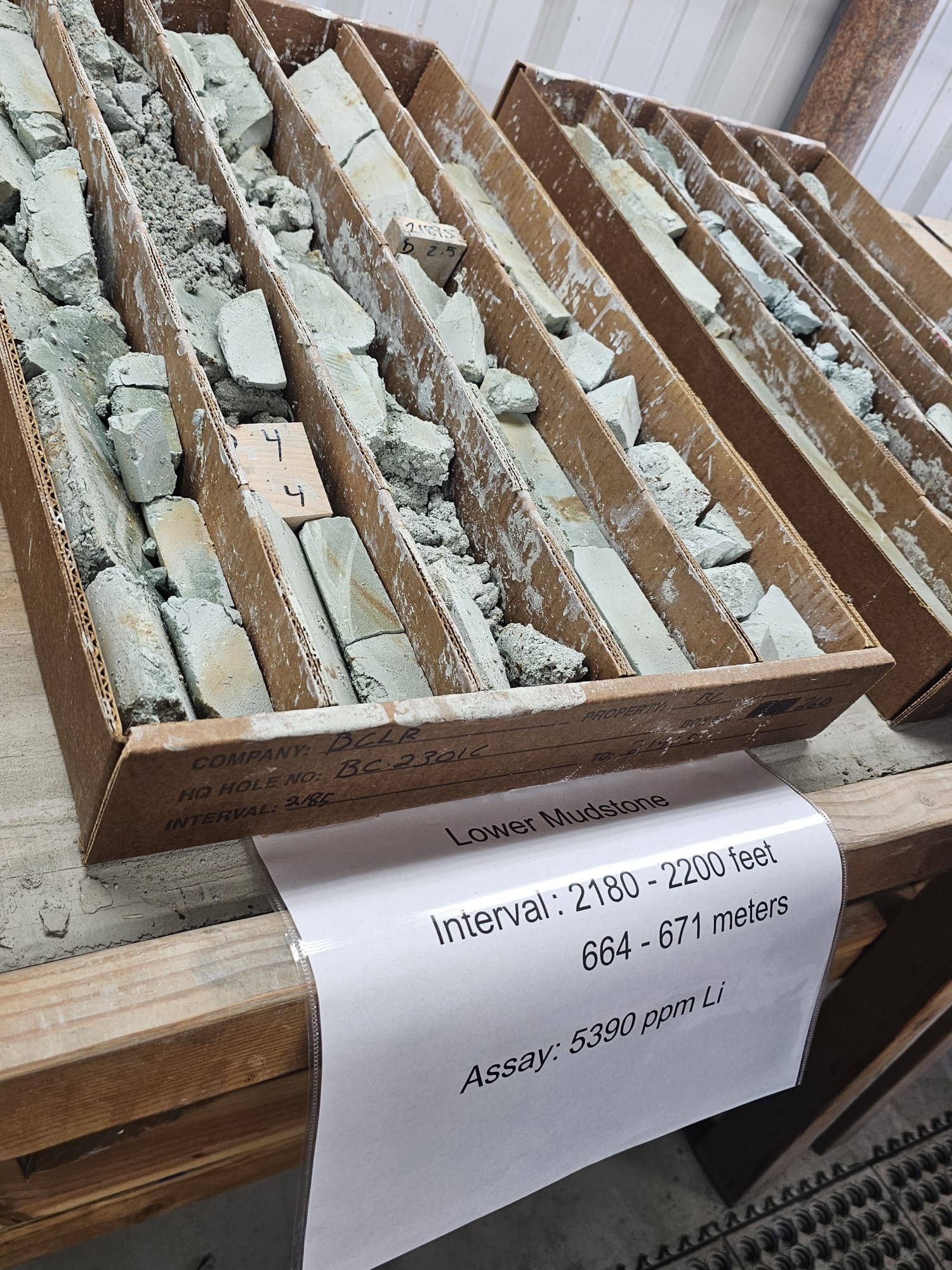
Join us for this year-end event as we reflect on Nevada Lithium's remarkable achievements in 2023, including the most recently reported drill hole results at our Bonnie Claire Lithium Project in Nevada. We'll reflect on the Project's overall progress, which includes the latest hole's intersecting 3076 ppm Lithium over 1100ft (335m) within 2219 ppm Lithium over 1740 ft (530 m). This is the deepest hole drilled to date, returned amongst the highest grades intercepted on the project to date, and confirms the potential for additional high-grade mineralization. After reviewing 2023, we'll also discuss our strategic vision for 2024 and beyond. Don't miss this opportunity to be part of the energy revolution!
On 6ix: 6ix.com/event/new-boundaries-nevada-lithium-s-2023-reflection-and-2024-projections
Automated transcript · Written by software from the replay's audio. It can mishear names and figures; the replay is the record.
0:08 Hello everyone and welcome to the Nevada Lithium live event hosted by 6. I'm pleased to introduce the speaker for today, Stephen Wrenchler, the CEO. Steve will be discussing what 2023 had in store for Nematolithium and what investors can expect going into 2024. And after that, we'll be accepting questions. As a reminder, you can submit your questions in the chat at any point during the presentation. As always, this summit is being recorded and will be available to watch shortly afterwards. Without further ado, I'd like to hand things over to you, Steve, so that we can get started.
0:41 Beautiful. Thanks, Max. Thanks so much for the introduction. Obviously, happy holidays to everybody, and very, very happy that you took the time. I know a lot of people are starting to pack it up before going out for Christmas but we've got a lot to talk about over you know what we've been doing here at Bonnie Clare for the past year and what we're thinking about doing going forward. At this time of year, I mean people, we call this an introspection, a retrospection, all these various things. And it's sort of like, you know, you get to the New year's eve and everybody's singing Auld Lang Syne and you're basically turning the page on 1 chapter and starting a whole new book, having your resolutions, things like that. And as I've been thinking about it, I've been sort of thinking about it in a different bit of a way. Obviously, 2023 was a transformational year for Nabata Lithium Resources.
1:36 So I don't see this sort of as we're closing the book and starting with another one. To me, this is all one continuous book. I think the prologue has just been written. I think what remains to be seen is what kind of book we have on our hands. You know, at one end of the spectrum, do we have Paradise Lost? And maybe in terms of the value that we're going to get from that in the longer term is Do we build Bonnie Clare ourselves? Do we have something shorter like Rip Van Winkle, something like that, in which case we have an exit way to basically get shareholder value in say 2 and a half, 3 years. Or do we have sort of a multi-volume type of a thing going on here. You know, the letters of St. Paul or JRR Tolkien's the trilogy where we have multiple projects.
2:26 And the answer is to all 3, well, we don't just know yet. And the way I sort of think about it is I try to simplify things is I look at sort of the overall factors that are going to contribute to the paths that we're going to take. I think there's really 3 big ones that we should think about. One of them is lithium prices going forward. The other thing is the execution of your management team. And then obviously there's also what's Bonnie Clare going to show us as we go forward. And I think and I hope that you'll agree all 3 things right now are functioning very well. And it's going to be very interesting to see how this all unfolds. In any case, when I think when you take our current market capitalization and you look against the potential value in any of these scenarios, it's just tremendous. And frankly, that's why, I'm sorry about that, why we're
3:22 doing this. So put that on. So first thing is let me just start with the lithium overview. The reason this is important is because from my background, the lithium prices are certainly going to be higher than where they are now. I know everybody right now is very, very focused on what's going on with the Chinese, and short-term supply demand, all of these sorts of things. I just don't really think about it like that. From my perspective, over watching the global commodities for the past 30 years, I understand that when you're trying to basically increase supply at a 15% or 20% annual growth rate for on the order of 6 or 7 years, which is essentially what's going to be needed to get to the minimum demand numbers that we're talking about, everything that I've seen.
4:14 It just really, it's almost impossible. And what this will do is give us a tremendous uplift. If the lithium prices, you know, sort of, oh I don't know, just think of them as sort of hands underneath us pushing upwards, as it will really for all projects, to help us get the greatest net present value out of this project going forward. Very recently, Robert Friedland was talking about sort of the incentive pricing for copper. And it was on the order he was saying around $8. And just for reference sake, just to say copper is around $4 right now. So essentially, bring on new copper supplies. He's thinking that you need double what the current copper prices are. And I think of things in terms of analogies. Well, copper is essentially a mature commodity industry.
5:01 And here we are trying to basically build lithium from, call it 0, but it's really 450,000 tons a year, say last year, up to 2 and a half or 3 million tons by the end of the decade. So it gives you an idea, despite all sort of the squirrelly stuff that's going on right now about what the long-term lithium prices are going to are going to be needed to bring in additional lithium like Bonnie and Claire's and the reason I bring this up is because we're sitting here with a PEA that was done 2 years ago at 13,400 R lithium, at 32,000 tons a year lithium carbonate for 40 years. That PEA showed tremendous leverage to basically increasing lithium prices. You get up to $30,000 lithium carbon equivalent prices, and you're talking about $6 billion type of a project. And you can go back and look at the news release and see this. Now, of course, we know that we're already one of the biggest projects in the world right now.
6:03 We've been called either, I think, the third largest clay slash unconventional deposit in the world, the second largest in North America, all these sorts of things over the last couple of years. We just had a tremendous report that came out about us, written independently from us, we didn't pay for any of this coverage by RFK out of London, which basically said that we're out of their all their projects, and I think it was over 60 of them, that we were certainly the most attractive of all their high profile lithium projects. And I think that was, yes, again, out of 60. So we're just starting to get the word out about the project, which is of course, the big disconnect that we've all seen between the market capitalization that we have now and the value, whatever that may be going forward, as again, I sort of drew out over the different options.
6:53 Now, I think the thing to start in terms of when we run down what we've done and where we're going and we look at sort of the PEA and where it's leading towards the PFS, we should do that because that's really the core of this entire thing. And it encompasses all these different facets of the workflow that you've seen coming out in the news releases over the course of the past year. Now if you're newer to natural resource investing, again, sort of the natural progression is that you go from a resource estimate and then you apply some more economics against it. You get a PEA, preliminary economic assessment. You take that to a preliminary feasibility study and then ultimately a bankable feasibility study. And it's just increasing, you know, levels of de-risking all along. And de-risking is the key to this because it's until you're in the middle of this doing it, it's sort of, it's easy to think about this, I think, in sort of A0I don't know, a non-concrete type, a very abstract sort of a way.
7:52 These are very concrete steps that we have to go through, and there's no guarantee at any point in time that they'll work. So you have to go through, continue to de-risk, and as you get, certain variables brought your cost perspective, other technical reports, things like that, you bring them into finer, finer levels of basically acceptability, levels of confidence, you ascend along basically that spectrum from PEA to PFS. And that's what we're heading towards right now. And the game plan is still to get PFS completed by the end of 2024. And PFS is typically sort of the leverage point where bigger companies will want to become involved with you because they understand the de-risking that's taking place.
8:39 Having a PFS is obviously much closer towards having a real mind than a PEA is. And I think to a certain extent, the level of seriousness that's assigned to these reports is sort of a whole different ballgame. But be that as it may, we have a very, very economical, robust PEA in place, which has allowed us to talk to a lot of people at a very early stage. I would say that the biggest component within, you know, the PEA getting to PFS is our drilling program at Bonnie and Claire. In October 2021, when the PEA was written, obviously we didn't have 2022 drill results, nor the last 2023 drill results incorporated into it. And what have we found subsequently?
9:25 Well, over the course of, let's just call it the last year and a half, 2 years, we found that at depth, we continue to have high-grade mineralization. We know that as we continue towards the west, the basement is starting to come up closer to surface and we're starting to get higher mineralization not only at surface, but we're also seeing tremendously higher mineralizations at depth. And sort of if you think about again the mineralization of Bonny Clare, think about a sandwich on its side where you have a piece of bread on the top, a piece of bread on the bottom, both of those are full of lithium. In the center you can have your meat, let's say, and then the center is devoid of lithium. Well, the top piece of bread would be obviously, if the numbers continue to increase, getting optimistically towards potential for an open pit. What's underneath the meat is of course our borehole mining scenario, which was incorporated into the PEO and this is really the primary course that we're continuing to pursue.
10:27 But along the bottom of that second piece of bread on the bottom is where we're really starting to hit these tremendous you know 2,000, 3,000, 5,000 ppm values. So that is the area of focus right now. We have currently drilled 2 deep holes at Bonny Clare, the first of which we released the assays a few weeks ago. Now, normally we drill these holes to 2,000 feet of depth. However, the first of the holes for 2023, we took down to the geological basement, which was somewhere around 2,900 feet, so almost 1,000 feet deep or 50% deep. But what we found on the way down there is that there was about another 400 or 500 feet of mineralization. That was this very, very high-grade mineralization.
11:15 And in a way, it really wasn't a surprise to us because the previous holes that had been drilled to 2000 feet had ended in mineralization. So there was no reason to think that essentially there would be an abrupt cessation of the mineralization going down, but it was the grades and also the thickness of the intercept again 400-500 feet further that was really really very interesting. And what it's going to do is make us think about what we're going to do in 2024 with the remainder of this program because we may decide that we're going to drill deeper on these holes which are necessary for the resource upgrade. So we've drilled 2 right now. We're waiting to basically have all the cores complete.
12:01 They need to be split and then shipped off to the assay labs. But remembering again that these are 22,000 or now 2,500 foot holes, so this is going to take some time. So we're waiting for the second hole right now- from from what we've been told the it looks very very similar the mudstones look very similar both the top of the bottom which obviously is. This is great hope that we're going to see similar grades really no reason. That we wouldn't think to see that kind of thing. But we're not going to know for I would say at least a couple of months. Early spring we'll make a decision how to progress with the remainder of the in-source, pardon me, basically the resource infill drilling. So we're looking at another 8 holes. Again, the depth is to be determined.
12:54 What I hope to do is come back in the early spring or late spring, depending upon the weather and best case scenarios that we could hit this with multiple rigs and come in and finish out all those holes because getting all of that data then, which will then take us through 2024, at least I would say the summer in terms of getting the assays and all of that back, will essentially I think be the gating factor towards completion of the PFS. So that's the main drilling that's going to be going on and of course again is the infill resource upgrade drilling so that gets us from inferred to measured and indicated for the PFS And we're doing some secondary drilling as well. This is sonic drilling, which gets you, the way I think about it is even more of a precise of a core, recovers even more than the diamond drilling that we're doing, But we're doing that to shallower depths and that's being done basically for technical reasons. We want to know about water movement within Bonny Clare, the strength of the ground, and this all goes down to about 500 feet or 700 feet if we can get there, to look and see about what kind of foundations would be necessary for certain kinds of buildings when it's time to do that.
14:09 It's also going to evaluate what kind of pit walls we would need, and specifically, we're thinking about the angles of those pit walls. So we're looking at the stability of the ground down to those depths, because if we get the potential to basically develop an open pit, we wanna have this sort of in our pocket. I don't wanna be delayed, you know, sort of we get to the end of the year and like, oh dear, we need to do something else or oh dear, we should do something else in addition to what we're doing. So better to get as much of this information as we can right now. The second of those sonic holes is being completed right now. They're doing pumping tests on it. And I know that those assays will also, those cores will be split, and then they'll go off for assay, and they're going to take, I would think, about the same amount of time as the deep ones. Because I think they're doing different types of things. Obviously, you all know that I'm not a geologist or an engineer, etc. But there's different types of things that are going on there. So if we think about essentially starting to see assays of all types coming back in, I would say end of February, early March, I think that would be a pretty safe bet.
15:18 That's the biggest component. And as I said, I think the gaining factor to the PFS. Obviously, another very important component is the metallurgy. You've heard me talking about this for quite a while. Now, back in 2023, At the beginning, it was February, we proved a very, very important milestone, which was the production of a battery-grade lithium carbonate. In terms of levels of purity, you're already at, I think, 99.95%. But then the real key becomes getting rid of things in other parts per million that you just can't have. And whether it's boron, magnesium, or aluminum, whatever it may be, you have to go through certain processes to remove that. And what our metallurgists who are hazing out of Boulder, Colorado, and again, they are independent of us. What they proved is that it could be done. And so we did first course at the benchtop scale, but subsequent to that, we have done it on a pilot scale.
16:15 That's not a pilot plant scale, but our pilot scale. So, you know, on the order of 40, 50 times larger in terms of the quantities that we produced. And the reason that we did that is because the precursor to a battery grade lithium hydroxide is battery grade lithium carbonate. So it's a detail that I think has got significant importance because typically if things are gonna start to go wrong with these recovery flow sheets, it's when you start to scale them up. Now, obviously the size of the scale up as we go forward to a pilot plant later in time and then ultimately to the full-size reactors. It's all another ballgame but you don't want to have things start to fall apart at the beginning and they haven't. Now we're currently working on proving that we could do battery grade lithium hydroxide. And why is that important?
17:05 I talk about optionality a lot in a lot of different things. That's because my past life as an investor, you know, I understood that there was risk again in all of these different types of things. So the more options we had our optionality to basically grabbing value, the better it would be. In this case, when I first started talking to essentially lithium OEMs a number of years ago, I distinctly remember everybody wanted lithium hydroxide, lithium hydroxide, you know, to the point where it seemed like in North America it was 90% lithium hydroxide, maybe 10% carbonate was what was going to be needed. I can tell you that subsequently, it's now basically a coin toss in terms of talking to people, 50% carbonate, 50% hydroxide. So, Hazen is going through the steps. You know, it's an iterative process. You know, there's unfortunately there's no there's no textbook that everybody can refer to to say this is the way in which is done for this particular geology. This is just simply the nature of the beast. I believe it's going to be the nature of the beast for all lithium projects going forward. They're going to essentially have to have personalized or bespoke recovery processes. And that's because everybody's geology is different.
18:18 So we expect that Hazen will have an answer for us relatively soon. In the meantime, Hazen is also starting to basically write the reports that will be necessary from corporation into the preliminary feasibility study. So I don't expect that that is going to be again, any sort of a gating factor in getting PFS done, but the sooner we can get to that, the better. We are looking at also again, exploring the potential for a third revenue stream here, which would be potash fertilizer. Again, that's because we have elevated levels of potassium. Don't know if that can work. There are certain ratios that I know that the geology has to fall into for it to make it easier. But it's not of the most importance to us right now, as far as I'm concerned.
19:07 We already cracked the code. It's a big differentiator between us and a lot of other juniors out there who say, well, we have lithium, but I can definitively say, well, we have lithium and we know we can turn into battery grade. And I think this is another important thing that I just wanna make sure everybody understands because I've been talking obviously to people almost nonstop over the last number of months. And that is to make sure everybody understands that we are not talking about producing some sort of an intermediate product at Bonnie Clare and then shipping it off to a refiner, to an upgrader somewhere else around the world. We're talking about getting 32,000 tons of battery grade lithium carbonate at Bonnie Clare in Nevada to ship directly to a battery plant.
19:55 So that is again, I think a very big distinction, a lot of investors who've been involved with South American or Australian plays, you know, that's differentiation that's maybe it's not immediately obvious to them. But with regards to that and the way it interplays with the Inflation Reduction Act and all those electric vehicle tax credits that are going to be accessible to OEMs if they use Bonnie Clare's lithium is a very, very important factor. So I just wanted to bring that out. So that's where we are with metallurgy going forward. You know, I'm hoping that we'll have the announcement sometime here relatively soon, early spring anyway, on the hydroxide. And then going forward, we'll see about potassium sulfate going into maybe the summertime, but at the very least, understand that the work is being done for PFS going forward.
20:49 In terms of permitting, one of the big things that we got, I think was late 2022, but which we were able to utilize all through 2023, was an expanded area of surface disturbance. So previously, and so now let's just say a year and a half to make sure I'm not speaking in error, you know, we were working basically on the ability to disturb 10 acres of ground, you know, and again, and an acre is 44,000 square feet. If you've been to Bonnyclare, you understand again the magnitude of this, you can soak up 10 acres very easily just in roads. Well, now we're working basically an expanded permitting which allows us something on the order of 2, I think it was up to 200 different drilling sites. The point being, we have a tremendous amount of flexibility about where we can go and putting in roads and things like that. And what I'm expecting is that sometime in the middle of the year, We're going to be able to apply all of that potential for surface disturbance in different areas of Bonnie Clare. I'll get the nomenclature incorrect here, but essentially the way I think about it is we have the ability to make a mess in a certain area, which we are doing down towards the south. And we want to be able to do it in the north as well. And we're hoping to get that permission sometime, as I said, going into the summertime is the way I think about it.
22:12 This, again, for people who are sort of new to the story, this is all US federal land. Over 80% of Nevada is owned by the federal government anyway, so it's the Bureau of Land Management which dictates what you can and what you can't do. And you know the field office at Atonopah has been responsive. We have got environmental consultants and permitting consultants who obviously are helping us through this. And it looks to me like everything is on track. So that will give us additional flexibility and we will make that announcement as I said sometime mid year 20 24 So that's another piece of news that will be coming out.
22:50 I think probably one of the most important things now to talk about is our marketing efforts. And if you've been looking at our website sort of over the course of the past, say 6 months and to what we had previously at the very minimum you'll understand there's been a tremendous rebranding that's gone on in Nevada lithium. Ultimately how do I see this sort of playing out? I think it's no secret I'm one of the few US CEOs around. This is a US project, we would love to at some point in time have this on a on a US, you know, NASDAQ or, or an NYSE listing that's obviously farther down the road. But part of the branding of it is going to be instrumental in my opinion to our being able to maximize essentially our efforts in that area.
23:43 We've been talking to a lot of people obviously you've heard me talk over time I'm doing a lot of things one-on-one with people, but I'll just talk about sort of what we've been doing very lately in terms of we just had a very, very well-attended site tour at Bonny Clare. We had basically 40 people up there. We had investors, we had analysts, you know, people, parts of investment banks, all sorts of people up there who are instrumental into getting the word out sort of these first steps about Bonnie Clare. You know, we're up essentially for, for, oh, I don't know, 4 hours, let's just say, Bonnie Clare again, it's a, It's a 2 and a half hour drive by bus to get there from Vegas. I had an excellent presentation by Rick Kern, previously of Iconic.
24:35 It really laid out what it is that we're trying to achieve and what the possibilities are. As I told many people, when you start driving up along Route 95, which again is an interstate highway in the US. And I can point to the left and say, okay, Bonnie Clare starts there. And we're still driving along at 65, 70 miles an hour, 5 or 6 minutes later, we finally get to the gate, the Bonnie Clare. It gives you an idea of the tremendous size. So I think people were very, very impressed with the team, very, very impressed with the asset. It opens your eyes again. Of course, the infrastructure, it can't get any more clear than when you get right off of the highway and you look above you and there's the high tension wires, all of this kind of stuff.
25:22 Very, very successful trip. I think that we're going to be running another one relatively soon, early in the spring. The types of people who we're bringing in to help us market are tremendously successful in the lithium space. They're very, very impressive individuals who've had a lot of success with the people that they know, bringing in other investors, the kinds of people that, you know, can take strategic positions. Obviously, you saw during the course of the summer with Marcel Buckhorn coming in, these kind of people who know other people. And from my perspective, they're going to help us bridge the gap to when our market capitalization gets big enough for basically the funds to become involved. Going into the springtime, I'm going to be doing a lot of the different shows, PDAC, VRIC. I'll be out in Zurich later in March. I'll be up in Toronto.
26:17 I'll be in New York, which is not far from where I'm speaking right now. You know, the key to me is to get the market capitalization up basically another step to the point where even the smaller funds can then take a, you know, a half percent position on it, maybe a quarter percent. And it's really just about the math. You know if you think about a hundred million dollar fund that can make a 1 percent investment that's a million dollars. You know that kind of thing can get a little hard at times to move a Bonnie Clare. Pardon me at Nevada Lithium. So it's you know when we start to get north of I think of 100 million dollars Canadian we're really really going to start to get I think the interest of the funds and that's sort of the you know the game the game plan going forward just keep taking it up have successful marketing to different types of people overseas.
27:04 A high net worth individuals etc. And then start to essentially really go after the funds. I'm obviously laying the groundwork with you know some that I know from the past. There's a lot of ESG funds out there. There's battery metal funds all of them etc. It's just in my opinion making the math work because obviously we have a great P.A. Is first you know swipe at the economics. We're in literally the best mining jurisdiction in the world, not only in the US, but in Nevada. And we're starting to execute, I think, on all cylinders. So the marketing, you know, with regards to that is going very well. You're going to see, I think, very, very visible signs of this clearly, we'll talk about it. And then the sort of the second part of the marketing, which I can't really talk about, other than to say, just bear with me, is that we continue to talk to OEMs, other lithium battery, metal end users, etc.
28:02 Because I'm pursuing offtake, I'm not making any bones about it. That would be the most accretive money that we could possibly raise. I think that you see some of the more forward-thinking car companies out there doing certain things with early stage companies in other areas of the world that I think we clearly have beaten hands down. But as you could imagine, if you were at the other end of the table, you don't want to have people like me talking about negotiations or just the talks or the NDAs or anything like that. All I can tell you is that despite the ups and downs of lithium prices on a daily basis, based upon whatever China's doing or the Federal Reserve and interest rates, whatever, Car companies are very, very concerned about lithium supplies and how they're going to acquire them.
28:51 And that obviously works in our favor. So bear with me with regards to that. It's the kind of thing that when I can tell you something, obviously I will tell you as soon as I possibly can. However, we are making progress. So that's really the update with regards to that. I think I've hit all the major areas, sort of looking back over 2023 and then looking forward. We are going to have a tremendous amount to talk about going forward. And I think at this point in time, Max, if you have any specific questions, why don't you start throwing them towards me? Yeah, of course. And thanks for that walkthrough there. So first of all, as an investor, what catalysts should they be excited for early 2024, but also throughout the whole year? And you kind of answered to that, but maybe elaborate a little bit on that. Yeah, well, I mean, you know, the other thing I would say is there's difference between an investor and being a trader. I'm not saying there's not a role for both.
29:52 But the catalyst going forward are everything that we're doing in the progression towards the PFS. So again, we're going to have the drilling. We'll be restarting the drilling. Well, first of all, we're going to have the results from essentially 3 holes that we already have out. And they just simply take time. So think about that probably as the first of what's going to be happening. And again, in a couple of months, We're also going to be talking about the seismic survey, and I probably forgot to talk about that in the context of the overall optionality of what's going on. We announced essentially a couple of months ago that we had initiated a 2D seismic survey. This is something that's going to obviously be instrumental with regards to our looking again at the brine opportunity.
30:38 Now, what you're essentially looking for here are what they call high angle vaults, so faulting. So just if you think about this, and this is going to be dumbing it down so hopefully people don't get offended, but basically, you know, the water at Bonny Clare is a very, very high pH, so it's very alkaline and it's normally acids that will dissolve sediments and put lithium into a brine suspension. The way that you get the more acidic water into basically the lithium sediments is to have these faults, right? So breaks in the ground at high angles. So think about to me, the highest angle is a vertical fault. So you have an open chute of some sort, basically that over time has let, you know, a more acidic rainwater and groundwater, because we have a massive drainage basin at Bonnie Claire. Let's that water come in, get down and attack those sediments.
31:27 So the seismic is going to help us identify these areas. And again, these are the structures that we know are up underneath Clayton Valley to our north about an hour, they're north-south running. The interpretation of the seismic, I will tell you, is pretty intense. It's iterative, it takes time, there's experts talking back and forth, but when it's all said and done, that's going to help us think about where we want to place basically dedicated brine well at some point in the future. So we'll be talking about that. And then we're going to be talking about borehole mining. We have essentially technical reports that are being written on the viability of borehole mining. One of the interesting things that came out, a little bit more color when we were up at the on-site, is Our VPX, Jeff Wilson, he's got his doctorate in structural geology. He's looking at the cores and he's saying to me, Steve, man, this is wild stuff. You're looking at pieces of core from 23, 2400 feet down and it's as crumbly as the stuff at the top, right? I mean, logic would dictate sort of this, this stuff is going to be harder, more compressed, etc.
32:36 So he's like, there's, you could wash this away with a garden hose. Well, guess what borehole mining is, folks? It's basically a high pressure, you know, garden hose. It's rotating in a hole. So we're going to be talking about basically, you know, what the conclusions of the report are gonna be. That's from Kinley Exploration. All of that will probably, well, not probably, will get incorporated in 1 form or another into our PFS going forward. So I would anticipate that in early spring. Then we're gonna recommence all the drilling. Then we'll start after a little bit of a lag to get all of those assays starting to come in. Then we'll have the permitting that's gonna allow us to basically go up and mess around in the northern part of Bonnie Clare if we want to. And then coming into the fall, you know, we'll be talking about, you know, I would hope again, somewhere in Q4, having that PFS done. And I hope somewhere in the midst of 2024, you know, I get to talk to everybody about, hey, we have some sort of a lithium-ion user who wants to get involved with us. So as you can see, there's a lot to talk about at BonnyClear over the course of 2024.
33:43 Perfect, thanks for that, Steve. Question here about insider buying. And obviously we all know that you can't speak for everyone, you can only speak for yourself here, but current depressed share price, is there a plan for you or other insiders to buy shares? Yeah, can you talk a little bit about that? Yeah, well, yeah, and we've talked about this in the past, and this is what I would say, you know, insider buying, there's a lot of different facets to this, as well as sometimes it's what's occurred in the past, and it's also sometimes is there a blackout, basically at the company, because there are things that are going on. So obviously, I can't talk specifically about what is going on, but I just ask you to think about the different possibilities. But just as a general thing, it's a very individualistic thing.
34:29 If your investment decision is predicated upon what management is doing. I understand that. You're certainly allowed to do it. But you know I'm not going to speak there's there I won't speak for everybody else and in my particular case I'm not going to speak about whether or not I have some sort of a valuation that's going to trigger something for me. I mean, I have my own personal situation. I've told people in the past, I'm not a founder of this company. I was brought in to execute. So, you know, unfortunately I don't have millions of shares that were handed to me basically for very little. So that doesn't mean, however, that we don't have quite the value proposition. I hopefully have basically illustrated for everybody that there is quite the value proposition.
35:13 Perfect, that's a great answer, Thank you. I think that's, yeah, so it says thank you for answering as best as you can. Yeah, okay, perfect. So that's it. I think that's it for the questions here for today, relatively short session, so that's great.
35:31 Yeah, so thank you everyone for joining here and for asking your questions. And thank you for this recap and outlook for 2024. So, without holding anything back here, I'm just going to pass it back to you, Steve. No, I appreciate everybody's time. Hopefully, when there are a few questions, it means I covered everything. Obviously, as you all know, I have a lot to say, so hopefully I didn't rush through it too much. We try to keep everybody apprised of what's going on periodically with the videos, obviously, the news releases that come out. You know, again, I look at things from the perspective of a longer term investor. Things are crazy in the world right now. I get it. We have tax loss selling. We have interest rates that are higher than they were before, you know, all these different things. I can't tell you how many times I've seen basically stock prices climb on a wall of worry. So if you believe in the lithium basically demand forecast, you think that lithium cars are here to stay regardless of whether you agree with it or not. But if you think that they're here to stay I think that we've got one of the best value propositions out there with you know one of the largest resources out there and the best money in jurisdiction with demonstrated economics that give us a tremendous amount of leverage to rising lithium prices which is from my perspective I'd be more than willing to make a bet on going forward. So I hope to talk to you all as shareholders in the future and always feel free to ask us questions and I think that's it. Everybody have a great holiday.
Follow Nevada Lithium Resources, Inc. into a list and get an email when it puts out news.
CEO at Nevada Lithium
25 years of experience in institutional investing. Founding member of the Chilton Global Natural Resources Fund, with peak AUM of >$4B USD.