Transcript
Automated transcript · Written by software from the replay's audio. It can mishear names and figures; the replay is the record.
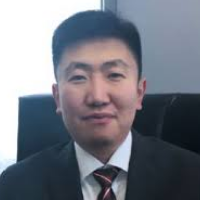
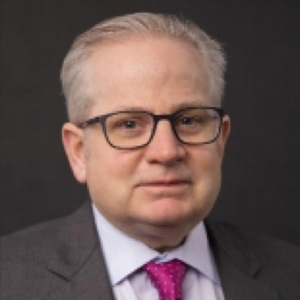
0:10 Hello everyone and welcome to today's live web host by 6. This is the Mongolia panel. Today we're joined by Bata Tumur Ocher, the CEO and President of Stepgold, Altai Kangai, the CEO of the Mongolian Stock Exchange, and Norman McDonald, as a partner at Fort Capital with 25 years of investing in the natural resource sector. Our speakers today aim to provide an insightful and informal conversation, which afterwards we'll move to a live Q&A session where we'll be accepting questions. You can submit your questions at any time by using the Q&A panel on the right-hand side of your screen. And as always, the summit is
0:42 being recorded and will be available to watch afterwards on SIX.com. So without further ado, I'm going to go around the horn. Batta, I'd like you to introduce yourself, introduce your company, give a little bit of an elevator pitch, and we'll move around the group to get things started. Okay. Thank you for joining us. My name is Batta. I'm a Mongolian national. I've been working for Stepgold as an executive director since its establishment in 2016. Stepgold is a newly gold and silver producer in Mongolia. The company did an IPO at Toronto Stock Exchange
1:15 in 2018, commissioned the mine and plant in 2019, and commenced commercial gold production last year. I also worked as a director at TSX-listed Iron Energy, a new lithium exploration and development company with the most significant exploration package in Mongolia. And I also work as a director at arranging resources at CSX listed new copper exploration company. Thank you.
1:40 Wonderful. Thank you, Bata. Altay, I'll hand it over to you to introduce yourself and introduce the company that you're associated with. Hello everybody, can you hear me? We can hear you Altay. Okay, thank you. My name is Altay Hangay. I am the CEO of Mongolian Stock Exchange. I have been with the Stock Exchange since 2010 and became the CEO and had been working as the CEO of the Stock Exchange since 2011. Prior to that, I had experience working as a government official for Prime Minister's Office as well as working for
2:16 Canadian and Switzerland-based companies, commodity traders as well as mining companies. Wonderful. Thank you for that. Norman, would you wrap things up here? Yeah, sure. So my name is Norman McDonald and I'm a partner with Fort Capital. I joined them recently after a 25-year investment career in the natural resource space. I'm originally from a mining town. My father was in the mining business. I've been to Mongolia many times and always came away very impressed. And now with my new role at Ford Capital, we're just helping to advise companies who are interested in doing business in the natural resource sector in Mongolia.
2:57 Wonderful, thank you guys. Well, I think that now that we've all been introduced and we all have a better understanding about, you know, where we are in relation to each other. Norman, I'm going to start things off with you. As the only non-Mongolian national in this group, we're going to put you on the spot first here, okay, and ask about your history in Mongolia as an investment and resource jurisdiction. But mainly, what have you decided about Mongolia's outlook for inbound investment? I think the first time I went to Mongolia was about 7 years ago. And subsequent to that, I've taken 5 different trips at different points of my investment career. And, you know, I've been to the Oyutolboi site 4 times and I've traveled all over the world in the mining industry. And I've just been very impressed with the opportunity in Mongolia.
3:45 You look at a lot of the resource belts that are undeveloped in the world today, there's very few of them left. And I think Mongolia as a country has a great opportunity on its hand to attract investments in a world that is going to be significantly short base metals and key green energy metals to meet the world's energy transition needs. So in my mind, the investment opportunity in Mongolia is amazing and it's very misunderstood in today's marketplace. So significant upside on both elements from investors knowledge in the space and the ability for investors to get in on the ground floor with unique companies and make money.
4:32 Wonderful, thank you for that. So Altair, I was wondering if you could provide us your thoughts about Mongolia's outlook for inbound investment in the coming year. OK, so I hope you can hear me now. I have prepared a presentation for this event. And if I may, can I go through the slides? Absolutely. Okay, so as Norman just mentioned, as Norman just said, Mongolia is the last frontier which has vast unlocked mining potentials And also as the head of the Stock Exchange, I'm an optimist that this vast mineral wealth as well as Mongolian capital markets will open up the doors for investors and open up the potentials. So This slide contains the general information about Mongolia.
5:18 So, as you can see here, our GDP is US$13.2 billion and GDP per capita is just slightly below US$4,000. And the GDP growth in 2020 was just 4.9% and the population of the country 3.2 million. So one of the key potentials that key achievements that Mongolia has achieved during this uneasy times, COVID pandemic times, is that our vaccination rate. So, 91% of the population has got its first dose of the vaccination, whilst about 80% has got 80% of the second dose.
6:05 And as you can see here on this slide, Mongolia's credit rating is rated at B stable. And it is strategically located between China and Russia. And as of now, a big, huge infrastructure projects are being implemented, particularly Mongolia.
6:30 Being connected with China. As you know, China is the biggest trading partner of Mongolia and Mongolia is the number 2 coking coal supplier to China as of now. On this slide we have just a brief information about Mongolian capital markets, about Mongolian Stock Exchange. So, it was established in 1991. The 1st IPO was made in 2005 and we have entered into strategic partnership with London Stock Exchange in 2011 and as a result in 2012 we have launched a new trading platform on the capital markets.
7:15 So together with London Stock Exchange we have done a few legal, well, a major legal reform and amendment to the securities market law has been made in 2013, as well as the introduction of the investment fund law. So as a result in 2018, the 1st dual listing on Mongolian Stock Exchange was introduced. So it is a TSX listed company with gold exploration operations in Mongolia. So since actually 2018 was the year of record number of IPOs and ever since,
7:56 well, Mongolia, I would say that the potential of the Mongolian capital markets has been unlocked and a number of new products have been introduced, which includes lists that closed and found as well as asset-backed securities and things like that. And as of now, we're working to introduce the new ETF listing rule. As a result, we are planning to launch the 1st ETF in Q3 of the current year and Mongolia is on the inclusion watch list of the policy frontier market.
8:33 So this area, this slide covers strategic partnership with London Stock Exchange. So as I said, mentioned previously, it covers legal changes as well as the technological changes and now Mongolian capital market uses the cutting edge technology, online trading, online real-time surveillance and things like that, which is provided by Millennium IT, a subsidiary of London Stock Exchange, And as well as the market promotion in the main financial centres. So, here we see the picture of Mongolian Prime Minister signing a partnership agreement with CEO of London Stock Exchange at that time. So, this is the general statistics of the market. So, the current market cap of the stock exchange is US$2.3Bn
9:26 and which is almost 50% growth in comparison to the last year. And also, our top 20 index, the main index on the market, has doubled in the last year. And also the daily average trade is around $1.2M. And we have 192 listed dollars and we have 192 listed stocks. And as a number of securities account holders, We have over 75% of the total population has securities accounts and 90% of the trades are being done online and we have 53 member companies on the stock exchange.
10:19 So, in the coming years, particularly in the coming year and a half, we're expecting major IPOs on the Mongolian capital market. So I think it is worthwhile mentioning that Stepgold,
10:34 which is a Gold production company which is listed on TSX and Mr. Bhatta is here, who is the CEO of the company, is expected to be the second company to be listed on the Mongolian Stock Exchange. And then before June 30th of 2022, The major banks, commercial banks of Mongolia are expected to be listed on the stock exchange. So those are the biggest commercial entities in Mongolia which were established in the early 90s and which have been conducting their operations since 1991. So you can see the total value of the assets of the banks here. So
11:24 they're actually coming to the stock exchange and becoming public in accordance with the recent amendments to the banking law of Mongolia. So these will be the major milestones in development of the capital markets. So we're expecting in the coming years about at least from 500 million dollars to 1 billion dollar issuances on the stock exchange. Issuances on the stock exchange. And we have a bit of, well, interest, increased interest in participation of by foreign institutional investors and we are attracting investors particularly from Asian region, in particular from Korea, Japan, and also in the recent months there has been, there have been significant attention from Chinese investors.
12:16 And This is the quote from the CEO and President of the first dual listed company on the Mongolian Stock Exchange, Peter A. Kili. As you can see, he is indeed quite happy to be listed on the stock exchange.
12:36 And I would say that Mongolian stock exchange as well as the capital market is the link to get exposure to the mining projects that Mongolia possesses. So as of now we have 27 mining companies which are listed overseas on the major global stock exchanges but with operations in Mongolia. So potentially, so far we have 1 company which is dual listed and the second one is pending. So potentially all these companies
13:08 could come to be listed on the local stock exchange to get exposure to the local shareholders, as well as to get some kind of social mandate to operate in Mongolia through the listing. And also, as I mentioned in my previous slides, the banks' IPOs are pending. And also, the state privatization is one of the key potentials that Mongolia capital market possesses because as you might know the government of Mongolia possesses several big assets, in particular mining companies with operations for over 40 years so they potentially could come to be privatized and to be listed and to be privatized on the local stock exchange.
13:53 And also the patient reform in Mongolia is pending, so I think the private patient funds will be introduced in Mongolia in the next 2 to 3 years, which will unlock and get exposure, open up the doors for Mongolian institutional investors. So let me focus on this slide because listing on the local stock exchange, particularly for already international listed companies on the local stock exchange provides, as I mentioned before, the social mandate to operate in the country, particularly through the Mongolian listings.
14:36 Those companies will be issuing their shares in Mongolian national currency so that Mongolian citizens and investors could buy and get exposure to their growth through the investing through Mongolian Stock Exchange. So yeah, these are the slides and I hope that I have provided with basic information and answered your questions. Thank you. Thank you for that, Altay. I think that was some great context that you're able to provide. Fata, given that great content, I was wondering if you could add your perspective about StepGoal's experiences with foreign investors. Okay, So I feel very fortunate to work with foreign investors in the Mongolian mining industry for the last 10 years. I have the same management team.
15:23 So the Mongolian economy has doubled over the last 10 years thanks to foreign investment in the mining industry.
15:31 So as years go by, investors learn more about the country and also we Mongolians and stakeholders are learning a lot from foreign investment. So as we learn more from each other, I feel very positive about the future and the investment in the country. At StepGold, we are very proud to have Mr. Eric Spod as one of the major shareholders and TripleTrack backed by Mr. Paul Singer and other institutional investors from Asia. And most importantly, I think it's now the Mongolian nationals and Mongolian financial institutions are getting more interested in investing into the listed public companies with operations in Mongolia. So right now at Step Gold, most of the investors are actually Mongolian nationals themselves.
16:18 So I think not just a foreign investment, but more and more Mongolian nationals themselves wants to invest through
16:28 stock exchanges. So I think it's a good trend, and I think the future is going to look much better. I'm very positive about it. That's great to hear, Bata. Thank you. So, Altai, you did just go through your presentation and I think that's some great context that you can maybe go into this question with. But you've led a significant transformation on the Mongolian stock exchange and that's resulted in an increased number of IPOs. Can you go into more detail about that trend? Why are double listings becoming more popular with Mongolian companies? Okay, so let me focus on particularly on the mining transition because the first securities market law in Mongolia was introduced in 1994. So up until it had its amendment in 2013, it didn't have any regulations particularly on the dual listing.
17:20 So as you might know, Mongolia experienced,
17:23 I think Mongolia was the top economic grower in 2012, which had about 20% growth that year. But that was due to actually, the acceleration was made due to exploitation of the launch of OTMine, which is run by Rio Tinto Company. The OT operation itself is owned by TRQ, which is a New York as well as Toronto listed company. But however, due to lack of regulations, we didn't have any, well, dual listing wasn't possible to happen in the stock exchange. So it made us to a conclusion that the amendment was essential to the new securities
18:08 market law in order to facilitate due listings, in particular so that Mongolians could get exposure to the operations which are conducted on Mongolian territory. So as a result, the new securities market law was introduced and the dual listing was introduced as a result, subsequently. So in 2018, we had the first dual listing company. So I would say that that was the main change that took place over the last few years, particularly in the mining area, so that Mongolians could get exposure to the shares and could invest into the shares of those mining companies which were listed overseas.
18:52 So that listing I would say that provide social mandate or licensing to those companies so that the residents of that area of that particular province where the mining operations is conducted Could buy their shares on the stock on the local stock exchange by with their local currency. So that was a huge step And the progress toward I would say conducting and developing mining sector with participation of interested investors. Wonderful, thank you for that. You know, and just speaking about that system, Bata, Stepgold's listing of Mongolian Stock Exchange is effectively imminent. Why was it important for StepGold to do this?
19:39 Thank you. So we have decided to get listed on the Mongolian Stock Exchange based on the people's demand, working for the company and with us. We have right now about 300 people working at the mine site right now and over 70% of them are employees from the local area. We try to be open and inform everyone about the company activities and we do broadcast video updates every 2 weeks through the local TV stations and social media. I think this exposure created a lot of interest in opening the shares of the company
20:10 operating in the local area. And right now it's quite costly to buy shares from TSX, especially in a smaller amount, just as an international bank transfer starts with $50 fixed fee. So leasing on the Mongolian Stock Exchange enables people to buy shares quickly and cheaply from Mongolia with the Mongolian currency. And our goal is to provide the same opportunity to gain the capital, whether you are a foreign investor or a local investor, and show how everybody's involvement is very important for the company and the project. And I really believe that if our listing is successful and brings positive outcome, then more and more special mining companies will be listed on the Mongolian Stock Exchange.
20:56 So as Mr. Alta said, it really gives the exposure to the local investors and the chance to, whether gain or lose capital and to be involved in the capital markets. So I think it's going to bring positive results. Fair enough, absolutely.
21:16 Norman, why should a non-Mongolian investor care about this overall trend of increased listings, double listings, IPOs? Well, I think it's a natural evolution of the country. If you look at the recent political shift to democracy, I mean, Mongolia is a new country to the whole democratic process. And with that comes that entrepreneurial spirit that I think lends itself to eventually investing in the stock market. The one thing I will say, and it's a follow-up to Bata's comment, is when I was at OT, I was always impressed with the Mongolian workforce and the pride that they take in their safety record and their productivity. There's a lot of times mining companies go to different foreign countries and because the social contract relies on a certain percentage of the workforce being from that country, it's very challenging for a lot of companies to meet that safety and productivity educational process in other countries.
22:19 But in Mongolia, Rio Tinto really shows OT as the poster child for safety and productivity. And that's just, I guess, you know, the pride that the Mongolian workforce takes in
22:34 that record-setting pace that they're driving on safety and productivity. And as I mentioned, I think when you're an entrepreneurial country developing, stock ownership is probably a 2nd or 3rd derivative of that wealth effect. Thanks for that, Norman. And speaking about the history of Mongolia, Batta, this question is for you, but Mongolia went through a period where its mining code was considered very unfriendly to foreign investors. So Where are things at with respect to the regulatory environment in Mongolia for mining and how is that impacting Stepgold? The mining industry in Mongolia is the most vital industry in Mongolia. Over 90% of All our exports are mining and natural resources. Over 70% of all foreign investment comes into the Mongolian mining industry.
23:24 As for regulations, I think the mining law and investment law itself are working fine
23:31 for everyone, except maybe only a few. Supporting regulations related to the industry could be changed, but in general, I think it's been very good. And it's been only 10 years since foreign investments started really coming to the country. Before then, we had only like 2 neighboring countries investing in the Mongolian mining industry. Today, whether you are a foreign entity or a Mongolian national entity, we have the same rights to be done, expression license, tenders, and operate the mine. And all the government royalties, income and export taxes are exactly the same between the foreign and national companies. So we do see the government and the parliament of Mongolia improving laws and regulations and trying to bring more and more foreign investment into the country.
24:20 So in general, as a country with a small population of only 3 million people, I believe things can get done really quickly here. For example, in 2019, after the IPO step, we started the project in the greenfield, but we were able to get all the permits following all the regulations for land use and construction in a very short period of time. And within 14 months, we have built and commissioned the mine plant and its facilities. And just last year we have commenced the gold production. So we are very grateful for all the support from the government and local authorities. And we do think we have a fair and supportive regulatory system here in Mongolia.
25:08 That's great to hear about that. Norman, what shifts have you witnessed and how do you continue to show confidence to your investors, especially with Rio Tinto, and in anywhere else That Mongolia is a mining-friendly jurisdiction?
25:21 Well, I think the one thing that investors love is stability and transparency whenever you're investing in a foreign country. So I think the natural evolution of the mining industry in Mongolia as it continues to show that the investment standards and the permitting process and the taxation and just overall the, you know, governance kind of blows both ways. So if you have good corporate citizens on the ground and good dynamics with the government where they're constantly not changing investment agreements, then that's utopia. And unfortunately, right now, Rio Tinto and the government have to solve this investment agreement because if you look at OT, I mean, the taxation and the cashflow coming to the government off of it is just substantial.
26:09 And as mentioned, I mean, this is a very small population base. So getting it right and getting the mining code and the investment agreement hammered out is very critical. And I think once that gets done with
26:24 Rio Tinto and the government, everything else will have a trickle-down effect. So people with Bahtaz company and Stepgold will have more confidence in investing. It's just you have to get the elephant in the room taken care of first and then after that you should have a better kind of clarity and a lower discounting mechanism in the stock market for names like Stepgold and smaller capitalization companies.
26:49 Thank you Norman. Altay, do you have anything to add to this part of the conversation? As Norman just mentioned, yeah, there are some misunderstandings between the government of Mongolia and Rio Tinto, But however, I would say that there will be a listing on the local market by TRQ Turquoise Hill. I think through that, you know, particularly OT will get a local shareholder so that the local community will have more understanding about its activities, about its benefits. And I would say that Mongolia Stock Exchange could play an instrumental role in the improvement of the mining environment in general in Mongolia for international investors. Thank you, Altay.
27:38 And I'm going to go right back to you, Altay, with this next portion of the conversation.
27:43 It's clear that Mongolia is still a largely untapped potential for miners and foreign investors. The Rio Tinto example that's already been mentioned highlights the perceived challenges in this jurisdiction for foreign investment. Do you see a path forward for Mongolia to really attract serious foreign investment in the coming years? Yeah, well, certainly it will. I would say that according to the statistics that I read, about 2% to 5% of the entire territory of Mongolia has been explored geographically.
28:19 So I would say that it still contains a huge potential. So I would say that particularly mining law in Mongolia should be particularly in regards to the exploration should be more liberal and flexible so that we could attract particularly investors into the exploration sector. Thank you for that. Bata, do you have any any comments on that?
28:49 Yeah, the same idea. It's less than 1% of the total country's land size is being mined. I mean, issued as a mining license, but Within that 1%, it's only 10% of our actual real mines. So there is a huge opportunity to open up more and more mines in Mongolia. And just for the last several years, There was a issue with the issuing of the new expression license. There was a quite delay. The government was still trying to find the new ways how to distribute them and so on. So in order to bring more bigger investment, we need to focus on expression parts of this industry so we are hoping the expression will be opened up very soon.
29:44 Norman, do you have any comments? No I just you know I think overall the you know there's noise a lot in the media on the investment environment. But when you're actually on the ground and you're dealing with companies and talking to Bhatta and what his company is doing and talking to Turquoise Hill, I mean, it's a very different dynamic. So I think once some of the misconceptions are put to bed, I think the investment environment in Mongolia for listed companies definitely has a significant upside. Great. Awesome. And Norman, right back to you here. But with the ongoing green recovery taking place globally around the world and the increased demand for battery metals, Do you see Mongolia as being more interested to investors related to those specific types of commodities?
30:36 Oh, absolutely. You know, as Batam mentioned, I mean, there's a very small percentage of the country that's been explored. And you look at the strategic location of the country, if you think China is going to be one of the biggest consumers of these battery grade metals, whether it's lithium, whether it's copper, cobalt, I mean, it's a huge, huge advantage. I mean, that was the one thing when I was at OT that was amazing about the the cockroach concentrate coming from the mine. I mean you go to the mine gate and you make a left and you go a couple hundred kilometers to the border of town. It's pretty strategically located, under explored and the evolution of the legal and regulatory framework is getting more transparent. So that's a perfect trifecta when you think about an investor putting money into a foreign jurisdiction.
31:32 Fair enough, absolutely. Bacak, could you speak to Stephgold's sister companies regarding lithium, copper and what opportunities are there? Thank you. So recently we listed a new company called Ion Energy. It's a lithium exploration and development company. So the company has over 100,000 acres of exploration package in Mongolia, one of the biggest land packages. And as we have a strong location advantage, close to China, only 24 kilometers to the Chinese border. And we do have a very highly prospective, interesting results coming in. So I think we have a really good chance to be involved in the new green mining industry, especially the lithium and copper. And also we just recently listed a new company also called Arranging Resources, a copper company.
32:27 I acquired the highly prospective areas in the Western Mongolia and looking to commence exploration as soon as possible. So exciting times there. It sounds like it for sure. Altay, what are you seeing generally speaking regarding Mongolia and the green economic recoveries? So, well, I truly believe that Mongolia has a huge potential. So I would say that a few legal as well as regulatory changes should be made in order to unlock the potential that Mongolia has, particularly in the mining exploration area.
33:15 I truly believe that it should be kind of, you know, liberalized in order to attract and also to conduct the explorations of the mineral, I would say minerals that Mongolia possesses. So I think some liberal changes should be made in order to truly unlock the Mongolian potential. So I would assume that the Mongolia's future, the economic future is, I'm very much optimistic on that. That sounds great. Absolutely. Bata, this next question comes for you, goes to you. And In reality, I'm sure that the audience is wondering as well. Mongolia's next-door neighbor is, as we mentioned, China. What are some advantages and challenges of neighboring the world's biggest commodity consumer?
34:04 Yeah, as a country, we have a great advantage being close to China. It's in a way, it's so easy to import required equipment, technology, machinery to Mongolia. And also it's easy to export commodities compared to the other places. But as for challenges as a landlocked country between Russia and China, it's difficult and almost impossible to export to third countries. So, it's good and bad. The good side would be it's easier to bring in equipment and to export. But the challenging part is to go further than China. So that's short. Fair enough.
34:49 Norman, from the North American investor perspective, what are your thoughts about Mongolia in relation to its prominent neighbor? You know, I think the Mongolian people, the more time I spend in-country, I mean, they're very proud people and they're very independent from Russia and from China. And to me, it's an advantage and you see a lot more activity with Western countries and agencies doing business within Mongolia, you see the establishment of embassies, as Altai mentioned, the arrangement with the London Stock Exchange, all that is good incrementally to show people in developed countries that the evolution in Mongolia is taking place. It's been slow, but like I said, if you think about the country from a democratic point of view, it's brand new.
35:42 So as these growing pains get kind of solved, I think the ability to see more foreign capital flow into the country is pretty astounding. That's awesome to hear. Altai, capital markets perspective about the general Asian outlook, what's Mongolia's role in it? Yeah, so as I said earlier, it will play an instrumental and vital role in development of Mongolian mining sector. So I myself worked in the early 2000s for a Canadian mining company which had operations, gold production operations in Mongolia. At that time I would say that Mongolians did know little about international investors and things like that, but since then The situation has improved greatly.
36:33 Particularly with the development of the capital markets here, as well as the new more and more dual listings, I think there is an appetite particularly from Mongolian retail as well as institutional investors to get exposure to buy the stocks of those mining companies, those listed companies, through the local stock exchange so that they get benefit of those mining operations, not only through taxes but through capital gains and things like that. So, in particular, essentially that provides knowledge and becomes a bridge not only between the government and decision makers of Mongolia, but with the people of Mongolia, regular investors who do invest into those mining operations through the local exchange.
37:22 So I would say that it plays a vital role to provide knowledge and to serve as a bridge between the people of Mongolia and the international investors with operations in Mongolia. Thank you for that, Altay. Norman, just regarding investor expectations around ESG, ESG and the importance of that is continuing to increase. And I'd like if you could just go into it, based on your perspective, could you tell us how you see the environment of, or in Mongolia for ESG initiatives? How are these investor expectations going to shape mining in Mongolia going forwards? OK, that's a great question. And just given my background, you know, I grew up in a mining town, been investing for 25 years in the mining and energy sector. And ESG is not something new. I know it's created a lot of buzz recently, but if you think about companies operating in the global mining business, you've always had to be a good corporate citizen to begin with.
38:30 So I think companies with good social contracts, both at the government level and at the state and the county and even the town level, is very critical for investors to get confidence with that. And I think, you know, with the system set up in Mongolia, if I think about the E aspect, and you know, Stepgold is a great example of that, how they went through all the checklists to properly start their mining operations, and it took time. But to address that environmental situation, you have to be a good corporate citizen to begin with. So, you know, hats off to a company like Step. I look at OT and the amount of local people that are employed at the mine site and what the spin-off effects of that of the economy is, that's a big social aspect of things.
39:21 And then, you know, the last part of that acronym G, the governance, that has to be a two-way street. You have to see the stability and the transparency at the government level, and you also have to see that executed at the company level as well. So when I go through that checklist and I balance it against how other companies operate in other countries, I see Mongolia kind of at the top of the list just because mining is so critical to the country that I see the ESG aspect of companies operating within the country being implemented very well. So investors should have a very strong comfort level if that is one of the main criterias on how they invest. But as I mentioned, it's not new to the mining industry. It's just been kind of, I guess, mainstreamed acronyms to fancy up some of the language around it But you know most of the companies that I've invested in over time you always have to start off with what is the company's ESG track record Absolutely, I'm in speaking about that Bata could you give us some insight into the general environment for ESG that falls within your experience, but also some of StepGold's initiatives due to local social license, things like that?
40:43 Yeah, so we really, one of the most important aspects of this mining industry is environment, land, social issues, social licenses to operate. And from our experience at StepGold, whether you have a really good policies or not, it takes some time to actually to build trust between the people living in the area and deliver our promises. So in the beginning we had certain issues with the locals and misunderstanding between the local people but eventually after certain times when we started to gaining and building the trust Now it's actually the social, the local people are actually there, we can say they're protecting the company and protecting the project and supporting the company.
41:30 As a small company in the area, we do have about 300 people and over 70% is from the local area. We are the only operating mine in the area. So the area, there's some small town where we operate has only 3,000 people and about half of them are adults and we do hire like 200 people working in the mines. So after a certain time and period it's actually the local people and local communities actually supporting the company and yeah all I can say is it's very important for the company and in our case, no matter how good the policy and policies are, you have to spend certain time, build the trust and build the track record.
42:22 So yeah, so after this, actually we are very happy to say that we are actually getting more and more invites from the different towns asking for more exploration to be conducted and so on. So it takes time but essentially if the company delivers the promises it can do really well. Okay thank you Bata. Altai, I was wondering if the mining stock or Mongolian Stock Exchange has had any observations on ESG trends or not. So, yes, I totally agree with the points which were raised by the 2 gentlemen. As the stock exchange, we're joining the initiatives by IFC as well as EBRD regarding the ESG, particularly which concerns the environmental issues.
43:20 So these will not only apply to mining companies, but to companies which are operational in other areas. Absolutely. And you know, I mean, this has been a great conversation so far. So thank you very much, guys, everyone that's been speaking. At this point, I would like to remind the audience that there is a Q&A aspect to this today's event. So we will be moving on to that. If you have any questions, we'll really try and get them answered, and you can ask those questions in the Q&A panel on the right-hand side of your screen. But gentlemen, I think that we will move to the Q&A section now, just before we run out of time at the top of the hour. So to start, Nigel Reid has asked, well first he has stated, Mr. President, thank you for what you've achieved with callings these past very few years. Despite its success, there must be many challenges still facing the company. Can I ask you please what 2 or 3 threats or challenges face Step Gold that might cause you to lose a little sleep at night? Thank you.
44:22 Thank you. Yes, it's been the most challenging part. It's not just Mongolia. I think the world facing right now is the COVID situation. The borders are closed and it was the last 2 years. It was very difficult to bring in foreigners to Mongolia, also bring the equipment and so on. So there was a huge delay at the borders at the both sides between Mongolia and Russia and China and China to Mongolia. So the main concern was the COVID situation. We had certain delays during the shifts of our employees, but we tried our best and we did put all the people for 2 weeks quarantine every every time we do a shift in certain areas so that delayed a lot. I hope I really hope it's going to end soon.
45:19 We got all our employees got second shot of vaccine at the site. And if you look at the total population of Mongolia, total, I think almost 100% of total adults in Mongolia got their first shot of vaccinations and so on. So yeah, this is the most challenging thing, yeah. Absolutely, thank you for that, Batta. Terence Ortslin says, banking and savings institutions seem very fragmented and undercapitalized. Can we expect changes to capital rules to enhance mergers and more efficient performing loan portfolios and expect the banks more independent with the stock exchange and less by major shareholders, therefore limiting major holdings to a 5% or maximum 10% limits? Question mark.
46:05 I'm not sure if any of you can answer that, but Altay, Norman, Batta, if any of you would like to take that question. So I'll try to answer that. So yeah, the banking and financial institutions are about to do an IPO. I think they have to do an IPO next year. And if you look at the, well, since we don't have any comparison to do, We don't have any public banking institutions to make a public comparison with the market cap and so on. We can't really say like how undervalued or how overvalued it is. But in general, the 4 major banks are the biggest companies, as a company, they're the biggest companies with their market cap right now in Mongolia.
46:55 And with the new laws and with the new IPOs, especially in the financial industry, I think it's going to involve, I think it's going to do a really good good result, come up with a good result. Okay, thank you Bata. I think that this is also posed to you Bata, from Dr. Puru Michelson, hello from Ulan Bator. Do we have a firm date on the Mongolian Stock Exchange listing? Okay, so we have completed all our paperwork and submitted all our documents to Mongolian Stock Exchange and also Mongolian Financial Regulatory Commission. So we have been talking to them on a daily basis, on a weekly basis and the listing will be very soon.
47:41 And the most important I would like to add is like there is a small misunderstanding between the local people that it's only the foreign and big investors are only gaining from the capital markets. So listing in the Mongolian Stock Exchange and enabling to all the people to be involved is going to play a really vital and I really hope it's going to play a good role. That's the main goal and the listing will be very soon, very soon hopefully. And we can't keep a date, just waiting on from the FRC, Financial Regulatory Commission. Thank you for that, Pata. Terence has another question. He says, one way to measure any country mining and resource pulse is via exploration spending.
48:26 There is a definite uptick, yet it's nowhere near the potential and big numbers during the OT discovery period. What would a reasonable target for Mongolia be to claim a pole position in global exploration? I'll field it to anyone that wants to answer that question. I think I'll take a stab at that. I just think as the government shows, I'm going to say it again, stability and transparency in the mining code, you know, the dollars will flow in. Will flow in because if you look worldwide, I mean this is one of the last underexplored belts. You know there's this, there's Afghanistan and there's Pakistan that are truly the last undeveloped mineral belts.
49:15 So I think once that confidence continues to increase the exploration dollars will start to flow in Absolutely Altai Bata, do you have any comments? Yeah, well, We really hope the exploration investments is going to increase very soon and the government is going to issue more exploration licenses. But the most important is also the social license, especially in the exploration part. The size of the exploration license is big and when you go to do exploration over there, certainly people are living there and it seems like you're doing 1 trillion works in this area. So it takes certain time, like we said, certain time to get a social license and get exploration, but once it's done, once it goes in, I think more and more investments will come in.
50:14 So basically for the last 2 years with the COVID situation, the borders were closed. And prior to that, it was a bit different period. So hopefully starting from now, things get better. Yeah, we will. Okay, thank you, Bata. The next question comes from Paul O'Leary. Turquoise Hill has been, he says that Turquoise Hill was a disaster for foreign investors and does the advent of a local listing imply a likely positive resolution? If any of you can speak to that, feel free to. Missed it off, right? Well, I'm a- Was that a question? I'm a big shareholder of Turquoise Hill and I followed the story for a long time.
50:59 I you know, it's been I wouldn't say it's been a disaster, it's been disappointing, but if you look at the 60-year mine life and making sure that this investment agreement is nailed down and finally put to bed, it's very important. So I think once that gets done and a listing does occur in Mongolia, it can only be beneficial, but it's not a must that the story needs to be listed in Mongolia to have its success. It's been a very painful process and hopefully once we get a little bit more resolution on the investment agreement and what it means, then the discounting mechanism in the stock market will start to dissipate.
51:45 Absolutely. Thank you, Norman. Altay, did you have a comment there? Okay, yeah, absolutely. So they are by far one of the biggest mining operations here in the country and one of the indicators to the investment environments in Mongolia. So I think, yeah, Mongolia listing will definitely help them to get a better understanding with not only with the government and government agencies of Mongolia, but particularly they will through the listing, they will get exposure to the local shareholders. By that they will have more, I would say, support base and will get the social license increased to operate. So definitely it will help both the government of Mongolia as well as TRQ to conduct smooth operations.
52:42 Absolutely. Thank you, El-Tayyab. Well, gentlemen, look, I think we are running close to the end of time that we have allotted for today. So to anyone that's asked a question that's gone unanswered, or if you think of a question after the event, don't worry, we'll make sure that we get your questions to the speakers here so that you can hopefully get an answer. But I'd like to pass it along speaker to speaker just for any final words that you have before we sign off for the day. Altair, I'd love if you would start and kick off any final parting words. Thank you, gentlemen, for organizing such a wonderful event. Particularly, I would say that, you know, these type of events are very much needed at this point in time in Mongolia. Because I would say that the general trend here in Mongolia, the economic trend here in Mongolia is going toward the positive direction, but there is a very little message is being delivered to, particularly to international investors community about the local developments here in Mongolia. So, these kind of events are very much helpful.
53:45 So, hoping to have more of that kind of event in the future so that there will be messages and the updates should be provided to the international investors community. Thank you. Absolutely. Norman, I was wondering if you could also have some parting words. You know, I think Mongolia is in a great situation right now. You look at the small population and anybody can do the math. And once OT ramps up the underground, the cash flowing into the government from a taxation and a royalty perspective are huge. And if you look at the COVID world right now, I'm based here in Canada and our government's very good at giving money out.
54:34 We're not taking very much money in so our deficits are massive and if you look at a country like Mongolia it's pretty easy to see a line of sight over the next 5 to 10 years that there is going to be some very good prosperity hinged around the mining industry. So anybody thinking of investing in the country should not be using a punitive discount rate that concludes the investment. They should look at line of sight, the evolution that the country's taken, and I've gained some comfort level on that compared to other parts of the globe. I mean, you look at what's going on in Chile and Peru with the copper industry, and it's frightening, but that doesn't seem to cast as big of a dark lens on a country that Mongolia has with some of its political uncertainty.
55:23 Thank you for that, Norman. I'm about to hand it finally over to you for your final words before we wrap up. Okay, thank you very much. Thank you for hosting this event and thank you very much for all the people attended and interested and supporting the company and the country. Thank you to all the participants and yeah the final words would be, it's been a challenging 2 years with the COVID situation. And in general, over the last 10 years, if you look at the timeline, the OT deal and Rio 20 came in just 10 years ago. So everybody's learning from each other. Mongolians are learning from the investors and investors are learning about the country. And the overall end result is getting much, much better. As Norman mentioned, as a people, as a nation, Mongolians are actually willing to more and more participate in the capital markets and invest their own money into the projects operating in Mongolia.
56:18 And I think the MSC listing, Mongolian Stock Exchange is going to play a really vital role. No matter the capital is going to be big or not, it's just we should be open up the opportunity. Anyone can invest and see how the positive outcomes. So yeah, hopefully we're expecting better outcomes. So people want to invest into the country, national people, Mongols wants to invest into the OT, into the bigger projects and the smaller ones. So I think that's great. Wonderful. Thank you. Well, gentlemen, I hope you have a good rest of your day and I'd like to thank the audience for tuning in with us today. Have a good one, everyone. Thank you. Thank you. Thank you. Thank you. Thank you. Thank you.