Transcript
Automated transcript · Written by software from the replay's audio. It can mishear names and figures; the replay is the record.
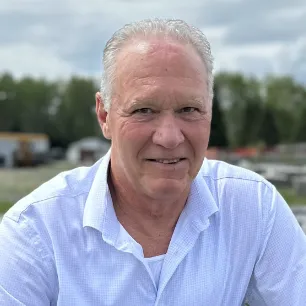
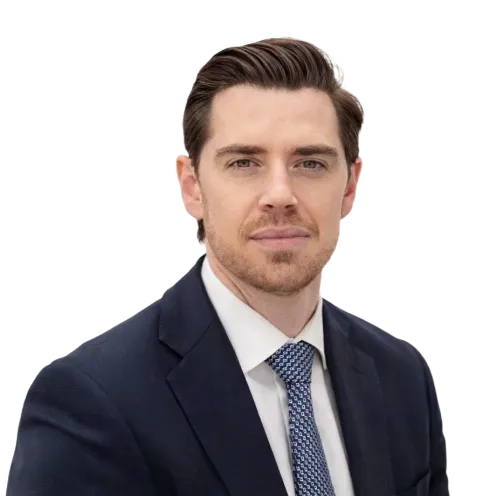
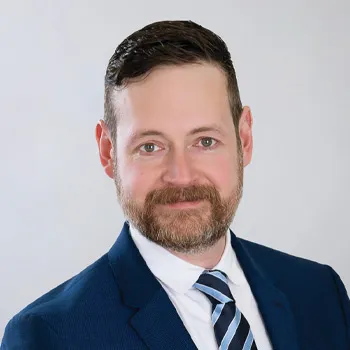
0:01 All right. Good morning, good afternoon, or good evening, depending on where in the world you're logging into today. I'm lucky enough to be here with David Stein, President and CEO of Kuya Silver, Oliver Friesen, CEO and Executive Director of Guardian Metal Resources, and David Russell, President and CEO of Galleon Gold. Today, we're gonna be taking a look at the metals market heading into the fall, covering gold, silver and defense metals and more and getting each of our panel's perspectives on what they're seeing in the market and what investors should be watching as we head to the final months of the year. Gentlemen, how are you doing today? Doing fabulous. Thank you very much for having us. Okay. Always a pleasure. For folks in the room, this is an interactive event. You can use the chat button at the bottom at any point during today's event and we'll try to get it to as many questions as we can. You can also request a meeting with any of the companies at any point during today's event by clicking the request meeting button at the bottom of the screen.
0:55 But without further ado, let's get into it today. We're calling this a metals forecast panel and honestly the tape is doing half my job for me. Gold still sits well above 4000 with silver in the 60s, tungsten around $3000 a ton unit. Around the horn, but starting with you Oliver, is this all one macro story or are you each riding a completely different wave? And tell us what exactly are actually driving your metal at this point right now. Yeah, I mean, it certainly is. There is a big macro story here. I think we're in into a commodity super cycle, as some people call it. And there's a lot of good sort of macro reasons why that's the case and why we're seeing sustained movements in a lot of metals. Obviously, every metal is different and has their own kind of dynamics on the supply and demand side.
1:43 We're tungsten focused specifically. So what's driving the price action in Tungsten right now? Well, a big part of it is defense demand. We're seeing geopolitical sort of events in the world really driving a lot of countries to shore up and manage national security on the home front. So You need Tungsten for munitions, for tanks, for fighter jets, for drones, you name it. We're seeing demand start to ratchet up here for defence. But I think on top of that, on the supply side for Tungsten, it's a very precarious situation. It's one of those metals, one of those critical metals where supply is concentrated in countries like China, Russia, North Korea, and actually for Tungsten specifically, those 3 countries account for about 90% of total global mine supply. So from a supply side, obviously that's not a good position to be in, especially given what the world's at today. And then demand is being certainly driven by defense. And we think that's going to ratchet up pretty dramatically from 2027 onwards.
2:39 But also it's a metal we need for a lot of other important cutting edge technologies,
2:44 chips for data centers. Nuclear fusion is really starting to ramp up here and the list goes on and on and on. So big super cycle. I think we're in the middle of it. I think we're in the early innings of it. But certainly from a Tungsten perspective, a lot of data points which I think support some sustained price action in the metal going forward here. Very cool. What are you seeing on your side, David Stein, on the silver end of things? Yeah, look, I think There are there's probably like 3 different themes that are driving metals, like different themes, and they're happening all at the same time, which is causing the appearance of a super cycle, as Oliver mentioned.
3:29 You know, You have the kind of the scarcity driving some of the critical metals and more of a supply constraint story. You've got and I think that's the case in silver as well. We've got the monetary kind of aspect with with the precious metals silver again but with gold there in terms of inflation and global geopolitical risk driving and keeping the gold price quite high and then silver as well. And then you have some broad economic growth that's driving some of the other metals as well. But there are a few metals that are not doing well.
4:15 And so I think silver is a great place to be. There's there's, you know, more more metals are doing well than aren't. But it's certainly not every single metal is participating. I think there are some more specific themes. And of course, the fact that silver
4:32 has the, you know, the supply constraints from so little silver mining going on in the world. And it's very, you know, slow and and it's a slow process to build and open any new mines or expand mines. So it doesn't look like that will be addressed anytime soon. And then you've got the, you know, the incredible new demand coming from electronics, data centers,
4:57 etc. Batteries for silver. And then, of course, the monetary side is also supporting silver. So even though silver has come down quite far from its high of January, it still looks like a really strong market on the supply-demand side and we certainly expect the trend will continue to go back up towards $100. What about you, David Russell?
5:21 Well I'd agree with quite a bit of what both David and Oliver have said, but I go with the 5 main factors on gold. Gold has been around since 5000 BC or whenever. But the main one is interest rates. You get falling interest rates, gold goes up. You got the US dollar, a weaker dollar, gold goes up. Now, that's been fluctuated, but you have to watch. Or is the US government, Treasury, actually playing with that price to get what they want? You got to watch that and get ready for them driving it
5:52 down, selling Treasuries or whatever they're going to do. And then all of a sudden, gold will bounce back up. And you see a big bounce going on this morning. And then you got the good old central banks. Gold goes up when China, India, Poland, Turkey, they all decide to jump into the game and start buying. And all these countries have for quite some time. But I remember in the early 80s, they went the opposite direction. England, good old England, all over, you probably saw way back when, 25 tons sold here, 25 tons sold there. Then the next country jumps in. They all drove it down and we ended up with a price, I think, at 260 an ounce when this was going on. And then when inflation's up, gold should be up. And then the geopolitical. Now, if anybody can figure the geopolitical out on just which factor comes in on that, you know, my hat's off to you because yesterday we had, you know, a couple ships put out a commission in the strait, and gold goes down. This morning, they sunk a few ships. Gold took off again. Okay, which is it? I mean, it's a geopolitical.
6:56 The geopolitical did not change. Anyway, you gotta sort out the chaff from the actual wheat there on what is geopolitical and a financial risk and what isn't. But obviously oil price is up. We're talking inflation. Gold should be going up. So they all kind of work hand in hand. So
7:15 Like I said, I agree with David and Oliver on their comments and what's driving these metals. But every one of them is a strategic, maybe gold's not as strategic as silver or specifically tungsten. I mean, that's a big one. Obviously, you're in a wartime, you're in country standoffs, things like that. Tungsten has got to be had, especially when China puts a moratorium on things.
7:39 Absolutely. Speaking of, Oliver, your PFS put a base case after tax NPV of $660 million on Pilot Mountain, but run the same model at Spot Tungsten, and it's over 1.3 billion with a 6 month payback. Tungsten doesn't have a futures market and China effectively sets a reference price. So which numbers should investors actually anchor to? That's a good question. It depends, right? I think every investor needs to go understand the market, try to forecast what the price of tungsten is going to do. There's a lot of factors there. Obviously we talked about the supply side a little bit, demand is very strong and should remain so for the coming years and decades.
8:25 But I think the point that we try to make with the PFS is we obviously provide the base case, the spot price plus sensitivities upwards and downwards. And I think the main takeaway for investors should be that regardless of what price you want to use for to model our project, you know, all those numbers that we put forward, I think point to a very, very robust project that in all this is pays back the capital very quickly and can deliver some pretty significant free cash flow. So we have our own view internally. I have my own view. Everyone's trying to phone in here and figure out and crystal ball gaze where the price is going to go 3, 4 years from Now to give investors a bit of color, you know, we're targeting production inside of 2028. So I think obviously, you know, that's the price on the screen that will matter the most would be 2020, 2028, 20, sorry, 2028 onwards.
9:13 But you know, what we do is we try to put forward a really well thought out
9:20 sort of rationale for the price we use in the model. It's not just a number we pick out of a hat. Under SK-1300 compliance, we enlist third party group, in this case, Argus, to actually model what they think the price is going to do long term. So the price that we use at Basecase is based on third party report with experts who know this space well. So the price that we use has backed up by a lot of data. So that's obviously why we use the base case as sort of the going number to really kind of bank on. But obviously, there's a lot of upside above that with the price that we're seeing on the screen. Totally makes sense. Over to you, David Russell. You awarded underground development at West Cash to Aki Dumas, which is a partnership between Metagami First Nation and Dumas Contracting.
10:13 A lot of companies talk about Indigenous partnership as a checkbox. What is having Metagami First Nation as an actual commercial partner and the contractor
10:22 do for how this project gets built? That's a really good question. But first of all, it's important, I think, for us to not look at the indigenous participation as just sitting on the sideline or checking the box. It's actually built into the project where they're participating. Akidumus is responsible for, let's say, the critical underground development work in West Cash and Metagami First Nations is an actual commercial partner. So they're at the meetings, they're participating, they're bringing their people to the table. So this is very important. I know the actual chief very well of Metagami First Nations, and they love to participate. And they do that on our drilling programs, you know, that we're having right at the West Cache right now. That means the partnership is tied directly to how you execute the project. This goes all the way from safety, scheduling, workforce development, procurement, and accountability.
11:17 For this, it's very different from checking a box. They become real partners and participate. It creates a direct, what I call a pathway for Indigenous participation and economic value. And where does that lead? It also leads to the perspective from the community locally when they see that going on. It gives the Metagami First Nations respect. It really helps everyone along the way. So they know they can apply with both the Metagami First Nations, they can apply with Dumas, Aki Dumas, and they can come to us. So all 3 of us are within that realm. So the commercial role for everyone, I think is very interesting that, they're responsible for making sure that, everything's done safely, efficiently, responsibly, as cheap as possible, that sort of thing.
12:04 But
12:05 it gives us a way to build on, you know, the First Nations from metagamy, the community, and everybody within it. And I stress community because we're only 13 kilometers outside of Timmins, Ontario on Highway 101 and it's on the way. You go south from our or south southwest from our area and you end up at the First Nations Metagami, their area. So they're very close to us So they're the closest one we have right now. So the role, again, I don't mean to stress it, it's not checking the box, they're actually part of our organization and part of Doomis organization. Well, it's important to stress, absolutely. And David Stein, most investors still have Kuya filed under Peru and Ontario. And then last week you put out results from Saudi Arabia, including a hit over 3,600 grams per tonne silver at Umm Hadid.
12:58 For someone hearing about this project for the
13:00 first time, What is Kuya actually building in Saudi Arabia?
13:05 Well, I mean, first of all, we have to recognize that our flagship is the Sania silver mine in Peru. That's where we're really building, you know, a big scale silver producer over the next few years, starting with what was left by the previous owners and putting that back into production and then plans to expand it quite considerably over the coming years through doing a lot of exploration and capital from cash flow to expand. And that's really ongoing. And over the years, we've been, you know, especially when silver prices were lower, we've been opportunistic at getting involved in other projects, especially if we saw the potential for very high-rich silver grades. We like, you know, high silver percentage because those projects are really hard to find.
13:53 Silver is a byproduct of a lot of things in a lot of different mines. But having a silver dominated deposit is extremely rare. And we have 3 now. So that's incredible. So, I mean, much like Silver Canyon, Ontario, this is a earlier stage exploration project that doesn't cost, you know, for us very, very little to maintain and to keep moving it along. In this case, it's funded by our JV partner.
14:24 But the results, we've been drilling this year since April, and the results have been really good, really exciting. I think we're actually improving upon the drilling that we did last year, which means we're getting a better understanding of the vein system. We're targeting in on a smaller area of this huge area that we've identified, these silver gold veins. We're targeting now in a smaller area in order to get enough density of drilling to look to a 1st resource. And that'll be our target once we conclude this round of drilling, is to move to a 1st resource estimate. It won't be the last resource estimate. We're gonna keep drilling and make it bigger, but at least we'll get a sense of where we are
15:14 after this 2026 program is completed. And we're very excited. The results have been great as you mentioned. Beyond the the splashy high-grade hits that we have that you mentioned Bianca, I've got 1 eye on the lower grade halo that's around these high-grade veins because I think in some cases there may be a much bigger more bulky but lower grade mining scenario that could be possible as well because we're seeing you know anomalous to you know tens or even hundreds of grams per ton around these high-grade veins, which are quite narrow but that can be in the thousands of grams per ton. So when you add it all together, you might have something that's actually quite a bit wider, lower grade of course, but maybe would fit a bulk mining or open pit scenario. So we'll see. We'll see what the drill results tell us over the coming months. But it's looking very, very good there to develop our third silver project.
16:14 Exciting stuff.
16:15 All right, folks, let's talk about who's writing the checks now. Oliver, you've got the U.S. Department of War as an investor, a New York Stock Exchange listing and as of this morning, a spot on the FTSE AIM 50. David Russell, you've got Pan American Silver and Eric Schrott anchoring your raises. David Stein, your last placement got upsized on demand. Juniors used to survive on retail and a handful of specialist funds. Is the money in the sector genuinely different in this cycle and does it behave differently? Why don't we start with you, David Russell, for this one. Okay, very good. First of all
16:49 Been through a lot of cycles and this one's behaving a little bit differently I'll tell you people are starting to pay attention to say, okay, what if everything just keeps going and Depending on the macro effects it could just keep going and we could see gold, you know, sitting at $6,000 here in about 6 months or 8 months. And the same thing, silver could be over $100,000 and tungsten, I mean, all bets are off on that one. That could go someplace into the ozone layer. But first of all, the people that write the checks for us, we mentioned Eric Sprott and Pan American, yes, they're there. We also have Michael Gentile, we've got some smaller investors, they're 3, 4, 5 percent, they don't get much notoriety, but they don't want their names out there. But we do have others there. So I don't want to just say it's the 3 big ones like Eric Sprott, Pat American, Michael Gentile.
17:38 But you know, they are very key to us. Now, let's just say, what what have I got basically backing me over time? Number 1 is you put your money where your mouth is. I participate in every offering. I never get free stock. The other one is when I go to Eric Pan American or Michael Gentile, I tell them what I'm gonna do. The next time I sit in front of them, I better have achieved or executed on what I told them or they will be out. That's what I found is that if somebody says, hey, you didn't do exactly what you told us, they're going to be out. So far, we've batted 1,000. They're there almost every round that we've had. I shouldn't say almost. They're there every round. We haven't had a problem. Now in past history, I can tell you there's been problems with markets where people just say, holy cow, I've got to stop and rethink about this. I've got a lot of redemptions in my funds. Things like that. You know, what I'm talking about is back in the Bre-X days that was a total disaster there for the companies that were riding high and doing well they got beat up pretty bad.
18:41 It's that one so it is behaving differently And we do have some great investors here as we move this company forward. And hopefully in the next year or 2, we get into full production, and we go to mid-tier developed producing type of company and get a bit of re-rating on that end of it. So there's a lot of factors that come in this, but you have to have that group of shareholders that trust, believes in you, they'll be back at the table. That's what's somewhat different.
19:12 What do you think about this, Oliver?
19:14 Different cycle this time around? Yeah, I mean, all the regular participants, they're all here, right? They've been waiting for this for some cases, many, many years and decades. So their position and they're gonna take part of the upside here. But certainly it is changing, As David mentioned, there are some new participants and some new players in the field, so to say. Certainly for us,
19:38 we have US-based assets. We're focused in Nevada. The US government is the biggest participant in the mining space right now, period, globally. They're writing checks that no one else can write. They come in multiple forms, but as you mentioned, we've been the recipient of an investment from the Department of War. We've used that money, we've delivered a very positive PFS study. So certainly within the US and with allied nations, the US government is the biggest participant right now. And we think that will continue, right? There's a lot of money that's been approved. It's waiting to be deployed. There's a lot of money that's looking for great domestic projects who can deliver, you know, important medals to support national security. So the US government is a new participant, certainly, you know, this time around that we've not seen at least to this scale before, which, you know, us being focused in the US and focused on defence medals is very exciting for us.
20:29 And then obviously, I said the regular suspects are here. The mining institutions in New York and across the US are very, very active in the space right now. It's really encouraging to see. We had a lot of support for our US NYSE listing. We're very active with a lot of the names that participated and also new names across the space in New York and abroad. We're seeing a lot of new generalists interest, I would see, and that's what this sector ultimately needs, right? For many, many years, it's been sort of the same people with the same funds recycling. We're seeing new generalist funds that are coming to the space right now, which is great to see. You know, we've done roadshows now, non-deal roadshows through sort of the Midwest. The last roadshow we did in New York, most of it was actually generalist names, right? People trying to understand the space.
21:15 How do they get positioned? What's this move? What are the names that they should be looking at? One of our biggest shareholders, actually number 2 in our registry, is Stanley Drunkenmiller, a fund I name you normally hear in the mining space, one of the most well-respected investors globally. He's a 14% shareholder of Guardian Metal Resources. I think that really signifies that generalist money is coming into the space as it should. We are in a whole new paradigm in the metal space and investors are looking at ways to get exposure to that. And certainly through Guardian, you know, we've had a lot of support with some of those generalist names in the US government as well. Totally agree with the generalist thing. I've been seeing that too. In fact, actually, folks in the room, if you are a first time mining investor, this is your 1st mining event, write in or put it in the chat.
22:02 I'm curious. I want to see how many of you guys are new at there. What do you think, David Stein, about this cycle? Yeah, I don't disagree with anything that's been said, except that I maybe will add that. So I've been actually in capital markets more than running a mining company. So it's about two thirds capital markets. a third of my career has been running Kuya,
22:28 which I started myself with my own money, you know, back in 2017. With my own money back in 2017. So the evolution of the capital markets, well, we've had new investors coming in, starting to come in this cycle, but they're kind of replacing some other types of investors that we've that we've lost or are greatly reduced. So, for example, there are not as many precious metal and mining funds today as there were in 2010. OK, so they've been consolidated. Some of them have been consolidated, like Tocqueville, for example, acquired by Sprott. And some of them just closed down because it wasn't worth doing anymore in the mid-teens, 20-teens.
23:17 So we've reduced the market there. And and then the the other big factor, if you if you look at the last big metals bull market, which was in the 2010, you know, up until 2011, 2001 to 2011, is China's a much smaller player in this time around than it was back then in terms of investing in Western mining companies. So you've lost, you know, between those 2 things, you've lost probably tens of billions of dollars out of the market. And it's now being replaced by things like the US government
23:54 is a big player that wasn't there 15 years ago. And then, you know, The other new factor is the is the emergence of the family office, which has become a whole new category of investors. Very large. I mean, Druckenmiller would be a family office, Eric Sprott's a family office. And then there's lots of other ones who are kind of anonymous as well. And that's a big part of our shareholder base is international family offices that we might have been their first ever mining investment and maybe we're still the only one or maybe they got the bug and started investing in other mining country companies every every investor is is a little different There's a saying in the family office market that if you've met 1 family office, you've met 1 family office. So they're all quite different with their own nuances.
24:44 And usually some kind of rich person or very successful person at the top. Not always, but, you know, that's that's a big part of our market. And you could classify them as generalists, I guess, as well. A lot of them are. Some of them are mining specialists like Eric Sprott, but most of them are generalists. And that's important money that's coming into the sector now, very early, more risk tolerant than a lot of the funds which are very kind of index driven. And and So it's healthy, but I think there's a lot more upside as more generalist retail and generalist funds come into the market in the coming years. Totally makes sense. I'll pass it over to David Russell again.
25:30 At the end of last year, you paid Newmont $11 million to buy back the entire 3% royalty on West Cash so that the core of the project now carries no NSR at all. With gold where it is, walk us through that math. What is a completely unencumbered project worth in a camp where Pan American and Discovery are both hunting for ounces. Well just before you don't buy it out I have heart palpitations because I've been dealing with Newmont for 4 straight years and they kept changing management people and that sort of thing. Oh, we lost him. I think we did. I know that this happened once before. I'll give a beat just in case we can get his audio and camera back up.
26:15 David, if you can hear me, you might want to try muting and unmuting.
26:20 We're back on? You're back. Okay. I'm sorry. Something came in and knocked me offline. Anyway, the Newmont royalty was out there for 3 percent, but so was Discovery. That's Tony McCutchee's group, and he was buying everything Newmont had, including the royalties and the properties, and I called timeout, hey, Newmont, you can't quite do that. We've been dealing with you in good faith, and they finally said, okay, Dave, make us an offer. So I made them an offer, about 6 million, I'd say. And they said, Dave, it's not nearly enough. I said, well, 3 or 4 years ago, it was plenty of money. Now it's not. So anyway, we finally got to the 11 million mark. And let's just do the math real quick. If you look at what we had in our PEA study, we used 1.56 million ounces for the MRE, we actually mined 940,000 and sold 893,000, I believe, in that one.
27:13 But if you take a look at that and you redo the numbers today, the value of that is about 350 million today at today's gold price. And you know, that's why it's having heart palpitations at the end of the year. Gold was rising and it kept going that my god, this is going to be worth a lot of money and somebody else is gonna get it and then they're gonna sell it to somebody else to make money and if I had it I could actually utilize it if I want to. But anyway if we look at what we've been drilling okay now so out of the 1.56 million let's advance forward and say what do you think it's going to be into the future? No, I can't say for sure until we get done with the leapfrog modeling and
27:52 everything else. We'll turn out a new MRE for the market. I'd be surprised if it's not heading toward 3 million ounces of gold on this property and then north of that as time goes on. You know, we've got an actual monster within the Timmins camp, but that's not unlike the Hollinger, McIntyre, Paymaster, Dohm. All of those were between 18 and 20 million ounces of gold. We are on the same structure, on the same bearing, so we most likely will have something very big. So anyway, it was a real coup to actually get this royalty now and hold on to it for value for the future for the shareholders. So theoretically, let's say if you do get to the $3 million mark, we're talking a royalty that's worth 1 billion dollars. So paying 11 million dollars was peanuts for us but at the end of the year I mean we had raised some money we didn't have a lot of money in the bank but it was a roll of the dice to say we got to have that royalty and who wanted us to have that royalty worse than anybody, Pan American Silver.
28:48 They were actually coming in as the custom miller for us. They were putting their own equity in. They gave us a line of credit. So our project was well financed with Pan American. They surely didn't want us to have an NSR. And I assume Discovery is very similar. I know Tony sold some royalties here and there, you know, for cash to pull off his transaction, but I'm sure he's in the same boat. He doesn't like royalties on your property because that just encumbers and drives your cash cost per ounce up. So anyway, I guess long story short,
29:22 money-wise, it was very, very good for Gallion Gold and the shareholders that we bought that royalty for $11 million. Absolutely. And Oliver, you're targeting first production in the fourth quarter of 2028. Federal permitting is where American mining projects traditionally go to die. What makes this one move faster?
29:45 Yeah, multiple things really. Project specific, we'll put that aside for now and just talk about sort of the across the US now, what we're seeing now. Now, I've been in the mining space for over 15 years now. I've worked all across the globe and by far and away, the environment that we are in now in the US with our Nevada-based projects is the most supportive for permitting I've ever seen in my career by a pretty significant margin, right? Not only is the US government coming in as an equity and sort of a funding participant, But most importantly, I would say, is what they're doing to streamline permitting in the United States of America. As you mentioned, projects would go to permitting and die, right? I don't know what the latest number is, but it's something like 10 years to permit a project. That is changing almost on a daily basis now.
30:32 To be abundantly clear, the rules are not changing to cut out important steps. We need to make sure we're permitting projects correctly. We're doing the proper environmental baseline. But what we're seeing is really the red tape being removed, right? The unnecessary red tape has been moved away. And most importantly, we're seeing different agencies cooperate together, right? They're now speaking to each other. And that alone is now speeding up permits significantly in the United States of America. So, we're in the middle of the mine permitting process right now, so I'm on the front lines, you could say. And it's really encouraging to see the different participants at the state and the federal level really take this mandate from the administration, which is we need to be building mines in America now to support national security and their delivery. We're seeing responsiveness, we're seeing cooperation.
31:26 It's so encouraging. And you know, mining is a tough industry and It's been really tough for a lot of years, but now that's shifted and there's tailwinds now on the permitting side. There's agencies and participants who want to see these projects moving in production. That is the biggest thing right now. What have traditionally been pretty significant
31:47 front winds or headwinds for mining projects have become pretty significant tailwinds, especially where we operate in Nevada in the United States of America. And then project specific, it's a very straightforward project. We really tried to hammer that home in the PFS study. We're not trying to do anything out of the box here. These are both projects that we own that have been past producing assets in America, in Nevada before they shut down because China flooded the market ultimately. We're not trying to reinvent the wheel. The metallurgical processing flow sheet has been delivered before in a much different environment, delivered good recovery. So we're just sort of refining that from modern standards. There's no sensitive floor or fauna on our projects.
32:33 And we have the baseline to support that. So, you know, from a kind of a macro standpoint, from a government standpoint, a ton of supportive agencies working to help projects move forward. And then on a project specific basis, We've kind of checked all the major box I would say when it comes to permitting quickly and safely
32:51 and certainly the baseline supports that. It's a scarn deposit so it's mostly limestone and marble which means the tailings are very benign. There's no kind of weird chemicals needed to process. So it's a lot of boxes checked. We still are going through the necessary steps to make sure we can do this in the right fashion and deliver an environmentally safe project. But the support is really there And it's been really encouraging as a company going through that process now to see those changes that have been made. I imagine so. David Stein, you hired Edgardo Orrique, the former general manager of Las Bombas, one of the largest copper mines on the planet, to run your Peru operations. What does someone who has managed at that scale change at a mine that's ramping from 100 to 350 tons per day?
33:42 You know, I think take the scale out of it for a second. I mean, obviously, we have big plans to scale up Bethania over the coming years, and we need good people like Edgardo for that. But, you know, the mining business is really it really hinges on your people. And so, you know, having someone like that as a senior leader in our team in Peru, then attracts other people, other leaders, and is really gonna help us, you know, build out our whole organization, which, you know, has been, is something that we were quite limited in doing in the past due to financial constraints and also the market conditions.
34:32 Now we're obviously well-funded and really looking towards the future. And so, you know, building out a team and attracting great people in Peru is is extremely important. And so, you know, very happy that, you know, Edgardo is kind of the start of that really in last March or this March, but, you know, it's going to help us to build that, you know, that management and operating team in Peru in this year and in the coming years. Excellent. For the group here, every company on this panel has crossed the line from studying to actually building. Gallien has contractors mobilizing underground.
35:19 Cuya is mid ramp up at Bethania and Guardian is coming up, it's PFS headed for a construction decision. So be honest with our audience, what's the hardest part of that transition? Is the bottleneck people, permits or procurement?
35:33 I'll pass it over to you, David Stein, to kick things off, given that you're the furthest into it. Well, there can be bottlenecks at every step, frankly. And we're fortunate that we're past the permitting bottleneck, we're past the financing bottleneck. So we're now,
35:54 you know, for us, it's been it's really been the people to build up the team that allows us the flexibility to do all the underground development we want to do, to build things, to build infrastructure when it's needed. There's a lot of small infrastructure projects that go on in a mine, even an underground mine that you don't really realize, but they're really critical to keeping the project going. So all sorts of things. So every single thing you think of requires people. And what we've pivoted a little bit, although we're still building up our own staff employed by Cuya and its subsidiaries in Peru, we're still building that team. We, you know, we have probably 150 people right now, But we have pivoted a little bit towards hiring contractors to supplement our own staff and get things get more done faster.
36:59 And We're kind of in the process of that pivot now, and that we'll start seeing the results of that very soon, probably in the next few months or by Q4 of this year. And I think that's going to help out a lot. You know, we'll probably look back 5 years from now, you know, what was the big deal. But certainly, when you're going through it, it's, it's, it's, it's a lot. It's a challenge, partly because the mining industry is so busy right now, you know, we started, this goes back to your first question. We started off with the mining super cycle and how, you know, most of the metals are doing quite well, including copper, including gold. And Peru's a big copper producer, Peru's a big gold producer.
37:46 Silver, although it's a big silver producer globally, silver on the grand scheme of things relative to the amount of revenue it generates and taxes it generates is quite it's a small industry even in Peru. And and so we're competing when we talk about hiring people and getting contractors, we're competing with the gold mines, the copper mines, the zinc mines, etc. And they're in a lot of cases much bigger than us. So that's just a challenge that It's not a binary thing. It's not like the project
38:22 will stop or anything like that. It just slows things down because of how busy the industry is in Peru right now. But we'll get there, I'm very confident about that. And fortunately we have a big financial cushion. So it's really not a matter of when, but it's not a matter of if, but when now, and we're getting there. Well, we pass it over to you, David. What do you think, David Russell, I should add, what are the bottlenecks in your view? Well, you know, that's a loaded question because you've got this many things to worry about, not just a few. And we talk about people, permits and procurement. Yep, that's it. And I'm sure David Stein and Oliver both have got contracts with people.
39:07 That is the biggest driver is that contract is are they adhering to the contract? Do they have the right people? Do they have the right procurement? So we're actually coming behind them saying, oh, are you doing a good job? Are you doing that? So what I'd say right now, our transaction with Dumas or AKI Dumas group has been very good. But we also have another group there called Caron. They're a surface contractor. They're joint venturing the box cut with Dumas. And so they're working together and I've never seen 2 contractors work that good together. So we're doing fine on that. Where it's probably going to come later is where whether it's Dumas or you know us itself is people and you know projects and companies are people, people, and people. You got to have the right people ready. You got to have the right people there at the right time to be able to do that. So the procurement is one thing. The supply chain is there, as far as mining. The whole world is geared up on that supply chain right now.
40:07 So, I don't see a fall down on that one. Permits are in hand. We've got those. We've got the bonding set, that sort of thing.
40:14 But it's the people issue and the contract execution with those people. That's where I see the real issue. So we'll probably be sitting at the table with our contractors saying, how are you doing every month on people? You know, can we help you? And what are you doing to rectify it if you don't have the right people, that sort of thing. So, like I said, there's a lot of things that go into projects and construction and things like that, but it all dovetails right down to the people executing the project and the contract.
40:47 Fair enough. And what do you think, Oliver?
40:50 Yeah, I'd have to agree with both Davids here. I think it's really as people, you know, we're in a commodities, I think, super cycle here, right?
40:59 And what we've done is we've under invested in the space for many, many years before this, right? So it means a lot of young or budding, you know, geologists and engineers have gone into other fields, they've gone into technology and and AI and you name it. So we're now at a point where there's very few new young geologists and engineers graduating out of top universities. So the US government is looking to change that. A big part of the recent announcement was funding Colorado School of Mines to start to get more people to study mining and geology. That's a start, But obviously we have to deal with the playing field that we're on right now. So people is a challenge for sure. You know, what we do to kind of mitigate that. We hire early, right? I'm a technical person by background. I'm a geologist. So most of my career was out in the field, working with the technical people who really make things go at these companies. So I think we have a good sort of mutual respect in terms of what's required and how we get things done.
41:54 We've got a great team right now. They're delivering, they're doing a fantastic job, but obviously we're going to go from call up 50 full-time employees and contractors to 300 when we look to build this mine, right? So how do we ramp that up? We hire early. We're hiring for jobs months before we actually need them, right? Starting that process early. One of the benefits we have is that both of our projects are not too far away from major city centres. Pilot Mountain is about 2 hours from Reno, Nevada and Tempayu is about 2 hours from Las Vegas, Nevada. The proximity to major city centres is certainly quite helpful.
42:29 In the Western USA, it's a mining hot break. There's a ton of operating mines in Nevada, Arizona, Utah, you name it. So there is a big force, workforce of mining individuals that you can pull from. So it's a challenge. But we do everything we can to mitigate it. We've got a great team right now. And we have some really good people that we're speaking to, to look to hire for our next phase of growth. You're moving from PFS into the DFS, which we're doing now, and most importantly into construction where things really start to ramp up. Totally. David Stein, I have a question here for you, but I'm noticing that a few questions have come in for you in the chat. So I'd love just to make sure we get some time for it to do a bit of a rapid fire and give you a 1 line a piece for some of the questions I'm seeing here. Starting with how are things progressing with the recently acquired mill?
43:18 Well, we'll announce when we close that deal. We haven't announced it yet so it's stay tuned. And when is the Bethania projected to have positive free cash flow? That will somewhat depend on the silver price, but it should be fairly soon. I mean, we don't have a sort of a public cash flow projection, but I think if you look at what we have said about our production levels ramping up over Q4 and then into next year, it should be in the next few quarters. And what are your thoughts on investor perception of risk to your Saudi project given the current ongoing regional hostilities?
43:58 Look, it's a fair point, something we're monitoring very closely. The fact that we have a really strong local team now to work on the project, allows us to keep going even though things have been definitely dicey, especially further to the east in the Persian Gulf. Where the project's located is kind of in the, almost in the dead center of the country. It's very far away from anything that would be controversial or a target or anything like that, but it's definitely something we're watching, and I really hope things cool down there because the Saudi, as a country, has really nothing to do with what's been going on, and they don't deserve to be in the crosshairs there.
44:49 Totally makes sense. Appreciate it, David. Similar situation over to you, Oliver. I do have a question for you, but I want to make sure we get through some of the audience questions too, and then we can maybe circle back with the questions I have for you. First question over for you was, what other tungsten mines are likely to come online in the US over the next 3 years?
45:10 Yeah, there's a few others moving forward right now. You know, ultimately, we can't solve this ourselves, right? You know, we're hearing that defense demand is going to go up potentially 2X to 3X in the next 3 years. We're projecting between 3,000 to 4,000t of WO3 a year. That's our goal between our 2 projects. We can't solve it ourselves. We think we have the leading edge here. We started in the US tungsten space 5 years ago. So we were sort of the first mover in the US. We took a contrarian view on the metal, which means a lot of those. We talked about permitting and the baseline studies. You need 2 years of baseline environmental studies to even go and start the permitting process, right? So the fact that we got there early, we invested early in some of the beyond sexy stuff is kind of how I describe it, means that We have a leading edge here when it comes to delivering in the US, but we don't look at other companies as competitors. We look at them as partners because we can't solve it ourselves.
46:11 We're really focused on Tempayu and Pilot Mountain. Amazing opportunity there. They're both past producers. We've been working those pilot mountain for 4.5-years now, Tempo for about 2-years now, or about a year and a half. We're focused on the task at hand, but certainly there's other players who will be moving projects forward at the same time. Certainly, I think we can all work together to help solve what I describe as a tungsten crisis because there's just simply not enough metal to go around. And as demand continues to ratchet up here, we need a lot of new Western supply to come online and Guardian is obviously going to play a big part of that. Another question here, Oliver. When can we expect reports back from the trucked ore to Montana mining? Good question. That material is in Montana now.
46:58 It was shipped to Montana. As far as I'm concerned, it's the only tungsten ore, it's legacy ore right, mined in the 1980s, that's been trucked or is on the way to being processed to tungsten concentrate in the US right now. So there's a process there. We've been very clear. We want to measure twice and cut once when it comes to this operation. It's a pilot operation right now. It's really trying to test that we have the ingredients we need to take tungsten ore to a concentrate and into a finished product entirely within the USA. We believe that exists and that we can be a big part of that. So that material is gonna move through the mill now. That's the next step. We're obviously working very closely with our partners in Montana. So
47:44 we've come out and said that certainly results will be available before the end of the year. We hope to come out a lot sooner than that. But we don't want to over promise and under deliver. So it's in Montana now. It's in the process of moving through the crushing and processing process. And certainly as soon as we can come out and say more we will. But a very exciting development. You know, it is pilot scale, but we're really proving that the US has the ingredients to take core to finished product. And obviously we're playing an important part of that with the material that exists at Tempehute.
48:15 I know you kind of answered this question already, Oliver, but just for people who are tuning in now, maybe any updates on plans for non-core properties?
48:26 Yes, there are plans. We put out a press release, I would say about a month and a half ago, detailing what's in the portfolio, what the latest results are. We think there's a lot of value in that portfolio that's not being recognized by the market. We sort of alluded to in that press release that we're looking at ways to push that portfolio forward to the benefit of existing shareholders. I'll leave it at that for now. There is a lot of activity on the non-core portfolio right now. So as soon as we can come out and say more, we will. But I would say certainly, definitely before the end of the year, we're gonna be, the market will understand what the opportunity is, what we're gonna do and how we're going to make sure that value is delivered for the existing shareholders and the business who have supported us in many instances for many years now.
49:14 Last question in the speed round, Oliver. I'm going to combine 2 questions in 1 here, which is on one side, if the China ban on tungsten remains, what would cause Western tungsten prices to fall outside a very massive supply increase? And conversely, when do you see a peak in tungsten price? Yeah, I mean, it's really tough to nail these things down. It's a great question and 1 that I get asked quite often. Obviously, it's a supply demand. That's what creates these prices. So if there's an oversupply, I don't know where that would come from personally. Obviously, as the price goes up, it incentivizes a lot of new parties to come on and try to mine the metal, but mines don't happen overnight. I think what we're focused on is the demand side and defense specifically.
50:02 We're hearing projections about what defense demand could do going forward here once a lot of these big contracts start to manufacture the munitions and the things that they're set to do. So, you know, obviously if there's an oversupply, the price will come down. That's remains a possibility, of course, as we know. But the important thing is, you know, there's not been a huge amount of investment in the tungsten space for decades now. So there's not a ton of projects that are at, I would say, an advanced stage. We have started our process 5 years ago, which gives us an advantage. But we're really focused on the demand side and we feel very constructive and very positive with the data points we're seeing support short, medium and long term demand projections. So we love the spot we're in. Obviously, we keep an eye on the metals markets, but the great thing is our project, the PFS we talked about, the sensitivities, is very robust at much lower tungsten prices.
50:57 So we're just kind of focused on the task at hand and trying to deliver the project as quickly as possible to support the U.S. Defense Industrial Base and National Security. Makes sense. David Russell, back over to you. Your latest drilling hit 6.8 grams per ton over 19.5 meters, confirming the high-grade core of zone 9, right where the underground development is headed. When you're about to spend real money mining a bulk sample, what is a hole like that change about how you sequence the material you take out? Well, first of all, it won't change what we're actually gonna take in a bulk sample. That's a given because that's what we permit. OK, where it changes things is really in your modeling. Say in the modeling groups right now, they're looking at it. What we're trying to do is piece together, we've got it from 80 meters below the surface on number 9, down to the 210 meter level. Then what you're discussing now was hole 239, or excuse me, 241 that had 6.8 grams over 19.45 meters. But what it says is you have continuity on that high-grade chute, but we're trying to piece it together roughly 300 meters below the surface to 700 meters below the surface. Below that we have what's called West Deep. It was always viewed as a different project. Well, it looks like it isn't. They're in echelon chutes, or they're tied together one way or another. And so far, I believe we've got something like 16 core holes. Now, we haven't announced a lot
52:27 of them because assay labs are way behind. We're the juniors, so we're behind the big guys on getting the assays back. We do use photon assaying so we know what's in them. So we keep actually targeting different holes going down. So what it does is said, okay if we've got this thing tied together, we're talking 1,000 meters of dip length on 1 or shoot that's what made those big minds in past history in the Timmons camp is usually one big or shoot maybe off shoots of that that's what I think we've got 8 other shoots but in this one let's say it's 1000 meters in depth and right now we're seeing anywhere from 10 meters wide to 40 meters wide in the structure, 150 to 250 meters in strike, but if you take an average of that and just say okay it's only 10 meters wide and we're dealing with a little over 6 grams, we're talking about a 2 million ounce ore chute sitting in there. That is going to change the dynamics of this company and the West Cash Project. Because you've got 1 through 8, we're saying, okay, there's 1.56 million, and all of a sudden you say, hey, we've got 1 ore chute with over 2 million ounces in it, that changes your economics quickly. The other thing it does is it says is how are you going to prioritize
53:40 stopes. Okay, our stopes right now are based on a hanging wall 10 meters wide, 30 meters each stope in length and then 30 meters in depth. That's about 21,000 tons of 8-gram gold rock in each stope. That makes up the 86,500 bulk sample. But as we were going, we're saying it's 200 to 250 meters in strike. We've got a lot of stopes that would be actually paneled out. Say you
54:05 go on strike first, then you panel them to the south with the first 10 meters and backfilling, then you go the next 10 meters. We've got a big, big system. It's a monster. And to have one of these, I'm just happy. That's what makes mines, is single-ore chutes. And I'm sure David and Oliver can tell you about there and we saw the very high grade silver hit was just amazing I thought for that but we're expecting more of the same here. 4 gram, 6 gram, 8 gram, 12 gram and some of the areas like hole 237, I think we were sitting up around 16 grams at 9.25 meters. Well, that doesn't account then the footwall side that maybe 3, 4, or 5. So there's a lot more ounces of gold to be had in that ore system there. So it's not going to change any sequencing right now on the bulk sample, but it will, it does, has opened up our eyes that in the leapfrog modeling, the actual planning, how we do feasibility work, it's just it's changed the priorities. Let's put it this way that in the mining, you won't be mining zone 1 through 8 right away. You're going to go right to number 9 and say, let's open those stopes up. We're starting on the 150 meter level.
55:20 We still have the upper zones, the 120, the 90 meter that we could go into. We've got to get some underground holes. Maybe we'll be telling you we're going into that first later. Pan American would love us to do that and deliver ore to that mill quicker. They need it over at their mill right now. They're doing well at 4,000 tons a day but their mill runs at 5,500 tons a day. So the quicker we can actually deliver ore and turn out a product called Gold Bars, the better it is for everyone. Absolutely. Folks, I still have questions for these guys. I know you guys still have questions for these guys, but I know we're coming to the end of time. If you're thinking of a question and it just occurred to you, feel free to send it in. We'll make sure that these guys get it. That said, I would love to land a plane the same way for everyone. There is a lot of 2026 left, even though it doesn't always feel that way. 1 milestone each, the single thing that matters the most for your company between now and December 31st.
56:13 David Russell is the 1st gold pour, bulk sample tons, something else. David Stein, is it the 350 tons per day exit rate or something we haven't talked about yet? Oliver, permitting, financing, the DFS, give the audience one date to circle in their calendar. Why don't we start with you, David Stein?
56:35 Oh, you're on mute. Sorry. Yeah, I thought it was a fire truck and I turned. So, we, you know, to be fair, just given the reporting calendar, we won't be we won't be reporting Q4 until early 2027. So to answer your question strictly, I think The most important catalyst in the near term in the next few months is going to be some of our early exploration results from the underground mining at Bethania. That's been a part of our story that we've never been able to add to the production ramp up because up
57:19 until about a year ago, we were so capital constrained that literally every penny we had had to go into basically maintaining the mine and now we're obviously in a much better position with the silver price with our own finances a year later. And so we can really do it all. We can ramp up the mine, we can invest in the CapEx for the mine to make it even bigger in the future. And we can do a lot of exploration to increase our resource and then justify the scale of those expansions in the future. And when I look at our larger peers that are maybe 2 or 3 years ahead of us, like an Aya, Gold and Silver, like an Aveeno, really when you combine the production and the exploration together, that's really when the magic happens.
58:08 And you get, you know, basically those 2 catalysts almost superimposing on 1 another, and you can get extraordinary revaluation of the stock and shareholder returns. And we're just, you know, maybe a few months away from starting to see that happen with our first exploration results. So very, very exciting for that. And I think that's going to be a big deal for us. And it won't be a 1 off either. We're going to keep reporting results, you know, probably a couple, hopefully a couple of press releases this year, and then keep on going into 2027. And I say to people, once we start drilling, we're never going to stop because this, the Bethany district is so huge and, you know, there's so much, so many different areas and silver vein systems to explore all within our 100% owned property so it's a massive opportunity and we're just getting started on it.
58:57 Amazing and David Russell what's the one callous to watch? Well number 1 is we can't pour gold before we get to the ore bodies. So, you know, they're going to have to wait till about June through July of 2027. And then we're at the whim of milling at Pan American silver. So really what they need to watch the investor is where are we in this ramp project? How close are we to putting our hands on the ore by December 31st of 2026? We should be, you know, about 550 to 600 meters or let's say halfway down that ramp. So you know, look for a press release that says we're halfway to putting our hands on the rock, on the gold. But, you know, we continue to drill. We're well-funded on that end of it. And we'll be just churning out ounces of gold or, let's say, grams per ton over 10 meters, 20 meters, whatever it is on the number 9 structure.
59:52 And so there's a lot of things to look forward to. Nope, no goal course yet. I'd like to tell everybody we are, but they're gonna have to wait till next June to July for that end of it on that. But just watch for the midpoint and the ramp system and the drill data coming out that solidifies that we have 1000 meter ore chute sitting there and we are tying the top of number 9 to the West deep area. And what would you say Oliver?
1:00:19 Yeah, it's hard to pinpoint just 1 specific thing. I mean, it's such an active business right now across the 2 different projects. You know, just it goes without saying, but obviously both at Tempe and Pilot Mountain, There's going to be a lot of updates and progress when it comes to engineering, permitting, commercials is a big one right now that the PFS has done. How do we build our commercial strategy? Who would potentially be the buyers of our tonks and concentrates? We're going to progress those work streams pretty significantly over the next 9-months here at both projects, and certainly at Pilot Mountain. One thing I can talk about today is exploration. It's one thing we haven't really focused on for quite some time now, just because we've been so in the weeds about delivering the PFS, now working on the DFS.
1:01:07 I love exploration and one of the reasons we first acquired Pilot Mountain was because of the exploration upside. At both projects we're drilling now, We have 3 rigs active at Tempe Ute and 3 rigs active at Pilot. I would say within the next 6-months, look forward to exploration updates on drilling results. We've been drilling actively. There's a lot of areas we have never drilled before. We won't get to this year. That's how many targets there are on both of these projects. But just how the expiration is, as David Stein mentioned, once those 2 things kind of line up,
1:01:38 the development and the expiration line up, that's a pretty powerful thing. So how do we then bring the expiration to the story into the really important development story? I think that's one thing investors can look forward to over the next 6 months here on top of everything else that's going on across the business. It's a very exciting time guys. Thank you so much for your time. David Russell, David Stein, Oliver Friesen, deeply appreciate it. Always a pleasure to have you. Thank you everyone in the room who's been watching today. Wishing you all a wonderful rest of the day. Thank you again. Thanks so much. Appreciate it. Thanks very much.