Transcript
Automated transcript · Written by software from the replay's audio. It can mishear names and figures; the replay is the record.
0:07 Good afternoon, good evening, depending on where in the world you're tuning in from. Looks like a North American and European audience today, so I appreciate you joining us very much. I'm excited to be joined by Contango Auras President and CEO Rick Van Nueniza for both an update on Manchow and also the upcoming work at Johnson Tract. But before I leave it to Rick, I got just a bit of housekeeping to do, so bear with me for just a couple more seconds. Today's event is being recorded, and the recording will be available
0:31 early tomorrow morning. Won't be available this evening. This is also an interactive event, so please do, if you have any questions for Rick at any time during the event, there's a chat box in the bottom right. Please do ask questions. We'll try to get to as many as we can today, but even if we don't, I'll make sure that Rick and his team get the questions soon thereafter, so you'll get a response fairly short order. But that's enough out of me, I'll leave it to Rick for our presentation. Very big thanks, Romeo, and good afternoon, everyone. Yeah, today I wanna update you on our first batch Gold production and then talk about our drilling that's underway at Johnson Track. I was out there last week, so I want to give you an update from the field, if you will.
1:18 Forward-looking statement. You guys know this well. So, we've had our first production up for the Moncho Mine. It's a great milestone to achieve. Meanwhile, we want to move our other projects forward, Johnson Track. We're out there drilling now. Lucky Shots on care maintenance right now, but we're working on getting a plan together for next year to get back drilling on that project and continue to advance both these projects and do the same thing we've done with Moncho, do a direct shipping or type of approach where we're not building a mill and a tailings facility and a power plant for all that. Obviously that follows our model of reducing our environmental footprint and reduces our capital outlay and gets things into production quicker with a good return for our shareholders.
2:14 So just The location map just to talk about our Montreau project located in central Alaska over towards the Yukon border where production is now underway. And then I'll talk about the Johnson Track project, which is located in south central Alaska on the west side of Cook Inlet, kind of just opposite Anchorage. If you look southwest on Anchorage, you're looking right at, right towards Johnson Track. So first batch production statistics. It's been a very good, July was a really good month for us. We started the Gold pour. They started batch processing, I think, or through the mill on the third or so.
3:00 They processed 210,000t, average grade 0.276, which is 9.46g per tonne. The average rate of the deposit is 8g per tonne. That's a Gold equivalent grade. So we're a little bit, 18% better than the average grade was processed in that first batch. Really good news on the recovery. The recoveries were 95.2%. The feasibility study had our recovery at 90%. So it's good to get basically 5% extra Gold. That's a good thing. What was produced on site, we produced a Dore bar on site, or I should say Fort Knox produces a Dore bar on site.
3:46 There were 49,000 ounces of gold contained in the dory and about 11,000 ounces of silver. And then there's another 6,000 ounces that are sort of held in inventory, if you will. They're still, they're on the carbon, on the activated carbon, and they'll get processed probably in the next batch. We do that in September. Now in terms of that's on a 100 percent basis. So on our 30 percent share as a 30 percent shareholder of the joint Pico joint venture, our production or allocated production is for 14,700 ounces of gold, 3,318 ounces of silver. Now out of that, we delivered into our hedged gold to the tune of about 8900 ounces at an average price of $2025.
4:41 And then we sold spot gold or sold 5800 ounces of gold at the spot value. And that's obviously moves around a little bit, but our average price realized was $2,440. So when you blend those 2 out, the 8,900 ounces and the 5,800 ounces at the 2 different gold prices realized that averaged out to 2188. And of course, the spot price, you know, there as shown there is what's 2440. We also sold 3000 ounces of silver and an average price of 2758. So that meant for total gold sales, gold and silver sales of just over $32 million. Of that 6,000 ounces that's in inventory on the carbon, That's about 18,000, sorry, 1,800 ounces to our benefit.
5:37 Now we're also giving guidance that we're gonna have 2 more batches this year. We're shooting for sort of September and then batch before the end of the year. And so our total goal production should be somewhere between 30 and 35, sorry, 30 and 40,000 ounces, probably in the neighborhood of 35,000 ounces is what we're targeting. And That's pretty much in line with a half a year's worth of production. Remember, if you go back to the Feasibility Study, we had an average of 67,500oz produced in a year. We started production on schedule early in Q3, so it's roughly half of a year's worth of production. If we do a little better than that, that'd be great.
6:22 We certainly love the gold price at $2,500. Actually, I think we finalized some of our gold sales today and we did put some of those gold sales at about $2,500. So that should creep
6:38 our blended realized price of gold sales up a little bit. So if I go back to the economics that were in the feasibility study, this table came out of that, are all in sustaining costs of 1116 per ounce. We don't have costs yet for the processing end of the thing, of the GoldPoor or gold processing. We'll get that in Q3
7:06 when Ken Ross reports. So we'll probably be reporting on that probably in October, November timeframe. But we think we're on track. Our mining costs are on budget. Our transportation costs are on budget. Admin costs at the mine site, we're on budget there. So we'll get finalized numbers on the processing into things, but I think I feel reasonably confident that we're going to be plus or minus, you know, in that $1,100 to $1,200 range there for our all-in sustaining costs. So that's giving us on our blended price, certainly giving us a good $1,000 plus margin on our gold sales. So,
7:50 and I want to talk a little bit about the hedging. We've had a number of questions on the hedging and there's when they, when our financials for Q2 came out, we had people concerned that we'd lost money on selling gold and the financials are for Q2 and we hadn't sold any gold at that point.
8:09 So I want to spend the next slide here just talking a bit about that. But we did, you know, we hedged 40 percent of our total gold, anticipated gold production based on the feasibility study reserves. And that represents 60% of the next 2 years of production. So just to kind of frame it there, obviously we put the hedges in place to appease the bankers when we borrowed $60 million from ING and Macquarie. One of the conditions was that we get a guaranteed lock-in price of our gold sales. And so that's why we put the hedges in place. And the other alternative was to go and raise $70 million, which I think everybody can appreciate in these challenging gold markets for equities.
8:58 That would have been a very, very tough job and no doubt very, very diluted for shareholders, which is why we chose the debt path. But debt doesn't come, people don't loan you $60 million without a few strings attached and the hedges represent those strings. So if I look at our Q2 financials, I'll draw your attention to just a few numbers here in the highlighted yellow highlights. You know, the derivative in the liabilities section there, the deliberate contract liability. So that $17 million number, 17.8, that refers to the hedges that are in place that are current, so being current being this year, and that's the derivative value. So you take your hedge book, and I won't try to explain how this is calculated. If you want to know how that's calculated, I'll refer you to our CFO, Mike Clark, who's actually on vacation with his family this week. But it's a calculation that basically looks at sort of the option value of those hedges.
10:12 And clearly, there's a short term meaning this year and then a longer term, the non-current liabilities is a bigger number because that represents the balance of the hedge positions for 2025 and 2026. So, but those numbers are, they're a calculation. They're not realized. We haven't lost, you know, $18 million this year. They're just something you have to gear on your books as a potential liability if particularly if you don't deliver into those hedges The other number is on our our statements, our income statements, and that's the unrealized loss on the derivative contract. So as you're on a quarterly basis, as you're delivering into these things, you You have another potential loss is if when the gold price is spot price is higher than your contract price of delivery. There's a delta there.
11:11 And so you have to you know you have to report that. Now it's there's a level of that's what's why they call it unrealized because it's it doesn't actually happen. We don't actually lose $12M. We just didn't make the $12M on those sales because the gold price is $2,400, not $2,025. So we realized a price of 2,025 on the ounces that were delivered in the hedge. We didn't realize a higher price because we'd committed, we'd entered into a contract to deliver the gold at 2,025. Now Just keep in mind when we put these in place, the gold price was, I don't know, $1,750 in that $1,750, $800 neighbourhood. So when we're putting price there, the gold price was significantly lower. But it's not a bad thing that the gold price is higher because obviously we're making more money than anticipated in the feasibility study and more prices or higher prices than were realized by the hedge price 2 years ago.
12:15 So that's a sort of a geologist's explanation of how the Hedgebook works. Happy to answer more questions on it. And maybe, Romy, I'll just ask if there are any more specific questions in the chat room that you can direct before we switch gears and talk about Johnson Track. Yeah fair so there are 2 questions right now
12:38 related directly to hedging. I think you've covered it but it's probably good just to reiterate just in case anybody else has these questions. So the 2 are 1 from Tony, how does price hedging work on the Mansha balance sheet? And then TB asks, how many ounces have to be sold at the hedge price? So I'll do in reverse order there. So the commitment
13:02 is here on this slide, 124,600oz of Gold. Our soil forward at the US$20.25 Gold price. Now we obviously delivered the first batch here. The 8,900oz were delivered. So it's the 124,000 minus the 89. So each batch that we produce, a portion of the Gold, roughly 60% of the Gold will be hedged at the $20.25 price. And the balance of the shares, in this case it was 5,800, were sold at the spot. So that's why we ended up with what we call that blended price on a weighted basis between what's sold in the hedge and what's sold at that spot. So again, that hedge is, if the Gold price goes up on you, it's not a bad thing. Obviously, we wish we would have not had the hedges and made US$400 more an ounce.
14:01 But the only way we would have been able to do that was to raise another $60M of equity 2 or 3 years ago. And that was a bridge too far back then. So you put the hedges in place to protect your downside.
14:16 And so if gold had gone the other way, we just play out that scenario. Let's say gold went down to $1,500. Well, we'd be laughing about delivering, going and buying gold in the market for $1,500 and realizing a $2,000.25
14:32 price. But then we'd have to sell the rest of our gold at $1,500. So that's a worse scenario. So by protecting our downside with those hedges at 20, 25 cents, $2,025, We've protected the downside. Obviously, that limits the amount of upside you have by the amount that you've hedged, but you're still making money. Again, our all-in sustaining costs, We think we're on track to deliver into those, plus or minus, and we'll be reporting on those when we report our Q3 financials in November. Perfect, so if there are any other questions about hedges, please do pose them, I will get to them at the end, but I'll let Rick continue with his presentation for now.
15:20 Yeah, thanks. Thanks, Romeo. So I was at a Johnson track last week. It was a good visit. I've been out there many times before, but This is the first time as Contango and as the owner of the property. I guess I've been a geotourist before. And again, this property, Johnson Tract, fits our DSO
15:42 approach. It's right next to the water. We're about 10 miles from coastal Alaska. It's on land owned by Ciri, Cook Inlet Regional Inc, Alaska Native Tribe, it's private land.
15:57 They have a right of way to the coast. It's good grade, and it's a simple, very nice ore body. It's 40 averages, 400 meters wide. We're gonna come in with a, as you'll see in the next few slides here, we're gonna come in with an incline added that'll tap into the bottom of the deposit. So you're mining up with the 40 meter widths, you're doing relatively cheap underground
16:26 bulk type mining. So I think our mining costs are gonna be very, very competitive for this project. Just a number of pictures out there. The camp is in really good shape. Their crew is really motivated. It's a great crew. They've been out here a number of years and they've got it dialed in. So we're drilling, we're logging core.
16:48 And we'll be, actually we just had our first shipment of pulps go out today. And it's just, everything's just working as planned and on schedule. So safety is a key part of running any operation. We've got all of our policies and procedures in place and the emergency response plan. Obviously it's a remote location still. You can just fly in there with a fixed wing or helicopter, but we've got a good plan in the event that something does happen. Hopefully nothing does.
17:21 Camp opened on July 11th. We moved the helicopter in on the 19th and got the barge in there, got everything mobilized, the drills up on site and started drilling on the 26th. We're averaging about 22 people in camp. It goes up to about 30 or so. We've got capacity, I think, for about 70. So it's a good, solid camp.
17:48 We'll probably go to early October with the program. A couple of other things that we're working on besides the drill program, which I'll get into in just a sec. We've engaged a group to do a preliminary economic assessment for us. We think we've got enough data to put our arms around getting a sort of a scoping level document to say that this project really does add a lot of value for the company. Our 404 permit with the Corps of Engineers, COE is Corps of Engineers, that's the permitting agency for what are typically called a wetlands permit, that's the 404 permit. We've been working on that. We expect that to have happen, I think we've been guiding by the end of the year. I think we'll actually get it by the end of the quarter here. So I think that's looking pretty strong.
18:38 We signed a memorandum of understanding with the Alaska Department of Natural Resources. It's the office of project management and permitting. So that'll be the group state permitting agency for permitting the underground adit or incline that'll access the ore body. So that work is underway. Obviously the drill program that's underway is kind of 2 major aspects to it. One is just straightforward infield drilling. And the other is to collect a lot of hydrology data,
19:16 raw quality data, RQD and geotechnical analysis. We're doing oriented core, and then a whole host of other environmental studies, fish habitat, meteorological
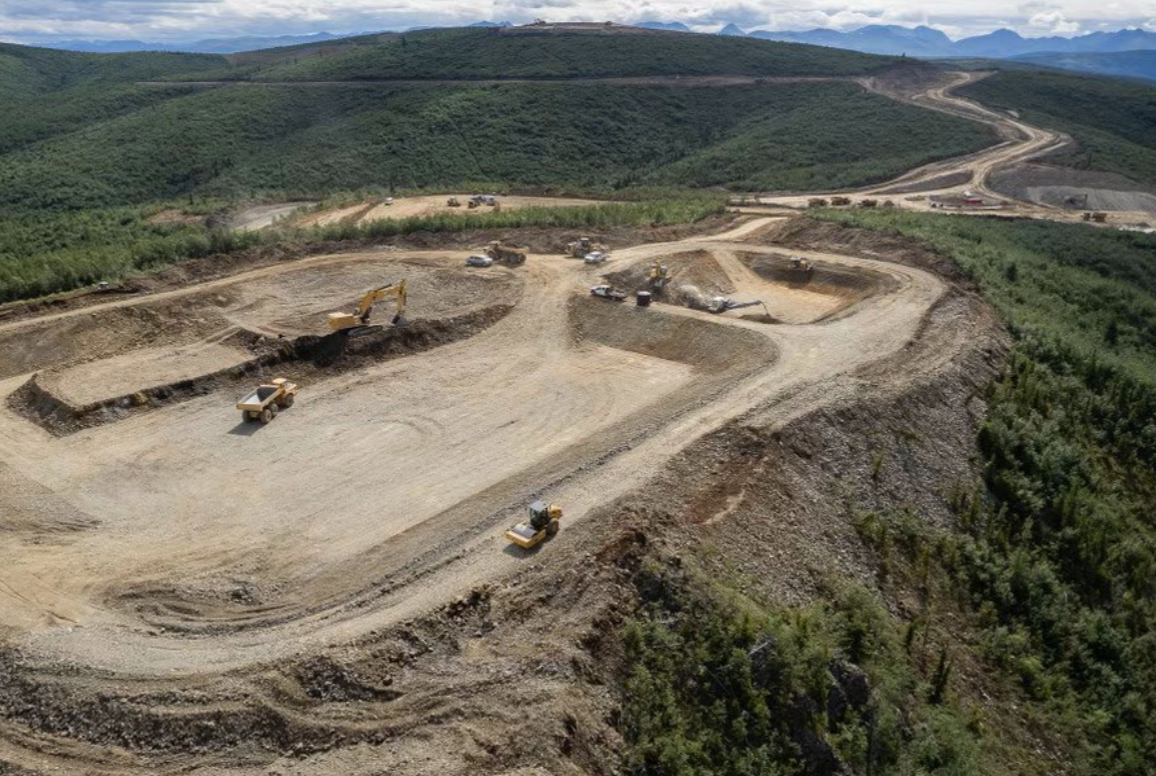
19:30 weather stations and fauna and everything else. So quite a bit going on at site. I'm meeting later this week with representatives from the Cook Inlet, the senior leadership team from Cook Inlet Regional Inc, the Alaska native corporation that owns the land that we have a lease arrangement with, typical, pretty typical mining lease arrangement. They'll receive a royalty as part of their, part of the lease arrangement. And then along with that, there's a number of engineering studies that that series leading along with environmental work for that conveyance of the easement down to the port site along the coast there. So just some photos from around camp, obviously drilling up on the mountain. It's very steep terrain.
20:21 We're building these big pads. It's a big job. Safety is the first priority.
20:28 But I'd say that these guys are doing a fantastic job. That middle picture there, that's the oriented core, very technically oriented work. Chris Brown is our advisor on that. He's one of the best in the world
20:42 on doing oriented core. We've got a Niton out there, Dave Lerner, our exploration manager, is testing his skills with the Niton. That gives you a good estimate of Copper, Lead, Zinc, Gold, Silver right away. Not so good on the Gold, but pretty good on silver and the base metals. We need over a gram of gold. So we actually, we do see gold with the Niton, but it's really more for base metals than silver. We know that our silver is in Galena. That was one of the things we were testing here is just to figure out where the Silver is. And we did a bunch of tests and it seems to be pretty consistently in the Galena, which is a good thing because that's Galena is an easy thing to concentrate. So we should end up with a really good concentrate.
21:29 We got a lead caught here.
21:32 You know, just the working with the team there on logging the core and just getting everybody having good geologic discussions. And then the other middle photo there on the bottom, we have a prep lab on site and this is a really high-tech lab. It's really well run. We produce a pulp on site, which means we can get our turnarounds in probably 2 to 3 weeks once we ship those pulps out. The first set of pulps went out today, So hopefully within 3, 4 weeks, we'll be reporting results to you. So
22:06 very exciting to see that get underway. The drilling to date, we've completed 3 holes. We're numbering them from the top end down towards the bottom end. But hole 8 there, the green one, goes right through the guts of the ore body. And we're not trying to wow anybody with a fantastic hole. I'm sure it will be a fantastic hole, but it is infill. And it's mainly just to get the metallurgical variation of the ore body. We've got a number across the strike of the ore body. We really want to understand what it looks like on the long direction as well. So we've kind of crisscrossed it with the other 2 holes. And then the other big thing here is hydrology, spending a lot of time
22:54 putting pumps in and PT stations. So we're getting all that work covered off here as well to get a good handle on the hydrology, both in the hang wall rocks there and in the ore body itself. So we'll, all the rest of the holes are relatively shallow holes. They're just crisscrossing the ore body right from, you know, just right near the surface there. So it'll be another 8 or 9 holes like that.
23:21 View from camp, we've shown this before, but it just shows the road that's currently being permitted. Basically just a couple of times, about 3 miles long and heads up, actually no, sorry, less than 2 miles long, heads up here at the base of the, what we call the dayside dome. And that's a post mineral rock. It's a good rock to put our development work in right in the foot wall of the ore body. You can see in this perspective the Johnson track ore body sits in his gut right here, makes it really difficult to drill down dip because it's dipping underneath the mountain and the mountain's going up a couple thousand feet there, So your holes get deep in a hurry and just get at a bad angle. So this tunnel in the foot wall will really solve that in terms of getting access to the rest of the ore body so we can do infill work. It'll also be our development ramp. So once we can mine this thing, starting at the bottom of where we know it now, and then mining up, which is, of course, is cheaper when you let gravity do the heavy lifting or the heavy dropping, if you will.
24:29 And then obviously it opens up this whole area for exploration. So we'll, the plan again is to get the drilling done this year, supporting the permit application for the tunnel in 2025. And then by 2026, we should be in a place to be able to put the tunnel, get all the preparations in place and get the contractor in place to get that accomplished in 2026. Roughly a year to build the tunnel and then a year to drill the ore body up. Those are rough timelines and of course that's part of our overall plan here with our five-year plan. We are now in production at Montreau and we're on schedule and we're now delivering into our expected production profile averaging $67,500 a year.
25:21 And on a $2,100 blended goal basis, we should be clearing over $60 million of free cashflow. And obviously some of that will get used to advanced Lucky Shot, which we'll plan to do next year. We've got a plan there to outline 3 to 400,000 additional ounces on top of the 100,000 ounces that we've got outlined and then develop a mine plan that can deliver 30 to 40,000 ounces a year. Give us 2, 3 years to do that. And then meanwhile we're advancing Johnson Track permitting and by 2027 we should be drilling underground and developing a mine plan by 2028 for Johnson Track.
26:07 So a lot of work outlined, but I think these projects, on a project basis, we should be able to be in a position to produce over 200,000 ounces of gold equivalent here. And obviously a lot of work between now and then to demonstrate that, but I think we've got a good plan here and a good team to execute. So happy to answer more questions. I'll turn it back to you, Romeo. Yeah, I appreciate that, Rick. There's 1 kind of broad 1 from the audience I think is worth chatting about. That's DLB Ross asks, how's your experience in Manchuro informing Contango's decisions on other Alaska projects and prospects in the future? What have you learned and what are you taking into to new projects? Yeah, I think the main thing is really, well, it's a couple of things. 1, looking for simple ore bodies, and specifically from a permitting standpoint. One of the things that just impressed me is the fact that we were able to permit Moncho in 9 months.
27:08 We only needed, when the only federal permit we needed was the wetlands 404 permit for building the road, the 6% road that connects the deposit to the highway. And that disturbed 5.6 acres, if I remember right. And so that was, you know, being able to permit something, any mine in the inside of a year is a pretty amazing feat. And obviously, you know, we have a lot more straightforward time permitting, getting state permits. So your mine operating permit, you know, you have a good mine plan and a good plan and you can manage water. That's what the state is concerned about.
27:56 And so, again, that's relatively easy to do in a year period of time is putting a good, good sensible line plan together. And if you've got water that needs to be treated, you can build a water treatment plant to do that. In fact, we don't, I don't know that we'll ever use the water treatment plant we have at Moncho. We might if we get a lot of water, but we have a very large area where we can contain the water, any water that falls on our head, we have to, that becomes our water. So we have a big water pond that we put all the water in, then we reuse the water for all sorts of purposes. So that's, again, that's relatively easy to plan for and to permit for. So I think that is, that's really the big takeaway is if you've got good quality deposit, good grade, that can afford the transport costs to get to a mill, then the next thing is that, you know, first is grade, then the next thing is, is it a relatively easy ore body to permit? Things that are above the water table are a lot easier to permit than things below the water table, because you have to worry about a lot more water when you're below the water table. It's not that you can't do it, it's just that it's a much bigger permitting issue, a lot more data to collect over a longer period of time.
29:16 And obviously it's gonna cost you a lot more to handle all that water. So I think those are probably the 2 real takeaways in terms of what really focuses our model. And that's why we acquired Lucky Shot and that's why we acquired Johnson, because they fit all those conditions. They're near infrastructure, they're good grade, they're good quality ore bodies. And sometimes it's a good quality ore body just because of grade. And that's the case of Lucky Shot. It's just at 14 grams per ton, it's really high grade. So you can afford to mine it, even though it's not at the best of geometries, it dips at 30 to 40 degrees, which is not ideal geometry for underground mining. You can do it, it's just cost a little more, but when you got 14 grams, you can afford to pay for it. So, and the other thing is land ownership, you know, owning, working on private land and working on private land that's owned by an Alaska native tribe or an Alaska native corporation in the case of Johnson, that also makes it easier. And when the landowner wants to mine, obviously that's what, you know, that's the first order of business. When you're working on federal land, it's public land. You have to go through that whole debate about whether that's the best use of public land.
30:33 And there's lots of folks out there who don't think it is. So when you're working on private land, you get to kind of lead with the fact that that was, you know, that's what the purpose of that land is for. Padded mining claims. And then in the case of Syria, land that they that they selected as part of their Alaska Native Claims Settlement Rights. So, Yeah, I think those are the important takeaways. But good question, great question. Yeah, those are key learnings moving forward. So that's great. One question, just changing tacks a little bit. Somebody asked, what's the plan for the Amanita prospects? Yeah, so Early days there, we just saw an opportunity, a company that was trading at a US$1M or US$2M market cap.
31:25 They had a nice land position in Alaska. We like the Fairbanks district. There's a lot of Gold that's been produced out of the Fairbanks district. Fort Knox has produced close to 10Moz now and I think they'll celebrate that at some point here. And there's just been a lot of alluvial Gold found all around Fairbanks. That's why Fairbanks is here. It's here because of the gold and it's here because it's an important transportation hub for Central Alaska or Interior Alaska. So yeah, it's more about a long-term strategy of looking at the Fairbanks district, which has a lot of good geology. And so we don't have a specific plan yet put together for Amanita, but we're certainly working on it. We see the potential there for a half a million to a million ounce deposit in the historic area that's been identified.
32:21 But there hasn't really been any significant work done on it in probably, I don't know, close to 10 years, I'd say. So we're going to spend some time digging through all the information, all the data and put together a good plan. We'll definitely get out there next year. I won't commit to drilling it just yet, but because we want to really go through the data and decide what we're going to do there. And The other property that came along with it is Golden Zone. There's a nice good grade copper gold breccia pipe associated with a series of porphyry type deposits. So very, very interesting geology there. And again, right off the highway. So we like it for those reasons. Great. One question about Johnson Tracts.
33:08 What's the distance from the future portal to the seacoast by future road? So as a crow flies it's 10 miles. As you build a road, roughed in, it'd be somewhere in the 15-20 mile range, as you wind around up across over the valley there. Makes sense. Rendasway from the chat asks- Just to put that in context, that's the same distance of road that we built for Mancho. Oh, there you go. Perfect. Rendasway from the chat asks, what are your thoughts on extending Mancho's production life? Ah, exploration. So we've got a $4.7M exploration program ongoing now. We'll probably wrap that up in the next month or so here.
33:58 Winter seems to be fast approaching here in Alaska. The geese were heading South yesterday when I was barbecuing on the deck. We'll probably be reporting results from this year's program. It was mostly drilling. There's a little bit of reconnaissance work they were doing in the south end of the, further south in the technical lease area. But most of the dollars were spent drilling. So, I mean, look, it's a very high-grade deposit. It's a scarn, it's potty. You have to drill a lot of holes in these things to find an ore body. So, yeah, we'll report results here in the fall time. I'm going to guess November-ish time frame.
34:44 But I'm pretty bullish, you know, there's a strong geochem anomaly associated with the outcropping mineralization and it just trails on down the ridge and there's several other nice anomalies that are certainly under tested as is the area between the 2 deposits, the north and main deposit, or they dip towards each other. So that was a natural place to test out. So yeah, I'm confident we'll find more ore And hopefully it's good enough grade to be able to send up to the Fort Knox mill. Awesome. We're bouncing back and forth on projects. I apologize for that, but E-Matson asks, back to Johnson Tract. I know it's still so long ways out, not long comparatively, but long in time. Any idea or thoughts on logistics in regard to moving the material out, who's going to be processing, etc.?
35:36 Yeah, short answer is no, not at this time. I mean, obviously, we'll have to build a road to connect to a barge site. It's been referred to as a port side. All we need is a barge site. It's not, it'll be a fairly small, you know, barge type access, probably just build a ramp out of gravel material. We'll have plenty of material from the development work at, from the underground at Johnson to build a sort of a barge site and to help build the road out there and all that. In terms of where the ore will go, having a number of early stage discussions, but that's really all we can say. There's When you have a good grade, lots of people like good grade going through their mill. So I think I've said this before, if you've got somebody who's running 5 grams per ton or through their mill and somebody brings 9 or 10 to them, there's always a discussion to be had. There's a deal to be made. So stay tuned on that. This isn't going to happen with respect to John's track. We're going to take our time.
36:43 We've got a number of options of folks to talk to that are all, let's say, barge accessible. That's obviously the first step, wherever it goes, it's gonna be on a barge. Where it goes after that, whether it goes on a rail or it goes on a highway to an existing facility. There's certainly a number of folks to talk to. We're in those early stages at this point. Great. Thanks. Now, jumping projects yet again, somebody notes the potential contribution of LuckyShot is significant. He's curious, what were the acquisition costs for LuckyShod? And then looking forward, are there other such opportunities that are similar? Yeah, short answer is, yeah, the acquisition cost, I'm gonna, that's a rusty file cabinet in my brain now, but I think it was 10 million.
37:32 You'll have to look at our disclosure on that. There are some milestone payments if we achieve certain milestones of production in the future, but in terms of sunk costs, that's what we required it for. And in terms of... What was the other part of the question, sorry? Are there any other similar opportunities you can pursue? Yeah, short answer is, you know, there's one of their 3 or 4,000 junior exploration companies all looking for something. When we apply our filter to it, near infrastructure, good grade, and relatively simple, you get rid of about 95% of them. Most everybody's looking for big things, And when you look for big things in today's world, they seem to be mostly a gram or sub a gram.
38:24 People who are developing 10 million ounce resources at half a gram, I just don't have a lot of time for. So the short answer is yes, there are. There are not a lot of them, especially when we go, you know, go do due diligence on things. You know, I think the, you know, The things that we're going to take, we'll be looking at, and we've got plenty in our play right now, so we're not in a hurry to go do something else. But you always look around and see what else is out there. But things that are in a hub and spoke camp type situation where you've got a central mill and there are other things in the neighborhood that are of quality and can afford the truck ride or the barge ride or the rail ride or whatever it is.
39:14 Those are, I think they are out there. And, you know, not to get off topic here, but, you know, we have a $2,500 gold price and the market hasn't moved a lot yet for the junior space. Majors are starting to get some respect on their cash flows. And I think Contango should attract that same attention because we just sold $32M worth of Gold. And again, I don't have my cash costs yet, but you can do some quick math. We're making over a $1,000 margin on that. We're doing pretty good. So I think we'll get re-rated as the market understands that we're going to have 2 more Gold pours this year and we're going to deliver 30,000oz to 40,000oz of Gold at a good margin.
40:03 That'll put us in a good place. So we've got 2 other really good projects. And of course, aspiration, as we talked about at Moncho, will continue. And that's about adding years to the line life. But I think we're in a good place. And we're going to be very selective. If we look at other things, it's going to be very, very selective. And it's definitely going to have to be very accretive to the company. Very accretive to the company. Perfect. I got one question about Johnson Tract and then 2 kind of recap finance questions. We can jump back to slides if we need to. The one question on Johnson Tract, they note there's a petition going on to create a beluga protection zone in the Tuxedne Bay Area. So they're curious if the road to the port would be outside of this area and generally how it did affect the project.
40:53 Yeah, starting off, that's really early. That's, I think it was just announced here maybe a month ago or so. It's the Center for Biodiversity and I can't remember the name of the other group now. It's certainly something we're aware of, and we're tracking, and very importantly, Cook Inlet Regional Inc. Is tracking, as are, I'm sure, a number of the oil and gas producers in the Cook Inlet. It's a very productive oil and gas basin. So yeah, there'll be a fair bit of scrutiny on that. There certainly are belugas in the area. I've certainly seen them in the Tuxedne Bay there. It's a beautiful area. So it definitely is something we're tracking, but it's pretty early days to say how that'll be implemented.
41:42 These things definitely take time. And I'll note that Siri definitely has rights to build an access road and a port facility. So Siri is a pretty serious Alaska Native corporation and I think their rights will be upheld because they were passed by the federal government. So I think there's definitely, we want to do things in a way that obviously where nobody's interested in destroying the beluga population. So we'll conduct our business accordingly. Perfect. 3 finance questions. We'll just rattle through them. If you want to throw the slide up, feel free. T. Decker asks what the cash flow projections for this year and next year are.
42:33 Well, If I could just do simple math, and this is obviously a very forward-looking statement, I guess, but if we're producing, let's call it mid-point 35,000oz of gold and we're in the neighbourhood of that $1,100 all in sustaining costs, we should have $35M come out of that. So that's total production. So we've already gotten money for it. Now we don't have the costs for it yet. But that last, if I say $35 million, that would be net of the $1,100 costs.
43:20 Obviously, we've got to pay the bankers off. That's an important thing. So the hedges don't pay the bankers off, they just guarantee a price at which we can pay them off. But we're paying the bankers off and we're reducing the hedge book as we go along here. So I think hopefully that answers your question. Yeah, I think so. There's another question, same-ish topic, but concerning the hedge book, is there a minimum amount of ounces that have to be delivered monthly, quarterly, et cetera? Quarterly, it's where we put the hedge book together was based on the mine plan. And so, and that's something you can revisit. You can move these hedges around a little bit, there's a little bit of a cost to it, but not huge. So if we're gonna have a really good quarter, we might wanna load up a few more hedges into that and deliver into it.
44:14 So there's a little bit of flexibility in it, but the short answer is we're hedged roughly 40%, sorry, roughly 60% of the ounces delivered in a quarterly period. Perfect. One last question, unless somebody sneaks 1 in. Robov asks, sorry if this has already been addressed, but any chance of a TXX listing in the near future? Yeah, so I've had that question a couple of times. I really don't see any advantage to paying the extra fees associated with the TSX. Canadians can, Canadian shareholders can very easily trade stock through the various platforms that exist today. So there's not really an advantage. I would say the only time we might think about it is if we had a Canadian property and that might make sense then, I don't know.
45:09 Flow-through is a blessing and a curse. I think it's helped make the difficult markets that we have for junior companies because everybody gets used to that flow through financing. I'm reading today about Canadians complaining that a foreign company, Goldfields, bought a Cisco. And it's like, well, because we don't have a really good market for raising money in Canada anymore. So I don't want to get too political or anything, but it's just It's not really a good situation that the Canadian markets are in for raising money, and particularly for raising larger money. I think it's just not gone in a good direction.
45:55 So I'll stop there before I dig a hole for myself. But no plans for right now. As a Canadian, we do just like to complain. So you can expect that in any direction. Rick, thank you so much for running through this and everybody who joined today, I know is a pretty big audience and for the folks asking questions, really, really appreciate your time. If you have anything else, any additional questions, please do reach out. We'll make sure that Rick and his team get back to you as soon as possible. Otherwise, everybody have a great day. Thanks for joining us. Thank you much. Bye-bye.