Automated transcript · Written by software from the replay's audio. It can mishear names and figures; the replay is the record.
15:32 Well, I mean, it's an ultramarket style of deposit and other ultramarket deposits in Canada that we could point to or Lynn Lake in Manitoba, which was around 22 million tons, Voisey's Bay, which is plus 50. Our team thinks that we'll be somewhere between there, between 20 to 50, which would be an enormous success for us in terms of the discovery process. What's that worth? Well, I mean, back in the day, those deposits were selling for 50 to $70 million per ton. So you guys can do the math, depending upon how many tons you assign us, but it's a significant number in the hundreds of millions, possibly billions of dollars. So if it does come through as we expect, this could be a very significant win for Power Nickel and its shareholders.
16:27 So yeah, so we're pretty excited about where we're at and we think it's an amazing time to be looking at Power Nickel and at the mining sector in whole and certainly the Lausanne curve is a tremendous way to sort of decide where do I want to be on the curve as an investor and what should stocks look like at that point in the curve. And we think right now Power Nickel is particularly attractive. So for sure, check us out. And if you've got questions, we're pretty accessible. So you can find our emails and contact information on our website, powernickel.com, and we'd be more than happy to field any questions you might have. Thanks, and I hope you have a great day. Hi, I'm Doug Flegg, Business Development Advisor for Reunion Gold.
17:15 We have what we think is a major new discovery called OcoWest in Guyana, which is on the north coast of South America. We made the discovery in 2021 and have been drilling it steadily since last year. You can see on the photo in the inset where we are on the discovery curve. So we're at the front end of the discovery curve, working our way up the front end. I think that's one of the most advantageous places to be on the Lassonde curve in terms of risk reward. From a risk point of view, we've made the discovery, so the discovery risk is gone.
18:09 And also, we have enough data on the project from drilling that we know that, or we feel that there's a very good chance that this will become a mine and that the outstanding question is how big is that mine going to be? And we'll find that out as we continue to move the company up that discovery curve. We're well funded with about $50 million. We have now 6 rigs working on the project, so we're in a great position to be able to move ourselves higher up the curve in terms of discovering new ounces. Our project itself is situated along a 6km long geologic contact that is coincident with a Geochem anomaly and some historic alluvial Gold workings, so pointing to the fact that there's a system in the area.
19:10 Most of our drilling has been concentrated in the northern 2.5km, what we call the Karuni zone. We've divided that into 4 blocks, blocks 145, and 6. A lot of our drilling has been on block 4, where we've outlined some very high grade for an open pit, high grade, and long intercepts. And we've drilled that zone down to about 575 meters. Most of the drilling now is from the 200 to 400 meters, but we did drill 1 demonstration all down to 575 that showed good grades of mineralization down there. So at this point, we're gonna continue to step out.
19:58 The last press release, which was yesterday, came out this morning, sorry, showed that we had added another 100 meters of depth to that zone and extended it another 350 meters to the north toward block 1. So we'll continue to drill out block 4, but at the same time, we'll turn our attentions to blocks 1, 5, and 6, which are only drilled probably to about 100 meters, and look to step out laterally and at depth on those zones. In addition to that, we also have the southern 3.5km of that 6km long geological contact that I mentioned. So we're starting to do some scout drilling with our Sarooot Sea Rigs along that to try and identify additional centers of mineralization for follow-up.
20:50 We have also a very interesting target to the west of the project area, which is defined by quite significant alluvial workings that come up to, from the stream beds into the area where there's hard rock on our project and then they stop. So it's a potential source area for that historic alluvial mining that's significant alluvial mining that's occurred in the area. We have a small scout geochem rig really almost that we will start to employ over the next months in order to do some geochem there as the the jura crust cover there is quite thick. So we're quite excited about all those targets.
21:41 As I mentioned we think we're in a great risk reward part of the Lausanne curve. We're well funded and right now we're just seeing how big this deposit can be. For more information, you can look at our website, reuniongold.com, or reach out to us at info at ReunionGold.com. Thank you very much. Hi, my name is David D'Onofrio, the CEO of White Gold Corp. Very pleased to be here today to talk a little bit about our company and the Lausanne curve and how they play together. I think this is a great piece to be done here is the Lausanne curve is a fundamental perspective which I think any junior mining investor needs to be well aware of.
22:30 And in our years being investors in this sector, we've really sort of gained a deep appreciation for the ebbs and flows of the industry, how value can be built. That's obviously what we're in it for. And you look to manage as much of that as you possibly can. Obviously, it's a very cyclical industry, so there's different overlaying sort of macro factors that will come into play, but fundamentally, I think this is important. And in fact, Whitegold was built specifically in mind. I think This conversation may outline why Whitegold is such a unique company in the junior resource sector. So our properties are all in Canada's Yukon. This is a phenomenal district. You always want to focus on a district that's very important.
23:16 Canada's been great, Yukon's been great, lots of support all around. We have an incredibly large land package there. It's almost 1 million acres. And when we designed this company, we designed this company to be able to optimize value creation opportunities throughout the song curve at all given times. And what I mean by that is we have, with such a big package, we have a number of opportunities. We have actually 30 properties. And I would say at any given time, we're being active on about 5 of those different opportunities. And the goal is to start with early stage reconnaissance concept. And that's when the company was initially put together with our co-founder, Sean Ryan. He got there. This is, you know, We're in the Klondike district. This is the area of infamous Klondike gold rush where 20 million ounces of gold were found right at the surface.
24:08 No modern day exploration had been done. So he comes there 15 years ago with the concept phase and he said, listen, there's so much gold on surface. It didn't come from the sky. It had to come from below. I think there's going to be a lot more. And over the years, it's been able to prove that theory and we've been able to see the value generation play out almost to the T, how the little song curve works, where it's gone from idea to discovery, excitement, and to the pinnacle of, I think, every junior exploration companies, which is monetization event. And in our company today, we currently have projects throughout this curve, and I'm happy to touch on the different ones. And I think what's very exciting and important about that is it really differentiates this company from a lot of companies and for a couple reasons. 1 with some more advanced assets, there's real value there. You can sort of put a value on it with delineated gold ounces, but there's still a lot of opportunity for a very exciting kind of blue sky, new discovery type success.
25:09 With so many projects, you're also de-risked, right? If you have a company with 1 or 2 projects, if you're anywhere along that curve and your theories don't play out, then you have the opportunity for upside is no longer there. So working sort of backwards, I'll start at our sort of most advanced projects, where they are, and then kind of take you through sort of the genesis of what we sort of see coming up the curve and where we see the exciting value creation coming in the next coming years. So our most advanced asset, which I think is sort of just getting towards the peak of that first hump, is our flagship deposit. It's the Golden Saddle RVG deposit. So we've seen that company grow from nothing, idea, right through to the delineation of an initial resource stage, which is sitting combined at about 1.8 million ounces.
26:03 We think that has a tremendous amount of room to grow. We're doing work on that right now. We're continuing to see it grow. But however, as you see sort of on this curve, the incremental value creation per additional success starts to be limited. And from a junior mining perspective, we want to be able to show our investors that we're maximizing the return opportunity on your investment. So what we're now at a process of doing is looking at and entertaining opportunities for monetization. This will therefore reward our current investors and allow us to take that potential capital and reinvest it back into our earlier stage companies and kind of continue that cycle. So White Gold, when I said it was built with this in mind, we're built to be a project generator.
26:50 And that was sort of Sean Ryan's view when we went there. We had this incredibly large, underexplored district with this prolific history. It's seen a tremendous amount of success in the last several years and we think that we're just scratching the surface. We've been involved with all these success stories to date. I think we're kind of unlocking the code here and we're predicting that as this camp evolves, the more success you see, it increases the opportunity of additional success. And once you start, and that's how these camps are born. You have a first new discovery, a second discovery, and from there they sort of keep popping up because now there's more investment in the area, more knowledge in the area, and that is the phase we think we're at right now. There's been that 10 years of preliminary work, that's sort of the flat part. And now we're in the drill and discovery stage. This is the really exciting stage. And we're fortunate enough to have this 1.8 million plus resources growing, which we can pin a value on.
27:46 So the risk reward dynamics is also very attractive. So, that's kind of where we are on that particular project. As you sort of move down the expiration curve, we have a couple of properties and targets that are sitting in there. And you know, any given year we're sort of active on 3 buckets of opportunities, our advanced project, our discovery stage project and our regional type portfolio. And in that discovery project, that's the really exciting thing. That's a new discovery that's been made in the last 1 or 2 years, a lot of attention from the market. And the 2 of those that we're active on right now is 1 is on our Betty property that's in the south of our package that's very contiguous to Newmont's coffee discovery, which was a junior CamNet that was acquired for $500 million. And we're right along the same fault system there. We made a discovery last year on a maiden diamond drill program, 50 meters of 3 and 1⁄2 grams from surface. Very exciting. We're in elephant country down there with Western coppers, huge porphyry, sort of contiguous to us as well. So that is right kind of at that inflection point of new discovery, a lot of work to be done, very, very exciting times on that project.
28:56 The other one is on our Orion Surprise. That's just a couple of kilometers west of our flagship deposit. That was a new discovery 3 years ago. We've done more drilling on the last couple of years and we are continuing to find evidence of robust gold mineralization. So we think that is gonna rampantly continue to move up the curve and be able to build value for our company as well. So you know it's nice to sort of see those real value creation happening in real time and then on that flatter part of the curve in terms of validating these ideas we have a couple of very exciting projects we're working on there. One is called the Ryan's Trend. This actually holds that Ryan surprise discovery and it's a 6-kilometer-long trend, about a kilometer wide, again, just a couple of kilometers west of our flagship deposit.
29:44 So, the best place to find new gold in terms of being able to show the ability for value creation is near an existing deposit. It really will affect and improve the economics with that close proximity. And we have now in the last year delineated at soil levels, which is our key prospecting tool, some very significant and robust soil anomalies. We are actively performing scout drilling on that. We use a RAB drill to do a first pass of drilling to sort of see and help prove up our theories. And then from there, if this is a success, those results will come in with the diamond drilling for the more significant investment. To date, we've been quite happy with what we're seeing. And this is a real blue sky. We have the one deposit on a small part of 1 target in that area, this trend and these targets are orders of magnitude larger.
30:38 And we're really excited by, based on what we saw that led to the initial discoveries of the gold saddle and what we're seeing on this trend, for the opportunity for that to sort of produce new discovery targets in the next 2 or 3 years. And ideally, if all goes well, we're going to kind of make the new discoveries, do the work, optimize the value creation, look to monetize those targets. And as I mentioned, then take that capital, reward the shareholders, put some of that back in and do it over and over and over again and this is what this company was set up to do. You know we think we can, it's in a great jurisdiction, it's had this prolific history, there's been tremendous amount of success to date and we really think we're just scratching the surface and with what we've seen so far, we've never been more optimistic about the opportunity to execute on this business plan that we've set out to do.
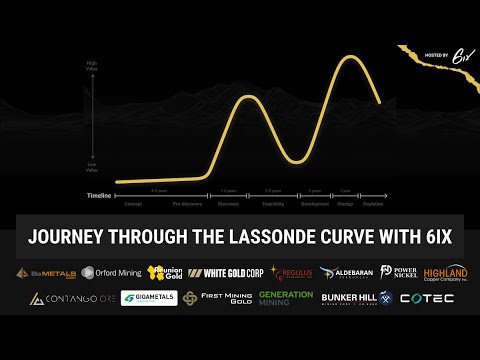
31:27 And we're thrilled to be able to have also validated I think our thesis by bringing in Agnico and Kinross as our partners. I think they share our views here about the opportunity for this particular district and evolving camp. And just stay tuned and we really are excited with what we're seeing and we plan to be able to be making new discoveries and building value for years and years to come. Hello, everyone. My name is John Black. I'm the CEO of Regulus Resources. Regulus is a Canadian junior explorer that's actively exploring and developing the exciting Anticori Copper Gold project in northern Peru. Anticori is a large copper gold deposit where we already have a sizable resource in hand, but with plenty of potential to continue to grow the size of the deposit and de-risk it. It's in a setting with an active mining district in the area and it's quite likely will become part of a new major mine at some time in the future. So we're very excited to be exploring it. But what we'll do today is we're going to examine where our antiquary project sits on the La Sonde curve. The La Sonde curve was developed by Pierre La Sonde as a way to help investors or other explorationists even identify a typical life cycle of a junior mining company. The curves on the screen here, and we can see the bottom axis is time, or stage of the project, and the vertical axis is value that's added to the project. And there are 2 points on this curve where a lot of value is added quickly. The first steep segment of
32:59 the curve is the point from discovery up to approximately pre-feasibility stage. If you identify a project that's at that discovery point, it's in a position to quickly add a lot of value up to about pre-feasibility. The next deep upward leg of this chart is the point where mine is just entering into production. And the important concept of this is in between, there's often a long period of time where not a lot of value is added, particularly from a shareholder's standpoint. We refer to it as Death Valley. It's commonly referred to that way as the industry. And so an interesting concept about this curve is that we even use this curve to determine what type of a company we have. Regulus Resources is 1 of 3 companies that we've had under our same management team. And with all 3 companies, what our purpose and our strategy with the company is to identify a project that's at that discovery stage, just where the first inflection point is on the curve where value begins to be added quickly.
33:58 We identify it at that point where we can capture it for a low cost through any of a variety of means of how we identify projects, and then quickly drill a project out, de-risk the project, and take it to about a pre-feasibility stage with that quick value add for our investors. And then our strategy at that point is to look to monetize the project by selling it to a major mining company, the type of company that would then take it onto production. As a single asset company, that death valley stage is very, very risky for a company. It takes a long time to get through that, and an increasing amount of time as we see more emphasis on community interaction and just as countries sometimes make it a little more complicated for the permitting stage. And if that's your only asset, you're often stuck with it for a much longer time than investors intended to be writing on this, and you're not easily adding value to it until you get to that production stage. If you're a company with a variety of assets in hand, you can have projects at different stages and weather that time easily. But as a single asset company, it's better to focus on a shorter timeframe on the project. So that's what we're very excited about our Antiquari project is, you can see the indication on the diagram of where we're at.
35:12 We're just starting to go up that steep value added curve. We have a very exciting project. As I mentioned, it's in a mining district. We essentially have about half of a large sulphide deposit, with the other half of the deposit being on our neighbour's ground, where they're operating an oxide gold mine that's pre-stripping the cap off the top of this much larger Copper Gold Sulphide mine. When I mentioned we have half the project, it's still very sizeable what we already have in hand. Our current resource, our 1st resource, what we consider an interim resource, is 250Mt of material that's indicated, so it's fairly well drilled out, with a grade of 0.48% Copper, 0.29g per ton of Gold, and a little over 7g of Silver. We also have an additional 267Mt of inferred material at very similar grades. So over 500 million tons of mineralization, this would be a sizable copper gold deposit by itself.
36:08 And it's only a portion of the much larger deposit. And then that overall deposit is in a setting that's effectively a brownfield setting with the neighbors pre-stripping the oxide cap off, it'd be much easier to make a transition from an existing oxide mine into a much larger copper gold sulfide by consolidating the district and moving forward. So our strategy now is to continue to grow the size of the deposit. We're actively drilling with 2 drill rigs at this moment, including exploring out into new areas with potential for sizable new increases in resource, and continue to de-risk the project. Really, the biggest opportunity to de-risk this project would be through seeking some type of consolidation in the district. What we believe that that's imminent right now is the mine next door runs out of oxide ore in 4 to 5 years. There's also a mine nearby operated by Goldfields that they're so grown operation, which also begins to run out of ore, stops their mining in about the same timeframe. So there are a number of, or 2 active mines that produce a lot of benefits for local community members in the area that will both reach their natural end of their mine life. But there's an outstanding opportunity to make a transition into a much larger mine, what we refer to as a multi-generational mine, the type of mine that has potential to be a mine for 50 or 60 years and provide substantial benefits to the communities in the area. So this will be the type of project that would be very interesting to the major mining companies.
37:34 And as an investor, it's important to identify a project right at the stage we're at right now. You have the security that we're on to a good project already, but our market cap is a little less than $100 million right now, which is substantially less than what we anticipate the value will be when we get the project to the full pre feasibility stage. So it's a great time to jump on with a group like ourselves right now. And over the course of the next few years, I think you'll see us reveal that full potential value. And we'll be doing it right at a key point in time. As most of you are probably aware, there's a looming shortage of copper. As the demand increases for copper and projects are increasingly difficult to find, we believe we'll be delivering a project right at the right moment when the world needs these and the major gold or copper companies are looking to acquire these type of assets. So stay tuned on this, watch for this project. I think you'll see us in the news quite a bit over the next year or 2 as this moves forward and it's an outstanding opportunity to take a look at this as an opportunity. If you'd like additional information about us you can visit our website at www.regulusresources.com or contact us via info at Regulus Resources or are readily accessible on our website you can see how to to reach out and find out more information about us. So thank you very much for your time.
38:55 Hello everyone, my name is John Black. I'm the CEO of Aldebaran Resources. Aldebaran is a Canadian junior company, exploration company, that's exploring and developing the exciting Altar project in the San Juan province of Argentina. Altar is a very large copper gold porphyry system. We have already identified a very substantial resource on the project, but we have very good reason to believe that it will be significantly larger than we know it to be at this time. And there's plenty of room to continue to reveal the full potential value of the project. What we're going to do today is we're going to take a look at an examination of our project on where it fits on the well-known Lassonde curve. The Lassonde curve is on the screen, and it's a curve that was developed by Pierre Lassonde, a well-known mining executive and investor, who pointed out or used this to demonstrate to investors or even exploration companies like ourselves on how a project fits in a typical lifestyle, life cycle of an ore deposit.
39:58 So this, the horizontal axis on this shows the timeline of the project from early expiration all the way through to development. The vertical axis shows how value is added and when value is added to the project. The important takeaway here is that there are 2 points on this curve where the curve goes very steep and then shoots up vertically. At those points, you're adding a lot of value over a short period of time. So as an investor, the ideal projects are those that are low on this curve, but it's already moving up, and you have plenty of room to see that move up. You'll note that there's a very dramatic dip between those 2 attractive steep points on the curve. That's what we refer in the exploration business to Death Valley. It's the point in time typically from pre-feasibility to when you're ready to begin to produce in a mine, when you have a lot of cost, your costs shoot up, but the nature of the project's not changing. You're waiting for permitting, you're waiting for the right time in the markets to go forward.
40:57 And if you're a major mining company and you have multiple assets, you can ride through that point in time. But if you're a single asset company, that can be much longer than we anticipate and destroy value during that time. So we like to stay on the curve that's the steepest part of the curve. This is easy. It's a good tool for investors to realise where a project is on this, but we actually use this curve to determine what type of a company we would have. Myself and Kevin Heather are both exploration geologists and came out of a background working for major mining companies. And When we had the opportunity to set up a junior company, we had to determine what type of a company we would be and where we would explore for. Aldebaran is 1 of 3 companies our same management team has had. We, in all 3 companies, our strategy is to identify projects right at that first inflection point. So a project that already has some good indications that it has potential to be a major project. We intentionally look for projects that can be very large copper or copper gold deposits, the type of deposit that would be of interest to a major mining company.
42:05 And we acquire that project, ideally cheaply, at that first initial stage. And then we drill the projects out. We de-risk the projects up to about a pre-feasibility stage, which would be the peak in the curve, the first peak in the curve. And then ideally, we monetize the project by selling it to a major mining company at that time. And why do we do that and avoid the whole second steep curve on that? And the reason we do that is with a single asset company, that could be a long time to get there and require a lot of additional financing and not necessarily result in a value to shareholders, particularly in a share price sense. So we stay away from Death Valley. We try to stay on that steep part of the curve and counter the project, drill it out, and sell it at that point in time. We can see where our current Altar project is located on this curve. We believe this is almost ideal for investors. We have about $100 million market cap right now with potential for this project to be significantly more valuable than it is at this point.
43:03 But we already have a sizable resource, as I mentioned, in hand. This project has a currently reported resource of about 622 million tons of measured mineralization, quite well-defined mineralization at a 0.44% copper grade with additional gold and silver credits, as well as an additional 576 million tonnes at 0.42% copper with additional precious metal grades. So combined, measured and indicated resource of approximately 1.2 billion tonnes, a very large deposit already in hand, but we've just reported in the last few months some very exciting geophysical evidence which indicates that we perhaps have only explored a small portion of the project. We believe it can be considerably larger than we show it right now. So we're early on the steep part of the curve. We're at a point where as we drill this project out and de-risk it, we'll be adding a lot of additional value to the project as it moves forward.
43:58 An interesting thing about the Altar Project is that the Altar Project has actually been a project that has ridden all the way up the first steep part of this curve one time. The project was initially discovered by Rio Tinto, but largely drilled out by a junior company called Peregrine metals in the period from the early 2000s up to 2011. They drilled the project out, demonstrated much of the size that we already report right now, and sold the project to Stillwater Mining Company in 2011 for approximately $487 million US in value at that time for cash and shares. So they effectively did exactly what we planned to do on the project. So you might ask, what happened? The project rose rather quickly on this. It probably sold when it wasn't quite fully de-risked at that point in time. And the main thing that happened in 2011, this project ended up in Stillwater Mining's hands.
44:55 Stillwater was perhaps not the best company to develop it. It was a platinum producing company that put their hands on a big copper deposit. And then they entered into difficult market conditions. And furthermore, it was in Argentina, when Argentina still was not really clearly a mining company and it didn't have policies and practices that made it easy to work in Argentina, particularly for bringing money or making large investments. So they had a good project, but the timing wasn't right and the fit with the company they had wasn't right. And these are the type risks that you see when you go into the infamous Death Valley. And so the project fell off in value kind of disappeared off of the map. We were aware of the project. And when Sabani purchased Stillwater mining company, we approached them with a plan to see if we could reactivate this project, bring it back to visibility, and perhaps benefit from more fortunate timing on the project.
45:50 So we acquired an option to earn an 80% interest in the project with Savanye Stillwater for quite low terms, $15 million in cash, and we invest a total of $55 million in 2 phases to earn into an 80%. We're approximately at the point where we earned 60% for the first $30 million investment right now, very actively drilling on it. And we believe that the same project that was once sold for $487 million at the top of this curve, has potential to be an even larger and more attractive project as we re-present the project and show the full potential size of it. But more importantly, we think that we'll be delivering this project at a much more opportune time. As many of you know, the demand for copper is projected to skyrocket at some point over the next few years as we see a continued increase in demand for use for electric vehicles and a lot of other aspects of a lower carbon economy going forward.
46:50 And so we anticipate we'll see copper price go up. The demand for projects like this will be high. And as an industry, we're not delivering these type of projects to the major mining companies very efficient. These are hard to find right now. So we believe we'll be in a position that we're delivering an outstanding project right when the major mining companies are looking for it. And even more importantly, to note on this right now, is there's been a tremendous change in the atmosphere for mining investment in Argentina. Argentina is not well known as a mining country, but it has the same geology in the Cordillera that we see on the other side in Chile. This project, if it was located 30 kilometers to the west, it would probably be already a large, in Chile, it would probably be a large mine already. So we, in recent years, the certain provinces in Argentina, most notably San Juan where we're located, have made very concerted efforts to attract mining investments.
47:43 And right now, San Juan is a hotbed for exploration activity. We're 1 of 5 large copper deposits that are being very actively explored in the area right now. It's a great time to take a look at us because we have our hands on the project. We currently have a market cap of about $100 million, with plenty of potential for this to increase in value as we move forward in a favorable environment and great timing to deliver it to companies that will be looking for these type assets. So we're extremely excited about this project. It's 1 to keep your eyes on. If you'd like to get additional information about us, You can find a lot of information on our website at www.aldebaranresources.com. Our Chief Geological Officer Kevin Heather puts out a lot of very informative videos that describe our process and where we're at with this project and what we're doing with it. And feel free to contact us at info at aldebaranresources.com.
48:36 So thank you very much for your time, and we appreciate any questions that you might have. Well, good morning. My name is Rick Faniwanais. I'm the president and CEO of Contango Org. And I'm going to discuss with you today where we are on the Lausanne curve and why we're a bit of a unique story because we're gonna leapfrog the valley of death there that so often is the case with junior mining companies as they develop their project. Let's start off by just- just describing a little bit about the Lassonde curve here Lassonde- famous investor. In the resource sector- still still investing in the resource sector but a long time ago we- observed that- companies that- go through a discovery phase. See their share prices increase dramatically.
49:23 But then- come to a peak and then- go through the- valley of death or- a long period of time where they're developing their resource, completing infill drilling, upgrading inferred resources to indicated and measured, including PEAs and pre-feasibility studies and feasibility studies, and then permitting, and then construction. And that period of time between the discovery and definition of an ore body and actually getting it into production where you're adding a lot of value can be a long time. And typically, I think back when he first put the curve forward and talked about it, it was probably a 2 to 3 year process. And as we've seen continued efforts to de-risk investments through things like 43-101 and SK-1300, regulatory processes that add time and dollars to completing studies, we've seen the length of that valley broaden significantly from, I would say, 2 to 3 years historically to currently somewhere in the neighborhood of 10 years and sometimes more than 10 years.
50:36 So what, and typically the junior company would make a discovery hole, have a discovery hole, and then drill out a source and then advance their project. And eventually, sort of peak out as, they identify 123 million ounces of gold and then the quality of the gold, if it's low grade or high grade, all those things would depend on how high the curve went. But eventually they'd get to a point where they'd kind of maxed out the size of the ore body and then go down on the other side and go through this valley of death. What's unique about Contango ore is that we've made a nice discovery, high quality, 1.3 million ounce resource at 4 grams, it's our SK 1300 recorded resource.
51:24 But we've been able to sort of leapfrog this valley of death by forming a joint venture with Kinross and using their existing mill and tailings facility at Fort Knox operation to avoid having to permit a mine site and a mill site and a tailings facility, which in today's world would probably take you at least 5 years to do in the United States. Because it's an existing facility, it's been operating for 25 years at Fort Knox. And so we're going to simply truck our ore up the highway. And we can do this because we're right next to the highway, the Alaska Highway, which is about 240 miles away from the Fort Knox Mill. So by being able to just mine at site, there's minimal permitting that was required.
52:14 We've now gone through that permitting process. It took us close to a year, but we're all the way through that and we're now constructing the mine. And again, the construction period is pretty short. It's about a year long. We're constructing and upgrading access roads to the mine site and lay down areas and basically building a truck shop and a few other things. But it's minimal amount of construction that's taking place. So what normally would be maybe a 2 or 3 year process to build a mill and a tailings facility, we're shortening to less than a year. And again, being able to leapfrog this long valley, most because the project that we permitted is a very simple project, because we're not building a mill and a tailings facility, but also because then the construction time frame diminishes dramatically.
53:07 So we've been able to maintain our value even in a pretty tough gold market with a high-quality discovery. 1.3 million ounces of 4 grams is a pretty high-grade discovery. We've done the further infill drilling now and we're actually going to be trucking 8 gram materials. So we've kind of upgraded the known resource and doubled the average rate of the resource to about 8 grams. We're going to be trucking up to the Fort Knox mill. We'll be producing, the mine itself will be producing somewhere in the neighborhood of 225,000 ounces of gold a year. Our 30% share would amount to about 67,500 ounces of gold And our only sustaining costs are in the neighborhood of 1000 to $1,100.
53:56 So we've got a high quality project that we've been able to quickly advance to a construction decision. And we're currently today constructing. So we've been able to sort of leapfrog that valley of death. I think that's what makes Contango a very, very unique story. So if you have any questions, please see our website at contangoor.com or reach out to the info at contangoor.com. Send your questions in there, we'd be happy to answer them. Thank you very much. I'm Mark Jarvis. I'm CEO and Chair of Giga Metals Corp. We've got a giant, low-grade, open-pitable, sulfide, nickel and cobalt deposit in North Central BC that we would like to develop into a mine.
54:47 And so we're in the Lausanne curve, we're somewhere on the feasibility part of the curve where, as you know, the Lausanne curve shows that there's a lot of excitement around discovery. The discovery stage is a speculator dream. But once you know basically what you've got, the feasibility stage where you're modeling what a mine would look like, To the speculator, this is kind of the boring phase. And so the tendency is that stocks tend to not do very well during this phase because there's no positive surprises. There's a lot of skepticism as well.
55:36 Small companies with large deposits, that's a very big challenge for a tiny company to develop a very large deposit. However, Every story is different. And in our case, I think that we've answered the question of how a small company is gonna develop such a large deposit. In our case, Our engineering studies have modeled that in the first phase, we would spend $1.4 billion in capital costs, and then we would expand the operation in about year 6, we would double production by spending another 500 million dollars. So call it 2 billion dollars in all. You know, as a small company, that's a tall order.
56:24 But we recently announced a partnership with Mitsubishi Corp. It's one of the largest, if not the largest companies in Japan. They are the largest commodities trader in Japan, and that is a very small part of their business. They have a model where they like to get involved in a development project and help to get it developed and help to get it built. They don't want to operate, they want a minority interest and they want as much of the offtake as they can get. And they've selected us as their nickel project. And so, you know, and they've done this before and they've done this successfully before all over the world. They're involved in several producing mines that started off as development projects.
57:18 So because we have answered the question of, you know, how a small company is going to develop a huge project, this is the answer. You have to have partners. You have to have partners with financial depth. You have to have partners with financial depth, you have to have partners with technical ability, and we have done that. So as it happens, we've done that during a period of time where the market for junior stocks is extremely soft right now. And we are in fact trading at about half of the project valuation that Mitsubishi bought in at. But I just think that, you know, markets, the one thing we know for sure is that markets change. And so when markets are terrible as they are now, at some point, they're going to get better.
58:08 And when markets are wonderful, at some point, they're going to get worse. So we've got that whole dynamic at play here. So I think, you know, if you can answer the question of how you're going to actually get a mine built, there's a possibility that you can do extremely well. Anyways, thank you very much for your time. Pleasure talking to you. I'm happy to introduce you to Highland Copper and give you an example of what companies at the low point after feasibility study can do to get up the curve towards a full valuation after construction and development.
59:01 We are a junior developer. We have 2 assets in the west side of Michigan, both Copper projects. In the last year, we let go of our exploration properties to really focus on the development of these 2 assets. Letting go exploration properties also means letting go of regular news from drilling programs, letting go of the possibility of bigger and bigger deposits. So it's part of the negative that comes at that stage, not having any exploration results. But we made that choice to focus on shorter-term value creation instead of long-term and we're getting into this with a lot of energy and enthusiasm.
59:51 Our 2 projects combined do have 8.3 billion pounds of Copper underground. This is sizable, That's measured, indicated and inferred. At feasibility study level though, you truncate it eliminating the inferred portion of the resource. In our case, it represents 40%, as MNI do represent about 5.3 billion pounds. So it's another portion of the value that sort of disappears until you get up and start bringing that off cash flow eventually. I'd say the last piece of the challenge at that low point on the curve is depending on who you are, a producer or a junior developer.
1:00:38 As a producer, you can build and get into operation off your own cash flow. It's certainly not the case for a junior developer with no cash flow. Then you really have to time your financing for the next phase in light of the market situation. The soft market may make it somewhat very challenging and that's been a bit the case in the last few months. We have projects in Copper and we really like the Copper fundamentals. We believe in a strong future for copper prices. The supply side remains under pressure. The demand increases and the ask keeps increasing with more renewable energy being demanded, shift towards electrification of vehicles.
1:01:36 And ESG also got a lot of traction in the last 3 years, putting a number of companies under pressure to take position towards renewable energy and minimizing emission. So, We are very optimistic about the long-term future of Copper prices. As for our island and our projects, I mentioned, located in Michigan in the Upper Peninsula, all mining district. It's been a very positive aspect of it as infrastructures are there to support mining with water, road, railroad, power lines somewhat close by. And I'd say one of the big surprise for us was the state managing the permitting process. And they've been extremely supportive and they delivered, after we completed the Copperwood feasibility study, they delivered on permits within 12 months. All permits were received to allow for a start of construction.
1:02:38 The communities around us know mining well and they've been very supportive throughout the process. Our 2 projects are somewhat close, 1 to the other, they're about 60km apart. I mentioned Copperwood Feasibility Study level project could produce 30,000t of Copper a year for some 11-years with an additional 50Mt of Inferred not included in there that could bring 5 to 8 years of additional production. As for White Pine, it's PEA level but we feel it's really de-risked as the mine has been producing for 50 years, already produced 4.5 billion pounds of copper and could bring in 45,000 tonne of copper production for a mine life of over 20 years. So if you combine the 2 projects, you have about 75,000 tonnes of Copper that could be produced from these 2 long-life assets.
1:03:40 At this point, our focus is to move towards the higher portion of that curve once you reach operation level. We want to make sure we do look at all possible options with those 2 projects. We've done Copperwood on a standalone basis, We've done white pine on a standalone basis and we are currently looking at all options. The main one on the table, and we're doing a PEA with G-Mining and Golder, and this is assessing all possible synergies coming from a combined scenario. We are currently looking at going for 1 central processing facility, 1 central tailings dam for deposition.
1:04:29 And A combined scenario will obviously bring many opportunities for synergies. The easier 1 on the G&A side where all departments like accounting, procurement, IT, they could support both mine operations. The 2 deposits are very similar. They're sedimentary deposits on the ground mines. The technical aspect, the lead on mining, engineering and geology, maintenance could be the same and shared. That could be beneficial on the quality of the work at both side. But the main ones would remain the processing facility and the tailings impoundment.
1:05:15 Obviously, there are also warehouse and laboratory and core shack that could be also shared between the 2. So, on this option, on this scenario, we're looking at completing the work for Q1 to understand better our path forward. At this point though, looking at coming up that curve and then creating value in the short term, it comes down to execution. Execution on scenario analysis, And I'm a strong believer that you save the most at the drafting table. And that's what we are doing right now, doing detailed engineering study to maximize value for our stakeholders, but also trying to incorporate innovation and minimize the environmental impact from the advancement of those projects.
1:06:11 We're at a phase where we're also trying to de-risk as much as possible the upcoming construction phase. That's critical to controlling CAPEX and timeline, but the most important part remains it's critical to have a strong and stable operating performance through the 20 plus years coming after. Copper, wood and white pine, both projects are low capital intensity projects. What I mean by that is overall capex is estimated to be between $12,000 and $13,000 per tonne of Copper produced, which is on the low side versus the average construction of Copper projects. Both, I mentioned sedimentary deposit underground mines, Copperwood with a grade of 1.5% Copper and White Pine with a grade of 1.1% Copper.
1:07:09 We would produce a clean concentrate that could be shipped to a smelter or We also have the option of leaching the material, producing cathodes at site. The study is ongoing on this one. We understand it brings more capex upfront, but there's no pressure to do that right at the beginning. It could be a few years down the road. And certainly from the state of Michigan perspective, it keeps all jobs and benefits in the state. And it's very well received as well as whenever you discuss CSG site. We have a strong shareholder base, Dorian mine finance at 28%, Greenstone and Condier at 16%, plus Osisko at 6%. We overhauled the board in the last year to be ready for this phase and brought in skills to support construction and operation, as well as financing and a strong knowledge of Michigan.
1:08:06 We like the skills on the board and they operated really well as a team and interfaced with management in a great way. So in the coming months, we're certainly looking at ramping up that value curve, positioning ourselves for future financing and construction and development activities on both Copperwood and White Pine. At this point, what we see as a trigger in the short term is the completion of the PEA for Q1 2023. We'll have a drilling program at White Pine to convert more inferred into M&I, positioning ourselves for the feasibility study on the standalone or a combined scenario. And we'll continue to pursue early work and de-risking at both sides as we get ready for future project financing that would bring us up that curve and hopefully stay on top at a greater value for a 20-plus-year as we continue to operate and increase the resource on the project. So, Great time, challenging maybe to see a valuation post feasibility study, but we like the fundamental behind copper, we like the region, we like the 2 assets of 8.3 billion pounds of copper and we'll work hard at bringing value for all of our stakeholder in the short term.
1:09:35 I am Dan Wilton, the CEO of 1st Mining Gold. First Mining Gold is developing a number of projects as we fit into different places on this Lassonde curve. But our 2 main projects are the Springpole Gold Project, located about 100 kilometers east of Red Lake, Ontario, and our recently consolidated and acquired DuParcay gold project in the heart of the Abitibi sitting between Rua Niranda and Timmons. So we'll talk a little bit about the Springpole project, which is our more advanced project, and where it sits in the Lassonde curve is really in this point that in my time as a private equity investor, we used to call the valley of death, which is this long period of feasibility and permitting.
1:10:26 And I think conventionally, there was always a view that this was the 2 to 3 year tough part of the Lassonde curve. I think this is probably one of the reasons that Pierre Lassonde created the curve was exactly this stage. Now, I think you can see the upside of investing in companies further on in this stage in the Lassonde curve is that turn to value as you go into development, as you achieve your permits, as you demonstrate your technical feasibility and economic feasibility of your projects. I think it's a remarkable opportunity if you can pick the right spot to invest. And I think when we look at our Springpole project, you know, we've been in the environmental assessment process since 2018.
1:11:17 We filed a draft environmental assessment report or published a draft environmental assessment report earlier this year. That's now going through regulatory reviews. But that whole process, I think for us, is expected to extend another couple of years, getting through a lot of, working through comments from regulators, working with the Indigenous communities around our projects, and ultimately, you know, building that social license and hopefully a real spirit of collaboration to move forward with the projects in the area. But this is the time frames in this part of the Lassonde curve, that pre-feasibility study, feasibility study, but particularly the permitting and social license parts of the development curve, the timeframes have stretched, probably doubled, I would say, in the last 10 years, and often for good reason, because I think it does foster a more a more collaborative approach and I think you know local communities and indigenous communities are now having more of a say in these projects. And I think that's actually a really constructive thing for the industry.
1:12:36 But the reality is that puts a lot of the onus of this long dated hard work in the mining industry on the back of some of the proponents that are least capable to carry it. I mean, you know, single asset project developers, we have a couple of projects, so that's, I think it puts us in a bit of a different perspective. But it really does put the onus of that development on developers, many of whom don't have cashflow, most of which has to be funded with equity capital. And I think it's one of the things that I've seen is one of the biggest changes in the industry over the last 20 years is that you used to have larger companies that would acquire resources earlier in the Lassonde curve, and they would be the ones with cash flow and resources to carry these projects through. Well, now, a lot of that is on the shoulders of developers. And even that next stage of the real development, the construction phase, has been pushed in the gold sector in North America, has been pushed onto developers.
1:13:45 In an equity market, that's a challenge. So I think the one thing that's interesting with this is, well, you look at the values here. In some senses, looking at the Lassonde curve and thinking about specific projects and kind of what's their value per ounce, What are the valuation metrics that we're seeing? Because historically, you would have projects at this stage when they achieve that, call it the end of the feasibility stage, in this definition of the Lassonde curve, end of the feasibility stage where you have your permits and you're ready to construct. If you look over a range of years, go back over 20 years, you'd see normally single asset or just development companies would trade in that 0.5 to 0.7 times that net asset value, that fundamental value of the companies.
1:14:36 Today, if you look at that, I mean, 1st mining gold is trading at less than 0.1 times that net asset value. So it is a real historical anomaly. I think the developers right now are extraordinarily cheap from a historical basis. A big part of that is we haven't seen a robust M&A market for projects. The one thing that we know for certain is that if you don't know what that project is right now, if it hasn't been discovered, or if it's just been discovered, the reality is that is going to take you probably 12 to 15 years to get to a point where it's in construction.
1:15:22 So that timeframe, if the projects continue to grow, as you can see in the early excitement part of the Lassonde curve, through discovery, through exploration, you can see real increases in value there. But fundamentally, if you are a fundamental value believer, I think the best place to be investing is when your resources are understood, when the economics are largely understood, When the infrastructure needs of the project are largely understood, and you're going through that process of securing the social license and finalizing, confirming those economics, where you still have good exploration upside on a lot of these projects. Certainly, at our projects, we're embarking on pretty meaningful exploration programs in the region around Springpole, where we've doubled the size of our land package, and at DuParcay, where we've now got a 3.3 million ounce indicated and 2 million ounce inferred resource sitting in the heart of the Abitibi that's open along strike and at depth. So lots of exploration potential to grow projects in this stage.
1:16:34 But where you see that real turn of value here is when these projects transition from that study and permitting phase into something that's constructible. So again, I think it's no shortage of challenges, but if you find a company that's well backed, that has great assets, and particularly assets that you know are going to be big enough to be meaningful to the largest gold companies in the world, which both our Springpole and our DuParquet assets are. And if they're in great jurisdictions, which both of ours are, I think if you can buy them at prices like you can find today, I think it's a really, really compelling value proposition for investors.
1:17:23 So that's my take on where we are in the Lassonde curve here. If you'd like to learn more about our company and our projects, you can find us on our website www.firstmininggold.com or feel free to get in touch with us at info at firstmininggold.com. Thanks very much. Hello, everyone. My name is Kerry Knoll. I'm the Chairman of Generation Mining, one of the company's founders. Generation Mining is developing a palladium copper platinum project in northwestern Ontario, Canada. And The project is slated to produce about 245,000 ounces of palladium equivalent a year. That would put it in the top 10, easily in the top 10 precious metal mines in Canada if it were in production today.
1:18:15 We are in the process of getting the permits for the project and the financing in place, etc. And because of that, I'll explain where we are, where we feel we are on the Lausanne curve. Just going back a little bit, I remember, I've been around long enough to remember where the Lausanne curve came from originally. I remember when Pierre Lausanne wrote the book, it's called The Gold Book, and put this curve in a little bit different format into that book in the early 1990s. And I was developing a gold mine actually at the time, so it was very clear to me that this was an important way to look at how mines develop.
1:19:02 In those days, incidentally, his curve had the life of a mine going from about 5 to 7 years from discovery into production. That of course has changed today and the new curve that we're using today is 10 to 13 years so it's almost doubled. And the reason for that is a bunch of things that are actually not shown on the curve, things like permitting, financing, First Nations negotiations. There's just a long, long process these days in order to get a mine into production. One thing I'd like to say about our mine is that we only acquired this project in 2019, so we've had it for 3 years, and in that 3 years we've accomplished really what the list shows in the Lausanne curve is taking 7 to 10 years. So we've actually done a lot in a very short period of time. Part of the reason for that was that we were able to pick up on some of the work that was done by previous owners, even though the project had been dormant for about 7 or 8 years at the time we picked it up. And the second reason that we were able to do it quickly is just because that's how I have always operated.
1:20:13 In my background, I've started 6 mining companies and 4 of them made it into production. So it's something that I've been through before and something that we're going to do again with this project. So one of the keys as to where we are on the Lausanne curve is one of the issues, the set of issues that has delayed the building of mines in Canada. And I will talk about where we are on all of those. So the first one I want to talk about is financing. We are in the process of arranging the financing. We have, as any of you who follow us will know that we did a streaming deal with Wheaton Precious Metals. We need to raise about, In our feasibility study, it was a net of 665 million, but that didn't include some of the items such as pre-production revenue and equipment leasing, et cetera. And the total all in number to get this mine built was about in the feasibility study was about $880 million. And we're just in the process of updating that number.
1:21:21 But so we are in the process of getting that money. And as I mentioned, we have a deal with Wheaton Precious for $240 million. They've already advanced us $40 million. We're using that money to get to the next stages. We're also in negotiation with a group of banks for a total of $500 million Canadian dollars, and that includes the Canadian Export Development Corporation for about half of that. And those negotiations are going well. The site visits have been done. And as I like to say, we've got the usual suspects in the room and we hope to have some announceable documentation on that in the coming months. And then the third stage, of course, is your negotiations with the First Nation, which was not as common back in the 1990s when Pierre first did the Lausanne Curve.
1:22:15 So in the more recent times, it's just an absolute must that you include the First Nations with as part of your construction negotiations and you have a community benefits agreement with them. So, we are very, very close to having that signed with the most prominent First Nation, the one that's nearest to our mine, the Biktugon Nishnawbek. And we are in there in the process of voting on the agreement within the ban. So we're very close on that. And then the other issues that need to be done ahead of time of course are called detailed engineering. You can't just start building a mine without having all the detailed engineering. People have tried And that's some of the big failures you've seen, or the big increases in capex, or the big failures of the mines in recent years in Ontario.
1:23:09 A lot of those are because the detailed engineering wasn't done in advance. And ours is going a little slower than we planned, but it is getting done and will be done before we start construction. And then of course there's the procurement of equipment. That's no small feat. You need to get the right equipment. You need to get the right prices for that equipment. We've already started. We've already actually bought the ball mills. We were able to get some brand new ball mills that were purchased by another company whose mine didn't go ahead and they fit our mine very well. We've also bought a partial camp from another group that was building a power line through the region, major power line, and so we have a 240-man camp right near the mine site. So we're already started the procurement process. We're negotiating now with the heavy equipment for the mining fleet, for the rest of the equipment we need for the mill, for the steel, for the concrete, all of the different items we need, we're in the process of negotiating for. And we're also talking to various contractors who can do different parts of the process. So we're getting all that done. And that's why we feel we are on the portion of the curve that you see on the screen in front of you. And that is just at the start of construction.
1:24:29 And we are hopeful that that construction will start next year. We in the early part of the year we are awaiting right now a environmental assessment review by the federal and provincial governments and they have until November 30th to complete that process. We're hoping to get that earlier than that. And once we get that process, we are able to start getting the various permits we need. The first one we need is the one to start harvesting trees so that we can start putting roads through and pouring the concrete for the mill, etc. And we would really like to get that going over the winter this coming year. And we're also negotiating with a number of private equity companies and banks to get the balance of the equity that we need in order to build this mine.
1:25:27 And one of the things that's also changed a lot since the Lausanne curve was first introduced, was that in those days, it was basically debt and equity. That's all you had. Well, now you've got royalties and you've got streaming and you've got prepays and you've got private equity companies coming in with, you've got money being lent by smelters or by banks that's sponsored by smelters. And there's all sorts of different financing arrangements, which makes it better for the investor, but the timeline to do it is a bit longer. And that's yet another thing that has extended that Lausanne curve from between 5 to 7 years up to 10 to 13 years. We are getting through that and we're getting through it in what I think is an extremely good time considering we've only had this project for 3 years.
1:26:16 So we are hopeful that we are going to get a huge re-rating when we get through this curve, get to the top of that cycle. I don't know why they got that line going down at the bottom of the end of the cycle because it doesn't really go down. This mine has a 13-year mine life and then it could easily be extended for 7 to another 10 or 15, even 15 more years. So we expect this to be a long-life mine, and we expect it to be a very, very profitable mine at certainly at today's prices are all in sustaining cost to produce an ounce of palladium is about just over $800 a US and palladium is trading at just over $2,000 US an ounce.
1:27:02 So thanks for listening and please reach out to us if you've got any questions on generation mining. You can reach Ann Wilkinson at our office or by email awilkinson at genmining.com. Thanks a lot for your time. My name is Richard Williams. I'm the executive chairman of Bunker Hill Mining Corporation, a new team on an old mine, a mine that ran from 1890 to 1981 and then was shut for environmental reasons. And we will bring this mine back into production in the final quarter of next year. We the new team joined around about 2.5 years ago.
1:27:49 And really, as you look at the Lassonde curve, we joined in the dip, in that bridge that goes between the very exciting exploration phase, and you can see that first peak. And then the equally exciting production phase, the higher second peak. And this bridge, the development phase, the challenging bridge between potential as defined in that first peak, And then realization as yielded in that second peak is where we find ourselves right now. And again, I'll just talk a little bit about that gap on the Lassonde curve. And then quite clearly, where the Lassonde curve is describing how value is ascribed by the public market to the development of a mining asset owned by a junior mining company.
1:28:45 This development phase, which incorporated the bottom includes feasibility, development and startup is the riskiest, quite evidently, as that economic potential is refined into a fully bankable plan, funded and then built. You know, a reference I often like to use is Peter McCarthy, who's chairman of AMC and principal engineer of AMC Consulting. And he says that 25% of projects fail, 20% perform better than expected, and 55% perform as expected. He's referring specifically to the expectations delivered by the geology, with an inadequate understanding of geology as the root cause of project failure.
1:29:41 And so we're in the middle there, advancing up towards the final in-production phase, which we will start in the final quarter of next year. And we're doing it in a very compressed timetable because we are not a greenfield site. We're not a brownfield site doing remnant mining, but we're a brownfield restart using SEC classified reserves bequeathed to us in 1981, converting them to modern 43-101 classified reserves, and then leveraging all of the infrastructure that was left to us, enhancing it with things like processing facilities bought from tech, the Ponderay mine, 140 miles away, the excellent community and government relations, and the extent permit that allows us to move a lot quicker than we otherwise would have been able to.
1:30:46 So we're sitting right there, moving up that right hand steep part of the curve. So let's have a look at our project. We inherited this ore body, it's called the Quill and the Newguard ore body that was discovered in 1973, less than 10 years before the mine shut. It starts in the upper part of the mine and goes down potentially to the deepest part where they were mining when they shut the mine in 1981. And what we're doing is we're going to be developing this in stages, with the first stage or phase being that which is primarily above the water table. Old mines often flood.
1:31:32 And this is gonna provide to us sufficient economic ore to provide for the restart as described in a PFS that we're putting out in full next week, a $52 million MPB project and a low capex of $55 million into an operation that will mine 657,000 tons a year at around about 8.5% zinc equivalent grade, at an all in sustaining cost of 77 cents per pound, yielding a 36% after-tax IRR. That's only the first 5 years of an operation that we can see through that ore body extending out over 12.
1:32:26 And why is it we're able to move from that low point in the curve to the higher point of the curve in production so quickly? Well, firstly, the ore body knowledge is exceedingly good. The mining company that was running this mine and discovered this ore body and converted it to reserves in 1981 was at the very forefront of technological and engineering understanding of its peers at that time. So alongside our access to that ore body is 100 years, nearly 100 years worth of geological and production data that supports their original reserve assessment. We've leveraged that, we've verified it, and we've added to it.
1:33:14 It gives us a great deal of understanding on the ore body, which was Mr. McCarthy's first point associated with the risk in this difficult part of the value creation curve that Pierre Lassonde described. So we've got very good ore body knowledge. Second thing, with respect to our cost estimates, both capex and opex, this is an area which creates often a lot of uncertainty, hence the dip in the curves. Well, firstly, on the CAPEX side of things, with $55 million, $26.7 million on that being our processing plant. We've already bought our processing plant from Tech at Pend Oreille and have moved it already to site.
1:34:03 Now putting that jigsaw puzzle back together and optimizing it is indeed a challenge, but it's a challenge that our engineers and our processing manager, formerly of Barrick Gold Strike and his team are well up to. Secondly, our capital development in that budget of 55 is only $6.3 million, remarkably low for an underground mine. And that is because the considerable amount of easily to access and easy to enhance underground infrastructure exists today that we will be leveraging for our restart. We have changed the mining method, the long-haul open stoping with paste backfill. So a paste plant, around about $6.2 million will be installed.
1:34:52 But the combination of all of those advantages and the fact that we have the infrastructure and the permit on site would deliver us some very low cost operating numbers, at $37 a tonne mining cost and $21 a tonne processing cost and 9 of GNA, which will yield to us an annual EBITDA based on our current pricing assumptions of $41 million a year and $29 million of annual free cash flow on average over those first 5 years. And what that allows us to do is reinvest that cash flow into the mine to extend those reserves and expand those resources. And we can see it being a multi-decade opportunity if capital is allocated right.
1:35:44 The other risk that exists when we look at costs is the level of engineering accuracy. We're restarting this mine ostensibly on a PFS, but in real terms, our engineering studies are being taken all the way towards detailed engineering planning before we're starting anything. And really importantly also, one of the reasons that that dip exists is because the time taken to get permits, particularly in North America, be it Canada, USA, and even in Southern America, is very elastic. In some areas, it could be 5 years. In other areas, it could be 10 years. But one of the advantages that Bunker Hill has, it's got an intact mining permit. And although there is some construction permitting we need to do, With Idaho and the Idaho support, we don't see that being a major impediment, certainly not in terms of time.
1:36:39 And then on the sustainability, we have an intact water treatment plant that has been in existence since the mine shut down and enhanced many times by the United States government, that is ensuring we meet our water discharge standards now and into the future. And our partnership with the United States EPA is allowing us that long look at sustainability, both through operations and on the other side, along with their sister body, the Idaho Department of Environmental Quality that will be taking over from them almost as we speak. And then the final piece that drives that dip that we've overcome is access to financial capital in a very difficult time for us all in the capital markets.
1:37:25 With our primary partner being Sprott, streaming and royalty business run by Caroline Donnelly and Mike Harrison, who provided 90% of our restart capital finance already on a non-equity basis with the remainder to be provided from offtake financing from our downstream partner. So for that reason, you find Bunker Hill as an unusual case in point in terms of how to go from the dip where our current share price reflects where we are to the peak of production in a very short period of time. And it's unusual primarily because of the starting advantages that the asset has. Good or body knowledge, exceptional or body knowledge, considerable amounts of in-place infrastructure.
1:38:16 A team that is focused exclusively on this task and a high grade team with a lot of experience in project delivery and operations. And then finally, capital that we raised from a PEA that is allowing us to advance as quickly as we are at the moment with a very supportive capital partner in Caroline Donnelly and Mike Harrison of Sprock. So that's for the investors looking at us. You will see us moving from that dip to the peak, representing the start of production at the end of next year. I'm Julian Treger, the CEO of Kotech. We're a new company which is deploying revolutionary technology to try and both make the mineral extraction sector greener and also more efficient in terms of providing the minerals and commodities that the world is gonna need in the coming years.
1:39:24 I'm a great fan of Pierre Lassonde. I think he's an extraordinary gentleman with an amazing twinkle in his eyes. And the Lassonde curve is a great guide to the way in which the mining sector developed and which mines went along this path. But with the advent of technology, there are new opportunities to play a major role on the curve and make the commodities that the world wants. And that's really what Cotech is doing through its various investments. So we play on the curve in 2 parts. The first one is we look for brownfields a restart.
1:40:12 Mines which were explored which came into production but for a number of reasons didn't make it. And now with technology, we believe we can make them much more profitable and viable. And that's a very quick way for the world to get the metals and minerals it's going to need to green, particularly in the West. So an example of that from COTEX perspective is our recent investment in the Mag Iron Project in Minnesota. That's an enormous iron processing facility with huge waste deposits as well as iron ore contained in the ground. We bought it effectively out of bankruptcy for very little, And we're now restarting it with the benefit of some of the technologies which we think are gonna make it viable and interesting in this new world, the way in which we can recover the billion dollars that's spent on the asset and also become a major contributor to very green steel making in the US.
1:41:21 So that's where we play at the beginning of the final wave of the curve, looking for marginal assets which haven't made it, but with which the application of technology could make a big difference. The other major area of interest for us is towards the end of the curve. We are in the business of enhancing the lives of mines and their contained mineralogy. We believe that the circular economy is gonna be increasingly important in the future and recycling and reprocessing is gonna be the place where a lot of the world's minerals are also recovered. The view in the past that a mine was finished is really gonna change to the fact that the waste is a considerable asset and what was seen as a liability in terms of waste is gonna increasingly be seen as an asset.
1:42:19 And so, CoTech is investing heavily in revolutionary technologies which can take the waste, the end of life of a mine, and reprocess it to create valuable mineral assets. And we have 2 examples of that technology already in our portfolio. 1 which can recycle iron ore waste, steel slag and ferroalloy waste to extract the contained metallurgy within it, and the other which can recycle magnets and extract the rare earths within that. And that's something that's really important strategically to the West. We're also in advanced stages of looking at various technologies which can enhance the existing production of a mine, which can allow what's made to be expanded to go much further.
1:43:20 We're looking currently at technologies which can, for instance, expand fertilizers by 10X. And these things will extend effectively the lives of mines for the world. So we're super interested in what Pierre discovered is great innovation of the curve, But we're interested in looking along the curve for places where we can create great value by the application of technology, taking marginal assets back into production, or taking waste and making something valuable for humanity from that. Thanks very much.