Transcript
Automated transcript · Written by software from the replay's audio. It can mishear names and figures; the replay is the record.
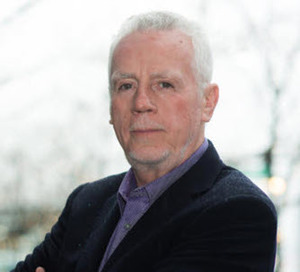
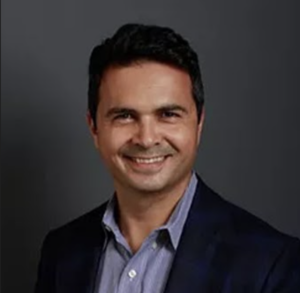
0:08 Well, thank you for tuning in to our webinar, not webinar, a fireside chat, even though It's quite hot in Vancouver where Simon is. Quite hot here, yeah. Probably the riverside chat, maybe. Yeah. We are very excited to have Simon with us today. He's the co-founder of Fortuna Silver Mines. He had many discoveries and co-founder of actually the founder of Metallum as well as Radius Gold. He's a prospector, very successful prospector, mining financier, and Casey Research Explorers League inductee. He and his teams, under his guidance, obviously, have discovered gold deposits in Honduras, Guatemala, Nicaragua, and a silver gold deposit in Mexico. His companies have raised over $450 million for exploration and development projects since early 2000s, including recently completed 100 million dollars both deal for Fortuna Silvermice. And he's the chairman of our company, relatively new company, Metallum Resources.
1:16 Thank you, Kerem. Nice to be here. Thank you. Thank you for joining us. So today we'd like to talk about, you know, how Metallum came into a great new company that's focusing on base metals, because your history has been heavily on precious metals some base metals obviously but just wanted to you know talk about where how it started why we started Metallum but I think It will be better if it comes from you, and then I can talk about Mittel and what we are doing. Well, actually, the opportunity came to me via Sprott. Sprott was working with Superior Lake in Australia back in 2016 and 17, and they were looking at establishing an equity and loan for Superior Lake to put the deposit into production.
2:09 And I think also Trafigura was involved in that. But then the zinc price collapsed And the asset was owned by an Australian listed company and it was in Canada. And then COVID started and nobody from the company at Superior Lake could travel to the project. So I was contacted by an analyst at Sprott who pointed out the opportunity when I began discussing with Superior Lake that it may be better if it was in a Canadian listed company as a project is in Ontario. So we took about a year for us to negotiate and put the deal together. I think we got it at a great price and the timing was perfect. You know, we paid about $13 million, depending on the share price, but $13 to $15 million for the asset, which according to the study that was done by Superior Lake prior to that, projects got an NPV of somewhere in the $157 million range at a zinc price of about $110, $115.
3:15 So today, with a zinc price of $130, $132, it is a great asset to hold in the company. And it was orphaned. Nobody in the Australian exchange really cared about this asset in Eastern Canada with a poor zinc price, so hence the acquisition.
3:32 Metallam, previously to being reborn, was a company I had in Peru with a phosphate project. We acquired, discovered the phosphate deposit, but the phosphate price never really rose to the price that the economics needed for that deposit. So we let that deposit go and negotiated the terms and now have this great asset. And we renamed the company to suit more the, what the company had, as opposed to Foslate now, we're a zinc company, and it's got a great zinc asset. And I think, I think Karim, you've done a great job so far in trying to bring attention, public attention to the asset we have. But as you know, we need to get that feasibility study completed so we can show the economics of this great deposit.
4:26 Absolutely. No, thank you. That is a great summary. Obviously, it wasn't easy or straightforward along the way. No, it took a lot. It was slow, but we got there. We got there. Yeah, like every challenge, it's a good one. And I mean, the timing was great. It couldn't have been better for zinc. We call this as a zinc acid, but because it is such high, it has such high grades of zinc, if there was not that much of high zinc, you can pass this as a copper as well. I mean, copper grade is good in it also. No, For sure. Yeah. And free from deteriorating metals and any toxic environment, anything like that. So it's really good jurisdiction. So I can talk about it, what we are doing with the project and Metallo.
5:16 Yeah, why don't you present what we've got, you know, the details. By the way, yeah, any questions, please either send us after or anytime. You can put it in the Q&A chat there. I don't know what it's called, but. So, Metallum, yeah, we're, we, the acquisition was closed early April at the beginning of April when we started trading under the ticker MZM at the TSX Venture. So our project is high grade zinc and copper polymetallic project with some precious metals located in Ontario. I'll talk about the history of it a little bit, the recoveries and the potential of it. So there might be some forward-looking statements, so I urge everyone to read this. This presentation will be available.
6:04 So when we're looking at where we are, it's just east of Thunder Bay, I think. I can't, not an artist, so hopefully I can do a good job here. So wait, sorry. This is where Thunder Bay is. Oops. Okay, that didn't work. Thunder Bay just east of Thunder Bay. It is yeah, 150 kilometers east of Thunder Bay, just north of town Shriver. There's an access road right to the project site, and this is 20 kilometers from the main Trans-Canada Highway, and 27 kilometers from Schreiber, town of Schreiber.
6:52 It's one of the highest grade zinc deposits in the world. Currently, the resource is at 2 million tons, at 18% zinc and 1% copper. That's the remaining ore that is in the resource with great upside potential, which I'm going to talk about in a minute. But what's interesting here is, as Simon mentioned, the infrastructure. The infrastructure in place are very capex heavy, which makes things easier for us and relatively cheaper to invest at the beginning in order to start the mine. But also the advantages in the timing, because there is, as you can see here, I'll try another drawing. Yes, this is the tailings dam.
7:40 There is polishing pond, there is settlement pond just next to it as you see on the left-hand side. But look at this. There is a, I should stop trying, I think. There is the transformer on site, as this project is on grid. So that makes things a lot cheaper and easier to move forward. But also, as Simon mentioned, there is a JORC compliant, Australian compliant bankable feasibility study that was done in 2019. So based on that, it has very attractive numbers, mainly because of all the infrastructure being in place. One of them is also all the underground development right to the ore body.
8:26 It's ready to go, pretty much. So that saves a lot of time, but also a lot of money. But what is interesting, apart from that, is the bankable feasibility study, it's suggesting being cash positive after the first 2 years, in those numbers, 2 years ago. So we're looking at probably better. Right now we're converting that, we're updating that feasibility study and into Canadian standards, which is expected to be published in the next couple of weeks. So based on that, we can move forward. Right now the mine is flooded, So we need to dewater it. We're looking at dewatering that in the first quarter of next year. But in the meantime, we're going after the exploration targets. There's an enormous exploration potential on this property.
9:18 Let me show you what I'm suggesting. So this is a VMS deposit. All these red dots are showing the size and the VMS deposits around the world. So the ones we are looking at are the Arkean ones. So Pick Lake, Kid Creek, Flyn Flon, those are same age, basically, same time zone. So I guess in the Arkean, the Magma was angry, my friend, for the Seinfeld fans there. But at that time, that's when we see the high-grade, very big VMS deposits. So Luckily, ours is one of them in Ontario, readily accessible. I live in Ontario. I can actually drive there. I've been there many times so far.
10:09 The exploration potential is enormous. Let me show you what I'm talking about. So in here, What we are seeing is the green squares are the ones that were mined in the 90s. So Inmet mined this in the 90s, and they shut it down due to low zinc prices at the time. Zinc was around $800 per ton. We are floating around $3,000, just over $3,000. So you can see the potential here, just along with that. So the red ones are the known resource that is left when they shut it down. And then Australians did the updated resource calculations, which we also updated, published the updated one in January. That is the 2 million tons at 18% in average zinc and 1% copper. But what is interesting is the peak side is this one. So there's 2 horizons. The peak side has the higher grade, 19% at 1.8 million tons.
11:10 So in geological terms, VMS deposits usually come in 2 to 4 horizons at once, at the same time. Only 2 known horizons have been discovered to date. There could be more big horizons and multiple other lenses. But what we are seeing here is 2 different time zones. Within Archean, still,
11:33 there is a different time zones. What does that mean? That means that there should be more bigger horizons, or relative to these ones, in the vicinity. But what is also interesting is these gray zones are the already identified potential targets to add resource, which there's either no or minimal drilling that was done. So there's minimal drilling that was done here recently by the Australian company.
12:03 0 drilling here, whereas there's surface geophysical shoving and sampling done. None at depth, none at strike. So in the vicinity alone, there is an enormous potential. They drilled roughly
12:19 1,800 boreholes in both deposits. Only 247 of those were in the Pick Lake. Just to give you an idea, they drilled about 8,000 boreholes in Flint Flon to come up with 35 million tons. That number alone is showing the potential. But let me show you what I mean by potential. So these are the grades. I put that slide in here just to show the upside potential in terms of grade, not along this zone that we could easily, looks like, add some tonnage. But look at the peak side. When I said high-grade zones, look at the peak side upside potential. These are the P is upper peak. So 40%, 36%, and 31% zinc and copper. I've seen copper intercepts around 5%. So very good polymetallic base metal with some precious metals in it, incredible upside potential here. So this is the peak lake horizon
13:21 projected to surface. This is Anderson showing here. And this is Winston. So these are the interrelations. As you can see, they are not exactly oriented the same way, dipping. But all these red areas are the already identified targets that have never been drilled. When we started our drilling in April, we targeted here, the midsection
13:46 of this zone, just to test, and some here, and a couple of boreholes around here. But even to drill those, we had to open some trails to get there. I mean, It's never been drilled. Look at the potential here. There is the peak lake, and these are the geophysics, upper peak lake. So these are the horizons we're looking at, 2 main horizons. We recently discovered also another potential here. And we're not even focusing there, where we see very similar geophysical anomalies. So there's a lot to do in exploration while we move forward with opening the mine. So this is the resource, 2 million tons in average, at 18%, almost 1% copper, and some good silver grades.
14:35 But as you can see pick Lake has the higher grades of the 2 that's remaining.
14:42 And when I said really historical good production I meant the high recoveries. That is, you can make the calculation easily how profitable it is. I mean, over its nine-year mine life, they mined 3.3 million tons, 900
14:59 million pounds of zinc, 54 million pounds of copper, and look at even the gold numbers. I mean, this only pays. So in today's number, you're looking at $1.5 billion worth of metal produced over 9 years. So if we can do that, it's going to be even better with today's prices and very low, very, very low operating costs, minimal KPAX requirements. And the top section also shows the recent metallurgical work that was done, which confirms the recoveries, what we are seeing in the historic recoveries here. So Pig Lake is going to be the good one. So where do we stand in terms of comparing ourselves with the other good projects, ZIM projects, our grade is by far the highest, as you can see, not even close, and with enormous potential to increase the resources we have. Currently, it's not bad, 2 million tons, but enormous potential we are seeing with minimal. So that's better, that's a better nine-year mine life, correct Carol? The 2 million tons from the feasibility study that was done indicated that's a better nine-year mine life.
16:14 It has, Yeah, currently nine-year mine life, so we should be able to replicate this. That was 9 years of production as well.
16:23 But 0 exploration that was done in the very high potential areas, which we are drilling at the moment. I mean, we just wrapped up drilling. And if you saw our press release today, we're looking forward to the lab results to see. And then based on that, we are going to focus on this area or that area initially with our second phase of drilling. And that's yeah that's what we're doing right now. We're looking forward to the assay results in the next couple of weeks. Based on that we're gonna plan our second phase of drilling and and hopefully increase the resources while we wait for the dewatering permit to dewater and do more drilling from underground in the new year and move towards opening the mine.
17:14 Yeah, Those are immediate plans for now, unless you want to add anything, Simon. No, I don't. I think we, you know, with the waiting for that feasibility study to be completed, it should be done by mid-July, and then we'll continue talking to a number of partners that have expressed an interest in joining us in the development, but obviously
17:38 that study is a key factor going forward. At that point, we'll decide whether the focus will be on the exploration to grow the resource or just focus mostly on developing the asset that we have. And I think that's that'll be a key decision.
17:54 Absolutely. By the fall. Yeah, absolutely. We, as you mentioned, I mean, We have a lot of interest coming to us right now from financiers, from traders, which is exciting. But I just wanted to show the upside potential that while we move forward towards opening the mine, there's a good chance to add more tonnage. No, exactly. And there's good flow-through financing available for that, whereas there's no flow-through for development of the assets.
18:30 So I think it's a good approach. We need to test those targets, see if we can take this to 4 million tons or more. But what we have right now is a good economic deposit that our partners are interested in developing it with us. So let's see which way we go. Absolutely. So yeah, this is in a nutshell, pretty much. Any questions
18:59 or any comments, any questions, we can go more in depth. We're happy to answer. I will check. What is what is Metellus cash balance and burn rate today? That's a great question. So we still have some flow-through left to do and that's one of the things that what Simon is doing with his gold group. If you got a chance to listen to our previous webinar, what we do here is we share the administrative costs, the GNA, amongst all the companies. Because all These are under Simon's, the companies that he founded are sharing those costs through a gold group.
19:52 So our burn rate is really, really low on the GNA side. So we still have money for most of the year with no issues. The thing is we want to do these analysis, we want to do these studies, engineering studies. There is a couple of engineering studies we're doing in terms of how to open the mine and updating the feasibility study. So that's where, apart from the GNA, that's where we're spending our dollars. But we're still fully funded.
20:24 What is the cash position at the moment, Carol? It's just almost 600 grand in the treasury right now. OK. And of that, how much is flow-through and how much is hard money? It's almost, I would say, almost 0.5 and 0.5. Hard is a little bit more at the moment, but we're getting more flow-through. So, yeah, to do maybe some more geophysics. What is the expected cost to get to production? So that's a good question. We have the answer from the Australian study, where I don't know if we're allowed to publicly use it. Yeah, I think so. Yeah, I would make a ballpark figure, it will be under $100 million. Yeah, it is $89 million to open. That's what the feasibility study was saying. It's currently being updated. We don't expect too much of a change on that.
21:21 That's all it is, really. That includes 10% contingency as well in it. So,
21:28 I think that's it. What are the upcoming major catalysts? Yeah, we touched on that a little bit. It's the feasibility study in July to be fully published in Canadian standards so we can move forward. We have some interest that we're talking to from traders as well as some financiers.
21:51 The results from our current drilling program, that is, I think, gonna be very exciting if we hit some good stuff and good results, which not only to add resources, but also it'll help us with the decision how to open the mine for early access. Now will we use some of that for metallurgy some of the drilling we've done Karim? Is there enough metallurgy being done already? There's enough metallurgy done in 2019 so we're not gonna do that at this time We're doing whole rock samples and some geochemistry we are doing, but not full metallurgical test. How quickly can you get to production? Again, based on the feasibility study, it was estimated 15 months.
22:44 What is the response from indigenous communities in the region for your Pick and Winston project east of Thunder Bay? Thank you for that question. That's a great question. It is one of the strengths we have. We have the full support from the Pace Platte. We are in the Pace Platte territory. Remember, this is an old producing mine, so there is a bit of a good history there. That was one of the first things we did. We wanted to build the relationship. We are in a good communication with them. I was just talking to them yesterday, today. We have a very good relationship. We're building on that as we move forward. Do you have any intention of turning your attention to any of the very lucrative base metals projects in Central America?
23:31 Well, that is a good question. I mean, definitely. We are always looking for good projects for base metals, zinc and copper. And I mean, Simon can maybe answer that. He's more heavily involved in Central America. Yeah, I'm very active right now in Guatemala with with a company called Volcanic and a gold project we have there. I've got a lot of experience working in that country and there are some very attractive zinc deposits in the country. In fact, one of the geologists that's working for me, and most of my geologists at Guatemala and they're working in the country. One of them's family owns a zinc mine that's been in production small time in the family for I think 2 generations. So he just sent me a proposal to take a look at that. So we are looking.
24:20 Guatemala's got a lot of zinc deposits. And considering whether it's the right time to enter into some exploration ground like that. But I guess To some extent, that will depend on the response we get from our partners once we've completed the, the potential partners I should say, once we've completed the feasibility study, then we'll decide whether it is the right time to bring in some exploration players that are elsewhere or just focus on this great asset that we have. Yeah, that's absolutely. And there's another question. What is the exploration upside? Yeah, I mean, we touched on that a little bit. The exploration potential is huge. I mean, it's really very, very minimal exploration that was done. No drilling in all those targets. And we already identified 2 other targets that nobody had followed up on.
25:14 So We are having a hard time to prioritize, you know. That's going to be our problem, I think, once we get the results. But huge potential. I think the upside potential could be more than double. I mean, geologically, the age, the minimal drilling, the geophysics we are seeing, the results that were never followed up on in the past all indicate enormous potential here. So we have a very large database on the work that was done over the years, a lot of geophysics, a lot of downhole geophysics, a lot of, well not just a lot of regional geochem, there's a lot to work on. We are busy compiling all that and identifying targets that we can attack in this fall, I think, before the winter sets in.
26:02 Yeah, absolutely. I mean, there is some advantage to drilling in the winter. There are some areas that we couldn't, you know, we are looking at getting maybe easier in the winter. So that could help. There was one question. Yeah. Hello, the equivalence. Well, OK, this is what I did at the beginning. When you convert that into gold equivalents, this what we have here as known, the gold equivalent, this deposit basically represents 800,000 ounces of gold equivalent at a grade of 10.6 grams per ton. So if this was gold, that's what you would get. It's still very, very high grade, regardless of the commodity.
26:50 I hope that answers your question, Ayesha. So about 1 million ounces. Let's be generous to ourselves. About 1 million ounces at 10 grams. Yeah. Yeah. Easily, I would say. Yeah. Probably with today's numbers too. I did that a while ago. But yeah. I think that's all the questions. Oh, there is one more. On a macro level, what is the world demand of zinc? That's actually a very good question. We never touched on that. So zinc is usually historically heavily used in galvanizing and strengthening steel, which is used in bridges, all infrastructure, basically, even in cars. We are seeing more and more of zinc usage because they're expecting them to last long and so forth.
27:45 But I mean, it's the fourth most used metal in the world. But with this, what we're seeing in the world right now with the conversion to green economy, zinc is going to feel that. Zinc and copper are going to be the main drivers of that. Copper to transport, zinc to store. Zinc basically figured out how to store energy in a cheaply and very effective way. Right now we're seeing in the United States alone, 4 or 5, I think, California, New York, they're not only doing pilot, but they're committing to use zinc air batteries. So I mean, zinc is well suited with electrochemistry. First electric battery, actually, first rechargeable batteries were electric-based. Edison even used zinc-air and nickel-zinc batteries first.
28:39 So zinc is not toxic, not flammable, so it can be transported easily without any extra requirements. It's non-hazardous, has a long lifespan, it can be operated at a very wide range of temperatures like plus 60 to minus 30, fire-resistant, and has the lowest emissions. So the future is there with the zinc-air batteries. I mean even a couple weeks ago, Hang Yang University from South Korea published a paper even to use in the vehicles that you can charge that little cell for about 15 minute charge you were getting 900 miles. It's a prototype. So it's not only to store energy, but maybe in the future, it will be used in vehicles as well.
29:28 So there's a big upside potential on that front to take more market share. So we believe in it with the stimulus packages, the infrastructure around the world, but also the electric conversion. You see that? And I think with the present demand on the infrastructure worldwide, and not just in the States, that huge budget they're putting together, but the demand on infrastructure worldwide is going to keep the zinc price strong for several years to come. There was another question there about copper. I'll leave that one to you, Kerem. How many tons of copper do we have? So, 1% to 2 million tons. What's that my math isn't that good.
30:18 1 percent at 2 million is 200,000. Right? 200,000. I would say more like 10%. I would say more like 20,000. 20,000. I like you on my brokerage account. I wish it was, but yeah. It's just 1% to 20,000. Yeah, I think that's all we have. Any questions? Any other questions, you can always email me. My information is on the screen. Thank you